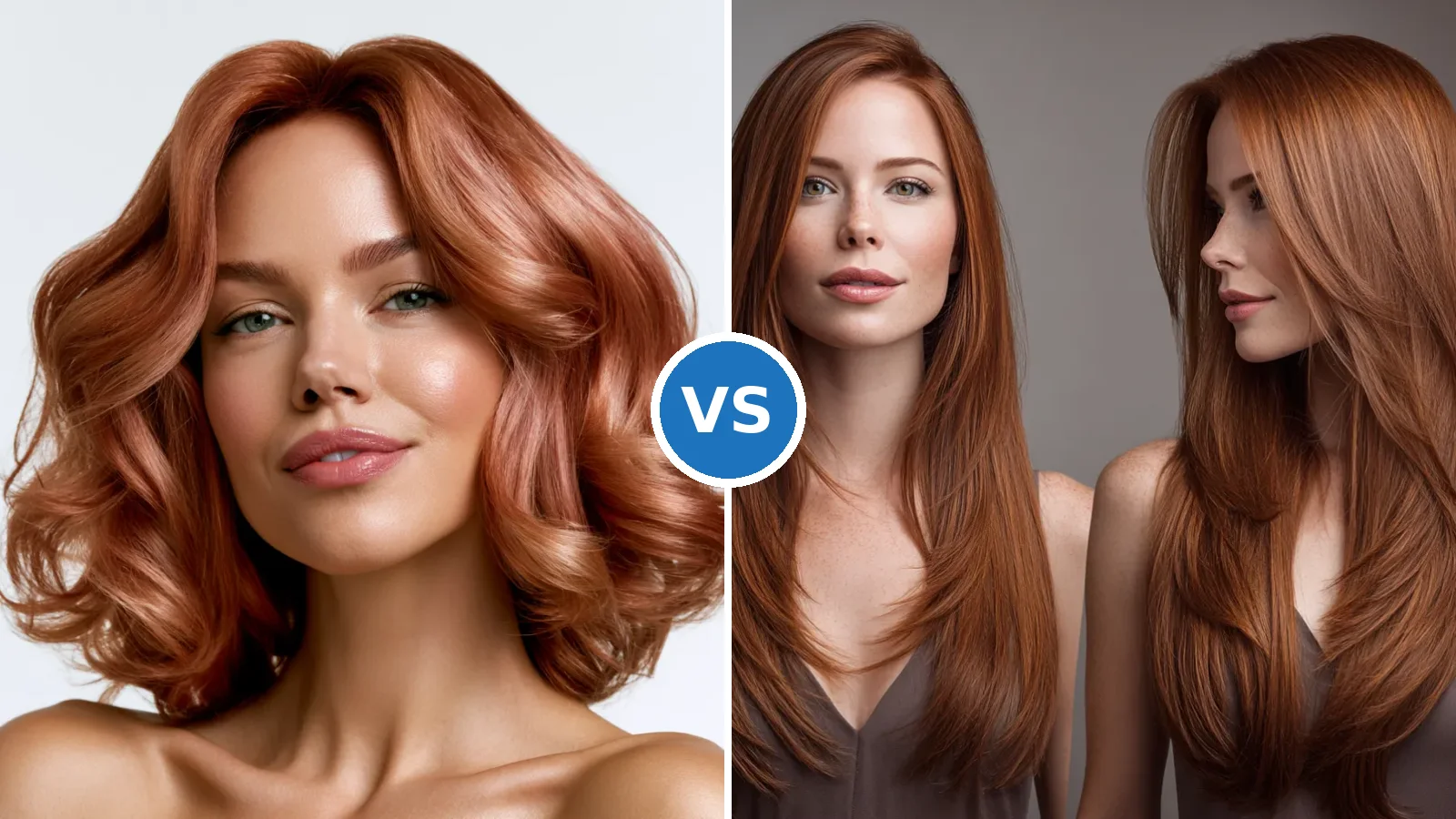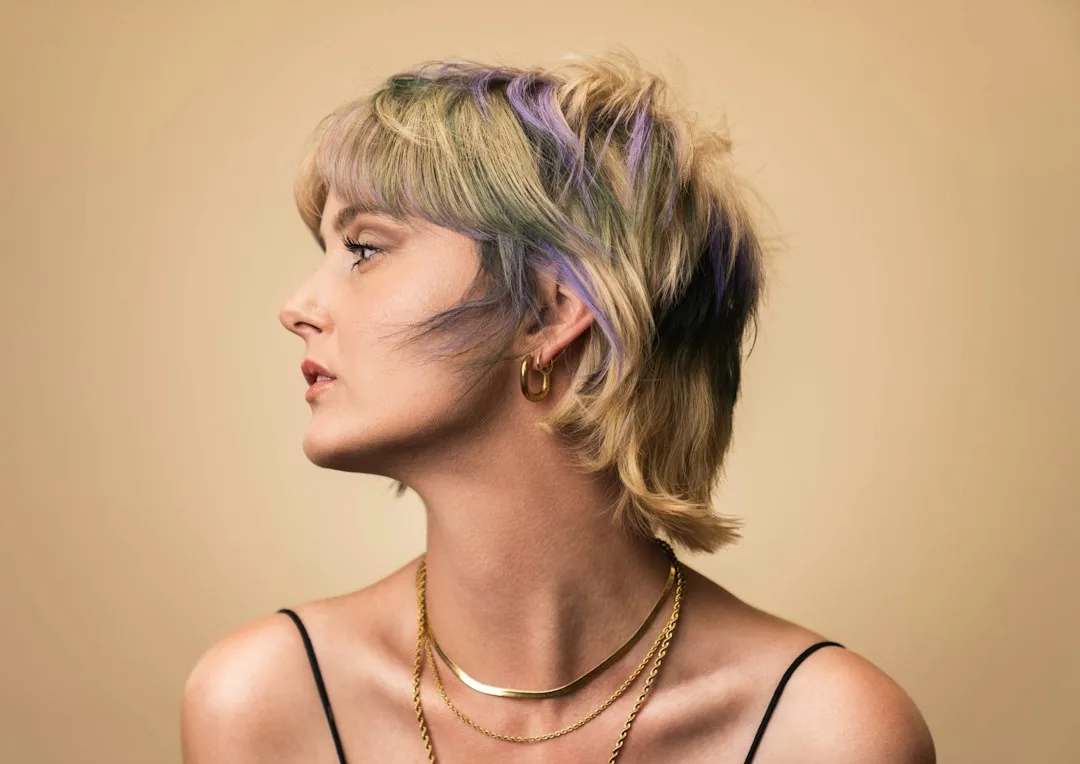
Feathered layers long hair cuts require precision at the tips — get it wrong and the whole silhouette collapses into a frizzy, shapeless mass. I’ve sat in enough salon chairs to know that most stylists cut the layers too blunt, killing the very movement you came in for. Done right, feathering works like a sail: it catches air, lifts at the ends, and gives thick or fine hair alike a weightless, breezy finish. The technique angles each strand to open at the tip rather than blunt-cut across, which is why every step you take sends the hair into genuine motion rather than a stiff swing.
You don’t need a color refresh or a curling iron to make a feathered layered haircut look alive. The cut does the work — if your stylist understands the razor-point or slide-cutting exit needed at the ends. Below, three distinct color stories show exactly how feathered layers behave at full length: golden yellow that floats, electric purple that frames, and tangerine that cascades. Each one is a different lesson in where to start the layers and how far to feather the tips.
Quick Scan
- Target cut: Long feathered layers, usually starting mid-length or just below the chin
- Key technique: Point-cutting or razor-feathering at the ends — not blunt scissor-over-comb
- Best for: Straight to slightly wavy hair, fine through medium density
- Styling tool: Large-barrel round brush (2–3 inch), ionic blow dryer, cool shot to set
- Maintenance: Trim every 10–12 weeks to keep feathered tips clean; grows out gracefully
- Color synergy: Bold, saturated hues — tangerine, purple, golden yellow — amplify the feathered movement most
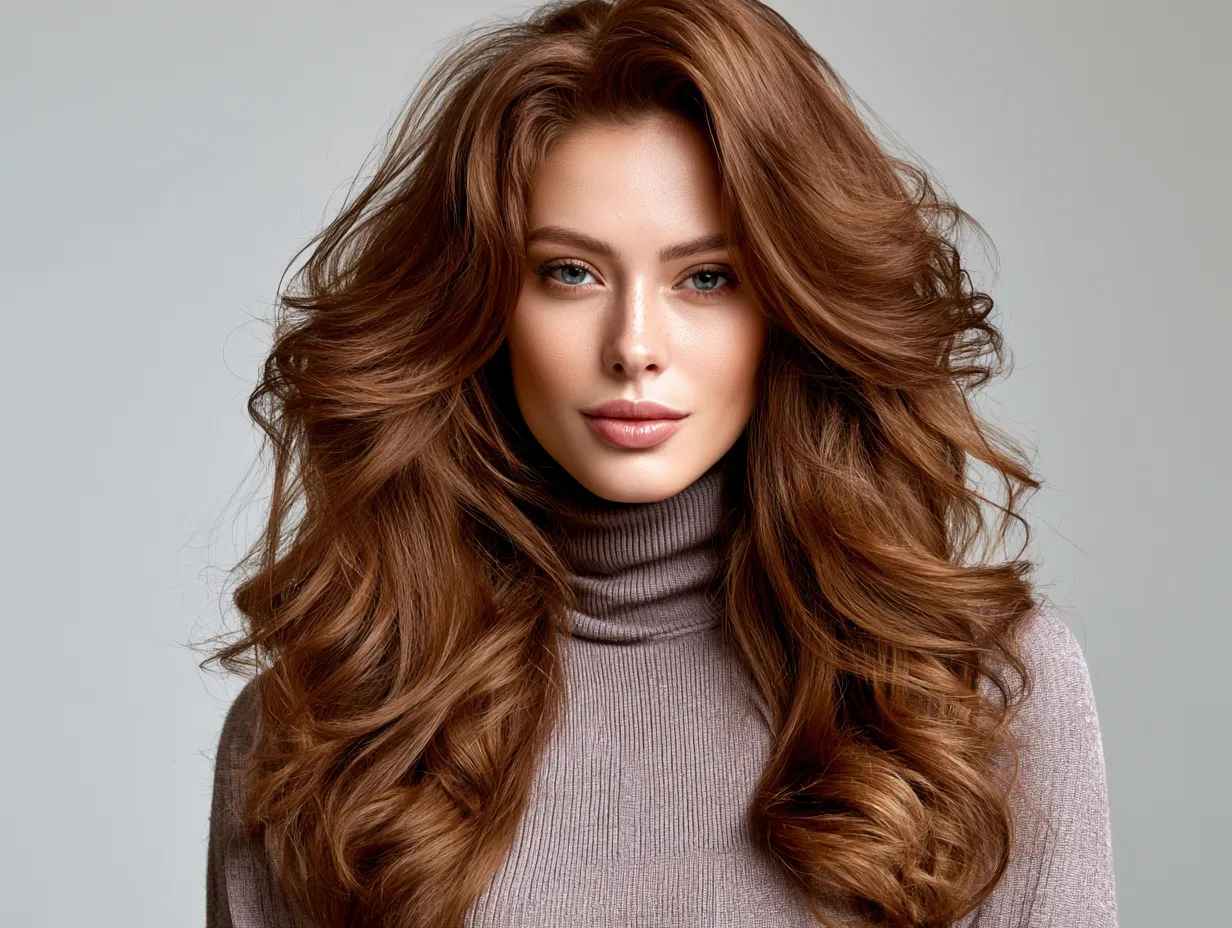
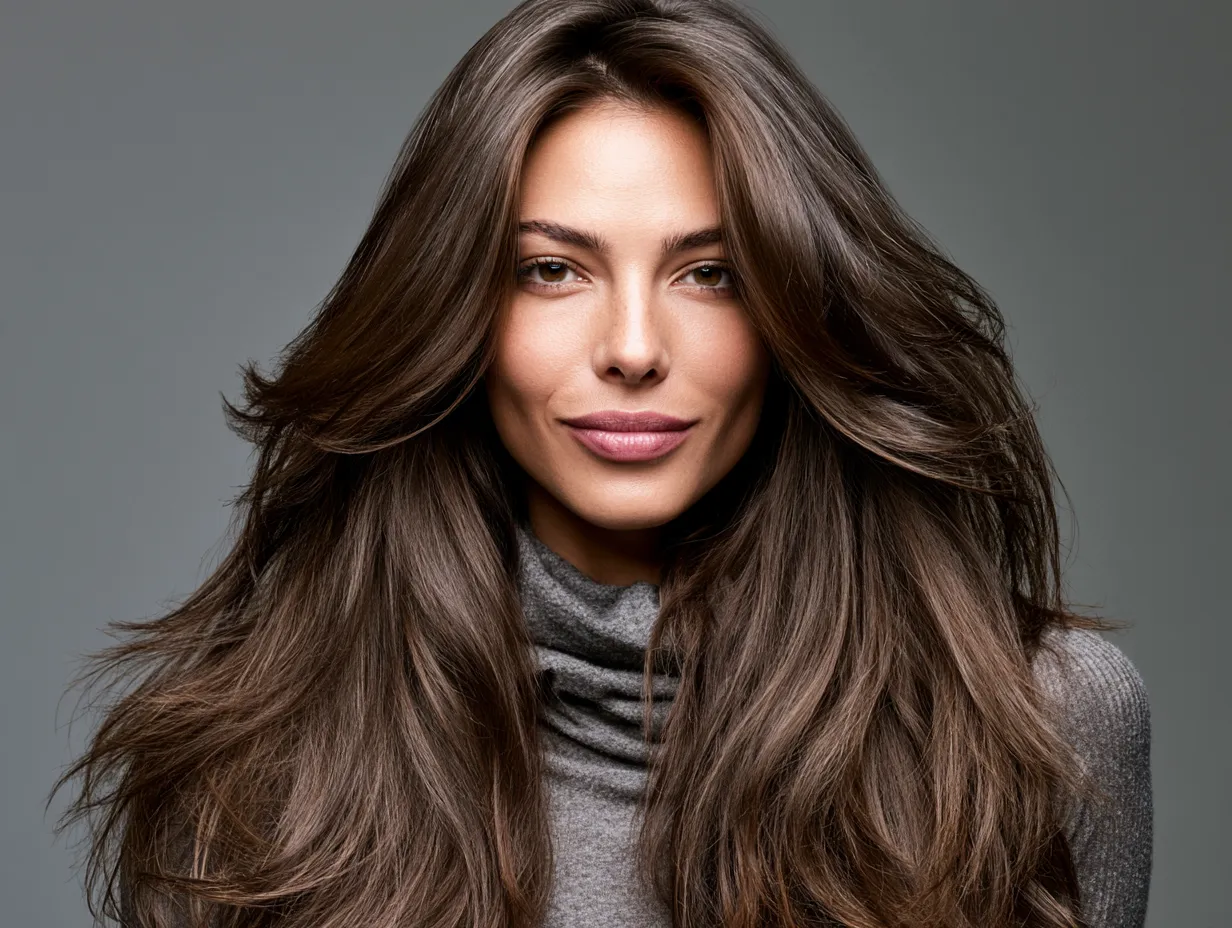
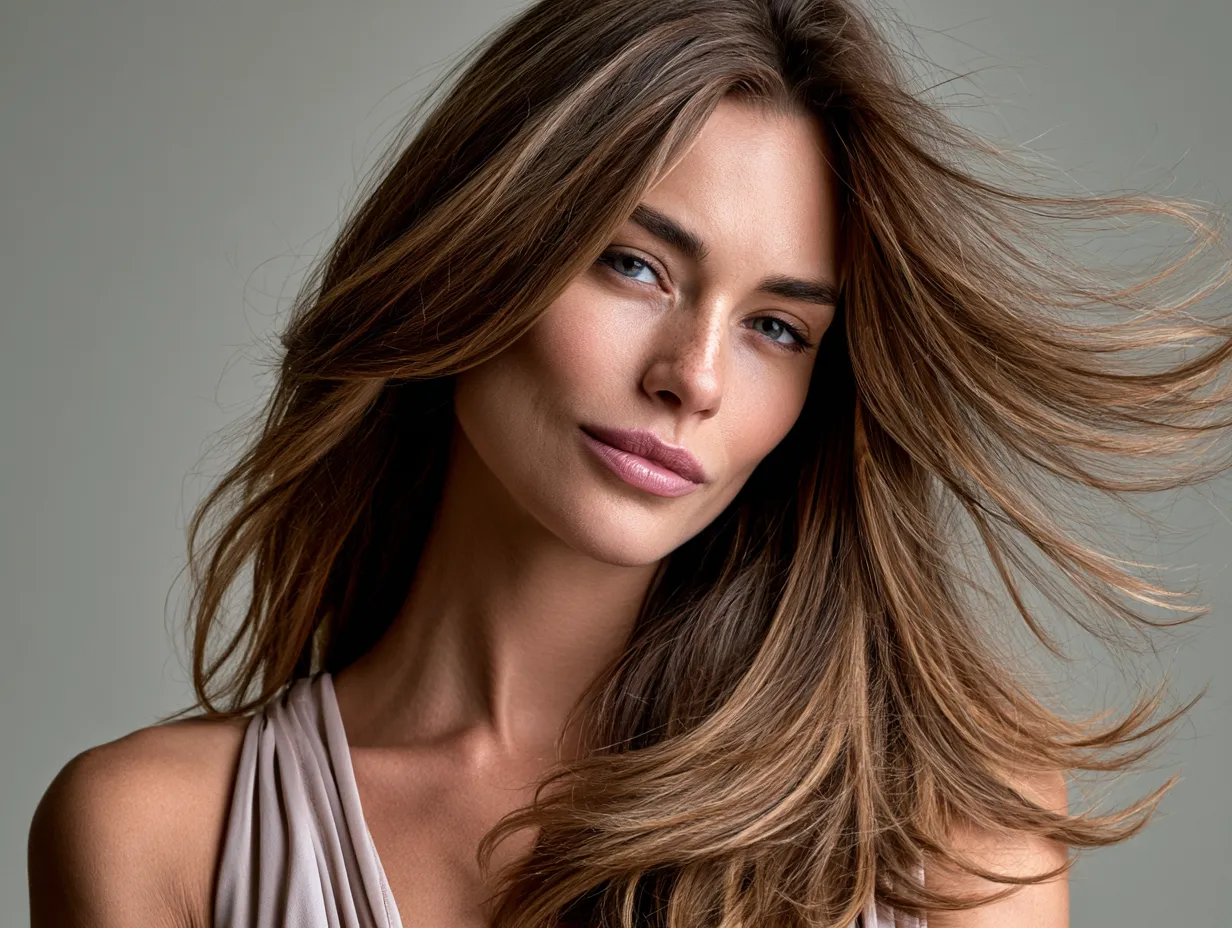
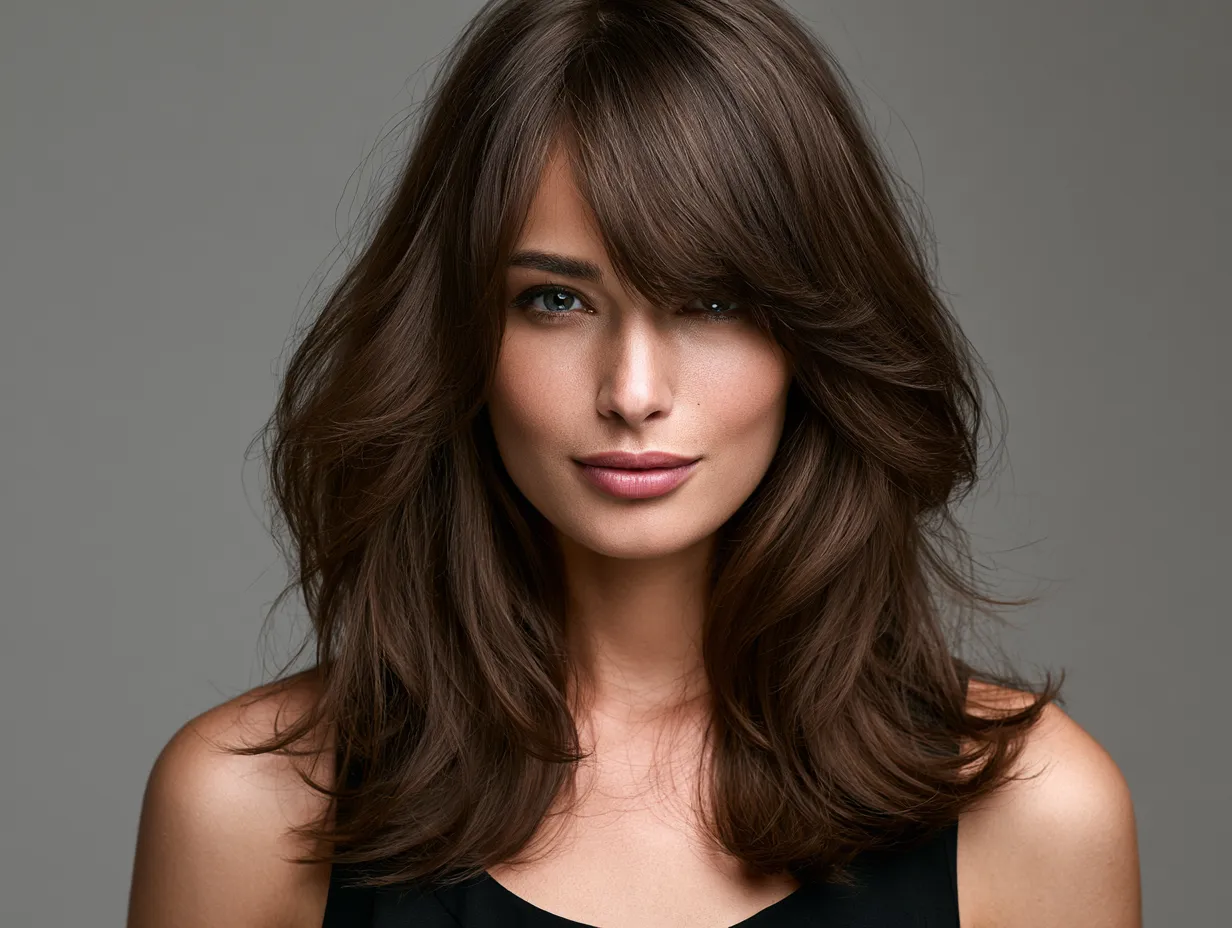
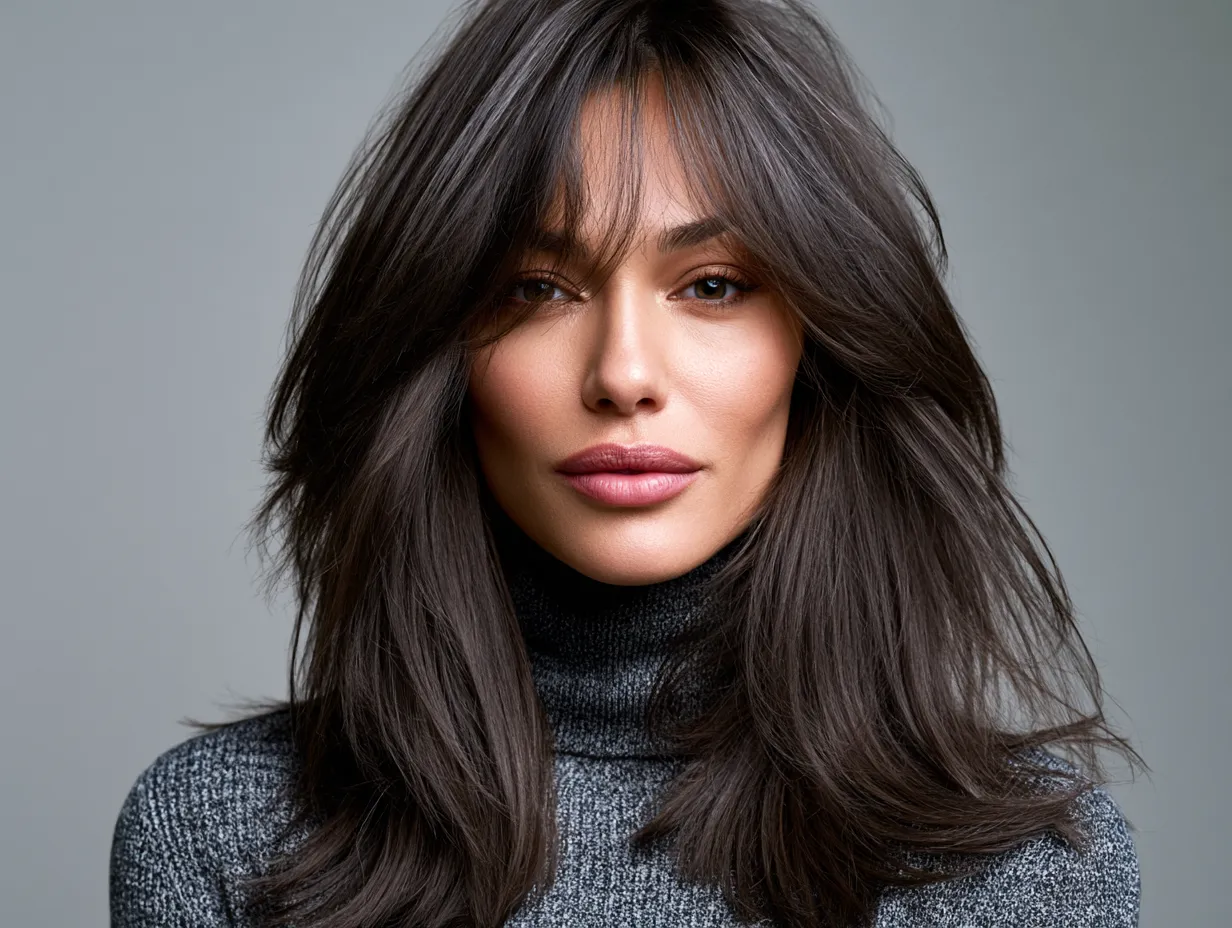
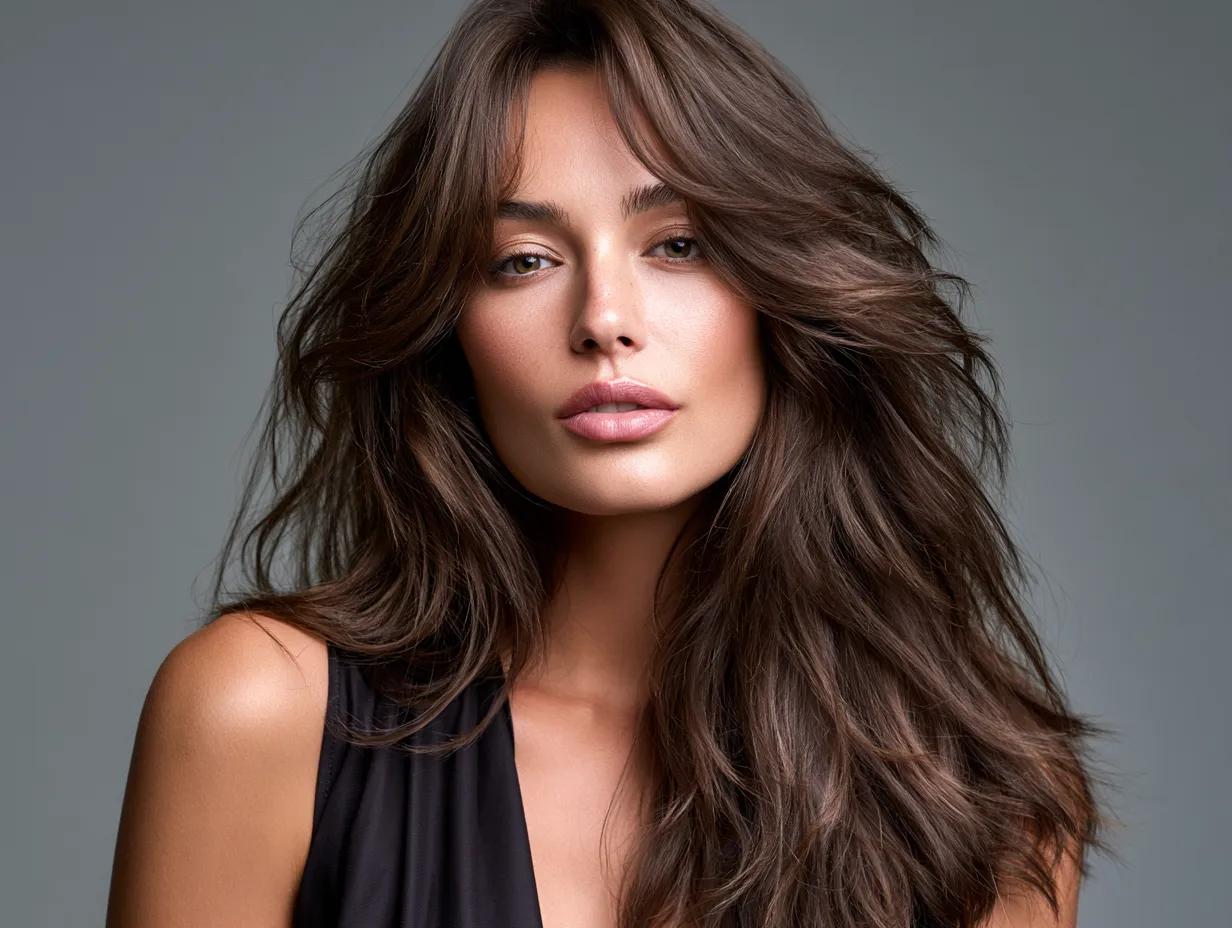
Golden Yellow Feathered Layers That Float Off the Shoulder
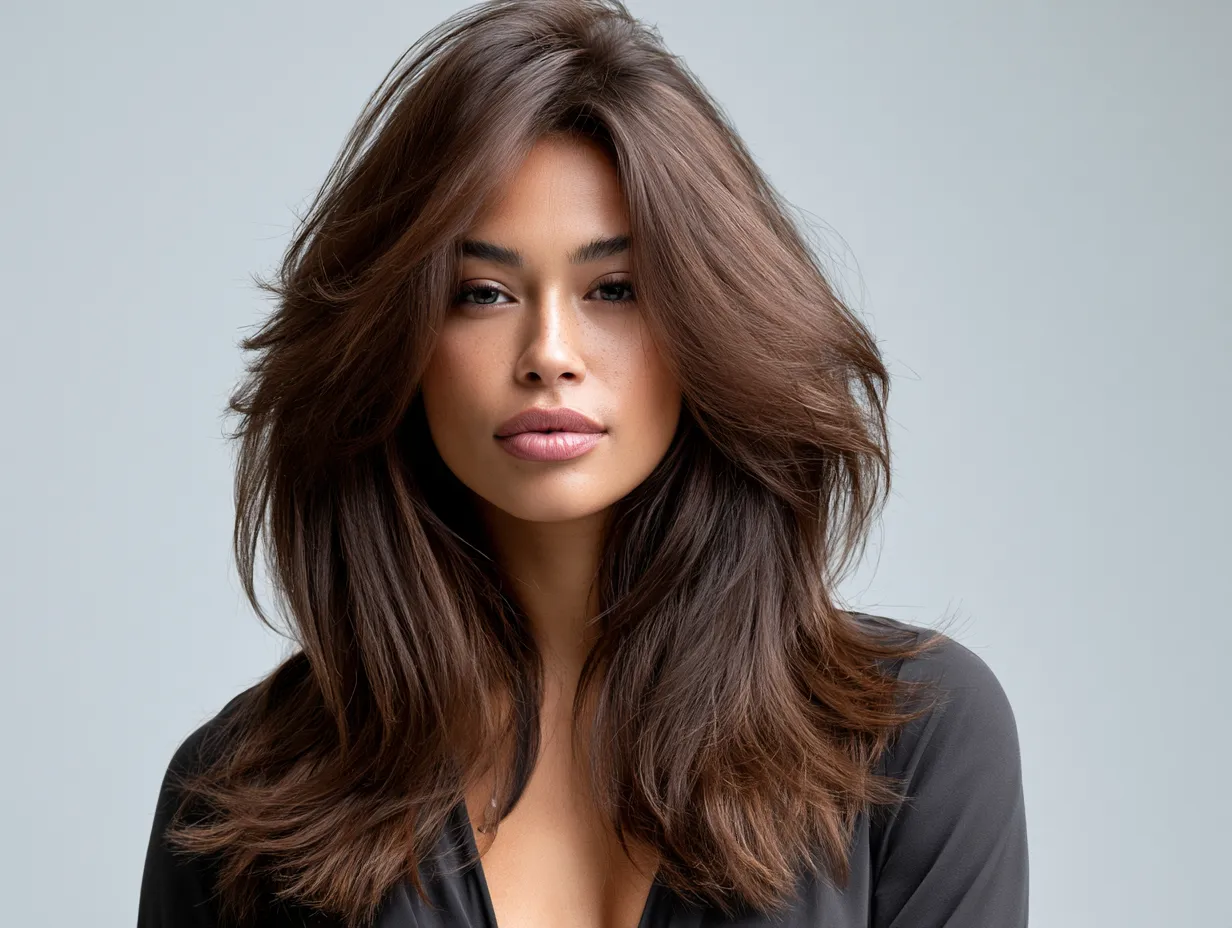
Golden yellow is one of those tones that punishes flat haircuts — any bluntness and it reads heavy, almost costume-like. Paired with feathered layers long hair benefits from the color’s natural luminosity instead of fighting it. The layers start mid-length and graduate softly outward, so each tier catches light at a different angle. You’ll notice the ends almost look backlit in person, which no single-process color achieves without movement built into the cut.


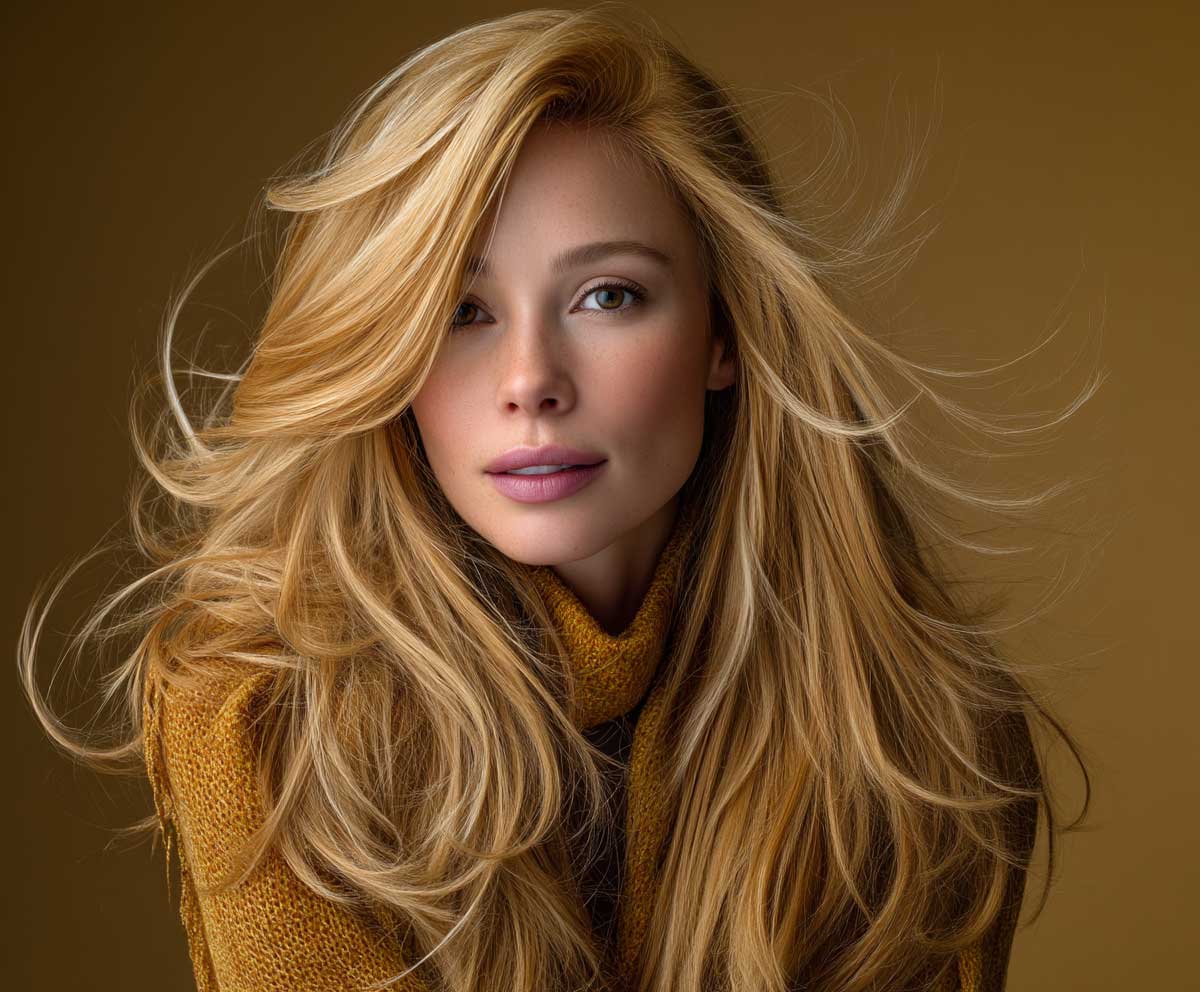
For the blow-dry: grab a large round brush — I use a 2.5-inch barrel — and work section by section from the nape up. Roll the brush under each section and direct hot air down the shaft, then flip the brush outward at the ends to set that signature feathered flick. Finish with the cool-shot button for five seconds per section. That cold blast is what seals the shape; skip it and the flick drops within an hour. Don’t try this with a paddle brush — I killed two blowouts that way before accepting the round brush is non-negotiable here.
The layering architecture matters as much as the color. Crown layers lift toward the cheekbones, giving the upper third of the face a raised, opened-up quality that a single-length cut can’t replicate. Each subsequent layer softly graduates into the one below it rather than stacking hard. The result is a shape that holds cohesion even as individual strands move independently — structured freedom, like a well-cut silk blouse that still blows in the wind.
One anti-pattern I see constantly: people going too heavy on shine serum before the blowout. You want a single pump of lightweight dry oil after styling, not before. Loading product onto damp hair weighs the feathered tips down, and golden yellow looks dull when the texture collapses. Apply product once the hair is 95% dry and the shape is already set.
Electric Purple Feathers That Sharpen the Jawline Without a Scissor Near It
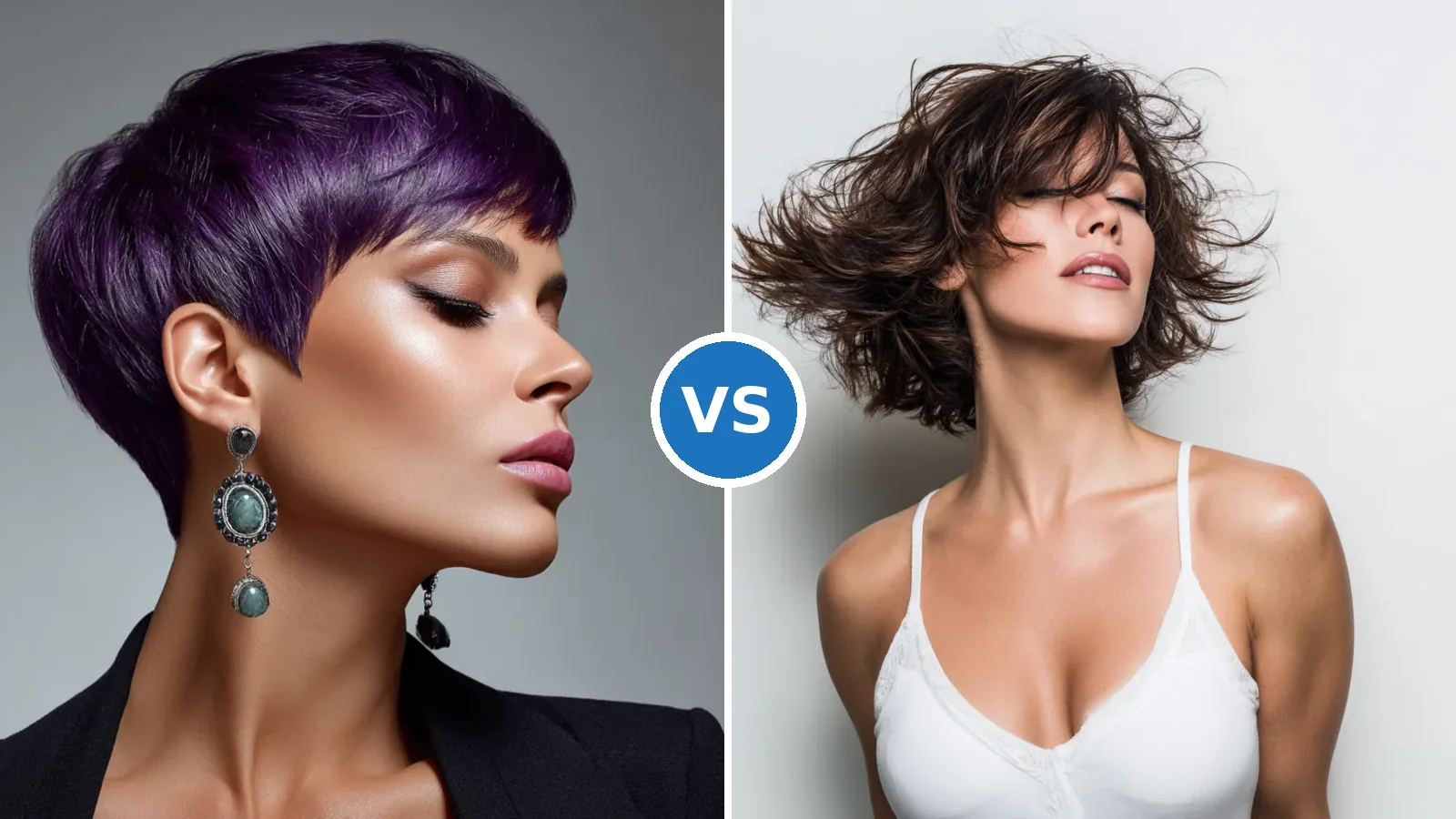
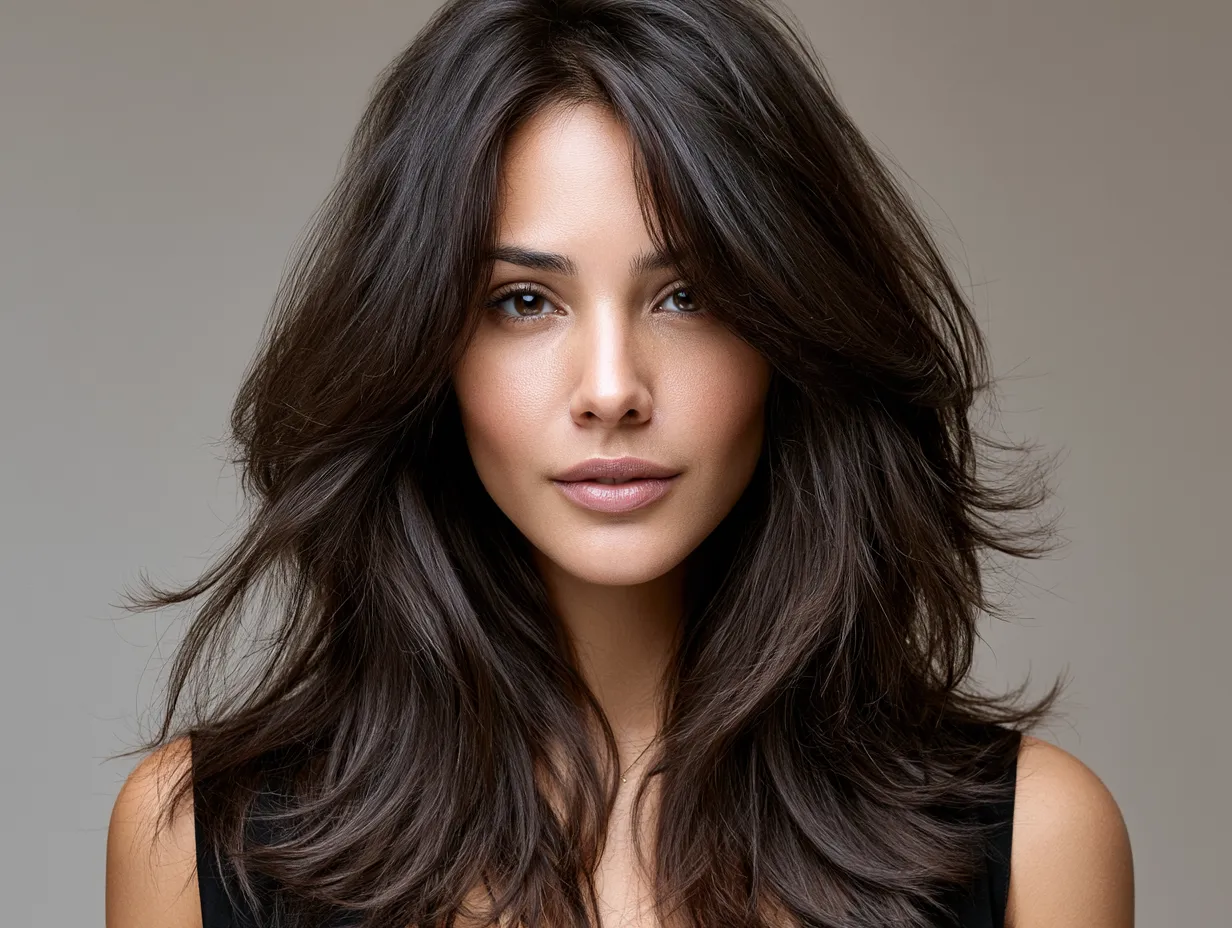
Purple is a high-impact color that rewards restraint in the cut — and feathered layers long hair wearers choose for color payoff are the perfect structural counterpoint. The face-framing layers in this version curve inward just enough to hug the jawline, while feathered tips fan outward in delicate wisps. Angular faces get a softening effect. Oval faces get lift. Neither requires more than a diffuser or a round brush to activate it.
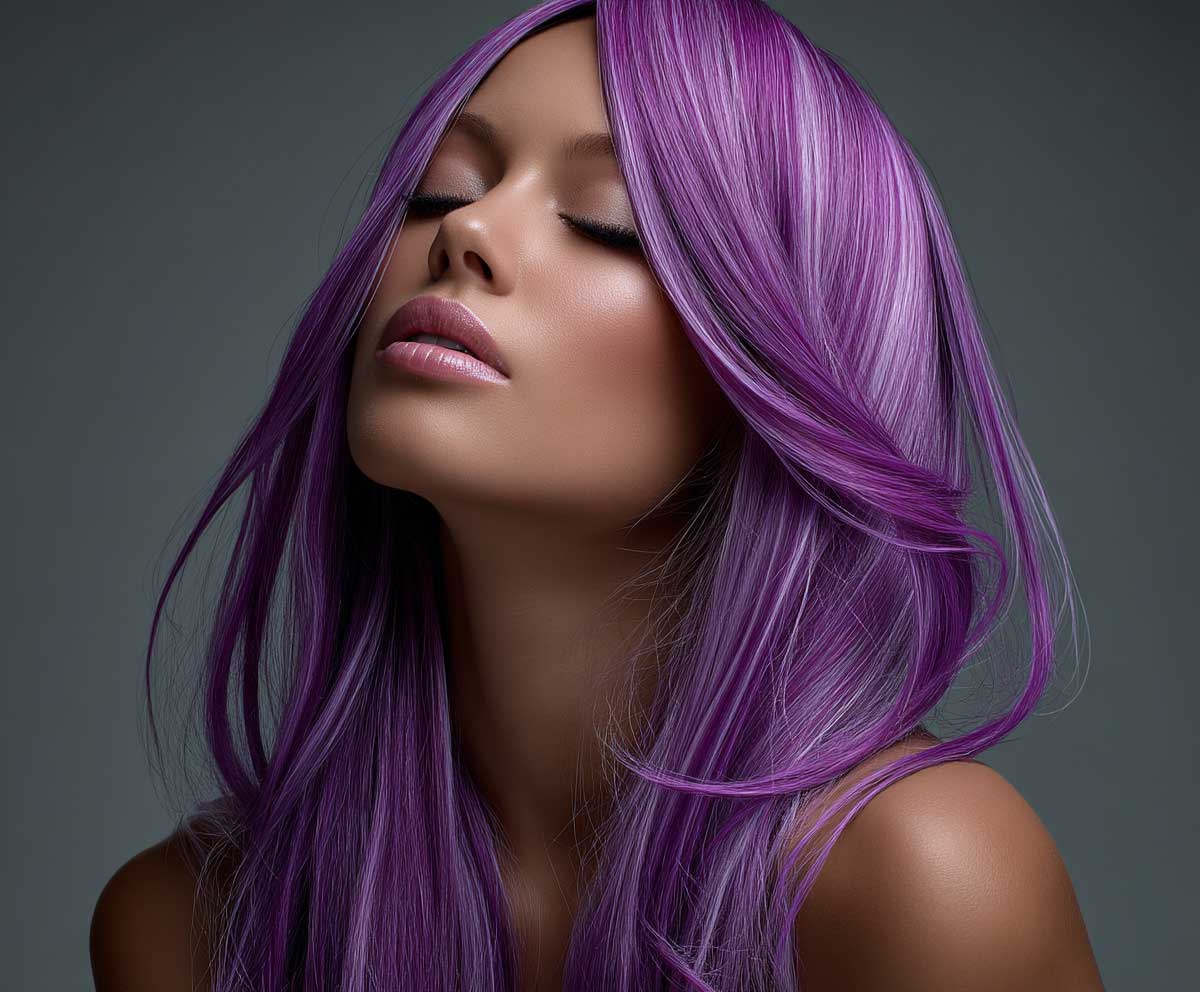


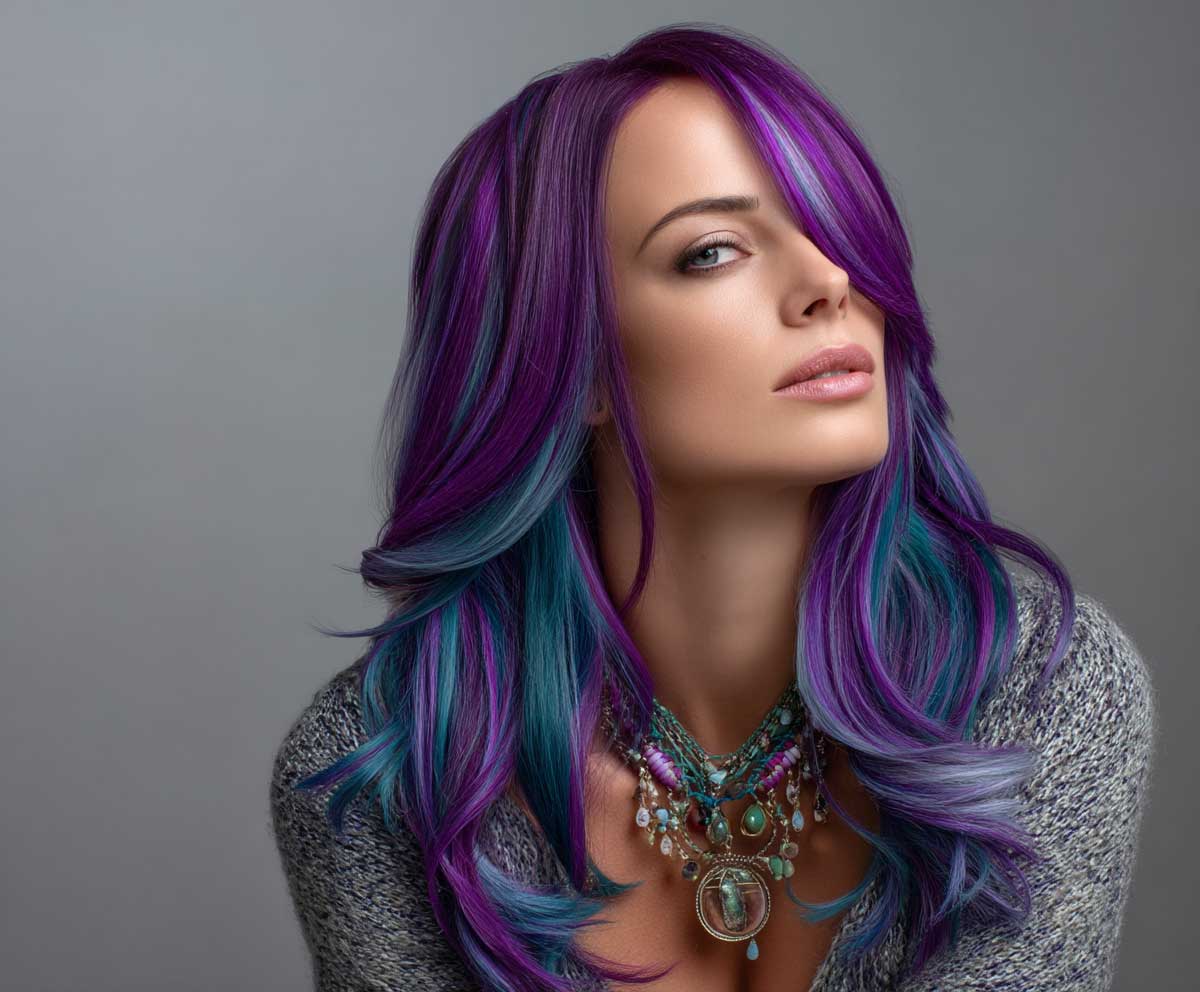
The dynamic tension here is color versus softness, and feathering wins the negotiation. Electric purple without airy edges reads as a fashion-school project — interesting but aggressive. The feathered exit at each layer pulls the density back, keeping the lower half of the silhouette from feeling heavy. A gentle undercut at the nape removes the dead weight that would otherwise drag the top sections flat; ask for it to sit about an inch above the collar. My stylist at Cutler Salon calls it “invisible architecture” — you never see it, you only feel the lift.
Feathered ends in vivid colors actually extend your time between trims. The texture disguises grow-out better than a blunt cut does, since there’s no hard line to reveal. Blown out with a round brush and finished with a light-hold texturizing spray like Oribe Dry Texturizing Spray ($49), the layers gain the bounce and piece-y separation that makes purple hair look intentional rather than faded. What doesn’t work: heavy cream-based finishing products. They glue the feathered tips together and you lose the entire effect.
Worn down, this cut reads editorial. Pulled into a low ponytail, the face-framing front pieces fall forward and the feathered tips frame the neck rather than disappear into the elastic. That dual function — two entirely different silhouettes from one haircut — is why feathered layered hairstyles for long hair keep showing up on every mood board I’ve saved this year. Jet black feathered hairstyles use the same structural logic with a completely different color payoff if purple feels like too much commitment.
Don’t Do This
Don’t ask for “feathered layers” without specifying where the feathering starts. Most stylists default to feathering only the bottom two inches. That gives you softened tips but none of the mid-shaft movement that makes this cut work. Tell them to begin feathering at least from the shoulder line downward — and ask them to use point-cutting or razor-cutting at the exit, not blunt shears. I once left a salon with a haircut that looked great in the chair and completely flat by the time I got home, because the “feathering” was just light texturizing on already-blunt ends. Not the same thing.
Also avoid: heavy keratin treatments if you want feathered movement. They seal the cuticle flat and your carefully feathered tips will behave like a single laminated sheet. If you love both smoothing treatments and feathered layers — and I do — wait four weeks post-treatment before your layer appointment.
Tangerine Long Hair Where the Feathered Cut Does What the Color Promises
Tangerine sits at the intersection of playful and genuinely demanding — it requires movement to read as fashion rather than Halloween. Feathered layers long hair in this tone becomes a flame-like cascade: each tier bends and flutters independently, creating a visual rhythm that flat or blunt-cut tangerine simply can’t produce. The layering here starts higher than in the golden section, just below the chin, and tapers outward with a flowing progression that increases in density toward the ends. Think of it like a waterfall that gains speed as it falls.

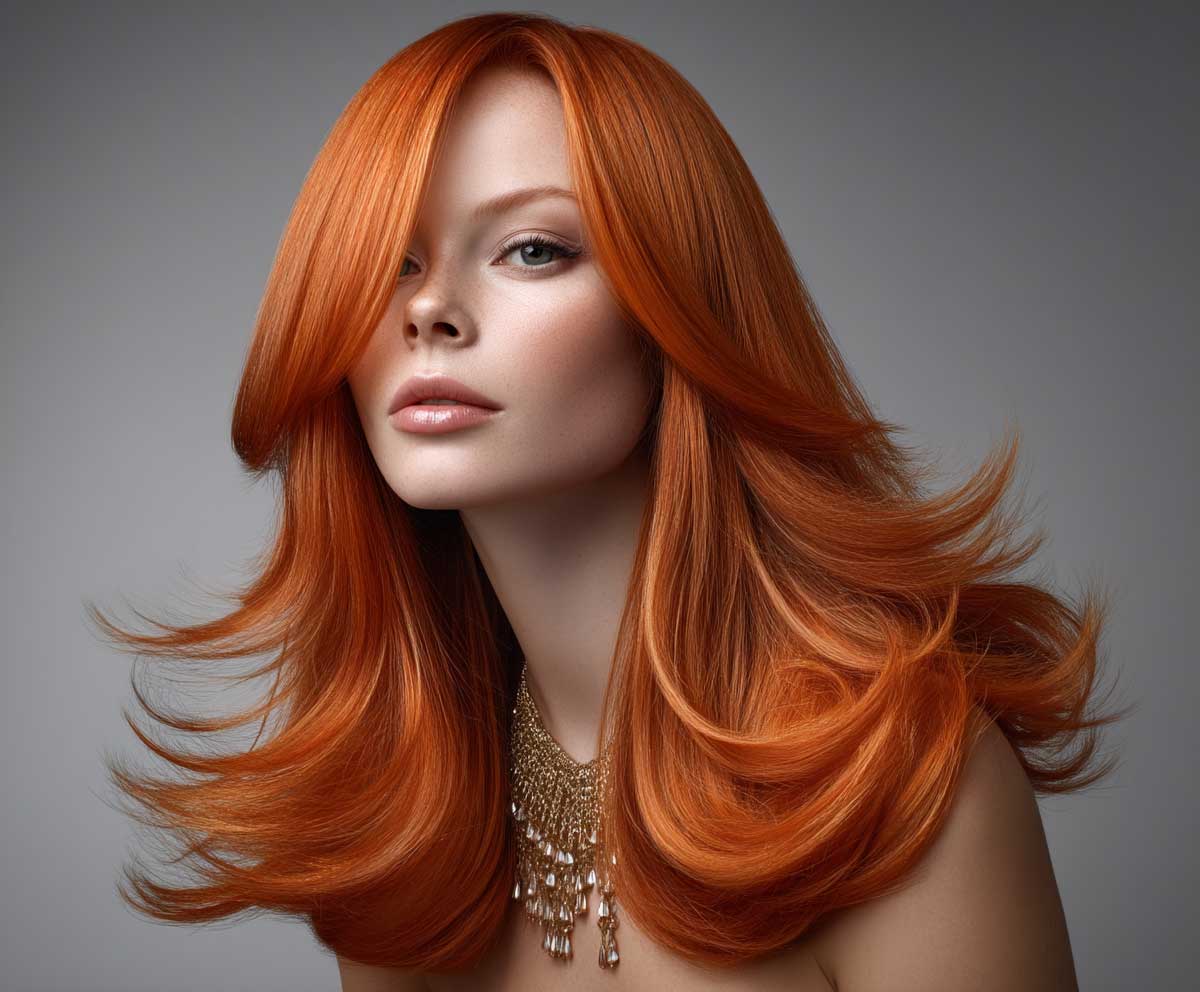

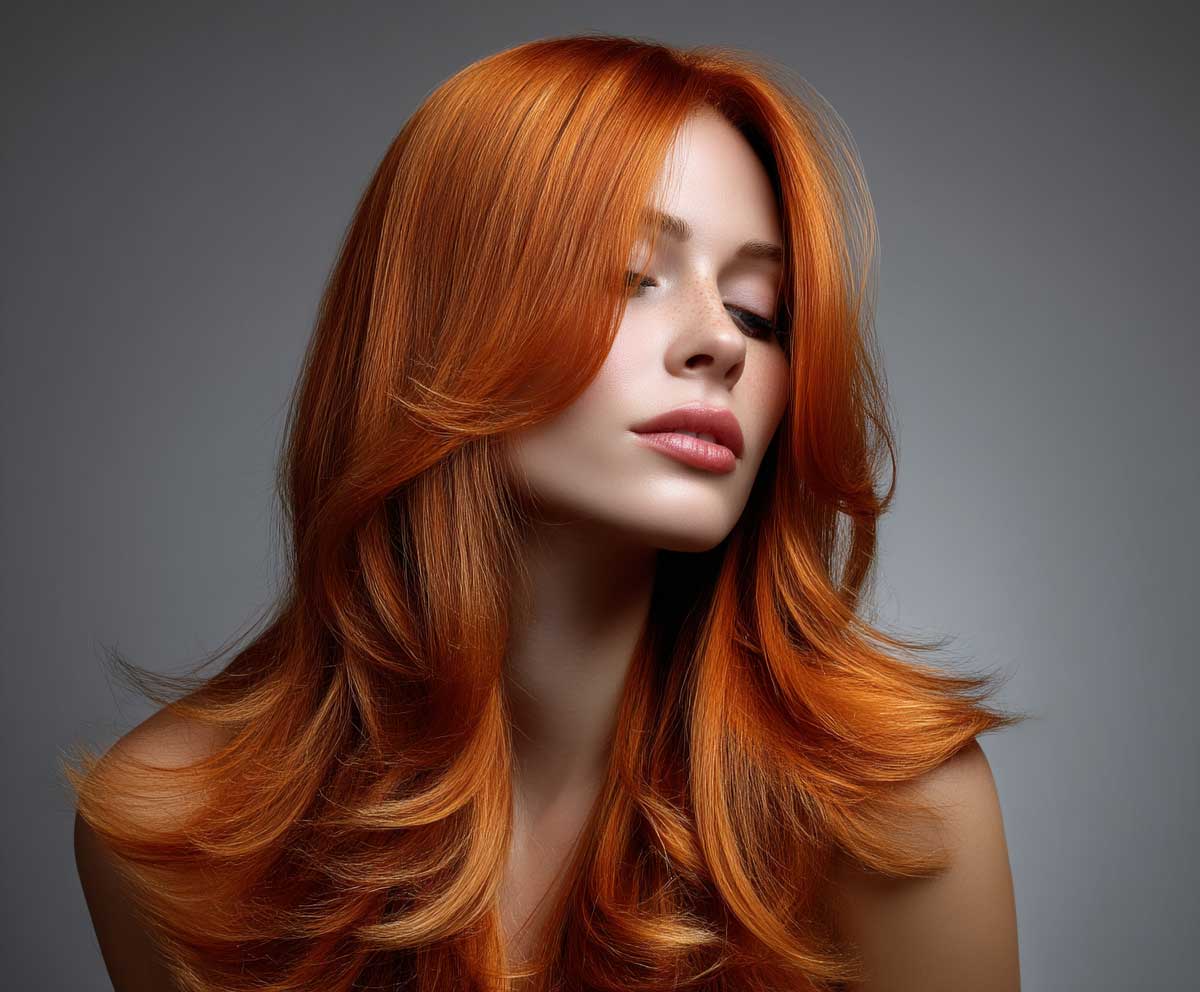
For blow-drying, swap your round brush for a vent brush on this one. The vent brush encourages the strands to bend naturally rather than curl, which suits tangerine’s organic, fire-like quality better than a structured flick. Once the hair is 90% dry with the vent brush, go back in with a round brush only on the face-framing front sections where you want a defined lift. Finish with a single drop of dry oil — I stole this trick from a Bumble and bumble session stylist — worked between the palms and pressed lightly along the mid-shaft. It draws out the warm sheen of orange without touching the feathered tips and collapsing them.
No blockiness is the non-negotiable rule with saturated brights. A bold hue magnifies any hard line in the cut, so the feathered exit at each layer isn’t just aesthetic — it’s structural damage control. Tangerine thrives on sunlight and motion, and feathered styling makes the most of both. Avoid flat-iron finishes on this cut; the pin-straight effect removes the very texture that makes it compelling, and orange hair that’s been ironed flat looks closer to an extension set than a live haircut.
Loose, cascading, or lightly pinned at the nape — each option presents a different personality. The feathering means no position looks stiff or over-styled. Each step sends individual tiers into independent motion, so the silhouette stays dynamic even when you’re standing still. For anyone researching long hair with layers for thin straight hair, tangerine feathering is especially worth considering — the color depth creates the illusion of density that fine strands lack on their own.
Long feathered layered hairstyles in saturated shades communicate something specific: you understand that hair is architecture, not just color. The feathering technique — as explained in detail by stylists at Rush Hair — ensures the outward flip at each layer sets properly rather than drooping after an hour. That’s the difference between a cut that photographs well once and one that looks like this every single day.
Final Word
Feathered Layers Work Because the Exit Angle Is Everything
The three cuts above — golden, purple, tangerine — look different but follow the same structural rule: feathering begins at the shoulder or above, exits with a point-cut or razor, and gets set with a cool-shot blast. Miss any one of those and you have a layered cut, not a feathered one.
Ask your stylist where they start feathering. If the answer is “just at the ends,” rephrase the brief. You want the feathering integrated from mid-shaft downward, not applied as a finishing touch to an otherwise blunt cut.
Save this post before your next salon appointment — show the images directly to your stylist rather than trying to describe the technique in words.