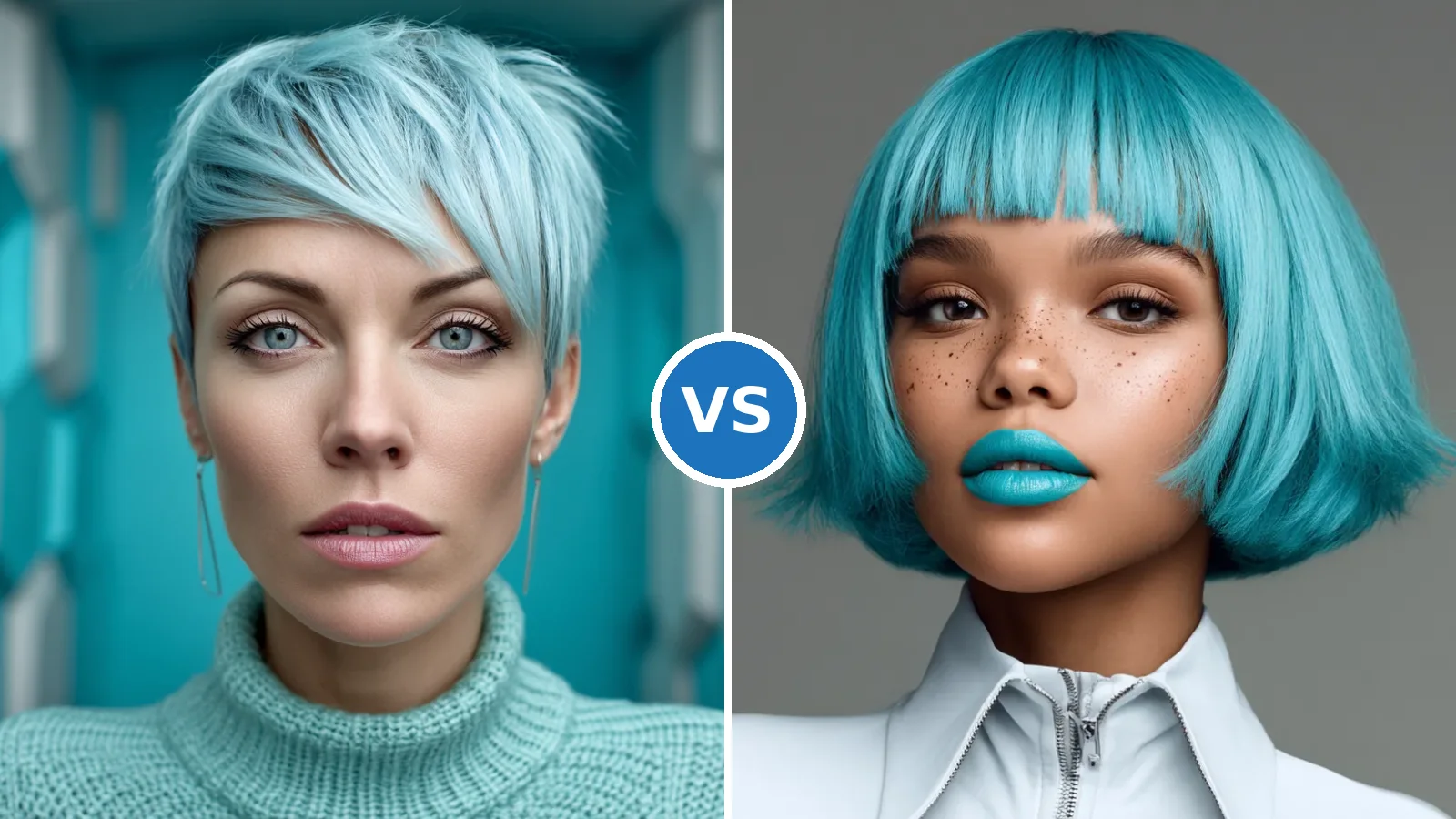
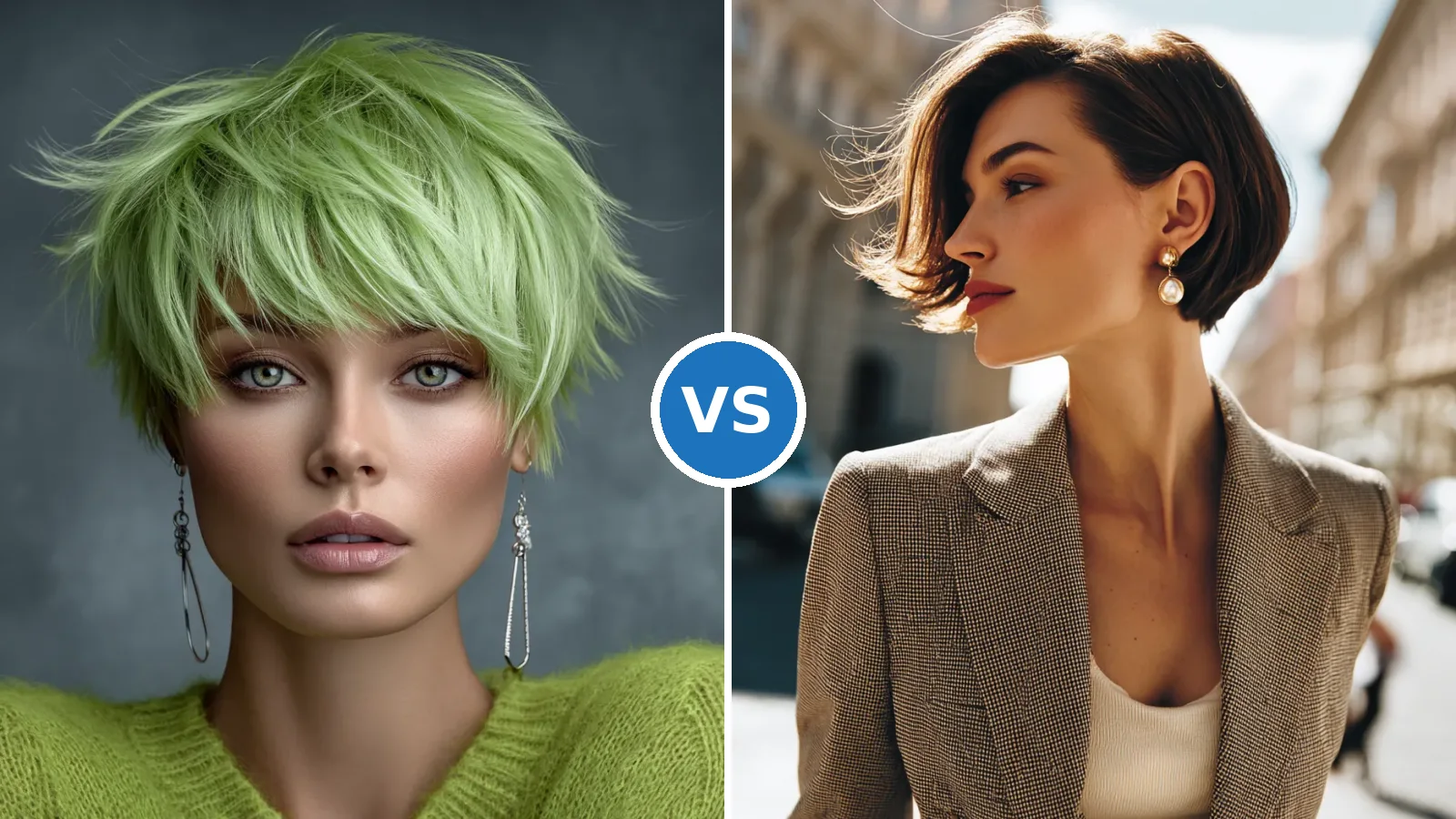
Blunt haircut styles built around radical color aren’t just trend-driven — they’re architectural. The straight-across cut creates a geometric frame that amplifies every chromatic decision you make on top of it. Fiery reds read hotter, electric limes read more alien, deep blues read more structural when the ends beneath them form one unbroken horizontal line.
Stylists recommend trimming a blunt cut every 6–8 weeks to keep edges crisp — and that maintenance window is what separates the looks below from a soft, grown-out approximation. The difference between a blunt edge and a fuzzy one isn’t subtle. You’ll notice it before anyone says a word.
Three variations follow: an asymmetric fiery red, an electric lime with undercut, and an ultra blue with shaved design. Each treats the blunt cut as a foundation, then layers a different kind of rebellion on top.
- 3 edgy blunt haircut styles — fiery red asymmetric, electric lime undercut, ultra blue shaved design
- Trim frequency: every 6–8 weeks to hold the blunt edge
- Vivid color lifespan: approx. 24 washes (around 2 months) with proper care
- Key product: Olaplex No. 6 Bond Smoother ($28–$32) — controls frizz for up to 72 hours, protects heat up to 450°F
- Blue hair risk: fades to green without a color-depositing or blue-pigment shampoo between salon visits
- Full vivid color service: expect $300–$500+ at a specialist salon, depending on length and pre-lightening needed
Fiery Red Asymmetric Blunt Haircut
The asymmetric blunt haircut in fiery red works because it stacks two forms of tension in one look — the chromatic intensity of the color and the structural imbalance of mismatched lengths. One side shorter, one side longer, both ending in a precise blunt edge. The result reads editorial before you reach for a single accessory. Stylists who specialize in this cut point out that the length differential needs to be meaningful — less than two inches between sides and the whole effect collapses into an accidental haircut rather than a deliberate one.


Red is multidimensional under light in a way that flat or muted colors aren’t. It shifts between copper, crimson, and near-orange depending on the angle — which means the blunt edge catches light differently every time the head moves. That movement keeps the look from going static. The middle part is doing something counterintuitive here: it’s providing symmetry as an anchor point, which makes the asymmetric length feel like a choice rather than a mistake.
Styling begins on damp hair with one pump of Olaplex No. 6 Bond Smoother ($28–$32, available at Ulta and Walmart), combed through before blow-drying. The formula controls frizz for up to 72 hours and protects against heat up to 450°F — which matters because a flat iron is non-negotiable for keeping blunt ends crisp. Vivid red specifically fades faster than most colors: stylists at Studio 312 note that red-based vivids typically last around 24 washes before a refresh is needed. On average, that’s about two months. Plan color maintenance appointments accordingly or the edge stays sharp but the color turns dull.
A common mistake with this cut is skipping heat protection and then wondering why the ends look split by week three. The blunt line is unforgiving — damage shows immediately at the edge. This look is also harder to pull off with very thick hair unless the stylist uses thinning shears on the interior, or the silhouette becomes a wall rather than a shape. Try showing the length differential to your stylist in a photo rather than describing it; “shorter on one side” means something different to every person holding scissors.
Avoid keeping the two sides within an inch of each other — the asymmetric impact disappears and you’re left with a crooked haircut, not a deliberate one. Also skip styling the shorter side with volume product; the contrast between a sleek short side and a textured long side is exactly what gives this cut its graphic quality. Finally, don’t attempt a vivid red recolor at home with box dye before understanding your base level. Box dye deposits flat pigment that coats the cuticle and blocks professional color from penetrating evenly — the result is a muddy, uneven red that no amount of toning fixes easily.
Electric Lime Blunt Haircut with Undercut
Electric lime blunt haircut styles sit at the furthest edge of the color spectrum — this is not a shade that reads as incidental. On a bob structure with a shaved undercut beneath, the neon hue does something precise: it makes the blunt top line look razor-clean by contrast. The undercut section, hidden when the top layer falls naturally, becomes visible when the hair is pushed back or styled up — one look, two personalities.
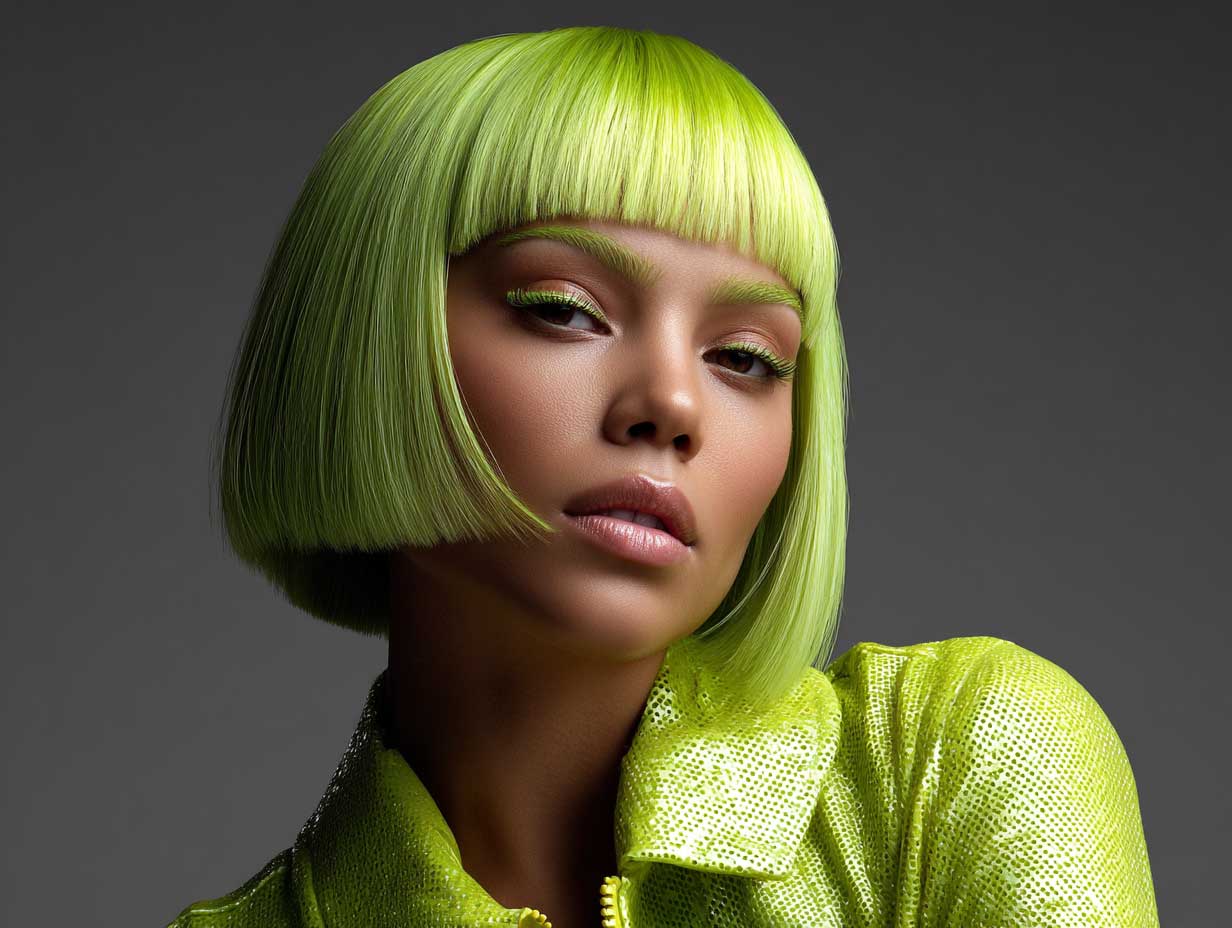
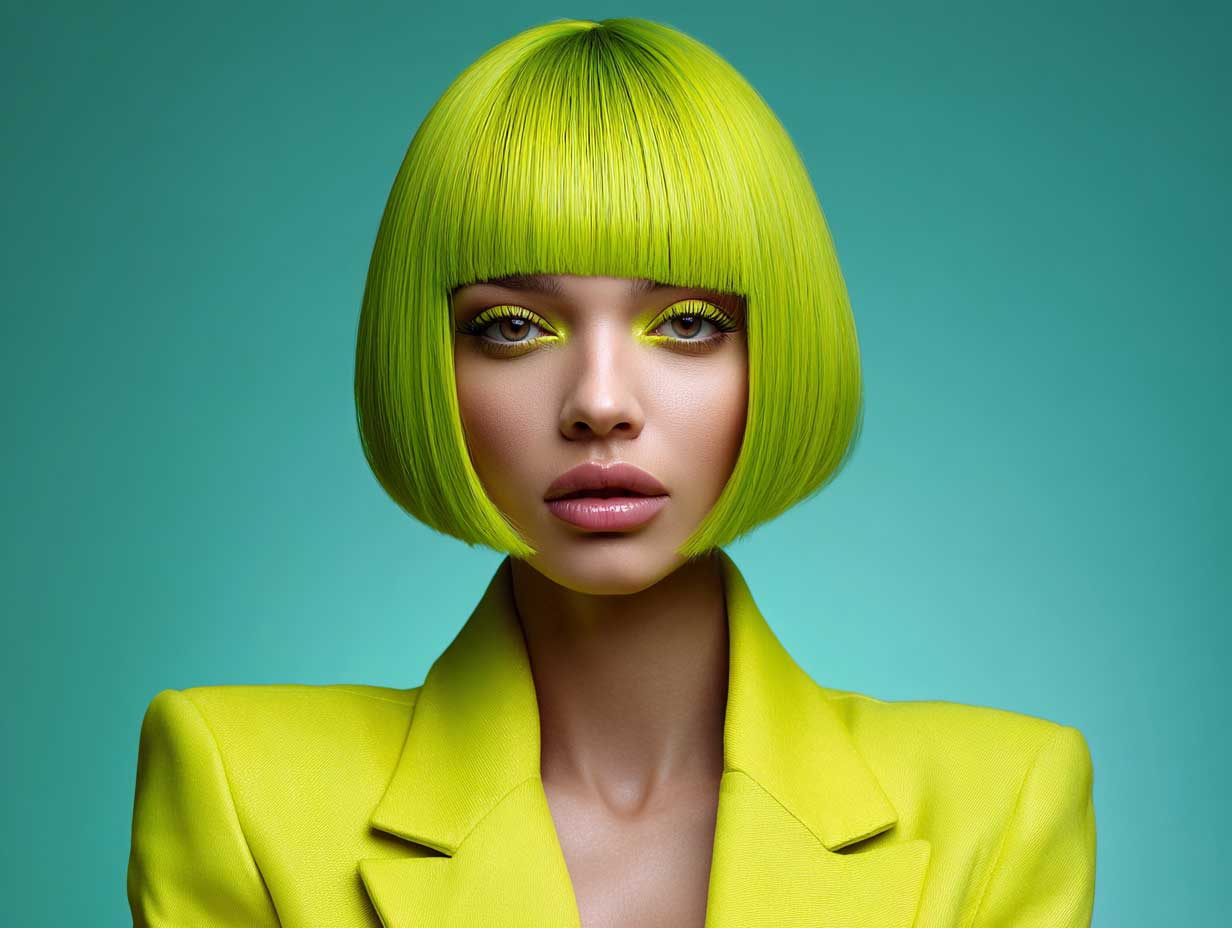


What does this actually require in terms of maintenance? More than most people expect. Neon and pastel vivid shades — electric lime is essentially neon yellow-green — are among the fastest-fading categories of hair color. Stylists commonly note these shades need a color-depositing treatment every couple of washes to stay punchy, and a full refresh appointment every 6–8 weeks. The blunt edge itself is less forgiving than a layered cut when the color starts going chalky; the flat line draws the eye directly to the ends where fade shows first. Pair the cut with a sulfate-free shampoo and cool-water washes — heat and detergent send vivid pigment down the drain faster than anything else.
Styling for this cut means one thing: flat and glassy. Frizz kills the neon payoff. Apply Olaplex No. 6 Bond Smoother to damp hair before blow-drying, then follow with a flat iron pass on the ends only. The undercut adds something genuinely useful here — it removes the bulk at the lower section that can cause the top layer to sit unevenly. Think of it less as a style statement and more as a structural solution. Choosing the right blunt cut bob for your face shape is worth reviewing before deciding whether a chin-length or shorter bob works better with your features before adding the undercut.
Where this look fails is when it’s styled with too much product on the top layer. Any cream that adds texture or separation undoes the clean surface line — and the line is the whole point. Keep the top layer flat, glossy, and disciplined. The undercut provides all the personality the look needs without any additional chaos on top.
What Ultra Blue Blunt Haircut Styles Do to a Silhouette
Ultra blue blunt haircut styles with shaved designs operate on a different logic than the previous two. Here, the color is not the only graphic element — the etched design on one side or at the nape adds a second layer of intentionality that makes the cut feel custom rather than off-the-shelf. The blunt top line holds everything together. Without it, the shaved detail and the vivid color would compete. With it, they frame each other.
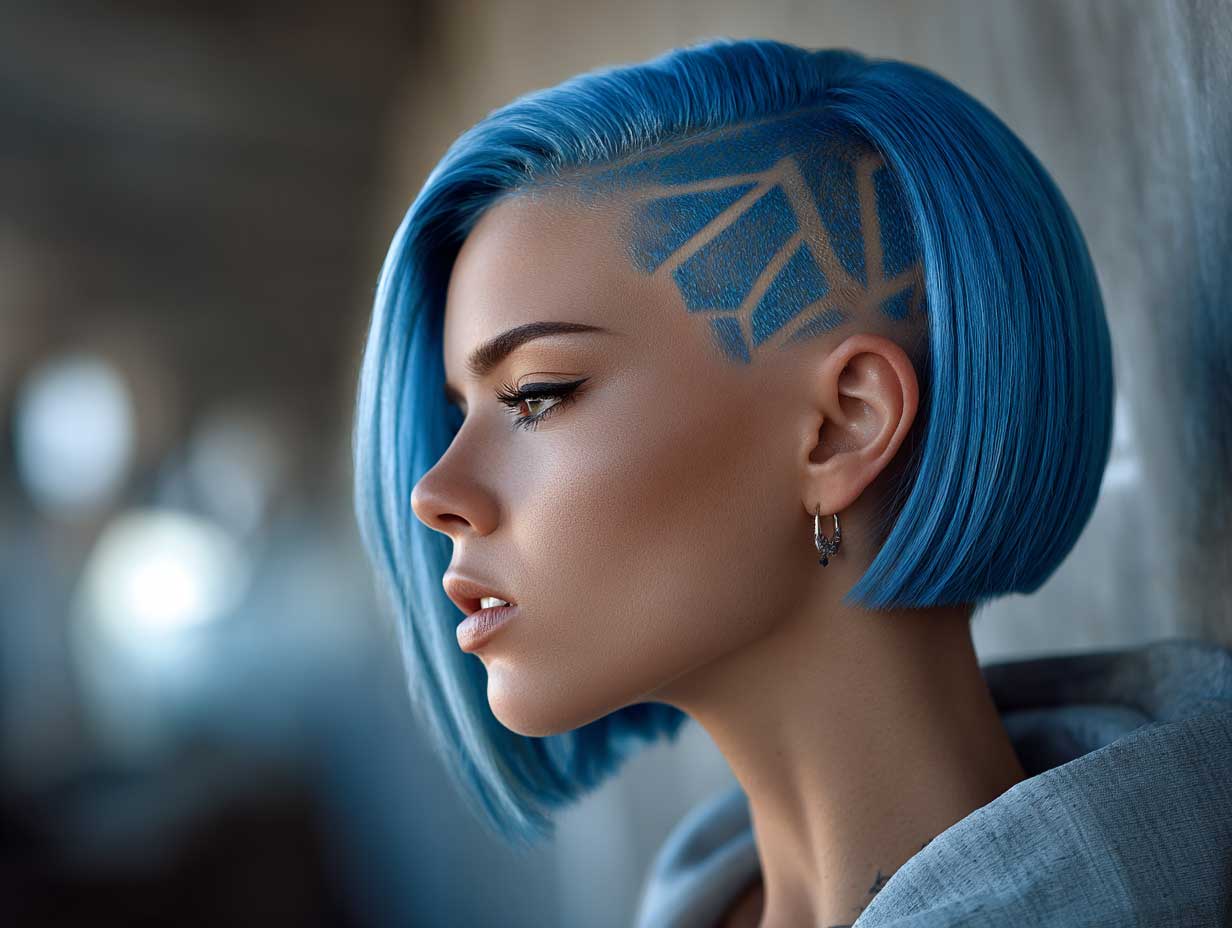
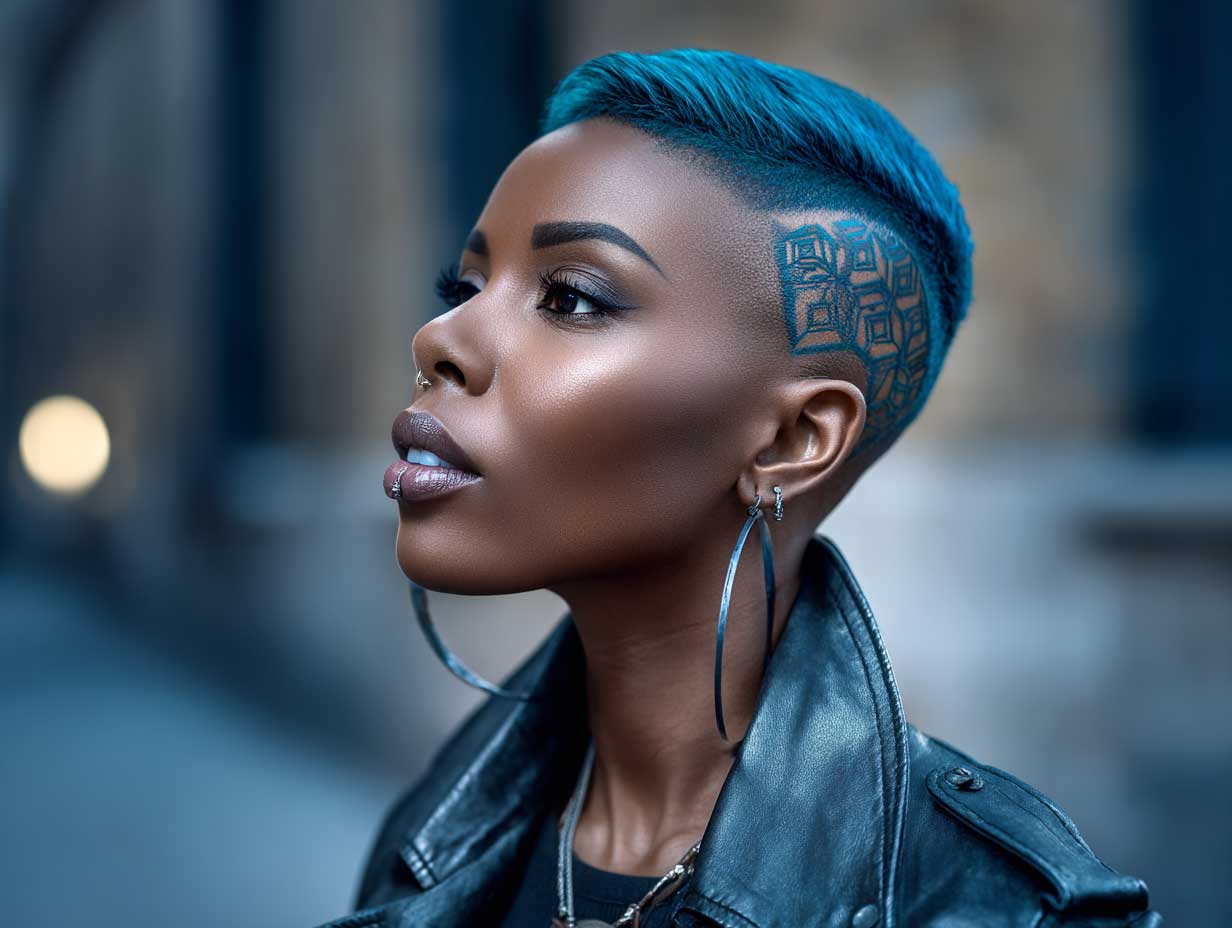
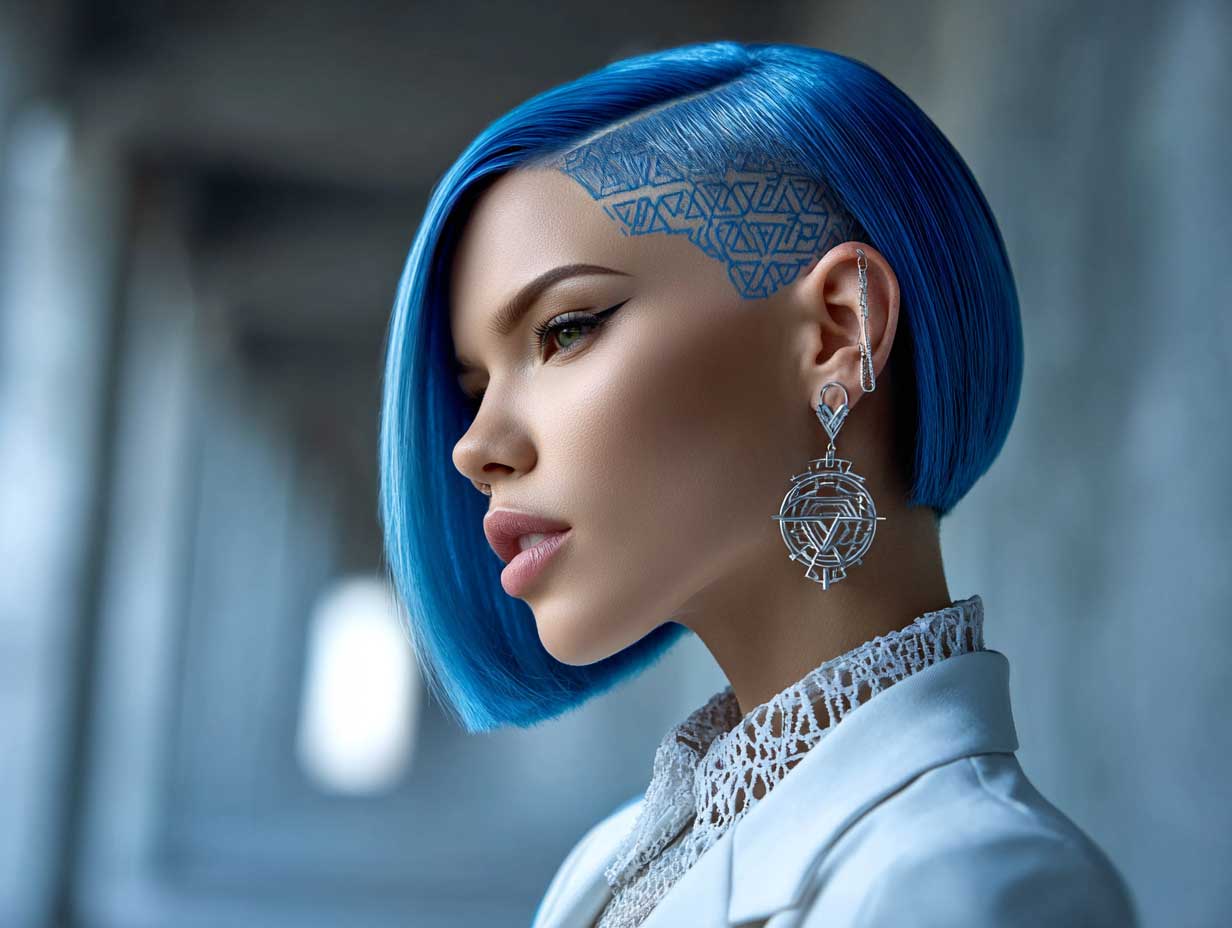

Deep blue on straight, blunt-cut hair reflects light like lacquer — the color shifts between navy and electric depending on the angle. That’s the appealing part. The difficult part is that blue vivid shades are specifically prone to fading toward green as the pigment breaks down. What’s happening chemically: the warm yellow base tone in bleached hair starts showing through the blue, and blue plus yellow equals greenish. To prevent this, colorists recommend a color-depositing shampoo with blue pigments between salon visits. Matrix Keep Me Vivid Shampoo is one commonly cited option — used consistently, it can extend color vibrancy by weeks.
The shaved design itself sits in the underlayer — near the temple, behind the ear, or at the nape — and requires a separate maintenance visit from the color appointment. Shaved designs blur in as little as three weeks once hair grows back in, which is why frequent touch-ups are a non-negotiable part of owning this look. Is it worth it? That’s a trade-off question: you’re paying for something that disappears faster than the cut itself, but the visual payoff while it’s fresh is measurable. A gloss treatment every second trim keeps the blue luminous and prevents the gradual drift toward dull teal.
Styling requires a smoothing serum and a flat iron pass — but here the goal isn’t just edge crispness, it’s the glass-like surface that makes blue reflect correctly. A matte product on blue hair is a mistake; it absorbs the light that makes the color pop. Layered bob styles with blunt bangs show a related cut shape with a different structural logic, worth comparing if you’re deciding between a pure blunt line and one with movement added through layering.
A full vivid color service — bleach out plus blue vivid application — starts around $400 at specialist salons, with refresh appointments running $150–$250. That recurring cost is the honest reality of maintaining ultra blue at this level of saturation. Factor it in before booking the first appointment or the look will fade unintentionally rather than gracefully.
| Variant | Best For | Color Lifespan | Key Maintenance Risk |
|---|---|---|---|
| Fiery Red Asymmetric | High contrast, sculptural impact | ~24 washes / 2 months | Red fades fast — plan toner monthly |
| Electric Lime Undercut | Hidden versatility, two looks in one | Fast-fading — needs color deposit every few washes | Lime turns yellow-green without upkeep |
| Ultra Blue Shaved Design | Maximum customization, urban edge | ~24 washes / 2 months | Blue fades to green without blue-pigment shampoo |
Choosing among these three comes down to one question: how much maintenance are you actually going to do? The asymmetric red is the most forgiving — it fades with some dignity and the cut holds its shape even at week seven or eight. The lime is the most demanding — the color simply doesn’t look intentional when it starts going, and the undercut blurs quickly. The blue with shaved design sits in between: the color fade is predictable and manageable, but the shaved pattern needs attention every three weeks or it defeats the purpose. According to stylists, a women’s haircut runs $45–$75 on average, not counting color — so budget both in your calendar before committing to any of these looks.
Final Word
Color Without a Strong Cut Is Just Dye. The Blunt Edge Is What Makes It Architecture.
Each look here uses the blunt haircut as a load-bearing structure — not decoration. The straight-across line disciplines the color, gives the geometric details somewhere to land, and keeps the overall shape readable at every distance.
Maintenance is the honest part: vivid colors last roughly two months with proper care, and blunt edges need a trim every 6–8 weeks. Skip either and the look slides from intentional to accidental fast.
Save this post before your salon appointment and bring the specific image — stylists work from photos, not descriptions.
Related Topics