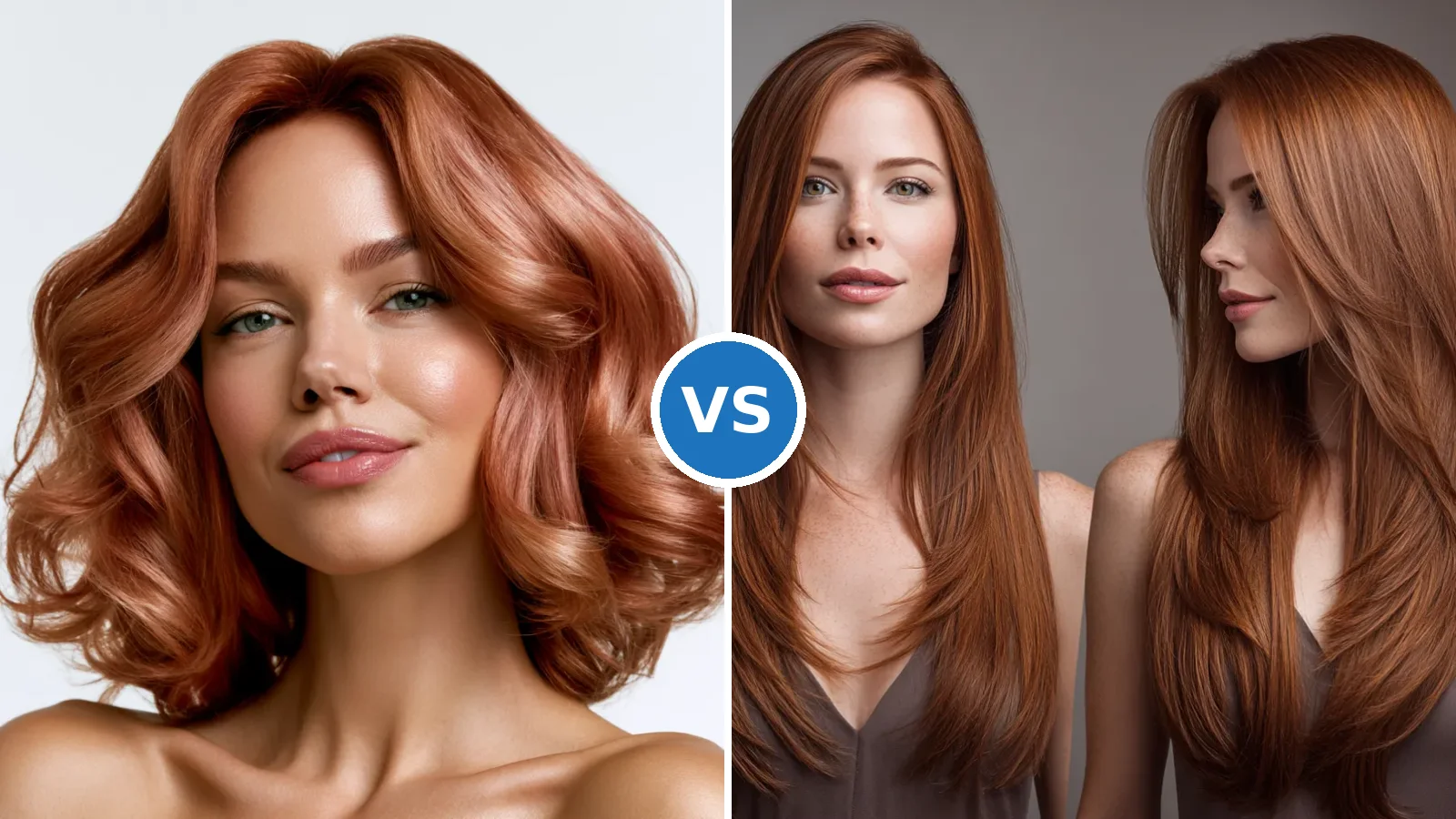
The right permanent hair style for thick hair doesn’t just look good on day one — it changes how manageable your hair feels every morning after. Thick hair carries more weight, resists shape changes, and can turn a beautiful cut into an unruly mass within weeks if the structure isn’t right. The three treatments covered here — layering, perms, and permanent straightening — each address a different version of that problem.
Stylists consistently point out that thick hair is actually the ideal candidate for permanent treatments. The density that makes daily styling exhausting is exactly what makes chemical and structural changes hold longer and look more dramatic. A perm that would fall flat on fine hair bounces for months on thick strands. Layers that would disappear on thin hair create real weight distribution on dense ones.
The mistake most people make is treating all three options as interchangeable. They target completely different problems: layers redistribute weight, curls add definition by breaking up density, and straightening eliminates the texture altogether. Picking the wrong one means fighting your hair’s natural behavior instead of working with it.
– Layered cuts run $50–$100 and need a trim every 6–8 weeks — the lowest-commitment option
– Perms for long, thick hair typically cost $150–$300+ and last several months without daily effort
– Keratin smoothing for thick hair runs $300–$600+; Japanese straightening reaches $400–$800
– Thick hair holds perms and structural cuts better than fine hair — density is an advantage here
– Each treatment solves a different problem: bulk, definition, or frizz control
– Avoid combining chemical treatments; successive processes on the same hair significantly increase breakage risk
Layers Redistribute Weight — and That Changes Everything for Dense Hair
Layering is the oldest and most reliable permanent hair style for thick hair because it addresses the root mechanical problem: weight. Without layers, thick hair piles up at the ends, pulling the whole shape downward and creating a flat, heavy silhouette by midday. A well-executed layered cut, typically priced between $50 and $100 at mid-range salons, changes where that weight sits.


For thick hair specifically, longer layers work better than short ones. Short layers on dense hair create a shelf effect — a visible ledge where the shorter layer ends and the bulk below it begins. Longer layers, cut at intervals of two to four inches, guide the hair to fall in sections that flow into each other. Think of it like terracing a hillside rather than cutting it in half: the volume stays, but it moves instead of sitting like a block. How often should you trim? Stylists recommend every 6–8 weeks to keep the layers defined and prevent the ends from merging back into a solid mass.

The underrated flexibility of a layered cut is what makes it a permanent solution rather than just a one-time change. Layers hold up across straight-blow-dried styles, natural air-dry textures, and braided updos without losing their shape-defining function. A sleek blowout reveals the layers as clean lines; an air-dry look lets them relax into soft waves. Don’t go for razor-thin face framing layers on thick hair — they tend to fray and separate visibly by the second wash, creating a stringy look that undercuts the whole structure of the cut.

For those who want more seasonal short hairstyle variations for thick hair, layering principles translate directly to shorter lengths — a layered bob on thick hair achieves the same weight distribution that long layers do at shoulder length or beyond.
Asking for “lots of layers” without specifying placement is the most common mistake thick-haired clients make. A stylist who stacks layers too close to the crown on dense hair creates a triangle shape — wide at the top, heavy at the bottom — that takes months of grow-out to fix. Ask for long layers starting below the collarbone, not from the crown. If your stylist immediately reaches for the thinning shears on dry hair, ask them to cut first and thin last; over-thinning dense hair creates frizz and splits rather than reducing bulk.
What a Perm Actually Does to Thick Hair That It Won’t Do to Fine Hair
Permanent curls for thick hair work on a structural principle that favors density over fineness: the weight of thick strands actually helps the curl hold its shape instead of pulling it straight again. A perm on thick hair sits more like a spring under tension — there’s enough mass to keep the curl coiled — whereas fine hair can unravel within weeks as the strand weight disappears. Expect to pay $150–$300+ for a perm on long or thick hair at a standard salon, with specialist curl work running higher.


The rod size chosen during the perm determines the final result more than any other factor. Large rods produce loose, beachy waves that move naturally and reduce the visual density of thick hair without making it appear smaller. Medium rods create defined curls — the classic perm look — that add texture across the whole length. Small rods on thick hair are rarely a good idea: the resulting tight curl pattern multiplies the volume dramatically and can be difficult to manage without significant daily product use. OGX Quenching + Coconut Curls Shampoo ($6.97 at Walmart) is a practical daily-use option that keeps permed thick hair hydrated without weighing the curl down.

Does thick hair get damaged by perming? It depends on what’s already been done to it. Virgin hair — never bleached or chemically treated — handles the perm solution well and typically shows minimal breakage. Previously colored or highlighted hair is a different situation. The perm solution reacts with color-compromised bonds unpredictably, and stylists recommend waiting at least two to three weeks after any color service before perming. The biggest post-perm mistake with thick hair is washing too soon: most stylists specify waiting 48 to 72 hours after the treatment before the first shampoo, because water disrupts the neutralizing process while it’s still setting.

For texture inspiration between treatments, beach waves for thick hair replicate the loose movement a large-rod perm produces — useful for understanding what curl size actually works with your specific density before committing to a chemical treatment.
Keratin and Japanese Straightening for Thick Hair — and Where Each One Stops
Permanent straightening for thick hair exists on a spectrum from semi-permanent smoothing to true structural reconditioning, and the difference matters for both results and maintenance. Keratin treatments, the gentler end of the spectrum, coat the outside of the hair shaft with a protein layer and cost $300–$600+ for long, thick hair at professional salons. Japanese straightening — also called thermal reconditioning — breaks the hair’s internal disulfide bonds and resets them in a straight position, running $400–$800 per session.
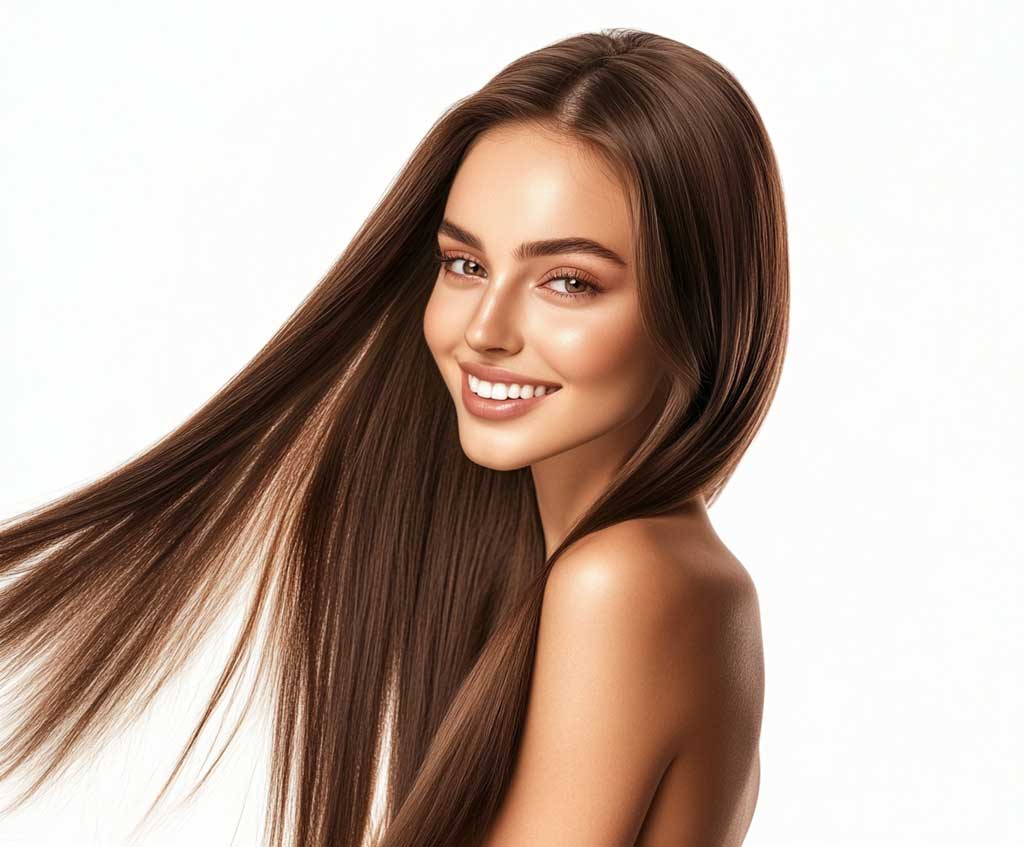
Thick hair is both the best and the most demanding candidate for straightening treatments. On the positive side, the density of the strands means the result looks more dramatic than on fine hair — the contrast between untreated frizz and the post-treatment smoothness is stark and striking. The difficulty is that thick hair takes longer to process, which increases the chemical exposure time and the skill required to keep it even. An experienced stylist will assess strand thickness section by section; someone who applies the same processing time across the whole head often produces inconsistent results — wavy at the back, flat at the front. According to Healthline’s medically reviewed breakdown of Japanese straightening, thick or very curly hair may need longer chemical processing times, which requires a stylist who knows exactly when to stop.

What’s the actual difference in day-to-day experience? After a keratin treatment, thick hair still has some natural movement and responds to humidity — results last roughly three to five months before the smoothing effect fades. After Japanese straightening, the treated portion of the hair is permanently straight until it grows out; only the new growth needs attention, typically touched up every six months. The trade-off is that Japanese-straightened hair cannot be reliably permed afterward, and coloring it requires significant care. The rule most stylists follow is simple: no more than two Japanese straightening treatments on the same section of hair.

Sulfate-free shampoo is non-negotiable after both treatments — sulfates strip the protein coating in keratin-treated hair and accelerate the fade significantly. For Japanese-straightened hair, the first 72 hours require keeping the hair completely dry and flat; any kink formed during that window can set permanently. A wide-tooth comb replaces the brush during this period. The biggest anti-advice here: don’t try to speed up the grow-out by perming straightened thick hair in the same year. The structural damage from stacking two opposing chemical treatments on the same strands is rarely recoverable without a full cut.
| Treatment | Cost Range (Long/Thick Hair) | Duration | Key Risk |
|---|---|---|---|
| Layered Cut | $50–$100 | 6–8 weeks between trims | Over-thinning creates frizz |
| Perm (Loose-Large Rod) | $150–$300+ | 3–5 months | Breakage on pre-colored hair |
| Keratin Treatment | $300–$600+ | 3–5 months | Fades faster without sulfate-free care |
| Japanese Straightening | $400–$800 | Permanent (root touch-up 6 months) | Cannot safely perm afterward |
The Bottom Line
Thick Hair Rewards the Right Treatment — and Punishes the Wrong One
Density is a structural advantage, not a styling obstacle. Layered cuts redistribute it. Perms leverage it to hold curl longer. Straightening tames it into a format that takes almost no daily effort. The catch is that each treatment conflicts with the others — picking one means knowing what you’re giving up.
Keratin and Japanese straightening require the most financial investment and the most careful aftercare. Layering demands the least chemistry but the most consistent maintenance visits. Perms sit in the middle on both counts.
Match the treatment to the actual problem your hair gives you every morning, not to the look you saw on someone with different hair. Save this post before booking a consultation.
Related Topics