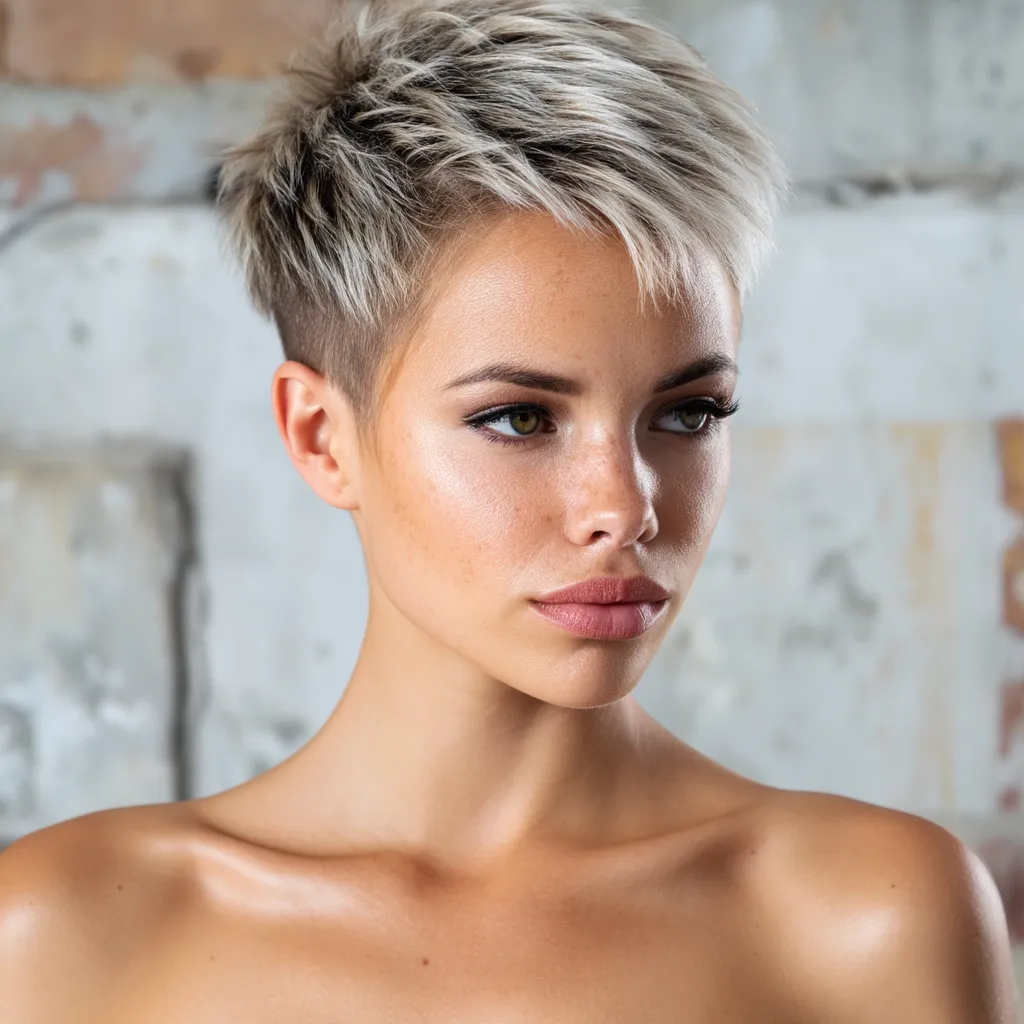
The uppercut hairstyle earns its keep by doing two things most cuts can’t: it creates lift where you need it and drops weight exactly where you don’t. Add ash blonde highlights to that architecture and you get a look that reads expensive without requiring expensive maintenance every six weeks. The cool, grey-silver tone of ash blonde works by neutralizing any warmth in the hair, so instead of yellow-blonde you get something closer to platinum with depth — the kind of dimension you’d normally associate with a multi-step color process.
Stylists recommend ash blonde highlights specifically for clients who want visible color contrast without committing to a full bleach. The reason comes down to placement: on an uppercut, where layers fan out from a structured base, highlighted strands catch light at multiple angles simultaneously. The dark roots give the cut its shape, the lighter pieces give it movement. Without that contrast, a short structured cut can look flat under anything other than direct sunlight.
This article covers three approaches to the combination — a layered variation that stays polished, a tousled version that leans edgier, and a voluminous balayage finish for anyone who wants maximum presence. Each one starts from the same cut and color foundation, which means the maintenance logic is the same across all three.
– Average cost of ash blonde highlights: ~$96 for standard foil; balayage runs $148–$400+ depending on complexity
– Trim frequency for a structured uppercut: every 4–6 weeks to keep the shape crisp
– Redken Blondage Purple Shampoo ($29/10.1 oz at Ulta) used 1–2x per week keeps ash tones from going brassy
– Ash blonde favors cool and neutral skin undertones; warm undertones risk reading yellow in photos
– Three styling roads covered below: layered, tousled, voluminous balayage
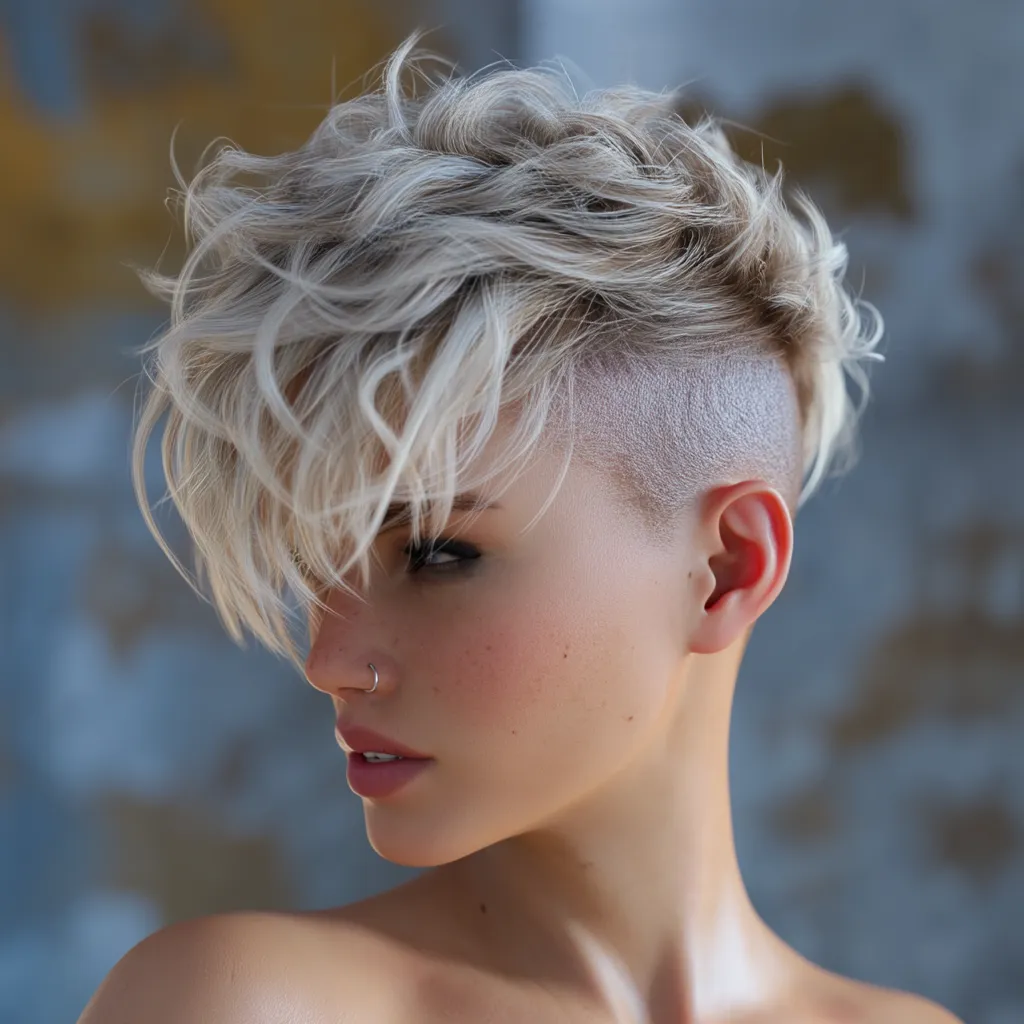
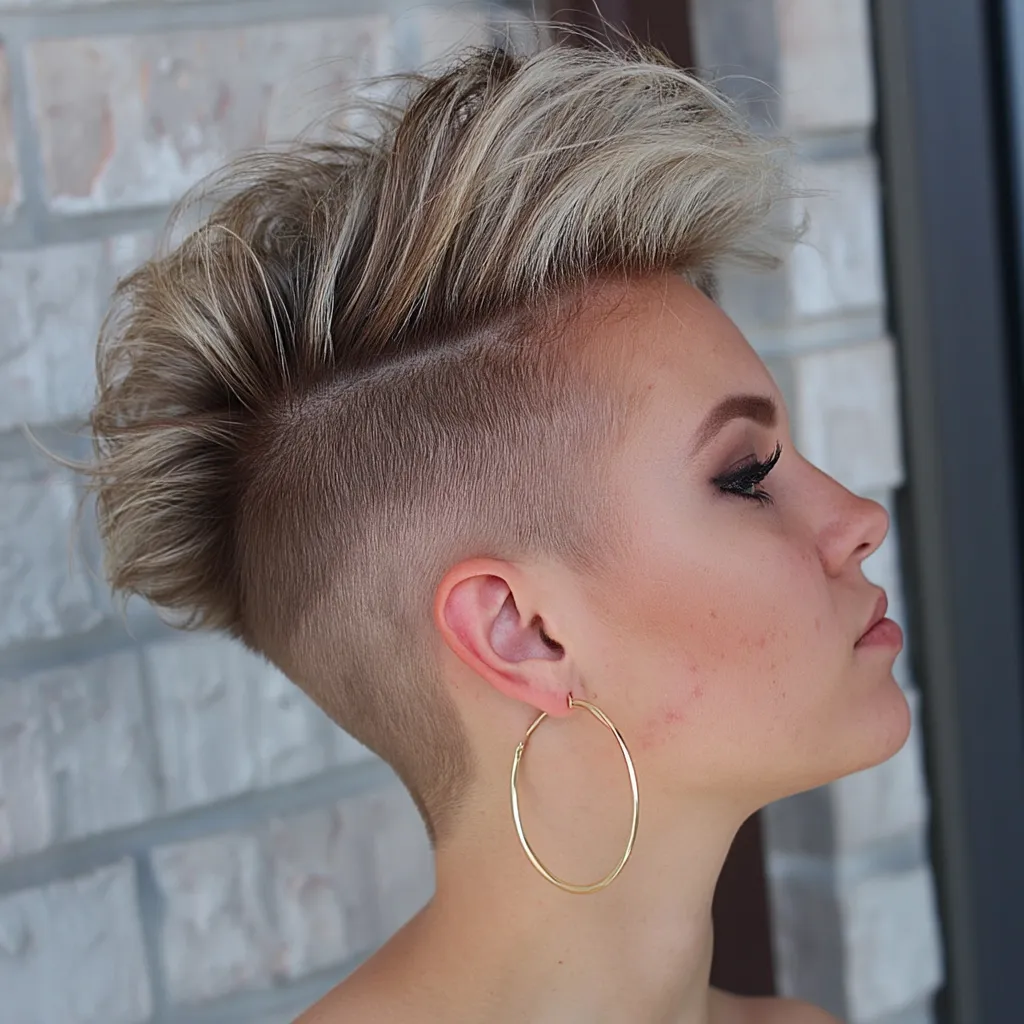
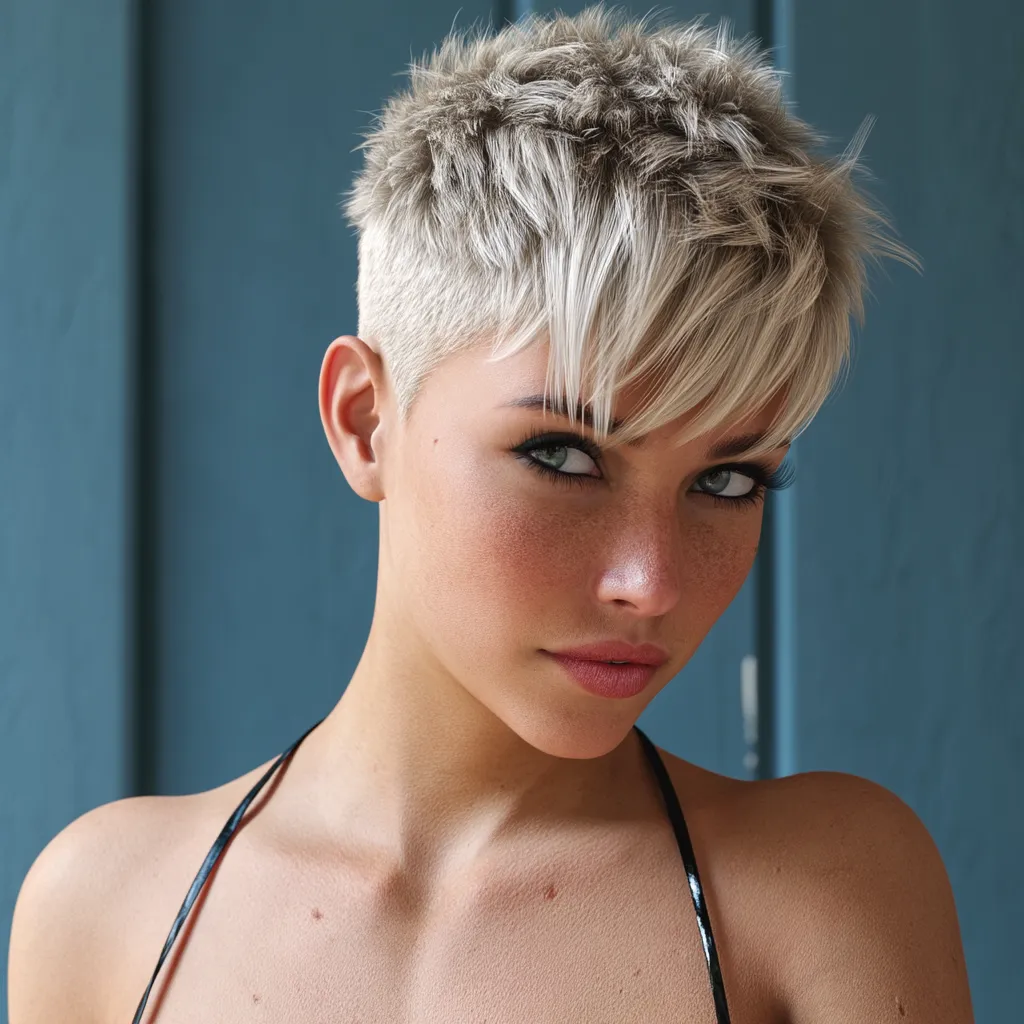
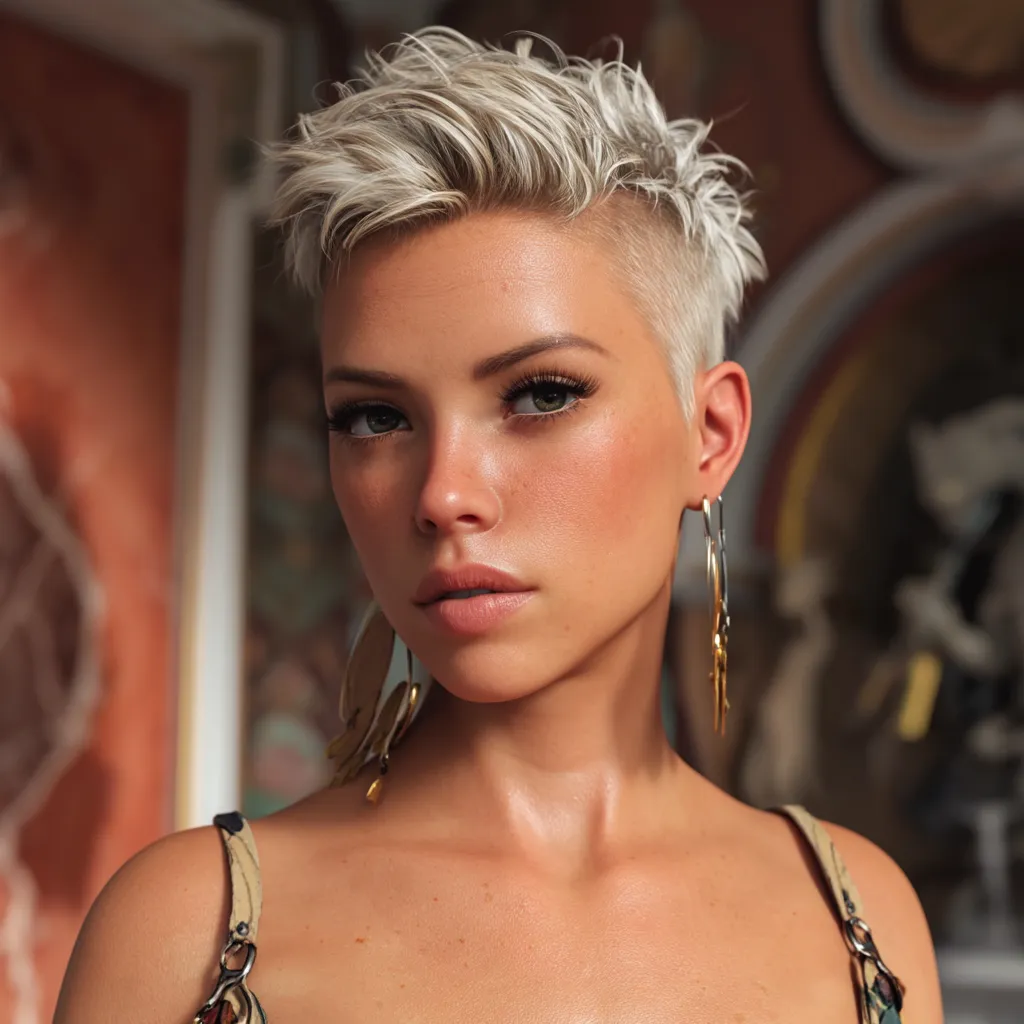
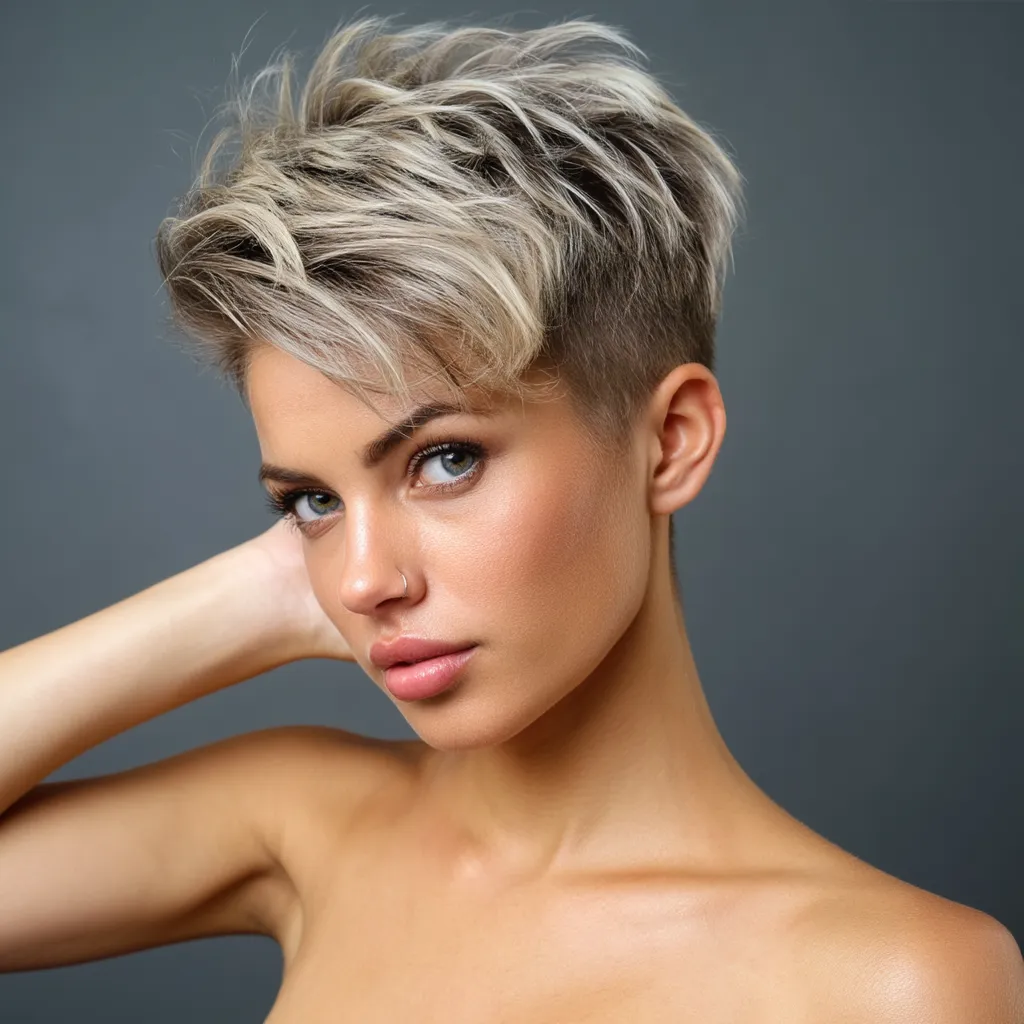
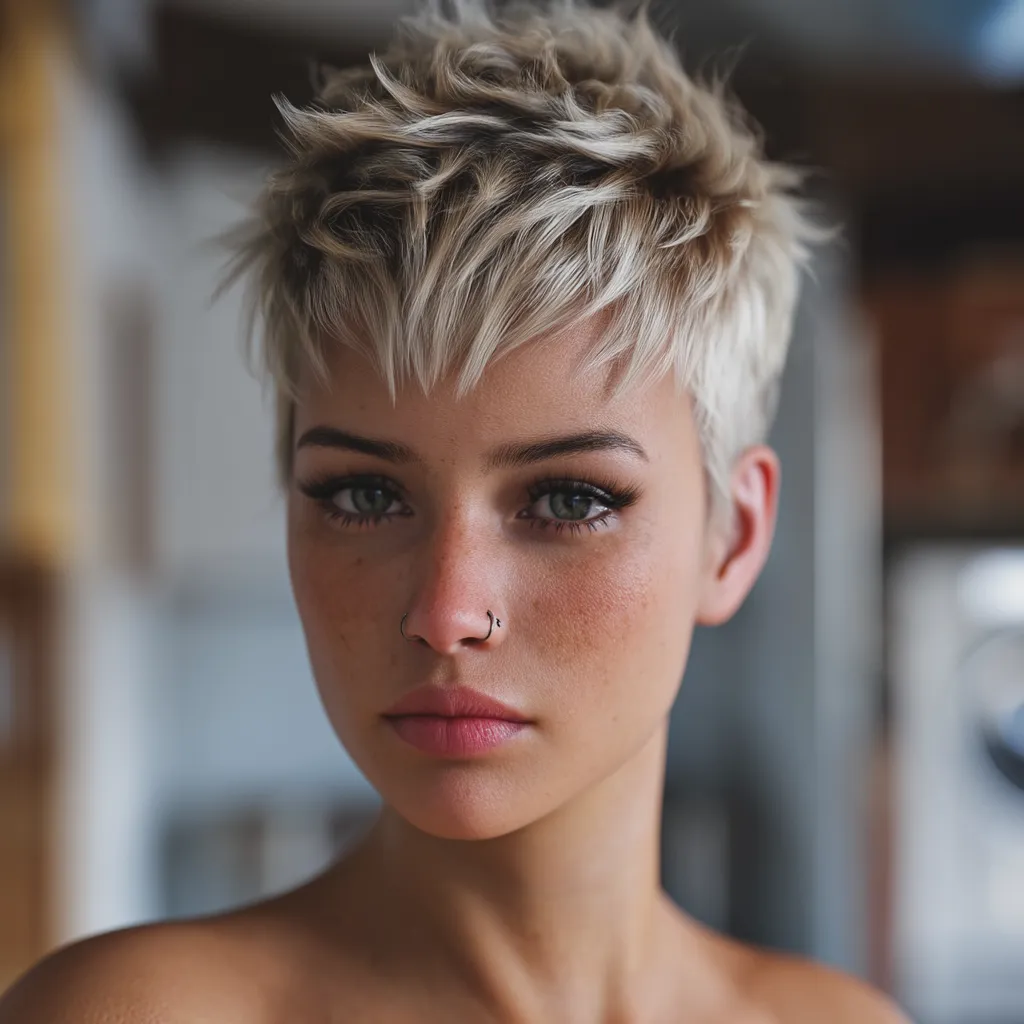
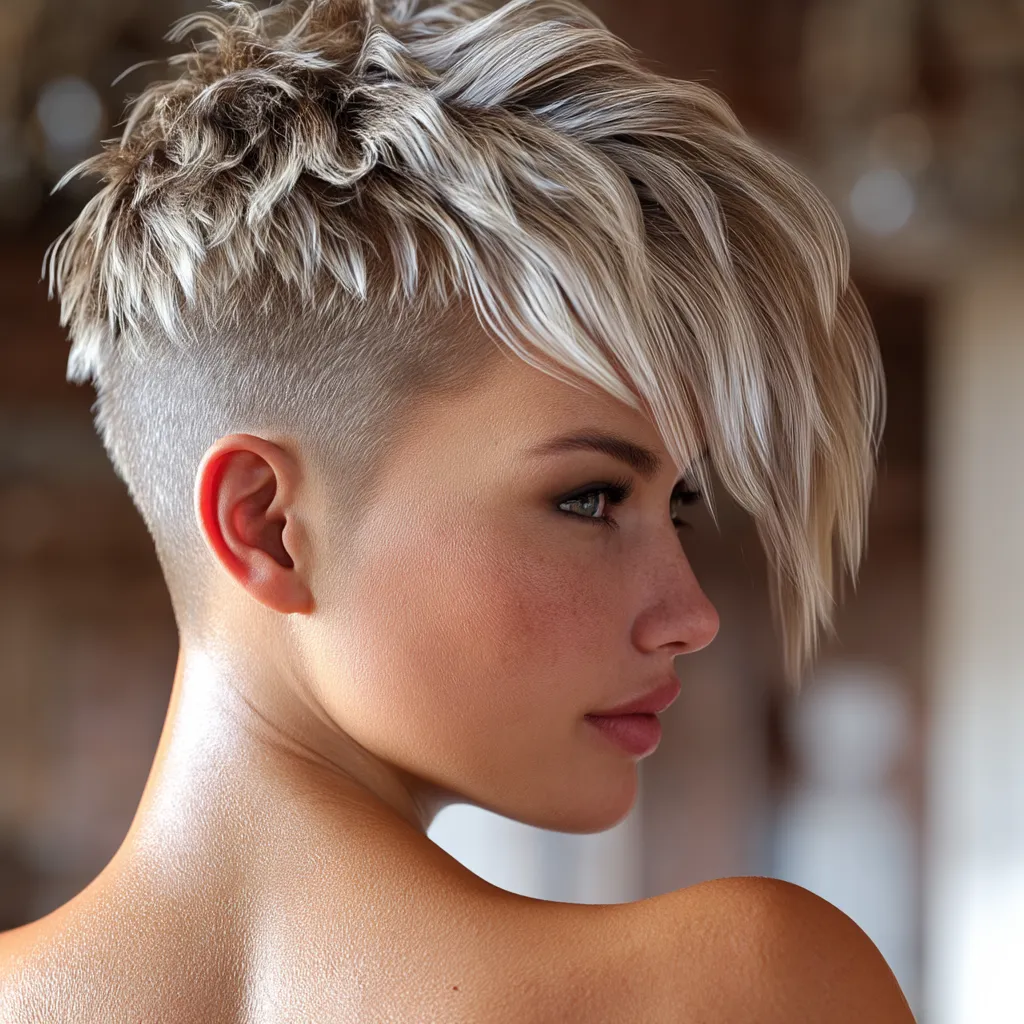
Structured Layers — Uppercut Hairstyle with Subtle Ash Blonde Highlights
Layered uppercut hairstyle done right means the layers do the lifting work so product doesn’t have to. The trick here is in the blow-dry technique: a round brush aimed backward from the nape upward, creating backward movement that lets the ash blonde pieces arc away from the face. Ask your stylist to keep the highlights concentrated in the top two layers — that’s where the light hits, and placing color deeper than that just disappears into the structure of the cut.


Standard foil highlights for a short uppercut average around $96 at most salons — though in coastal cities or higher-end salons that number climbs fast. What you’re paying for is precise placement, and with a cut this architectural, placement is everything. Broad, uniform foiling makes the color look painted on; scattered placement that follows the layer breaks makes it look like the hair grew that way. Stylists recommend a texturizing spray worked through dry hair after styling — it separates the highlighted pieces visually and reinforces the multi-tonal effect without adding weight. What doesn’t work: heavy serums or shine sprays applied to the entire head, which flatten the layers and merge the tones into a single flat block of color.
Maintenance for this version comes down to two non-negotiables. First, a trim every 4–6 weeks — short hair loses its shape faster than longer cuts because the face framing is so exposed. Second, a purple shampoo routine to keep the ash tones from drifting warm. Redken Blondage runs $29 for a 10.1 oz bottle at Ulta; use it 1–2 times per week, leaving it on for 3–5 minutes. Why not every wash? Overuse deposits too much violet pigment and the hair starts reading grey-purple instead of silver-ash. Think of it as a toner, not a cleanser.
For long pixie haircuts in ash blonde, a similar placement logic applies — the cool base does the structural work while the color variation creates movement. The difference here is that the uppercut’s more defined architecture rewards sharper color contrast between the base and the highlighted pieces.
When Tousled Beats Polished — Short Uppercut Hairstyle with Bold Ash Blonde Streaks
A short uppercut hairstyle worn tousled communicates something different than the polished version — it trades finish for movement, and the bold ash blonde streaks are what make that movement visible. The key distinction from the layered version is the styling method: a diffuser instead of a round brush. Apply a volumizing mousse to damp hair, then diffuse on medium heat, scrunching sections upward. That process creates irregular texture so the highlighted strands don’t all sit in the same plane — some kicking up, some folding outward — and the cooler blonde pieces catch the eye at different angles depending on how the light hits.


Bolder streaks — wider, more concentrated highlights rather than scattered fine pieces — cost more because they require more bleach lift and more precise sectioning. According to Redken’s colorists, ash blonde requires specific toning to deposit cool pigments after lifting; without a professional toner application, the lifted strands will pull warm (yellow or orange) rather than settling into that grey-silver ash tone. Budget for both the highlight service and a toning step. Balayage-style bold streaks run $148–$400 depending on your stylist and location, but they also grow out more gracefully than foil because the root transition is gradual rather than a hard line. How does tousled styling help here? Loose, irregular texture disguises regrowth for longer than a polished, smoothed-back finish would.
Don’t skip the toner after highlighting. Without a professional toner, lifted strands go warm — and on an uppercut where highlighted pieces are the most visible part of the cut, brassy yellow streaks will undermine the whole look.
Don’t use purple shampoo daily. More than 2–3 uses per week deposits too much violet pigment. Hair starts reading flat grey instead of cool ash, especially on shorter strands with high porosity from the lightening process.
Don’t highlight the underlayers. The dark base underneath the uppercut is what gives it structure and makes the blonde pieces pop. Highlighting all the way through collapses the contrast and flattens the cut visually.
Don’t tousle with heavy product. Thick pastes or wax applied to the whole head merges the highlighted strands with the base color and kills the visual separation you paid to create. Light mousse on damp hair, nothing on dry hair except a dry texture spray.
Between wash days, a dry texture spray revives the tousled shape without requiring heat. Color-safe shampoo is non-negotiable here — standard formulas strip the toner faster, and a toner that should last 6–8 weeks can fade in 3 if you’re washing with a sulfate-heavy cleanser. The goal is extending the time between salon visits, not compressing it. For more context on how blonde highlights interact with short wavy texture, see short wavy blonde hair with highlights — the wave placement principles translate directly to tousled uppercut styling.
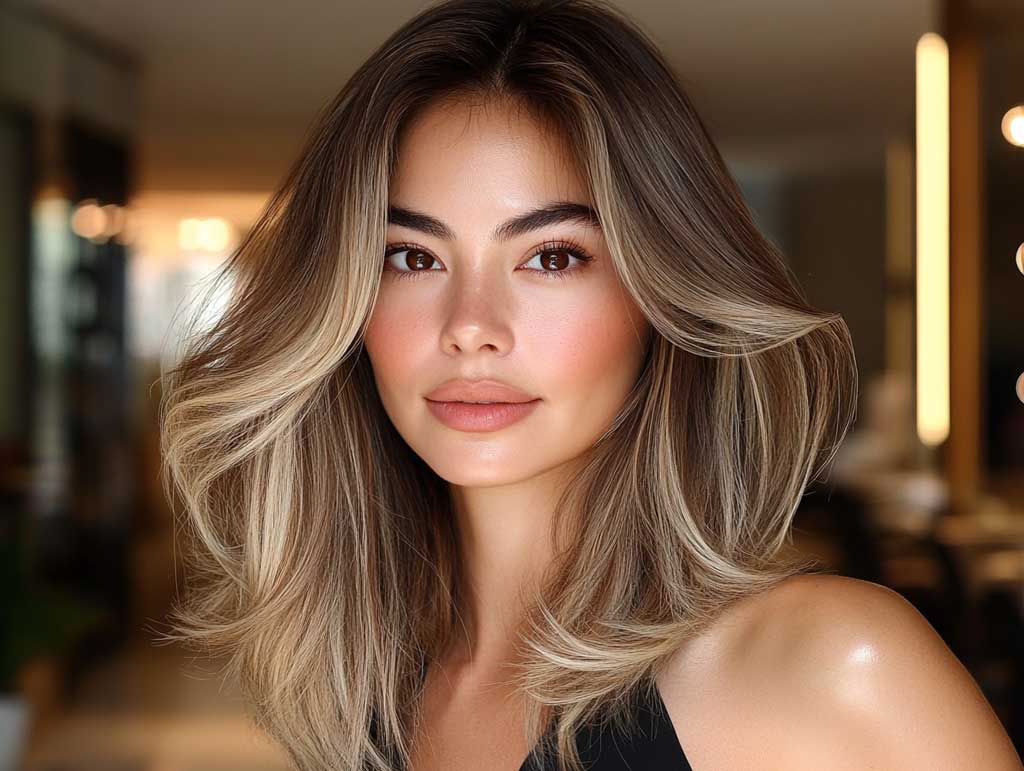
Volume That Doesn’t Deflate — Ash Blonde Balayage on a Textured Uppercut Hairstyle
Balayage on an uppercut hairstyle for women who want maximum volume works differently than foil highlights: the hand-painted application means the color starts mid-shaft rather than at the root, so the first 1–2 inches of hair stay closer to the base color and act as a natural root shadow. That shadow is what creates the illusion of lift — the eye reads the transition from dark root to light length as volume, even before any heat styling. A root-lifting spray at the crown before blow-drying builds on that optical effect; direct the dryer backward and upward while rolling a round brush toward the face at the crown, then teasing the top layer gently and smoothing over it for a refined finish.


Balayage’s real advantage on this style is the grow-out. With foil highlights, regrowth creates a visible horizontal line at the root after 4–6 weeks. With balayage, because the color begins mid-shaft, there’s no hard line — the root shadow just deepens naturally and the transition reads as intentional. That means appointments every 12–16 weeks instead of 6–8, which makes the higher upfront cost ($148–$400+) more economical over a full year. The maintenance question that matters for the voluminous version: weekly deep conditioning. Lightening services compromise the hair’s moisture-binding capacity, and on a cut where the top layers take the most structural stress from daily heat styling, hydrated hair holds volume longer than dry hair, which goes flat within an hour of styling.
According to Redken, ash blonde is characterized by grey, silver, or platinum undertones — achieved through specific toning after the lightening process, not through the lightening itself. That’s the detail most people miss: you can bleach hair perfectly and still not get ash blonde if no toner is applied afterward. The toner deposits cool pigments that neutralize the warm tones the bleach naturally exposes. Using Redken Blondage Purple Shampoo at home 1–2 times per week at $29 per bottle extends the life of that in-salon toning between appointments. A silk pillowcase is worth adding to the routine too — it reduces friction on the top layers of the cut overnight, which is where flattening starts on a voluminous style.
Redken notes that ash blonde requires professional toning to deposit cool pigments and achieve its signature grey-silver quality — an at-home toning kit can maintain it between appointments, but the initial color formula should be set in-salon.
| Style Variation | Best For | Maintenance Interval | Key Risk |
|---|---|---|---|
| Layered with subtle foil highlights | Polished, everyday wear | Trim 4–6 wks; color 8–10 wks | Flat color if highlights go too deep |
| Tousled with bold ash streaks | Edgy, high-contrast look | Trim 4–6 wks; color 6–8 wks | Brassy if toner skipped or overuse purple shampoo |
| Voluminous balayage | Maximum volume, low maintenance | Trim 4–6 wks; color 12–16 wks | Dryness from lightening; needs weekly conditioning |
THE BOTTOM LINE
The Uppercut Earns Its Edge from Color, Not Just the Cut
Ash blonde highlights on an uppercut work because the structure of the cut puts highlighted strands on display — there’s nowhere for the color to hide. The layered version gives you a polished daily look. The tousled version gives you movement and a deliberately undone feel. The balayage version gives you volume and the longest runway between salon visits.
Trim every 4–6 weeks regardless of which variation you choose — this cut loses shape faster than most. Redken Blondage Purple Shampoo 1–2 times per week keeps the ash tones from going warm. Skip the toner at the salon and the whole investment falls apart.
Save this post.