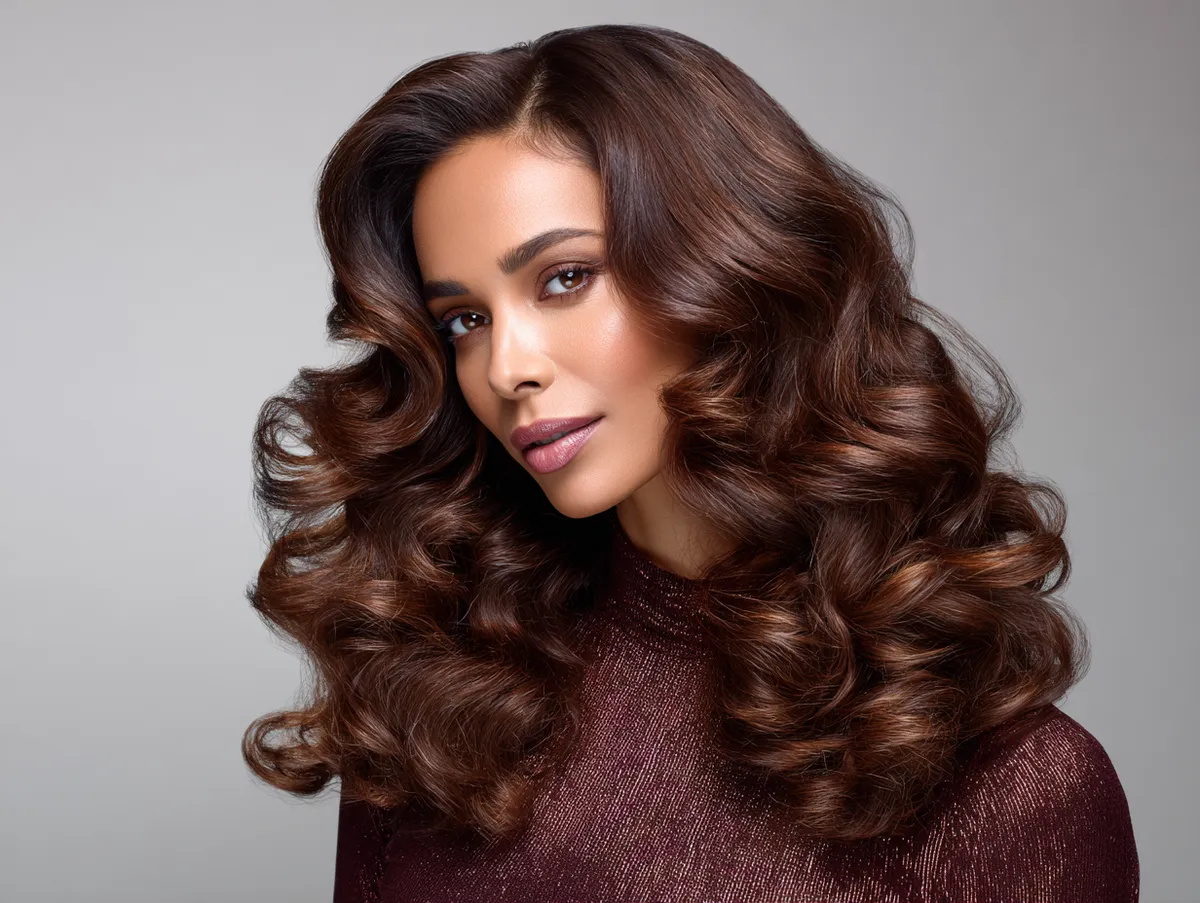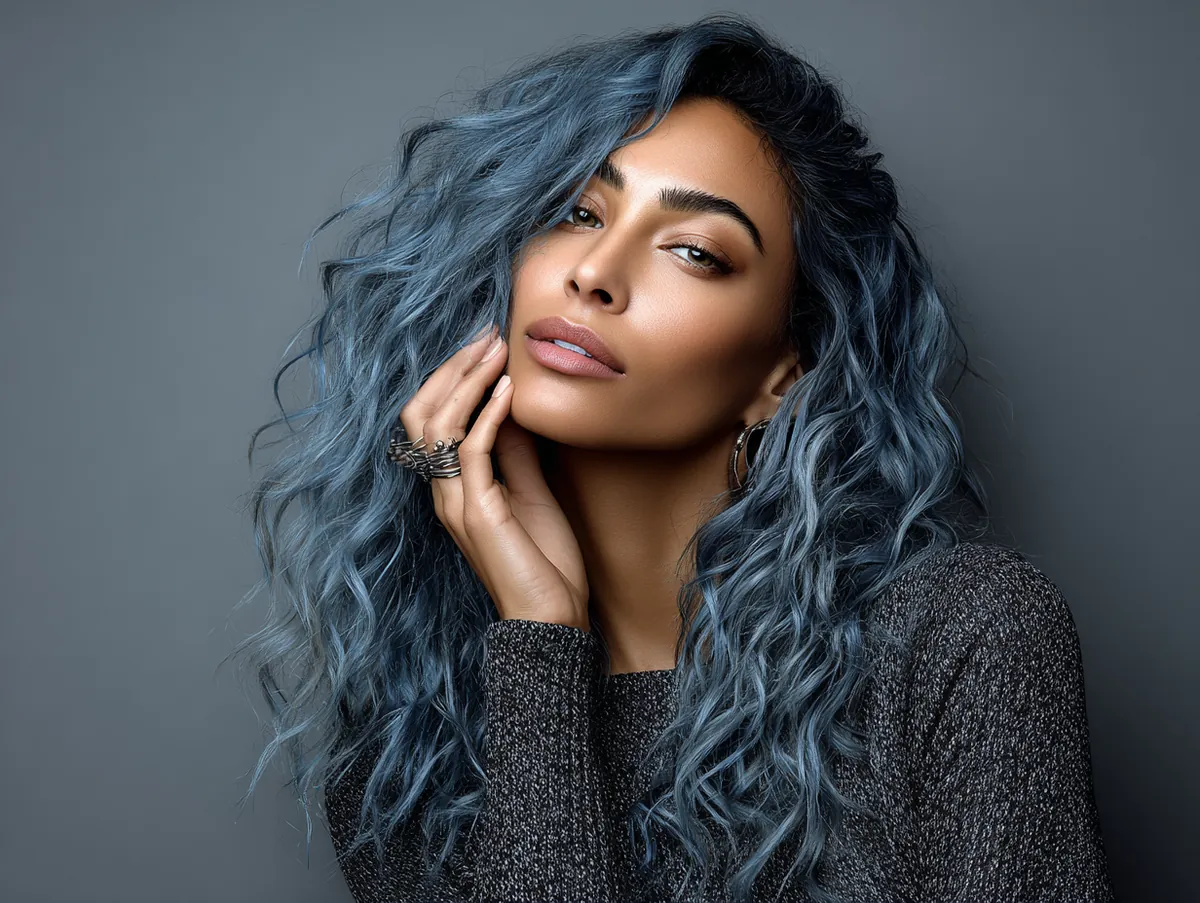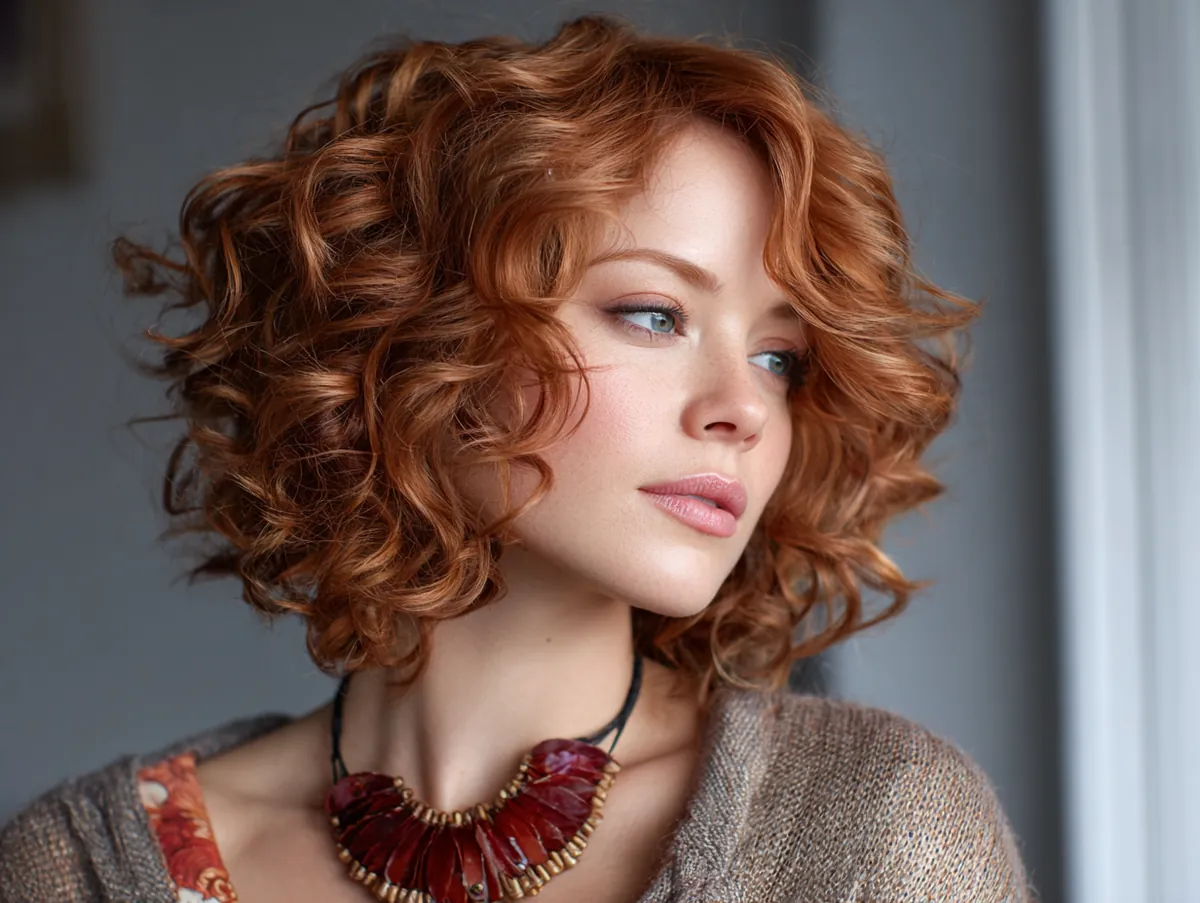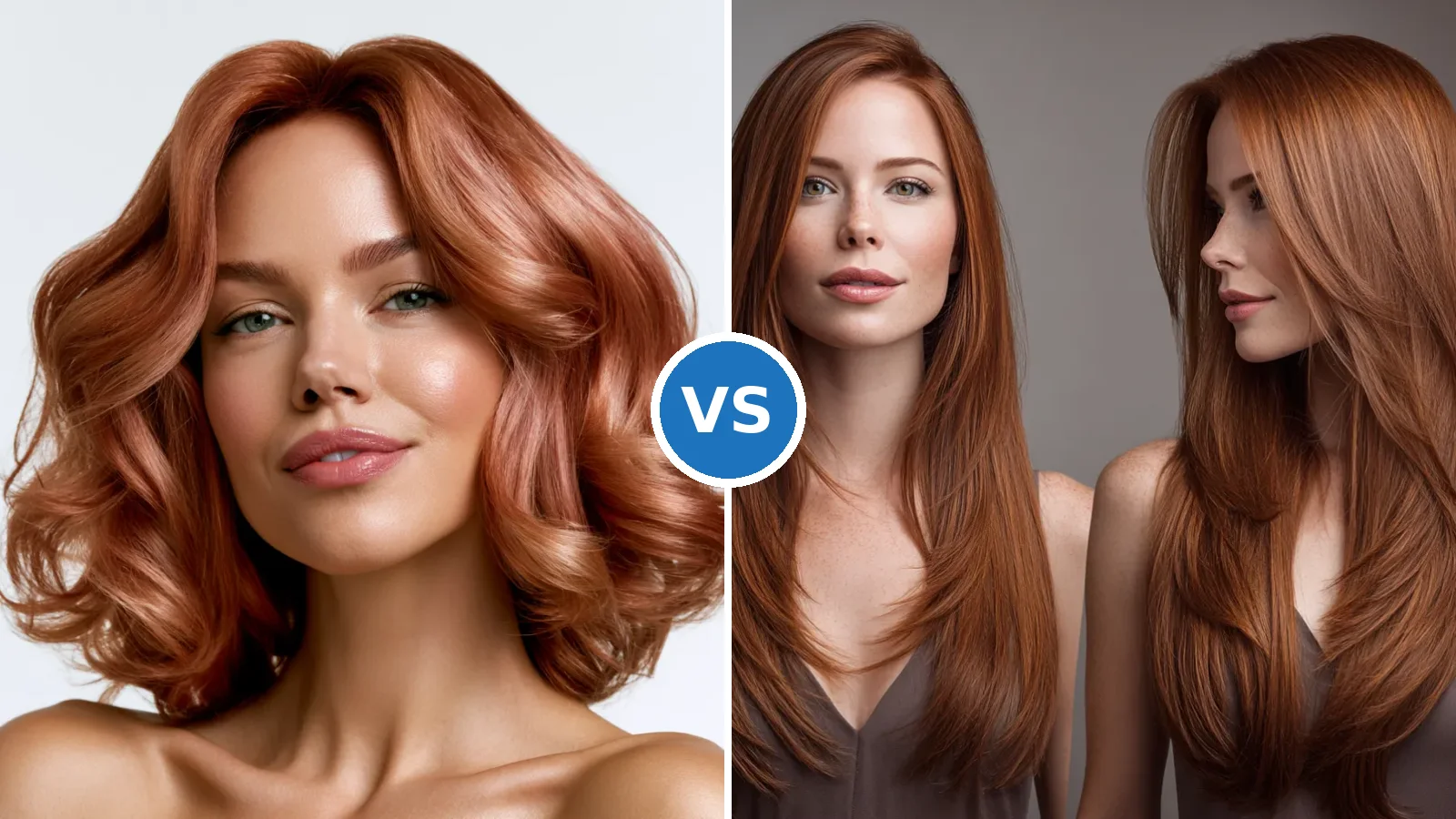
The best curly haircuts for frizzy hair don’t tame your texture — they redirect it so the frizz reads as volume instead of chaos. Most people with curly frizzy hair get the wrong cut entirely: blunt lengths that balloon outward, leaving a triangle silhouette nobody asked for. Layers solve this. So does knowing whether you want the cut to add height, control width, or both. The three styles on this page do all of that, and each one photographs well without any heat tools in your morning routine.
You’ll notice something these cuts share: none of them fight the curl pattern. They cut with it. That distinction matters more than the specific length or technique your stylist uses.
Quick Scan
- Deep Teal Layered Cut — best for thick frizzy hair that needs volume distributed evenly
- Bright Yellow Curly Shag — best for anyone who wants a lived-in, effortless look with actual movement
- Cotton Candy Pink Tapered Curls — best for controlling width while keeping height at the crown
- Avoid blunt, one-length cuts on frizzy curls — they create horizontal width, not shape
- Key products: Cantu Curl Activating Cream (~$8), Not Your Mother’s Curl Talk Defining Cream (~$9), Mielle Organics Pomegranate & Honey Curl Smoothie (~$11)
Layered Volume on Thick Frizzy Curls Does One Thing Blunt Cuts Never Will
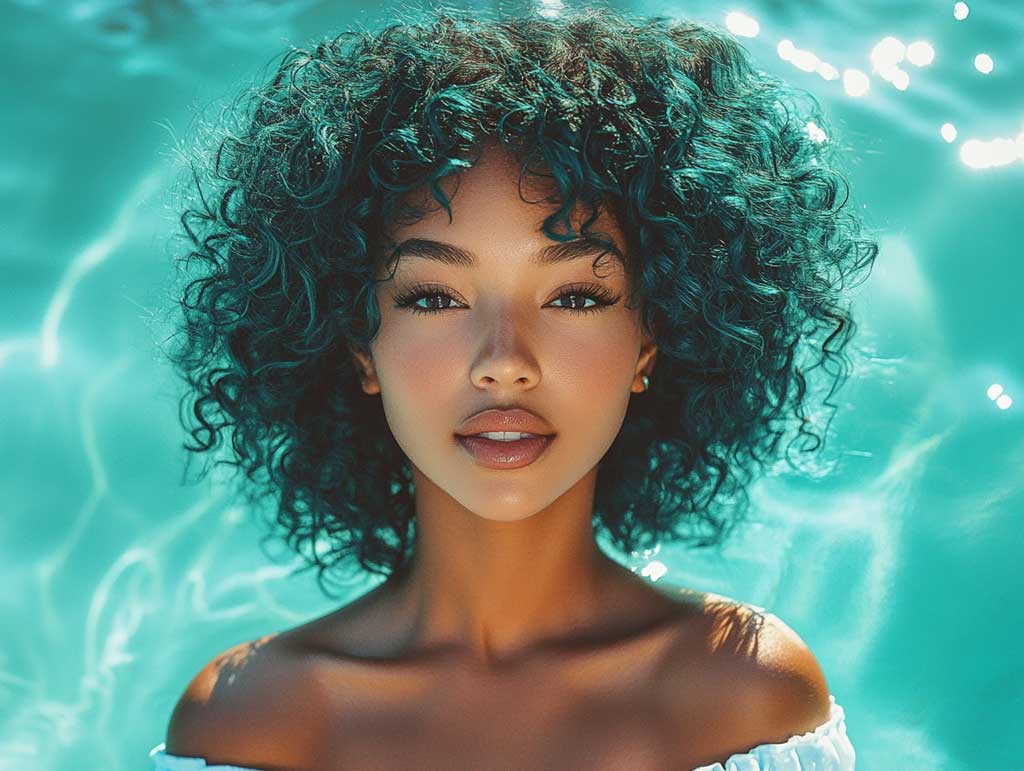
Layered curly haircuts for frizzy hair work because physics is on your side: remove weight at the ends and mid-lengths, and the hair stops pulling itself flat. I’ve worn my curls in a blunt cut for two years and wondered why everything looked like a bush by 10am. The layers fix that. Your stylist should cut each layer dry, following the curl pattern — wet cuts shrink unpredictably on frizzy textures and you’ll end up shorter than you wanted.


This deep teal layered cut is doing double duty — the color makes each curl pop individually, and the layers prevent the whole thing from merging into one dense mass at the bottom. Think of it like pruning a plant: you’re not removing anything essential, just making room for each curl to do its job. For thick textures, ask your stylist for a “deconstructed layer” approach where longer interior lengths are kept for body and shorter exterior lengths give the silhouette shape. Don’t let anyone razor-cut frizzy curls — it opens the cuticle and you’ll spend three months fighting split ends.
My go-to maintenance routine for this cut: Cantu Curl Activating Cream ($7.99 at Target) on soaking wet hair, then diffuse on the lowest heat setting for twelve minutes. Don’t touch it while it dries — touching breaks the curl clumps and creates frizz faster than any humidity will. Silk pillowcase at night, pineapple updo if you want volume to survive until morning. Trim every eight weeks maximum; this cut loses its shape fast when the ends get scraggly.
What didn’t work on this cut: heavy oils applied before diffusing. You’ll flatten the layers you paid for and spend the whole day with roots that look greasy and ends that look dry simultaneously. Apply oil as a sealer after the hair is fully dry, not before.
Don’t Do This
Don’t towel-dry frizzy curls before applying any product. The friction destroys curl clumps before they form and leaves you with frizz from root to tip. Use a microfiber hair towel or an old cotton T-shirt — squeeze, never rub. Also avoid applying curl cream to dry sections of hair: the product sits on top of the cuticle instead of penetrating, leaving a white cast and zero hold. Product on soaking wet hair, always.
A Curly Shag Turns Frizzy Hair Into the Whole Point
Curly frizzy haircuts that try to look “polished” usually fail by 2pm. A shag doesn’t try to look polished. It’s designed around the idea that movement and texture belong in the same sentence, which is why it’s probably the most honest cut for naturally frizzy curls. You’re not fighting the hair — you’re giving it a framework. The shag does this through curtain bangs at the front, heavy layers through the mid-length, and a lot of intentional disconnection between sections.


The bright yellow on this shag is doing something important: it breaks up the mass of curl so you can see each layer separately. Same principle applies if you go with brunette or red — any color variation through the layers (highlights, babylights, even a single face-frame) helps the cut read as a cut instead of just hair. Ask your colorist for vertical placement so the color follows the layer line, not a horizontal stripe that cuts across the silhouette. I’ve seen the stripe placement go very wrong on curly shags and it reads as a wig.
Styling a frizzy curly shag takes about four minutes if you do it right. Flip your head upside down, apply Not Your Mother’s Curl Talk Defining Cream ($9.49) with a prayer-hands squish motion, then diffuse upside-down for ten minutes. Flip back up, don’t touch anything, let the rest air dry. You’ll get volume at the roots and definition through the lengths without any crunchy cast. Avoid any gel with glycerin if you live somewhere humid — glycerin pulls moisture from the air directly into frizzy strands.
For a fuller breakdown of how to build this kind of cut on naturally curly hair, this guide on curly hairstyles for round faces covers how layer placement changes the silhouette depending on face shape — useful context before you book your appointment.
Tapered Curls Control Width Without Touching the Length on Top
Hairstyles for thick curly frizzy hair often fail because they address length but ignore width — and for most frizzy textures, horizontal spread is the actual problem. A tapered cut solves this by keeping the crown full while the sides gradually shorten, pulling the silhouette into a rounded shape instead of a rectangle. You get height where you want it and zero puffiness at the temples. It’s the structural solution that most one-length cuts can’t deliver.


The cotton candy pink shade here does something smart: it makes the transition from longer crown to shorter sides readable at a glance, which emphasizes the shape rather than hiding it. Your stylist needs to use a clipper or scissors on the lower nape and taper gradually — a hard line of demarcation at the temple looks harsh on curly hair and requires maintenance every three weeks to stay sharp. Ask specifically for a “soft taper” and show this photo. Don’t let anyone use thinning shears on the crown area; it creates unpredictable frizzy patches in the top section that you can’t fix without cutting everything short.
I own two diffusers and the Conair InfinitiPro ($34.99) is the one I actually use — the bowl shape fits around frizzy curl clusters without breaking them apart the way wand attachments do. Apply Mielle Organics Pomegranate & Honey Curl Smoothie ($10.99) to the crown section, finger coil the pieces you want most defined, then diffuse crown-first before moving to the sides. The sides need less product and less heat than the top, and getting that order backwards is the number one reason tapered cuts lose their shape after washing.
Does the tapered cut work on wavy frizzy hair as well as curly? Yes, but the taper needs to be less aggressive — wavy textures don’t have the same natural spring to fill out the shape, so the sides end up looking sparse rather than structured. Medium to coarse 3A or tighter curl patterns get the most out of this silhouette. For more on how different cut shapes interact with curly textures, this page on hairstyles for frizzy hair covers the styling side of managing frizzy curl days between cuts.
For more technical detail on layered curl cuts, the editorial team at WWD’s curly hair product guide covers how cut type interacts with specific products — useful reading before you decide on styling routine to pair with a new shape.
The Bottom Line
Frizzy Curls Need Shape, Not Suppression
Every cut on this page works because it works with the hair’s natural spring and spread. The teal layers redistribute volume. The shag frames the face and lets texture breathe. The taper pulls width inward while keeping crown height intact.
Get your cut done dry if at all possible, and bring a reference photo — stylists who specialize in curly hair can read a photo faster than any description you give them.
Save this post and bring it to your next appointment.
Related Topics