Loc styles for women become a completely different conversation the moment accessories and color enter the frame. A single row of gold beads shifts the weight of a hairstyle from casual to considered. A two-tone ombre running from root to tip turns a standard length into a statement. Neither change requires a full restyle — just the right addition in the right place.
Stylists often point out that locs have a structural advantage most hairstyles lack: every individual strand is a canvas. Beads slide on cleanly, wraps frame without pins, and color gradients read differently across textured locs than on straight hair — the pigment catches in the coils and throws light in multiple directions at once. That’s not an accident of trends. It’s mechanics.
Three styling directions define most of what works right now: metallic bead embellishment, ombre and gradient color, and fabric headwrap styling. Each one works independently. All three reward intentional placement over spontaneous decoration. The combinations that look planned usually are — and they start with understanding what each method does on its own.
– Gold and metallic beads on locs work best when silicone-lined — they grip without slipping or causing breakage
– Ombre coloring at a salon runs $130–$200 on average; at-home Splat ombre kits start around $9
– Headwraps from brands like Fanm Djanm range from $38 (cotton) to $78 (silk) — satin-lined options reduce friction on locs
– Sulfate-free shampoo is non-negotiable for color-treated locs; Mielle Organics Rosemary Mint Strengthening Shampoo (12 oz, $9.99) is formulated specifically for locs
– Ombre locs and beaded styles both pair with a half-up silhouette — the styling geometry is the same even when the accessories differ
What Gold Beads Actually Do to Loc Styles for Women
Metallic bead embellishment on loc styles for women works the way a watch works on a wrist — it doesn’t change the structure, but it shifts the entire register of the look. Gold catches ambient light differently than copper or silver, which is why it reads warmer and more intentional against natural locs. Beaded loc sets from Etsy and specialty retailers like Kendra Kenshay run $10.99–$18.99 per pack, making this one of the lowest-cost styling upgrades with one of the highest visual returns.


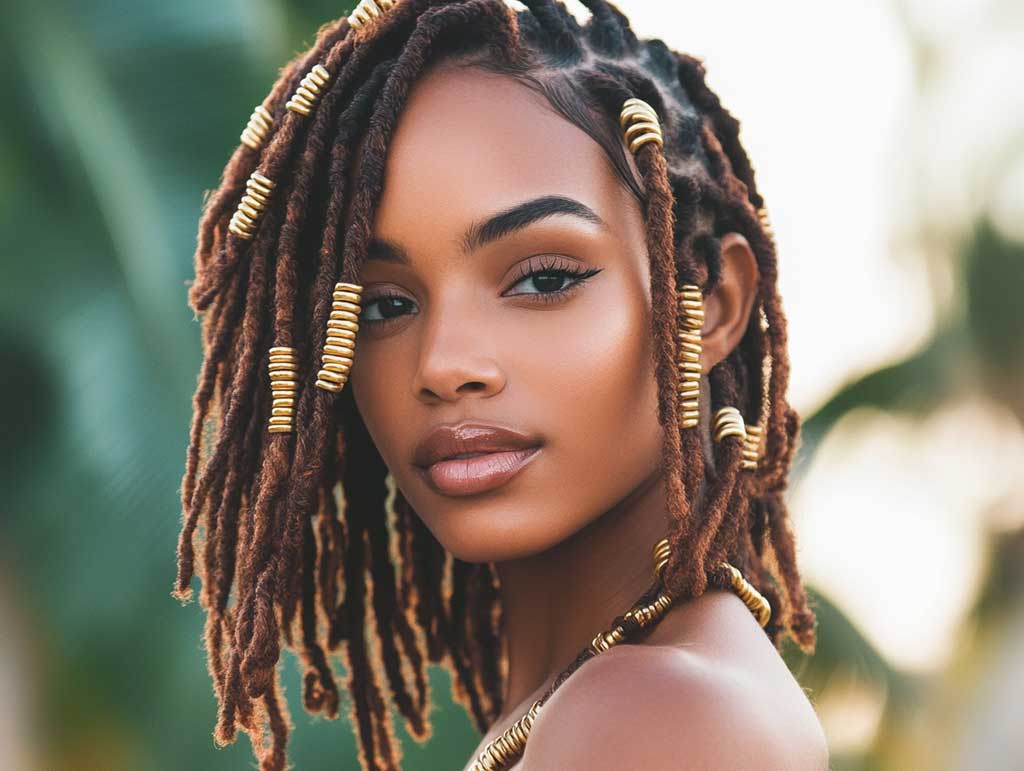
Placement is the real technique here. Spacing beads every three to four inches throughout the length creates balance and movement — the locs catch light as they shift, and the beads don’t compete with each other. Concentrating them only at the ends creates a weighted, polished effect closer to a tassel. Mixing gold with copper at the tips and silver near the roots adds dimension that a single metal tone can’t achieve alone. The trick stylists rely on: start with five beads, step back, then decide whether you need more.
What doesn’t work is using unlined metal beads on fine or fragile locs. Without a silicone interior, the bead sits directly on the hair shaft and creates pressure points that cause thinning over time — especially at older loc sections where the diameter narrows. Silicone-lined beads cost slightly more but grip without that damage cycle. A half-up, half-down style is the strongest setting for bead display: the movement of the down section catches the light, and the up section frames the face without the accessories becoming distracting.
Maintaining beaded locs means checking the fit every two to three weeks as the locs shrink or expand with moisture changes. A bead that slipped easily onto a freshly-moisturized loc may sit too tight after a dry week. The locs themselves need regular hydration — lightweight oil applied to the shaft underneath keeps the hair healthy without creating a slick surface that causes beads to migrate toward the ends on their own.
Ombre Color Pulls Loc Styles Into a Different Dimension
Ombre loc styles for women function like architectural lighting — the gradient draws the eye downward and creates the visual impression of longer, denser hair even at medium length. The average salon ombre for locs runs between $130 and $200, with dramatic color shifts (dark roots to platinum or red) pushing toward the higher end due to processing time. At-home options like Splat’s ombre kits start around $9 at Walmart, making temporary color experimentation genuinely low-stakes before committing to a salon appointment.


What makes ombre work on locs specifically is the coil texture — pigment settles differently in the crevices of a loc than on a smooth hair shaft, creating natural variation within each strand that flat-iron hair can’t replicate. Hair chalk and temporary color wax are the right starting point for anyone who wants to see how a hue reads before committing. For lasting color, semi-permanent dyes applied by a colorist prevent the uneven patching that happens when permanent dye processes at different speeds across loc sections of varying maturity. The rule for choosing a color transition: the lighter the destination shade, the more processing sessions it will take — and each session means heat and chemistry on the loc body.
You’ll notice that ombre locs styled into loose waves or with curled ends at the tips read significantly more dimensional than straight-hanging locs — the curl creates visual layers that let the color contrast stack on itself. A single-ombre from natural black to chestnut is understated; the same structure in black to auburn red becomes a full statement. Curl the ends slightly and the color gain doubles without touching the roots. This is why colorists recommend choosing the ombre destination shade one level bolder than your instinct suggests: on textured locs, colors read quieter than they look on a swatch.
Keeping ombre locs vibrant between salon visits depends almost entirely on the shampoo. Sulfate formulas strip pigment from the outer loc surface in a way that accelerates fading by two to three weeks per wash compared to sulfate-free options. Mielle Organics Rosemary Mint Strengthening Shampoo ($9.99 for 12 oz) is formulated without sulfates and listed specifically for locs — it cleans without pulling color. Deep conditioning every four weeks seals the outer cuticle and keeps the gradient looking intentional rather than grown-out.
Headwraps Work Because They Make loc styles Structural, Not Just Decorative
Fabric headwraps reframe loc styles for women in a way no other accessory does — instead of adding to the hair, they change what the hair is doing architecturally. A high-turban wrap elevates the silhouette by six to eight inches, which shifts visual weight from the face to the crown and reads dramatically taller in photos and in rooms. Fanm Djanm, a brand that specializes in loc-compatible wraps, offers cotton options starting at $38 and silk headwraps at $78 — the silk versions are worth the difference for frequent wearers because the interior reduces friction on the loc surface rather than creating it.


Material choice determines everything about how the style wears through the day. Lightweight cotton from brands like Dupsie’s (African print wraps starting at $10.99) breathes well and packs flat, making it the right call for heat or physical activity. Heavier wax-print cotton holds structured knots and high turbans with no internal support needed. Satin and silk are the wrong choice for an active day — they shift with movement — but right for evening events where the locs are mostly up inside the wrap and the goal is visual impact over practicality.
The styling technique that most people get wrong: trying to wrap directly over loose, unsecured locs. The locs need a starting shape — a gathered twist, a loose bun, or a half-up anchor — before the fabric goes on. Without that internal structure, the wrap sags toward the back within an hour and the silhouette collapses. Leaving two to four front locs out to frame the face gives the style contrast and prevents the full-coverage look from reading too severe. Pair the wrap with large hoop earrings rather than studs — the scale of the earring needs to match the scale of the wrapped crown, or the jewelry disappears visually against the fabric.
Satin-lined wraps — or wraps worn over a satin bonnet interior — reduce the friction that cotton exerts on loc edges, which matters especially for locs that are newly installed or maturing. That friction is the same mechanism that causes loc frizz at the hairline: repeated rubbing pulls the outer fiber loose from the coil core. A satin layer between the wrap and the locs is the same logic as a silk pillowcase for natural hair, just applied to a daytime accessory. For anyone combining ombre color with headwraps, you can find creative loc color combinations that pair well with bold print fabrics when building a complete look.
| Styling Method | Cost Range | Maintenance Interval | Key Risk |
|---|---|---|---|
| Gold bead embellishment | $10–$19 per pack | Check fit every 2–3 weeks | Unlined beads cause pressure breakage |
| Ombre color (salon) | $130–$200 | Color refresh every 6–8 weeks | Sulfate shampoo strips pigment fast |
| Ombre color (at-home) | $9–$18 per kit | Reapply every 4–6 weeks | Uneven application on mature locs |
| Headwrap styling | $11–$78 | No maintenance required | Cotton creates friction on loc edges |
Mielle Organics Rosemary Mint Strengthening Shampoo ($9.99, 12 oz) is formulated for locs and listed sulfate-free on the brand’s official site. It’s the kind of product that makes color last significantly longer — and longer-lasting color means fewer salon appointments. You can read more about short goddess locs for everyday wear if you’re considering a lower-maintenance length that still shows off bead and wrap styling well.
For a practical reference on how professional colorists approach protective styling and color maintenance on textured hair, the Mielle Organics product page at mielleorganics.com includes detailed ingredient breakdowns and usage protocols that apply directly to loc care.
TAKEAWAY
Accessories and color don’t decorate loc styles — they restructure them.
Gold beads read regally when silicone-lined and spaced intentionally, not scattered. Ombre color works harder on locs than on any other hair type because of how texture holds pigment. Headwraps change the entire silhouette architecture — the trick is anchoring the locs first, then wrapping over the structure.
Sulfate-free shampoo is the maintenance decision that protects all three styling investments simultaneously. Skip it and both color and loc health degrade faster than any styling effort can compensate for.
Save this post before your next loc appointment or styling session.
Related Topics