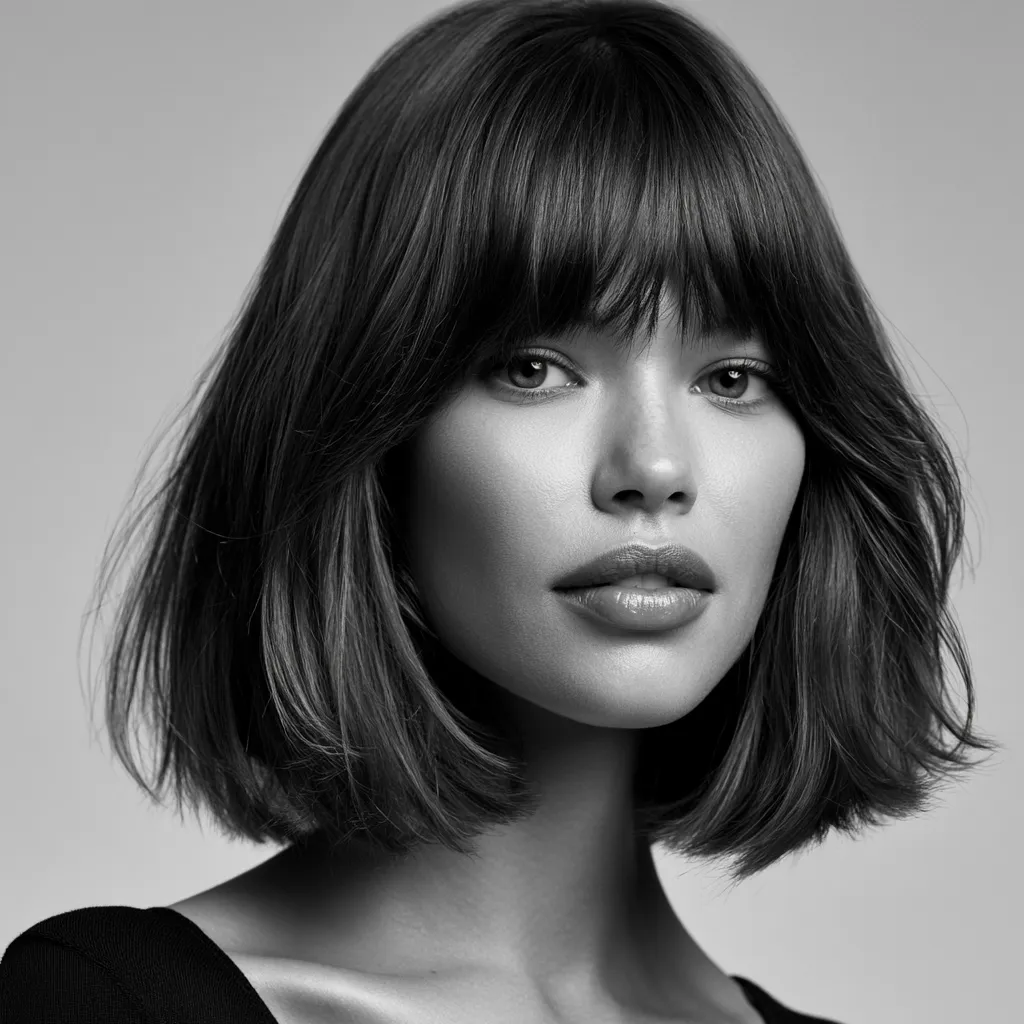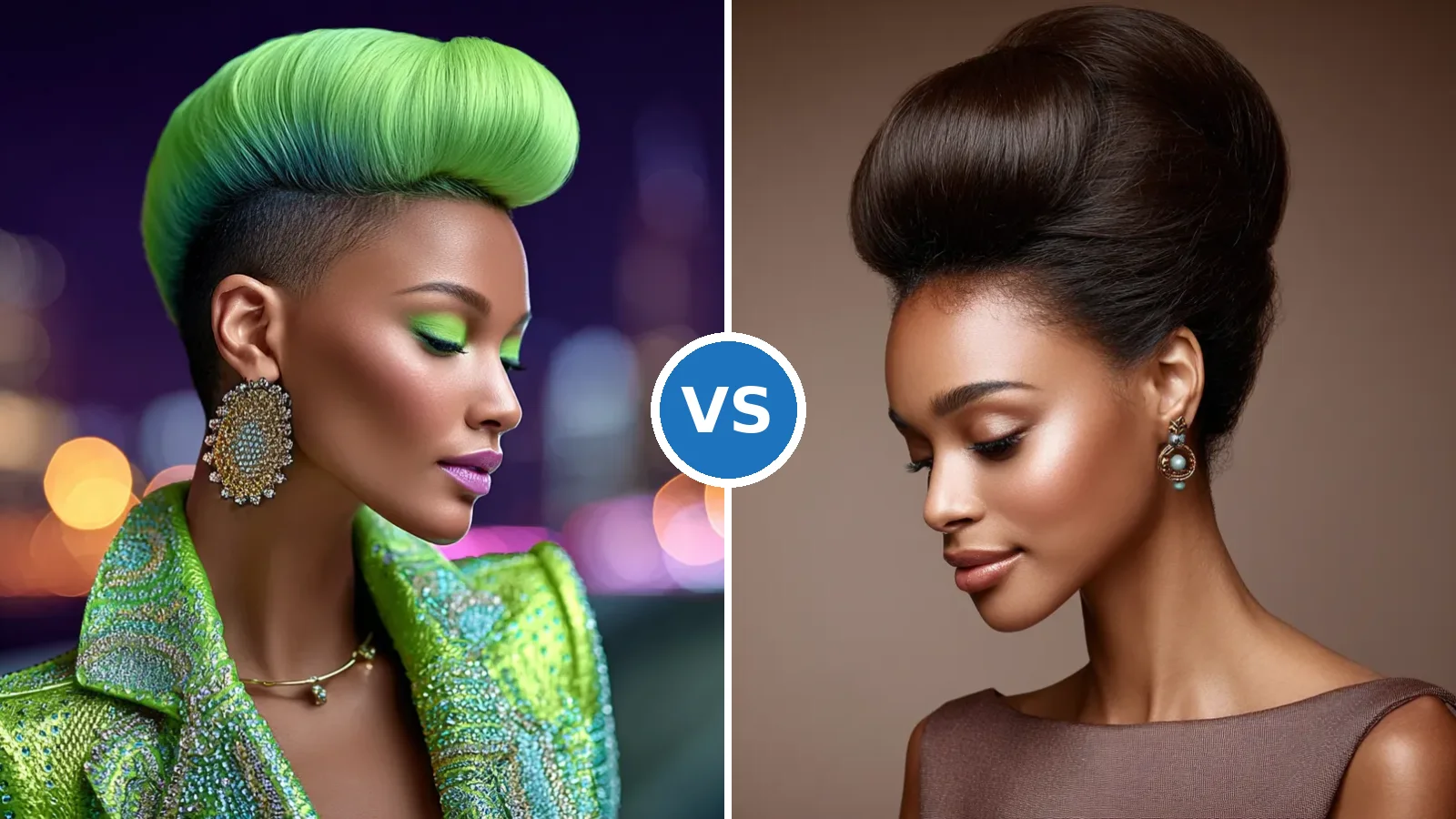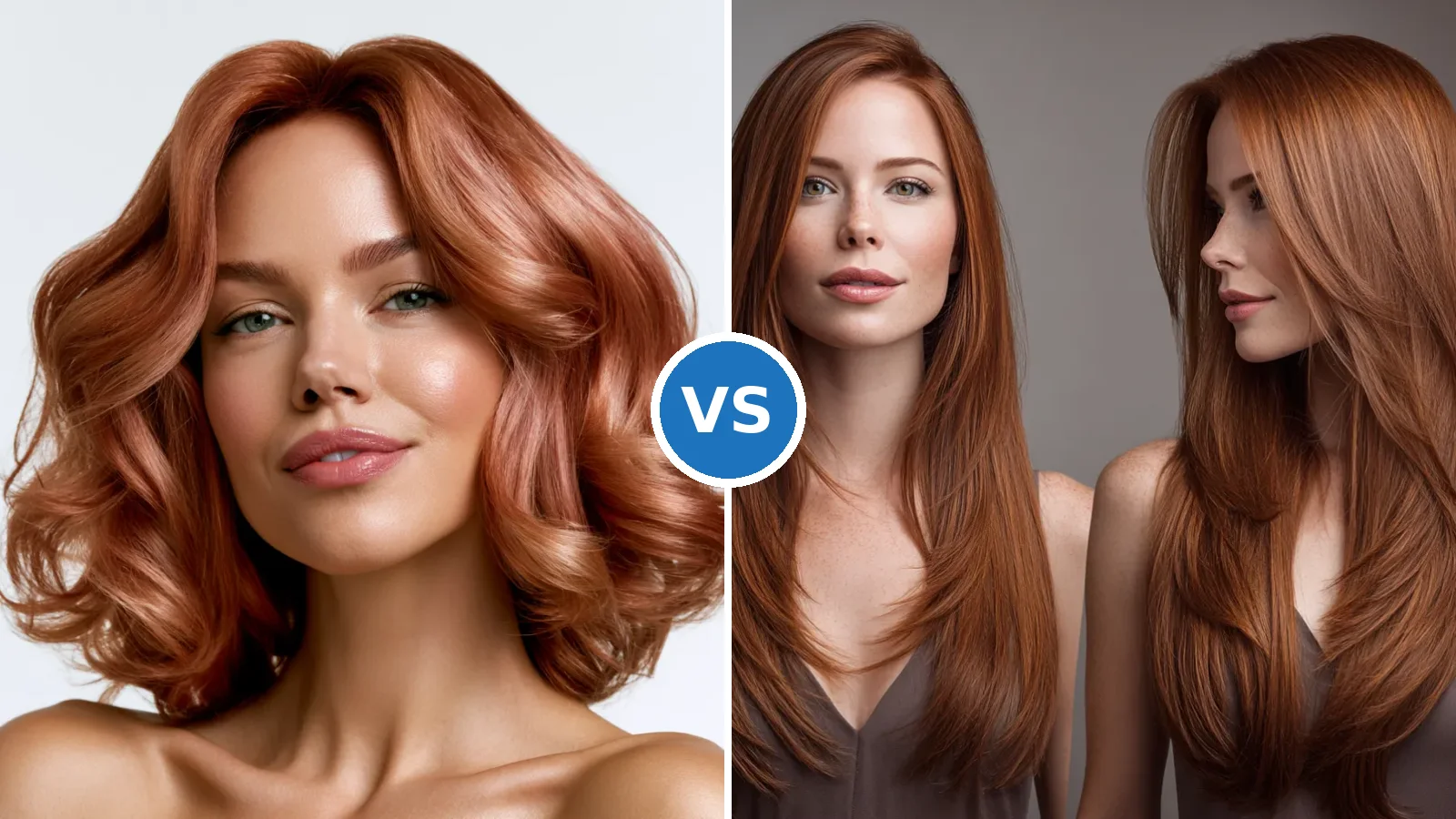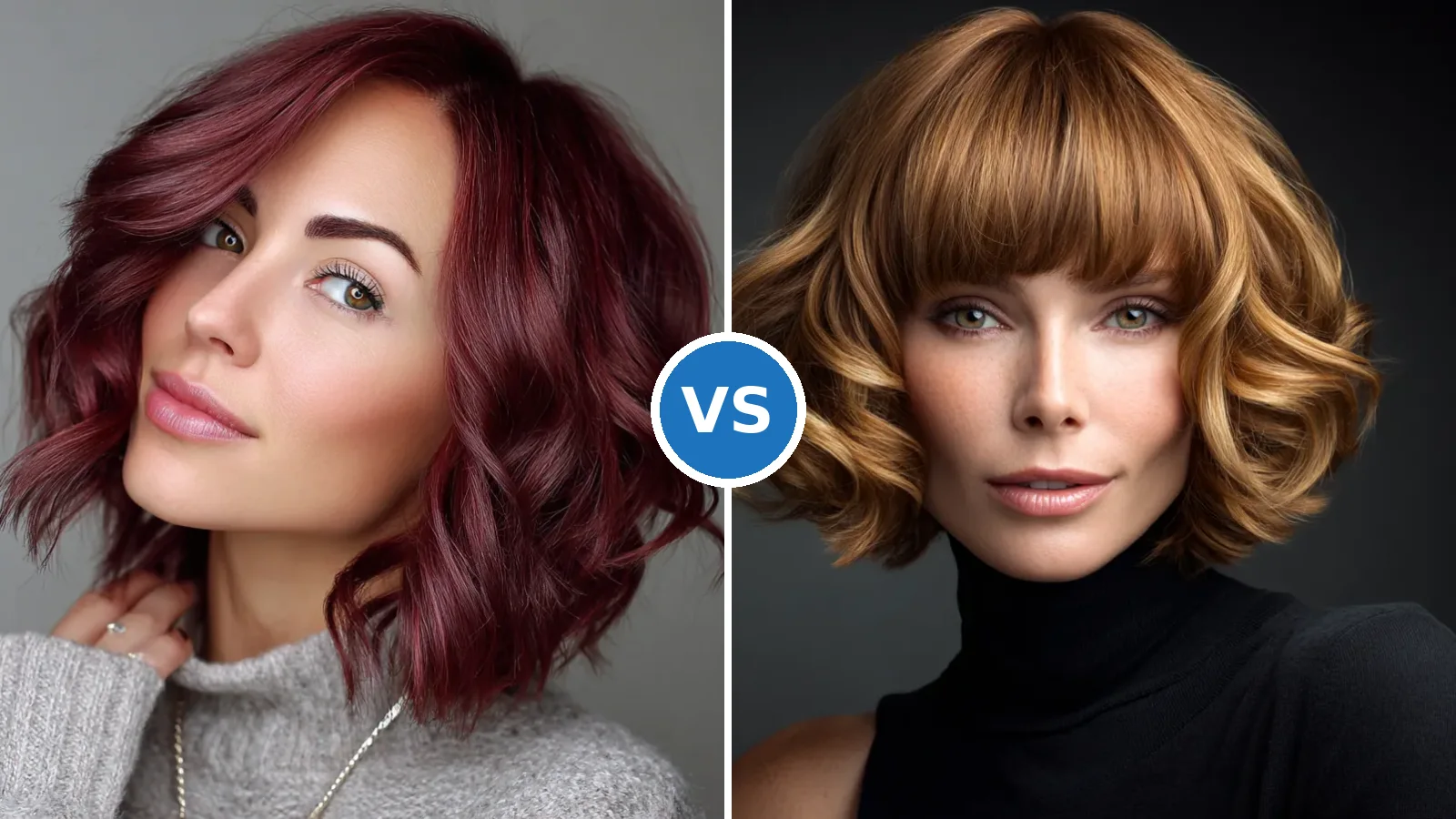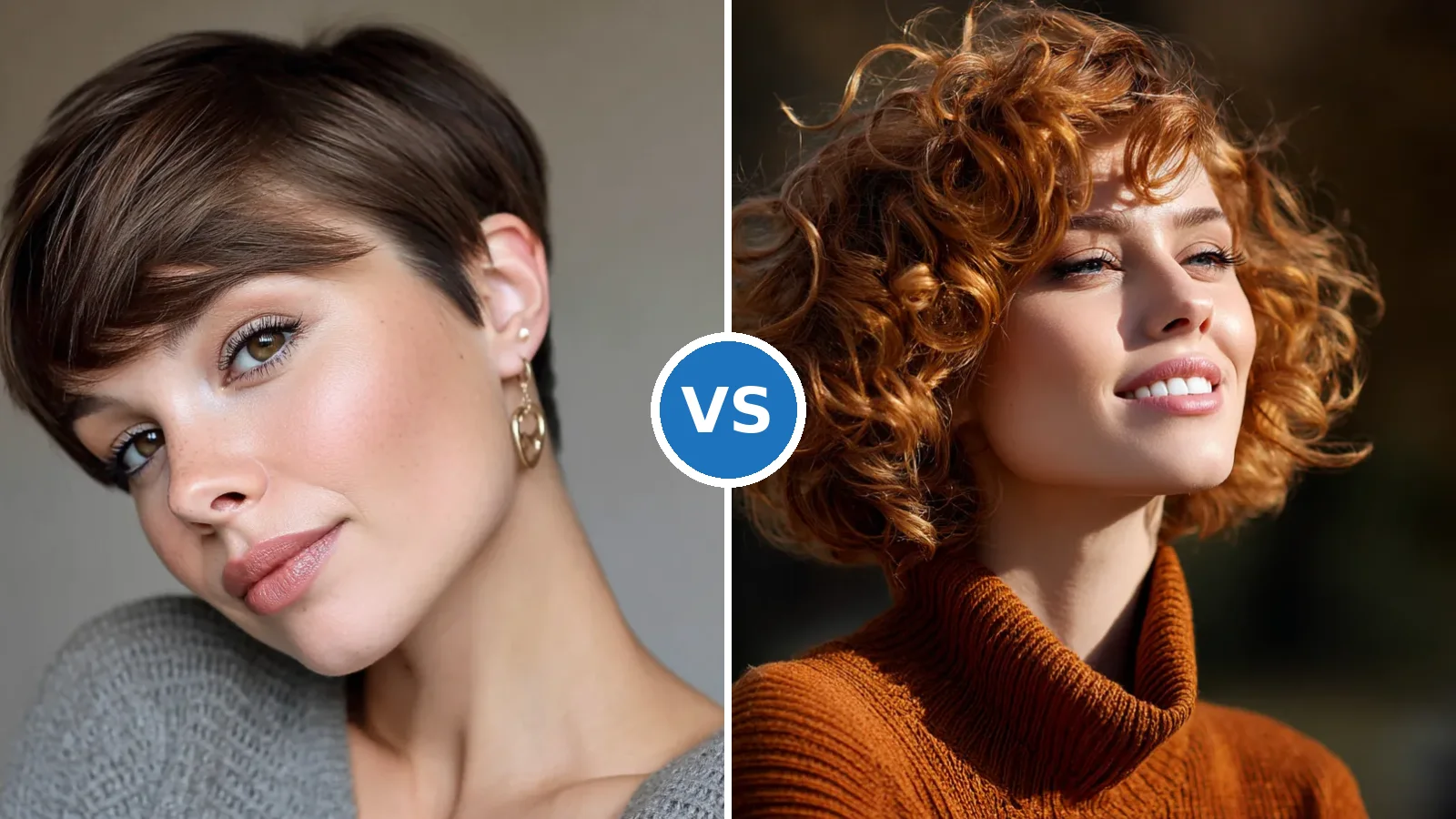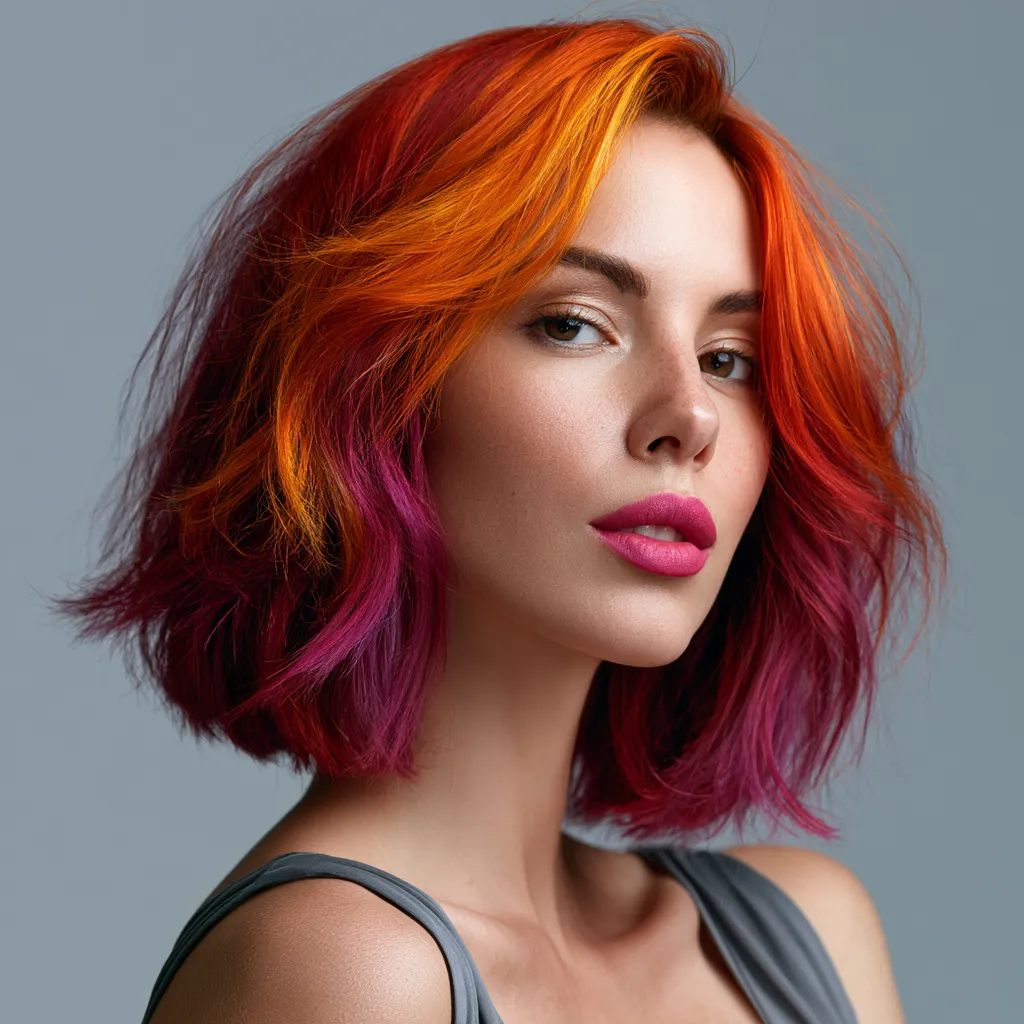
A lob haircut with bold hair colors is one of those combinations that punches harder than either element alone. The lob — shoulder-grazing, structured, just long enough to move — gives vivid color a clean frame, a surface where it can actually be read. Whether that color is a layered red, a flat electric blue, or a pastel rainbow blend, the cut stops the color from disappearing into length and keeps every inch visible.
Red lob haircut searches dominate because red is the most demanding bold shade to pull off well. It fades fast, reacts differently across skin undertones, and the wrong tone can shift from fierce to muddy within weeks. This post covers three distinct bold-color directions — red with layered texture, electric blue with sleek styling, and pastel rainbow with waves — plus the real maintenance numbers behind each one. Skip to the comparison table at the end to see them side by side.
The lob’s length — typically sitting between the chin and collarbone — is actually a tactical advantage here. Shorter than a bob and longer than a pixie, it holds wave shapes and color placement in a way that longer hair dilutes. A lob also makes color correction cheaper when it’s time to switch.
Quick Scan
Red lob haircut with layers needs touch-ups every 4–5 weeks (Sally Beauty). Electric blue requires full pre-lightening to lift past orange before any blue deposits. Pastel rainbow fades in 4–8 weeks — oVertone color-depositing masks help extend between salon visits. Redken Color Extend Magnetics ($22) is the go-to color-safe shampoo for bold shades. The lob’s shoulder-to-chin length frames color placement better than longer lengths. Don’t mix bleach and color in the same appointment on previously chemically treated hair.

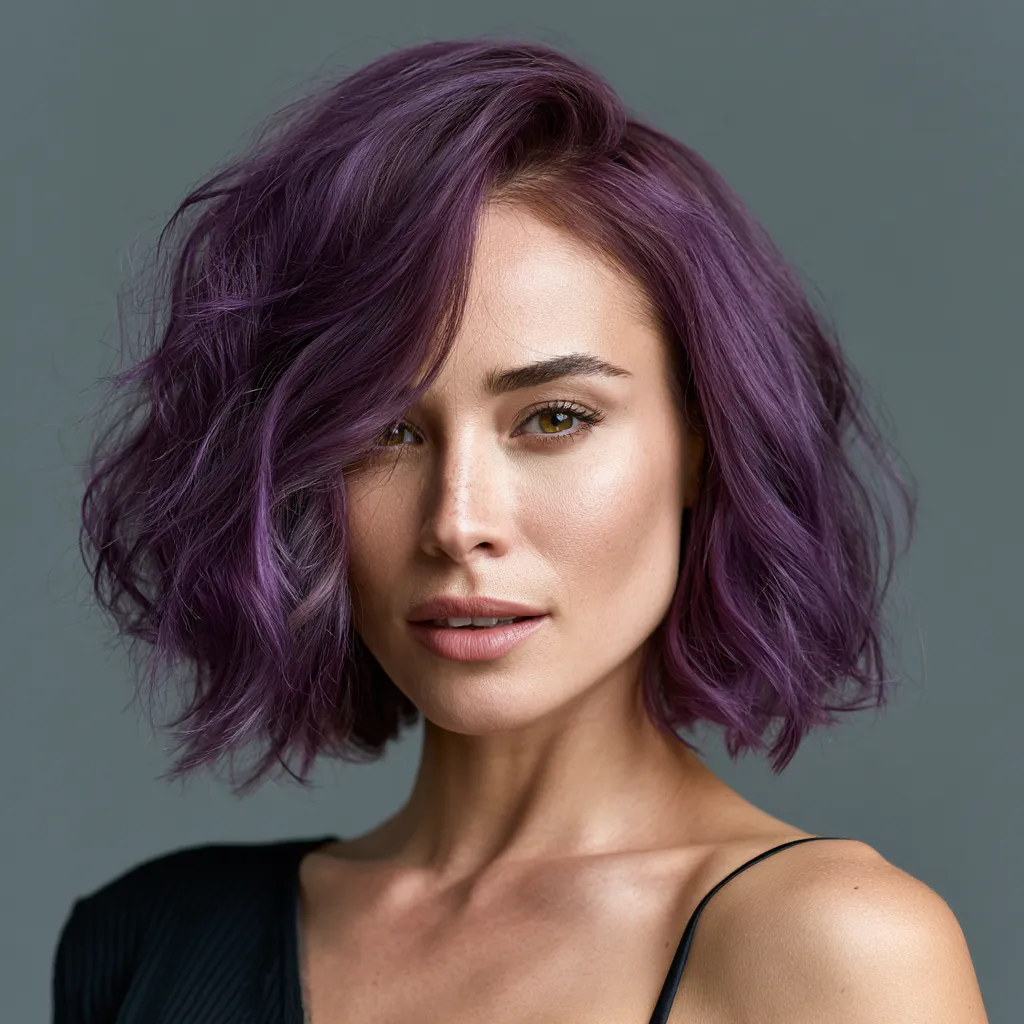
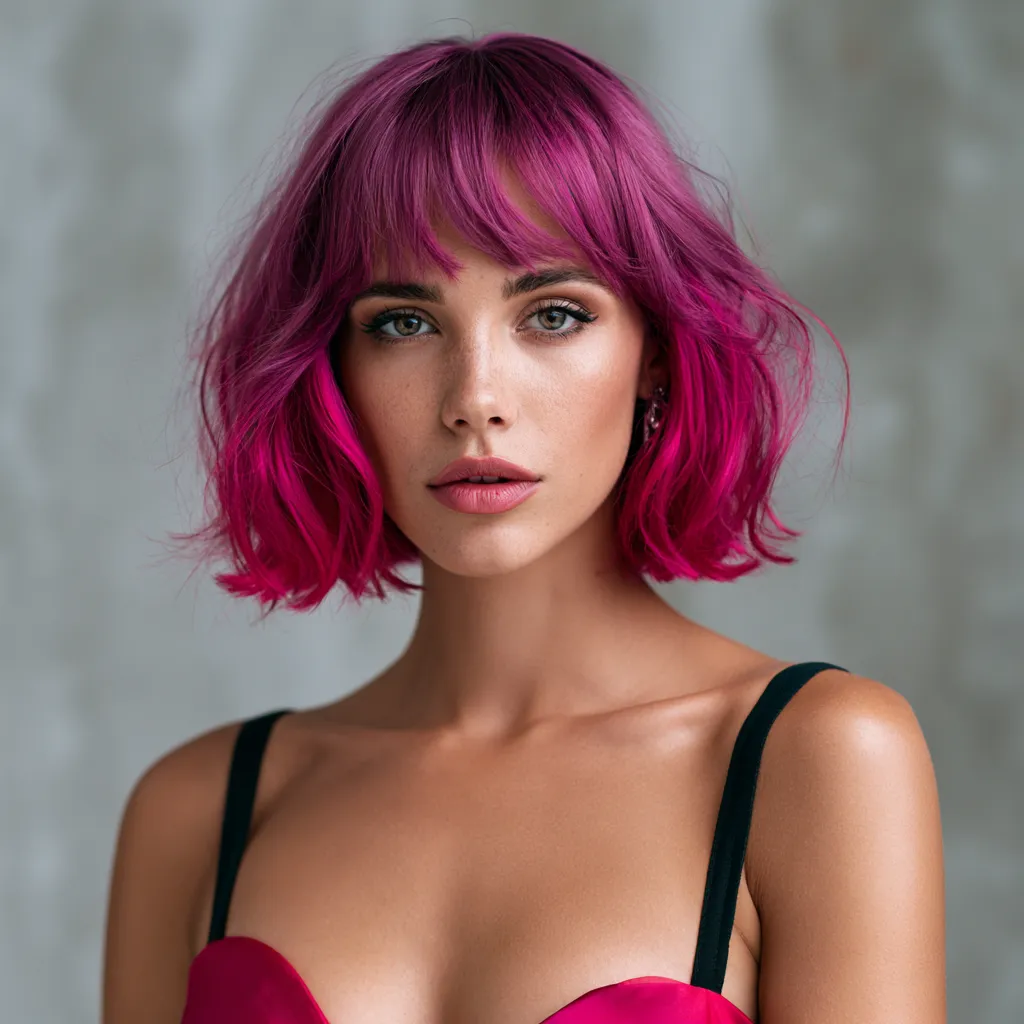
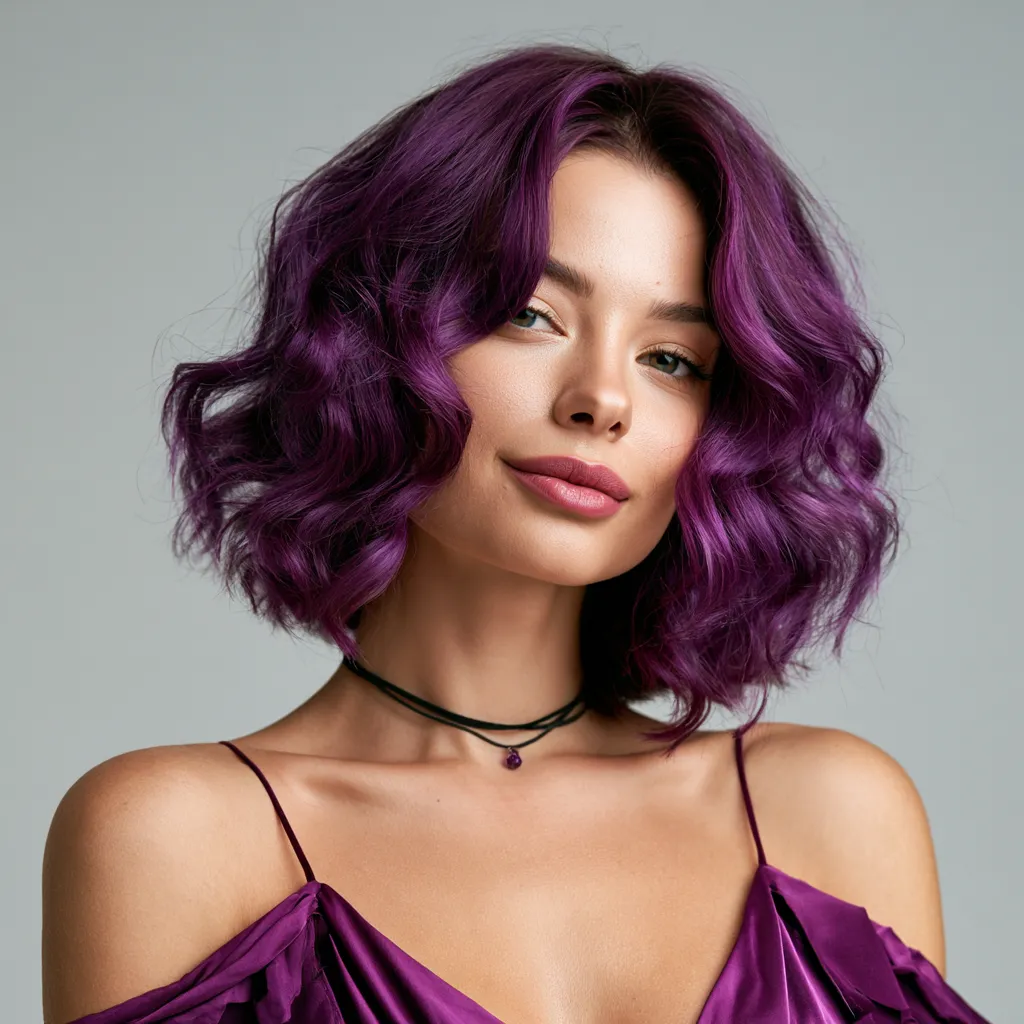
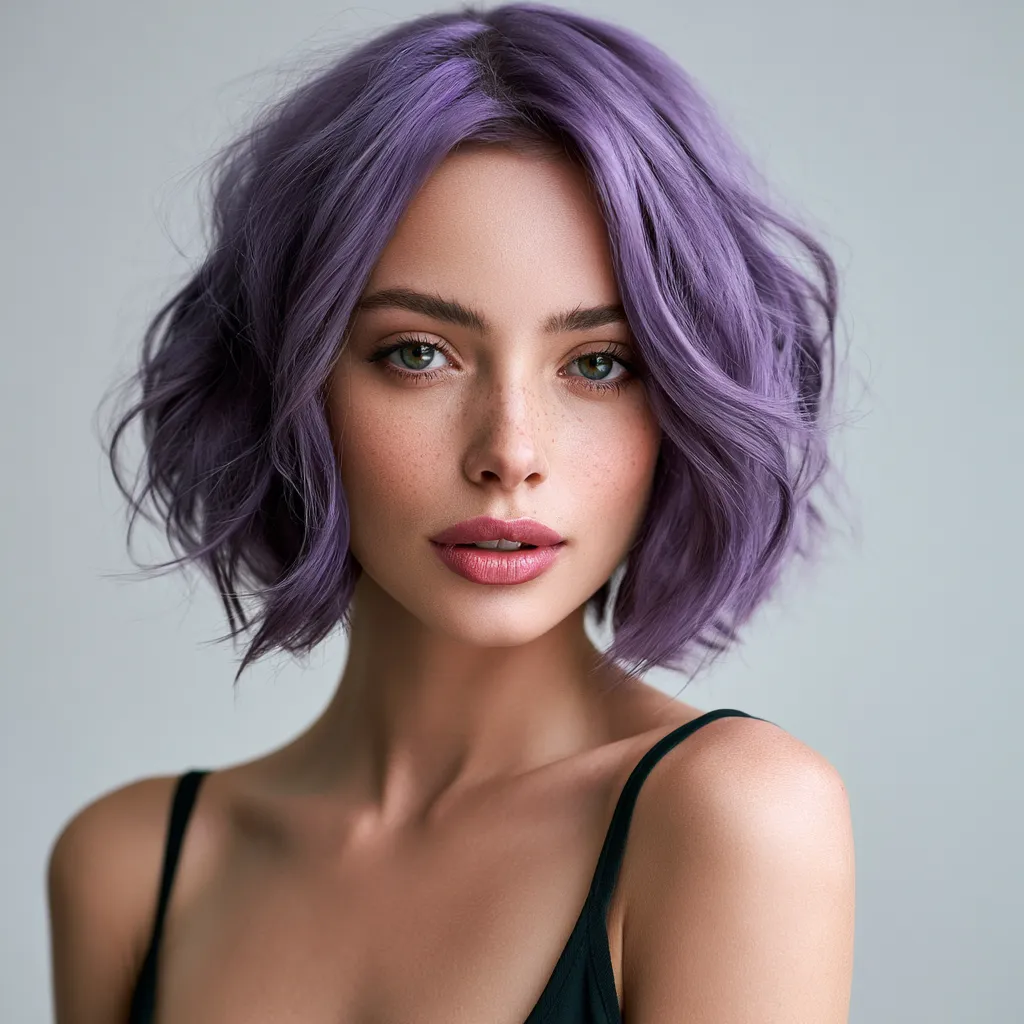
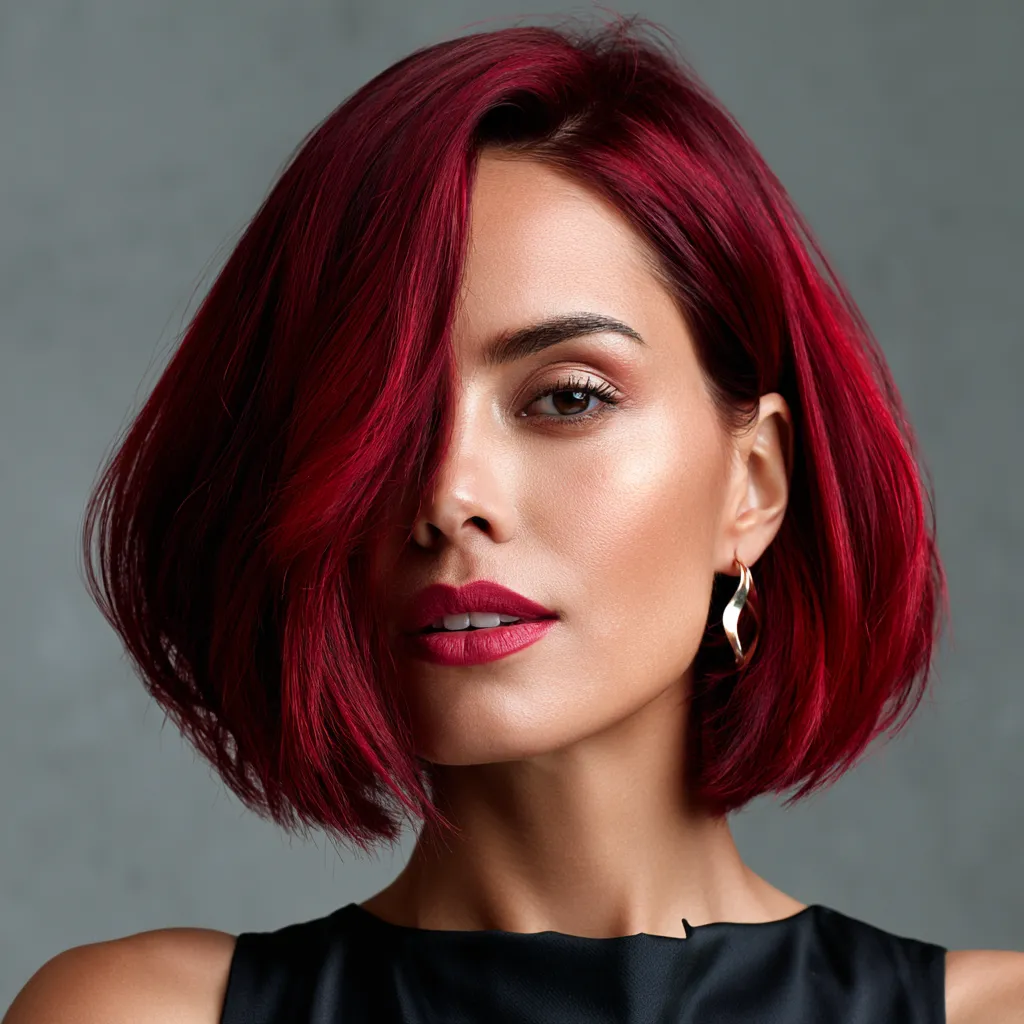
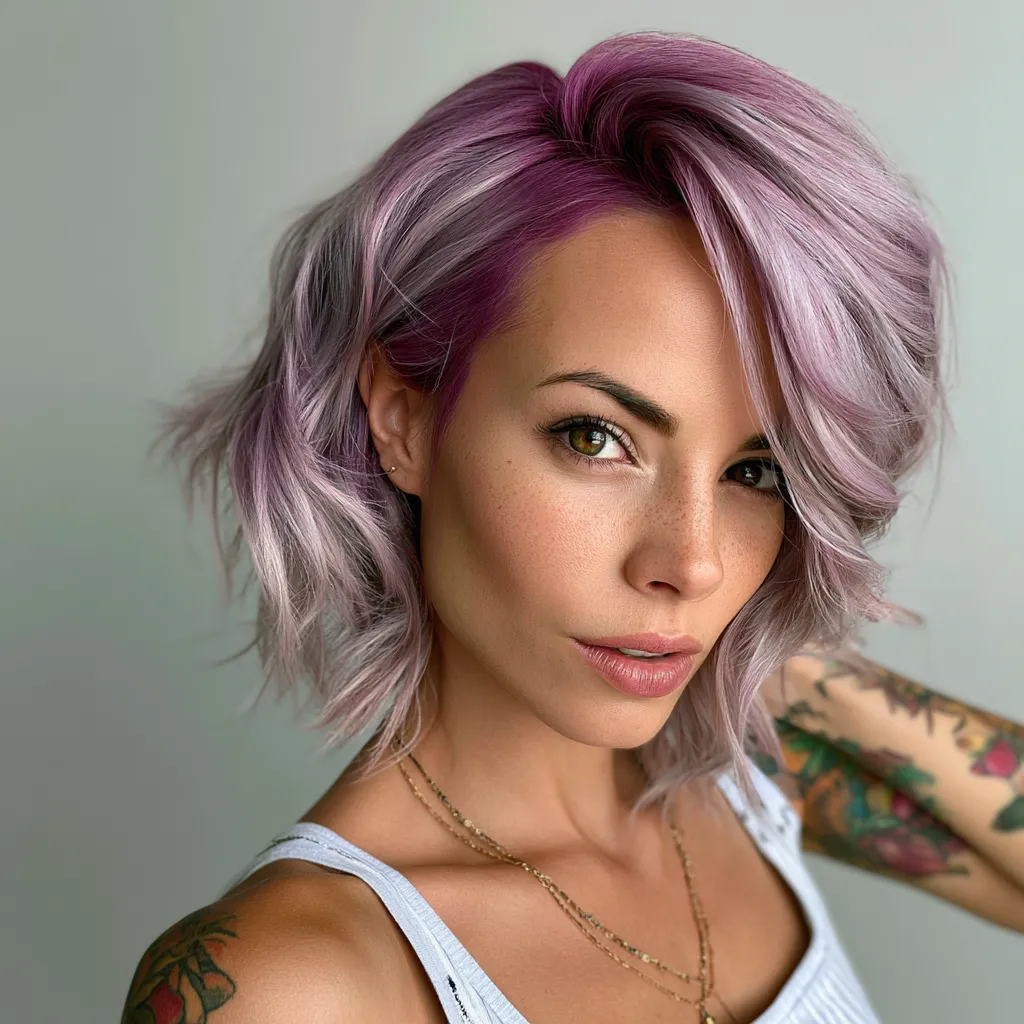
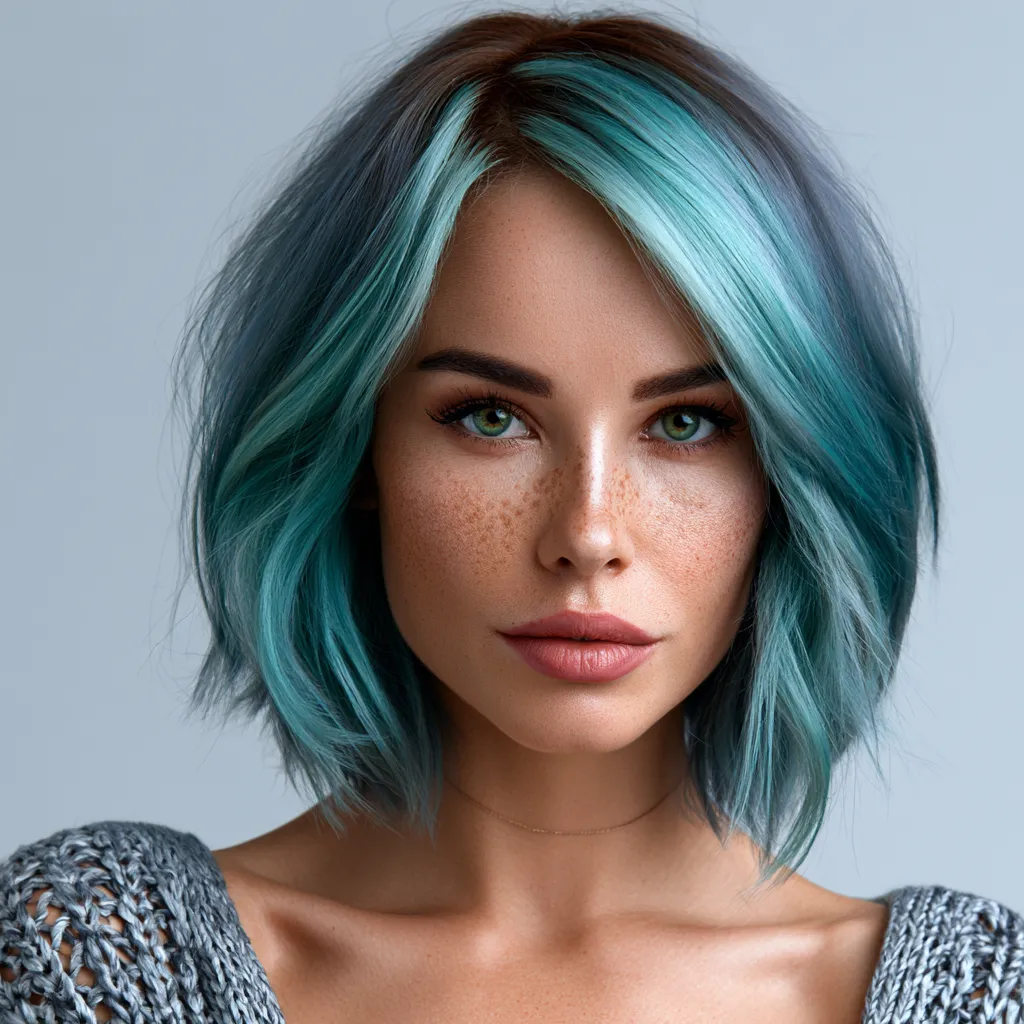
Red Lob Haircut with Layers Earns Every Head Turn
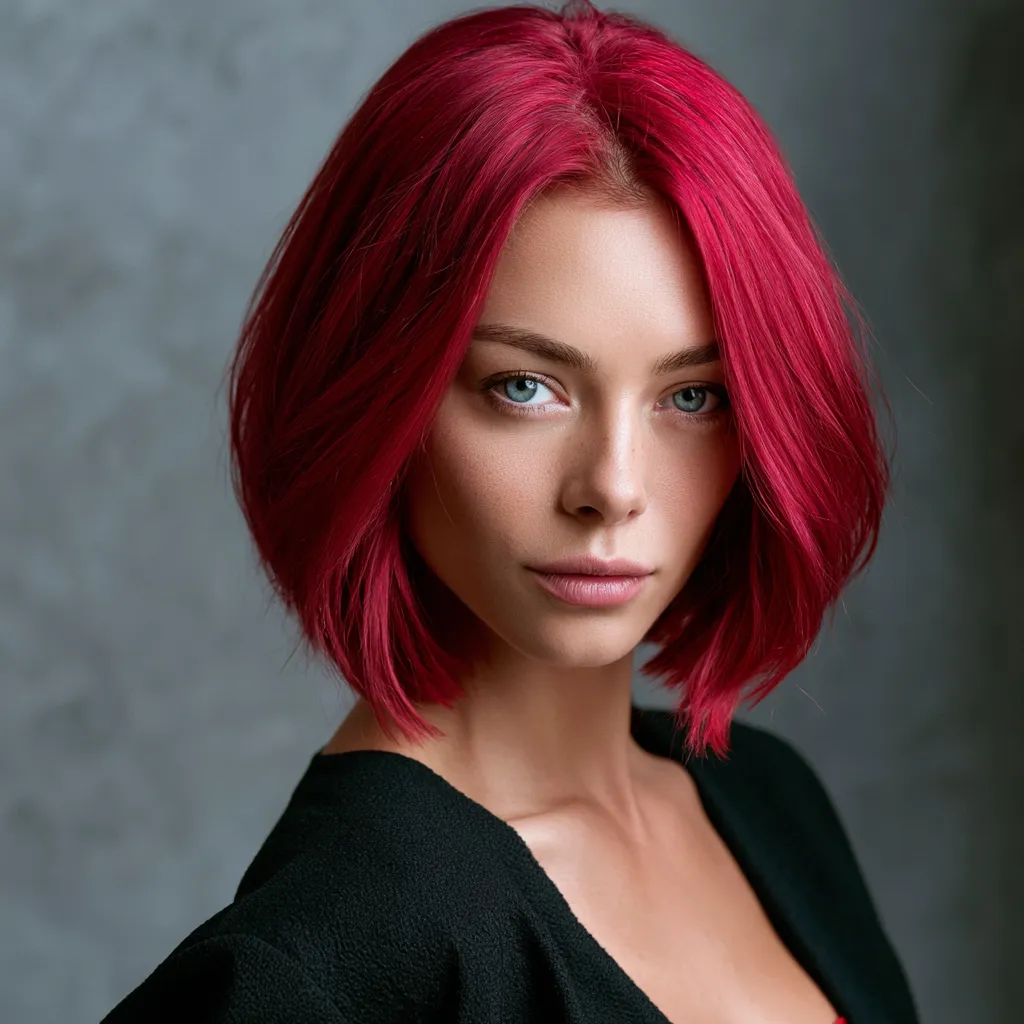
A red lob haircut with layered texture is the most searched bold-color lob for a reason: red moves. When layers are cut into a lob, the red tones shift from section to section as the hair swings — cooler at the root in shade, more saturated where the layers catch direct light. That optical behavior is what makes a layered red lob look three-dimensional while a flat, one-length red lob looks like a paint job. Think of the layers as a prism built into the cut itself.


Shade selection is where most people go wrong with red. Warmer reds — copper, auburn, ginger — read best against skin with golden undertones. Cooler reds — cherry, burgundy, cranberry — flatter fairer or pink-toned complexions. The trick is to ask the colorist to hold a swatch near your face in natural light before committing, not under salon lighting, which runs warm and flatters almost everything. The wrong red on the wrong undertone doesn’t just look off; it actively makes the skin look sallow.
What does the maintenance actually cost? According to Sally Beauty, red requires touch-ups every 4–5 weeks to prevent “hot roots” — the band of brighter color at the scalp that appears when new growth processes faster than the mid-lengths and ends. Redken Color Extend Magnetics shampoo ($22 at Ulta) is a reliable sulfate-free option for extending time between salon visits. Do not use a volumizing mousse with alcohol in the first three ingredients — it dries red hair out and makes the color look chalky rather than rich. Between washes, a Wella ColorMotion+ mask used weekly can protect color for up to eight weeks according to the brand’s formulation data.
Don’t Do This with a Red Lob
Don’t bleach and color in the same appointment on hair that has been chemically treated in the past six months. The ends of a lob have already been through previous color cycles and are the most fragile section of the hair. Layering bleach on weakened ends causes breakage at the point where the cut is most visible. Schedule pre-lightening and color as separate appointments, at least two weeks apart, and use an Olaplex bond-building treatment in between. A red that takes two sessions is better than a lob that snaps off at the jaw line.
What happens if you skip the sulfate-free shampoo? Regular detergent-based shampoos strip red pigment molecules — which sit closer to the hair surface than brown or blonde molecules — with every wash. A colorist who charges $150–$220 for a red lob appointment (per industry averages for full color services) should not have that work undone by a $4 drugstore shampoo. For more on pairing red shades with different short cut textures, bold red short wavy hair styles offer a deeper breakdown by shade and wave type.
Electric Blue Lob Haircut Demands Commitment Before the Color Chair
An electric blue lob haircut styled sleek and straight is a look that advertises its cost before you even sit down: blue deposits only read true on pre-lightened hair. If the hair isn’t lifted past the orange stage first, the blue doesn’t go blue — it goes green or khaki, depending on existing pigment. This is chemistry, not opinion. A professional colorist will often run a toner between the bleach session and the blue application to ensure the base is clean enough to receive the pigment accurately.


Why does the sleek, straight finish work so well with electric blue? A lob worn straight creates a flat, reflective surface. Blue pigment reads at its most saturated against a smooth plane — the same reason ink looks more vivid on coated paper than on matte. Waves and curls scatter the color across angles and soften it. If the goal is the loudest possible blue, straighten the lob with a flat iron on a clean blowout and finish with a lightweight shine serum on the ends. A middle part adds symmetry and lets the color be the architecture of the look rather than the haircut itself.
Why does blue fade green? Orange cancels blue on the color wheel. As blue semi-permanent pigment washes out, residual warmth in the pre-lightened base interacts with the fading blue and shifts it toward teal, then green. Hairstylecamp.com recommends shape touch-ups every 4–6 weeks for color looks like this — which aligns with the underlying pre-lightened root growing in. Over-washing is the fastest way to accelerate the green shift. Twice a week maximum. Cold-ish rinse water at the end of every wash helps seal the cuticle and trap pigment. For a deep-dive into how lob texture affects overall styling decisions, choosing the right lob cut for your hair texture breaks it down by straight, wavy, and curly.
Black or silver lowlights work as an underlay for electric blue — they add dimension without competing with the main color. Placed underneath the top layer of a lob, they’re visible only when the hair moves, which gives the blue depth without muddying it. Skip silver lowlights if the hair is already compromised from multiple bleach sessions; the additional chemical processing isn’t worth the visual payoff.
Pastel Rainbow Lob Haircut Fades Fast Without a Weekly Ritual
Pastel rainbow hair on a lob combines pink, lavender, and mint tones in a way that looks whimsical on a Tuesday and genuinely arresting under direct sunlight. The wave styling choice matters here: loose waves created with a curling wand on a pastel rainbow lob pull the separate color sections apart and let them catch light individually, so the pink reads as pink and the lavender reads as lavender rather than blending into a single grayish blur. Flat, straight pastel hair does the opposite — it collapses the contrast between tones.


The fade timeline for pastels is unforgiving. According to Arctic Fox, pastel shades typically last 4–8 weeks depending on wash frequency and hair porosity. That range collapses to 3–4 weeks for anyone washing hair daily without color-protecting products. Pastels require a fully lifted Level 10 base — any yellow in the hair and a pastel blue turns green, a pastel mint turns yellow-green, and a pastel lavender turns beige. The lighter the canvas, the truer the result. This pre-lightening cost adds to the initial salon investment.
Stylists recommend oVertone’s color-depositing treatment masks as the most practical at-home maintenance tool for pastel rainbow hair. The brand’s masks last approximately 2–3 weeks per application, which bridges the gap between full salon reapplications. Apply to dry hair, leave on 15 minutes, rinse — no shampoo needed. The trick with pastel rainbow sections is to use a separate mask shade per color zone rather than blending all three into one product; mixing pastel pink and pastel mint produces a muted gray that looks like an unintentional fade rather than a refresh. Do not use a regular shampoo on pastel hair if you want the color to survive past week two — sulfate-free only, and limit to two washes per week maximum.
What’s the most common mistake with pastel lob maintenance? Over-toning. Applying the color-depositing mask too frequently on a section that still has good pigment causes buildup that looks opaque and heavy rather than soft and translucent, which defeats the entire point of a pastel palette. Let the section fade slightly before reapplying — that slight fade is actually part of the aesthetic, not a problem to fix on day ten.
| Color Direction | Fade Timeline | Touch-Up Frequency | Key Risk |
|---|---|---|---|
| Red lob with layers | 3–5 weeks | Every 4–5 weeks (Sally Beauty) | Hot roots if waiting too long |
| Electric blue sleek lob | 4–6 weeks to green shift | Every 4–6 weeks | Green fade if base not fully lifted |
| Pastel rainbow wavy lob | 4–8 weeks (Arctic Fox) | At-home mask every 2–3 weeks | Gray blur if colors mix in application |
Red pigment molecules are physically larger than those in brown or blonde hair dye, which means they sit on the hair surface rather than penetrating the cortex and wash out with every shampoo session. This is why red fades faster than it looks like it should — and why Wella Professionals’ red hair maintenance resource recommends skipping the first wash for at least 24–48 hours after coloring to give the cuticle time to settle back down and seal the pigment in.
FINAL TAKE
Pick the bold hair color your maintenance schedule can actually support
A red lob with layers is the most forgiving entry point — the layered texture hides uneven fade and the 4–5 week touch-up cadence is manageable. Electric blue is the highest visual impact but requires professional pre-lightening and no shortcuts at home. Pastel rainbow is the most creative and the most volatile — worth every wash count if you’re committed to the at-home toning ritual.
For any bold shade, Redken Color Extend Magnetics ($22) or an equivalent sulfate-free shampoo is non-negotiable from the first post-color wash onward. Two washes per week is the ceiling, not the goal.
Save this post before your next salon appointment.