Petite fashion is not about dressing to look taller. It is about understanding proportion, scale, and fit so that every outfit reads intentional from head to toe. The problem with most petite style advice is that it treats smallness as a problem to solve. It is not. It is a set of parameters to dress within — and once you know them, building outfits becomes much more precise.
This guide covers the silhouettes, fabrics, and outfit formulas that consistently work on a petite frame in 2026. No filler rules. No “wear heels to look taller.” Just the combinations that hold their shape, their proportion, and their visual weight on a smaller body.
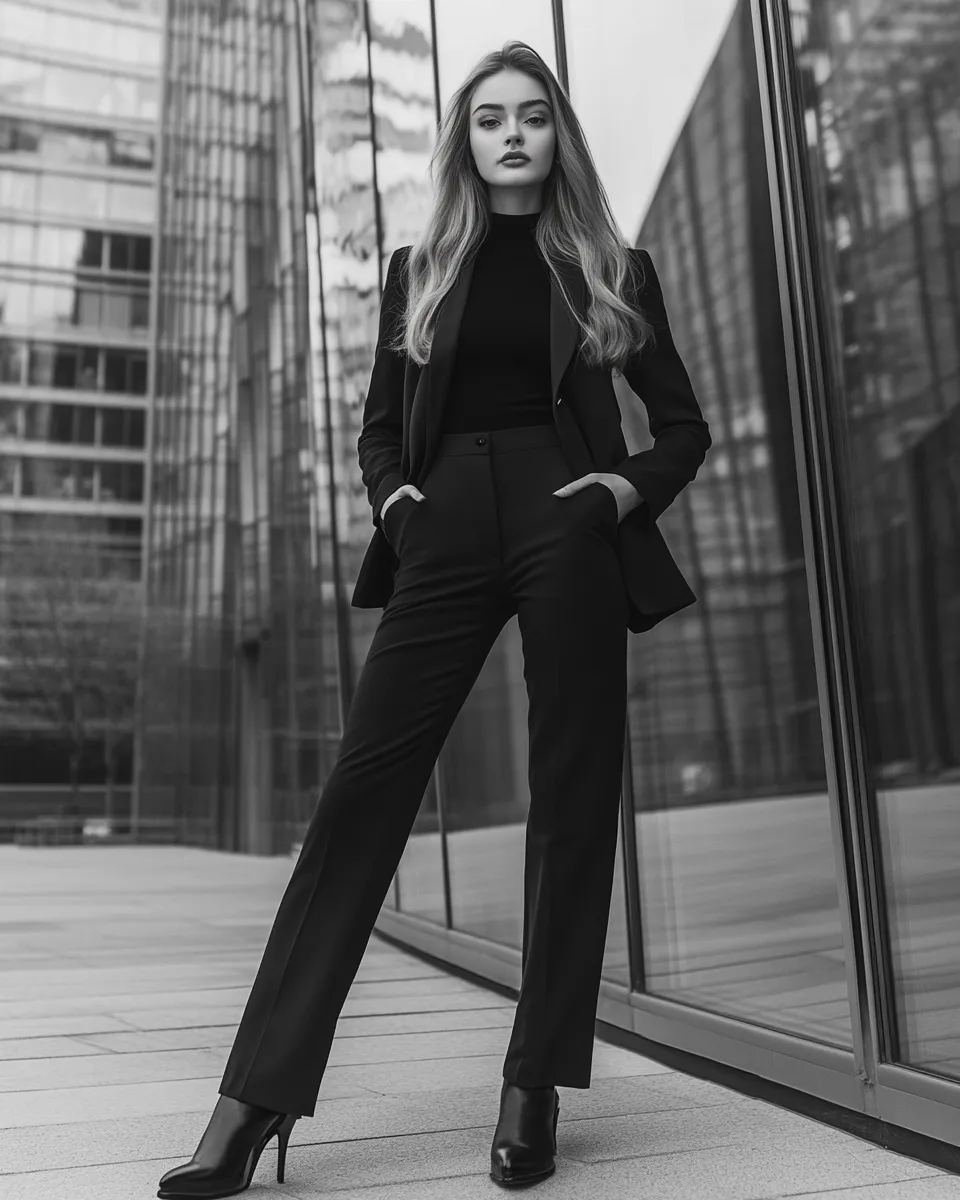
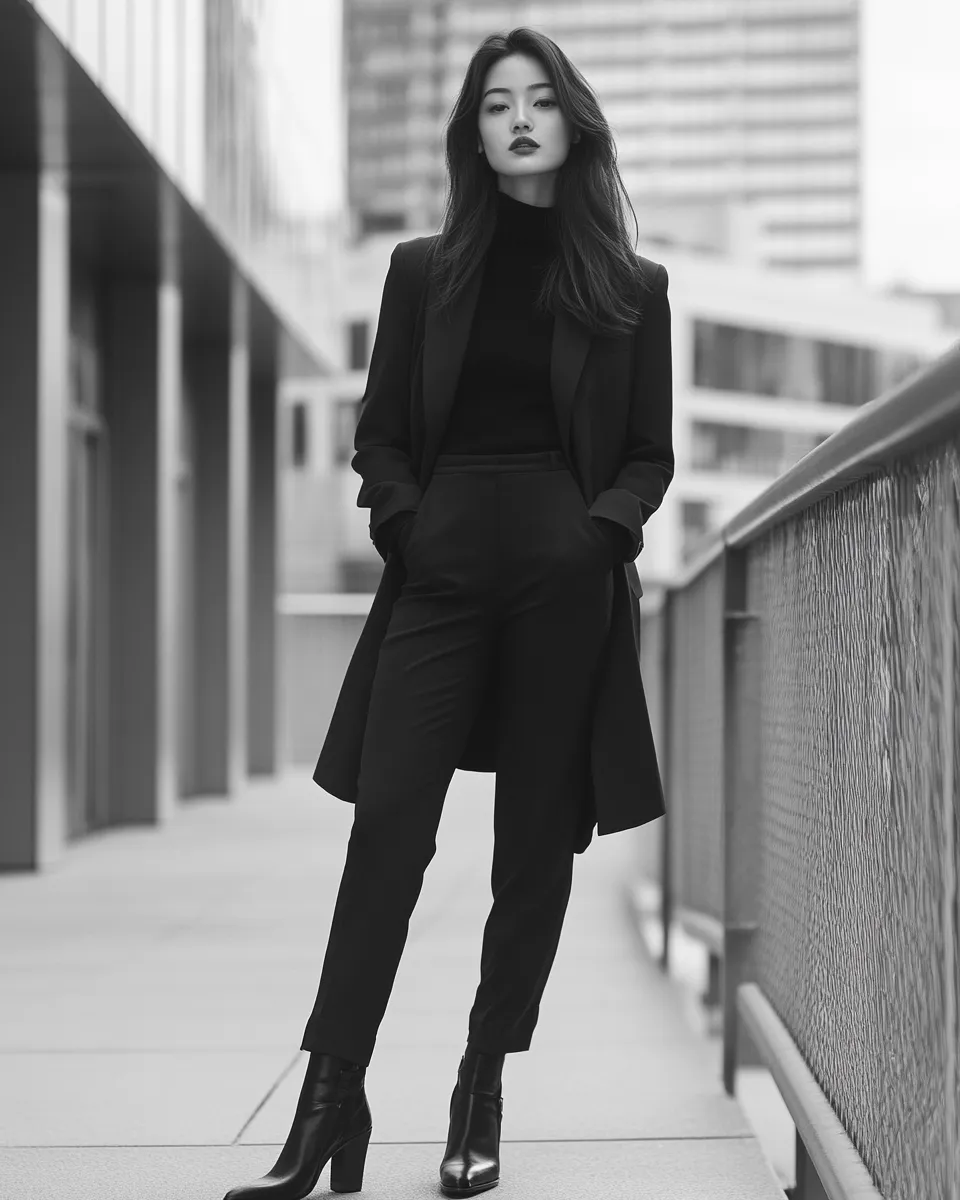
Why Proportion Is the Only Rule That Matters in Petite Fashion
Every styling principle for petite frames comes back to one concept: visual proportion. A petite body has less vertical space to work with, so every design detail — a seam placement, a hemline, a waistband position — lands differently than it would on a taller frame. The goal is not to elongate or deceive. The goal is to keep the proportions of the outfit consistent with the proportions of the body wearing it.
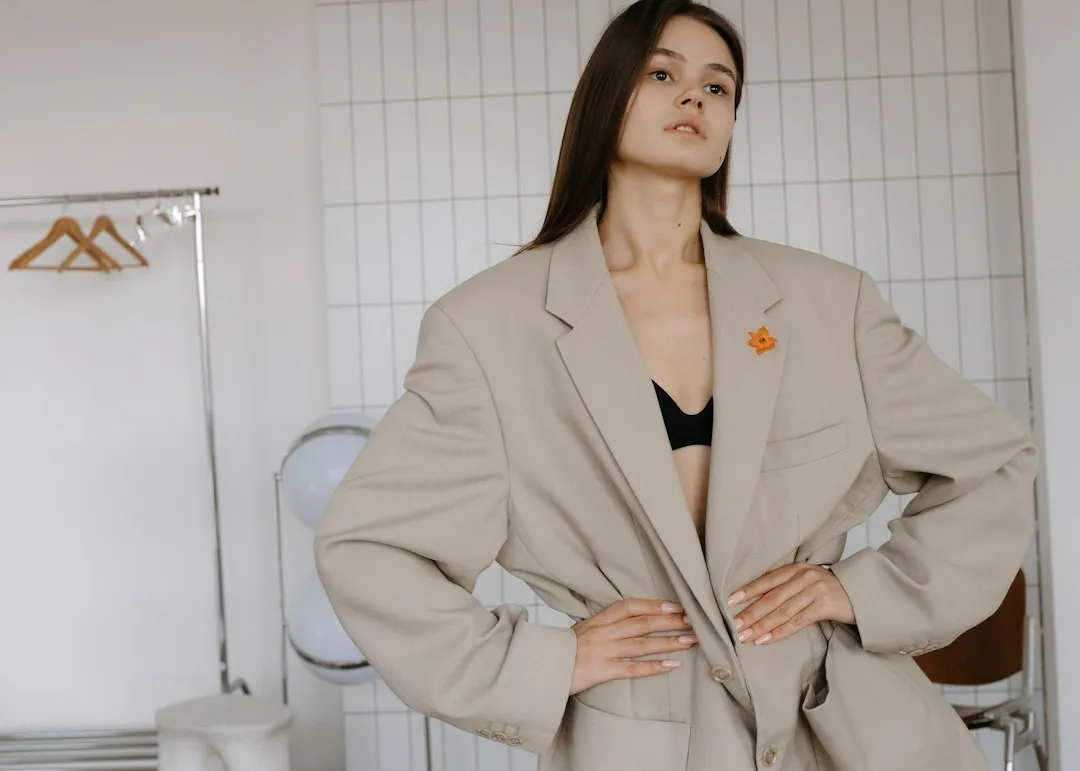
Oversized silhouettes can work on petite frames, but only when the entire outfit is proportionally oversized. Mixing a large top with a fitted bottom creates a visual imbalance that draws attention to the waist in the wrong place. The same principle applies to prints: a large-scale print on a small body is not automatically wrong, but it requires the rest of the outfit to stay minimal so the print reads as a deliberate choice rather than an accident of scale.
The Silhouettes That Work Best for Petite Bodies
Certain silhouettes perform consistently well on petite frames because they create a single uninterrupted vertical line or keep the visual weight in one clear zone. Here are the shapes worth building a wardrobe around.
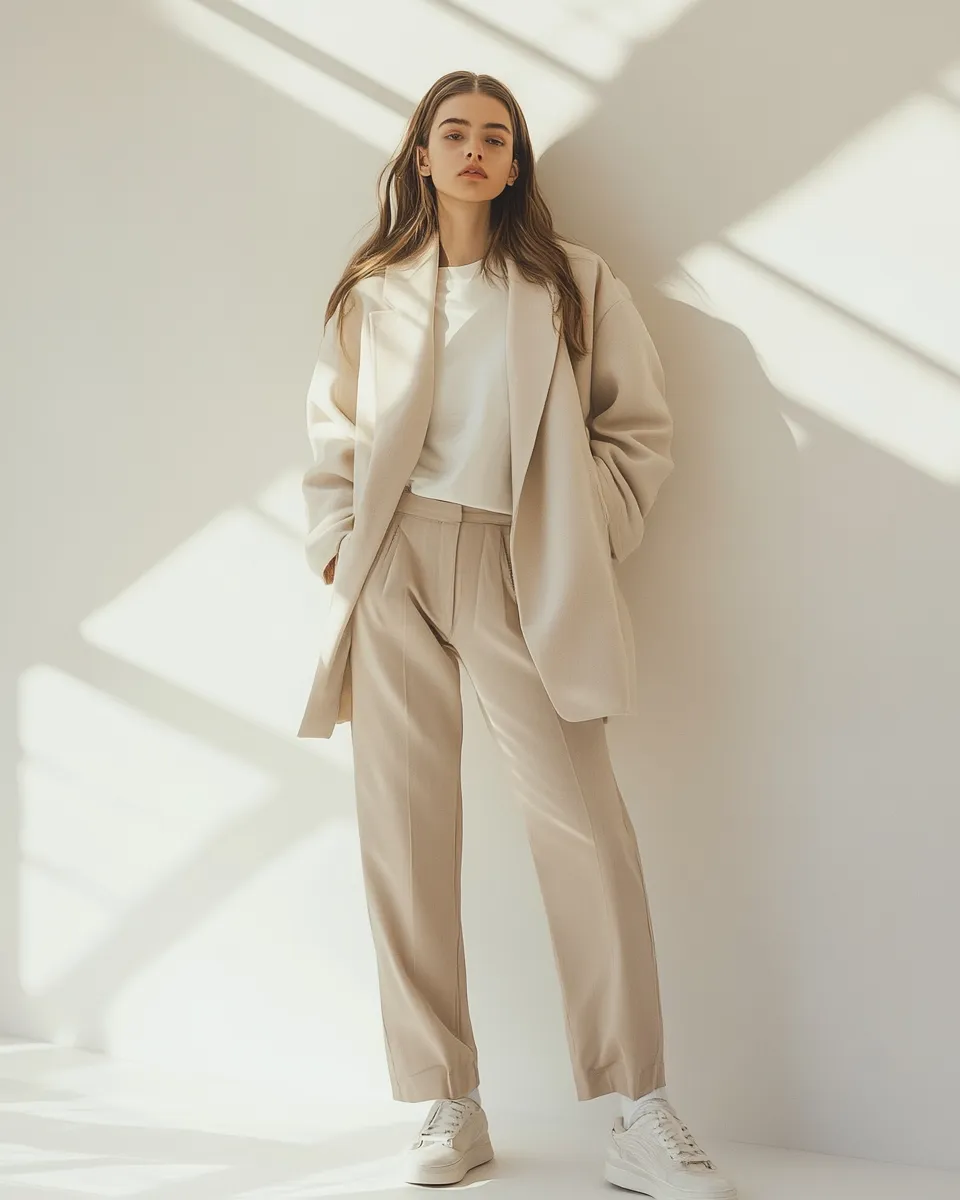
Monochromatic Head-to-Toe Dressing
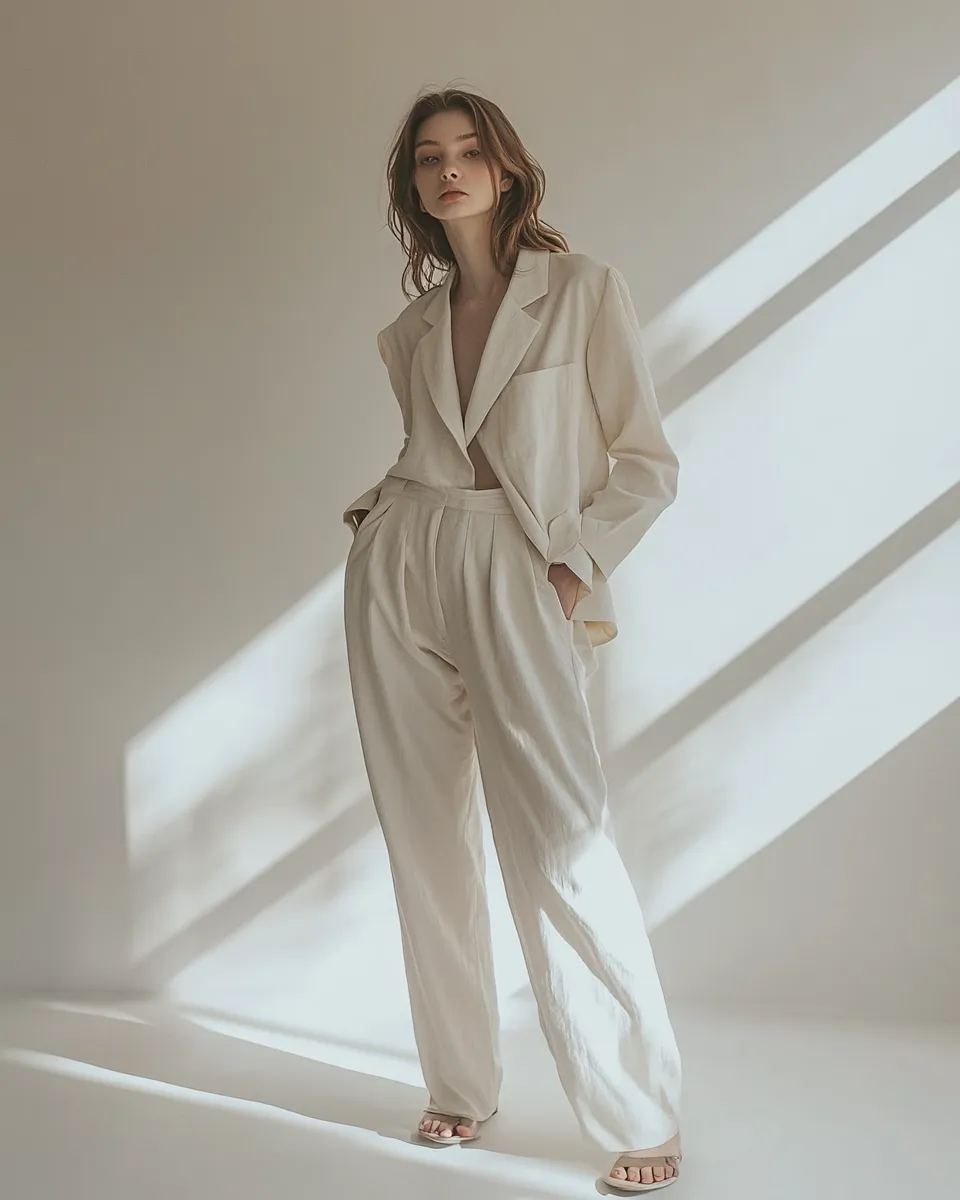
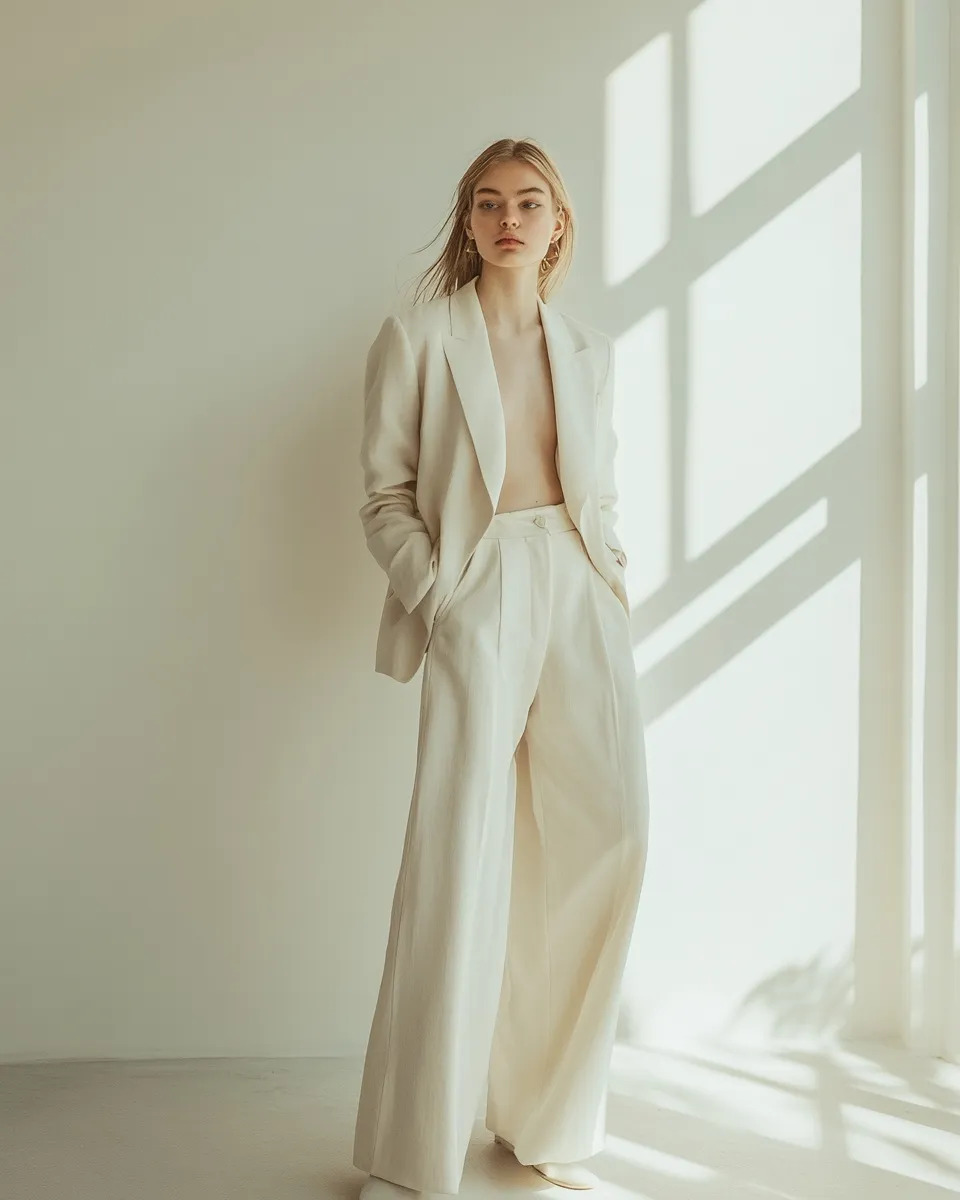
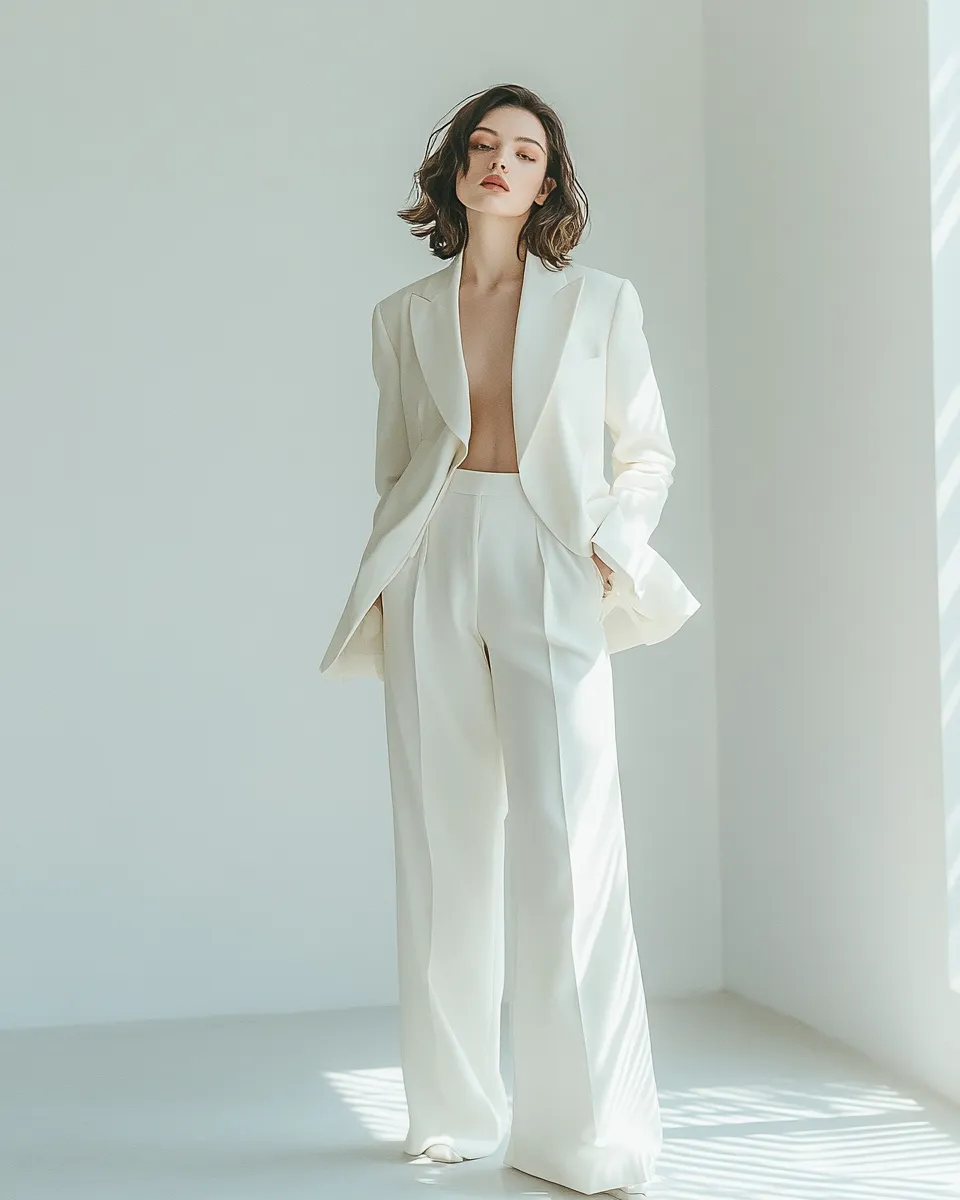
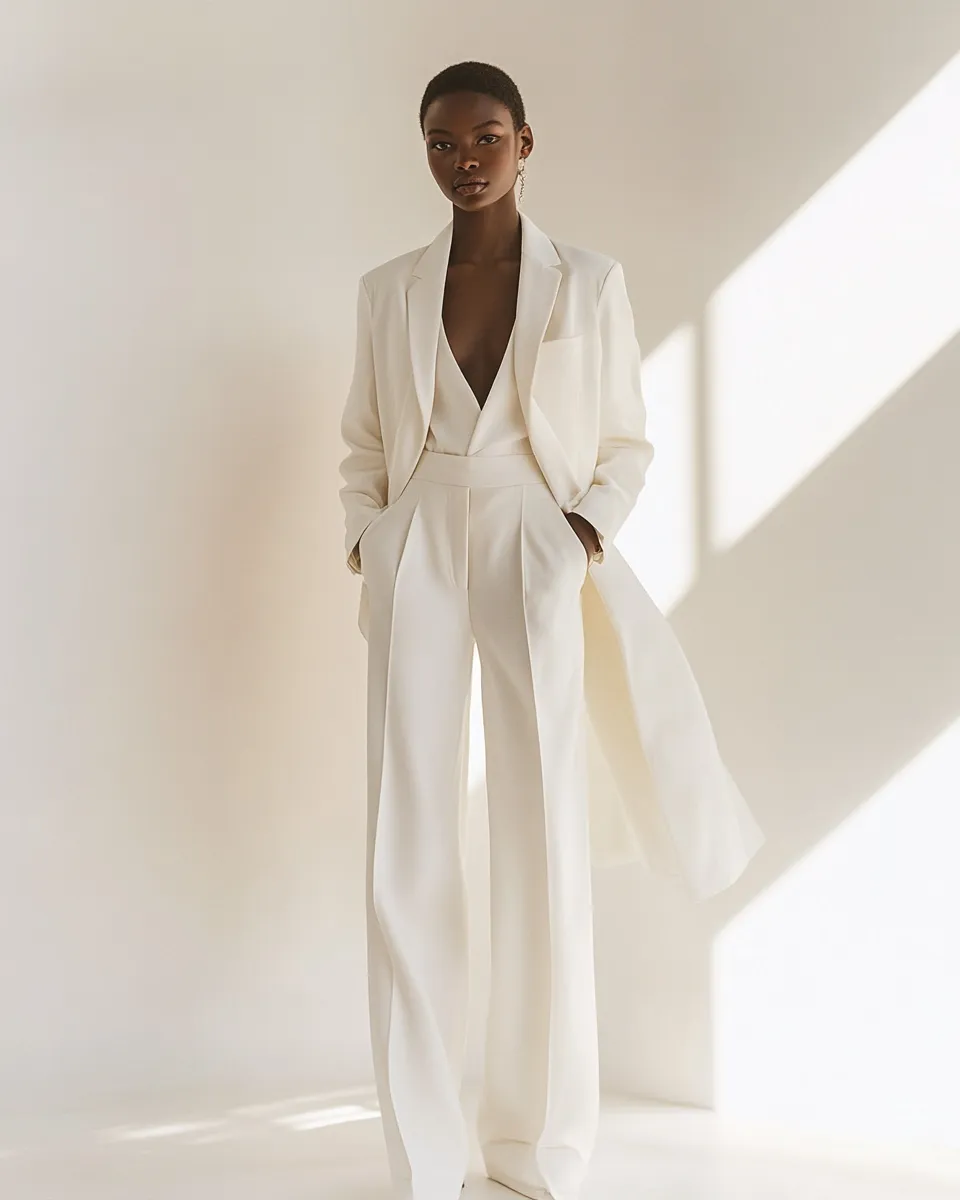
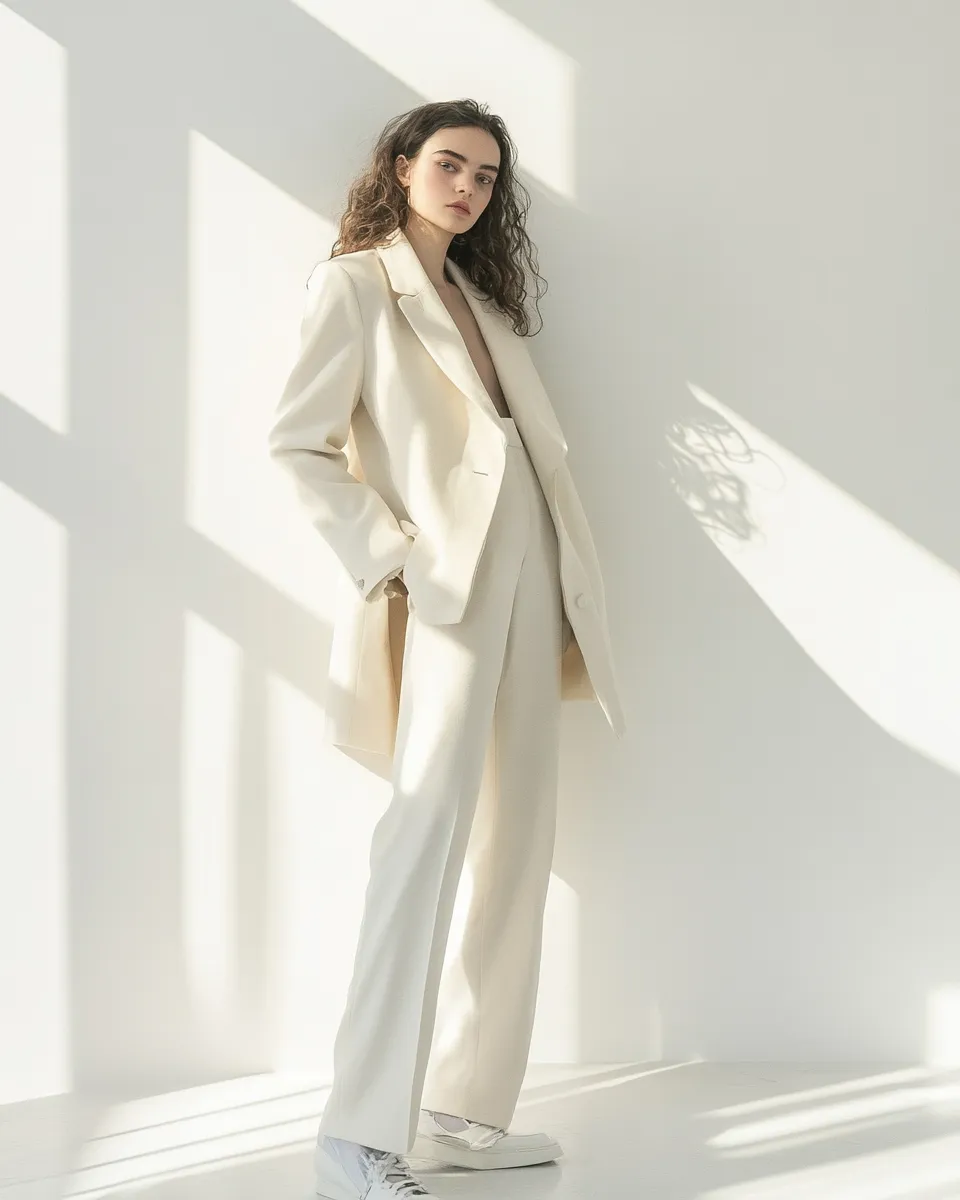
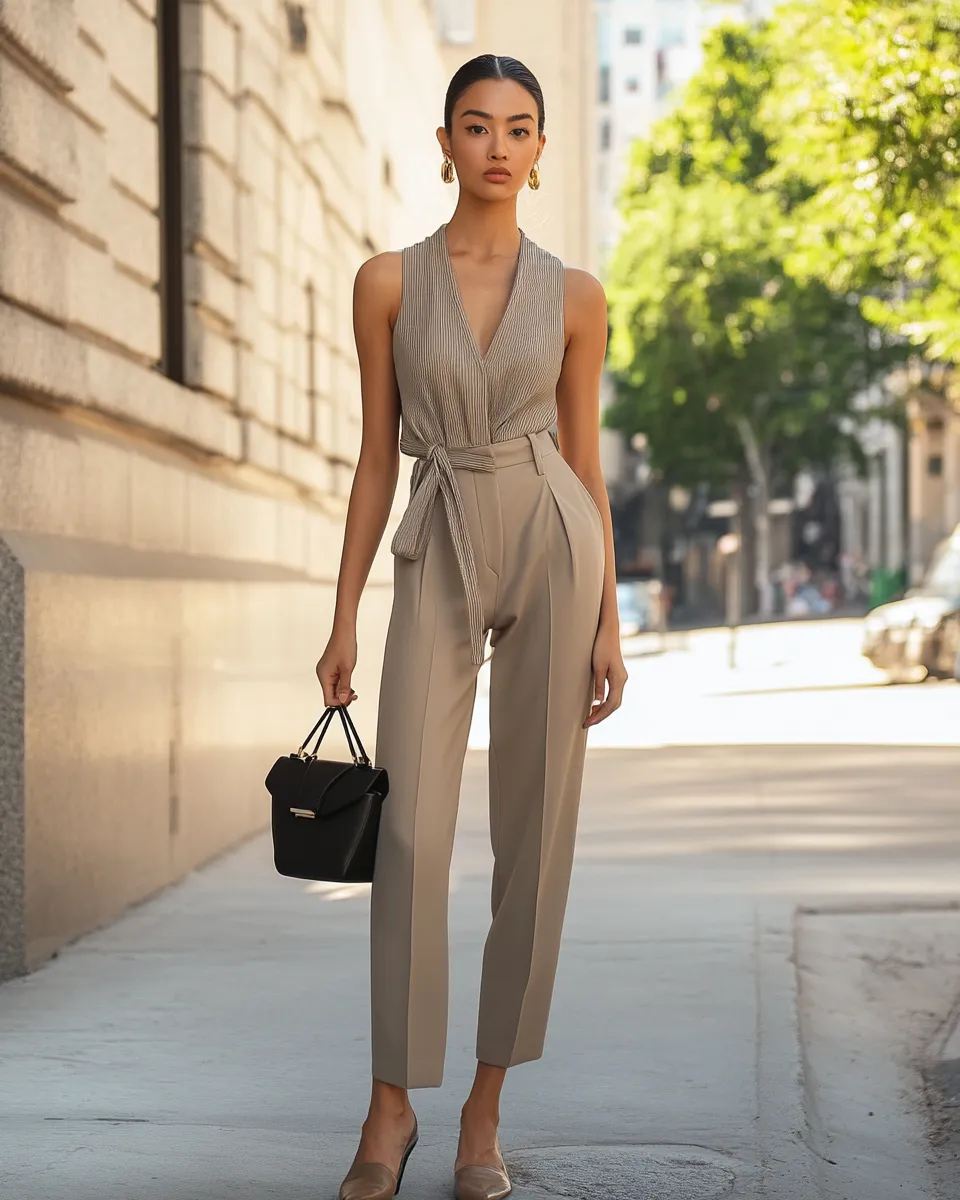
A single colour from top to bottom removes all horizontal breaks in the visual line. This is the most reliable silhouette trick for a petite frame because it eliminates the point where the eye stops and compares one section of the body to another. Tonal dressing works just as well — you do not need an exact match. Cream on ivory, slate on charcoal, camel on sand. The principle holds as long as the contrast is low.
High-Waist Bottoms With Cropped or Tucked Tops
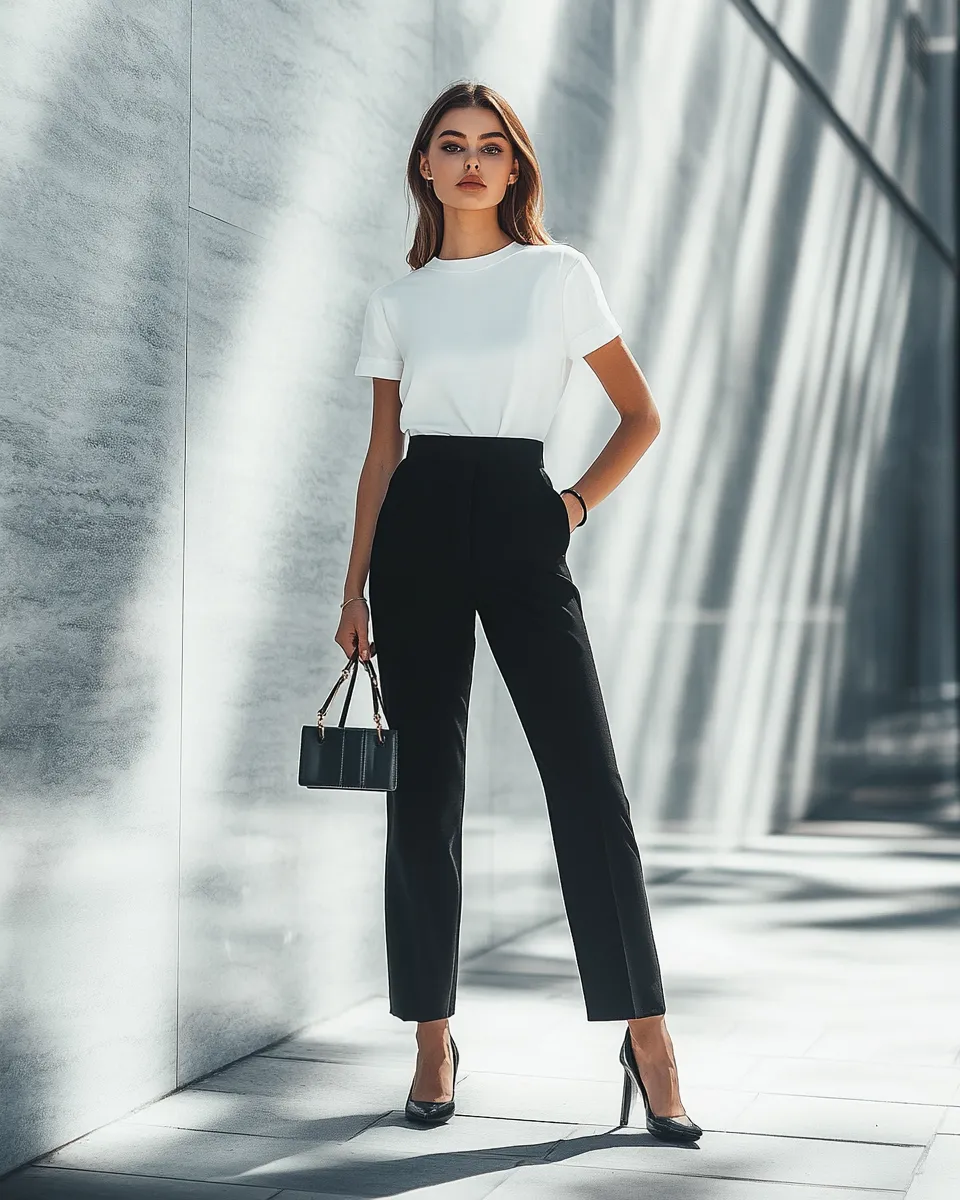
A high-waist bottom visually raises the waist position, which creates a longer leg line even without heels. When paired with a cropped or fully tucked top, the effect is immediate: the body reads as proportionally taller without any tricks or lifts. This formula works with high-waist wide-leg trousers, high-waist straight jeans, high-waist midi skirts, and high-waist tailored shorts. The top does not need to be short — it just needs to clear the waistband.
Fitted Midi Dresses With a Defined Waist
A midi dress on a petite frame requires a defined waist. Without it, the skirt volume starts too low and the dress reads as a column that swallows the body. With a clear waist — whether from construction, a belt, or a seam — the length works beautifully because it creates clean, proportional top and bottom halves. Wrap midi dresses, shirt dresses with a tie, and dresses with a waist seam all fall into this category.
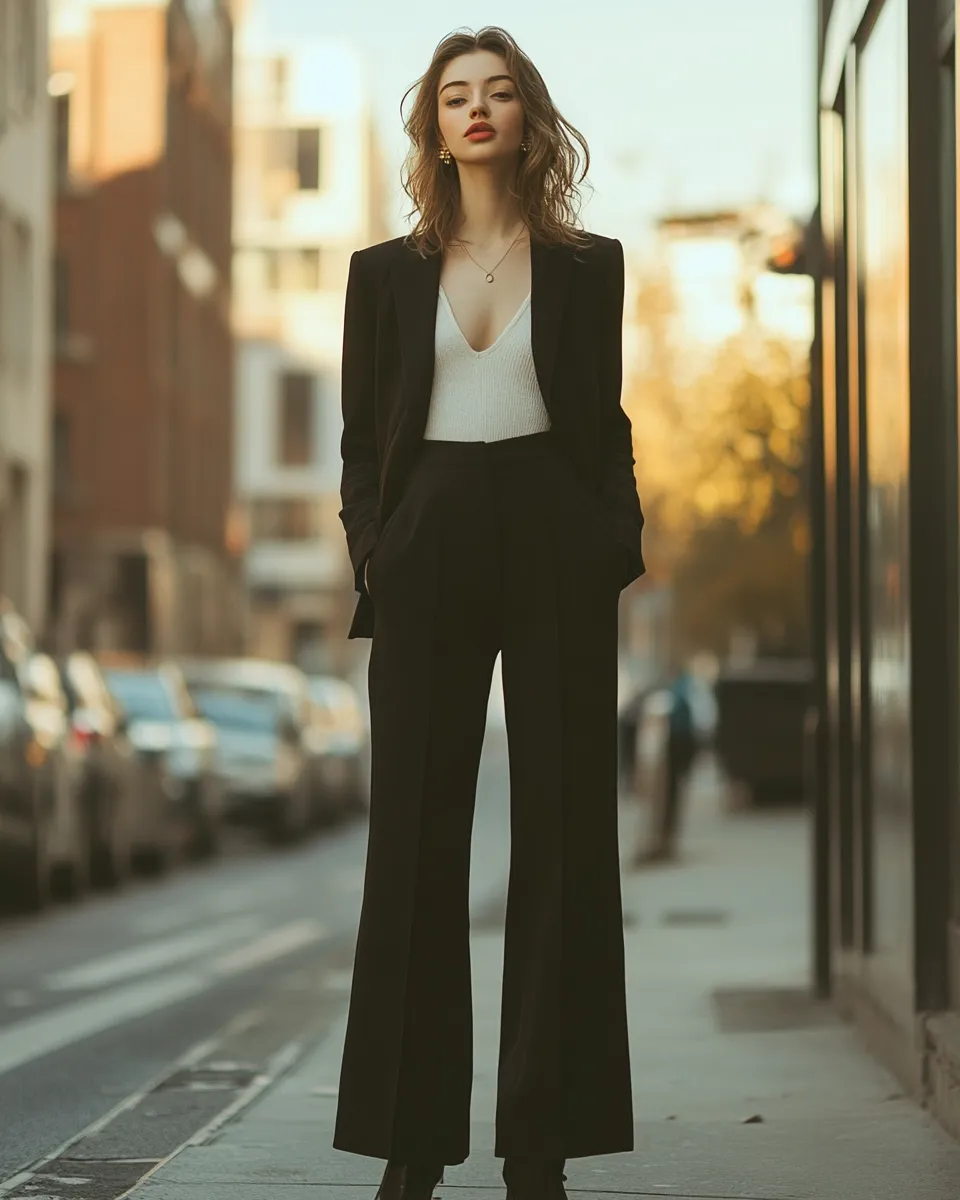
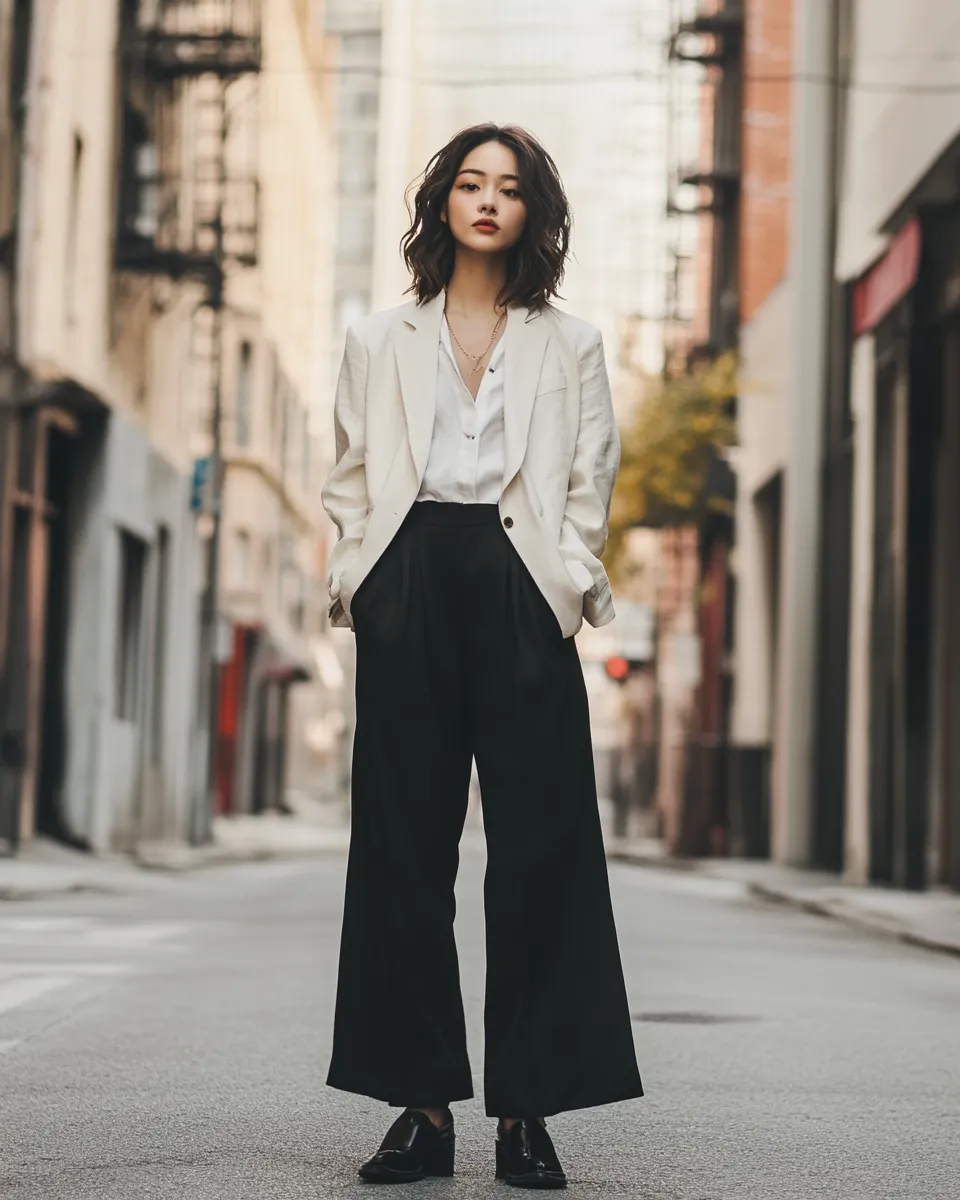
Straight-Leg and Wide-Leg Trousers in Petite Cuts
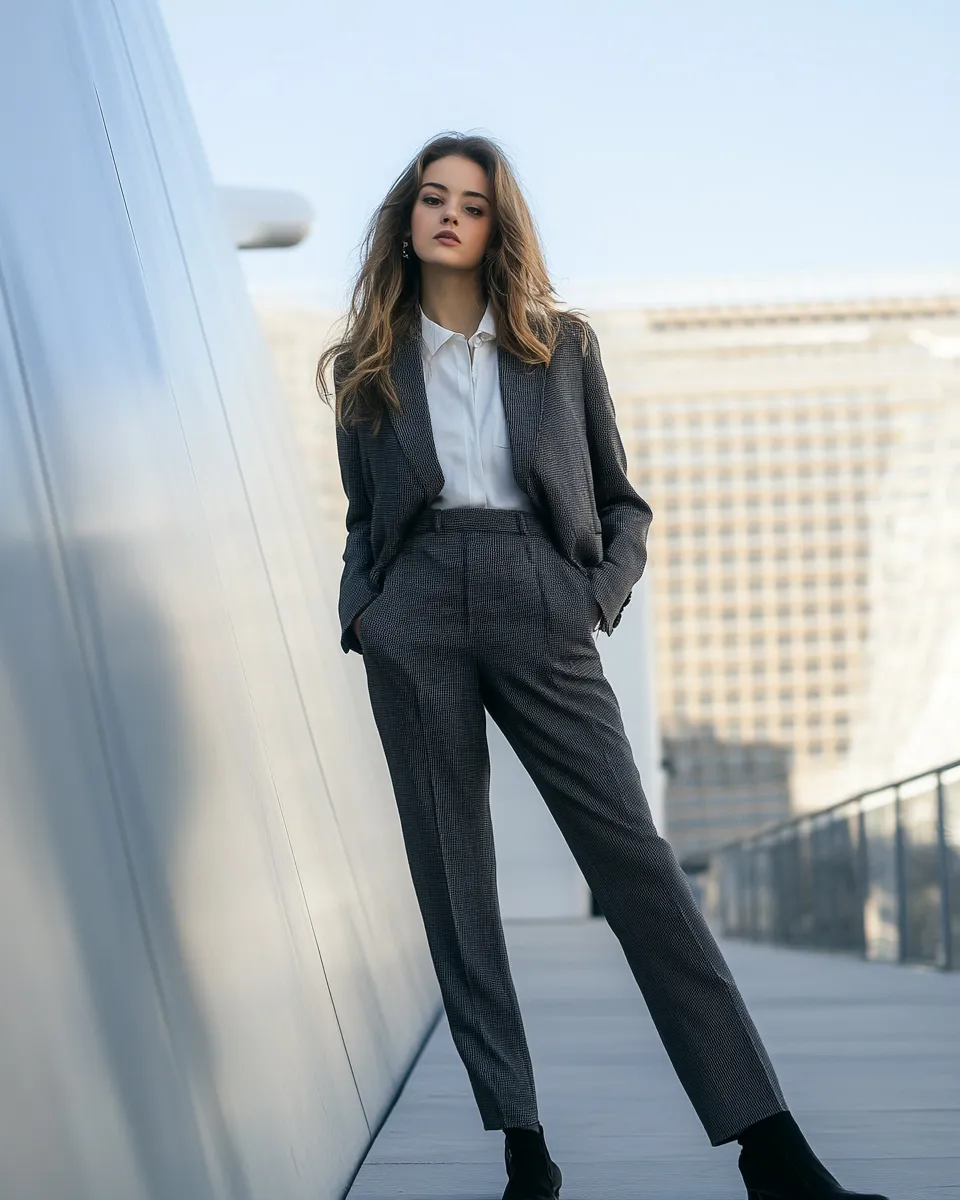
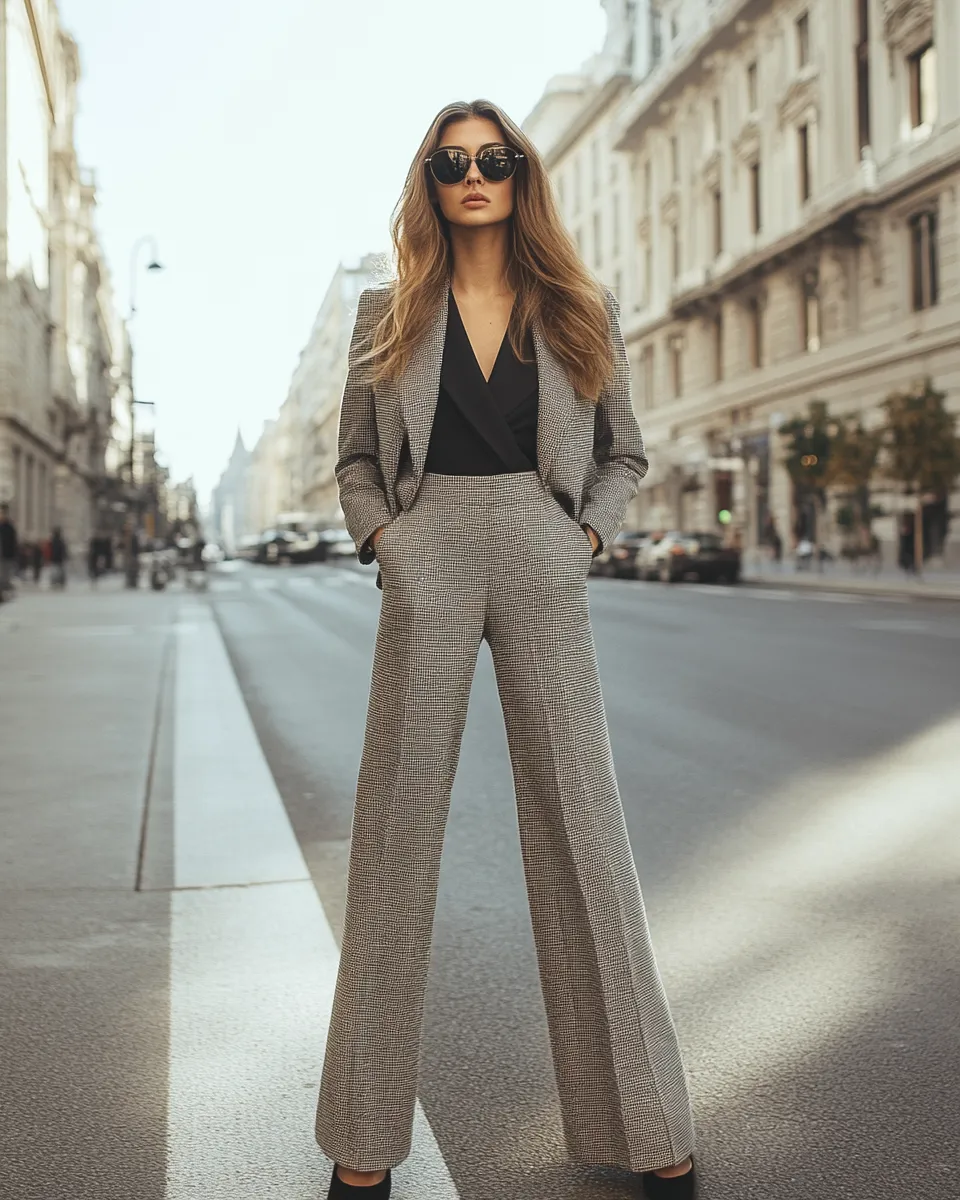
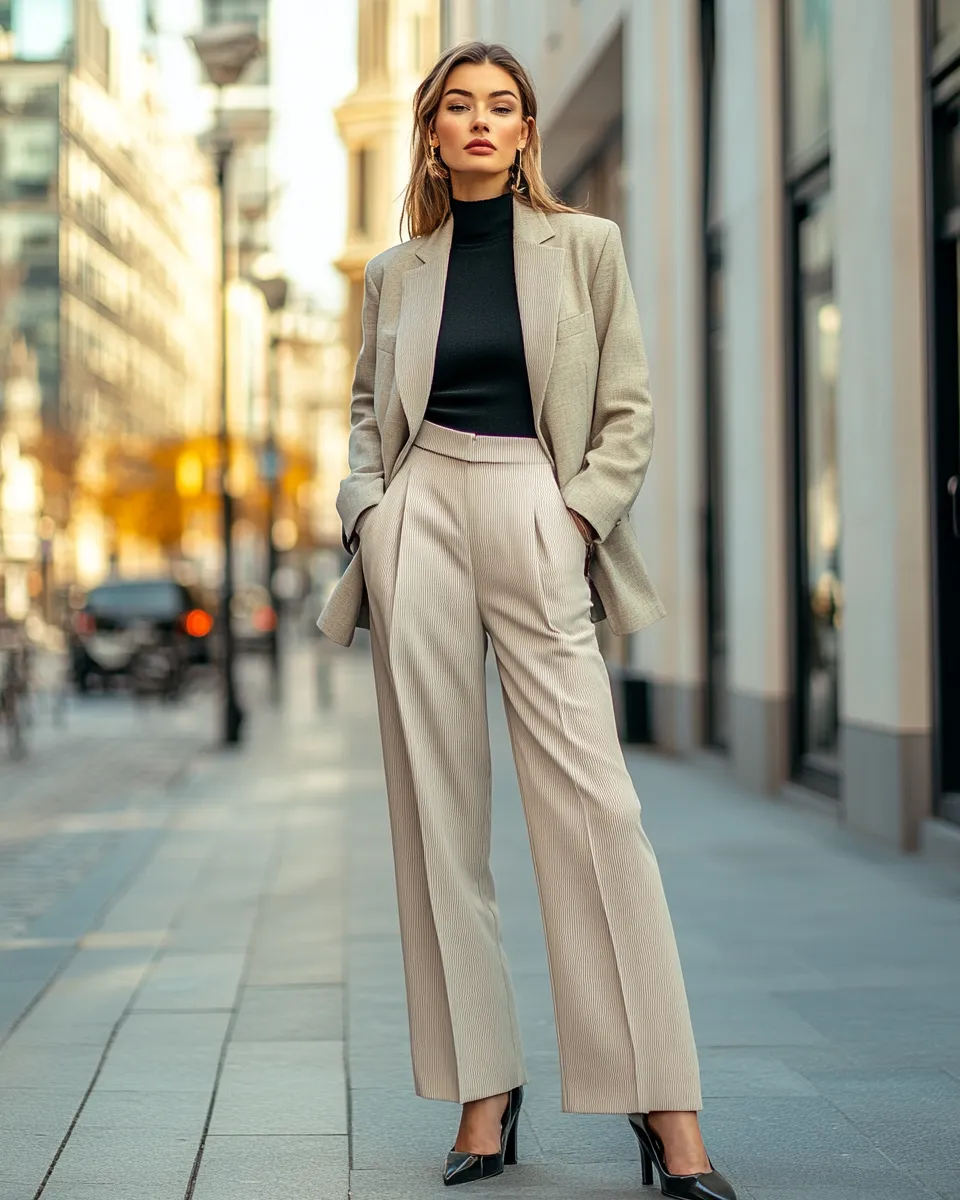
Straight-leg and wide-leg trousers are one of the strongest silhouettes in 2026 fashion, and they read exceptionally well on petite frames when cut to the right length. The key is the hem: it should graze the top of the shoe, not pool on the floor. Most standard-length trousers are cut for a 5’7″–5’9″ frame. Petite cuts typically subtract 3–4 inches from the inseam, which places the hem at exactly the right point on a shorter leg. If petite sizing is not available, a tailor hem is a consistent investment worth making.
Petite Fashion Outfit Formulas That Work in 2026
Abstract rules are less useful than specific outfit formulas. The following combinations are tested silhouettes that consistently produce well-proportioned results on a petite frame. Each can be adapted by colour, fabric, and occasion.
Formula 1 — The Tailored Uniform
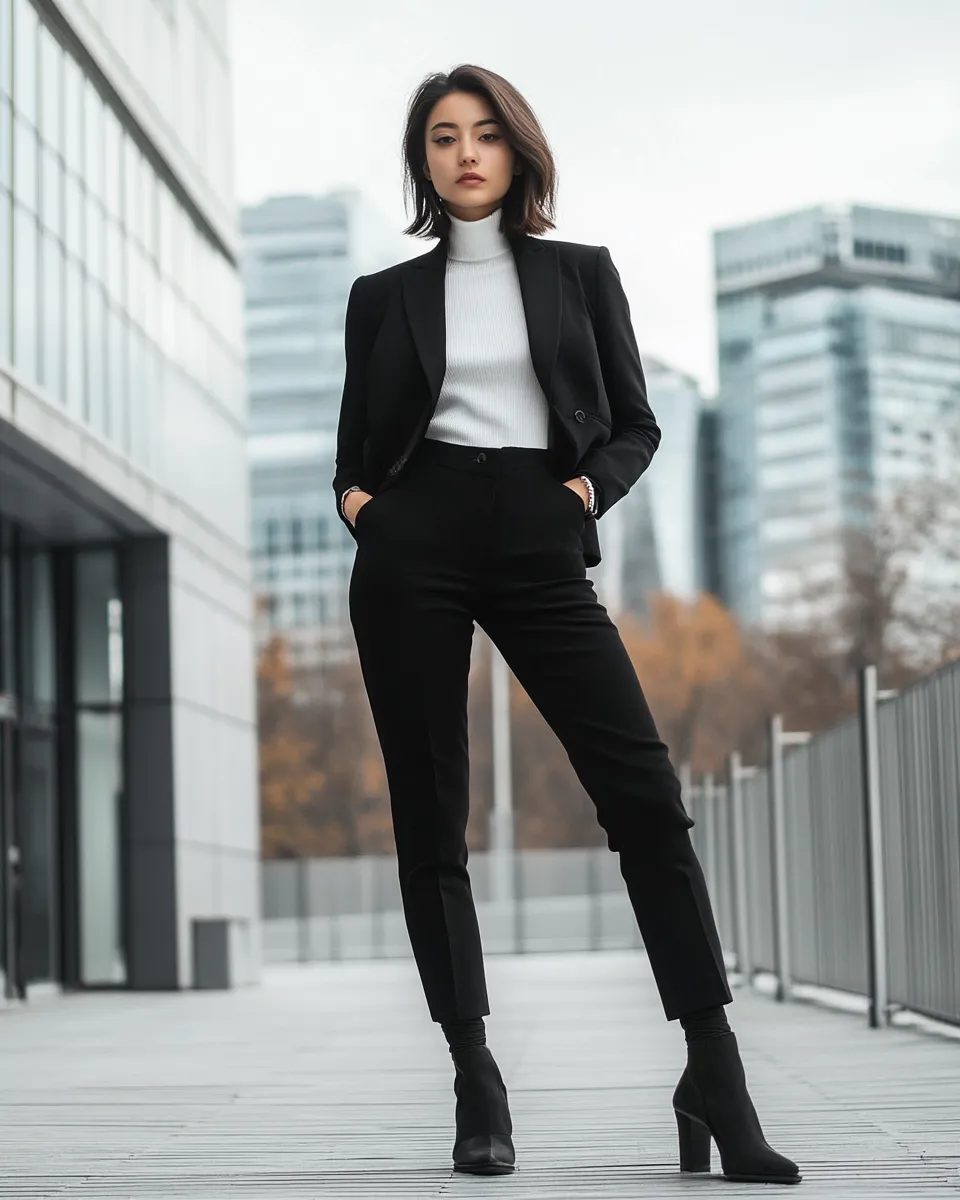
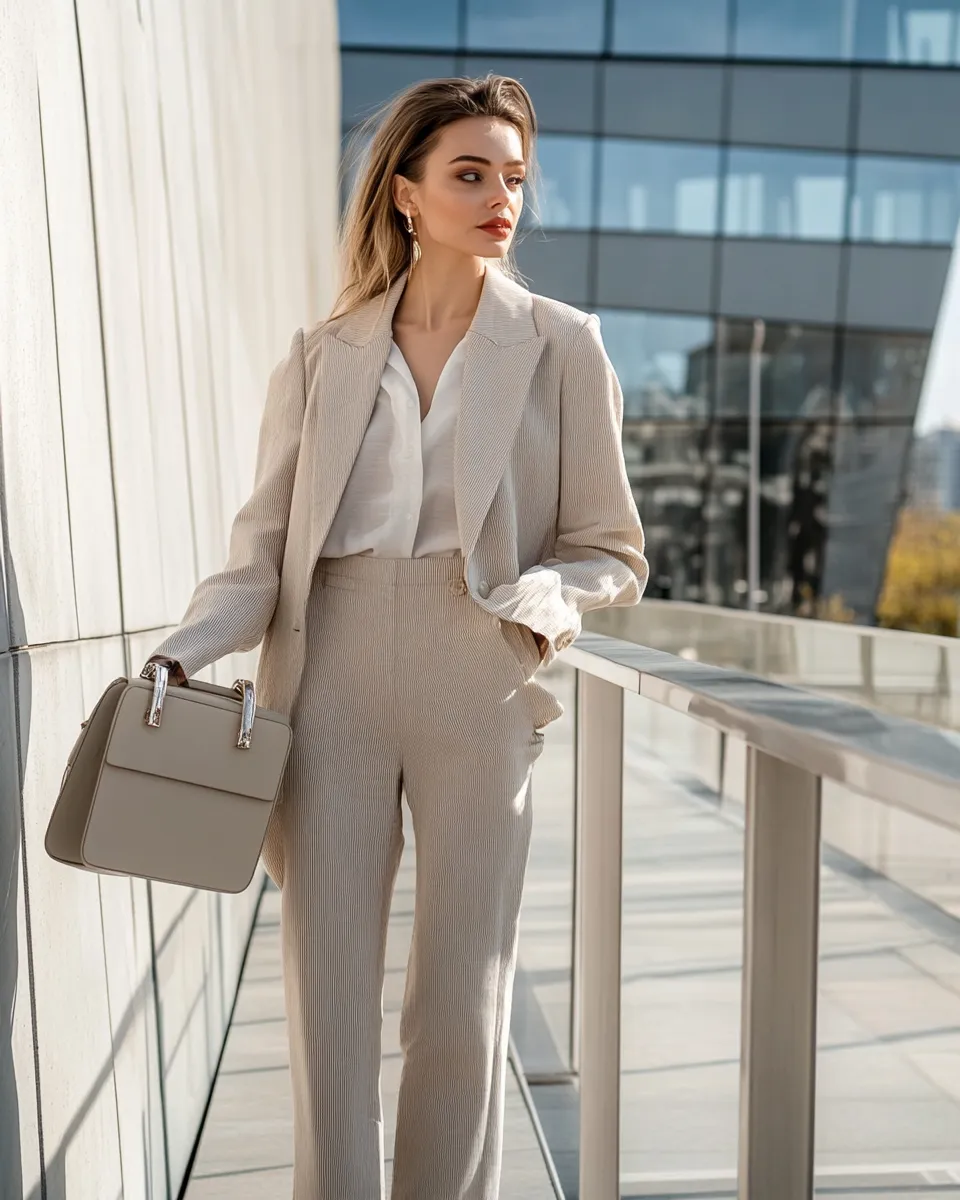
High-waist straight-leg trousers in a neutral tone. Fitted ribbed tank tucked in. Structured short blazer that hits at the hip — not the thigh. Pointed-toe flat mule or low-heeled loafer. This formula works for office, dinner, and day events. It is entirely flat-shoe compatible. The key is the blazer length: a long blazer on a petite frame breaks the body at mid-thigh, which shortens the visual leg. The blazer should end at or just below the hip bone.
Formula 2 — The Minimal Dress
A fitted or semi-fitted midi dress in a single colour with a defined waist. No belt needed if the dress has a seamed waist. Pair with a pointed-toe flat or a low kitten heel. Keep accessories minimal: one earring style, no necklace. This formula works because the eye follows the unbroken line of the dress from shoulder to hem. Adding a belt, a bag, a necklace, and earrings all at once breaks that line and adds visual noise that competes with the silhouette.
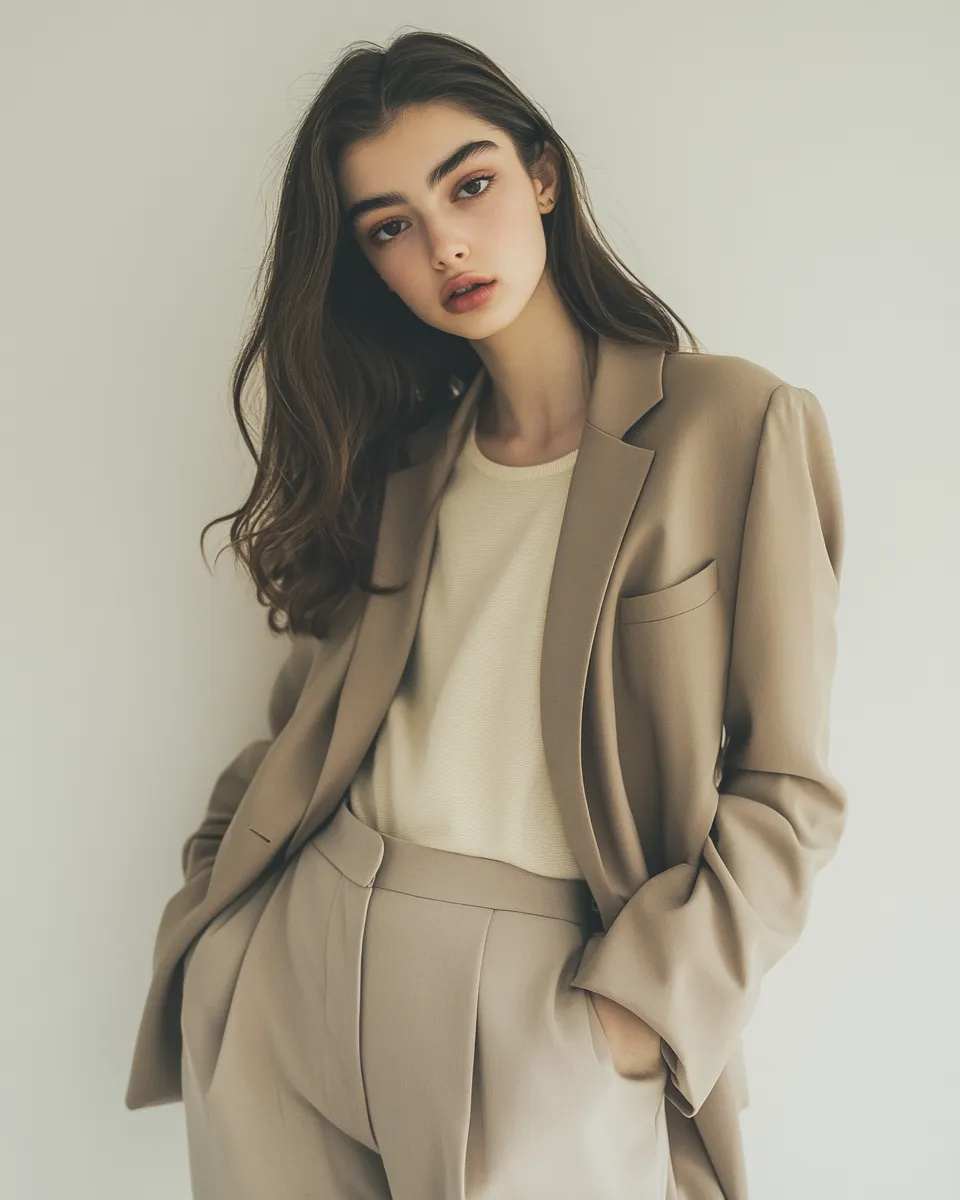
Formula 3 — The Oversized Done Right
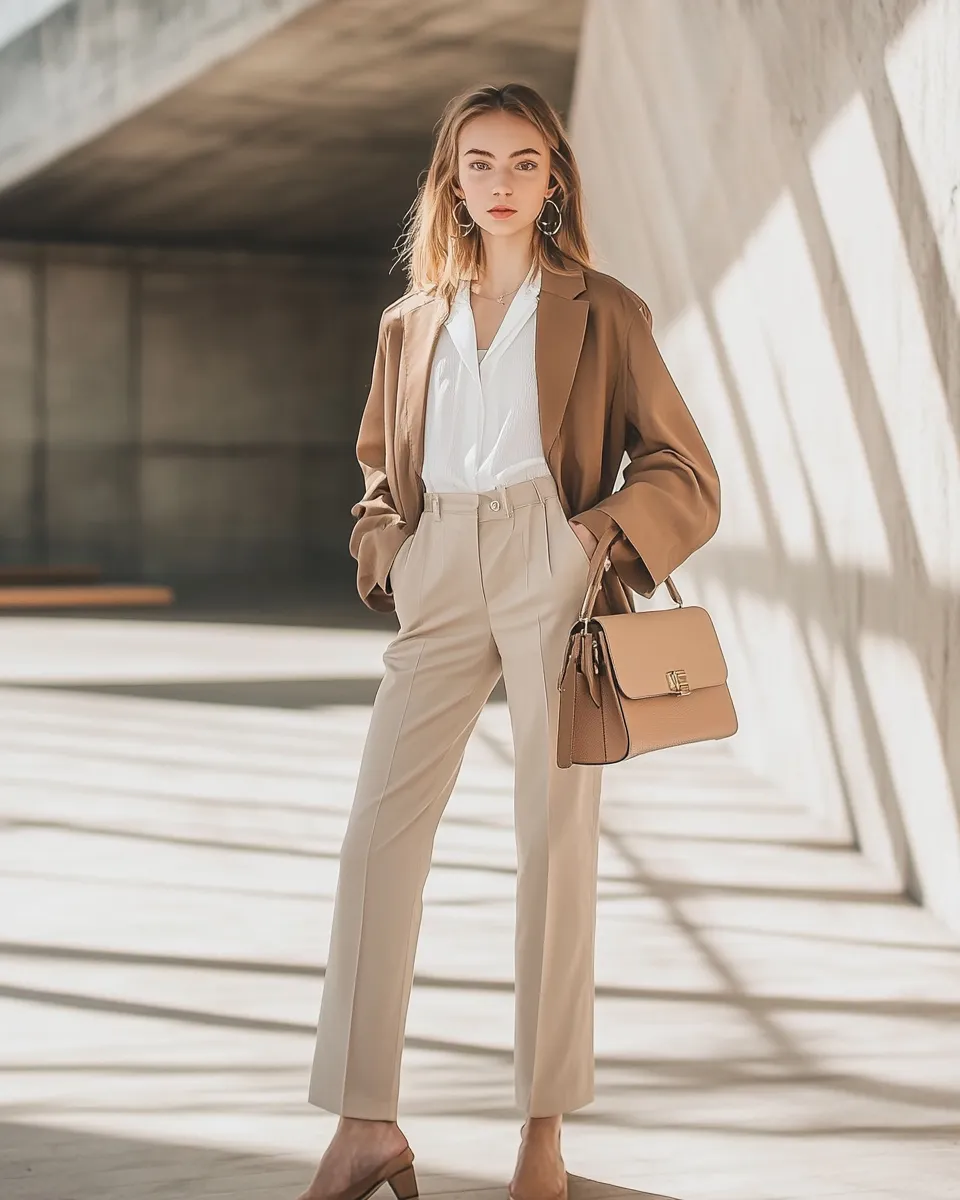
Oversized blazer or shirt in a neutral tone. Slim or straight-leg trousers or tailored shorts in a matching or tonal colour. Clean sneaker or loafer. Nothing fitted on top of something oversized. Nothing oversized on top of something oversized. The rule for a petite frame wearing an oversized piece is that everything else must be proportionally slimmer. The oversized item is the focal point. The rest of the outfit serves it.
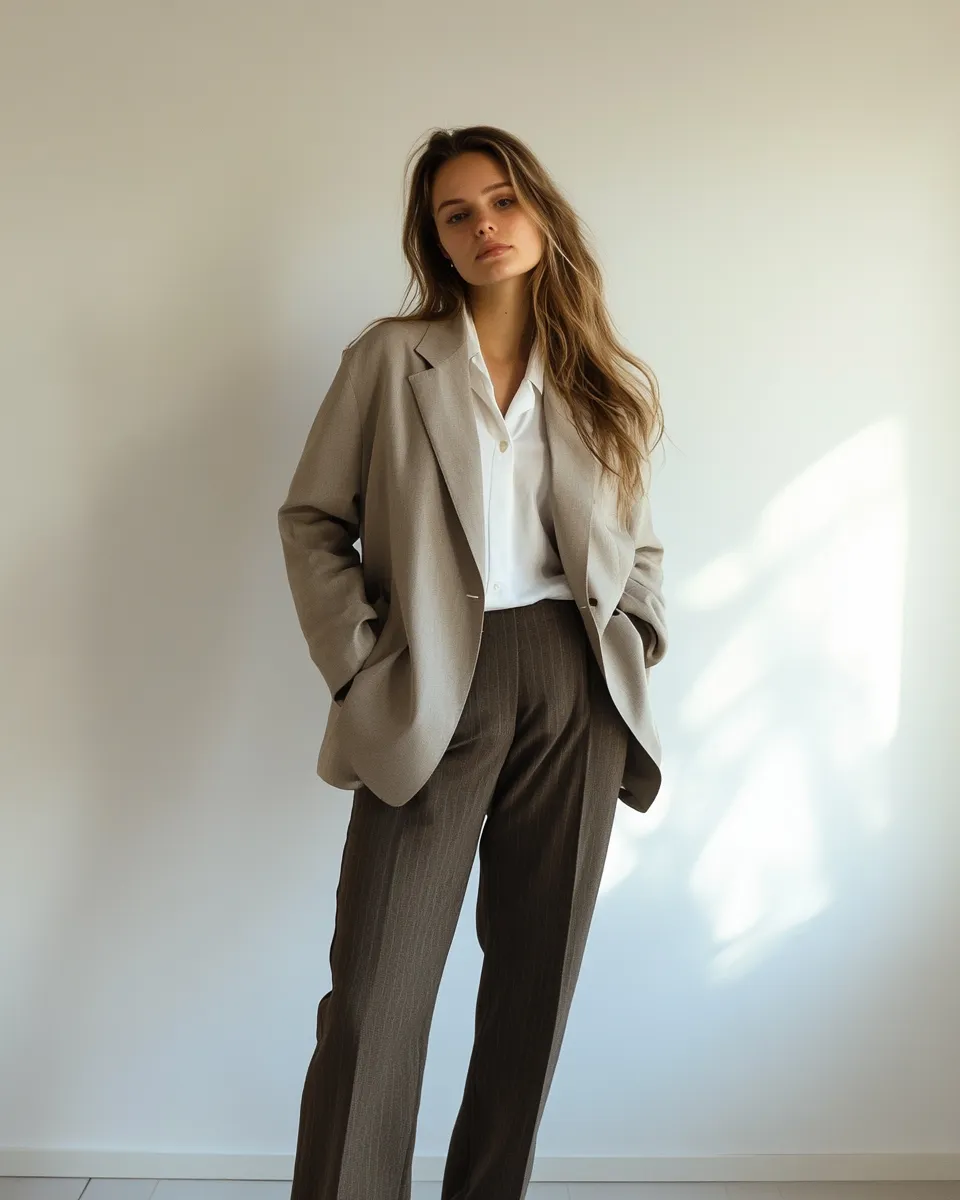
Formula 4 — The Skirt Formula
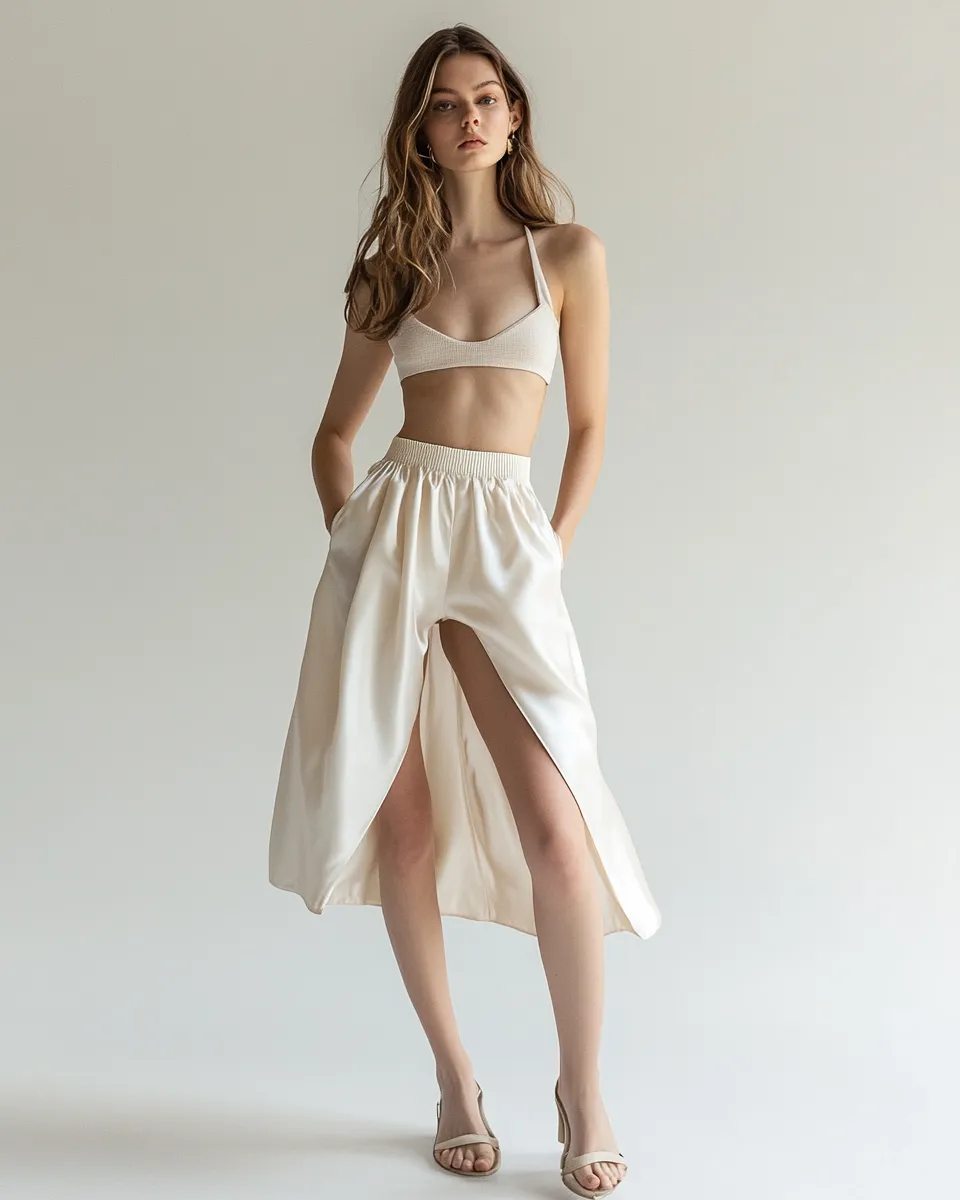
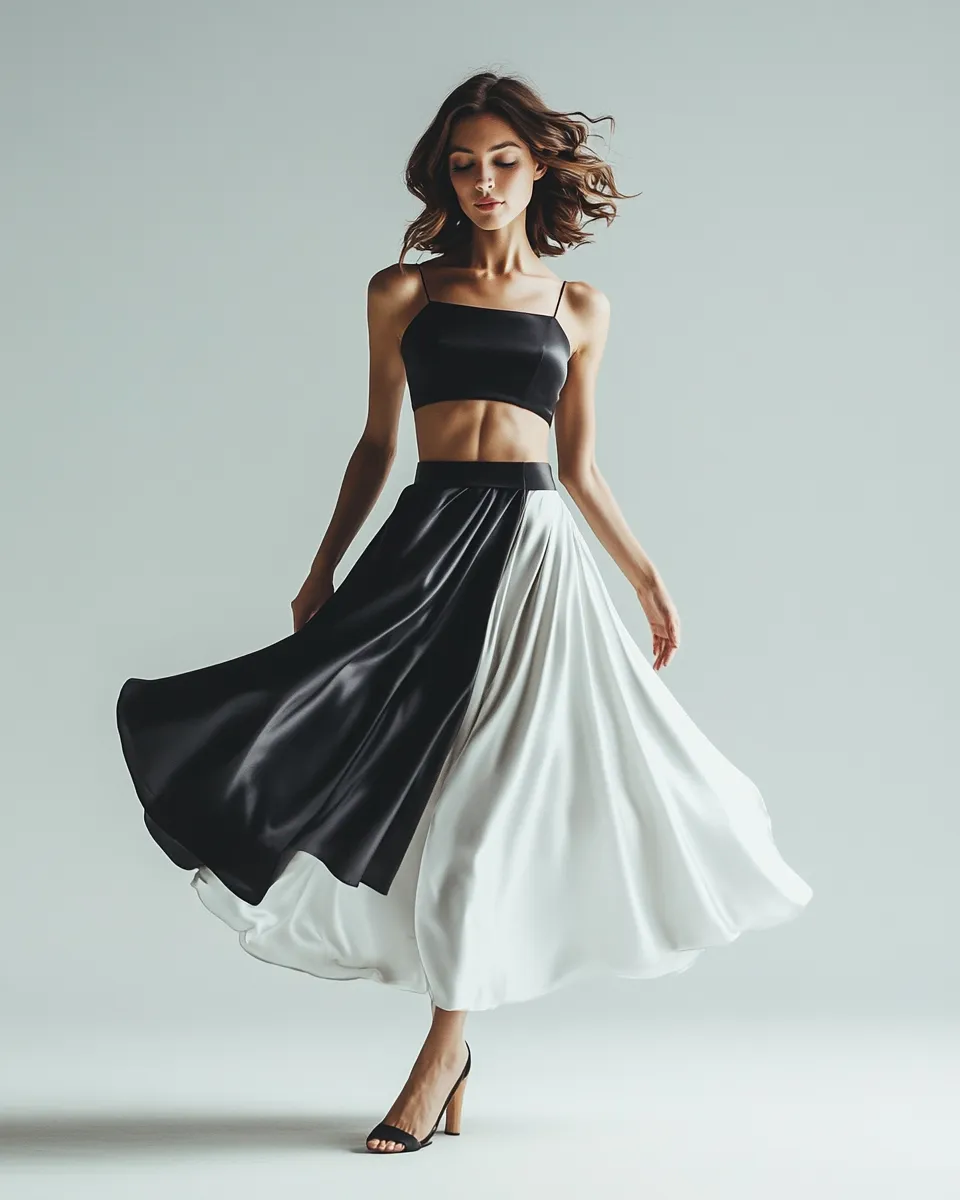
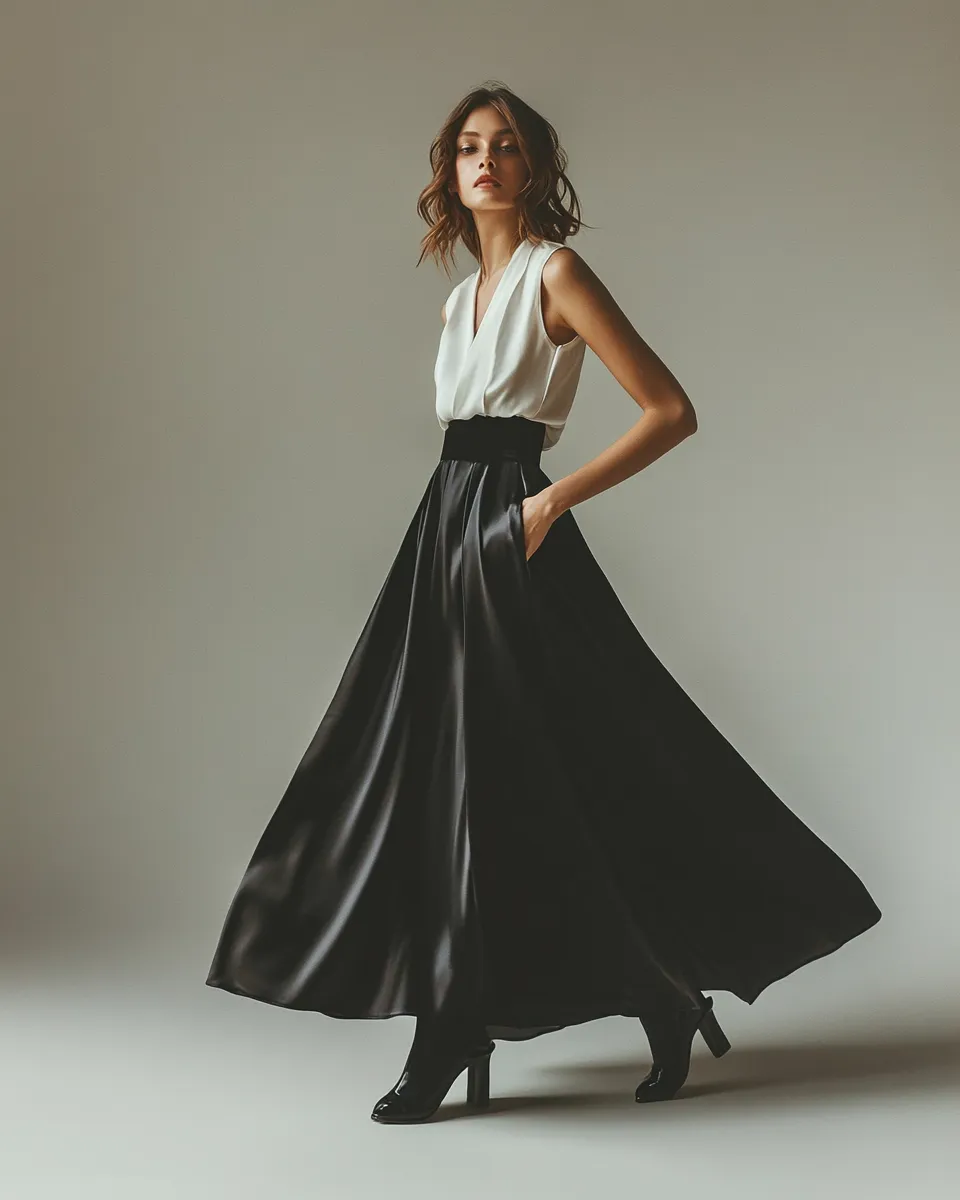
High-waist midi or mini skirt. Slim fitted top fully tucked in, or a thin bodysuit. The waistband should be visible — it does the work of defining where the upper body ends and the lower body begins. This formula works with pleated midi skirts, satin bias skirts, denim mini skirts, and knit skirts. The silhouette principle is the same in every case: a high waist, a tucked or close top, and a hem that sits at a proportion consistent with the wearer’s height.
What to Avoid in Petite Fashion — and Why
Most petite fashion advice is a list of rules without explanations. Understanding the why makes it easier to know when a rule applies and when it does not.
| What to Avoid | Why It Disrupts Proportion | What to Do Instead |
|---|---|---|
| Low-rise waistbands | Visually cuts the leg at the widest point and shortens the lower half | High-rise or mid-rise waistbands that sit at or above the natural waist |
| Ankle straps on flat sandals | Creates a horizontal cut at the ankle that visually shortens the leg | Pointed-toe flats, mules, or straps that match the skin or shoe colour |
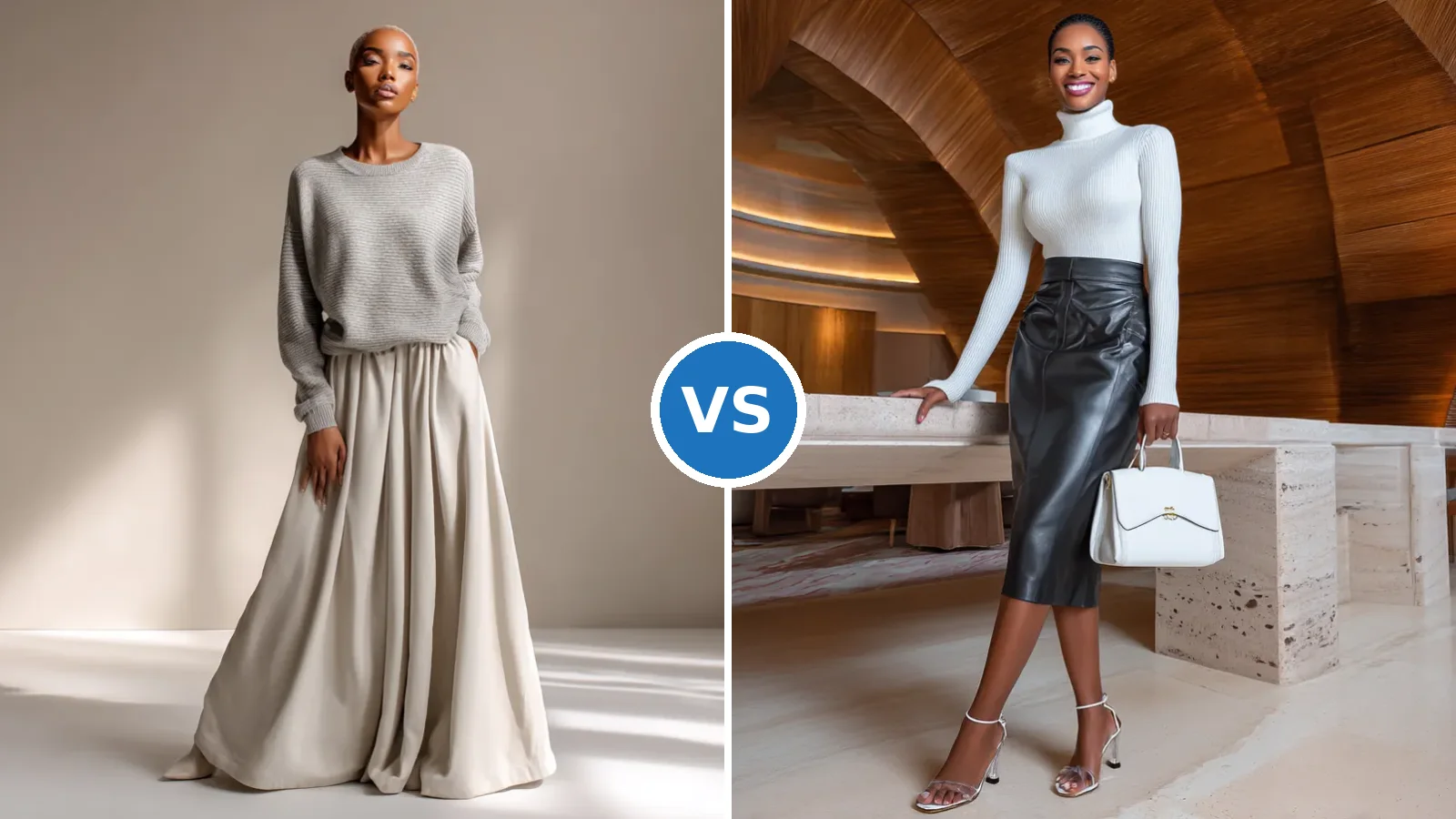
| Maxi skirts without a waist definition | The skirt volume starts at the hip and reads as a shapeless column | Maxi skirts with a tucked top and defined waistband, or a thin belt |
| Heavy contrast between top and bottom | The eye stops at the colour break and visually divides the body in two | Tonal or monochromatic dressing, or contrast kept to accessories |
| Mid-calf hemlines | Cut the leg at its widest point, which visually shortens both the calf and the leg overall | Mini, knee, or midi hemlines that clear the widest part of the calf |
The Best Fabrics for Petite Outfits
Fabric weight and drape affect how a silhouette reads on the body. For petite frames, certain fabrics consistently produce cleaner lines and better proportions.
Lightweight structured fabrics — crepe, ponte, scuba, and light wool — hold their shape without adding bulk. They are ideal for trousers, tailored blazers, and structured dresses because the garment maintains its silhouette independently of the body inside it. Heavy fabrics like thick wool bouclé or stiff canvas can overwhelm a small frame because the fabric itself becomes the focal point rather than the outfit.
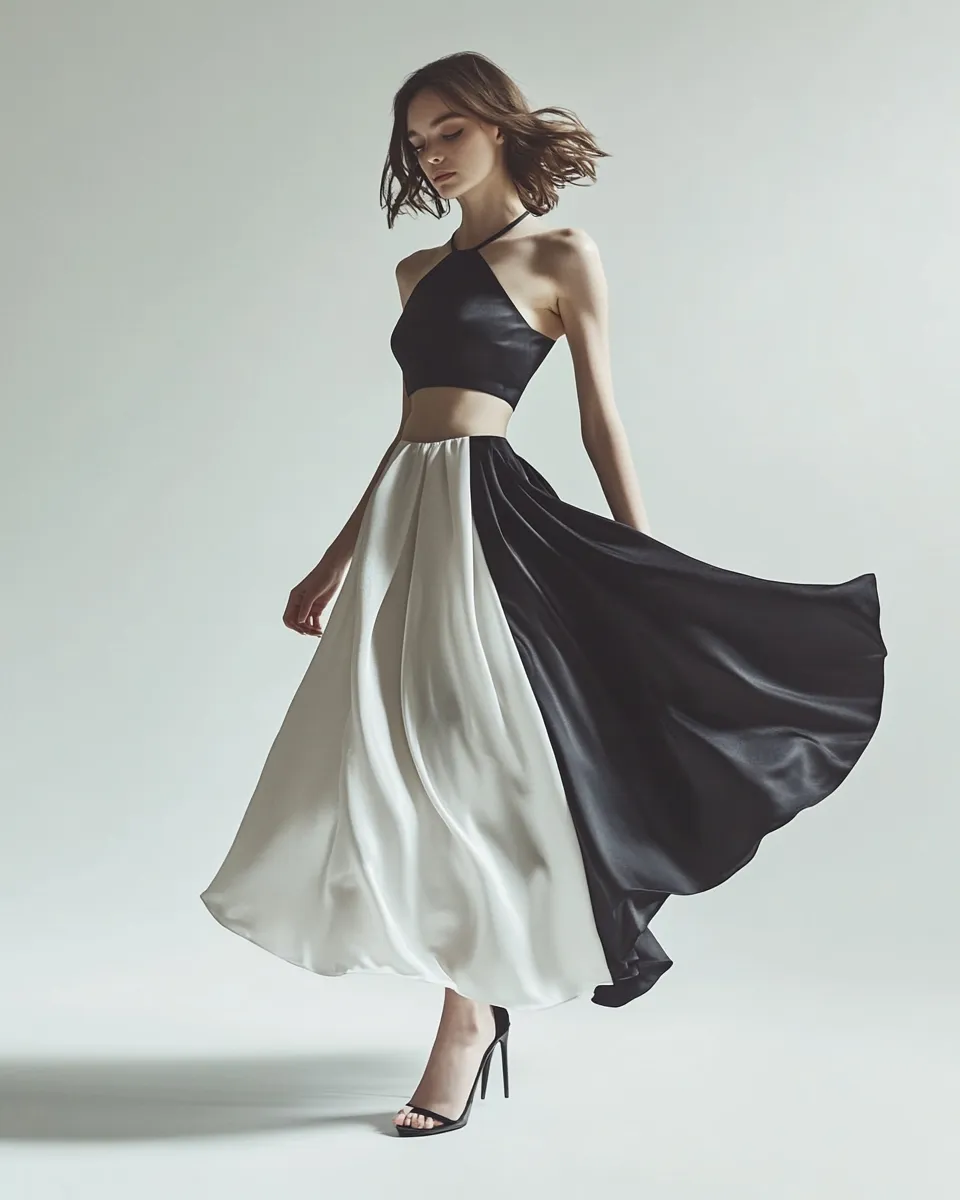
Fluid fabrics — satin, silk, modal — work well for skirts and dresses when the cut has structure elsewhere. A satin midi skirt with a crisp fitted top reads as polished. The same satin midi skirt with a flowy blouse reads as shapeless. The fluid fabric needs a structured counterpart to stay proportional.
Avoid heavily textured fabrics in large volumes — thick boucle, cable knit, sherpa — unless the piece is small or the rest of the outfit is deliberately slim. Texture adds visual weight, and on a petite frame that visual weight competes with the silhouette.
Petite-Specific Brands and Shopping Strategy in 2026
Finding well-fitting clothes as a petite woman in standard sizing is possible, but it requires knowing where to look and what to alter. Several brands now offer dedicated petite ranges with adjusted inseams, sleeve lengths, and torso depths — meaning the proportions are built in rather than requiring tailoring after purchase.
ASOS Petite, Banana Republic Petite, Ann Taylor Petite, and Abercrombie and Fitch’s petite range are among the most consistent for wardrobe staples. For investment pieces, Sandro, Maje, and & Other Stories cut in proportions that naturally suit petite frames even in standard sizing, because their garments are designed closer to a European 34–36 base. For denim specifically, AG Jeans, Frame, and Madewell all offer petite inseam options at 25–27 inches that sit correctly on a shorter leg.
The most efficient shopping strategy for petite fashion is to identify the two or three garment types that consistently fit poorly off the rack — usually trousers, blazers, and maxi dresses — and either shop exclusively in petite sizing for those items or budget for tailoring. Everything else — T-shirts, tank tops, knitwear — can usually be purchased in standard sizing without adjustment.
Accessories and Petite Proportion
Accessories are where petite styling often goes wrong, not because petite women cannot wear statement pieces, but because the scale of the accessory relative to the outfit requires the same attention as the scale of the clothing itself.
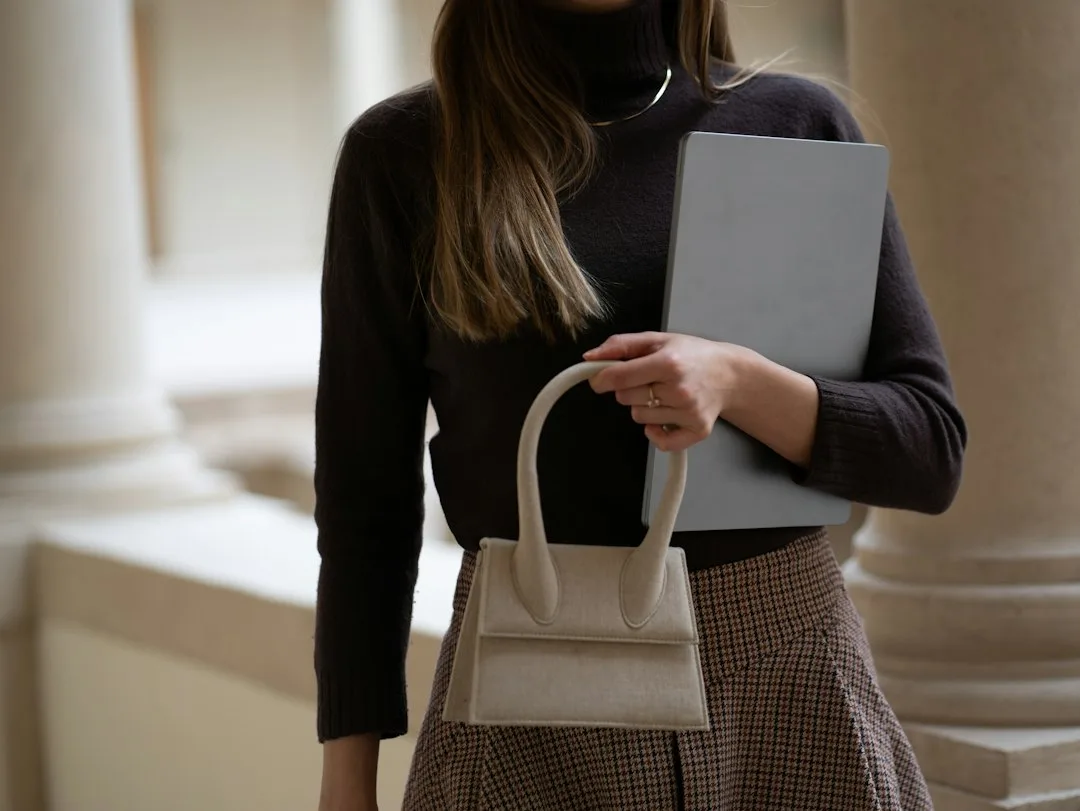
Bags are the clearest example. A large tote bag on a petite frame reads as an accessory that is competing with the body rather than completing the outfit. Mini bags, small structured bags, and compact crossbody styles sit in better visual proportion. If you want to carry a large bag, choose a style with a top handle and carry it in the hand rather than on the shoulder, which brings the scale closer to the body and reduces its visual mass.
Jewellery on a petite frame follows the same logic as colour: less contrast, fewer competing focal points. One statement earring without a necklace. A layered necklace without earrings. A cuff bracelet without rings. The principle is not minimalism — it is focus. Choose one accessory to anchor the outfit and keep the rest secondary.
Scarves and belts are powerful tools for petite dressing when used with intention. A thin belt over a tucked shirt defines the waist and reinforces the high-waist effect of the bottom. A silk scarf tied as a hair accessory or knotted on a bag adds interest without adding visual weight to the body. A thick statement belt at the natural waist can create the same effect as a high-waist bottom when layered over a dress or skirt.
Petite Fashion for Every Occasion — Quick Reference
Different occasions call for different outfit priorities, but the underlying proportion principles for petite fashion remain consistent across all of them. Here is how to apply them in practical contexts.
Work and Office
Tailored high-waist trousers with a fitted turtleneck or slim blouse tucked in. A cropped blazer in a matching or tonal colour. Pointed-toe loafers or low block-heeled mules. This formula is flat-shoe compatible, fully office-appropriate, and requires no adjustment for a petite frame as long as the trousers are the correct inseam length. Avoid suit jackets that hit at mid-thigh — they read as costume on a petite frame rather than suiting.
Casual and Weekend
High-waist straight jeans with a fitted or lightly cropped top. Clean sneaker or flat mule. An optional oversized denim or linen shirt worn open as a layer. The casual formula for petite dressing is identical to the tailored formula in principle: keep the waist high, keep the top short or tucked, and keep the hem of the trouser at the right length. The casualness comes from fabric and footwear, not from proportion changes.
Evening and Events
A fitted midi or mini dress in a single tone with a defined waist. Or: tailored wide-leg trousers in a luxurious fabric — satin, velvet, or crepe — with a fitted top. Heel or flat depending on preference, but if wearing a heel, a block heel or kitten heel will not shorten the foot line the way a chunky platform does. Keep jewellery edited: one focal piece, nothing competing with the silhouette.
Summer and Holiday
Linen wide-leg trousers with a fitted linen tank or bandeau top. Or a wrap midi dress in a light fabric with a waist tie. The summer wardrobe for a petite frame follows the same rules as the rest of the year with the addition of one note: lighter fabrics tend to drape more softly, which means structure elsewhere becomes more important. A fitted top, a defined waist, or a cropped length is needed to anchor the softness of the fabric.
Common Petite Fashion Myths — Corrected
A number of widely repeated petite styling rules are either incomplete or wrong. Here are the ones most worth revisiting.
Myth: Petite women should always wear heels. This is wrong. Heels change the visual length of the leg, but they do not change proportion. A poorly proportioned outfit with heels is still a poorly proportioned outfit. Flat shoes work consistently well for petite frames when the silhouette is right — pointed-toe flats, loafers, mules, and low sandals all elongate the foot line without requiring height.
Myth: Petite women cannot wear wide-leg trousers. Also wrong. Wide-leg trousers work on petite frames when the waistband is high, the top is cropped or tucked, and the hem grazes the floor or sits just above the shoe. The silhouette is clean and vertically unbroken. The only adjustment required is inseam length.
Myth: Petite women should avoid bold prints. Partially wrong. Large-scale prints can work on petite frames if the rest of the outfit is minimal and the print is on a well-fitted garment. The problem is not the print size — it is visual noise. A bold floral on a fitted midi dress works. The same bold floral on a loose, unstructured dress with pattern-mixing accessories does not.
Myth: Midi length is always too long for petite women. Wrong when the waist is defined. The midi length becomes problematic on a petite frame only when it cuts at the widest part of the calf and the waist is not defined. A midi dress or skirt with a clear high waist and a hem that falls below the widest point of the calf reads well on almost any height.
The Clearest Principle for Petite Fashion Outfits
Everything in petite fashion styling comes back to keeping the visual logic of the outfit internally consistent. High waist, short or tucked top, correct hem length. Or: single colour, minimal breaks, accessories that do not compete with the silhouette. The formula changes depending on the garment and the occasion, but the underlying logic is always the same: proportion, not height, is what makes an outfit work.
A petite frame is not a limitation to dress around. It is a set of proportions to dress with. The outfits that work best are the ones built with those proportions in mind from the first garment choice — not the ones that try to compensate for them after the fact.