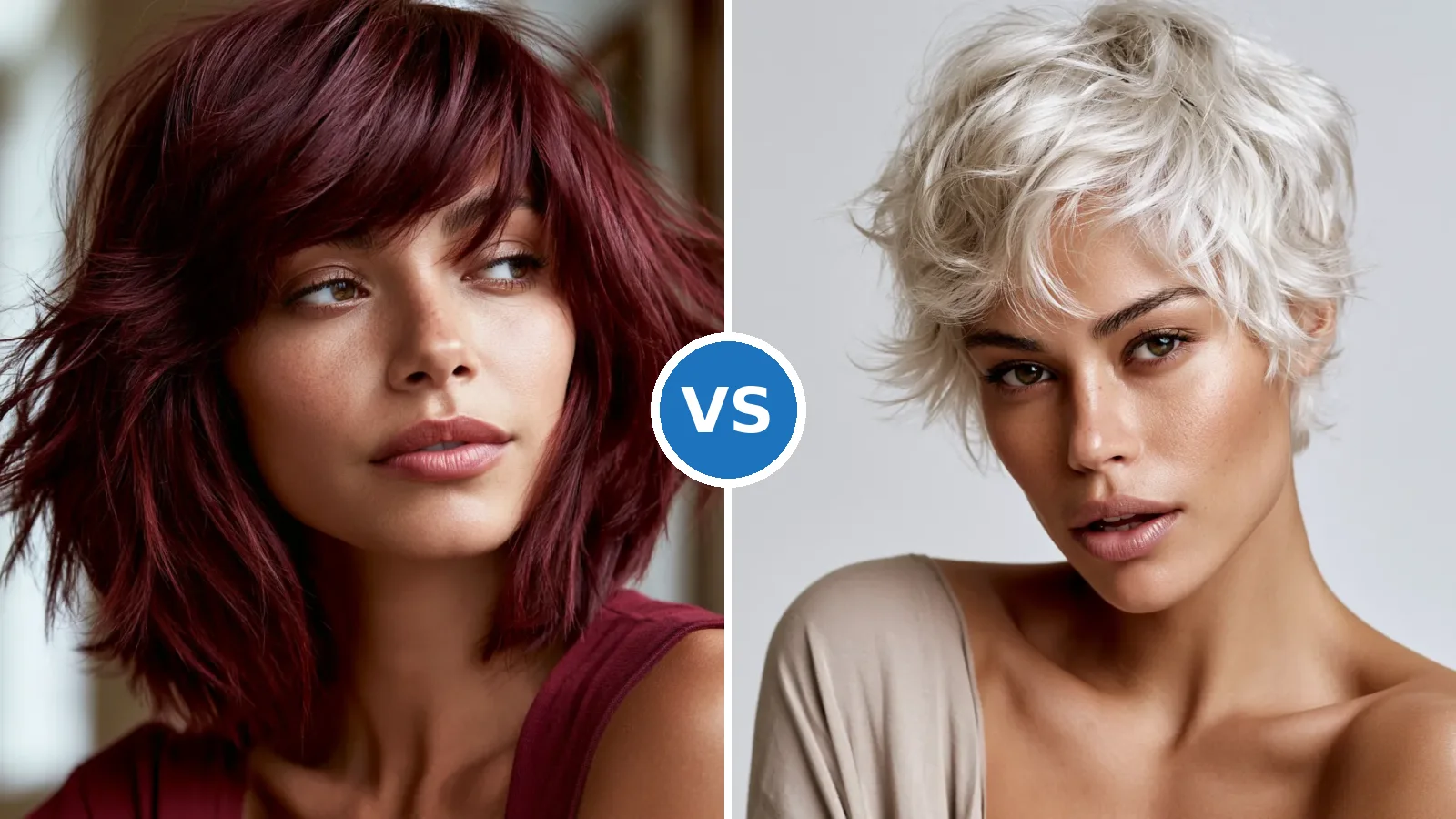
Bixie haircut territory sits exactly where most women actually want to be: shorter than a bob but softer than a pixie, with enough layer structure to move in ocean breeze without needing to think about it. The cut borrows the cheekbone-grazing weight of a bob and combines it with the interior texture of a pixie, producing something that reads deliberate even when it’s unstyled after a swim.
At the beach, short hair either works completely or becomes a problem by 10 a.m. The bixie sidesteps that entirely because the layers are engineered to respond to humidity and wind rather than collapse under them. Stylists recommend it specifically for summer for that reason — not because it’s low-effort in general, but because the effort it does require takes about four minutes and a good spray.
Three color directions dominate the bixie-at-the-beach conversation right now: sun-kissed blonde with tousled texture, vibrant coral with windswept layers, and ocean teal with soft waves. Each one behaves differently in salt air, fades on its own timeline, and demands a slightly different product approach. The sections below cover all three in the specific terms that actually matter.
- The bixie haircut splits the difference between a bob and a pixie — ear-to-chin length with interior texture and face-framing pieces.
- Stylists recommend trimming every 4–6 weeks to keep the shape intentional; skip that window and the nape reads grown-out, not cool.
- Davines This Is A Sea Salt Spray ($34 at Sephora, 8.45 oz) is the go-to product for activating tousled texture without crunch.
- Vivid colors like coral and teal can fade up to 80% faster with combined salt and sun exposure — pre-rinsing with fresh water before swimming helps.
- Blonde bixie needs conditioning treatments, not just sea salt spray, to stay hydrated after ocean days.
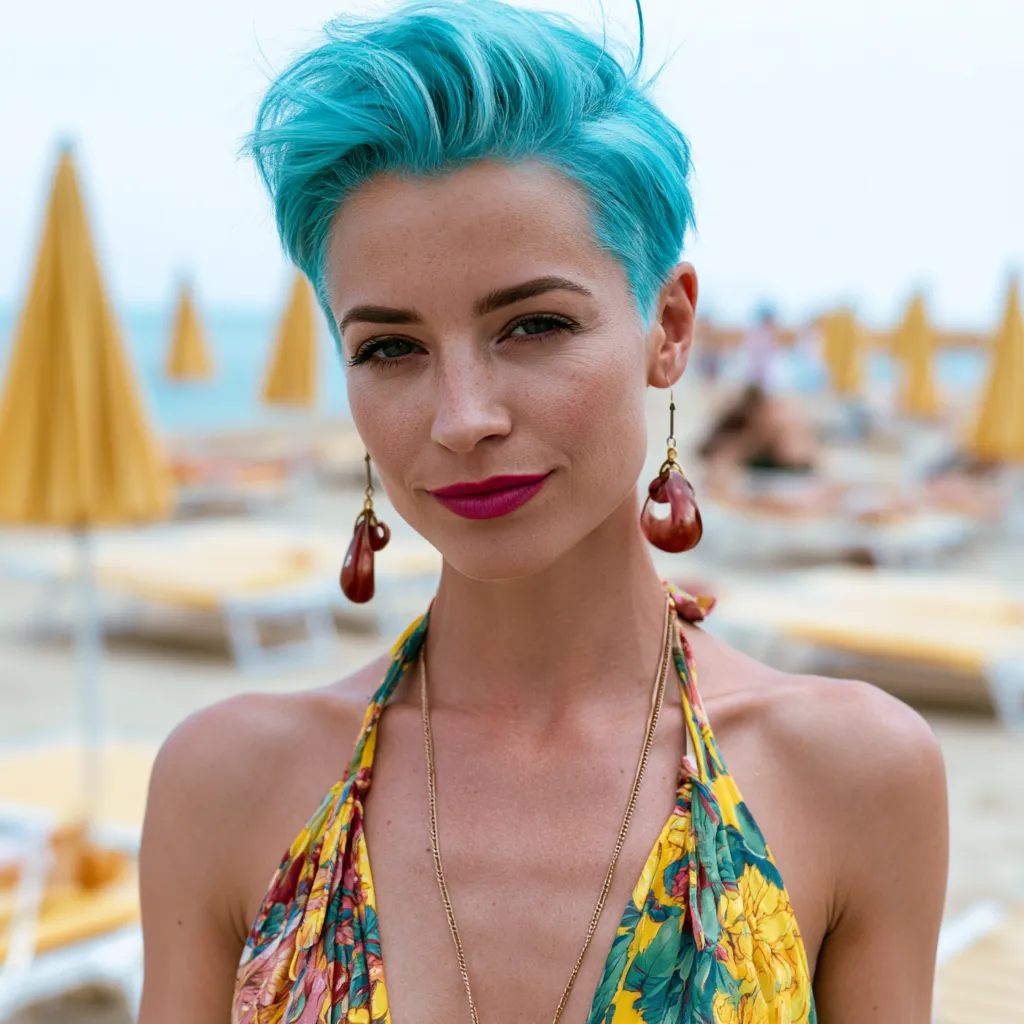
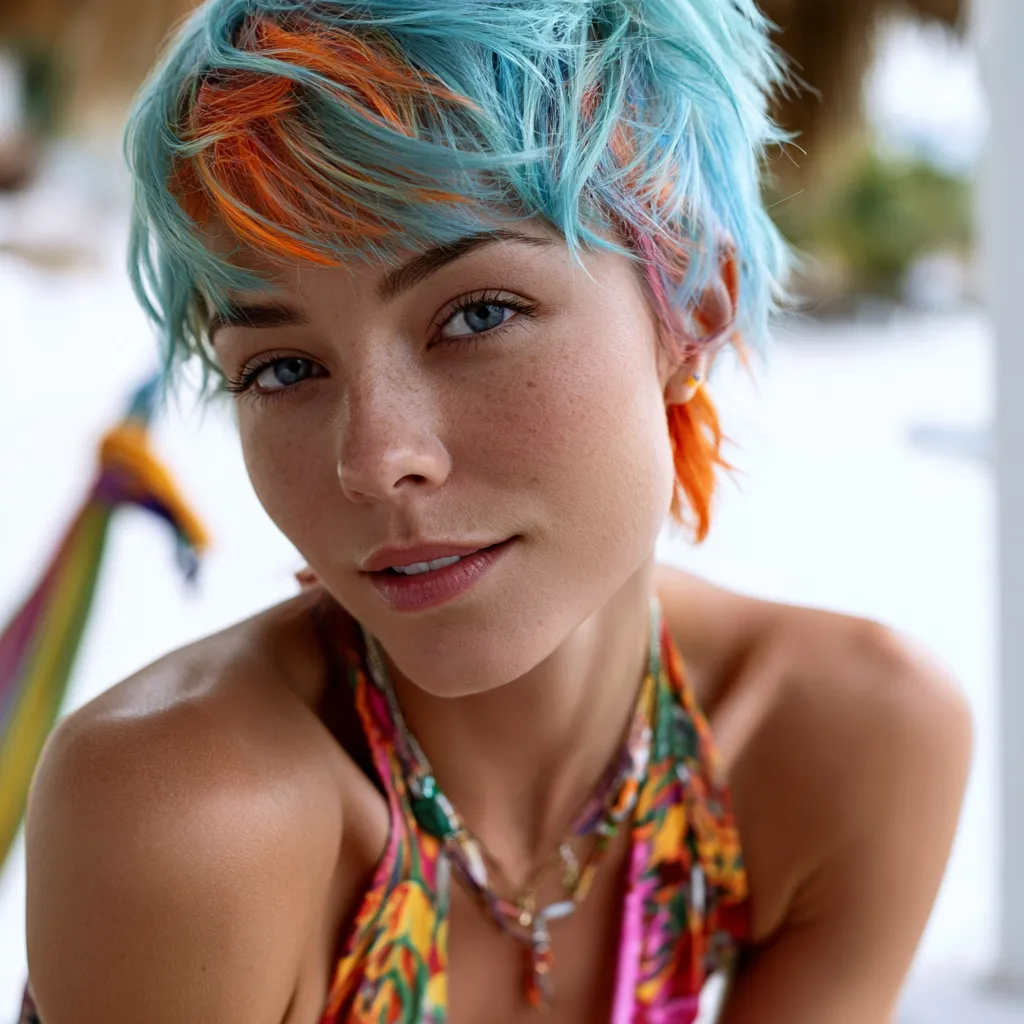

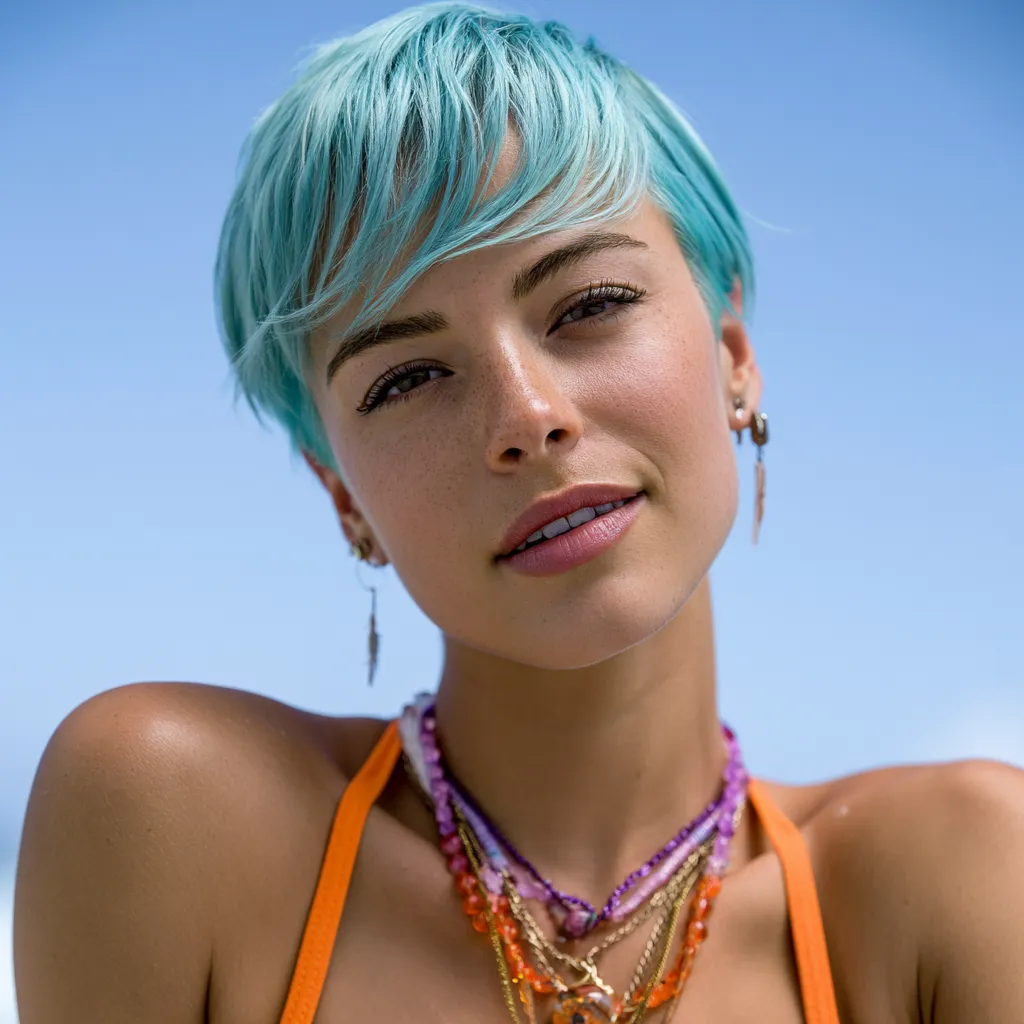
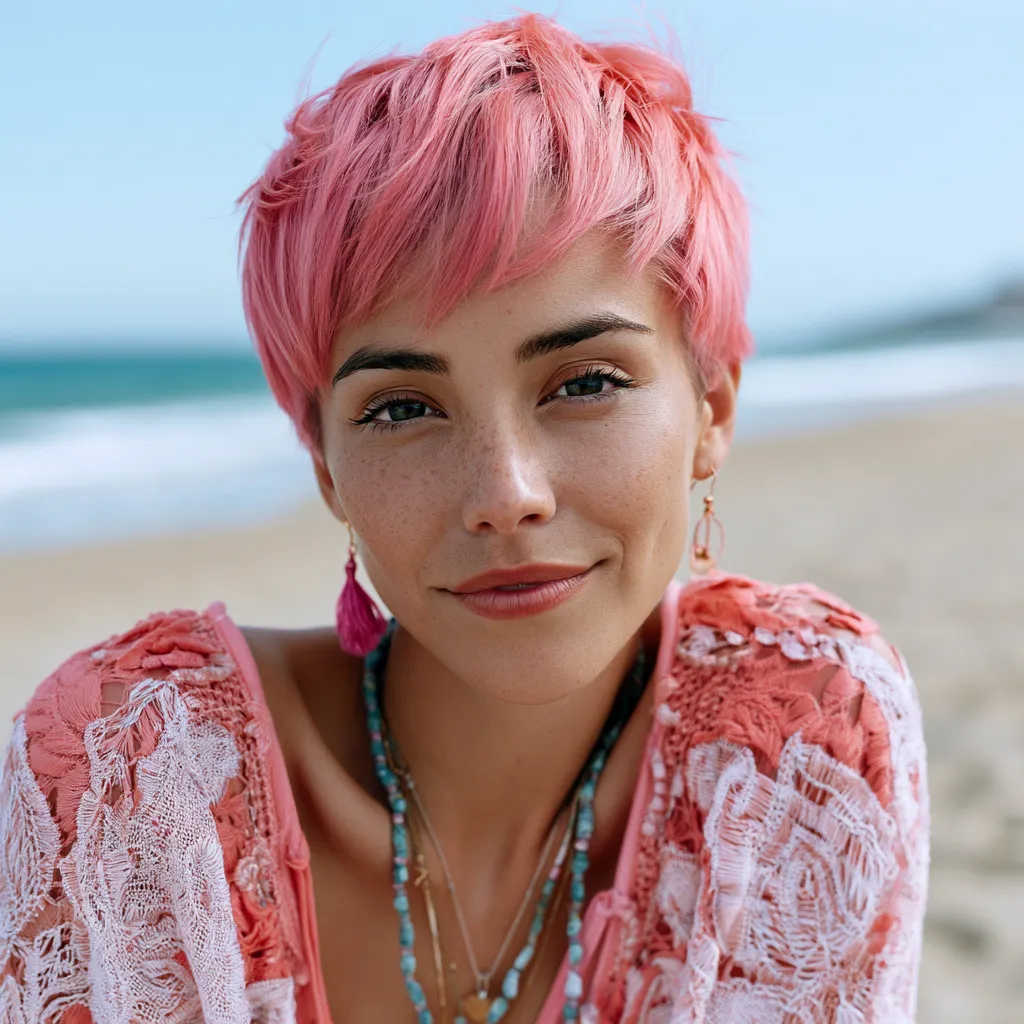
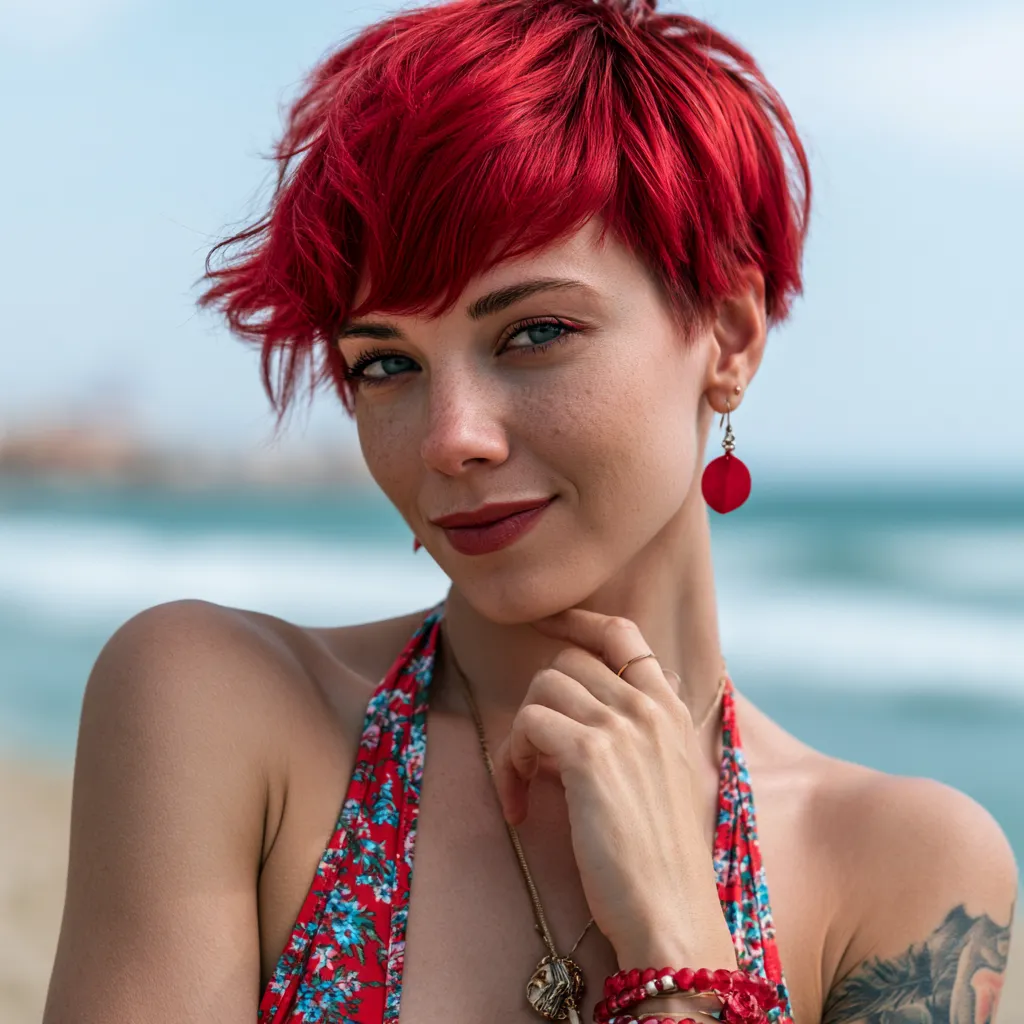
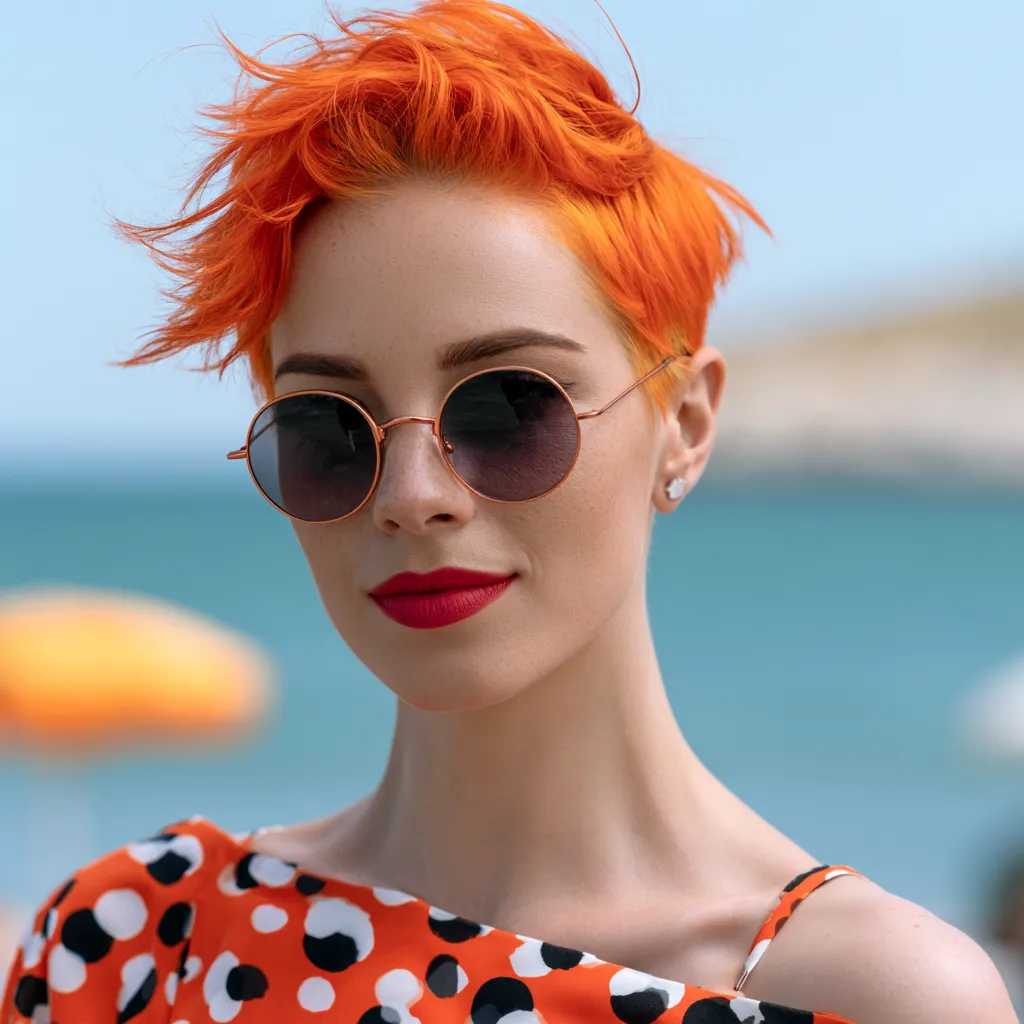
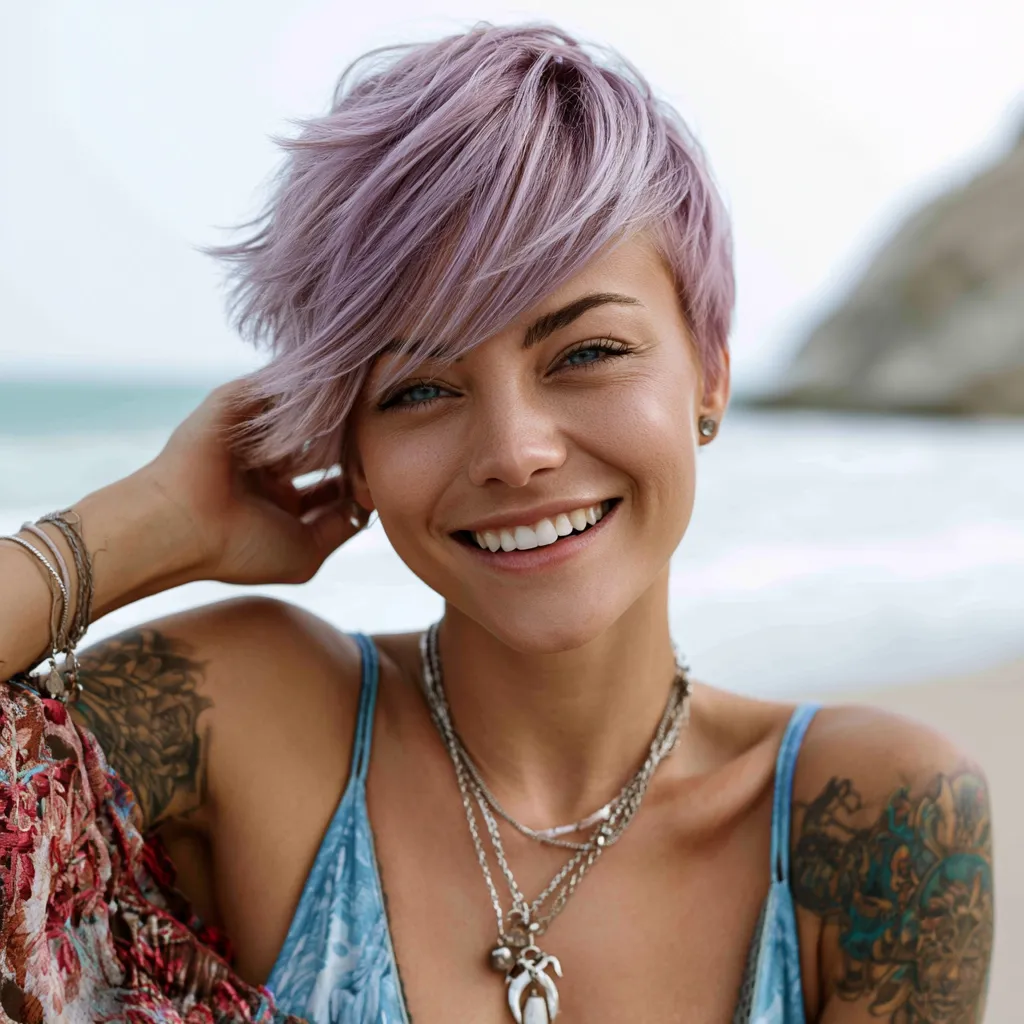
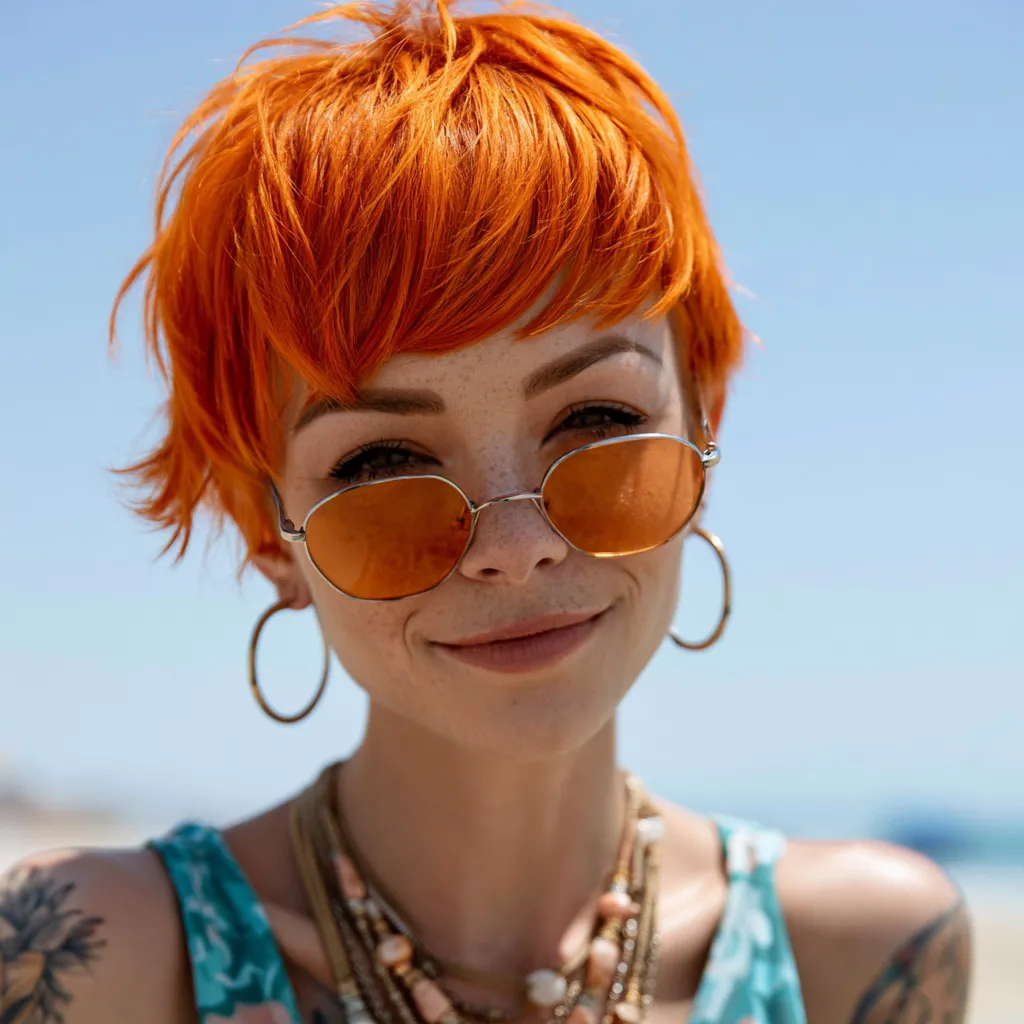
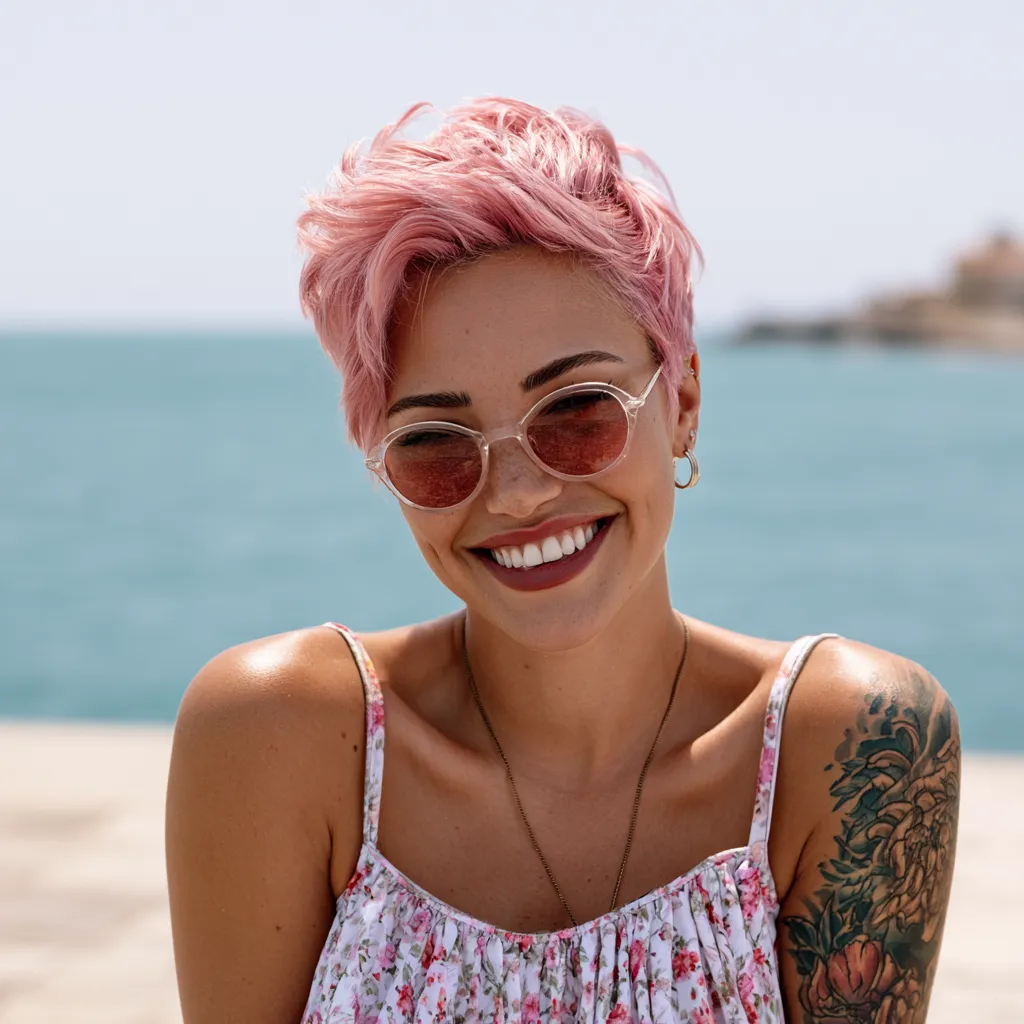
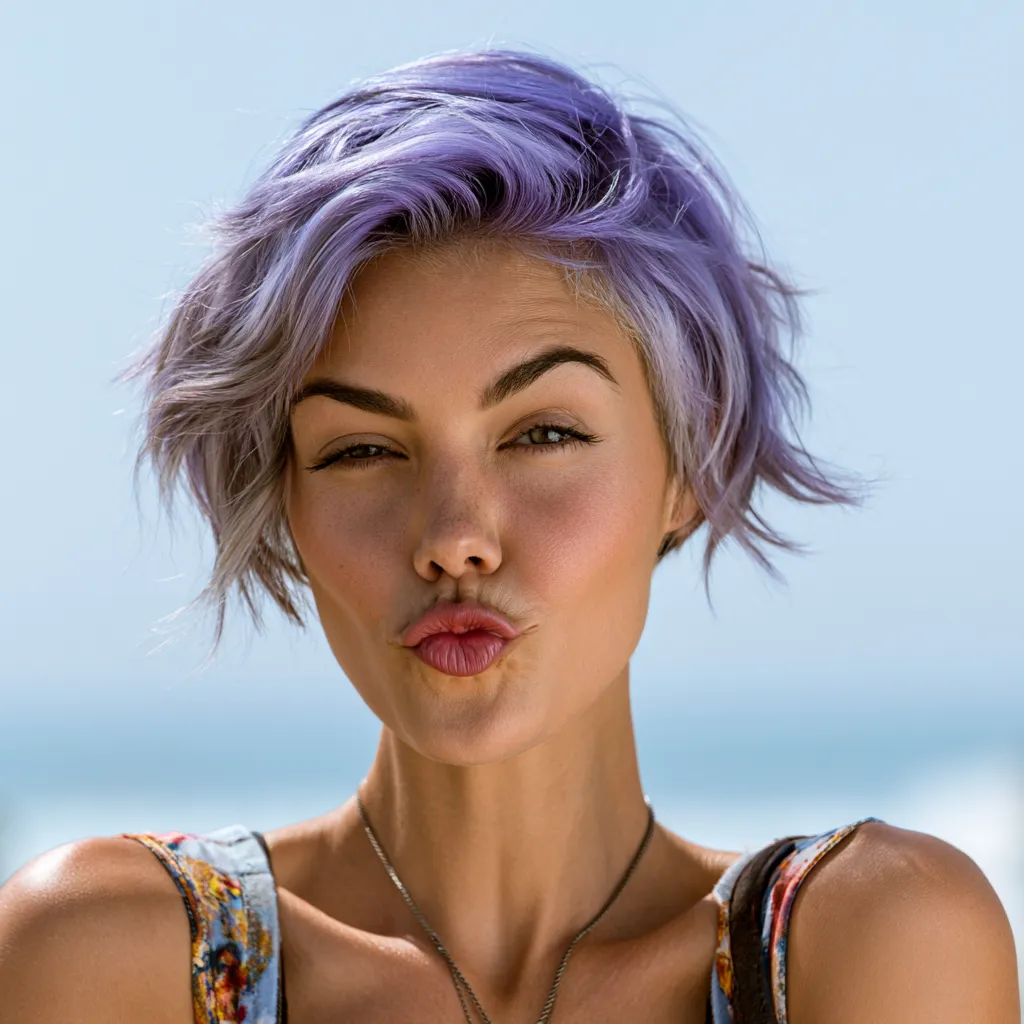
Blonde Bixie Haircut with Tousled Layers That Salt Air Finishes
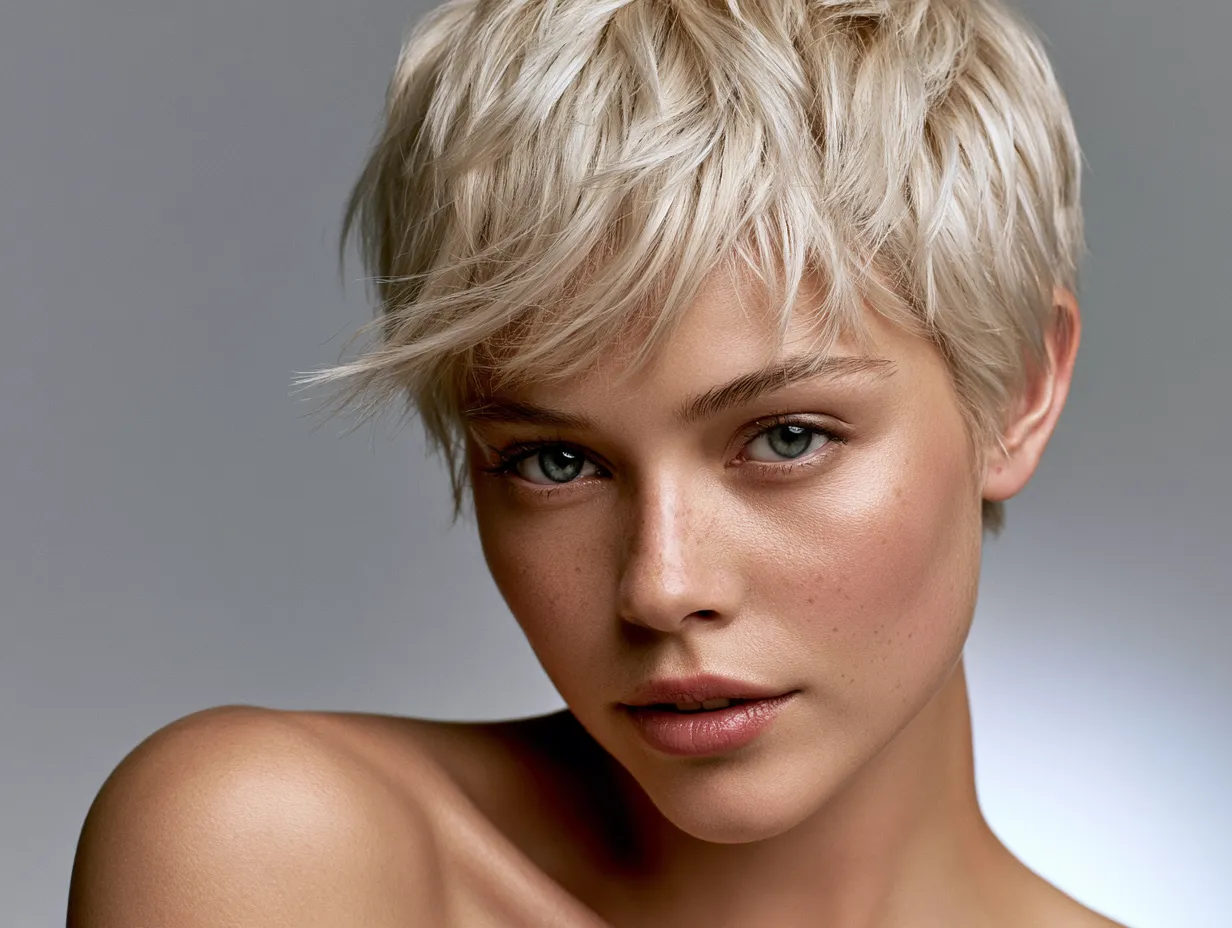
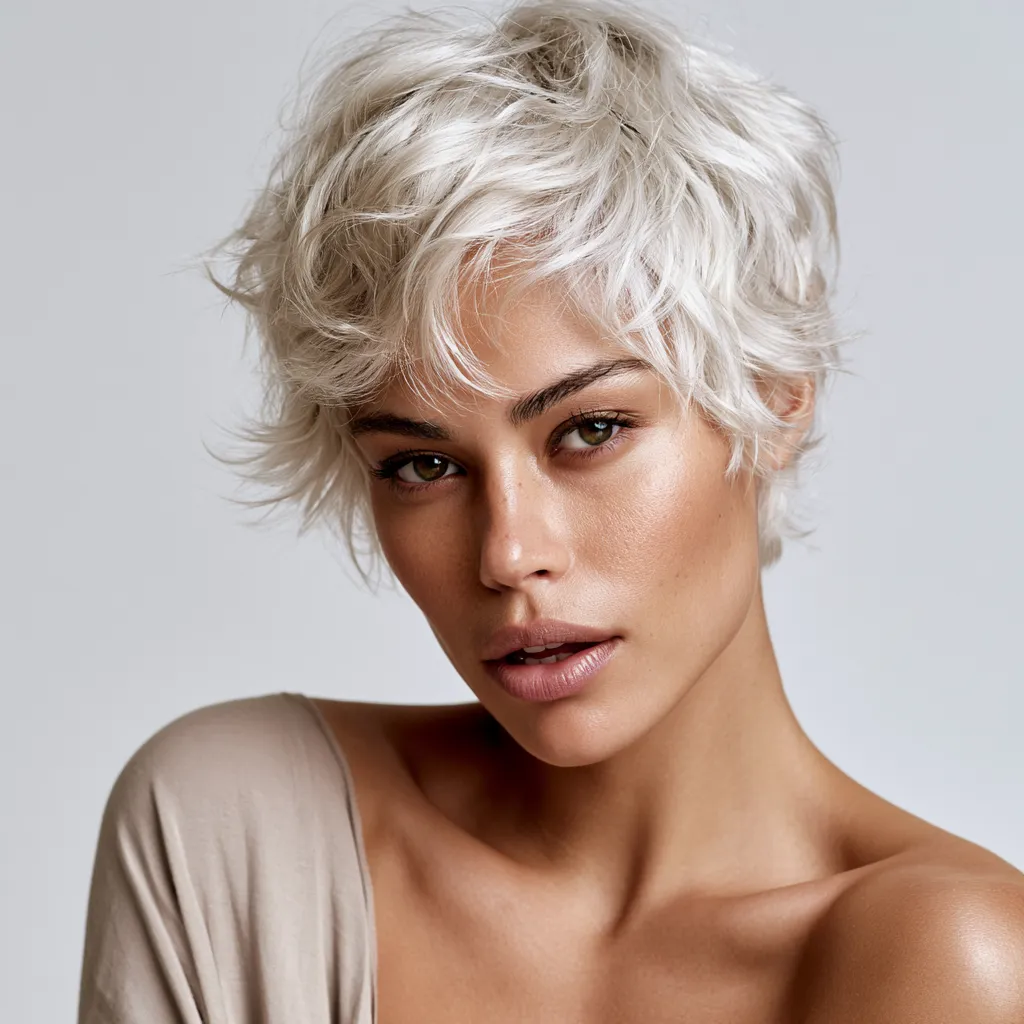
Blonde bixie haircut texture at the beach works because the layers are already cut to move — the ocean air just completes the job. The warm, golden tones reflect sunlight at multiple angles, which is what creates that dimensional look you’d normally need a highlights appointment to achieve. Stylists at beach-forward salons call it the “natural balayage effect”: the color earns its dimension from the environment rather than the foil.


Davines This Is A Sea Salt Spray ($34 at Sephora, 8.45 oz) is the most consistently recommended product for this style — spray it on damp hair, scrunch upward, and let it air dry. The result looks like you’ve already been in the water once, which is exactly the point. What doesn’t work: applying it to completely dry hair after the fact. The salt molecules need moisture to activate the texture, and dry application produces crunch instead of movement.
Why does this blonde hold up better at the beach than a standard bob? The layered perimeter means there’s no heavy weight dragging the cut flat when it gets humid. Think of the layers like venetian blinds — they let air through rather than catching it in a single flat panel. That’s why the same humidity that puffs a bob outward gives a bixie a relaxed, piece-worked result instead.
Conditioning is the maintenance detail most people skip, and it shows fast. Ocean water opens the hair cuticle through osmosis, pulling moisture out of the shaft — the color fades faster when the cuticle is chronically lifted. A weekly hair mask (anything with keratin or fatty acids) keeps the cuticle sealed and the blonde looking lit from within rather than dusty. Schedule trims every 4–6 weeks; the nape grows out faster than any other section and is the first place the shape reads messy.
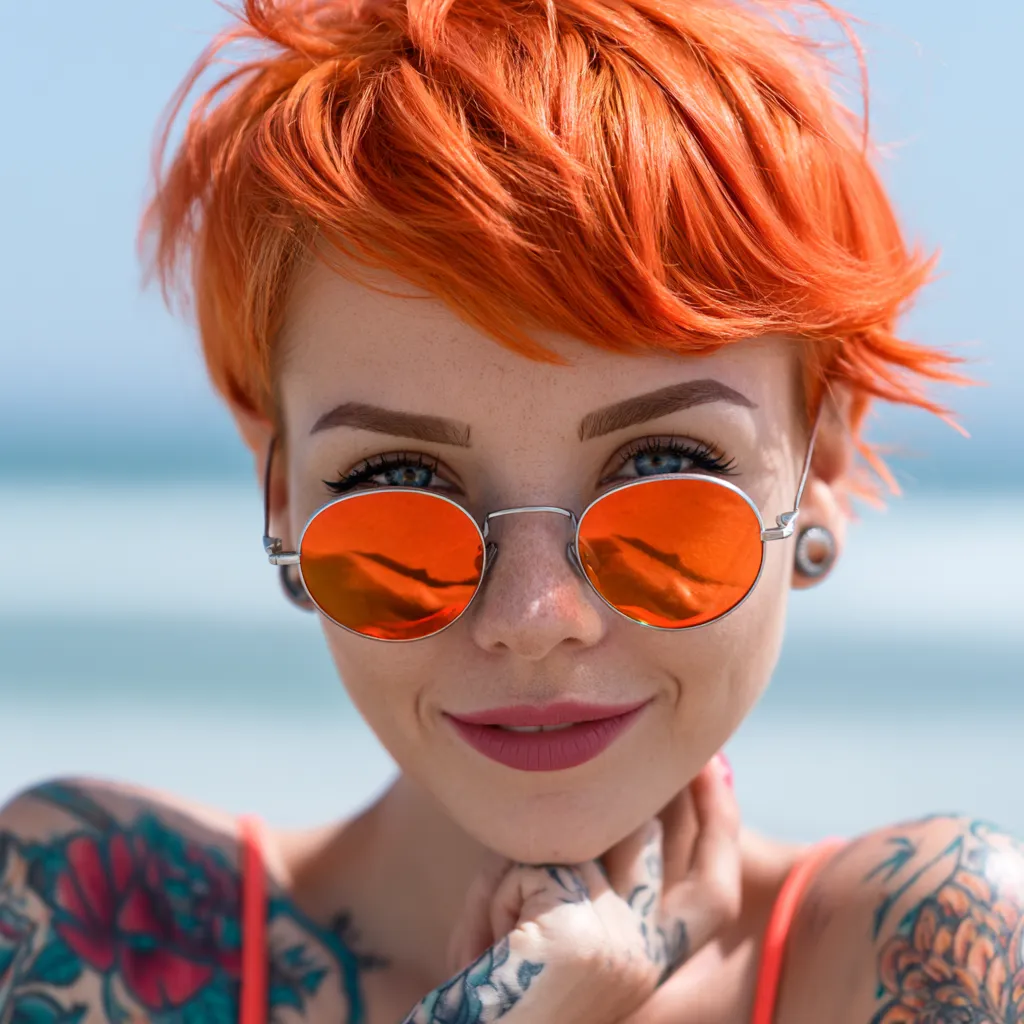
Coral Bixie Haircut for Windswept Beach Days — Color That Lasts in Salt Air
Coral bixie haircut ideas work at the beach for one structural reason: the windswept layers on a bixie are already cut to fall unevenly, so the wind just continues what the stylist started. The bright coral hue does the rest — it turns every movement into a visual event, which is why this color reads so much more dynamic outdoors than it does under salon lighting.




A lightweight styling cream — not a mousse, not a wax — is what keeps these layers defined without heaviness. The texture stays workable and the color reads brighter when the hair isn’t weighed down. Avoid anything with heavy silicone or hold rating above medium; those formulas flatten the layer movement that makes a windswept bixie read intentional rather than unkempt. R+Co’s Jackpot Styling Cream is a product stylists reference specifically for this kind of tousled-but-defined finish.


Here’s the color reality: vivid semi-permanent shades like coral typically last 4–6 weeks under normal conditions, which translates to roughly 10–12 washes. Add regular ocean exposure to that equation and the timeline compresses significantly — color-treated hair can fade up to 80% faster when exposed to the combined effects of salt and UV, according to Bespoke Hair in San Diego. Pre-rinsing your hair with fresh water before entering the ocean is the single most effective preventative step: hair saturated with clean water simply can’t absorb as much salt.
What color actually looks like when it’s fading wrong: the coral goes peachy rather than pastel, especially at the ends, because the warm red pigment leaves first. A color-depositing conditioner in a true coral or orange tone can slow that drift between salon visits. Pairing this cut with minimal accessories — shell earrings, nothing around the neckline — keeps the visual emphasis on the hair itself, which is what’s doing all the work.
- Don’t use dry shampoo as your primary product for a coral or teal bixie at the beach — it strips the color faster than a sulfate shampoo and leaves white cast on saturated pigments.
- Don’t skip the freshwater pre-rinse before ocean swimming. The “it doesn’t matter, I’m going to wash it anyway” logic costs you weeks of color life each time.
- Don’t apply any heat styling directly after ocean exposure without a heat protectant — salt-dried hair amplifies thermal damage at exactly the section you most want to keep vibrant.
- Don’t accessorize a vivid bixie with metallic hair clips that sit at the ends; the friction accelerates cuticle lifting right where the color is already most vulnerable.
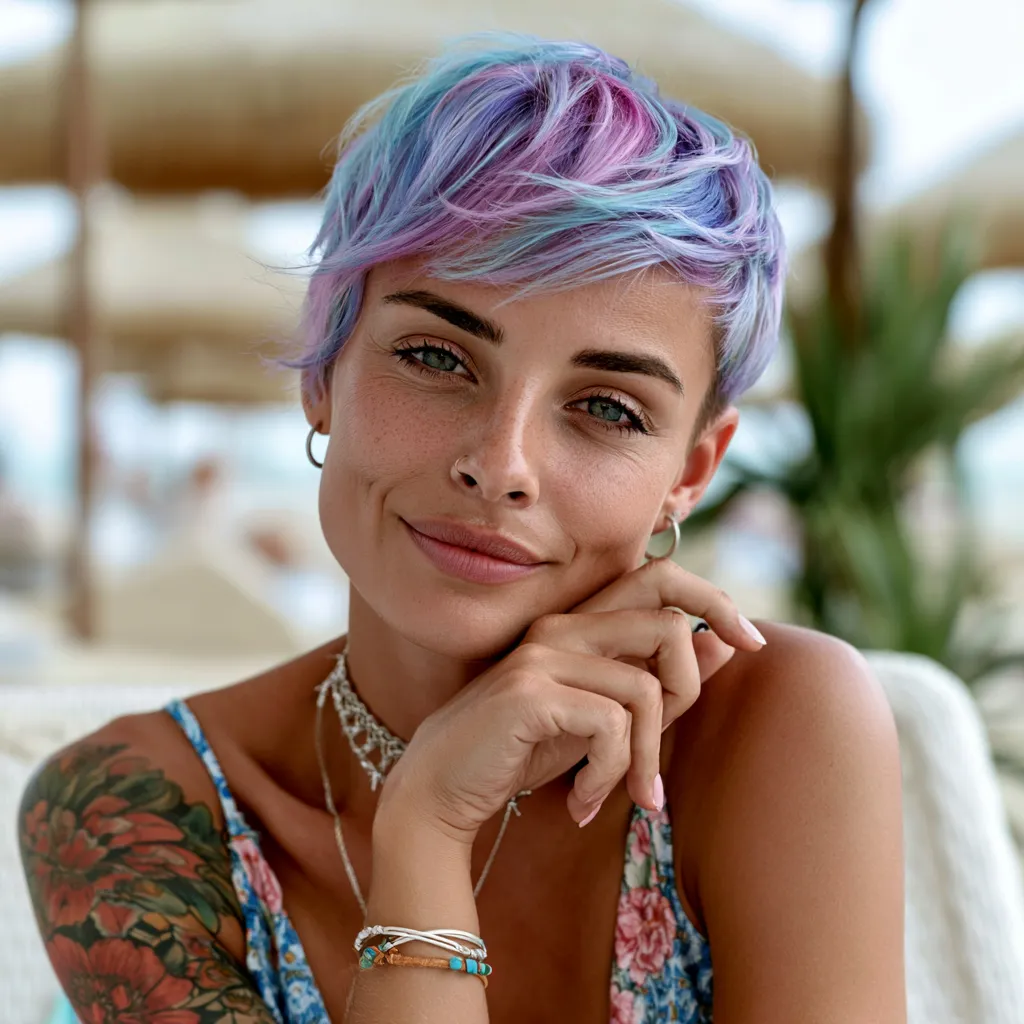
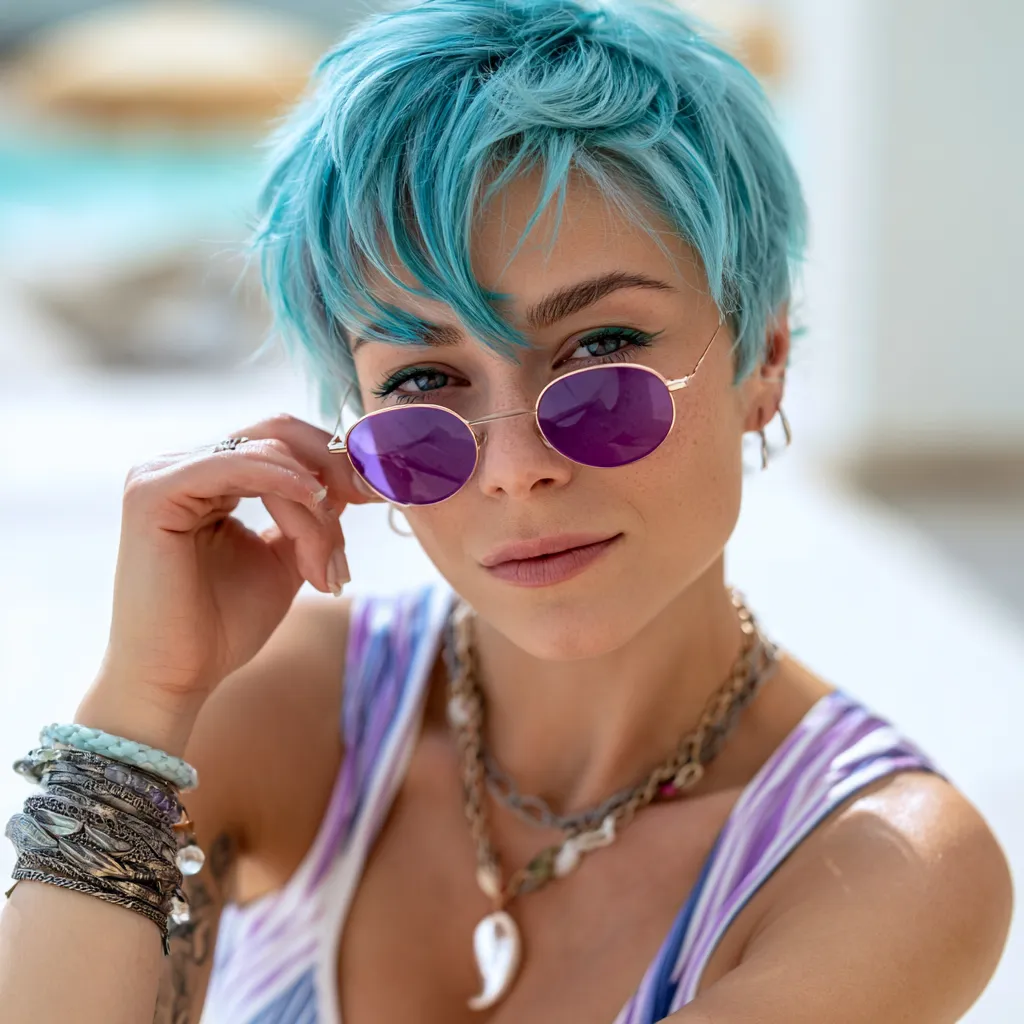
Ocean Teal Bixie Haircut with Subtle Waves — What the Color Actually Does in Water
Ocean teal bixie haircut with subtle waves is one of those styles that looks more intentional outdoors than it ever does in a salon photo — the deep teal registers differently in natural light, picking up blue shifts that the camera compresses into flat green. The subtle waves here aren’t a styling choice imposed on the hair; they’re the natural result of the bixie’s layer structure when it air-dries after ocean exposure.




To get the waves without tools, scrunch damp hair with a sea salt spray and leave it alone. The trick is resistance: the moment you start touching it while it dries, the wave pattern breaks into frizz rather than soft curves. If you want a slightly more defined result, use a diffuser on low heat for two minutes at the roots, then air-dry the rest. Teal and blue-based pigments are more stable than red-base vivids — they fade toward a muted seafoam rather than going brassy, which means the grown-out phase still reads as a color choice rather than neglect.
Pairing this with white or natural linen outfits is not accidental — the contrast between the cool teal and warm neutral fabrics is the same principle that makes teal paint read so sharply against white trim. Shell necklaces and leather sandals follow the same logic: materials that reference the coast without competing visually with the hair. What doesn’t work here is silver jewelry in large volume; it pulls the look into costume territory rather than editorial.



Color-safe shampoo is mandatory here, not optional — sulfates strip blue and teal pigment faster than almost any other shade category. A once-weekly deep moisture mask keeps the cuticle sealed, which is the structural reason color holds: an open cuticle releases pigment molecules into the water every time the hair gets wet. For the bixie haircut in other contexts beyond beach days, the same color-care principles apply but the sun and salt factors drop out of the equation entirely.
| Style | Color Stability in Salt + Sun | Key Product | Trim Interval |
|---|---|---|---|
| Blonde Tousled Bixie | High — warm tones fade gracefully | Sea salt spray + weekly mask | Every 4–6 weeks |
| Coral Windswept Bixie | Low — red base fades fastest | Color-depositing conditioner | Every 4–5 weeks |
| Ocean Teal Bixie | Medium — blue-base fades to seafoam | Sulfate-free shampoo + mask | Every 4–6 weeks |
If you’re exploring where the bixie haircut fits in the broader short-hair landscape right now, the trixie cut is worth reading about — it’s the pixie-bixie hybrid that salons are booking heavily in 2026 for clients who want something shorter than a bixie without committing to a full pixie.
THE TAKEAWAY
Three Colors. One Cut. Salt Air Does the Styling for You.
The bixie haircut at the beach earns its reputation not from the color choice but from the layer structure — the cut responds to environment rather than fighting it. Trim every 4–6 weeks, use a sea salt spray on damp hair (Davines, $34 at Sephora), and rinse with fresh water before every ocean swim to protect color investment.
Vivid shades like coral and teal need a color-depositing conditioner between appointments. Blonde needs moisture, not more product. The teal fades most gracefully; the coral requires the most active maintenance.
Save this post before your next beach day — and check the FAQ below before booking your color appointment.
Related Topics