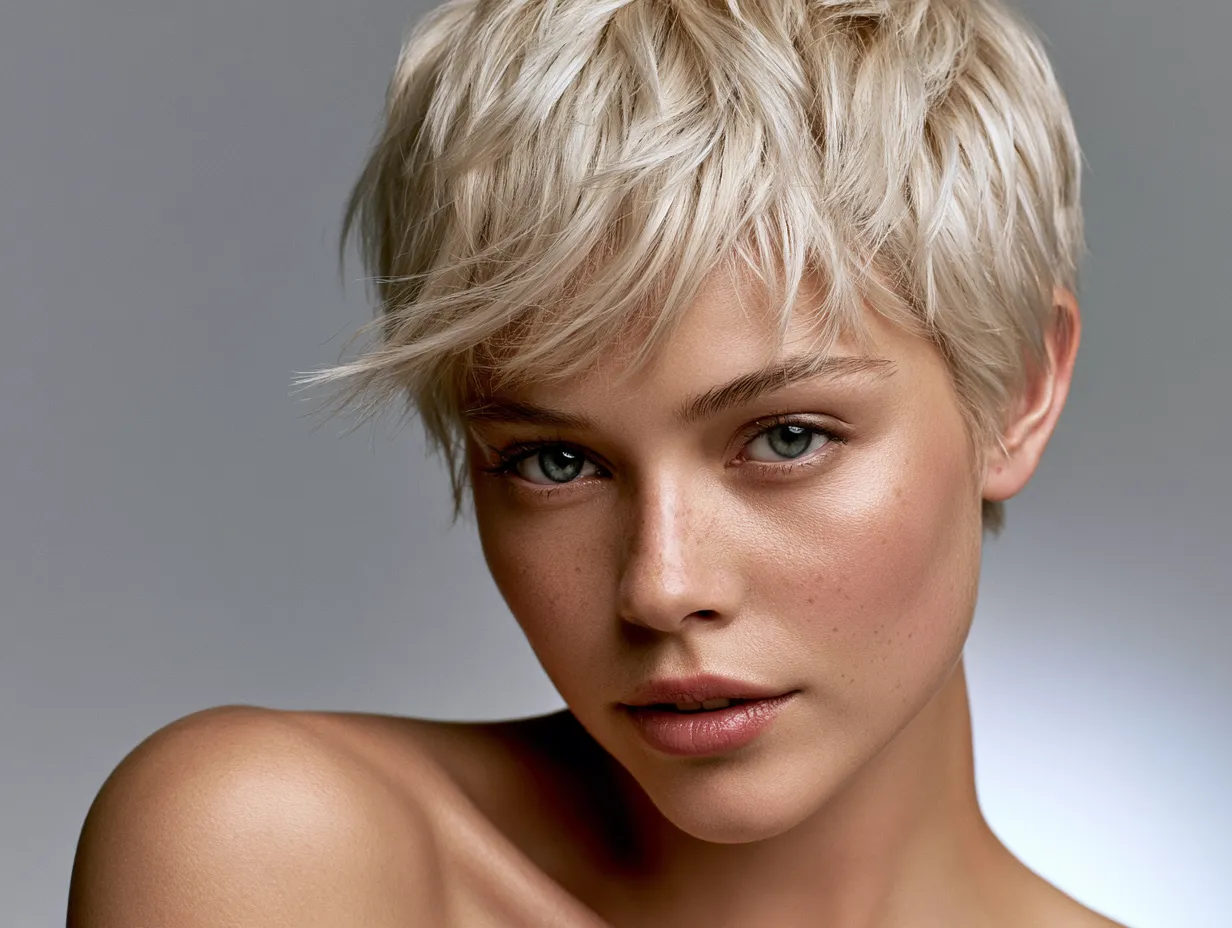
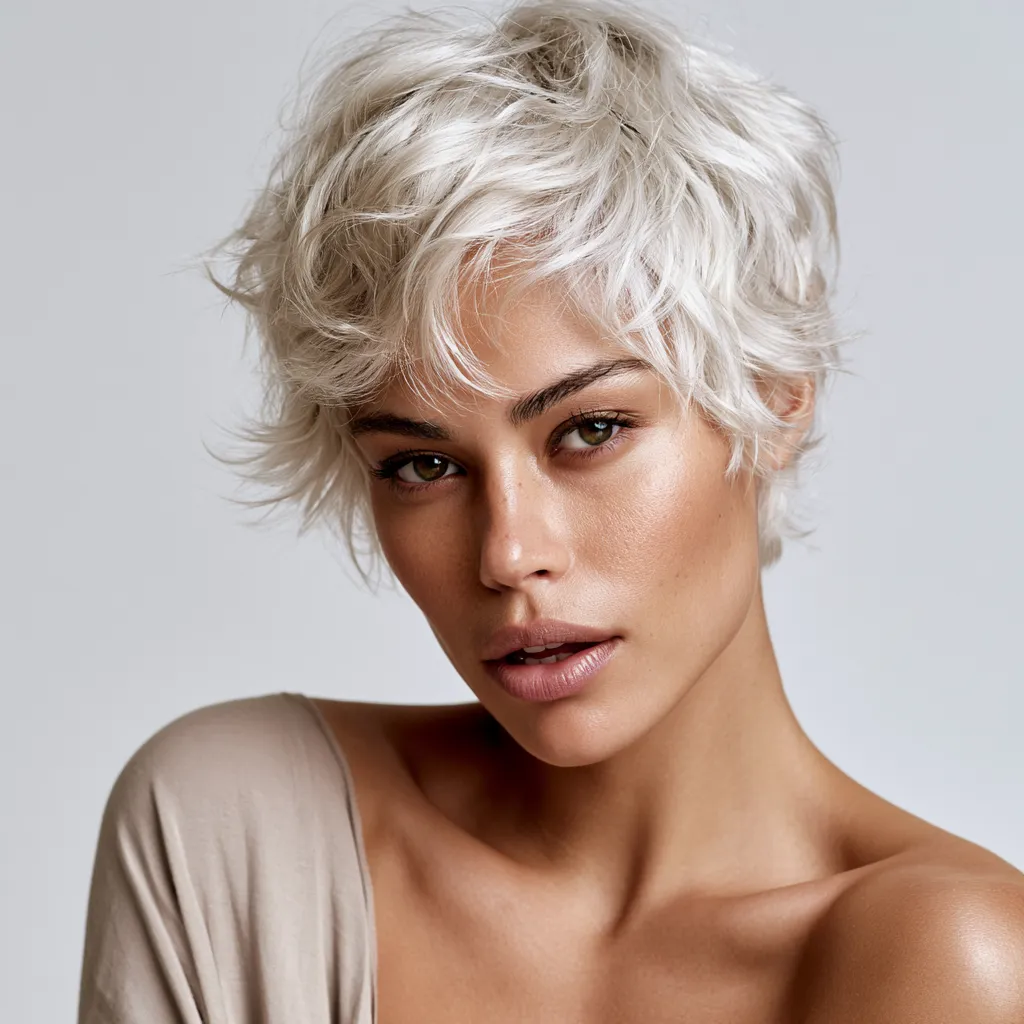
Hair for festivals lives or dies by how it looks eight hours in. The bixie haircut has a structural advantage here: the hybrid of a bob and a pixie delivers short, layered geometry that moves with a crowd rather than collapsing under it. Stylists recommend it specifically for outdoor events because the interior texture responds to humidity instead of puffing flat, and because the length is short enough to stay off your neck without requiring any pinning.
Three color directions dominate the festival-bixie conversation right now — neon green with spiky layers, pastel lavender with braided accents, and fiery red with textured waves. Each one photographs differently under stage lighting, fades on its own timeline, and responds to a different styling product. The sections below treat all three seriously.
One thing worth knowing before you commit to any vivid color: bixie shapes need a trim every 4–6 weeks to hold their form, and vivid semi-permanent dyes like Manic Panic’s classic formulas typically last the same window — 4–6 weeks — before a significant re-application. Plan for both on the same calendar.
- The bixie haircut splits the difference between a bob and a pixie — ear-to-chin length with short interior layers and longer face-framing pieces.
- Vivid semi-permanent colors like neon green and fiery red last 4–6 weeks; pastel lavender fades faster and needs toning every 3–4 weeks to stay true.
- Manic Panic’s Amplified collection holds 30% more pigment than the classic formula and extends color life on all three shades covered here.
- Bixie shapes need a salon trim every 4–6 weeks — skip that window and the nape reads grown-out, not intentional.
- A lightweight texturizing gel or wax is the right product for neon spiky layers; mousse is the wrong one — it inflates the silhouette rather than defining it.
Neon Green Bixie Haircut with Spiky Layers That Catch Stage Light
A neon green bixie haircut built on spiky layers is one of the few festival hairstyles that gets more interesting as the day goes on. The highlighter green shifts toward yellow under afternoon sun and registers nearly UV-reactive under nighttime stage lighting — two completely different color reads from the same dye application. That dual behavior is what makes this direction so strong in a crowd.


The product choice here matters more than most people expect. A lightweight gel or pomade-wax defines the spiky sections and keeps them separated through hours of movement — mousse inflates the entire silhouette instead of pointing it. Apply to towel-damp hair section by section, then finger-separate the tips upward. Avoid touching it once it’s dry; the more you handle it, the more the spikes merge into a generic textured shape instead of the aggressive geometry that makes this style work. Manic Panic’s Amplified Electric Lizard (around $12–$15 at most beauty supply retailers) is the neon green reference shade stylists consistently cite for this kind of bixie, because the Amplified formula contains 30% more pigment than the classic line and the vibrancy holds visually for the full 4–6 week window.
Ask yourself what’s actually competing with the hair in your outfit. This color is loud enough to read as the focal point no matter what you’re wearing, which means the styling failure mode isn’t under-accessorizing — it’s over-accessorizing. Holographic tops and chunky boots work because they reference the same color temperature as the green without adding competing focal points. Large statement earrings draw the eye down from the hair; if that’s what you want, fine, but know it’s a trade-off. The spiky bixie works best when nothing around it tries to compete in scale.
The maintenance catch with neon green is real: UV exposure accelerates fade significantly, and festival conditions — outdoor sun plus sweat — are exactly the environment where vivid semi-permanents lose pigment fastest. A color-protective leave-in spray before going outside buys meaningful time. What stylists don’t always say is that neon green doesn’t fade gracefully — it goes chartreuse and then muted sage rather than a clean pastel, so the re-application window is less forgiving than with red or lavender. Budget for re-coloring at the 4-week mark if you want the green to stay electric.
- Don’t apply neon dye to hair that hasn’t been pre-lightened to at least a level 9 blonde — the green pigment reads as dark army-khaki on anything warmer or darker, which is the opposite of festival energy.
- Don’t use a mousse to set spiky layers — it inflates the whole shape and blurs the tips that make this haircut read as intentional.
- Don’t wash neon-colored hair the morning of a festival. Every wash strips pigment, and you want maximum saturation for the lighting conditions you’re actually performing for.
- Don’t pair this haircut with large hoop earrings at ear level — they sit exactly where the bixie’s length ends and turn the whole composition into a visual muddle.
Pastel Lavender Bixie Haircut for Festivals — Braids, Glitter, and What the Color Actually Costs
Pastel lavender is the color direction most associated with festival hair for a reason: it reads differently at different light temperatures, going cool and silvery in shade and soft pink-purple in direct sun. On a bixie haircut, that color behavior is amplified by the layered structure — each section catches light at a slightly different angle, which creates the dimensional shimmer effect that makes this combination photograph so well on Pinterest.


The braided accents are small — two or three micro-braids tucked into the texture layer rather than cornrows or chunky plaits that compete with the cut’s natural movement. The practical reason stylists place braids inside the bixie’s interior layers rather than on the surface is that they stay put for 8–10 hours without clips and don’t require any re-pinning mid-festival. Hair jewels or tiny glitter beads threaded onto the braid tips reflect stage lighting and add the right amount of sparkle without tipping into costume territory. This is the version of festival hair that ages well in photos, which is part of why it performs so consistently on Pinterest. For bixie haircut styling in more structured environments, the same braided placement technique works beautifully — see the bixie haircut looks for formal weddings article for the more polished version of this approach.
What does this color actually cost to maintain? Wella Color Charm T68 Lavender Silk, the permanent cream toner used to achieve and refresh this shade, runs $15.76 for 2 oz at Walmart. It’s a permanent toner, not a semi-permanent, which means it lasts longer than a pastel deposit but requires a developer — and pastels are inherently the least stable of all color categories because they have the least pigment density. Expect to re-tone every 3–4 weeks rather than the 4–6 weeks you’d budget for a deeper or more saturated shade. Sweat and festival conditions accelerate that further. The anti-advice here: don’t apply the toner yourself the week before a festival without doing a strand test first. Lavender toners can pull cool or green depending on your base level, and a botched toning job the week of a festival isn’t fixable with dry shampoo.
Flowy dresses and fringe jackets are the pairings that appear in every editorial feature of this look, and they work for a real structural reason: the soft silhouette of the clothes echoes the soft texture of the lavender layers without creating visual competition. Flower crowns are a predictable choice — not wrong, but not interesting. A better approach is a single headband in a metallic or neutral tone positioned at the hairline, which frames the color without covering any of the textured layer that makes this haircut distinctive in the first place.
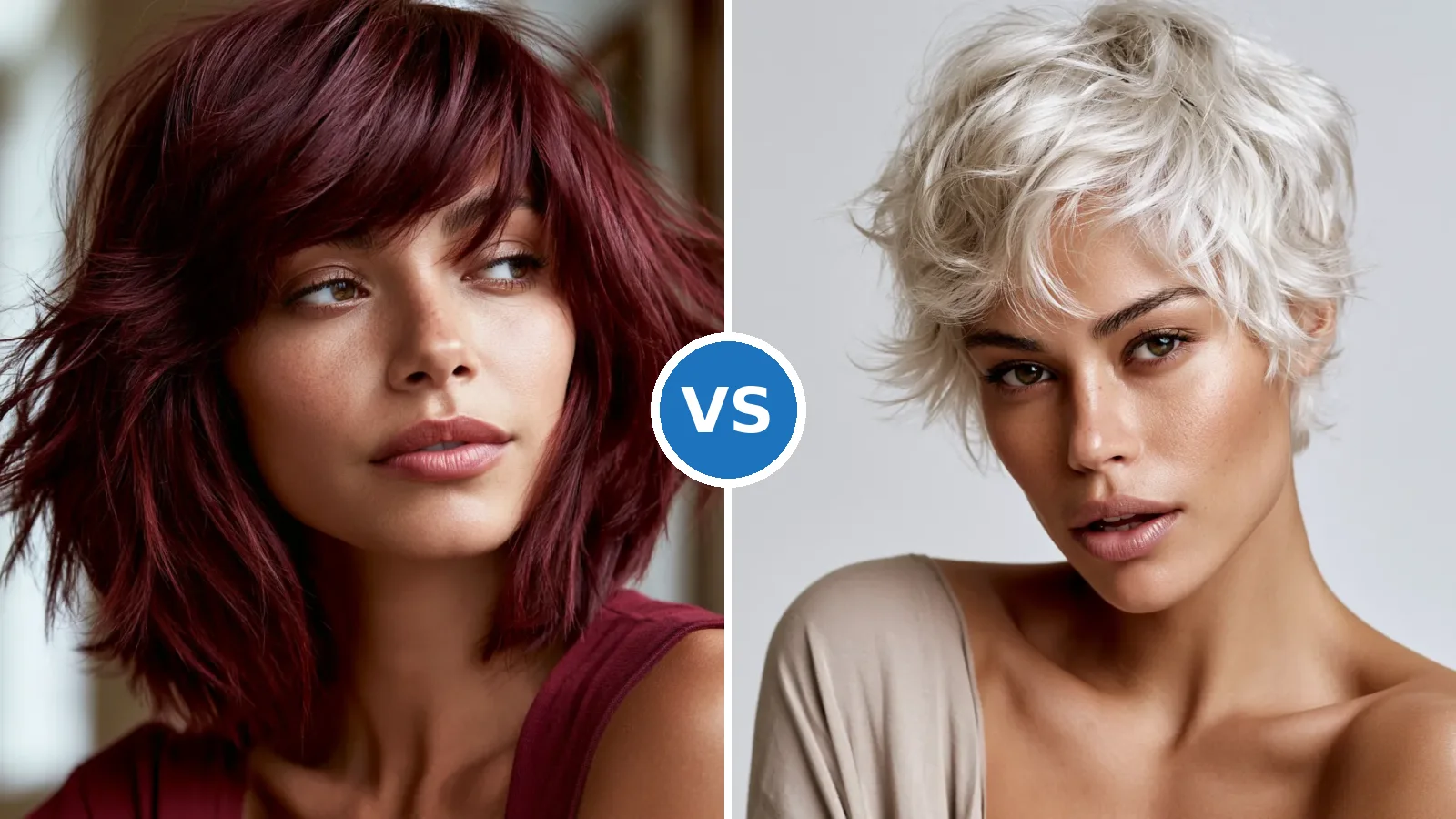
Fiery Red Bixie Haircut with Textured Waves — the Color That Reads as Energy
A fiery red bixie haircut with textured waves is the color direction that performs best in motion. Red hair catches light differently from every angle — the pigment scatters at the surface while the interior layers absorb and deepen the same shade, creating a visual range from copper to crimson depending on where the light source is hitting. At a festival, where lighting conditions change every 20 minutes, that behavioral range turns into a constant visual event.


The waves here are loose and low-key — not beach waves, not glamour curls, but the casual undulation that happens when you apply a texturizing spray to damp hair, scrunch it twice, and don’t touch it again. A texturizing spray at $10–$18 (most drugstore or mid-range brands) applied to damp hair is the whole routine; what kills this look is over-working the product or adding heat on top of it. The wave needs to form on its own, which takes about 20 minutes of air-dry time. Redken Shades EQ Gloss in a red family shade — Roxy Red runs $16.99 for 2 oz at Walmart — is the gloss treatment stylists use to refresh red shades between full dye appointments. It lasts up to 28 shampoos, which is roughly 4–6 weeks of normal washing, and the demi-permanent formula doesn’t deposit harsh regrowth lines, which matters for a bixie because the shape’s frequent trim schedule means you’re always revealing new hair at the perimeter.
Red is the fastest-fading color category among all vivid shades. The red pigment molecule is smaller than blue or purple, which means it exits the hair shaft with every wash faster than any other color family. Knowing that, stylists recommend washing red-colored bixie hair no more than twice a week — the fewer washes, the longer the vibrancy holds. A color-protecting shampoo extends the timeline meaningfully; a sulfate-free formula is the minimum, but a shampoo specifically formulated for red or warm tones helps even more. For a more in-depth look at how the bixie haircut holds up in other real-world conditions, the section on bixie haircut styles for beach days covers the same color-protection principles under salt-and-sun conditions, where the fade timeline compresses further.
Leather jackets and graphic tees work with this look because the warm-dominant palette of red hair reads as bold rather than gentle, and those clothing choices match the energy register. Hoop earrings and layered necklaces are fine here — unlike with neon green, the red bixie’s color is warm enough to harmonize with metal tones rather than clash. What doesn’t work: adding a second bold color element to the outfit. Red hair as the anchor works when everything else in the look is a supporting actor, not a co-lead. Celebrity hairstylists at Marie Claire recommend trimming short layered cuts every 4–6 weeks specifically because the perimeter loses structure quickly, and on a red bixie, a grown-out nape reads as color neglect rather than a deliberate style choice.
| Style | Color Lifespan | Key Product | Trim Interval |
|---|---|---|---|
| Neon Green Spiky Bixie | 4–6 weeks (fades to chartreuse) | Manic Panic Amplified, $12–$15 | Every 4–5 weeks |
| Pastel Lavender Braided Bixie | 3–4 weeks (least stable) | Wella T68 Toner, ~$16 at Walmart | Every 3–4 weeks |
| Fiery Red Wave Bixie | 4–6 weeks (fades fastest per wash) | Redken Shades EQ Roxy Red, $16.99 | Every 4–5 weeks |
THE TAKEAWAY
Pick the Color That Survives the Schedule You Actually Have
A bixie haircut is the most festival-adapted short cut in the current rotation — the layered structure is engineered to move in crowds, handle humidity, and look deliberate even after eight hours with no mirror access.
The color direction is the real decision: neon green is the most dramatic but fades into an unflattering range; pastel lavender is the most photogenic but demands the most frequent maintenance; fiery red is the most dynamic in changing light but loses pigment faster than any other shade per wash.
Trim every 4–6 weeks without exception. The nape section is always the first place a bixie reveals that it’s overdue. Save this post before you book your color appointment.
Related Topics