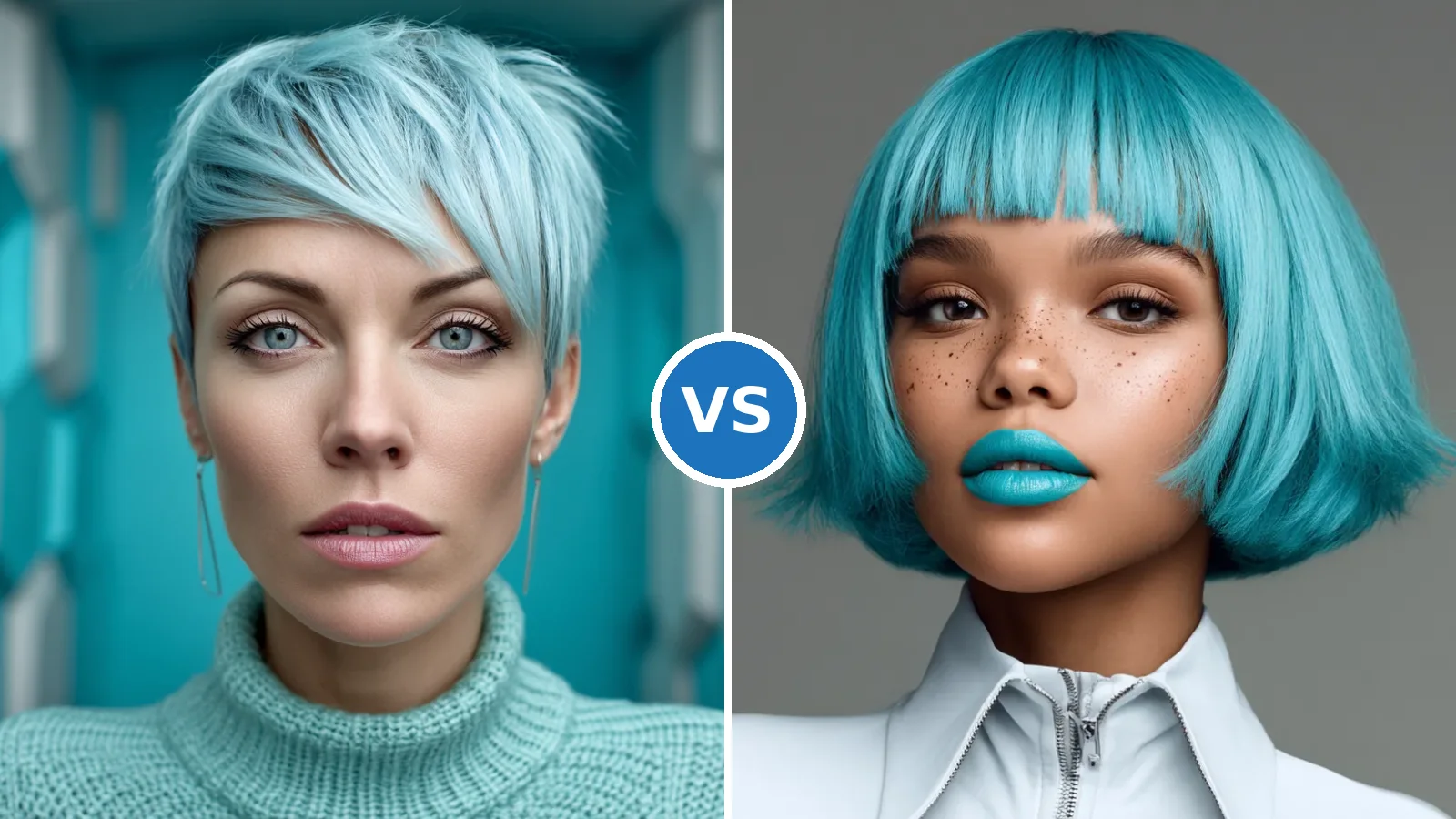
Standing in the salon chair, you face a real choice between a bixie vs bob: chin-length bixie or neck-to-shoulder shaggy bob. Both are textured, both have that natural-looking finish, and both promise lower maintenance than the precision cuts of 2025. The decision hinges on whether you want short hair that reads modern and edgy, or medium-length hair that forgives missed appointments.
The shaggy bob suits anyone wanting a longer silhouette with slower trim cycles. The bixie works best for those ready to commit to a shorter, sharper shape with more frequent salon visits and a higher annual budget.

What the shaggy bob and bixie actually are
The shaggy bob hits between the neck and shoulders with feathered layers built from the ground up. It is not texture applied to an existing cut—the entire shape depends on structural layering using point cutting, slide cutting, or razor finishing. The finished look reads polished on red carpets (Ayo Edebiri’s Golden Globes version proved this) and equally intentional air-dried in real life.
The bixie lands at chin length, blending the short textured crown of a pixie with longer face-framing pieces borrowed from a bob. Think of it as a bridge between two different short-hair worlds. Zendaya’s post-Academy Awards appearance made it the most-requested short cut across U.S. and U.K. salons almost immediately.
Both cuts rely on intentional texture rather than blunt lines. Both are reacting against 2025’s obsession with precision geometry. But their length categories put them in entirely different territory.
Quick Verdict
- Choose shaggy bob if you prefer medium length, want to stretch salon visits to 8–10 weeks, and value forgiveness in the grow-out phase.
- Choose bixie if you are committed to visiting the salon every 4–6 weeks, want a modern short silhouette, and enjoy styling as part of your routine.
- Both work equally for low-effort daily styling and air-dry finishes; the main trade-off is length versus maintenance frequency and cost.

How bixie vs bob compare on the criteria that matter most
| Criteria | Shaggy Bob | Bixie Cut |
|---|---|---|
| Length | Neck to shoulder | Chin length or above |
| Trim frequency | Every 8–10 weeks | Every 4–6 weeks (2–3 with fringe) |
| Styling time | Under 5 minutes air-dried or with diffuser | Under 5 minutes with product control |
| Volume on fine hair | Up to 40% increase with mini shag variant | Layers at crown create lift naturally |
| Best product finish | PATTERN Palo Santo Styling Cream ($28) | Lightweight texturizing cream on ends only |
| Annual cut cost estimate | Lower (fewer trims, typically $300–$500 annually) | Higher ($700–$1,000+ annually) |

Where the shaggy bob wins
Length flexibility is the shaggy bob’s biggest advantage. If you are hesitant about going dramatically shorter or want the option to tuck hair behind your ears some days, the neck-to-shoulder range offers that range of options. A bixie at chin length does not give you that choice—you are committed to short.
The stretch between trims matters financially and practically. Waiting 8–10 weeks instead of 4–6 weeks means two fewer salon appointments per year, which adds up to real savings and flexibility for anyone with an unpredictable schedule. The shaggy bob’s feathered layers also forgive missed appointments more gracefully than a bixie does.
For thick hair specifically, the shaggy bob’s longer length makes weight removal easier to manage. Slide cutting at the mid-lengths removes bulk without creating the visual boxy feeling that can happen on thick hair when cut very short.


Where the bixie cut wins
Impact and presence favor the bixie. A short, textured cut reads as a bolder style choice than a medium-length bob, and that visual confidence translates on photos, at work, and on nights out. If you want a haircut that signals intentional style rather than simple ease, the bixie delivers.
For fine or thin hair, the bixie’s crown structure may actually work harder than a shaggy bob. Removing weight at the mid-lengths and creating short textured layers at the crown builds volume in a way longer hair cannot replicate, even with the mini shag variant’s 40% volumizing advantage. The structural lift is built into the shape itself.
Styling control favors the bixie if you enjoy micro-adjustments. Because the cut is shorter, you have more control over curl placement, flick direction, and overall shape manipulation with minimal product. The shaggy bob’s longer layers can feel less responsive to quick styling changes.


The number-one mistake when choosing between them
People confuse length preference with maintenance willingness and then regret their choice within three weeks. Someone drawn to the bixie’s edgy aesthetic books the appointment excited, but misses the reality: a bixie with a fringe needs a trim every 2–3 weeks, and without that maintenance, it stops reading as intentional and starts reading as overgrown.
Conversely, someone choosing a shaggy bob expecting it to be “just a little texture” on their existing blunt bob ends up disappointed. The shaggy bob is a structural cut requiring point cutting, slide cutting, or razor work from scratch. Asking a stylist to add texture to a precision bob gives you frizz and unevenness, not movement.
Bring reference photos and name the cut explicitly to avoid this trap. Say “bixie cut” or “shaggy bob,” not “pixie but longer” or “textured bob.” Your stylist will confirm they understand the structural differences before starting.

Product and styling differences that matter
The shaggy bob demands you avoid smoothing serums entirely. Products like Moroccanoil Treatment flatten the feathered layers that define the cut. Instead, use PATTERN by Tracee Ellis Ross Palo Santo Styling Cream ($28 at Ulta Beauty) scrunched into damp hair, then air-dry. A diffuser or low-heat round brush finish preserves texture; flat-ironing daily erases the whole point.
The bixie requires lighter-handed product application. Apply texturizing cream to the ends only—roots loaded with product collapse the crown volume the cut depends on. For wavy bixies, a small amount of Moroccanoil Treatment Light ($46 at Sephora) on damp ends before air-drying adds polish without flattening.
Both cuts benefit from regular washing without dry shampoo substitutes. Buildup at the roots on either cut reads as limpness rather than intentional texture and undermines the layering work your stylist invested in.

Final verdict — choosing between them based on your life
Pick the shaggy bob if your schedule does not tolerate frequent salon visits, if you prefer medium length, or if you are transitioning from a longer style and want a safety-net length you can still tuck or pin. It rewards people who show up every 8–10 weeks, not every month.
Pick the bixie if you enjoy the salon experience, want a statement-making short silhouette, or have fine hair needing structural volume. Commit to the 4–6 week cycle (2–3 weeks if you have a fringe) and budget accordingly—approximately $700–$1,000 annually in cuts alone in major U.S. cities.
Both cuts are genuinely low-effort once you nail the product and air-dry finish. The real difference is not styling difficulty—it is maintenance scheduling and whether you want the psychological impact of short hair or the flexibility of medium length.