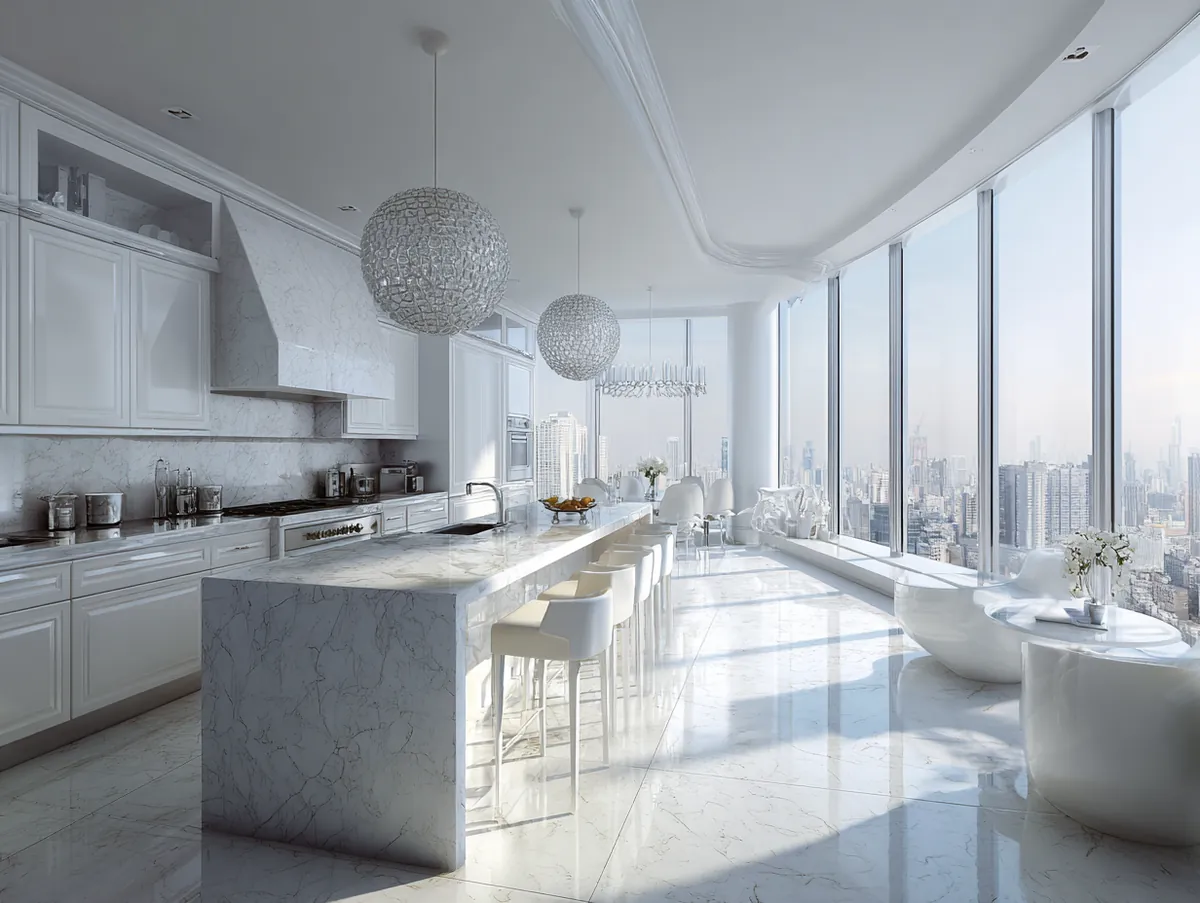
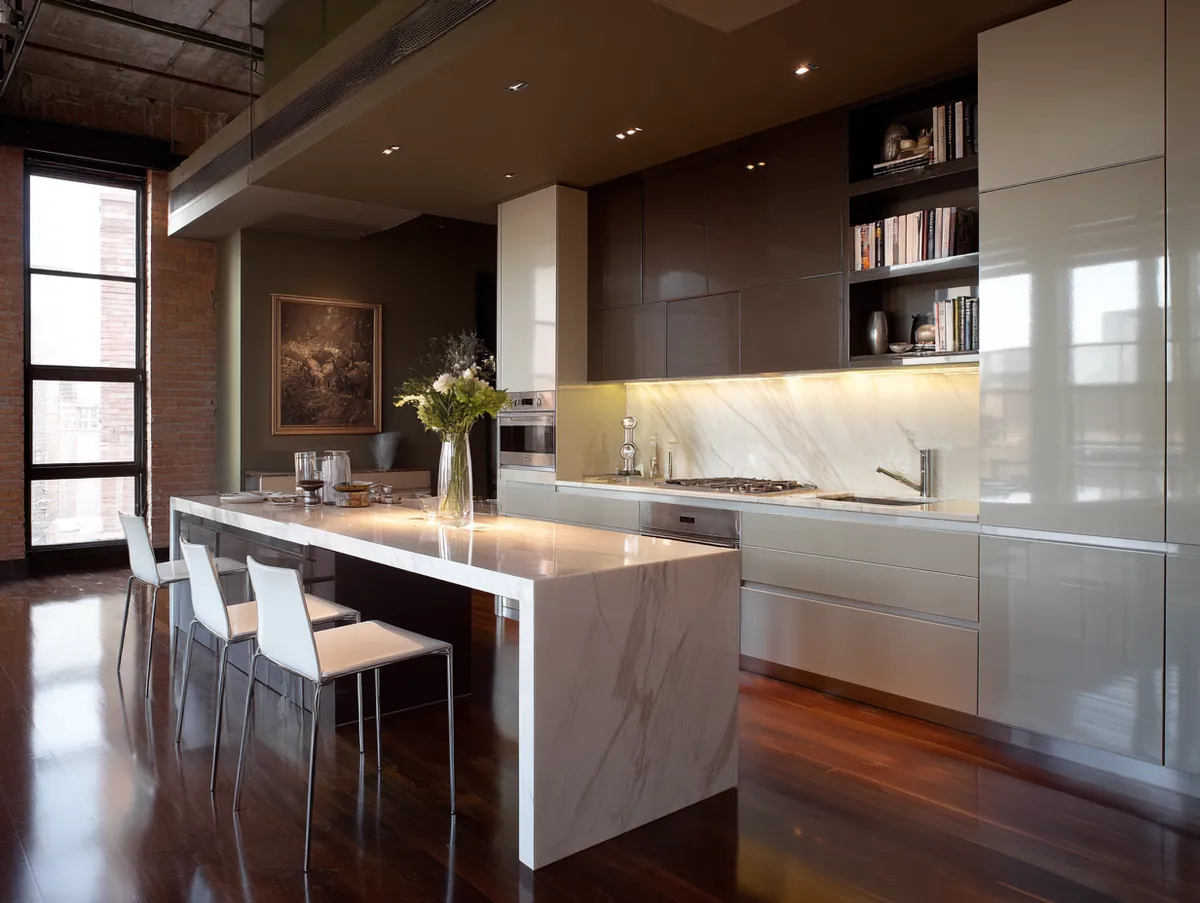
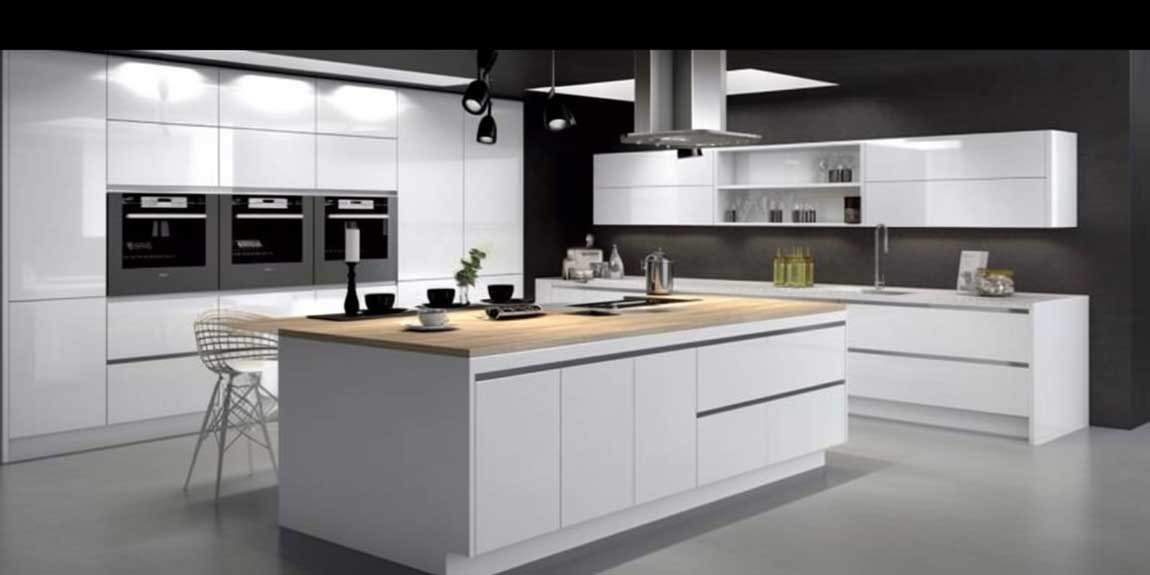
Modern high gloss white kitchen cabinets turn a standard kitchen into something that actually catches the light — and your eye. The reflective finish bounces both natural and artificial light across surfaces, which is why designers keep reaching for this look in compact or north-facing kitchens where brightness is earned, not given.
Gloss isn’t one thing. Acrylic, lacquered MDF, and UV-cured polyurethane finishes all read as “glossy white” but perform very differently over time. Lacquer cabinets typically last 8–10 years before the finish shows meaningful wear, while quality acrylic and UV-protected panels hold their sheen considerably longer under normal kitchen conditions.
The look works because contrast does the heavy lifting. Gloss white against dark stone, matte wood, or brushed metal hardware creates the depth that flat-painted cabinets simply can’t produce. Pick the wrong white tone for your light conditions, though, and you’ll get a kitchen that reads as either a hospital or a dingy cream box — neither of which is the goal.
– Acrylic gloss cabinets cost $5,000–$20,000+ depending on size and material base
– Lacquer finish lifespan: 8–10 years typical; UV-cured acrylic lasts longer
– Pure White (SW 7005, LRV 84) is the most used cabinet white by professional sprayers
– Under-cabinet LED strips run $20–$50 per linear foot installed — the single upgrade that most amplifies gloss
– Dark island + white perimeter cabinets = the two-tone formula designers use most in 2025–2026
– Daily wipe-down with a damp microfiber cloth keeps gloss surfaces free of fingerprints without scratching
What Makes Modern High Gloss White Kitchen Cabinets Worth the Premium
Modern high gloss white kitchen cabinets work like a mirror placed strategically in a room — they amplify whatever light already exists and push it across the space. A kitchen that gets only two hours of direct sun can still feel bright at noon if the cabinet surfaces are doing their job. The physics is simple: high-gloss finishes have a reflectance value close to the upper range of the LRV scale, compared to matte painted surfaces that absorb significantly more light.
Acrylic gloss panels — one of the most common finishes in this category — typically run $5,000 to $20,000 for a full kitchen, depending on the base material used. That range is wide because the underlying substrate (MDF, plywood, solid wood) drives most of the structural cost, while the acrylic coating itself adds the reflective layer on top. The trick here is that a cheaper base with a premium acrylic face often outperforms an expensive painted wood cabinet in sheer surface durability.
What stylists consistently recommend against: choosing gloss purely for the visual effect without thinking about traffic. The worst outcome is a high-gloss kitchen that photographs brilliantly and then becomes a daily source of frustration because every fingerprint on the lower doors is visible from across the room. Reserve full high-gloss for upper cabinets — where hands rarely touch — and consider matte or satin on lowers if young children are in the picture.


Picking the Right White Shade for Gloss White Kitchen Cabinets
Not all whites behave the same on a gloss surface. The finish amplifies whatever undertone is present, so a white with a yellow cast looks noticeably warmer on gloss than it would on matte — and a white with a gray base can read cold enough to feel clinical. Sherwin-Williams Pure White (SW 7005) has an LRV of 84 and a barely-there yellow undertone that keeps it from tipping either direction; it’s the shade professional sprayers reach for most often on flat-panel gloss cabinetry precisely because it flatters both warm and cool finishes.
The question to ask before committing: which direction does your kitchen face? North and east-facing kitchens pull cooler as the day progresses. A crisp white like Chantilly Lace (LRV 90) amplifies that coolness and can feel harsh by mid-afternoon. Benjamin Moore White Dove (LRV 85) or a warm cream-leaning white works better in those exposures because the warmth counteracts the ambient cool. South-facing kitchens are more forgiving — nearly any shade works, but pure bright whites can feel blinding at noon.
Designers recommend testing two coats on foam board and moving it around the kitchen at different times of day rather than trusting paint chips. Gloss amplifies every shift, so what reads neutral at 9 a.m. in your kitchen might read distinctly yellow or blue by 4 p.m. Skip the mistake of buying five gallons based on a swatch under store lighting — it almost never matches what happens on your actual cabinet doors under your actual task lighting.


Contrast That Actually Elevates Shiny White Cabinets
Shiny white cabinets reach their full visual potential when something darker or more textured sits beside them. A two-tone kitchen — glossy white uppers with a dark navy, charcoal, or wood-tone island — is the formula that dominated kitchen design through 2025 and shows no signs of fading, largely because it solves the flat-white problem without sacrificing the brightness that gloss delivers. Designers at Showplace Cabinetry and similar manufacturers note that this pairing also zones open-plan spaces more effectively than a single cabinet color ever could.
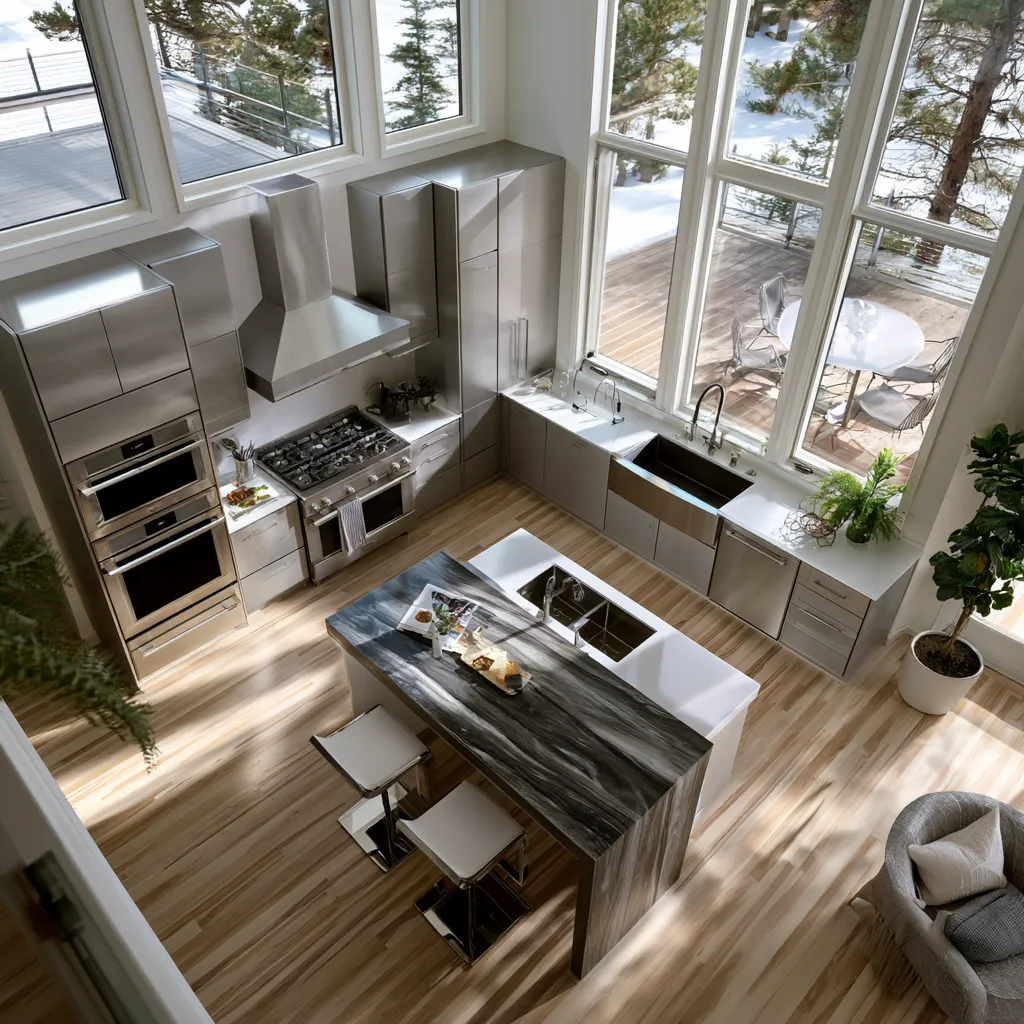
The countertop contrast works on the same principle. Dark veined stone — black marble, charcoal quartzite, deep grey quartz — against white gloss cabinetry creates the kind of dramatic visual weight that makes a kitchen photograph well and feel considered in person. The trick here is to let one surface be calm: if the countertop has dramatic movement, keep the cabinet shade simple and clean. If the cabinet finish is doing the visual work, a more restrained slab keeps the room from fighting itself.
What doesn’t work: matching the backsplash material exactly to the cabinet finish in the same gloss level. Two high-gloss white surfaces side by side read as a showroom display, not a kitchen. Let materials differ slightly in sheen or texture — a matte subway tile against a gloss cabinet door, for example — so each element holds its own visual identity. For more contrast approaches, kitchen backsplash ideas with white cabinets that add bold contrast covers the full range from dark marble to geometric pattern options.


Hardware and Accessories That Read as Intentional, Not Afterthought
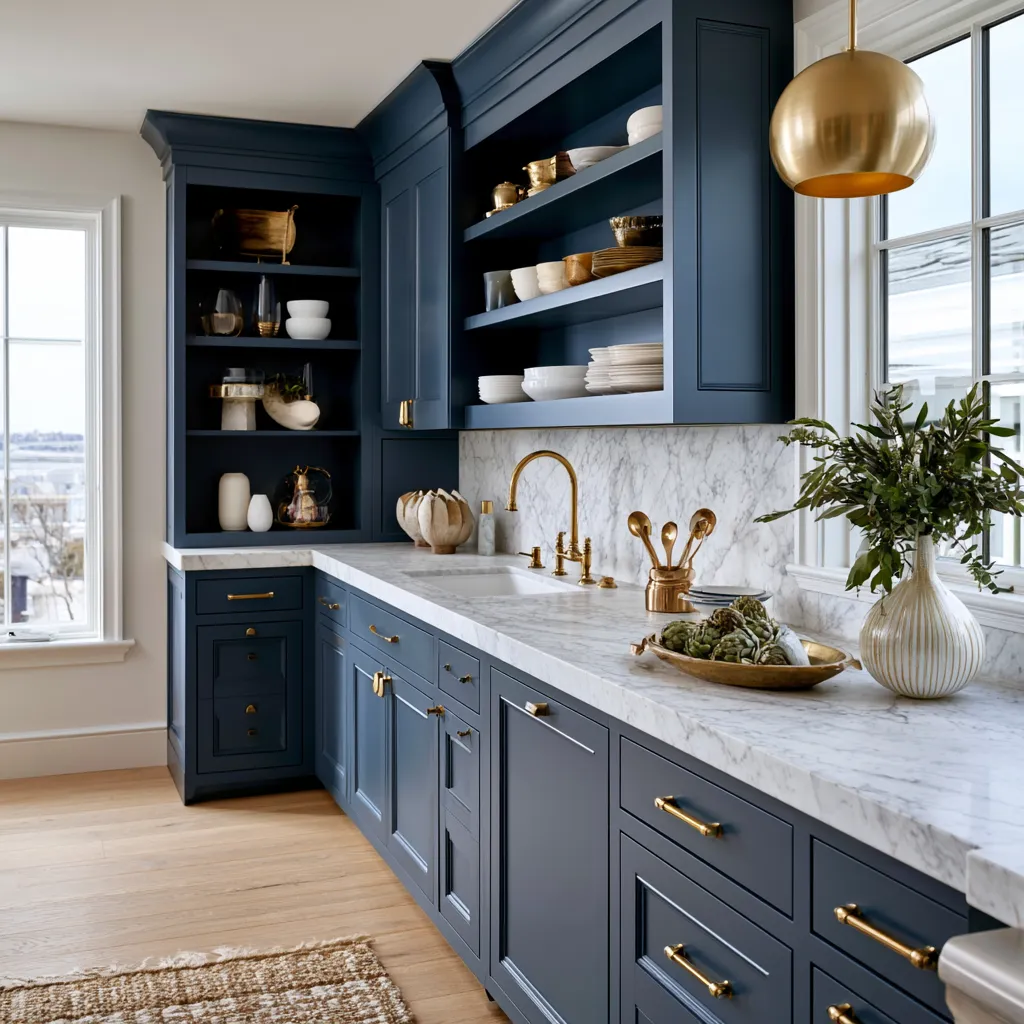
The hardware decision on white gloss cabinets carries more weight than on any other finish, because the surface offers zero visual noise to hide a bad choice. Brushed brass pulls at $12–$35 each (Rocky Mountain Hardware, Rejuvenation) against a high-gloss white door create warmth without competing with the reflective finish. Polished chrome pulls on the same door look sharper and cooler — better suited to a kitchen that skews minimal and monochromatic rather than warm and layered.
Handleless push-to-open designs eliminate hardware entirely and look precisely right in photography. The honest assessment is that budget-tier push mechanisms tend to fail within three years under daily use, while quality systems like Blum’s SERVO-DRIVE ($35 per door) hold up reliably. On a 25-door kitchen, that’s a significant budget line. If handleless is the goal but the budget is tight, a simple J-pull or integrated finger groove cut into the door edge costs far less and doesn’t require mechanical components to fail.
Mixing two metal finishes in the same cabinet run. Chrome on the faucet and brass on the cabinet pulls reads as two kitchens in a disagreement, not one layered space. Pick one metal and carry it through hardware, faucet, and light fixtures. The exception: brushed nickel and matte black can coexist when one is clearly dominant.
Using hardware that’s too small for flat-panel doors. On a full-overlay slab door, a small knob looks like a misplaced button. Bar pulls at 5–6 inches suit modern gloss panels proportionally. Designers recommend holding the pull against the door before ordering — photos lie about scale.
Spray-painting existing hardware to match a new finish. Paint on handles chips within months under daily grip. Replace hardware or leave it as-is; a painted-over handle will look worse than mismatched metal within a season.
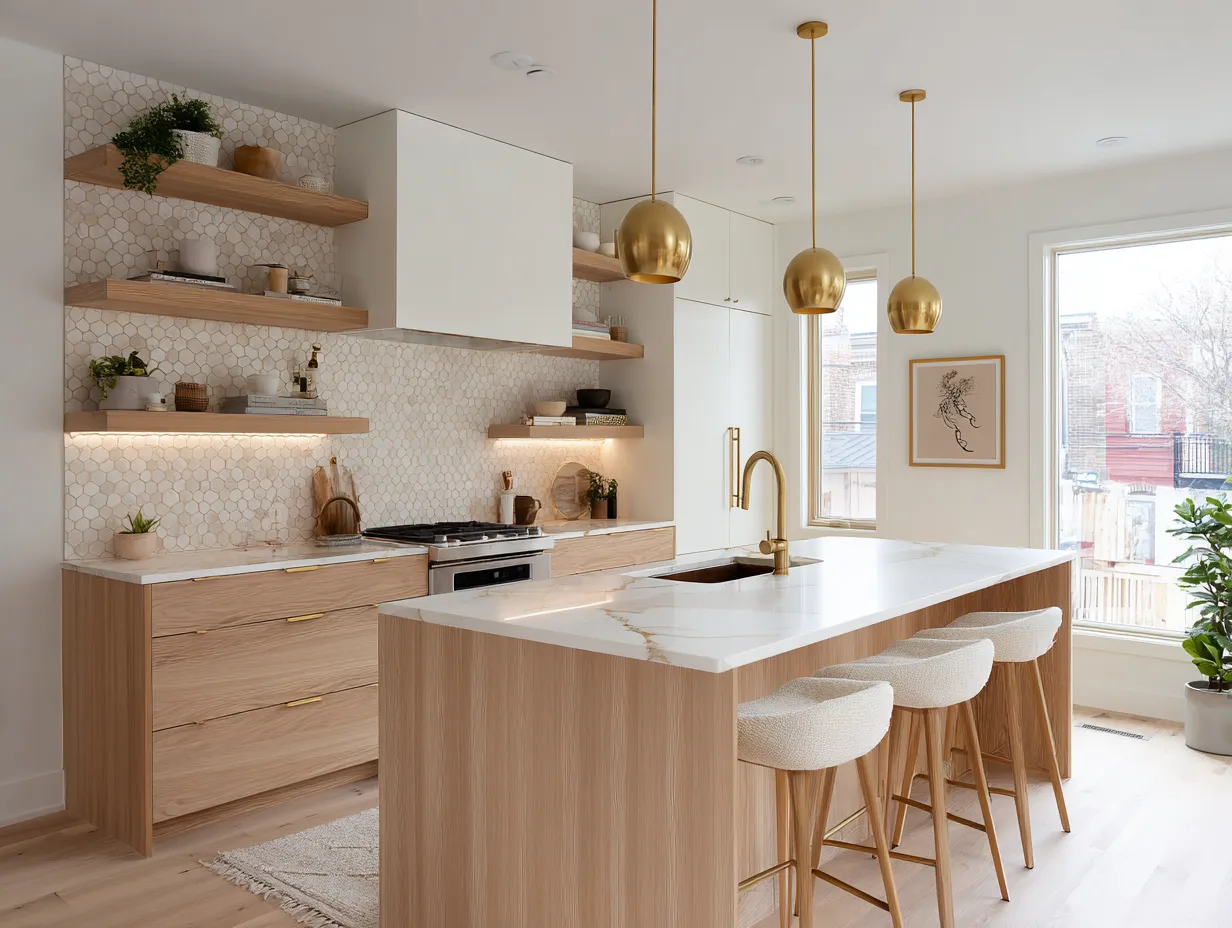
Backsplash choice works as the other major accent decision in this zone. Zellige tiles or handmade ceramics in a warm neutral introduce enough texture variation that the high-gloss cabinets read as the polished anchor rather than as a blank wall. The combination of a handcrafted matte tile with a precision-finished acrylic cabinet front is one of those pairings that works because the materials are opposites — not because they match.


Lighting That Makes White High Gloss Cabinets Actually Glow
White high gloss kitchen cabinets are the only finish where lighting decisions can make or break the entire investment. Under-cabinet LED strips — specifically the type that runs 300–500 lumens per linear foot at 2700K–3000K — cast light along the countertop surface in a way that the gloss picks up and reflects forward into the room. At $20–$50 per linear foot installed, this is the single upgrade that most amplifies what you already paid for in the cabinet finish itself.
Color temperature matters more than most people realize. Strips at 4000K and above produce a daylight-style output that turns white gloss cabinets cold and clinical. The 2700K–3000K range sits warm enough to feel residential without making the white look yellow. LEDs in this category last up to 25,000 hours, meaning the bulbs essentially never need replacing under normal kitchen use — operating costs run just $1–$5 per year for a full kitchen run, according to Angi’s 2026 cost data. Angi’s under-cabinet lighting cost breakdown covers installation types and ranges in detail if you’re budgeting the electrical work.
Pendant lights above an island work as the upper lighting layer that under-cabinet strips alone can’t provide. The standard hang height is 30–36 inches above the countertop surface — below that and anyone standing at the island will bump into them; above that and the pendants lose both their visual weight and their task lighting function. For a white gloss kitchen specifically, a pendant with a matte black exterior and warm interior finish (gold or linen shade) adds the contrast the room needs without competing with the reflective cabinets. Two or three pendants over a standard island almost always look better than one oversized fixture.


Cleaning Gloss White Cabinets Without Wrecking the Finish
A damp microfiber cloth used daily is the maintenance system that keeps gloss white kitchen cabinets looking as they did on delivery day. The key is damp, not wet — excess moisture sitting on acrylic or lacquer surfaces leaves water rings that require polishing to remove. Never dry-wipe a gloss cabinet: dragging dust particles across the surface without moisture creates micro-scratches that accumulate into a haze visible in raking light. The cleaning protocol is lift, not drag.
Products to skip entirely: anything containing ammonia, acetone, or bleach. These strip the top coat of lacquer and acrylic finishes and cause visible discoloration that cannot be spot-repaired easily. A mild dish soap in warm water handles grease effectively; a 50/50 water-and-white-vinegar solution cuts through heavier buildup, though it should be used sparingly since the acidity can dull the finish over repeated use. Paper towels and scouring sponges leave scratches — the only acceptable cloth material for high-gloss surfaces is microfiber or a lint-free chamois.
Lacquer-finished gloss cabinets specifically are vulnerable to heat and steam. Placing a coffee maker or toaster directly under upper lacquer-finish cabinets will cause the finish to yellow and chip over time — within 18 months in many cases. Build in 12–15 inches of clearance between countertop appliances and the bottom edge of the cabinet above, or use acrylic-finish or UV-cured panels in those zones instead of lacquer. It’s a detail almost nobody mentions in showrooms that becomes obvious within two years of daily kitchen use. For examples of how professional kitchen designs handle the white-cabinet-and-material combination, luxury modern kitchen designs in timeless white shows how finish placement decisions play out across full kitchens.

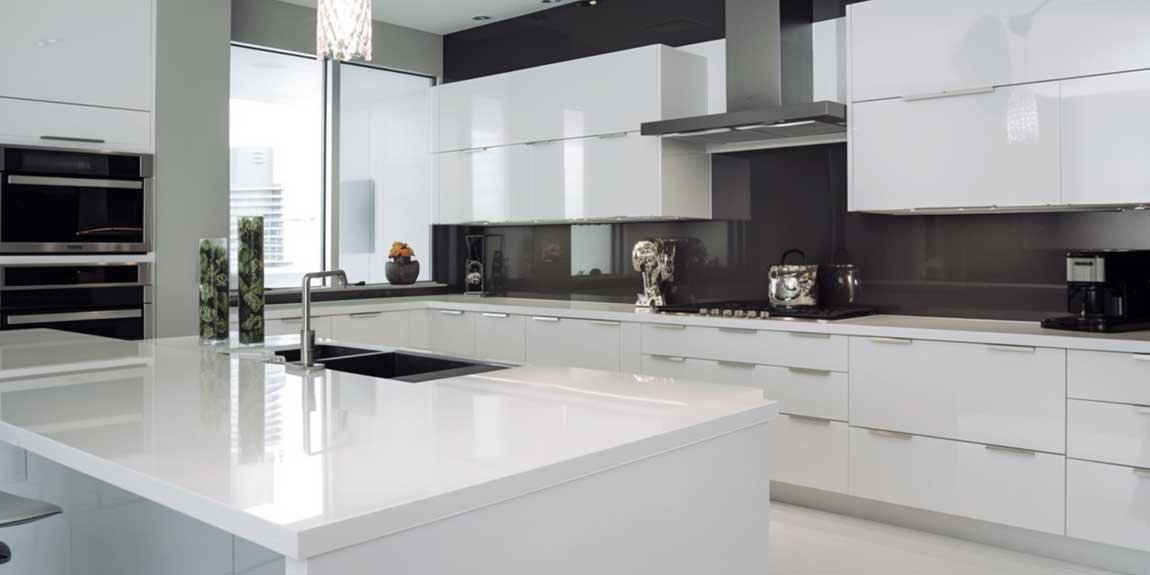
Semi Gloss vs High Gloss White Kitchen Cabinets — Where Each Actually Belongs
Semi gloss white kitchen cabinets occupy a practical middle ground that full high-gloss cabinets can’t cover: they’re wipeable, reasonably reflective, and significantly more forgiving of small scratches and fingerprints. The sheen level is noticeably lower — semi-gloss has a soft, cleanable shine rather than a mirror-like surface — which means it doesn’t amplify light the same way but also doesn’t magnify every smudge. This is why semi-gloss painted wood cabinets remain the dominant choice in family kitchens where durability over a decade matters more than the wow factor in week one.
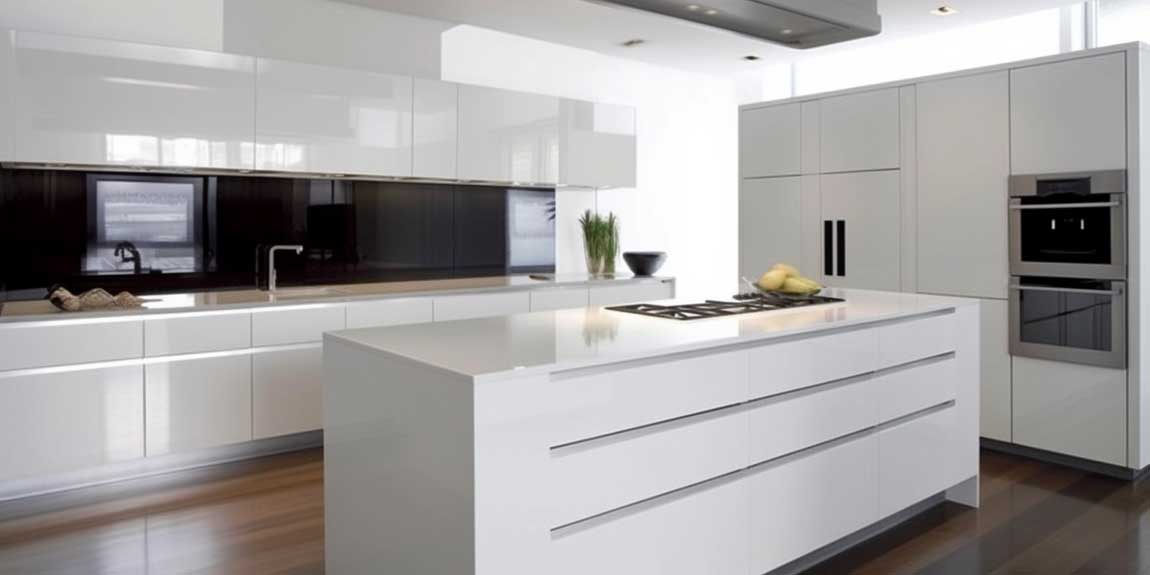
High-gloss is the right choice when the kitchen is a design statement, when the space is compact and needs maximum light amplification, or when the finish is on acrylic or UV-cured panels rather than painted wood. It is not the right choice for someone who cooks daily and runs a busy household without the time for daily microfiber maintenance. The honest formula: high-gloss on upper cabinets, semi-gloss or satin on lower doors and drawer fronts that take daily hand contact. You get the visual impact of the gloss from across the room without the maintenance load at the surfaces you actually touch.
Cost difference is real but not enormous. Semi-custom cabinets in semi-gloss run $200–$350 per linear foot, while full high-gloss acrylic at the same quality tier typically lands $250–$500 per linear foot. The larger factor is often the substrate: MDF-based gloss panels are more price-stable than solid wood cabinets with painted gloss finishes, which require careful grain filling and multiple spray coats to achieve a smooth enough surface for high-gloss without visible wood texture showing through.


| Finish | Best For | Fingerprint Visibility | Cost Per Linear Ft (semi-custom) |
|---|---|---|---|
| High Gloss Acrylic | Design statement, compact kitchens, upper cabinets | High — daily wipe needed | $250–$500 |
| High Gloss Lacquer | Upper cabinets, low-steam zones | High — heat-sensitive finish | $200–$400 |
| Semi Gloss Paint | Family kitchens, lower cabinets, mixed-finish schemes | Medium — wipeable, forgiving | $200–$350 |
| Satin Paint | Lowers in busy households, cottage-to-modern transitional | Low — hides wear well | $150–$300 |


The Bottom Line
Gloss White Kitchens Reward the Details You Get Right — and Punish the Ones You Skip
Acrylic gloss beats lacquer for longevity near steam zones. Choose the finish by where it lives, not just how it photographs.
Pure White (LRV 84) is the safest starting shade for most kitchens. Test it on foam board at different times of day before committing to five gallons.
Under-cabinet LED strips at 2700K–3000K and 300–500 lumens per linear foot cost $20–$50 per linear foot installed and are the single highest-impact upgrade you can pair with a gloss finish. Save this post.