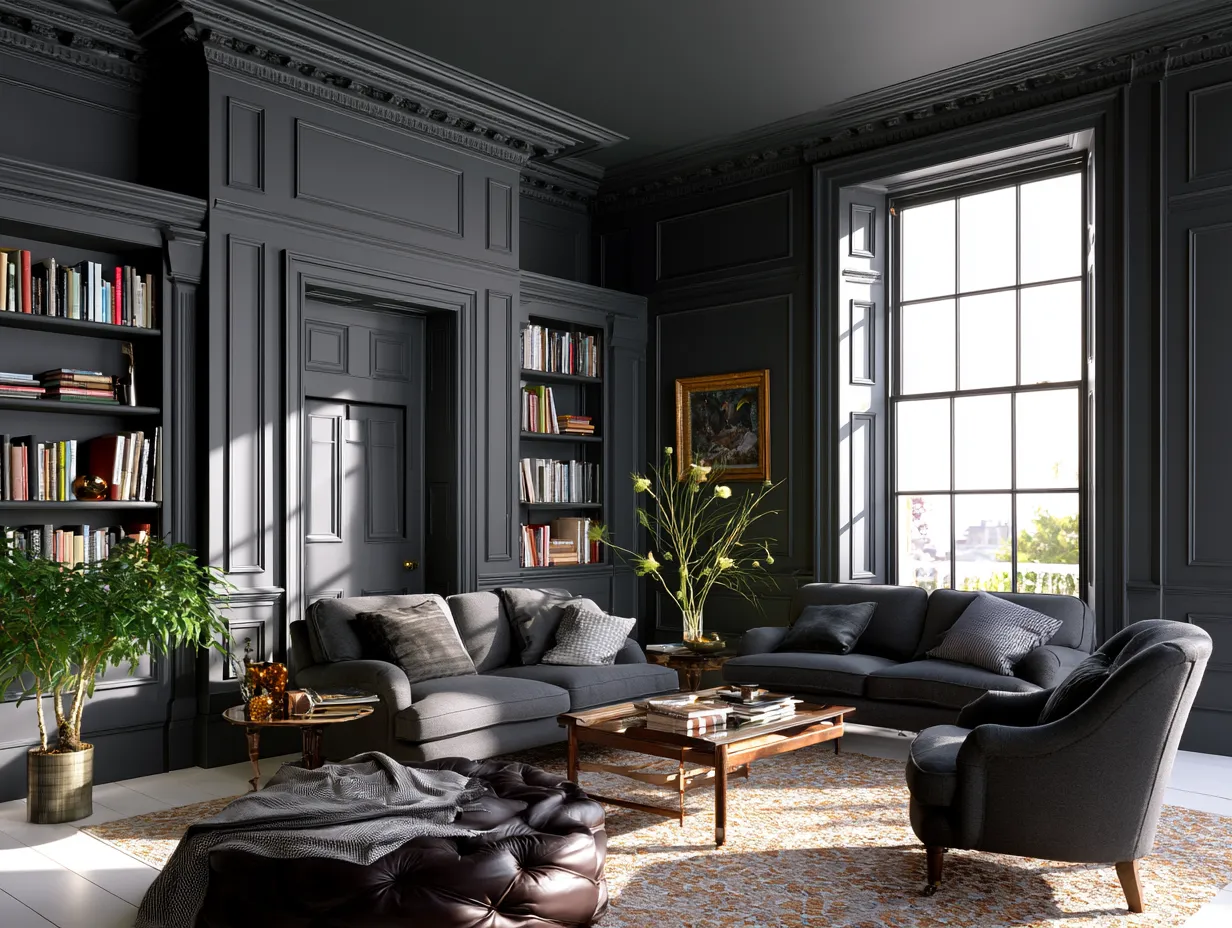
A modern navy blue bathroom works when the shade, the light and the finishes are chosen together rather than one at a time. Navy can read calm and spa-like or heavy and cave-like, and the difference usually comes down to light reflectance value (LRV). A true navy such as Sherwin-Williams Naval sits at LRV 4 and absorbs over 95% of incoming light, while Benjamin Moore Hale Navy sits at LRV 8 and reflects roughly twice as much. Save the deepest navy for a bathroom with a real window and use the lighter one everywhere else.
Does navy suit a small bathroom? Yes, as long as white trim, a mirror and layered lighting do the brightening. A trim white with LRV above 80, such as Extra White at LRV 86, creates the crisp edge that keeps dark walls looking deliberate, as this side-by-side breakdown of Naval and Hale Navy LRV and undertones explains. Paint a 12×12 inch sample board and check it at night before buying gallons.
The five looks below — spa oasis, nautical, minimalist, vintage and artistic — each solve the light problem in a different way. Every section lists typical costs for its hero piece, so the style can be matched to a real budget. Start with the look whose biggest expense already fits your plan.
- Naval at LRV 4 absorbs over 95% of light; Hale Navy at LRV 8 reflects about twice as much.
- Freestanding tubs average about $2,500, within a $750–$12,000 range.
- Clawfoot tubs typically land at $2,000–$6,000 installed.
- Frameless shower doors run $1,200–$2,900 installed vs $600–$1,800 for framed.
- Electric heated floors cost about $8–$15 per sq ft and go in within 1–3 days.
- Vinyl wallpaper can last 20+ years vs about 5 for peel-and-stick.
- Size the fan at 1 CFM per sq ft, minimum 50 CFM, and run it 20 minutes after showers.
The Spa Oasis Proves a Modern Navy Blue Bathroom Can Feel Light
Navy bathroom ideas built around a spa oasis use several depths of navy at once, so the room reads layered rather than flat. A glossy navy freestanding tub placed by a wide window becomes the brightest navy surface in the room, because daylight bounces off the gloss. Freestanding tubs typically cost $750 to $12,000, with an average near $2,500. Put the tub where natural light lands first, never in the darkest corner.
Think of the palette like a stack of denim: the darkest navy on the vanity, a mid navy on the shower tiles, a softer blue-grey on the walls. Matte navy subway tile, like the options in these bold blue bathroom tile ideas for contemporary spaces, keeps shower walls calm while the gloss on the tub supplies sparkle. Matte vs glossy is the key contrast here: matte hides water spots, gloss multiplies light. Use gloss on no more than one large surface so the room never glares.


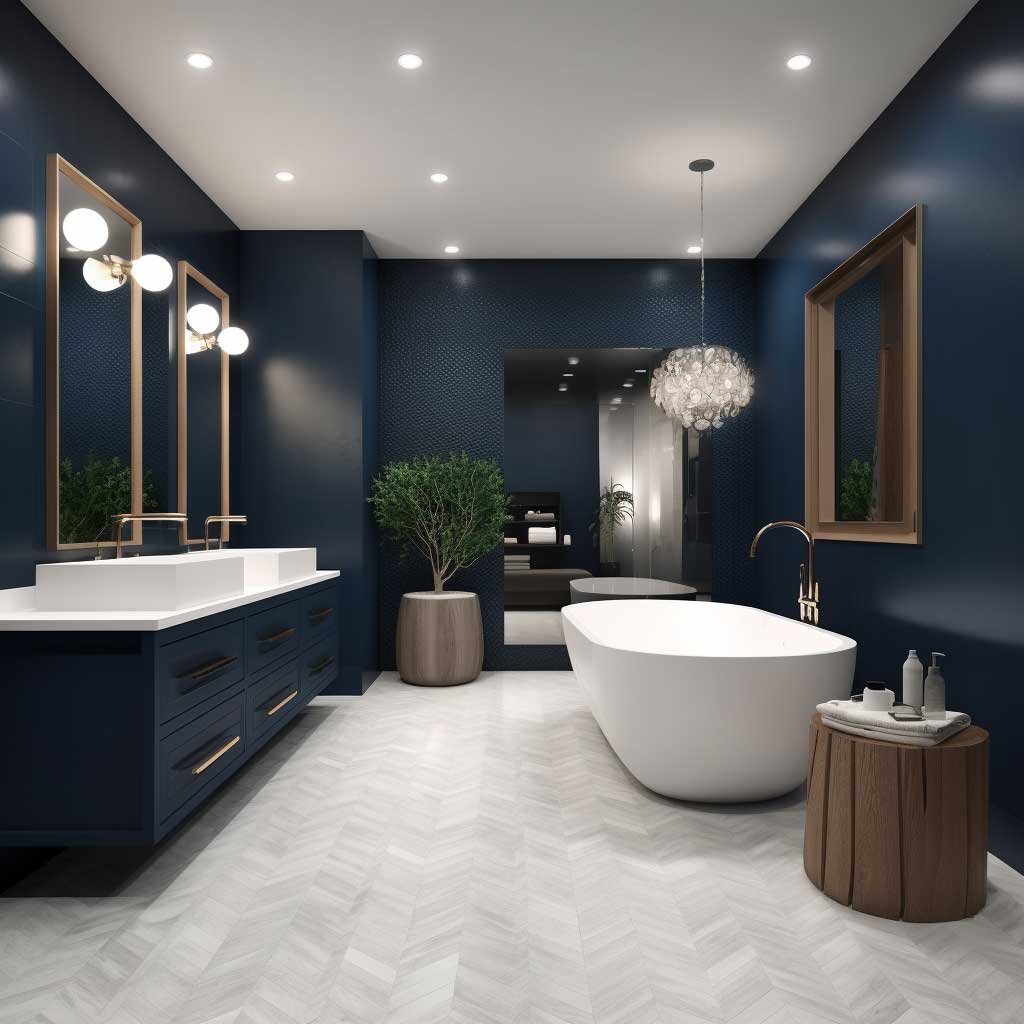

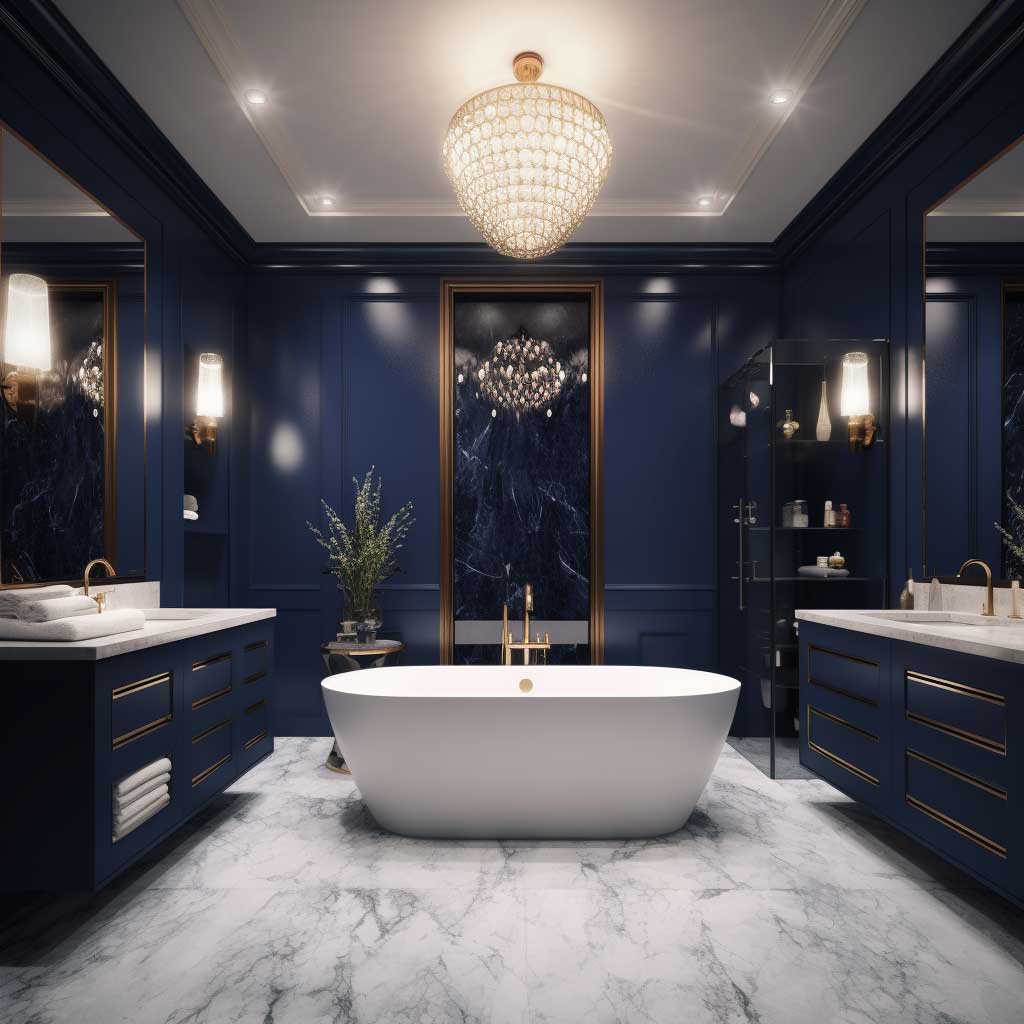
A double vanity spanning one wall gives two people their own sink and twice the counter space of a single unit. Painting it the deepest navy in the room anchors the layout, while pale stone counters stop it from swallowing light. Is a double vanity worth it in a shared primary bath? Usually yes, as long as the wall can take it without crowding the door swing. Skip it if the shower door would clip the cabinet every time it opens.
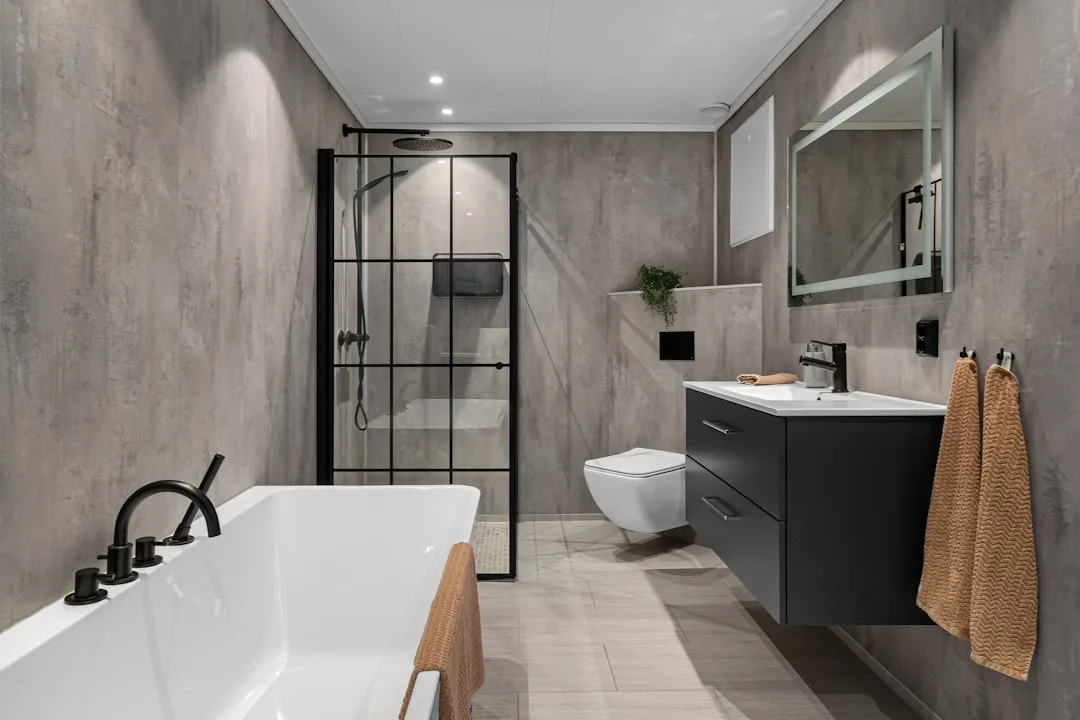
The walk-in shower stays open thanks to clear glass, which lets the navy tiles read as one continuous wall. Frameless shower doors typically cost $1,200 to $2,900 installed, compared with $600 to $1,800 for framed versions. Frameless costs more but removes the metal outline that chops a dark room into boxes. Choose clear glass over frosted, since frosted panels turn navy tiles grey.
Steam is the hidden enemy of any spa bathroom with dark walls. Ventilation guidelines call for 1 CFM per square foot in bathrooms up to 100 sq ft, with a 50 CFM minimum and a 20-minute run after each shower. A navy rug and warm sconces finish the look, but a weak fan undoes both within a season. Put the fan on a timer before the first coat of paint goes on.
Nautical Navy Bathroom Ideas That Skip the Anchor Clichés
Navy blue walls in a bathroom take a nautical turn the moment wave-patterned wallpaper enters the room. The pattern behaves like water seen from a ship’s rail: constant movement, yet nothing busy enough to tire the eye. Is wallpaper safe near a shower? It is when the paper is vinyl, which can last 20 years or more, while peel-and-stick usually gives out after about five. Choose solid vinyl for any wall within splash range.
Professional wallpaper installation averages about $575 per room, with most jobs falling between $200 and $1,500. A small bathroom often needs only part of that, since a single feature wall behind the vanity carries the whole theme. Four papered walls vs one accent wall is the real decision here. Paper one wall and paint the other three in a matching navy.


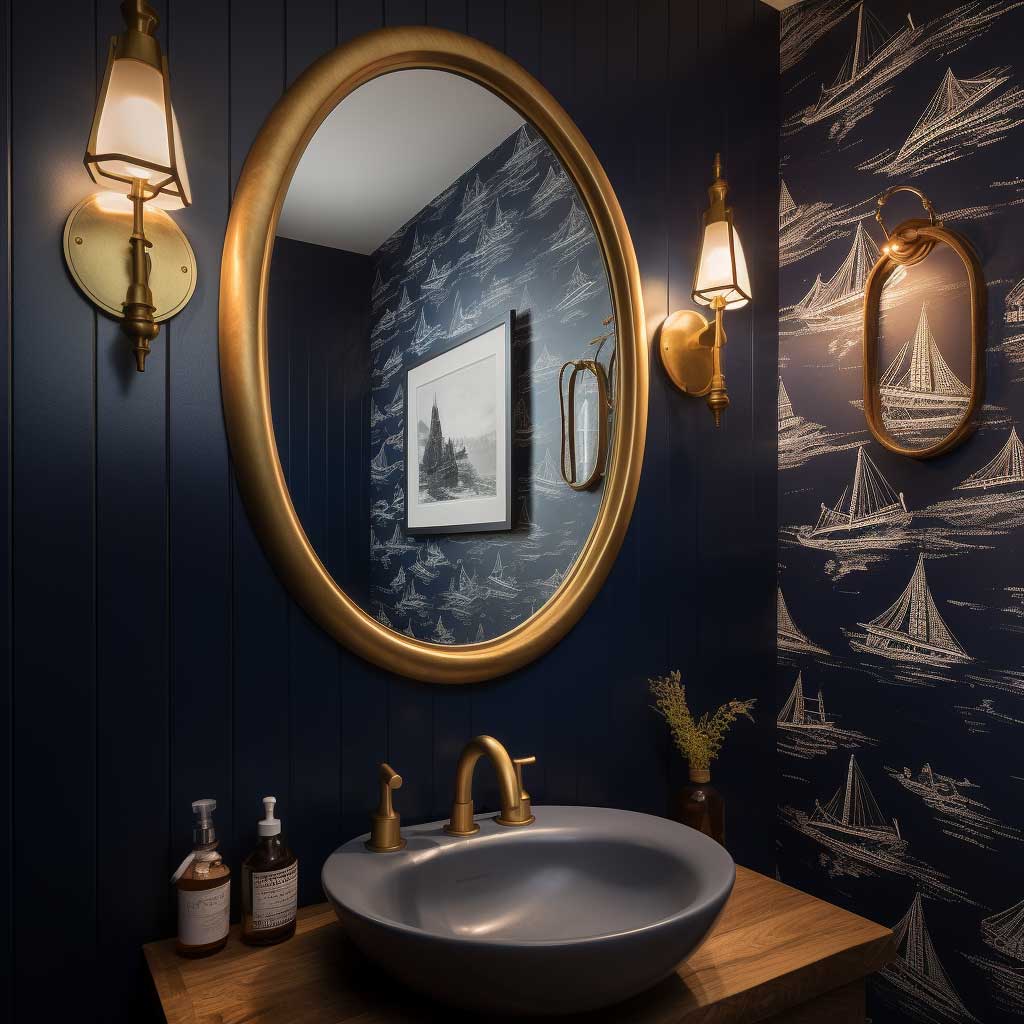
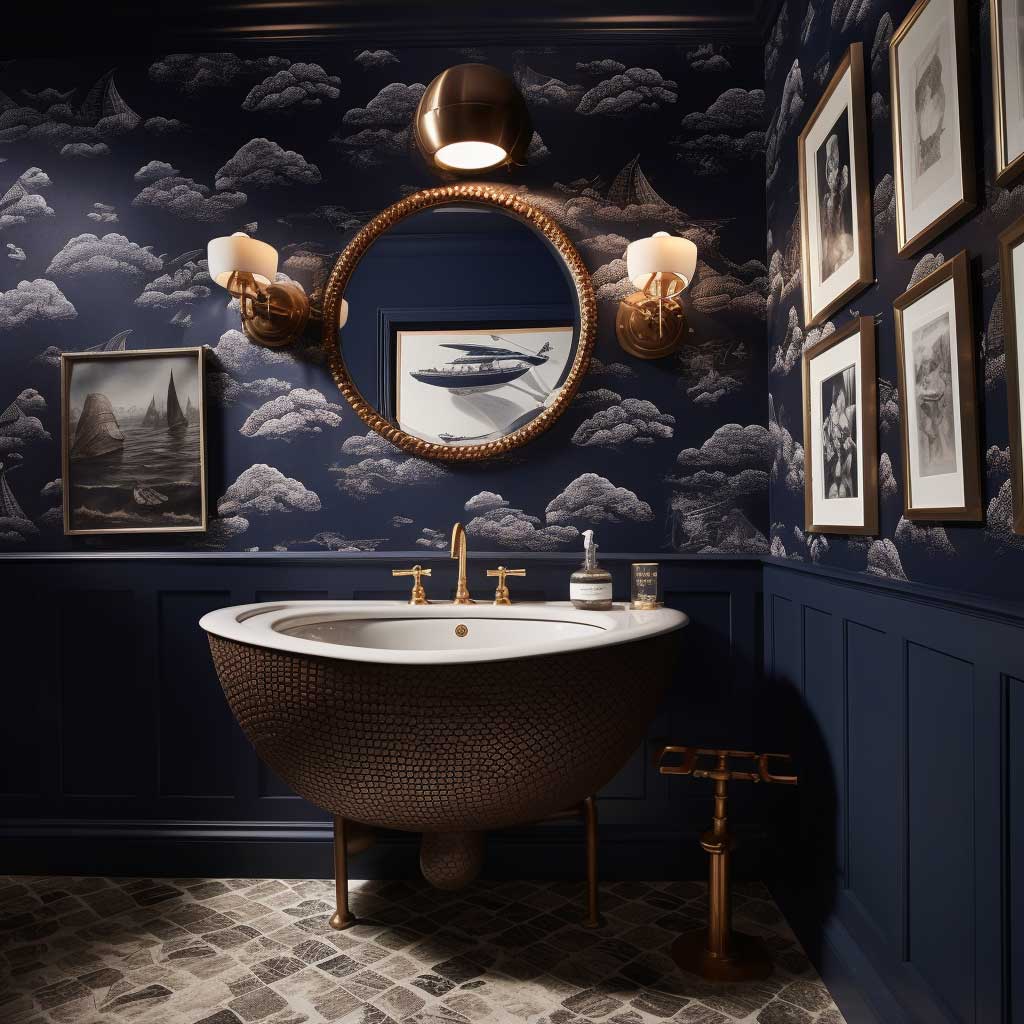
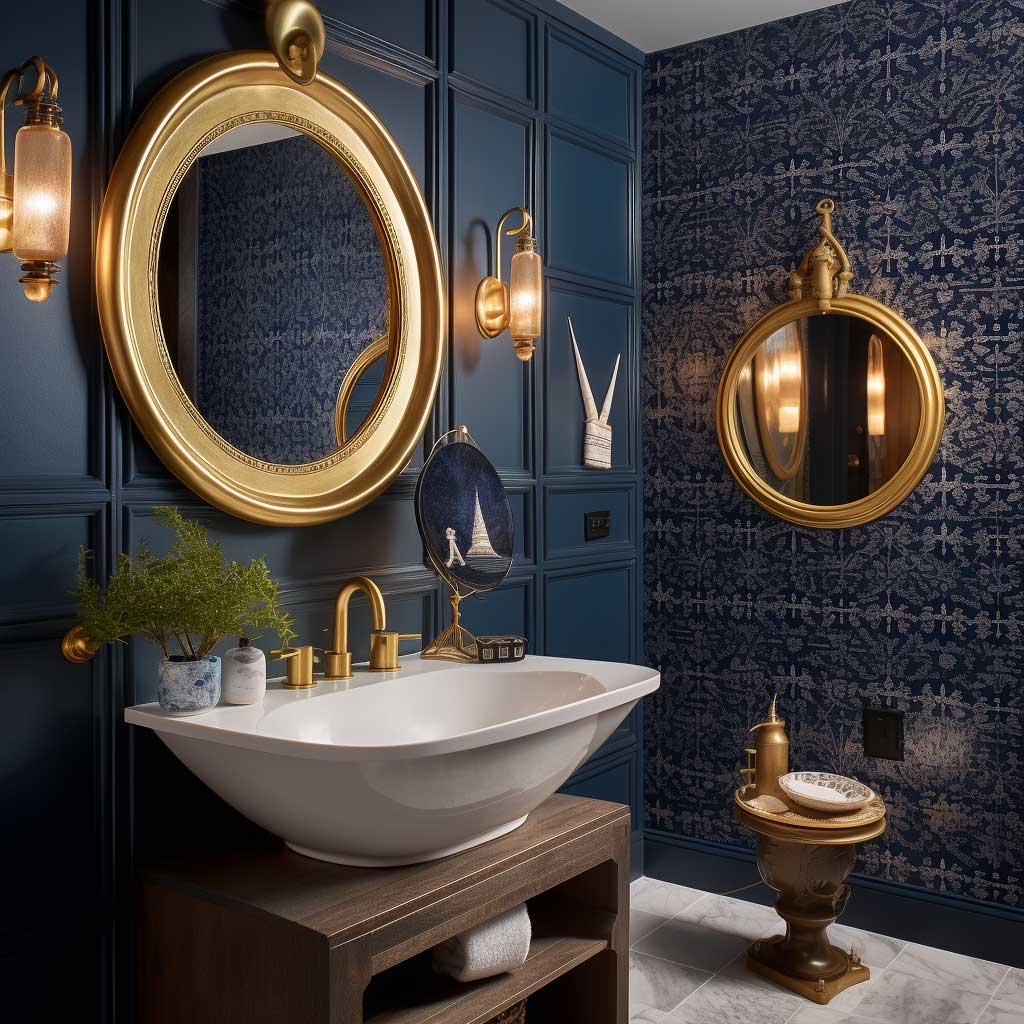
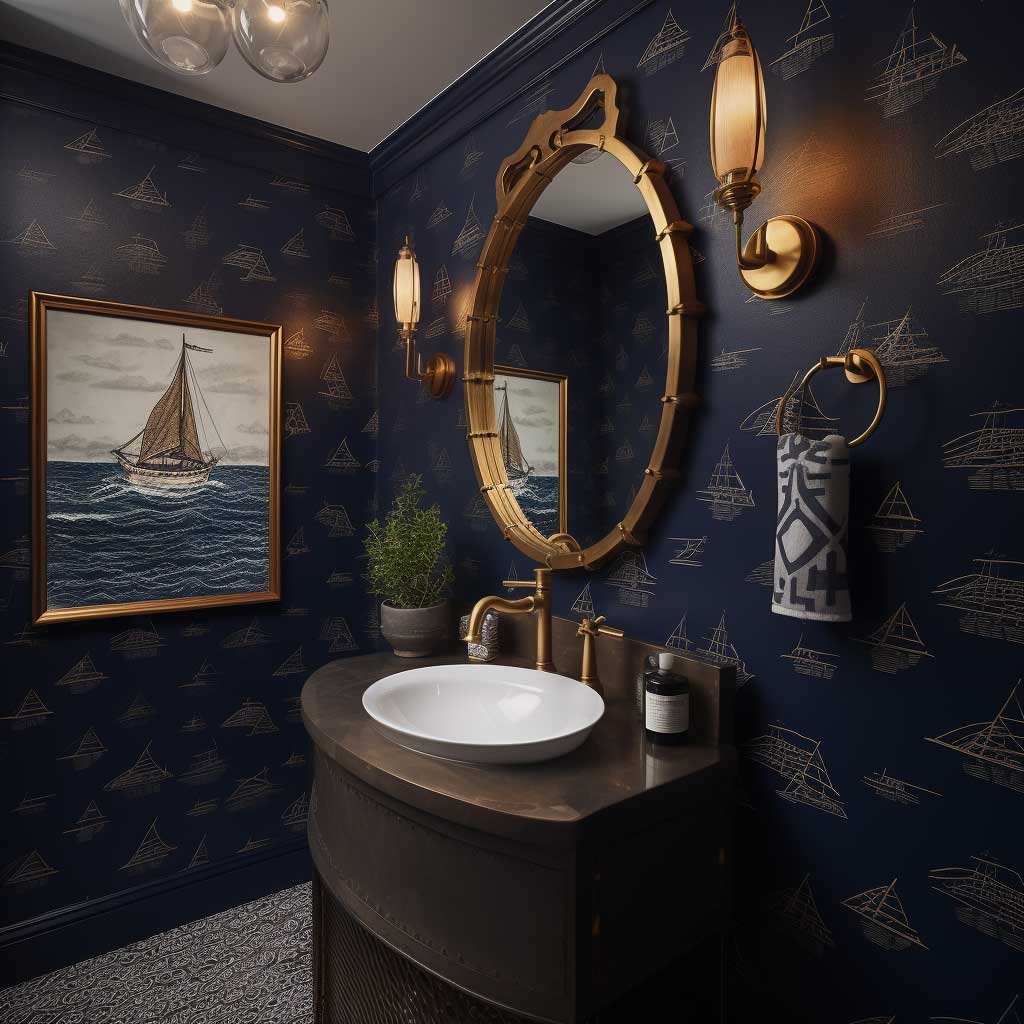
A porthole-style mirror above the vanity acts as the focal point, its metal rim catching light against the dark paper. Round mirrors soften a room full of straight tile lines, the same way a ship’s window breaks up a steel hull. Ropes, anchors and striped towels all at once turn the look into a theme-park set. Limit nautical props to two pieces and let the wallpaper carry the story.
Brushed brass warms cool navy like a low sunset over grey water. Paint-comparison data shows Hale Navy at LRV 8 pairing especially well with brass, while the inkier Naval at LRV 4 leans toward polished nickel or matte black. Brass vs chrome changes the mood more than any accessory: brass reads warm and classic, chrome reads crisp and cool. Pick one metal finish and repeat it on the tub filler, taps and mirror rim.
Soft, warm lighting around the navy freestanding tub completes the twilight-by-the-sea effect. Under warm 2700K bulbs, a saturated navy loses its teal cast and reads as pure dark blue. Under 4000K LED it looks cleaner and crisper, which suits a vanity used for shaving or makeup. Use 2700K in the bath zone and 4000K over the mirror.
Minimalist Navy Blue Walls With Tile, Mirror and Heated Floors
A minimalist take on navy blue walls in the bathroom depends on fewer objects and sharper contrast between surfaces. The monolithic sink, shaped from a single navy block, works like a sculpture in an empty gallery: one piece, no distractions. Two navy depths are enough here, the darkest on the sink and floor and a lighter one on the walls. Keep everything else off the counter or the calm disappears.
How much lighter should the wall navy be? A gap of a few LRV points does the job, for example Naval at LRV 4 on the sink against a shade such as Sea Mariner at LRV 7 on the walls. Geometric tiles in the lighter navy add rhythm without breaking the single-colour scheme. Bright white grout turns a quiet pattern into a grid, so avoid it. Match the grout to the tile within one shade.
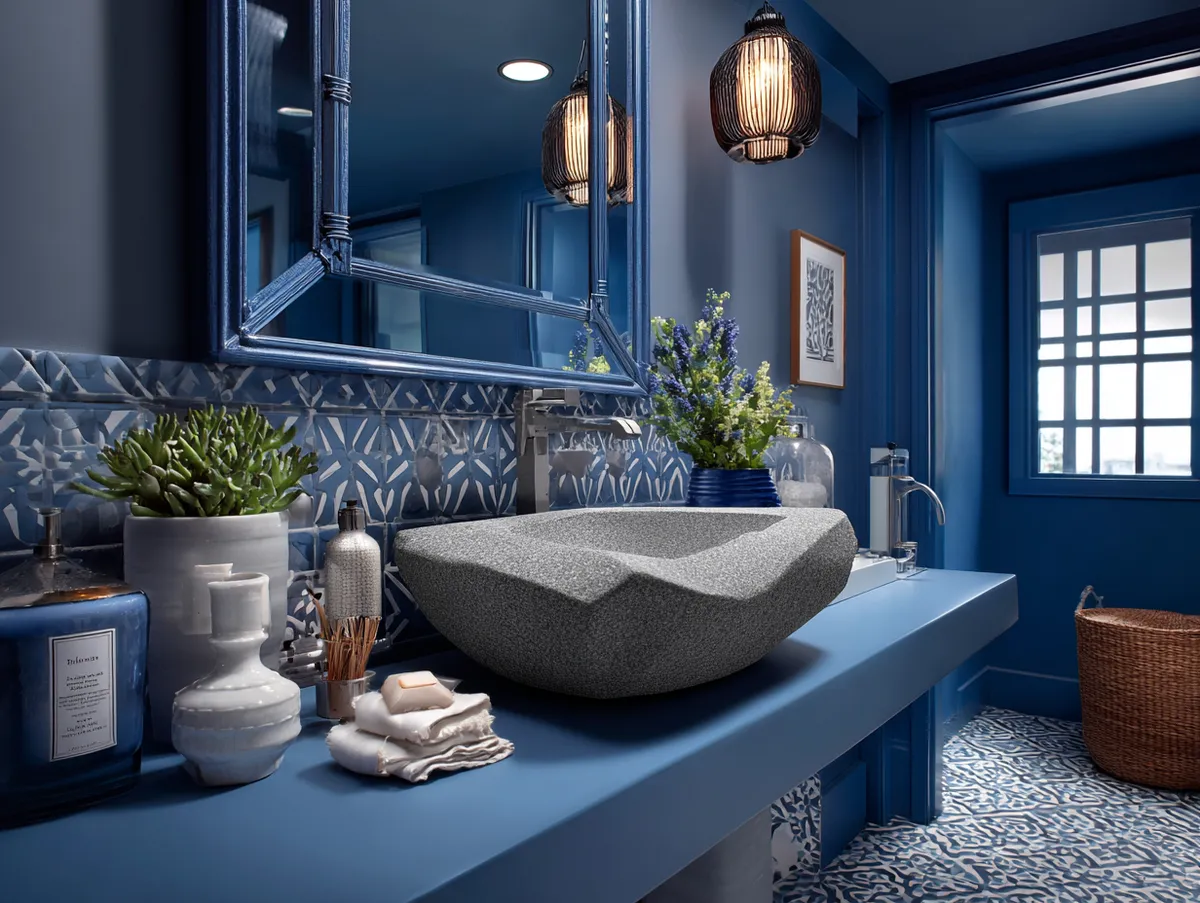


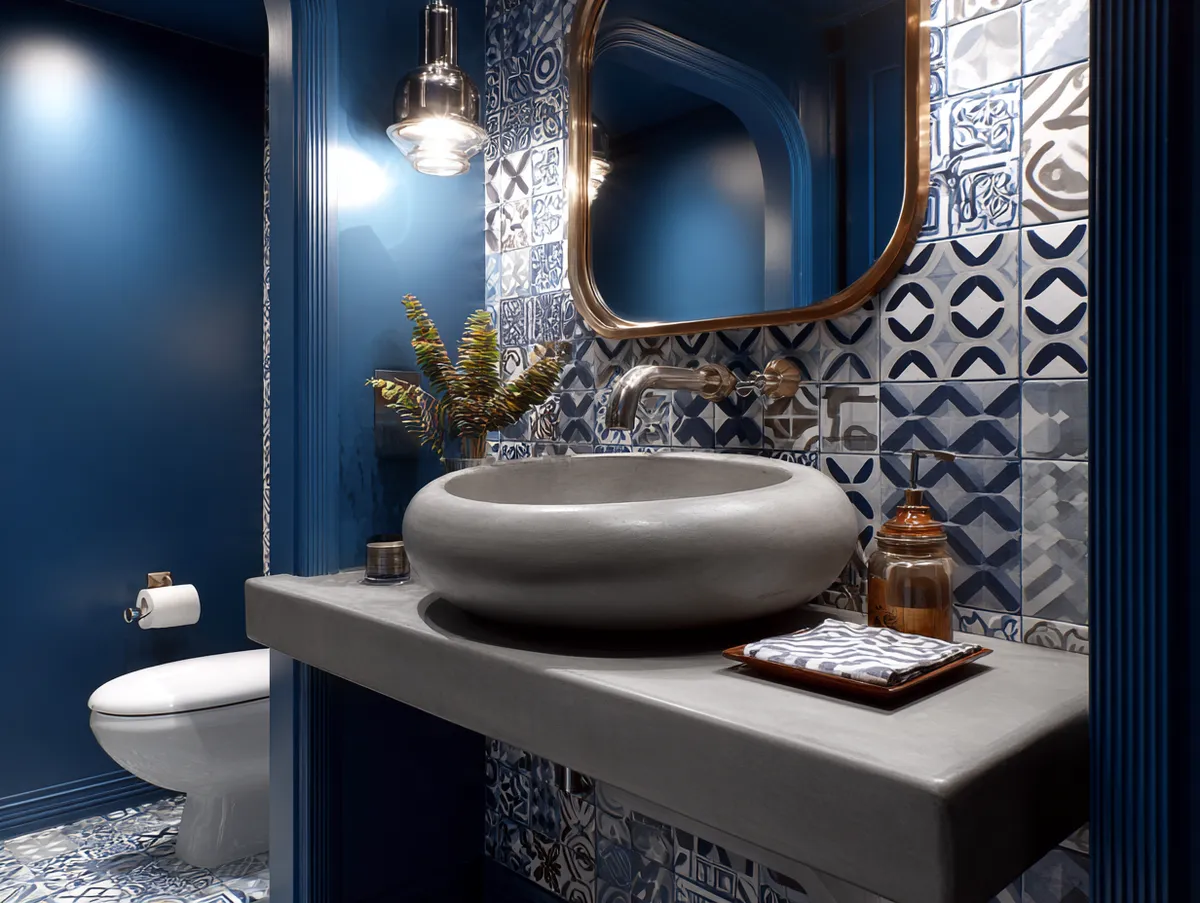


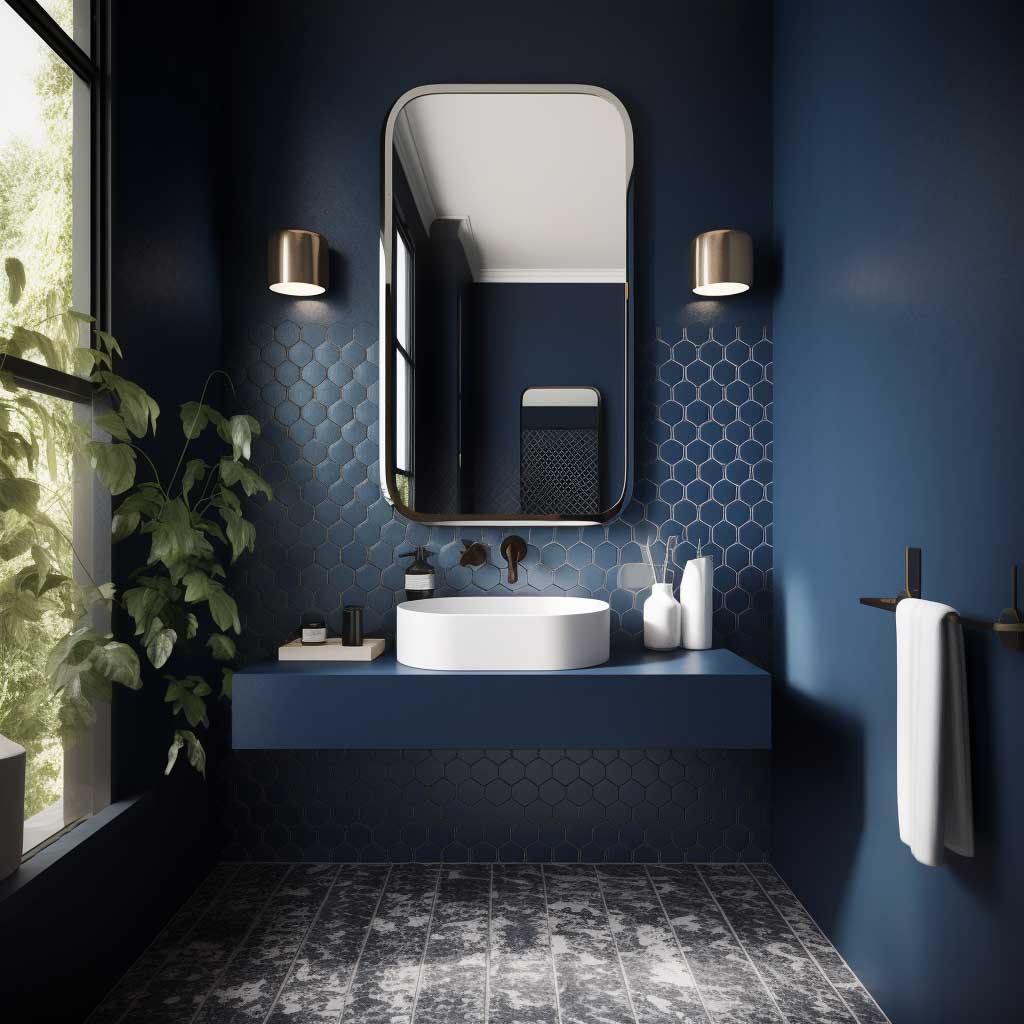
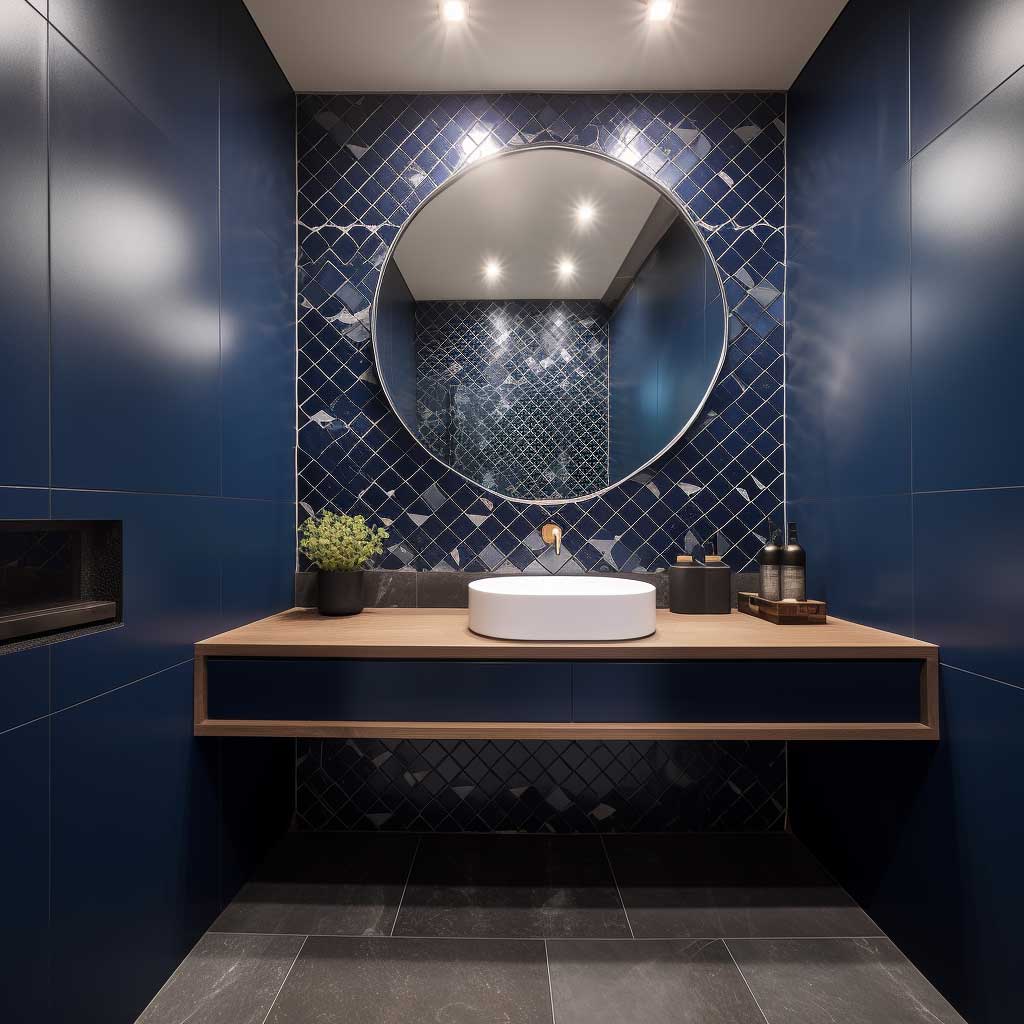
A frameless mirror spanning the wall above the sink doubles the light in the room and makes the footprint feel larger. The missing frame matters in a minimalist space, since a thick border draws a box around the reflection. Frameless vs framed is a choice between expanse and ornament. Run the mirror the full width of the vanity for the strongest effect.
Dark navy floor tiles feel cold underfoot in winter, which is why heated floors suit this look. Electric radiant heating typically costs $8 to $15 per square foot and installs in about 1 to 3 days, while a hydronic system can need a boiler costing $3,200 to $9,000. For a single bathroom, electric wins on upfront cost and speed. Don’t install hydronic heat for one room unless a boiler already exists.
Hidden LED strips under the vanity and along the ceiling wash the navy tiles with an even glow. Indirect light keeps dark walls from turning into a black hole at night. Electric floor mats draw about 12 to 15 watts per square foot, so running costs depend on how long they stay on. Pair the floor with a programmable thermostat set to morning and evening only.
Vintage Clawfoot Glamour Inside a Modern Navy Blue Bathroom
A navy blue bath with a vintage twist starts with the clawfoot tub, refinished in glossy navy so it belongs to the present rather than an estate sale. Clawfoot tubs cost about $600 to $10,000 as units, averaging near $2,000, and installation typically brings the total to $2,000–$6,000. The tub is the single biggest decision in this look. Set its budget before choosing any tile.
Material changes everything about weight. A fiberglass clawfoot weighs about 58 lbs, while a marble version of the same size can reach 1,700 lbs before a drop of water goes in. Cast iron sits between the two and holds heat longer, much like a cast-iron pan stays warm after the stove goes off. Ask for a floor-load check before ordering cast iron or stone.


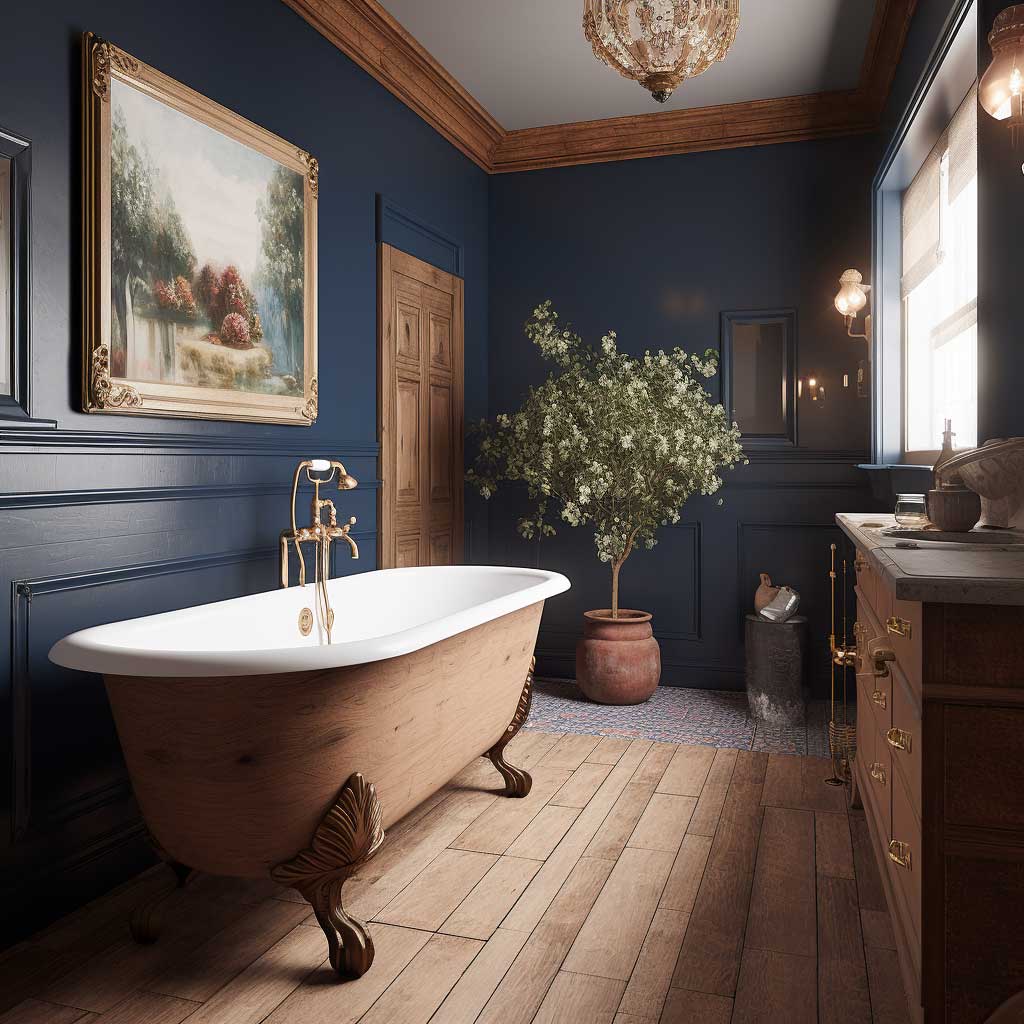
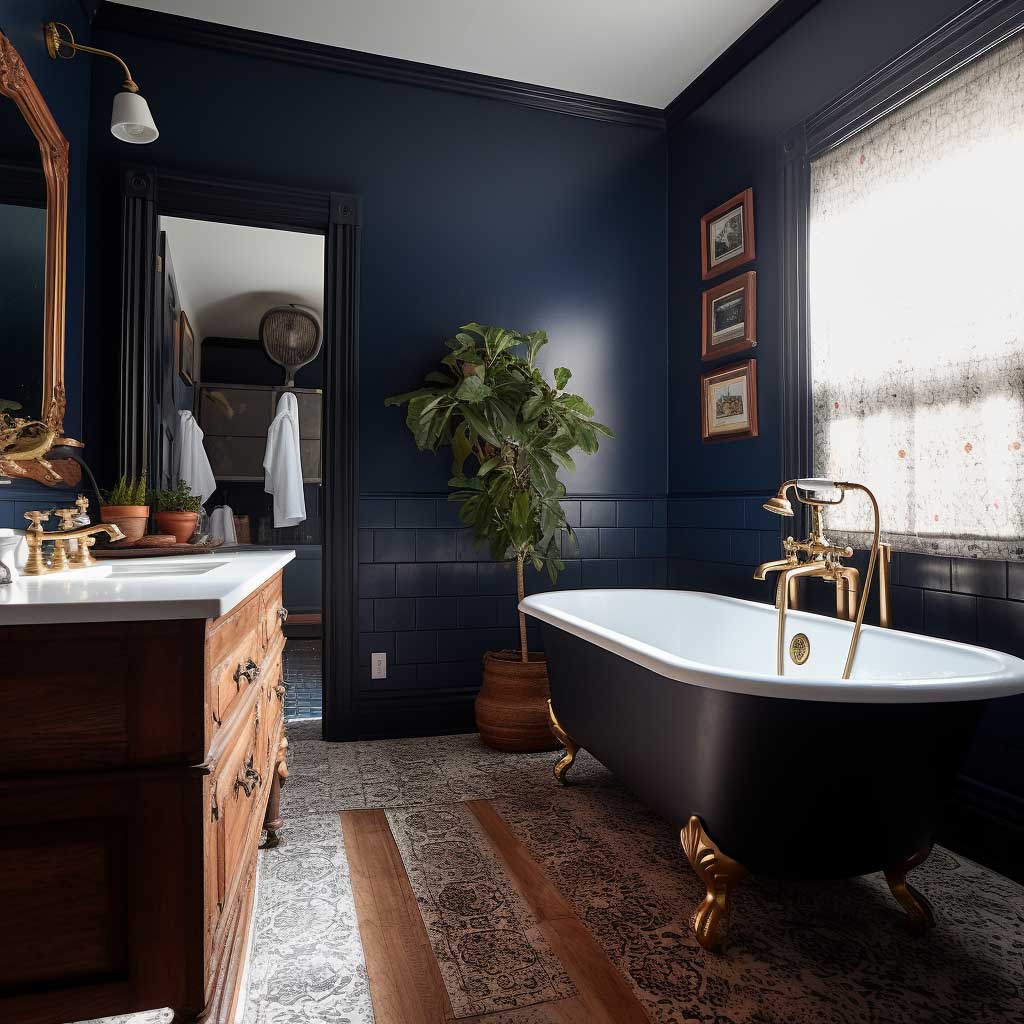
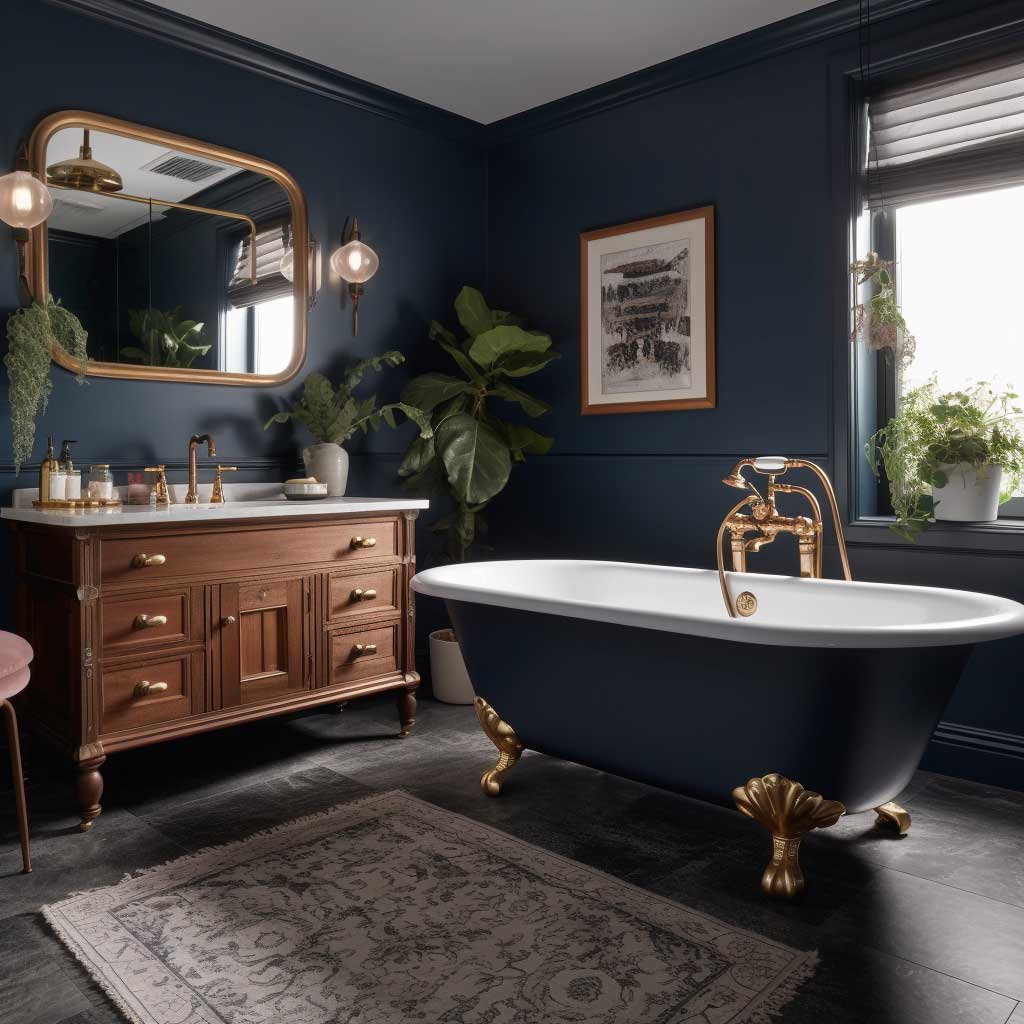

An antique wood vanity with carved detailing supplies the old half of the old-meets-new balance. Dark walnut tones against navy create depth, while a modern undermount sink and brass taps keep it practical every day. Genuine antique vs reproduction is a real trade-off: antiques need a sealed top, reproductions arrive ready for water. Seal any genuine wood top with a marine-grade finish before it meets a faucet.
Aged-texture navy tiles and an ornate gold mirror provide the history, while a chandelier adds sparkle. Do chandeliers belong in a wet room? They do when the fixture is rated for damp locations and hangs outside the splash zone of the tub. A crystal chandelier directly over the tub filler is the one move to avoid. Hang it over the centre of the room instead.
Navy and White Bathroom Murals Turn One Wall Into Art
A navy and white bathroom built around a large mural treats one wall as a canvas rather than a backdrop. Abstract water forms in navy and white bring movement into a room otherwise made of hard surfaces. Mural wallpaper hangs like standard paper, with labour typically running $1 to $7 per square foot. Hire a pro for murals, since one misaligned panel splits the image in two.
Is a mural too much for a small bathroom? Not if it covers a single wall and the other three stay quiet. For a lower-maintenance route, moisture-proof boards work too, as these small bathroom wall paneling ideas in marble, wood and gloss show. Mural vs panel is a choice between artwork and easy cleaning. Pick the mural only if the fan runs a full 20 minutes after every shower.


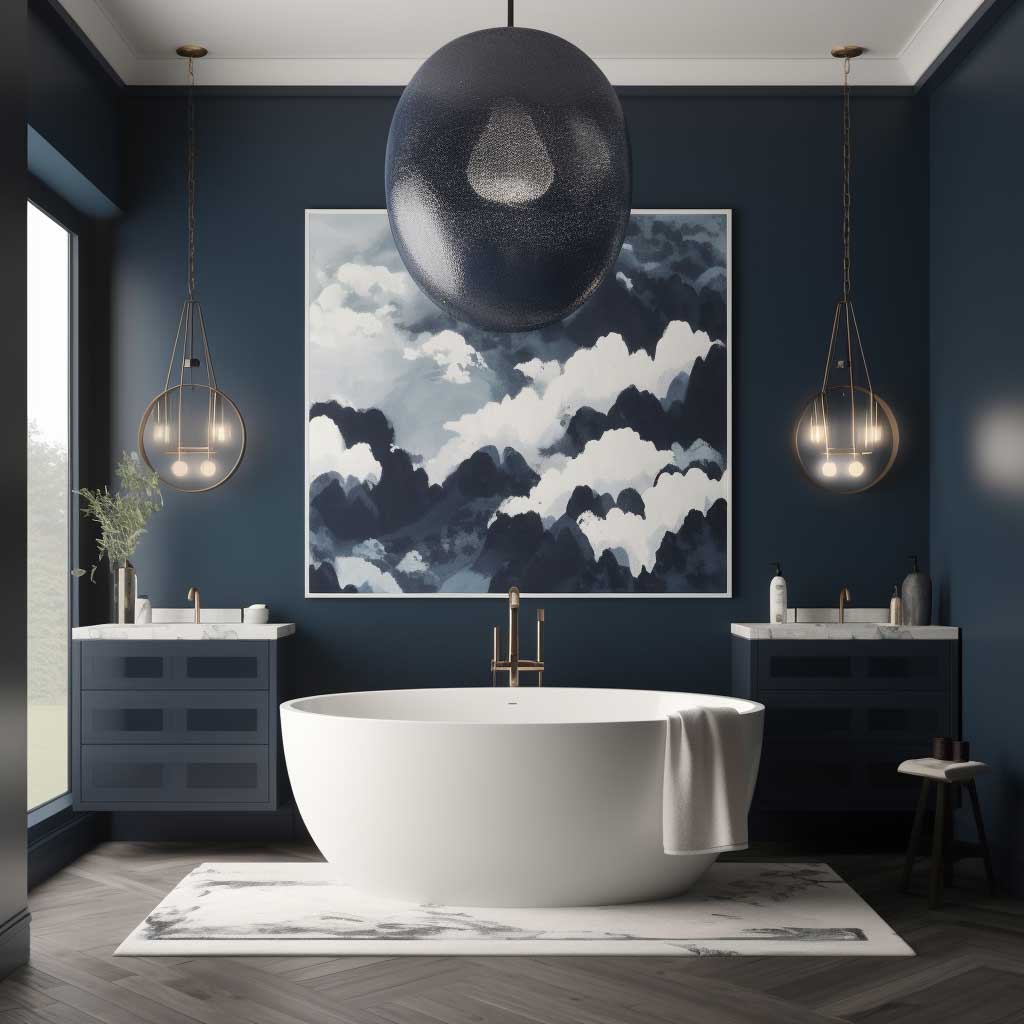
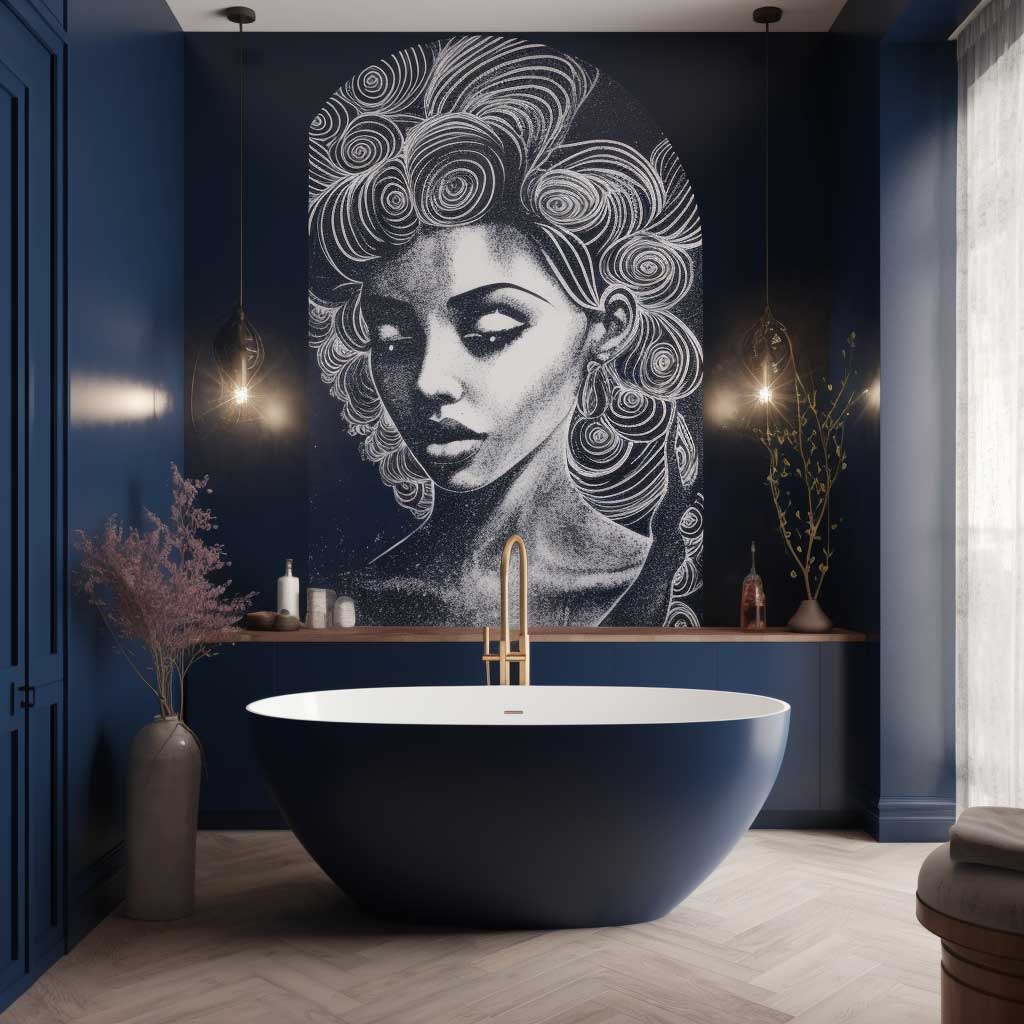
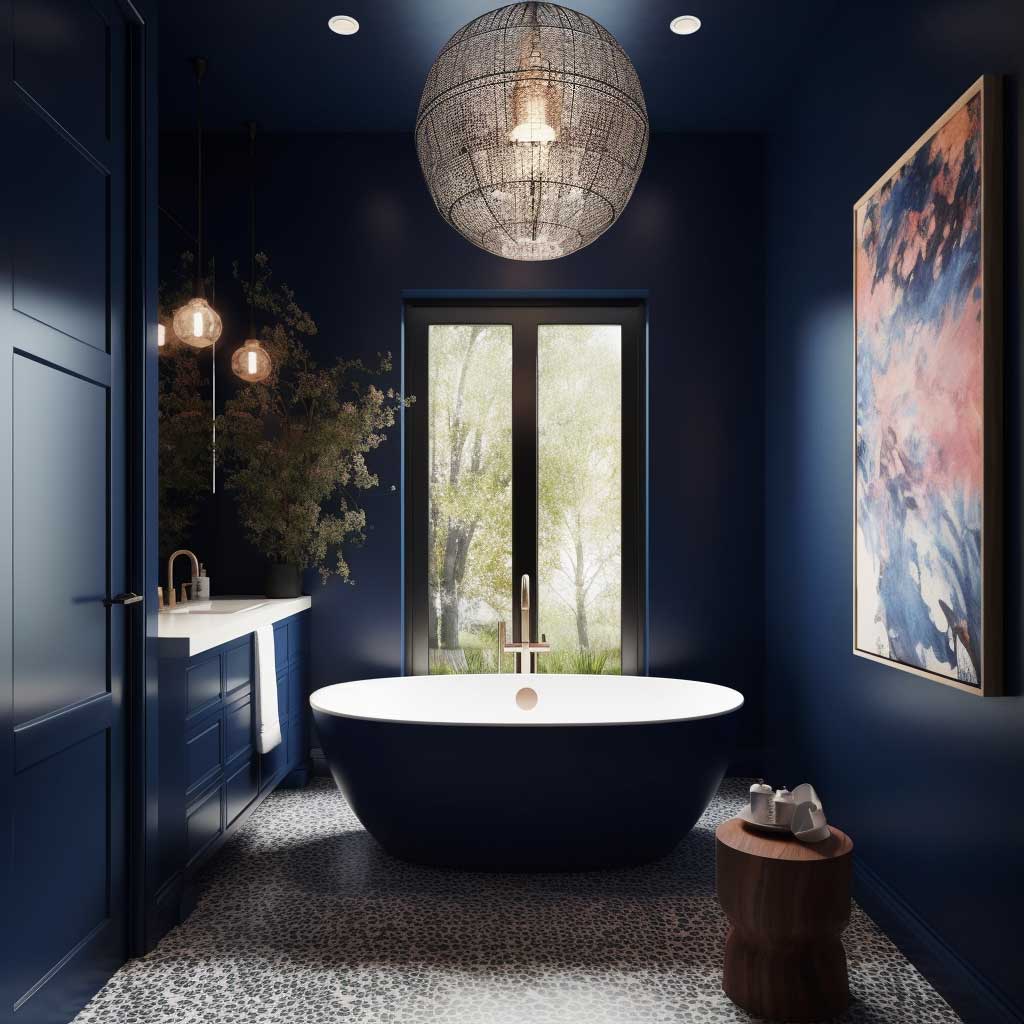
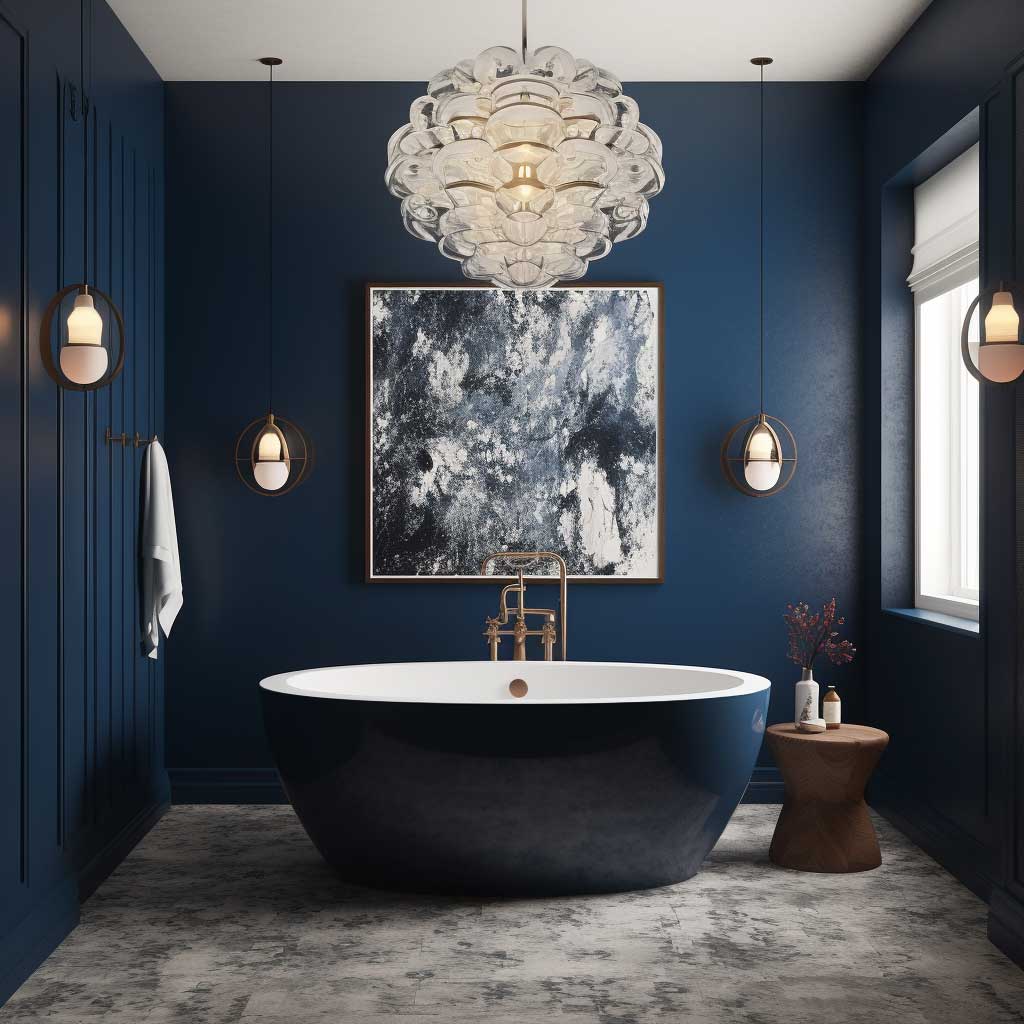
A sculptural freestanding tub with organic curves echoes the shapes in the mural, the way a frame repeats colours from the painting it holds. A 5-foot acrylic freestanding soaking tub costs around $650 as a unit, far less than stone or cast designs. Acrylic also keeps the floor load low compared with a 1,700-lb stone tub. Choose acrylic if the bathroom sits on an upper floor.
Glass pendant lights over the vanity repeat the organic forms and scatter soft light across the navy. A large mirror opposite the mural reflects the artwork, so the room shows it twice. Clear glass vs opaque shades decides how much sparkle reaches the walls. Hang pendants where the mirror won’t reflect the bare bulb, or the glare doubles too.
Navy floor tiles with a slight sheen finish the room by catching pendant light from below. A satin sheen sits between matte and gloss, showing fewer water spots than gloss while still reflecting light. Polished navy floors look like a lake at night but turn slippery when wet. Use a satin or textured finish for any floor beside the tub.
Compare Navy Blue Bathroom Styles Side by Side
Comparing navy blue bathrooms side by side shows that the hero piece, not the paint, decides most of the budget. A gallon of navy costs little; a tub, shower glass or heated floor costs thousands. The table lines up each look against typical spend, best navy depth and upkeep. Read the upkeep column before the cost column.
| Style | Hero piece | Typical cost | Best navy depth | Upkeep | Best for |
|---|---|---|---|---|---|
| Spa oasis | Freestanding tub + frameless shower | Tub avg ~$2,500; door $1,200–$2,900 | LRV 6–8 blue-grey | Squeegee glass; fan 20 min after showers | Large primary baths |
| Nautical | Vinyl wave wallpaper + brass | Install ~$575 avg ($200–$1,500) | LRV 8 with brass | Vinyl lasts 20+ years | Bathrooms with a window |
| Minimalist | Monolithic sink + heated floor | Electric heat $8–$15 per sq ft | LRV 4 sink, LRV 7 walls | Low, few objects | Small modern baths |
| Vintage | Clawfoot tub | $2,000–$6,000 installed | LRV 8 with warm brass | Seal antique wood tops | Older homes |
| Artistic | Mural + acrylic sculptural tub | Labour $1–$7 per sq ft; tub ~$650 | Navy + white trim above LRV 80 | Needs 50+ CFM fan | Statement rooms |
Most navy bathroom projects run over budget because the paint gets bought first and the hero piece last. Reversing that order keeps the shade matched to the light the finished room will actually have. A paint chip under shop lights is like a swimsuit tried on in winter: it tells you little about real conditions. Follow this sequence instead.
- Measure the floor and size the fan at 1 CFM per sq ft, minimum 50 CFM.
- Pick the hero piece: tub, shower glass or heated floor.
- Choose LRV 4 navy for windowed rooms and LRV 7–8 for windowless ones.
- Paint a 12×12 inch sample and check it under 2700K and 4000K light.
- Add one metal finish and one pattern, no more.
Don’t Do This
- Don’t paint all four walls of a windowless bathroom in LRV 4 navy; an LRV 8 shade reflects about twice the light.
- Don’t hang peel-and-stick wallpaper beside the shower; it lasts about 5 years vs 20+ for vinyl.
- Don’t order a stone tub of up to 1,700 lbs without a floor-load check.
- Don’t fit a fan under 50 CFM, whatever the size of the bathroom.
Shade First, Tub Second
A modern navy blue bathroom succeeds or fails on light, and the gap between LRV 4 and LRV 8 matters more than any tub or tile. Twice the reflected light is the difference between a cocoon and a cave.
For windowless rooms, choose a blue-grey navy around LRV 7–8, add white trim above LRV 80 and run a frameless mirror the full width of the vanity.
For budget, plan around the hero piece: about $2,500 for an average freestanding tub, $2,000–$6,000 for an installed clawfoot, or $8–$15 per sq ft for electric floor heat.
Protect every finish with a fan rated at 1 CFM per sq ft and a 20-minute post-shower run. Vinyl wallpaper and sealed wood last for years under those conditions, while the same materials can peel within a few seasons in a steamy room.