Dark kitchen ideas work best when gray anchors the palette — not as a neutral afterthought, but as the main event. Charcoal cabinets, veined marble countertops, and geometric mosaic backsplashes each carry the same cool undertone that stops a dark room from reading as just… dark. That tonal consistency is the difference between a kitchen that feels moody and one that feels deliberate.
Gray sits at the intersection of every dark kitchen challenge: it absorbs light without making a room feel smaller, it pairs with both warm wood and cold stone without a color clash, and it hides the daily evidence of a kitchen that actually gets used. Stock gray shaker cabinets run roughly $2,300 for a standard 10×10 layout — a fraction of what custom cabinetry costs — yet they deliver the same editorial look when paired with the right countertop and backsplash.
Three design moves define the dark kitchen ideas covered here: a matte gray cabinet front, a marble or marble-adjacent stone surface, and a tiled backsplash that bridges the two. Each section below explores one of those moves in full — with real pricing, material specifics, and the mistakes that quietly ruin otherwise good rooms.
– Gray cabinets with matte finish cost roughly $2,300 for a 10×10 kitchen in stock shaker style — the most budget-efficient entry into a dark kitchen aesthetic.
– Carrara marble countertops start at $40–$50 per square foot installed; Calacatta runs $175–$200 per square foot and lasts 100+ years with annual sealing.
– Glass and stone mosaic backsplash tile runs $8–$43 per square foot installed — more labor-intensive than subway tile, but delivers the depth that keeps an all-dark room from going flat.
– The one rule across all three: every dark surface needs at least one reflective neighbor — polished stone, stainless steel, or a glossy floor tile — to hold visual depth.
Gray Cabinets Pull Dark Kitchen Ideas Together Without Overwhelming Them
Matte gray cabinets are the starting point most dark kitchen ideas return to — and there’s a specific reason they work where flat black fails. Gray absorbs light without killing it. A matte black surface deadens a room; a matte gray surface lowers the brightness while preserving the sense of dimension. Stock shaker gray cabinets average around $2,300 for a standard 10×10 kitchen, making them the most accessible route into a high-contrast dark interior without custom pricing.
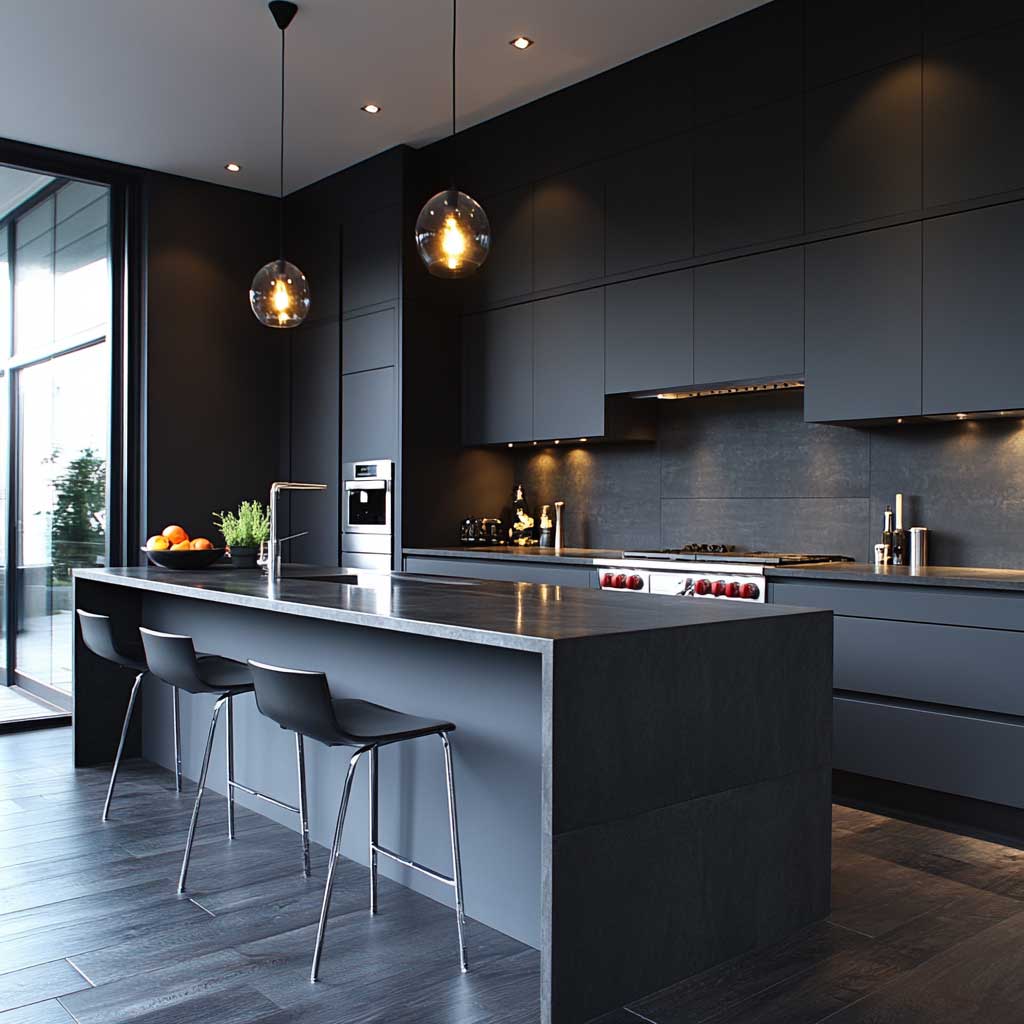
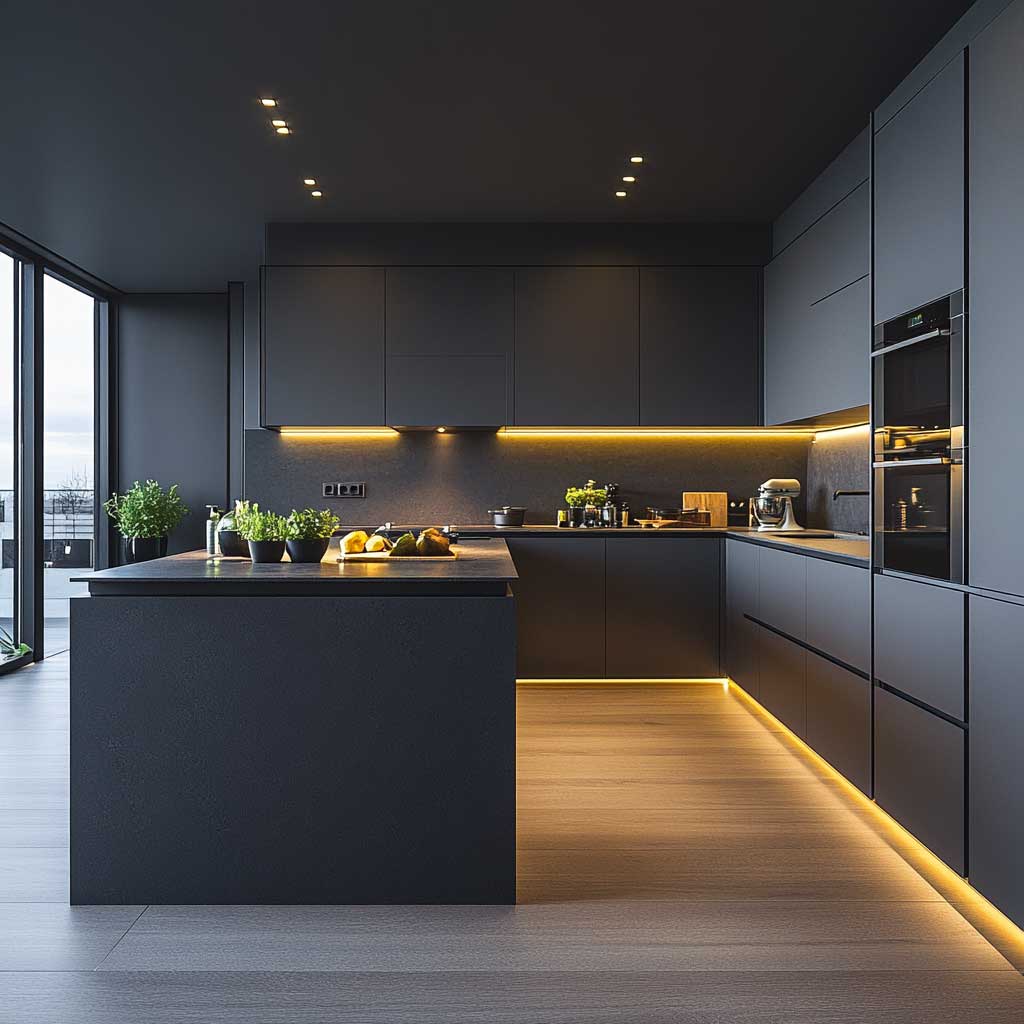
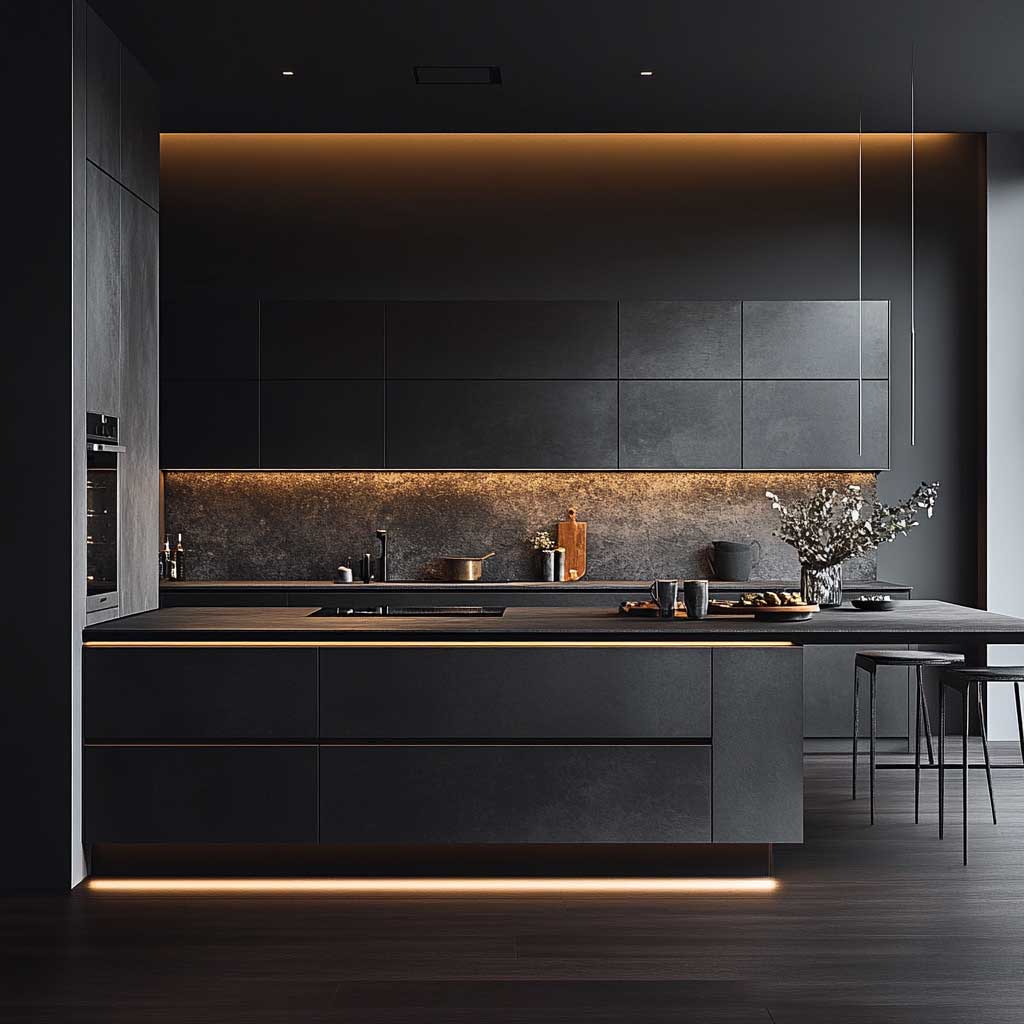
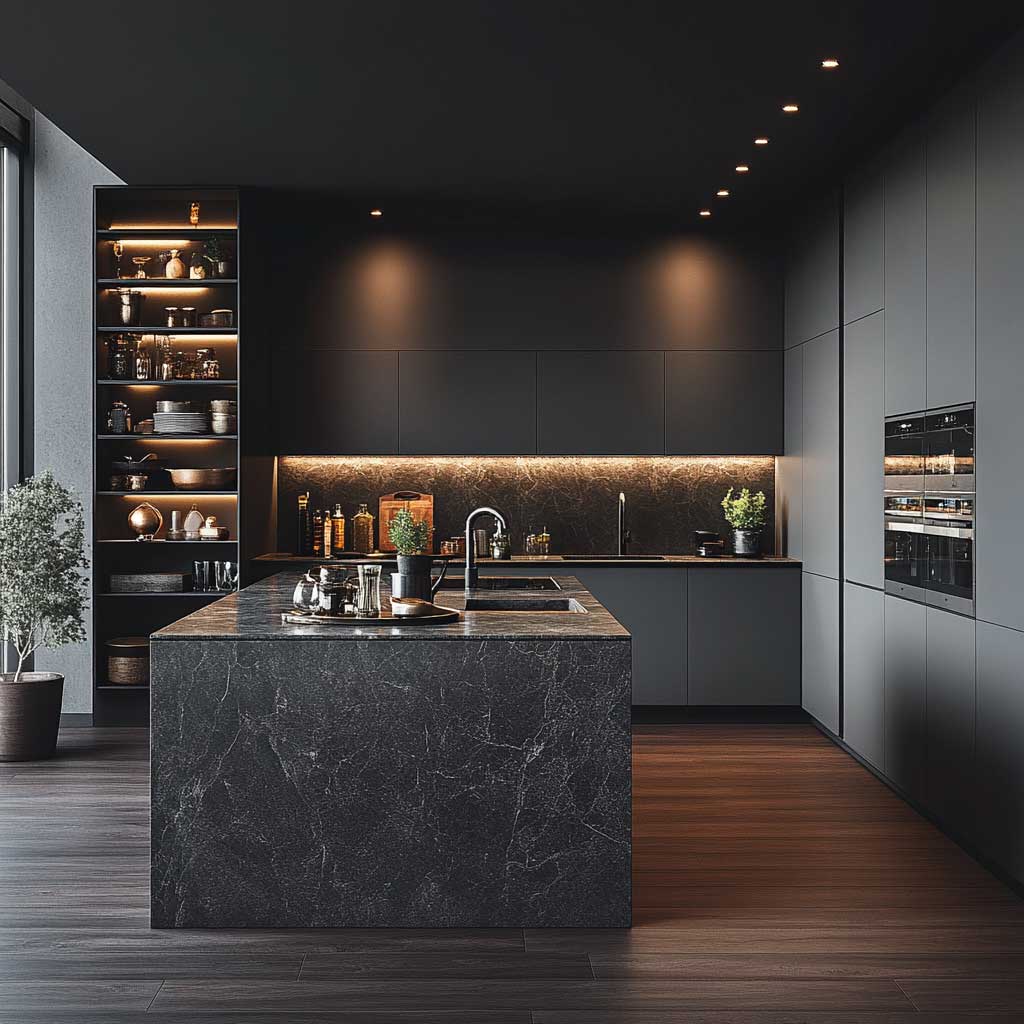
The cabinet finish question matters more than most renovators expect. Matte is the right call against charcoal walls and dark wood floors — it creates the tonal layering that makes a room read as composed rather than heavy. Satin or semi-gloss on gray cabinets tends to look slightly commercial, like a restaurant prep kitchen rather than a residential interior. Stylists recommend pairing matte cabinet fronts with a polished stone island countertop: the contrast between the two surfaces does the visual work that paint color alone can’t.
What does the lighting setup need to look like? Under-cabinet strips are non-negotiable in this layout. The polished island surface only reflects light if there’s a directed source nearby — ambient ceiling fixtures alone won’t activate the counter. A standard hardwired LED strip runs $40–$80 for a 10-foot run and installs in an afternoon near an existing outlet. Skip this and the cabinet fronts look flat after dark, which is when the kitchen gets used most. For more on how lighting and color interact across dark kitchen layouts, the modern dark kitchen design approaches on ArtFasad show how each finish choice changes under artificial light.
Avoid painting every surface the same gray value. The mistake is assuming that a darker gray wall behind gray cabinets adds depth — it usually collapses the two planes into one, making the room look smaller than it is. Instead, use charcoal on the wall behind the cabinets (about two shades deeper) and bring the cabinet color forward. That 10–15% tonal difference is enough to read as a distinct layer without disrupting the overall palette.
What Gray Marble Countertops Actually Cost in a Dark Kitchen
Gray marble countertops are the element in dark kitchen ideas that earns the most attention — and generates the most budget confusion. Carrara marble, the most common gray-veined option, starts at $40–$50 per square foot installed. Calacatta, rarer and with bolder veining on a whiter ground, runs $175–$200 per square foot for the slab alone. A typical kitchen with 30–40 square feet of counter lands between $1,200 and $6,000 total installed, depending on the stone grade and edge profile.
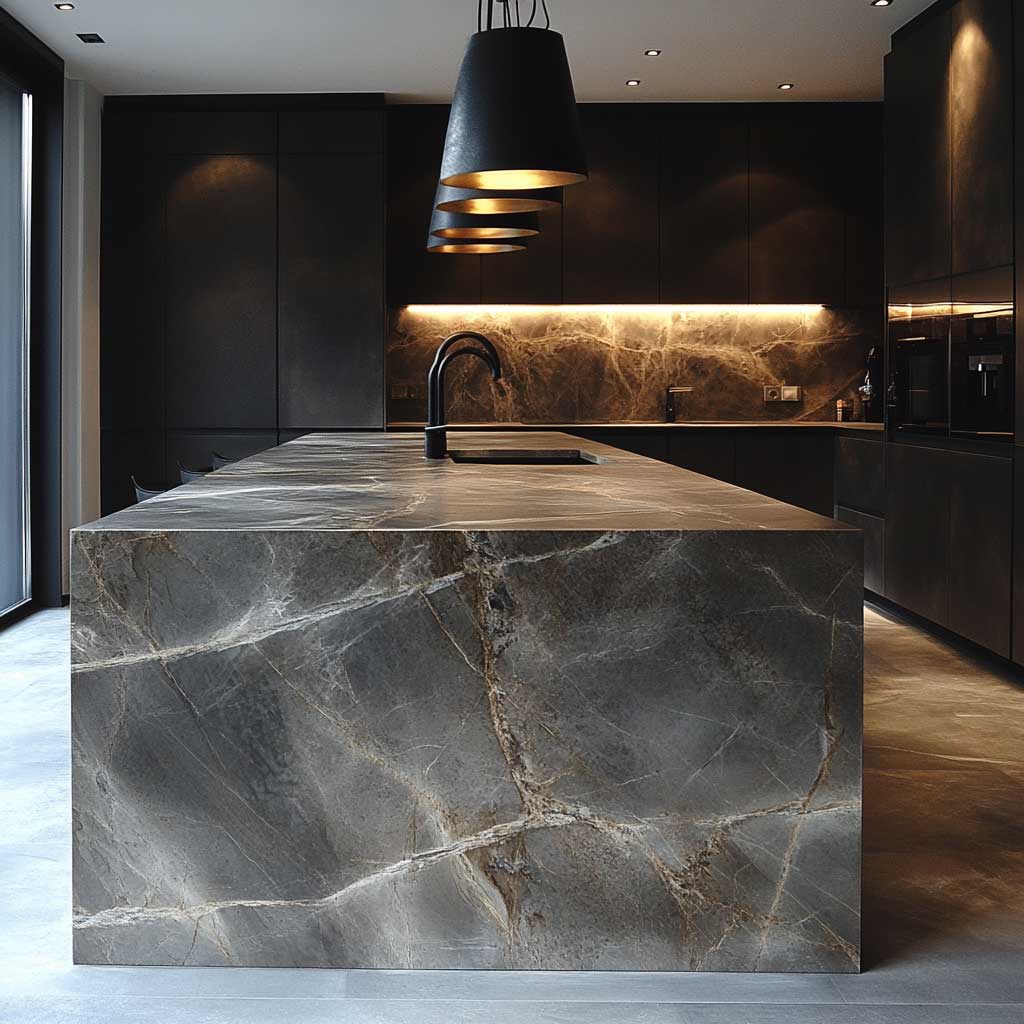
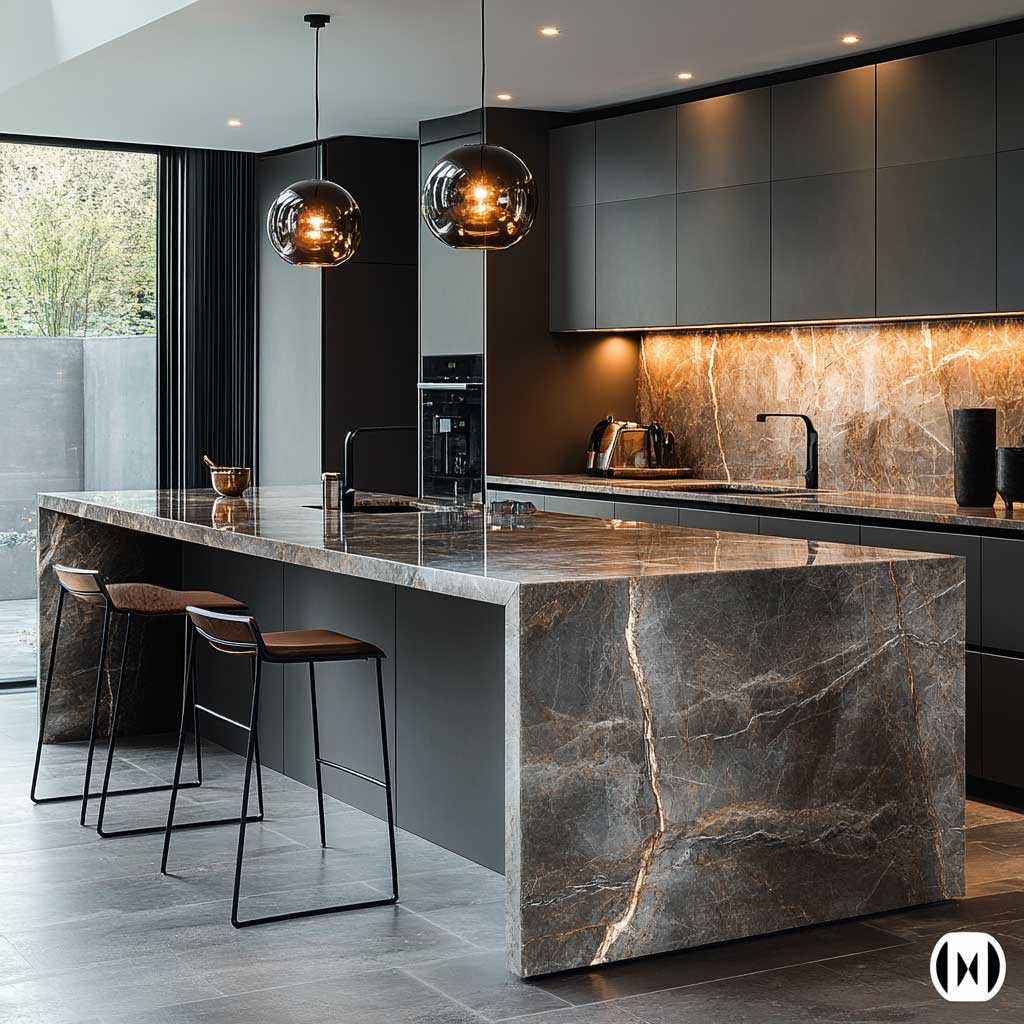
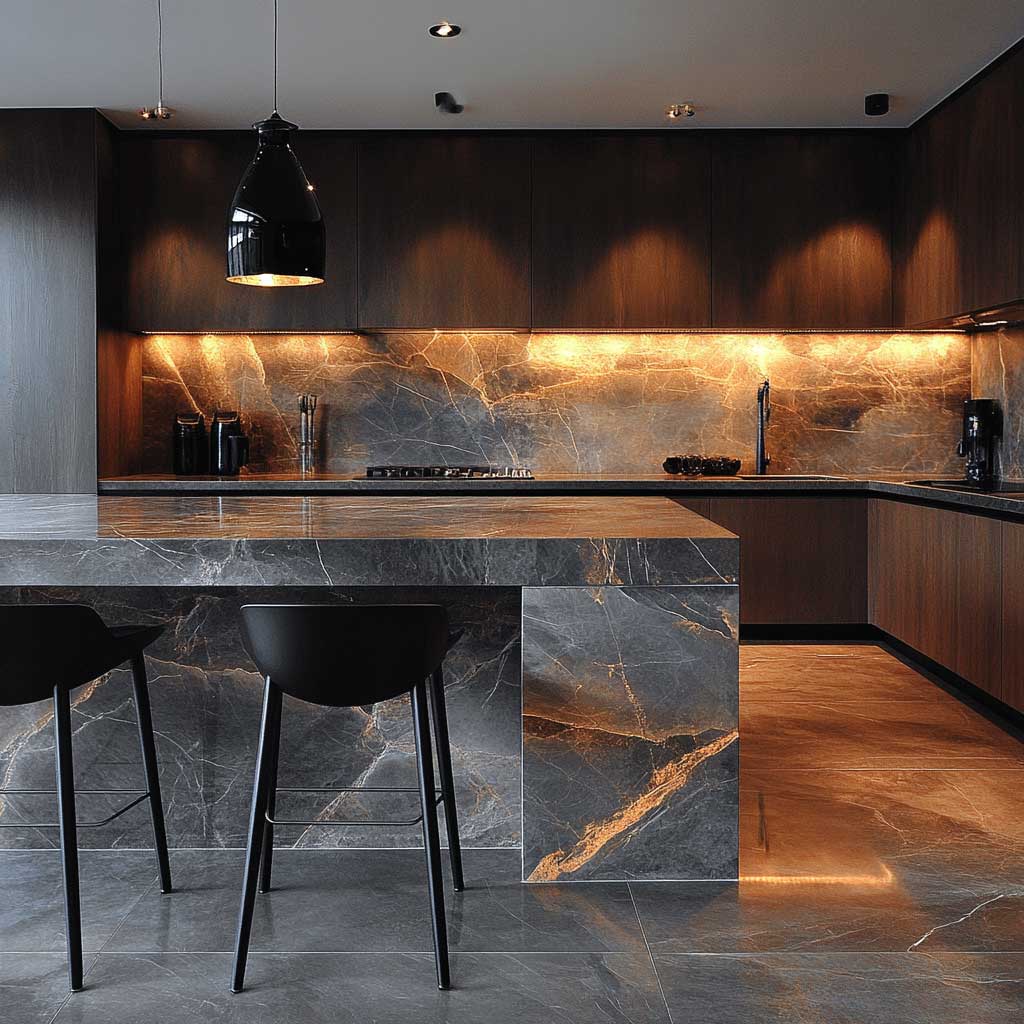
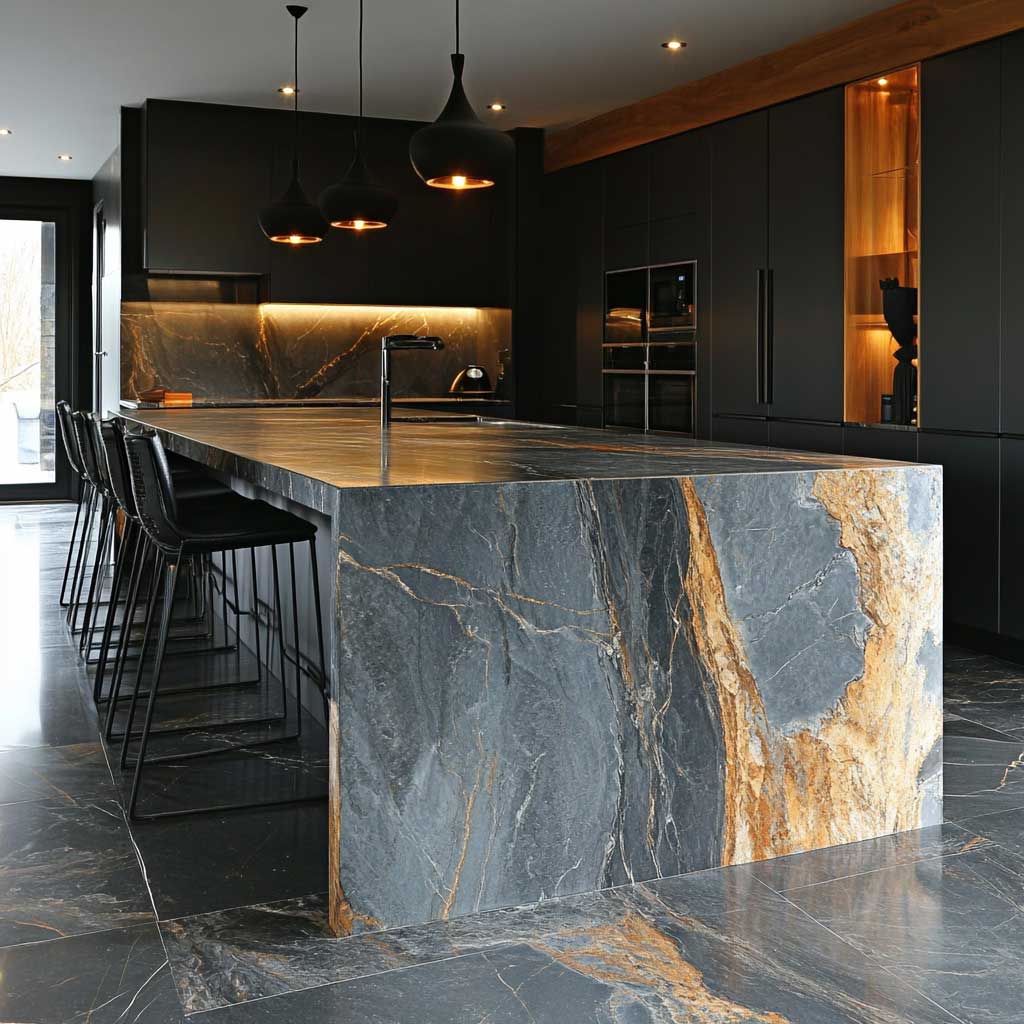
The gray veining in marble is what solves the hardest problem in dark kitchens: introducing a lighter element without breaking the color logic of the room. Carrara’s blue-gray veining on a white ground reads cooler and lighter than the cabinet tone, creating the contrast the eye needs without pulling in a competing palette. This is different from white quartz, which tends to pop too sharply against deep cabinet colors and looks like a design afterthought rather than a material choice. For a broader look at how stone surfaces interact with dark cabinetry across different kitchen styles, the ArtFasad article on timeless kitchens with stone surfaces covers granite, quartzite, and soapstone alongside marble.
Marble lasts more than 100 years with annual sealing — the cost of which runs $0.50–$2.00 per square foot, or roughly $100–$300 for an average kitchen. The maintenance argument against marble in a kitchen is real but overstated. The actual risk zone is around the sink: standing water and citrus damage the surface over time. A simple habit — wiping standing water promptly and using a cutting board at the sink edge — addresses 90% of the concern without resorting to a less interesting material.
Don’t choose honed marble for a dark kitchen. A honed (matte) marble finish eliminates the reflective quality that makes it valuable in this context — the surface goes flat and the room loses the light-bounce that compensates for the deep cabinet and wall tones. Polished is the right finish here. If the worry is fingerprints, a leathered finish adds some texture to mask them while preserving more reflection than honed — though at $20–$30 per square foot above standard fabrication cost.
Dark Kitchen Color Combinations That Work With a Gray and Black Backsplash
Dark kitchen color combinations that use gray and black together work precisely because they avoid adding a third tone — and a mosaic backsplash is where that restraint pays off most visibly. Glass and natural stone mosaic tile runs $8–$43 per square foot installed, with labor closer to $35–$50 per square foot for complex geometric patterns because the cuts take significantly longer than a standard subway layout. The installation investment is higher, but the surface creates something a single large-format tile cannot: texture that catches light at multiple angles simultaneously.
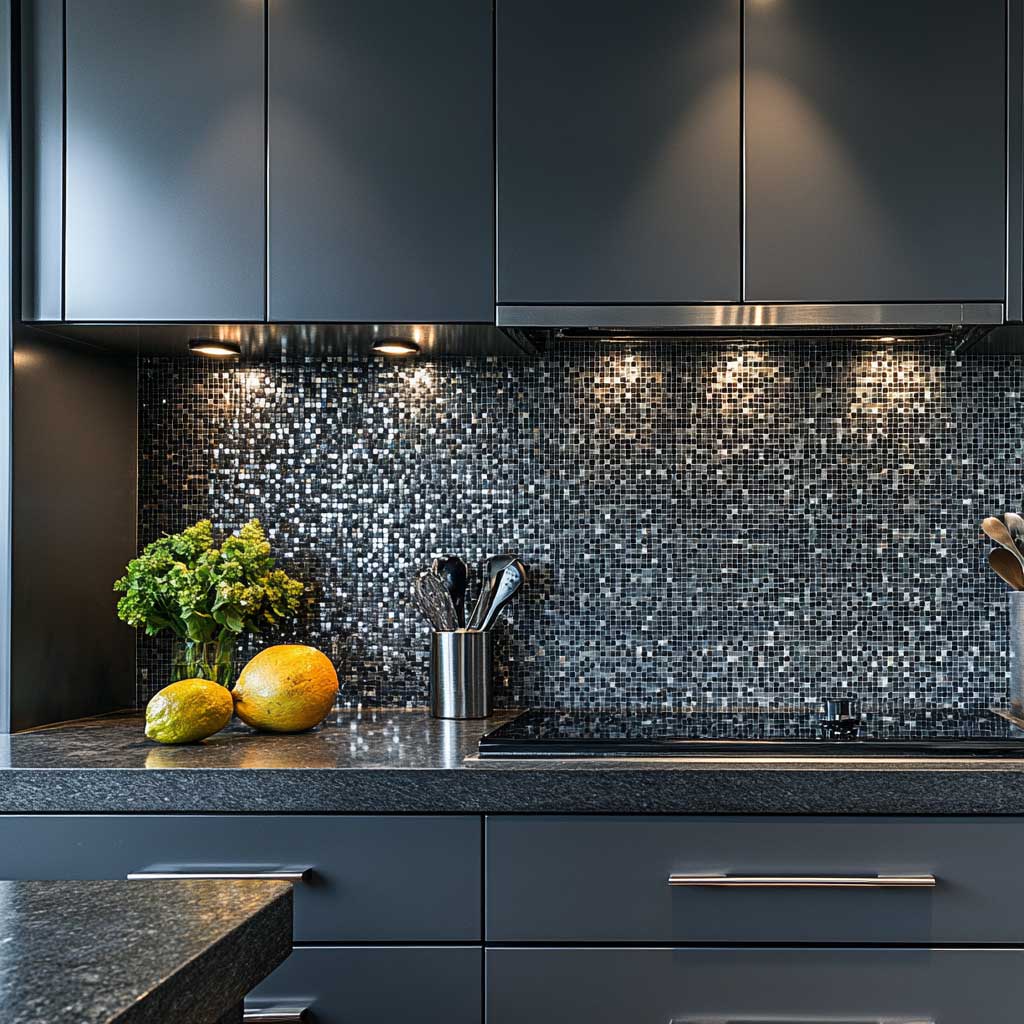
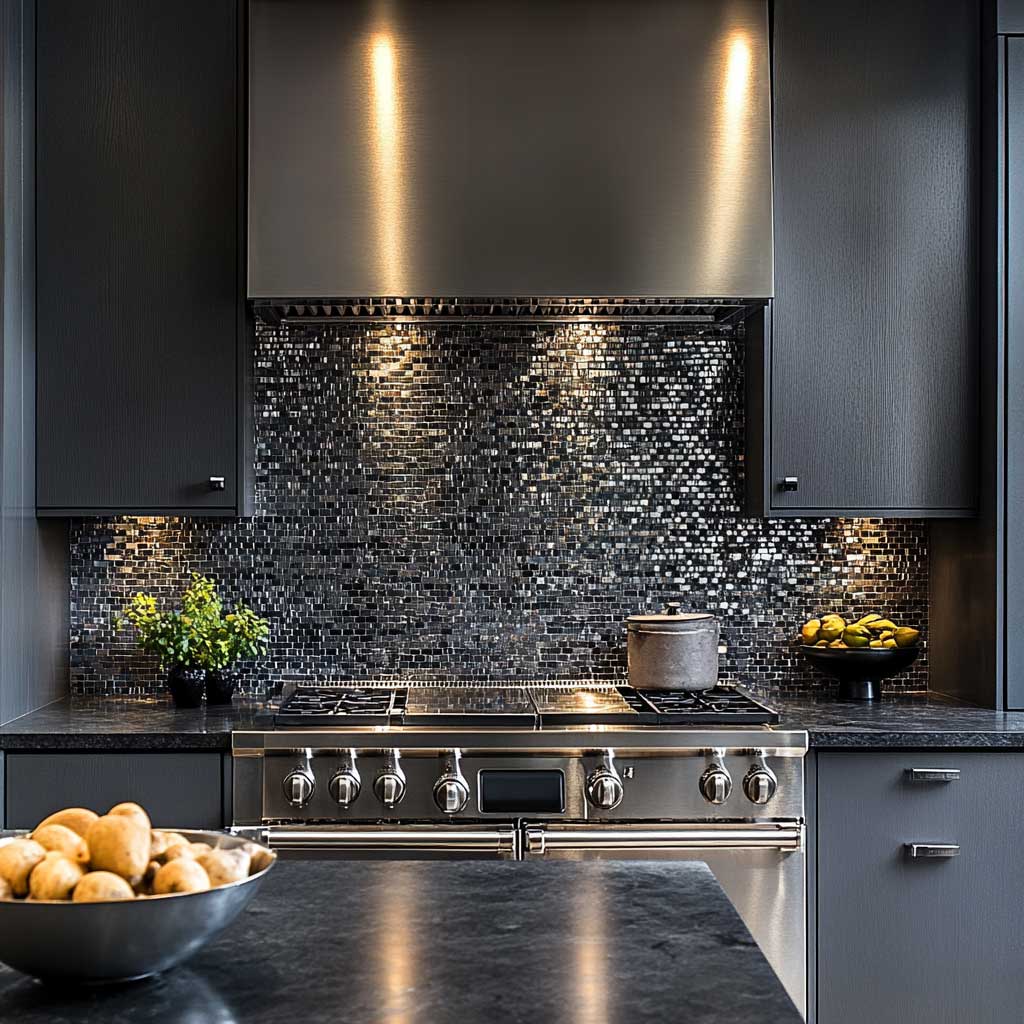
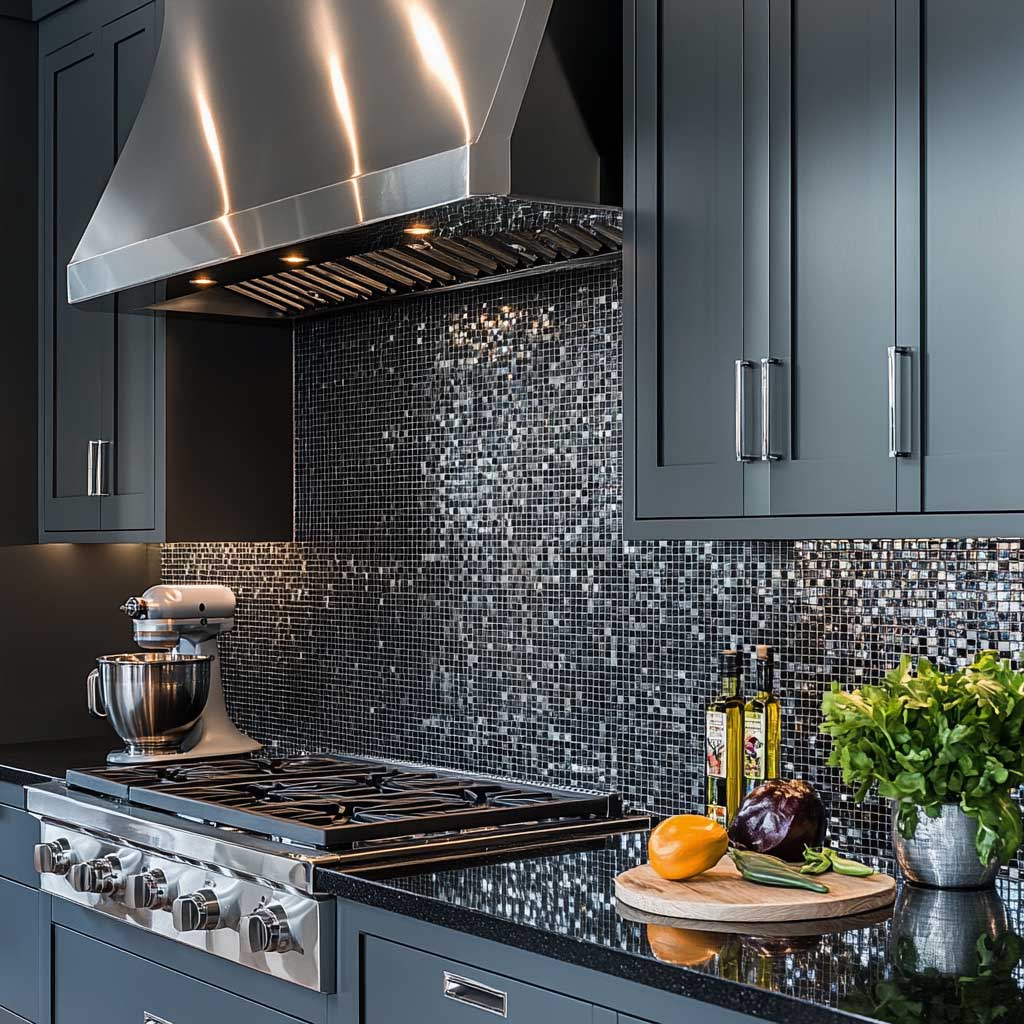
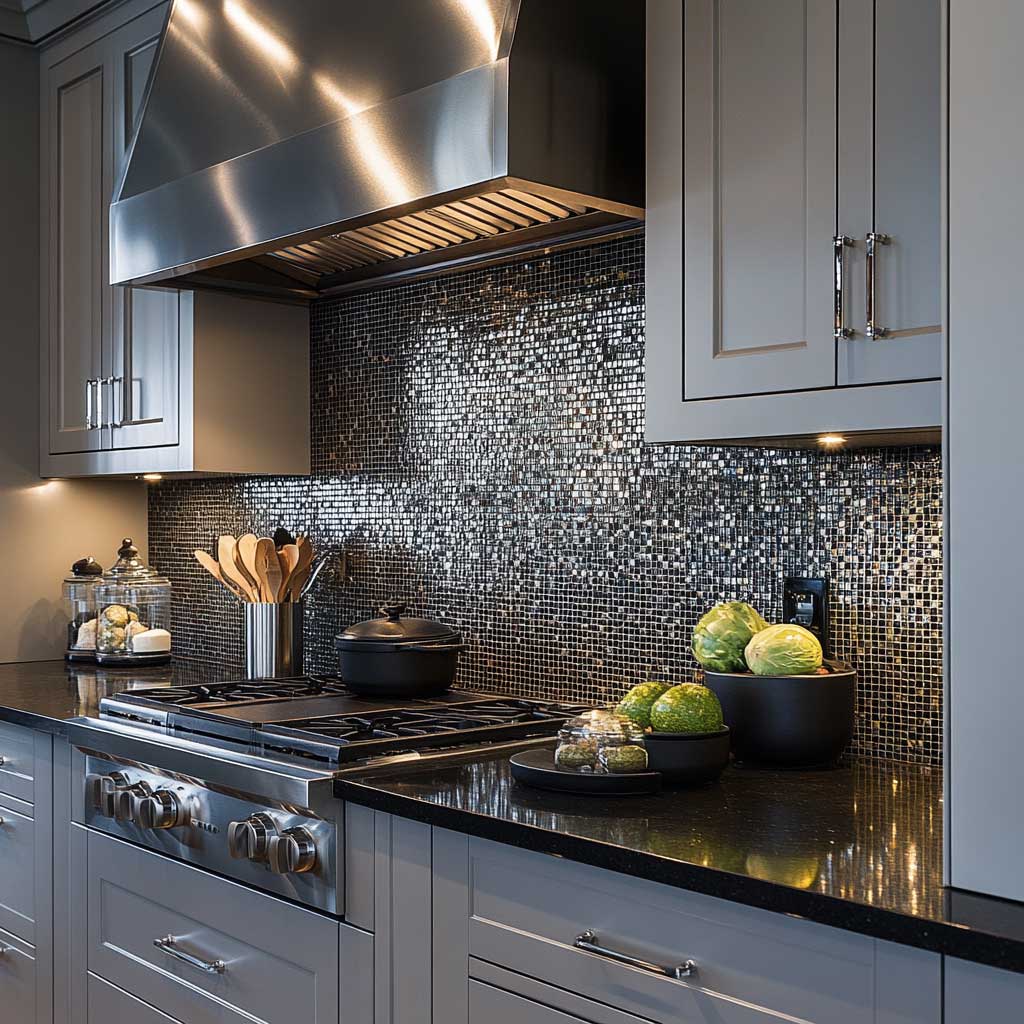
The gray-and-black color combination works in a backsplash because the two tones occupy the same temperature family. Warm-toned tiles — beige, cream, or brown-gray — clash at the undertone level against cool charcoal cabinets even when the contrast level looks right on a sample chip. A backsplash in true gray (no brown or yellow undertone) with black accents holds the cool palette that a dark modern kitchen depends on. Stainless steel hardware reinforces this: its cool metallic tone sits in the same temperature family and adds the reflective sheen that mosaic tile alone doesn’t provide.
How do you know if a mosaic backsplash is working against the room? The sign is visual competition — when the eye bounces between the backsplash pattern, the cabinet fronts, and the countertop veining without settling anywhere. The fix is typically contrast management: use a larger-format tile for the countertop slab, keep cabinet fronts flat-panel with no raised detail, and let the backsplash carry the texture load. Only one surface in a dark kitchen should be visually complex; the others hold it in place.
Mixing warm and cool grays across surfaces. A warm-toned gray tile backsplash against cool charcoal cabinets creates an undertone clash that’s hard to diagnose but impossible to ignore — the room never looks finished. Commit to one temperature family across every gray surface.
Using a mosaic backsplash behind open shelving. Mosaic behind shelves means the pattern competes with whatever’s displayed on the shelf. Save the mosaic for a solid wall run, not a shelf-interrupted one.
Choosing glossy grout for a dark kitchen backsplash. Glossy grout lines in gray-and-black tile pick up every water splash and soap residue — they show maintenance issues daily. Matte or sanded grout in a matching dark gray disappears into the pattern and lasts cleaner.
Extending the mosaic all the way to the ceiling. A full-height mosaic in a small dark kitchen turns the wall into a single visual mass. Stop at upper cabinet height and run a simple liner tile or painted surface above — the room reads taller.
| Element | Material | Price Range | Key Consideration |
|---|---|---|---|
| Gray Cabinets | Stock shaker, matte finish | ~$2,300 / 10×10 kitchen | Matte finish only — satin reads commercial |
| Marble Countertop | Carrara (gray veining) | $40–$50 / sq ft installed | Polished finish required for reflectivity |
| Marble Countertop | Calacatta (bold veining) | $175–$200 / sq ft slab | Annual sealing at $0.50–$2.00 / sq ft |
| Mosaic Backsplash | Glass or stone mosaic tile | $8–$43 / sq ft installed | Labor $35–$50 / sq ft for complex patterns |
Planning the stone selection before committing to cabinet color is the sequence most designers recommend. Marble slabs vary significantly in their gray tone — some Carrara reads almost white, other slabs pull strongly blue-gray. Pull the cabinet sample against the actual slab in natural light, not a tile showroom’s LED lighting. The color relationship that matters most in dark kitchen ideas is the one between the cabinet front and the countertop edge: if those two elements hold together, the rest of the room follows. See the full breakdown of how granite, marble, and quartzite perform differently under these conditions in HomeGuide’s marble countertop cost and materials guide.
Dark Kitchen Ideas
Gray Pulls the Whole Dark Kitchen Into One Coherent Scheme
Matte gray cabinet fronts, polished Carrara marble, and a gray-and-black mosaic backsplash are three separate choices that only work because they share the same cool temperature. Change any one of them to a warm-toned material and the room starts negotiating with itself.
Stock gray shaker cabinets at ~$2,300 for a 10×10 kitchen make this the most achievable version of a dark interior. Carrara marble at $40–$50 per square foot installed keeps the countertop budget realistic. The backsplash is where the budget flexes — $8 per square foot for glass mosaic tile, up to $43 installed for natural stone with a complex pattern.
Save this post before your next material sourcing trip — the pricing and finish logic here applies across every dark kitchen layout, not just the three shown.