Black and white kitchen backsplash tile is one of those decisions that pays off every time you walk into the room. The contrast does what no single cabinet color or countertop finish can — it gives the whole kitchen a visual anchor without locking you into one style decade. Whether the rest of the space is modern, farmhouse, or somewhere in between, the black-and-white combination reads as deliberate rather than default.
The tricky part isn’t choosing black and white — it’s choosing which version. Classic patterned encaustic tile reads completely differently from glossy glass mosaic, and both sit in a different visual register than black marble with natural veining. Each material has its own maintenance reality, price point, and pairing logic, and mixing them up is the fastest way to get a backsplash that looks unresolved.
Below: three distinct approaches — patterned, mosaic, and marble — along with the numbers needed to budget accurately, the pairing mistakes that flatten each look, and the maintenance questions most people ask after the tile is already on the wall.
- Patterned black and white tile (encaustic or porcelain) runs $9–$15/sq ft for material; fully installed, most projects land at $15–$40/sq ft.
- Glossy black glass mosaic reflects light — it’s most useful in north-facing or windowless kitchens.
- Black marble needs resealing every 6–12 months; skip this and staining shows within a season.
- White grout with patterned tile shows grease fast — dark or gray grout is the lower-maintenance default.
- All three styles pair best with warm metal hardware (brass, bronze); chrome makes the black look flat.
Patterned Black and White Backsplash Tile Holds Its Ground Across Every Style Decade
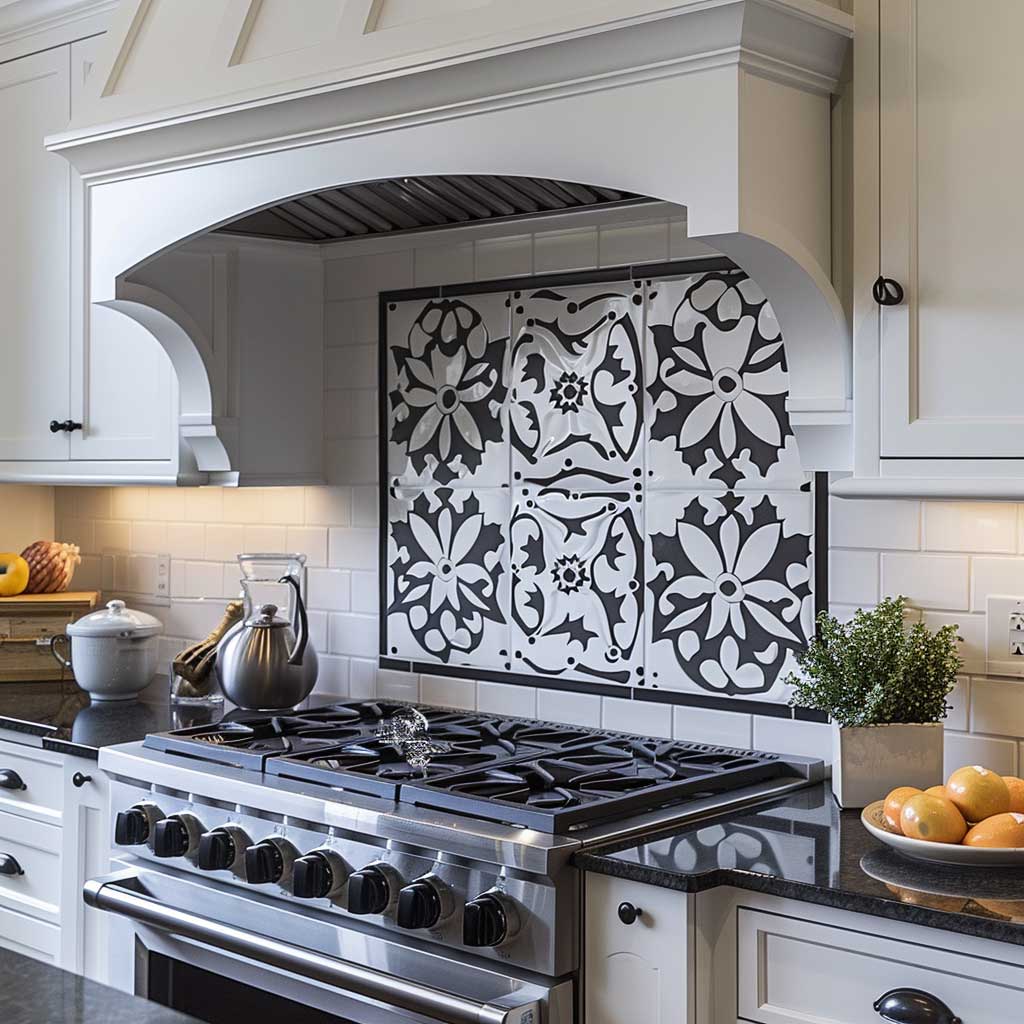
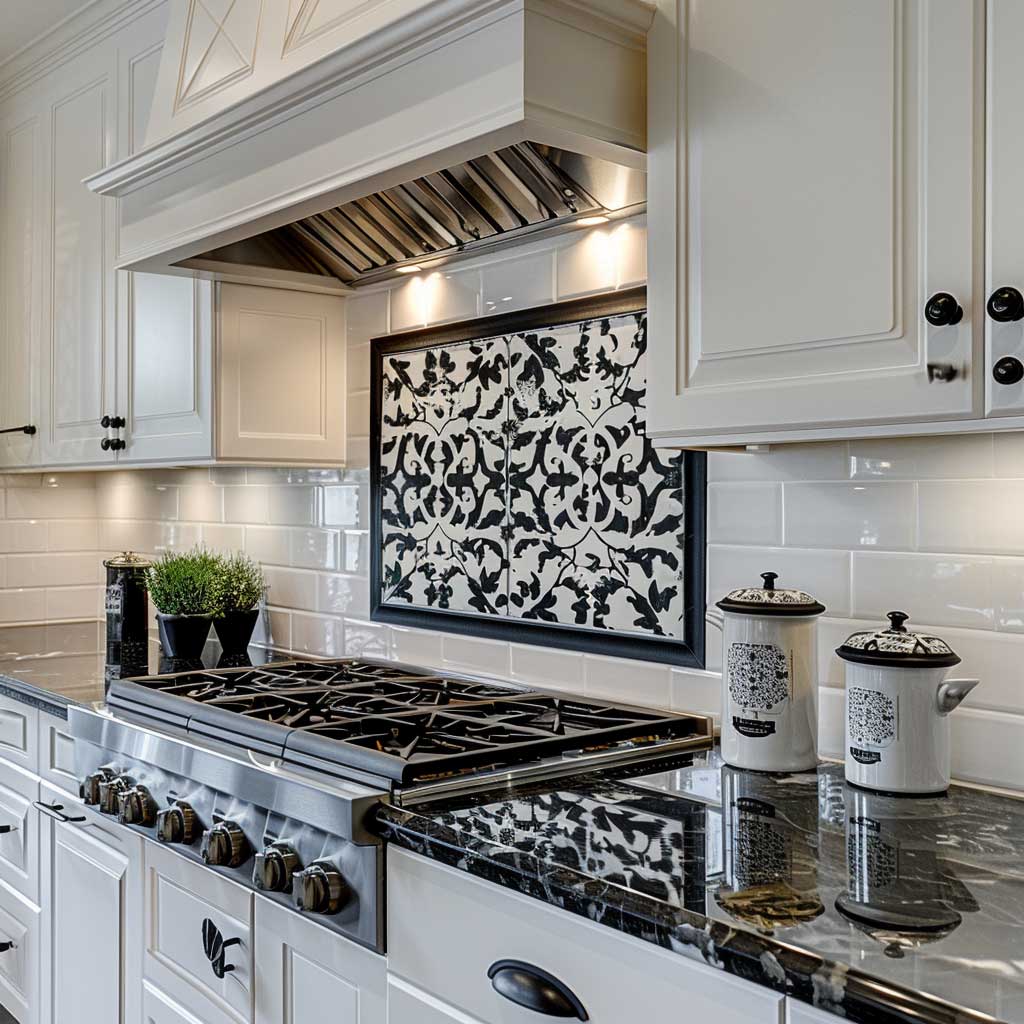
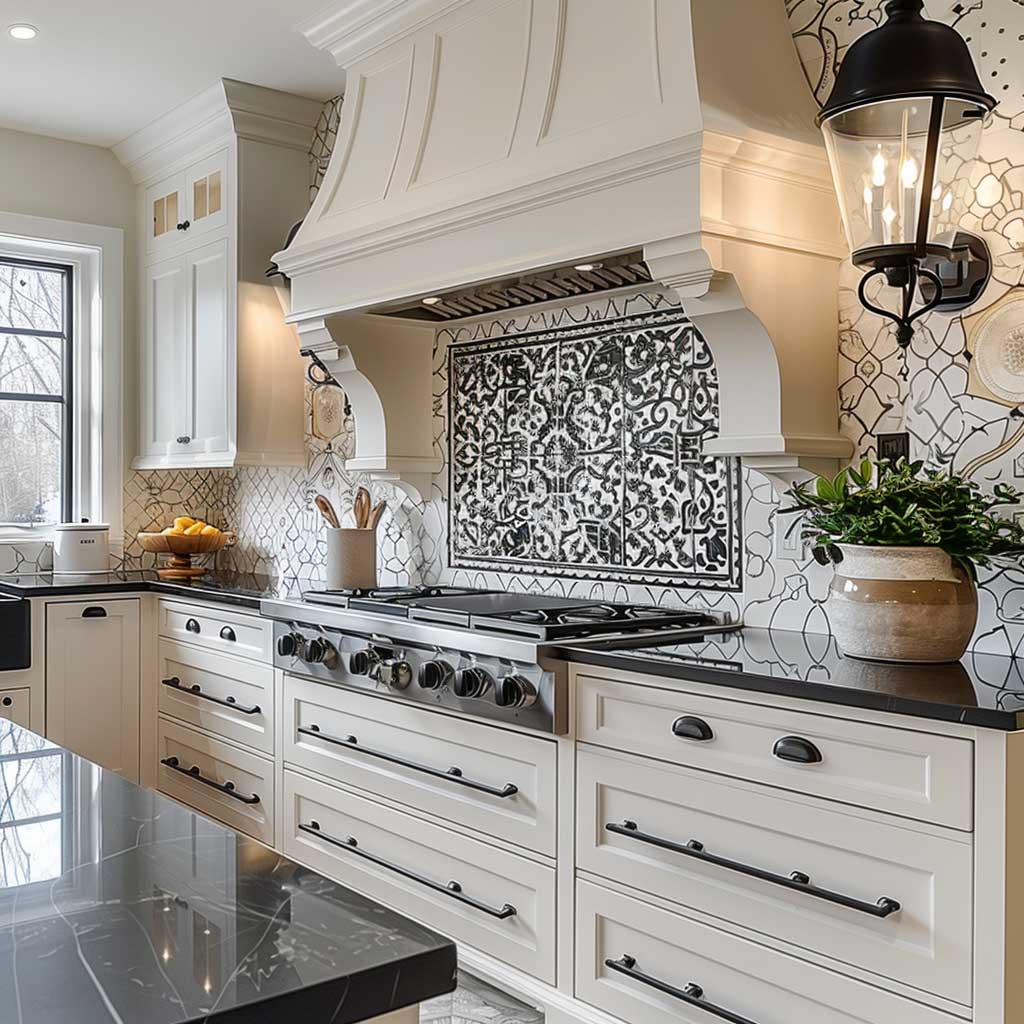
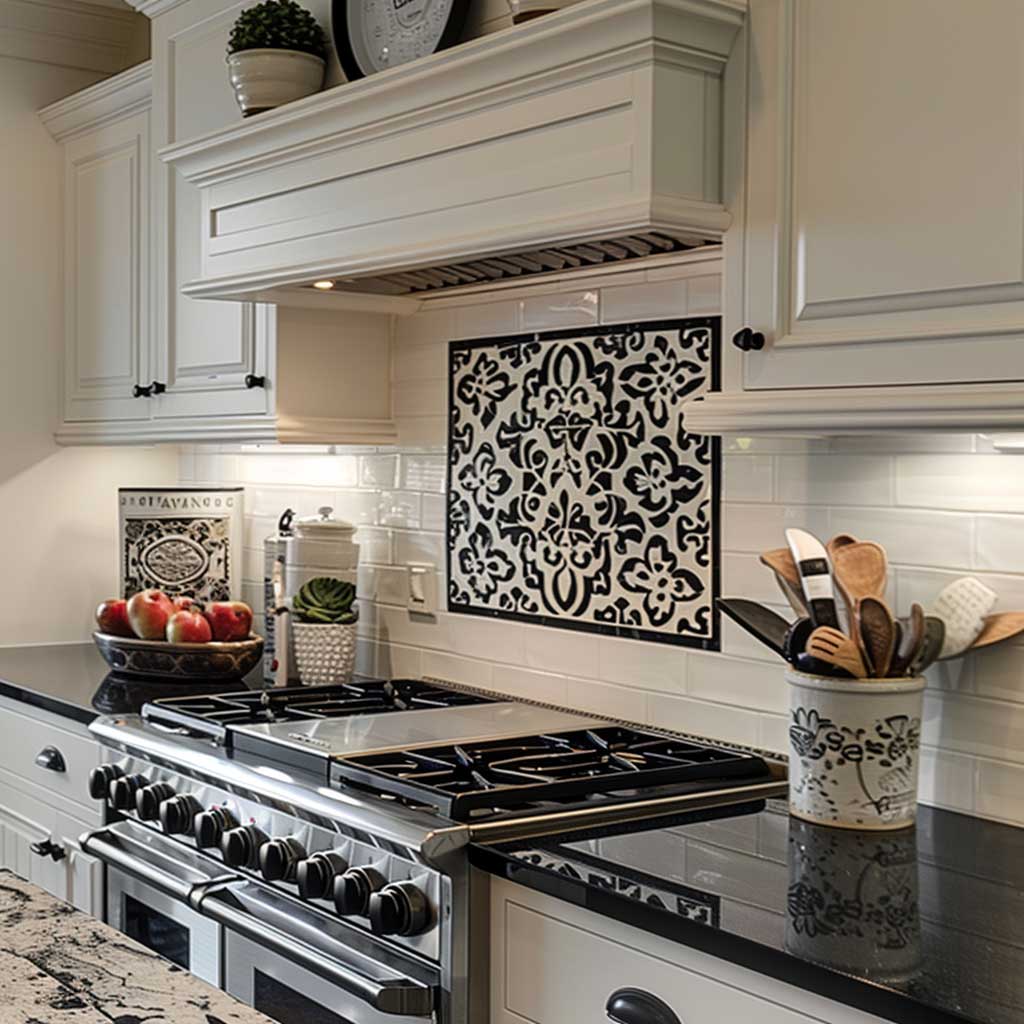
Black and white backsplash tile in a patterned format — encaustic cement, porcelain, or glazed ceramic — is the closest thing kitchen design has to a permanent fixture. Villa Lagoon Tile’s handcrafted cement patterns start at $9.27 per square foot for material; fully installed, most patterned-tile projects land in the $15–$40 per square foot range, according to 2026 data from Angi. That’s a wide window depending on pattern complexity and tile size, but even at the upper end, the math makes sense for a surface that covers 30 square feet or less in most kitchens.
The functional logic of black and white in this format is underrated: because the two colors share the visual weight of the wall, stray grease and splash register far less than they would on a solid-color tile. Think of it like a chess board — the pattern itself breaks up whatever lands on it. That said, white grout lines in an active kitchen become a separate cleaning project within three months. Stylists recommend specifying a mid-gray or charcoal grout from the start, which preserves the graphic look without the weekly scrubbing.
Pairing matters more here than with any other backsplash type. Patterned tile competes with busy cabinetry and loses. The rule is simple: if the tile carries a pattern, the cabinets need to be solid and matte — white, off-white, or a single deep tone like navy or forest green. Brass or unlacquered bronze hardware closes the look without adding another visual layer. Chrome hardware, by contrast, reads as an afterthought against a patterned tile field because it introduces gloss where the tile already has graphic contrast.
Can patterned tile extend from counter to ceiling? In a kitchen with high ceilings it reads as intentional rather than excessive — the pattern becomes wall art. The trick here is to use a solid black or white border tile at the transition edge rather than terminating the pattern mid-wall with a cut edge. A deliberate boundary signals design control; a raw cut signals someone ran short on tile.
Glossy Black Mosaic Tile Earns Its Price When Light Is the Real Problem
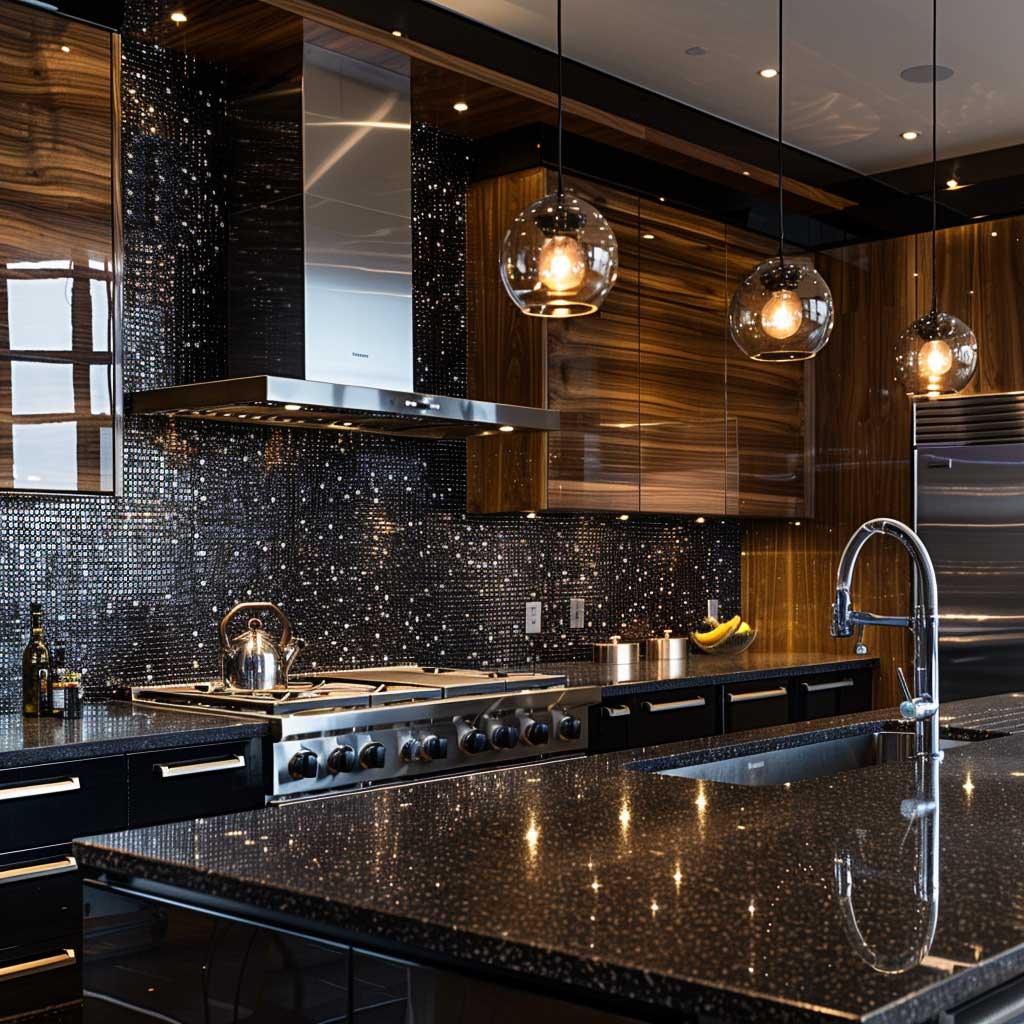
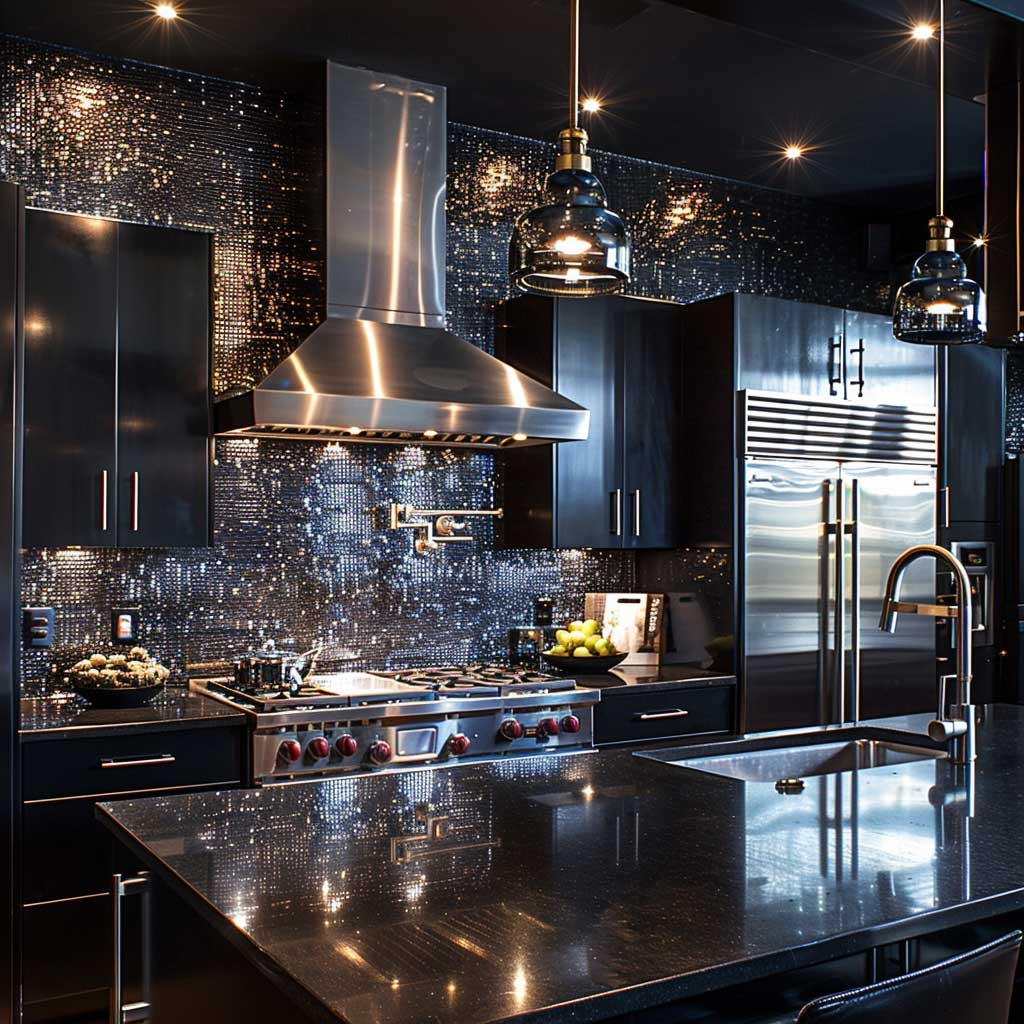
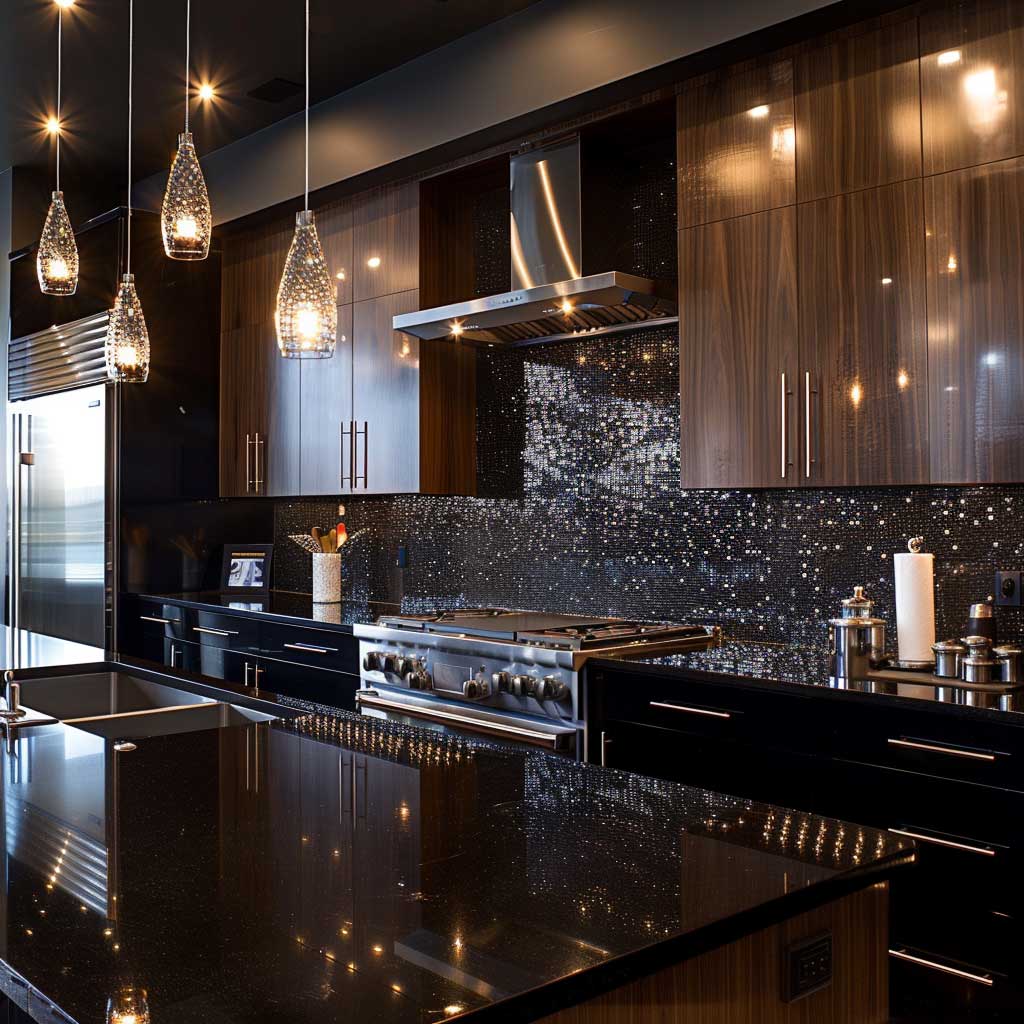
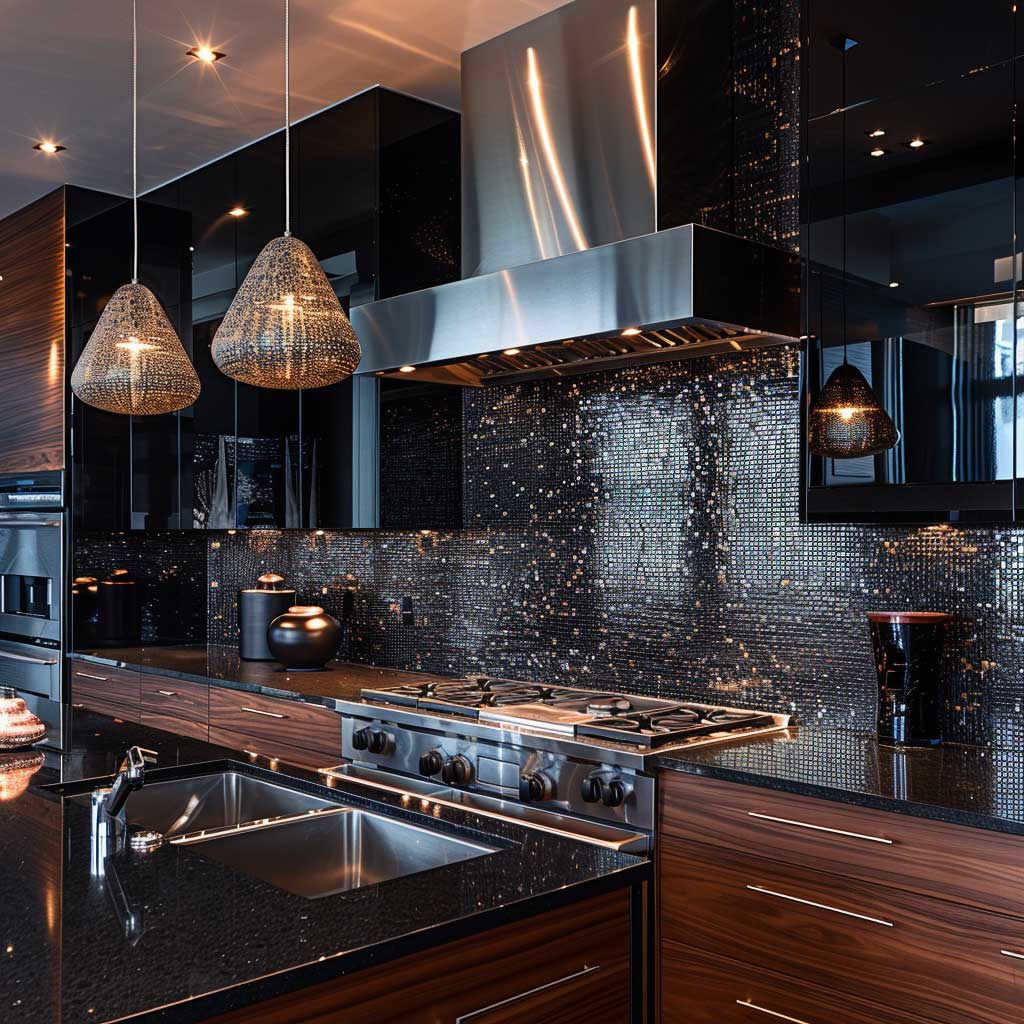
Glossy black mosaic tile works like a mirror positioned at the cooking wall — every light source in the room bounces off the surface, which is exactly why it performs best in kitchens with limited natural light. Glass and mosaic tile materials typically run $10–$30 per square foot, with professional installation adding $8–$20 per square foot for labor; small-format mosaic layouts push toward the higher end of that labor range because of the cutting and alignment time involved. Apollo Tile’s black glossy brick glass mosaic runs in 5-packs covering 4.92 square feet per pack, which gives a useful sense of material quantities for a standard backsplash run behind a range.
What does glossy black do that matte black cannot? The reflective surface multiplies the perceived size of the space. A small kitchen with glossy black mosaic behind the range reads as wider than the same kitchen with matte tile — this is the same principle architects use with mirror panels, applied at a fraction of the cost. The trade-off: fingerprints and water spots register daily on a glossy surface, particularly near the sink. Under-cabinet task lighting mounted at a low angle will rake across the tiles and highlight every smear; recessed ceiling fixtures or pendant lights above the island are less revealing.
Mosaic installation orientation matters more than most people realize before they start. Vertical stacking makes a low ceiling read taller; horizontal running bond widens a narrow kitchen; herringbone at 45 degrees adds movement but raises labor cost by roughly 20% because of the additional cuts. Setting up a sample panel before committing costs under $20 in tile samples from most suppliers and takes an afternoon — it’s the cheapest design insurance in kitchen renovation.
For more on how dark tile interacts with contrasting cabinet colors, backsplash ideas with white cabinets that add bold contrast covers five distinct directions — from black marble to monochrome geometric — including pairing rules and hardware choices.
Black Marble Kitchen Backsplash Tile Rewards Patience More Than Budget
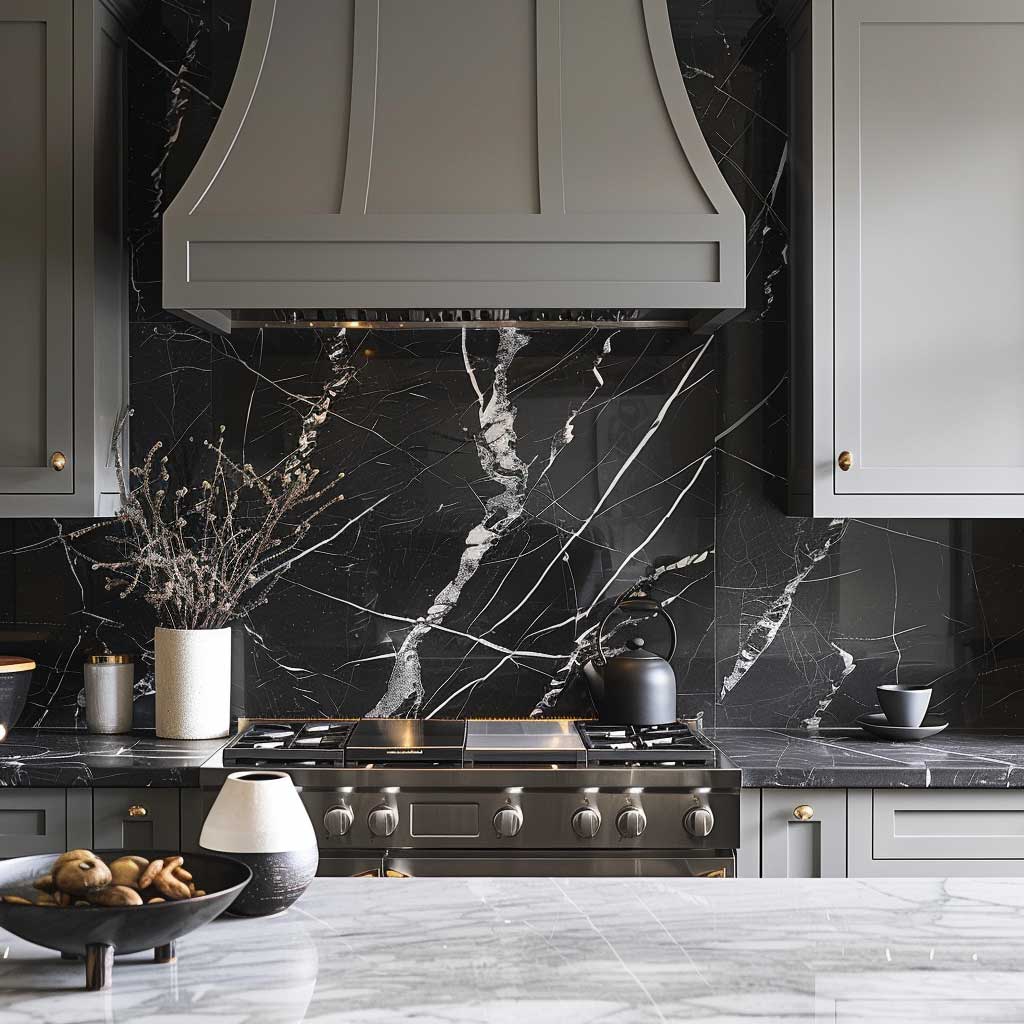
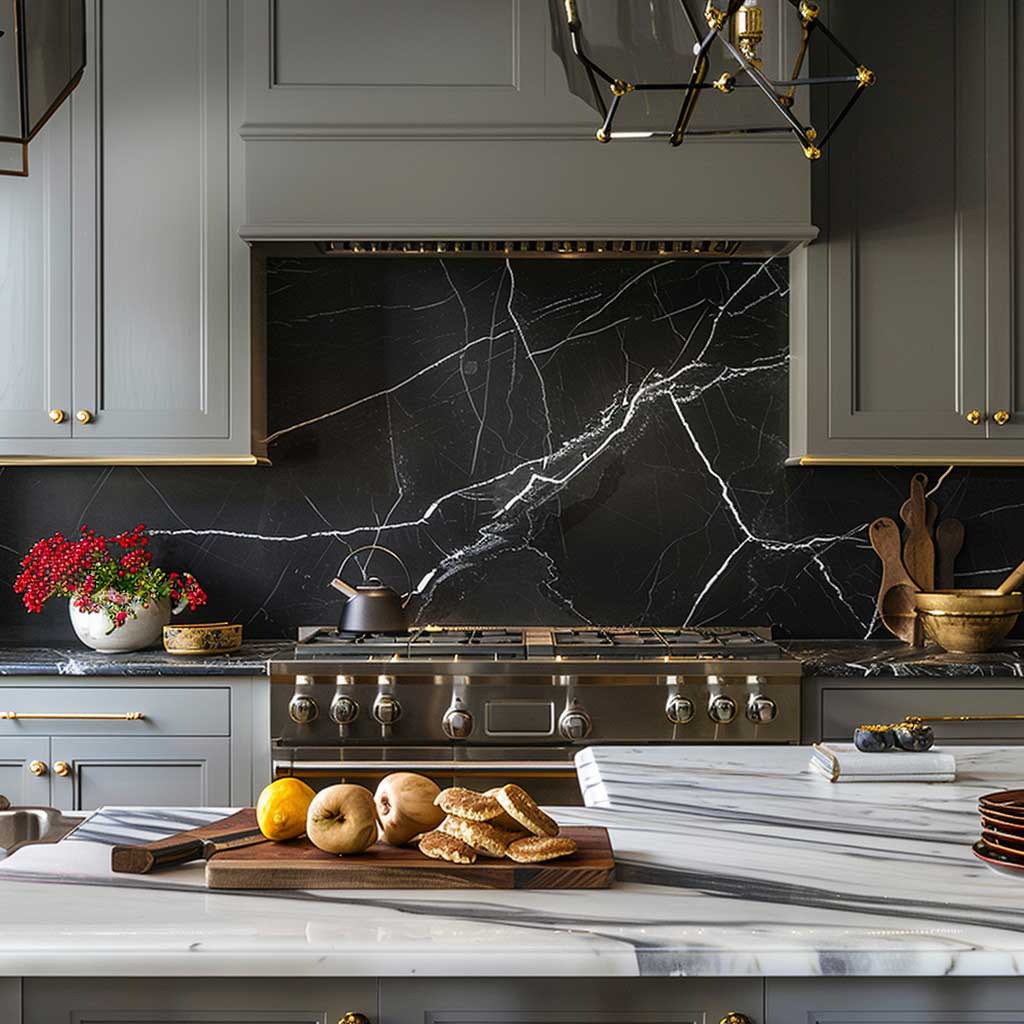
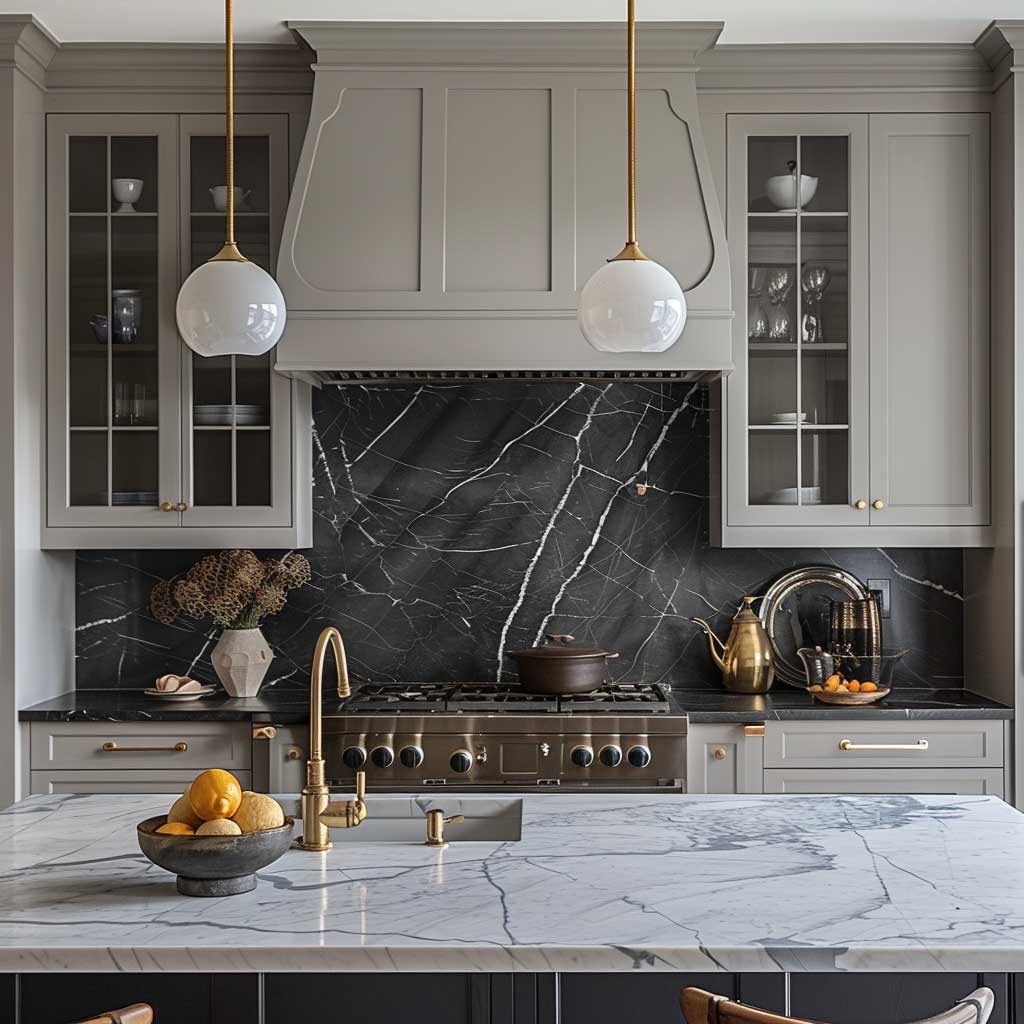
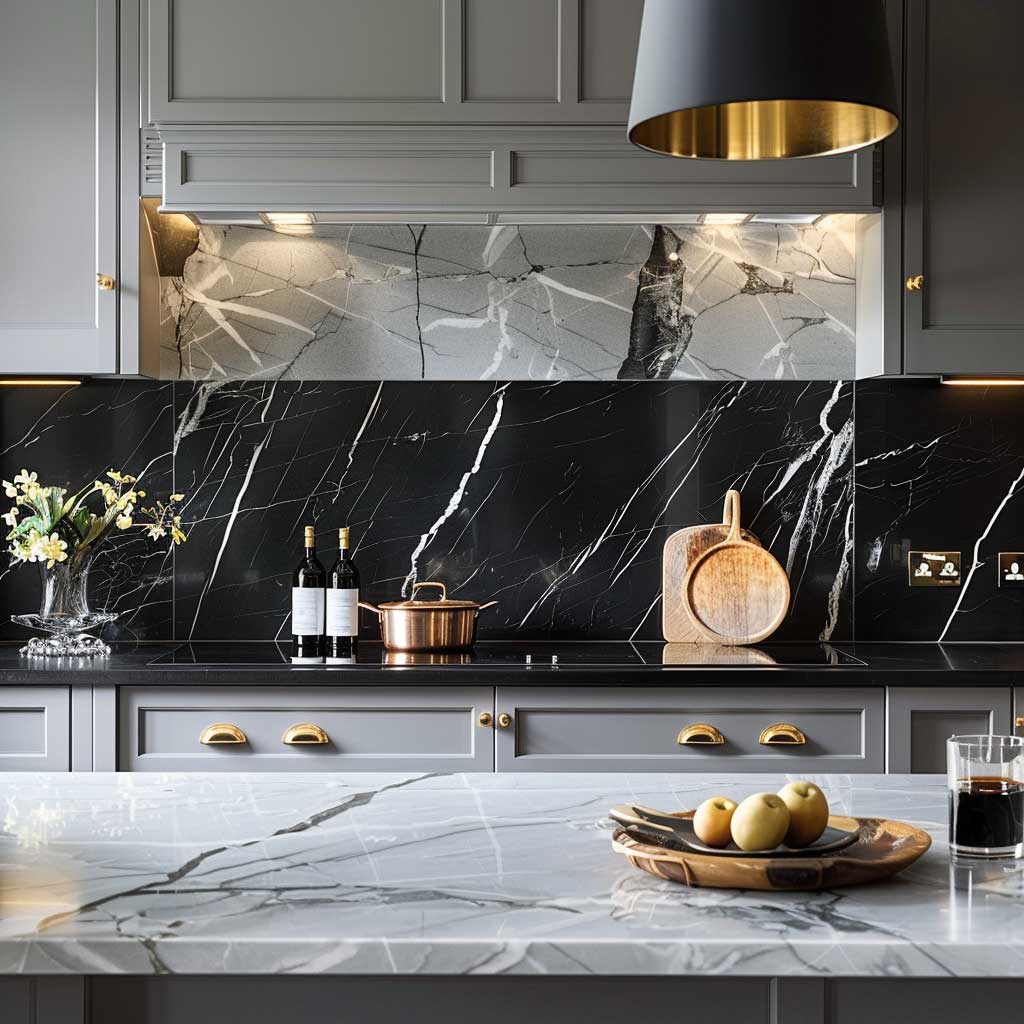
Black marble kitchen backsplash tile costs more than ceramic or glass mosaic at the material stage — natural stone marble tile runs $6–$20 per square foot depending on origin and finish, and at Home Depot, Fit Tile’s Indonesian black marble mesh-mount sheets run $9.59 per square foot. That’s a real market price, not a luxury outlier. The reason designers keep specifying marble despite the premium is the veining: no two tiles match exactly, which means a marble backsplash is the one kitchen surface that cannot be mass-replicated or substituted later with a budget option that looks the same.
The maintenance question trips people up more than the cost. MSI Surfaces, one of the largest natural stone distributors in North America, recommends sealing a marble backsplash once per year at minimum. Because it’s a vertical surface that doesn’t take the same daily abuse as a countertop, the annual schedule is realistic for most kitchens. Areas directly behind the range — which catch grease and steam — may need attention closer to twice per year. The sealing process on a backsplash takes under an hour and carries no 24-hour cure window, unlike countertop sealing. The water-drop test confirms whether it’s time: if a few drops absorb into the stone surface within 30 minutes, the tile needs resealing now.
The most common pairing mistake with black marble is placing it behind equally high-contrast cabinetry. Bright white gloss cabinets in front of black marble with strong white veining sets up a competition the room loses. A matte or satin cabinet finish in gray, greige, or deep blue lets the marble serve as the focal surface rather than sharing that role with the cabinetry. Under-cabinet LED strip lighting is the single most effective addition: it rakes light across the veining at a low angle and turns what looks like a standard wall tile into something that reads as architectural detail.
For a broader view of how black backsplash finishes work across different kitchen styles, black kitchen backsplash designs that make a bold statement covers 22 real installations from minimal to maximalist.
MSI’s marble backsplash maintenance guide at msisurfaces.com is the most thorough free sealing and care reference available without a contractor consultation.
| Tile Type | Material Cost (per sq ft) | Best Kitchen Scenario | Key Maintenance Rule |
|---|---|---|---|
| Patterned encaustic or porcelain | $9–$15 | Farmhouse, vintage, eclectic | Seal cement tile pre- and post-install; use dark grout |
| Glossy black glass mosaic | $10–$30 | Low-light kitchens needing visual depth | Daily wipe near cooktop; avoid low-angle task lighting |
| Black marble (natural stone) | $6–$20 | Transitional or luxury kitchens | Reseal annually; pH-neutral cleaner only |
Bottom Line
Pick the tile that matches your kitchen’s light — not just your mood board
Patterned black and white tile works in any light condition and gives surrounding design choices the most flexibility. Glass mosaic is the right tool for brightening a dim kitchen but requires daily wiping near the cooktop. Black marble is the longest commitment of the three — manageable with annual sealing and a pH-neutral cleaner, significant if either gets skipped.
Material cost is only part of the story: fully installed, all three options sit in the $15–$40 per square foot range. Budget the installed number before the tile showroom, not after.
Save this post before the next tile showroom visit — the verified prices and pairing rules here prevent at least one return trip.