Zen bedroom decor ideas are everywhere on Pinterest. Most of them look gorgeous and feel completely out of reach. The reality? You don’t need a $12,000 renovation to pull this off.
My own bedroom used to look like a storage unit with a mattress in it. Three changes fixed it: a low-profile wood bed frame, two dead plants replaced by one healthy one, and every single decorative throw pillow thrown in the trash. That’s not a metaphor. Gone.
Zen bedroom design isn’t about buying more stuff. It’s about removing things until the room can breathe. The images in this post show exactly what that looks like — peaceful zen bedroom ideas that range from bare-bones minimalist to slightly more curated with natural textures and soft lighting.
What you’ll see here covers neutral color palettes, platform beds, natural elements, and the kind of clutter-free layouts that make zen bedroom designs work in real apartments, not just magazine shoots.
QUICK SCAN
Zen Bedroom Decor Ideas at a Glance
Zen Bedroom Decor: The Neutral Palette Approach That Actually Works
Neutral doesn’t mean boring. It means you stop fighting yourself every time you walk into the room. Whites, creams, warm beiges — these aren’t lazy choices. They’re the reason zen bedroom decor photographs so well and feels so good to sleep in.
The biggest mistake I see is mixing four different “neutral” tones that don’t actually belong together. Off-white walls with a gray duvet and a yellow-tinted wood frame and a taupe rug. Bad. Pick one undertone — warm or cool — and stick with it through every surface. Don’t mix cool grays with warm taupes on the same bed.
Behr’s “Swiss Coffee” at around $40 a gallon is my go-to wall color for this look. It photographs warm in natural light and reads almost white in the evening. The IKEA MALM low-bed frame in white at $249 pairs with it without competing. That’s the whole palette right there.
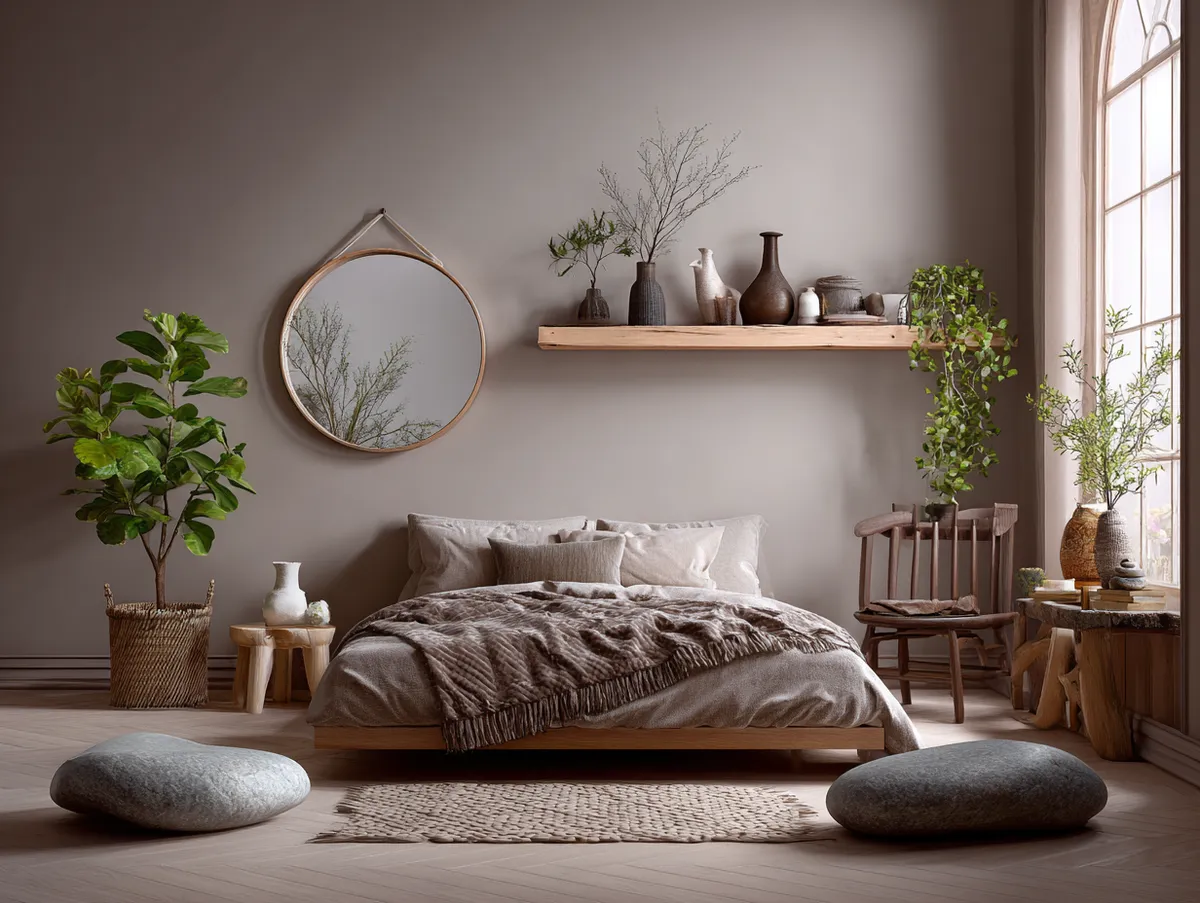

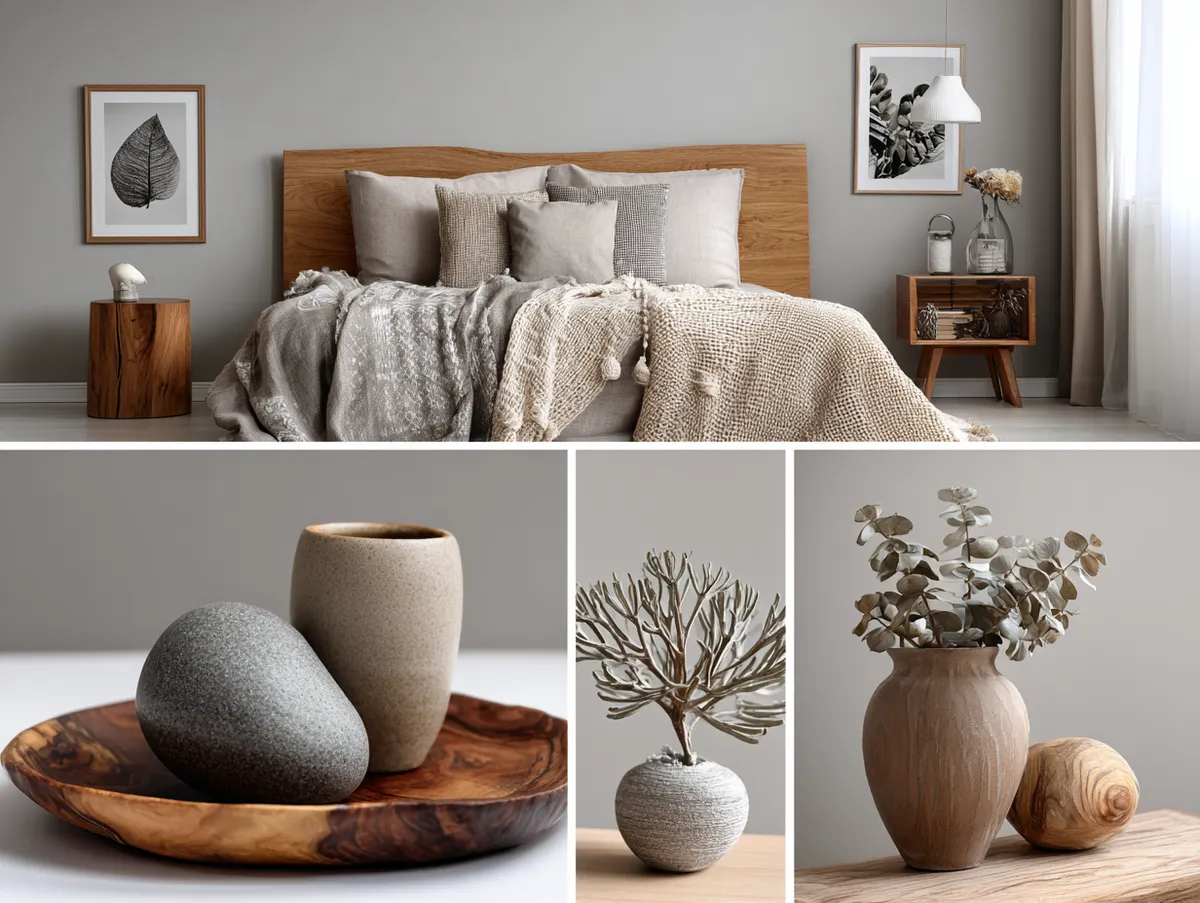
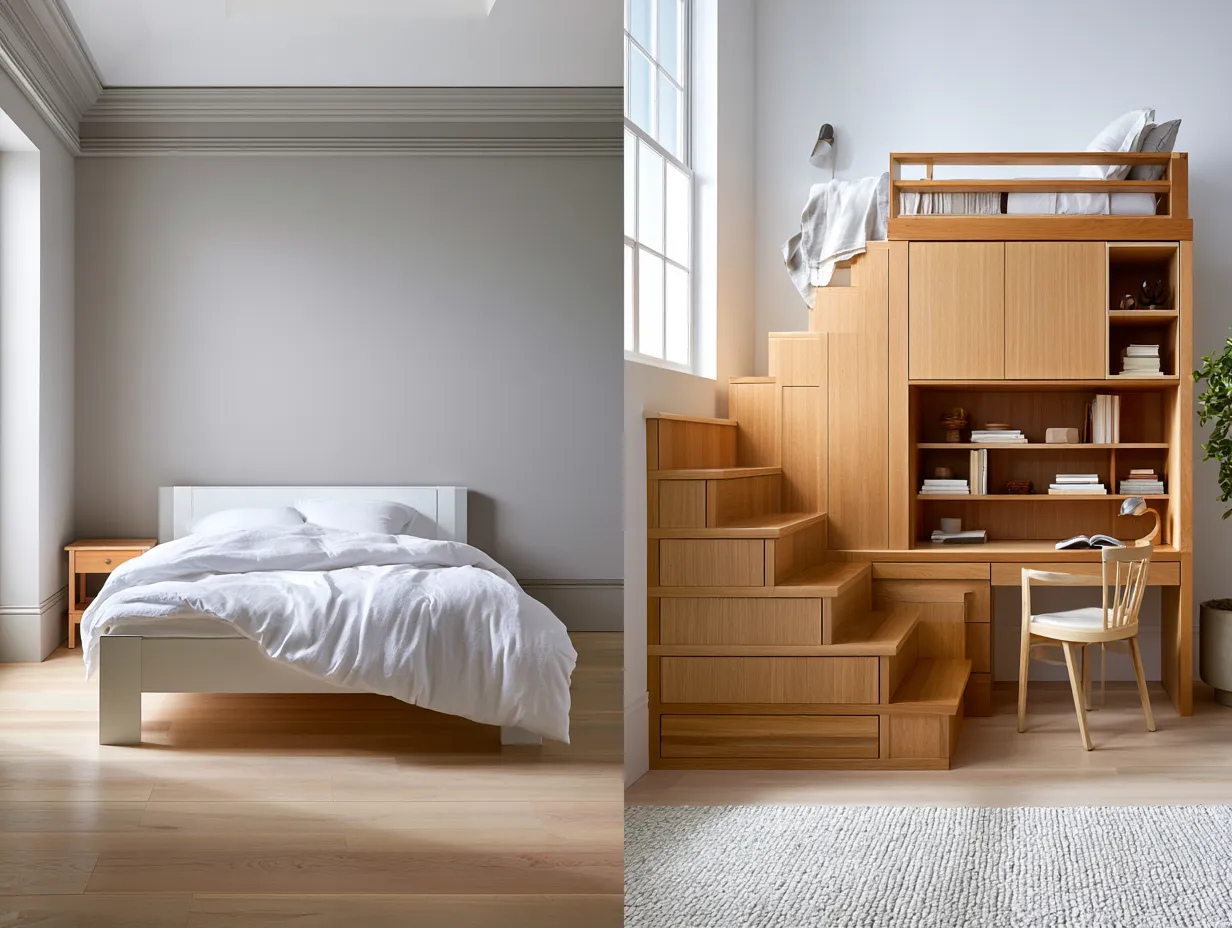
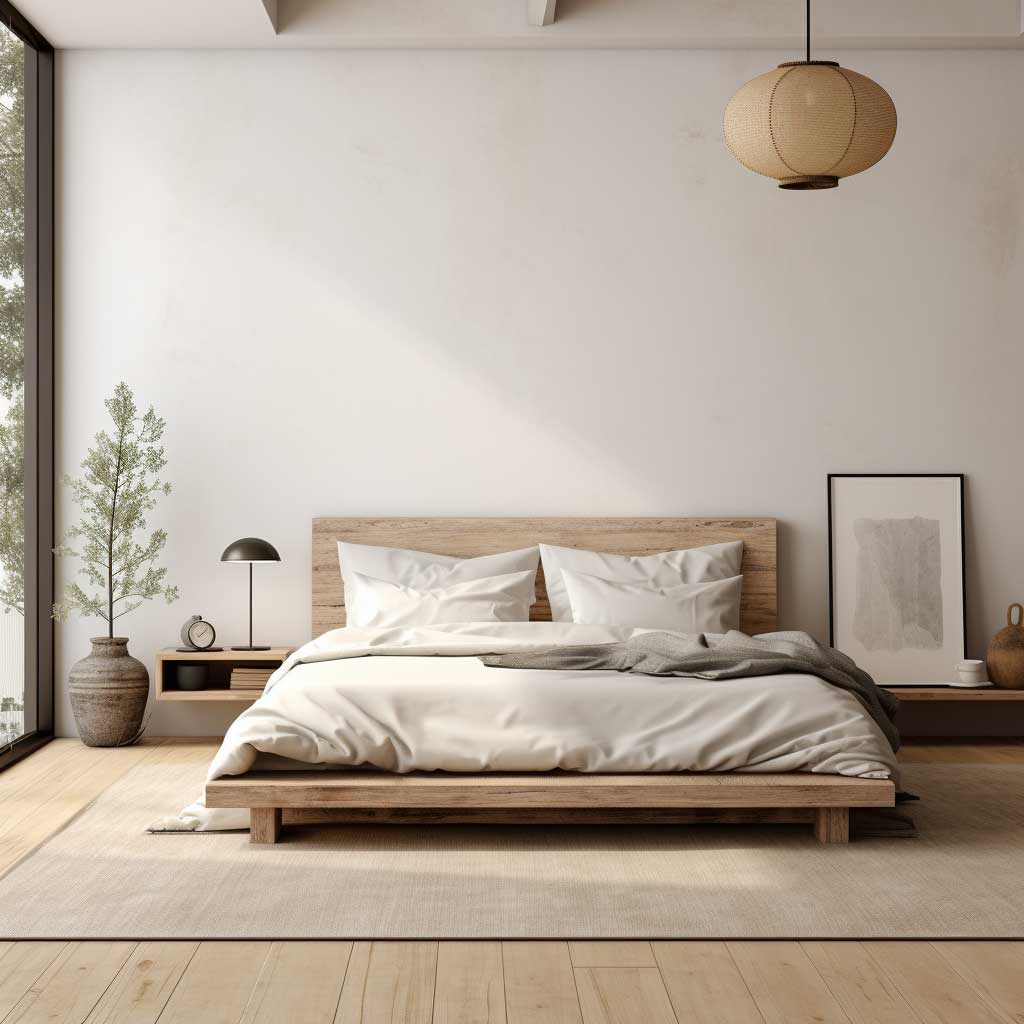
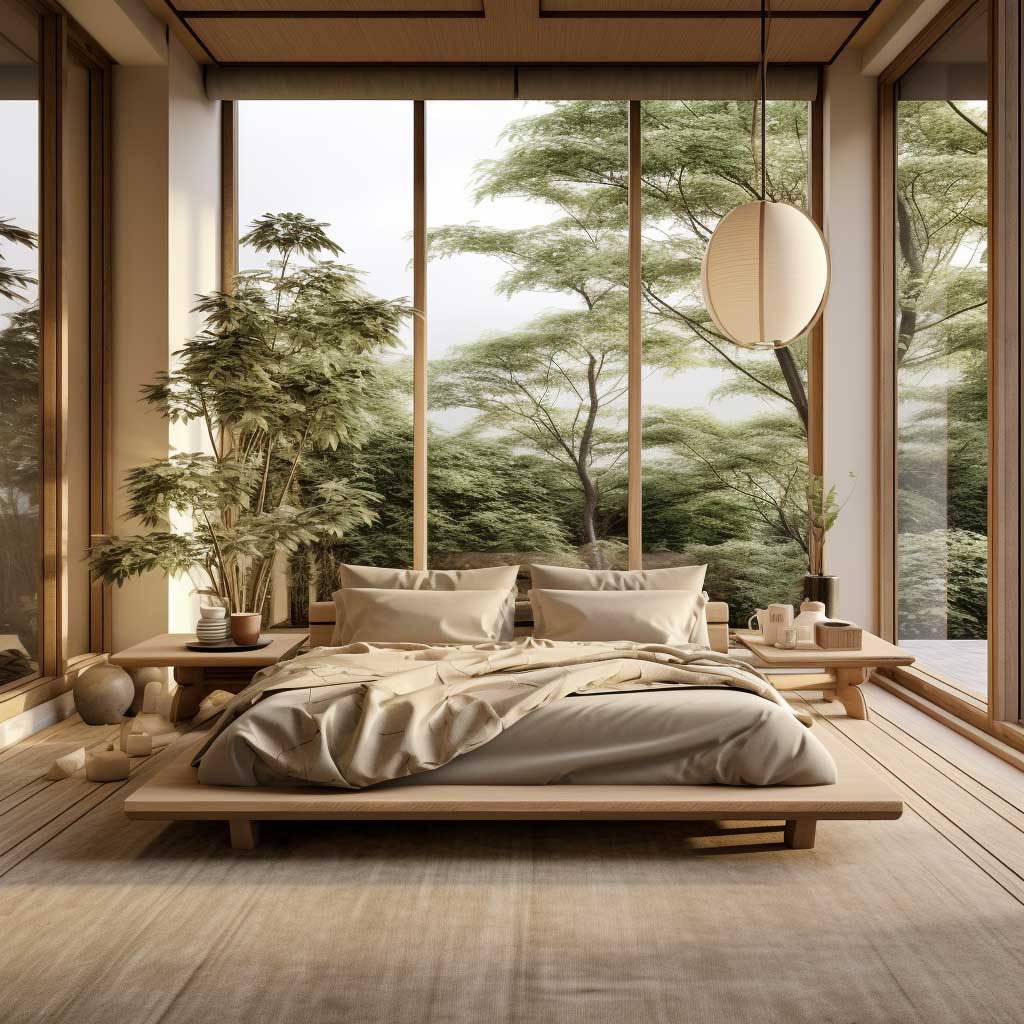
This image transports you to a tranquil retreat made possible by the careful use of Zen bedroom decor. The simplicity and understated elegance of the room create a peaceful atmosphere that invites relaxation and rejuvenation. The room’s muted color palette, with shades of white, cream, and beige, contributes to the calming environment.
The dominant feature of the room is the minimalist, low-profile bed. The simplicity of its design, combined with the natural wood construction, aligns perfectly with Zen principles. If you’re drawn to this Japanese-influenced aesthetic, the furniture choices in a Japandi style living room follow the same logic — wood, restraint, nothing excess. The bed is dressed in soft, neutral-toned linens, contributing to the overall serene ambiance.
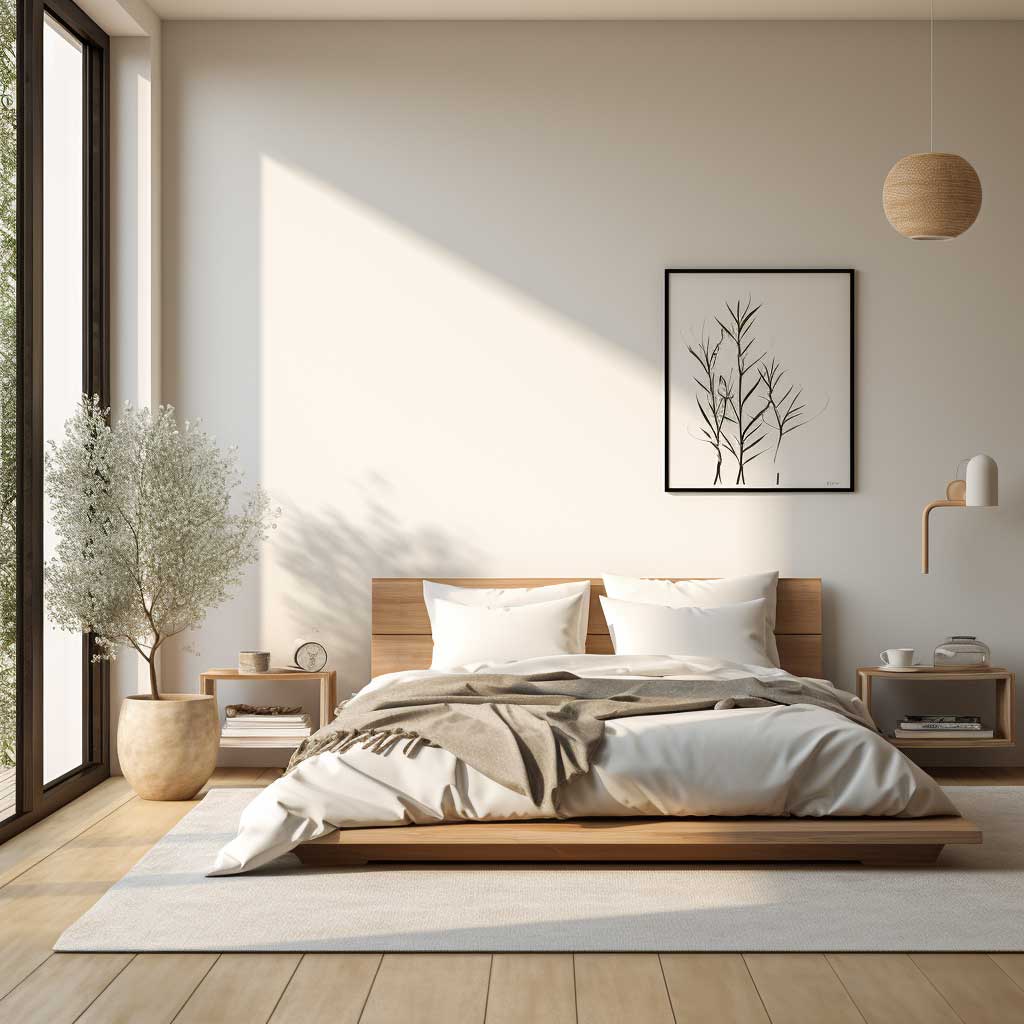
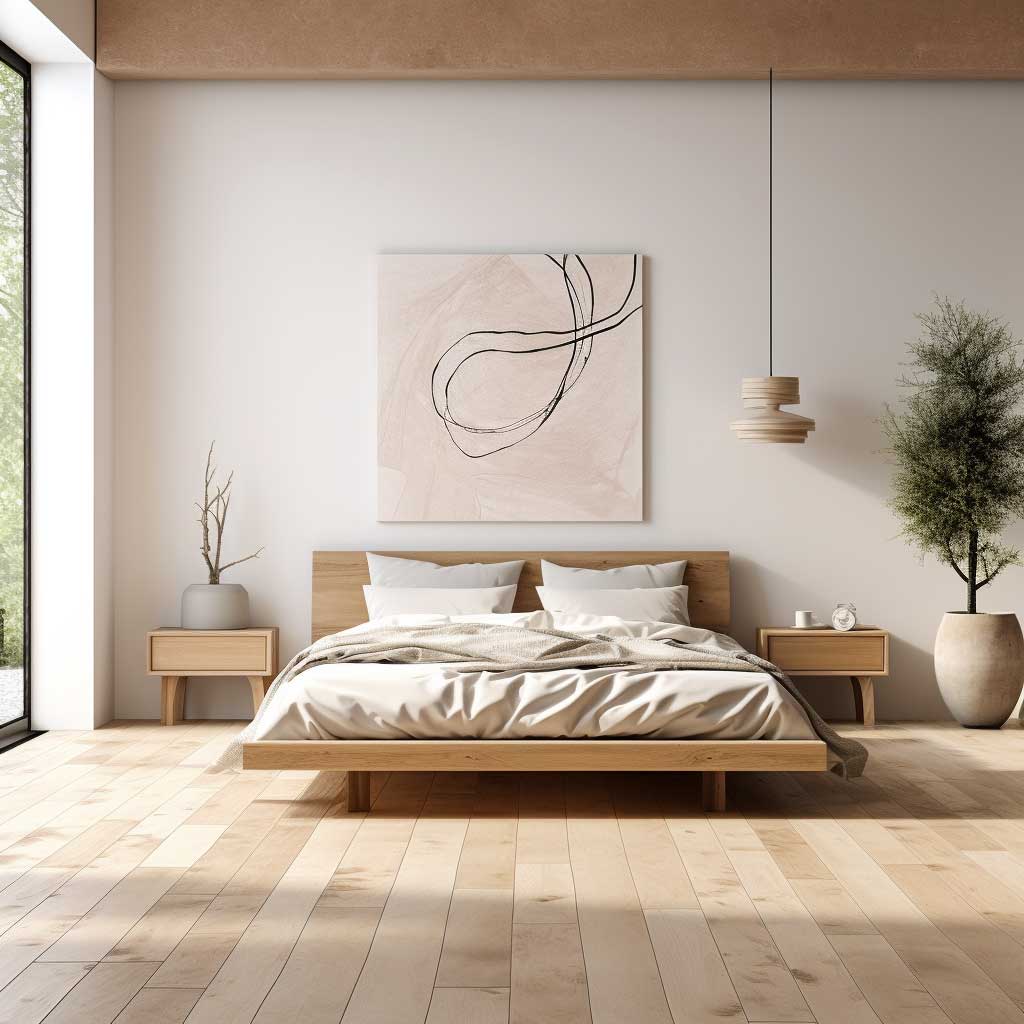
Positioned across the room is a simple wooden dresser, devoid of excessive ornamentation, aligning with the Zen concept of minimalism. The dresser serves not just as a functional piece but also enhances the room’s aesthetic by its clean, simple lines and natural texture.
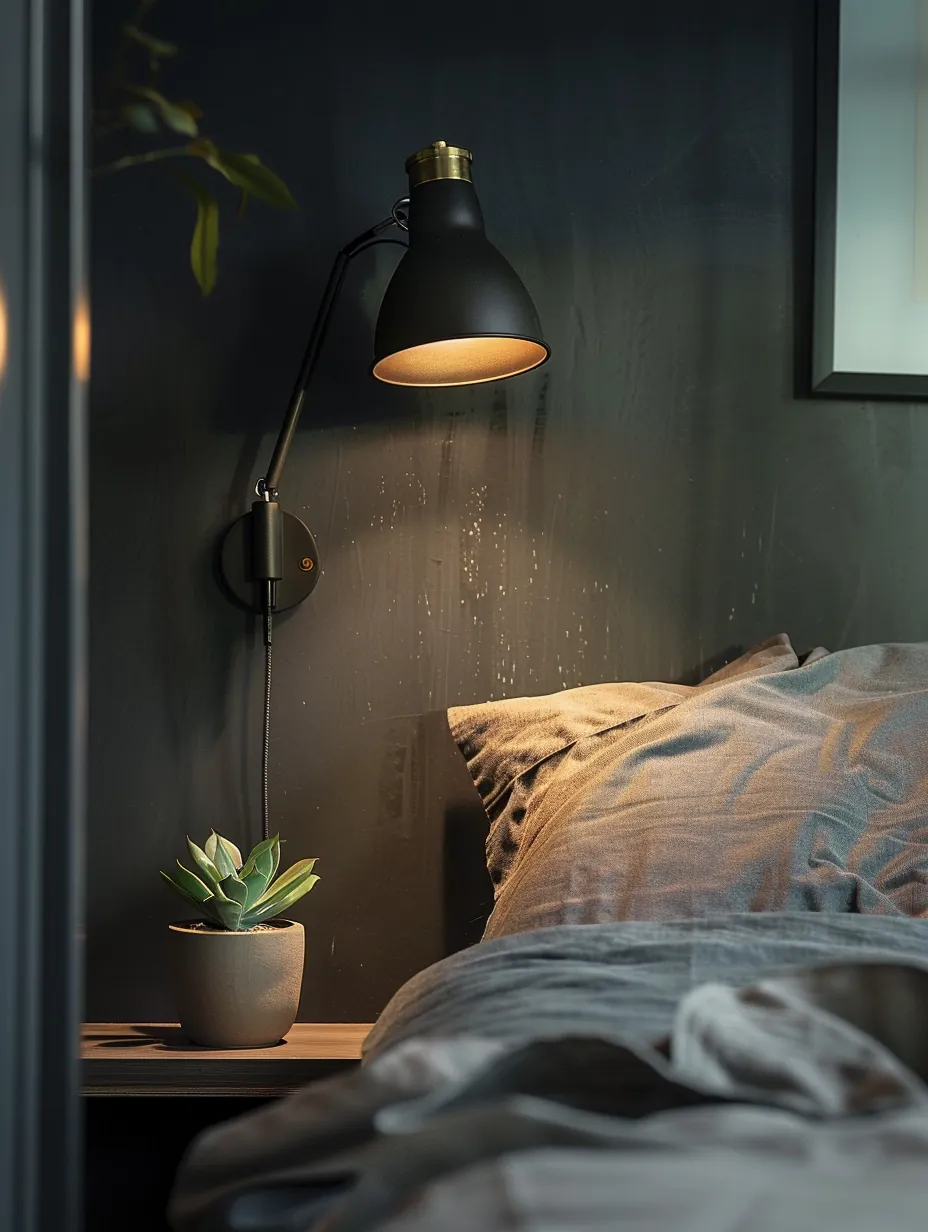
Subtle lighting plays a significant role in this Zen bedroom. A table lamp with a paper lantern shade softly diffuses light around the room, promoting a sense of calm and relaxation. The choice of a paper lantern is purposeful, reminiscent of traditional Zen aesthetics. If you want to go deeper on lighting and color choices that support a restful space, the zen bedroom ideas roundup at Homes & Gardens covers expert recommendations worth reading.
Incorporation of natural elements is a hallmark of Zen decor, and this room is no exception. A large potted plant sits by the window, bringing a touch of nature indoors. The greenery not only adds a pop of color but also promotes a soothing environment, fostering a sense of connection with the natural world.
Lastly, the room features a large window that allows an abundance of natural light to filter into the space, enhancing the muted color scheme. The view outside the window displays a calming natural landscape, connecting the interior space to the serenity of the outdoors, and reinforcing the Zen atmosphere.
Zen Bedroom Design Ideas with Elegant Natural Details
Platform beds changed everything for me. The moment you drop the sleeping surface 8 inches closer to the floor, the whole room feels more settled. Less top-heavy. It’s the same visual trick Japanese interiors have used for centuries — ground the space, lower the visual center of gravity.
The wood matters. Cheap laminate with a wood-print finish looks fine in photos and terrible in person. Real oak or walnut runs $400–900 for a queen platform frame from Article or West Elm, but you feel the difference on day one. Don’t cheap out here.
Flanking lamps should be identical. Two different bedside lights create visual noise that kills the zen bedroom design before it starts. The CB2 Arched Marble Lamp at $129 each works. Matte ceramic from H&M Home works at $39 each. Either way — match them.
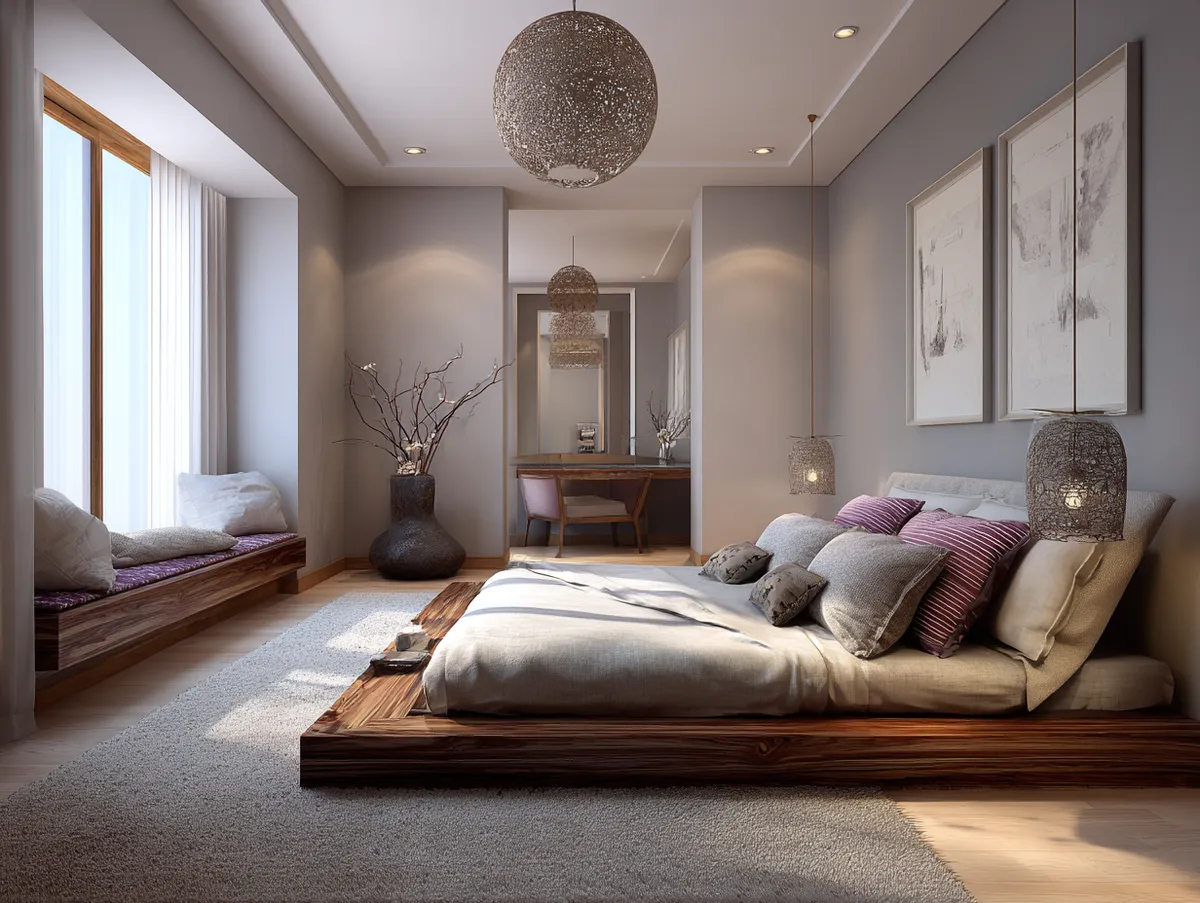
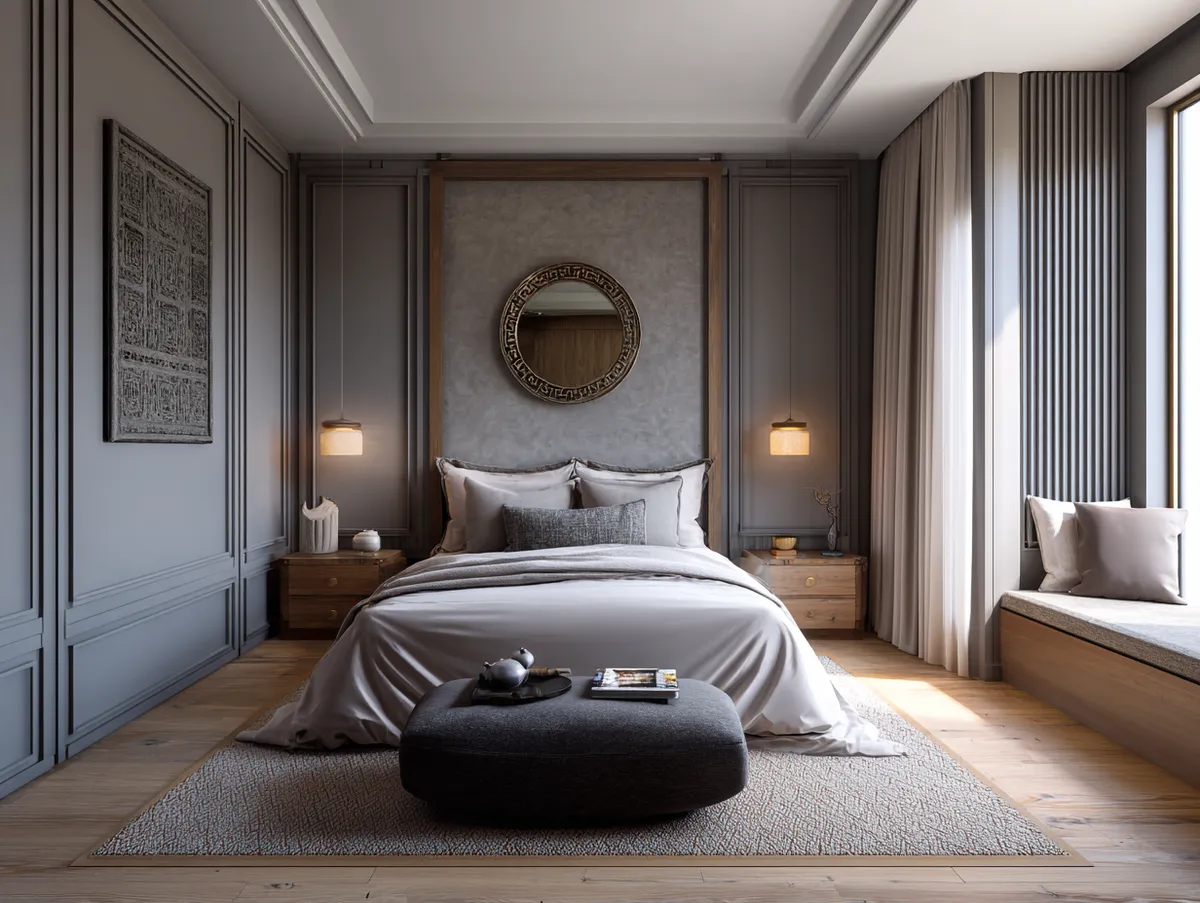
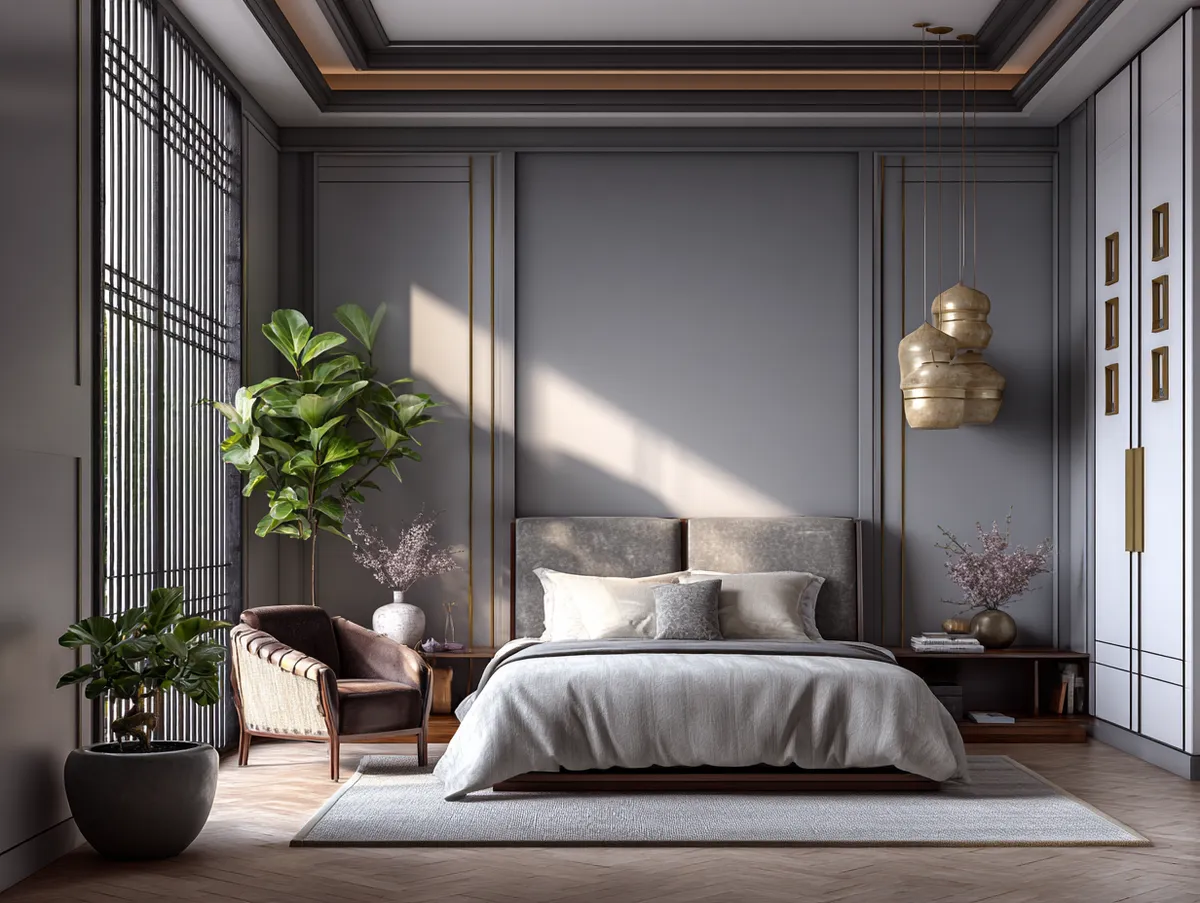
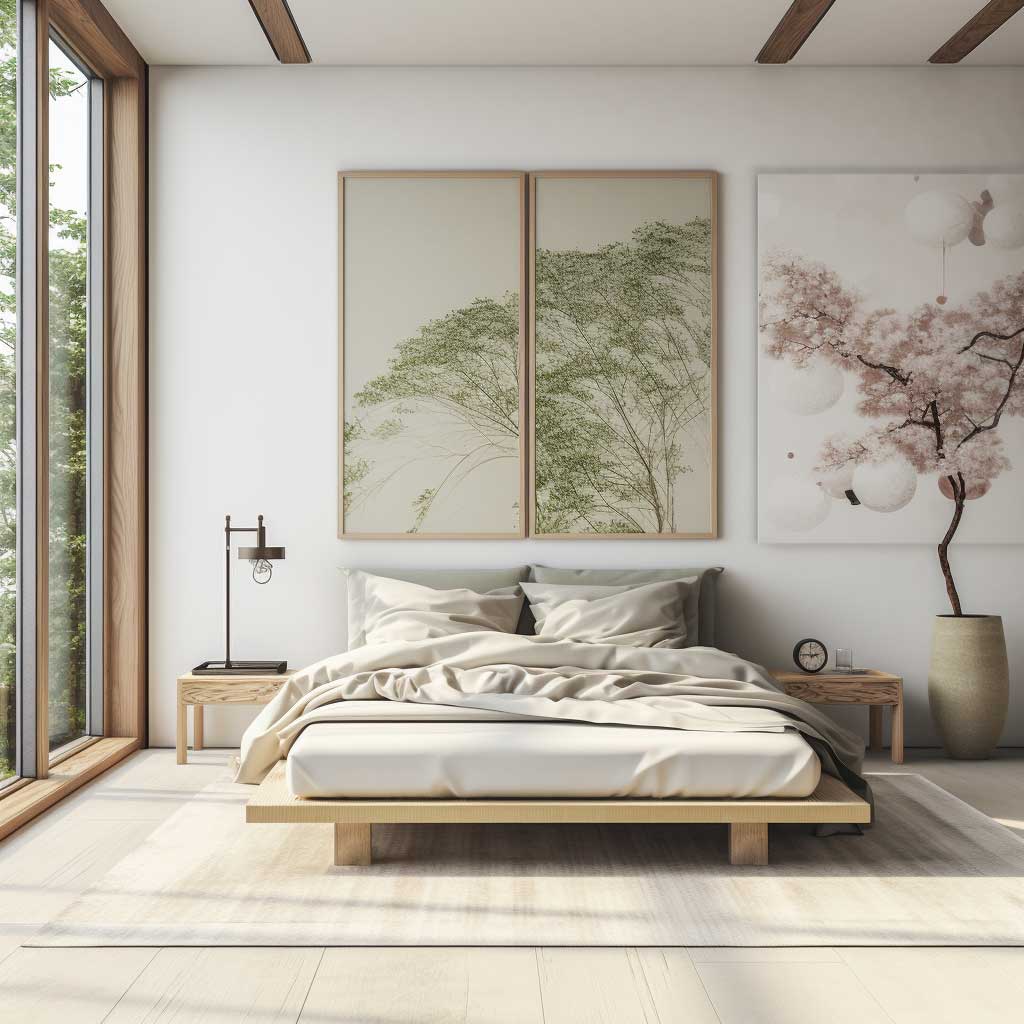
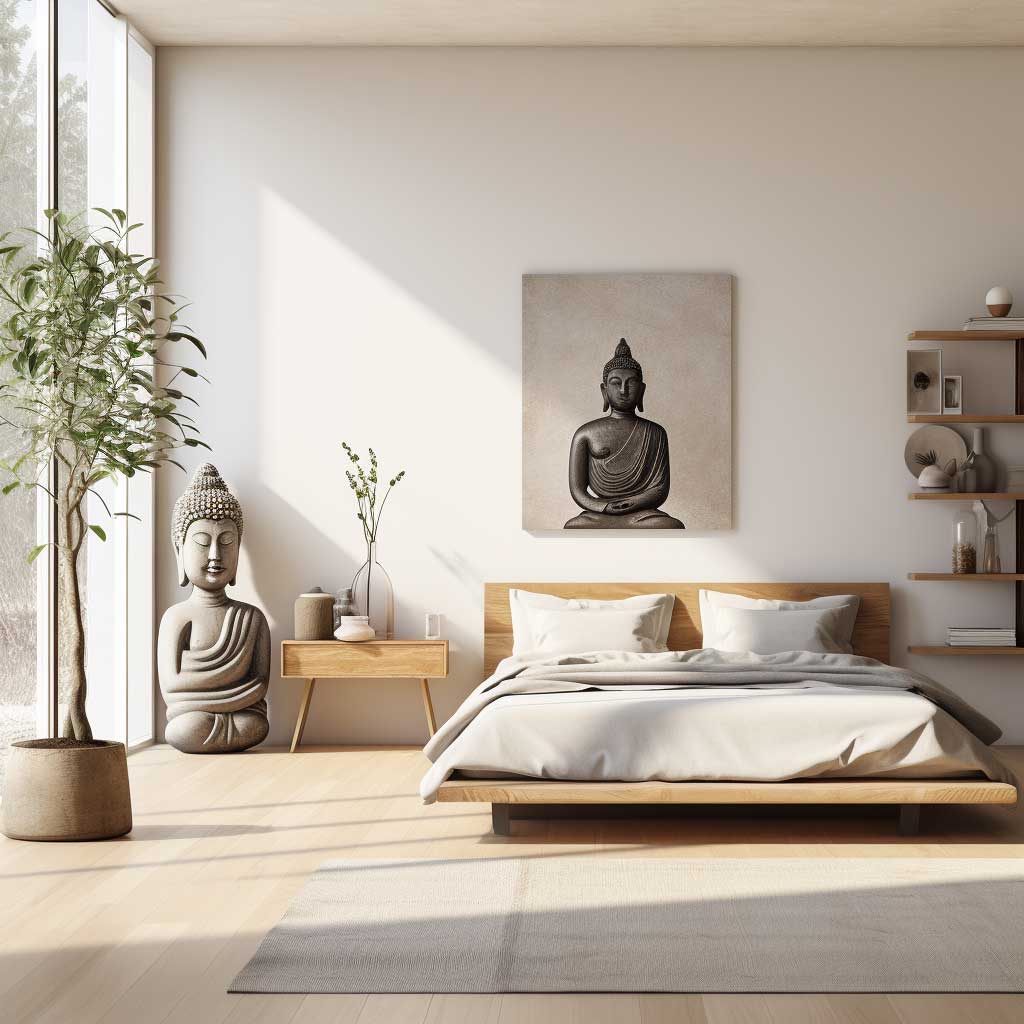
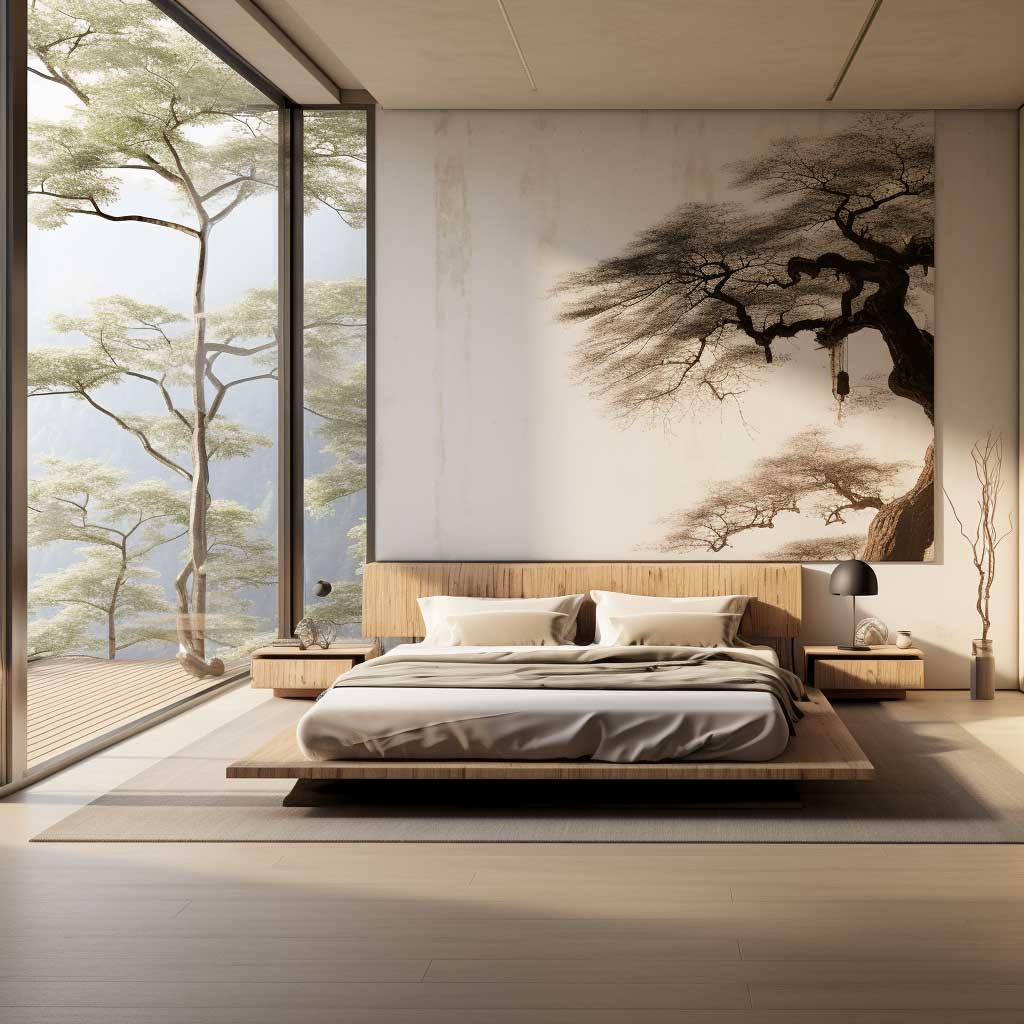
The image illustrates a Zen-style bedroom that emanates an aura of sophistication and tranquility. A notable aspect of this room is the harmonious balance between form and function, a key tenet of Zen decor. The room is intentionally minimalist, featuring only essential pieces of furniture, and abstaining from clutter.
At the heart of the room is a comfortable, low-lying platform bed made of warm-toned wood. The simplicity of its design and the elegance of its construction contribute to the overall Zen ambiance. The bed linens, in muted shades of gray and white, reinforce the peaceful aesthetic.
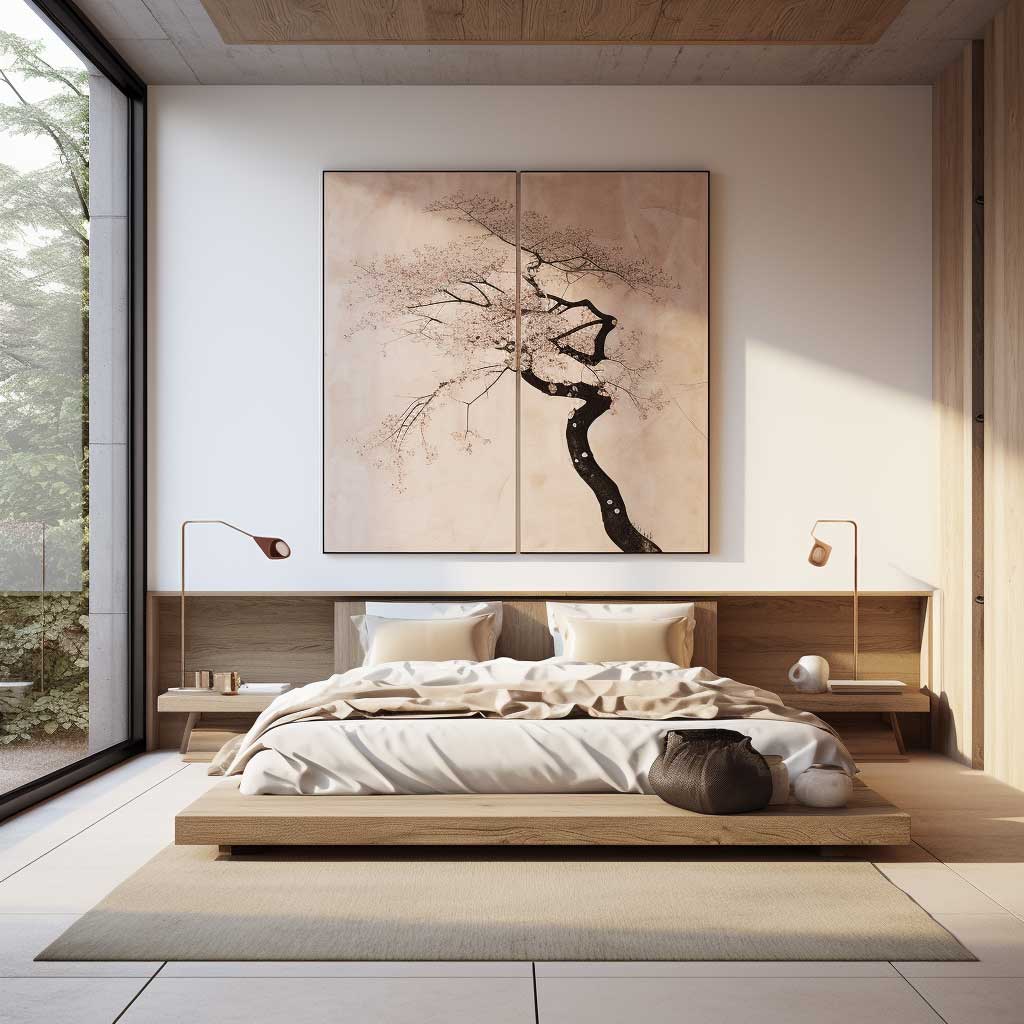
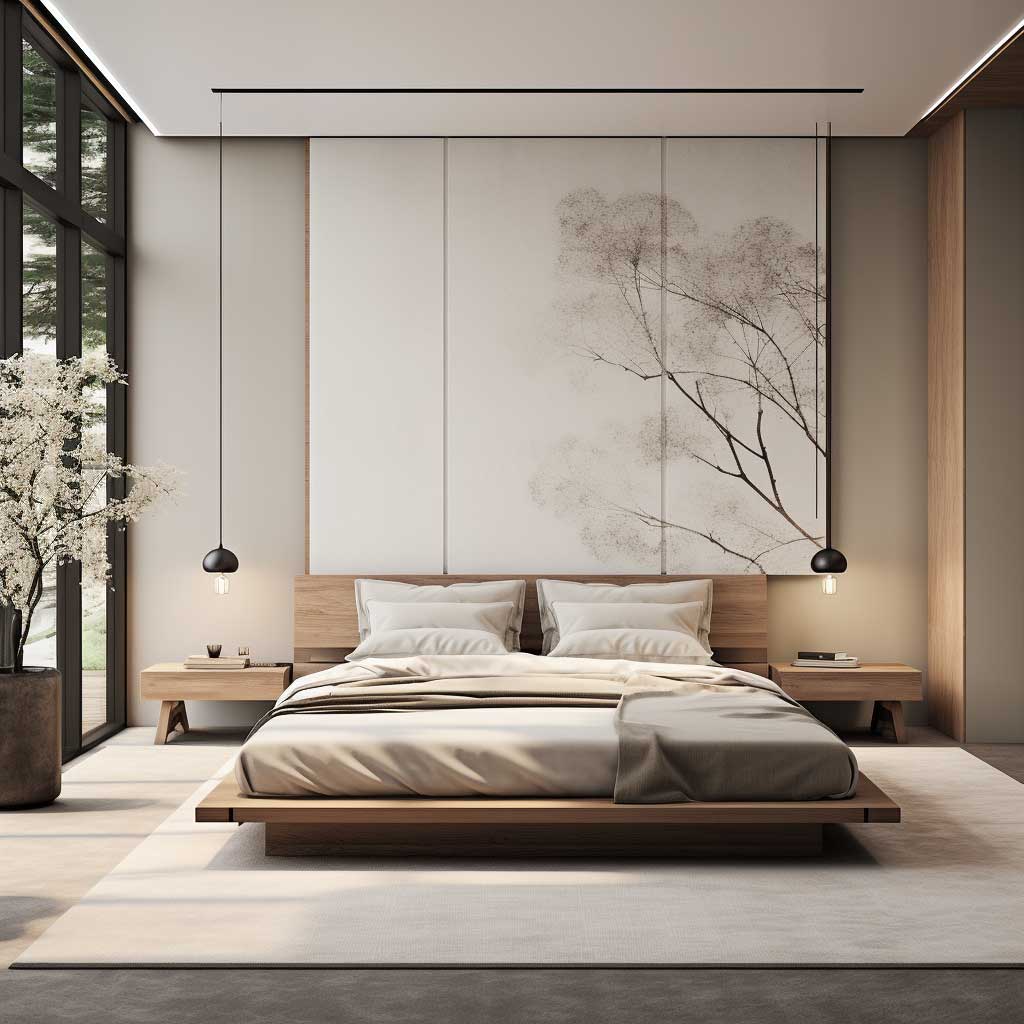
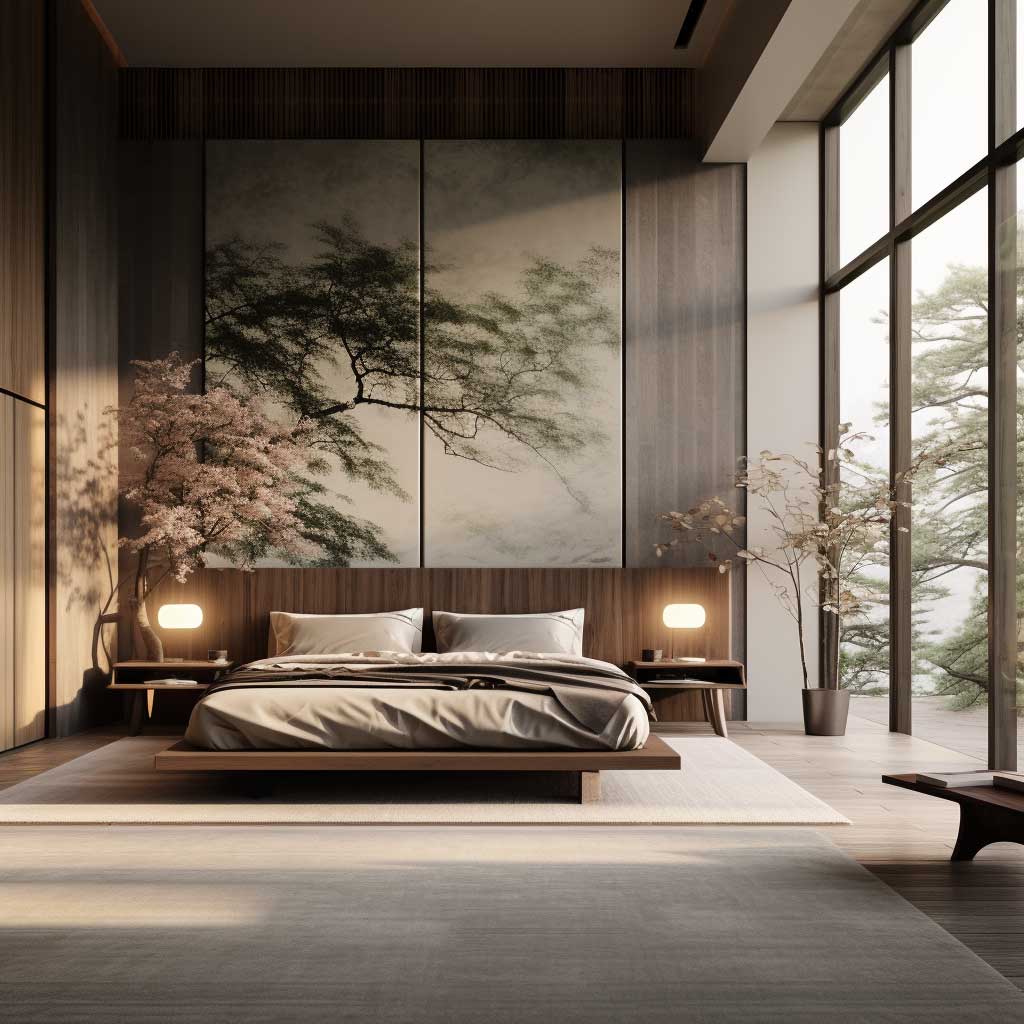
Flanking the bed are two simple yet chic bedside tables, each adorned with a single, slender table lamp. The lamps, with their sleek metal bodies and white shades, offer a gentle illumination that adds to the room’s soothing ambiance.
A standout feature of the room is a large piece of monochromatic artwork on the wall above the bed. The artwork, abstract in nature, draws the eye without overwhelming the space, thereby maintaining the room’s calming vibe.
Adding to the natural element intrinsic to Zen design is a large indoor plant placed in a corner. The plant introduces a refreshing burst of green, providing a vibrant contrast to the otherwise neutral color scheme. This bit of greenery also aids in creating a serene and healthy atmosphere.
Finally, the room features floor-to-ceiling windows draped with sheer white curtains. These windows allow natural light to stream in, illuminating the space in a gentle, soothing manner. The sight of the lush outdoors adds a touch of beauty and calmness, perfectly rounding off the Zen bedroom experience.
Minimalist Zen Bedroom Ideas: Less Furniture, More Peace
Remove one piece of furniture. Right now, mentally — walk through your room and find the thing that’s there because “it might be useful.” The accent chair covered in tomorrow’s clothes. The second nightstand that holds charging cables and expired melatonin. Cut it.
Zen bedroom ideas rooted in minimalism operate on a simple rule: if it doesn’t serve sleep or daily ritual, it doesn’t belong in the room. That’s it. Not a philosophy. A filter.
The floor matters more when there’s less furniture. A natural jute rug from Ruggable ($180–280 for a queen size) anchors the bed zone without adding visual clutter. Keep it simple — no pattern, no fringe, just texture.


| Item | Zen Bedroom Choice | What to Avoid | Price Range |
|---|---|---|---|
| Bed Frame | Low-profile platform, solid oak or walnut | Tall upholstered headboard, tufted fabric | $249–$900 |
| Bedding | Linen or percale, white/warm beige | Patterned duvet, bold colors, 7+ pillows | $99–$169 |
| Curtains | Sheer linen, white or natural | Heavy blackout curtains, dark colors | $30–$80/panel |
| Plants | 1 large fiddle-leaf fig or snake plant | 6+ small succulents, cluttered shelf | $40–$80 |
| Lighting | Matching matte ceramic or paper lamps, warm bulb | Mismatched styles, overhead fluorescent | $39–$129/lamp |
| Rug | Natural jute or wool, no pattern | Bold geometric print, synthetic fiber | $180–$280 |

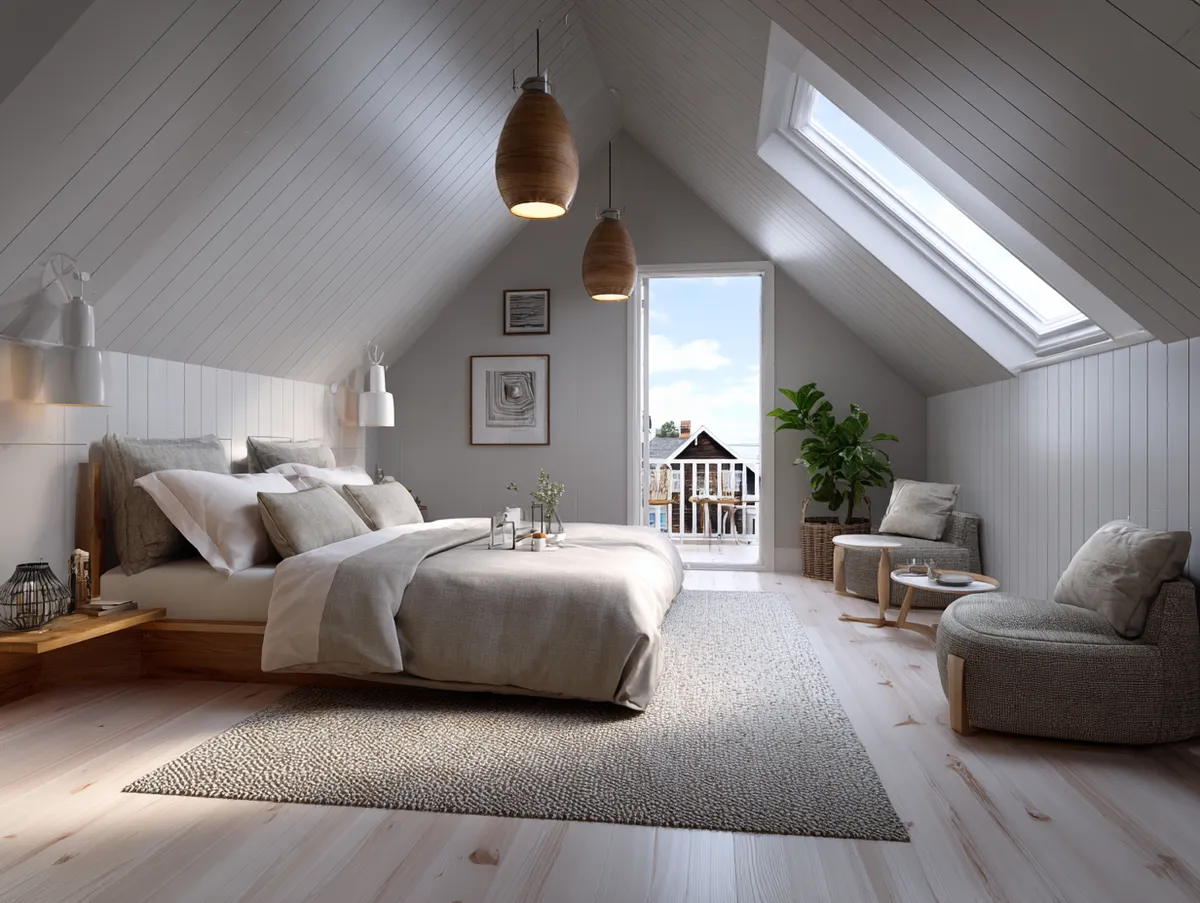
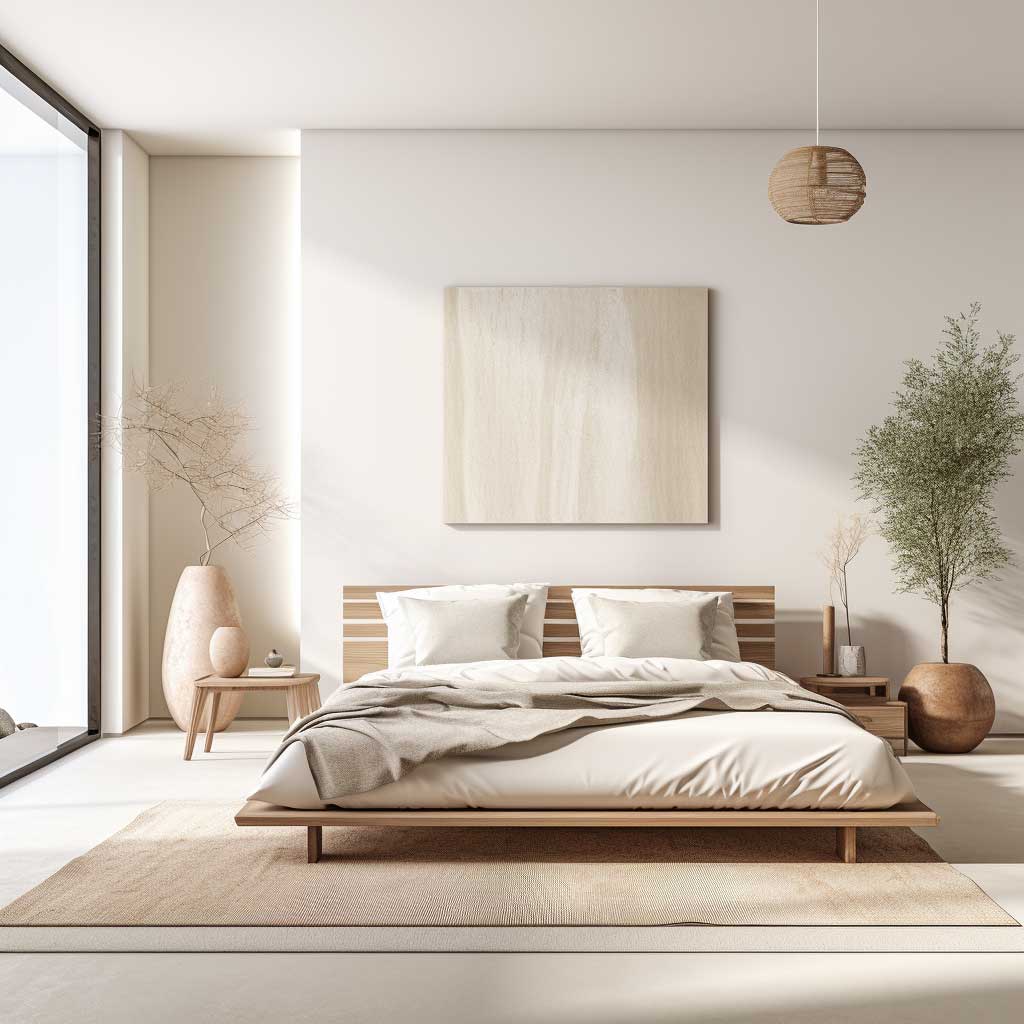
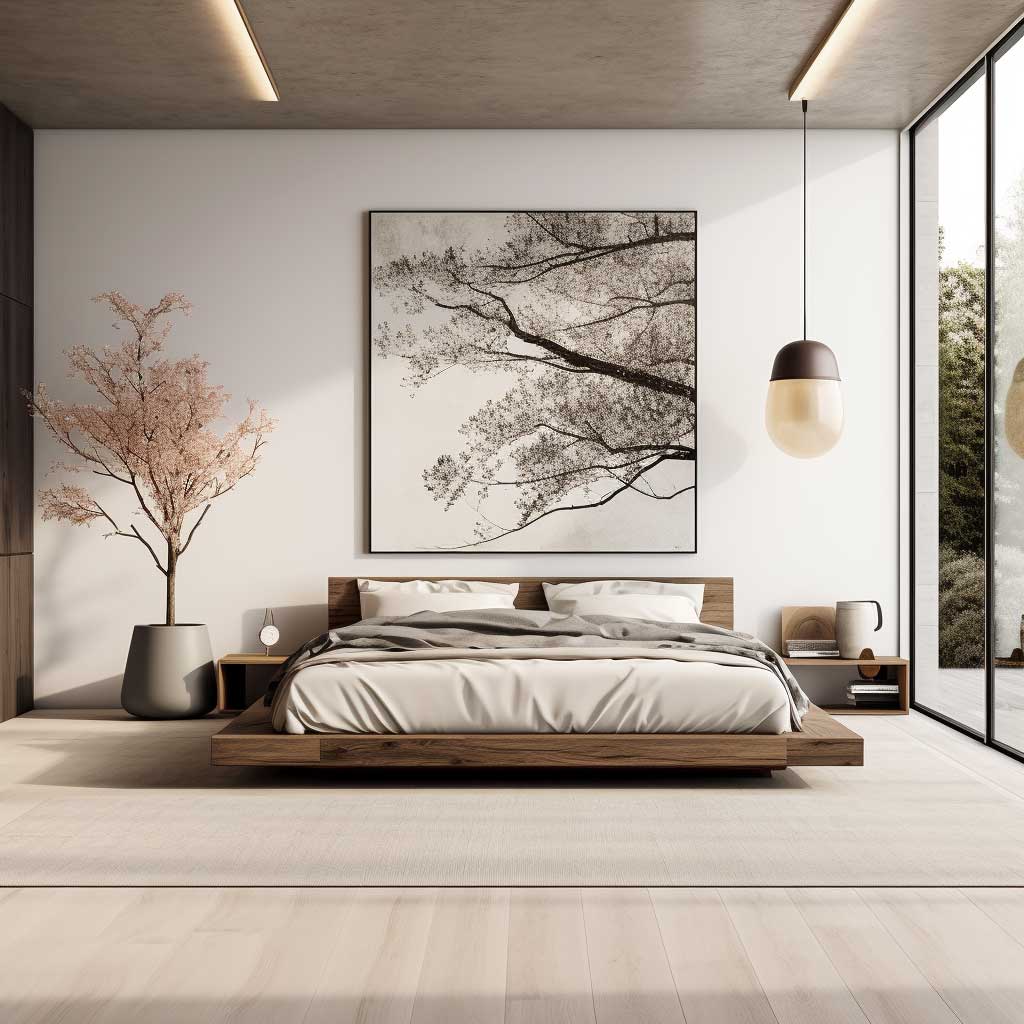
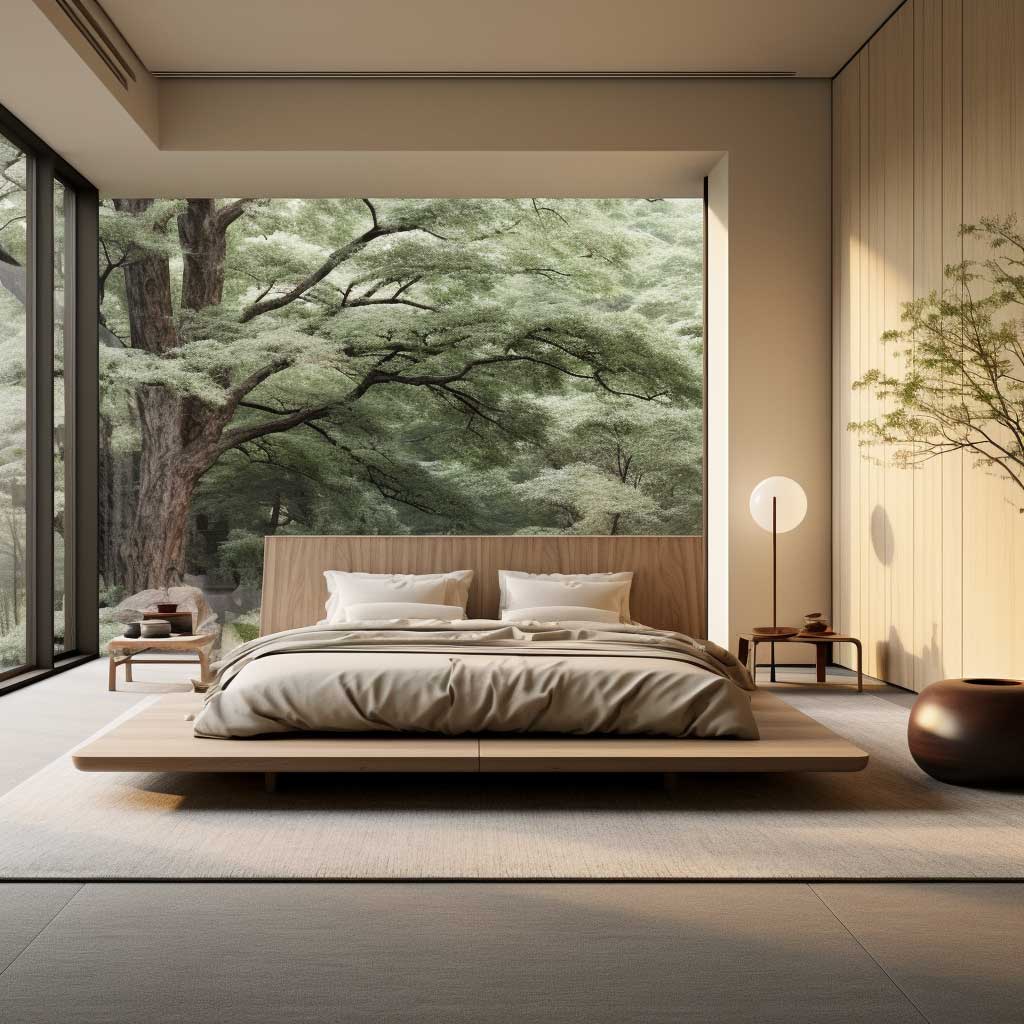
The image showcases a minimalist Zen bedroom, resonating with tranquility and calmness. Here, the principles of Zen are in full display: simplicity, naturalness, and a deep sense of harmony. This room stands out for its adherence to a monochromatic color scheme, mainly comprised of whites and grays, contributing to its quiet and serene ambiance.
The focal point is a simplistic platform bed made from natural wood. The bed’s design speaks to the principles of minimalism, eliminating unnecessary details. Dressed in white and grey linens, the bed exudes an aura of tranquility, inviting relaxation and restful sleep.
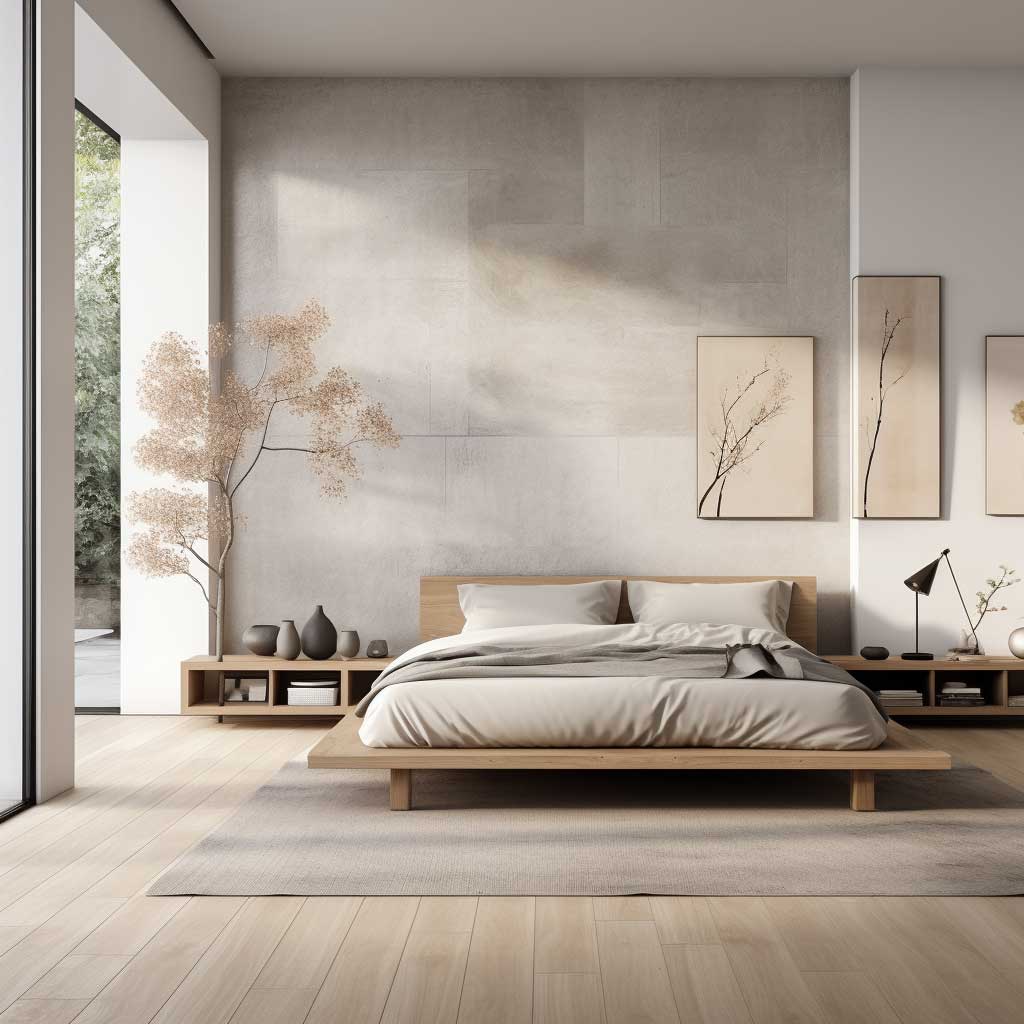
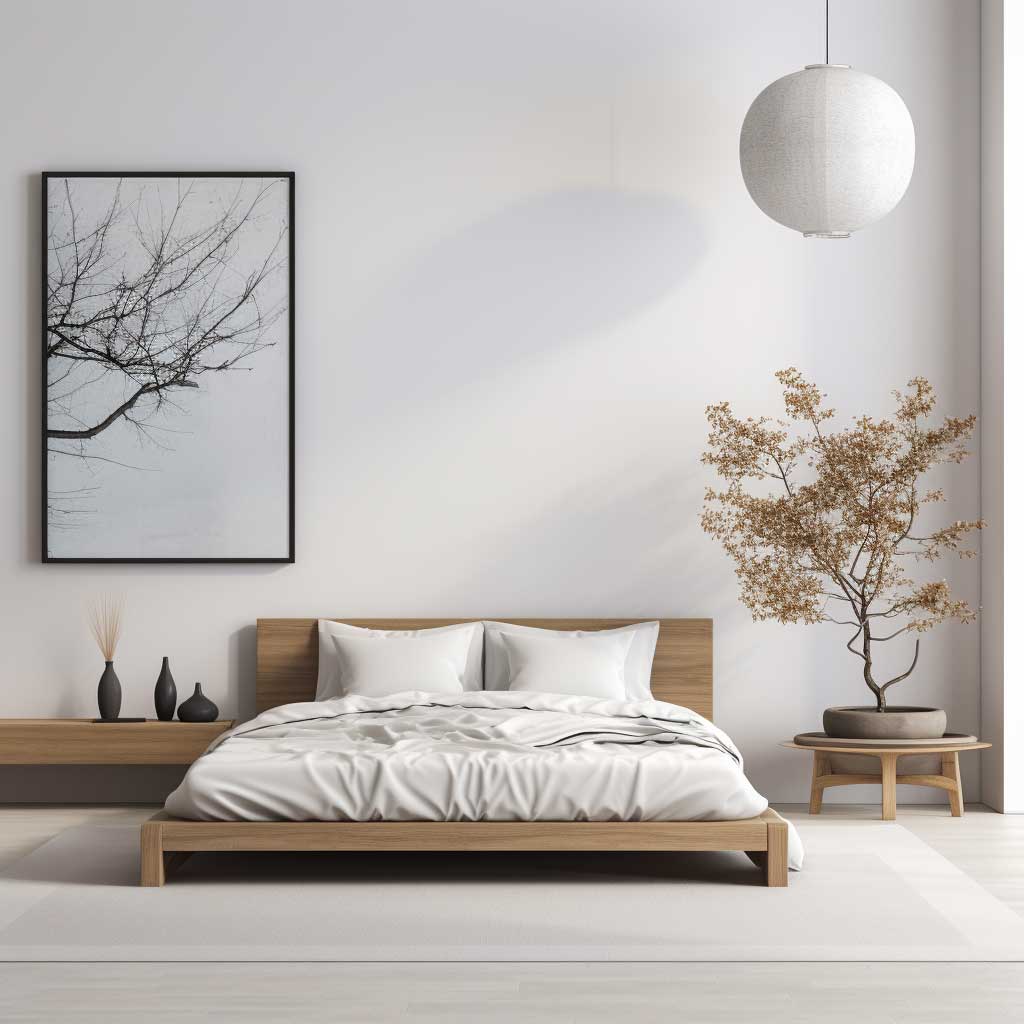
A noteworthy feature of this Zen bedroom is its open, clutter-free space. There are no unnecessary items, which contributes to the room’s airy, spacious feel. This design choice aligns with Zen philosophy, which values simplicity and the concept of “less is more.”
The only other pieces of furniture are a simple, low-profile bedside table and a sleek, modern chair. Both pieces maintain the minimalist aesthetic and their functionality doesn’t compromise the room’s peaceful atmosphere.
The room embraces natural elements through a strategically placed indoor plant. Despite its simplicity, the plant is effective in infusing life into the room, reminding the occupant of the calming influence of nature. The same principle carries over when you’re thinking about color — the way eucalyptus and moss green work in a calming bedroom shows exactly how one organic tone can anchor an entire space without competing with everything else.
Finally, the room benefits from large windows that let in an ample amount of natural light. The light filters through sheer, white curtains, lending a soft, dreamy quality to the space. This illumination amplifies the minimalist aesthetic and contributes to the overall serene and peaceful ambiance.
DON’T DO THIS
Zen Bedroom Mistakes That Ruin the Whole Look
❌ Mixing warm and cool neutrals
Gray duvet + yellow-oak frame + taupe rug = visual chaos. Pick one undertone. Warm or cool. Not both.
❌ Too many small plants
Eight tiny succulents on a shelf look like a hobby shop, not a zen bedroom. One large plant. Done.
❌ Mismatched bedside lamps
Two different lamp styles on either side of the bed creates the kind of asymmetry your brain can’t stop noticing. Match them exactly.
❌ Blackout curtains in a zen bedroom
Dark heavy curtains block the natural light that makes the whole neutral palette work. Sheer linen only. Sleep mask if you need darkness.
❌ Keeping the decorative throw pillow collection
Seven accent pillows you remove every night and pile on the floor is not zen. It’s a ritual of annoyance. Two sleeping pillows. One bolster maximum.
Zen Decor for Bedroom: How to Make It Feel Cozy, Not Cold
Cold and minimal are not the same thing. Zen decor for bedroom fails when people strip out everything warm along with the clutter. You need texture to save it — linen duvet covers, a chunky knit throw, a sheepskin over the chair.
Brooklinen’s Linen Core Sheet Set runs $169 for a queen. Rough in photos, perfect in person. That slight imperfection in linen texture is exactly what separates a zen bedroom from a hospital room.
Plants are the cheat code. One large fiddle-leaf fig ($40–80 at most garden centers) in the corner beats a shelf of small succulents every single time. Scale matters. One statement plant reads intentional. Six tiny pots read chaotic — and chaotic is the opposite of everything you’re going for here.


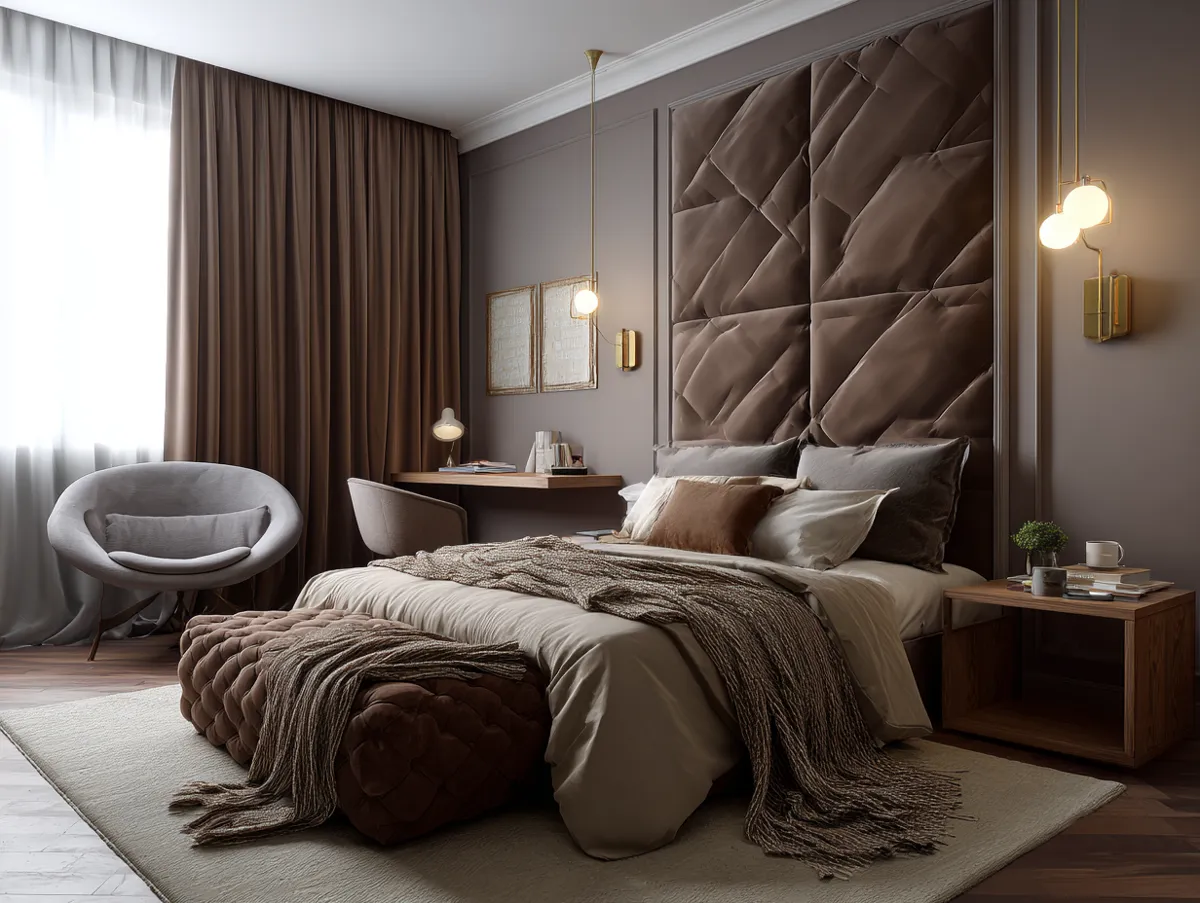
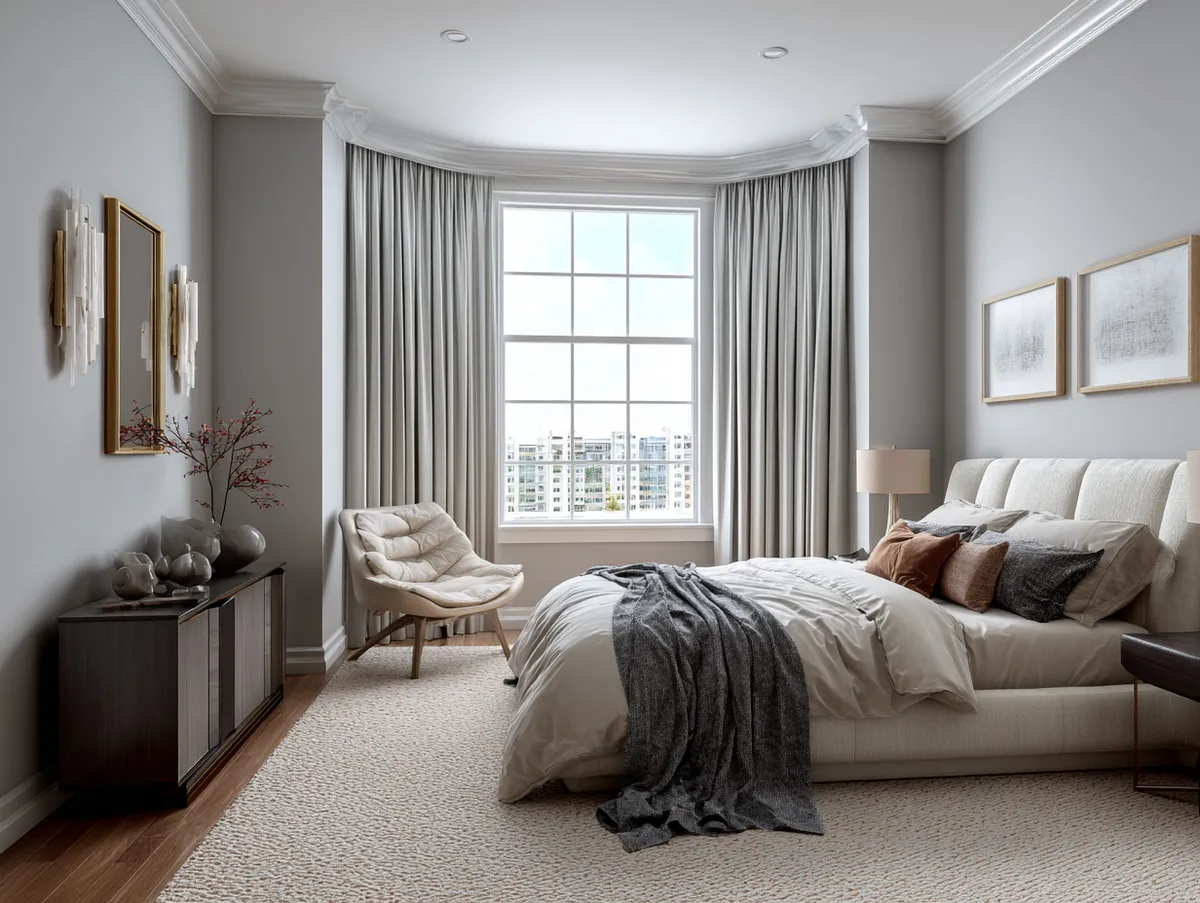
In this image, we explore a Zen-style bedroom that epitomizes the fusion of comfort and tranquility. The room’s decor sticks to a minimalistic design, proving that simplicity and comfort can coexist beautifully. The predominant use of soft, neutral colors lends an inviting, peaceful aura to the room.
The main feature of the room is an inviting, plush bed sitting low to the ground, a classic attribute of Zen-style decor. The bed’s clean lines and simple design underscore the minimalistic aesthetic. Dressed in white and beige linens, the bed beckons one to relax and unwind.
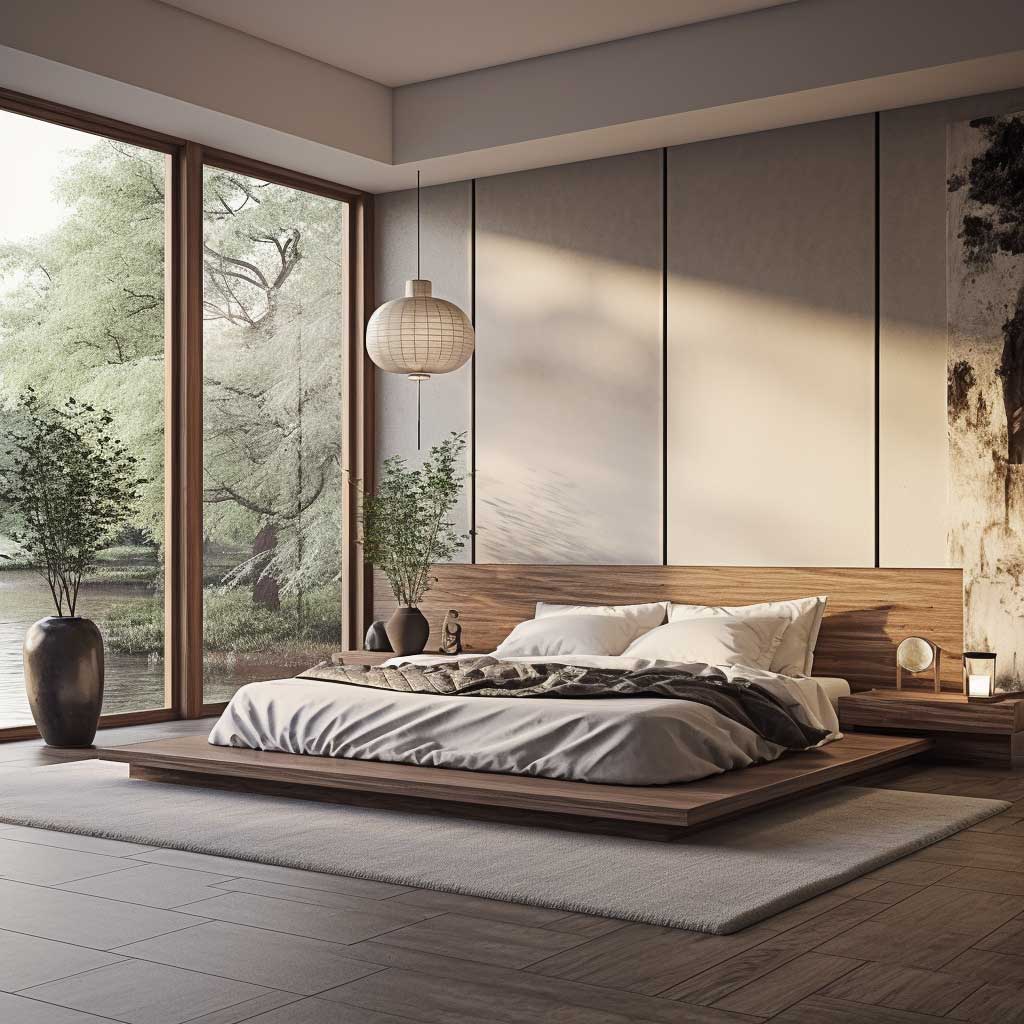
Adding to the Zen ambiance is the limited use of furniture. Besides the bed, the room features a small bedside table and a cozy lounge chair. The chair, placed by the window, offers a comfortable spot to read or meditate, enhancing the room’s peaceful vibe.
Lighting in this room is subtle and calming, achieved through a combination of natural light and a simple bedside lamp. The soft glow from the lamp creates a soothing atmosphere, conducive to relaxation and restful sleep.
The presence of indoor plants is again noticeable in this room, adding a dash of green to the neutral palette. These plants not only beautify the space but also purify the air, contributing to a healthier living environment.
Finally, the room enjoys an abundance of natural light thanks to the presence of a large window. The window, adorned with light, sheer curtains, allows for a visual connection with the outside world, creating a sense of openness and peace. This Zen bedroom decor truly creates a sanctuary where one can retreat, relax, and recharge.
FAQ
How does a neutral color palette contribute to a zen bedroom environment
What is the best way to incorporate natural elements into a minimalist zen design
How to arrange a zen bedroom layout to maximize tranquility and flow
What is zen bedroom decor?
How do I start creating a zen bedroom on a budget?
What colors work best for zen bedroom design ideas?
What's the difference between zen bedroom decor and minimalist bedroom decor?
What zen bedroom accessories actually matter?
How do I make a small bedroom look zen?
FINAL THOUGHT
Your Bedroom Should Work for You. Not the Other Way Around.
Zen bedroom decor ideas are only useful if you actually implement one thing today. Not thirteen. One. Pull out the extra furniture, swap to sheer curtains, or just buy the one good plant.
The rooms in this post aren’t expensive. They’re disciplined. That’s the whole difference between a peaceful zen bedroom and a room that just happens to have wood and beige in it.
Save this post. Come back when you’re ready to actually make the change — not just pin it and forget it exists.