Ombre curly hair works because every spiral turns a color gradient into motion: the dark shade stays near the scalp while the bright shade lands on the curl ends, where light hits first. Long curls make the best canvas for it, since the extra length gives the fade room to shift from root to tip without looking chopped. Bold pairs like midnight and fuchsia, teal and lime, or ruby and coral read especially well, because curls break the color into hundreds of small highlights. Pick the palette by how much contrast you want near your face.
Does ombre damage curly hair? It can, if the ends are lightened far past the natural shade in one session, since curly strands are already drier than straight ones. Dermatologists recommend staying within three shades of the natural color where possible, and vivid tones usually need a pre-lightened base to show up at all. Most bright semi-permanent dyes fade in roughly 8 to 12 washes, so refreshes belong in the plan from day one. Treat the lightening step as the real commitment and the vivid color as the easy part.
Below, three bold palettes each get their own styling routine, followed by a side-by-side comparison and a care plan built for textured hair. Every section notes what the shade takes to keep bright and which curl pattern shows it off. Jump to the table if you only have a minute.
Quick Scan
- Ombre on curly hair keeps dark roots near the scalp and bright color on the ends, so grow-out looks deliberate.
- Salon ombre averages about $130 to $200, and long, thick curls usually sit at the top of that range.
- Vivid semi-permanent shades typically last 8 to 12 washes before they need a refresh.
- Dermatologists advise keeping color within three shades of your natural tone to limit damage.
- Midnight to fuchsia brings drama, teal to lime brings energy, ruby to coral flatters warm complexions.
- Defined, frizz-free curls show the gradient best, while frizz blurs the color line.
Why Bold Ombre Curly Hair Reads Better Than Straight
Curly hair ombre shows more color per inch than the same fade on straight hair, because each coil turns and exposes both its outer and inner surface to light. On a sleek strand, a gradient reads like a single stripe; on a spiral, it reads like a spiral staircase where every step catches a different shade. That is why ombre highlights on curly hair look rich even when only the lower third carries color. Ask your colorist to start the fade where your curls begin to form, not at a fixed inch mark.
Where should the color start on curly hair? Higher than many people expect, because curls shrink when dry and pull the transition upward. A fade painted at chin level on stretched hair can end up near the cheekbones once the curls spring back. Don’t let anyone place the ombre line on wet, pulled-straight hair without checking it dry. For a look at how vivid pastel behaves on a layered cut, this breakdown of the mint green shag haircut with bangs shows why a pre-lightened base matters. Book a dry consultation before the color appointment.
Before the first appointment, settle these points with the colorist:
- Your curl pattern when dry, since shrinkage moves the fade line upward
- How many shades the ends must lift, ideally three or fewer per session
- Whether the bright shade is permanent or semi-permanent
- The price for long hair, since average salon ombre runs about $130 to $200
Midnight Black Melting Into Fuchsia Curls
Midnight to fuchsia is the most dramatic ombre for curly hair in this set, pairing a near-black root with electric pink ends. The dark base works like the night sky behind a neon sign: it makes the pink look brighter than it really is. Long layered curls suit it best, because each layer ends at a different height and spreads the pink through the whole length. Keep the black at the root soft rather than ink-flat so the shift never looks like two wigs stitched together.


How long does fuchsia stay bright? Vivid semi-permanent shades such as hot pink usually hold for about 10 to 12 washes by manufacturer estimates, and saturated pinks outlast pastel ones. A pre-lightened end is almost always needed, since pink deposited over dark brown barely registers. Don’t wash with hot water, which speeds up fading along with heavy scrubbing. Rinse cool and keep washes to two or three a week.


Definition decides whether this palette looks deliberate or messy. A deep conditioner first, then curl cream and a defining gel on soaking-wet hair, keeps each coil intact so black and pink stay separate instead of blending into murky mauve. Diffuse on low heat or air-dry, because high heat dulls pink quickly. Scrunch out the gel cast only once the hair is completely dry.
Teal to Lime Ombre for Curly Hair With Tropical Energy
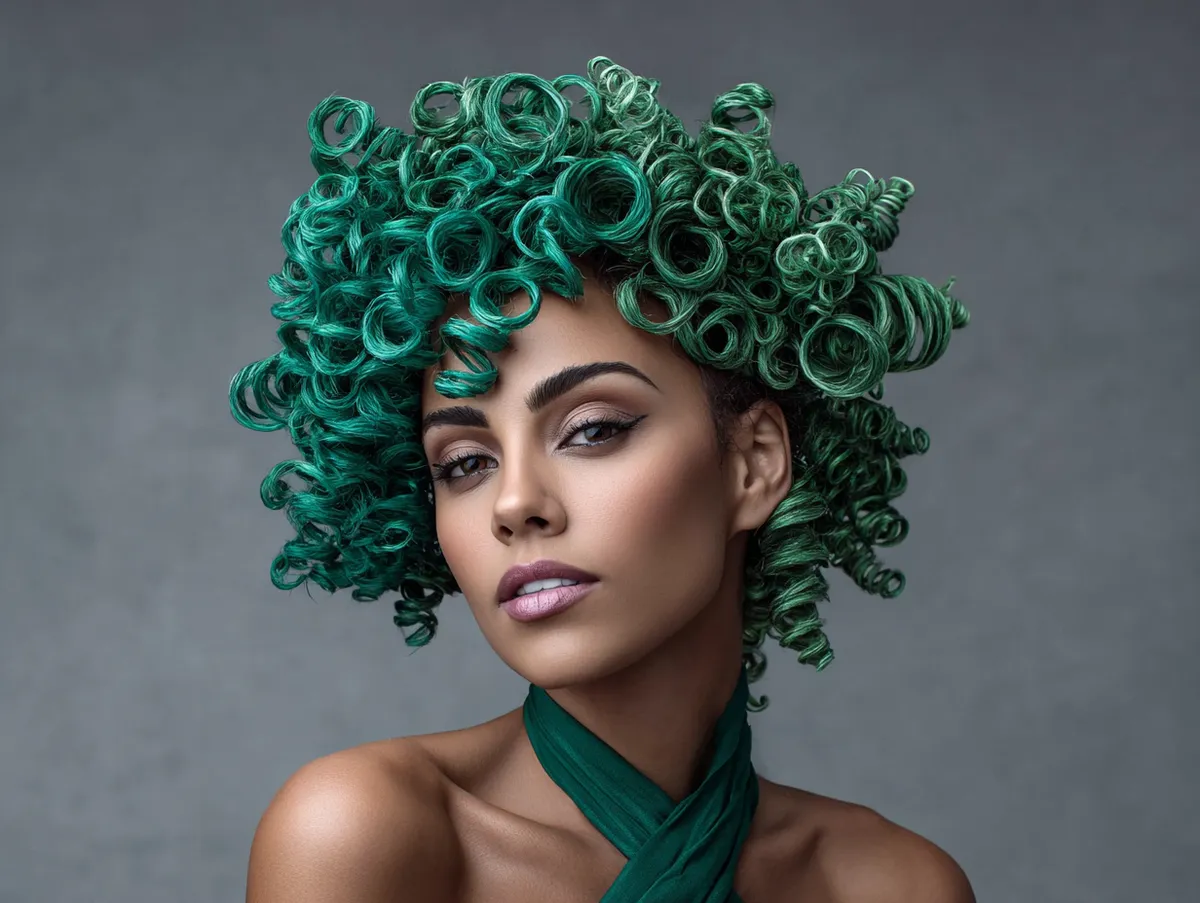
Teal to lime ombre for curly hair moves from deep aquatic roots to citrus-bright tips, a palette that feels like shallow water over white sand. Blue-green tones look livelier on curls than on straight hair, because shifting angles make the teal flash almost blue in one spot and green in the next. It suits creative jobs, festivals and anyone who wants color that reads from across a room. Start from a clean, pale base so the lime never turns murky.

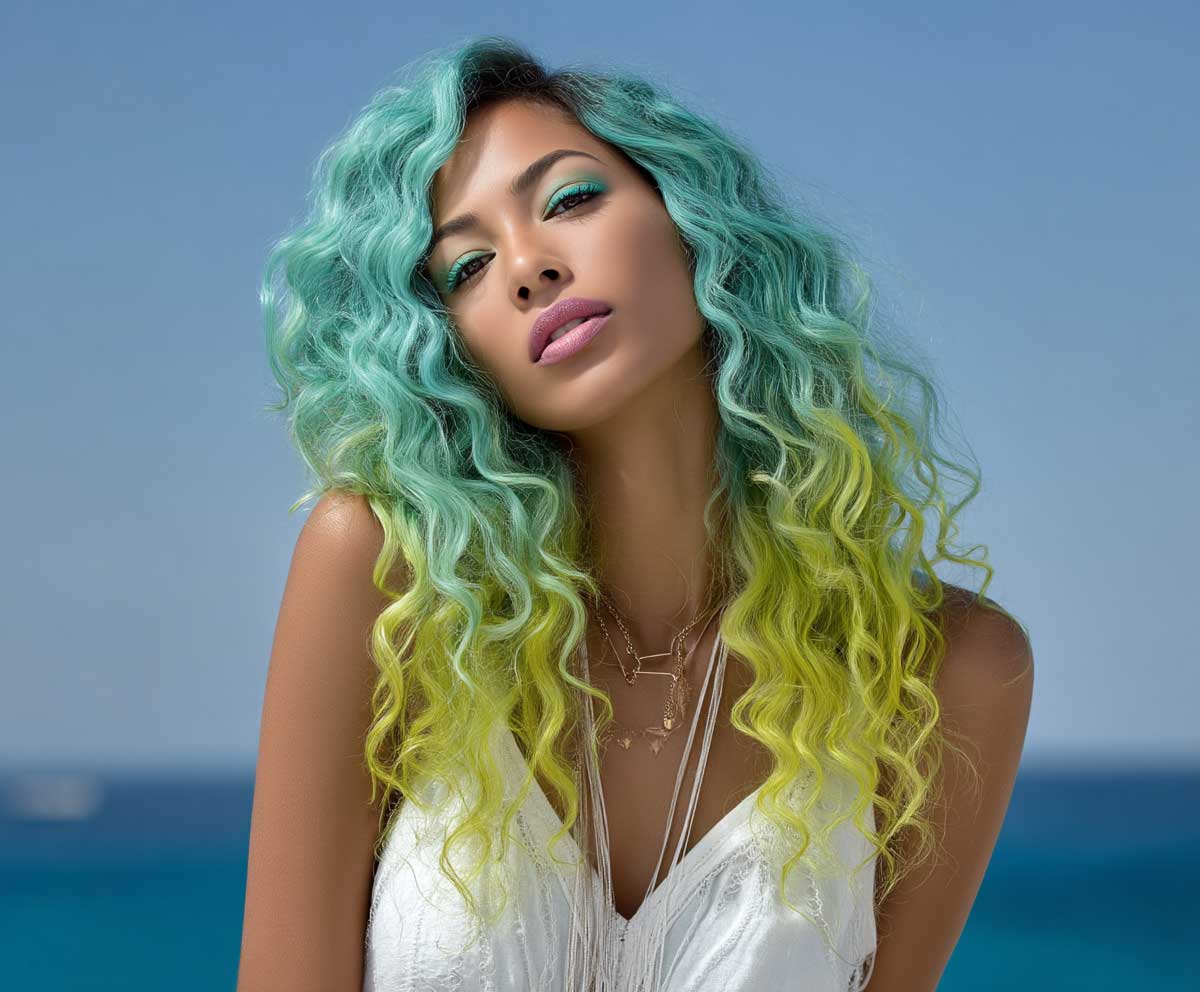
Why does teal sometimes turn green on its own? Blue pigments drift toward green as they fade, especially over hair with a yellow undertone, a pattern vivid-dye makers openly warn about. In this palette that drift is partly a bonus, but it can flatten the contrast between root and tip. Don’t top up only the lime ends; refresh the teal too, or the gradient collapses into a single shade. Most semi-permanent colors last around 4 to 6 weeks, so pencil in a refresh by week five.

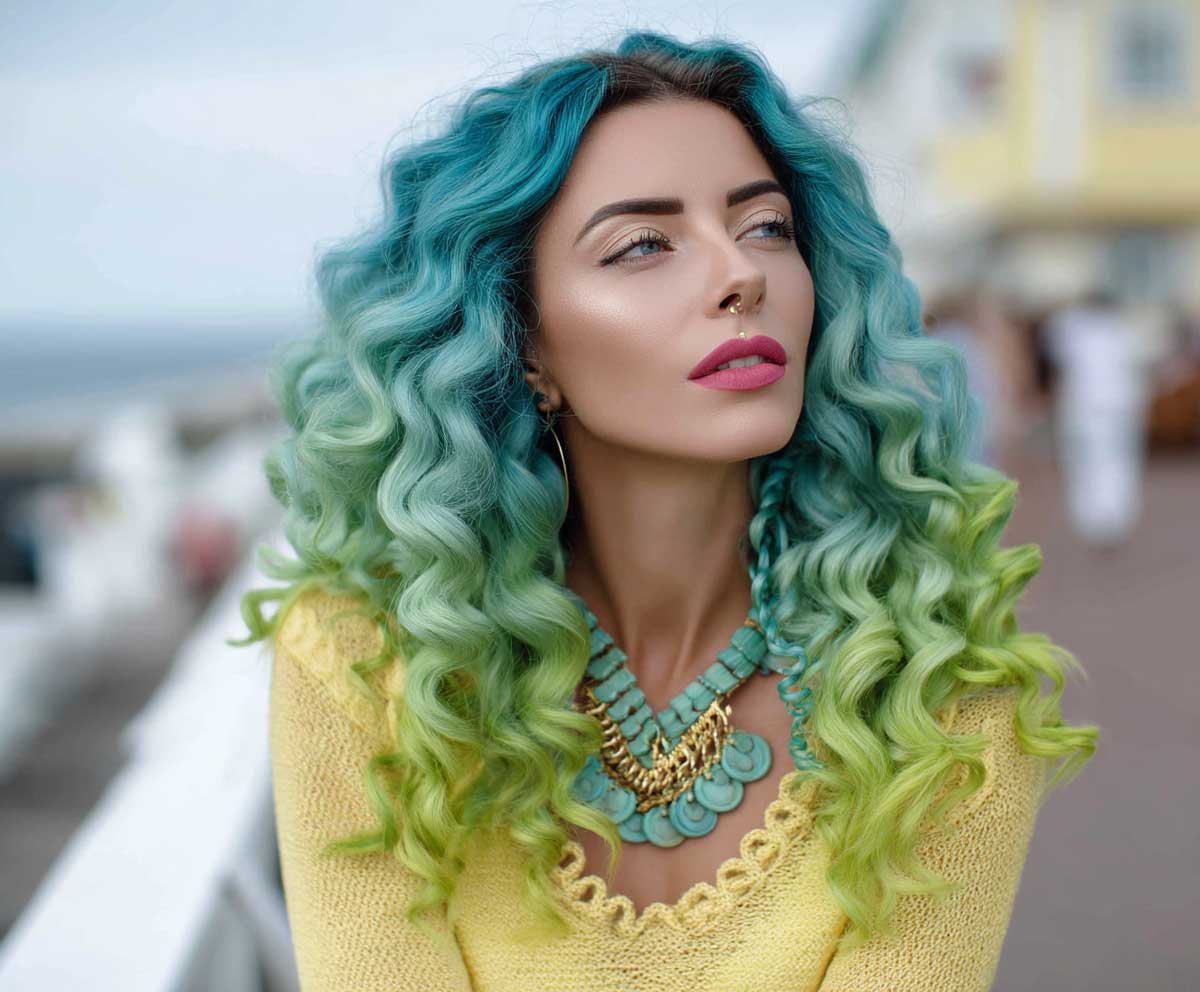
Mousse adds lift without stiffness, and a drop of shine serum on the ends makes lime look polished rather than chalky. Finger-coil a few front sections so the brightest pieces frame the face. Avoid heavy oils at the root, which darken teal and flatten the crown. Keep any serum to the last few inches of length.
Ruby to Coral Spirals With a Softer Fade
Ruby to coral is the gentlest of these long curly hair color ideas, melting deep red into peachy warmth with no hard line. Think of a sunset rather than a traffic light: the colors overlap long enough that the eye never finds the seam. The palette flatters light and medium complexions, since warm red reflects a soft flush back onto the face. Ask for a blend zone several inches wide so the curls never reveal a stripe.


Is a red ombre hard to keep? Less than its reputation suggests, since bright vivid reds are among the shades semi-permanent dye makers say hold well and fade evenly. Between full sessions, a salon gloss or toner refresh typically costs about $35 to $75 and brings the coral back to life. Don’t book a full recolor when a gloss would do the job. Ask for the toner price separately when you schedule the first appointment.
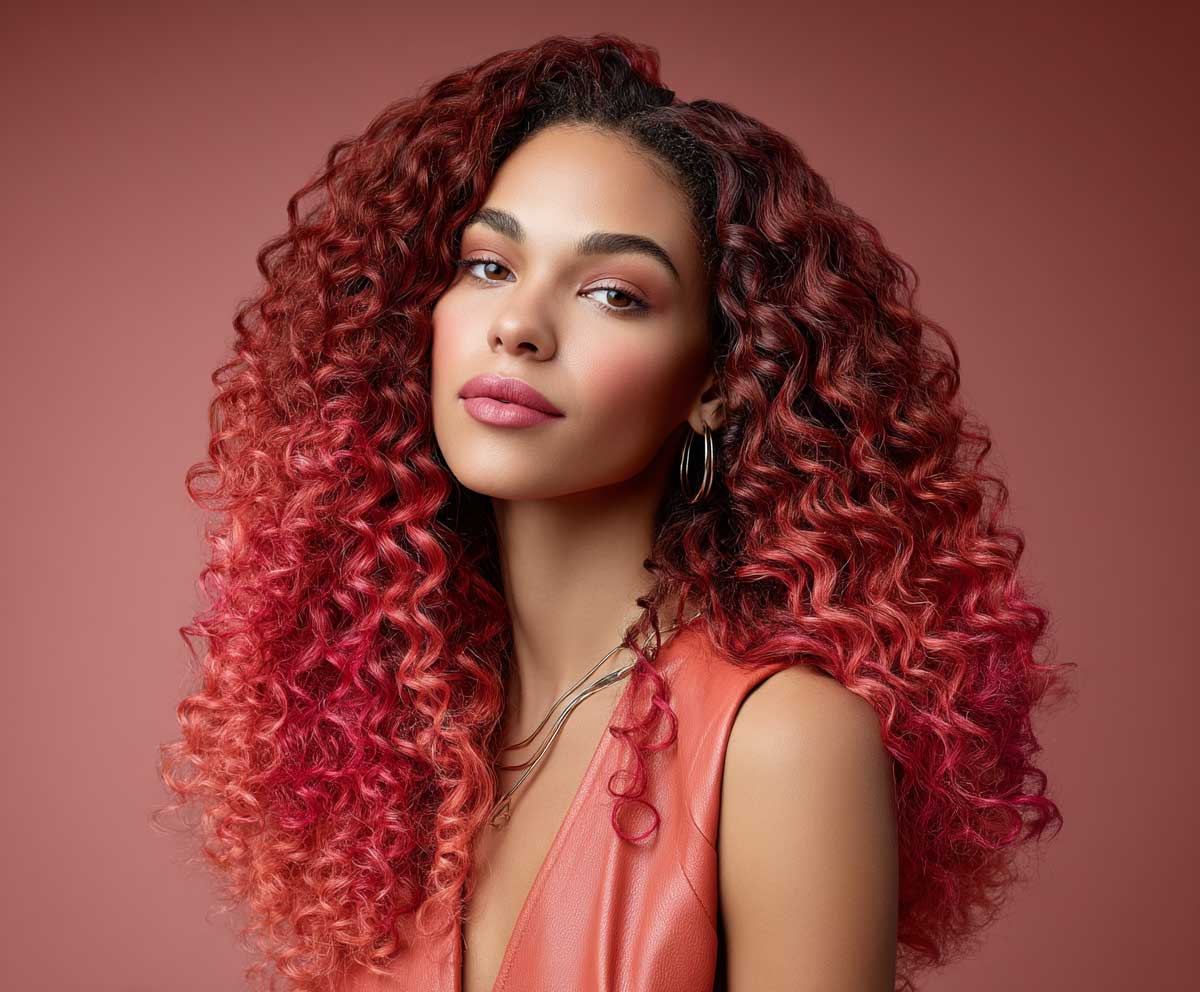

Moisture is what keeps coral glowing. A hydrating curl cream and a soft-hold jelly hold definition without crunch, and a curl-refresher mist revives the shape on day two or three. Slightly brighter face-framing pieces push the warm tone toward the cheeks. Group curls loosely at the crown for volume and leave the ends free to show off the coral.
Palettes Compared by Contrast and Upkeep
Comparing these ombre hair color choices for curly hair shows how strongly contrast drives upkeep. High-contrast palettes look bolder but reveal fading and regrowth sooner, much like a white car shows dust faster than a silver one. Which one is easiest to live with? Ruby to coral, because its soft blend hides both regrowth and fade. Match the drama level to the time you will actually spend on care.
| Palette | Contrast | Best for | How it fades | Typical refresh |
|---|---|---|---|---|
| Midnight to fuchsia | Very high | Layered long curls, evening looks | Pink softens toward pastel | About every 10–12 washes |
| Teal to lime | High | Creative settings, sunny days | Teal drifts toward green | About every 4–6 weeks |
| Ruby to coral | Medium | Light and medium skin, everyday wear | Fades evenly, warmth lingers | Gloss between full sessions |
Keeping Ombre on Curly Hair Bright Between Salon Visits
Ombre on curly hair needs more moisture than color on straight hair, because lightened curls lose water quickly and frizz scatters the gradient like fog over a stained-glass window. Sulfate-free shampoo, a rich conditioner and cool rinses form the base routine. Since vivid semi-permanent shades last around 8 to 12 washes, every skipped wash adds days of color. Dermatologists also name the sun as a cause of dry, faded, brittle hair, as noted in the AAD tips for coloring hair without damage. Wear a wide-brimmed hat on bright days.
What if the lightened ends start breaking? Cutting them off usually does more for the curls than any mask, even if a chunk of color goes with them. A shorter shape resets the pattern, and these low maintenance short natural haircuts with defined curls show where that path can lead. Don’t cling to fried ends just to keep the brightest part of the fade. Trim the lightened tips at every color refresh.
Don’t Do This
- Don’t brush dry colored curls; it breaks the pattern and blurs the fade line.
- Don’t use purple or silver shampoo on vivid ends; it dulls pink, lime and coral.
- Don’t lift the ends more than three shades in one session if the hair already feels dry.
- Don’t skip a strand test on bleached ends before applying a vivid dye.
The Palette Worth Booking
The right ombre curly hair palette is the one whose contrast matches the upkeep you will actually keep.
Choose midnight to fuchsia for maximum drama, and plan on a pink refresh roughly every 10 to 12 washes.
Pick teal to lime for bright, creative energy, and accept that the blue will drift greener over the weeks.
Go with ruby to coral for the softest grow-out and the easiest everyday wear, with a gloss between full sessions.
Whatever the shade, define the curls before judging the color, because frizz hides more of a gradient than any fade.