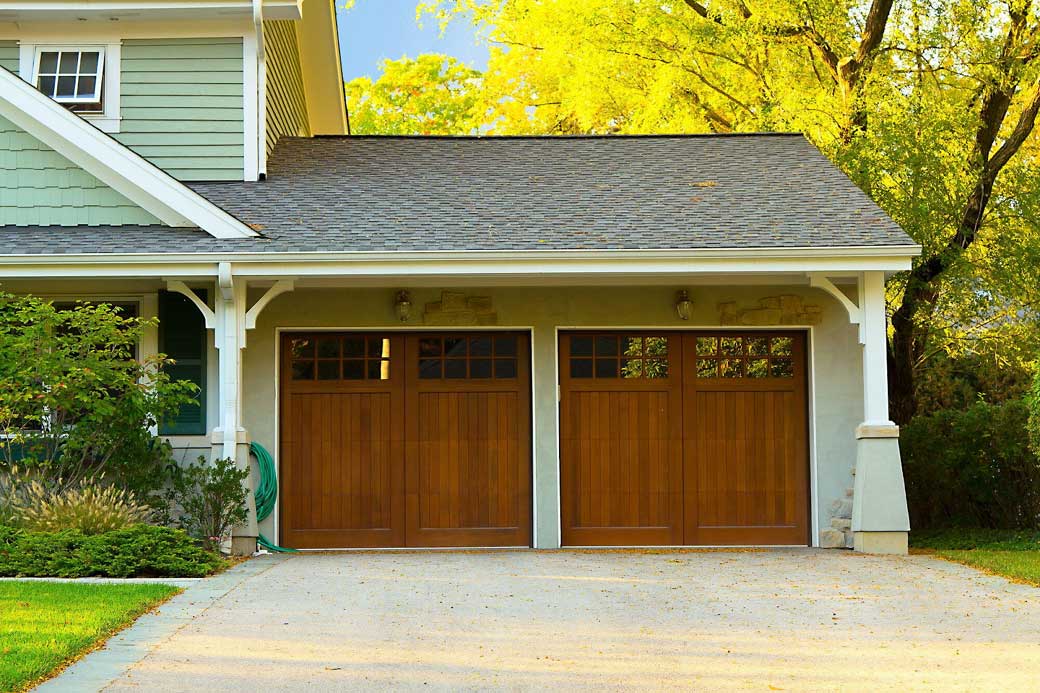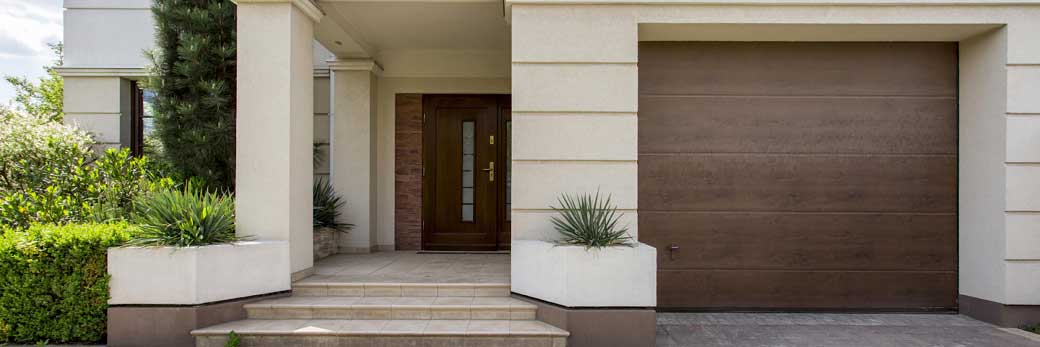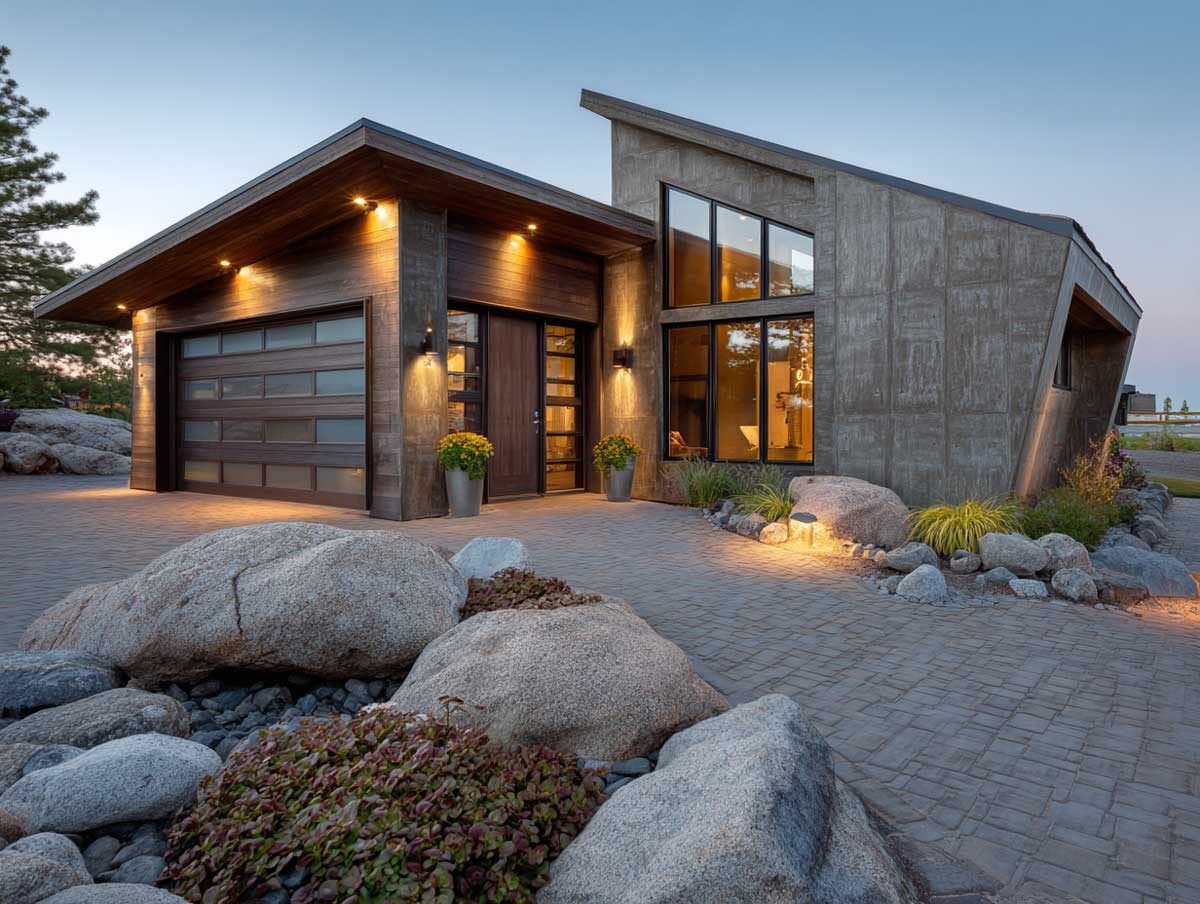
Garage door color for brick house exteriors is the detail that makes or breaks the whole facade — and most homeowners get it wrong on the first try. I’ve watched neighbors go through three repaints before landing on something that actually works with their brick. The problem isn’t the color itself; it’s ignoring the undertone in the brick before choosing. Pick a door that fights the brick’s warmth and you’ll spend $800 on a door that makes your house look smaller. Get it right and the street presence doubles.
Red brick, brown brick, and gray brick each call for a completely different approach. A charcoal door that reads razor-sharp against red brick looks muddy against brown. Bright white pops on a tan brick ranch but goes clinical on a deep red Victorian. You need to pull the undertone first, then choose. Three colors consistently earn their place across the full spectrum of brick tones — white, black, and warm wood stain — and each one has a very specific set of conditions where it wins.
Quick read:
- White works on red brick and tan brick — use bright white for red, off-white for tan. Expect repainting every 5-7 years.
- Black is the strongest move for red brick. Matte finish on hot climates, gloss in overcast regions. Budget $200–$400 for quality exterior paint.
- Wood tones (cedar, mahogany) bridge brick and landscape. Clopay Canyon Ridge faux-wood panels run $1,800–$3,500 installed.
- All three options work with red brick — the brick color with the most search confusion and the hardest to pair.
- Avoid beige, taupe, and “greige” on any brick. They fight everything and win nothing.
White on Brick Earns Its Reputation — Under These Exact Conditions

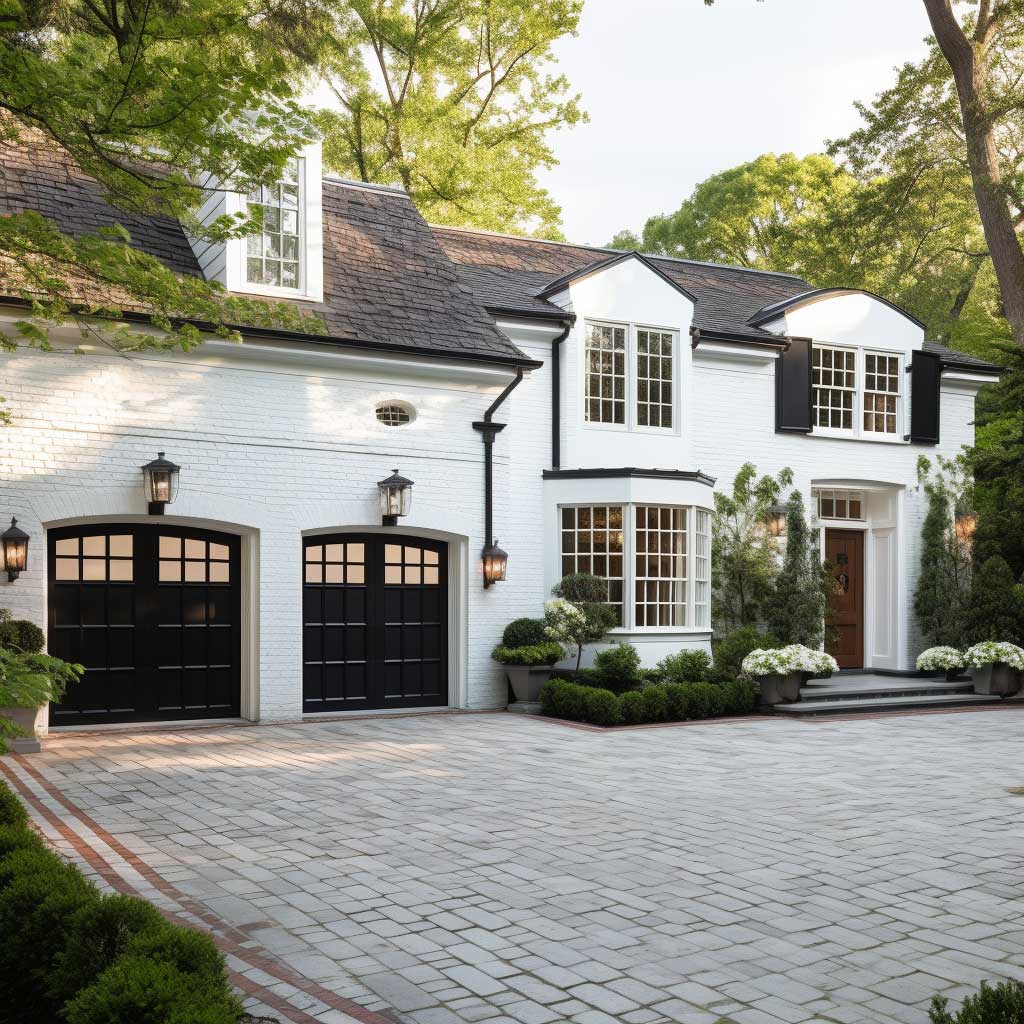
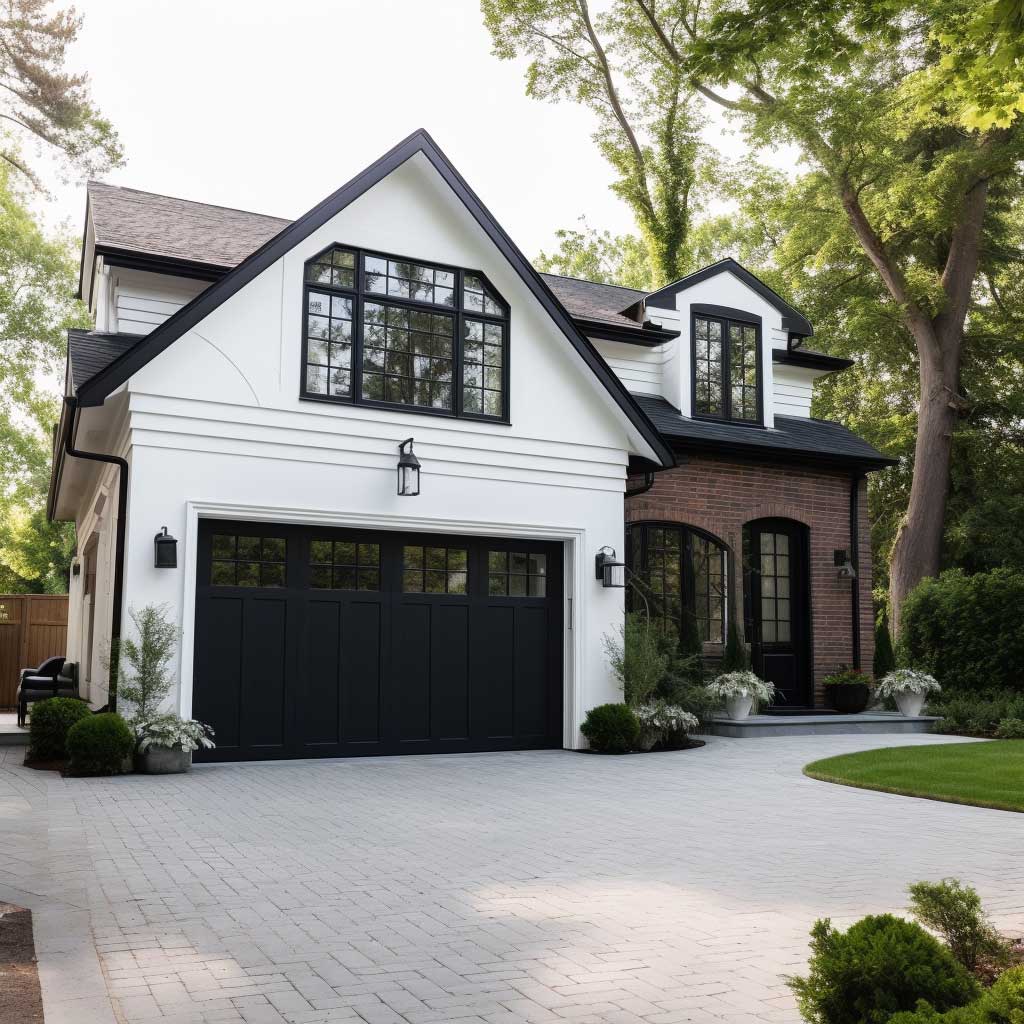
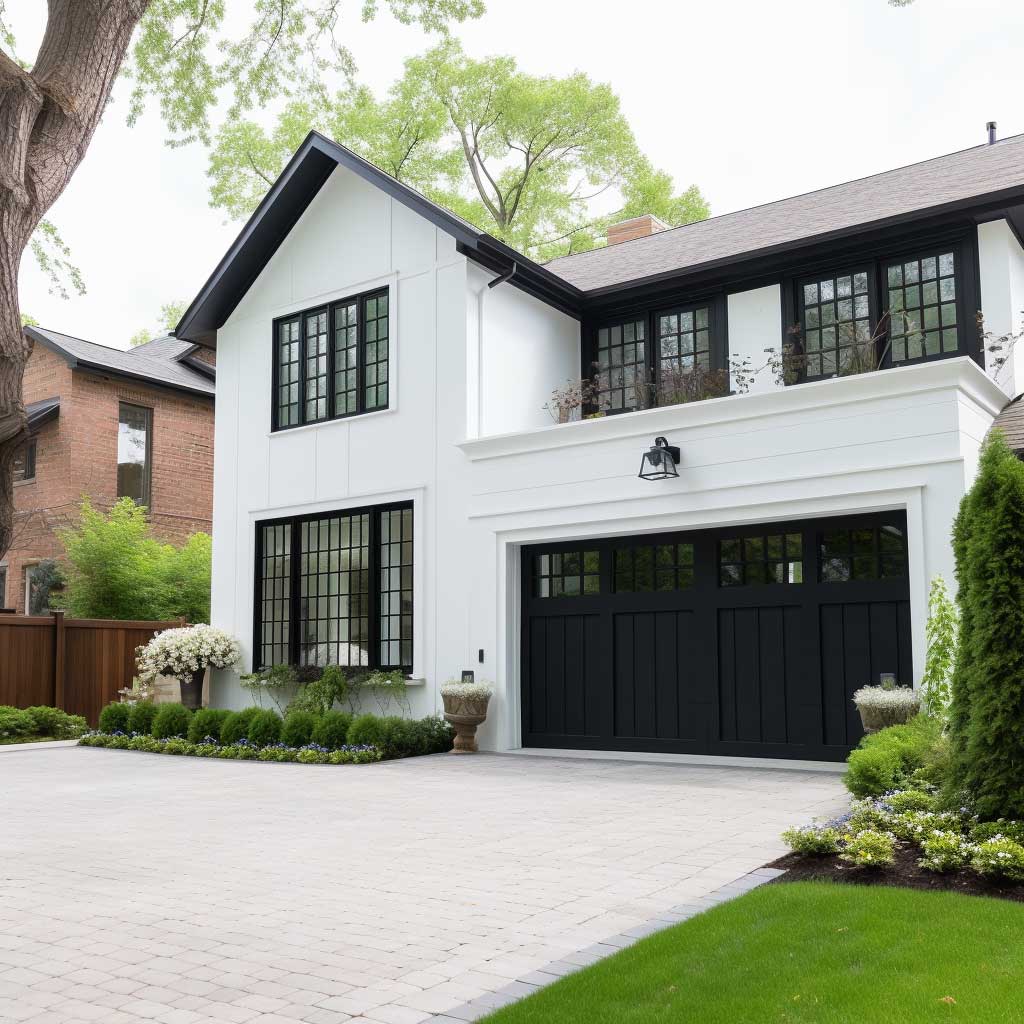
My go-to for red brick is Benjamin Moore Chantilly Lace OC-65 — it’s the bright, blue-toned white that snaps against warm brick without reading gray. I’ve tested it side-by-side with Swiss Coffee and the difference is not subtle. Swiss Coffee next to red brick looks like a nicotine stain. Chantilly Lace reads as clean architecture. The contrast is the whole point: red brick is visually loud and white gives the eye somewhere to land.
The question I get most is whether white shows dirt on a garage door. Yes. Faster than you’d hope. A quality garage door with a factory-applied finish in white holds up better than a field-painted steel door — factory finishes are baked on and resist chalking for 8–10 years versus 4–6 years for exterior latex applied on-site. Clopay’s Coachman Collection in white runs $1,200–$2,000 for a 16-foot double; it’s what I’d use on a brick house where the door faces south and catches morning sun all year.
Avoid bright white on brown or gray brick — it looks imposed, not considered. Brown brick has yellow and orange undertones that pure white turns cold against. Go for Benjamin Moore White Dove OC-17 instead: it has a slight warmth that pulls the brick and door into the same family. That one-step shift from bright to warm white is the difference between a door that looks selected and a door that looks defaulted.
Hardware is where the white door earns its character. Flat black strap hinges and a matching handle set — Emtek makes a good carriage-style set for $180–$240 — give a white door on brick the kind of definition it needs. Chrome hardware on a white door against brick reads as a spec house. You don’t want that.
One thing most people miss: the trim color. If your brick house has white window trim and a white soffit, a white garage door ties the whole facade into one cohesive line. If your trim is cream or almond, go off-white on the door too. Mixing a bright white door with almond trim against brick creates three competing neutrals, and none of them win. I stole this trick from a contractor who’d been painting brick houses for 20 years — match the door to the trim, always.
Don’t Do This: Don’t paint a steel garage door with standard wall paint. Exterior latex without a bonding primer on a steel door will peel in 18 months — the door flexes on every open and close cycle and cracks the film. Use a product rated for metal, like Behr Premium Direct-to-Metal ($45 per gallon), and sand lightly between coats. Skipping the prep is how you end up with a peeling white door that makes the whole brick house look abandoned.
Black Garage Doors on Brick Houses Have a Heat Problem Nobody Mentions
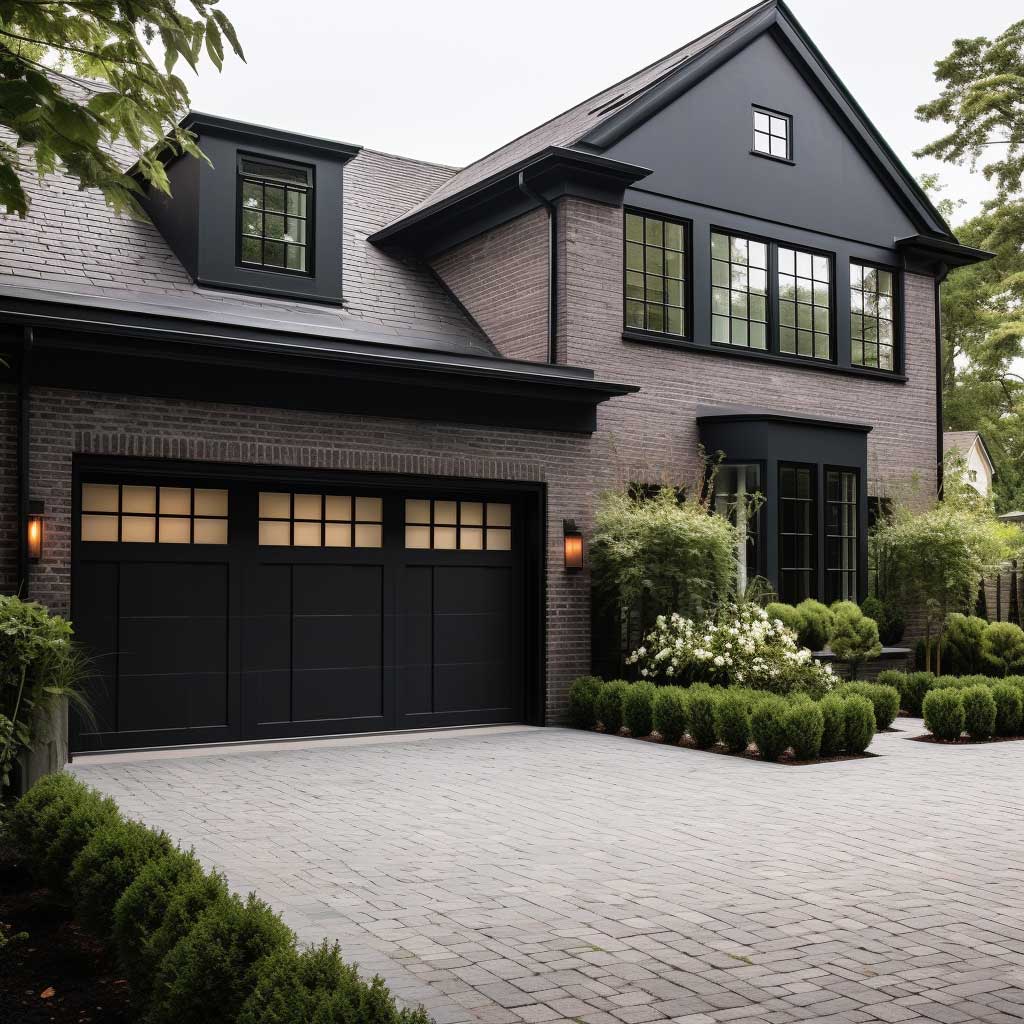
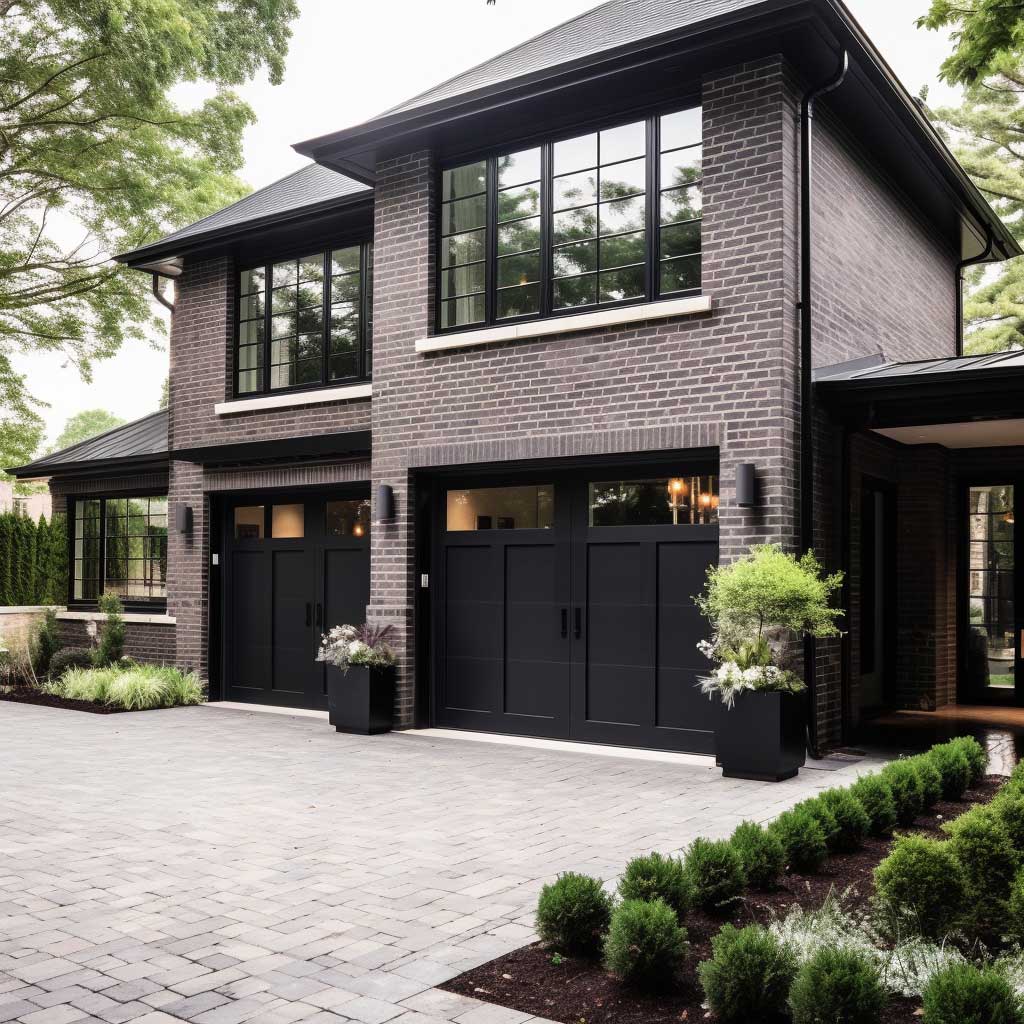
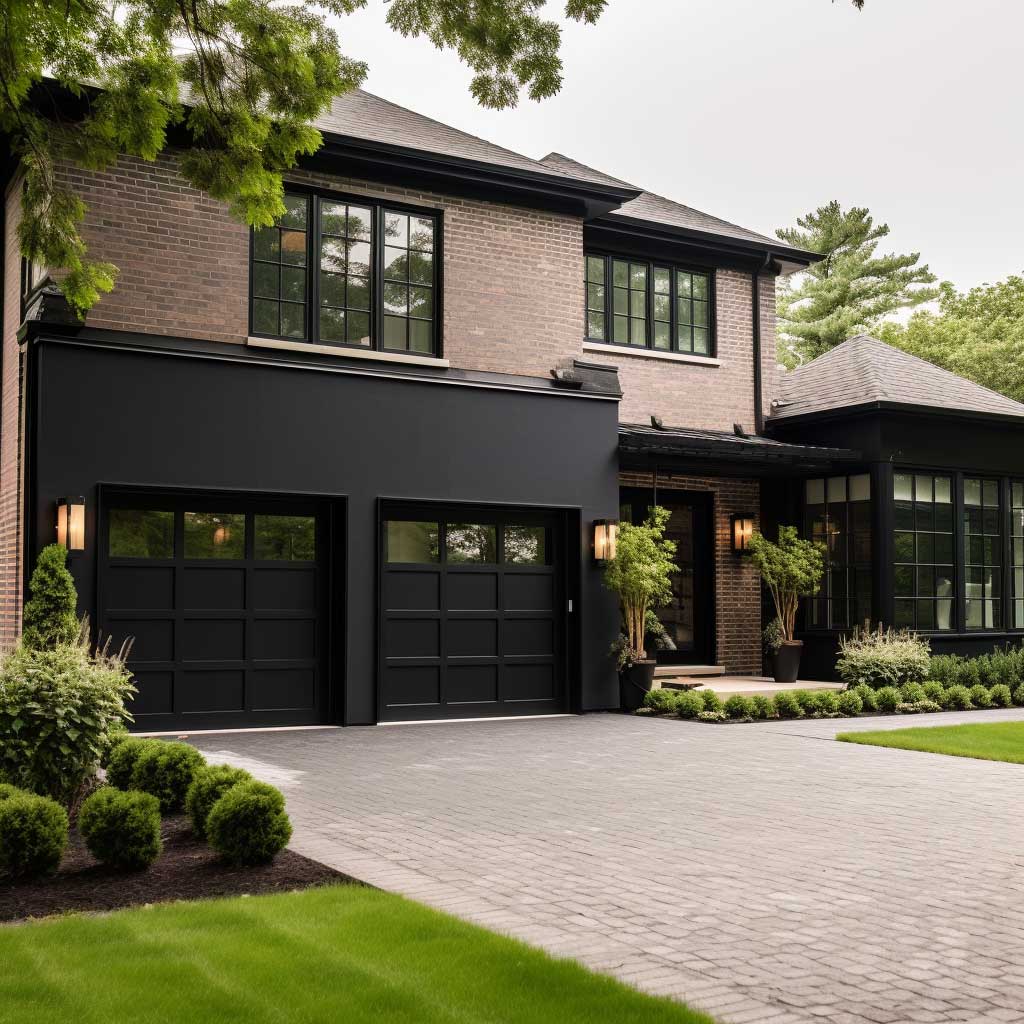
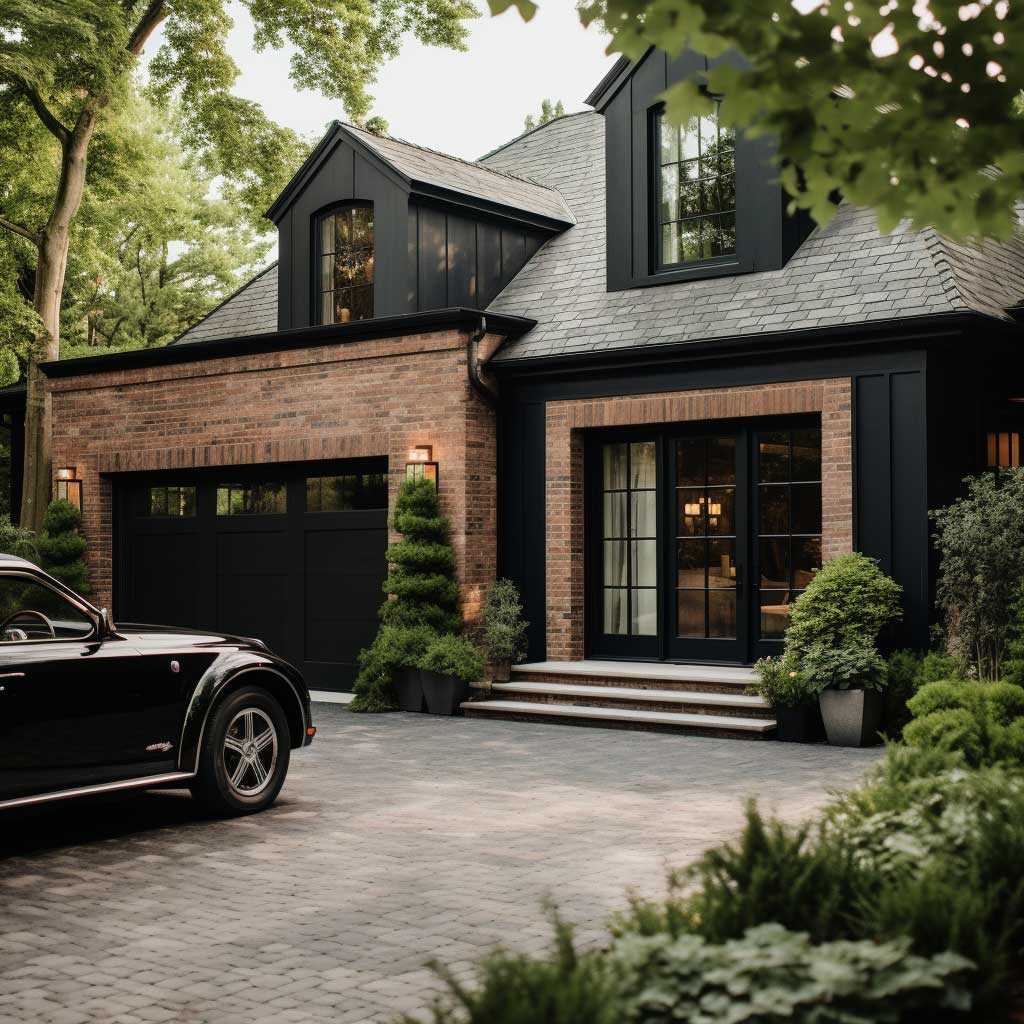
Black is the strongest visual move you can make on a brick house — and it’s also the one that causes the most buyer’s remorse in Phoenix, Dallas, and Atlanta. A black steel door in full sun reaches 140–170°F on summer afternoons. That heat warps panels on cheaper doors and degrades the weatherstripping in two seasons instead of seven. You need either an insulated door (R-12 or higher) or a color that’s technically black but mixed with enough graphite to drop the heat absorption a few degrees — Sherwin-Williams Iron Ore SW 7069 does exactly this. It reads as black in photographs but performs closer to a dark charcoal in thermal terms.
On the design side, black against brick is a natural win because brick already has dark mortar lines. The door pulls from what’s already there. I own a brick colonial with a dark charcoal door — people assume it’s custom-painted but it’s Wayne Dalton’s Model 9100 in their “Ebony” finish, around $1,400 for a 16-foot double before install. You’ll notice it from two houses down. That’s the point.
Finish matters more than shade. Matte black reads as contemporary and architectural — works on clean-lined modern brick homes. High gloss reads as traditional and a little formal, which pairs well with colonial or craftsman brick. Semi-gloss sits in the middle and tends to photograph well. My rule: if the rest of your exterior hardware (light fixtures, house numbers, mailbox) is already matte black, match it. Mixing gloss and matte on the same facade looks like an accident.
What doesn’t work: a black door on gray brick. Gray brick is already cool-toned and fairly dark in the mortar zones; a black door pushes the whole facade toward heavy and oppressive. The house looks like it’s in shadow even on a sunny day. Go charcoal instead of full black on gray brick, or better yet — try the wood tone in the next section. Gray brick and warm wood is one of the most underused combinations in exterior design.
For those asking about a dark garage door on a red brick house specifically: it works because red brick is warm and saturated. Black is the only cool-neutral that can absorb that warmth instead of competing with it. Everything else — navy, forest green, dark gray — argues with the red. Black just settles it. Add stainless steel hardware and you have a front elevation that looks like it cost twice what it did. For more exterior pairings that use this same logic, the brick house exterior color ideas on this site show how to carry the dark tone across the whole facade, not just the door.
Faux Wood vs Real Wood on a Brick House — Where the Math Changes
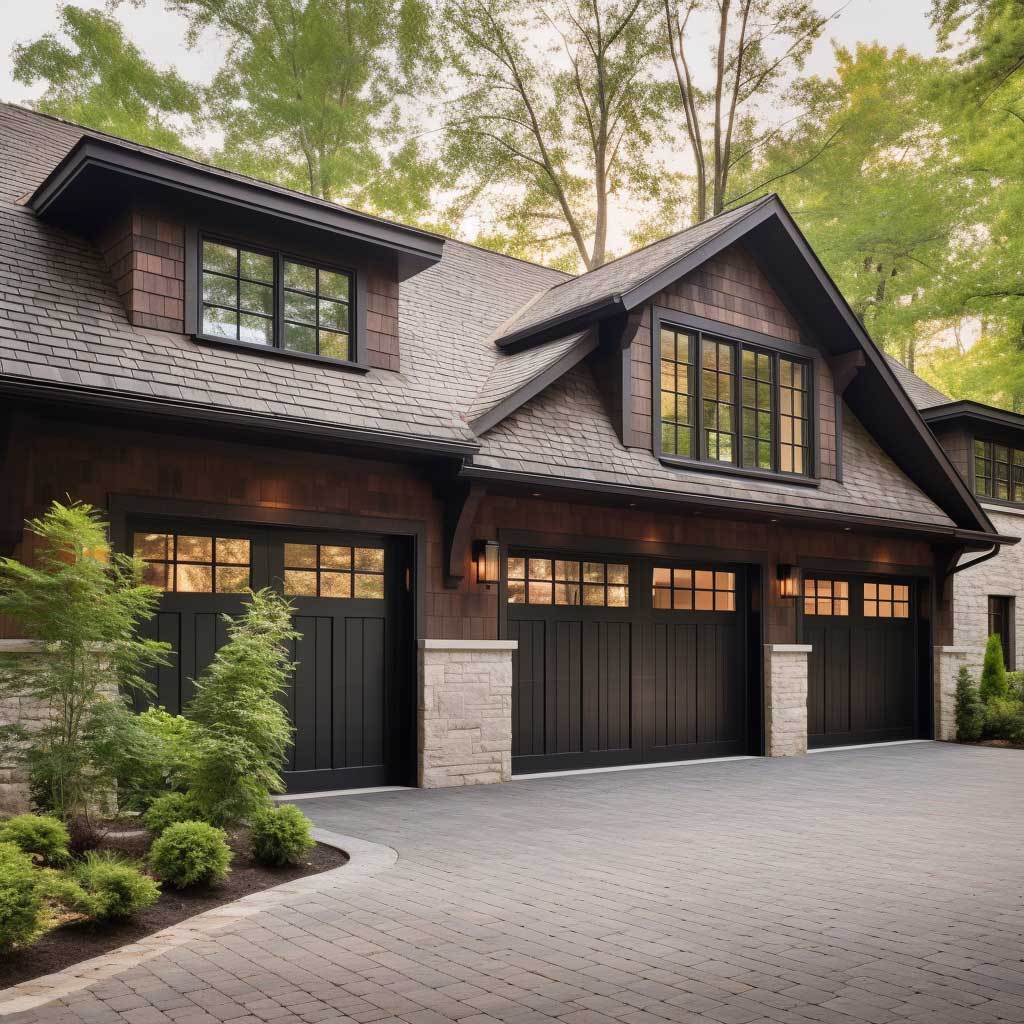
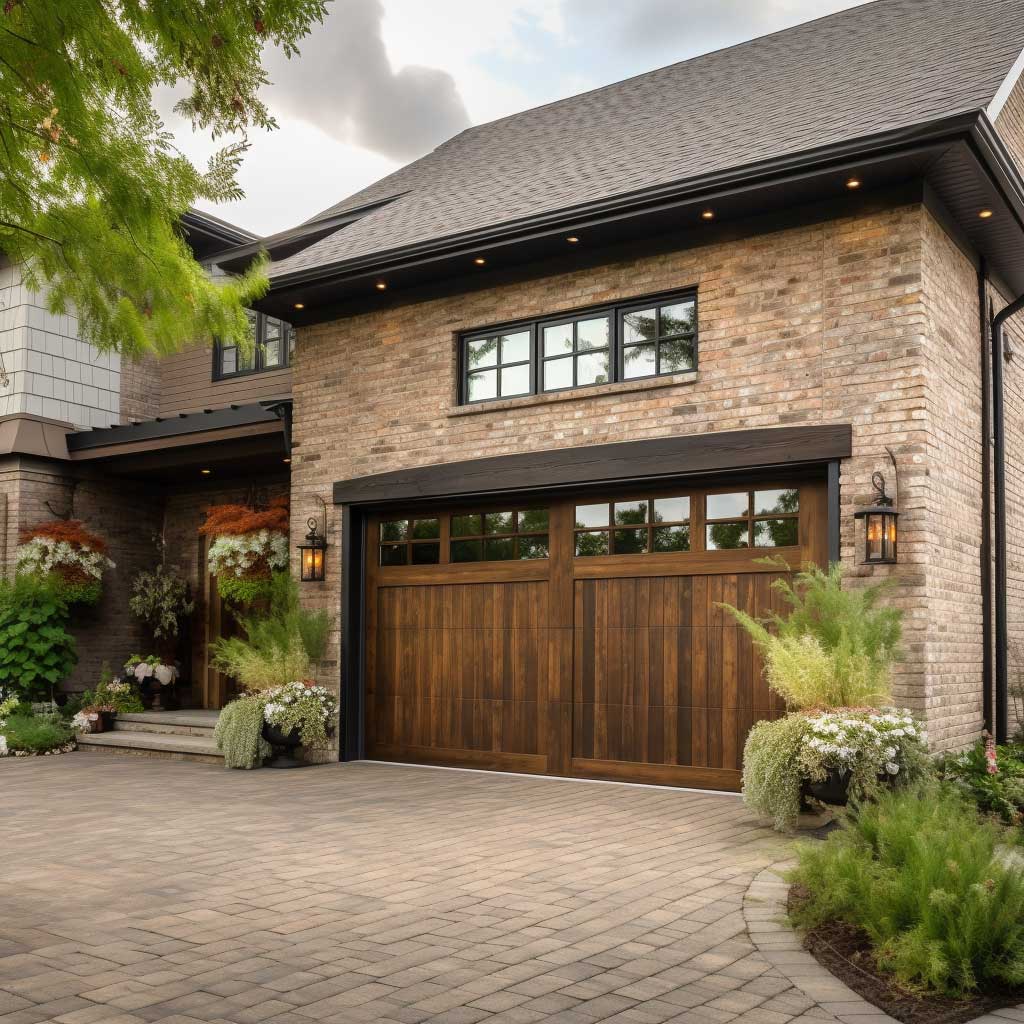
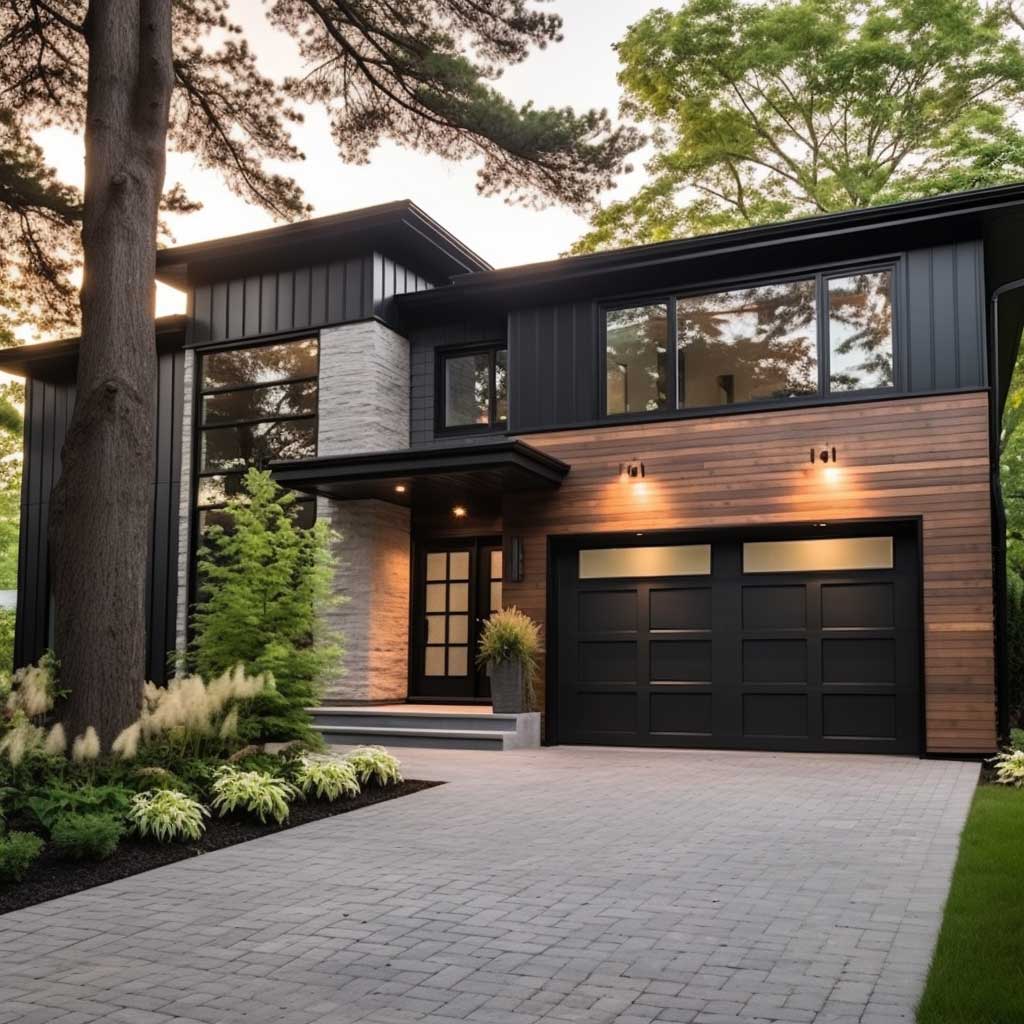
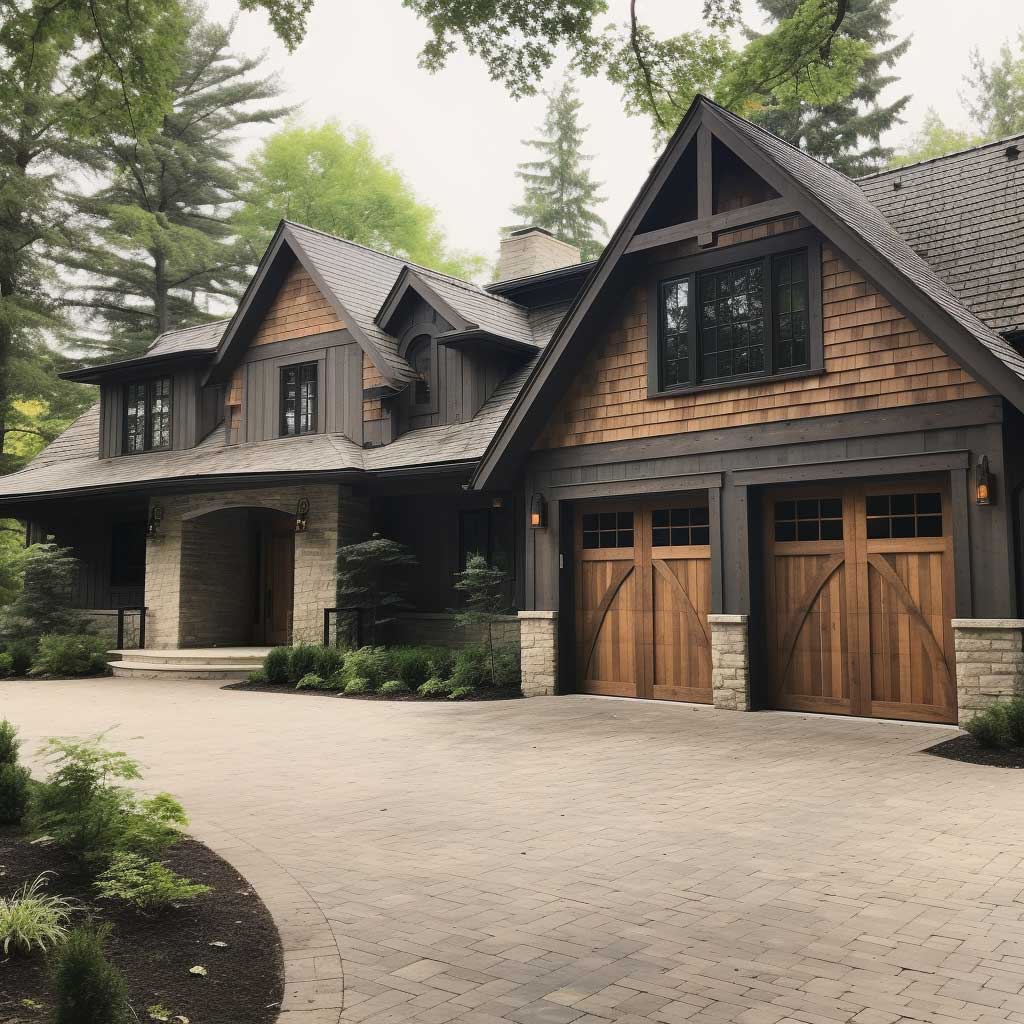
Real wood wooden garage doors are gorgeous and I understand the appeal completely. Cedar and redwood take stain beautifully, the grain is tactile in a way no composite replicates, and a custom cedar door on a brick house looks like something out of a design magazine. Budget $3,000–$6,500 installed. Now budget another $400–$800 every four years for refinishing. And accept that if you live somewhere with freeze-thaw cycles, you’ll replace the door in 12–18 years instead of 25+.
Faux wood composite panels — specifically Clopay’s Canyon Ridge and Carriage House collections — have closed the gap to the point where I’d choose them on every brick house project. Canyon Ridge in “Walnut” runs $2,200–$3,800 installed, takes zero refinishing, and carries a lifetime warranty on the steel skin. I’ve seen these doors installed six years ago that still look like they were stained last month. The texture is embossed on a steel or composite substrate; up close at two feet it’s clearly not real wood, but from the street — which is where curb appeal actually lives — it’s indistinguishable.
The color matching question is real: which wood tone for which brick? Cedar (orange-gold) pairs with red and tan brick because it sits in the same warm-spectrum family. Mahogany or dark walnut works on brown brick — the deep red-brown in the door pulls the same tone from the brick face. Bleached or light ash wood tones are the one I’d skip on any brick house; they go pale against every brick variant and make the door look like it was left in the sun too long. That’s the anti-choice here.
Hardware on a wood or faux-wood door should lean traditional: oil-rubbed bronze strap hinges, a ring-pull handle. Schlage makes a solid carriage-door hardware kit for around $120. Don’t use chrome or brushed nickel — it breaks the organic warmth that makes the wood tone work against brick in the first place. Think of the door as the natural handshake between the stone landscape elements and the brick: the hardware is just the handshake’s grip strength.
For a full picture of how brick exterior design can be coordinated with warm materials across the whole facade — not just the door — it’s worth seeing how designers handle the interplay between wood, stone, and mortar color from the ground up. The wood-tone garage door is the punctuation mark; everything else on the facade is the sentence.
Garage Door Color Comparison for Brick Houses
| Color | Best Brick Match | Avoid On | Avg. Installed Cost | Maintenance |
|---|---|---|---|---|
| Bright White | Red brick, colonial | Brown or gray brick | $1,200–$2,000 | Repaint every 5–7 yrs |
| Matte Black | Red brick, tan brick | Gray brick | $1,400–$2,500 | Low — factory finish |
| Warm Wood Tone | Brown, gray, tan brick | Light ash on any brick | $2,200–$3,800 | None (faux) / High (real) |
Bottom Line
The brick doesn’t choose the door color — the brick’s undertone does.
Pull the undertone before you pick anything. Red brick is warm-orange; it works with white, black, and cedar wood. Brown brick is warm-brown; it wants mahogany or off-white. Gray brick is cool-neutral; it needs warm wood to save it.
Spend $50 on door samples before you spend $2,000 on a door. Tape them up on a Saturday morning and check again at 6pm when the light changes. The decision will be obvious.
Save this post before the next time you’re standing in the Clopay aisle at Home Depot with no idea what you’re doing.
Related Topics
FAQ
What is the best garage door color for a red brick house?
Does a dark garage door on a brick house overheat in summer?
Should a garage door match the front door on a brick house?
What colour garage door works with red brick besides black and white?
Is a white garage door hard to maintain on a brick house?
How do I choose between matte and gloss black for a brick house garage door?
Complete guide
Door Design Ideas That Transform Every Entrance, Room and Style
Front doors, double doors, interior, garage, glass, wood, trim — all in one place
Complete guide
Brick in Every Room and Facade Worth Seeing
Exteriors, interiors, patios, bathrooms, colors, patterns, materials — all in one place