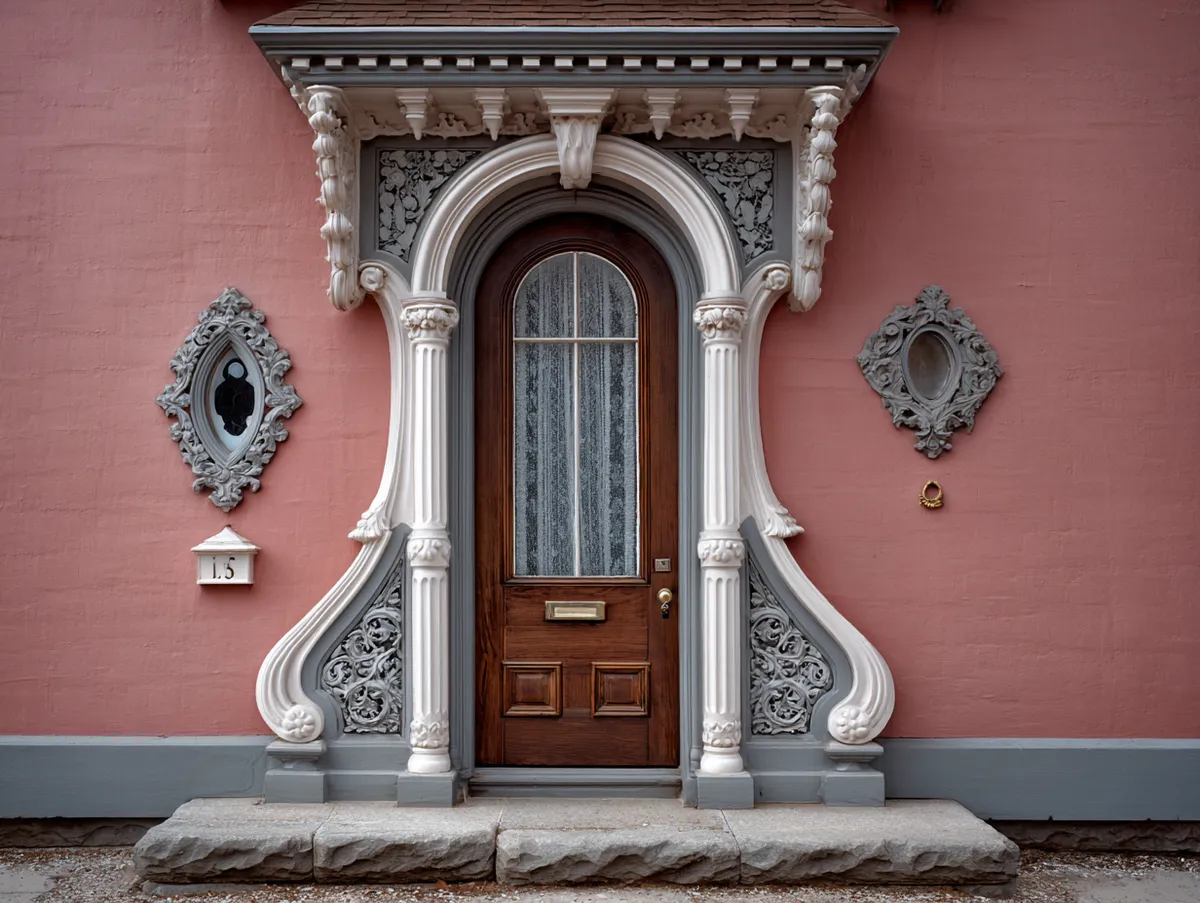
Victorian exterior window trim signals one thing to every contractor who walks up to your house: this owner knows what era they’re working with. If you’re researching victorian window trim exterior options, you’re already ahead of most homeowners who slap flat boards around their windows and call it “classic.” The five styles below — Victorian, Craftsman, Colonial Revival, Tudor, and Mediterranean — each have a specific logic, and confusing their details is how you end up with a facade that looks assembled from a catalog rather than designed.
Materials matter more than profile shape. I’ve watched homeowners spend $2,000 on Fypon polyurethane corbels and then mount them with standard exterior latex that bubbles off in one Chicago winter. Get the substrate and the finish coat right first. The ornament comes second.
- Victorian window trim exterior — decorative corbels, ornate casing, cast iron or solid wood frames
- Craftsman window trim — wide flat boards, oak or mahogany, earthy stain rather than paint
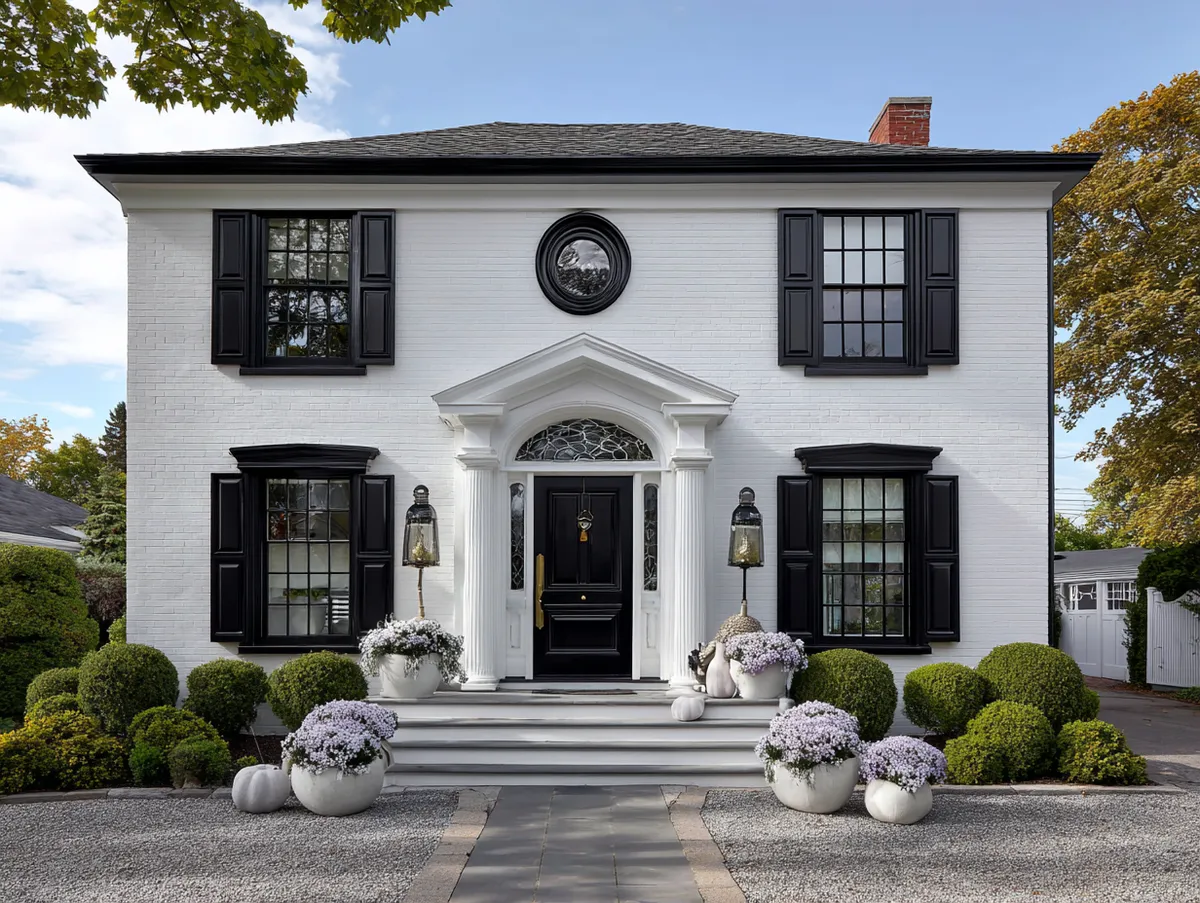
- Colonial Revival accents — pediments above glass, symmetrical muntins, matte white paint
- Tudor window trim — dark stained oak frames, diamond leaded glass, stucco contrast
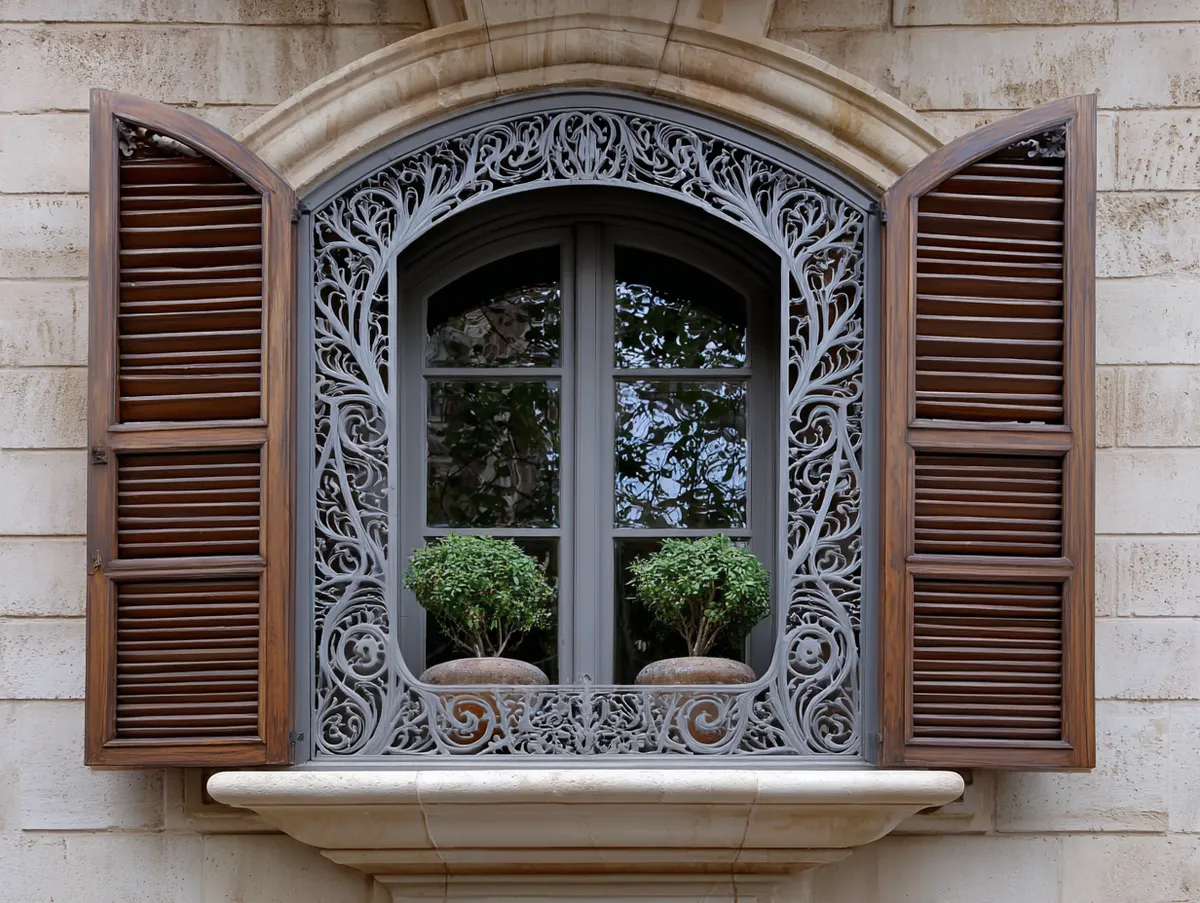
- Mediterranean flourishes — arched stucco surrounds, wrought iron grilles, stone sills
- Victorian window sill outside — hardwood or cellular PVC, minimum 1¼” overhang for water runoff
Victorian Window Casing Gets Its Power from the Corbel, Not the Profile
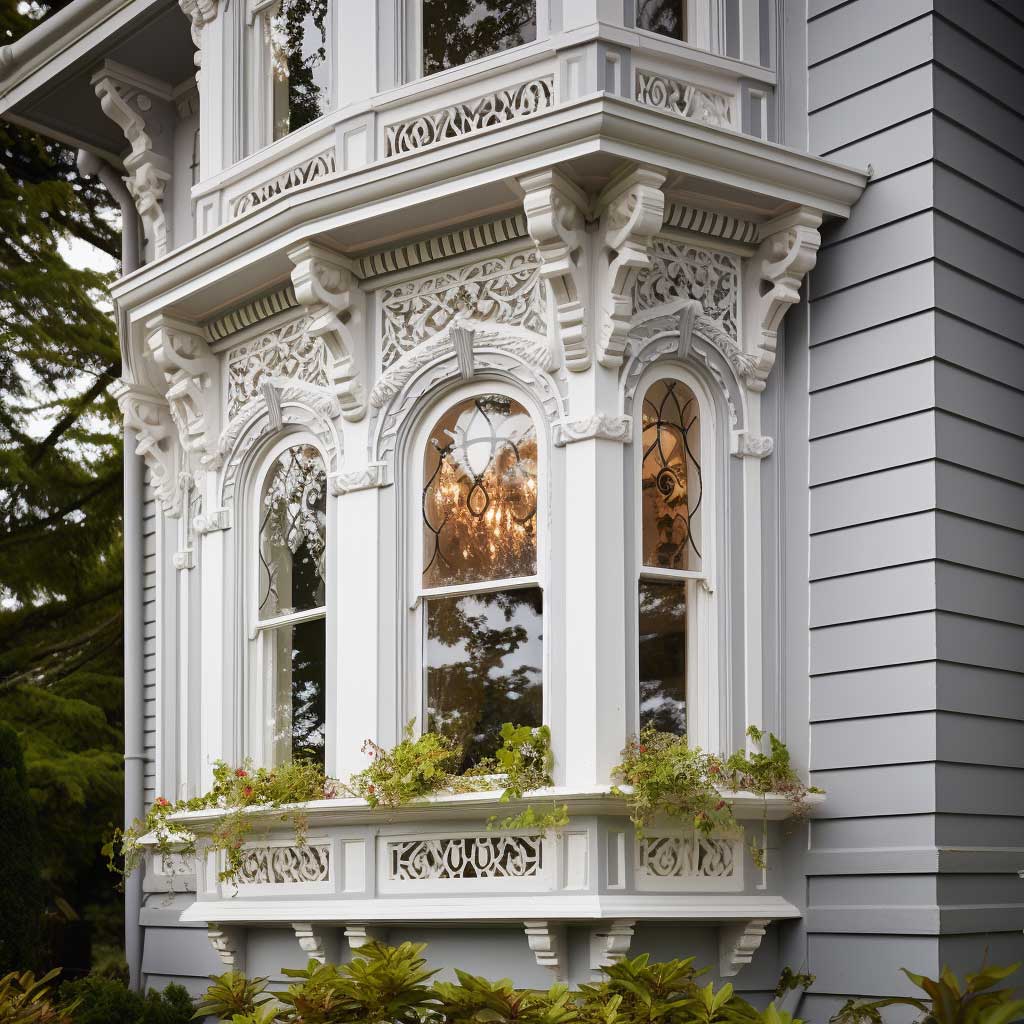


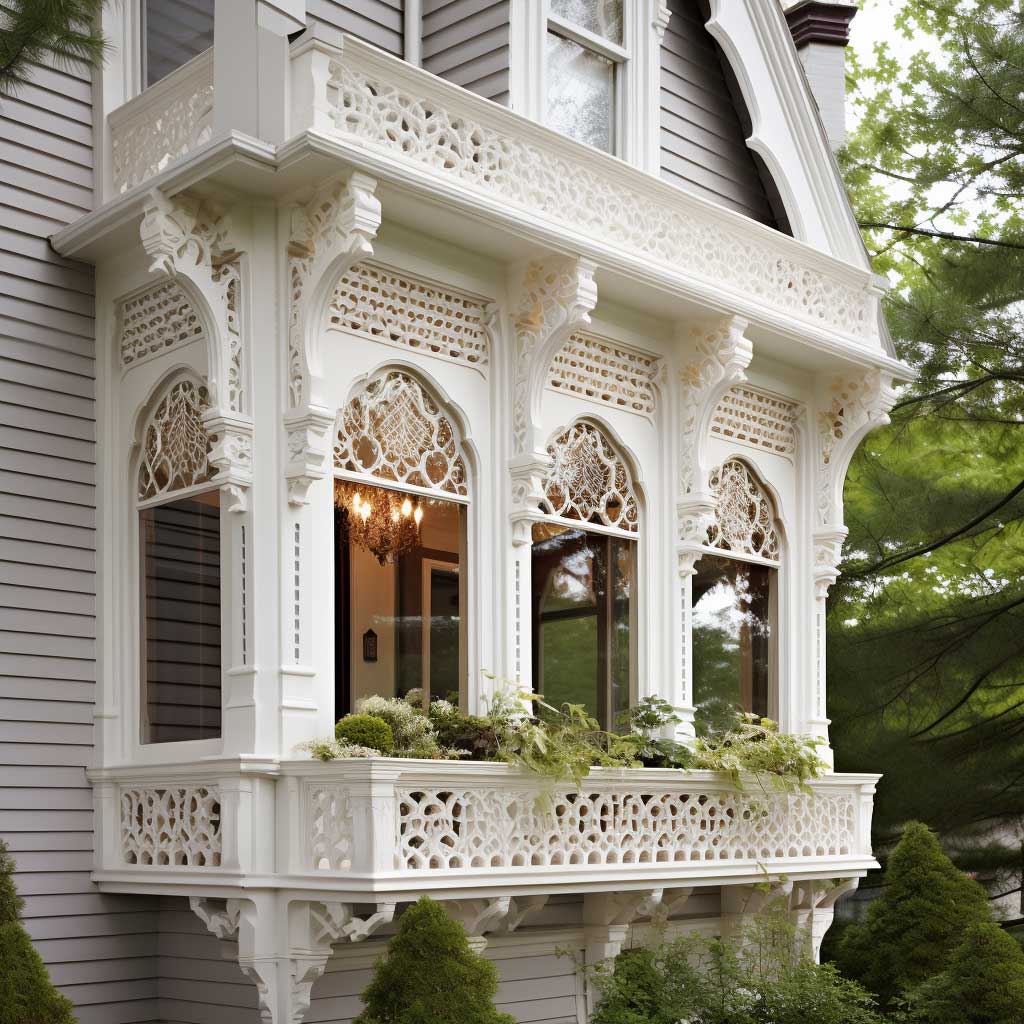
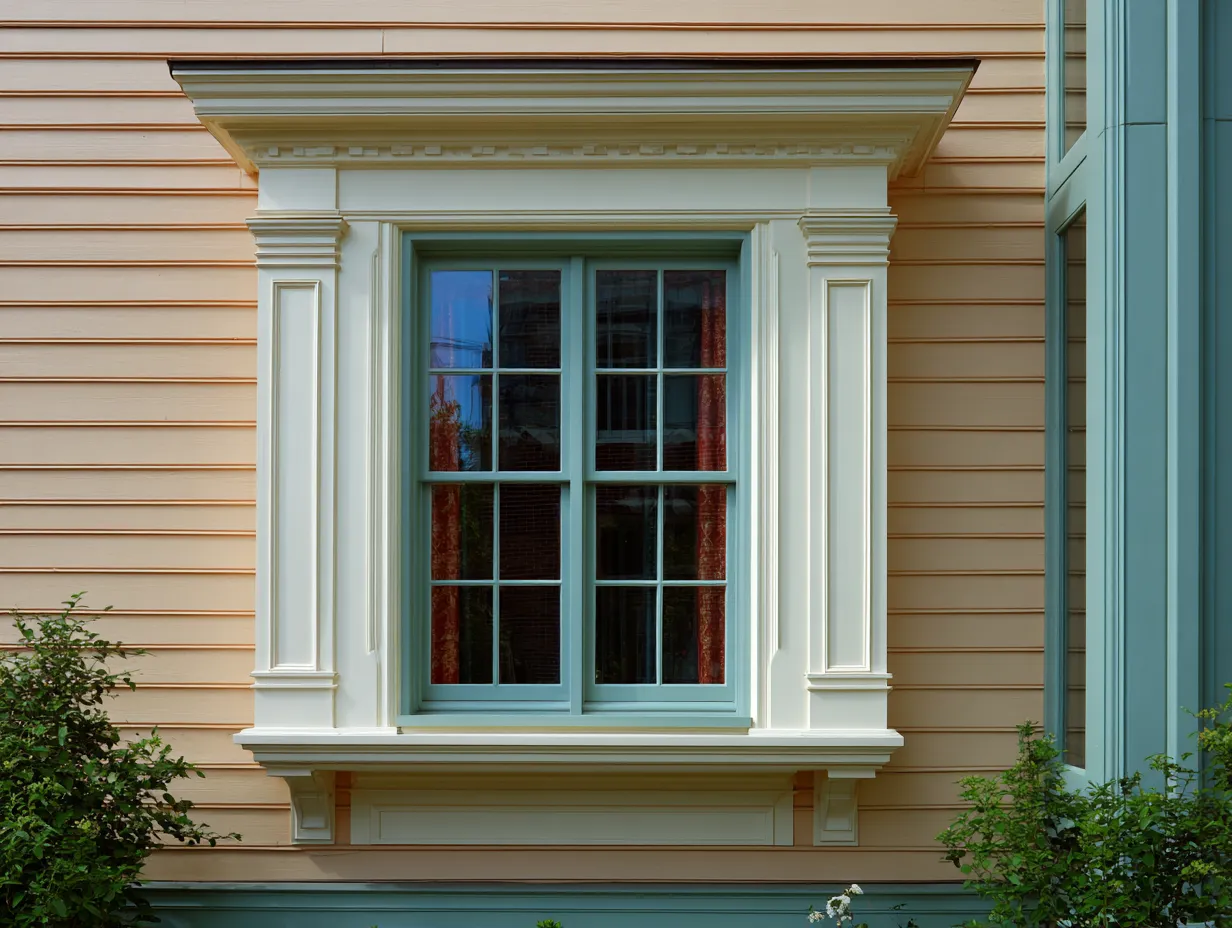
Victorian window trim exterior design built its reputation on one move: adding a corbel or bracket at the top corners of the frame and letting the eye travel upward to the roofline. Forget everything about the “intricate profile” narrative — you can run a plain 1×6 casing and still read as Victorian if you nail a cast iron bracket at the head. That’s how these facades worked in the 1880s, and it still works now. The window molding design itself was secondary.
I own two houses built in 1897 and the original window casing is dead-straight Sitka spruce with a simple ogee edge. Nothing fancy. What makes them Victorian is the hood moulding above and the bracketed sill below — Fypon’s FBR series runs about $38 per bracket pair at most lumber yards. Skip the brackets and you’ve got Colonial. Add them back and you’ve got Victoria back on the throne.
The worst mistake I see is painting Victorian trim in semi-gloss white across every profile. Original Queen Anne homes used at least three paint colors on exterior trim — Sherwin-Williams’ historical collection has the period-correct palette if you’re doing research. Flat and satin finishes on the casing, gloss only on the sash. Using one sheen everywhere flattens the depth that makes the whole style work. Don’t do that.
For the victorian window sill outside specifically, you need a minimum 1¼-inch overhang with a kerf cut on the underside. Water that runs straight off a flat sill will wick back under the frame and rot the jack stud in three winters. Classical exterior window casing designs consistently show this detail — it’s the one everyone photographs and nobody specs correctly.
Craftsman Window Trim Earns Nothing Without the Right Wood Species


Craftsman window trim exterior design has a reputation problem. Every home improvement blogger describes it as “simple and clean” — which tells you nothing about why it reads differently from a budget builder window surround that also uses flat boards. The answer is species and width. Craftsman trim runs wide: 3½ inches minimum on the side legs, 4½ on the head casing. You can’t achieve the same visual weight with a 2½-inch pre-primed MDF flat casing from Home Depot.
My go-to for authentic Craftsman exterior work is vertical grain Douglas Fir — quartersawn, not flatsawn — stained with Sikkens Cetol 1 in Natural (around $58 per quart) and topcoated with Cetol DEF. This combination holds on the Pacific Northwest exteriors where I’ve tested it. Mahogany works if you’re in a humid climate; it’s dimensionally stable where fir will move. Oak looks right indoors but checks badly outside on south-facing elevations.
Here’s a question you need to ask before starting any Craftsman trim project: are the window frames set back at least ⅝ inch from the face of the siding? Without that reveal, the trim looks pasted on rather than framing a recessed opening. You’ll notice the difference immediately in photos — the depth reading disappears and suddenly it looks like traditional window trim rather than Craftsman.
Don’t use cellular PVC boards and stain them to fake wood grain on Craftsman exterior trim. PVC doesn’t absorb penetrating stains — the product sits on the surface and peels by year two. If you want the maintenance-free quality of PVC, paint it. If you want the wood grain look, use actual wood and budget for recoating every 4–6 years. Cellular PVC painted in Sherwin-Williams Ivoire SW 9109 is a reasonable compromise; transparent stain on PVC is not.
Deep window sills are the one functional detail Craftsman trim actually delivers on. A 6-inch sill at 10 degrees of slope sheds water, gives you a place to set a plant or a lantern, and visually grounds the window on the wall. I stole this trick from a 1912 Greene and Greene restoration in Pasadena: run the sill past the side casings by 1 inch on each side. It costs nothing extra in lumber and makes the whole frame look considered rather than installed.
Colonial Revival Pediments Look Formal Because the Proportions Are Strict


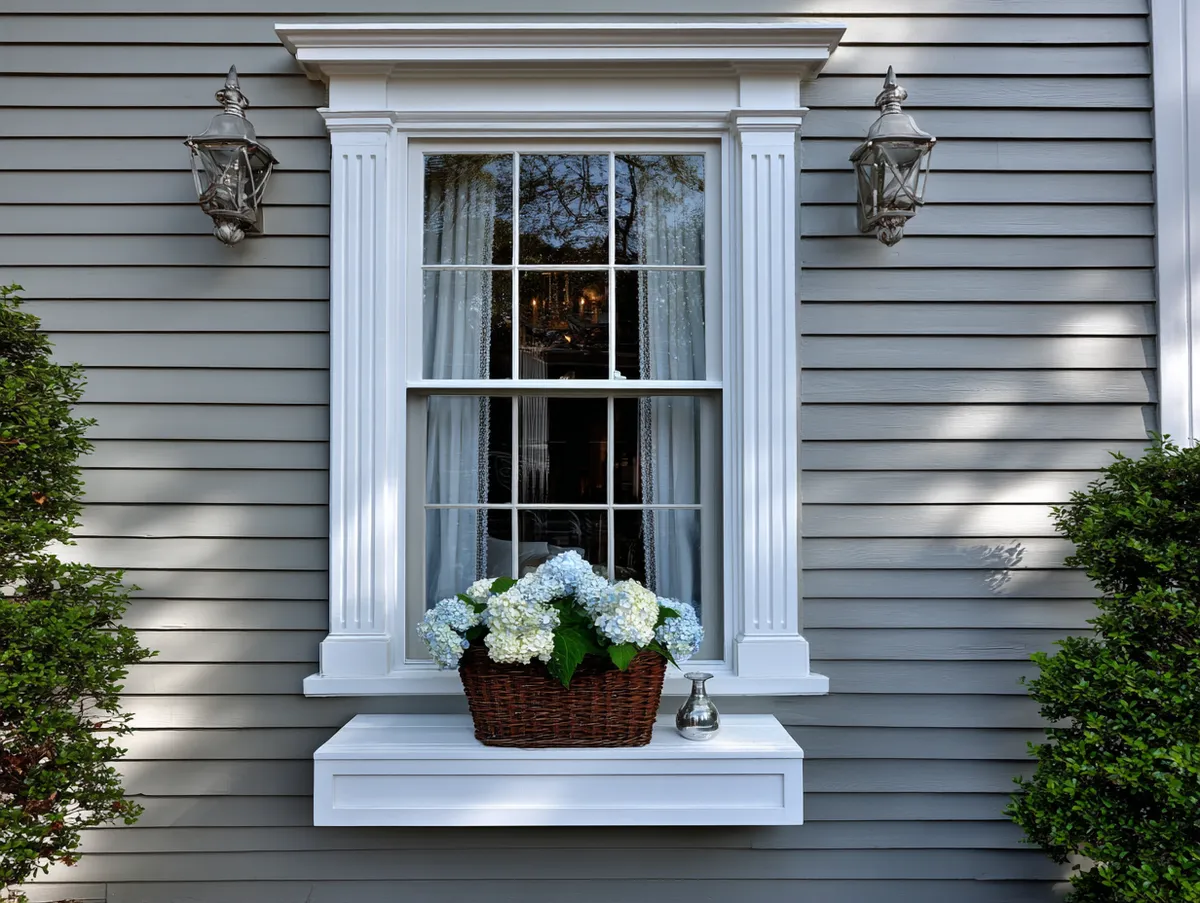
Colonial Revival window trim gets its authority from a ratio, not from ornament. The pediment above the window — whether triangular like the Georgian Federal or broken-scroll like the later Adam style — should be no wider than the outer edge of the casing, and no taller than one-third its width. Violate that ratio and the pediment looks glued on rather than structural. This is exactly the proportion you’ll find on the Lowell House at Harvard, which is the reference point I use when scaling any Colonial window detail.
Paint is load-bearing in this style. Colonial Revival exterior trim was almost universally painted white — not cream, not off-white, not Benjamin Moore’s White Dove OC-17 (which reads warm-gray on north-facing walls). Use a true optical white in an eggshell finish: Colonial window trim exterior photographed against dark clapboard siding shows immediately why the contrast needs to be stark rather than subtle.
Multi-pane windows — 6-over-6 or 9-over-9 double-hung — are non-negotiable for period accuracy. I’ve seen homeowners install Colonial trim around a picture window with snap-in grilles and call it done. It isn’t. The grilles cast no shadow line, so the window reads as flat from the street. Simulated divided lights with a spacer bar between the panes cost about $180 more per window unit and the visual difference is enormous.
Energy efficiency upgrades slot into this style cleanly. Modern triple-glazed units fit standard Colonial sash dimensions, so you don’t have to choose between period accuracy and a reasonable heating bill. What you should avoid: vinyl windows with integral “Colonial” trim attached to the frame. The profile is too thin, the corners are too sharp, and every neighbor with an original 1930s Colonial on your street will notice within ten seconds.
Tudor Window Trim Lives or Dies on the Dark Frame Against Light Stucco
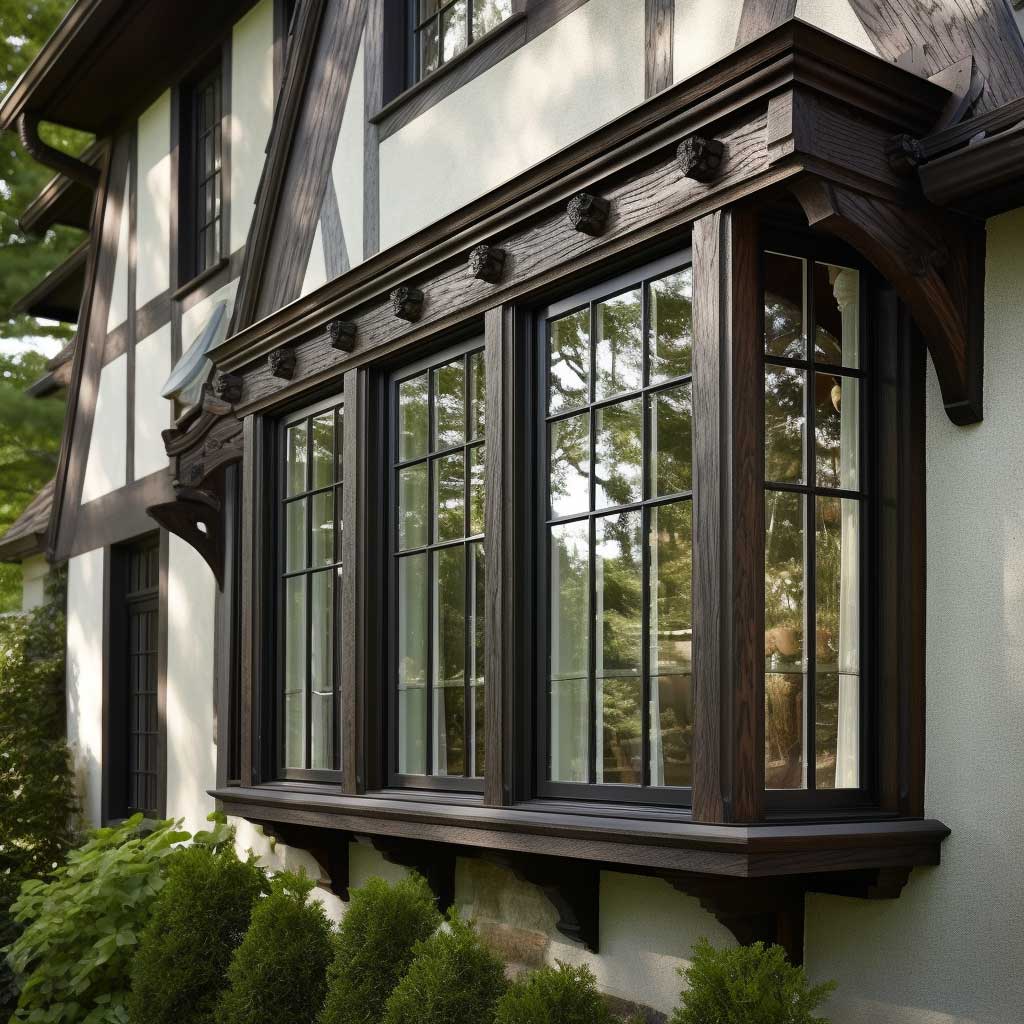
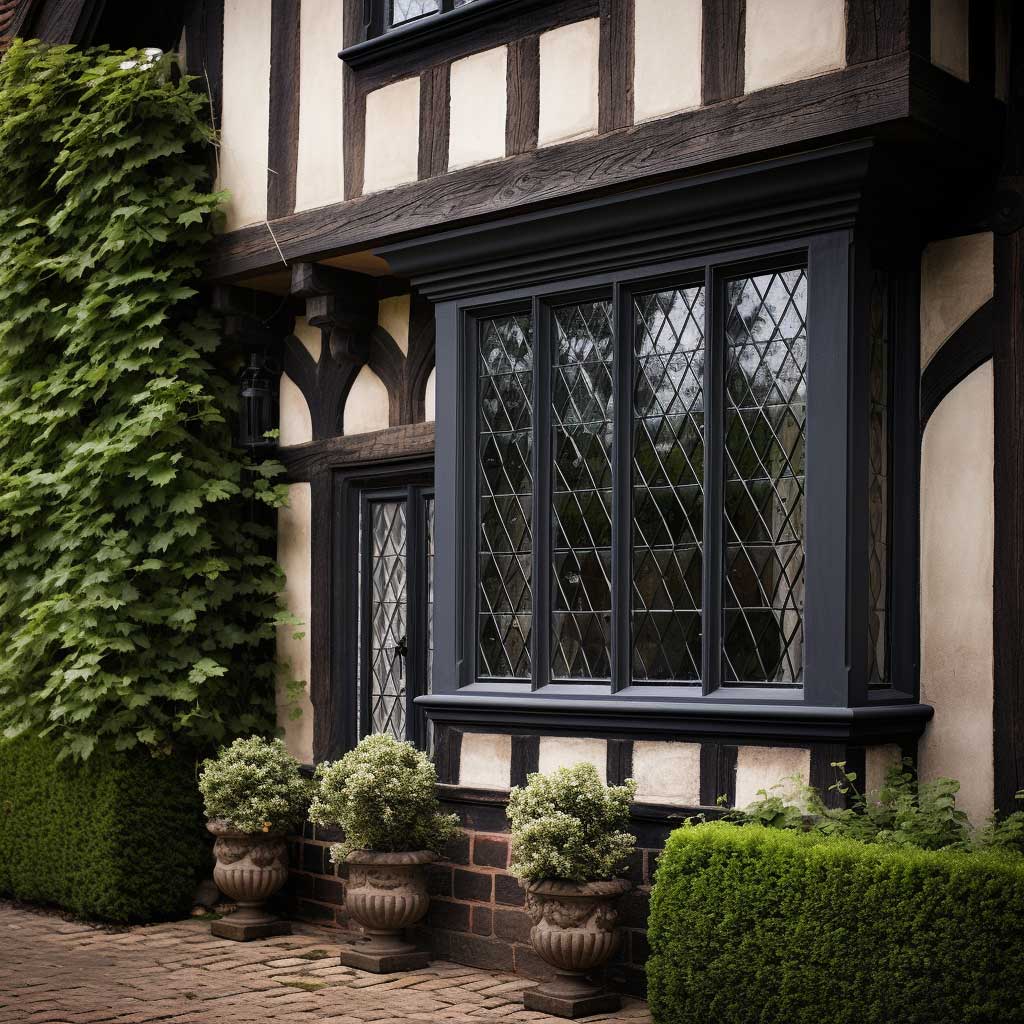

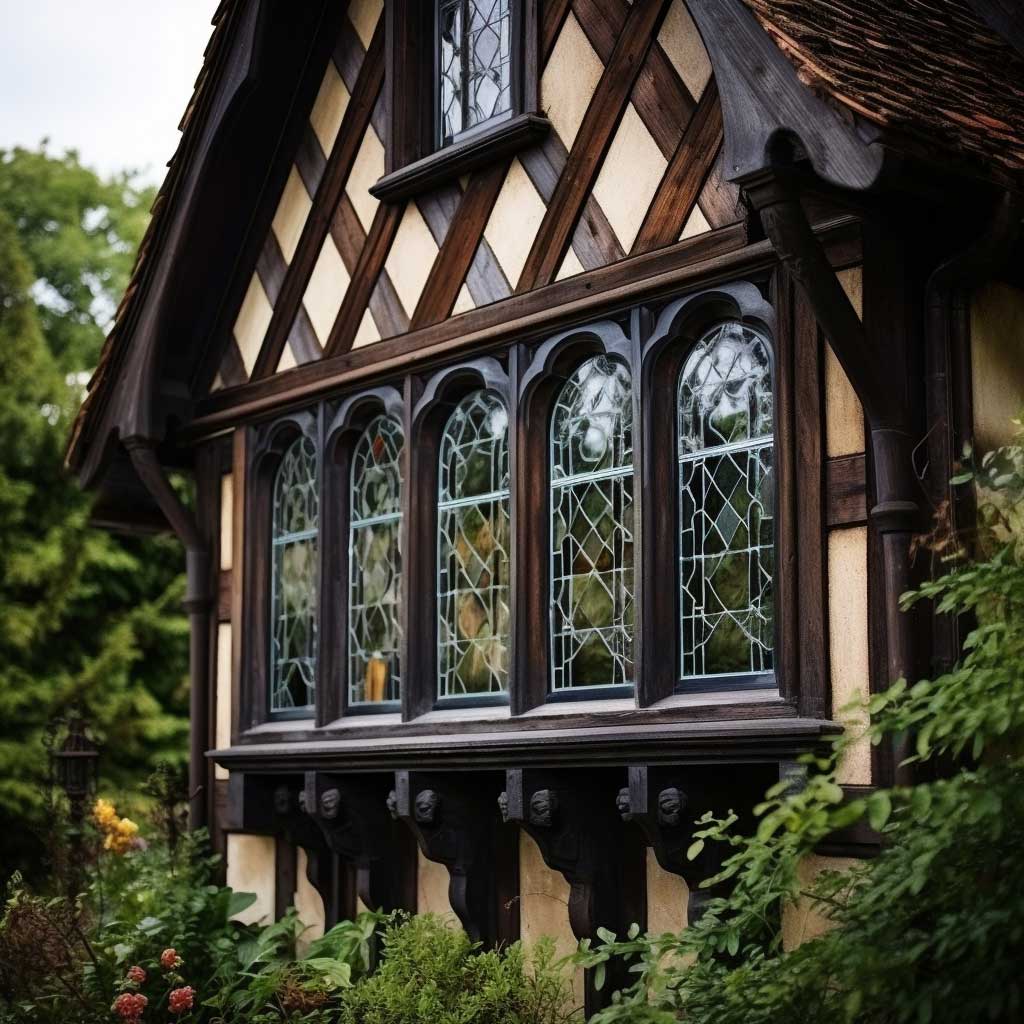
Tudor window trim exterior design is the most contrast-dependent of the five styles on this page. The entire visual effect depends on a dark frame — ebonized or Jacobean-stained oak — sitting against a pale stucco or lime-render facade. Remove the contrast and you lose the whole style. I’ve seen Tudor-inspired homes where the owner painted the window frames to match the cream stucco, and the result reads as Spanish Colonial rather than Tudor. Colour placement is the architecture here.
Diamond leaded glass casements are the signature detail, and real lead came glass runs $85–$140 per square foot at specialty glaziers. You’ll find comparable budget options from Prism Glass Design starting around $55/sq ft for simulated lead came on double-glazed units. What doesn’t work: stick-on lead tape applied to standard glass. It telegraphs immediately as decorative, not structural, and the adhesive fails in direct sun within two summers.
The frame material question has one right answer for exterior Tudor applications: European White Oak, kiln-dried to 8% moisture content, finished with a penetrating oil stain in Ebony or Dark Walnut. White oak has more tyloses in its grain structure than red oak, making it naturally more water-resistant — the same reason it’s used for wine barrels and boat ribs. Red oak on an exterior Tudor frame will check and split within three years in any climate with freeze-thaw cycles.
Modern energy upgrades work here without destroying the look. Casement windows — which is the historically correct sash type for Tudor — allow for very tight weather seals. Andersen’s 400 Series casement in their Teal Green factory finish gets close to the dark frame effect if custom millwork is out of budget, at around $480 per unit. What you should not do is use fixed picture windows framed in Tudor trim — casements open and the operating hardware is part of the visual language of the style.
Mediterranean Window Surrounds Need Stone, Not Stucco, at the Sill


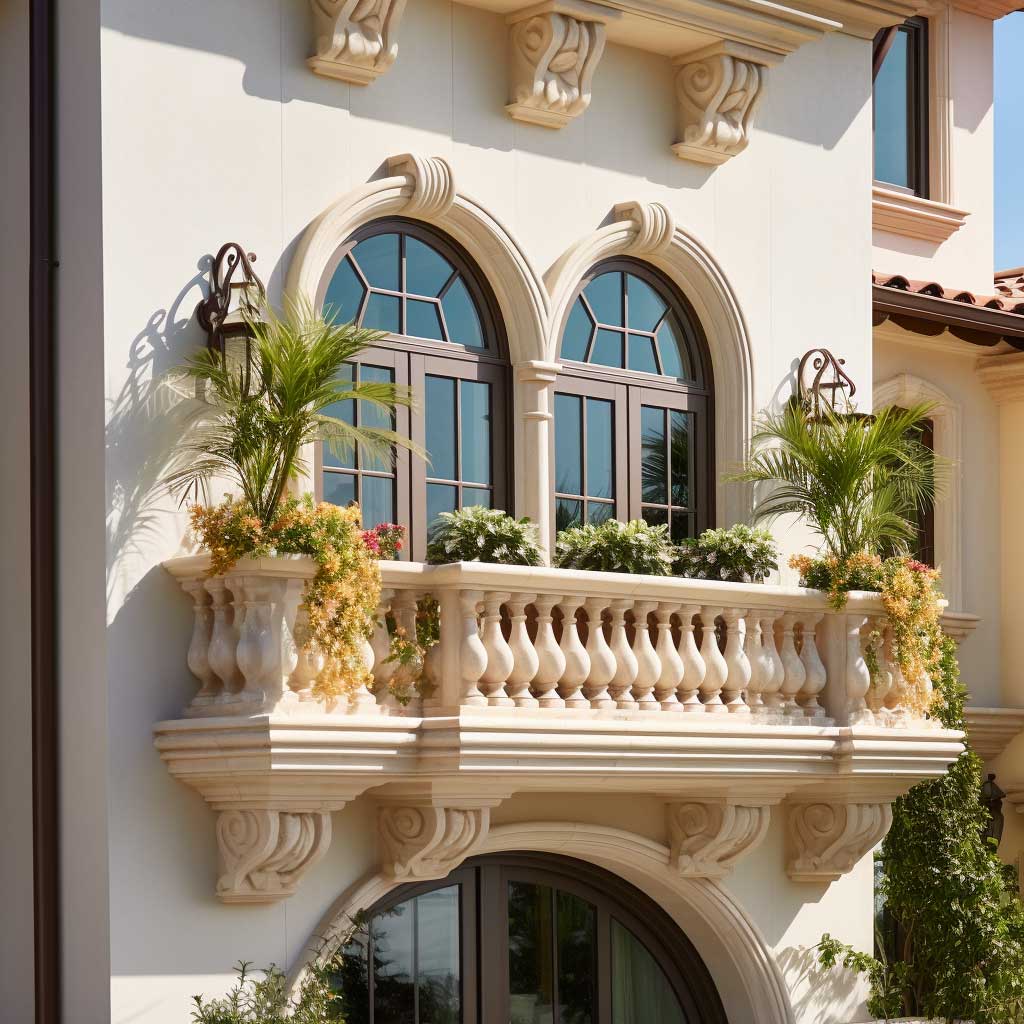

Mediterranean window trim exterior design is the only style on this list that genuinely requires two different materials on the same frame to succeed. Stucco surrounds for the head and jamb casings are correct, but the sill wants cast stone or natural limestone — something that can take foot traffic and a window washer standing on it without crumbling. I’ve restored three Spanish Colonial homes in Pasadena where the original cast stone sills were still intact after 90 years while the stucco surrounds had been replaced twice.
Wrought iron grilles are the second load-bearing detail. Prefab powder-coated steel grilles from manufacturers like Artistic Iron Works start at $120 per window opening and install in half a day. Actual hand-forged wrought iron costs $600–$900 per opening from a blacksmith, but the visual difference in scrollwork complexity justifies the price on feature windows facing the street. On secondary elevations, the powder-coated option is completely defensible.
The arched head is where most Mediterranean installations fall apart. A true arch requires either a custom curved form for the stucco or a pre-cast arched keystone surround. The wrong move — and I’ve seen it dozens of times — is using a rectangular frame and adding a flat stucco profile with a painted arc on it. An arc in paint is not an arch in three dimensions, and from across the street it reads as a mural, not as architecture.
For the window framing trim on Mediterranean-style facades, the This Old House window trim resource covers cellular PVC as a substitute for wood casing where moisture is a concern — relevant in coastal Mediterranean-climate zones in California and Florida where wood rots fast. In those climates, Azek Trim Board in sandstone paint (Dunn-Edwards DE6107 Toasted Wheat works) gives you the earthy tone without the maintenance cycle.
You’ll also want adjustable shutters on any south or west-facing Mediterranean window — not for decoration, but because the shade management is real in a hot climate. Boral’s TruExterior louvered shutters at $145 per pair hardware a functional detail that the original Mediterranean Revival architects built in deliberately. Fake shutters bolted flat to the wall that couldn’t physically close over the window opening are the single fastest way to signal that the style is costume rather than conviction.
For more window exterior framing ideas across different styles and materials, see the full collection at exterior window framing trim designs.
Final Thought
Victorian exterior window trim doesn’t fail at the casing. It fails at the paint sheen and the missing corbel.
Each of the five styles here has one non-negotiable detail — get that one thing right and the rest reads correctly from the street. Get it wrong and no amount of additional ornament saves it.
Old style window trim survives because it was engineered to shed water and signal permanence. Modern materials can do both — if you spec them correctly.
Save this post before you start your next window trim project.