Black and blonde hair reads completely differently on a French crop than on any other cut — the fringe holds contrast in a way that longer styles blur. The structure of the crop (a blunt horizontal fringe, tight fade on the sides, 1–2 inches on top) creates two distinct visual zones, and placing ash blonde against a black base in those zones gives the look a precision that a softer cut would lose. Every variation covered here works from that same mechanical principle, just executed at a different intensity.
French crop blonde hair breaks into three clear executions: sleek with a hard contrast at the color boundary, textured with highlights scattered through the top, and faded where ash blonde dissolves gradually into black down the sides. None of these is harder to achieve than the others — but each one asks for a different product approach and a different trim schedule. Barbers recommend returning every 2–4 weeks to keep the fringe line sharp, which is what separates a crop that looks intentional from one that just looks grown out.
Ash blonde specifically is not the easiest blonde to maintain — the gray undertones oxidize fast and shift warmer within two weeks without a toning routine. On a black base, that brassiness reads as muddy rather than warm. Get the color right on day one with a professional bleed-and-tone session (professional bleaching with toning on dark hair runs $75–$300 depending on salon and hair length), then maintain at home with a purple shampoo every second wash to keep the ash tone clean.
– Black and blonde French crop works in three variations: sleek contrast, textured highlights, and ash-to-black fade
– Ash blonde on dark hair requires professional bleaching — DIY risks patchy, uneven lift
– Trim schedule: every 2–4 weeks to keep the fringe line intact
– Purple shampoo every second wash stops ash blonde from turning brassy within two weeks
– Matte clay on the textured version; lightweight pomade on the sleek version — never switch them
– Avoid bleaching and cutting on the same day — wait 48 hours minimum
Sleek French Crop with Ash Blonde and Black — Where the Contrast Hits Sharpest
Ash blonde on top against a deep black fade is the sleek version of black and blonde hair at its most architectural. The two colors meet along a deliberate line — not blended, not faded — and that hard boundary is what gives the look its edge. Think of it the way a two-tone shoe works: the contrast isn’t accidental, it’s the whole point, and the cleaner the line, the sharper the result. Keeping the ash blonde styled with a matte finish rather than shine amplifies the texture of the fringe without the look going glossy or plastic.
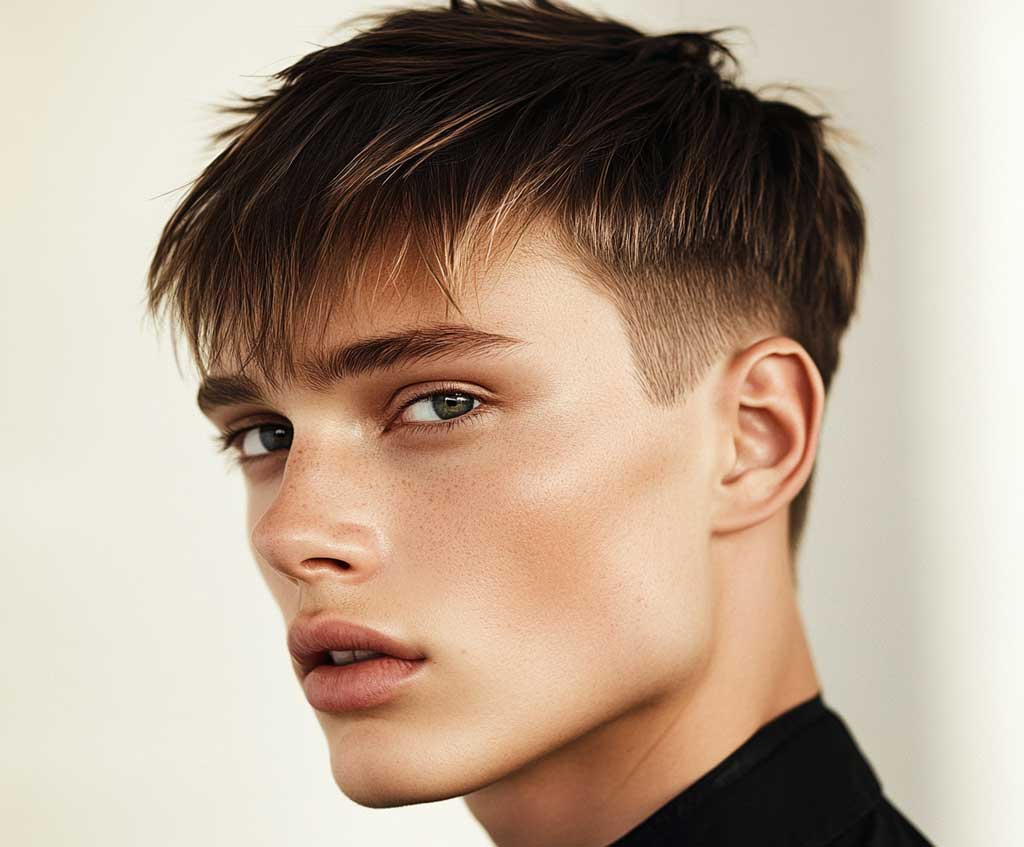


What kills this version? Letting the ash blonde go even slightly warm. At the hard color boundary, brassy yellow reads immediately against a black base — there’s nowhere for it to hide. Wella T18 toner runs about $10 and buys an extra week of cool tone between salon visits. Apply it with 20-volume developer, leave on 15 minutes maximum, and the ash stays clean without shifting gray or purple. That’s the maintenance reality that most people don’t budget for when they book this color job.
For a professional setting, the sleek version works because it stays polished at distance — the high contrast reads as deliberate rather than edgy. Miles Wood-Smith, Master Barber at Murdock London, notes that a sea salt spray applied before styling adds hold and texture to the fringe without pulling it toward a wet, heavy look. The black sides in this configuration anchor the whole composition, creating a base that makes the ash blonde look lighter than it actually is — a simple optical trick the cut’s geometry makes possible.
Don’t bleach and cut on the same day. Freshly bleached hair is structurally compromised — clipper teeth snap off damaged strands and leave patchy spots in the fringe that can’t be corrected until regrowth. Wait at least 48 hours between a bleaching session and your next trim.
Don’t skip toning on ash blonde. Ash tones oxidize faster than any other blonde. Without a purple shampoo routine or a salon toner every 3–4 weeks, the cool gray undertone shifts warmer and the ash reads as dirty dishwater rather than a deliberate color choice — especially at the high-contrast boundary in a sleek crop.
Textured French Crop Blonde Highlights — When Dimension Replaces a Flat Color Block
French crop blonde hair with ash highlights over a black base works differently from the sleek version — instead of one clean color boundary, the blonde is woven through the top section in irregular pieces that catch the light at different angles. This is not a freehand balayage situation. On a crop, the fringe is short enough that highlights need to be placed in foils or with precise hand-painting through just the top 1–2 inches of hair, keeping the black base visible underneath for depth. Ask the colorist explicitly for face-framing pieces and scattered top-layer placement — anything underneath stays dark, and that underneath-darker contrast is what makes the top read three-dimensional rather than flat.

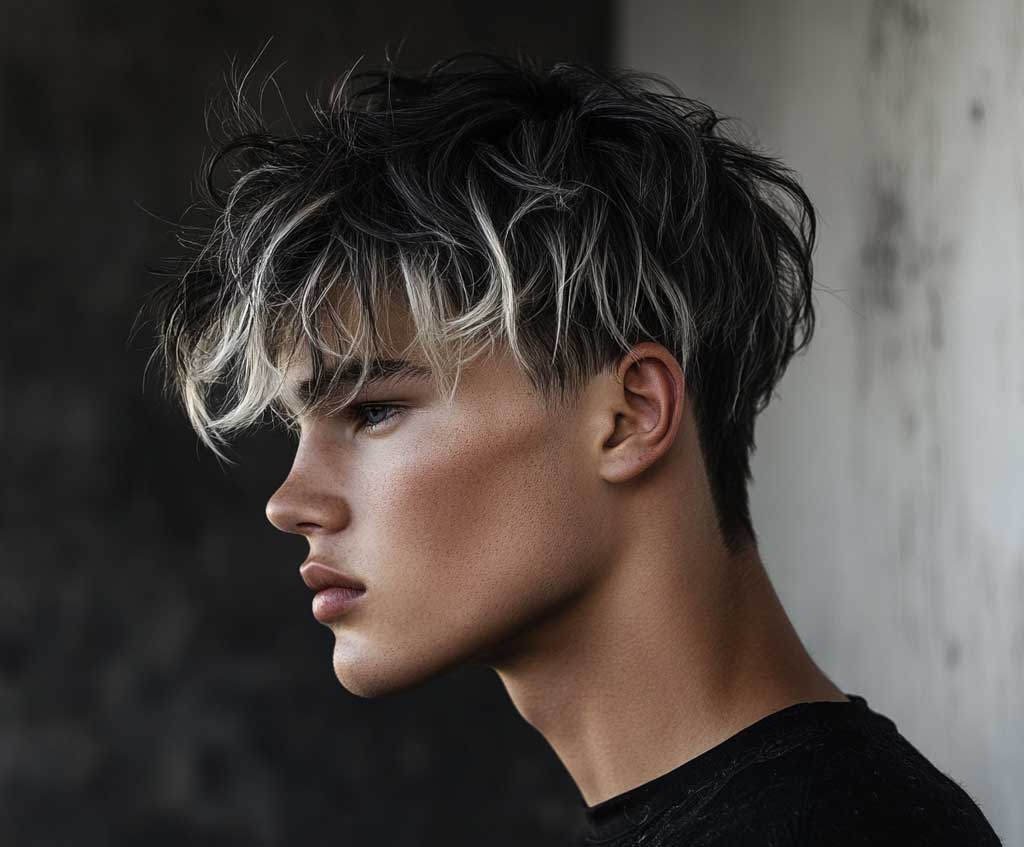


Styling product choice changes the entire read of this version. Matte clay — Hanz de Fuko Claymation costs around $23 — works the textured highlights rather than flattening them. Apply a pea-sized amount to dry or lightly damp hair, work through with fingers rather than a comb, and the highlighted pieces separate naturally and hold their position without going stiff or greasy. A comb or brush kills the texture here: the layered highlights only look like highlights when the hair has some separation and movement, not when it’s laid flat.
The textured version is more forgiving on grow-out than the sleek version. Because the highlights are scattered rather than sitting at a hard color boundary, the first week of regrowth doesn’t immediately disrupt the look — the black roots blend back into the dark base naturally. That buys an extra week between salon visits, which matters when ash blonde highlights on black hair require a full decolorization session rather than a simple touch-up. Partial highlights at a full-service salon typically start at $55; on dark hair requiring pre-lightening, expect $100–$175 for a first application. What stylist would you rather call? One who foils the fringe section only, or one who attempts to lighten the entire top? The fringe-only approach costs less and keeps damage localized.
How do you know if the texture is reading correctly? Step outside into natural light and look in a phone camera rather than a mirror. Bathroom lighting hides everything that daylight reveals — if the highlights disappear into the black in outdoor light, they were placed too deep in the underlayer and the technique needs adjustment at the next appointment. The top-layer-only placement is specifically what makes them visible in the flat, diffuse light of most real environments.
Ash Blonde Fade into Black — The Gradient That Makes the French Crop Look Architectural
The ash blonde fade into black French crop is the most technically demanding of the three — and the most visually dramatic when it’s executed cleanly. Ash blonde starts at the crown and dissolves gradually into black down the sides, with the fade on the sides running parallel. Two gradients are happening at once: the color fading from blonde to black vertically, and the clipper fade eliminating length from the sides horizontally. When both of those transitions align at the temple, the result looks sculpted rather than colored. When they don’t line up — when the color boundary is too high or too low relative to the clipper fade — the cut looks patchy.


Ask your barber to check the fade alignment near a window before you leave the chair. Fluorescent barbershop lighting softens every transition — a fade that looks seamless indoors can show a visible shelf line outdoors. That request sounds fussy but it catches the most common failure point of this style before you walk out with it. Stylists recommend returning every 3 weeks specifically for this version; the fade grows out faster than the color fades, and by week four the gradient loses its architecture and starts to look like uneven regrowth rather than a deliberate design. For a look at how the same fading mechanics work on a buzz cut with blonde color, the blonde mid fade buzz cut breakdown covers guard sequences and blending techniques in detail.
The blonde-to-black fade version also makes a strong case for color placement being a conversation, not a request. Bring a reference photo showing where on the head the ash blonde ends and where the black begins — not just a photo of the cut shape. The color boundary is the defining feature of this variation, and “ash blonde on top fading to black” as a verbal description leaves too much room for interpretation. Bring the photo, mark the boundary, and the barber and colorist can align their work accordingly. On a crop where the top section is only 1–2 inches long, a half-inch variance in color placement changes the entire proportion of the look.
| Variation | Color Boundary | Maintenance Interval | Key Risk |
|---|---|---|---|
| Sleek ash blonde and black | Hard — one defined line | Every 2–3 weeks | Brassiness reads immediately at color line |
| Textured blonde highlights | Soft — scattered pieces | Every 3–4 weeks | Highlights placed too deep disappear in daylight |
| Ash blonde fade to black | Gradient — dissolves vertically | Every 3 weeks | Color and clipper fade lines must align at temple |
For another approach to black and blonde contrast in short men’s cuts — specifically how the color plays out across a curved fringe — the comma hairstyle pendek in black and blonde covers delicately placed highlights versus bold platinum contrasts on a similarly short format. According to Modern Barber, the French crop is currently among the most searched men’s hairstyles — and the color variation is what drives most of that search volume now that the base cut has become ubiquitous. See the full Modern Barber guide to the French crop for step-by-step cutting technique from Salv Mulé, Salon Director at Academy Salons.
Final Read
Black and Blonde Hair Works on a French Crop Because the Cut Holds the Contrast Rigid
Three executions, three different color boundaries — hard line, scattered highlights, gradient fade. Each one maintains the same ash-versus-black logic but lands at a different intensity.
Toning is not optional on ash blonde over black. Purple shampoo every second wash, or a $10 Wella T18 application every 3–4 weeks, keeps the gray undertone from turning brassy at the color boundary.
Trim schedule determines whether this cut reads as intentional or just overgrown. The fringe line is the whole architectural argument — once it goes soft, the contrast stops working. Every 2–4 weeks is the maintenance window barbers recommend. Save this post.