Black and white trim around windows exterior is one of those rare combinations that reads sharp from the street, holds up in every lighting condition, and never needs a redesign cycle to stay relevant. Black window frames were standard on Victorian and Colonial homes in the 19th century — which is why designers keep returning to them: the logic was already proven before most current trends existed. The question isn’t whether the combination works. It’s how to execute it so the result looks intentional rather than incomplete.
According to a Fixr industry survey, black is the #1 window frame color cited by 71% of windows and doors contractors — a number that reflects genuine contractor preference, not just homeowner aspiration. On a white or off-white exterior, that dark frame does something a painted accent wall never can: it outlines the architecture, making the geometry of every window visible from across the street. The effect is closest to matting a photograph — the dark border doesn’t compete with the image, it forces you to see it.
The three looks covered here move from tight-detail close-ups of molding profiles to full-facade exterior compositions, because the combination scales differently depending on window size, siding texture, and trim width. Each section addresses a distinct design problem so you can recognize which approach matches your house — before you spend money painting or replacing anything.
- Black holds the #1 spot for window frame color among industry professionals — 71% cite it as the top choice
- Three exterior execution styles covered: modern classic molding, stylish close-detail profiles, and full-facade high-contrast compositions
- Sherwin-Williams Tricorn Black is the benchmark paint for this look; Iron Ore works on warmer off-whites
- Window trim molding installation runs $10–$15 per linear foot installed; black aluminum capping averages $75–$200 per window
- The most common mistake: painting only the sash black and leaving the casing white — the result looks unfinished, not refined
- Black windows cost 10–25% more than white; window replacement projects typically recoup over 70% of their cost at resale
Modern Classic Exteriors Where Black and White Trim Around Windows Earns Its Keep
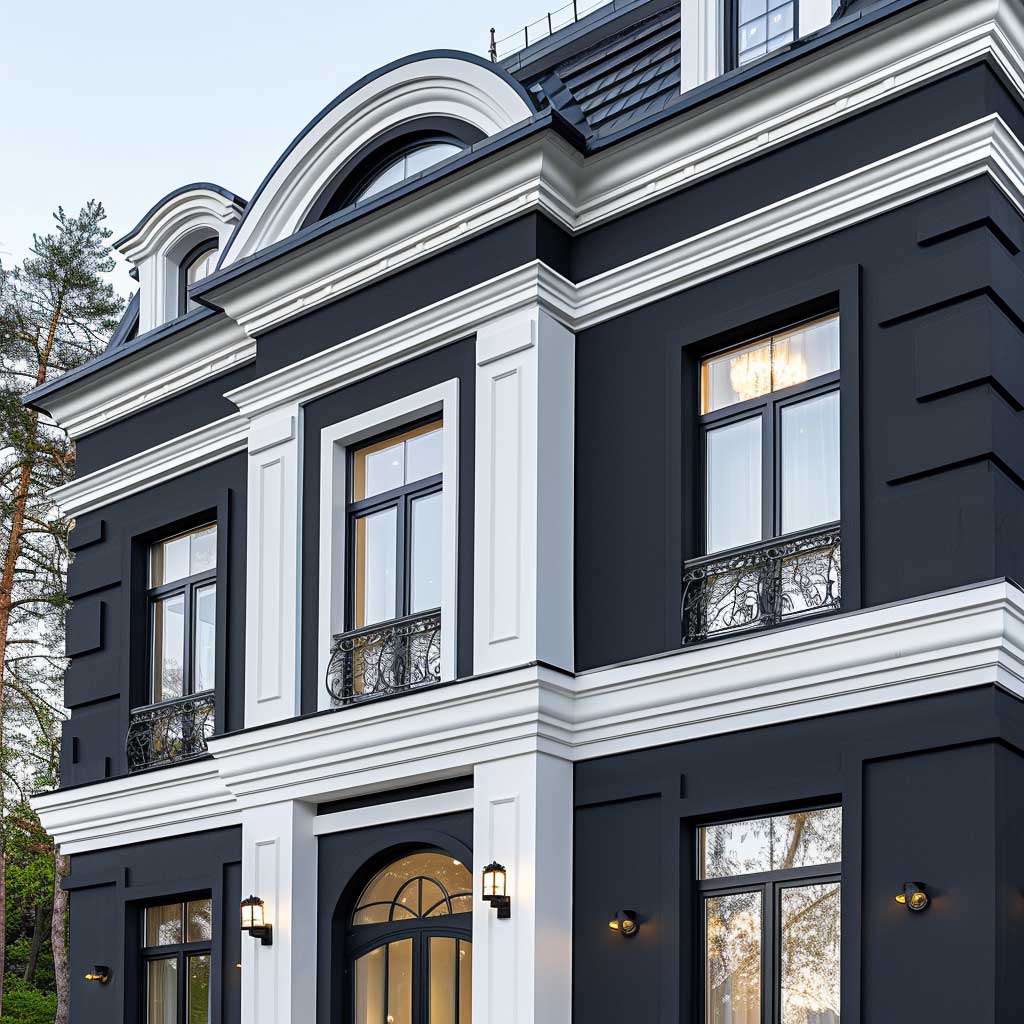
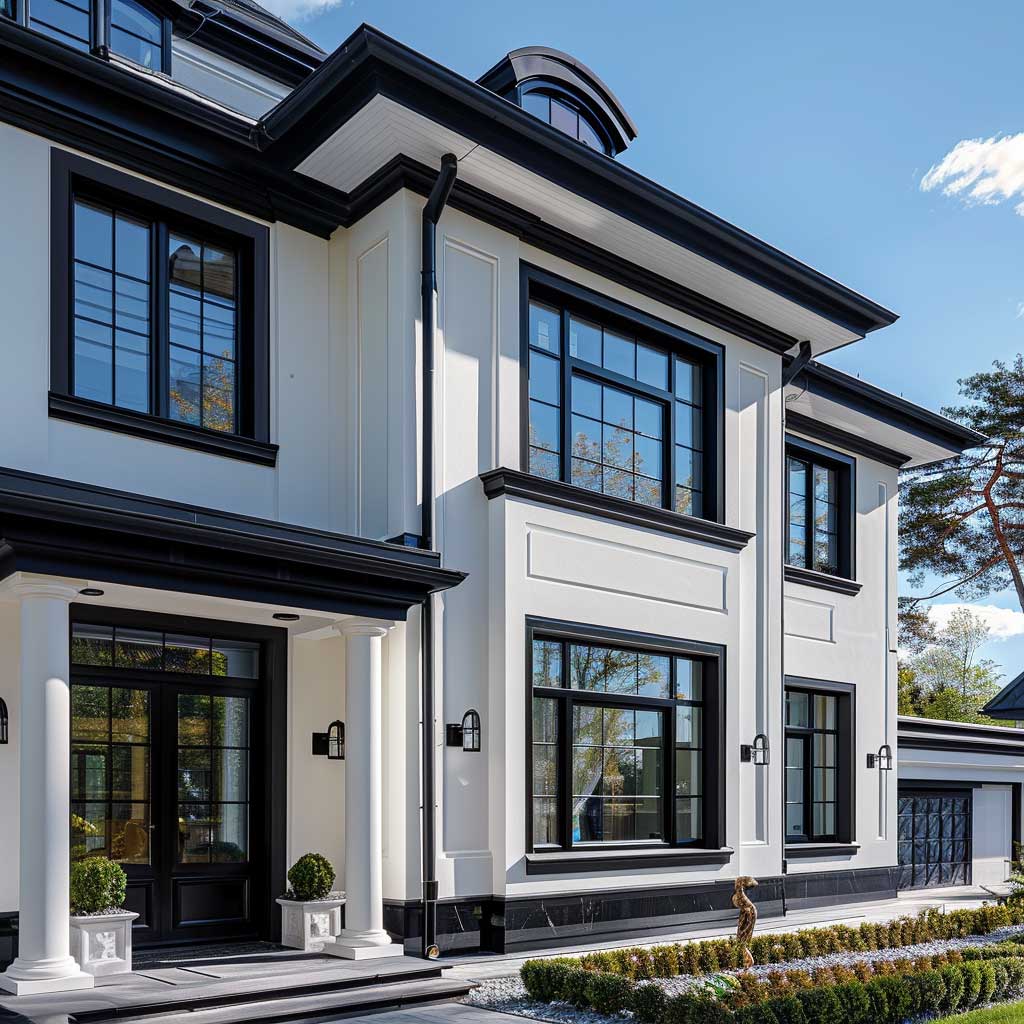
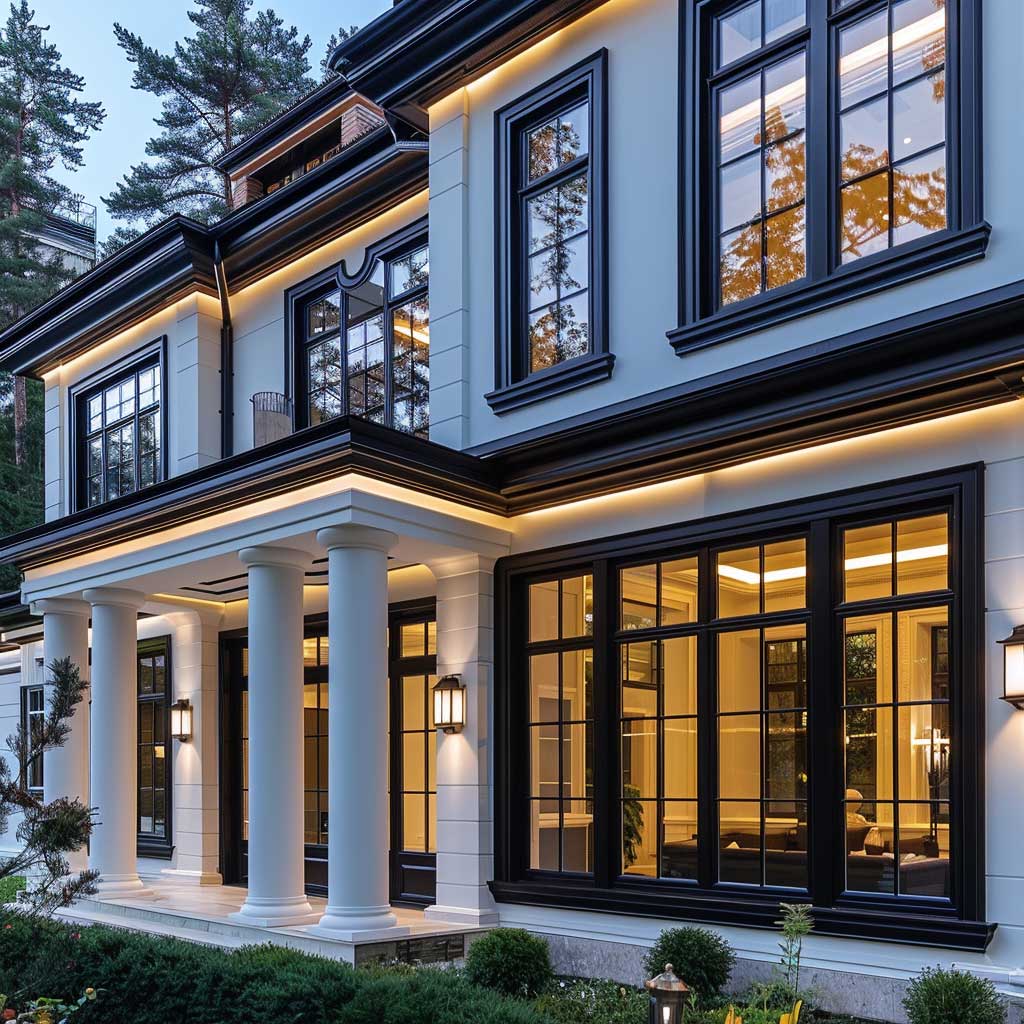
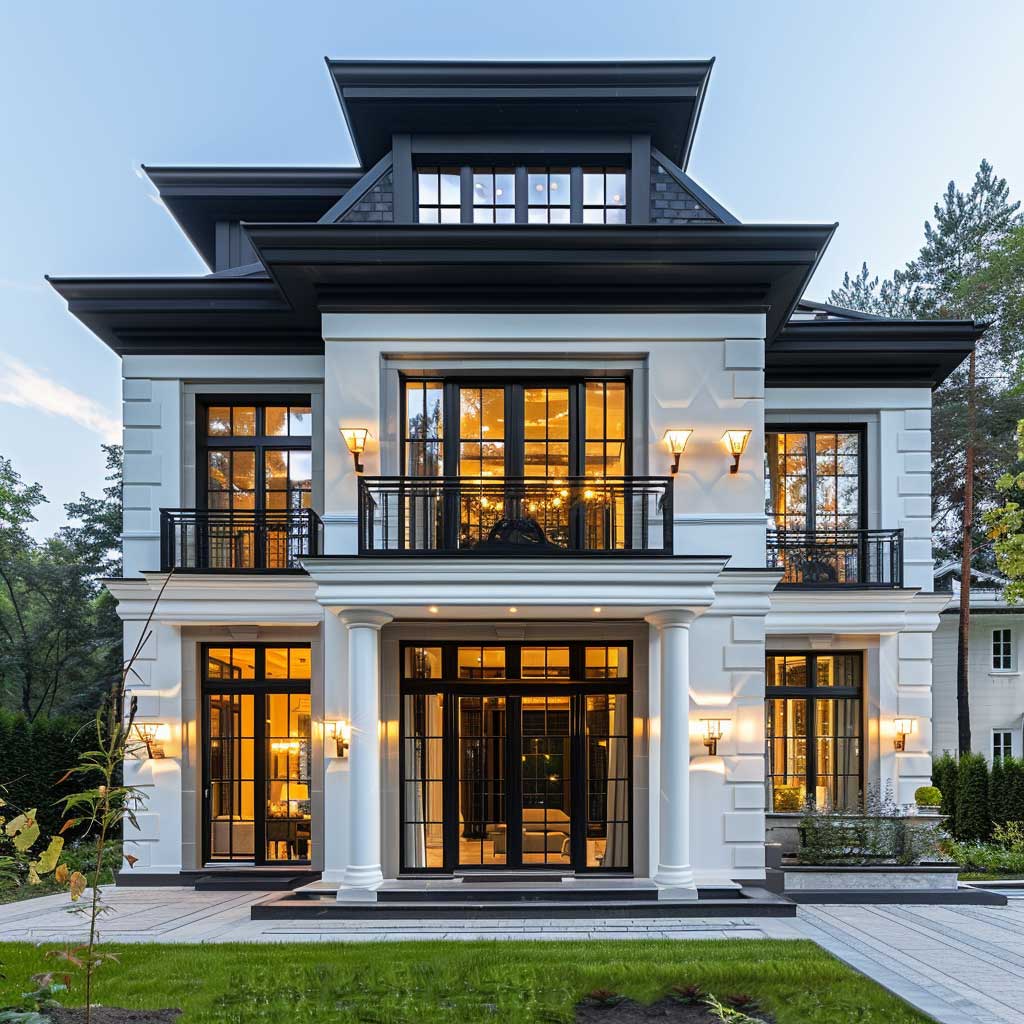
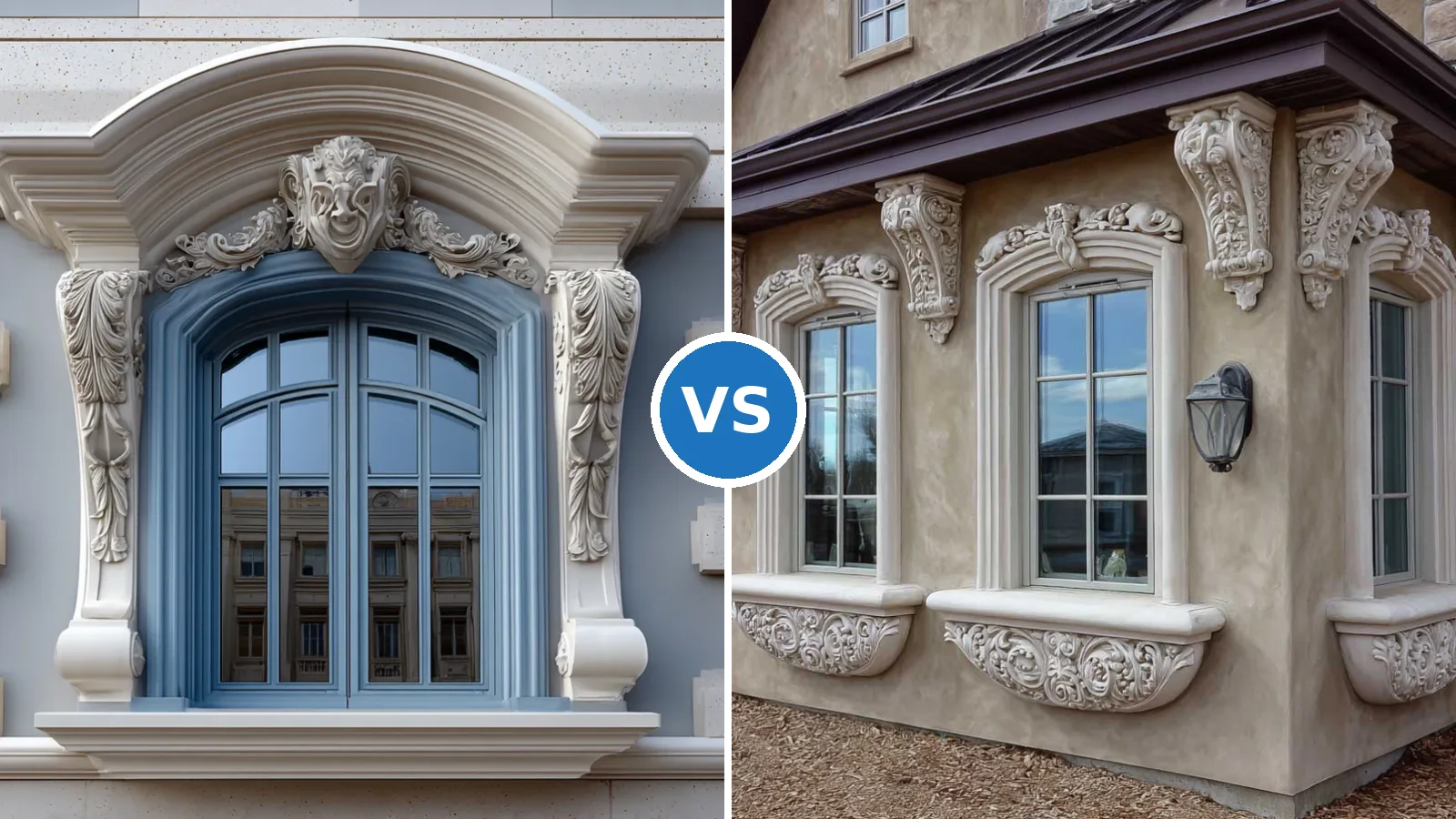
Modern classic exteriors work because the proportions are controlled — the trim width, the reveal at the jamb, the sill projection all follow a consistent logic. Black and white trim around windows exterior in this style reads as architecture, not decoration. The casing width matters more than most homeowners realize: a 3½-inch casing in black against white siding creates a definitive frame, while a 1½-inch casing in the same color combination looks tentative. Trim molding installation in this range runs $10.01–$15.34 per linear foot installed according to Homewyse’s 2026 data — a window with 16 linear feet of casing lands at roughly $160–$245 in materials and labor.
What separates this look from a basic paint job is the relationship between the black casing and the white field. Stylists recommend using an off-white body color — Benjamin Moore Seapearl or Sherwin-Williams Alabaster — rather than pure optical white. Pure white against Sherwin-Williams Tricorn Black (SW 6258) can read as a printed label rather than a residential facade, particularly in direct afternoon sun. The slight warmth in off-white softens the transition without weakening the contrast. You’ll notice in these photos that the siding never competes with the trim; it simply recedes.
Don’t finish the sash in a different black than the casing. A common mistake is using a flat-black sash paint with a semi-gloss casing — two separate finishes from different product lines that read as two different colors in sunlight. The trick here is to buy one quart of the same trim paint and apply it consistently across every element that touches black on the facade: casing, sill, sash, and any mullion bars. Half-finished black trim looks like the job ran out of budget rather than running to completion.
Can black window trim add measurable value? Window replacement projects typically recoup over 70% of their cost at resale, according to real estate data cited by Taylors Windows. The bigger payoff here isn’t the replacement itself — it’s the curb appeal read from the street that shapes the buyer’s first impression before they step through the front door.
Avoid capping only the top and sides of a window in black while leaving the sill white. The sill is the horizontal anchor the eye reads first from the street — missing it breaks the frame visually in exactly the way you were trying to avoid. Apply the same black to every element of the window surround, sill included, or the result looks accidental. Also skip painting vinyl window frames a different brand’s black than the trim casing paint — undertone mismatches between a warm-black vinyl and a cool-black trim are visible in flat light and obvious in direct sun.
Black Siding with White Trim Windows — Why the Color Reversal Changes the Rules
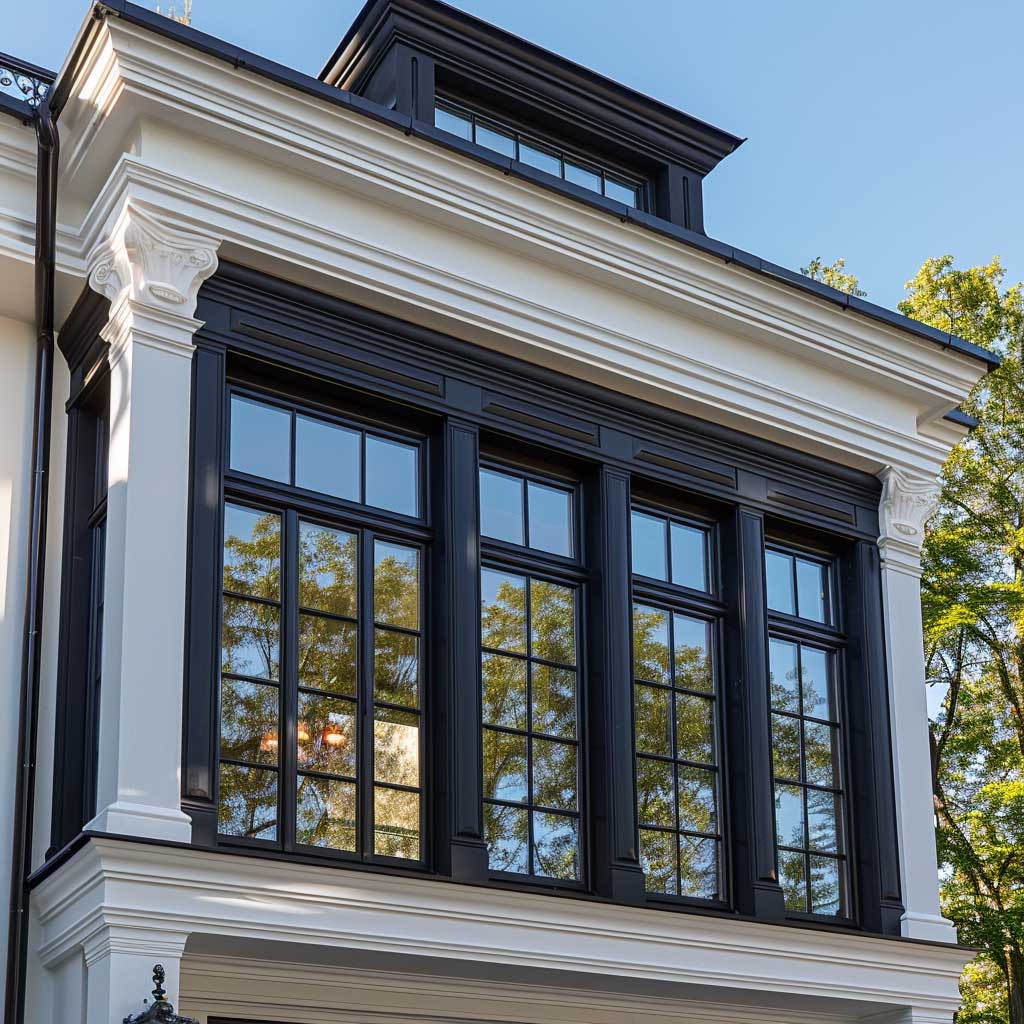
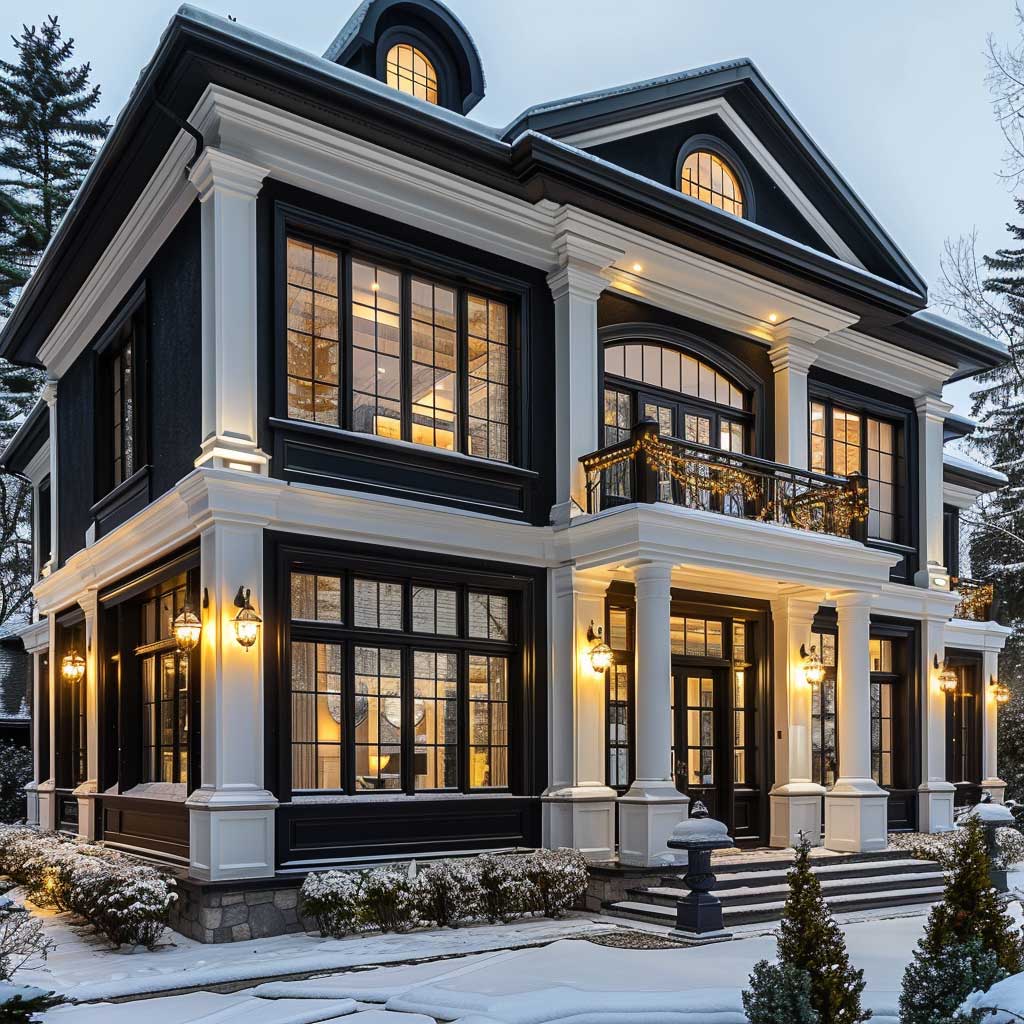
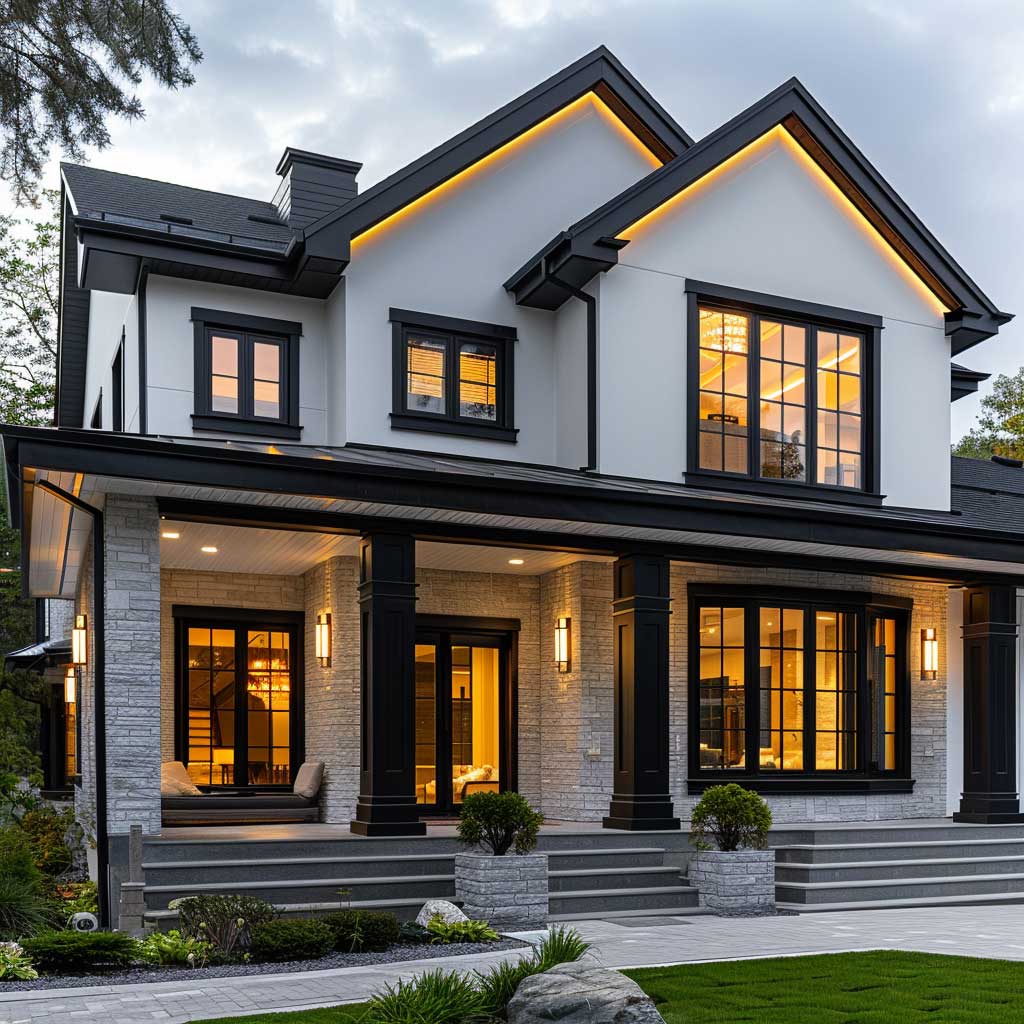
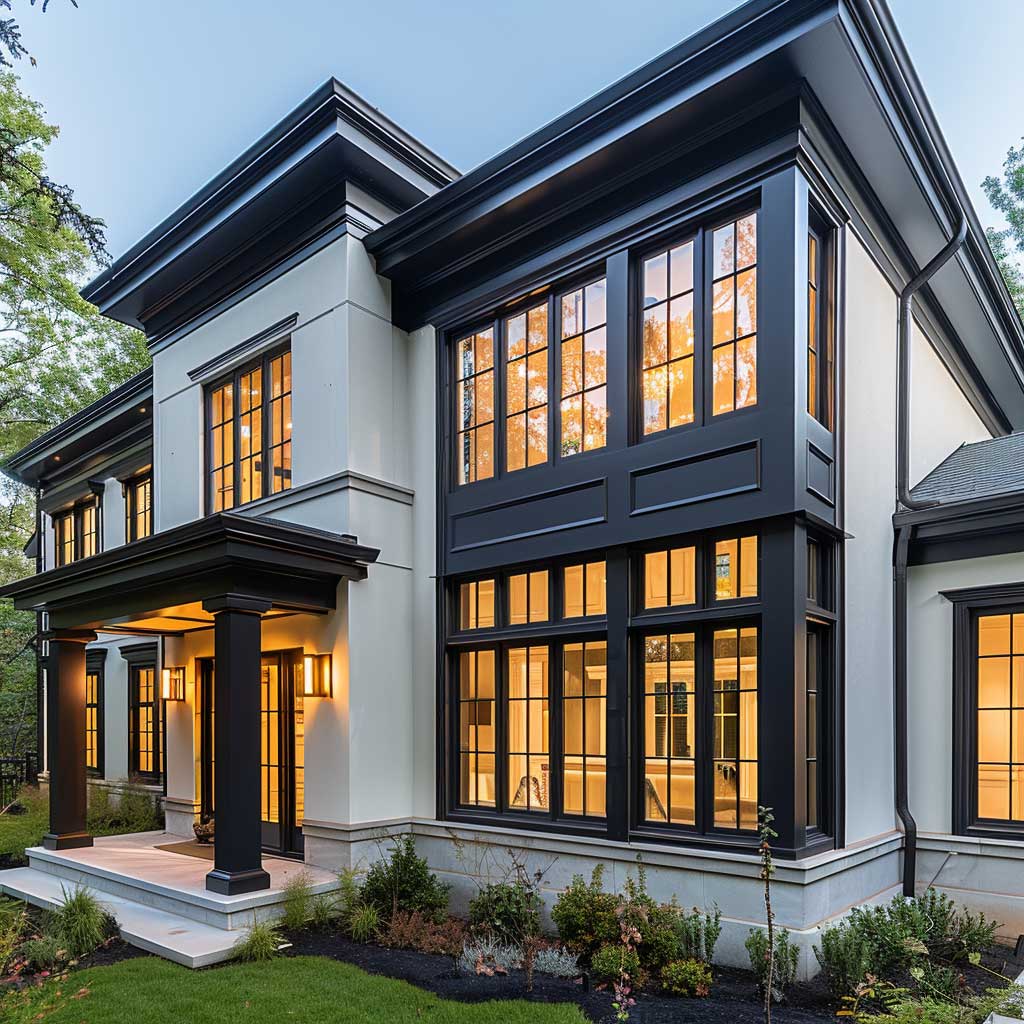
Black siding with white window trim exterior reverses the visual weight of the standard approach — the facade becomes the dark field and the trim becomes the light edge, which means the white casing reads almost as a glow rather than a frame. The design logic is similar to a dark-walled gallery: every framed element becomes more visible, not less, because the contrast forces the eye to stop at the boundary. This works particularly well on board-and-batten and lap siding, where the siding lines already create horizontal rhythm that the white trim perpendicular to it can interrupt deliberately.
A practical question here is whether the window itself should be black outside and white inside. Ordering factory black-exterior/white-interior windows costs 10–25% more than standard white units according to Brennan Corp’s comparison data. For a ten-window house that might mean $1,000–$3,000 additional cost on the window purchase alone — and that’s before any trim work. A common approach is to order the exterior-black frames and paint the interior wood trim in Sherwin-Williams Black Magic (SW 6991) or Behr Cracked Pepper, achieving the visual continuity from inside without the factory upcharge.
Does this reversal work on sheds or smaller outbuildings? Try this: a black shed with white trim windows reads as a considered design choice on a property where the main house also uses a dark-over-light or light-over-dark palette — the outbuilding becomes an intentional echo. A black shed with white trim that has no relationship to the main house reads as a mismatched satellite. Proportion matters too: on a small structure, keep the trim width narrower than on the main house or the casing will visually overwhelm the window opening. For a deeper look at how this palette plays across different siding materials, black trim molding on a white exterior breaks down the brick, stucco, and shiplap variations in detail.
Finishing black exterior siding professionally in this combination runs $2–$6 per linear foot for the trim painting step alone, according to Angi’s 2026 data. On a full exterior, that adds up quickly — which is why the trim paint choice matters. Sherwin-Williams Duration Exterior in Tricorn Black holds its depth and doesn’t fade to charcoal within three seasons the way cheaper flats do.
Full-Facade Execution: White Windows with Black Trim Exterior That Reads From the Street
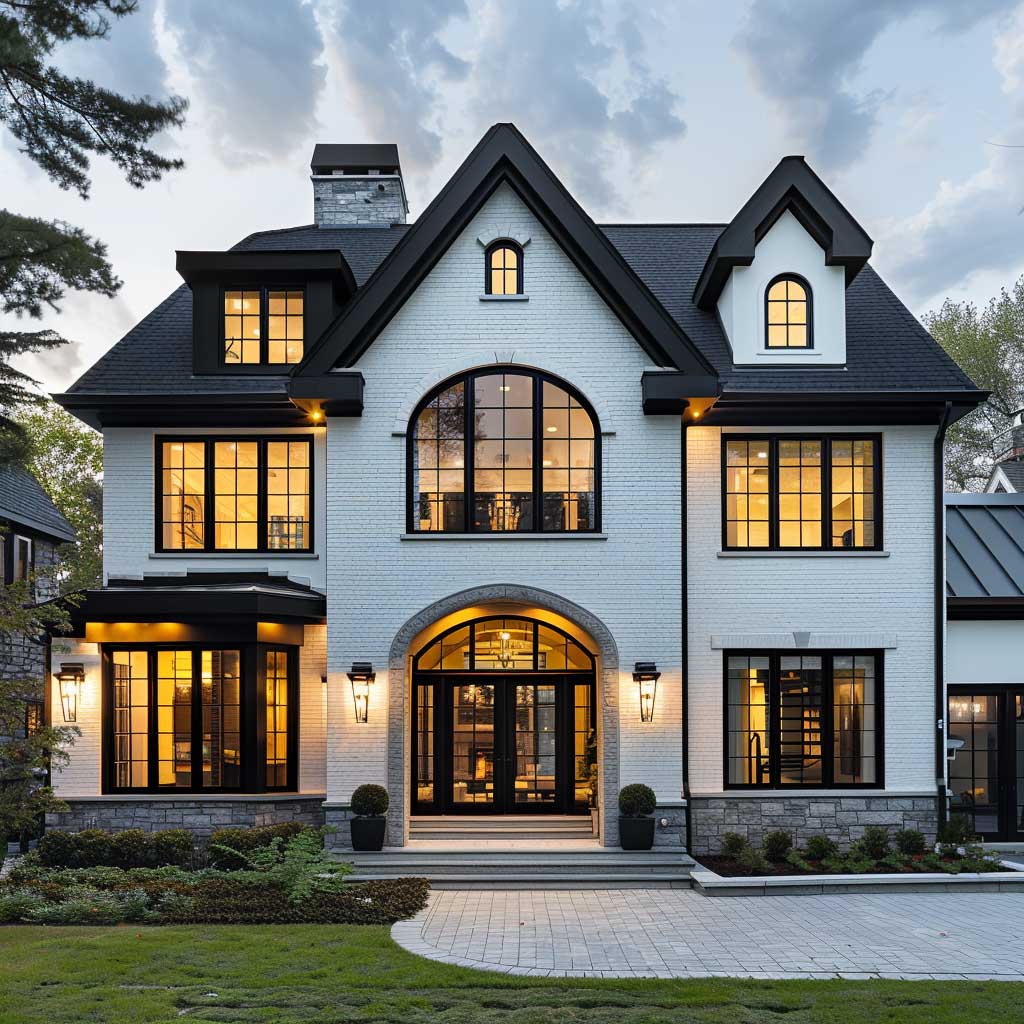
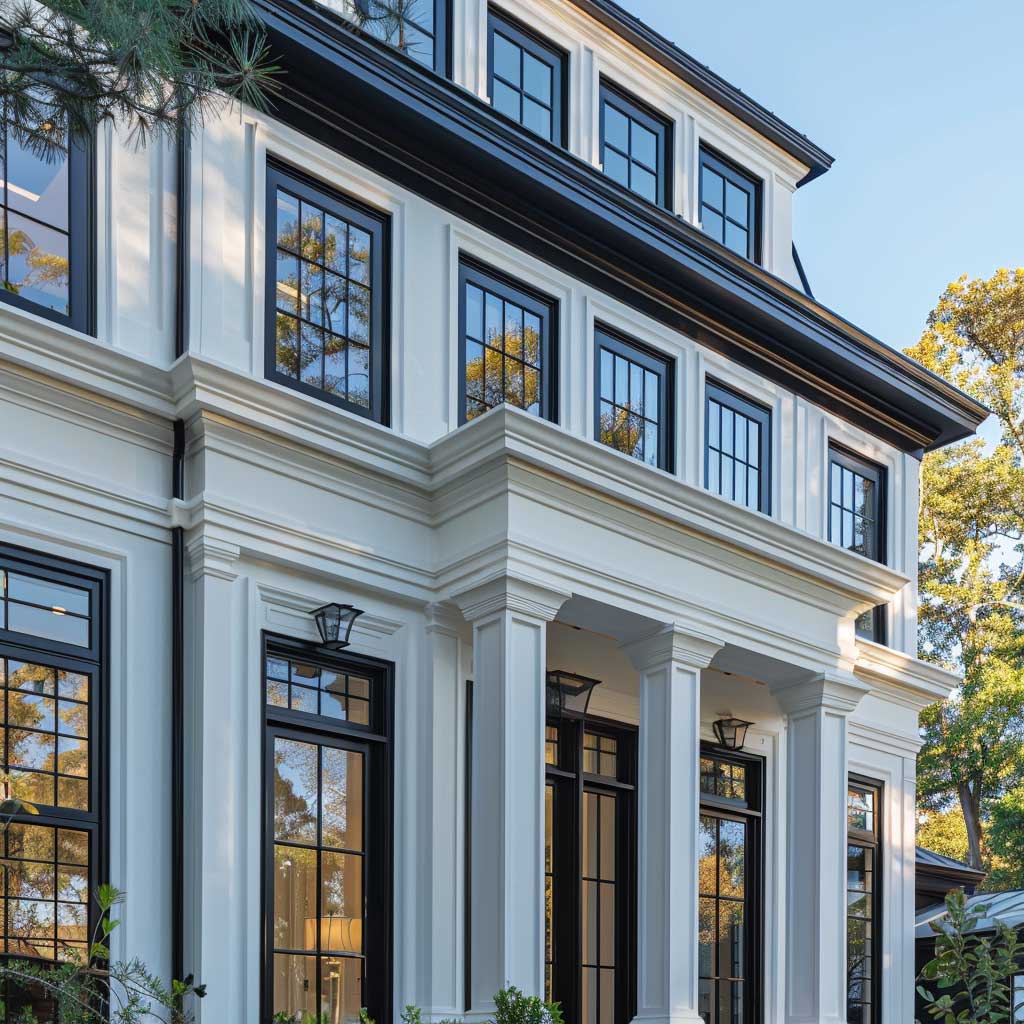
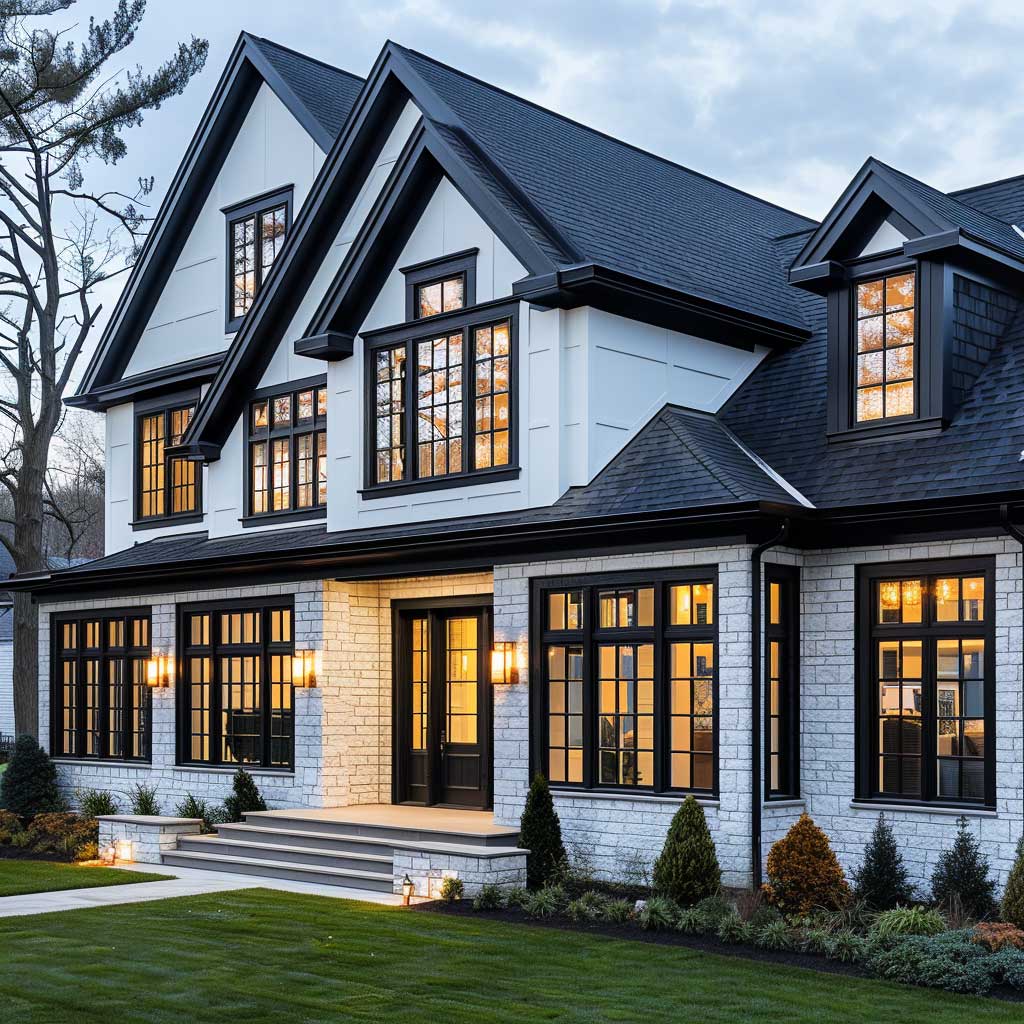
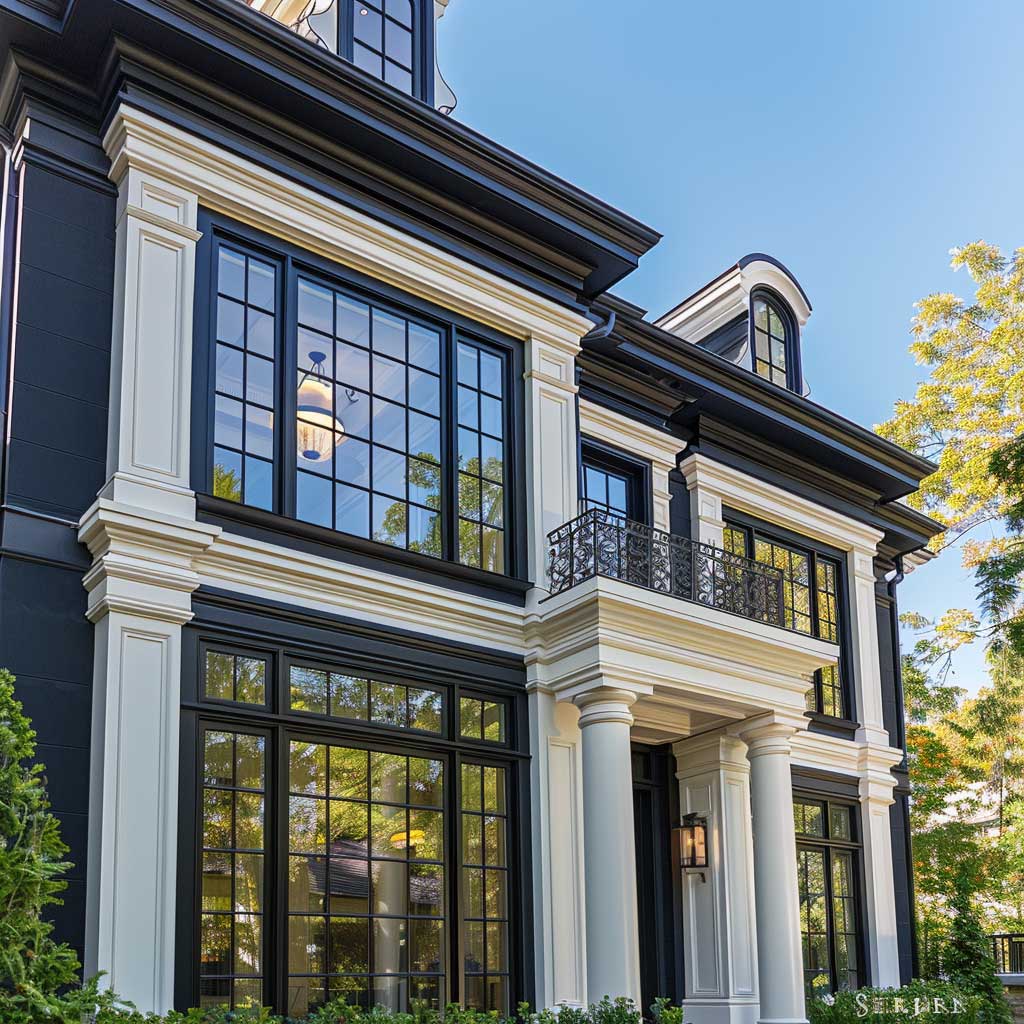
White windows with black trim exterior at full-facade scale requires coordinating every dark element simultaneously — window frames, front door, gutters, exterior sconces — so the eye reads a system rather than a scattered collection of black accents. A common approach is to run Sherwin-Williams Tricorn Black on every trim element on the facade in the same finish, typically satin or semi-gloss, which reads as a continuous graphic rather than piecemeal decisions. Matte finishes have been gaining ground on this look recently — Brick & Batten’s 2026 review notes that more designers are specifying matte Tricorn Black to give a velvety, textured depth that semi-gloss doesn’t produce in flat light.
Window capping offers a cost-effective way to achieve this coordinated look on existing wood-frame windows. According to Angi’s 2026 cost data, aluminum capping materials run $1–$2 per linear foot and labor adds $30–$100 per hour — translating to $75–$200 per window all-in, with $125 as the widely-cited average. For a house with 12 windows, that’s $900–$2,400 total: a fraction of the $450–$1,800 per window cost for replacing the frames entirely with factory black-aluminum units. The aluminum cap also never needs repainting, which matters on a south- or west-facing facade where dark paint absorbs heat and can chalk within five years.
What should the roof do in this scheme? Dark shingle roofs — charcoal, near-black, deep slate gray — close the visual loop in a way that tan or brown roofs don’t. The trim, the door, and the roofline form a triangle of dark anchors around the white body of the house; without that upper anchor the facade can feel like it dissolves upward, particularly on two-story structures. For further inspiration on how white house with black window trim combinations handle different rooflines, siding materials, and coordinating accents, the full breakdown covers paint codes and real-world decision points in one place.
One detail that consistently separates the finished look from the almost-finished look: matching the exterior sconces to the window trim color. A matte black exterior light fixture at $40–$120 (available at most hardware retailers) next to a black-trimmed window costs almost nothing relative to the full project but delivers the visual continuity that makes the trim color read as intentional architecture rather than a color experiment.
| Look | Siding Color | Trim Approach | Avg. Cost Range |
|---|---|---|---|
| Modern Classic | Off-white / cream | Black painted casing, sill, sash | $160–$245 per window |
| Black Siding Reversal | Black / dark charcoal | White casing, matching white sill | $2–$6 per linear foot (paint) |
| Full-Facade Coordinated | White or off-white | Black capping, door, gutters, sconces matched | $75–$200 per window (capping) |
For a detailed look at aluminum window capping costs, material choices, and what drives the price up or down, Angi’s guide on window capping covers the full breakdown from material type to labor rate.
Final Word
Black Trim Around White Windows Works Because the Math Is Simple
The contrast ratio between black and white is the highest achievable in residential exteriors — which means the architectural geometry of every window becomes visible from further away than any other color combination. That’s not a style preference. It’s how contrast perception works.
Trim width, finish consistency, and coordinating the door and sconces to the same black are the three decisions that separate a considered facade from a paint experiment. Aluminum window capping at $75–$200 per window is the fastest way to get there without replacing frames.
Off-white siding outperforms pure white in photographs and in person — Benjamin Moore Seapearl and Sherwin-Williams Alabaster both hold detail in all light conditions without letting the black trim read as harsh. Save this post before your next conversation with a painter or window contractor.