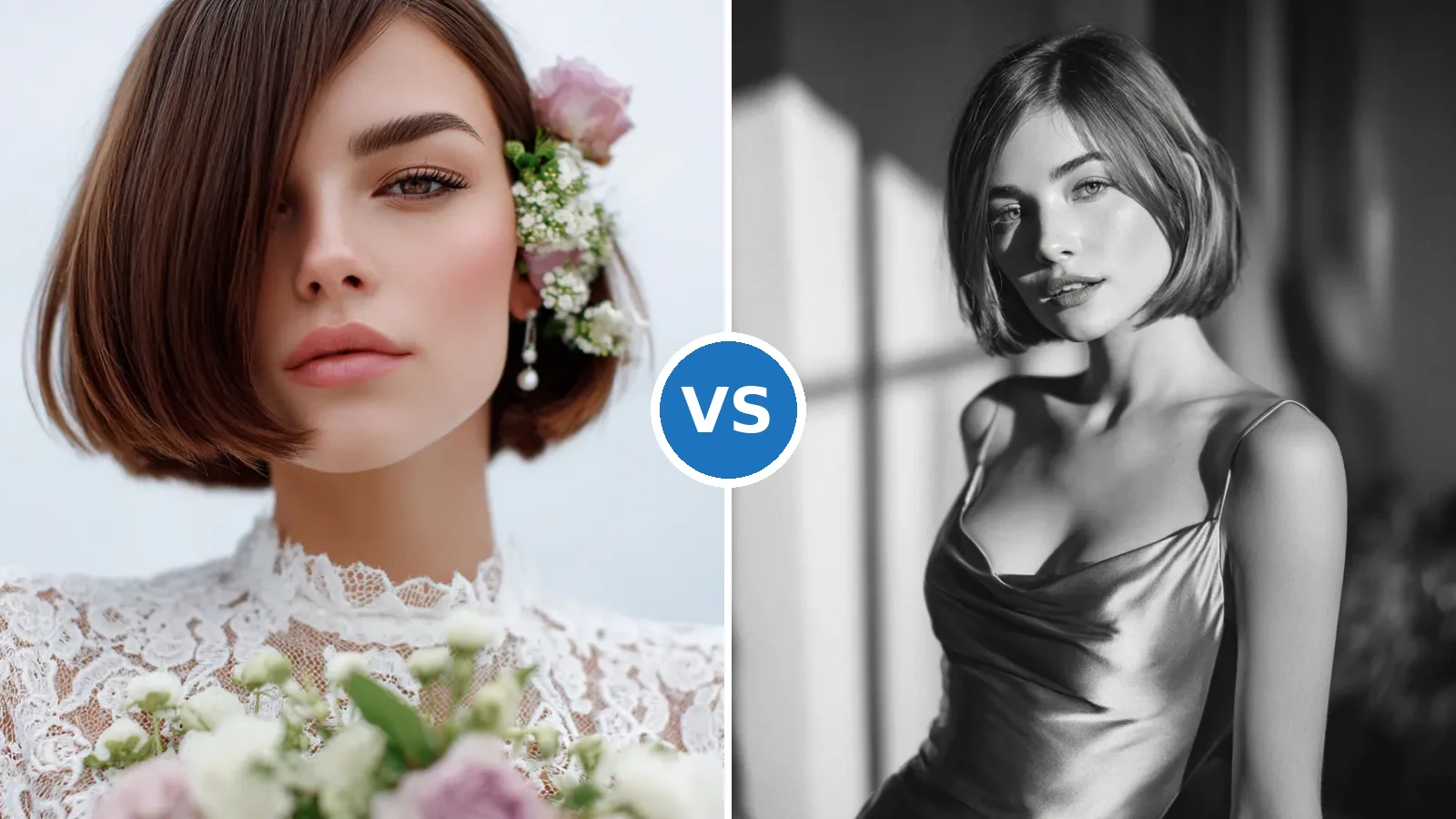
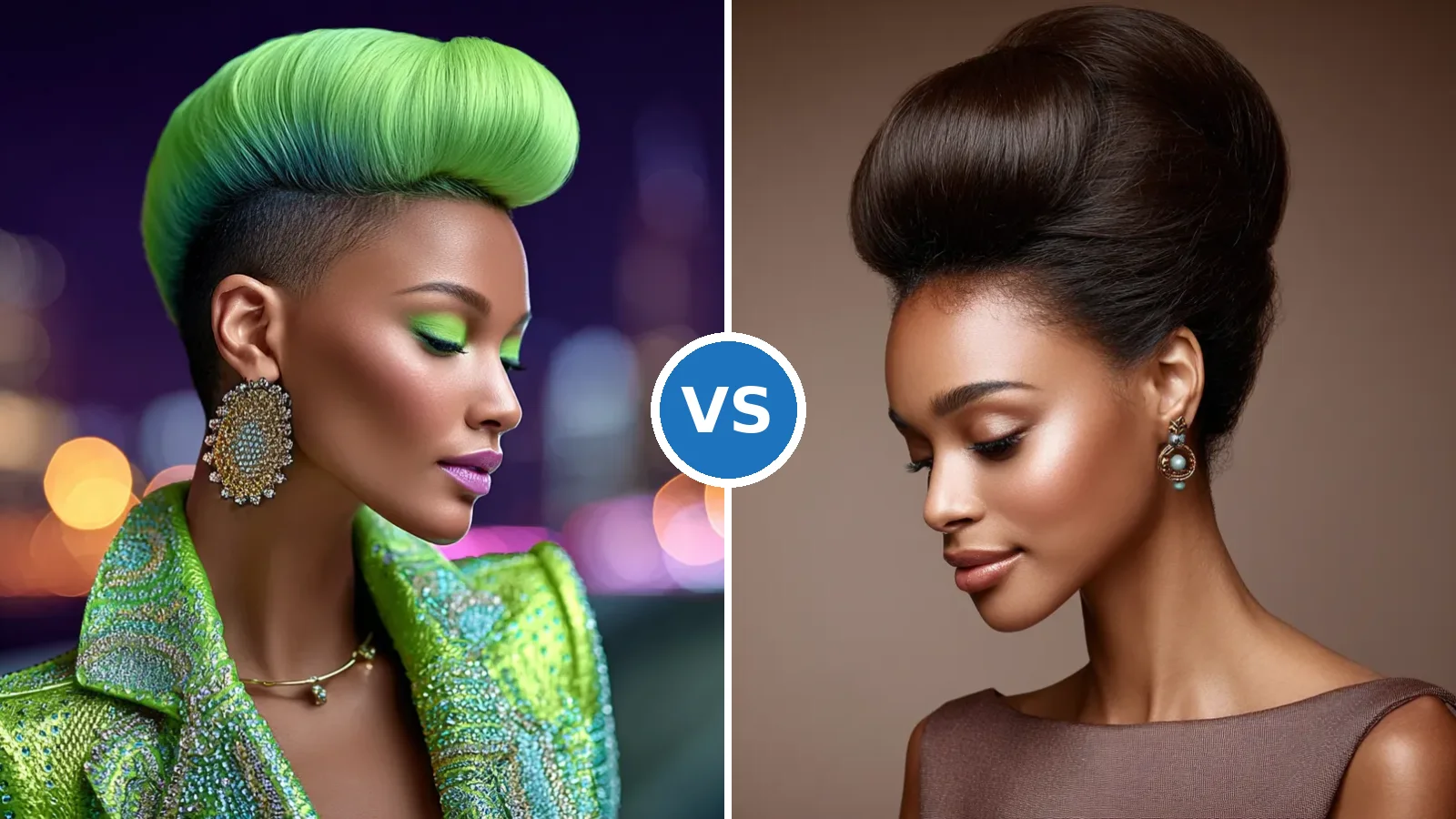
A blunt cut middle part is not a compromise between structure and color — it’s the frame that makes both land harder. The straight-across edge anchors every vivid tone, and the center divide turns the face into a mirror that amplifies cheekbones, eyes, and jawline simultaneously. No other cut creates that bilateral symmetry with so little effort.
Stylists recommend this combination specifically for clients who want maximum visual impact without layered complexity. The blunt perimeter holds its shape regardless of how saturated the color goes, which means the cut and the dye work as a single system rather than competing for attention. Regular trims every six to eight weeks keep the line crisp — skip them and the whole effect dissolves.
Three color directions show how far this silhouette can travel: electric blue for editorial edge, neon coral for high-impact warmth, and metallic purple for dimensional drama. Each one reads completely differently on the same geometry. Choose based on the mood you want to own, not just the color you like in isolation.
- The blunt cut creates a weight line that makes vivid colors look intentional, not accidental
- A center part doubles as a face-symmetry tool — it’s especially flattering for oval and heart-shaped faces
- Electric blue reads sharpest on a glass-finish, flat-ironed style; coral works best sleek; purple rewards added volume
- Semi-permanent dyes like Manic Panic last 4–6 weeks — plan your color refresh into your trim schedule
- Avoid applying vivid dye over yellow-toned or brassy blonde — the result shifts green for blue and muddy for purple
Electric Blue Turns the Blunt Cut Middle Part Into a Geometry Statement
Electric blue on a blunt cut with a middle part works the same way a neon sign works against a dark wall — the precision of the container makes the color impossible to ignore. The straight-across hem functions like a baseline for the color, holding it in a defined band that reflects light evenly on both sides. That bilateral reflection is the actual mechanism behind why this combination looks so intentional in photographs and in person.

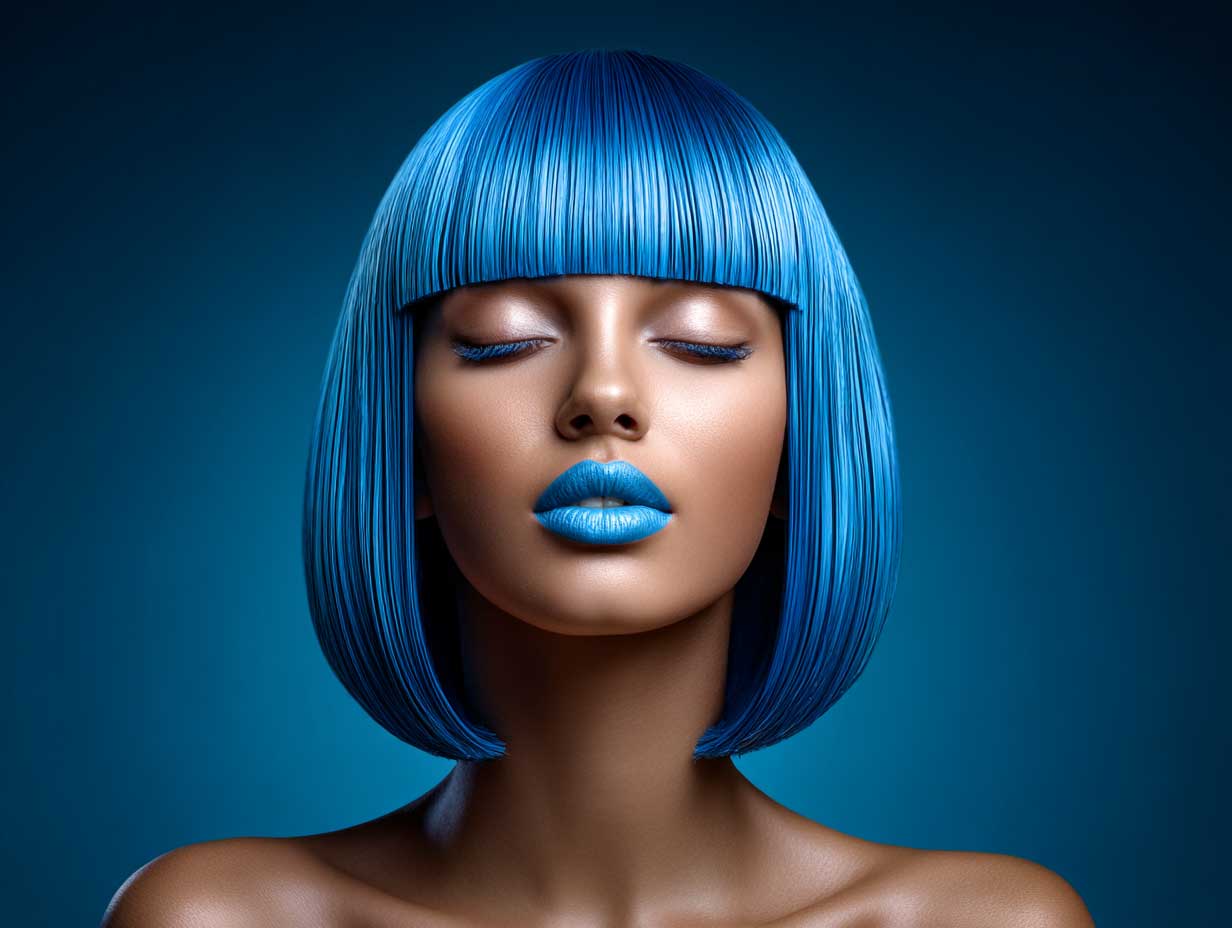

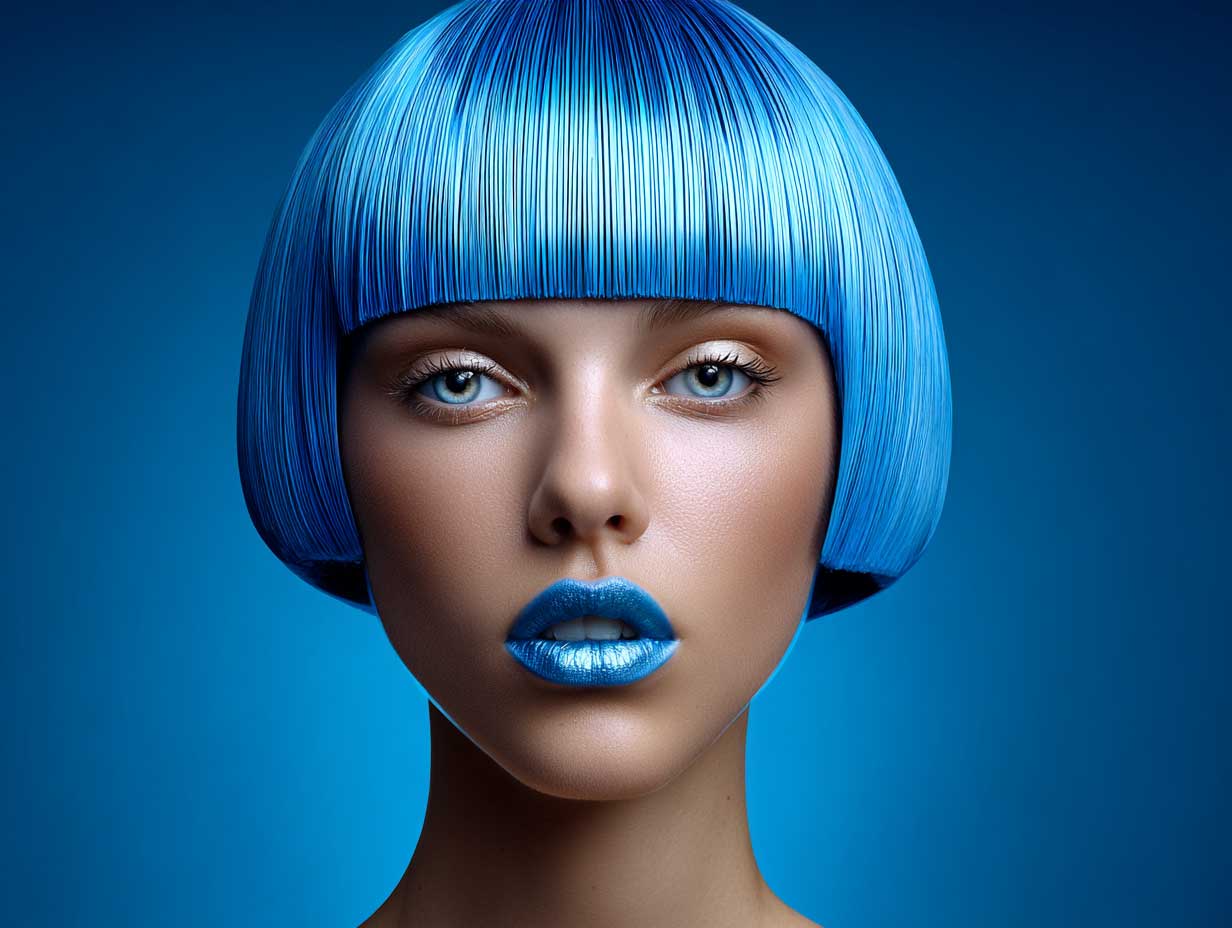
Manic Panic’s Rockabilly Blue Classic High Voltage ($13.99 for 4 oz) is a standard starting point for this shade — it delivers a true neutral blue on hair pre-lightened to at least level 9. The catch is that brassy or yellow-toned blonde will shift the result toward teal or green. Strand-test before committing a full color session. For longer-lasting saturation, the Amplified version runs $17.99 and contains roughly 30% more pigment, which matters when you’re working against fading caused by heat styling.
The glass-like finish that makes electric blue so striking on this cut requires titanium-plate flat iron work and a shine serum applied section by section before heat. Skip the serum and you get blue hair — use it and you get blue hair that photographs like it belongs in a campaign. What kills the look faster than anything? Applying volumizing products on top of a style that’s supposed to read flat and mirrored. Volume is the enemy of the futuristic finish here; save the mousse for the purple variation below.
Does the center part actually matter, or is that just styling convention? It matters structurally. Parting down the center creates two equal curtains of color that hang at the same angle, which doubles the reflective surface area visible from the front. A side part disrupts that symmetry and draws the eye off-center, which works for some styles but undermines the bilateral geometry that makes this color-and-cut pairing distinctive. Color refresh is needed every four to six weeks to maintain pigment intensity — cool rinses and a sulfate-free shampoo extend that window by roughly one to two wash cycles.
Neon Coral Softens the Blunt Cut’s Edge Without Losing the Structural Line
Neon coral on a blunt cut middle part proves that warmth and geometry are not opposites. Coral carries both red and pink undertones, which means it reads as energetic without pushing into aggressive territory — the difference between a color that announces itself and one that crowds the room. On a sleek, flat-ironed blunt cut, those warm undertones create the visual effect of skin looking more luminous, because the coral reflects warmth back onto the face from both sides of the center divide.


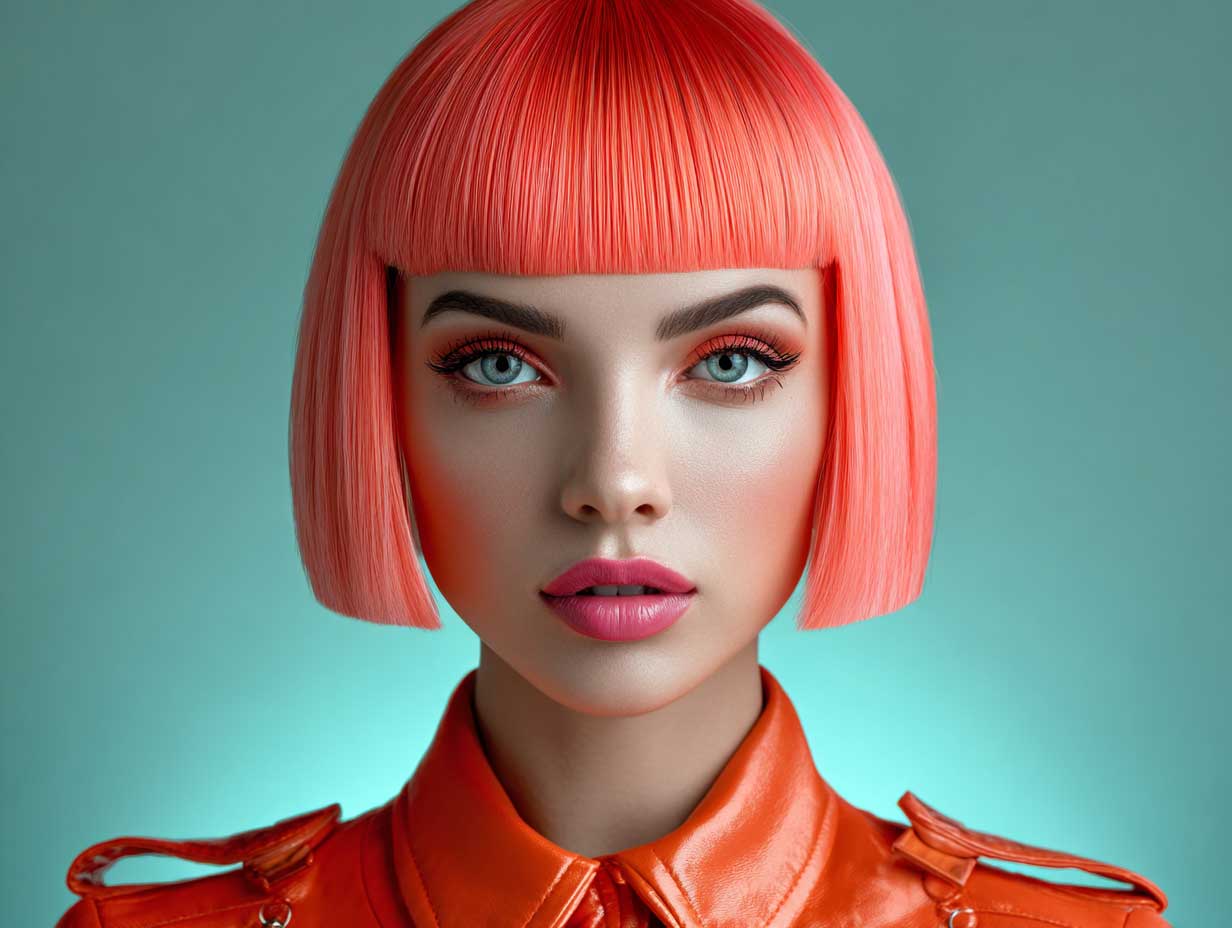

The sleek finish here is not optional — it’s load-bearing. Coral is a warm, approachable shade, and without the flat, structured surface of a precision blowout, it reads casual rather than editorial. A smoothing shampoo and conditioner set the base, a thermal protectant goes on before flat-ironing each section, and a glossing mist closes the cuticle and amplifies the color’s depth. The trick stylists use is a slightly cool final rinse before towel-drying — it seals the cuticle in a flatter position, which is why salon-finished blowouts look shinier than home-finished ones.
Arctic Fox’s Electric Paradise, a UV-reactive pink dye with neon coral undertones, is one route to this color direction; for a truer coral-red, mixing Cosmic Sunshine with Poison from the same line creates a warm neon blend that the brand’s own site confirms. Neither requires peroxide or ammonia. The tradeoff for that gentleness is fade speed — neon shades wash out faster than deep, dark colors, which means a silk pillowcase, cold-water rinses, and sulfate-free products are not optional lifestyle upgrades but actual color-preservation tools. Skipping them costs you two to three weeks of saturation time.
What doesn’t work here? Heavy, creamy styling products. They coat the hair shaft with a matte film that dulls the coral and makes the blunt ends look soft rather than sharp. Reach for serums with silicone bases or a lightweight glossing spray — both add shine without the coating weight. The center part on a coral cut does something specific for faces with strong brows or defined eye shape: it frames the eyes inside a warm color field rather than neutral hair, which reads more intentional in photos than almost any other styling decision.
- Don’t skip the strand test before applying a vivid semi-permanent — yellow-toned blonde turns electric blue to teal and coral to orange
- Don’t use volumizing mousse on the electric blue or coral versions — it breaks the flat reflective surface that makes the color read glass-like
- Don’t go more than eight weeks between trims — a blunt cut grows out unevenly, and the precision of the hem is the whole structural argument for this style
- Don’t wash vivid-colored hair daily — frequency is the single fastest way to strip pigment from semi-permanent dye
Volume Reframes What the Blunt Cut Middle Part Can Do in Metallic Purple
Metallic purple challenges the assumption that a blunt cut has to read flat or minimalist. The color itself is doing something optically unusual — a violet base with silver-toned shimmer shifts between warm and cool depending on the light source, which means the hair appears to change shade as the wearer moves. That behavior is maximized, not minimized, by adding volume to the blunt cut middle part, because more surface area moving through different light angles means more visible color shift. The blunt edge at the bottom holds the visual logic together while the rest of the hair earns its drama legitimately.


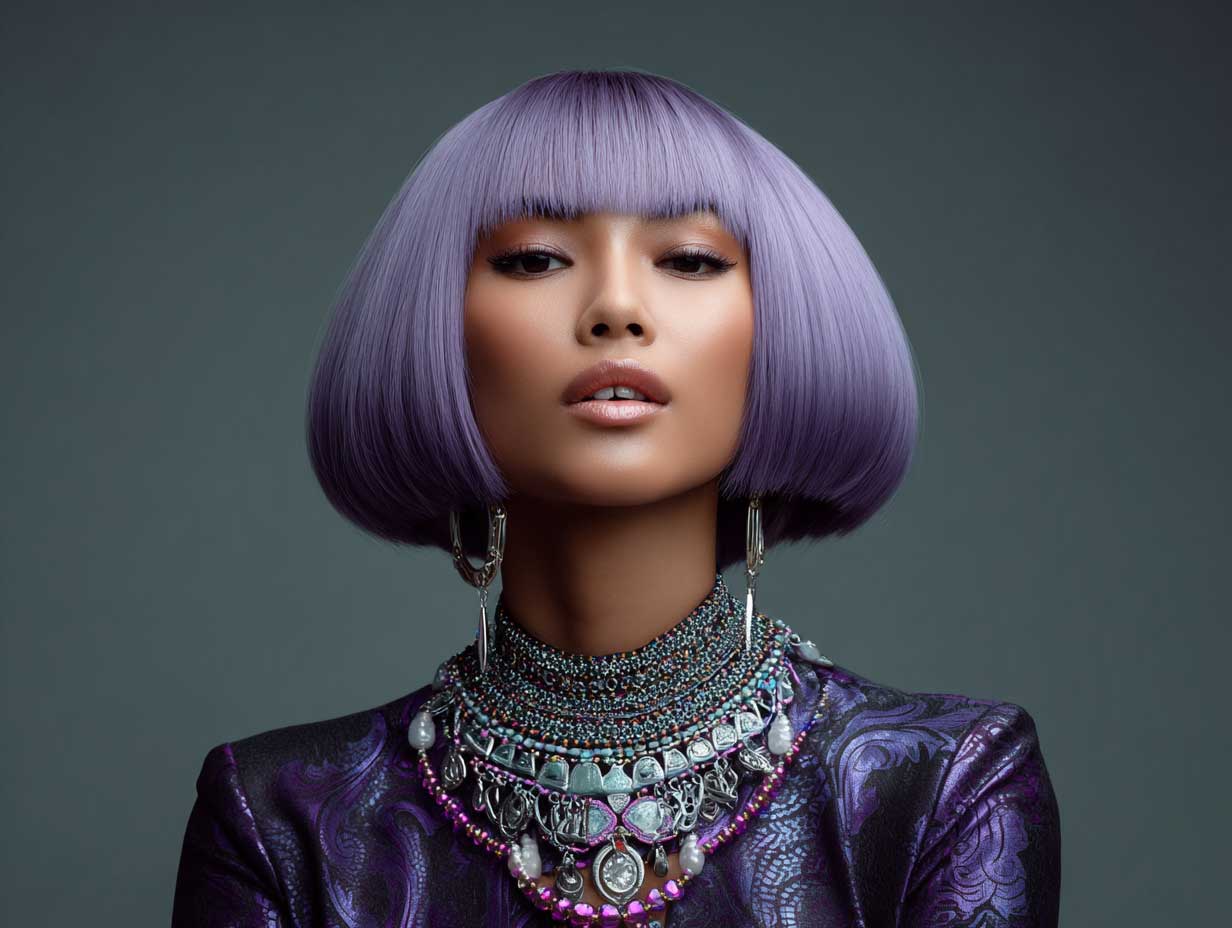

Arctic Fox Purple AF costs $12 for a 4 fl oz bottle — a true rich purple that delivers vibrant saturation on hair lightened to level 8 or above and a visible purple tint on darker bases. For metallic silver woven into the violet, stylists layer a small amount of Sterling (Arctic Fox’s silver-toned neutral) into the Purple AF at roughly a 3-to-1 ratio. That mix creates the dimensional, shifting tone that reads as metallic rather than flat. The brand confirms all Arctic Fox shades are fully mixable, so this is a standard salon approach rather than an experiment.
Volume is built with a volumizing shampoo, a lightweight mousse at the roots, and a round-brush blowout that lifts the crown while leaving the blunt ends intact. A large-barrel curling iron can add a very soft curve at the ends — think barely there, not bouncy ringlets — just enough to give the bottom edge a slight outward flip that prevents the look from reading too flat in person. Finish with a high-shine spray to activate the metallic shimmer. Can you use regular hairspray instead? You can, but it typically creates a matte film that dampens the reflective quality that defines this color direction.
Purple is among the fastest-fading vivid shades because the dye molecules are smaller and wash out more readily than red or blue pigments. Toning treatments every three to four weeks can offset that fade, and a silk pillowcase prevents overnight friction from accelerating the process. For an internal look at how blunt cut shapes interact with different face structures, the face-shape guide on ArtFasad covers which lengths and color choices create the most balanced silhouette. The metallic purple version works most dramatically on oval and heart-shaped faces, where the center part draws attention to the cheekbones and lets the color frame the upper face without competing with a strong jawline.
| Color | Finish Style | Fade Speed | Key Product |
|---|---|---|---|
| Electric Blue | Glass-flat, titanium iron | 4–6 weeks | Manic Panic Rockabilly Blue, $13.99 |
| Neon Coral | Sleek blowout, gloss mist | 3–5 weeks | Arctic Fox Cosmic Sunshine + Poison mix |
| Metallic Purple | Voluminous round-brush blowout | 3–4 weeks | Arctic Fox Purple AF, $12 / 4 oz |
Stylists note that the blunt cut’s maintenance schedule — every six to eight weeks per most professional recommendations — aligns conveniently with the refresh cycle for semi-permanent vivid colors. Booking both in the same appointment keeps the geometry crisp and the color saturated without doubling salon visits. For those curious how this silhouette handles natural texture, the blunt bob guide for tight curls on ArtFasad addresses how coily and wavy hair types adapt the same structural edge.
Stylists recommend keeping a close eye on the weight distribution after the first few weeks of growth. The blunt cut grows out in a way that creates slight unevenness at the corners before the center catches up — it looks intentional for about three weeks and then starts to lose its argument. Scheduling a micro-trim at the six-week mark is the move, not the eight-week mark, if maintaining the precision of the line is the priority. For a broader look at the science behind why blunt cuts read so differently on various hair densities, Yes Madam’s blunt haircut guide covers how hair texture affects the final shape and what styling adaptations preserve the cut’s structure between trims.
TAKEAWAY
The blunt cut middle part works because geometry and color reinforce each other — not because either one is enough alone.
Electric blue, coral, and metallic purple each require the center divide to activate their symmetry. Remove the part and you lose the framing effect that makes the color feel deliberate.
Trim every six to eight weeks. Match your color refresh to that schedule. Use the right finish for each shade — flat and glass for blue, sleek and glossy for coral, volumized and metallic for purple.
Save this post before your next salon appointment.