Quick Scan
- Ceiling painter searches surged 16,884% in 2026—the highest-trending home service in quarterly data. Overhead surfaces are now primary design features, not functional afterthoughts.
- Jewel tones, earthy hues, and muted saturated colors outpace white ceilings. Matte and eggshell finishes prevent light bounce; high-gloss undermines the effect.
- A painted ceiling costs $400–800 in labor for 300 sq ft, with paint ranging from $35–90 per quart depending on brand. DIY overhead work risks lap marks and uneven coverage.
- Midiminimalism philosophy pairs color-rich ceilings with restrained walls—establishing one design anchor instead of overwhelming multiple surfaces.
- Paint samples look different overhead than on walls due to angle and shadow. Test 2-by-3-foot swatches at multiple times of day before committing.
When homeowners talk about painted ceilings in summer 2026, they’re not describing a neutral overhead tint. Ceiling painter searches surged 16,884% year-over-year according to Yelp’s quarterly analysis—the highest-trending search in home decor services. Ceiling staining searches climbed 3,449%, signaling that the fifth wall has officially graduated from functional surface to personality-defining feature.
This shift reflects a broader design movement away from minimalism toward what industry observers call ‘midiminimalism’—a philosophy that combines restraint with color-rich, architecturally intentional surfaces. Rather than bleached-out spaces with white ceilings, homeowners are reimagining overhead zones as mood-establishing anchors using jewel tones, earthy hues, muted saturated colors, and dark wood stains.
Why Painted Ceilings Establish Room Presence in Ways Walls Cannot
Your eye naturally travels upward before settling on horizontal planes. A painted ceiling commands attention first, framing the entire room’s personality within that single architectural gesture. Unlike fireplace feature walls that anchor a single focal point, an overhead finish wraps the entire space in color, creating an immersive sensory experience rather than a localized accent.
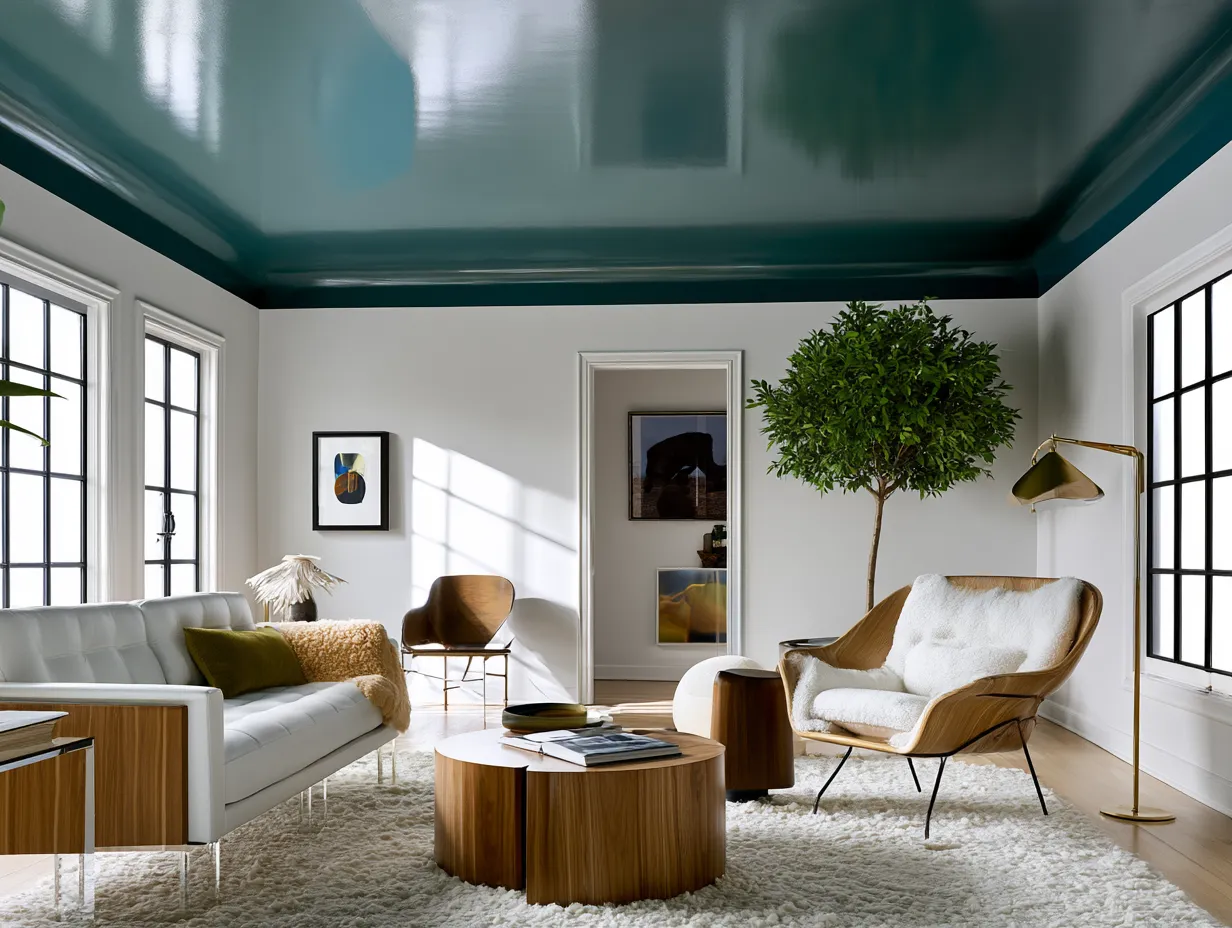
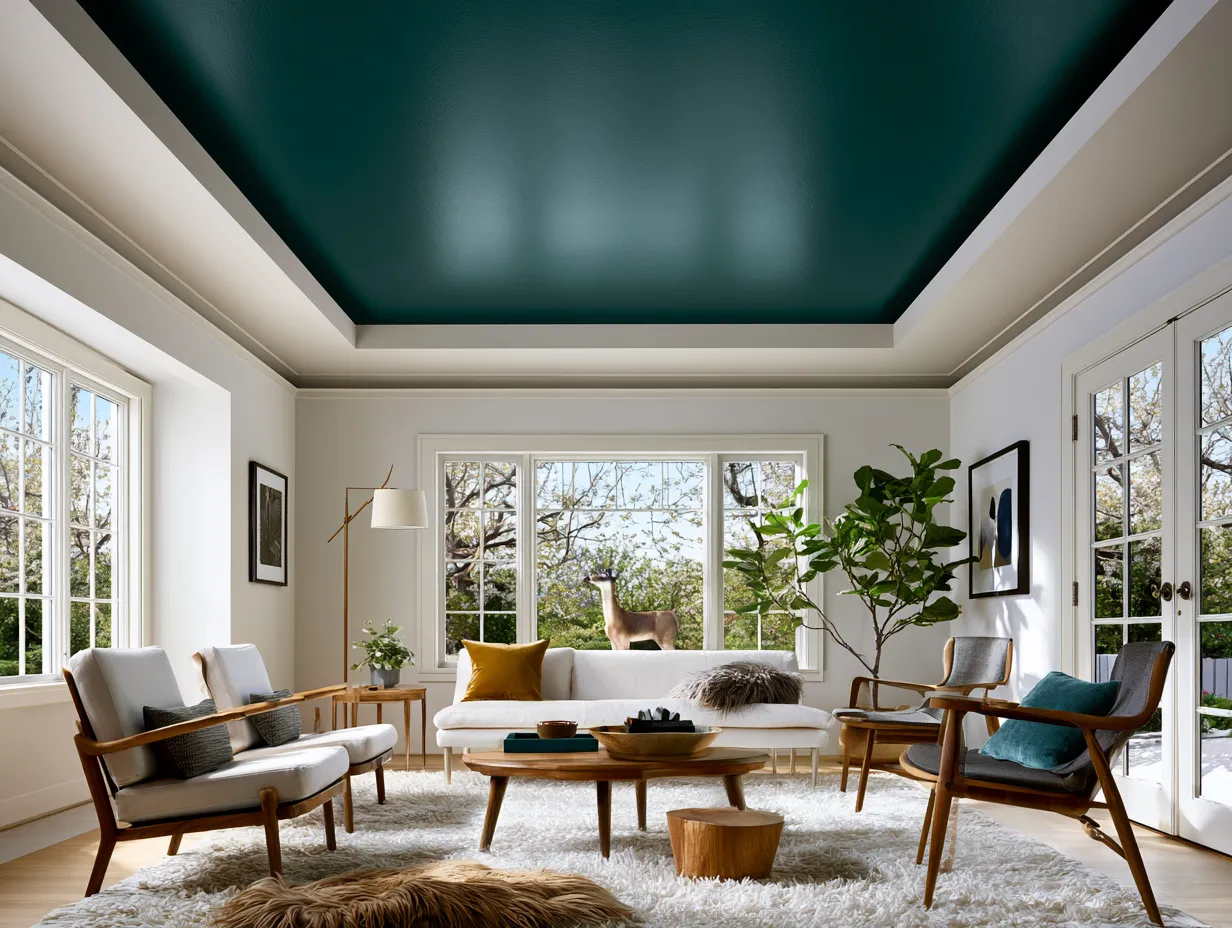
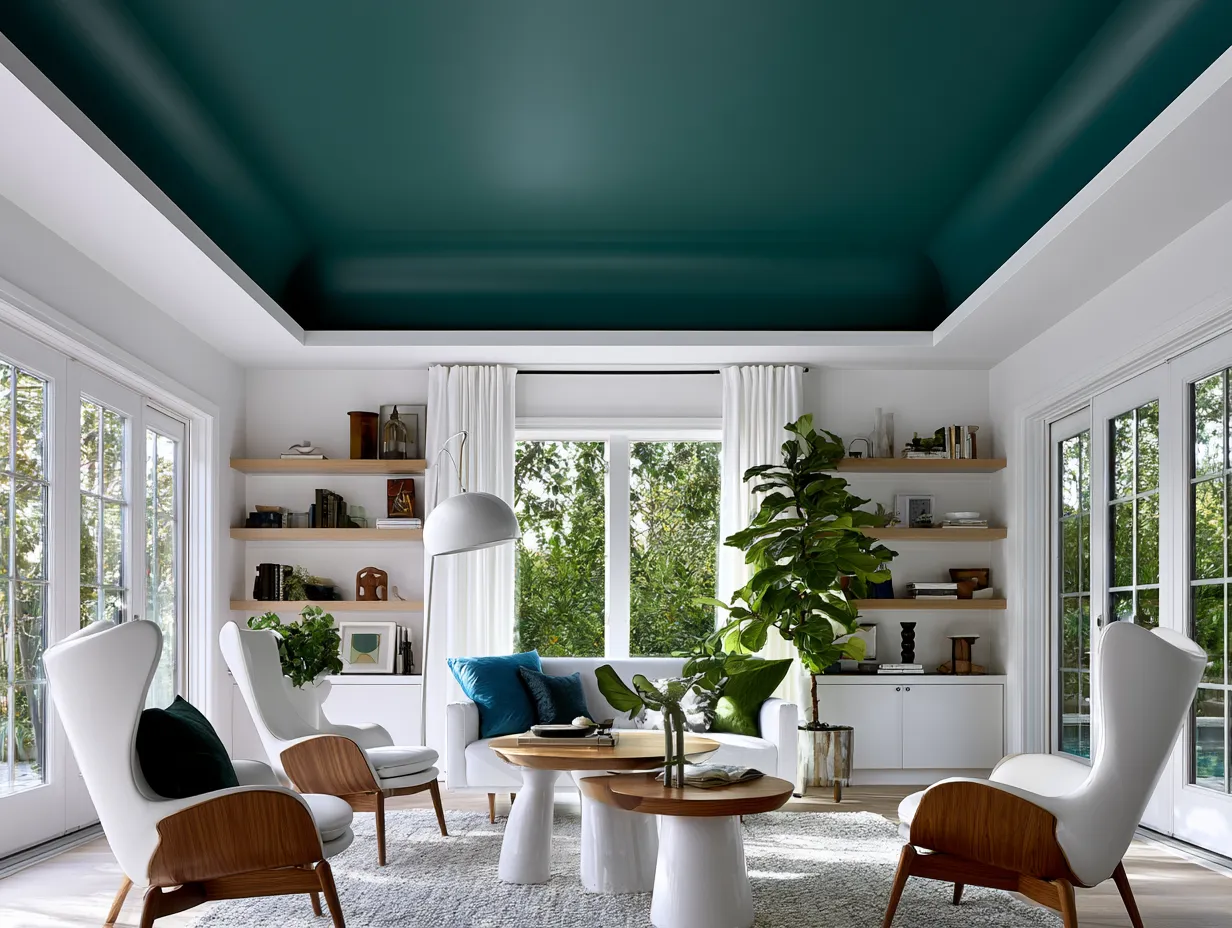
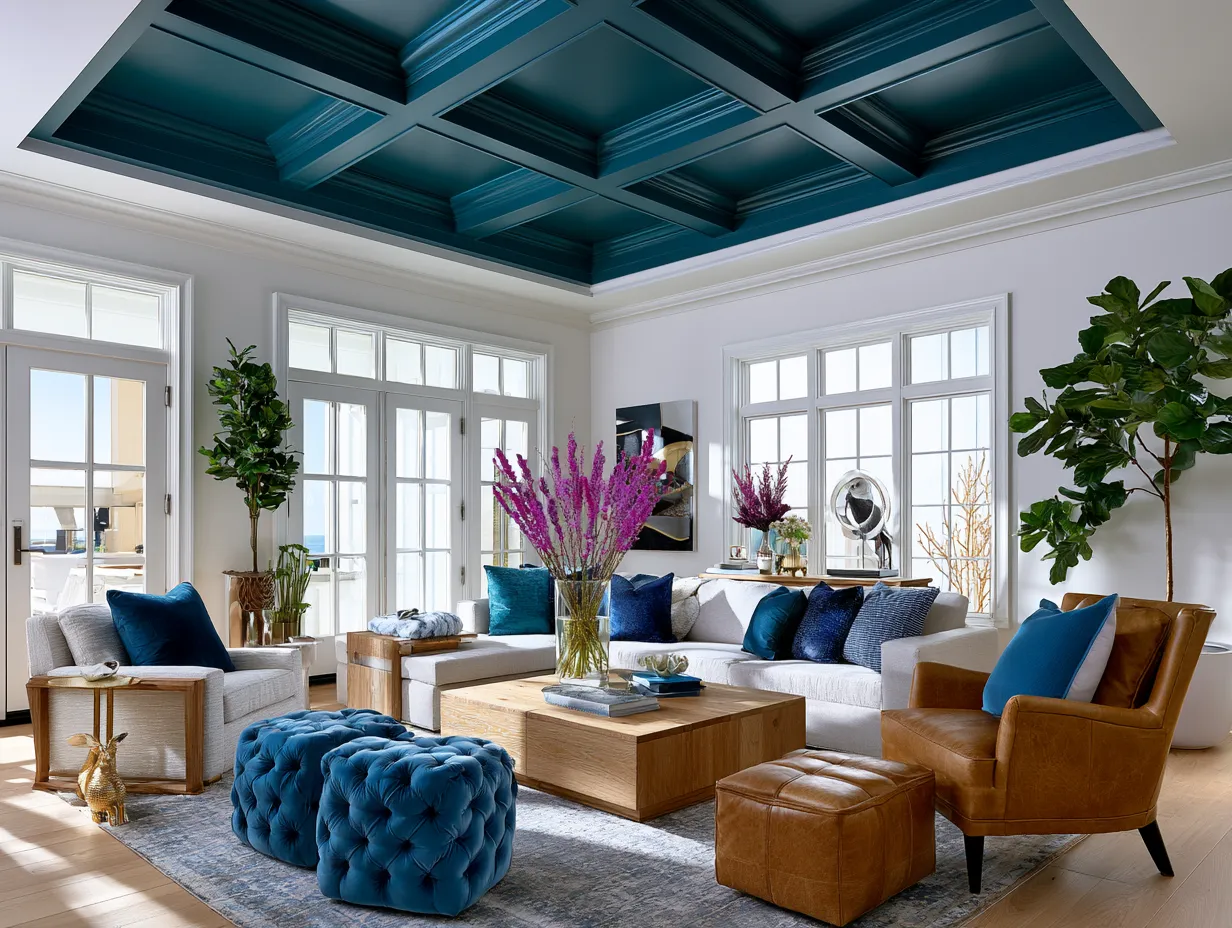
Color-drenching a ceiling works because it contradicts our default expectation. White ceilings feel neutral, safe, invisible. A saturated sapphire, warm taupe, or forest green ceiling becomes unforgettable.
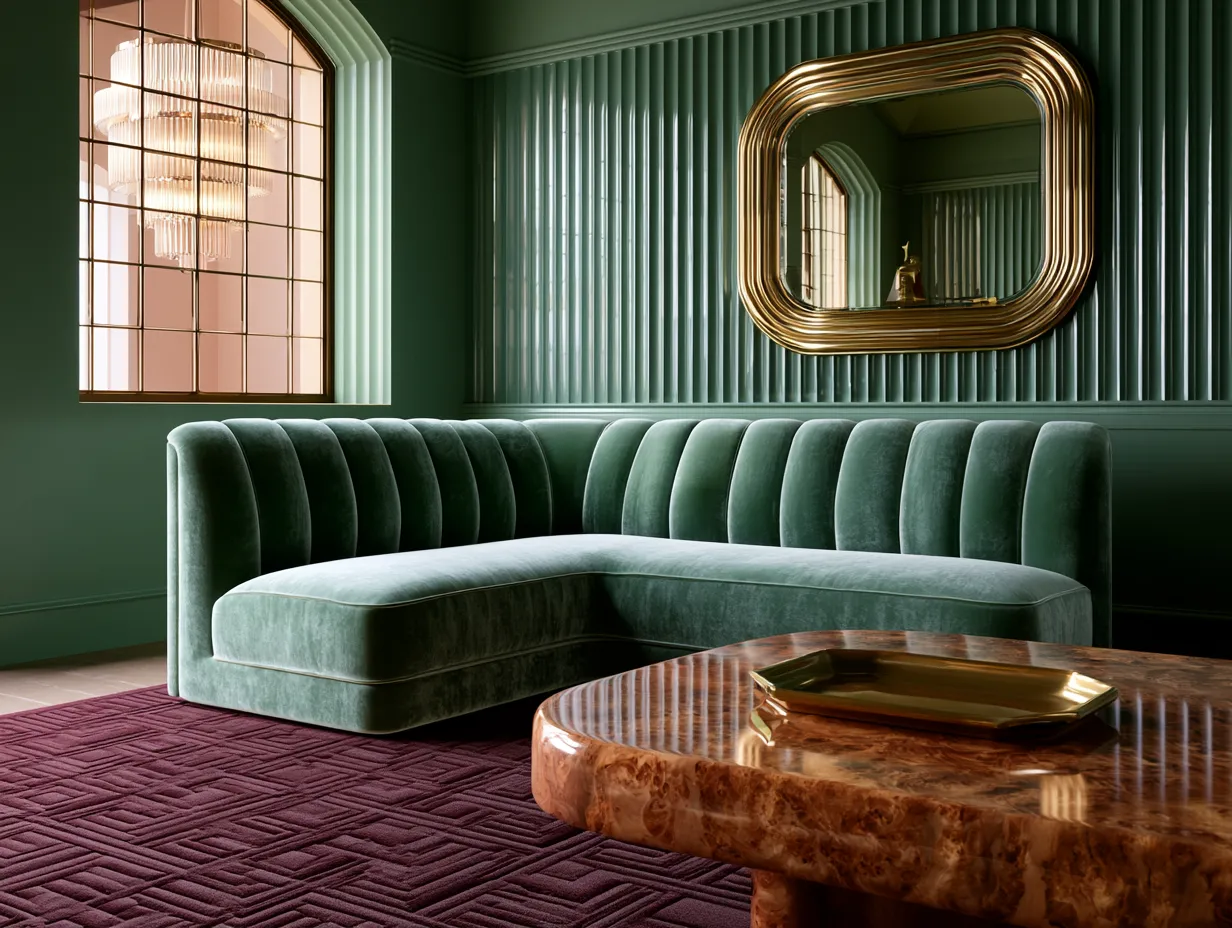
Jewel-toned ceilings—deep emerald, navy, burgundy—create intimacy in oversized rooms. Earthy hues like ochre, sage, or dusty terracotta introduce warmth without maximalism. Muted saturated colors (grayed-down jewel tones) bridge the gap between bold and restrained, appealing to homeowners hesitant about full color commitment.
Does a painted ceiling work in small spaces? Absolutely.
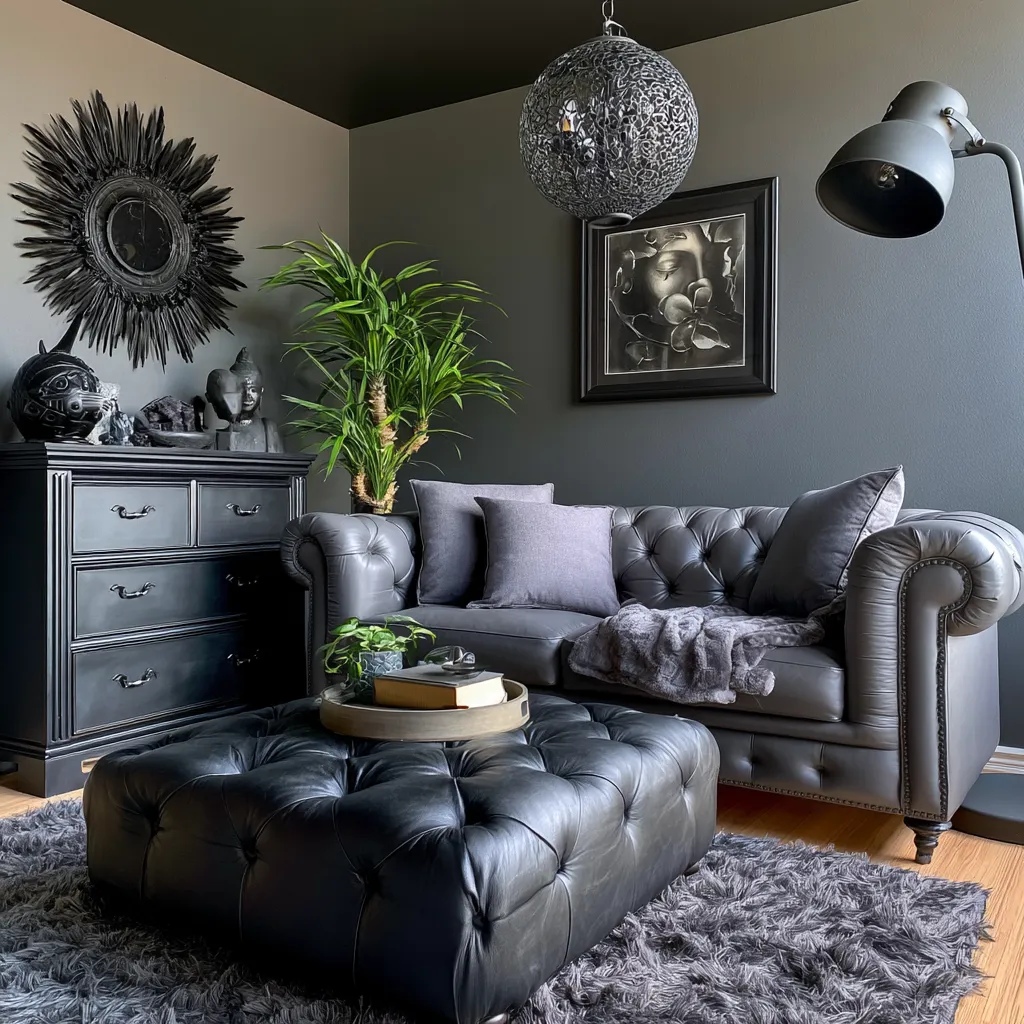
In a 10-by-12 bedroom, a matte charcoal ceiling visually expands the footprint while deepening the sense of enclosure—cozy rather than claustrophobic. The psychology matters: overhead color signals intentionality, suggesting the room was designed rather than defaulted.
Avoid painting ceilings in high-gloss or semi-gloss finishes. Matte and eggshell finishes reflect minimal light, making the color feel more authentic and preventing the ceiling from reading as shiny or plastic-like, which undermines the entire design intent.
Don’t Do This
- Don't use high-gloss or semi-gloss paint on ceilings. These finishes reflect light unevenly, making overhead color feel plastic-like and undermining architectural intentionality.
- Don't color-drench both walls and ceiling simultaneously. Midiminimalism requires restraint—choose one anchor surface and let others breathe.
- Don't attempt full-room ceiling painting without professional experience. Overhead work requires specialized equipment, edge precision, and consistent pressure that DIY rollers cannot deliver.
Color Selection, Application Techniques, and Ceiling-Specific Challenges
Selecting a ceiling color requires different thinking than wall color. Ceilings read darker than walls due to angle and overhead shadow—order paint samples and apply 2-by-3-foot swatches directly overhead. View them at different times of day. The color that looks rich at 2 p.m. might feel heavy at 7 p.m. under artificial light.
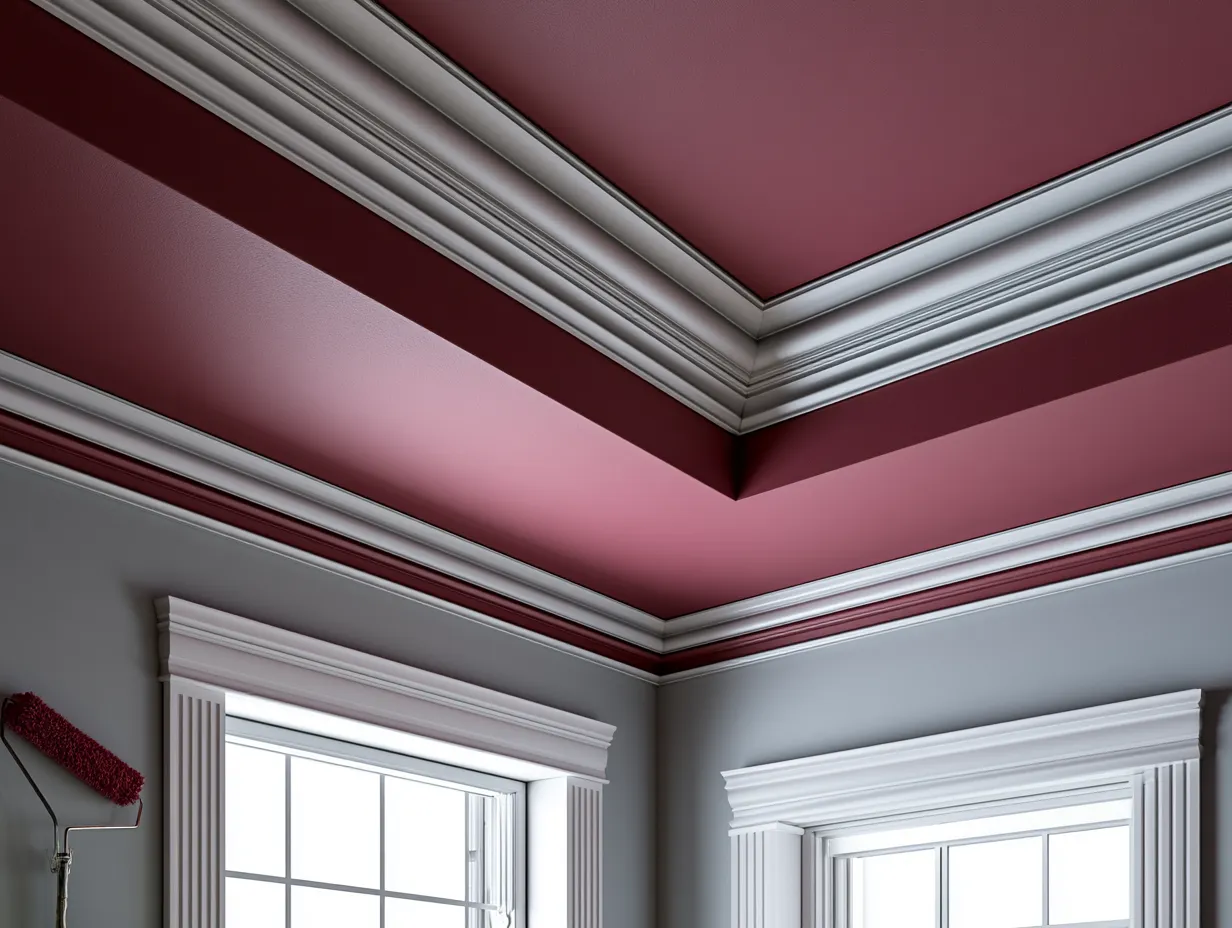
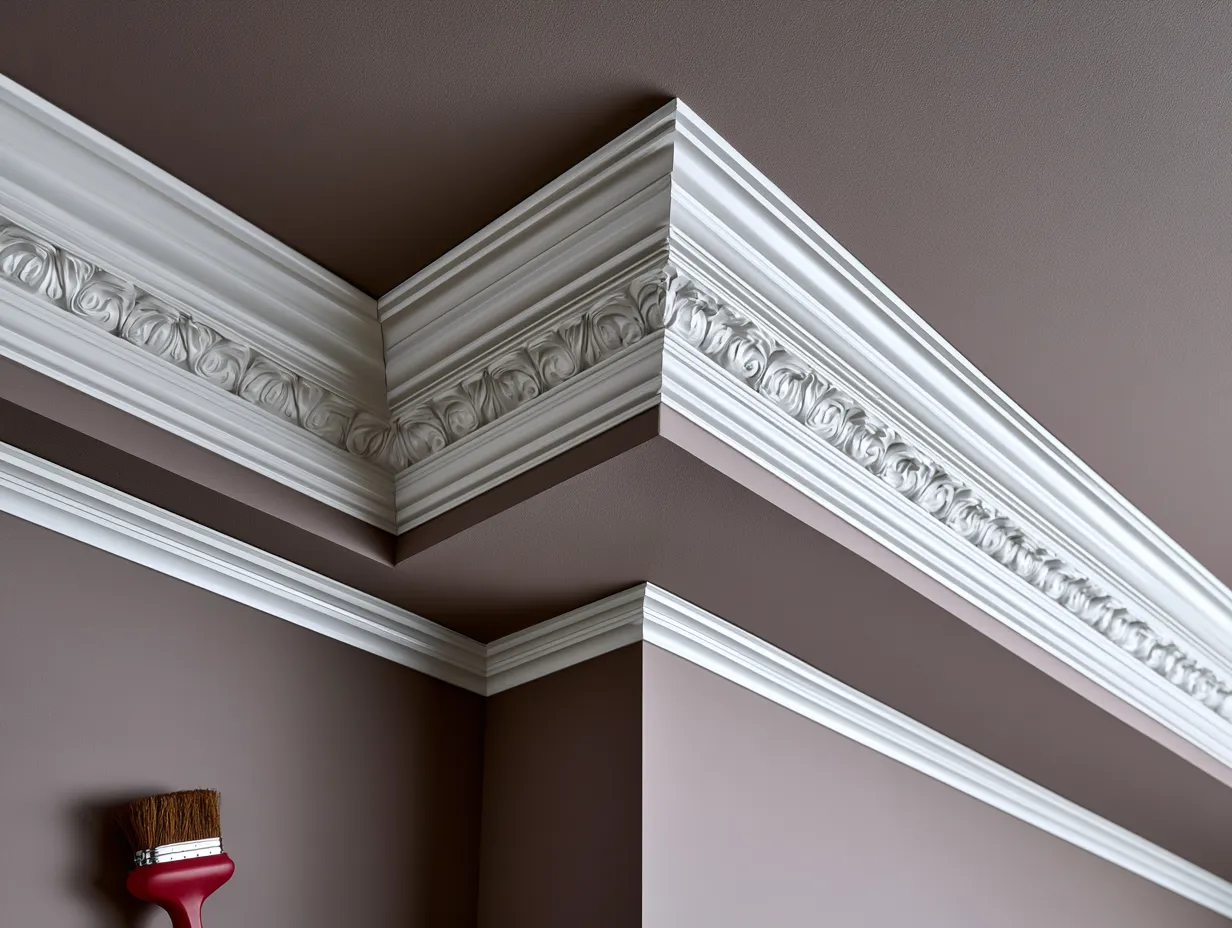
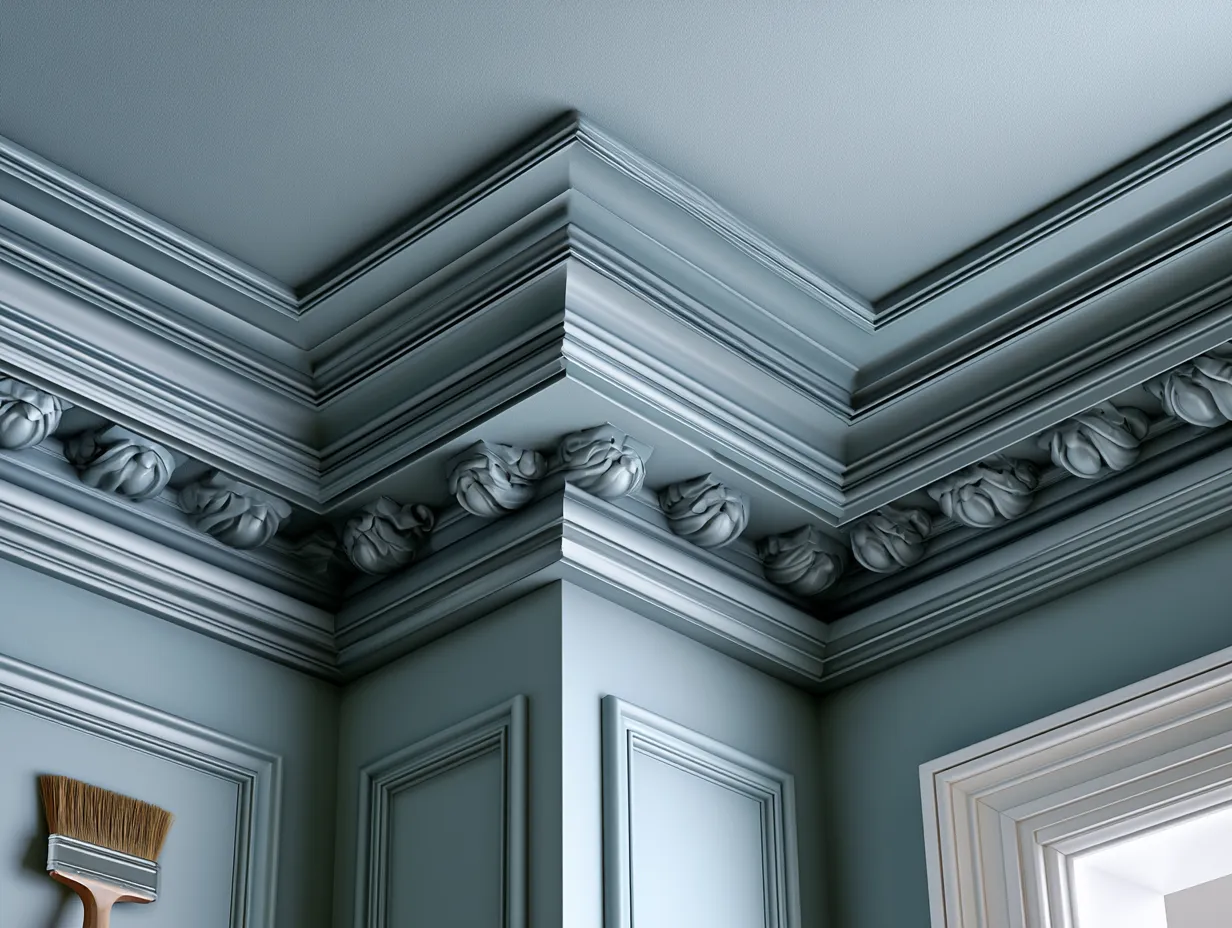
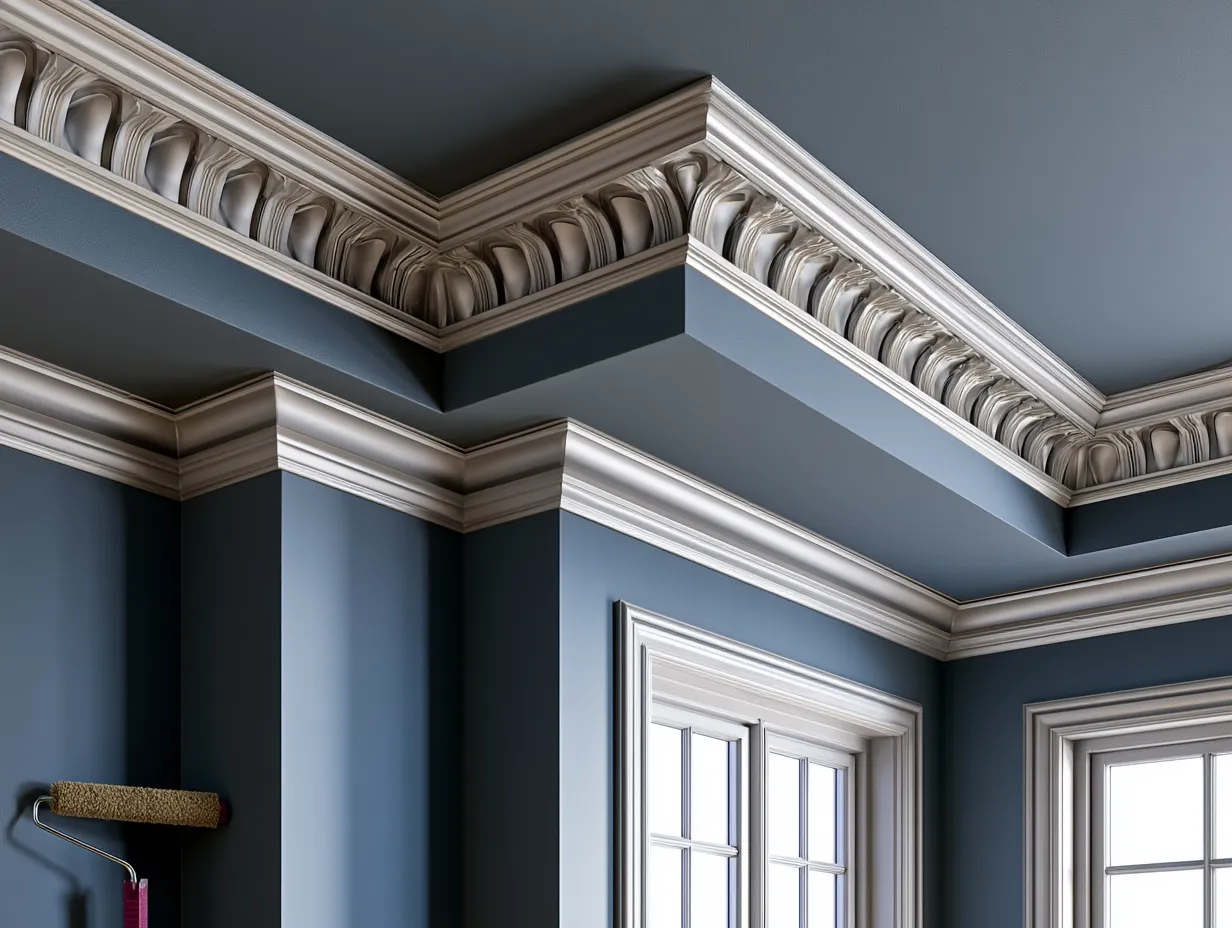
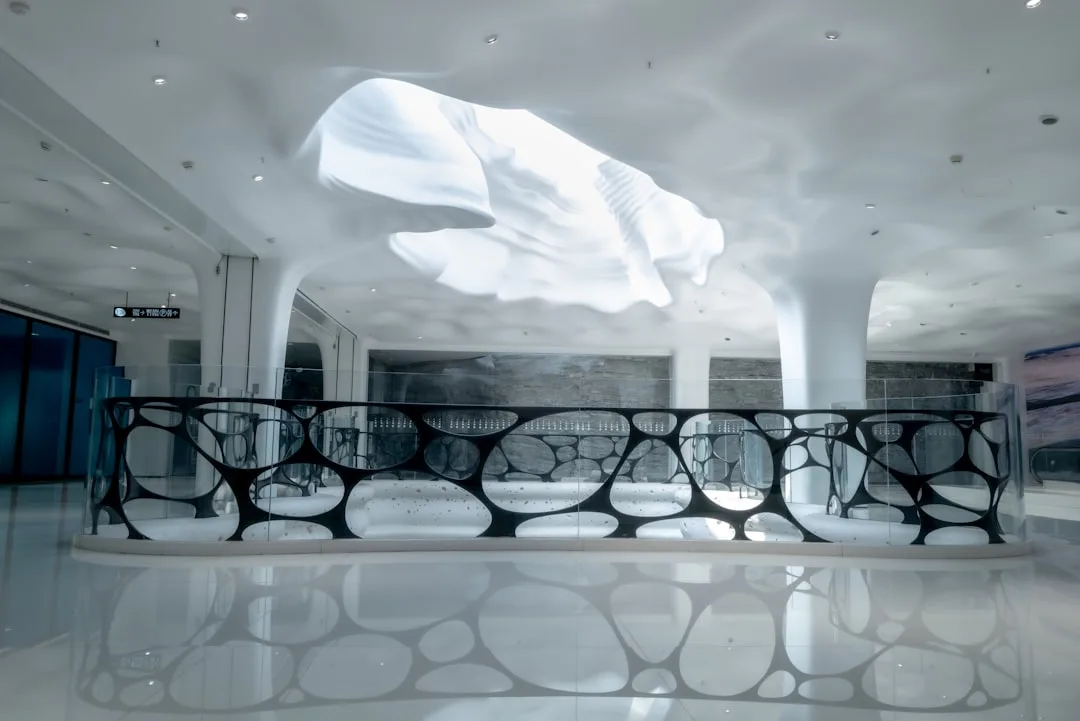
Benjamin Moore’s Hale Navy HC-80 and Sherwin-Williams’ Urbane Bronze SW7048 have become baseline jewel-tone choices for painted ceilings, priced around $35–45 per quart. For warmer earth tones, Farrow & Ball’s Dead Flat in shades like Calluna (soft mauve) or Treron (muted sage-green) command premium pricing at $60–90 per liter but offer superior matte finish quality that prevents light bounce. Geometric ceiling lights benefit from deeper painted surfaces that provide contrast.
Ceiling staining—applying wood stain rather than paint—appeals to homeowners wanting moody, textured overhead finishes. Dark walnut and ebony stains on exposed plywood or shiplap ceilings create dramatic architectural depth. Minwax Dark Walnut wood stain ($8–12 per quart) and Varathane Premium Fast Dry ($12–16 per quart) are contractor-grade options requiring proper surface prep.
Application matters enormously. Paint a ceiling with a standard roller and you’ll see lap marks, uneven coverage, and pooling in corners. Professionals use extension poles with angled brush work, sprayers for larger surfaces, and multiple thin coats rather than one heavy coat. A 300-square-foot ceiling typically requires 2–3 gallons of paint and costs $400–800 in labor depending on regional rates.
Do not attempt a full-room ceiling paint without professional experience or proper equipment. Overhead painting requires neck strain management, precise edge work, and consistent pressure—mistakes compound visibly in 360-degree ceiling views.
Crown molding painted to match the ceiling creates seamless architectural flow, while contrasting white or wood-stained trim emphasizes the ceiling’s independence. Test both approaches with tape mock-ups before committing.
| Paint Type | Cost per Quart | Finish & Best For |
|---|---|---|
| Benjamin Moore Hale Navy HC-80 | $35–45 | Matte jewel-tone; standard professional choice for ceilings |
| Farrow & Ball Dead Flat (premium) | $60–90 | Ultra-matte, superior finish; ideal for high-end midiminimalist interiors |
| Minwax Dark Walnut Wood Stain | $8–12 | Dark finish on wood/shiplap; moody architectural depth |
| Sherwin-Williams Urbane Bronze SW7048 | $35–48 | Deep neutral-tone; works in transitional or minimalist spaces |
Midiminimalism and the Fifth Wall’s Role in Modern Design Psychology
Midiminimalism rejects the sterile all-white aesthetic that dominated 2020–2023 interiors. It keeps minimalism’s restraint—uncluttered surfaces, intentional negative space, limited color palettes—but introduces saturated, architecturally purposeful color into one or two anchor features. The painted ceiling is the perfect fifth-wall expression of this philosophy.
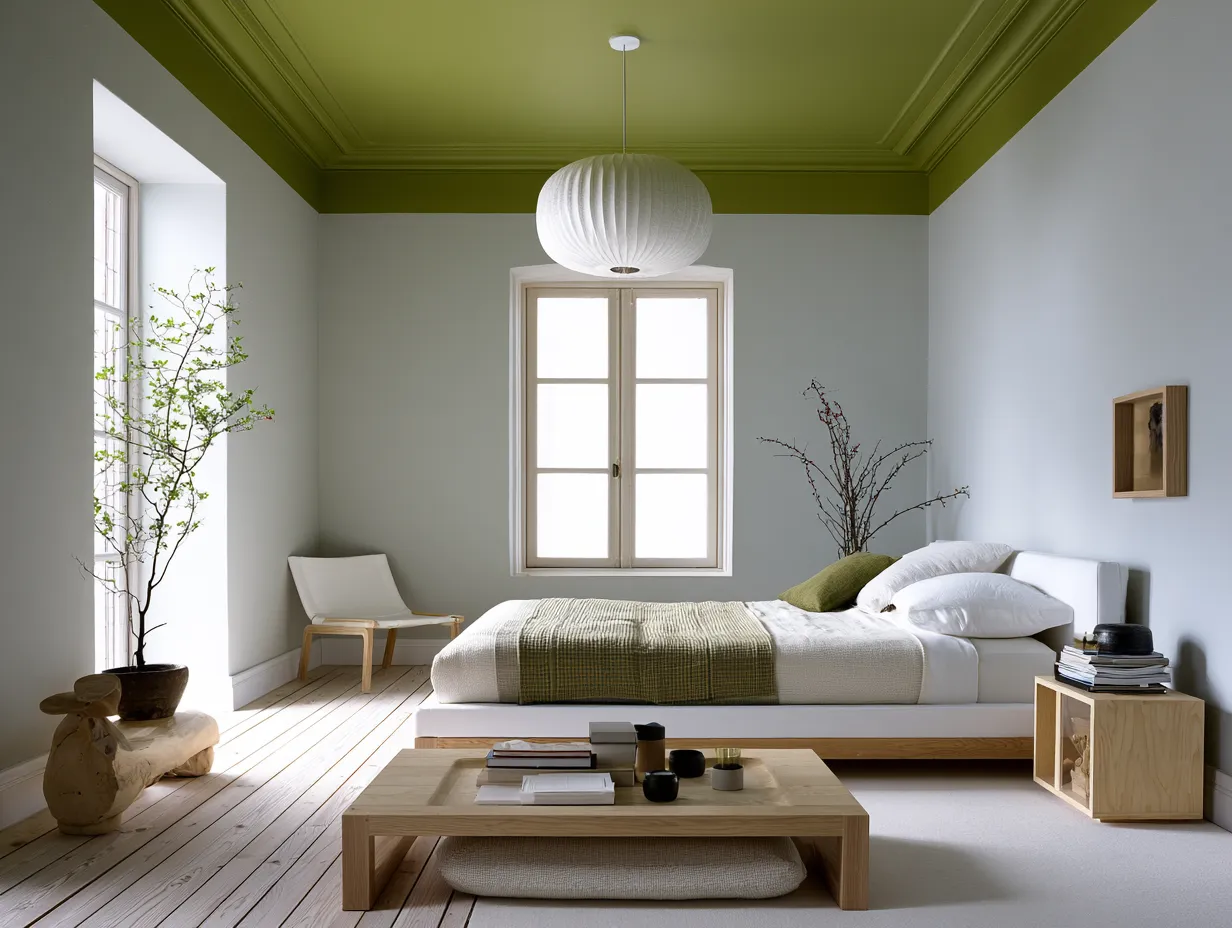
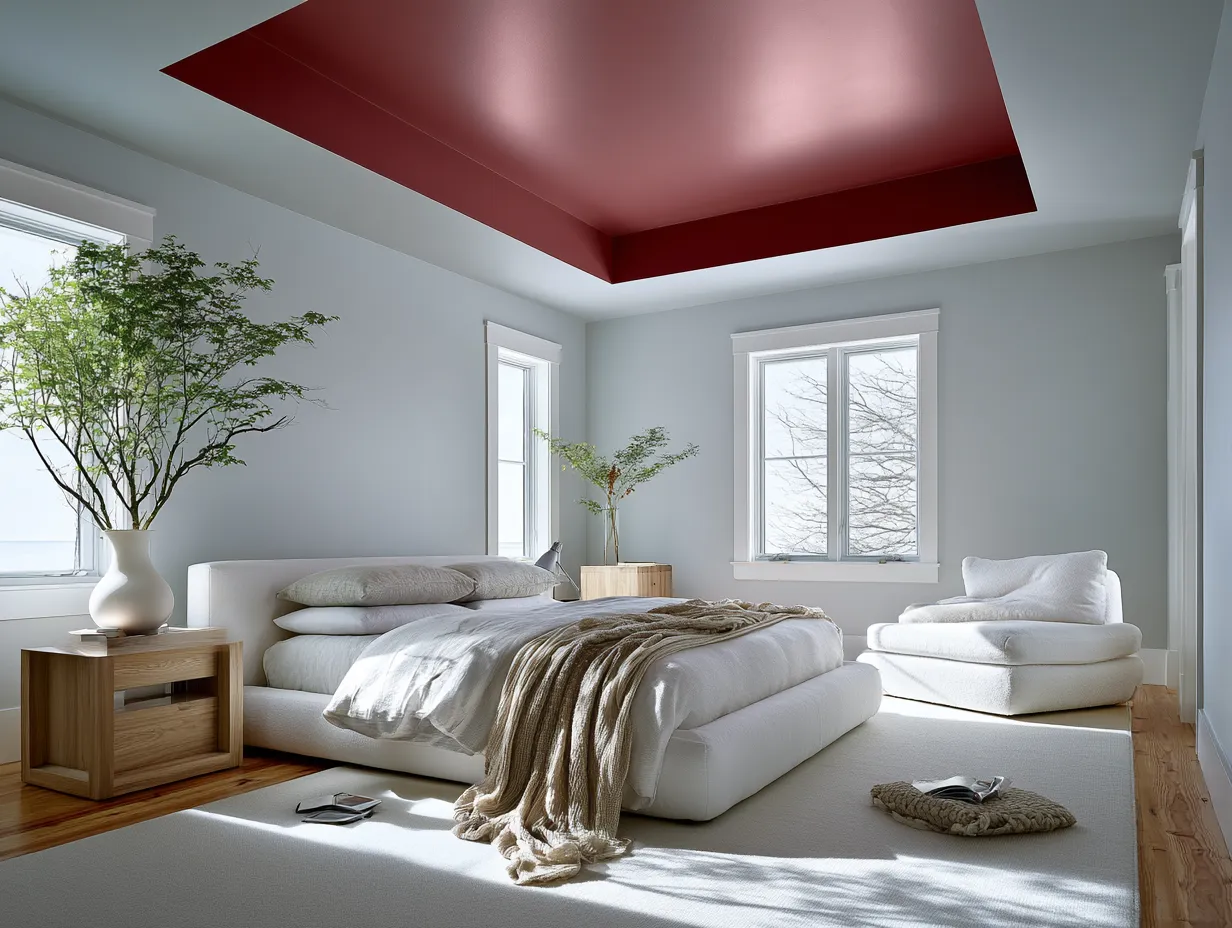
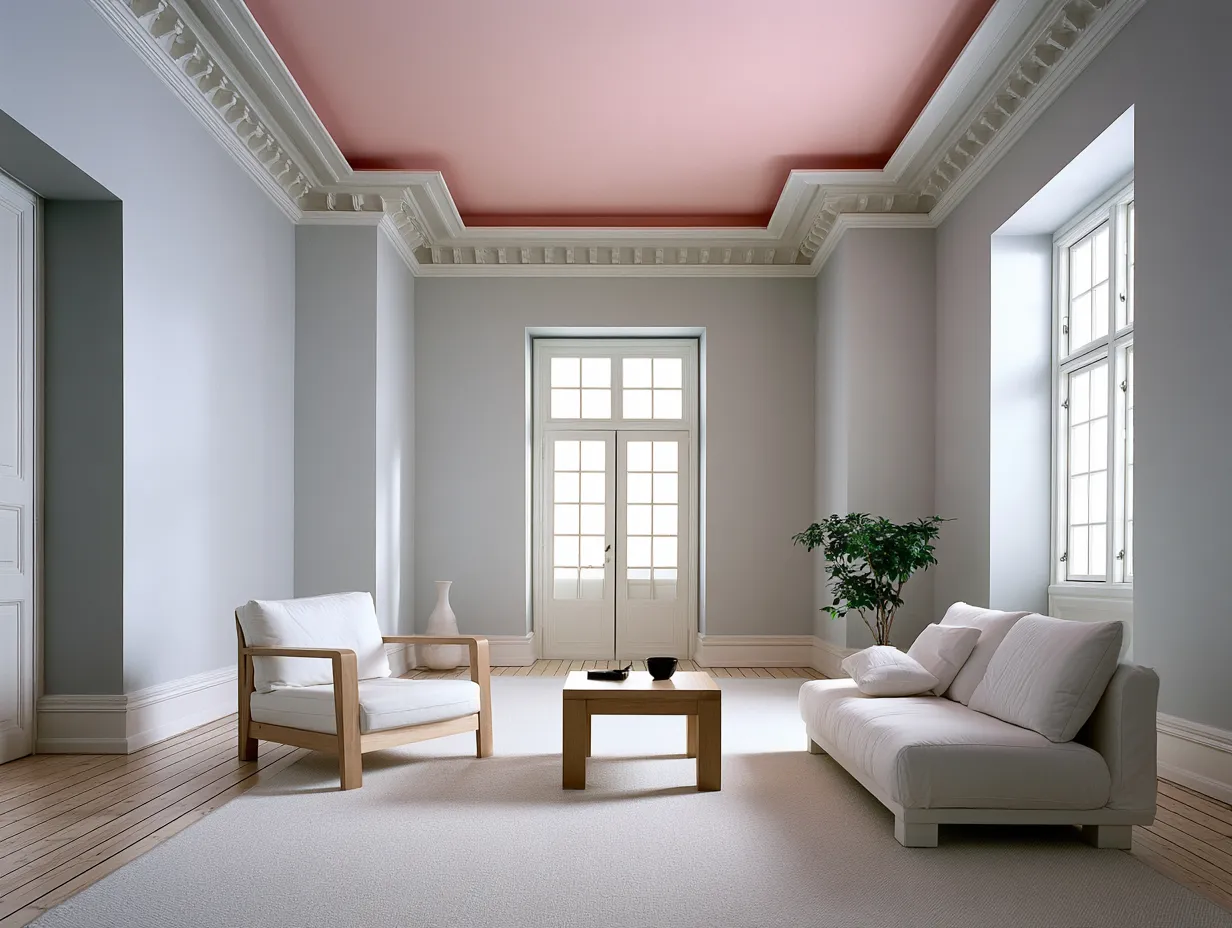
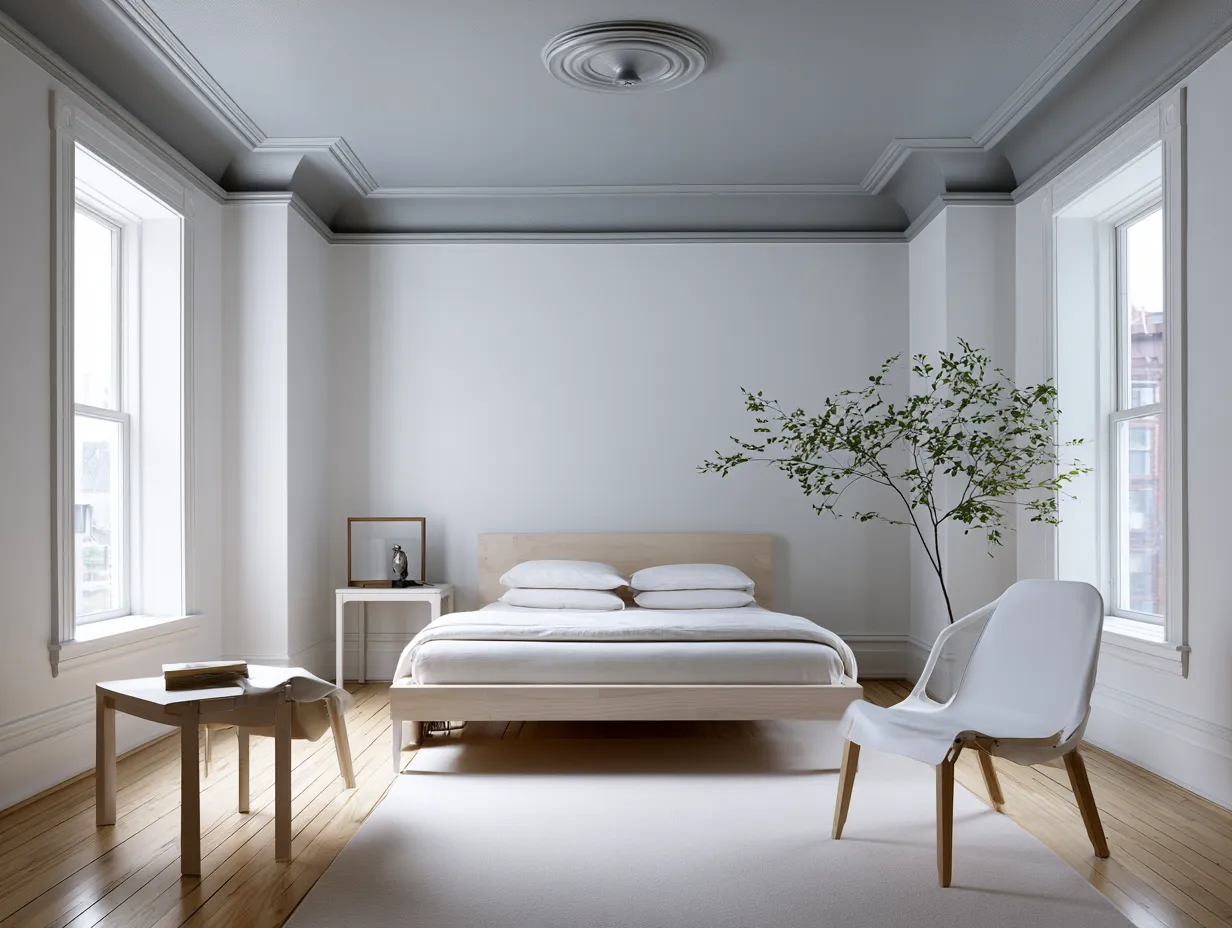
A midiminimalist living room pairs a deep-charcoal painted ceiling with white walls, light wood flooring, and minimal furnishings. The ceiling becomes the room’s personality statement while the rest of the environment stays breathable. This approach works because it establishes hierarchy: the overhead finish does the emotional labor, allowing other surfaces to remain restrained.
Why does the ceiling specifically trigger this shift? Because it was the last frontier of residential design. Walls, floors, doors, and hardware have been design conversation points for decades. Ceilings remained purely functional—HVAC vessels, acoustic panels, or blank white voids. Treating the ceiling as a deliberate design element signals confidence and intentionality.
Industry reports confirm ceiling color searches grew alongside interest in whimsical wallpapers, statement-making doors, and bold interior trim—all expressions of the same psychological hunger for personality-driven spaces. Homeowners are reacting against pandemic-era minimalism with color-maxxing, but in restrained, architecturally coherent ways.
Do not color-drench multiple surfaces simultaneously—walls and ceiling both in saturated tones. This creates visual overwhelm and negates midiminimalism’s restraint principle. Choose one anchor: ceiling, feature wall, or trim millwork. Let the others breathe.
A painted ceiling also solves the ‘why does my room feel incomplete’ problem that flat interiors trigger. White drywall and white ceilings create visual monotony. Color overhead establishes depth, warmth, and the sense that someone designed the space rather than defaulted to builder-grade finishes.
FAQ
Can I paint my popcorn ceiling with a dark color?
Yes, but first skim-coat the popcorn with drywall compound to create a smooth, even surface. Popcorn's texture absorbs paint unevenly, making color appear mottled. After skim-coating, prepare and paint as standard. This adds cost ($300–500 in labor) but ensures professional-quality results.
Will a dark painted ceiling make my room feel smaller?
No—overhead color actually expands perception in small spaces by creating visual depth. The key is finish: matte finishes (not shiny) prevent light bounce and make color feel intentional rather than constraining. Lighting design matters equally; ensure adequate wall and task lighting to keep the space bright.
How do I choose between painting and staining a ceiling?
Paint offers color flexibility and works on all surfaces; stain requires bare wood or natural wood ceilings and creates darker, more textured finishes. Stain costs less ($8–16 per quart) but demands exposed wood. Paint offers broader design range for $35–90 per quart in premium finishes.
Should crown molding match the ceiling or walls?
Matching molding to the ceiling creates seamless architectural flow and emphasizes the overhead color as the primary feature. Contrasting white or natural wood trim separates the ceiling visually and works in transitional styles. Test both with tape mock-ups before painting.
How long does a painted ceiling last before needing repainting?
Quality paint finishes last 7–10 years in most climates. Kitchens and bathrooms may require repainting every 5–7 years due to moisture and steam exposure. Matte finishes show dust more readily than satin, so anticipate slight color dulling over time—plan for touch-ups every 3–4 years.
Save this
The Fifth Wall Establishes Room Identity When Color-Drenched With Intention
Painted ceiling feature walls represent a fundamental shift in how homeowners think about interior architecture. The fifth wall is no longer an invisible support structure—it's the design anchor that establishes mood, personality, and spatial completion. With ceiling painter searches at record highs and midiminimalism demanding color-rich but restrained design gestures, overhead surfaces have become the primary frontier of residential expression.
Whether you choose jewel tones, earthy hues, or dark stains, a painted ceiling transforms any room from default to deliberate. The matte finish matters, the color selection requires overhead testing, and professional application prevents the visible lap marks that DIY attempts produce. Start with a 2-by-3-foot paint swatch applied directly overhead and observed at multiple times of day. Your room's completion may depend on looking up. Save this post.
📌 Save to PinterestComplete guide
Furniture Decor Ideas for Every Room in Your Home
Living room, bedroom, dining, kitchen, outdoor — all in one place
Complete guide
The Living Room Design Ideas Vault Every Home Needs Right Now
Color, walls, furniture, layouts, styles, smart tech — 300+ ideas in one place
Complete guide
The Minimalist Style Guide That Covers Every Room, Surface and Outfit
Interiors, exteriors, kitchens, bedrooms, fashion, hair — all in one place