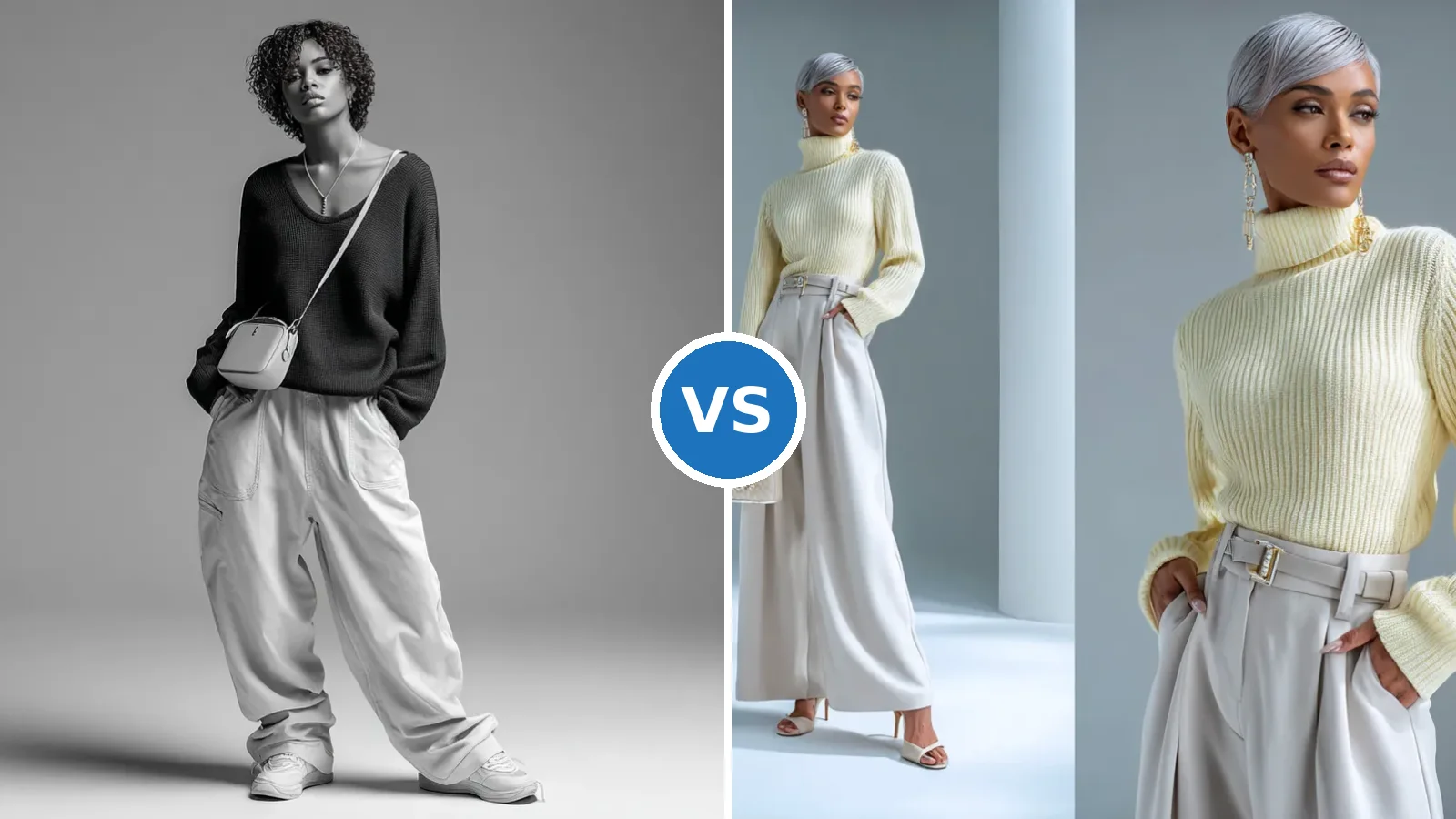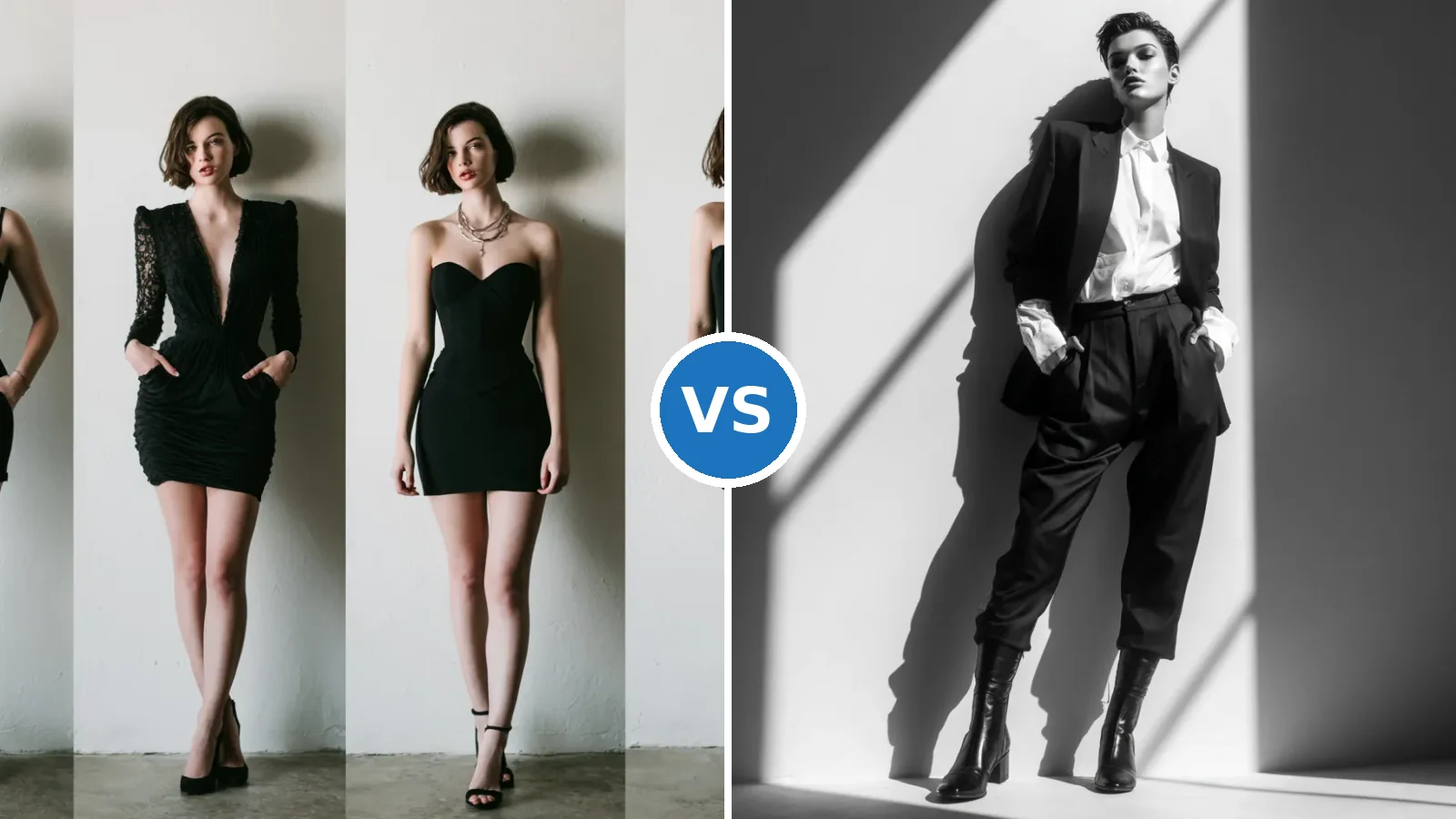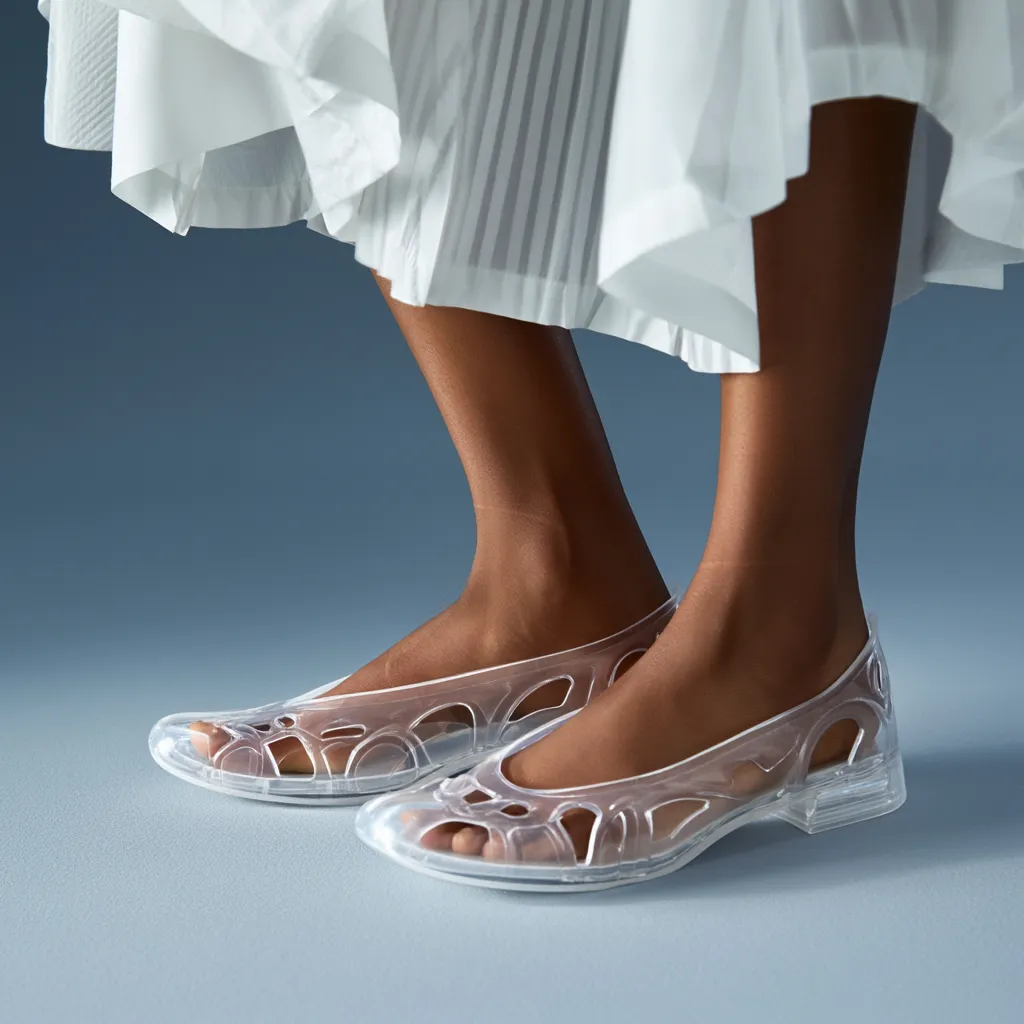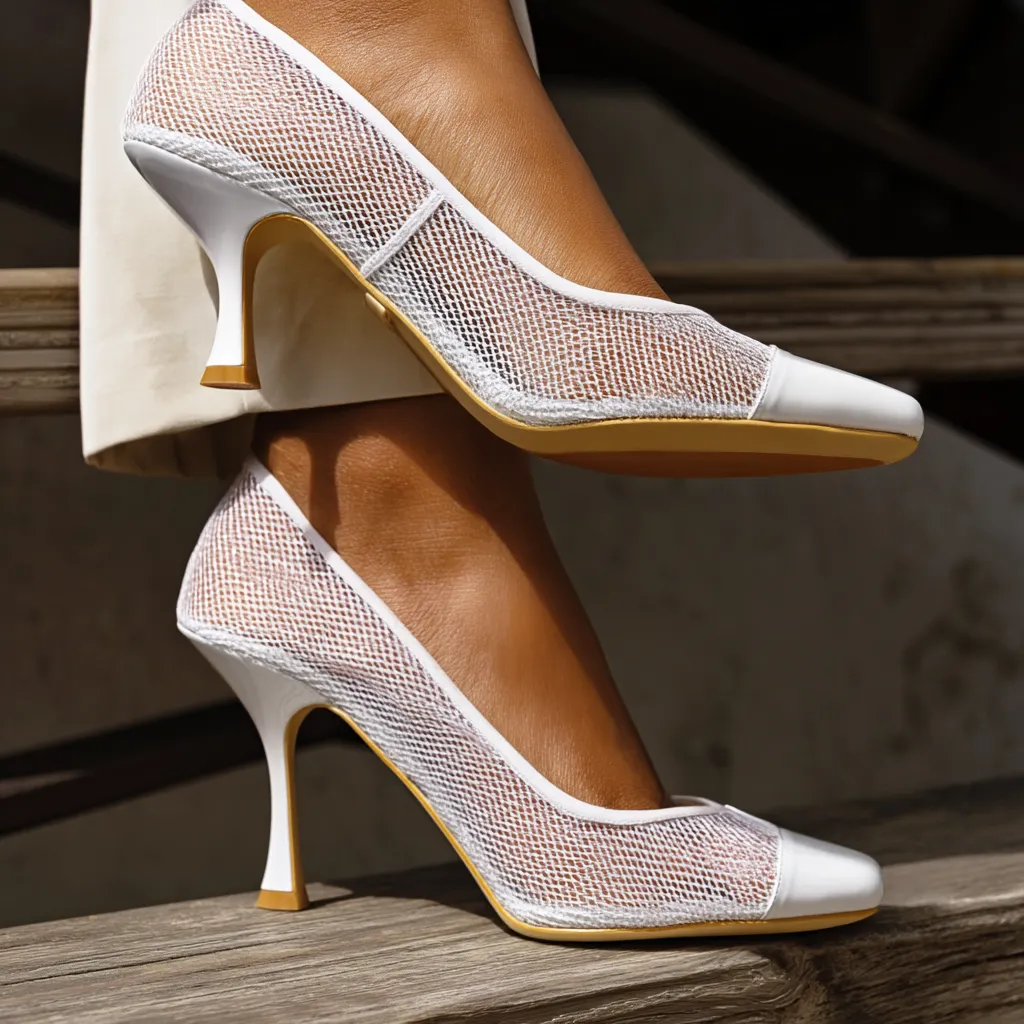
Minimalist chic outfits build their power from restraint — and I’ve watched women in a single white blouse outshine an entire room of printed dresses. The minimalist chic style isn’t about owning less out of necessity; it’s about choosing every piece with enough conviction that nothing needs to fight for attention. You’ll notice the difference immediately: these outfits feel considered, not assembled.
My own wardrobe shifted toward minimalism after one brutal morning staring at 60 pieces of clothing and feeling like I had nothing to wear. Three neutral tones, four silhouettes, and a consistent fabric philosophy solved that problem faster than any shopping trip ever did. What I want to show you here are seven outfit concepts — each one a different emotional register within the same minimalist chic world.
From crisp white layering to soft beige knitwear and sharp black tailoring, these ideas work because they don’t depend on trends. Brands like COS, & Other Stories, and Totême have been building this language for years — and these outfits borrow from the same visual logic. Proportions do the heavy lifting. Everything else steps aside.
- Minimalist chic outfits rely on tone, silhouette, and fabric — not trend cycles
- White-on-white layering creates visual depth through texture contrast, not color
- Black tailoring in a slim blazer + tapered trouser combo works in virtually any setting
- Beige ribbed knit sets (around $80–$150 at COS or Mango) deliver the most styling return per piece
- Grey linen shirting is the most underrated minimalist staple — and it photographs beautifully
- Accessories should number three or fewer per outfit; more than that starts to read as clutter

Crisp White Layers Define the Minimalist Chic Outfit Template
Minimalist chic outfits in all-white are the single most googled reference on Pinterest boards titled “quiet luxury” and “clean girl aesthetic” — and the reason isn’t hard to trace. White-on-white dressing does something no printed outfit can: it forces the architecture of a look to carry the entire visual weight. I’ve worn this combination to gallery openings and Sunday markets and it reads differently in each setting without changing a single piece.
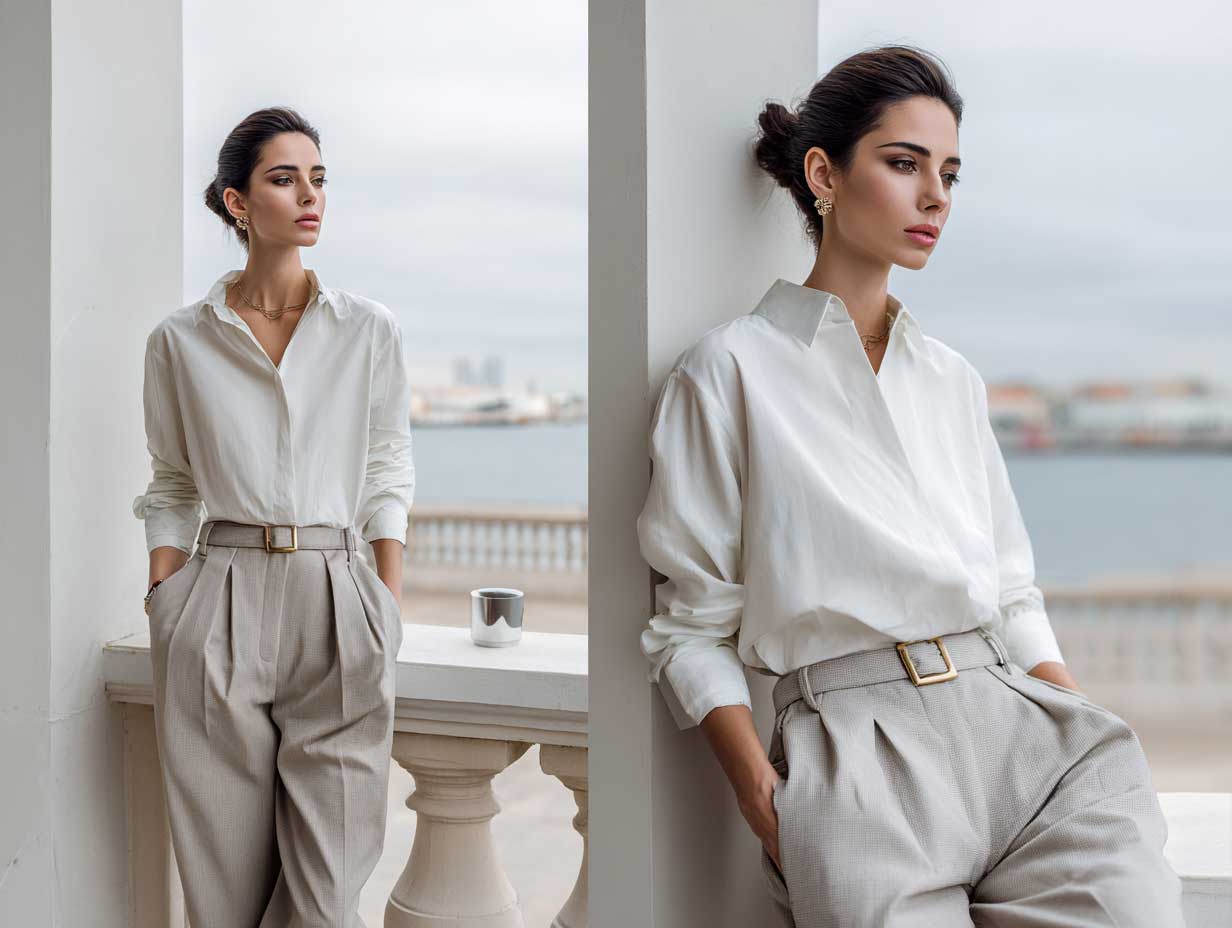
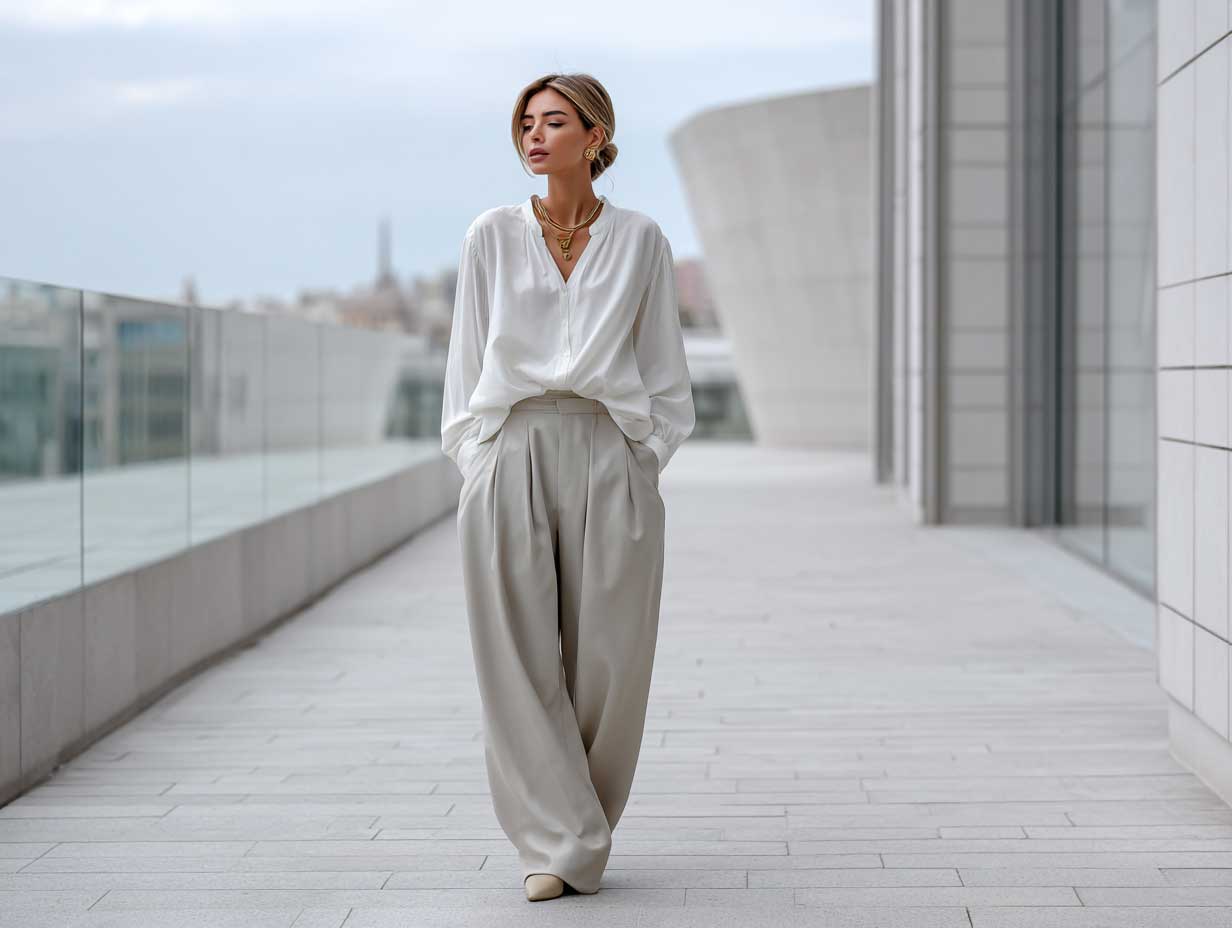
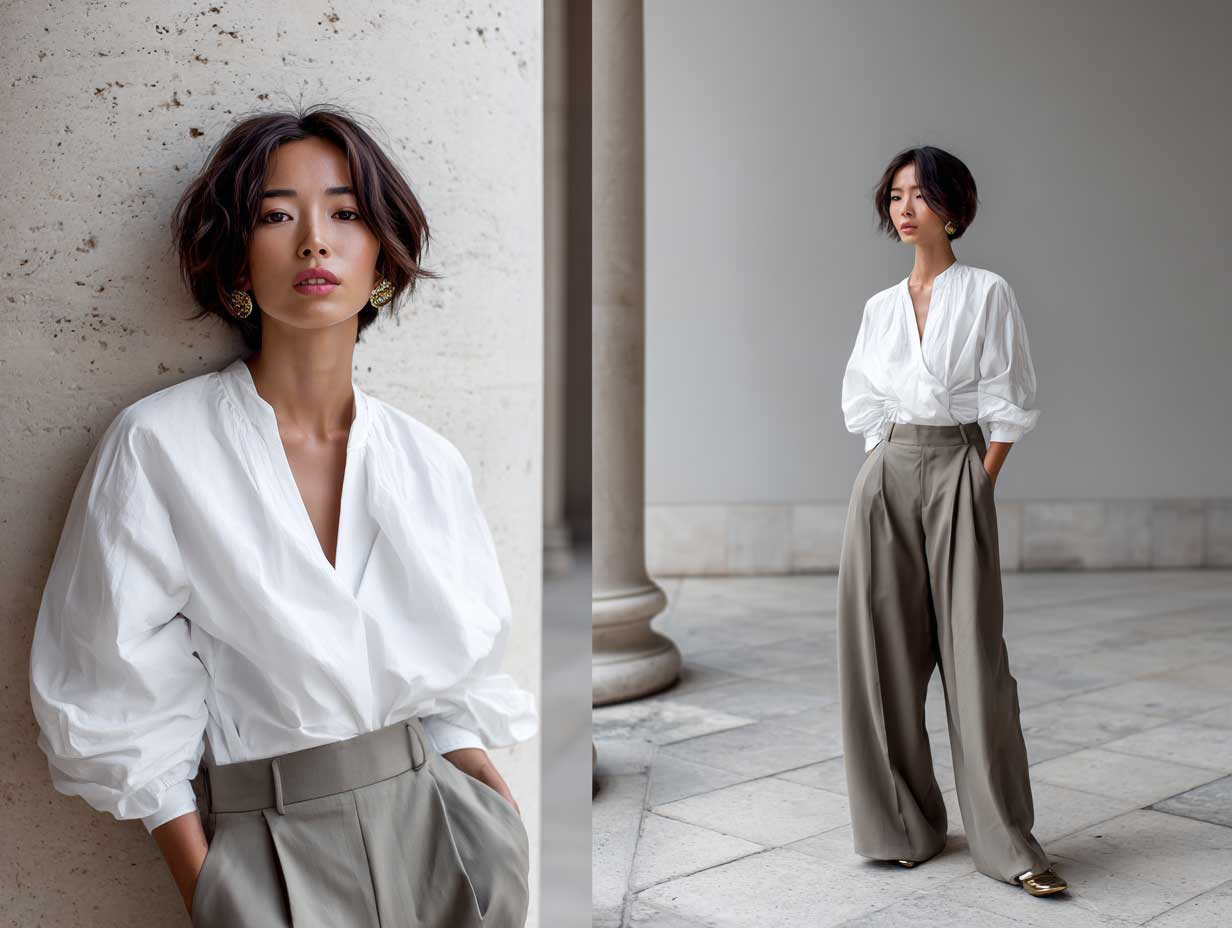
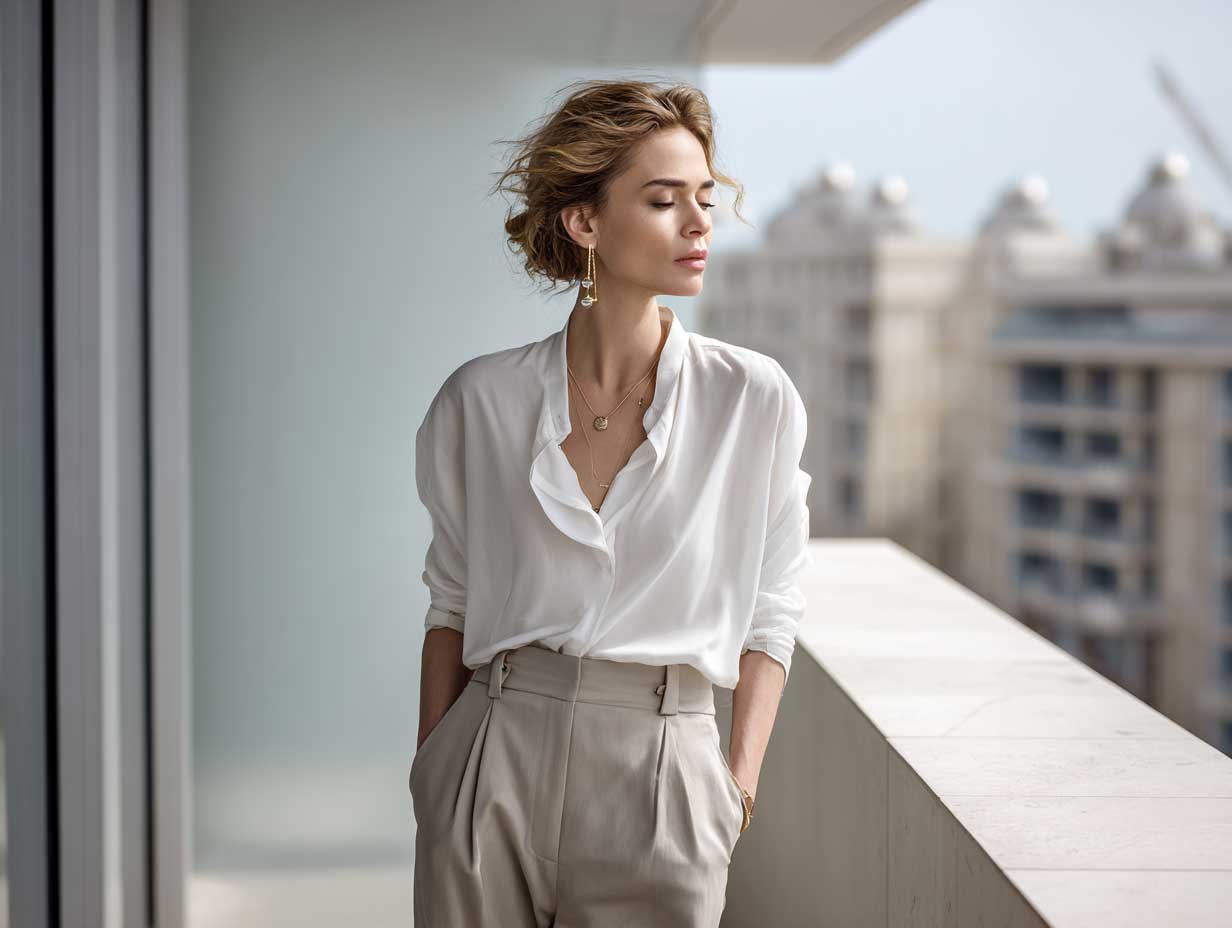
Start with a white poplin blouse — COS does one for around $79 that has a slightly oversized cut and a clean spread collar. Tuck it into wide-leg, gently pleated trousers in matching ivory or chalk white. The pleating is critical here: flat-front trousers in white can read too stark. The soft volume from a pleat introduces just enough shadow and dimension to make the whole thing feel intentional rather than clinical. You’ll want the hem to land just above the ankle — this small detail keeps the look modern rather than costume-y.
What doesn’t work: mixing too many white shades across the outfit. Bright optical white on top paired with warm cream on the bottom creates visual noise that undermines the whole logic of the look. Stick within two shades of each other maximum, or commit entirely to a single tone. I stole this rule from a Totême lookbook and haven’t broken it since. The other mistake I see constantly is reaching for white platform sneakers to “keep it casual” — they flatten the elegance immediately.
Accessories need to stay microscopic. A single thin silver chain — something like the Mejuri Demi-Fine Endless Hoop Necklace at $48 — a very small pearl earring, or a pale leather tote in the $100–$200 range from Polène is enough. You’re dressing like a painting that doesn’t need a frame. Anything louder pulls the eye away from the architecture and deposits it on a detail instead, which defeats the entire point of the exercise.
Wearing all white is actually a confidence test disguised as a color choice. It demands upright posture, deliberate movement, and attention to how the fabric sits. Think of it like wearing a freshly stretched canvas: every crease, every slouch, every careless gesture shows. That’s not a flaw — it’s the feature. This is why the most visually striking minimalist outfit combinations almost always have a monochrome logic underneath them.
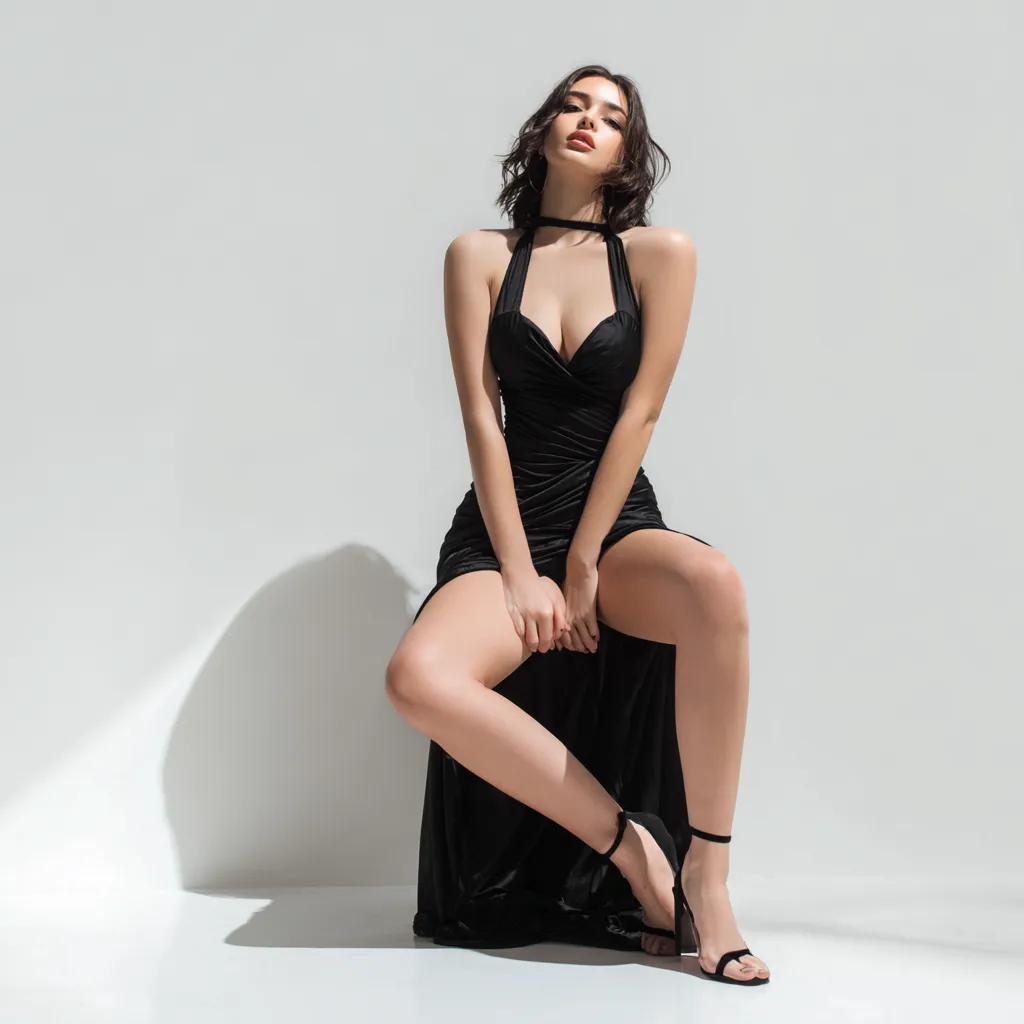
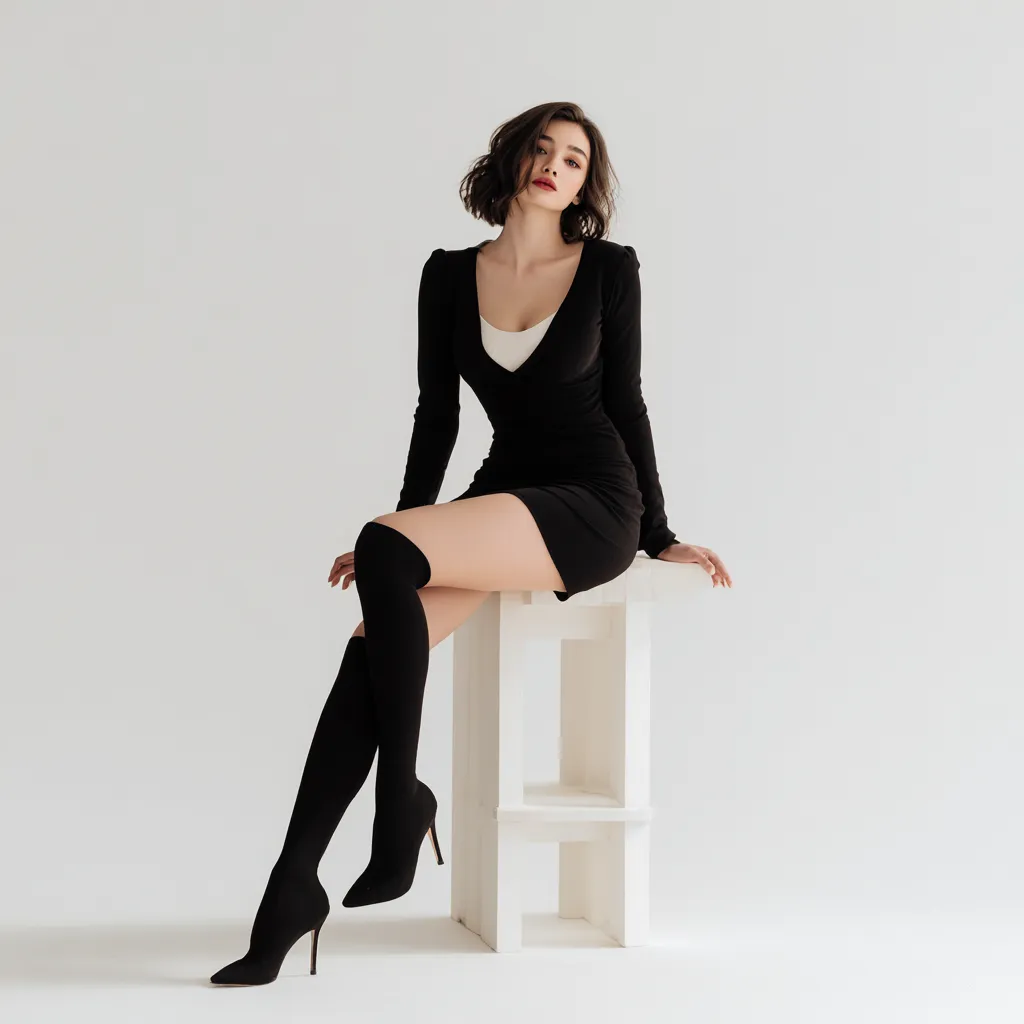
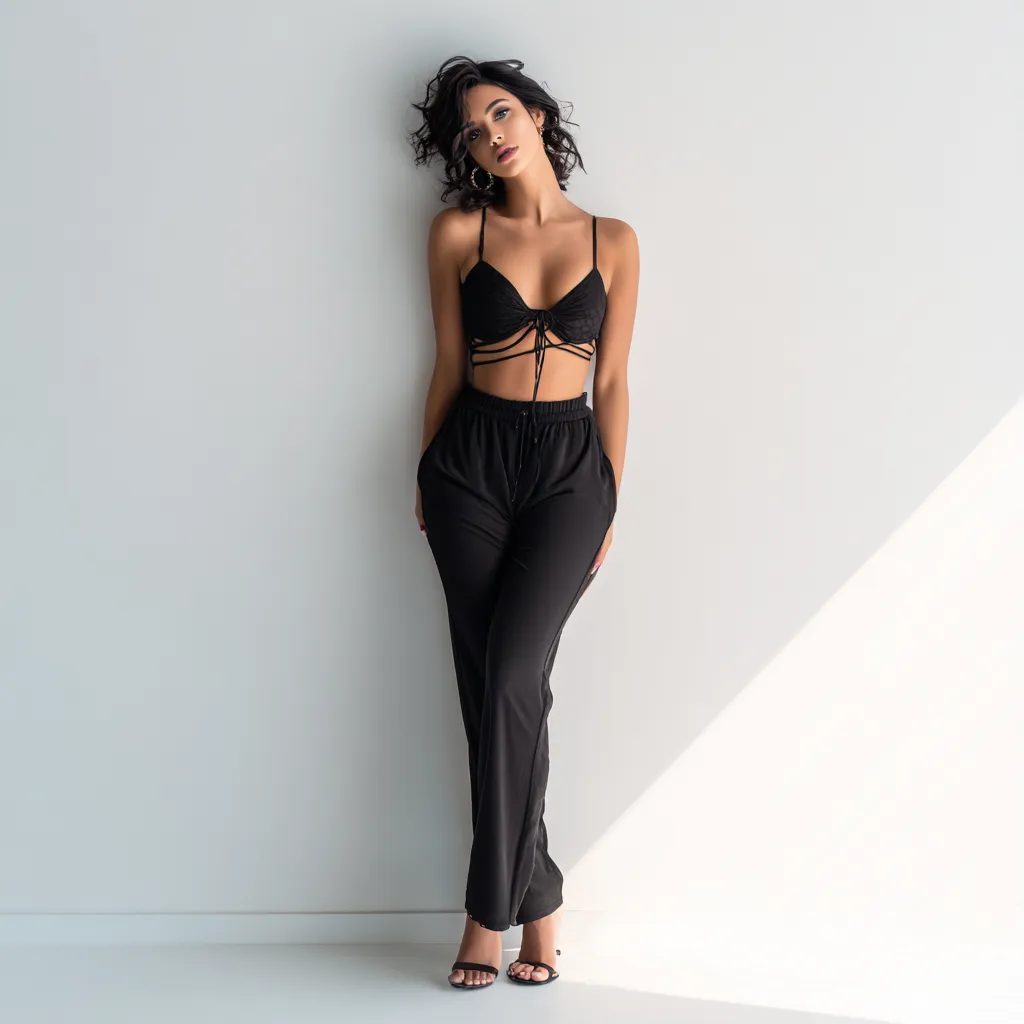
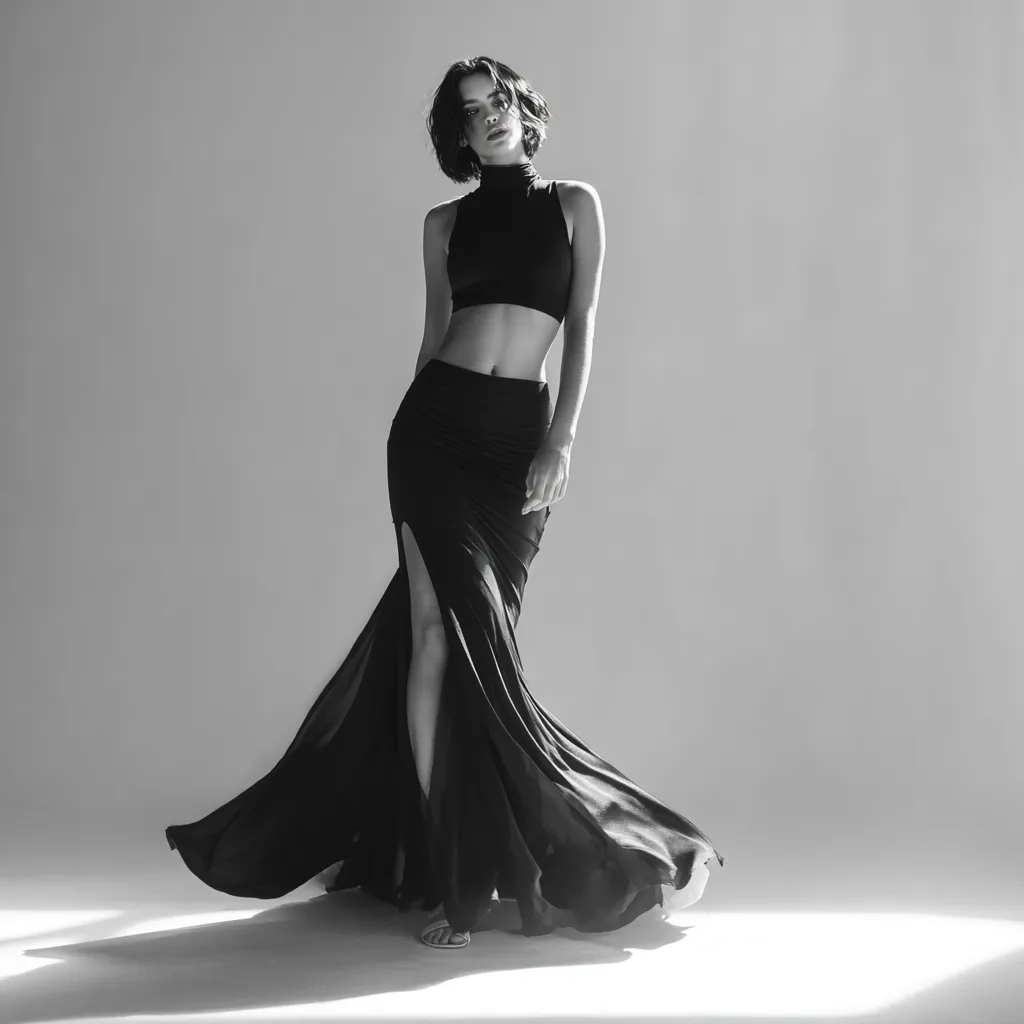
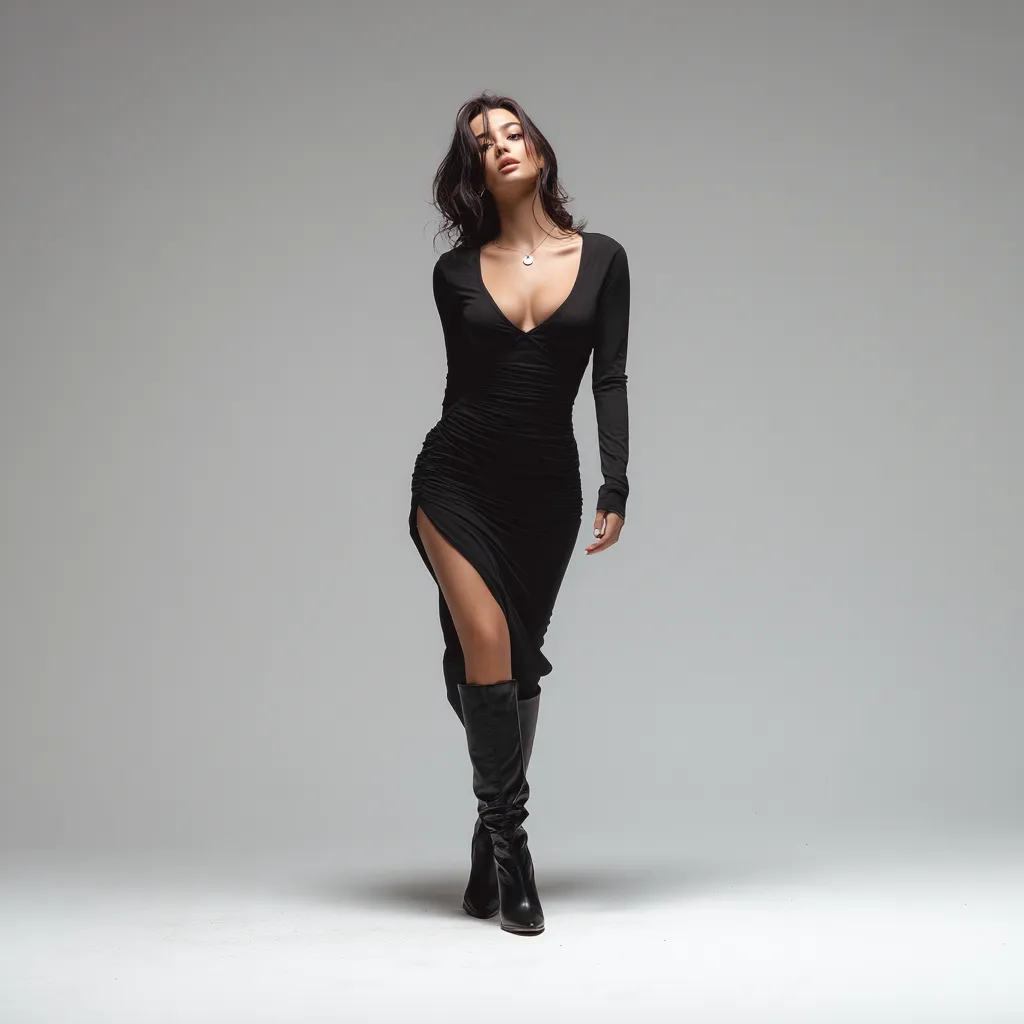
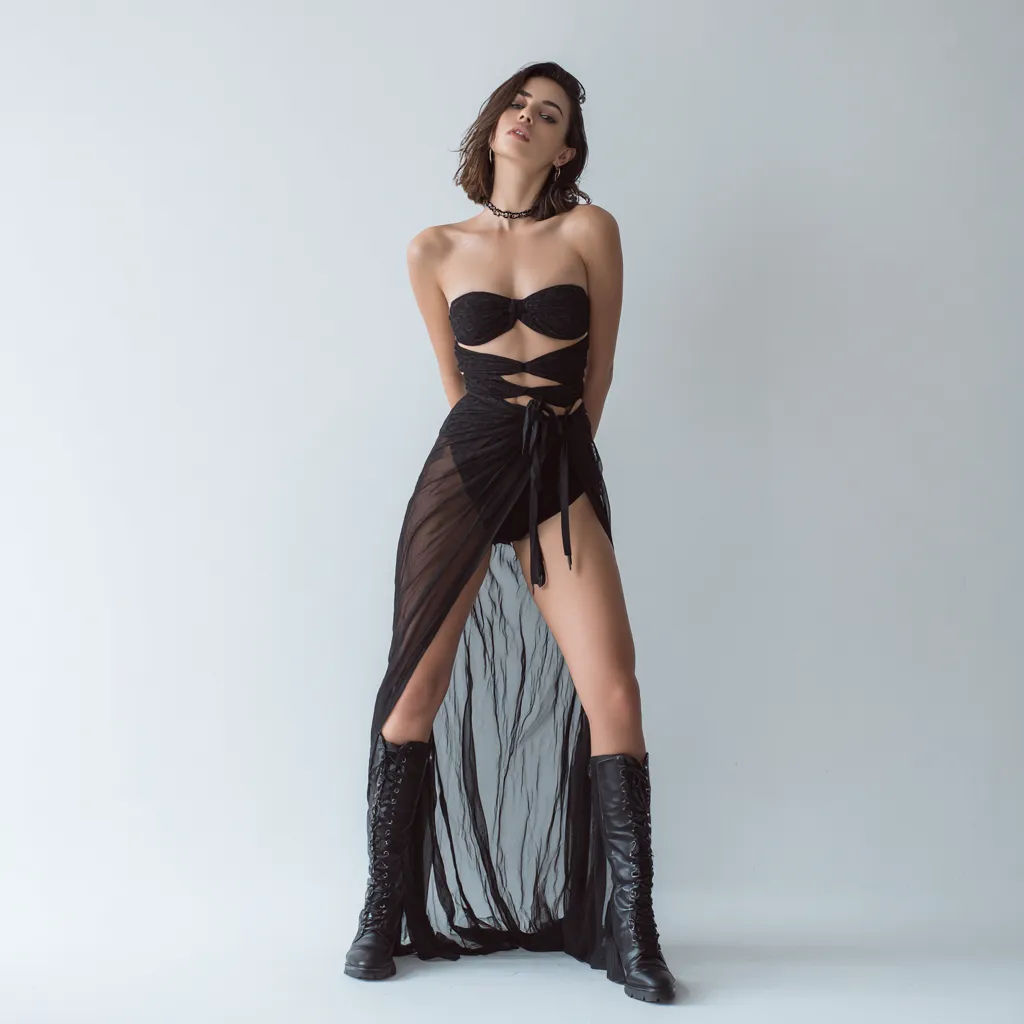
Black Tailoring Turns a Minimalist Chic Style Into a Statement of Authority
Chic minimalist style executed in all-black tailoring is a specific kind of power move — the kind that doesn’t announce itself. I’ve worn a slim black blazer over tapered trousers to a board presentation and to a Thursday dinner reservation and neither room questioned it. That’s the hallmark of tailoring done right: it removes the need to decide whether the outfit is appropriate.
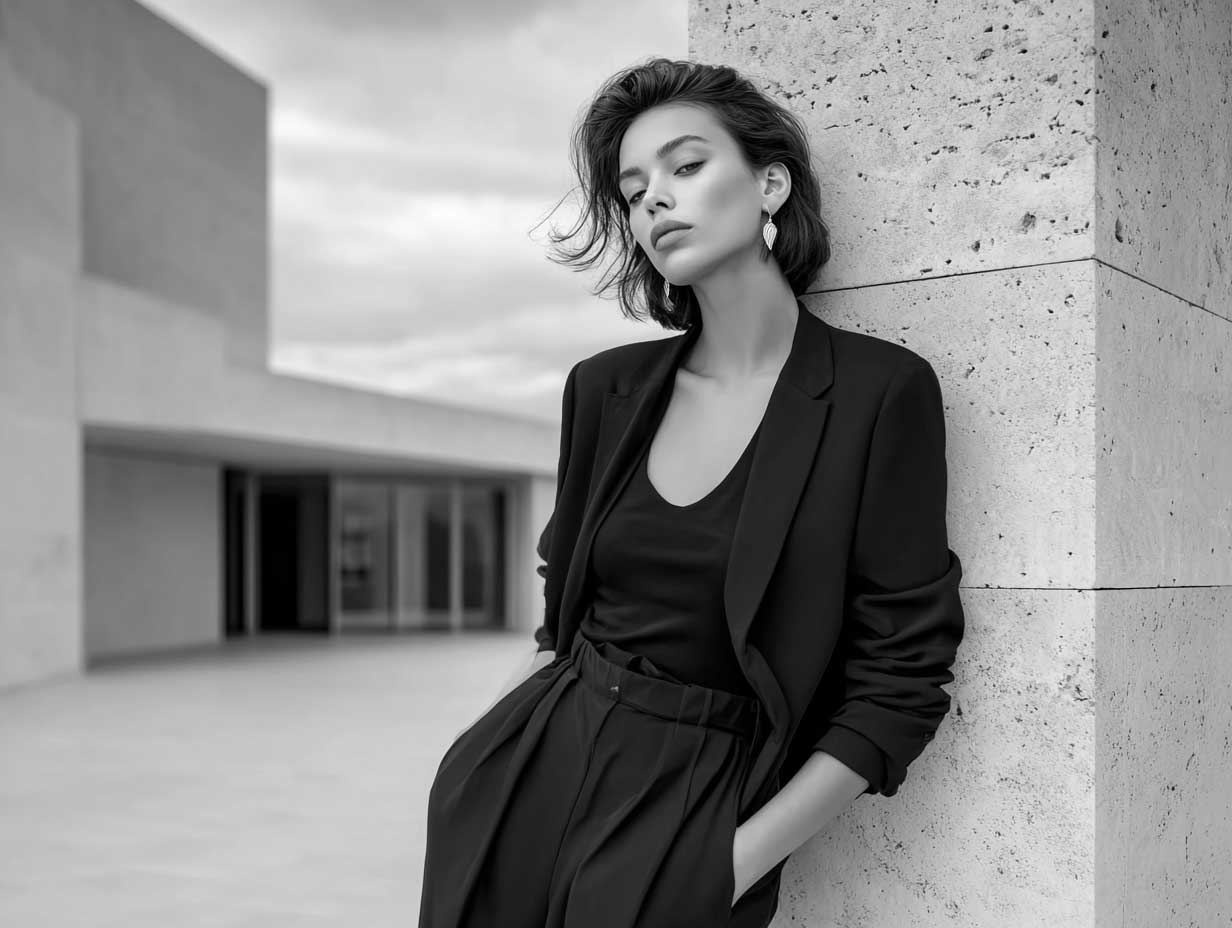
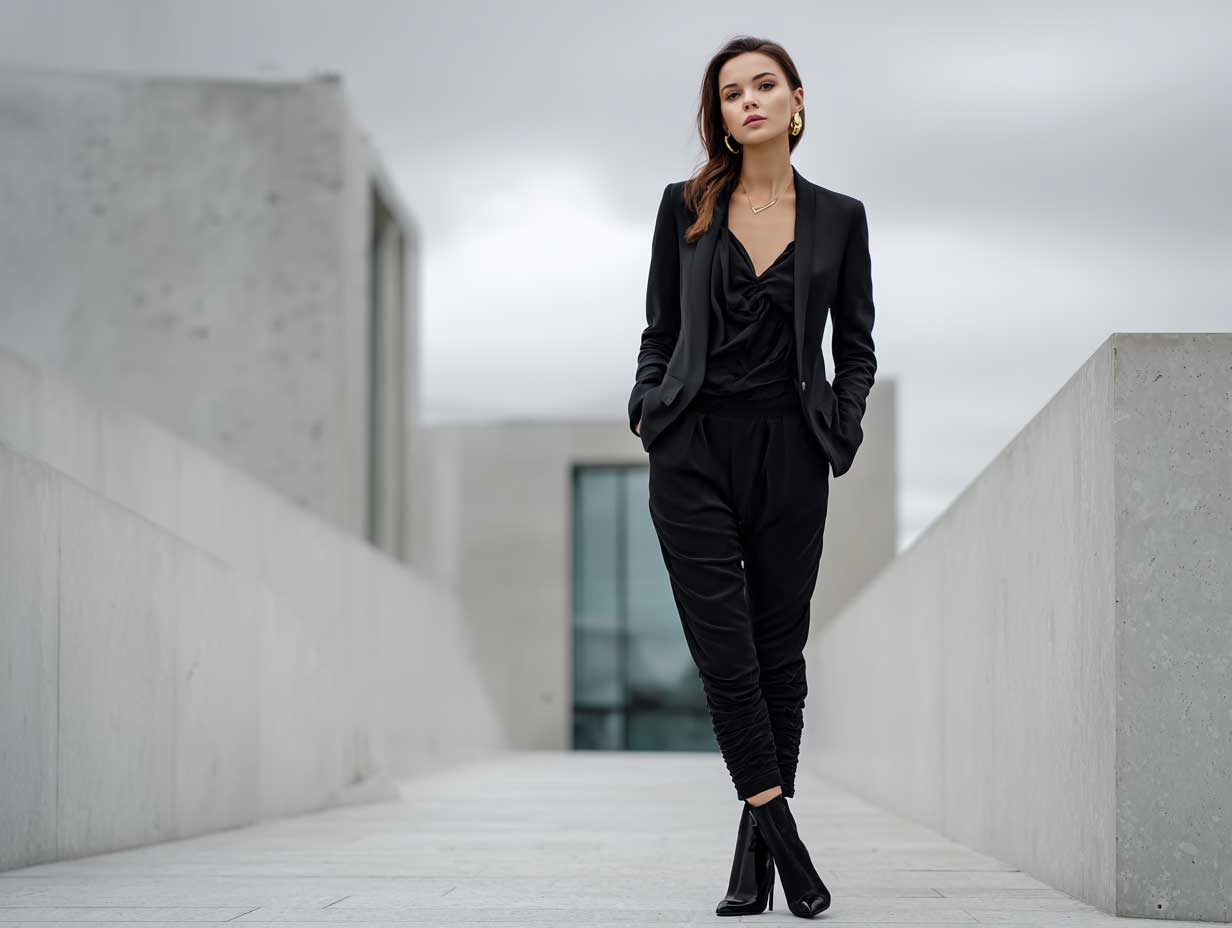
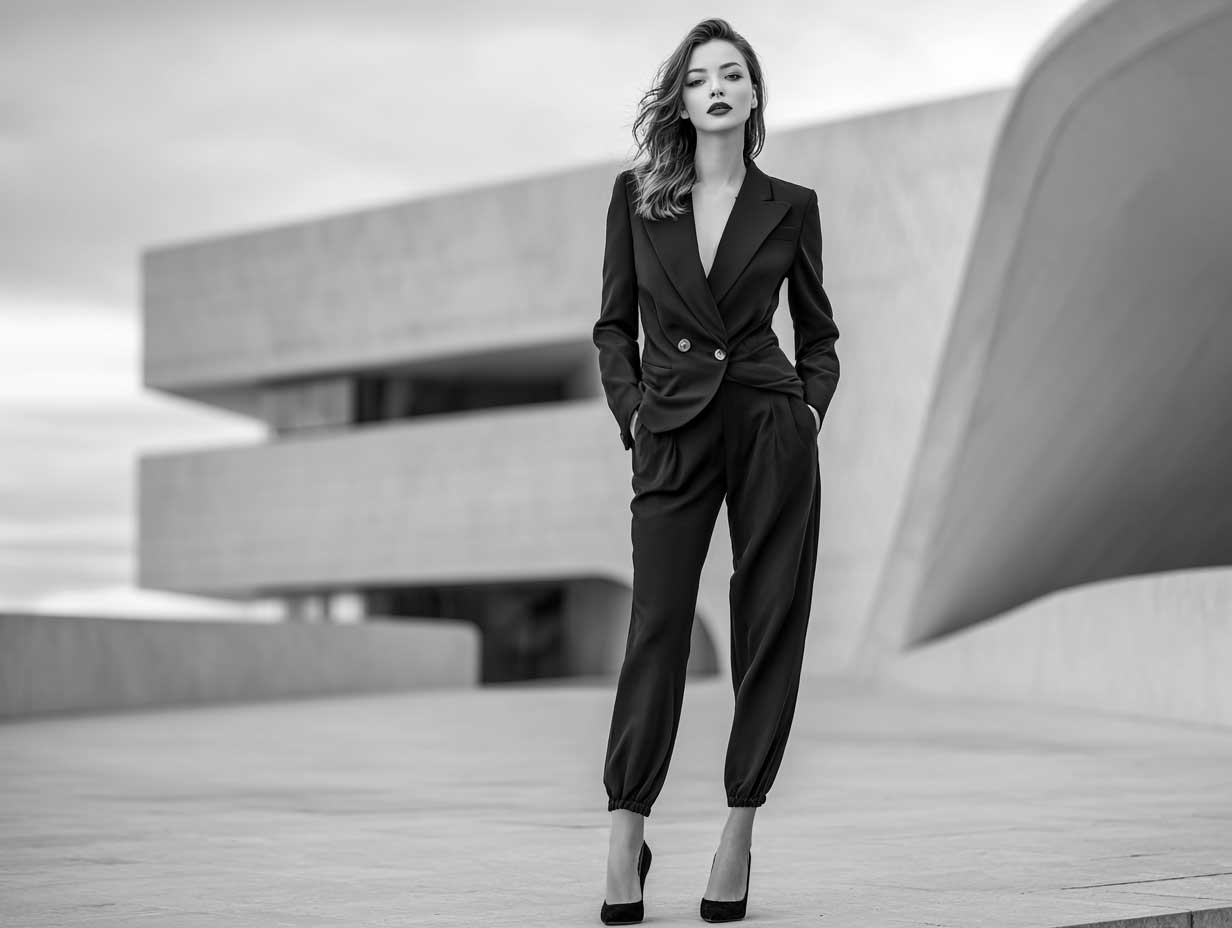
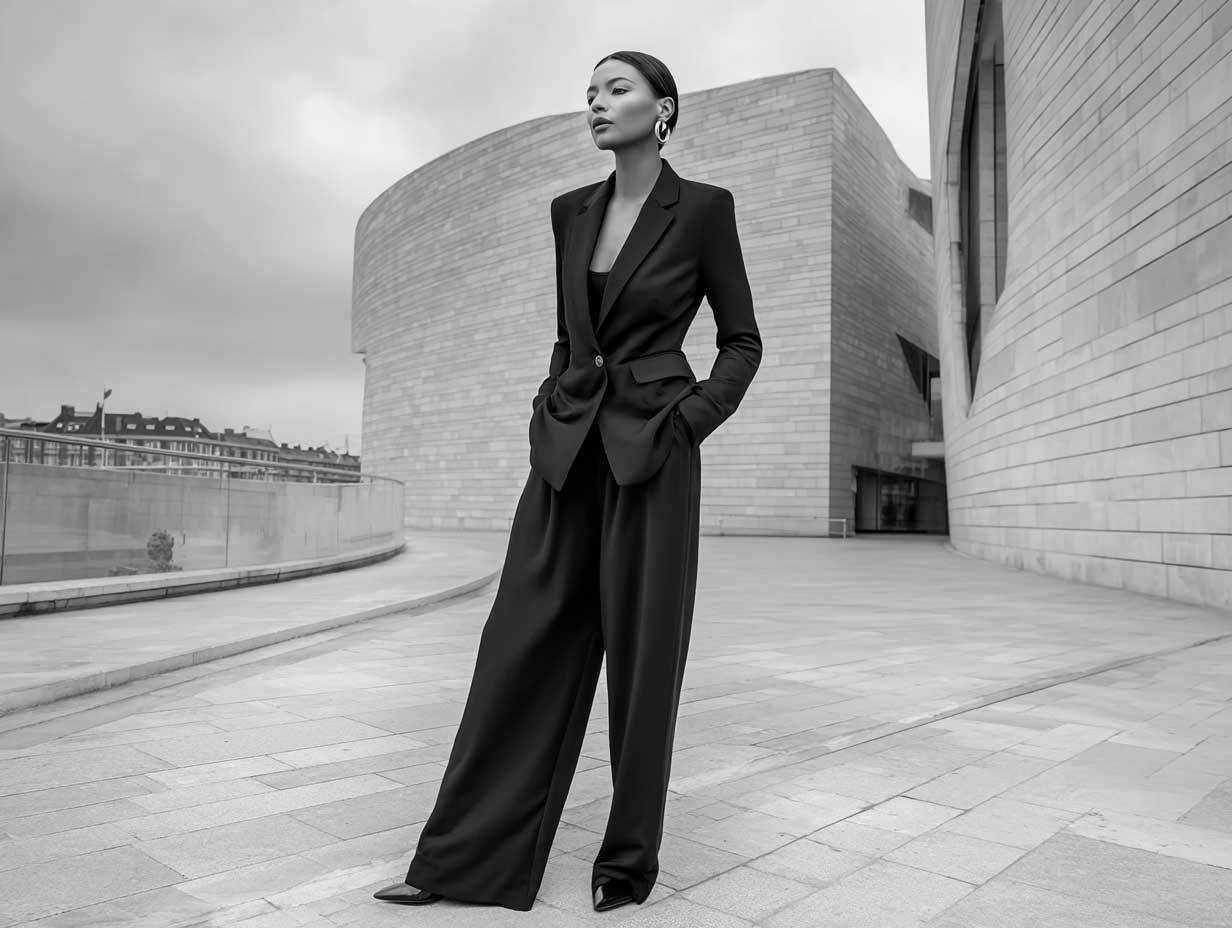
The blazer is doing about 70% of the structural work here. Look for a shoulder that sits flat and exactly at the edge of your shoulder bone — not an inch beyond. Arket’s black single-button blazer (~$185) and the Massimo Dutti structured blazer (~$220) both nail this cut. Pair with high-waisted tapered trousers that narrow at the ankle and the resulting line is a clean vertical — the visual equivalent of a sentence with no subordinate clauses. Under the blazer, a fitted black ribbed turtleneck keeps the palette consistent while adding contrast in texture.
Do you need jewelry with a look like this? Honestly, no. A thin gold watch — the Daniel Wellington Classic in black at $199 — is one of my go-to additions because it reads as utilitarian rather than decorative. Heeled black ankle boots or pointed leather loafers complete the line. What you want to avoid: matte-finish footwear mixed with a polished blazer, which creates a tonal inconsistency that most people can feel but can’t name. Keep the finish language consistent throughout.
- Don’t pair a structured black blazer with distressed jeans in a minimalist context — the casual disruption cancels the tailored authority entirely
- Don’t layer two blazers over a turtleneck hoping for more depth — it reads as volume without purpose
- Don’t add a statement belt to a well-fitted black trouser — the blazer creates definition on its own; a belt competes with the silhouette rather than sharpening it
- Don’t wear logo-heavy accessories with minimalist tailoring — a Supreme or Gucci belt bag visually ends the conversation before it starts
Black minimalist tailoring ages better than almost any other fashion investment. My blazer from COS, bought in 2019 for $165, still reads as current because the cut is structurally correct rather than trend-dependent. That’s the argument for paying more for a single tailored piece rather than rotating through four cheaper versions: the first approach compounds, the second depletes. These minimalist chic outfits aren’t fashion statements — they’re wardrobe infrastructure.
Beige Knit Separates Make the Softest Case for Minimalist Chic
Chic minimalist style doesn’t always mean sharp lines and structured tailoring — sometimes it means a ribbed knit set that costs less than a dinner out and photographs better than anything you own. Beige knitwear has been a cornerstone of Scandinavian and slow-fashion dressing for a decade, and there’s a reason it hasn’t faded: the tonal softness combined with the tactile texture creates visual warmth without requiring any additional styling decisions.
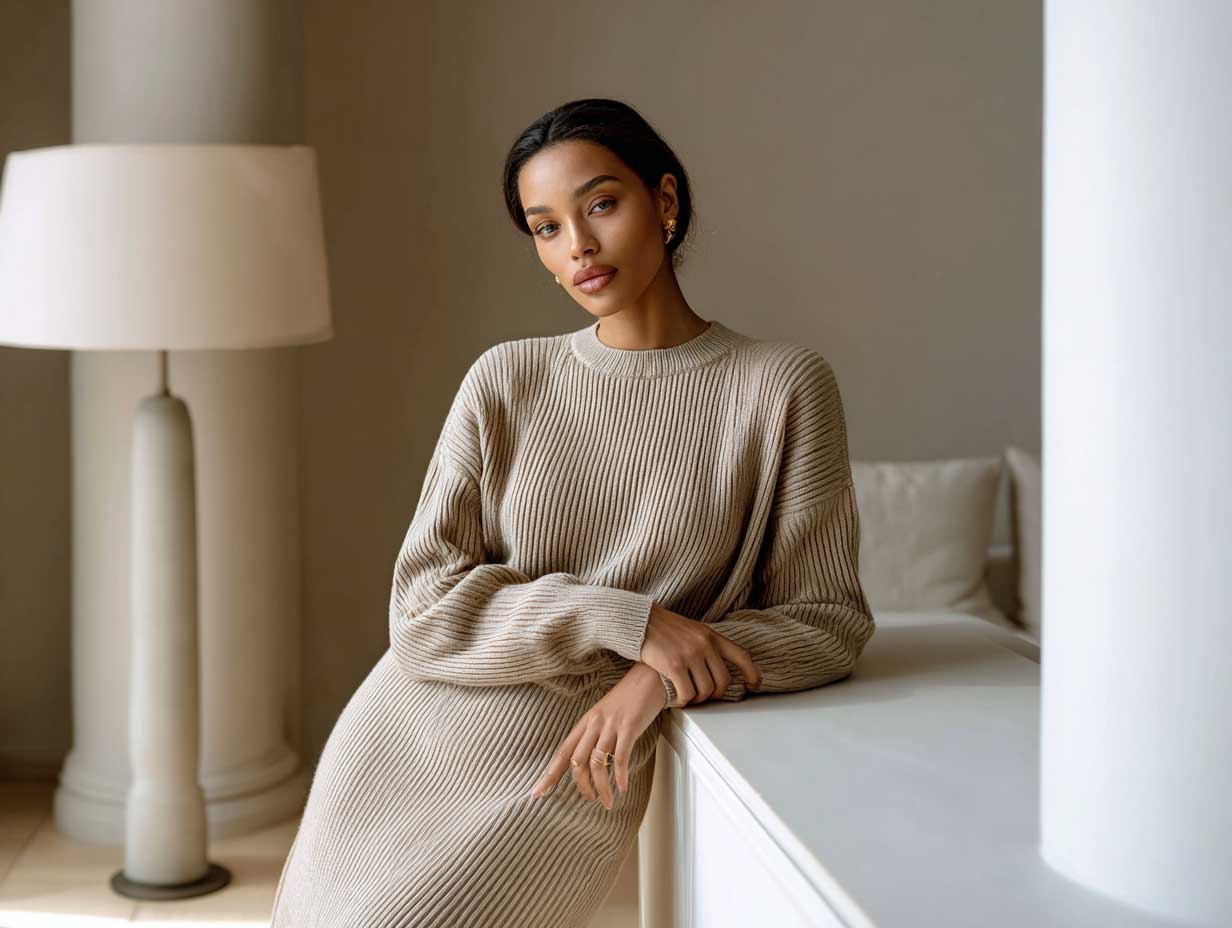
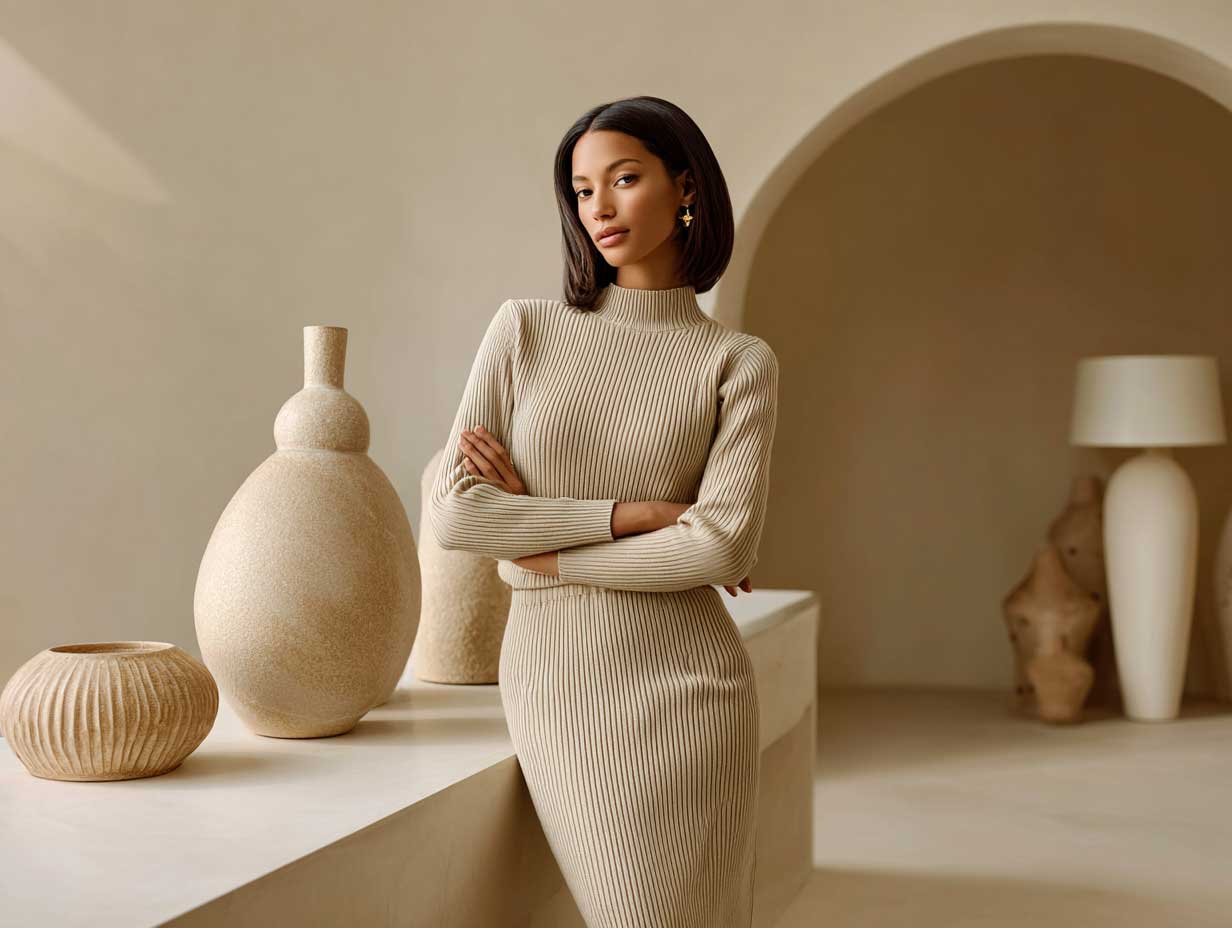
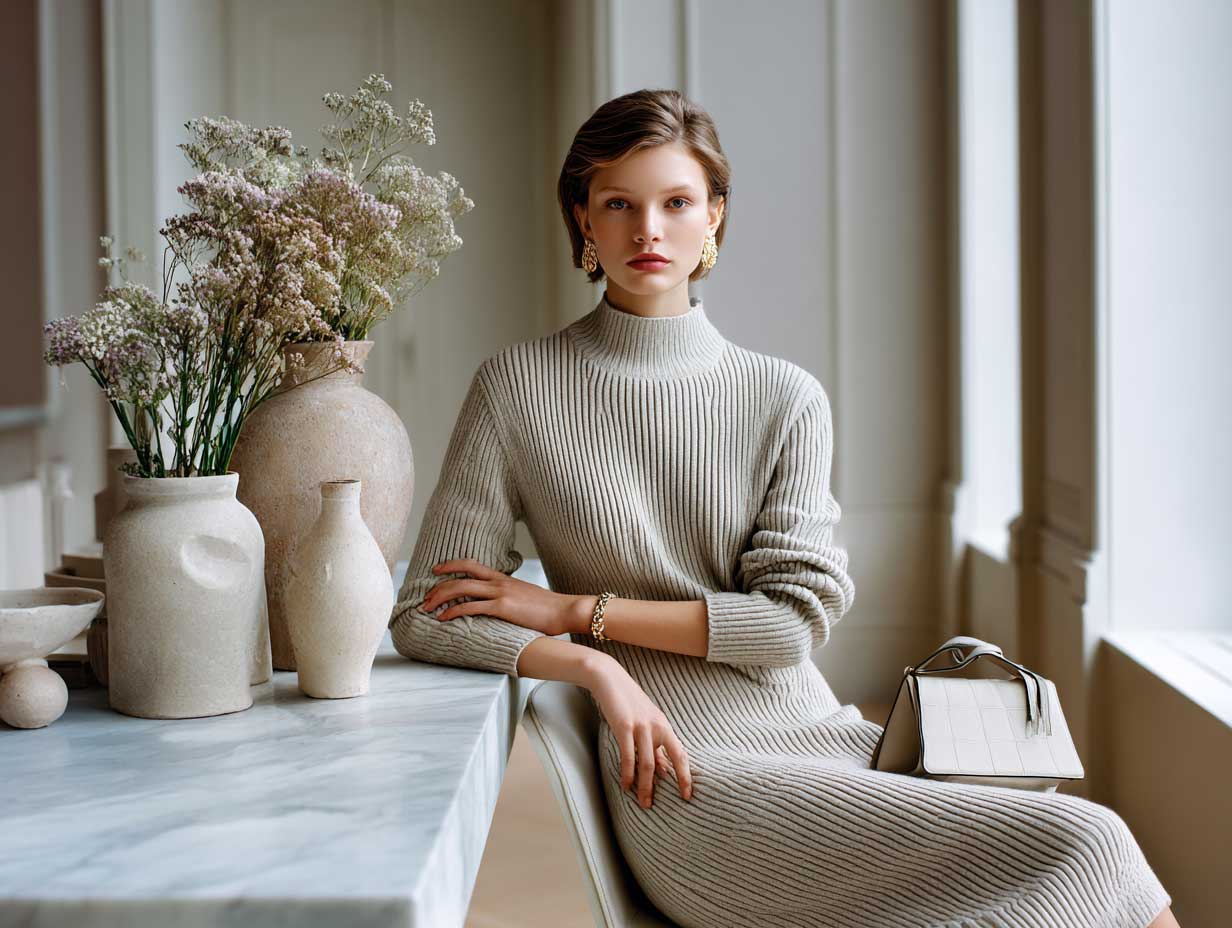
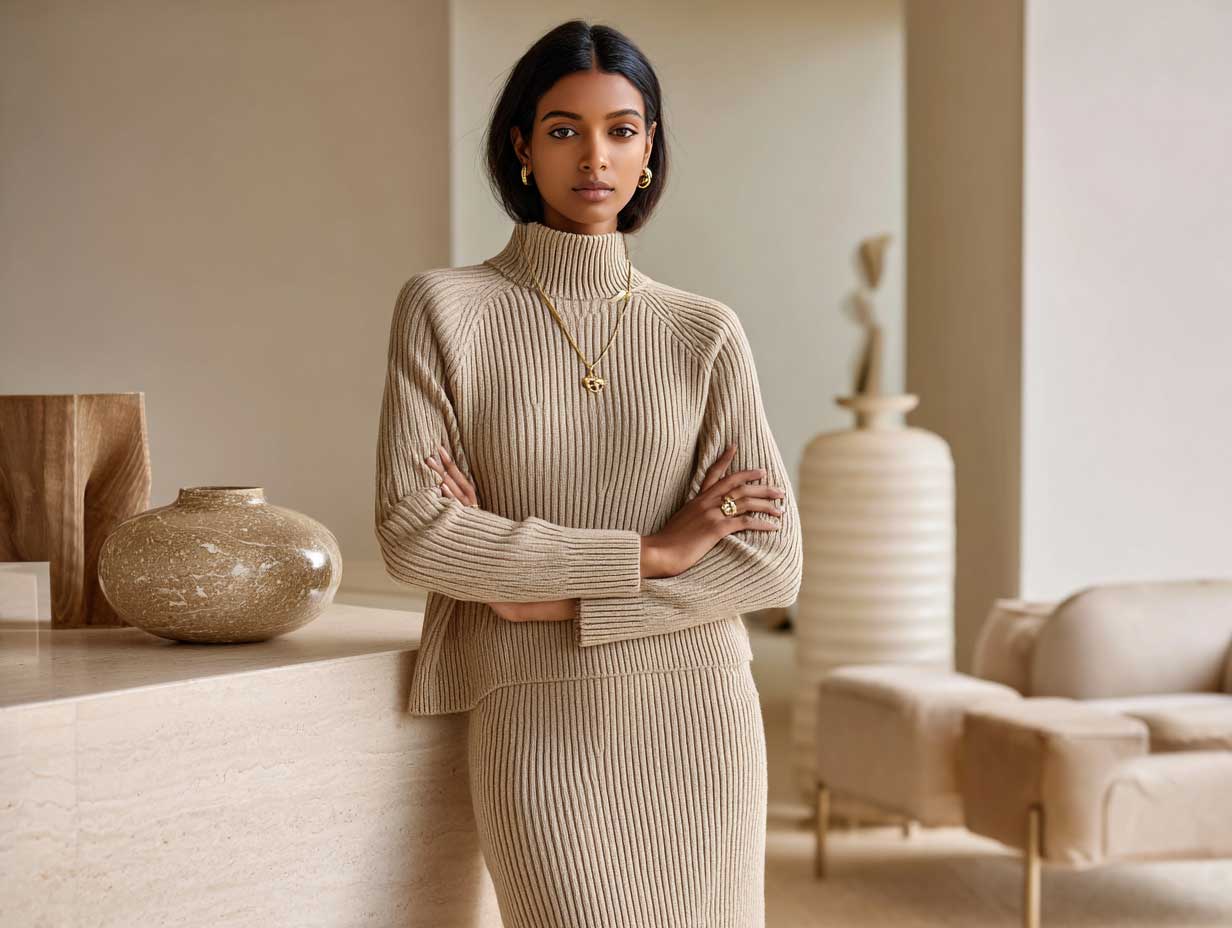
My go-to version of this look is a close-rib knit top — short-sleeved, slightly cropped, high neckline — paired with a coordinating midi skirt in the same weight and rib pattern. Mango does a matching ribbed beige set for around $90 total that’s surprisingly well-constructed for the price. H&M’s conscious line has a version for around $55 that’s slightly thinner but still photographs beautifully. The key is that both pieces share the same rib direction and gauge — if they don’t match exactly, the set reads as “almost intentional” rather than “fully intentional,” and there’s a real difference.
Does layering a camel trench over this set work? Yes, and it’s one of those combinations where the second piece amplifies rather than competes. The warm beige-to-camel progression reads like a tonal gradient — very editorial, very low-effort. What you want to avoid is adding a brightly colored coat for “contrast pop” — that choice breaks the tonal logic the outfit was built around and suddenly you’re just wearing a colorful coat with a neutral base, which is a different look entirely. Accessories in sand, taupe, or warm ivory — a Polène leather tote, Mango wooden-soled mules — extend the palette naturally.
For anyone building a minimalist wardrobe around neutral and brown tones, this beige knit set is the single highest-return starting point. It works across three seasons, packs flat, and requires zero ironing. That last point is underrated: minimalist dressing is partly a logistical philosophy, and a wrinkle-free knit that looks finished the moment you put it on saves roughly 20 minutes of weekly maintenance compared to a linen alternative.
Grey Linen Shirting Carries a Quiet Authority No Synthetic Can Replicate
Minimalist chic outfits built around grey linen shirting occupy a very specific territory — one that feels architectural without being stiff, casual without being sloppy. Linen is the fabric equivalent of raw concrete in interior design: it has visible texture, it breathes, it softens with wear, and it never pretends to be something it isn’t. I own three grey linen shirts and each one fits a slightly different purpose in my rotation.
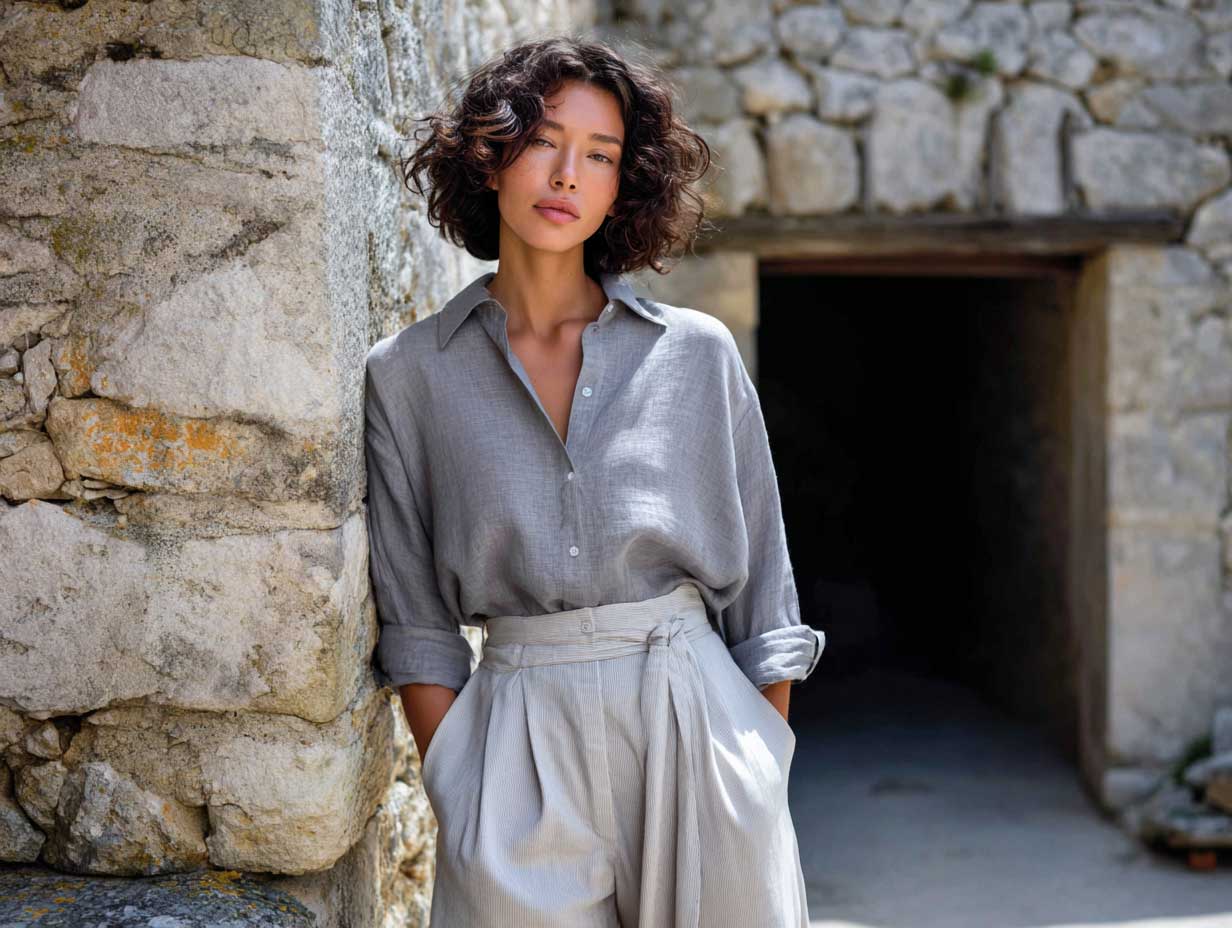
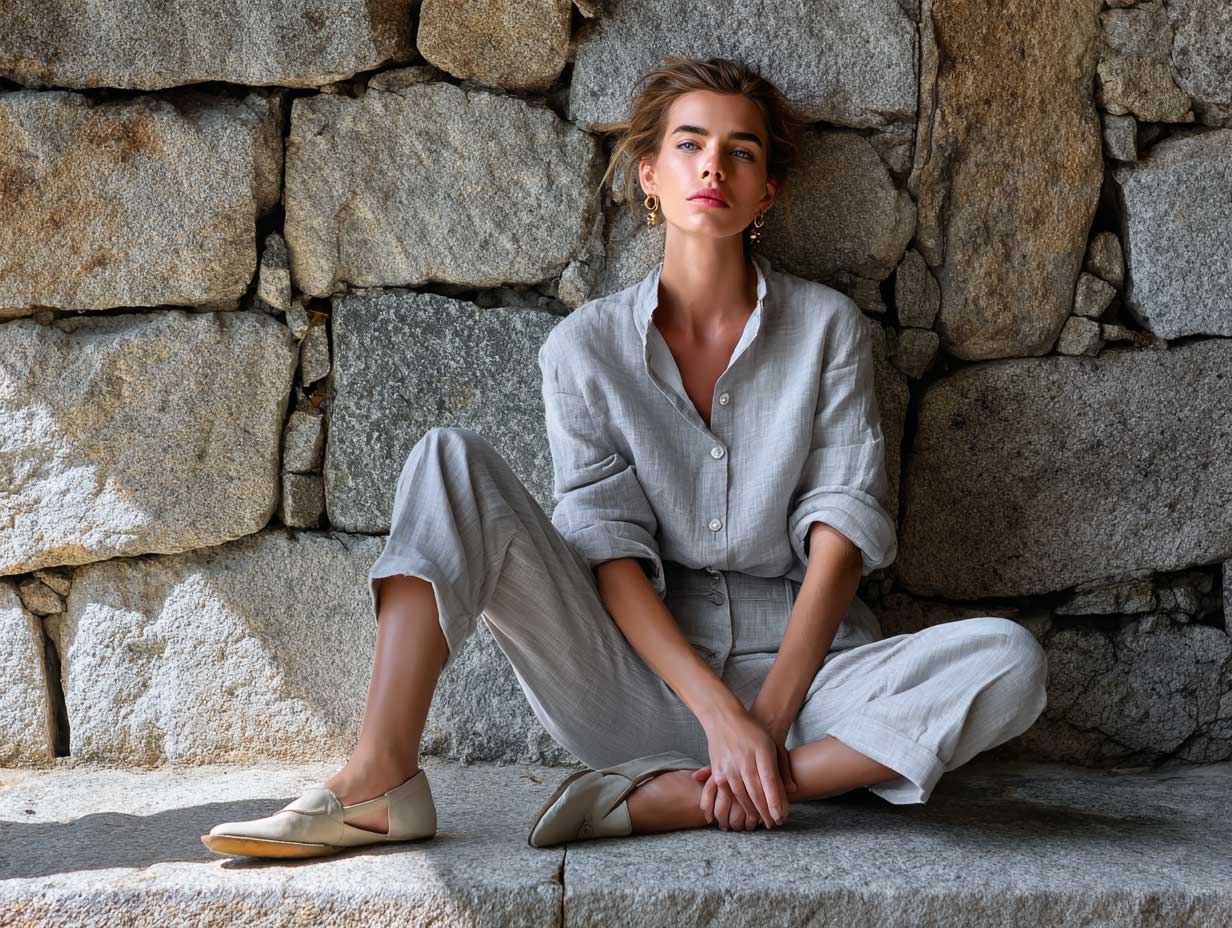
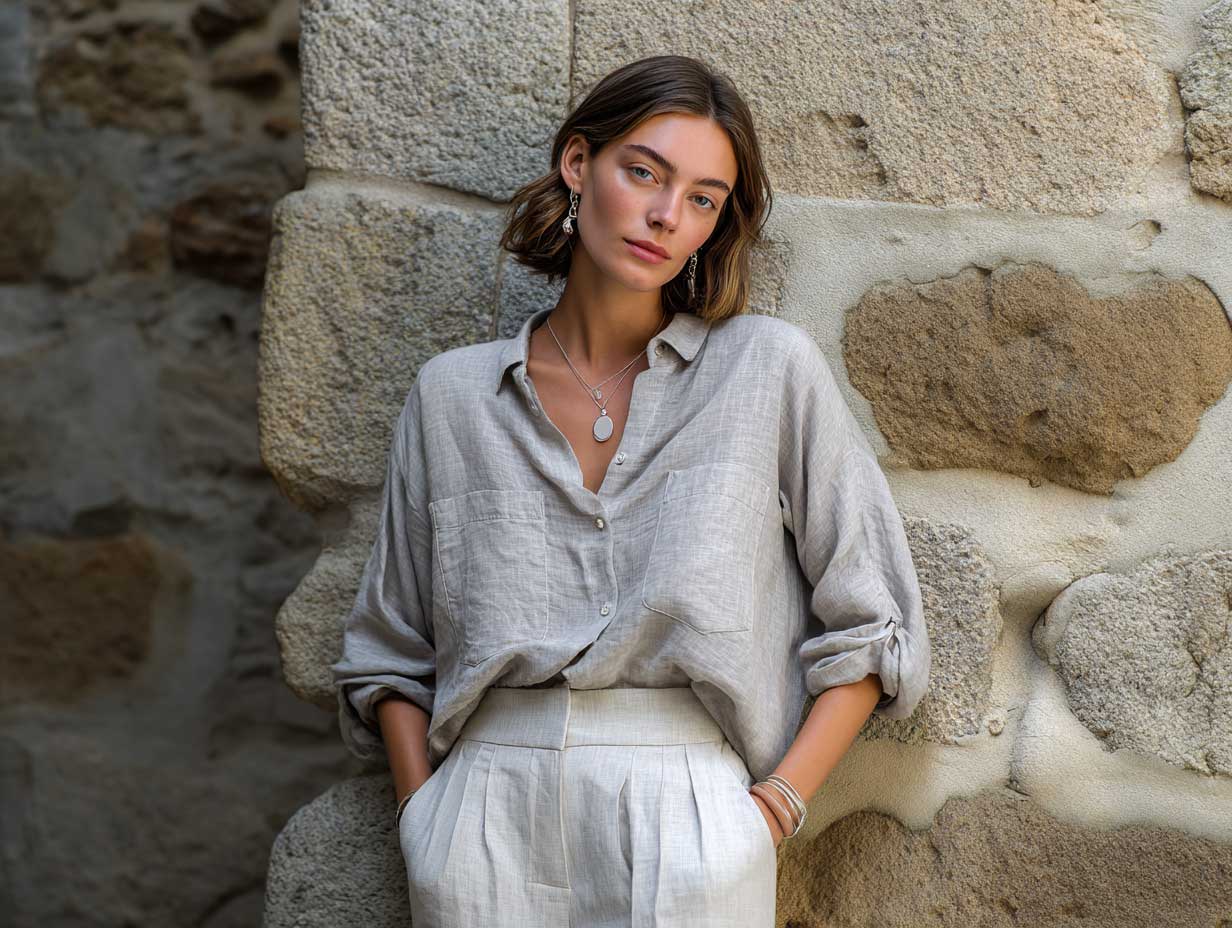

Pair a loose-fit grey linen shirt — Something like Uniqlo’s Premium Linen Oversized Shirt at $39.90 or COS’s boxy linen shirt at $89 — with tapered or wide-leg trousers cropped at the ankle. The shirt can be worn untucked for a relaxed daytime register, half-tucked for an editorial angle, or tied at the waist for structure. Each variation reads as a completely different outfit while sharing the same two pieces. That adaptability is the core argument for linen as a minimalist investment rather than a seasonal trend.
What doesn’t work with this look: polyester trousers in a matching grey tone. The visual similarity between linen and synthetic fabrics disappears immediately when the light hits them differently — polyester has a faint sheen that linen will never share, and that contrast reads as mismatched rather than deliberately tonal. You’ll notice it in photos before you notice it in person. Invest in linen or cotton trousers even at the lower price point — Zara’s linen-blend trousers run around $45 and behave well enough for everyday wear.
Leather sandals in nude or slate, woven canvas totes, and ceramic-finish jewelry all share the material consciousness that linen dressing implies. These aren’t arbitrary pairings — they’re a coherent visual language. Every piece in this register says: I chose this deliberately, I understand how things are made, and I’m not chasing a trend cycle. Footwear from brands like Birkenstock (Arizona EVA at $50) or Vagabond (Shoemakers Eliza at $130) land exactly right here without overspending.
Grey linen shirting is also the most camera-friendly fabric in a minimalist wardrobe. The natural texture catches soft light in a way that adds depth without needing filters, which is why this look appears constantly in editorial fashion shoots. If you shoot content or take photos for any reason, this is the piece you want on your back. My lightest grey linen shirt has appeared in more photos than any other garment I own — not because I plan it that way, but because it simply photographs as something more than it costs.
Final Word
Minimalist Chic Outfits Are Not About Owning Less — They’re About Deciding Better
White layers, black tailoring, beige knitwear, and grey linen — each concept works because the clarity of the decision is already visible in the clothing. You don’t need trend awareness to build this wardrobe; you need a clear tonal logic and two or three silhouettes you trust.
Brands like COS, Arket, Totême, and Uniqlo have built entire businesses on this premise. A white poplin blouse at $79, a beige ribbed knit set at $90, and a grey linen shirt at $40 — that’s $209 and three outfits that will outlast every trend cycle you’ll encounter this decade.
The visual economy of minimalist chic style is that every piece earns its place or it doesn’t stay. Save this post before you edit your wardrobe — come back when you’re standing in front of your closet and wondering what to cut.