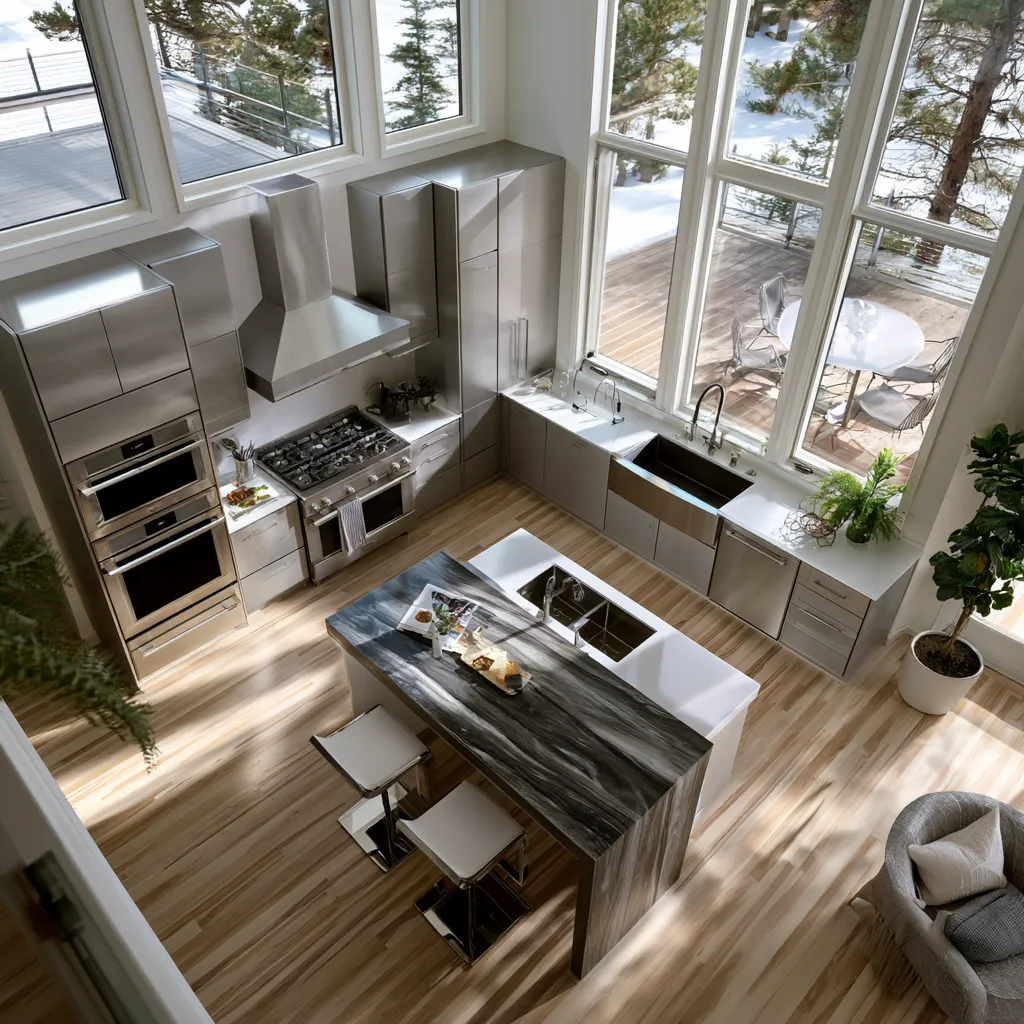
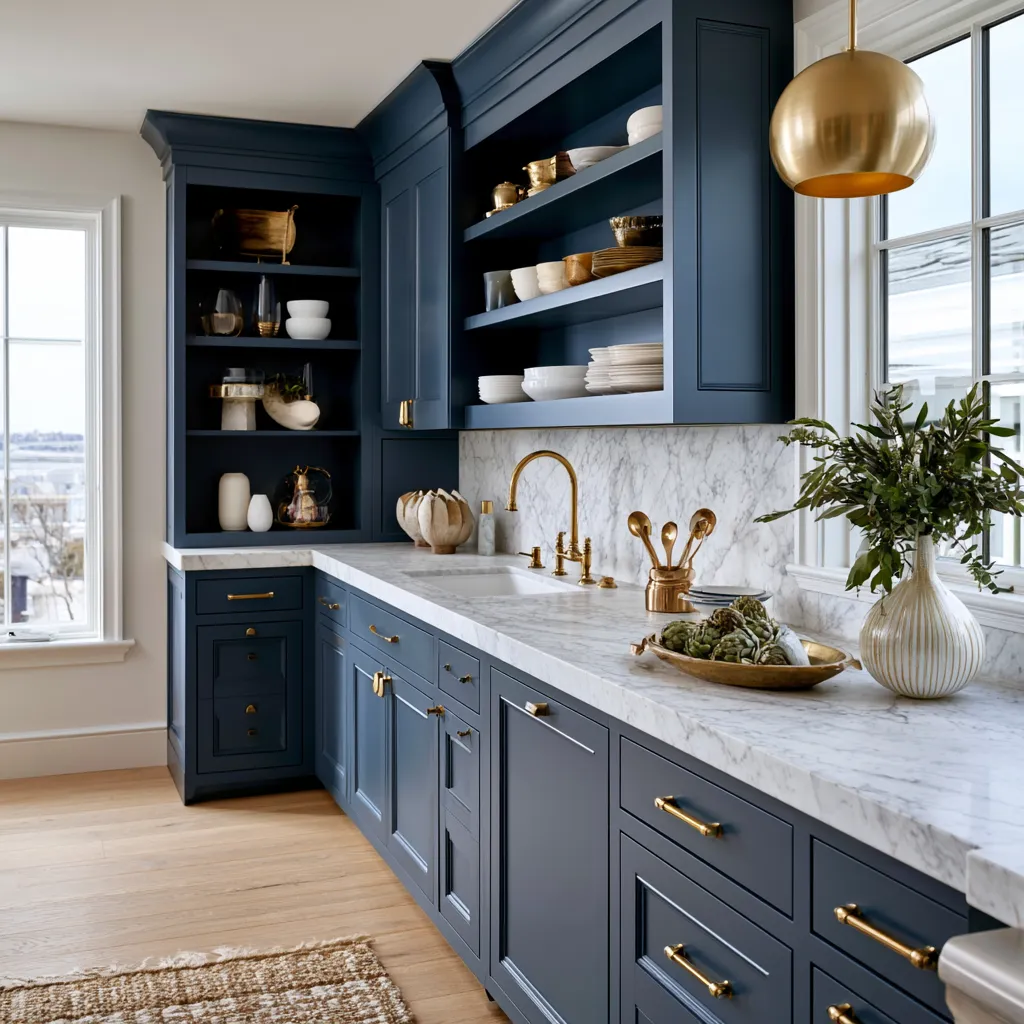
Modern coastal kitchen design gets the palette right, then forgets the materials — and that’s exactly where most remodels fall flat. I’ve walked through dozens of beach-house kitchens, and the ones that actually feel like the coast are never the ones with anchor hooks and rope-wrapped cabinet pulls. They’re the ones where Cambria Brittanicca quartz sits next to bleached white-oak flooring, where the subway tile has a handmade glaze, and the pendant light is rattan, not chrome. You’ll notice the difference in photographs immediately: one reads real, the other reads “beach décor section at HomeGoods.” This article covers the specific decisions — materials, hardware finishes, island configurations — that separate a coastal kitchen that works from one that just looks coastal in the listing photos.
None of these spaces cost under $40,000 to build. My honest estimate for a full modern coastal kitchen remodel hitting the looks shown here runs $55,000–$95,000 for a mid-size space, depending on cabinet line and countertop slab choice. Budget versions exist, but I’ll tell you exactly where to cut and where not to.
In This Article
- White shaker cabinets and the airy color palette that makes them coastal
- Shiplap walls, large islands, and the coastal chic kitchen layout
- When tropical wallpaper and a green island actually work
- Countertop and hardware choices that carry the full design
- What coastal kitchens get wrong — and what to do instead
- FAQ: backsplash tiles, open shelving, hardware finishes
White Shaker Cabinets Pull This Look Off Because of What’s Behind Them
White shaker cabinets are the workhorse of modern coastal kitchen design, and not because they’re neutral — because they disappear. Your eye moves past them straight to the backsplash, the window, the hardware, the floor. That’s the whole point. I bought IKEA AXSTAD doors with Shaker-style fronts for a renovation and was annoyed that every single detail around them had to carry double the weight. It works, but you have to treat the cabinets as infrastructure, not decoration.
The backsplash is where coastal kitchens make or break themselves. A blue subway tile in a 3×6 format reads dated now — I’d push you toward a 4×12 slab-format zellige in a blue-grey or seafoam glaze, like the Ann Sacks Zelie tile, starting around $28/sq ft. The handmade variation in the glaze does what a perfect factory tile cannot: it moves like water. Steer clear of glossy royal blue — it photographs beautifully and looks like a hotel pool in real life.


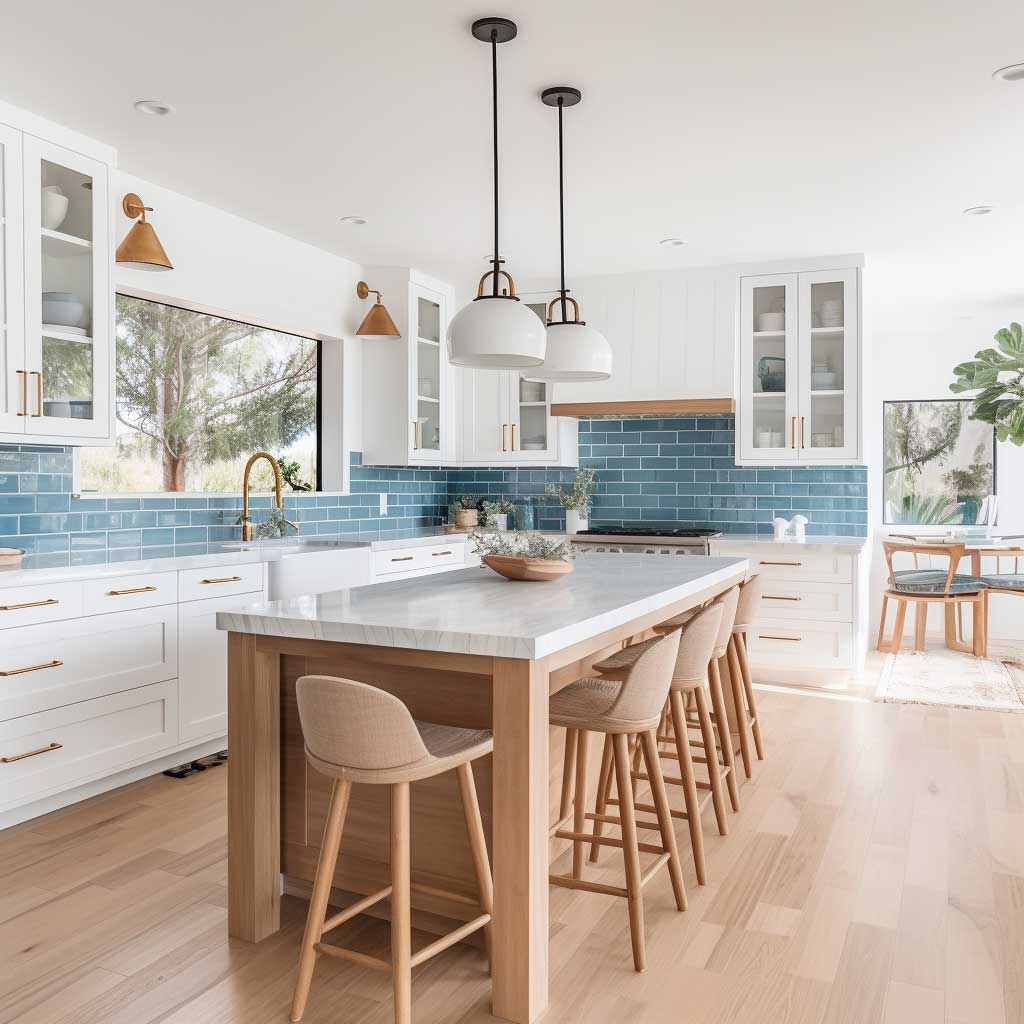
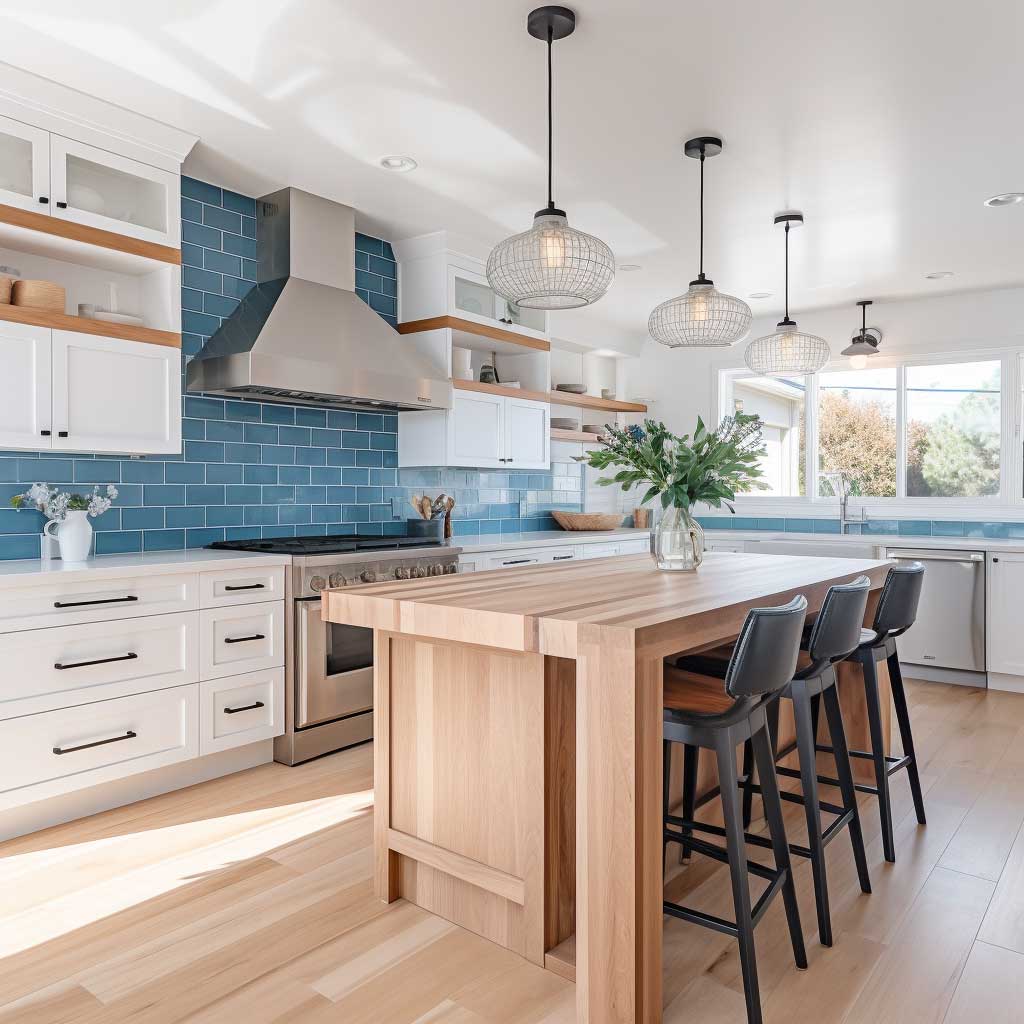
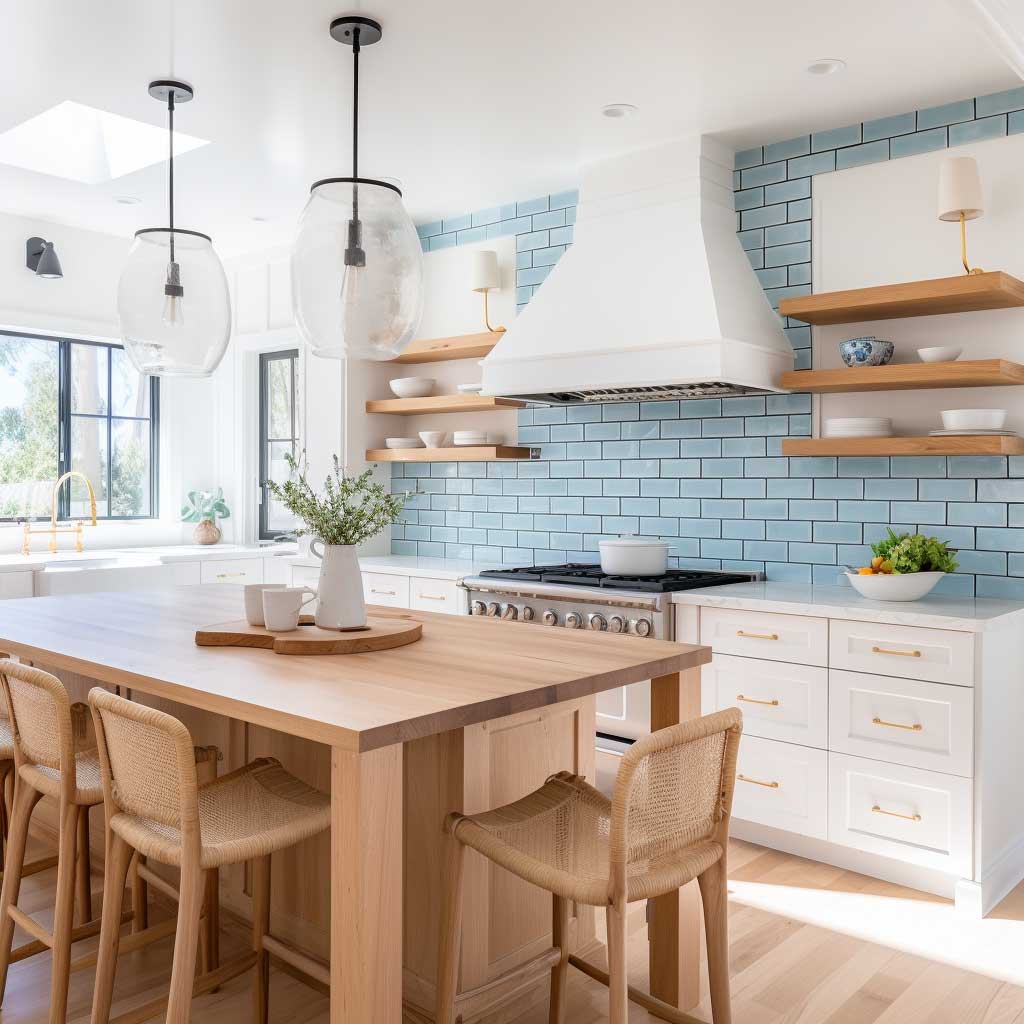
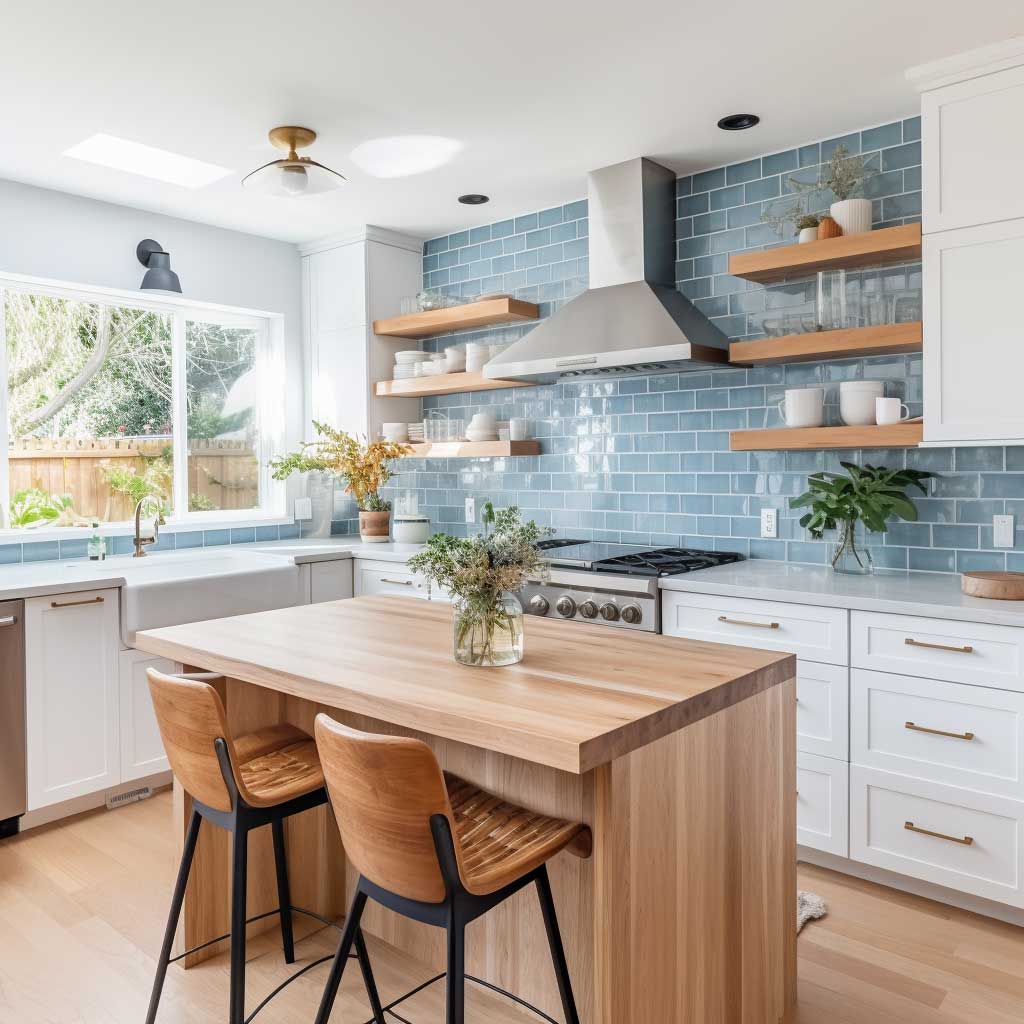
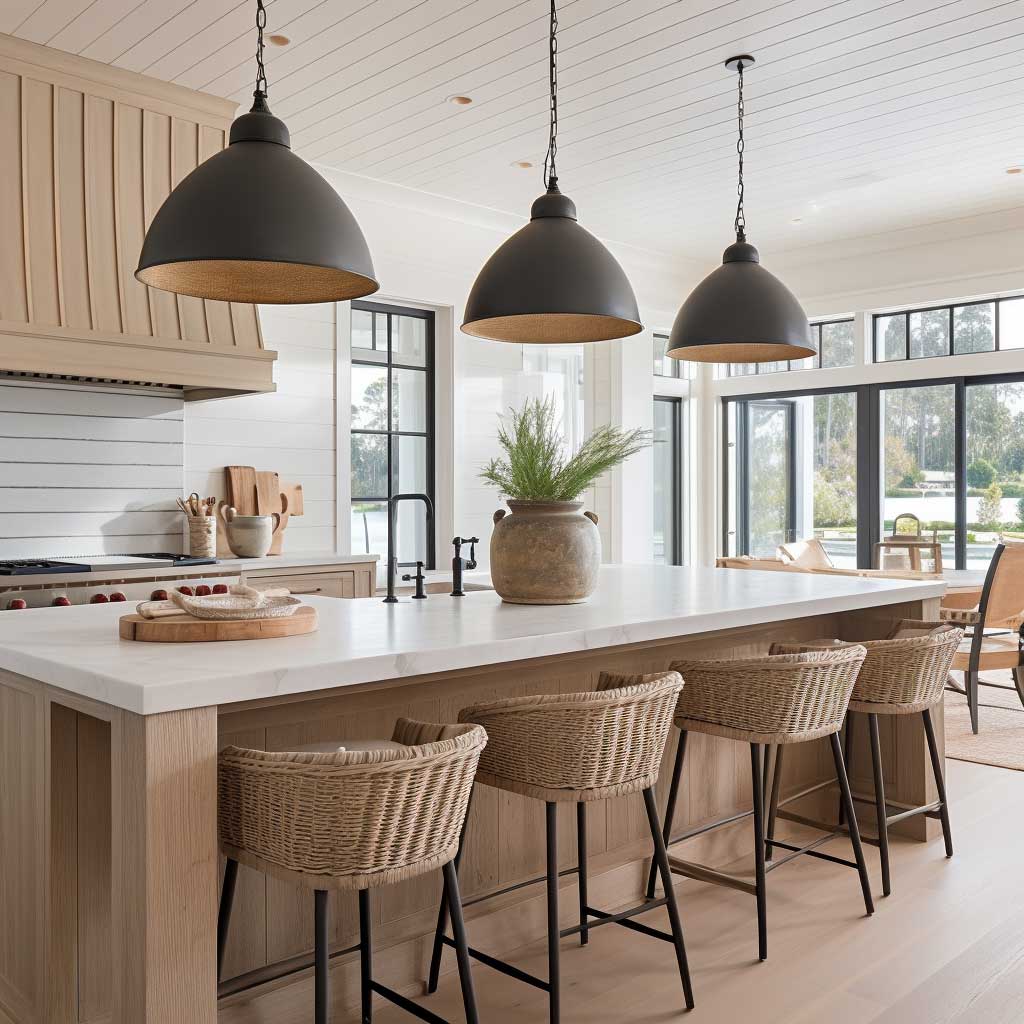
Natural wood is the other non-negotiable. Hardwood flooring in a light white-oak or natural maple tone, floating shelves in reclaimed timber, wooden bar stools — these are the driftwood equivalent in a kitchen. Without them, white shaker cabinets and a pale blue backsplash feel clinical. The wood grounds the whole composition in the same way wet sand anchors a shoreline. I stole this principle from a Hamptons contractor I interviewed: “Add wood where feet go, where hands rest, and where eyes land first.”
Large windows change the equation completely. You can do everything else wrong and a floor-to-ceiling window behind the sink will save the room. Natural light at mid-morning in a white-and-wood kitchen is the coastal atmosphere — the paint color and tile are just supporting it. If your renovation budget is tight, move window square footage before you upgrade the backsplash tile.
Stainless steel appliances are fine here. I’d push back against integrated panel-front appliances in a pure coastal kitchen — the reflective quality of stainless actually reads like sea light. Sub-Zero and Wolf are the obvious choices ($3,000–$8,000 per appliance), but the Bosch 800 Series does the same visual work for significantly less. Skip the black stainless — it kills the brightness immediately.
Shiplap Plus a Quartz Island — the Coastal Chic Kitchen Layout That Photographs Clean
Shiplap is a coastal signature because it’s essentially horizontal lumber — it references clapboard beach houses, boat interiors, old docks. Painted in Benjamin Moore Chantilly Lace OC-65, it reads pure white without the yellow undertone that makes other whites look dingy under artificial light. I own two panels of board-and-batten in a coastal secondary bedroom and the horizontal line difference is real: shiplap makes a room feel wider. For a kitchen wall, horizontal planks at 6-inch width hit the sweet spot between subtle and intentional.
The island carries the coastal chic designation in this second kitchen configuration. White quartz on top — I’d specify Silestone Eternal White or Cambria Brittanicca, both around $80–$120/sq ft installed — with simple natural wood stools underneath. The rule I follow: the island countertop should be the same material as the perimeter countertops, or visually lighter. Don’t go darker on the island. Darker island countertops visually shrink the room and make the whole layout feel heavier than a coastal kitchen should.


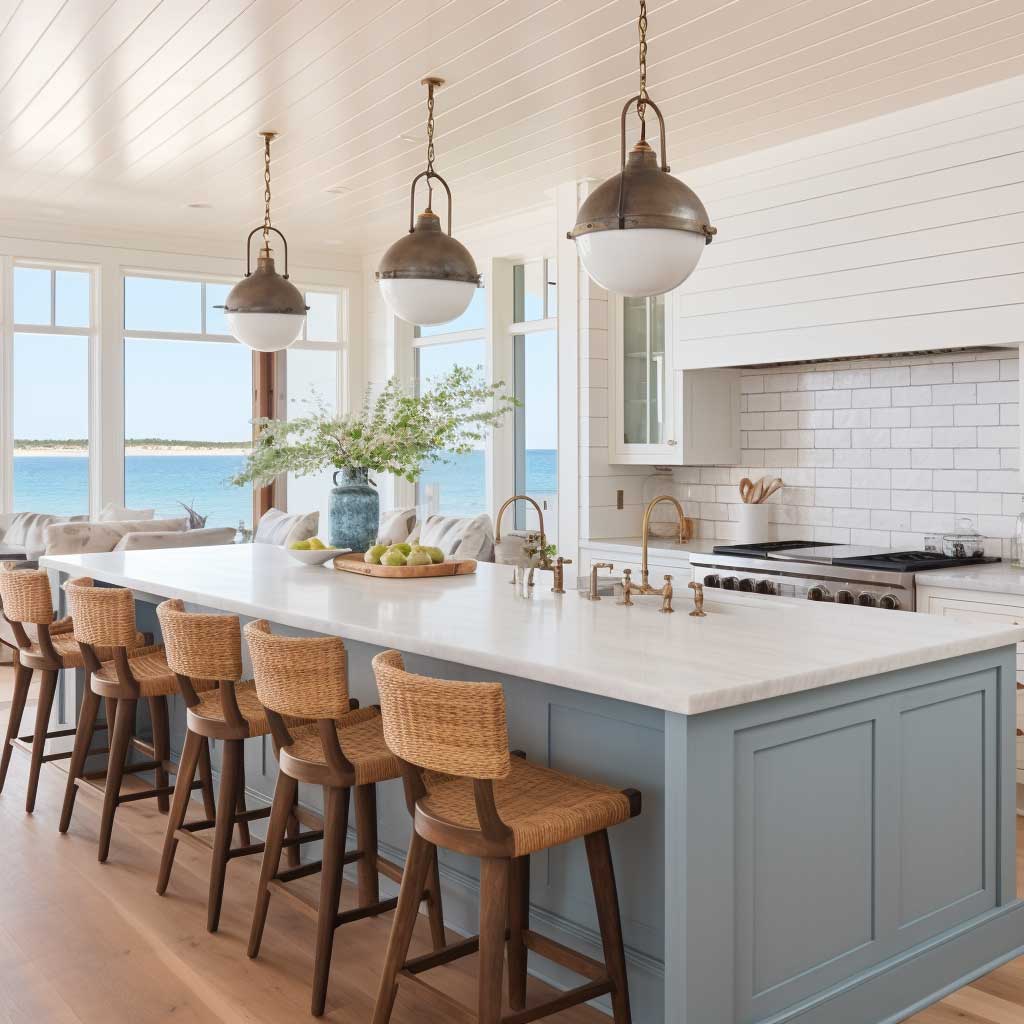
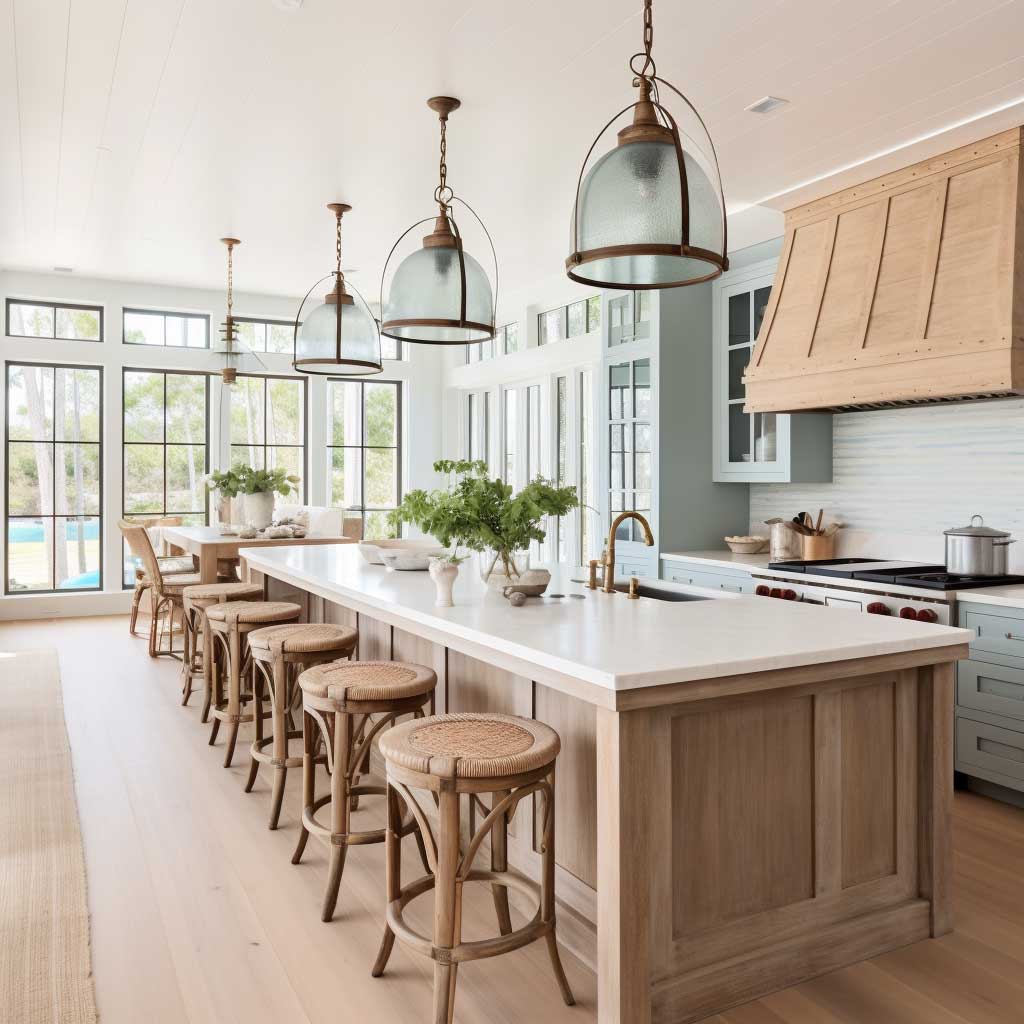
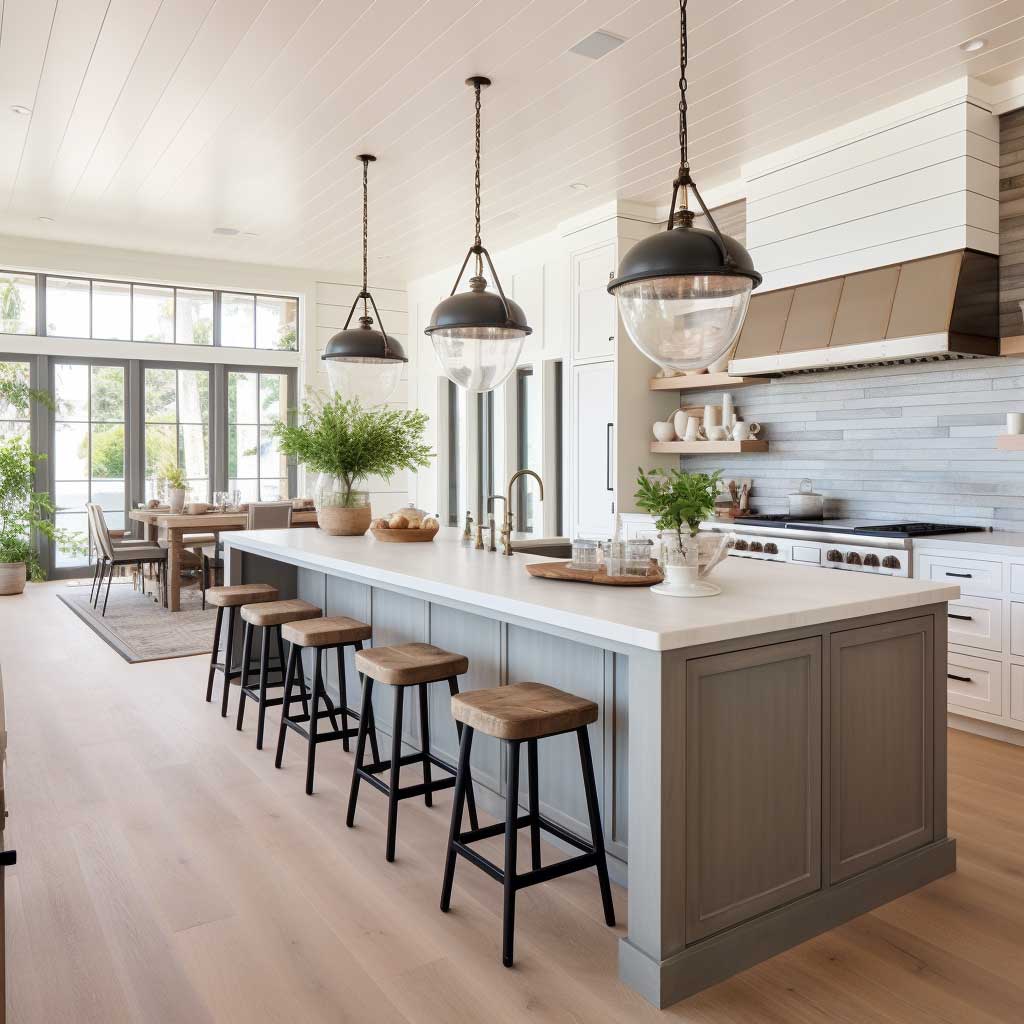
Pendant lighting above the island is where people spend money in the wrong direction. A clear glass shade with a brass or nickel socket hits the right minimalist note — you want the bulb visible, not obscured. I’d avoid anything with an Edison filament exposed; it reads more industrial farmhouse than coastal. The Visual Comfort Darlana pendant ($285 each) is my go-to reference point for scale and finish. If that’s out of range, the Serena & Lily Piping Rock pendant hits the same note at $395 for a wider drum that covers more island territory.
Open shelves in blue and green ceramics serve as the color delivery system in this kitchen. The shelves themselves should be 2-inch thick solid wood — anything thinner looks temporary, like a staging prop. What’s on them matters more than the shelves: white ceramic dishes, clear glass, and one or two pieces in a dusty seafoam or navy. Full open shelving across an entire wall is a mistake I’ve seen in three different coastal kitchen renovations — it reads cluttered within six months. Use open shelves on one wall section only, and keep the rest behind doors.
Stainless steel appliances show up here too, and they’re correct. The modern element in “modern coastal” has to come from somewhere, and letting the refrigerator and range hood carry that duty frees everything else to stay warm and natural. The Hamptons coastal kitchen style builds on exactly this tension between polished appliances and raw natural materials.
⚠ Don’t Do This in Your Coastal Kitchen
- Don’t use nautical hardware. Anchor-shaped pulls, rope-wrapped knobs, and porthole mirrors make a kitchen look like a themed restaurant, not a home. Brushed brass or matte black bar pulls are the actual coastal choice.
- Don’t cover every surface in shiplap. Shiplap on all four kitchen walls is visually exhausting. One wall, or a partial panel to the countertop height, is the maximum.
- Don’t stack too many blues. Blue backsplash plus blue open-shelf ceramics plus blue barstools washes the room out. Pick one primary blue surface and let the others be natural or white.
- Don’t buy shaker cabinets with an overlay frame in gloss white. It reads builder-grade instantly. Go for a flat or matte finish with a soft-close hinge — the difference in touch and light reflection is immediate.
Tropical Wallpaper and a Green Island — Where This Coastal Kitchen Variation Actually Lands
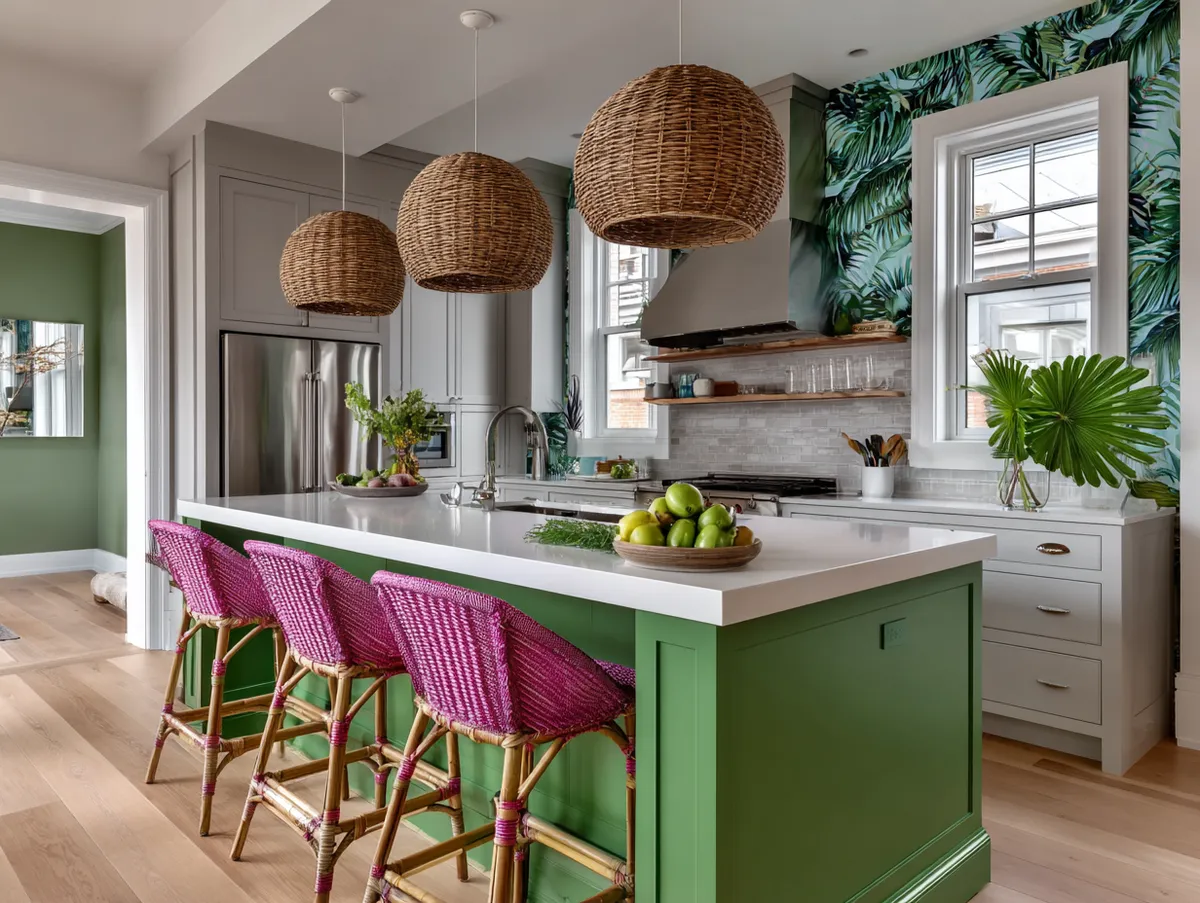
Tropical wallpaper in a kitchen sounds like a risk until you see it executed correctly. The key is restraint in every other surface when you go bold on one wall. This third configuration — lush botanical print on a single accent wall, bamboo pendant lights overhead, green kitchen island as the anchor — works because the remaining cabinetry stays white and the floor stays neutral. Pull any one of those background elements into color and the whole room tips into chaos. Think of the wallpaper as the loudest person in the room: everyone else needs to stay quiet.
Schumacher Chiang Mai Dragon in aquamarine or the Cole & Son Tropical Hicks’ Grand is the quality tier I’d recommend — $180–$320/roll, but lasting 15+ years in an interior environment. I’ve seen the cheaper peel-and-stick botanical prints lift at the seams within 18 months of kitchen steam and humidity. Not worth it. One wall of quality paper costs $800–$1,500 materials only and completely transforms the coastal kitchen feel without a structural change.


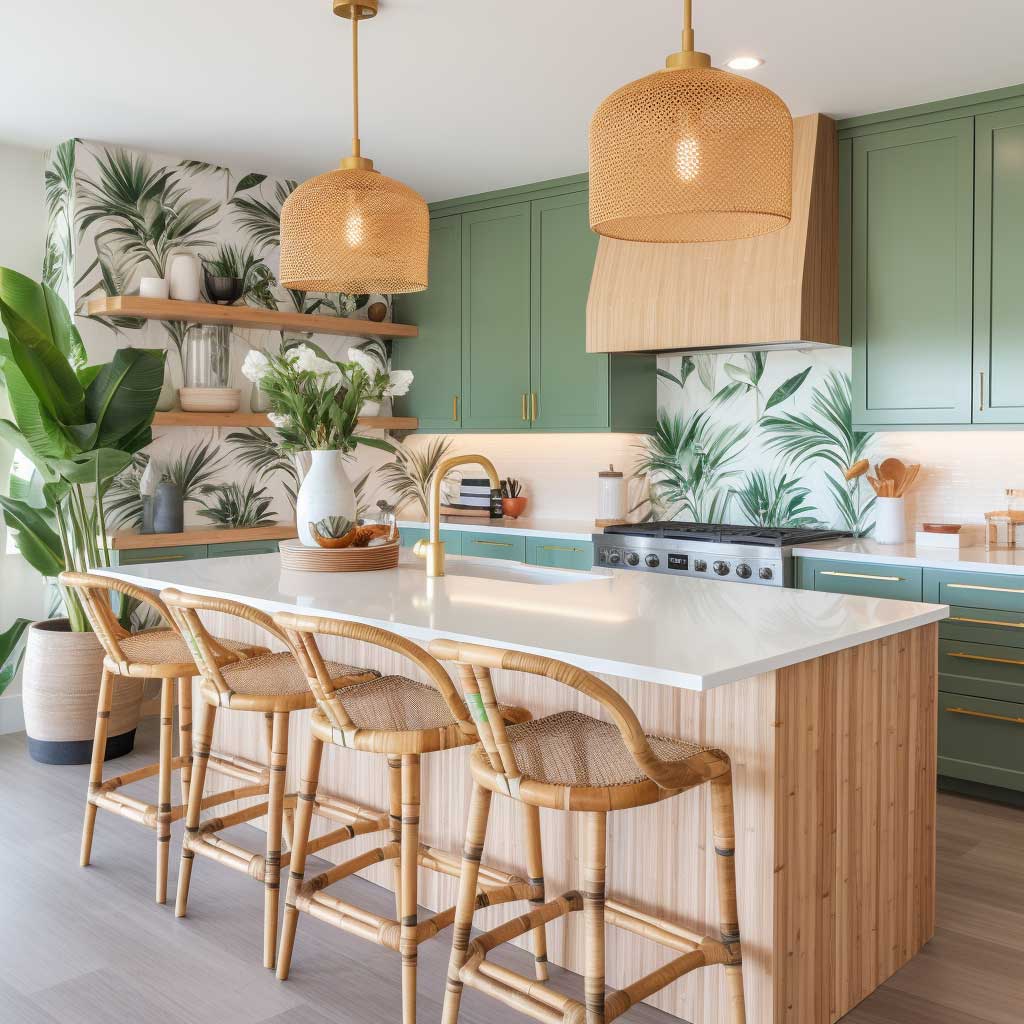
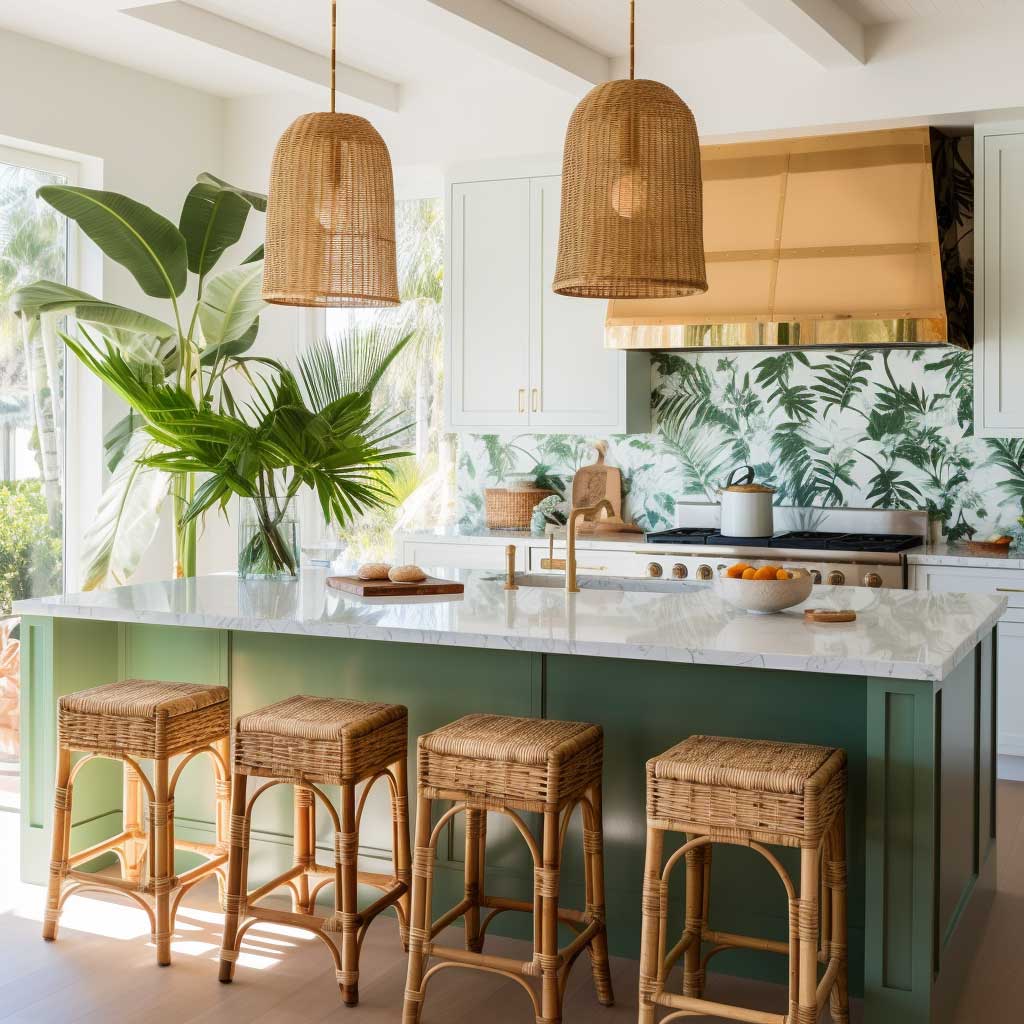
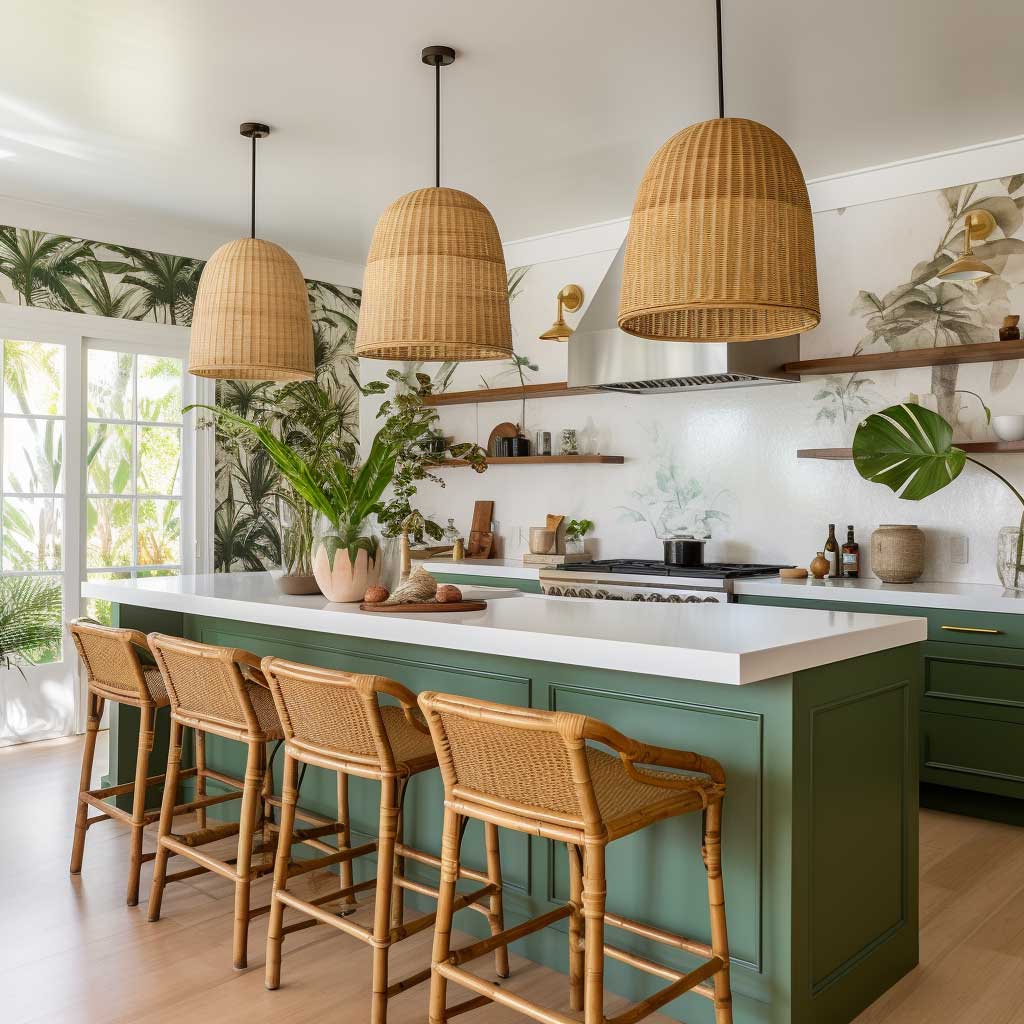
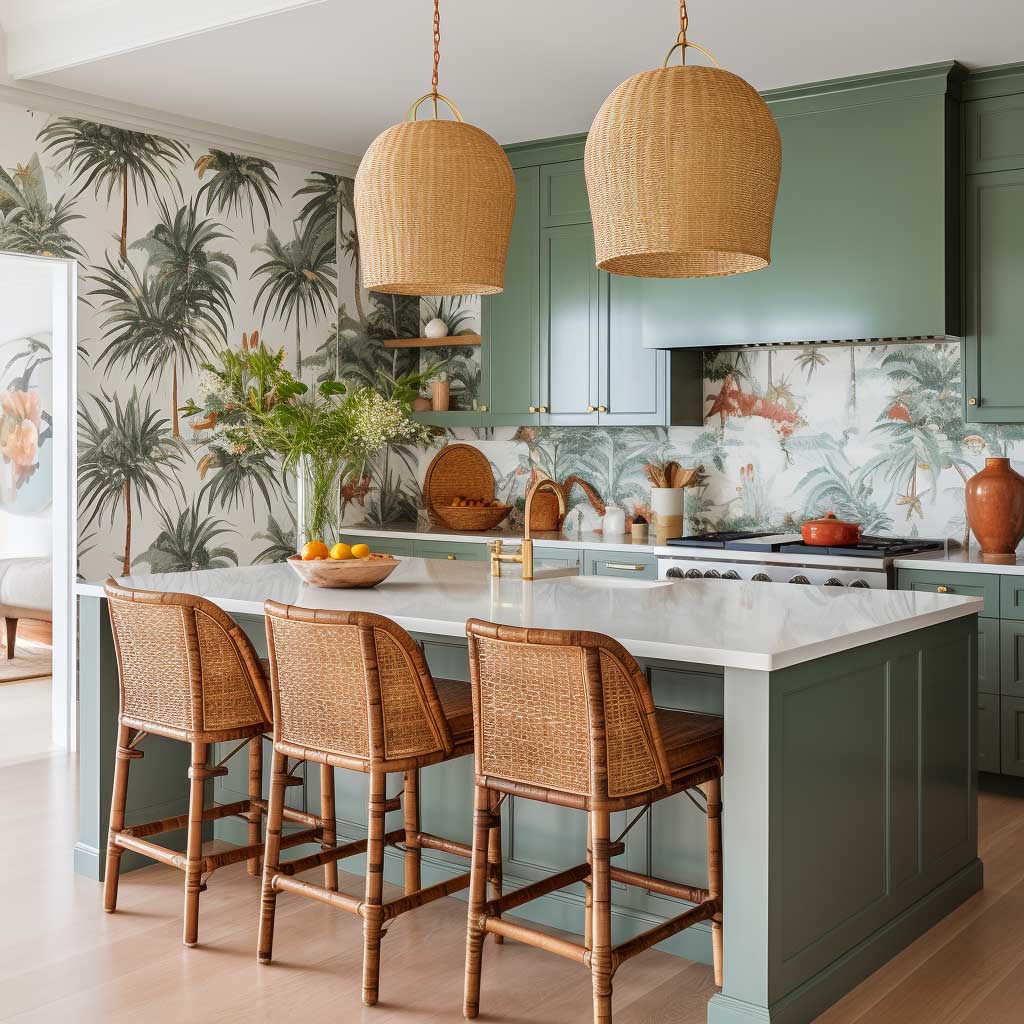
Bamboo pendant lights are the single material swap that moves a kitchen from “coastal adjacent” to actually committed. The organic weave casts shadow patterns on the ceiling when lit — something a metal or glass pendant cannot do. Serena & Lily Woven Seagrass pendants at $285 each hit this note without requiring a specialist import. What doesn’t work: bamboo pendants over a stainless or black kitchen. They need white or warm-wood surroundings to land correctly. Put them in an industrial-style kitchen and they look lost.
The green kitchen island is the bravest move in this space. Sage green (Benjamin Moore Sage Mountain 2143-40) or a deeper eucalyptus (Farrow & Ball Mizzle No.266) both read coastal without tipping into Christmas. The island should be painted in a furniture-grade eggshell or satin — full gloss will reflect the wallpaper and compete with it. What’s the right seat height? Standard 36-inch counter height with 24-inch bar stools, not 42-inch bar height, which puts people’s elbows at awkward angles for meal prep. The Mediterranean coastal kitchen approach uses a similar bold island color strategy, with terracotta and sage taking the place of blues.
Chrome fixtures survive here because the chrome is outnumbered: tropical wallpaper, bamboo lights, and a green island are all warmer and more organic. A brushed brass faucet would fight the green island for dominance. Chrome recedes. It’s the right call even though brass is trendier right now — trends in coastal kitchens age faster than the kitchen itself.
Countertops and Hardware That Hold a Coastal Kitchen Together Past the First Year
Quartz is my countertop recommendation for a modern coastal kitchen, full stop. Not marble — marble in a kitchen is a decade-long relationship with a moody partner that stains at the hint of lemon juice. Quartz in a coastal palette means Silestone Eternal Calacatta ($95/sq ft installed), Caesarstone Cloudburst Concrete for the beachy grey variation ($85/sq ft installed), or Cambria Brittanicca for the most convincing marble look at $110–$130/sq ft installed. The matte finish option on any of these reduces glare and makes the countertop feel more like honed stone, less like a showroom sample.
Butcher block gets recommended in coastal contexts a lot, and I’d push back. It requires oiling every three to six months, it darkens with water exposure near the sink, and it shows cutting marks immediately. Use it as a 24-inch section on one end of the island if you love the wood grain — not as the full perimeter surface. I tried full butcher block in a beach house rental property and replaced it with quartz within two seasons.
Hardware finishes: brushed brass or brushed nickel, not polished anything. Polished chrome reads clinical. Polished brass reads 1987. Brushed brass has a muted, sun-warmed quality that reads correctly in coastal settings — my go-to is the Rejuvenation Winston pull in brushed brass at $18 each, or the more budget-friendly Amazon Ravinte cabinet pull at $1.80 each in the same finish. Matte black works in more contemporary coastal kitchens where the wallpaper or tile is the warmth provider. What kills a coastal kitchen’s hardware instantly? Oversized cup pulls in oil-rubbed bronze — too heavy, too dark, wrong finish family entirely.
The flooring decision matters more than most remodel guides admit. Light white-oak hardwood or engineered hardwood (Armstrong Coastal Living collection, $6–$9/sq ft materials) anchors everything above it. Large-format porcelain in a sand or stone look is the practical alternative — less susceptible to humidity near the sink and dishwasher. What I’d avoid: dark walnut or grey stained floors. They absorb all the light that white cabinets and pale quartz are working to reflect. Budget-friendly coastal kitchen remodel strategies often focus on flooring swaps as the highest-impact cost-effective upgrade.
| Material | Cost Installed | Coastal Fit | Maintenance |
|---|---|---|---|
| Quartz (Cambria Brittanicca) | $110–$130/sq ft | Excellent | Low — wipe clean |
| Honed Quartzite | $90–$140/sq ft | Excellent | Medium — seal annually |
| Marble (Calacatta) | $100–$180/sq ft | Good visually | High — etches, stains |
| Butcher Block (maple) | $40–$70/sq ft | Good for accents | High — oil every 3 months |
| Porcelain slab | $60–$100/sq ft | Very good | Low |
Final Word
A modern coastal kitchen fails when it chases the look instead of the light
The three kitchens here succeed because they solve the light problem first — white cabinets, pale countertops, large windows — and then layer the coastal materials on top. Shiplap, bamboo, zellige tile, and botanical wallpaper are all downstream of that light decision.
Budget $55,000–$95,000 for a full remodel at this quality level. Cut on appliances before you cut on tile or countertops — surfaces are permanent, appliances get replaced.
Save this post before you meet with your contractor — bring the images, the product names, and the material specs above.
Related Topics
FAQ
What backsplash tile works best in a modern coastal kitchen?
How do I make a coastal kitchen feel contemporary rather than beachy and dated?
What is a realistic budget for a coastal kitchen remodel with shaker cabinets and quartz countertops?
Does a green kitchen island work in a coastal kitchen or does it look too trendy?
Are bamboo or rattan pendant lights practical over a kitchen island?
What's the difference between coastal living kitchen ideas and coastal contemporary kitchen design?
Complete guide
Every Modern Kitchen Design Idea Worth Stealing Right Now
Layout, cabinets, islands, materials, color, lighting — all in one place
Complete guide
Coastal Home Style Ideas That Actually Feel Like the Shore
Kitchens, bedrooms, bathrooms, exteriors, palettes, outdoor — all in one place