Teal interior design uses a blue-green that sits between the calm of blue and the freshness of green, which is why it suits coastal rooms so well. A monochromatic teal scheme layers several shades, textures and finishes of that one hue, so the room feels cohesive without turning flat.
It works in a living room, bedroom or kitchen, and it suits anyone who wants a restful space with a clear seaside mood. The rule that matters most is variety inside the palette: vary light and dark tones, mix matte and glossy surfaces and add natural materials so the colour has something to play against.
Quick Scan
- Use one teal as the anchor, then add lighter and deeper versions of it.
- Mix textures such as velvet, tufted fabric, woven rugs and glossy tile.
- Soft or matte teal on walls gives a calm backdrop; save glossy teal for cabinets and tile.
- Natural light and warm lighting both change how teal reads, so test paint at different hours.
- Coastal touches such as shells and driftwood add texture without breaking the palette.
Teal living room with layered textures
A teal living room works best when one large piece, such as a velvet sofa, carries the colour while the walls stay a calmer teal. The soft pile of velvet contrasts with a sleek glass coffee table, which adds a modern note and stops the room from feeling saturated.


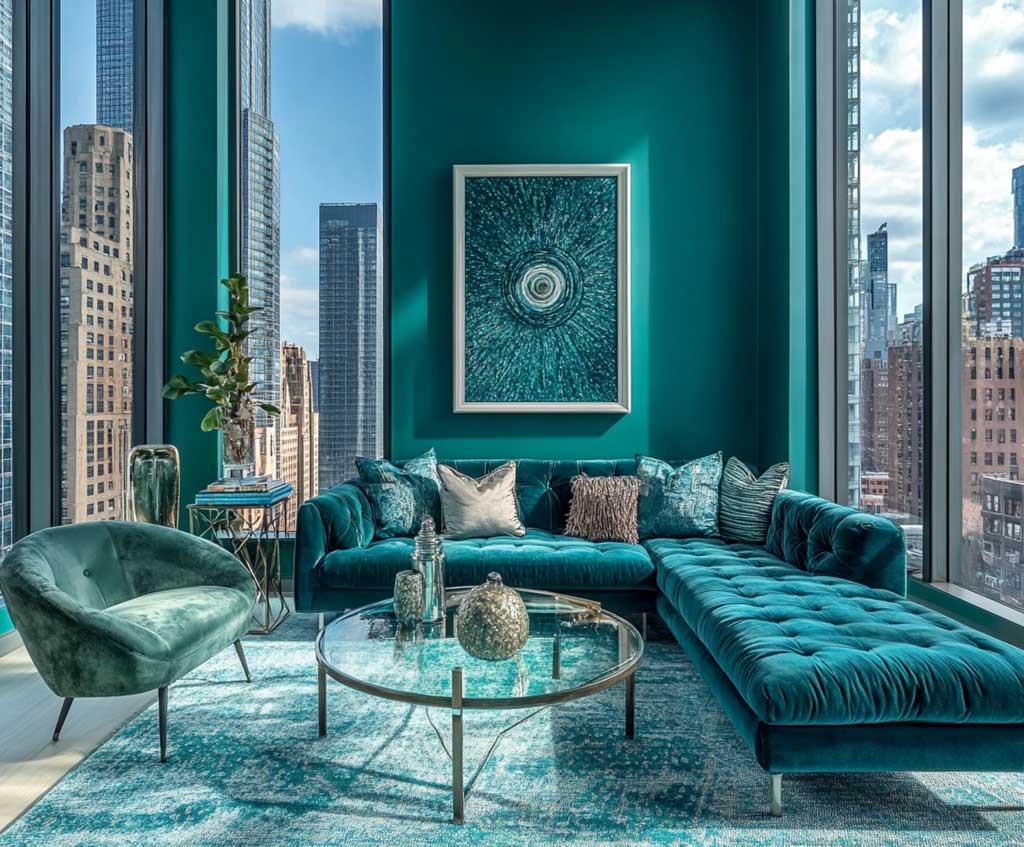
Teal-painted walls act as a serene backdrop, letting furniture and accessories stand out without competing. Floor-to-ceiling windows bring in daylight that lifts the colour and softens the overall effect, so even a deep teal feels open.
A textured teal rug adds depth without breaking the palette, and throw pillows and wall art repeat the colour in slightly different shades. For a sofa with more texture, see why the bouclé sofa is replacing velvet in living rooms.
Teal bedroom with coastal accents
A teal bedroom with coastal accents is calming when the headboard is the focal point and everything else stays quieter. A tufted teal headboard against smooth teal bedding creates contrast in texture while staying within the colour scheme.


Soft teal walls and teal curtains framing large windows add depth while letting natural light filter in, which keeps the room airy despite the richness of the colour. A teal area rug anchors the bed and adds warmth underfoot.
Seashells and driftwood on the nightstands bring in the seaside mood without adding another colour. Soft lighting finishes the room, since a gentle glow enhances the tranquil effect of the teal palette.
Modern teal kitchen
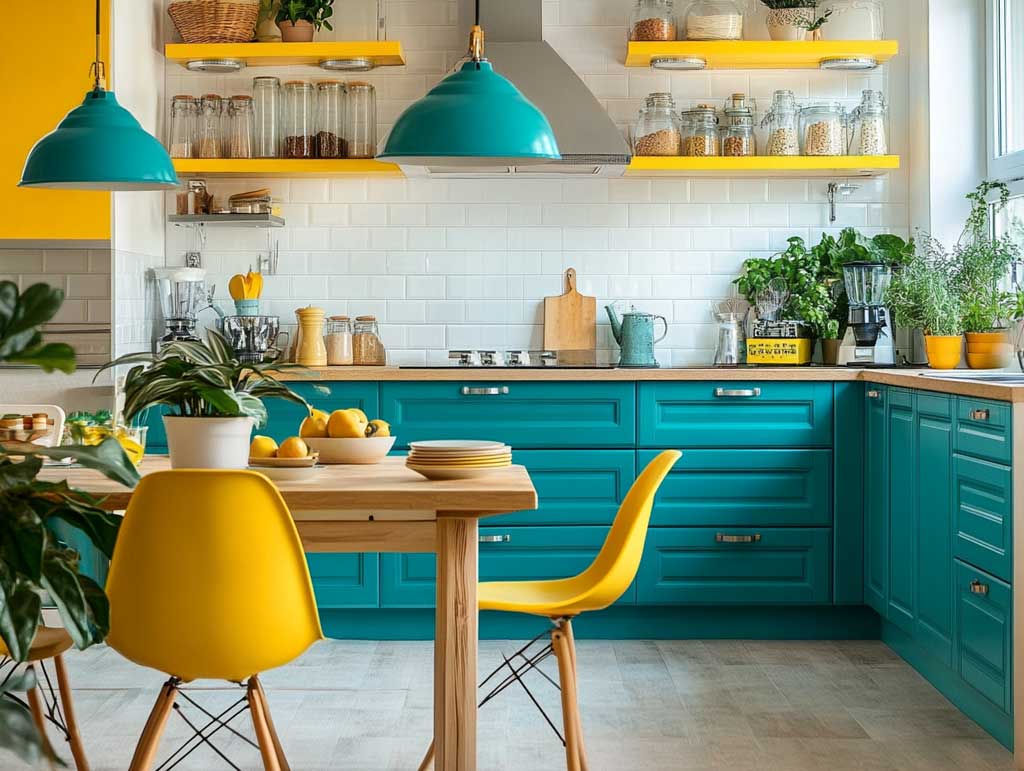
A modern teal kitchen puts the colour on the cabinets and keeps the rest of the surfaces in supporting shades. Sleek teal cabinets with a glossy finish reflect light, which helps the room feel more open, and teal quartz countertops extend the palette on a durable work surface.


A teal subway tile backsplash adds texture, and its gloss contrasts with matte cabinet and counter surfaces for a balanced look. If you are choosing tile, this piece on a low-maintenance kitchen backsplash covers tile size, finish and grout.
A central island with teal bar stools serves as both workspace and social spot, and pendant lights above it cast a warm glow that enriches the teal tones. Stainless steel appliances with teal accents keep the scheme unbroken.
Teal across the three rooms
| Room | Teal anchor | Texture to add | Watch for |
|---|---|---|---|
| Living room | Velvet sofa and teal walls | Textured rug, cushions, wall art | Too much teal on every surface |
| Bedroom | Tufted headboard | Curtains, rug, shells and driftwood | Dark teal in a room with little daylight |
| Kitchen | Glossy cabinets | Subway tile, quartz, bar stools | Glossy surfaces that show smudges |
A common mistake with teal
The most common mistake is using one flat teal everywhere. A living room with teal walls, teal sofa and teal curtains in exactly the same shade looks heavy, while the same room with three tones and a textured rug looks designed. Test paint samples in morning light and under lamps in the evening before you commit, because teal can lean greener or bluer through the day.
Bringing teal into your home
Teal interior design works when you treat the colour as a family instead of a single paint chip. Choose an anchor, add lighter and deeper tones, mix textures and let natural light and warm lamps do the rest.
Start with one room, and add coastal touches such as shells or driftwood last, so the palette stays calm.