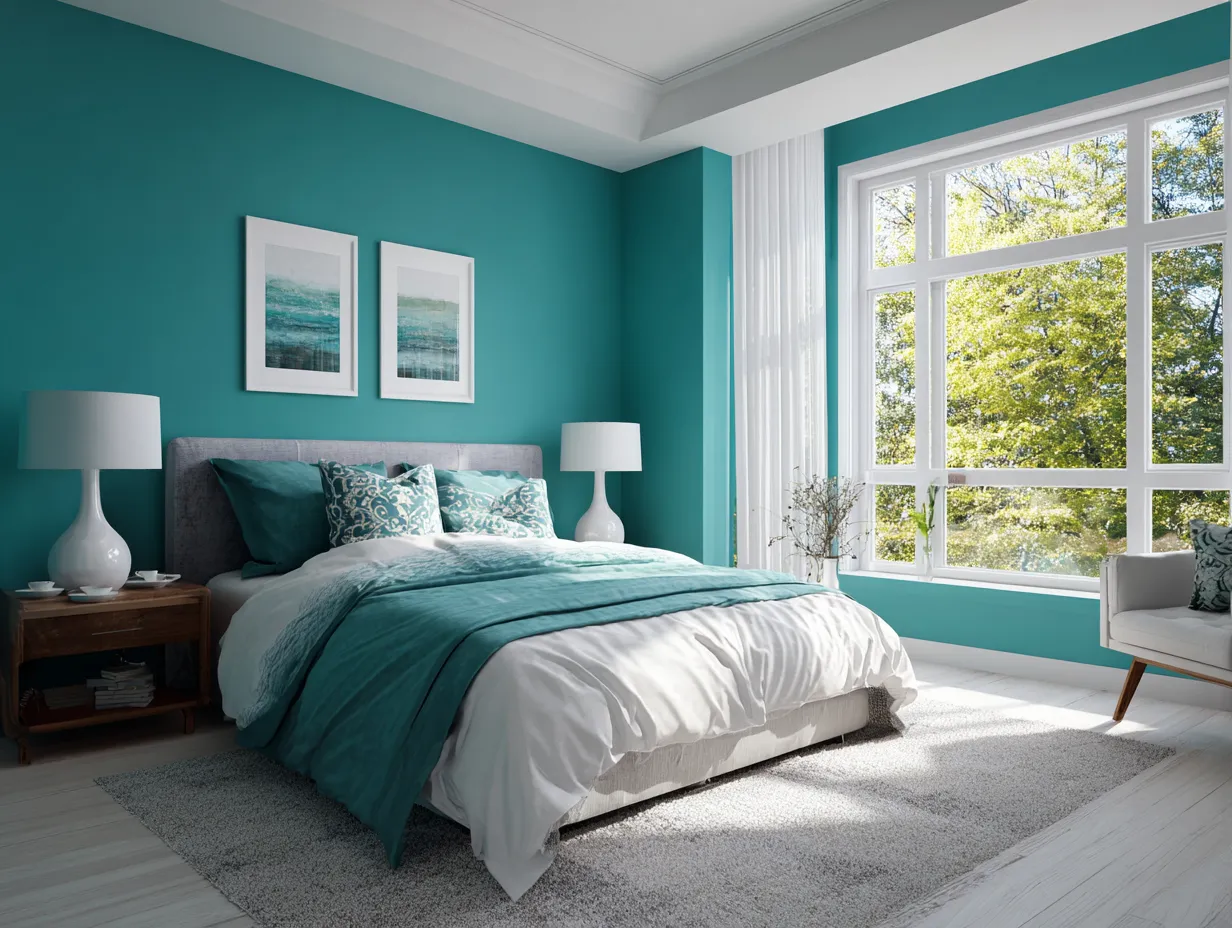
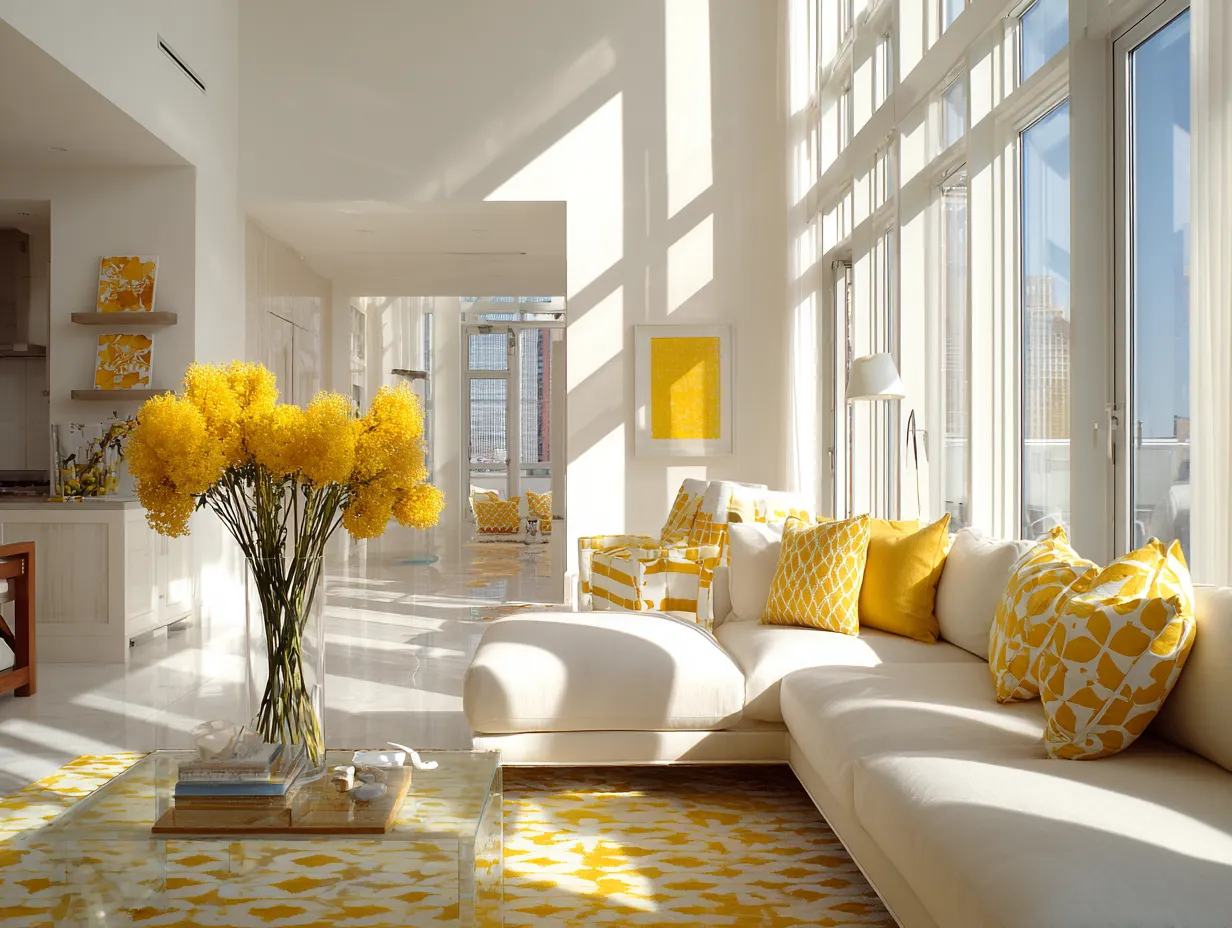
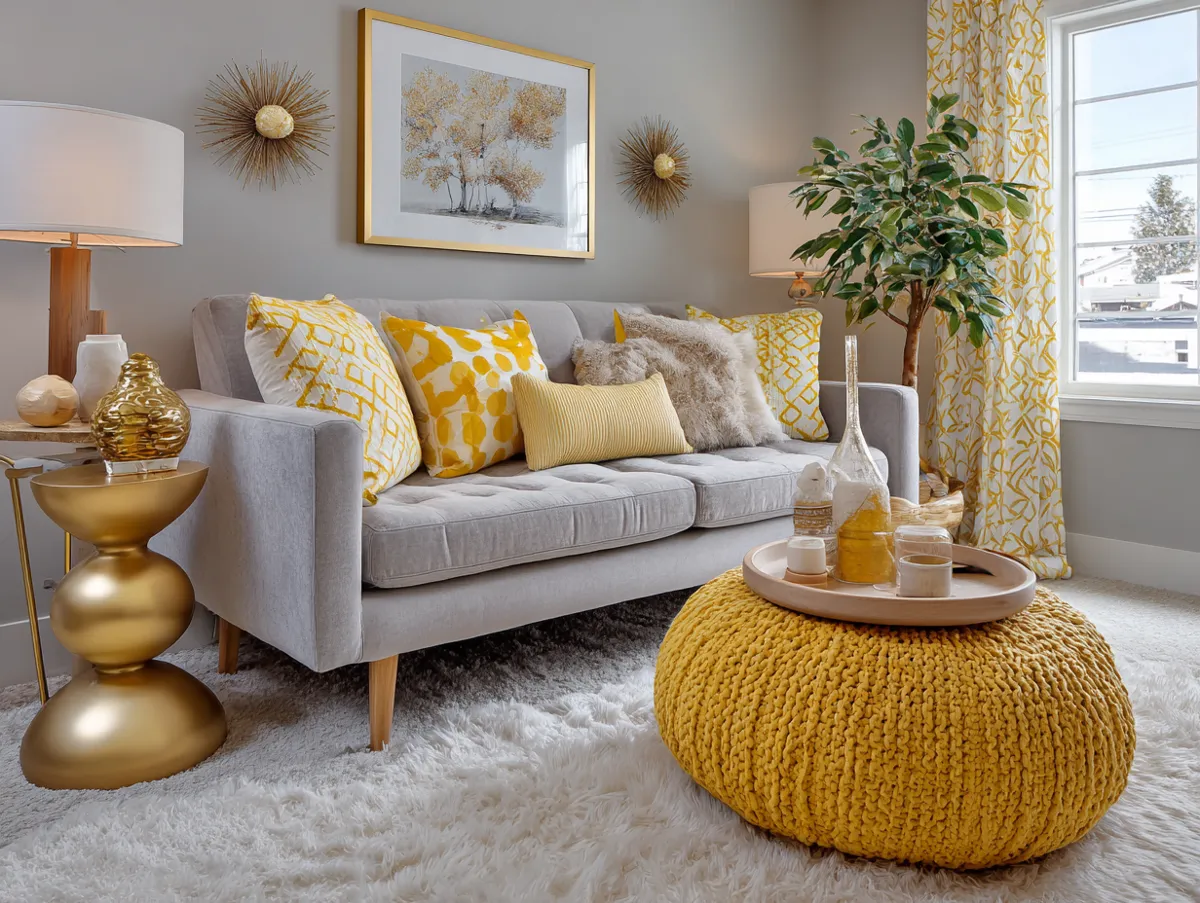
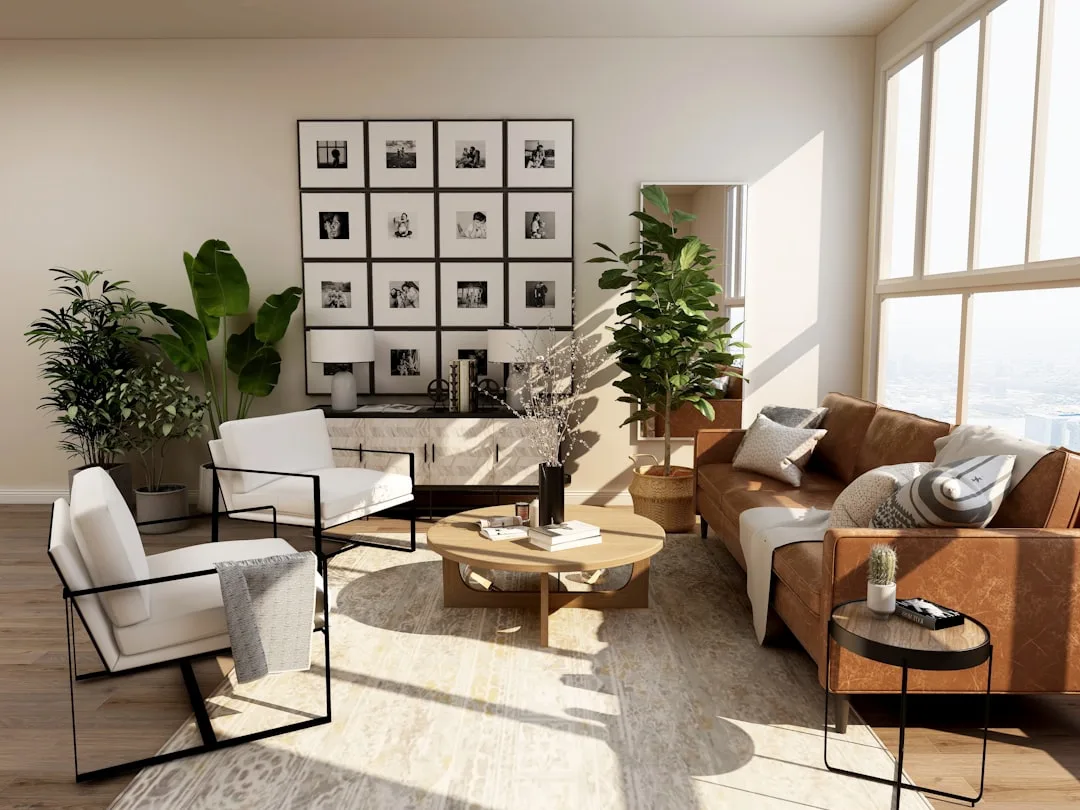
Teal and yellow work together indoors because the two sit near opposite sides of the color wheel, so each one makes the other look richer. Teal calms the room and covers the big surfaces, while yellow brings light and energy in smaller doses. The pairing suits almost any room, provided one color leads and the other plays support.
The dependable formula is 60% neutral, 30% teal and 10% yellow, a ratio that design guides recommend again and again. Study nooks, living rooms and kitchens all take the scheme well, though each one needs a different balance of wall color and accents. Think of teal as the sofa and yellow as the throw pillow: one anchors the room, the other keeps it interesting.
Below, paint placement is broken down for three rooms, followed by shade pairings that avoid clashing and the lighting figures that keep both colors from going flat. Every section carries a real number, from lux levels to cabinet-painting costs. Start with the room you plan to paint first.
Quick scan
- Let teal lead and yellow support: about 60% neutral, 30% teal, 10% yellow.
- A study nook needs 300–500 lux of general light and 500–700 lux at the reading spot.
- In a living room, keep yellow to roughly 10–15% of what the eye sees.
- Professional cabinet painting typically runs $2,000–$6,500; DIY costs $200–$600 in materials.
- Pair medium teal with mustard or mango yellow, not neon lemon.
- Test a large swatch on the real wall in the morning and again in the evening.
Painting a Study Nook in Teal and Yellow Without the Eye Strain
Yellow-and-teal study nooks work best when teal covers the wall behind the desk and yellow stays on small, movable pieces. Deep teal calms the visual field during long reading sessions, while a yellow shelf or corkboard frame keeps the corner from feeling gloomy. Why not paint the whole nook yellow for energy? Bright yellow across large areas tires the eyes quickly, and a study corner needs stamina more than sparkle. Limit yellow to two or three accents.

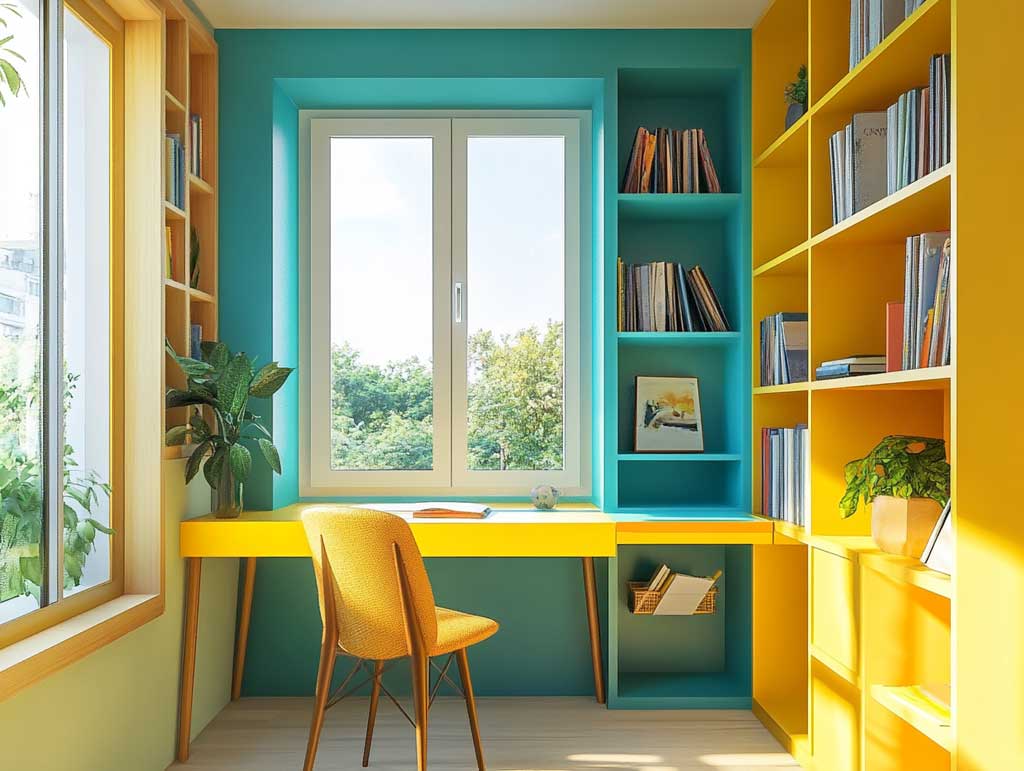
Lighting decides whether the paint reads as cozy or dull. Guidance cited by Homestyler puts general room light at 300–500 lux, with a reading lamp delivering 500–700 lux at the page. Warm 2700–3000K bulbs suit ambient light, and neutral 3000–3500K works for the desk lamp. North-facing nooks feel cooler, so lean on buttery yellow accents and 2700K bulbs to balance them, and study these black and teal wall panel designs for a bedroom to see how deep teal holds up in low light.
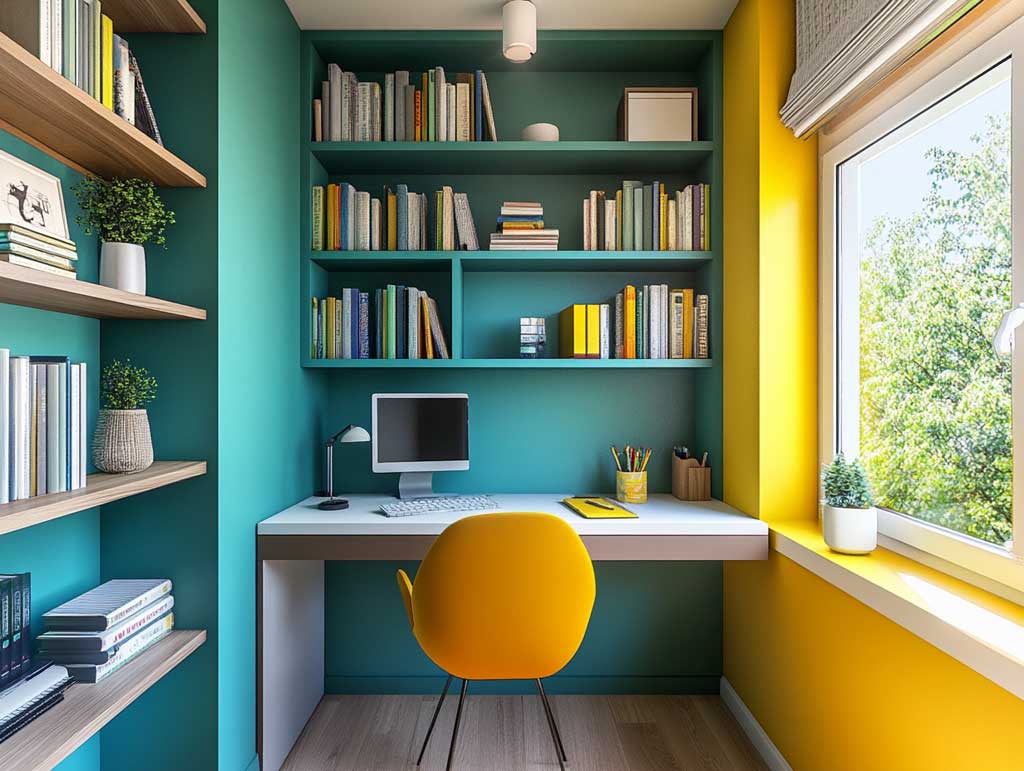
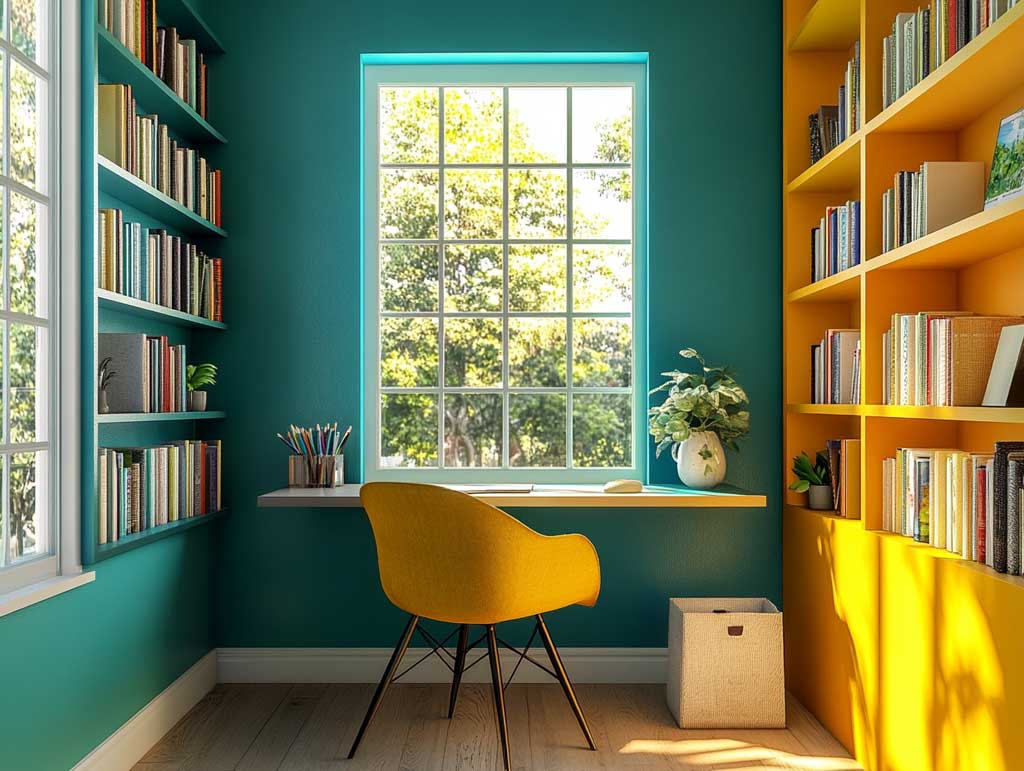
Keep the furniture quiet so the walls can do the talking. A white or light-wood desk acts like a blank page beneath a colorful frame, and a chair in soft gray or matching teal finishes the corner. Avoid dark, heavy bookcases here, because they swallow the light that makes teal glow. Place the desk beside a window and let daylight handle half the work.
Teal and Yellow Living Room Colors With a Playful Streak
Teal walls with yellow accents give a living room its energy through contrast, so the wall and the sofa should not compete for attention. Paint one teal wall behind the sofa or fireplace, then bring yellow in through a rug, cushions or a single armchair. Design guides typically cap yellow at 10–15% of the visual field, because more than that makes the room feel restless. Should yellow ever lead? Only in a small, sun-starved room that needs warming up.
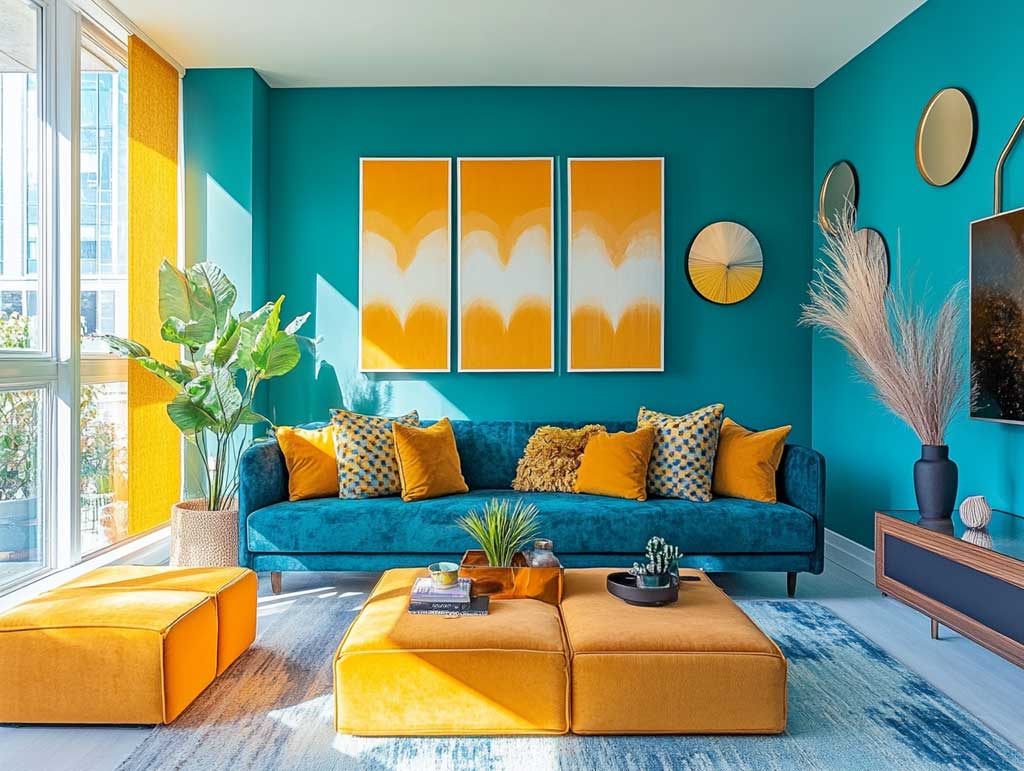
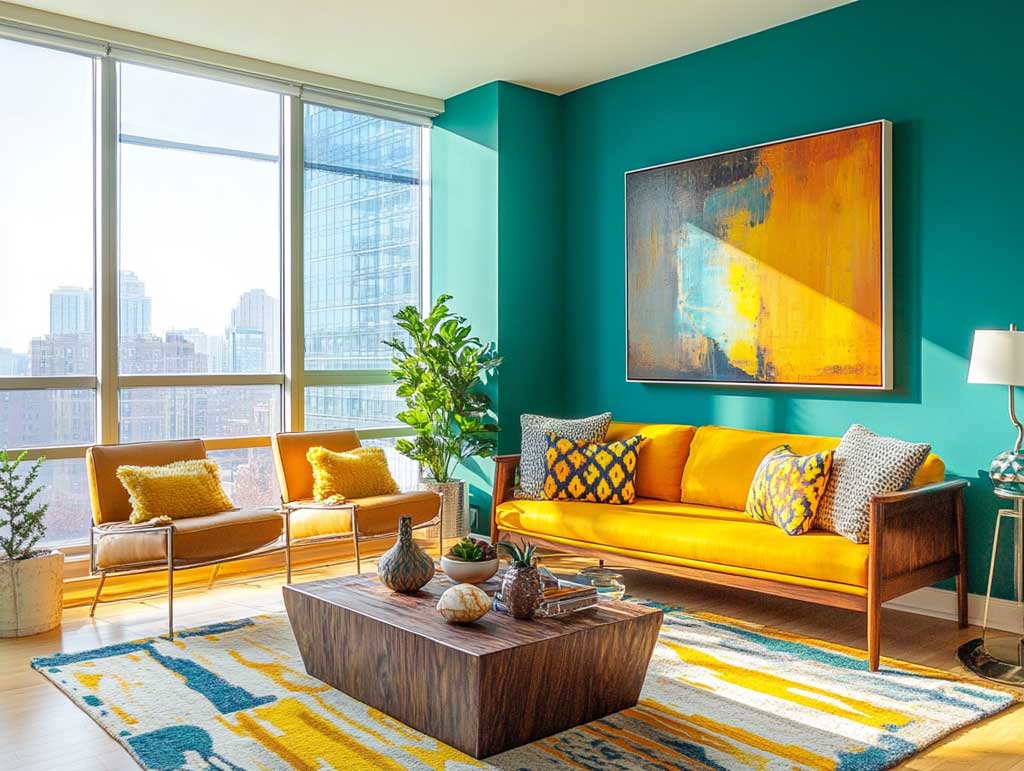
Grounding materials keep the palette from turning into a color-block exercise. Natural wood, brass and matte black metal steady the room, and abstract art in both colors links the walls to the furniture. Skip glossy teal on walls that face direct sun, because glare sharpens the contrast too much. Treat a medium-toned rug like a picture frame for the seating area, and choose one at least 8×10 feet for a standard sofa group.
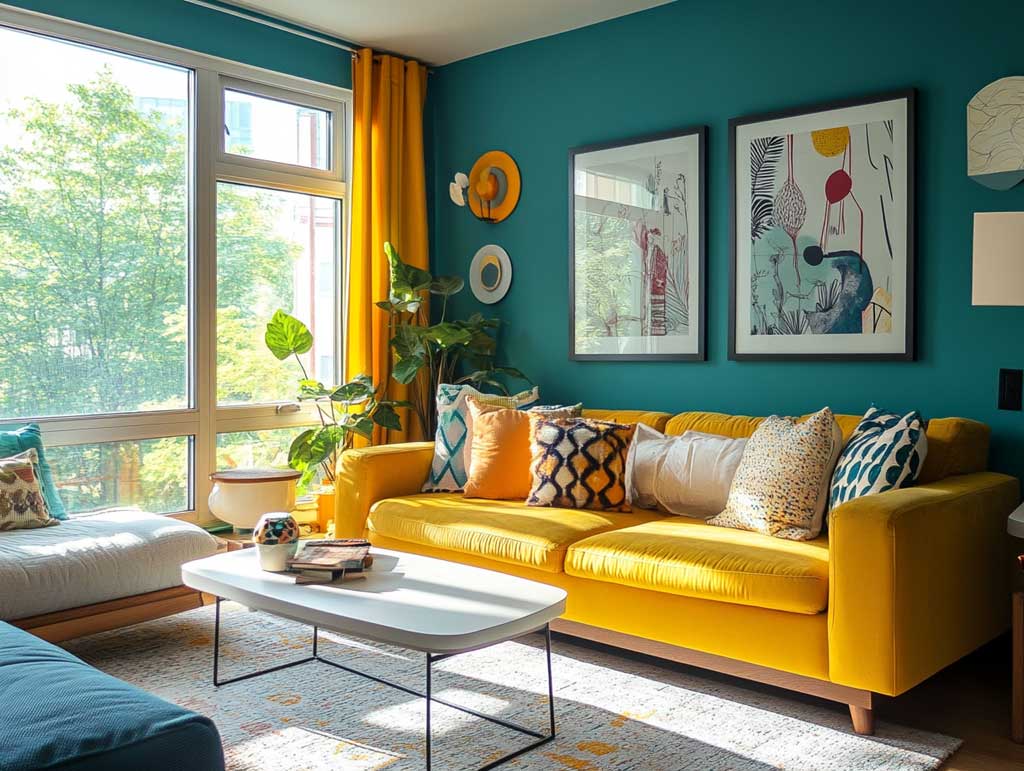
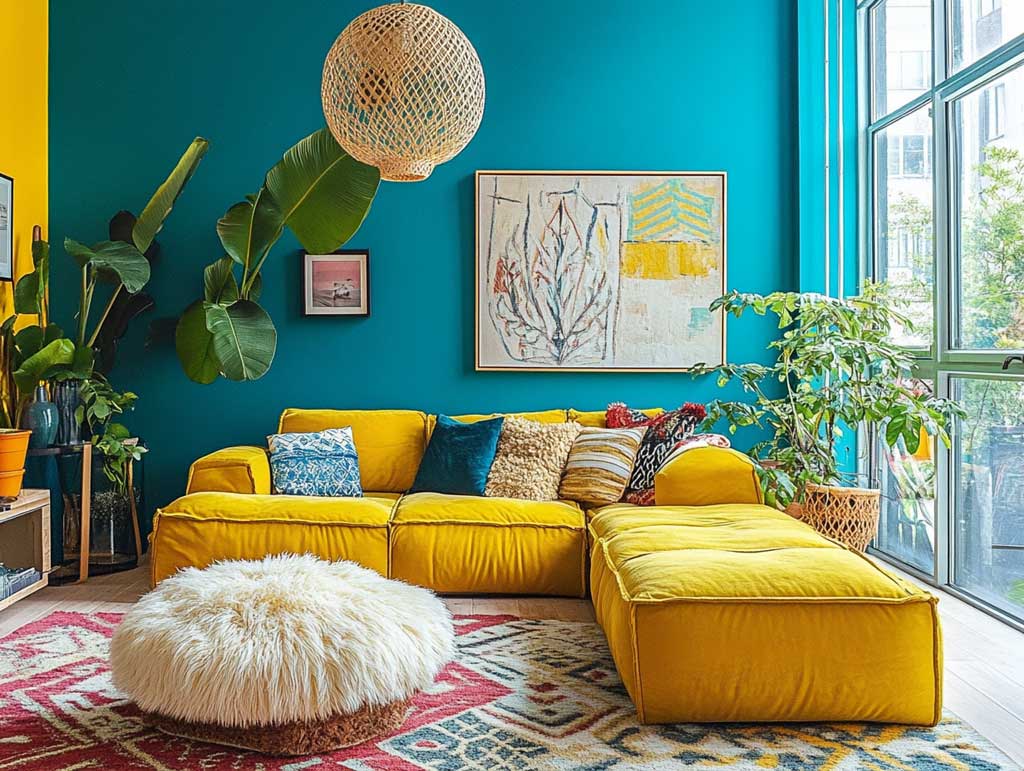
Daylight changes how the pair behaves. South-facing rooms make yellow look more golden and teal greener, while north-facing rooms make teal richer and yellow softer. Sheer curtains keep the effect balanced instead of harsh. Add indoor plants for a green contrast and layer plush cushions and throws, since color reads deeper on soft surfaces than on flat ones.
Shade Pairings That Keep Yellow and Teal From Clashing
Choosing the right shade of yellow and teal matters more than choosing the colors themselves. Medium teals with a light reflectance value near 20–30 sit comfortably beside warm yellows in the 50–70 range, according to designer guidance from Homestyler. Which yellow suits which blue-green? Deep teal loves mustard and mango, soft aqua leans toward butter yellow, and neon lemon rarely flatters either. Test each combination as a large swatch before buying a gallon.
| Pairing | Best for | Mood | Watch out for |
|---|---|---|---|
| Deep teal + mustard yellow | Living rooms, study nooks | Rich, retro warmth | Add wood tones so the room does not feel heavy |
| Bright teal + lemon yellow | Kitchens, playrooms | Playful, high energy | Keep walls neutral and use both as accents |
| Soft aqua + butter yellow | Bedrooms, halls | Calm and airy | Needs warm light or it looks pale |
| Dark teal + mango yellow | Guest rooms, sunrooms | Tropical and cozy | Choose matte finishes to avoid glare |
Halls and entryways benefit from a strict two-color limit. Teal on the lower two-thirds of the wall with pale warm yellow above brightens a narrow corridor without shrinking it. Too many mixed shades turn a hallway into a paint-store sample wall, so repeat the same two colors in frames or a runner. The same 60-30-10 rule scales from a hall to a full room, and this teal and yellow interior design guide also lists a bolder 50-35-15 split.
Kitchen Walls and Cabinets Where Teal and Yellow Share the Stage
Teal cabinets with yellow open shelves turn a kitchen into the brightest room in the house, provided the walls stay quiet. Teal brings depth and a modern feel to the cabinetry, and yellow shelving adds a cheerful counterpoint at eye level. Why does the pairing work here? The cabinets are large and stable, so the small yellow surfaces read as deliberate highlights instead of clutter.
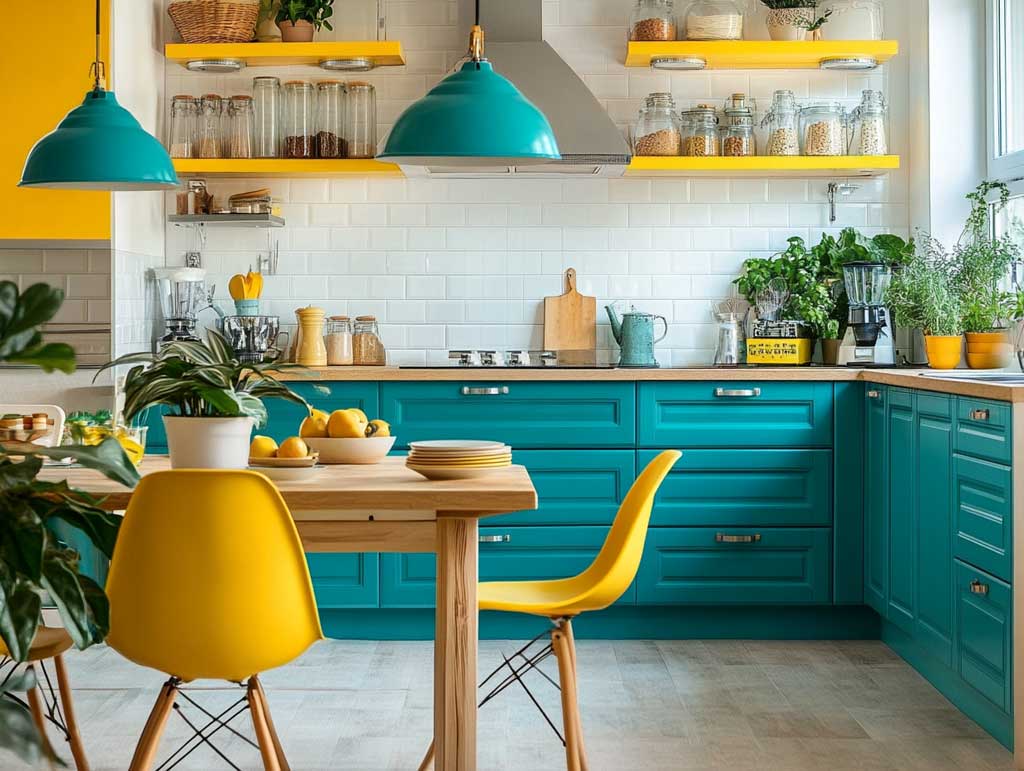

Budget shapes the plan. Published cost guides put professional cabinet painting at roughly $2,000 to $6,500 for a full kitchen, with single doors running $70–$125, while a DIY job costs about $200–$600 in materials. On a tight budget, paint only the open shelves yellow and leave the cabinets alone. DIY is realistic, but expect 30–60 hours of prep and painting rather than a single weekend.


White walls work like the mat around a framed picture, letting teal and yellow hold the attention. To decide between crisp white and a softer off-white, weigh the trade-offs in this creamy versus white kitchen design comparison before choosing a wall shade. Stainless steel or wooden countertops add balance without adding another color. Avoid a third bold shade on the backsplash, since three loud colors turn a kitchen into a competition.
Under-cabinet lighting makes teal glow, and a pendant over the dining spot gives yellow a focal point. Fresh herbs on the windowsill add a natural green that bridges the two colors. Keep the cabinet finish matte or satin so fingerprints stay out of sight.
Decor Touches That Carry the Palette Beyond the Walls
Teal-and-yellow decor holds the scheme together when the walls stay simple and accessories repeat the colors in small doses. Choose bulbs with a color rendering index of 90 or higher, because cheap lighting turns teal muddy and yellow dull. Would one bold yellow object be enough? Often yes: a single sculptural lamp or a mustard chair pulls the eye. Think of yellow as an exclamation mark, since one is memorable and five is shouting. Place it where accent lighting can reach it.
- Textiles: teal velvet or chenille cushions with mustard throws.
- Art: abstract prints that repeat both shades.
- Ceramics: matte yellow vases on teal-painted shelves.
- Greenery: ferns or trailing plants, since green bridges the two colors.
- Metals: brass or matte black frames and lamp bases.
Don’t Do This
- Paint every wall teal and buy every accessory in yellow; the room loses its resting places.
- Set neon yellow beside deep teal; the contrast vibrates instead of glowing.
- Approve swatches under shop lighting; check them on the real wall in the morning and in the evening.
- Use glossy teal on sun-facing walls; glare distorts the color.
- Mix several fully saturated patterns; let the paint carry the boldness.
The Palette That Earns Its Place
Teal and yellow succeed when one color leads and the other accents, not when both compete for the spotlight.
Put teal on one wall or on the cabinets, then let yellow arrive through shelves, cushions and a lamp. That single decision solves most balance problems before they start.
Get the light right, with roughly 300–500 lux of general light and warm 2700–3000K bulbs, and both colors hold their richness after dark.
Paint a large swatch, check it in the morning and the evening, and commit only when both shades still look good together.