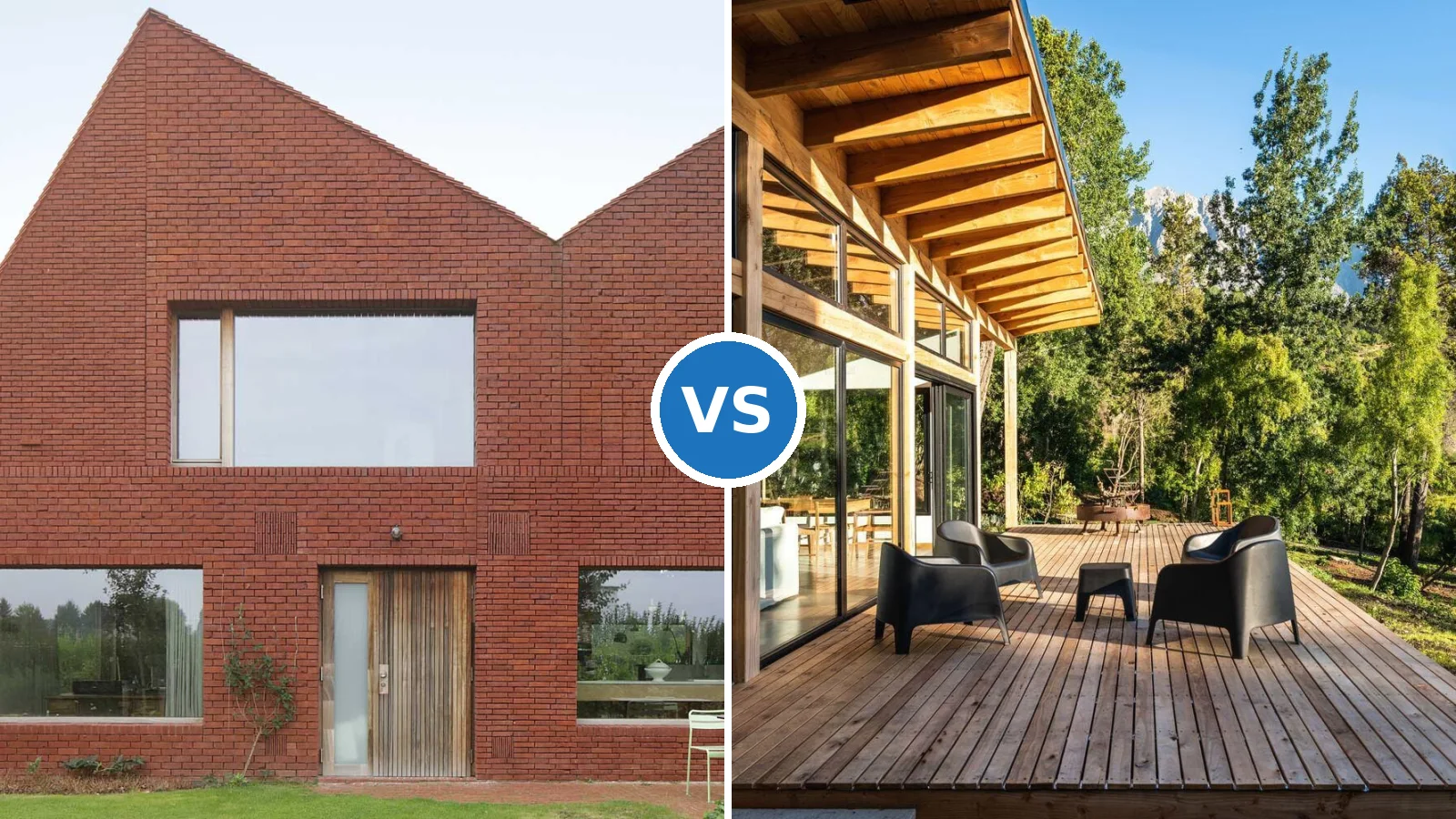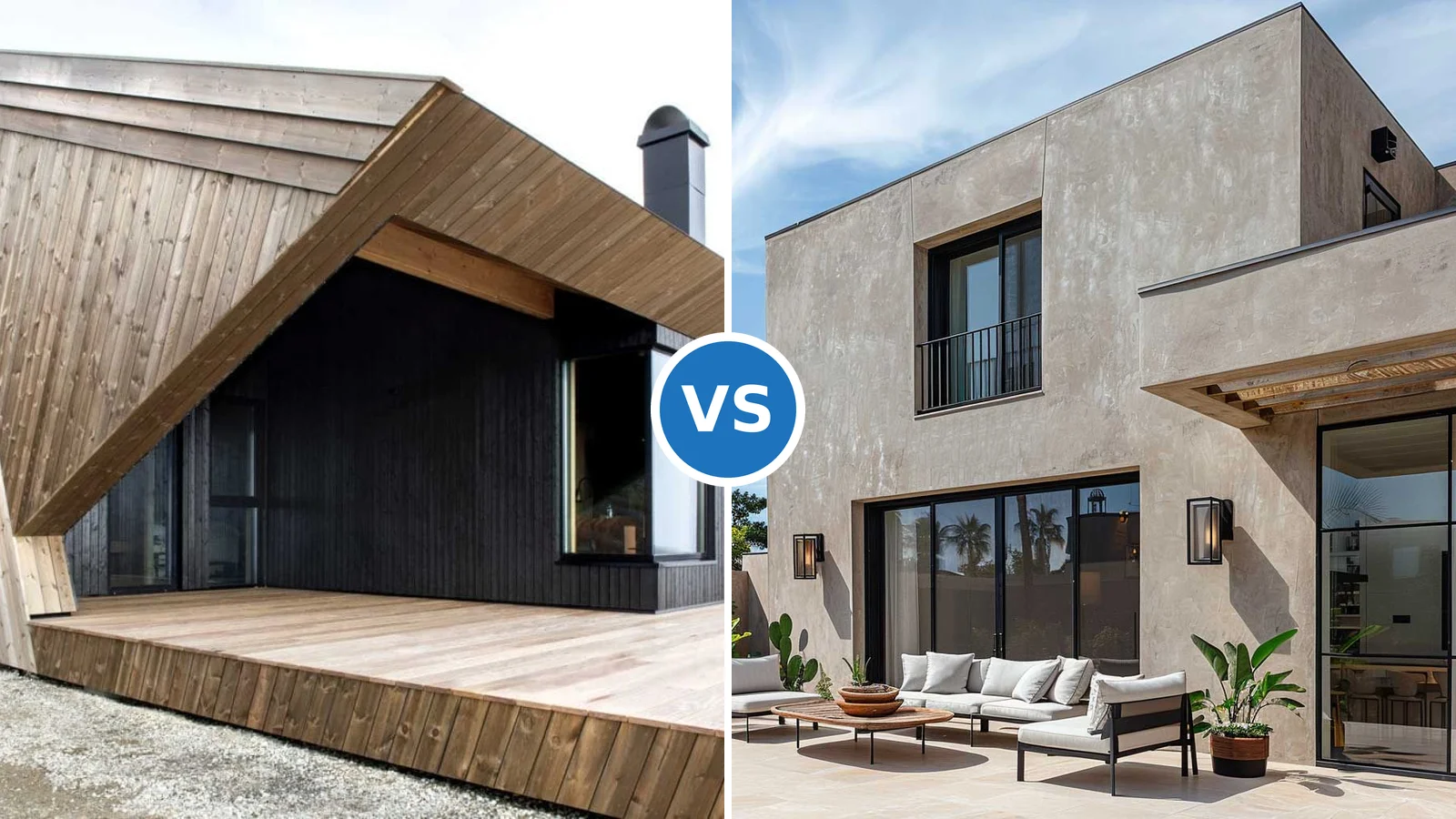
Wood siding vs stucco is mostly a choice between a warm, natural facade that needs regular care and a smooth masonry-style wall that lasts for decades but needs periodic repainting. Wood suits owners who want grain, color flexibility and a quick installation, while stucco suits those who want a plain, durable base that can be paired with accents.
This comparison uses our exterior wood siding overview and our stucco cladding ideas as its fact base, so the costs and maintenance intervals below come from those articles.

Wood siding vs stucco in plain terms
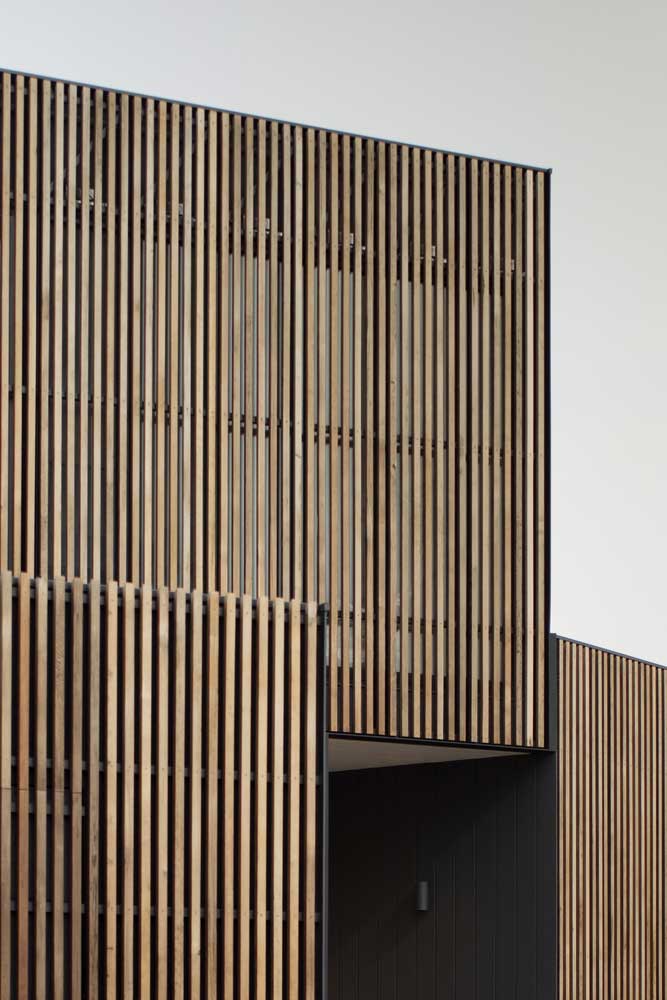
Wood is the most traditional type of exterior cladding. The usual species are cedar, pine, spruce and mahogany, and it can be left natural or painted. Common profiles include board and batten for a vertical look, overlapping horizontal boards, tongue-and-groove boards, vertical boards, plywood sheets and block house, which imitates a log wall.
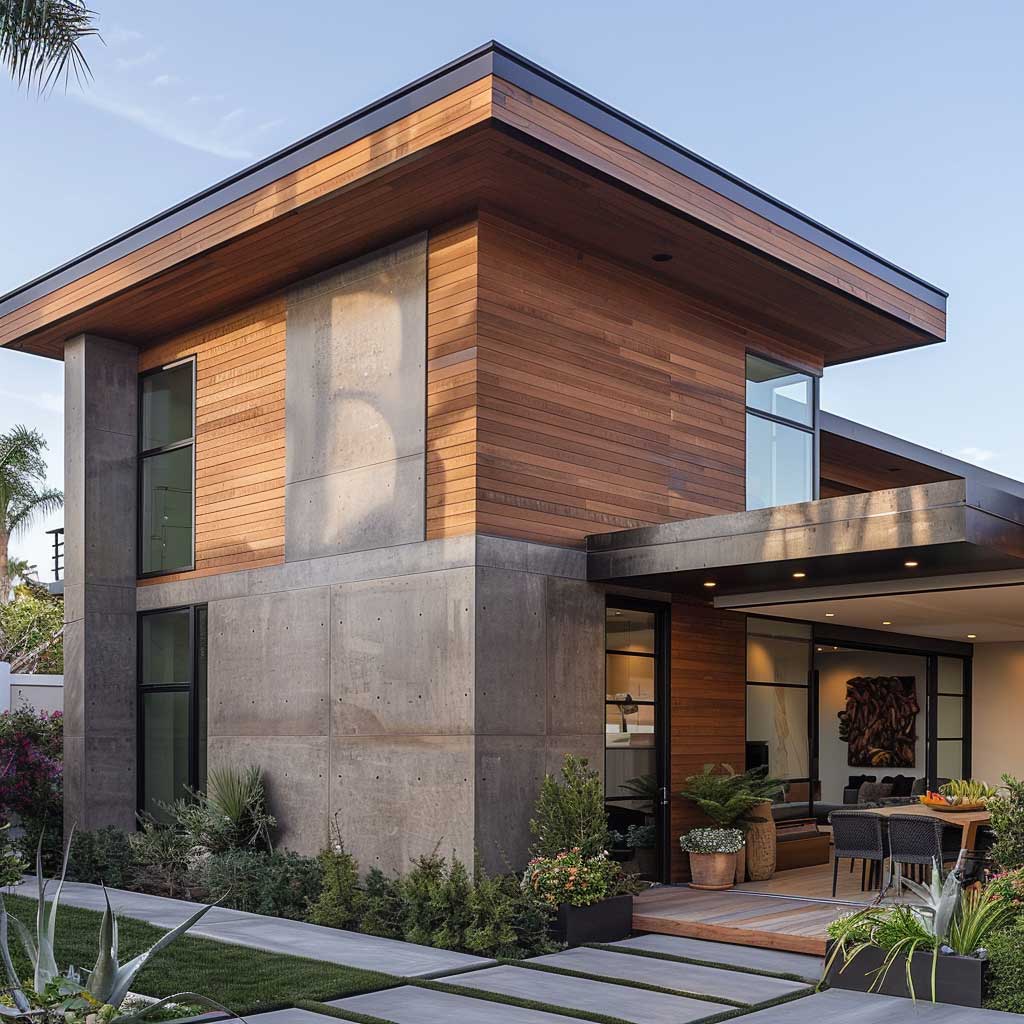
Stucco is a cement-based finish applied as a smooth base coat. A traditional cement mix runs about $6 to $9 per square foot installed and can last 50 to 80 years when maintained. Today it is often paired with wood, stone or bolder color rather than left as one blank plane.
Quick Verdict
- Choose wood siding if you want natural grain, a choice of profiles and an installation that can suit a do-it-yourself project.
- Choose stucco if you prefer a long-lasting, smooth wall with less frequent repainting and are happy to add accents later.
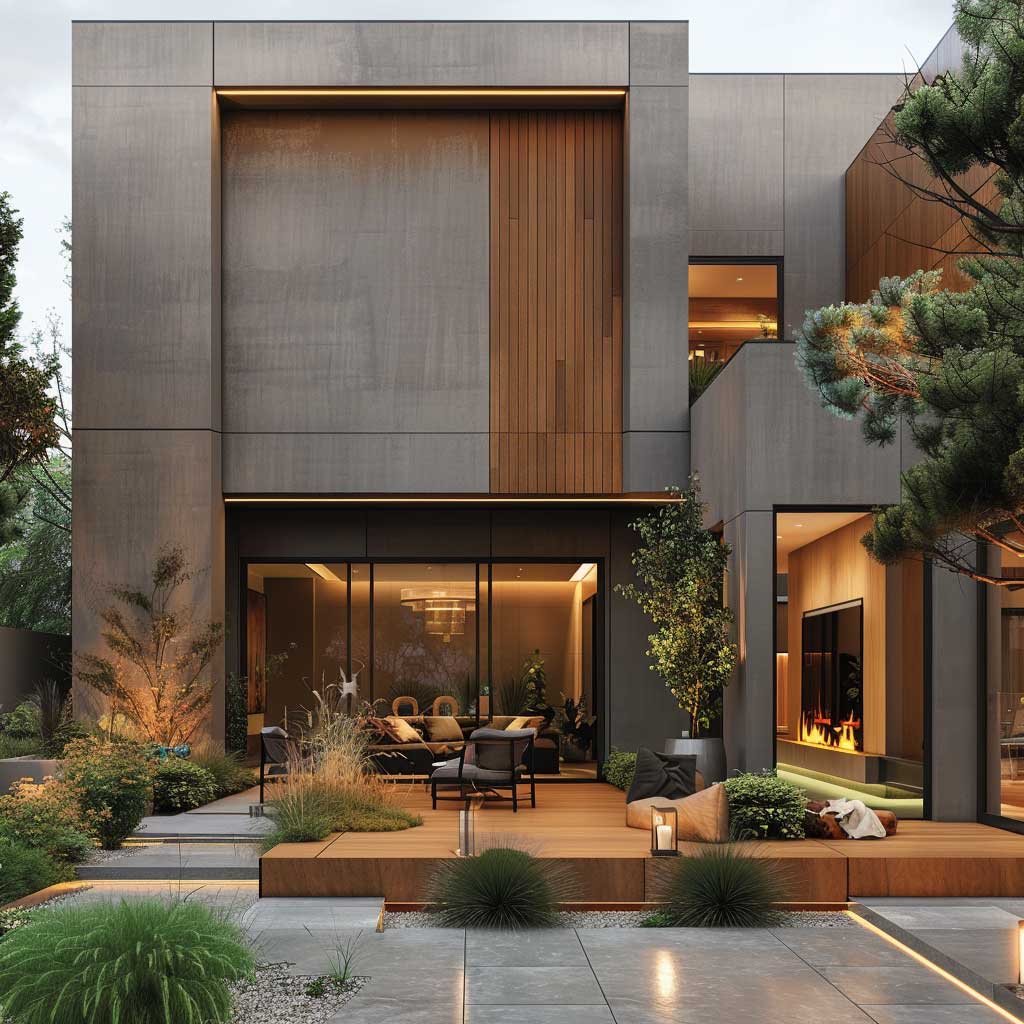
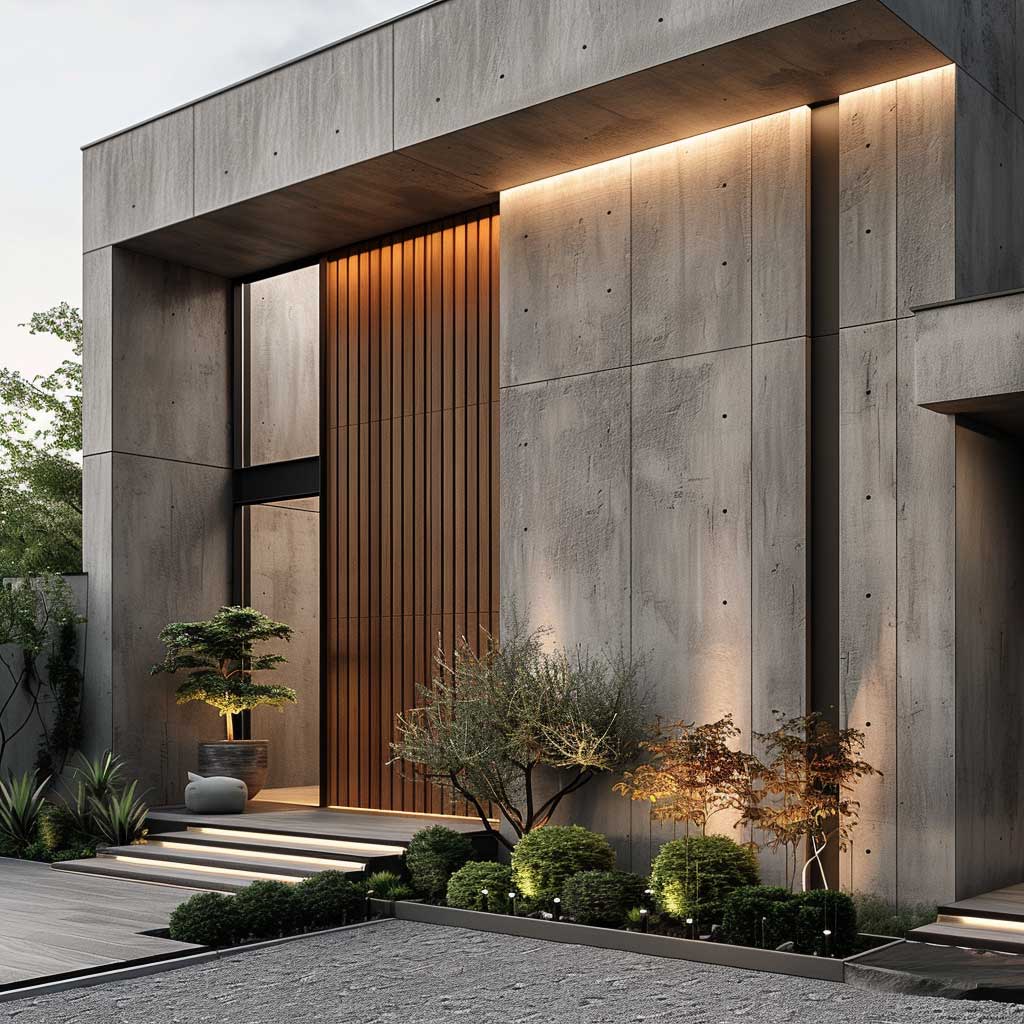
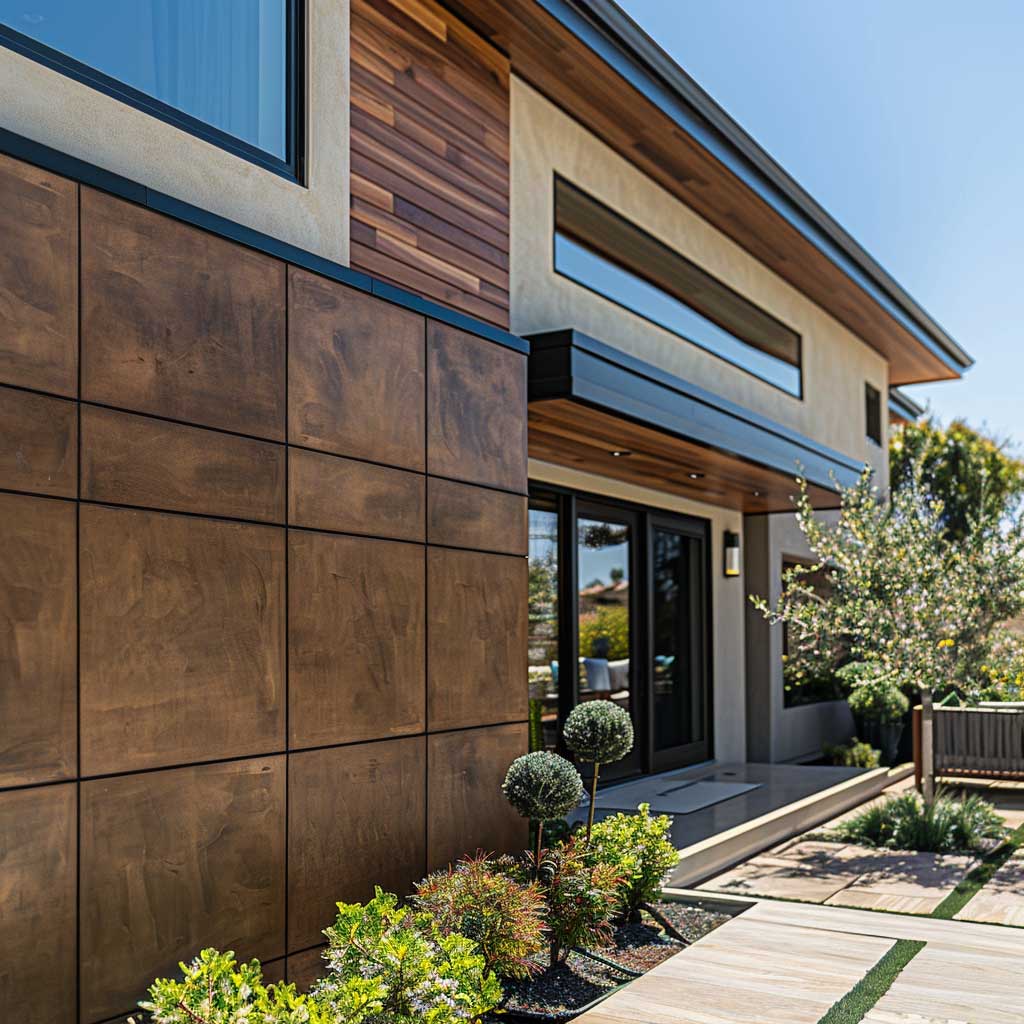
- Combine them if you want both: stucco as the base with a wood accent on one wall or entry.

How the two materials compare on the key points
The table lists the differences that the two source articles actually support. Costs are installed ranges per square foot, and neither is a quote for a specific house.
| Criteria | Wood siding | Stucco |
|---|---|---|
| Look | Visible grain, many profiles, natural or painted | Smooth or textured plaster in neutral or bold colors |
| Cost level | Cedar about $6 to $12 per sq ft installed; profile affects price | Traditional cement about $6 to $9 per sq ft installed |
| Upkeep cycle | Restain or reseal about every 3 to 5 years | Repaint about every 5 to 10 years with elastomeric paint |
| Weak points | Termites, woodpeckers, rot and no fire resistance | Hairline cracks if painted with rigid paint |
| Installation | Relatively quick and DIY-friendly | Applied in coats; more of a trade job |
| Lifespan figure | Not given in the sources | 50 to 80 years with maintenance |

Cost and upkeep over time
Upfront prices overlap: stucco at roughly $6 to $9 per square foot installed and cedar siding at roughly $6 to $12. Within wood, the profile matters, because the overlapping horizontal style is the most expensive option and tongue-and-groove is the cheapest, according to our wood siding overview.
Upkeep is where they separate. Wood needs resealing or restaining every 3 to 5 years, and the cost of protecting it can offset a low installation price. Stucco is typically repainted every 5 to 10 years, and an elastomeric paint helps stop hairline cracks from spreading, so it has the longer interval of the two.

Fire, pests and moisture
Wood is not fire resistant, which can be a deciding factor in areas where fire is a risk. It is also vulnerable to termites, woodpeckers and rot, and the cost of keeping it protected can quickly cancel out installation savings.
Stucco has its own weak spot: rigid paint cracks as the wall moves with temperature and humidity, which is why the source recommends elastomeric masonry paint instead of standard flat latex. When the two are combined, leave a small air gap behind wood slats so moisture can drain instead of pooling against the plaster.
Look and installation
Wood adds warmth and texture, and it works on a very wide range of home styles. It is also quick to install and impact resistant, which makes it practical for DIY projects, although professional installation is also an option.
Stucco gives a plain canvas, and light neutral tones reflect heat instead of absorbing it, which matters on a wall that sits in direct sun. For color ideas that suit a stucco or wood house, see these warm beige and taupe exterior paint colors.

The most common mistake when choosing
The usual mistake is choosing on installation cost alone. A wood wall that is never resealed can start to rot, while a stucco wall repainted with standard flat latex can crack again within a short time. Budget for the maintenance cycle from the start, such as a 3-to-5-year reseal for wood or an elastomeric repaint for stucco.
A second mistake is using too many accents. On a stucco wall, one accent material per elevation reads as layered, while wood, stone and bold color together read as clutter.

Who should choose which
Pick wood siding if you value natural character, want a DIY-friendly installation and are prepared for restaining every few years. Pick stucco if you want a long-lived, low-fuss wall with a longer repainting interval and a plain base for accents. If you cannot decide, use stucco as the main wall and add wood on the entry or one elevation, which limits the maintenance to a small area.