A purple wedding theme does something most color palettes can’t: it reads as romantic at blush lavender, regal at deep plum, and modern at true violet — all without changing a single piece of furniture. The shade you choose sets the entire emotional register of the day, which is why florists consistently say purple is one of the most requested and most mishandled wedding colors. Nail the hue, and every detail from the arch to the cake locks together. Choose wrong, and the room looks like two different weddings collided.
Orchid stems from wholesale suppliers like Blooms By The Box run $30–$50 each when sourced fresh, which makes variety selection a real budget decision, not just an aesthetic one. The four elements covered here — florals, the ceremony arch, the wedding cake, and bridesmaid dresses — are the ones that photographers actually capture in tight frames. Get them right and the purple wedding theme pays off in every image. Skip coordination on even one and the palette fractures.
The good news is that purple is genuinely forgiving when you work with its undertones instead of against them. Warm purples (mauve, plum, berry) photograph beautifully in candlelight and golden-hour light. Cool purples (lavender, lilac, periwinkle) read soft and airy in daylight and overcast outdoor settings. Mixing the two without intention is where most purple weddings go flat.
- Fresh orchid stems cost $30–$50 each — use them as statement pieces, not filler
- Full-service arch rentals with floral run $800–$1,200; bare frame rentals start at $119
- Wedding cake pricing averages $917 nationally; fondant designs add 50–100% over buttercream
- Mid-range violet bridesmaid dresses (Azazie, Kennedy Blue) run $90–$180 per dress
- Warm purples (plum, mauve) suit candlelight; cool purples (lavender, lilac) suit daylight
What Purple Flowers Actually Do to a Room
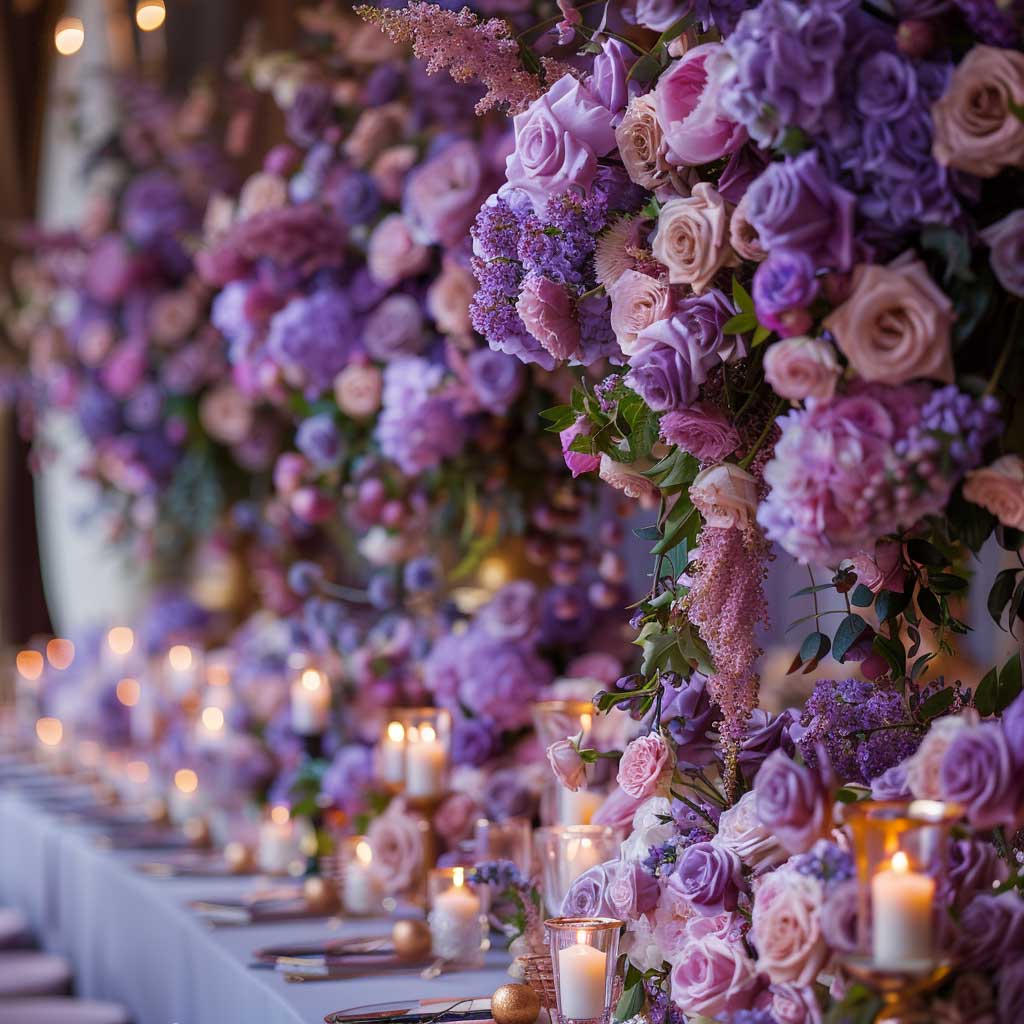
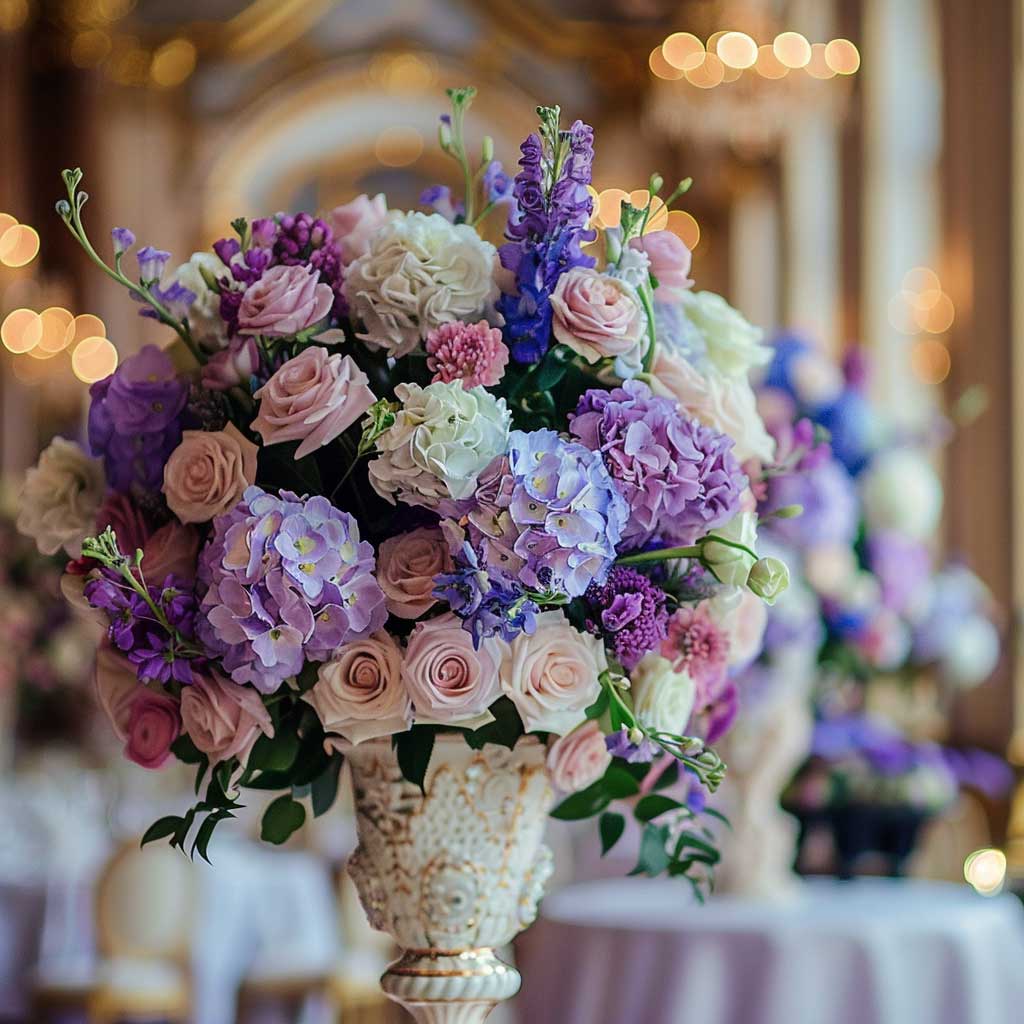


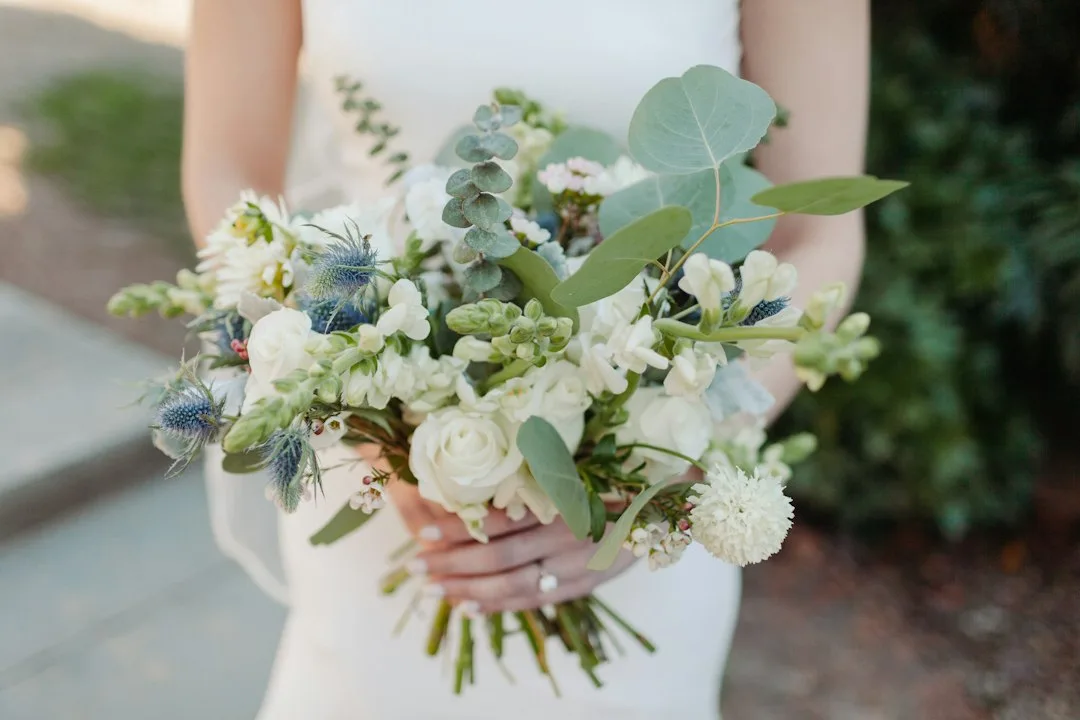
Purple floral arrangements for a wedding work differently depending on which flowers carry the color. Hydrangeas — grown in a soil pH of 6.0 or lower to produce blue-purple tones — give volume without burning the budget. Orchid stems, which run $30–$50 each at seasonal peak, are the prestige choice: one per arrangement is often enough. The trick florists use is building the arrangement around one or two orchid stems and filling the rest with hydrangeas, delphiniums, and eucalyptus. The result reads expensive without actually being expensive across thirty tables.
Placement matters as much as flower selection. Aisle clusters at every other row — instead of every row — stretch the budget while maintaining the runway effect. For reception tables, the choice between tall and low arrangements comes down to whether you want conversation or drama. Tall centerpieces above eye level (24 inches and up) create visual impact at entry but shut down cross-table conversation during dinner. Low arrangements under 14 inches do the opposite. What doesn’t work: a mix of heights on adjacent tables with no visual logic — it looks like the rentals ran out rather than a design decision.
Do purple flowers really look different under warm versus cool light? Yes, dramatically. A deep plum Cool Water rose that photographs perfectly in natural light turns muddy brownish-pink under warm incandescent ballroom lighting. Ask your florist to show samples under your venue’s actual bulb temperature before committing to any dark purple variety. Lavender and lilac hold their hue more reliably across lighting conditions, which is one reason they dominate in floral arrangements even when the bride originally wanted something deeper.
Don’t mix warm-toned and cool-toned purples in the same arrangement without testing them together first. Mauve ranunculus and icy lilac hydrangeas look cohesive in a supplier photo but often clash in person because their undertones fight in natural light. The same goes for purple flowers next to blush pink — only work together when the purple leans warm (toward raspberry) rather than cool (toward blue). And never use baby’s breath as filler in a purple arrangement; its slight grey-white cast dulls every saturated purple it touches.
Stylists recommend ordering all flowers from the same dye lot when using tinted or spray-painted blooms — chiffon dyes unevenly across production batches, and two “identical” purple roses from the same supplier can look noticeably different in the same vase. For a full breakdown of which purple stems photograph best across different lighting conditions, The Knot’s purple wedding flower guide covers 25 varieties with real ceremony photos.
The Ceremony Arch Lavender Drape Gets Right Every Time
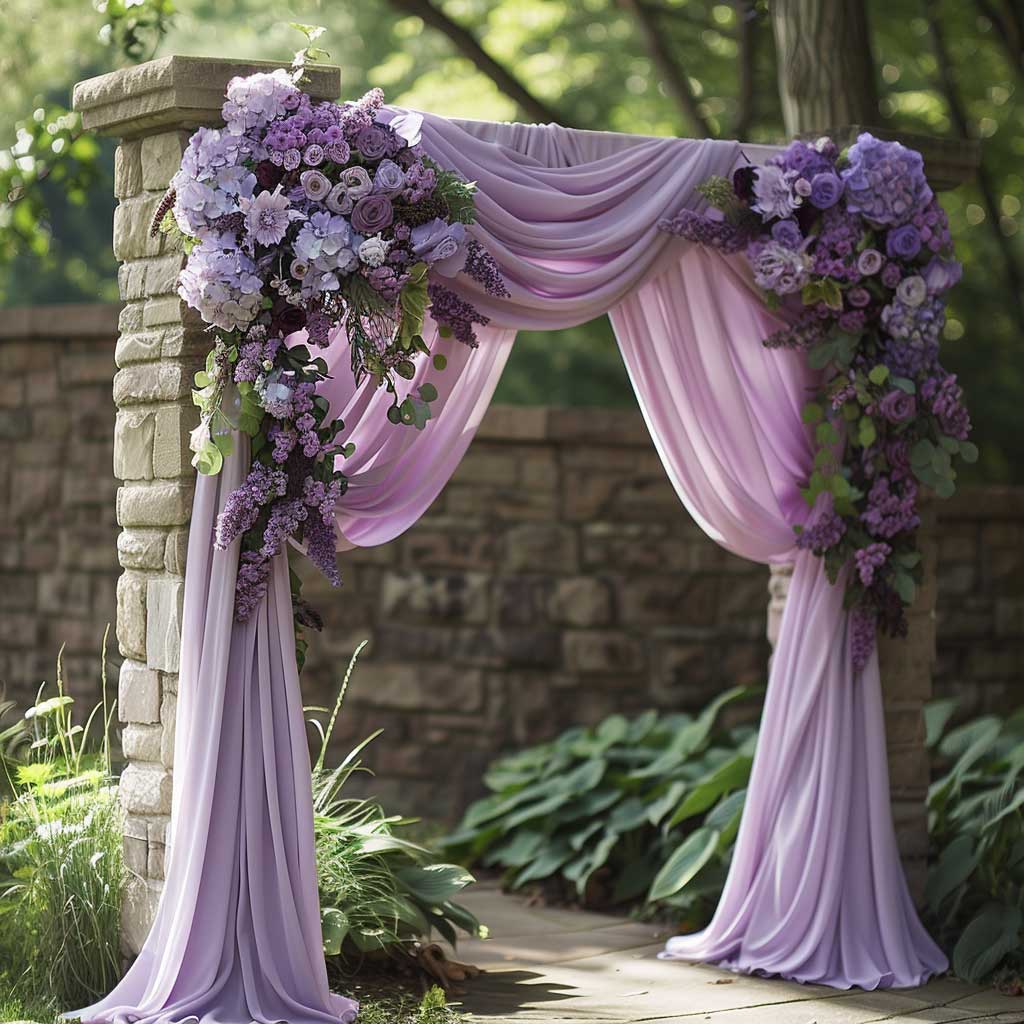
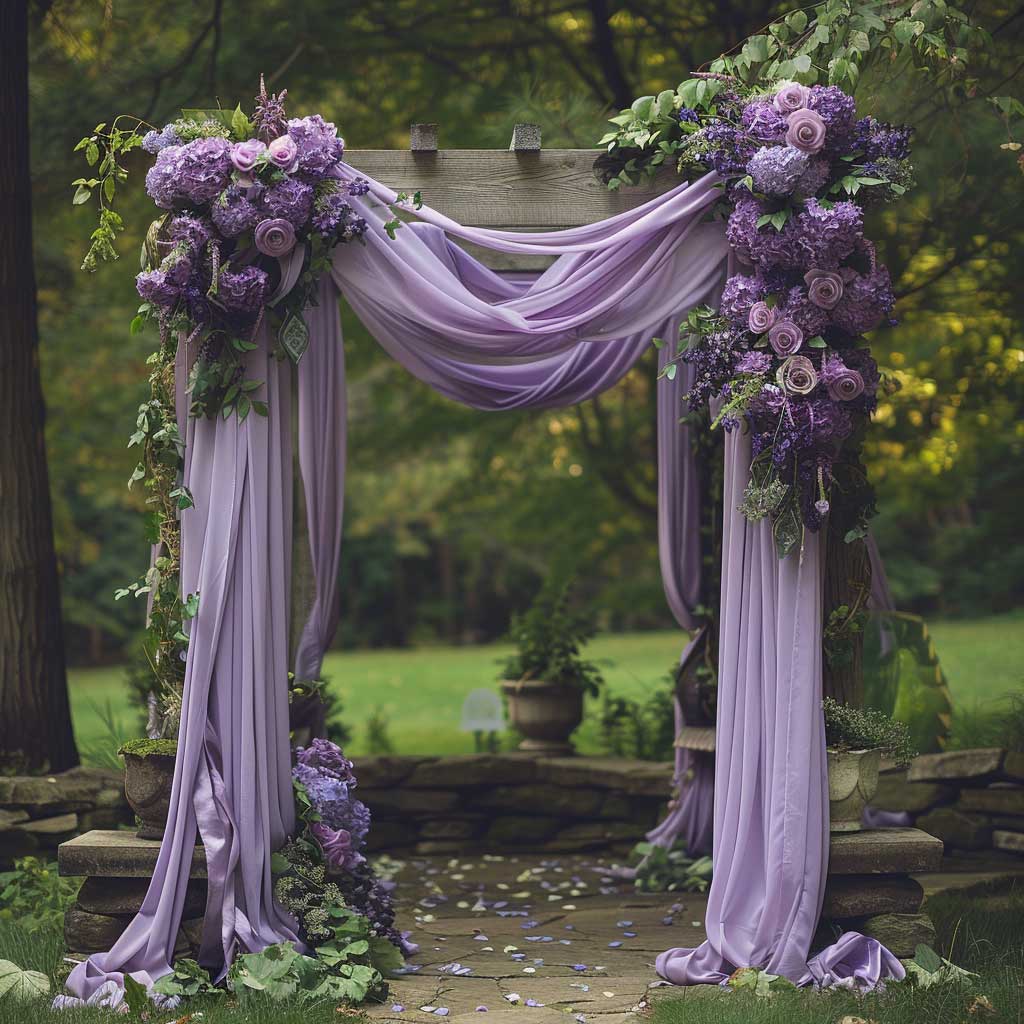
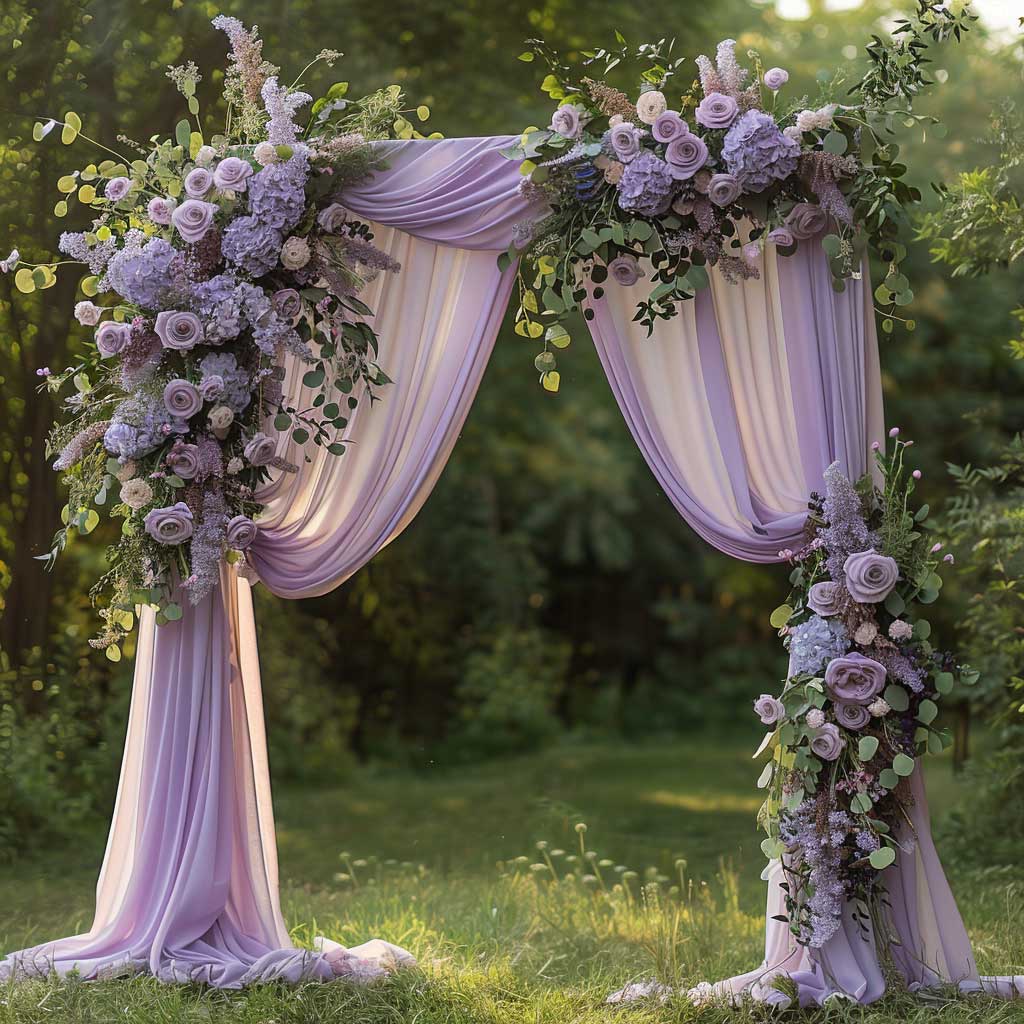
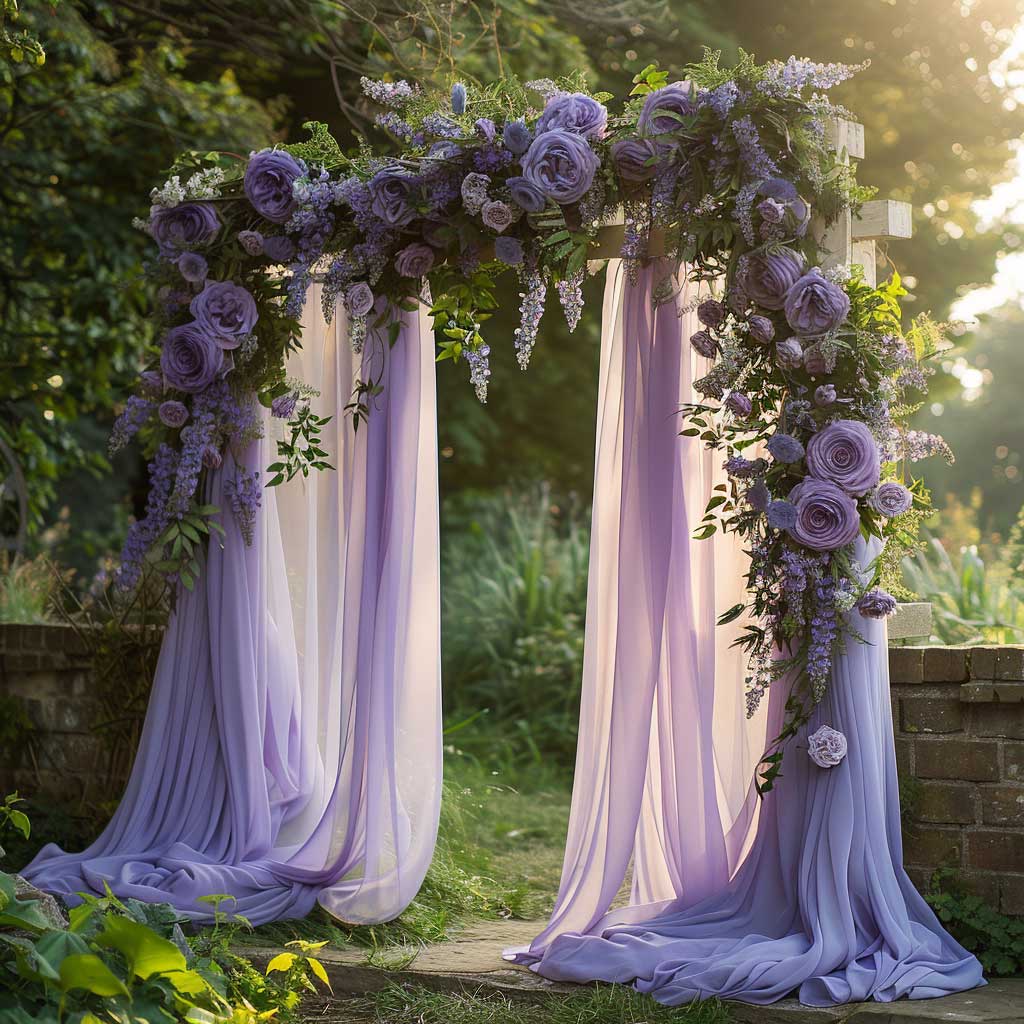
A lavender-draped ceremony arch earns its place in a purple wedding theme because it gives the photographer a clean, color-saturated backdrop for every ceremony shot. Bare frame rentals with drapes start at $119 through nationwide shippers — full-service arch rentals including fabric and floral installation run $800–$1,200. That price gap exists because the difference between a draped arch and a floral arch is about 6–10 hours of a florist’s labor. Both look good in photos; the floral arch tends to look better in person, where guests can smell it and notice the texture.
Chiffon in a true lavender tone is the most forgiving fabric for this purpose. It moves in wind without bunching, catches ambient light softly, and reads consistently purple whether the ceremony is at 11am or 5pm. Heavier fabrics like velvet or dupioni silk look richer in portraits but become dangerously billowy outdoors in any wind above 8mph. Wisteria, delphiniums, and hydrangeas are the standard choices for flowering the arch — wisteria in particular creates that trailing, overgrown effect that photographs like a fairy tale arch without requiring a custom build. Is there a risk with wisteria? Yes: it wilts faster than almost any other cut flower, sometimes within 4–5 hours without a water source. Florists account for this by conditioning stems in water for 24 hours before installation.
Position the arch so it faces north or east for afternoon ceremonies — this prevents your photographer from shooting directly into the sun, which washes out every purple element and makes the flowers look white in photos. A common mistake is placing the arch against a dark interior wall thinking it will “pop,” when in reality the purple fabric disappears into the shadow. A white or ivory interior wall behind the arch does more for the color than any lighting rig. For couples considering a lavender-leaning palette across all décor details, this lavender wedding theme breakdown covers stationery, table linen pairings, and seasonal adjustments.
Purple Wedding Cake Decisions That Actually Show in Photos
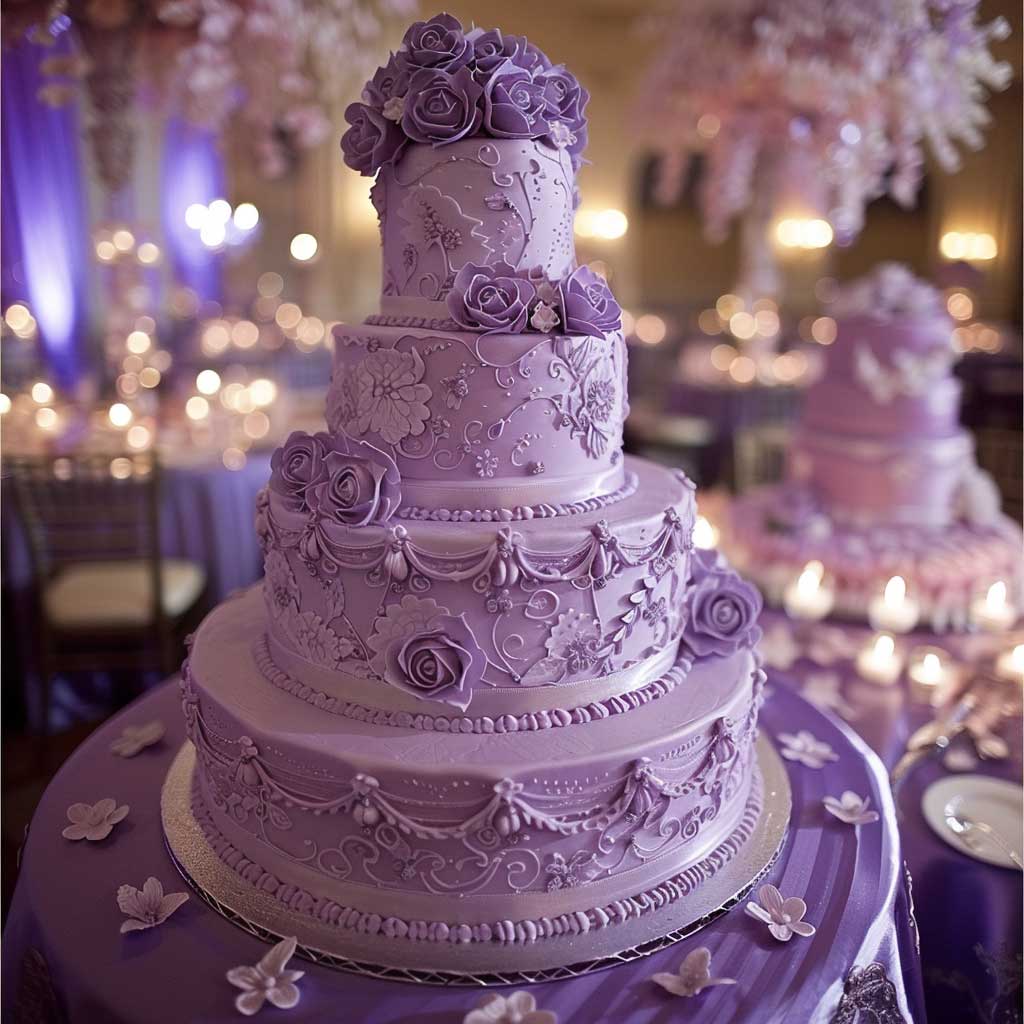
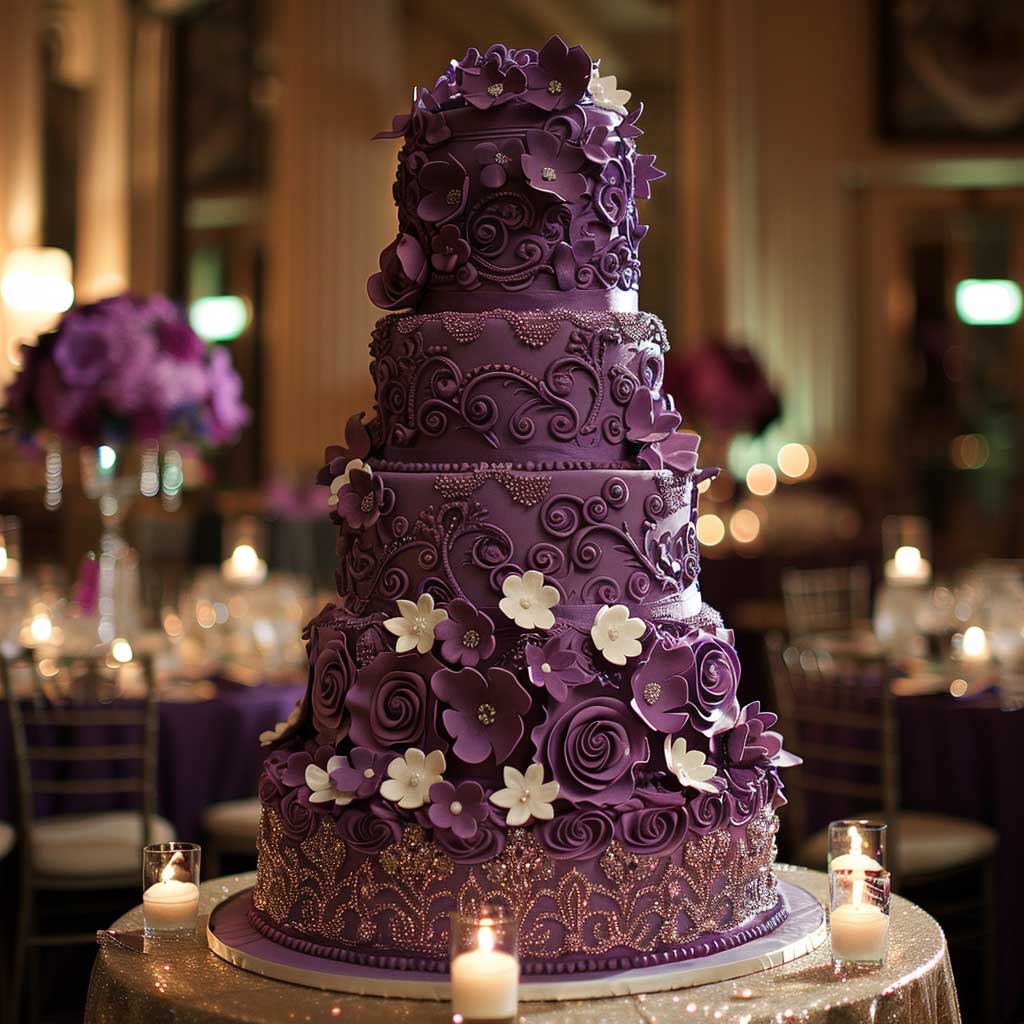
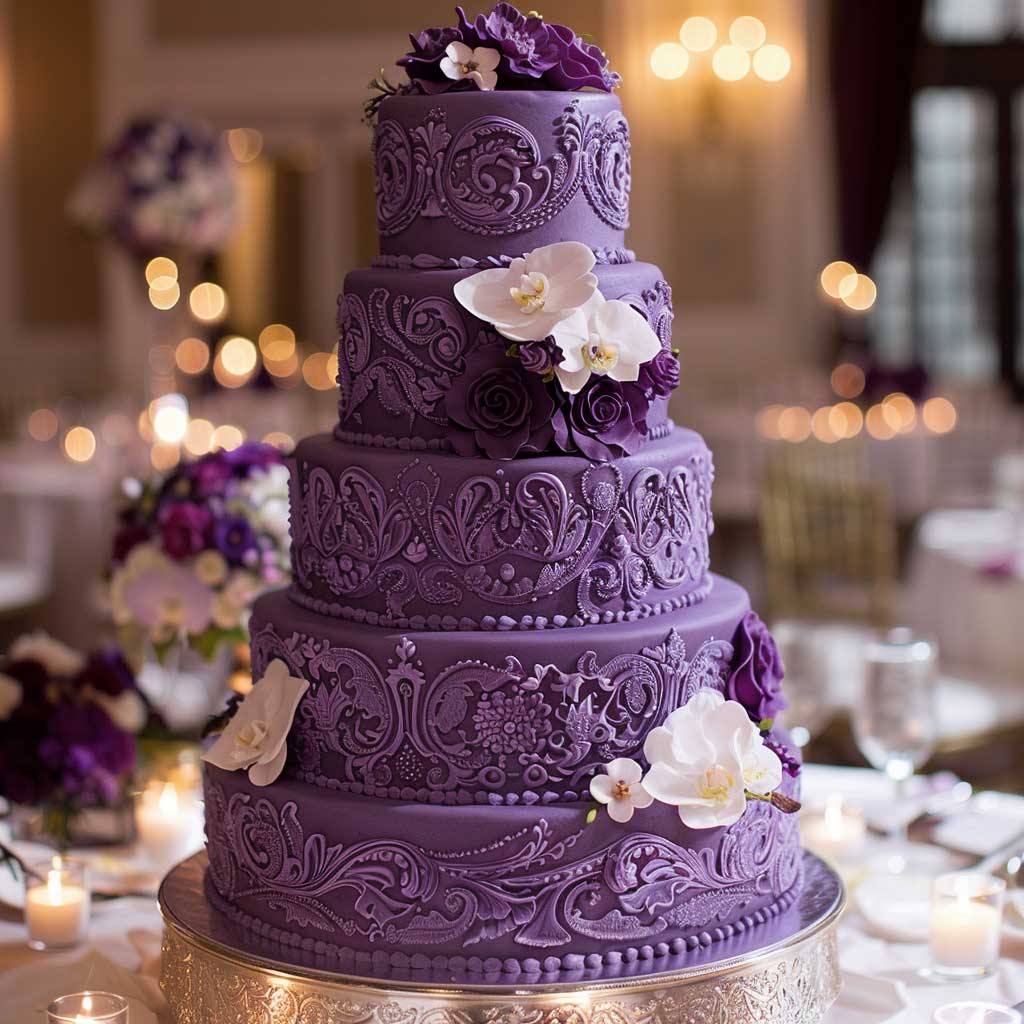
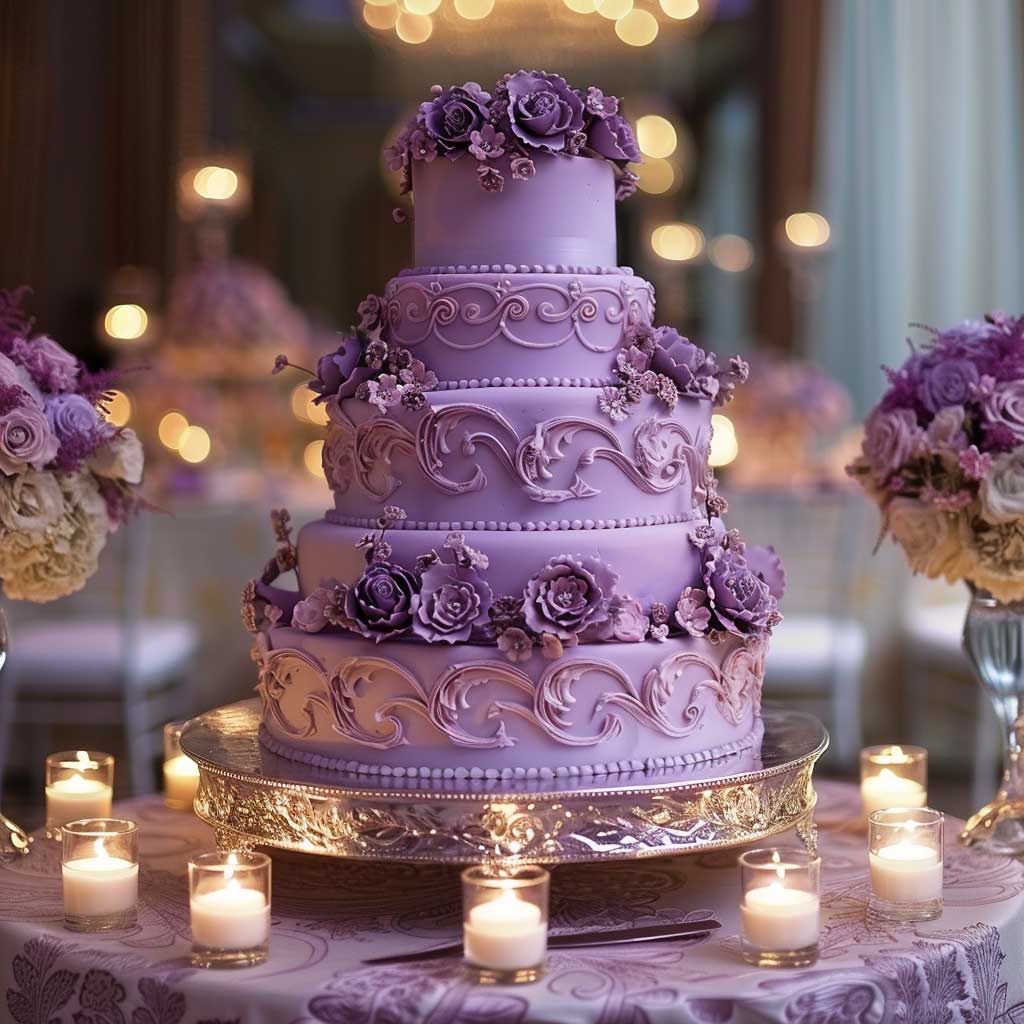
A purple wedding cake averages $917 nationally according to Zola’s Wedding Cost Index, with most couples spending between $700 and $1,100. The color adds a pricing layer that most couples don’t anticipate: custom purple fondant requires AmeriColor gel dye rather than standard liquid dye, which runs roughly $7 per bottle and must be used generously for saturated results. Bakeries that use liquid dye produce a neon, unstable purple that fades and bleeds — the result is a cake that looks great at 6pm and muddy pink in the midnight photos. Ask specifically about dye type before signing any contract.
The ombre technique — moving from white or cream at the base through lavender to deep plum at the top tier — is one of the most requested purple cake designs and one of the most technically demanding. It requires three separate fondant batches dyed at different concentrations, then blended at each tier seam. Simpler and often more striking: a single-tone deep plum fondant with fresh lavender sprigs and edible gold leaf pressed against the surface. What doesn’t justify the extra $200–$400 in a purple cake? Handmade sugar flowers in purple — they’re labor-intensive to produce and less vibrant than fresh blooms, which cost a fraction as much and photograph better.
Flavor is where a purple cake gets genuinely interesting. Lavender buttercream, blackberry compote filling, or elderflower sponge all pair naturally with the visual palette and are available at most mid-range custom bakeries charging $6–$12 per serving for fondant designs. Here’s the thing most bakers won’t tell you upfront: lavender extract is easy to overdose. More than ¾ teaspoon per batch of buttercream and the flavor crosses from floral to soapy — a distinction guests notice immediately. A properly calibrated lavender layer should smell like a garden, not a candle shop.
How Shade Choice Determines Whether Violet Bridesmaid Dresses Work
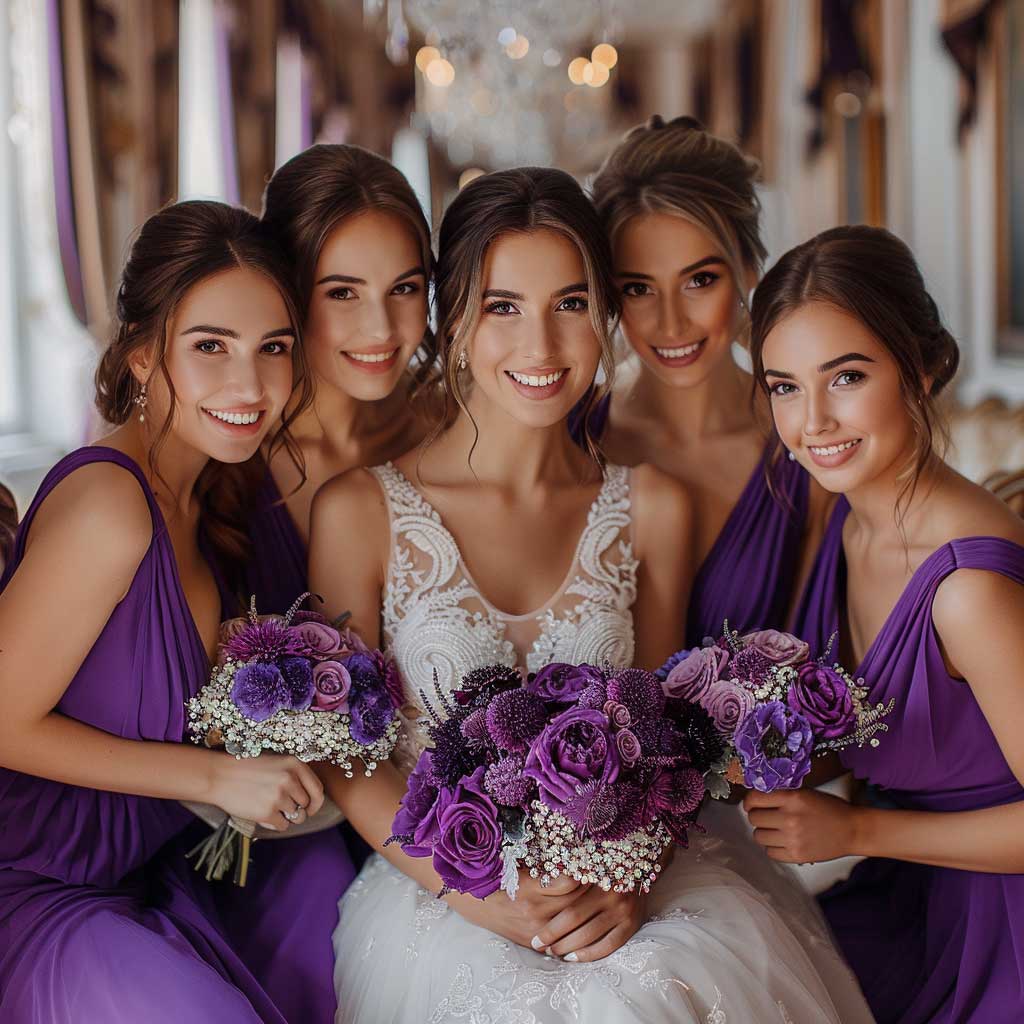
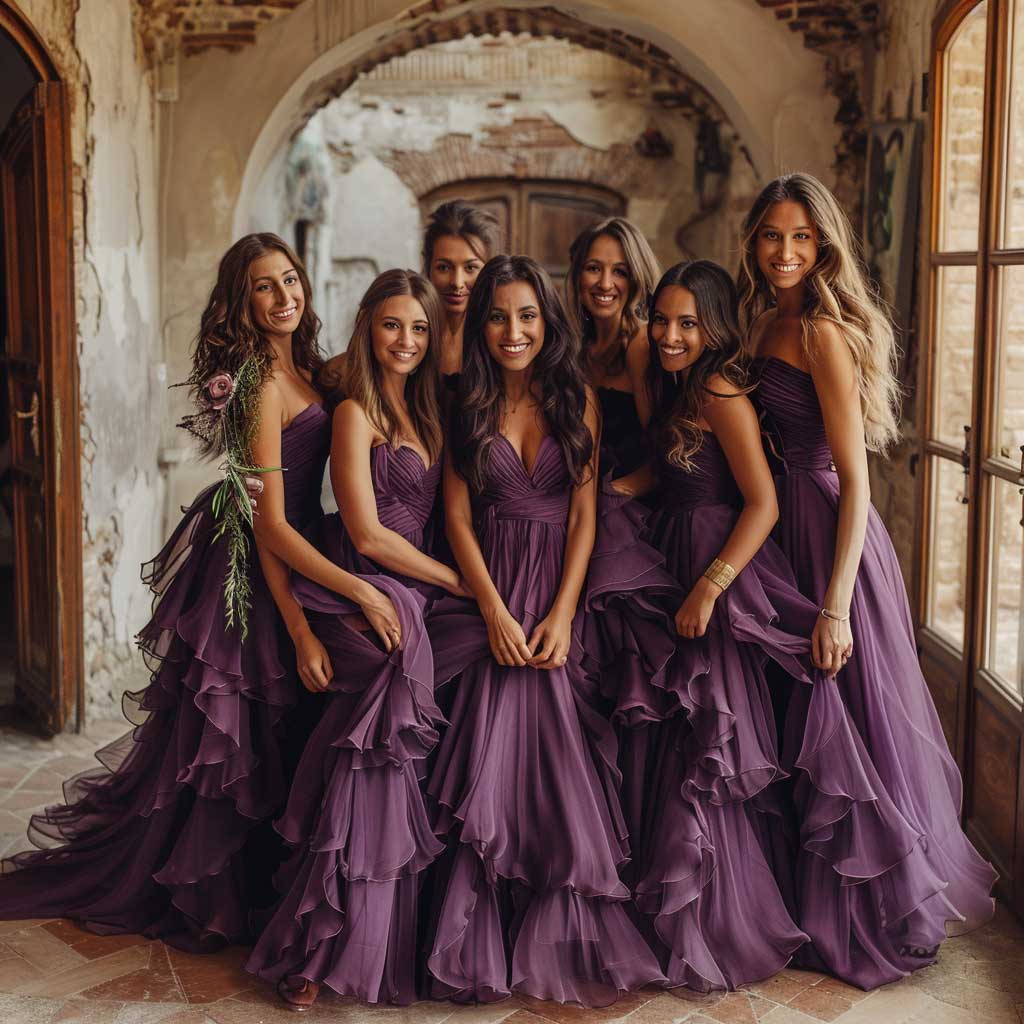
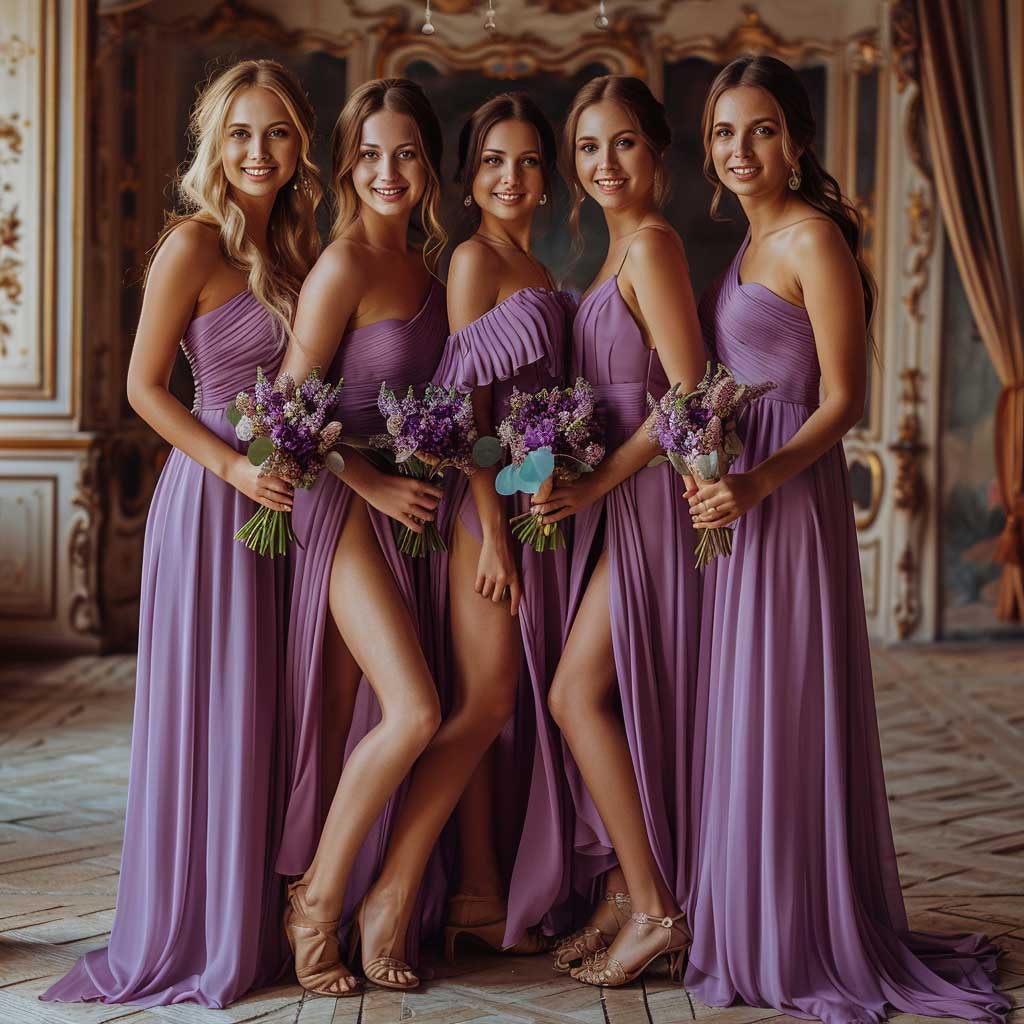
Violet bridesmaid dresses in a purple wedding theme succeed or fail almost entirely on shade selection relative to skin tone — and most brides discover this six weeks after ordering when all the dresses arrive. Mid-range retailers like Azazie and Kennedy Blue price violet bridesmaid dresses between $90 and $180, which keeps the budget reasonable, but color accuracy on screens varies enough that ordering a fabric swatch first is non-negotiable. Azazie offers free swatches for this exact reason. Deep blue-violet shades (think regency, iris, royal purple) photograph dramatically and suit warm and dark skin tones particularly well. Cool lavender and dusty lilac are far more universally flattering and tend to read softer in the ceremony photos.
The mismatched purple bridesmaid dress approach — assigning each person a different shade within the same family — works when the shades are deliberately spaced on the color wheel: one deep, one mid, one pale. It fails when three different people all end up in slightly different lavenders that look uncoordinated rather than intentional. How do you avoid this? Order all dresses from the same collection within the same brand, and confirm they come from the same dye lot. Two supposedly identical dresses from different production batches can look noticeably different once all seven bridesmaids are standing next to each other in natural light.
Accessory coordination is where the purple theme either clicks or clashes. Silver and white gold jewelry are the natural match for cool purples (lavender, periwinkle, lilac). Gold and rose gold work better with warm purples (plum, mauve, berry). Getting this wrong is subtle but visible: a gold bracelet against a cool lavender dress looks slightly off without anyone being able to say exactly why. Bouquets of mixed purple and white flowers — lisianthus, white ranunculus, and a few stems of rosemary for texture — pull the look together and add the kind of specificity that makes the whole wedding party photograph like an editorial shoot rather than a coordinated group. For couples planning a blue and purple wedding theme, the dress selection process follows the same logic but requires an additional check for undertone harmony between the blue and violet pieces.
| Element | Best For | Key Cost Range | Main Risk |
|---|---|---|---|
| Purple Florals | Romantic, lush ceremony atmosphere | $30–$50/orchid stem; hydrangeas budget-friendly | Color shift under warm lighting |
| Lavender Arch Drape | Statement ceremony backdrop | $119 (bare frame) – $1,200 (full floral) | Wisteria wilts in 4–5 hours without water |
| Purple Wedding Cake | Reception focal point with color story | $700–$1,100 average; $6–$12/slice fondant | Dye quality determines color stability |
| Violet Bridesmaid Dresses | Cohesive bridal party in the palette | $90–$180 per dress (mid-range brands) | Dye lot variation across orders |
PURPLE WEDDING THEME
Four details that make the palette land — and the specific mistakes that make it fall apart
Orchid stems are prestige pieces, not filler — budget for 1–2 per arrangement and build around them with hydrangeas and delphiniums. A lavender chiffon arch facing north or east photographs cleanly; anything else risks color washout in the ceremony images.
Purple fondant requires gel dye, not liquid — confirm this before signing with a bakery. Violet bridesmaid dresses need a fabric swatch ordered first and all pieces from the same dye lot.
Save this post before you book your florist — the shade decision locks in every other color call you’ll make.