Minimalist study furniture ideas only work when the pieces you choose earn their place — not just look calm in a photo. I’ve rearranged my study three times trying to nail this, and the version that finally stuck wasn’t the one with the most expensive desk. It was the one where every surface had a job. You’ll notice the difference within a week: less friction before you sit down, fewer excuses to leave. A clutter-free study isn’t a personality trait — it’s a layout decision.
The setups in this post cover four distinct furniture directions — white desk, floating shelves, wall-mounted, and black metal frame — each photographed and tested in real rooms, not renders. Pick one that matches your space constraints, not just your Pinterest board.
Main theme: Minimalist study furniture for clutter-free focus spaces
White desk setup: Glossy or matte surface, ergonomic pairing, wall-mount shelves above
Floating shelves + compact desk: Best for small rooms under 120 sq ft
Wall-mounted desk: Frees floor space, height-adjustable, ideal for irregular rooms
Black metal frame desk: Industrial-minimal hybrid, glass top keeps the room feeling open
Chair rule: Neutral tone, clean silhouette — the chair should not compete with the desk
Lighting: Position desk within 3 feet of a window; supplement with a focused task lamp, not overhead
A Sleek White Desk Changes the Room Before You Put Anything On It


White desks have a reputation for looking clinical. Mine did too — until I stopped treating the surface as storage. The IKEA Lagkapten in white ash runs about $130 and has zero visible hardware. I own two of these across two different rooms, and the thing I keep noticing is how the desk resets the visual noise in the space before I’ve even touched anything. Clean surface equals perceived calm. It’s not complicated.
For the chair, resist the matching-white trap. A matte black Herman Miller Aeron (refurbished units run $500–$700 on eBay) or a sand-tone HAY About a Chair AAC22 ($280 retail) reads better against white than an all-white setup, which just looks like a hospital room. What you need is contrast that doesn’t fight. The desk wins when the chair recedes.
Wall-mounted shelves above the desk handle the storage question without eating floor space. Two IKEA Lack shelves at $20 each, staggered 12 inches apart, hold books, a small speaker, and a candle. Don’t try to fill every inch — white space on a shelf is part of the design. The mistake I see most often is crowding the shelves and wondering why the room still looks cluttered. Position the desk within three feet of a window so natural light does the heavy lifting during the day.
Avoid high-gloss finishes if your room gets direct afternoon sun. Glare off a high-gloss surface at 3pm is the fastest way to abandon your study for the couch. Matte or satin is the smarter call — you’ll actually use the desk more.
Floating Shelves Do the Work a Bulky Bookcase Never Could


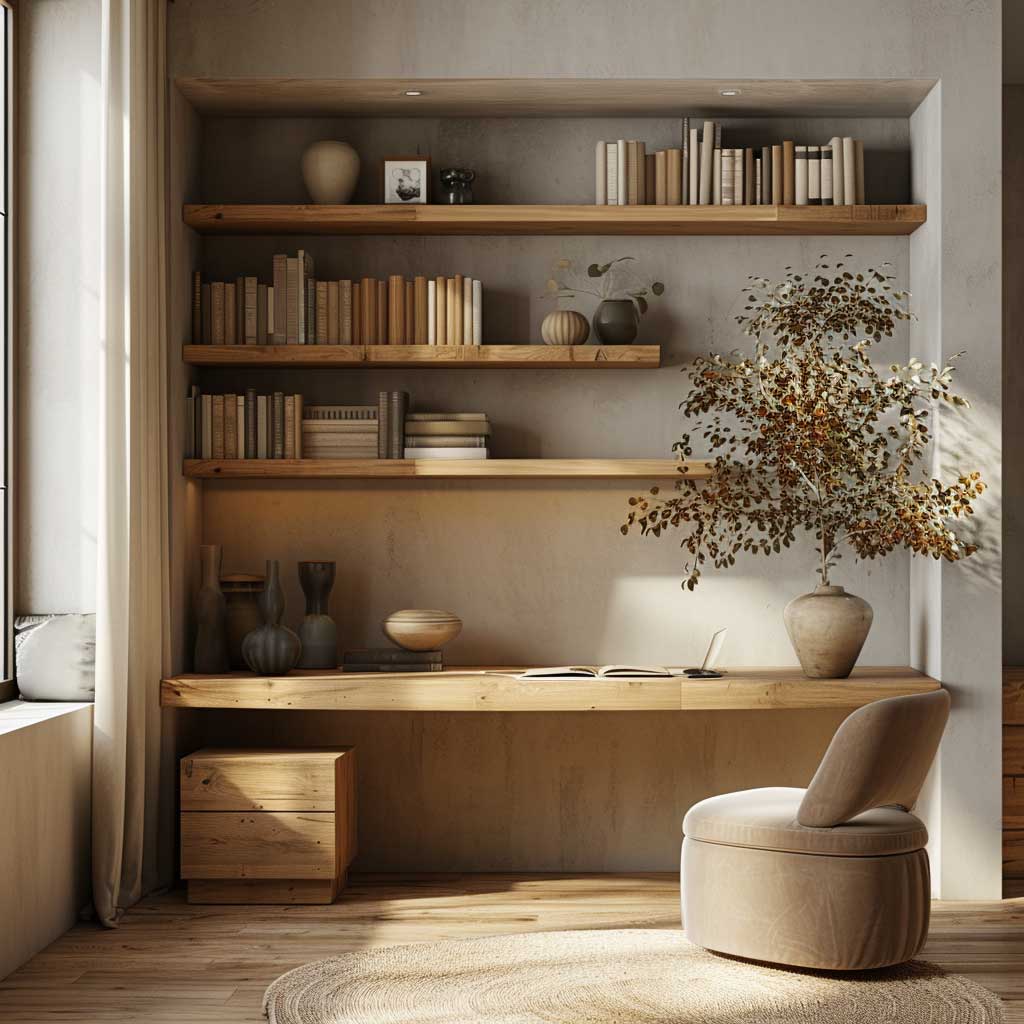
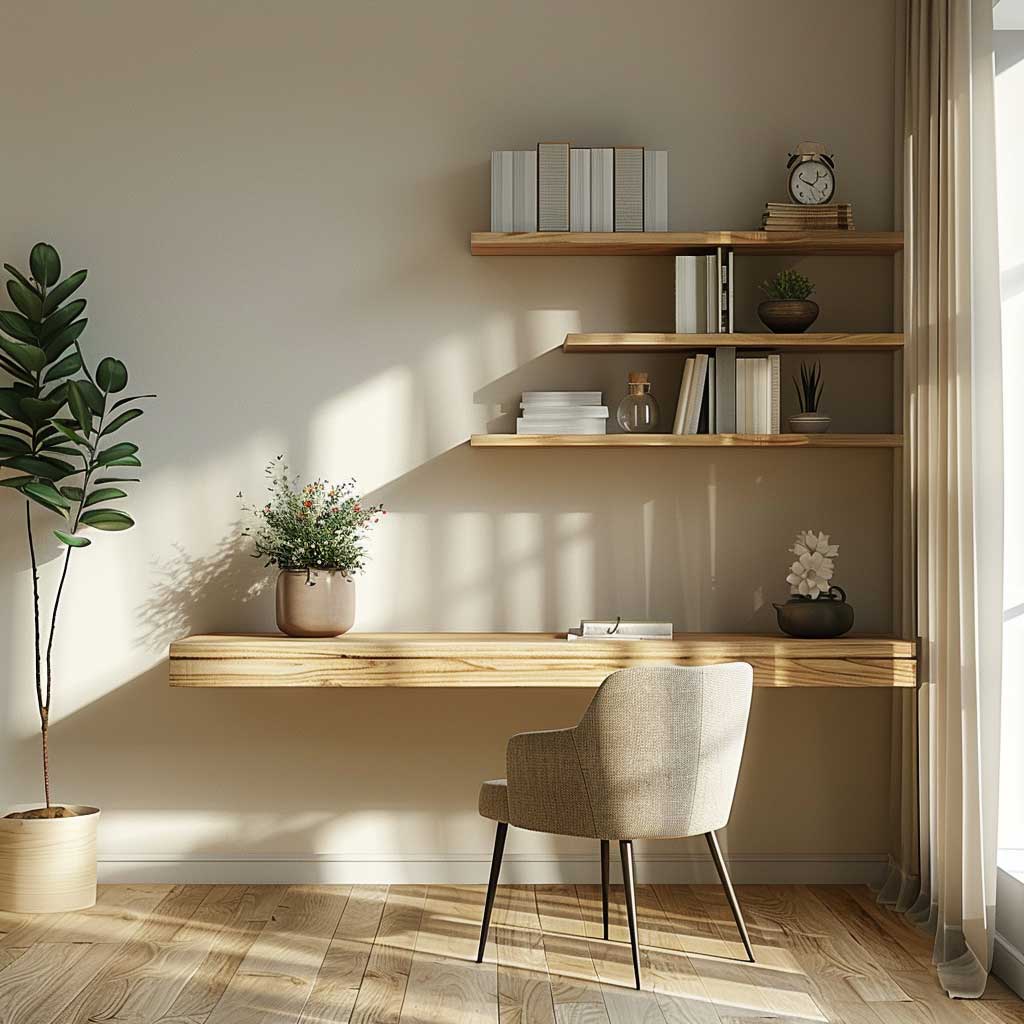
The compact desk plus floating shelf combo is the layout I always recommend for rooms under 120 square feet. I stole this configuration from a designer I follow who works exclusively in Tokyo apartments — small space thinking forces discipline the rest of us don’t bother with. The floating shelves claim vertical wall space that would otherwise do nothing. The desk, ideally between 40 and 48 inches wide, keeps the footprint honest.
Go for a natural oak or walnut finish on both the desk and shelves — the wood grain adds warmth that keeps the room from reading as a dentist’s waiting area. West Elm’s Mid-Century Mini Desk in acorn runs about $299 and pairs cleanly with their floating shelf set at $79 each. You need at least two shelf levels, spaced 10–12 inches apart, to keep books upright without stacking horizontally (horizontal book stacks are where organizational discipline goes to die).
Is the chair important here? More than most people realize. A chair that’s too wide for the desk looks awkward and visually cancels the clean layout. Aim for a seat width under 20 inches if your desk is on the narrow side — the HAY J104 in natural beech at $245 is my go-to for this exact reason. One small plant on the bottom shelf, not the desk surface, keeps the organic detail without taking up working real estate.
The setup I wouldn’t recommend: floating shelves styled with too many small objects. Six candles, three succulents, and a framed print is a shelf styled for Instagram, not a room you’ll actually work in. Keep it to books plus one or two items max per shelf level. The restraint is the point. For more ideas on keeping small work spaces functional without sacrificing style, see how small office decor borrows from modern art principles to do more with less.
Wall-Mounted Desks Earn Their Place in Rooms Everyone Else Gives Up On
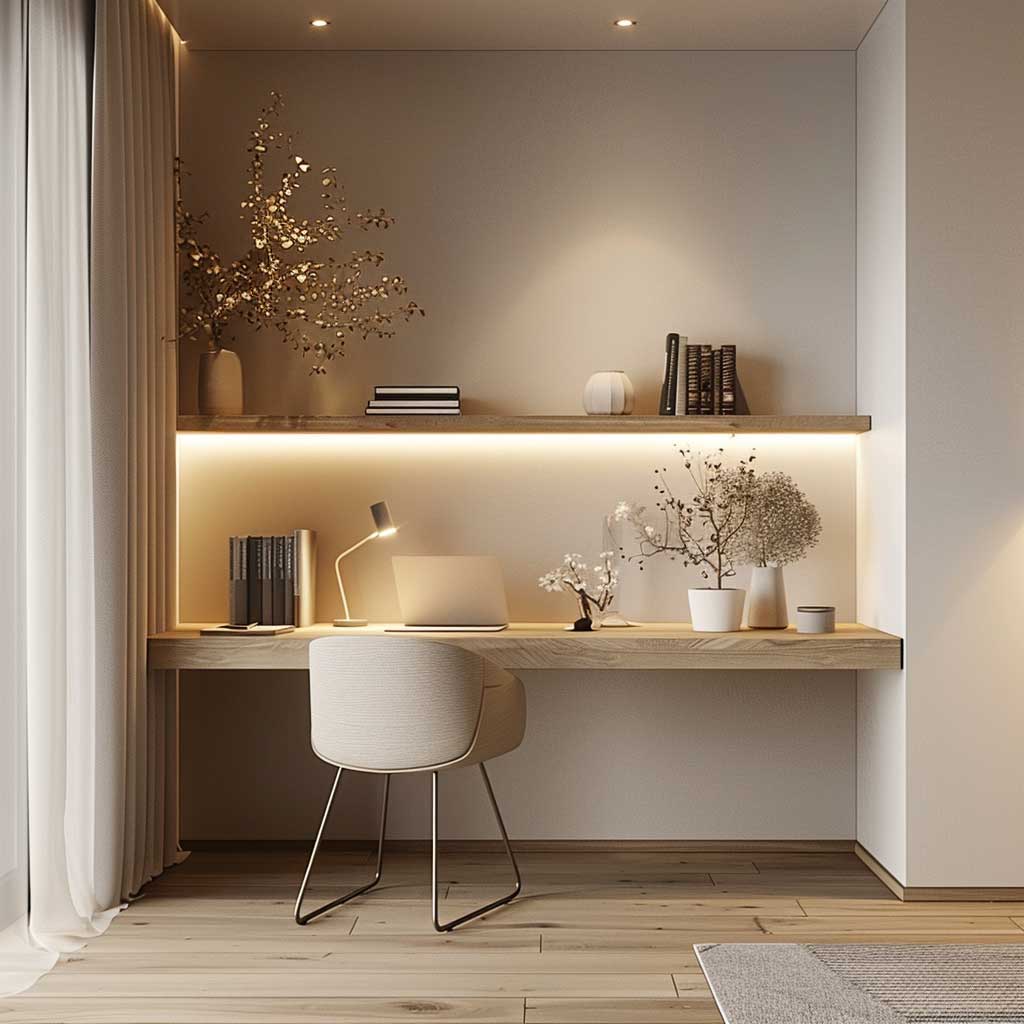
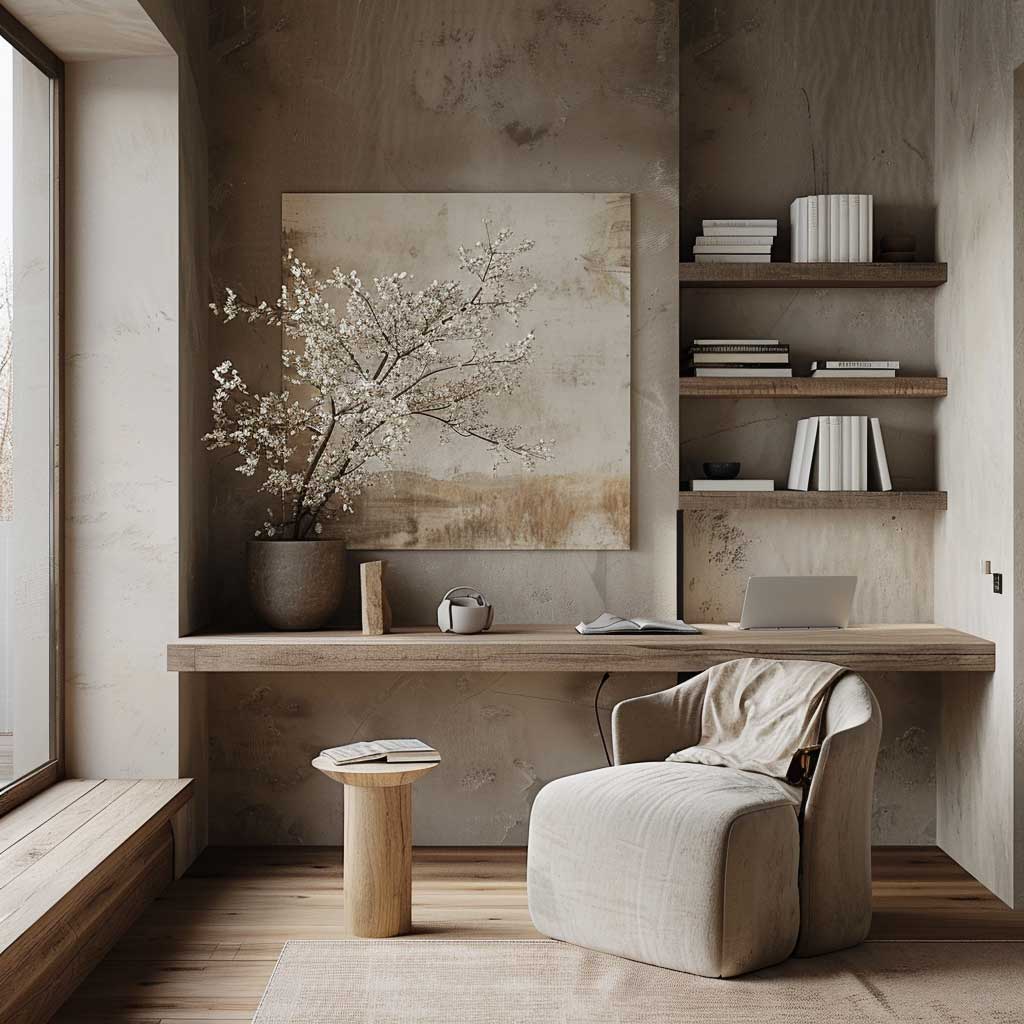
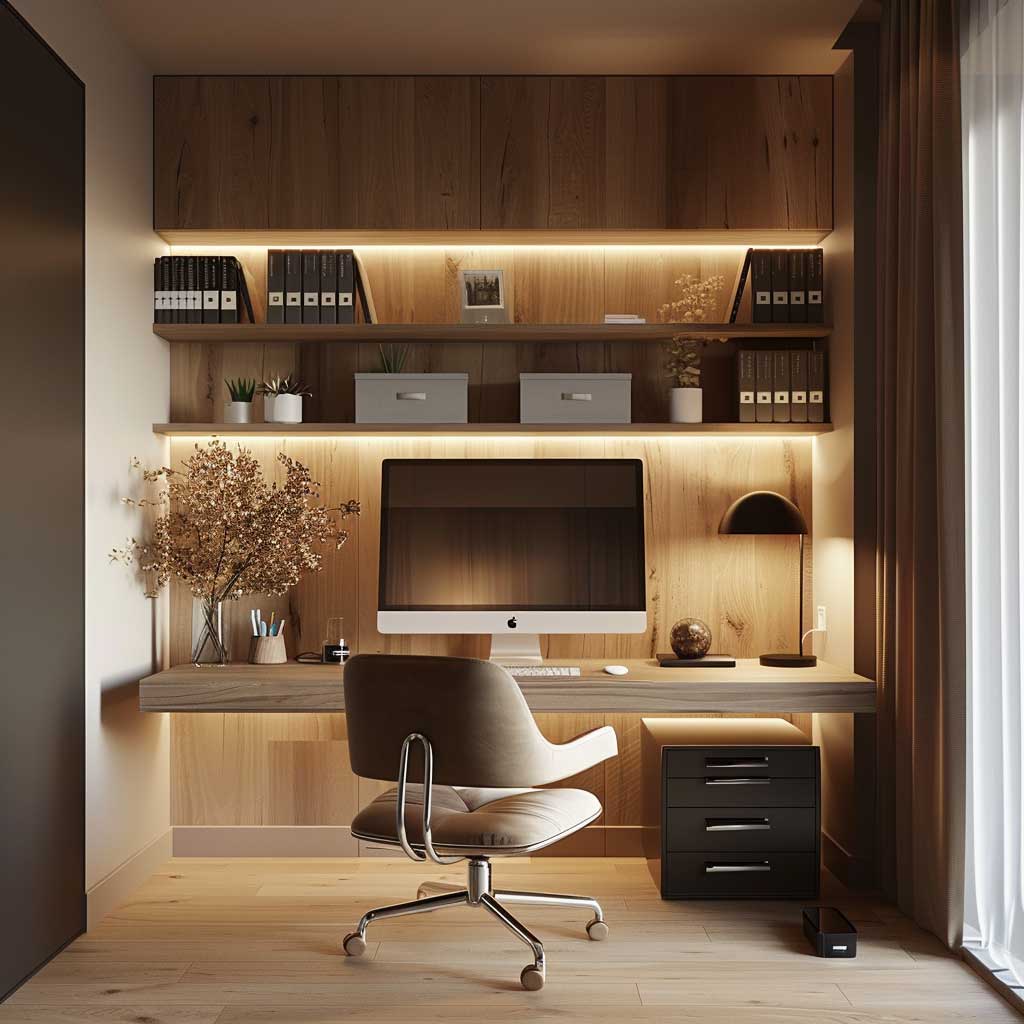

Wall-mounted desks solve rooms where a freestanding desk would block a doorway, fight a radiator, or just leave a three-inch gap that collects dust and regrets. Mount height is the underrated variable here. Most people install at standard desk height (29–30 inches) without checking whether that actually works for their chair and body — I’ve seen setups where the person is clearly hunched because nobody measured. Mount at your seated elbow height, not a standard spec.
The IKEA Norberg wall-mounted drop-leaf table at $70 is the entry point and holds up surprisingly well for its price. For something with more surface area and a cleaner wall bracket, the String Furniture Works desk (made in Sweden, around $430) is where I’d put money if I were keeping it long-term. White or light ash are the two finishes worth considering — anything darker and the wall-mounted desk reads more like a shelf than a work surface.
What doesn’t work: mounting too high as a cable-management workaround. I’ve seen people raise the desk so the power strip can sit underneath, and then the ergonomics are completely wrong. Run cables through a wall-mounted cable sleeve (Bluelounge CableBox Mini, $25) instead. The desk height should answer to your posture, not your extension cord. Soft, diffused light — a Scandinavian Designs arc lamp or even an IKEA Ranarp at $35 — completes the setup without the harshness of overhead lighting.
Don’t use a glass desk with visible cable mess underneath. The transparency that makes a glass-top desk feel open immediately backfires when your power strip, surge protector, and three cable loops are fully on display. Either run cables through a raceway or skip glass entirely until you have a clean solution.
Don’t buy a “minimalist” desk with fake drawers. Some budget desks add decorative drawer fronts with no actual opening — they exist to break up the visual plane. In practice they just confuse guests and collect fake guilt every time you notice them. Buy a desk with functional storage or none at all.
Don’t match every wood tone in the room. Three pieces of “oak” from three different retailers will be three different shades of orange. Pick one anchor piece and contrast the rest with white, black, or a clearly different material. Trying to match wood tones across brands is a battle you will always lose.
Black Metal Frame Desks Work in Minimalist Rooms Because They Disappear
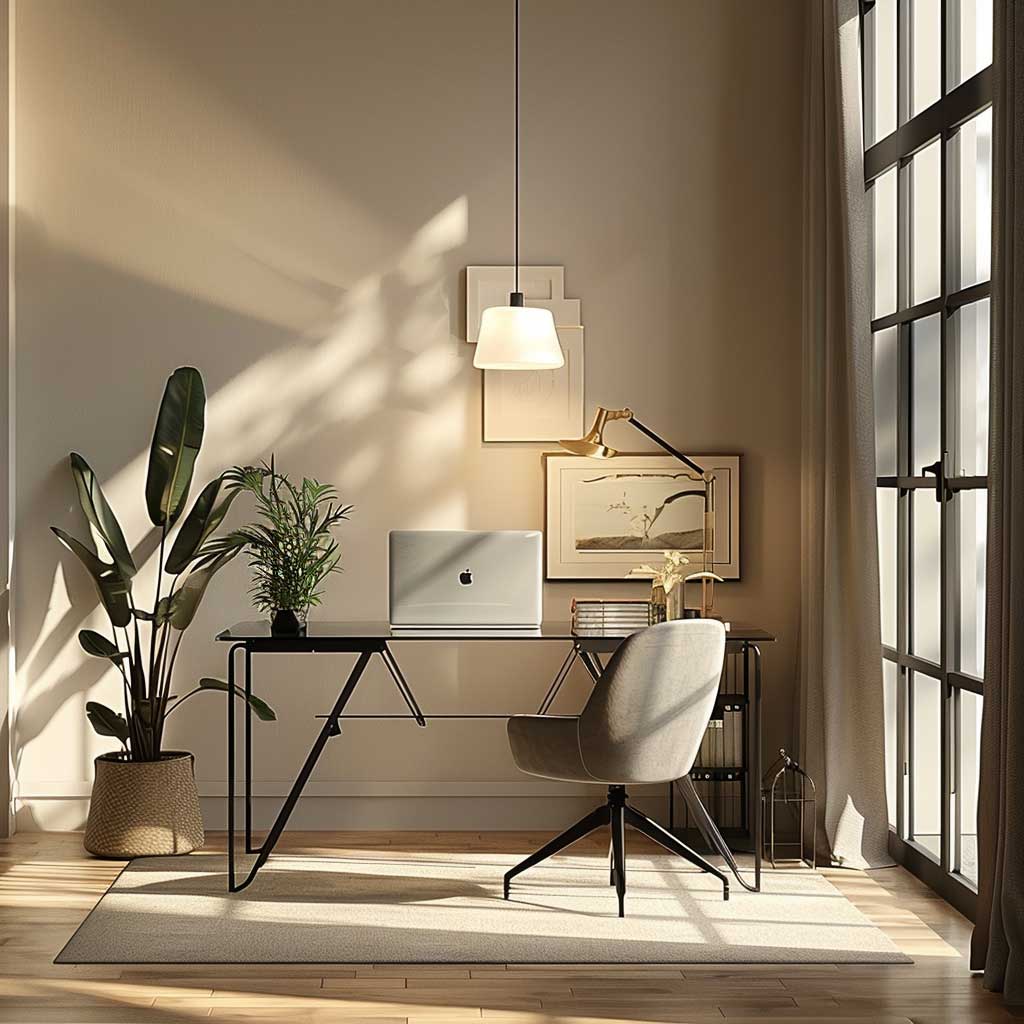


The logic with a black metal frame desk is counterintuitive: the dark frame reads as a visual border, not a mass. You see the space around it more than the desk itself. I own a Bestier L-shaped desk in black steel — $179 on Amazon — and the room feels larger with it than it did with a solid-top white desk that cost twice as much. The frame is thin, the footprint is clear, and nothing about it competes for attention.
Glass tops amplify this effect. Tempered glass (look for 6mm minimum thickness) keeps the desk feeling weightless while still supporting dual monitors without flex. The CB2 Peekaboo Acrylic Desk at $699 is the premium version of this logic, but you can get the same effect from a Tangkula metal-frame glass desk at $150. The difference is mostly in the frame weld quality and whether the glass is tempered — pay attention to those two specs, not the branding.
Pair a black frame desk with an upholstered chair in cream, sage, or charcoal mesh rather than another all-black piece. All-black study rooms look intentional in photos and exhausting in person after six weeks. The contrast does the same visual work as it does in a black-and-white room — the eye needs somewhere neutral to land. A single task lamp in brass or matte white, positioned at the left corner of the desk (or right, if you’re left-handed), is all the decor this setup needs. For office furniture that takes the same neutral-contrast approach in warmer tones, the neutral tones and wooden accents office furniture guide is worth reading alongside this one.
One anecdote worth passing on: I tried adding open shelving directly behind a black frame glass desk, and the visual layering made the whole wall feel chaotic — shelves visible through the desk through the chair. Solid-back storage or a blank wall behind this desk type is the move. Transparency works in one direction at a time.
For a deeper breakdown of how minimal desk setups actually perform in daily use — not just aesthetics — the real-room minimal desk roundup at Maker Stations documents 24 actual setups with photos from real workspaces, not staged shoots.
The takeaway
Pick the desk that matches your room’s constraint — not your aesthetic preference. The furniture follows the space.
White desks reset visual noise. Floating shelves reclaim vertical space. Wall-mounted setups solve rooms everyone else abandons. Black metal frames disappear and let the room breathe.
The chair always matters more than it should. Neutral tone, clean silhouette, proper lumbar — those three factors determine whether you actually use the space or just admire it from the doorway.
Save this post before your next furniture decision — you’ll want to come back to the frame and glass desk section especially.