
Black and blue streaks turn wavy frizzy hair into a high-contrast statement that works with the natural texture instead of fighting it. The deep black base grounds every wave while the blue pieces catch light and break up frizz so the overall shape looks intentional rather than chaotic.
This combination delivers dimension in one appointment and suits both subtle face-framing accents and full electric panels. The result stays wearable from desk to evening because the colors ride the existing movement of the hair rather than flattening it.
Most wearers notice the frizz appears softer within days simply because the eye follows the color lines instead of the flyaways. Skip heavy gels that weigh waves down; the streaks already supply the visual structure.
Quick scan
- Black base plus blue streaks create depth that softens the look of frizz
- Subtle placements stay office-ready; vibrant panels suit nights out
- Semi-permanent blue typically holds 4–8 weeks with cool washes
- Salon partial highlights average $120–$250 depending on length
- Home kits run $9–$18 but need pre-lightening for true payoff on dark hair
- Texture is the ally — let waves carry the color rather than forcing smoothness
Bold Contrast That Defines Every Wave
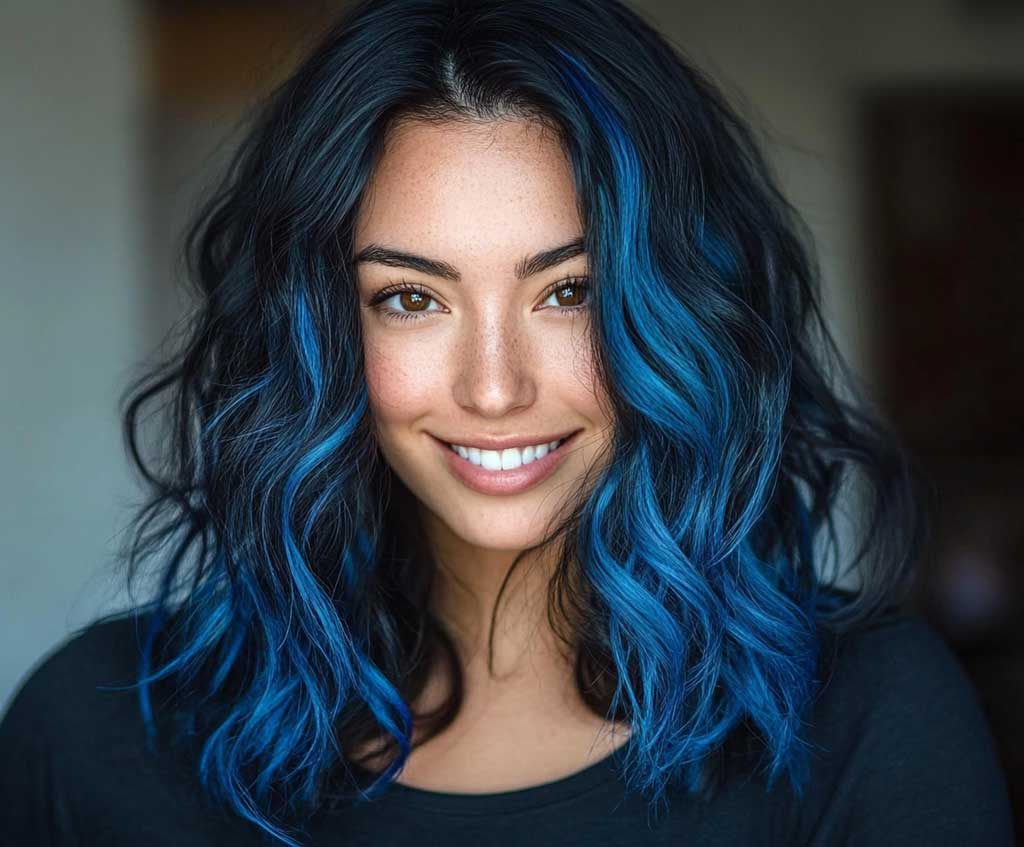
Bold black and blue streaks give wavy frizzy hair the kind of graphic edge that makes the natural texture read as design rather than disorder. The black anchors the silhouette while electric blue slices through each bend, so every movement shows dimension.


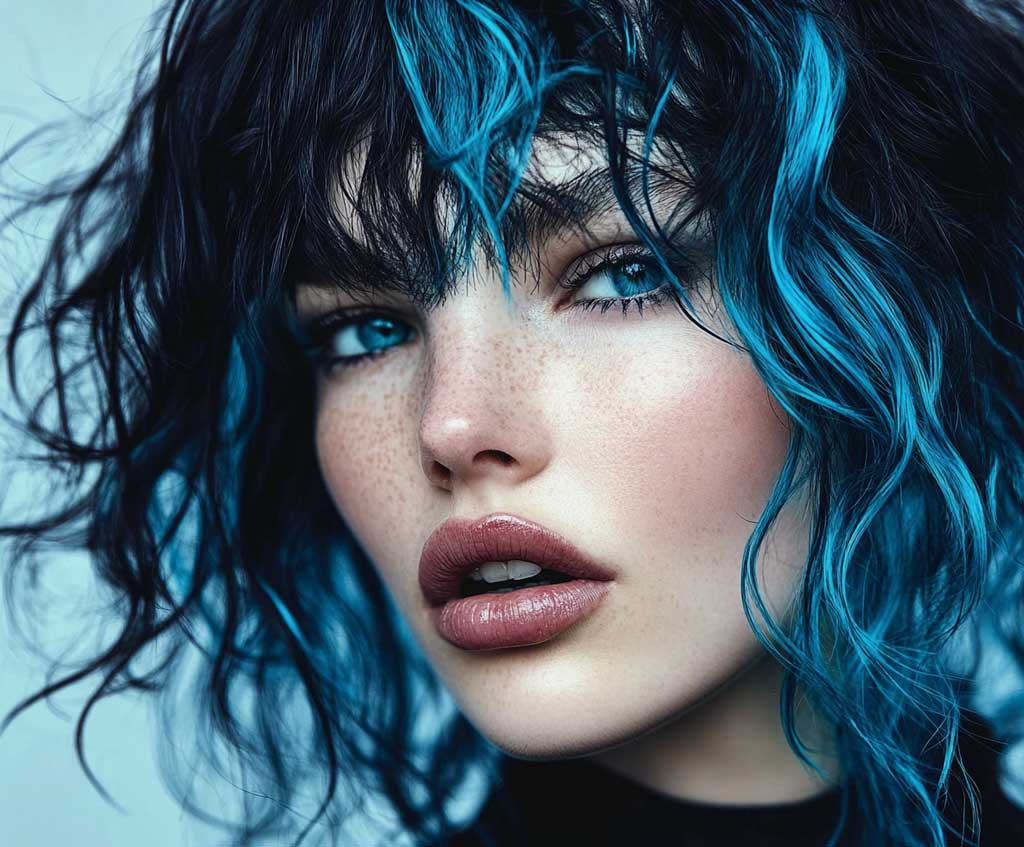
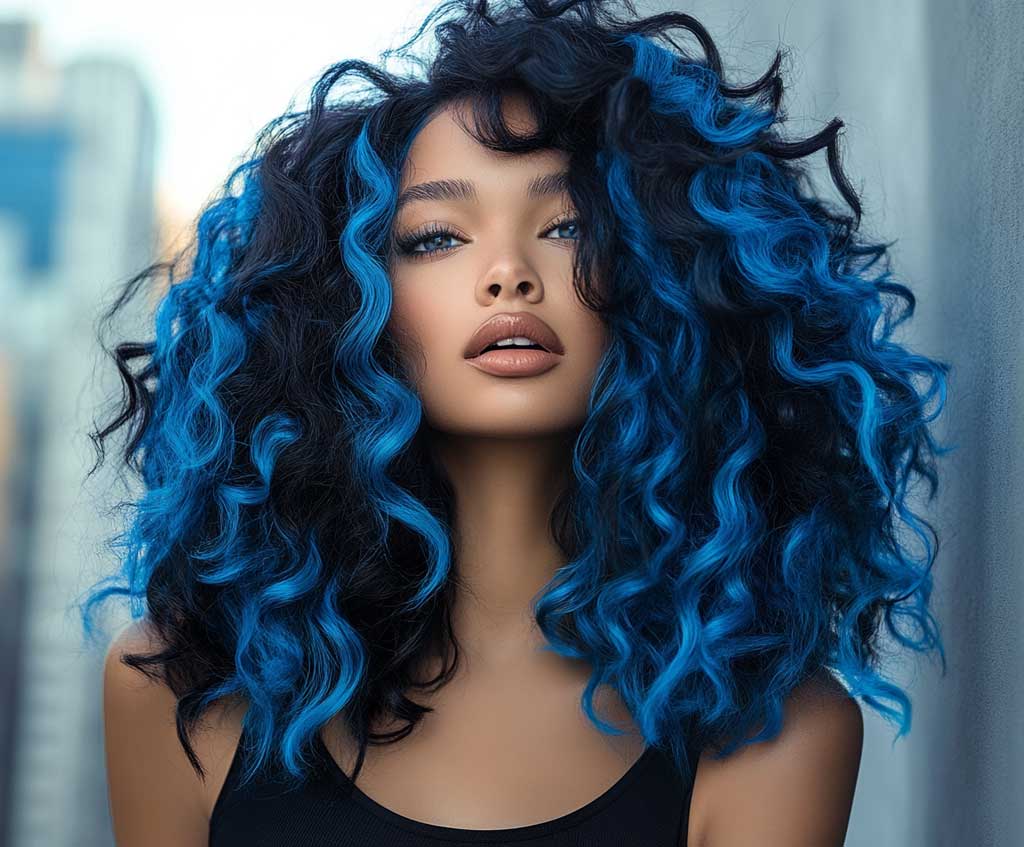
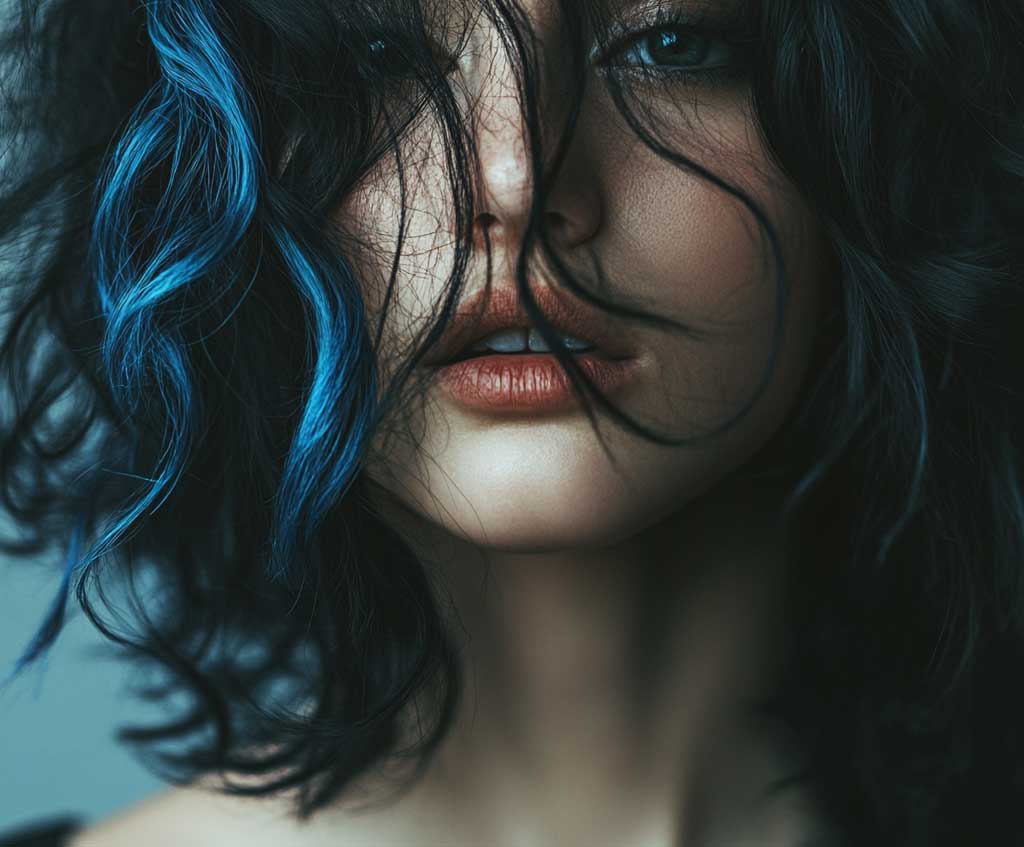
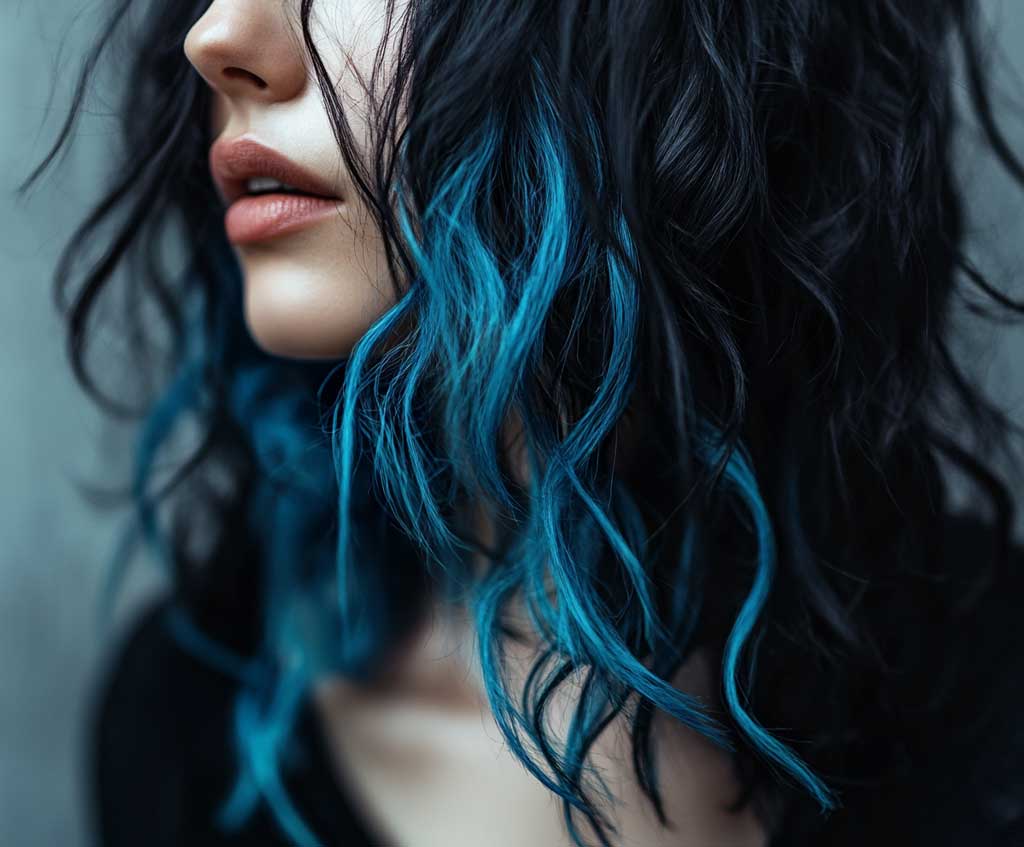
Think of the black as the stage and the blue as the spotlight. Without enough black the blue can look scattered; without enough blue the hair stays flat. Aim for 30–40 percent blue placement on medium-density hair so the contrast stays sharp yet balanced.
Does the frizz still dominate after coloring? That usually means the streaks sit too close to the scalp. Keep the first inch of root in pure black so the blue rides the mid-lengths and ends where the wave actually moves. Salon partial highlight packages for this look typically land between $120 and $250.
One hard rule: never apply vivid blue over unlightened black if you want true saturation. The pigment will only stain the surface and wash out in under two weeks. Pre-lighten the streak sections to a pale yellow first, then deposit the blue. For related short-wave color play see these pastel blue short wavy styles.
Subtle Blue Hues That Still Catch Light
Subtle blue hues on a black base give wavy frizzy hair a polished shimmer without the full graphic punch. Soft sapphire or denim ribbons blend into the waves so the color only reveals itself when the light hits, keeping the look office-friendly yet modern.
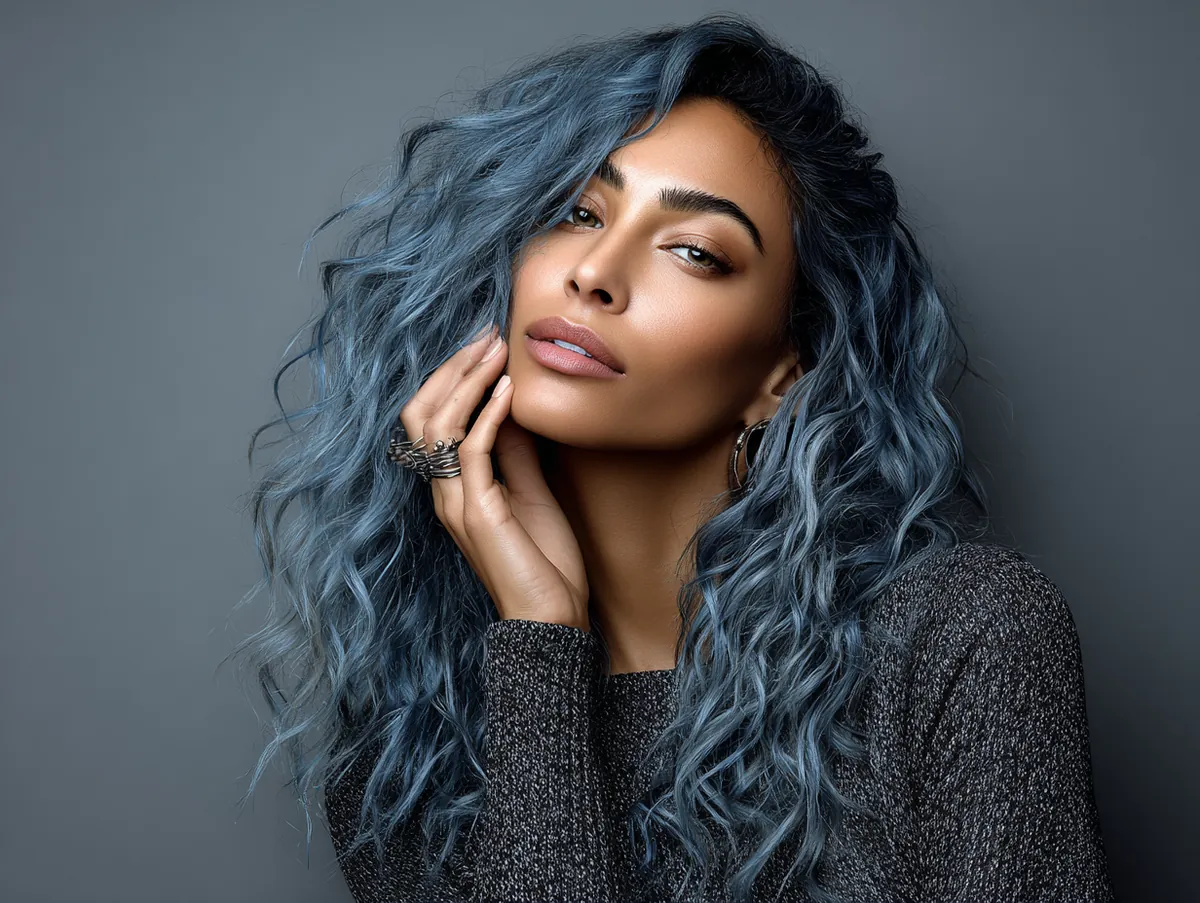


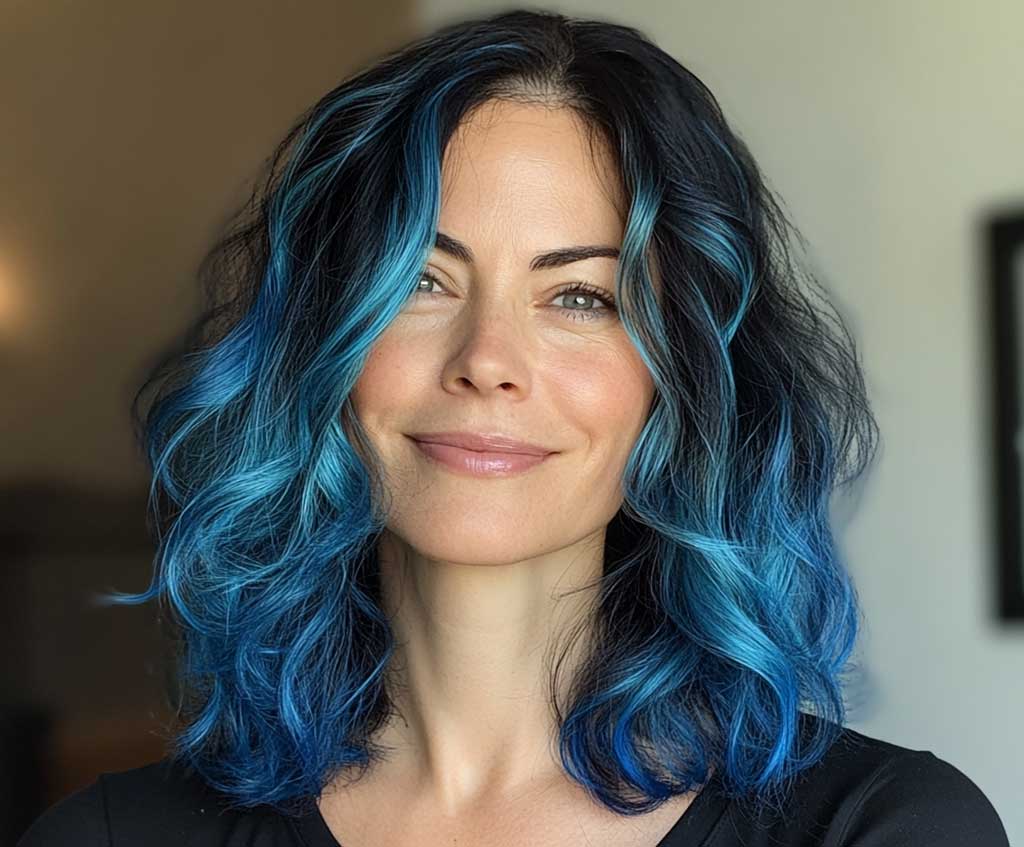
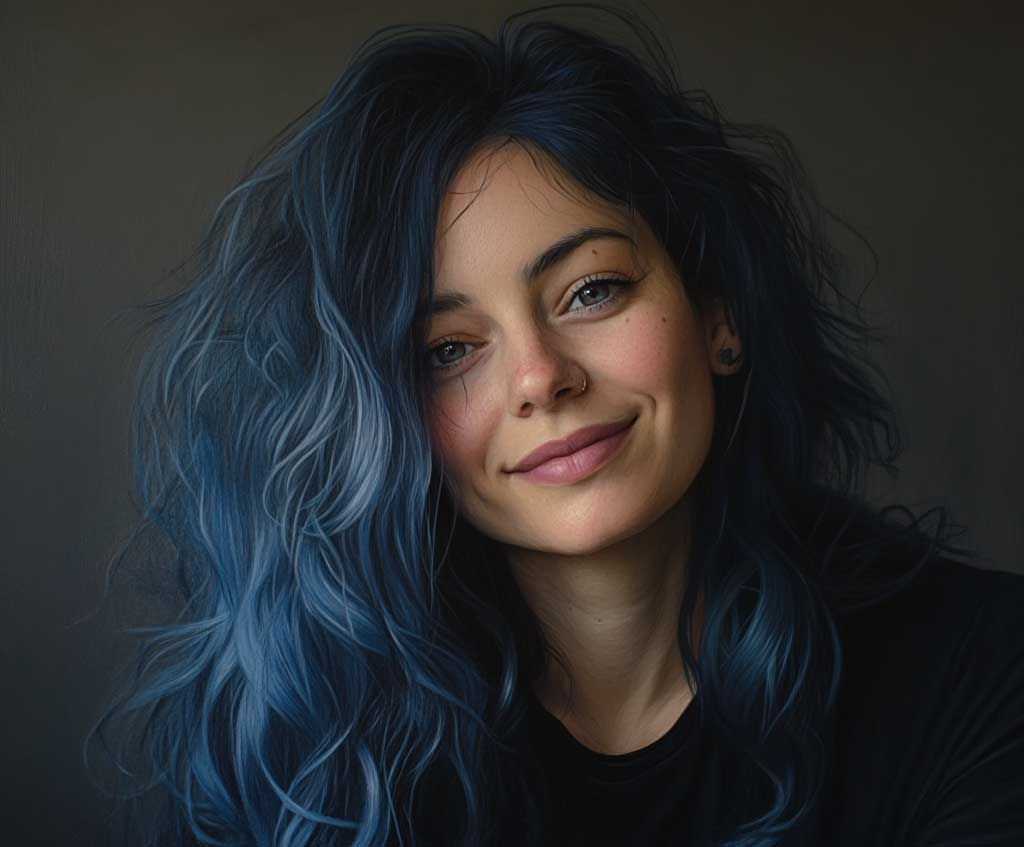
This approach works like a thin silver thread in dark fabric — visible only when the weave moves. The black remains the dominant tone so the hair never feels costume-like, while the blue adds just enough surprise to stop the eye.
What if the blue disappears after three washes? That signals either too little lightening or a formula that was too diluted. Use a full-strength semi-permanent blue and leave it on the lightened sections for the full processing time listed on the bottle, usually 20–30 minutes. Average home kits for this softer result cost $9–$14.
Avoid placing the subtle streaks only at the ends. They will look like faded tips instead of intentional color. Weave thin ribbons from mid-shaft downward so the blue travels with each wave. Cool-water rinses and sulfate-free shampoo stretch the life of these quieter blues to four or five weeks.
Vibrant Blue and Black Curls That Own the Room
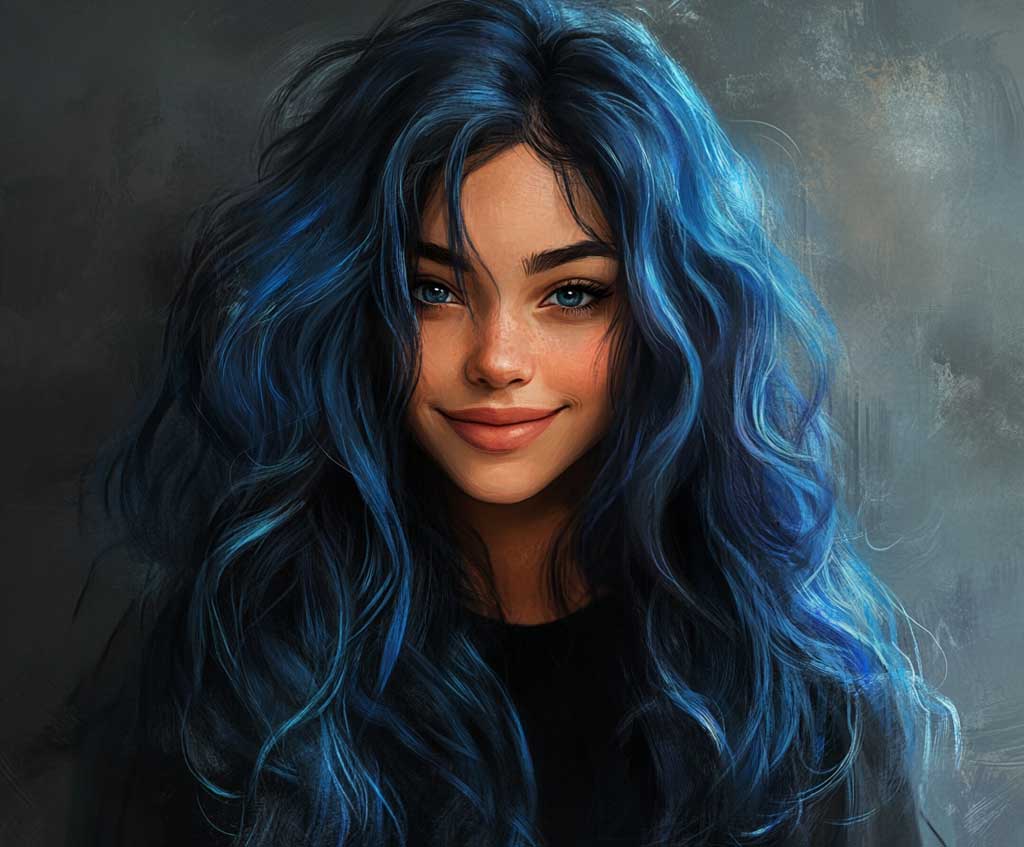
Vibrant blue and black curls turn the natural bounce of wavy frizzy hair into a moving color show. Each curl becomes a separate canvas where black depth meets electric blue flash, so the overall effect feels alive rather than static.


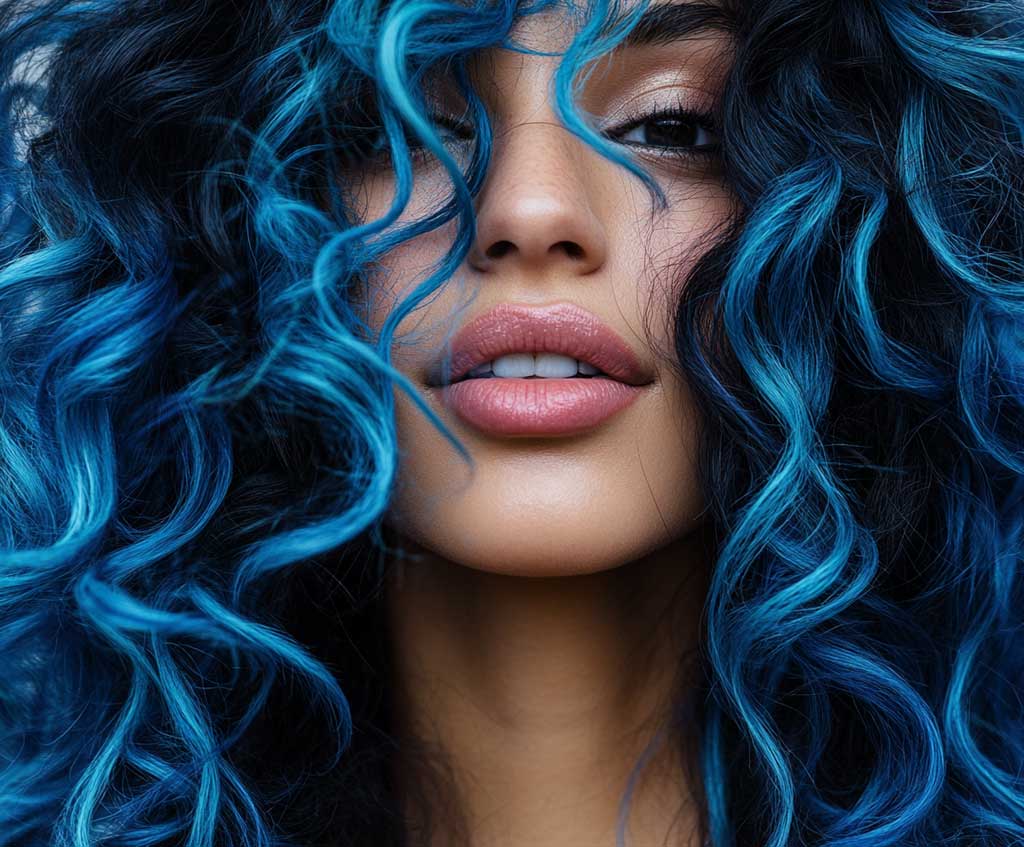
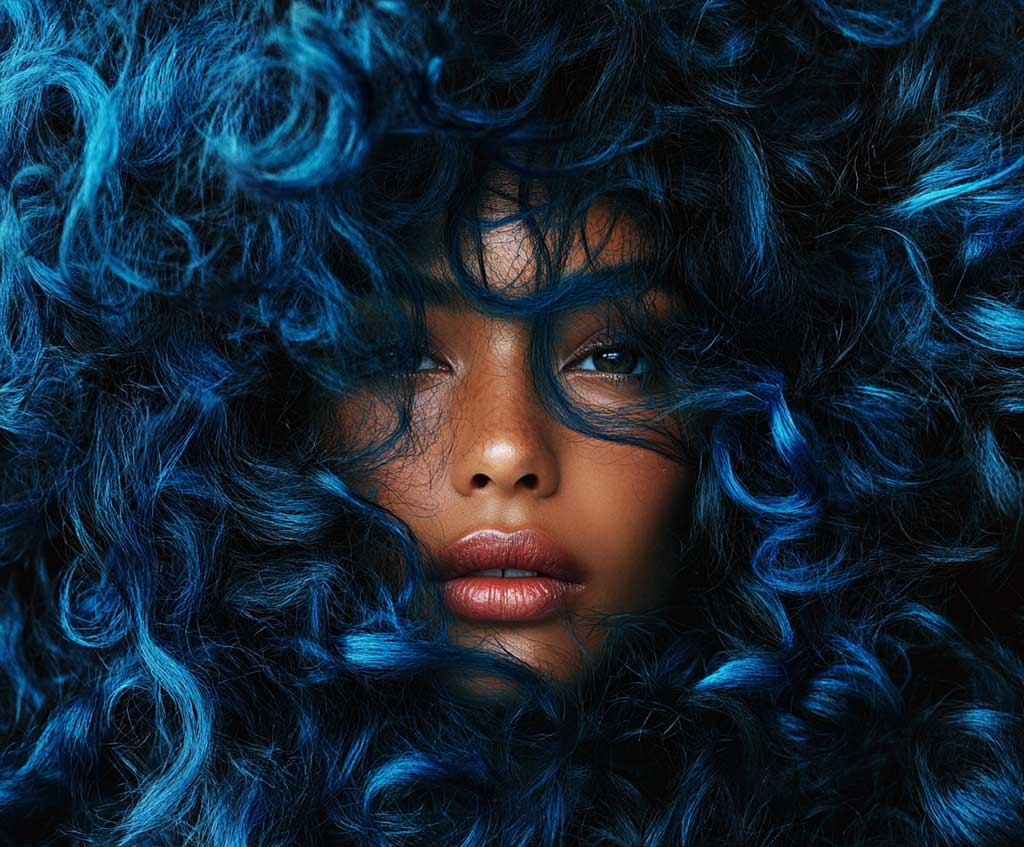


The frizz becomes part of the architecture here. Instead of smoothing every strand, the color rides the irregular surface so the hair looks deliberately lived-in. Black provides the shadow that makes the blue pop harder under both daylight and neon.
How long will the brightest blues stay vivid? Semi-permanent formulas on properly lightened hair usually deliver four to eight weeks of strong color when washed in cool water only twice a week. Professional vivid blues such as Pravana Vivids average $14–$18 per tube and outlast most drugstore options.
Do not chase perfect symmetry. Random placement of thicker blue panels among thinner black sections mimics the way light hits moving water and keeps the style from looking manufactured. For sharper geometric options explore these A-line cuts with icy blue streaks.
Placement Choices That Decide the Final Edge
Placement decides whether black and blue streaks read as quiet dimension or full rebellion on wavy frizzy hair. Face-framing pieces create instant polish; scattered panels through the mid-lengths deliver the rock edge many seek.
Face-framing works best for first-timers because the color sits where the eye already travels. Scatter the blue deeper into the hair for a look that only reveals itself when the head turns. Both approaches benefit from a solid black root zone so regrowth stays soft.
One anti-move: coloring the entire under-layer blue while leaving the top black. The reverse-highlight effect collapses the moment the hair is tied back. Keep the strongest contrast on the outer surfaces that actually catch light.
| Placement | Best for | Maintenance | Typical salon range |
|---|---|---|---|
| Face-framing only | Subtle daily edge | Low – 6–8 weeks | $120–$180 |
| Scattered mid-length panels | Balanced contrast | Medium – 4–6 weeks | $150–$220 |
| Full electric sections | Maximum statement | High – 3–5 weeks | $200–$300+ |
Think of the hair as a stage curtain. The front panels are the part the audience sees first; the deeper streaks are the secondary action that rewards a second look. Match the placement to how often the hair will be pulled back or left loose.
Maintenance That Keeps the Blue Alive
Blue fades faster than almost any other fashion shade because its pigment molecules are small and escape the cuticle quickly. On black hair the contrast makes any loss of intensity obvious within three weeks if the routine is careless.
Cool water is non-negotiable. Hot showers open the cuticle and flush the blue out in days. Limit full washes to twice a week and use a blue-depositing conditioner once every seven to ten days to top up the tone. Sulfate-free shampoo is the second rule that actually moves the needle.
Will dry shampoo save the color? Yes, but only if it is applied away from the blue sections. Heavy powder on the streaks can mute the vibrancy. Focus dry shampoo at the black roots and leave the colored lengths alone.
Heat styling accelerates fade. When a wand or iron is required, always apply a heat protectant rated for color-treated hair and keep the temperature under 180 °C. The extra thirty seconds of protection can add a full week of brightness.
Choosing the Right Intensity for Real Life
Intensity is the final filter. Soft denim blues suit workplaces and low-maintenance schedules; pure electric cobalt belongs to nights, festivals, and creative fields. Both live comfortably on wavy frizzy hair as long as the black foundation stays strong.
Test a temporary spray or clip-in streak for one week if the commitment feels large. Living with the color on real hair under real lighting removes most second-guessing. Permanent commitment can wait until the temporary version already feels right.
External data on semi-permanent blue longevity confirms that formulas such as Arctic Fox or Manic Panic typically deliver four to eight weeks on lightened hair when washed sparingly. That window is long enough to decide whether the edge is permanent or seasonal.
The Look That Stays After the Mirror
Black and blue streaks succeed on wavy frizzy hair because they stop fighting the texture and start using it. The black gives weight and depth; the blue supplies the flash that turns every wave into a deliberate design element.
Choose the placement that matches the daily routine, protect the color with cool water and minimal heat, and let the natural movement do the rest. The result is hair that looks sharper, more dimensional, and more intentional without constant styling.
Start with a smaller section if this is the first fashion color. Once the contrast feels natural, expand the blue until the balance matches the desired edge. The waves will carry the rest.
You Might Also Like



Related Topics