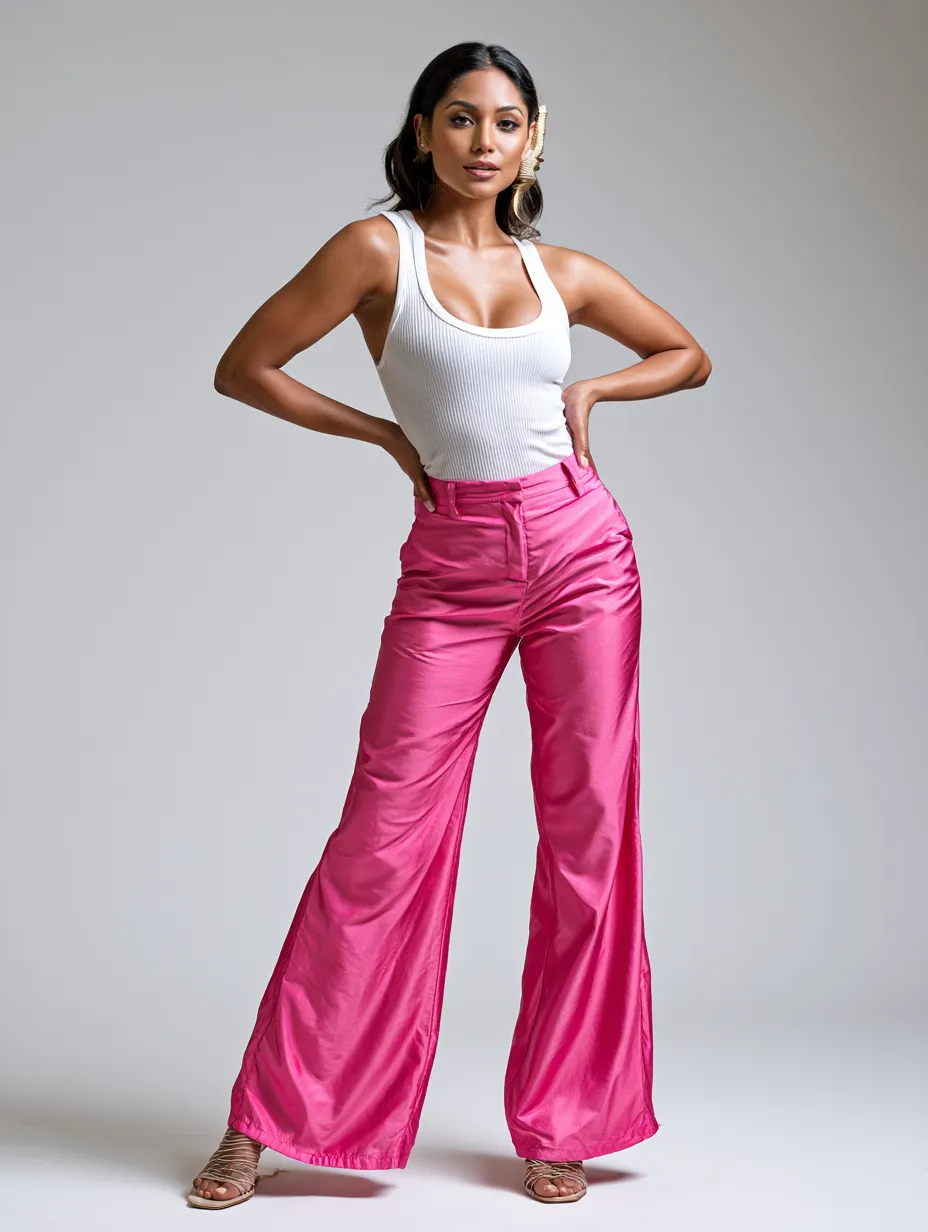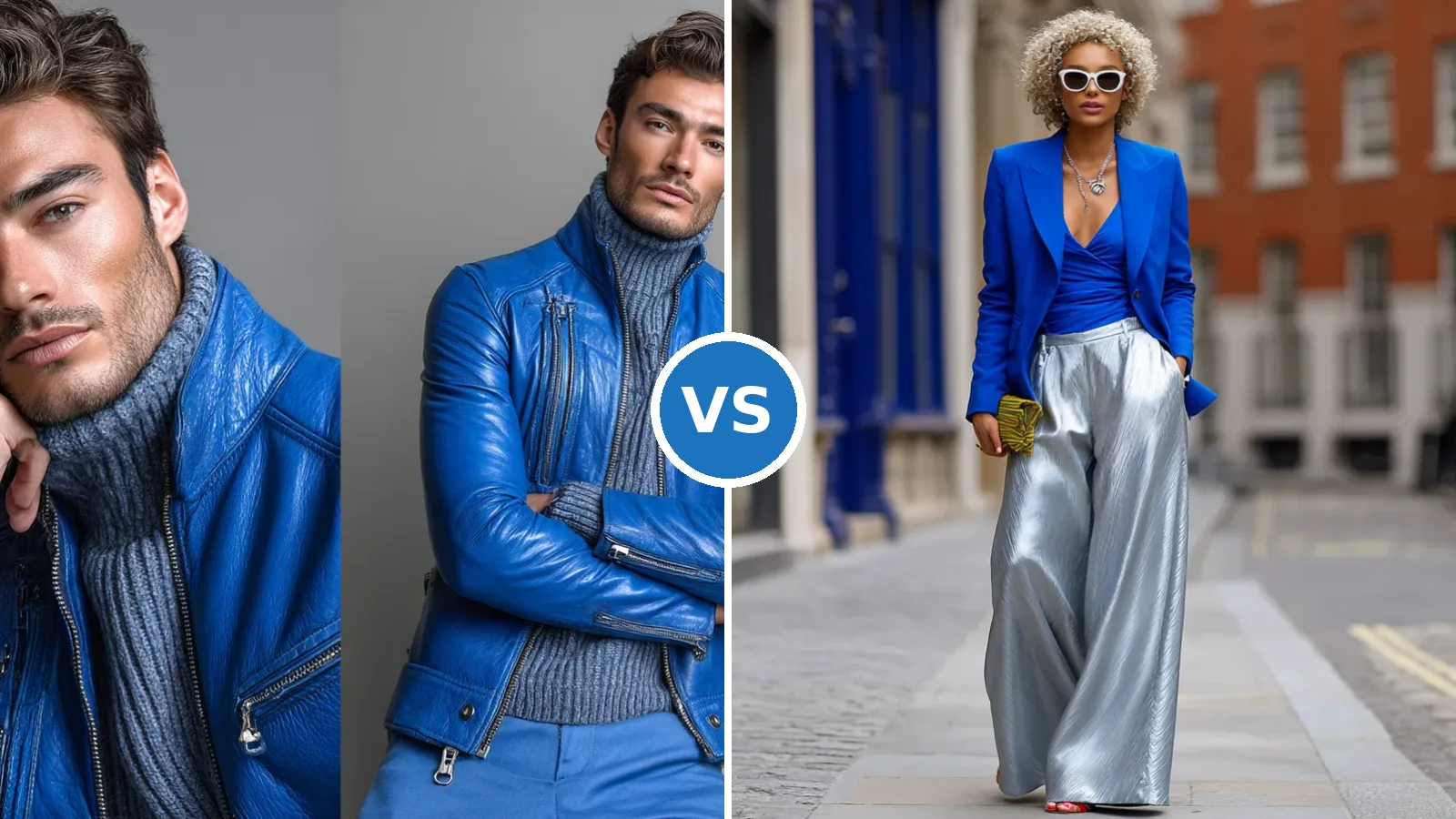
You’re standing in a fitting room with two jackets: one the electric hum of neon blue, the other a deeper, jewel-toned cobalt. Both feel bold. Both stopped people’s heads on the runway. But only one will work with your existing closet and skin tone.
The choice between cobalt blue and electric blue often feels like splitting hairs—they’re both saturated and eye-catching. Yet the fundamental difference lies in their hex values, their undertones, and the styling rules each one demands.

What cobalt blue and electric blue actually are
Cobalt blue sits at hex #0047AB, a cool-toned shade that reads electric under artificial light but keeps enough depth to feel intentional rather than costume-like. It appeared in menswear collections from major designers in Spring 2026, grounding itself as a wardrobe staple rather than a trend spike.
Electric blue is a true neon—brighter, more shocking, and closer to laboratory-grade brightness. It demands matte finishes to avoid looking like reflective foil, and it pairs with metallic silver accents rather than neutral greys and blacks. This shade works best in alternative and subculture styling, where the brightness is the entire point.
The practical difference: cobalt blue vs electric blue comes down to undertone and context. Cobalt lives in the cool-tonal family with greys and charcoals. Electric blue lives in the neon family with matte metallics and industrial textures.
Quick Verdict
- Choose cobalt blue if you want a designer-backed statement that works with basics you already own.
- Choose electric blue if you enjoy styling and want a look that reads alternative and intentional.
- Cobalt works best for menswear and polished casual outfits.
- Electric blue works best for subculture styling and gender-fluid fashion.
- Budget matters: cobalt-blue leather bombers run around $180; electric blue sweaters cost roughly $35 but require more pieces to complete the look.

Pairing logic and contrast strategy
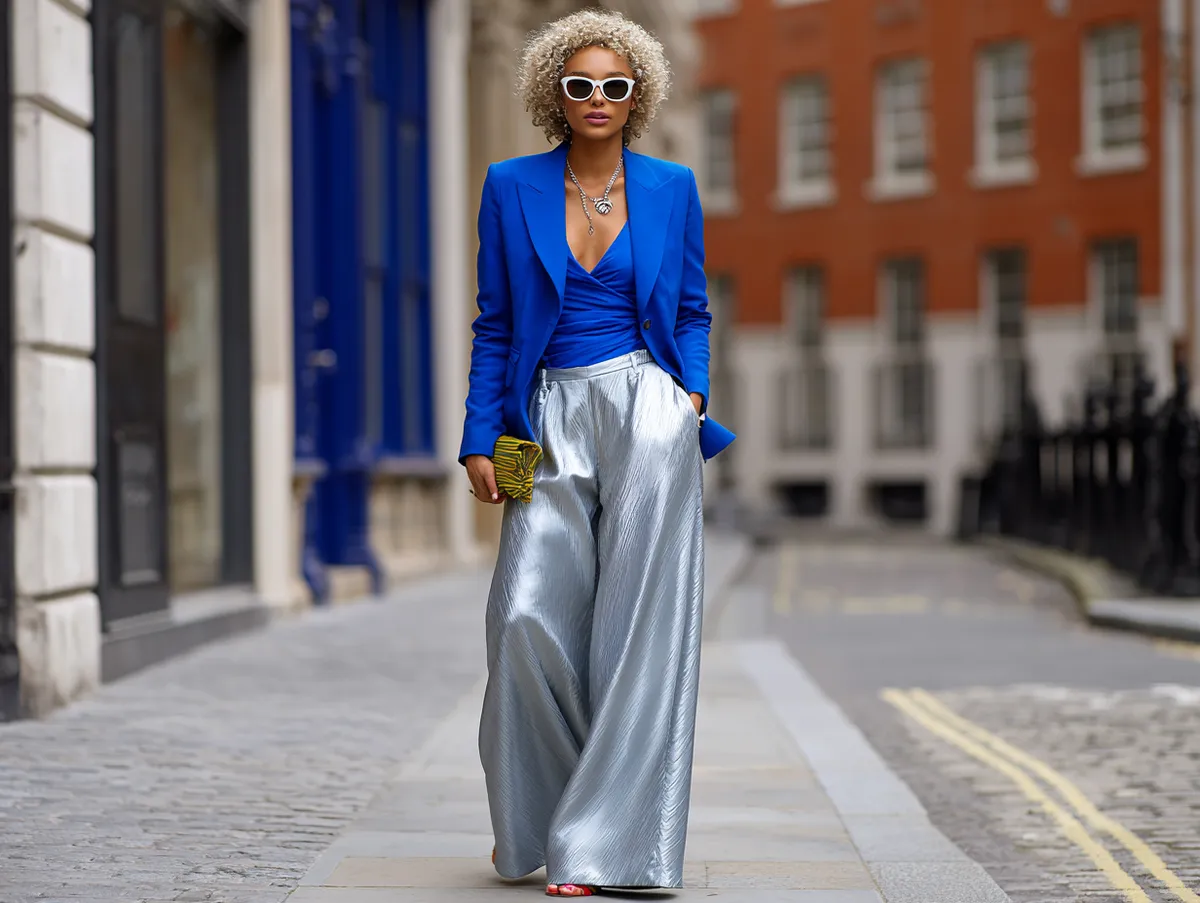
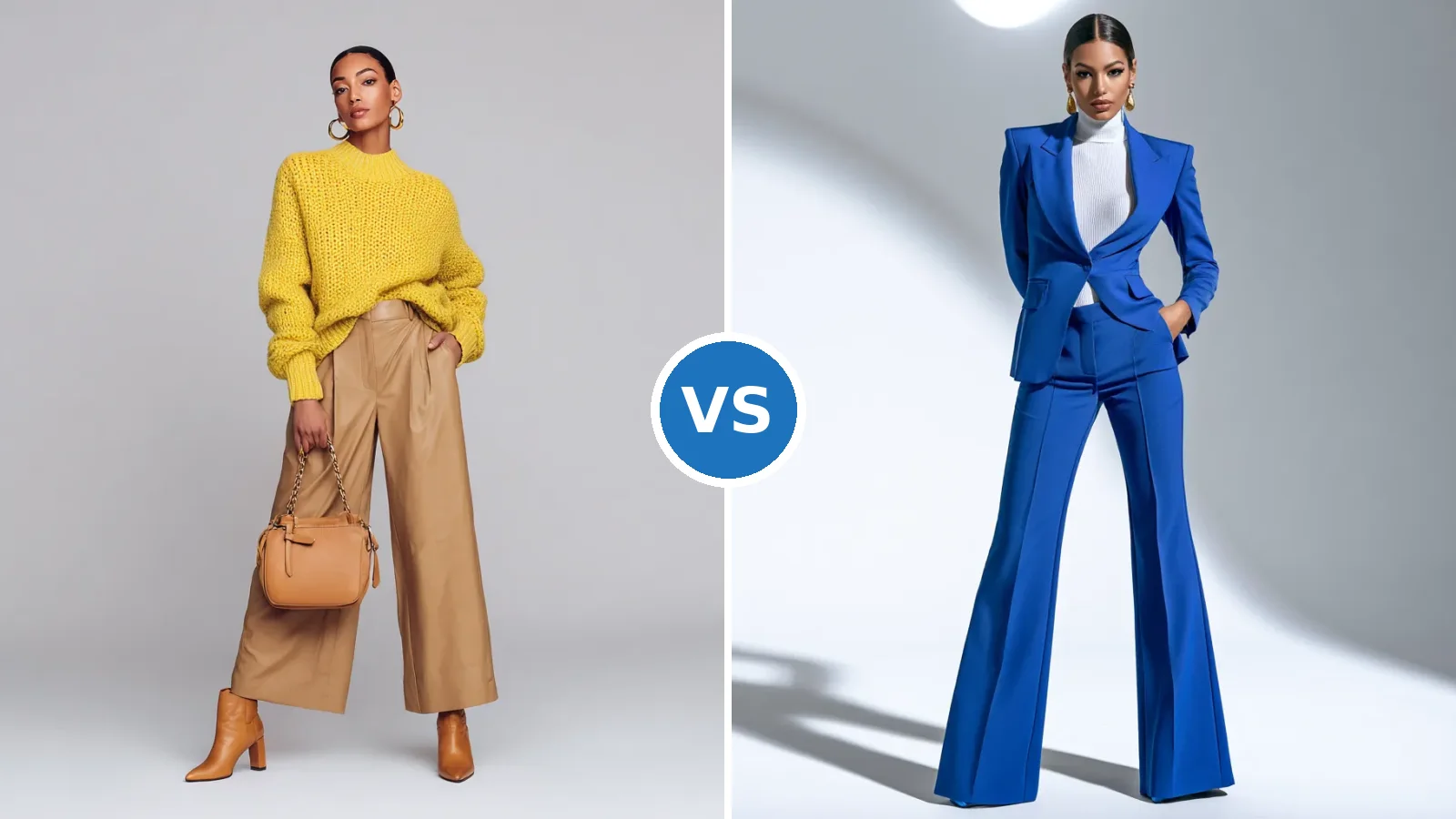
Cobalt blue works because of restraint. One cobalt piece carries the outfit—a leather jacket, a polo, or a dress shirt—while everything else stays neutral. Black denim, white sneakers, grey trousers: the formula is straightforward because cobalt’s saturation does the talking without support.
Electric blue requires active styling. Matte silver belts, chunky black combat boots, industrial textures, and strategic layering keep the outfit from reading as a costume. Shiny silver finishes clash with electric blue; matte surfaces anchor it. The pairing isn’t optional—it’s structural.
For cobalt, the risk is pairing it with other saturated tones like navy or warm earth shades, which muddy the effect. For electric blue, the risk is mixing it with shiny metallics or leaving the silhouette too loose and floaty without heavy pieces to ground it.
| Criteria | Cobalt Blue | Electric Blue |
|---|---|---|
| Undertone | Cool, jewel-toned | Neon, laboratory-bright |
| Best with neutrals | Grey, black, white, charcoal | Matte silver, industrial textures |
| Pieces needed per outfit | One statement piece + basics | Multiple coordinated pieces |
| Styling difficulty | Low—follows clear rules | High—requires intentional layering |
| Price entry point | Around $180 for quality outerwear | Around $35 for basics, but totals higher |
| Fashion authority | Gucci, Tom Ford, Victoria Beckham 2026 | DIY alternative and streetwear culture |
| Fabric that works | Leather, cotton, wool, any finish | Knit, nylon, canvas only—never shiny |

Where cobalt blue wins
Cobalt blue is designer-validated and easy to execute. Spring 2026 collections from major houses didn’t include cobalt as an experiment—it appeared alongside their core offerings, signaling staying power. You can buy a single cobalt piece and wear it 30 different ways with basics already hanging in your closet.
Fit and fabric forgive cobalt more generously than electric blue. A slightly oversized cobalt polo reads relaxed. The same fit in electric blue reads sloppy without intentional layering and accessories. Cobalt also works across age ranges and body types without requiring trend literacy.
Price-per-wear favors cobalt. A $180 leather bomber worn regularly across the year becomes a cost-effective investment. Adding silver belts, chunky necklaces, and coordinated boots to make electric blue work across multiple outfits compounds the total investment much faster.



Where electric blue wins
Electric blue commands attention in ways cobalt cannot. Its neon brightness works for people who want their clothing to do more than coordinate—it should provoke and excite. In alternative subcultures, electric blue with matte silver is the language itself.
Styling electric blue forces intentionality. You cannot sleepwalk in electric blue the way you can in a cobalt button-up. Every piece coordinates by design, not default, which appeals to people who view fashion as creative expression rather than problem-solving.
Electric blue also photographs differently. Under daylight, it reads as pure visual energy. Cobalt, by contrast, can fade toward navy in outdoor photos depending on lighting. For content creators and people who live partly online, electric blue’s photo consistency matters.


The biggest mistake people make choosing between them
The most common error: assuming one shirt in either color will work everywhere. Someone buys a $120 electric blue silk shirt assuming it pairs with existing silver pieces, only to discover shiny silk bounces light in ways that clash with matte silver metallics. The result looks costume-like and unfinished.
The cobalt equivalent happens when someone pairs a cobalt jacket with navy or blue-toned bottoms, creating a tonal muddle that reads flat rather than sharp. Both mistakes come from treating the shade as a standalone color rather than understanding its pairing ecosystem.
The fix: before buying, pull three pieces from your closet that would pair with your statement color. If you can’t build at least two complete outfits from what you already own plus one new purchase, the shade doesn’t work for your wardrobe’s logic yet.

Who should choose which shade
Choose cobalt blue if you want a statement color that works with your existing basics, prefers fewer decisions, or gravitates toward menswear or polished-casual styling. This shade carries weight without demanding a rebuild. It also suits people newer to bold color—the rules are clear and forgiving.
Choose electric blue if you enjoy styling as a creative practice, already own intentional basics and metallics, or identify with alternative fashion. This shade rewards effort. It also suits people with editorial taste who view each outfit as a small project rather than a daily utility.
Your skin tone matters too. Cobalt’s cool depth suits most undertones without washing anyone out. Electric blue’s pure neon brightness reads differently on cool versus warm skin—try both before committing.