Farmhouse kitchen window treatments shape both the light and the mood of the room more than almost any other surface choice. The right fabric or shade keeps privacy where you need it, softens harsh glare over the sink, and reinforces the warm, lived-in look that defines the style. Choose poorly and the windows feel either bare or overdressed.
Three materials dominate successful farmhouse kitchens: classic checkered cotton, textured burlap, and soft linen. Each controls light differently and lasts through steam, grease, and daily washing when the weight and weave are correct. Medium-weight linen at 6–8 oz per square yard and cotton duck both resist pilling better than thin synthetics, according to fabric performance data used by makers of café and tier curtains.
Budget-friendly café panels often start near $20 a pair, while custom Roman or roller versions commonly land between $180 and $280 per shade. Hardware in black iron or aged brass finishes the look without fighting the wood and stone already in the room.
- Checkered cotton panels give instant country contrast and wash easily.
- Burlap shades add texture and modest insulation for under $100 in many stock sizes.
- Linen drapes filter light softly and improve with each wash.
- Café length protects the lower window from splash while keeping upper light open.
- Natural rods and simple headers keep the look honest, not staged.
- Average installed cost per window sits between $200 and $400 for mid-range fabric options.
Classic Checkered Curtains Bring Instant Country Contrast


Classic checkered curtains remain one of the fastest ways to signal farmhouse kitchen window treatments without heavy investment. The geometric pattern reads as country the moment it goes up, whether the checks are red-and-white, black-and-white, or a softer muted pair that matches existing cabinetry. Natural cotton or cotton-linen blends hold their shape through repeated washing and resist the limp look that cheap polyester develops after a few cycles.
Why do these panels work so well over a sink? The open weave still lets morning light reach the counters while the lower fabric blocks the view from outside at eye level. Café length—covering only the bottom half—keeps steam and splash off the fabric yet leaves the upper glass free. Full-length versions create more drama but collect more kitchen residue and need more frequent laundering. Stock pairs often sell for $20–$35; custom sizes run higher once you move past standard 36-inch widths.
Avoid the common mistake of hanging the rod too close to the frame. Extend it 4–6 inches past each side so the panels can stack clear of the glass when open. A simple rod-pocket or tab-top header keeps the gathered look casual; grommets feel more contemporary and can fight the rustic story. Pair the curtains with a matte black or oil-rubbed bronze rod and the whole window suddenly belongs to the room rather than floating above it.


Think of the check pattern the way a farmer once thought of a work apron: useful first, decorative second. Once the practical job is done, the visual payoff is free. For more layout ideas that keep small spaces feeling open while still rustic, see these small modern farmhouse kitchen ideas for every budget.
Burlap Shades Add Texture and Quiet Insulation
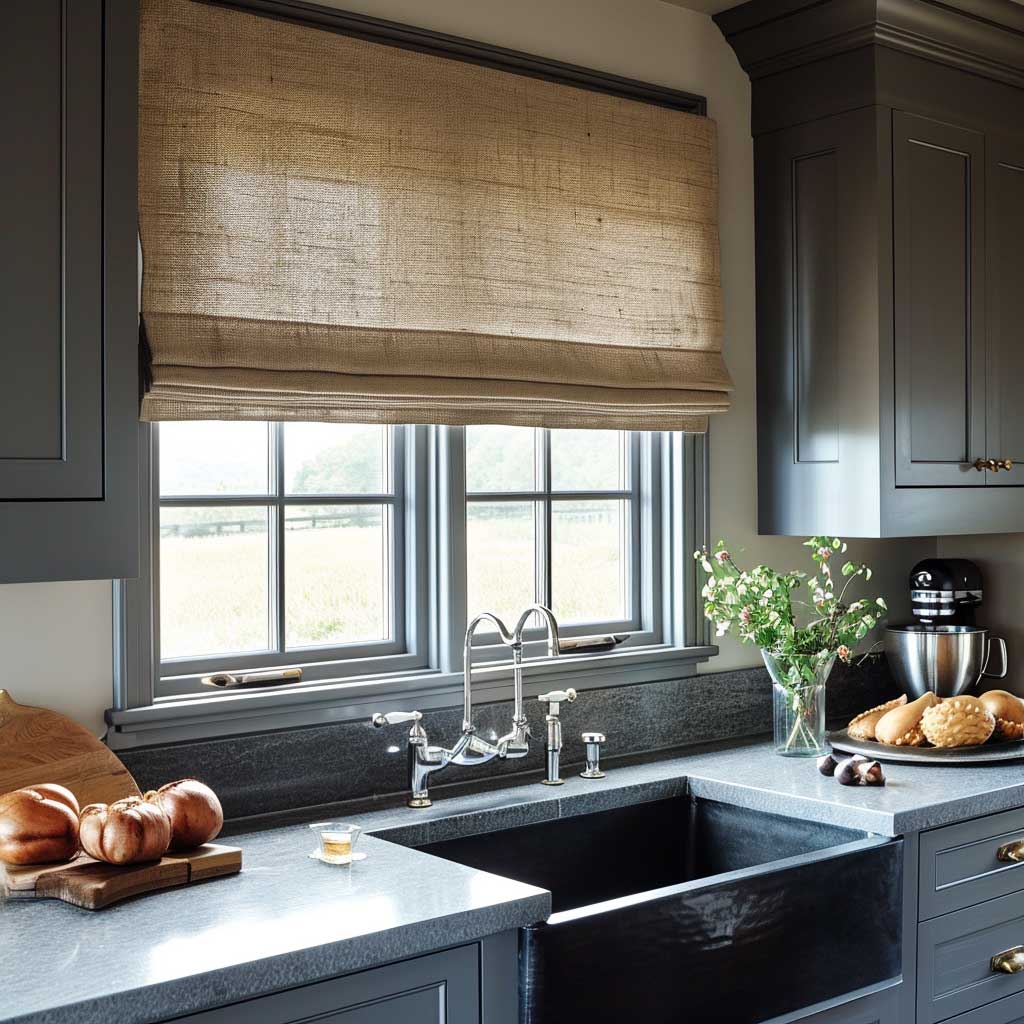

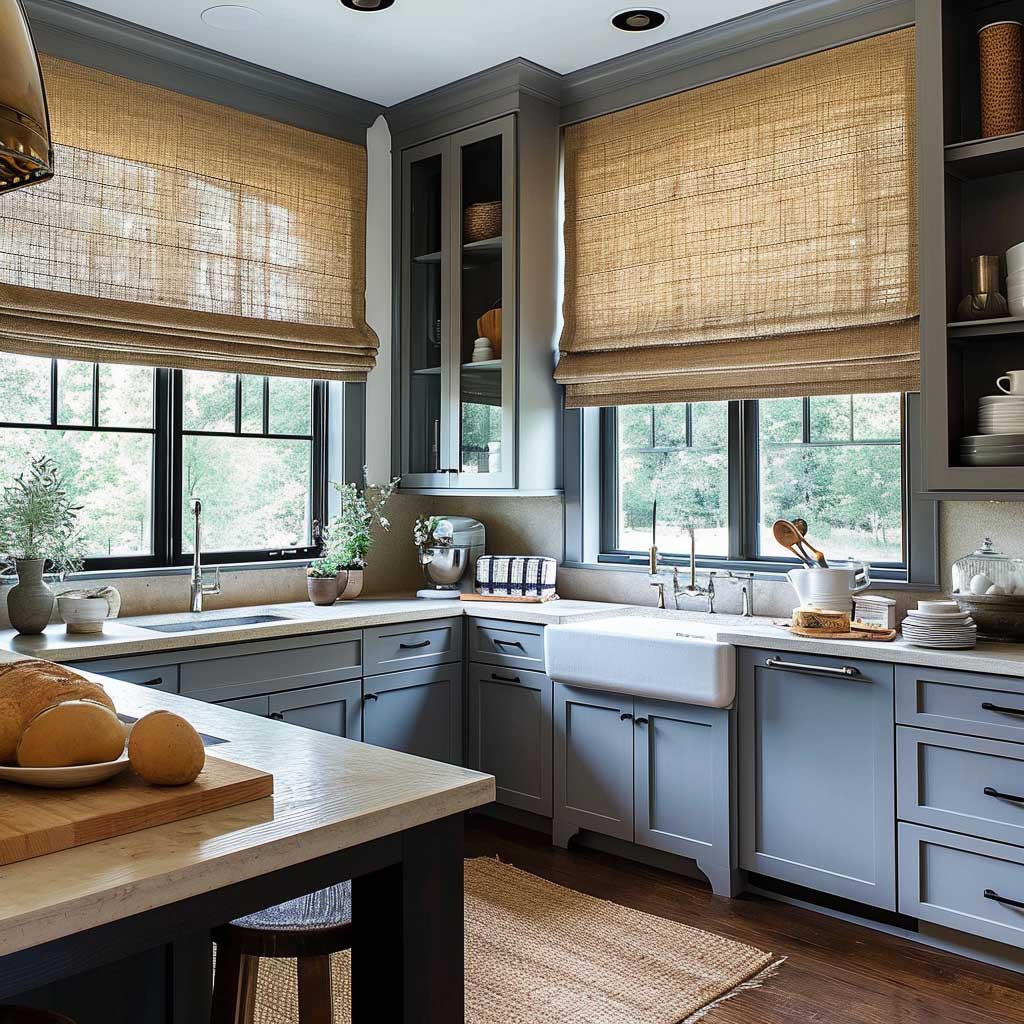

Burlap shades bring a coarser, more utilitarian texture that many farmhouse kitchens need to balance smoother surfaces like painted cabinets or quartz counters. Made from jute fiber, the fabric has a natural variation that synthetic weaves never quite match. The open structure still allows daylight to enter while cutting glare and offering a modest thermal break—useful in older houses where single-pane glass loses heat quickly.
Roman or roller styles both work. Roman folds create a softer stacked look when raised; rollers stay flatter and collect less dust in the folds. Stock sizes start near $80–$100; custom widths climb once the shade exceeds 48 inches. The material itself is durable, yet it can shed fibers when new, so a light vacuum or shake outdoors before hanging prevents kitchen dust. Avoid placing pure burlap directly above a high-output range where grease settles into the weave.
Hardware should stay simple. Wrought-iron or aged-brass brackets reinforce the same material honesty the shade already shows. Pairing the shade with a wooden bread box or ironstone crocks nearby creates a continuous texture story rather than a single isolated window treatment. The result feels collected over time instead of installed in one afternoon.


One practical limit: burlap is not the most stain-resistant choice near a busy prep zone. If the window sits directly behind the sink, a lighter cotton café panel or a washable linen tier often proves smarter long-term. For surfaces that face the same daily grease challenge, these farmhouse kitchen backsplash ideas that stay easy to clean show materials that wipe clean in seconds.
Flowing Linen Drapes Soften Light Without Heavy Drama


Flowing linen drapes suit farmhouse kitchen windows that need softness rather than strong pattern. The fabric’s irregular weave and gentle hand give the same organic quality as wood grain or stone. Unlined or lightly lined medium-weight linen (roughly 6–8 oz per square yard) filters sunlight into a warm glow while still offering daytime privacy. Full blackout lining is rarely needed in a kitchen and can make the panels feel stiff and formal.
Color choice stays simple. Oatmeal, ivory, soft gray, or pale flax all sit quietly against white or wood cabinetry. Stronger hues work only when the rest of the room already carries that accent. Ready-made panels from major retailers often start near $80–$140 each; pure European flax versions run higher. Pre-washing accounts for the typical 3–5 % shrinkage and softens the hand further.
Hang the rod high and wide. A rod placed 6–8 inches above the frame and extended past the sides makes the window appear larger and lets the panels clear the glass completely when drawn open. Simple ties of the same linen or a length of natural twine keep the look consistent. Avoid ornate finials that compete with the fabric’s quiet texture.


Linen improves with age and washing, becoming softer rather than thinner. That longevity makes it a stronger long-term choice than many synthetic “linen-look” fabrics that pill or yellow. When the kitchen also needs a cleanable surface nearby, a sealed wood or ceramic backsplash keeps the overall maintenance load low.
Choosing Between Checkered, Burlap and Linen Options
Different farmhouse kitchen window treatments solve different problems. Checkered panels deliver pattern and washability. Burlap supplies texture and a slight insulating layer. Linen offers soft light control and a refined drape. Matching the material to the window’s location and the household’s cleaning habits prevents later frustration.
| Treatment | Best Location | Approx. Starting Price | Light Control | Washability |
|---|---|---|---|---|
| Checkered cotton | Sink or table windows | $20–$35 pair | Partial (café) to full | High – machine wash |
| Burlap shade | Side or upper windows | $80–$100 stock | Diffused, moderate privacy | Spot clean / vacuum |
| Linen drape | Main or garden windows | $80–$140 panel | Soft filter, daytime privacy | High – improves with wash |
Average mid-range installed cost across fabric options lands between $200 and $400 per window once hardware and labor are included. Pure stock café panels stay far lower; fully custom Roman shades with lining push higher. Choose the simplest solution that still meets privacy and light needs rather than defaulting to the most decorative option.
One external resource that lists practical material and durability notes for similar rustic treatments is available at this collection of sustainable farmhouse window ideas.
Practical Rules That Keep the Look Honest
Hardware finishes matter as much as fabric. Matte black, oil-rubbed bronze, or raw iron rods reinforce the utilitarian side of farmhouse style. Polished chrome or shiny brass usually feels out of place unless the rest of the kitchen already uses those metals. Rod diameter of ¾ to 1 inch looks substantial without overpowering a standard window.
Length decisions follow function. Café tiers protect the lower glass and leave upper light free—ideal above a sink. Floor-length panels create vertical lines that make a low ceiling feel taller, yet they require more clearance from counters and appliances. Never let fabric pool on a kitchen floor where spills are common.
Maintenance is the quiet test of any choice. Cotton and linen win because they can go through a regular wash cycle. Burlap and woven wood need more careful dusting. If the household cooks daily with open pans, prioritize washable fabric over texture that traps grease.
Final Window Decisions That Last
The strongest farmhouse kitchen window treatments feel inevitable once they are in place. Pattern, texture, or soft drape should look as if it has always belonged with the wood, the sink, and the light that enters the room.
Start with the window that sees the most daily use. Solve privacy and splash protection there first, then repeat the same material language on secondary openings. Consistency across the room matters more than variety.
Keep hardware simple, choose fabrics that survive washing, and measure for proper rod extension. Those three habits prevent most later corrections.
When the light falls softly, the view is controlled where needed, and the texture matches the rest of the kitchen, the window stops being a problem and becomes part of the room’s quiet strength.