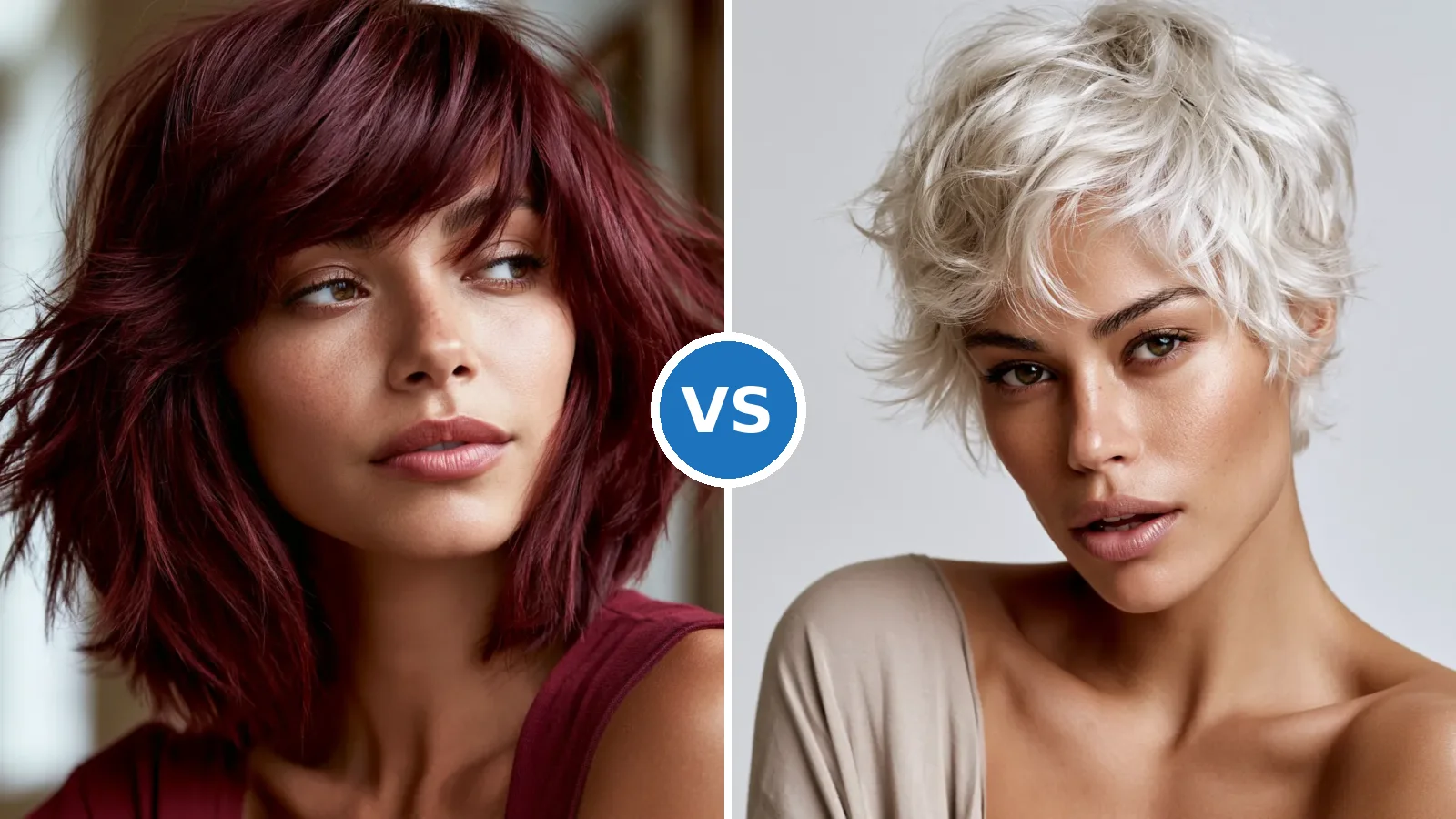
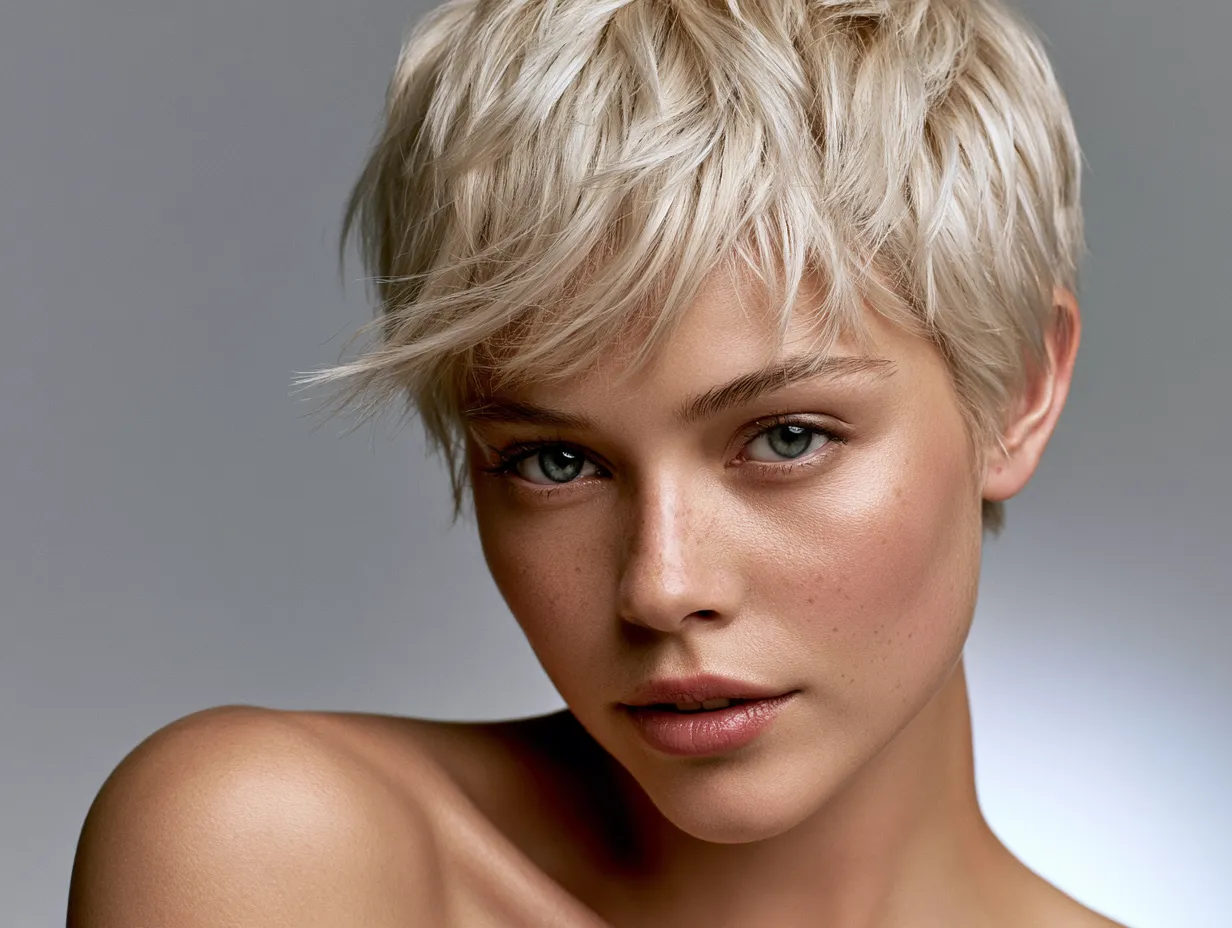
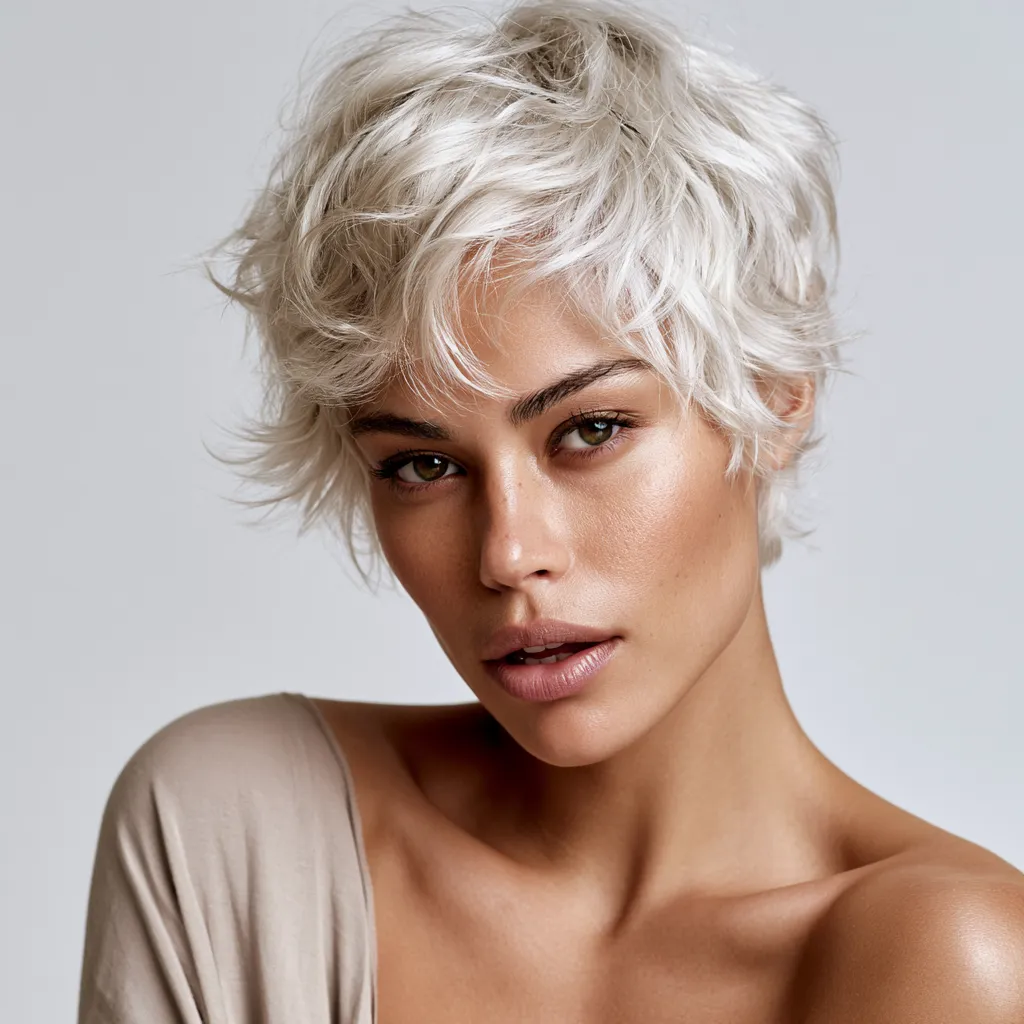
Bixie haircut ideas for evening parties work because the cut is engineered for exactly that environment — layered short enough to skip a blowout, long enough to hold a curl through a full reception. The shape sits between a pixie and a bob, and that middle ground is precisely what gives it range: copper looks combustible under warm ambient light, burgundy deepens under chandeliers, and icy silver reads like a mirror in a dim room.
According to John Frieda, maintaining a bixie requires a trim every 4–6 weeks to keep the layers intentional rather than grown-out. That cadence matters more on a party night than any other occasion, because every inch of the cut is visible at close range. A well-shaped bixie from two weeks ago still holds. The same cut at eight weeks starts reading unkempt around the nape — exactly the section that catches light at a seated dinner.
Color selection is where most people underestimate the impact. A single-process salon color service runs $60–$150 at a mid-range salon, while double-process vivid shades like copper on dark hair typically reach $100–$175. The three color directions below — copper, burgundy, and icy silver — each behave differently under evening lighting and require different maintenance timelines.
- Copper bixie catches warm ambient and candlelight; single-process color runs $60–$150 at mid-range salons
- Burgundy bixie deepens under chandelier lighting; touch-ups needed every 4–6 weeks, red pigments fade fastest
- Icy silver bixie reads sharpest under low, cool light; purple shampoo 1–2 times weekly prevents yellowing
- All three bixie variations need a trim every 4–6 weeks (John Frieda) to hold shape for event wear
- Texturizing spray on damp hair is the baseline product — heavy gel flattens short crown layers by hour three
Warm Light Meets Copper — How This Bixie Haircut Earns Its Moment
Copper bixie haircut styling for evening parties relies on one physical fact: warm ambient light and copper pigment sit on the same section of the color wheel, so they amplify each other instead of competing. Under candlelight or Edison-bulb reception lighting, the hair reads almost luminous — the layered structure catches the light at multiple angles simultaneously in a way a solid, single-length cut simply cannot. A double-process copper application on dark hair — which requires bleaching before depositing the tone — typically runs $100–$175 at a salon, per industry pricing data from 2026.



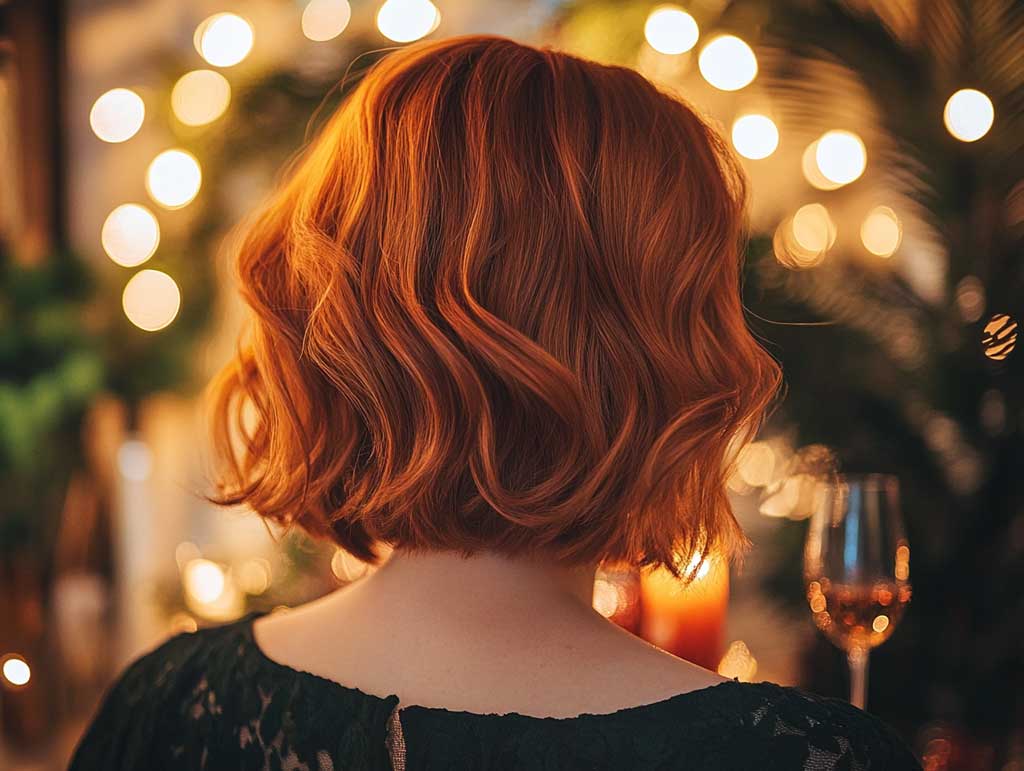
Soft waves are what elevate a copper bixie from a daytime cut to something genuinely evening-ready. A texturizing spray applied to damp hair before diffusing creates the wave foundation; anything heavier than a light-hold formula weighs down the shorter crown layers and the luminosity disappears. What doesn’t work: applying a heavy gel over the top to “lock in” the waves. Gel flattens the section that catches the most light, and the effect is gone long before the main course arrives.
Stylists recommend pairing copper with bronze or gold makeup tones rather than neutral or cool shades — the warm triangle of eyes, lips, and hair color reads as a deliberate editorial choice rather than coincidence. Statement earrings in gold or amber work with the palette; silver jewelry flattens it. Does copper work on darker natural hair? Yes, but the bleaching step before the tone is applied is where the cost jumps. Using a color-protecting sulfate-free shampoo from the first wash is the single most impactful maintenance decision — hard water strips warm pigment fast, and copper is particularly vulnerable.
At-home copper color kits — including Matrix SoColor Permanent Cream Haircolor in Copper Golden Brown — retail around $16.99 at mass market retailers, which is the budget option for refreshing the tone between salon visits. The professional version holds longer and deposits more evenly on previously lightened hair. A touch of shine spray before leaving the house is the one finishing step stylists consistently recommend: copper looks dull when it dries flat, and the spray reactivates the luminous quality that makes the color party-appropriate.
Burgundy Bixie Haircut — What Red Pigment Actually Does at Night
Burgundy bixie haircut styles for evening events work precisely because the deep red-purple tone absorbs and reflects chandelier light differently than any other color family — it darkens in shadow and ignites in direct light, creating a visual shift that reads dramatic without needing to be aggressive. The layered bixie structure is what unlocks that effect: flat, single-length hair catches light at one angle, while the bixie’s interior texture catches it at four or five simultaneously. Burgundy contains more red and purple undertones than maroon, sitting closer to wine, which means it flatters a wider range of skin tones than a straight red would.
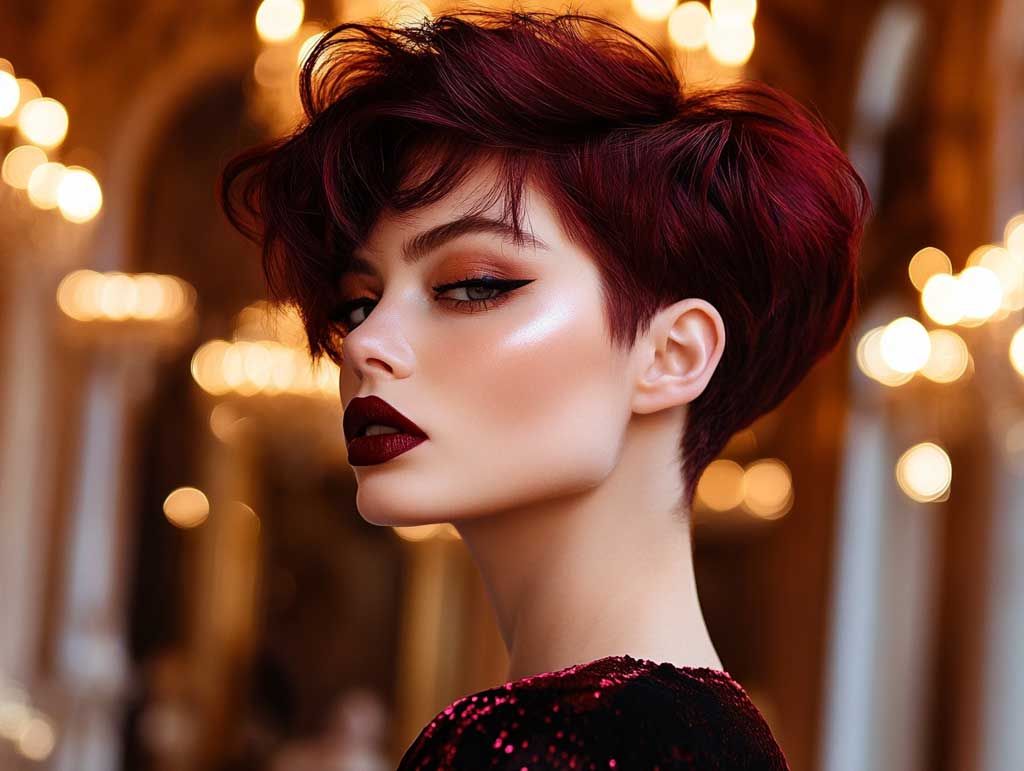
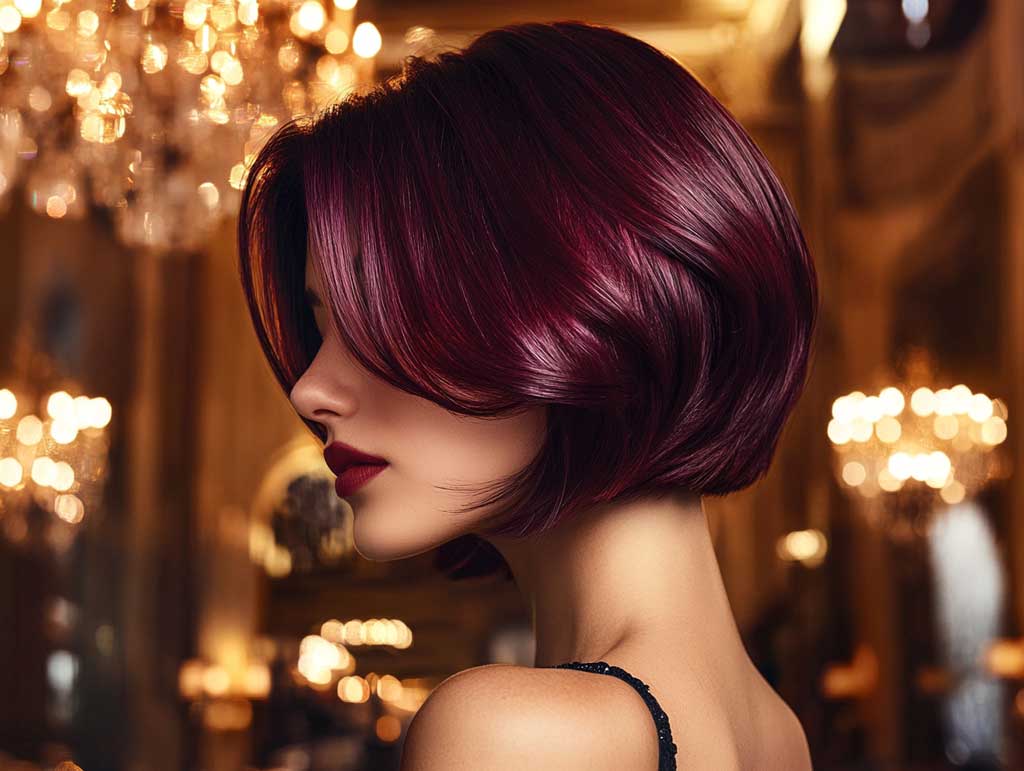
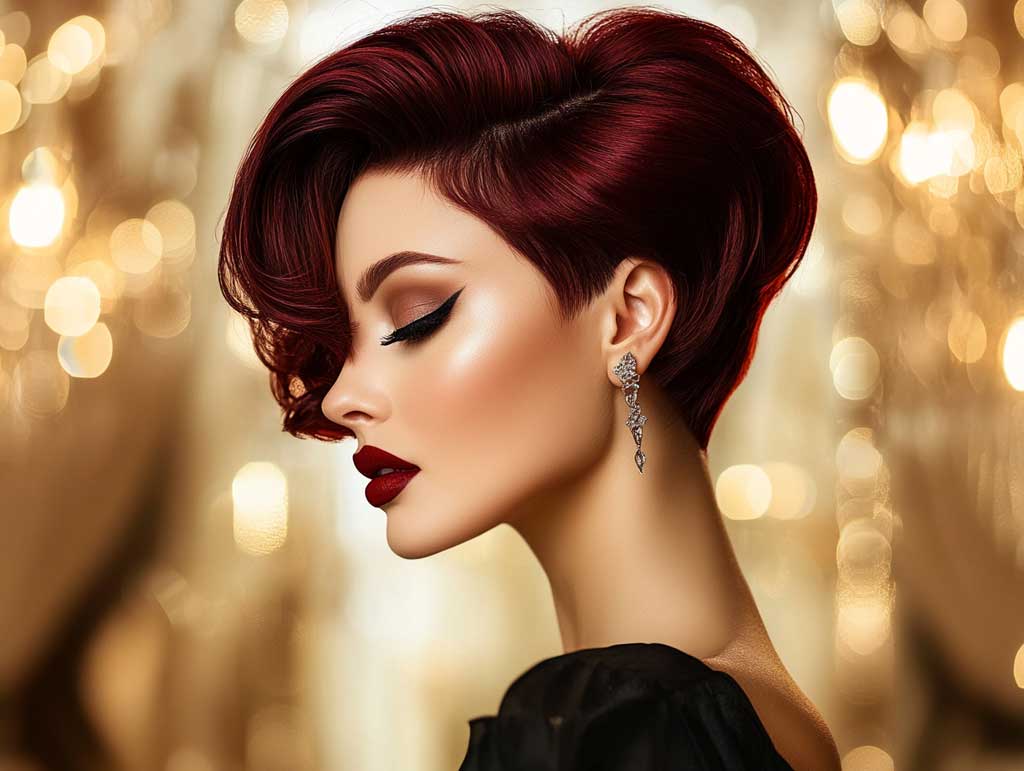
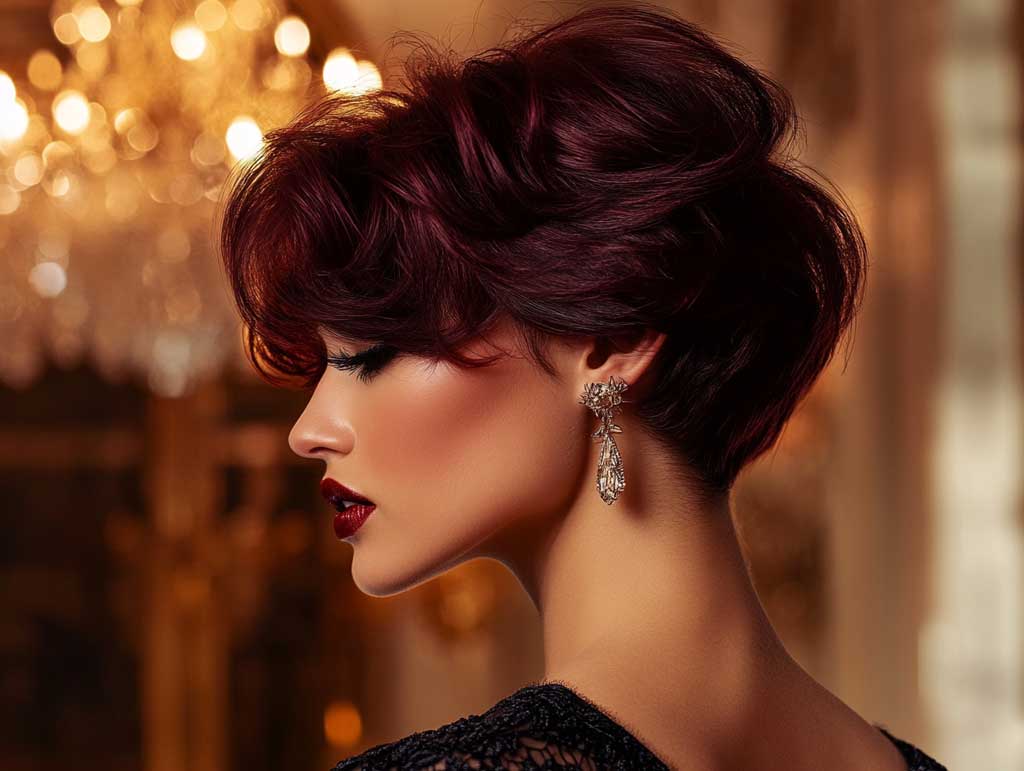
Red pigment fades faster than almost any other color family — burgundy typically requires a touch-up every 4–6 weeks, with color-depositing salon glosses recommended every four weeks to maintain richness between root appointments, according to colorist guidance from Paul Mitchell. The molecular structure of red pigment is smaller than brown or black pigment, which means it exits the hair shaft more readily through washing and heat exposure. Why does this matter for an evening party? Because the difference between freshly toned burgundy and three-week-old burgundy is visible under direct overhead light — the former reads jewel-toned, the latter reads auburn.
Teasing the roots before styling adds the volume that makes a bixie look party-ready rather than just day-to-day. A lightweight mousse at the roots — applied on damp hair before diffusing — builds the lift without weighing down the ends. Lightly curling the layers with a one-inch wand creates texture that holds through an evening; tighter curls from a smaller barrel look overdone at close range and loosen unevenly by the time dessert arrives. Berry or plum makeup tones tie the look together without reading matchy.
Don’t use a standard sulfate shampoo on a freshly colored burgundy bixie. Red pigment exits the hair shaft faster than any other color family, and sulfates accelerate that loss significantly with every wash. A sulfate-free shampoo designed for color-treated or red hair preserves the depth that makes the shade work under evening lighting — without it, the color shifts toward a flat auburn within two to three weeks. Don’t skip the gloss appointment either: colorists recommend a toner gloss every four weeks, not just when roots appear. The gloss is what keeps the burgundy reading rich rather than brassy under overhead light.
Jeweled hairpins or a subtle headband are the accessories that work with this look rather than competing with it — anything that adds volume at the top of the head reinforces the bixie’s silhouette rather than flattening it. A sleek gown or tailored suit is the outfit pairing that gives the hair room to be the focal point. For bixie haircut color ideas for formal weddings, the same color-care principles apply but the timing pressure is higher — a touch-up seven to ten days before an event gives the tone time to settle without looking freshly done.
Icy Silver Bixie Haircut — Low-Light Rooms Are Where It Lands
Icy silver bixie haircut styling for evening parties depends entirely on a simple optical principle: cool metallic tones reflect cool-temperature artificial light more intensely than they reflect warm daylight. A rooftop event with natural light at sunset looks fine in silver. The same silver in a dim interior with cool-toned LED spotlighting looks architectural — the hair reads almost like a material rather than a color. That’s the party environment where this cut earns its reputation.




Maintaining icy silver requires purple shampoo used once or twice weekly — used more often and the hair develops a faint lavender tint; used less and yellow tones creep in within two weeks, especially with hard water exposure. A shine serum applied to damp hair before any heat styling is the product that keeps the metallic finish looking intentional rather than chalky. The bixie’s sleek, straight styling option works especially well here: the sharp layers catch light at clean angles, and a diffused or tousled finish would undercut the precision that makes silver read high-fashion rather than natural.
Think of icy silver bixie layers like a prism rather than a mirror — each layer reflects at a slightly different angle depending on how the head moves, which is why the cut has so much visual movement even when the styling is technically minimal. What kills that effect: applying heavy wax or pomade to smooth flyaways. The right tool is a light shine serum, not a hold product. Silver and platinum jewelry amplifies the cool tone of the hair; warm gold pulls the two apart rather than connecting them.
Does icy silver require bleaching first? Yes, on any base darker than a level 8 blonde — the pre-lightening step is where the cost and processing time accumulate. A weekly hair mask is non-negotiable for bleach-processed hair: the cuticle is more porous after lightening, which means both moisture and pigment exit faster than on unprocessed strands. For anyone exploring other short-hair color directions, bixie haircut styles for outdoor and beach settings cover how the same three color families behave in completely different lighting conditions.
| Color | Best Venue Lighting | Touch-Up Frequency | Key Risk |
|---|---|---|---|
| Copper | Warm ambient / candlelight | Every 4–6 weeks (double process) | Brassy fade without sulfate-free shampoo |
| Burgundy | Chandelier / overhead warm | Gloss every 4 weeks, root every 6–8 | Red pigment fades fastest of all color families |
| Icy Silver | Cool LED / dim interior spotlight | Purple shampoo 1–2x weekly; toner every 4–6 weeks | Yellow creep from hard water without weekly toning |
According to the John Frieda bixie haircut guide, maintaining any bixie variation requires a salon trim every 4–6 weeks to prevent the layered shape from collapsing into an awkward grow-out — a schedule that applies to all three color directions above regardless of how the color is holding.
BIXIE HAIRCUT FOR EVENING PARTIES
Three Colors. One Cut. The Room Does the Rest.
Copper reads best under warm candlelight and fairy lights — the color and the light source reinforce each other. Burgundy earns its depth under chandeliers and overhead warm lighting; plan a salon gloss every four weeks to keep the red pigment from going flat. Icy silver is the cool-room color: dim interiors and LED spots are where it looks architectural.
All three bixie variations require a trim every 4–6 weeks to hold their shape for party wear. A texturizing spray on damp hair handles most of the daily styling work in under five minutes.
Save this post before booking your color appointment — match the shade to your venue’s lighting, not just the photo.
Related Topics