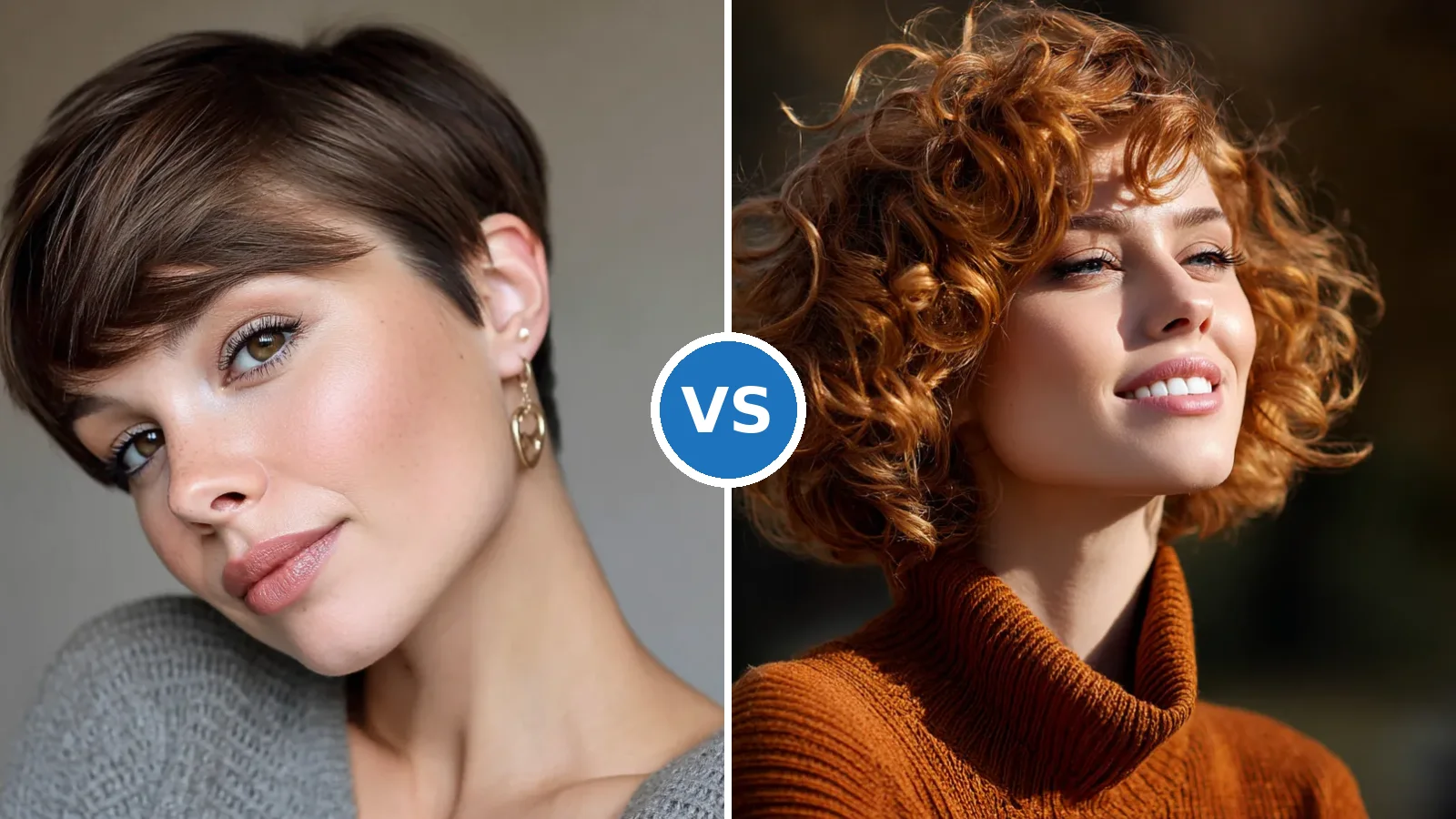
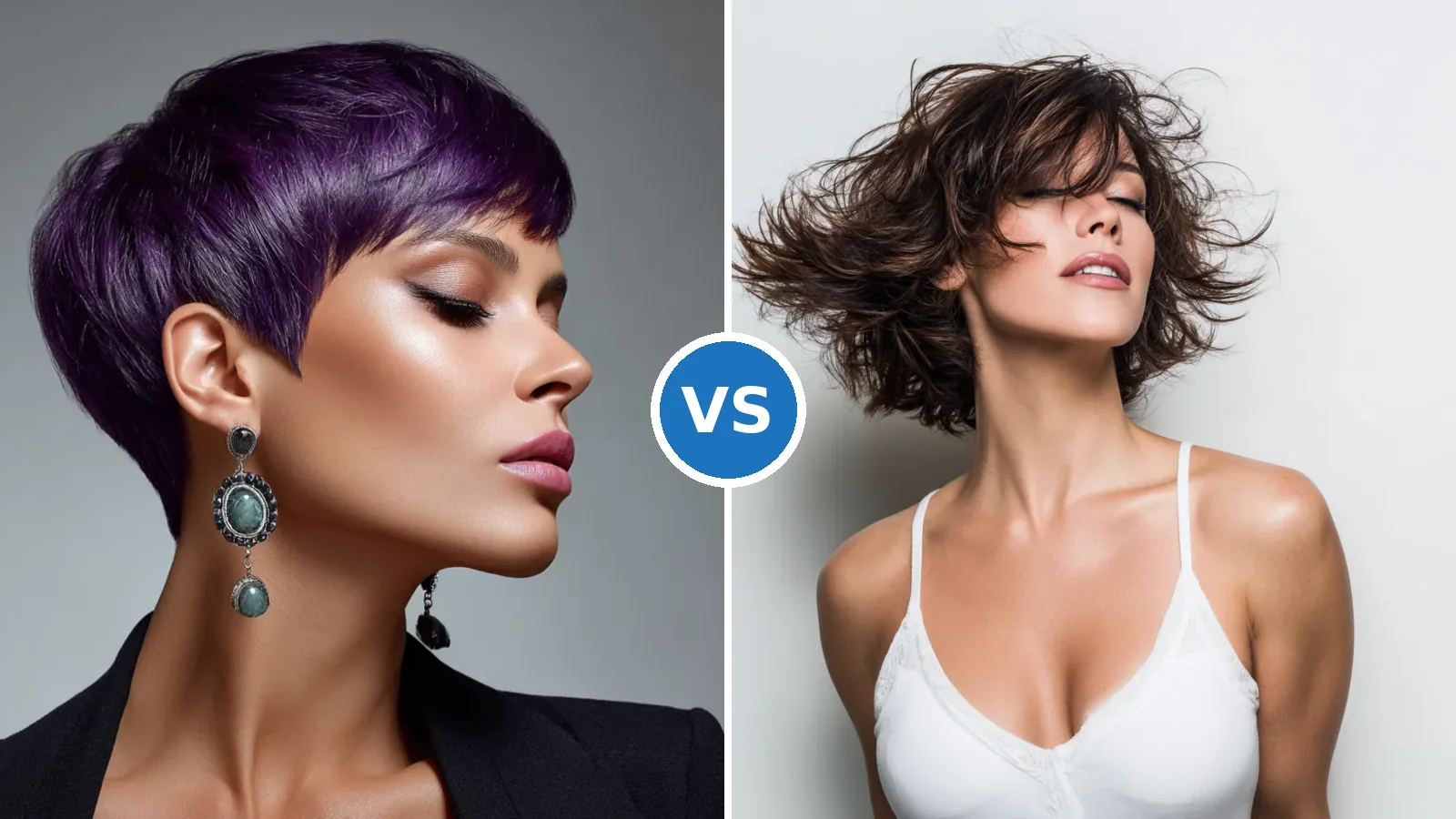
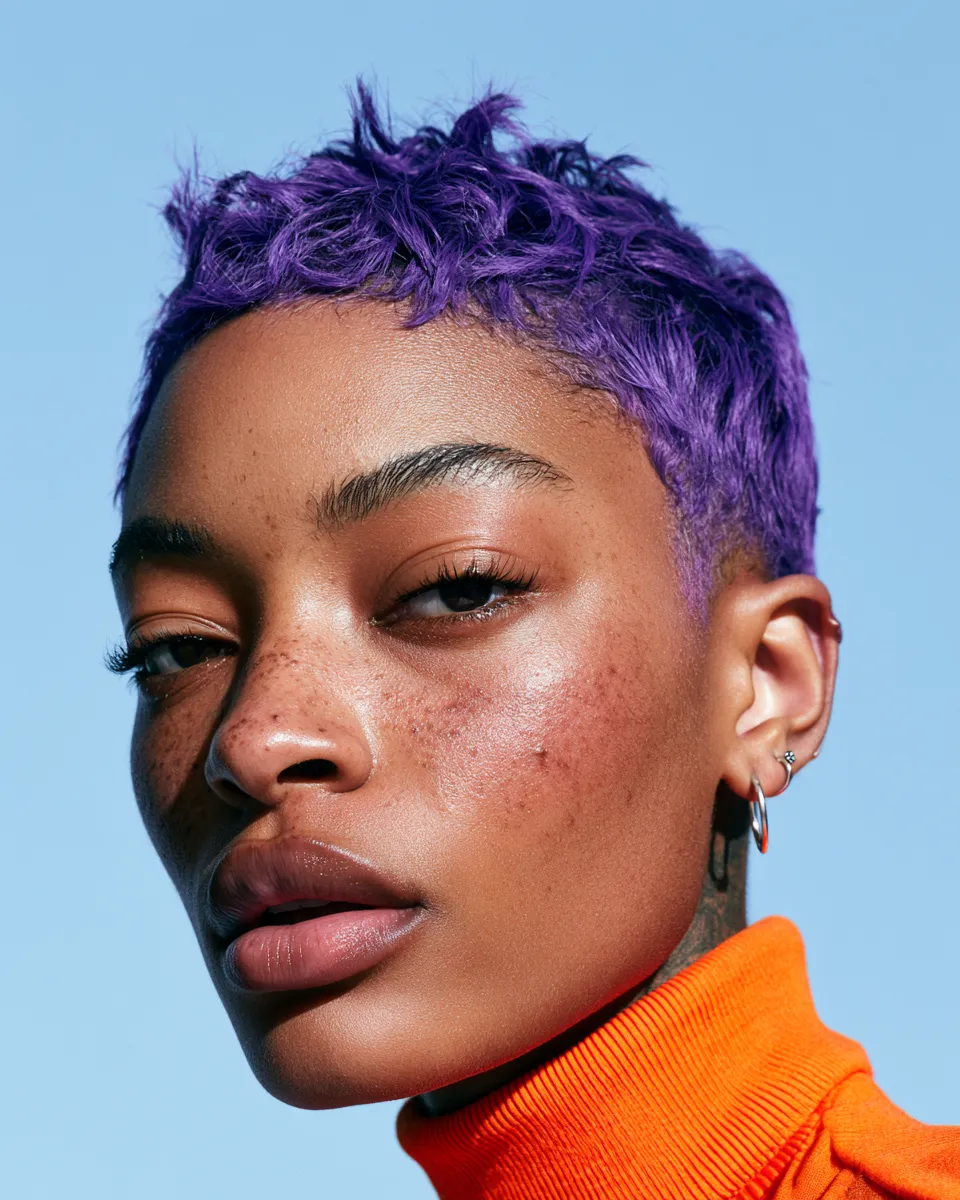
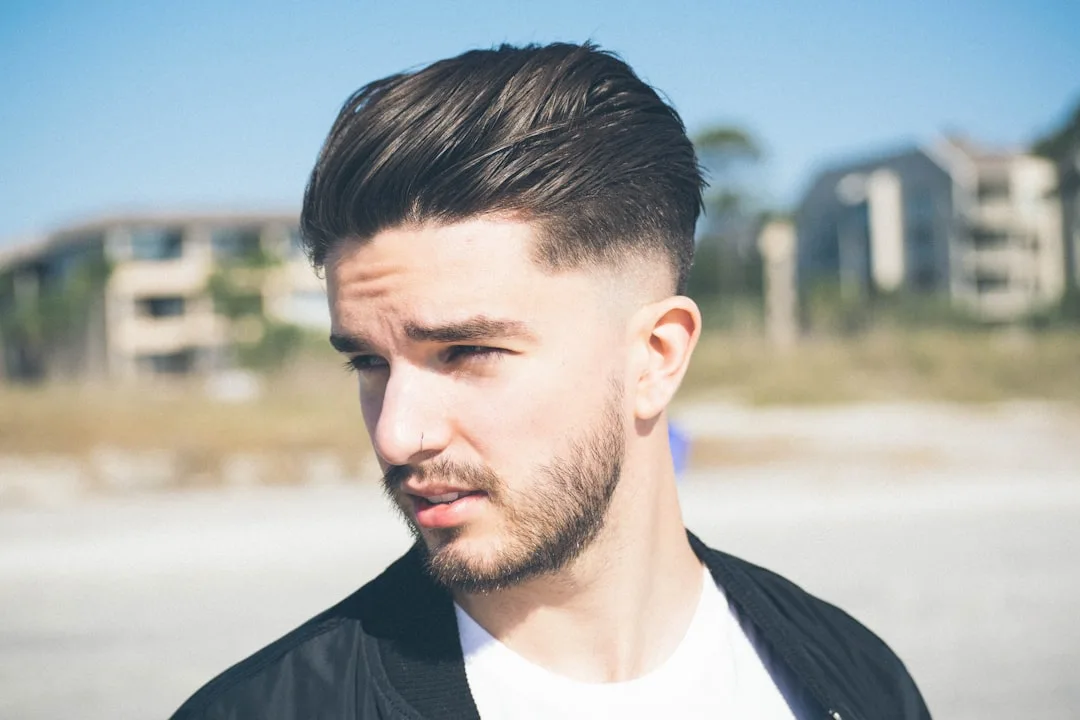
Loose curls on short hair are one of those looks that sound simple until you’re standing there with a half-curled head and a wand that’s leaving creases instead of waves. I’ve been there. The difference isn’t technique — it’s almost always barrel size, and then product weight after that. Short strands can absolutely hold a curl beautifully, but they’re unforgiving: the wrong tool or too much product and you end up with either nothing or a tight spiral that won’t loosen no matter how much you run your fingers through it.
The good news is that all three main methods — curling wand, flat iron, and no-heat overnight techniques — work well on short hair when the setup is right. You’ll notice the difference within the first section you try once you’ve matched the tool to the look you’re after.
Quick Scan
Target look: Loose curls and soft waves on short hair — bob length and above
Best barrel size for loose curls: ¾ to 1 inch for short hair; go larger and the curl disappears entirely
Curling wand: Wrap away from face, leave ends out slightly, alternate direction for natural movement
Flat iron: Clamp near root, twist 180°, glide slowly — speed controls tightness
No-heat: Foam rollers or 2–3 braids overnight on damp hair, finger-separate in the morning
Biggest mistake: Using a 1.5-inch barrel on hair shorter than chin-length — curl just unravels
Hold product: Lightweight texture spray after curling, not before — heavy products kill short curl volume
A Curling Wand on Short Hair Rewards the One Who Wraps Slowly
A curling wand is the fastest route to loose curls on short hair that look like you didn’t try too hard. Unlike a traditional iron with a clamp, the wand forces you to wrap the hair around the barrel manually — and that’s what creates the slightly uneven, natural-looking texture that a clamp iron can’t match. My go-to is the T3 Whirl Trio set (~$150), which comes with interchangeable barrels. For short hair, I use the 1-inch barrel exclusively. The 1.25-inch option that ships as the default is gorgeous on lobs — useless on anything above the collarbone because the wave just falls out.


Moroccanoil Perfect Defense ($34) is my heat protectant for this method — it’s a dry aerosol mist that adds zero weight and protects up to 450°F. Spray it on dry hair before you even pick up the wand. Then section: clip all the top hair up and start at the nape. Small sections — think pencil-width, not thumb-width. The temptation with short hair is to grab bigger sections to save time. Don’t. Bigger sections on short hair produce limp bends, not curls.
Wrap each section around the wand barrel starting about an inch from the root, holding for 6–8 seconds. Wrapping away from the face at the front sections is non-negotiable — curling toward the face on short hair creates a dated, 1990s bob flip. Alternate direction throughout the back and sides: some curls toward the face, some away, completely randomly. That randomness is the difference between editorial loose curls and a helmet. Leave the last half-inch of ends free; they stay straight and soften the whole shape.
Once everything is curled, wait two full minutes before touching anything. I stole this trick from a session stylist who told me that most clients ruin their curls in the first 90 seconds by touching them while still warm. Let them set, then rake your fingers through once — not twice, not with a brush, once. Finish with Kenra Platinum Silkening Mist ($28): lightweight, non-sticky, and the curls stay separated for hours.
Flat Iron Curls on Short Hair Are Tighter or Looser Depending Only on Speed
A flat iron producing loose curls on short hair is a physics problem with one variable: how fast you move. Slow glide equals tight curl. Fast glide equals loose wave. This means one tool gives you the full range, which is why you’ll notice professional hairstylists almost never switch irons mid-style on short hair. They just change speed. My iron for this is the KISS Ceramic Tourmaline Flat Iron (~$20 at Ulta) — inexpensive, 1-inch plates, rounded edges that don’t dig creases into the hair. The Dyson Airstrait at $500 does the same mechanical motion with better temperature control, but for loose curls on short hair, the $20 version is not a limitation.


Prep matters more with a flat iron than a wand because flat irons run hotter and the heat sits on the hair longer. Apply a lightweight mousse like Not Your Mother’s Curl Talk Frizz Control Mousse ($8 at Target) to damp hair before blow-drying, then let it dry completely before picking up the iron. Curling damp or even slightly damp hair with a flat iron is the single fastest route to irreversible heat damage on short hair — the steam has nowhere to go. You need 100% dry hair, full stop.
Technique: clamp the flat iron about an inch from the root, twist the iron 180 degrees away from your face, then glide it straight down the section. For loose curls on short hair, that glide should take about two seconds per inch of hair. Faster if you want a wave; slower if you want more definition. What kills the curl is stopping mid-glide — the iron parks on one spot and creates a crease that looks like you slept on a pillow wrong, not a deliberate style. Keep moving, keep it smooth.
Cool the curls by clipping each one against the scalp with a duckbill clip for 60 seconds. This sounds fussy but it’s the reason salon flat-iron curls last through an entire evening and yours unravel by 2pm. The clip holds the shape while the hair cools from the outside in. After removing the clips, hair professionals recommend loosening flat-iron curls by gently shaking each section from the root rather than pulling from the ends — pulling stretches the curl into a wave, shaking keeps the shape but softens the perimeter.
Don’t Do This
Don’t use a 1.5-inch or larger barrel on hair shorter than chin length. The math doesn’t work: short hair doesn’t wrap around a large barrel enough times to form a proper curl. You get a bend, not a wave, and the bend falls out in under an hour. I tried this for months thinking the barrel would give me softer curls. It just gave me flat hair with a slight kink at the ends. Drop to a 1-inch or ¾-inch barrel and the curls actually stick. Size down, not up, when the hair is short.
No-Heat Loose Curls on Short Hair — the Overnight Method That Actually Sets
No-heat curling on short hair gets a bad reputation because most people try it on hair that’s too dry or too wet and give up after one attempt. The moisture level at application is the whole technique. Hair should be damp — not dripping, not towel-dried stiff — before you apply any no-heat method. Think: 70% dry, still slightly cool to the touch. At that moisture level, the hair is pliable enough to take a shape, and there’s enough water left to evaporate slowly as the curl sets. Too dry and the fibers won’t move. Too wet and the shape never holds, just stays soggy and then air-dries straight.


Foam rollers are the most reliable no-heat tool for loose curls on short hair. The Conair Foam Rollers set (~$6 at any drugstore) in the medium size is what I own two of. Wrap sections around the roller from the ends upward — not from the roots down — and secure the roller flat against the scalp. Sleeping on foam rollers sounds uncomfortable until you realize that medium rollers on chin-length hair sit close enough to the scalp that they don’t dig in. Use a satin pillowcase regardless. Satin is not optional; cotton pillowcases create friction that unravels short curls by morning.
The two-braid method works for looser waves rather than defined curls. Split damp hair into two sections and braid each loosely — French braid if you want the root area included, standard braid if you just want mid-length wave. Secure with a satin hair tie (not a rubber band, which creates creases at the tie point). The number of braids controls tightness: two braids give loose beachy waves, four braids give more defined S-curves. Anything more than four braids on short hair produces tight ringlets rather than loose curls.
In the morning, take down rollers or braids when the hair is completely dry — not still-cool, which means moisture is still present. Unravel each section slowly and resist the urge to immediately separate. Let the curl sit for 30 seconds after unraveling, then gently spread sections apart with fingertips. A small amount of Cantu Coconut Curling Cream ($7) worked through the ends prevents frizz without collapsing the curl shape. If you want the connection between beach waves on short hair and no-heat techniques, this overnight braid method is how most of those relaxed wave looks are actually created, not with a wand.
Medium-Short Hair Loose Curls Need a Different Starting Point Than Pixie-Length Curls
Loose curls on medium short hair — think chin length to just above the shoulders — behave differently than curls on pixie or very short cuts, and the technique actually needs to shift. The hair has enough length to wrap the barrel 1.5 times, which means more curl definition is possible. But it also has enough weight to pull the curl out within a few hours if you’re not doing two specific things: starting the curl from the mid-shaft rather than the root, and letting the curl cool completely before touching. This is the adjustment most tutorials miss because they treat all short hair as one category. It isn’t.
For chin-to-shoulder length, increase barrel size to 1 inch or just over. A ¾-inch barrel on this length produces ringlets — technically a curl, but not a loose one. You also have more real estate to work with, which means you can use a two-pass technique: first curl with medium heat (350°F), then go back with the same barrel at lower heat (300°F) on the sections that need loosening. This sounds like it adds time. It adds about four minutes and the result holds through humidity and weather in a way that single-pass curls on this length usually don’t.
What doesn’t work on this length: dry shampoo as a prep product. I tried it for a while because stylists kept recommending “texture spray before curling” and I substituted dry shampoo because I had it on hand. The result was a slightly gritty, sticky feel that made the curls clump unevenly rather than separate. Actual texture spray — Ouai Texturizing Hair Spray ($30) or R+Co Badlands Dry Shampoo Paste ($32, which is different from aerosol dry shampoo) — gives grip without residue. The distinction matters. Natural curly short hairstyles often use similar grip-without-residue products for the same reason: the curl needs something to hold onto without the fiber being coated.
Finishing this length correctly: after curling, flip the head upside down and shake gently at the roots for volume before flipping back up. This takes three seconds. The difference in lift at the crown is dramatic and visible even in photos. Then hold the overall shape with a medium-hold hairspray held at least 12 inches from the hair — Kenra Platinum Silkening Mist or Redken Wind Blown 05 ($25) both give flexible hold without the shellac stiffness that kills a loose curl’s movement.
| Method | Best Curl Type | Best Hair Length | Time | Hold Duration |
|---|---|---|---|---|
| Curling Wand | Loose, undone waves | Pixie to bob | 10–15 min | 6–8 hours |
| Flat Iron | Defined loose curl | Bob to lob | 15–20 min | 8–10 hours with clips |
| Foam Rollers | Voluminous loose curl | Any short length | Overnight | All day |
| Overnight Braids | Soft beach wave | Chin length+ | Overnight | 5–6 hours |
Final Word
Loose Curls on Short Hair Break One Rule and Follow Three
The rule they break: that short hair can’t hold a curl. It can. The three rules they follow: right barrel size, dry hair before heat, and hands off while cooling. Every loose curl failure on short hair traces back to one of those three.
Pick the method that matches your morning timeline — wand if you have 12 minutes, rollers if you planned ahead the night before. The curl doesn’t care which method you used. It only cares whether the fundamentals were right.
Save this post before your next styling morning — the barrel size note alone is worth the screenshot.