Natural curly short hairstyles look their sharpest when you work with the curl pattern instead of fighting it — and once you nail that, every morning gets faster. I’ve tried every approach over the years, from heavy creams that weighed my curls to nothing to diffusing bone-dry hair and ending up with a frizz halo. Short natural hair with curls has a specific learning curve, and the payoff is real: defined, bouncy texture that frames your face with zero heat damage. You’ll notice the difference in how your hair holds shape from morning through evening, especially once the right product order clicks.
Short cuts also remove the gravity problem. Longer curly hair pulls its own weight down and flattens. Cut it short and those same coils spring outward, creating actual volume instead of faked volume. My curls doubled in perceived size after my first big chop — I’m not being dramatic, that’s just physics.
Quick Scan
- Target style: Natural curly short hairstyles — pixie crops, curly bobs, and TWA styles
- Best products: Curl cream + gel combo on soaking-wet hair; lightweight leave-in first
- Diffusing right: Low heat, still-wet hair, scrunch into diffuser bowl — don’t rake through
- Cuts to request: Layered curly bob, curly pixie with longer crown, tapered natural cuts
- Biggest mistake: Applying product to dry or towel-rubbed hair — kills definition every time
- Trim schedule: Every 6–8 weeks for short curly cuts to hold their shape
Short Natural Curls Lit by Warm Yellow — What Changes When the Light Is Right
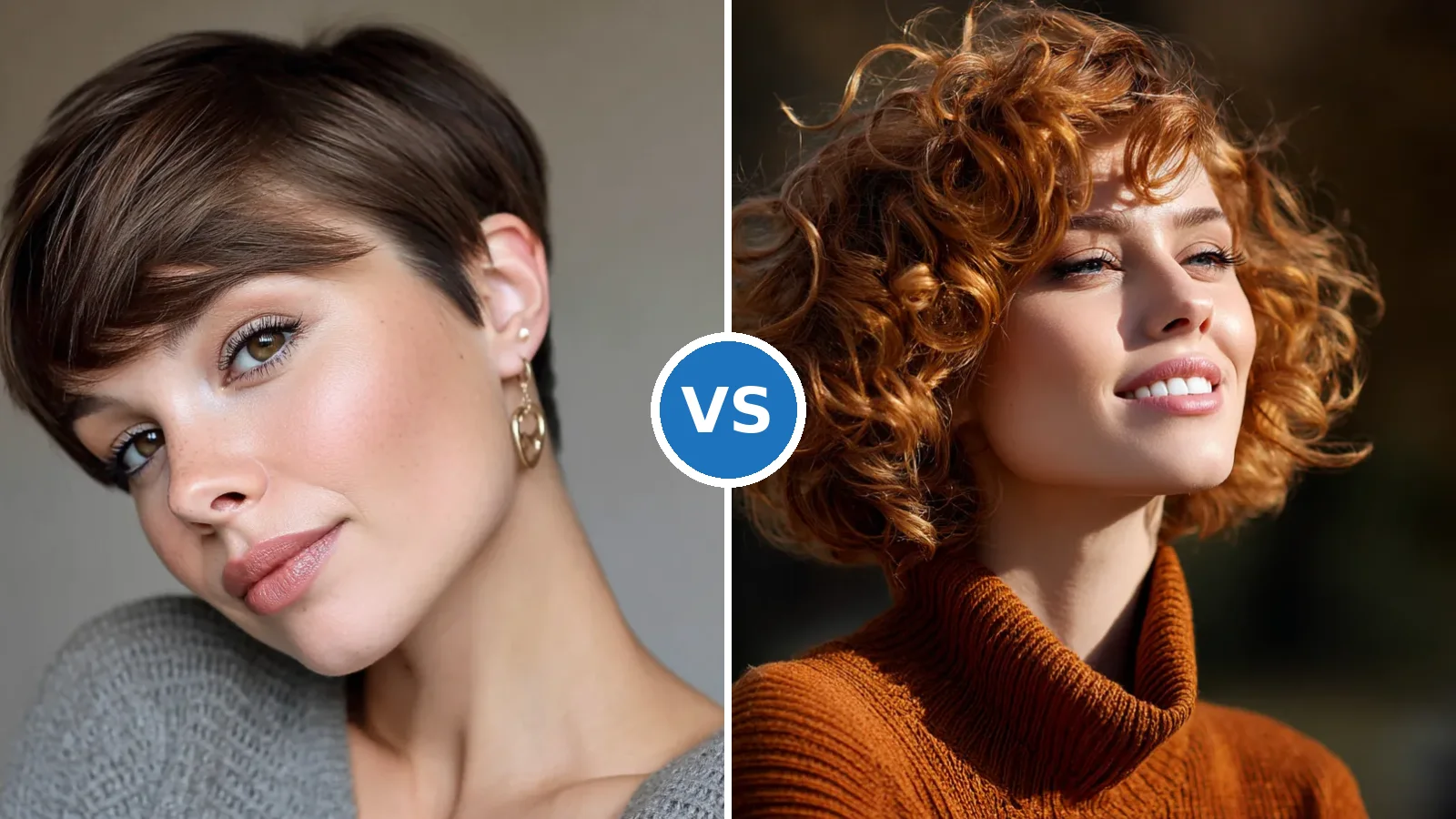
Natural curly short hairstyles photograph completely differently depending on the light, and warm yellow is doing the most flattering work of any backdrop I’ve tested. The golden tone intensifies depth inside each curl and shows the dimensional difference between tight coils and looser spirals on the same head. Flat overhead light kills this. Warm side-light — whether window light in the afternoon or golden-hour outdoors — is why these looks feel alive and three-dimensional rather than like a helmet sitting on someone’s head.
Layering is the cut technique that makes short natural curls look like this. A stylist who knows curly hair removes bulk from the interior sections while keeping perimeter length, which means each curl has room to spiral outward rather than stack into a triangle. I asked my stylist for a “Deva cut” specifically — Devacurl trained stylists charge $80–$120 but the shape lasts noticeably longer than a standard blunt cut on curly hair. Don’t let anyone cut your curls straight across while dry without sectioning — you’ll lose the entire shape within two weeks.


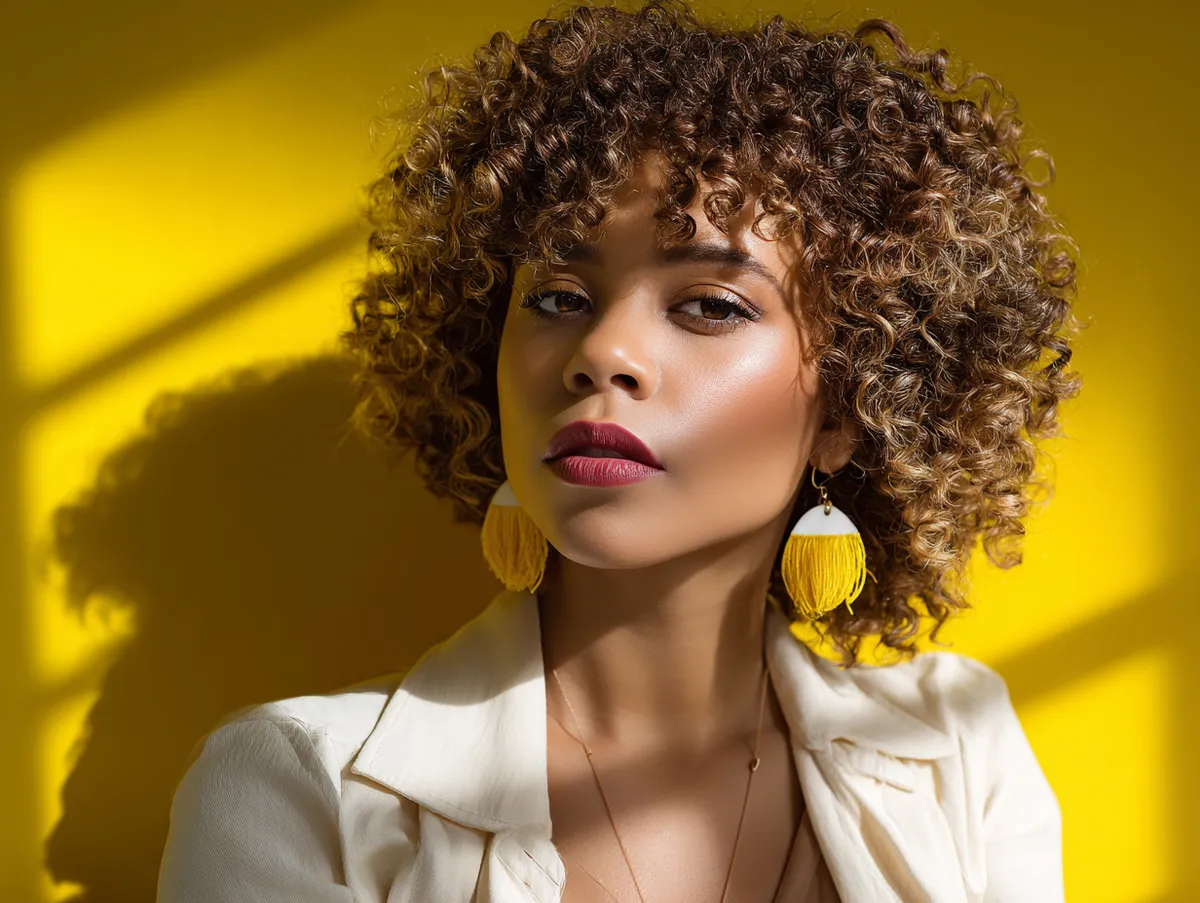
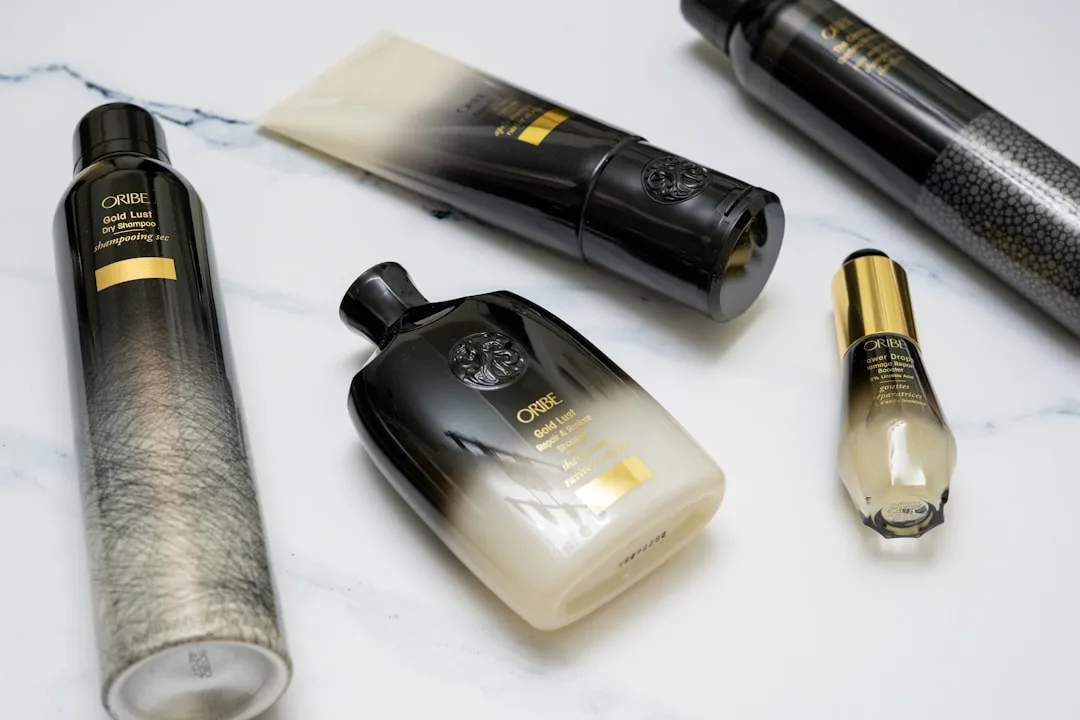
Product order matters more than the products themselves. Start on soaking-wet hair — not damp, not towel-dried, actually dripping. Apply leave-in conditioner first (I use SheaMoisture Manuka Honey Masque as a leave-in, about $13 at Target), then a curl cream like Cantu Shea Butter Curl Activator ($8), then a light gel on top to seal the shape. Finger-coil any sections that aren’t grouping naturally. The gel casts stiff at first — that’s correct, scrunch it out once fully dry and you get soft, defined curls underneath.
Accessories can amplify the warm-light effect. Gold hairpins catch the yellow glow. A slim satin headband keeps edges smooth without disrupting curl formation — I stole this trick from a Harlem hairdresser who said “the satin isn’t for sleeping, it’s for edges.” Avoid rubber-based clips at the crown; they dent short curls and the dent shows in photographs more than you’d expect. A cheerful yellow headband is the obvious choice here, but gold metal clips actually photograph more richly.
For the evening version of this look, add a small amount of Mizani 25 Miracle Milk Shine Serum ($22) through the finished curls. It amplifies definition and gives a camera-ready sheen without reflective flattening. You’re not adding product over a fully dried style — mist with water first to reactivate, then the serum. Skipping the water first is the mistake that makes second-day curls look greasy instead of glossy.
Don’t Do This
Don’t apply curl product to dry or towel-rubbed hair. Rubbing with a terry cloth towel roughs up the hair cuticle and breaks curl clumps before they even form. Once that clumping is disrupted, no amount of product brings it back — you’ll just end up with frizz and sticky-looking strands. Switch to a microfiber towel or an old cotton T-shirt, and only use it to gently squeeze (never rub) excess water before product application. Your curls should still be wet enough to drip slightly when you start styling.
Emerald Green Backdrops and What They Actually Reveal About Your Curl Pattern
Rich, deep color backdrops like emerald green do something that neutral walls can’t: they force the eye to read the three-dimensional shape of a curl. Against emerald, you instantly see whether your short natural curly hairstyle has real definition or just volume that’s masquerading as curl. It’s an honest backdrop, which is why editorial photographers use it. Your curls either hold their shape against that contrast or they don’t — and what determines that is almost entirely moisture retention.
The foundation move for curls on short natural hair is working with your natural part, not against it. Your part is where your scalp has already decided curl direction lives. Fighting it creates lift and frizz at the root that no product fully corrects. Allowing the curl pattern to fall from its natural origin gives you organic flow — which, against a high-contrast backdrop, reads as intentional and polished rather than fighting itself. I let my part be where it wants to be and just define sections from there.


A curl-defining mousse or light cream-gel combination is what holds this look in place all day. Ouidad Curl Immersion No-Lather Coconut Cream Cleansing Conditioner ($28) doubles as a styling base for very thirsty curls — you can co-wash and define in the same step. For shorter styles, a lightweight oil on the ends — not the roots — seals moisture without dragging the curl down. Moroccan oil at the roots makes short curls look weighed and flat. Not the move.
The half-up style is underrated for professional settings with short natural hair. Pulling back only the top section of curls with a satin scrunchie creates the visual impression of an intentional updo while leaving the back and sides fully free. It works because short curly hair below the temples still has enough movement to read as a complete style. You get polished without the stiffness of a full updo, which always looks slightly wrong on very short curl lengths anyway.
Statement earrings change everything against this backdrop. The visual weight of the curl frame plus bold earrings creates a focal point that draws attention to the face rather than making the hair the entire story. I own two pairs of oversized gold hoops specifically for photographing curly styles — they read clearly against deep-toned backgrounds without competing with the curl silhouette. Against emerald, avoid small studs; they disappear and the look feels unfinished.
Regular trims are non-negotiable. Short curly haircuts lose their shape faster than any other style because the structure of a short cut is entirely architectural — it depends on precise layering and perimeter shape that grows out within weeks. At 6–8 weeks the shape starts to puff and widen rather than spring. At 10 weeks, you’ve lost the cut entirely and are styling around shapelessness. Short curly haircuts for professional settings especially need this consistency — the cleaner the cut, the more the curl pattern does the styling work for you.
Sapphire Blue Changes Which Curls Read as Tight and Which Read as Loose
Cool-toned backdrops like sapphire blue are doing optical work that warm backgrounds simply don’t: they sharpen the outline of each individual curl. Against blue, the boundary between curl and air becomes visually crisp, which makes even a moderately defined natural curly short hairstyle look intentional and structured. Warm backgrounds blur those edges slightly and create a soft halo effect. Cool backgrounds cut. Knowing this changes how you style for photographs versus real life.
The gel-cream hybrid approach works best here. Apply a curl cream first — Cantu or curl activating products used on wavy curly cuts work equally well on short natural curls — then layer a medium-hold gel over it on top. The cream provides moisture and softness; the gel provides structure and the cast that holds the shape through humidity. Scrunch both in from ends toward roots, never raking root to tip. Raking disrupts curl clumps and you get frizz instead of definition.


The sapphire backdrop intensifies cooler undertones in darker curls in a way that looks intentional rather than accidental. Dark brown or black short curls against this blue read as multidimensional — you see the amber and chocolate tones that flat light hides. For lighter curl colors, the contrast reads as vibrancy. A subtle face-framing fringe — not blunt, just a few shorter pieces at the temples — adds another dimension to how the curl structure reads in photographs.
Accessories work differently against cool backdrops. Silver metal reads cleanly — metallic silver earrings or a thin silver clip at the crown complement the blue without the visual noise that gold sometimes creates in cool-light photography. A structured head scarf in a neutral tone adds height to the silhouette and works particularly well if your short natural curl style doesn’t have enough crown volume on its own. Avoid large pastel accessories; they visually compete with the backdrop rather than anchoring the face.
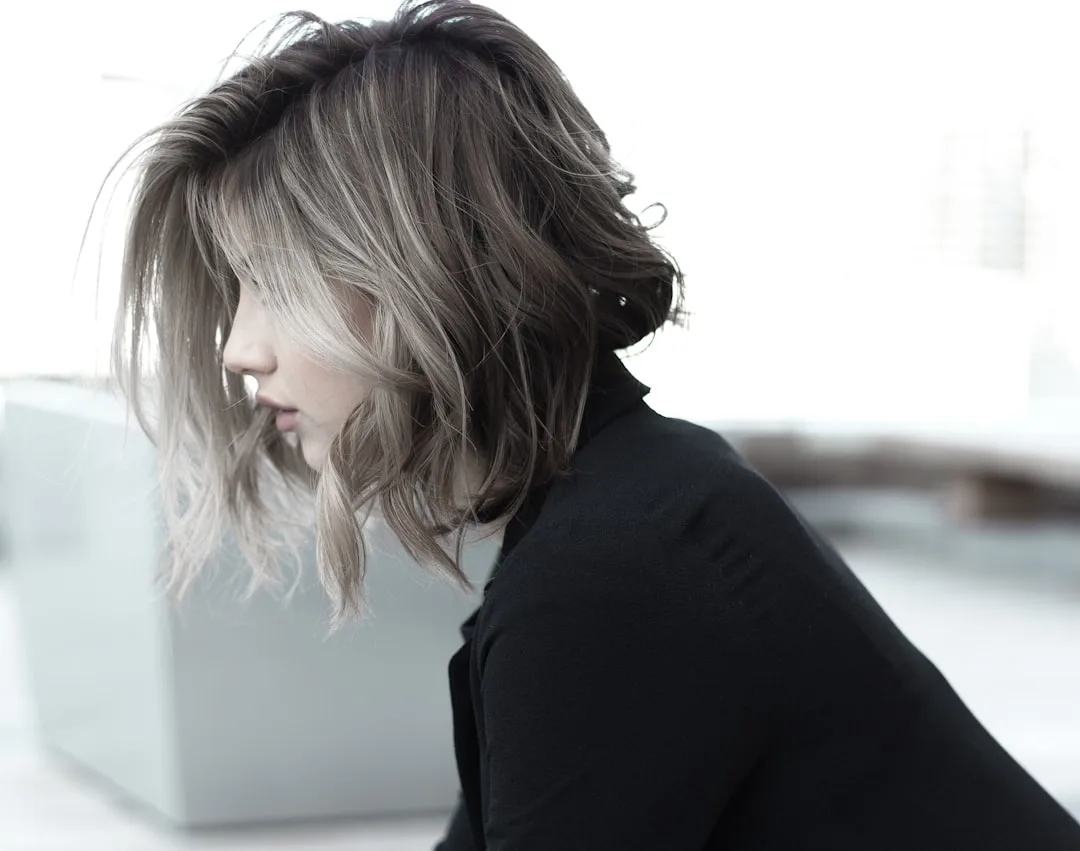
Cut shapes that photograph best against sharp cool backdrops: the curly pixie with a longer crown (more volume at the top, tapered sides), and the layered curly bob that sits above the jaw. Both let the backdrop frame the silhouette cleanly. What doesn’t work: a too-even cut with no shape variation, because the blue contrast actually flattens shapes that don’t have visual interest in their silhouette. Your stylist should know the difference between “even” and “shaped.”
Diffusing on low heat is the final step that makes this whole look land correctly. According to stylists at Rush Hair & Beauty, the biggest mistake curly-haired clients make is diffusing on high heat with hair that’s already too dry — the result is always frizz and shrinkage instead of lift. Diffuse still-wet hair on the coolest setting your dryer offers, place sections into the bowl attachment from below, hold for 20 seconds per section, then release. Don’t move the diffuser through the hair. Patience here is the difference between a photo-ready result and a frizz situation that no serum rescues.
Final Word
Short Natural Curls Don’t Lie — Either the Cut Works or It Doesn’t
Every styling tip in this post becomes irrelevant if the underlying cut isn’t right. Short natural curly hairstyles depend on shape that was put there by scissors, not by product. Find a stylist trained on curly-specific cuts, specify layered interior with shaped perimeter, and then the curl cream and diffuser do their jobs. The backdrop, the earrings, the satin headband — those are the final 10%.
Your curl pattern is structural, not decorative. Work with it and short hair is the easiest hair you’ve ever had. Fight it and no length will ever look right.
Save this post before your next salon appointment — the cut questions alone are worth keeping.