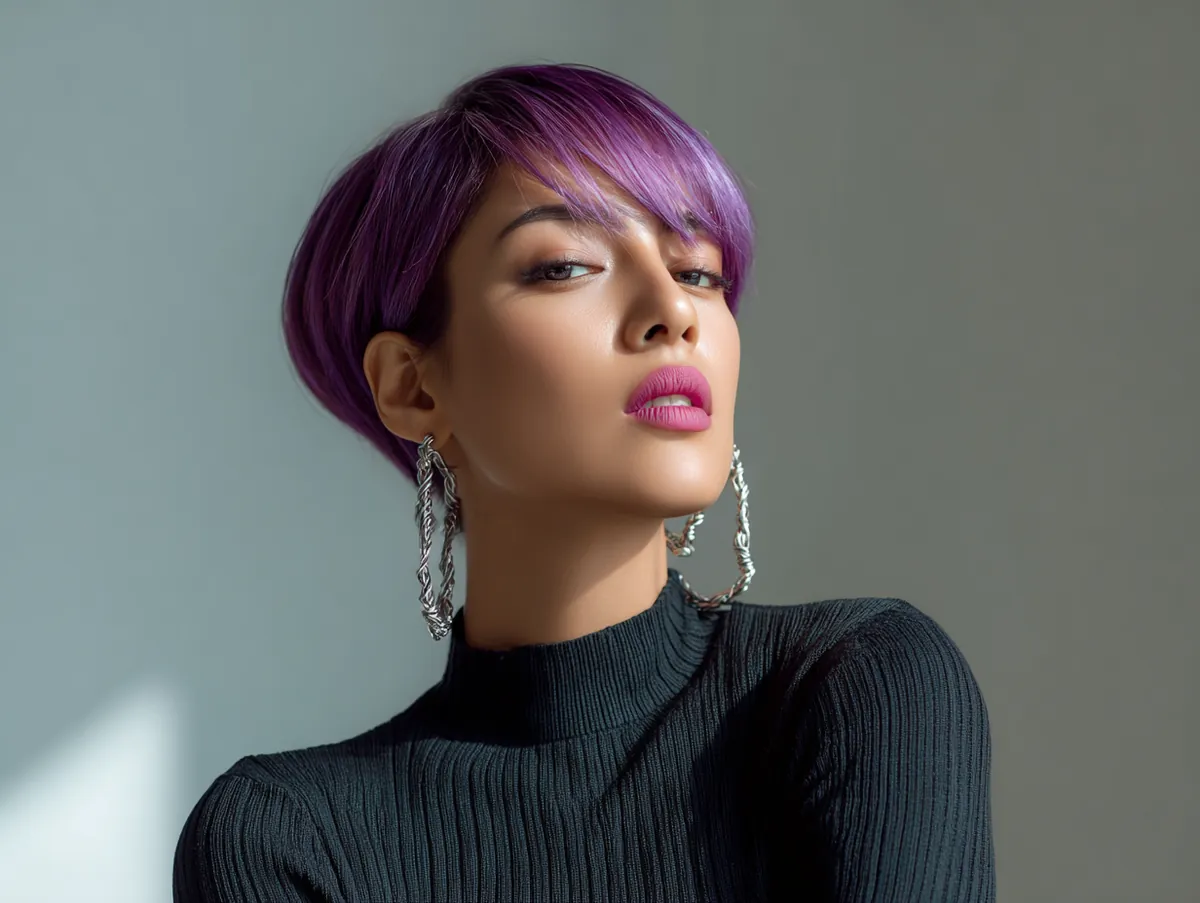
Korean haircut for your face shape is the difference between a style that photographs beautifully and one that somehow never looks right in the mirror. I’ve sat in enough salon chairs to know the frustration — you show your stylist a K-drama screenshot, walk out with a technically perfect cut, and still feel like something’s off. The problem is almost always the same: the wrong shape for your bone structure.
Face shape is the first filter for any Korean haircut, not an afterthought. Oval faces get the most room to experiment. Square faces need softness at the jaw. Heart-shaped faces require weight below the cheekbones, not above. Round faces want length and movement that pull the eye down. Once you know which category you’re in, the five styles in this article stop being random inspo and start being actual options.
Korean hair trends in 2026 lean toward texture over perfection — the Hush Cut, C-curl ends, and see-through bangs are all over Seoul salons right now. You’ll find each of those elements represented below, matched to the face shapes where they actually work.
– Jet-black sleek cuts flatter oval and heart-shaped faces; the layers frame without adding width
– Soft brown layers with a round-brush blowout are the fix for square and round faces
– Ash blonde highlights work best on rectangular and long faces — cool tones add dimension where the face needs width
– Copper tone with side bangs specifically targets square and triangular face shapes; the bangs interrupt strong jawlines
– Pastel pink Korean cuts with soft curls suit heart-shaped and oval faces; avoid them if your face is already wide
– Every look below includes a “don’t” — because knowing what not to do cuts your salon visit in half
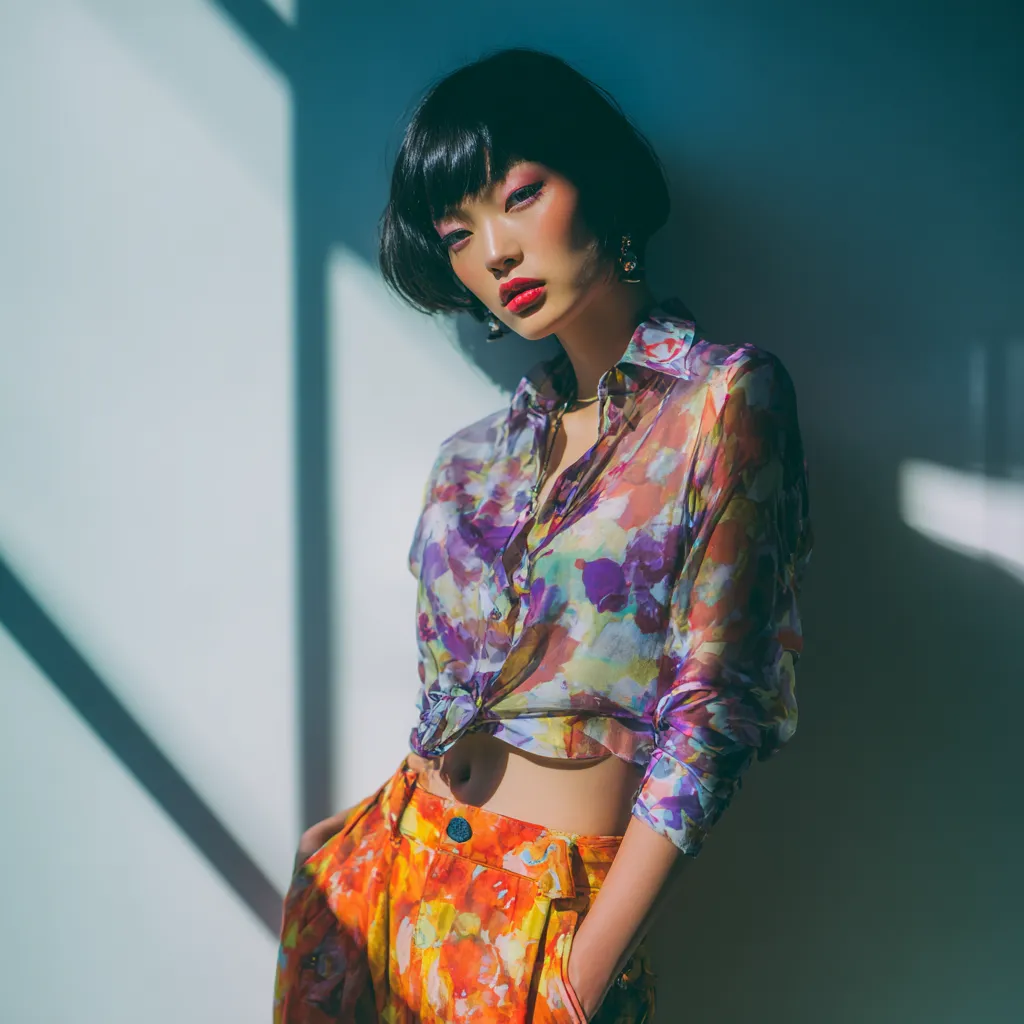
Jet-Black Korean Haircut for Square and Oval Faces
A sleek jet-black Korean haircut for your face shape works the same way a well-cut blazer does — the precision of the cut does the heavy lifting, and the color just makes everything sharper. My go-to reference here is the straight-with-layers structure you see constantly on Korean actresses: not poker-flat, not bouncy, but somewhere in between where light catches the hair in a single glossy sheet. Oval and heart-shaped faces carry this look without any adjustments because the face already has balanced proportions. On square faces, I’d ask your stylist to keep the shortest layer at the collarbone — not the jaw — so you’re not adding volume exactly where you don’t want it.


The mirror-like gloss of jet black comes down to two products, not genetics. Moroccanoil Treatment ($46 for 100ml) applied to damp hair before blow-drying gives you that Korean drama shine without the heavy, greasy finish that drugstore serums leave behind. You’ll notice the difference after one wash. What kills this look faster than anything is over-washing — jet black hair loses its depth when you shampoo daily, and the layers start looking stringy rather than structured.

Styling options split into two camps: flat iron for formal, or a large-barrel curling wand (32mm or bigger) for soft movement that keeps the elegance without stiffness. I stole this trick from a Seoul stylist video — wrap sections around the barrel without clamping, hold for 8 seconds, release. The result looks like waves but sits flat enough to stay polished. Pair with a clean middle part for oval faces, or a soft side part if your face is on the longer side.
Ask for this specifically: “straight cut with internal layers, no visible steps.” Korean salons call it a “natural cut” (내추럴컷). The internal layering is what separates this from a blunt trim — without it, jet-black hair at shoulder length reads heavy and dated. Trims every 8 weeks keep the weight distribution sharp; go longer than that and the bottom starts to look thick in a way no product can fix.

Don’t ask for a blunt one-length cut in jet black — on anyone with a square or round face, the flat bottom edge mirrors the jawline and doubles its width. The effect is visually boxy in the way that only becomes obvious in photos, not in the salon mirror. Also skip the box-dye black from the drugstore: the pigment goes on uniformly and kills dimension, which is the entire point of this look. Salon black like Wella Koleston Perfect in 2/0 runs about $12-18 at a professional supply store and applies unevenly enough to catch light the way real hair does.
Soft Brown Layers That Fix a Round or Square Face Shape
Soft brown layers are the most requested Korean haircut for square face shapes in every Seoul survey I’ve seen — and once you understand why, you can’t unsee it. The layering creates diagonal lines through the hair that visually interrupt the horizontal width of a strong jaw. Round faces get the same benefit: movement pulls the eye down, elongating the whole silhouette. The soft brown shade matters here too, not just the cut. A flat, single-tone brown reads as one solid block. A brown with even the subtlest warm dimension — think Redken Shades EQ in 6N over 7G, which costs about $15 at a professional supply store — makes the layers read as individual strokes of light.


The styling trick that makes this look genuinely Korean rather than generic is the round-brush blowout at the ends. Curl the last 3 inches under, not out — the inward C-curl is the specific detail that signals Korean salon work. Does air-drying work? Technically yes, but you lose the C-curl shape and the defined layering collapses into one mass. I own a Dyson Airwrap and a basic Revlon hot air brush ($35); for this specific style, the Revlon actually does a better job because it’s less precise and creates a softer bend. For more layered cuts specifically built for square face shapes, the same round-brush principle applies across different lengths.

Color maintenance for soft brown doesn’t require salon visits every 6 weeks. Kérastase Chroma Absolu Masque ($55 for 200ml) used once a week keeps the tone from going brassy under warm indoor lighting. The real enemy of this color isn’t fading — it’s the orange undertone that surfaces after 4-5 weeks without treatment. Use cold water for the final rinse; it costs nothing and the difference in shine is genuinely noticeable after the first wash.
Split ends kill this haircut faster than any other because the layering means the ends are the thinnest point of the hair. Trim every 8-10 weeks maximum. Ask specifically for “point cutting” (포인트컷) on the layers — this technique softens the layer edges so they don’t look like stair steps when the hair moves. Avoid scissors-over-comb on the layers; it creates a blunt graduation that reads as heavy on round and square faces.

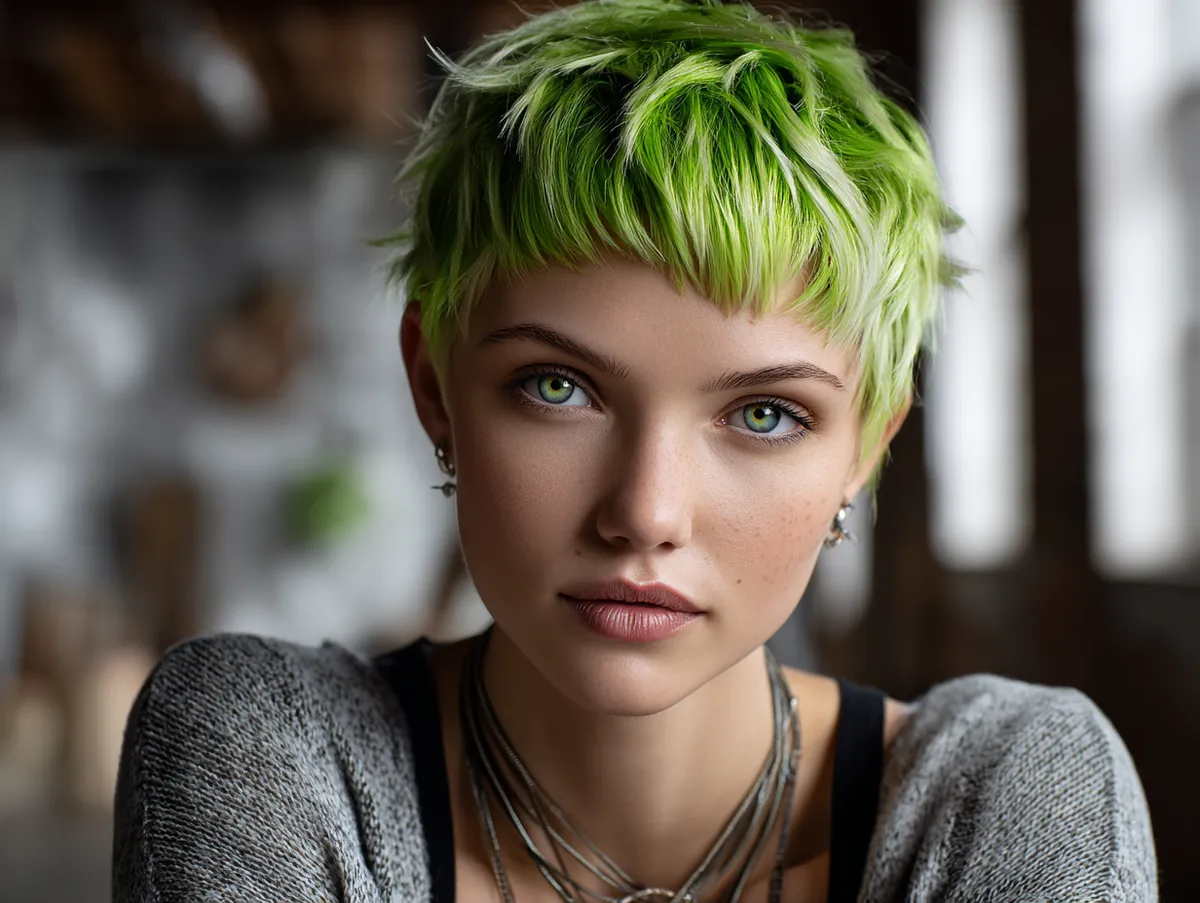
Ash Blonde Highlights on a Korean Haircut for Long or Rectangular Faces
Ash blonde highlights transform a Korean haircut for rectangular and elongated face shapes in a way that’s almost optical illusion territory. The cool, slightly grey-toned blonde reads as width — not in a bad way, but in the way that makes the face look proportionally balanced rather than long and narrow. You’ll notice this immediately in photos: the face stops reading as vertical and starts looking structured. This works because ash tones reflect light sideways along the hair shaft, and when placed on a Korean layered cut with textured ends, the highlights create the appearance of multiple planes of color that visually widen the silhouette.


The placement of the highlights is where most colorists get this wrong. Face-framing pieces in ash blonde — the sections that fall right at the temples and cheekbones — do more for the overall look than all-over highlights at twice the price. Wella Koleston Perfect 9/1 over a pre-lightened base gives the cleanest ash blonde without the yellow undertone that cheaper toners leave behind. Budget about $150-180 at a mid-range salon for placement highlights done right; going cheaper almost always results in warm blonde instead of ash, which defeats the entire purpose for cool-toned skin.

Soft waves are the styling move that makes ash blonde sing. Use a 25mm curling wand, wrap away from the face, and don’t brush the curls out — shake them loose with your fingers. The highlights read differently at every angle of a wave versus flat-ironed straight, and that multidimensional shimmer is what makes this look expensive rather than just colored. A toning shampoo like Redken Color Extend Blondage ($26) used once a week keeps the ash cool. Skip it for more than two weeks and the blonde tips go yellow, which clashes with the Korean precision of the cut in a way that reads as an accident rather than a choice.
Maintenance toning every 6-8 weeks is non-negotiable for ash blonde. I’ve tested skipping it and the regret hits around week 5 when the golden undertone starts surfacing. Between salon visits, Fanola No Yellow Mask ($18) used for 5 minutes once a week buys you another 2 weeks before the brassiness becomes obvious. The good news: ash blonde highlights on this structure require less frequent full coloring than a solid blonde — you’re only maintaining the pieces, not the whole head.

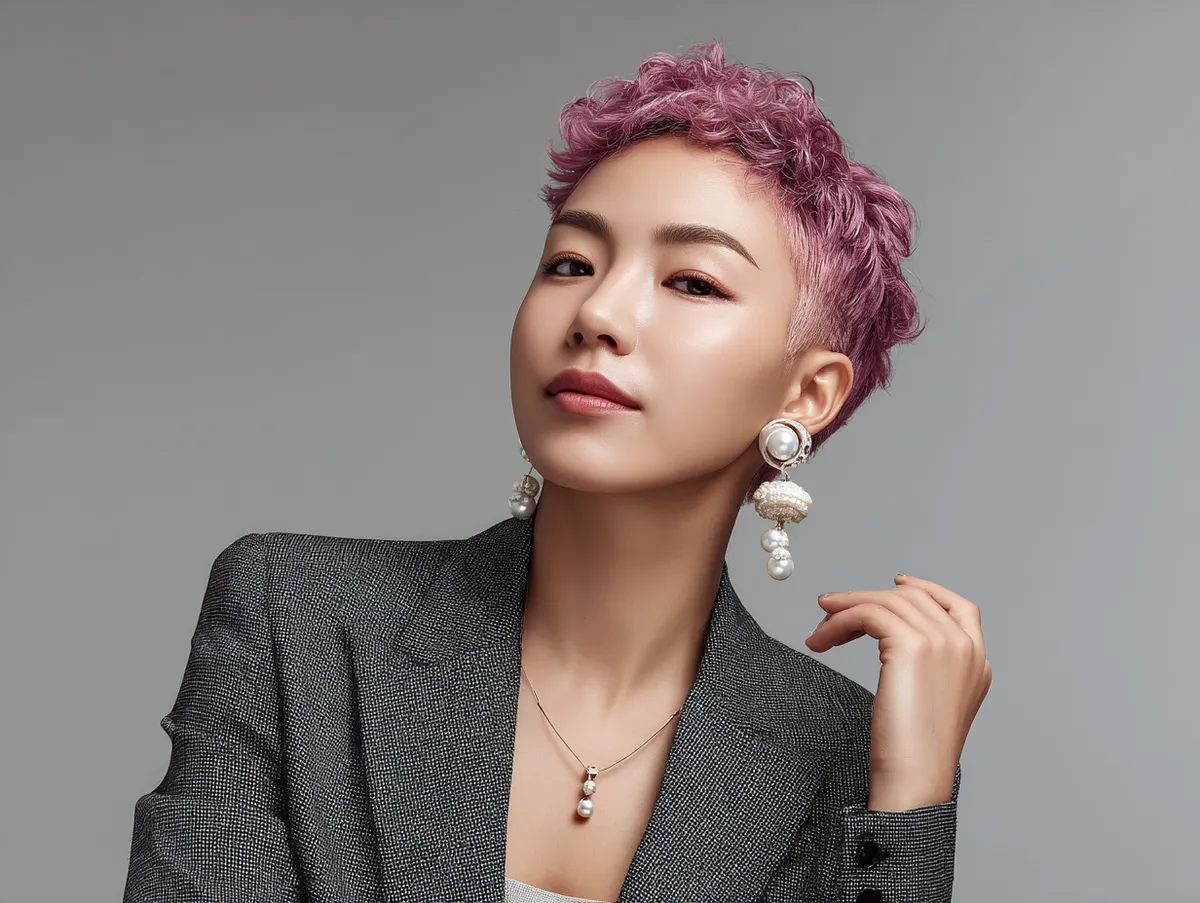
Copper Tone Korean Haircut With Side Bangs for a Square Face
Copper tone with side bangs is the most specifically targeted Korean haircut for square face shape in this entire list — and it works through a two-part mechanism. The side bangs interrupt the straight horizontal line of the forehead and redirect the eye diagonally, which immediately breaks up the visual geometry of a strong jaw. The copper tone does the second half of the job: warm pigment naturally draws attention to the center of the face rather than its edges, which is the opposite problem that cool colors create on square bone structure. I’ve recommended this combination to three friends with strong jaws and every single one messaged me from the salon saying it worked.


The copper shade that reads most “Korean” rather than “Reddit hair color” is a muted, slightly desaturated copper — think Redken Shades EQ 7RC over pre-lightened hair, not an orange-red from a box. It needs to look warm and dimensional, not bright. Wella Koleston Perfect 8/43 delivers a similar result with more longevity. Fair to light-medium skin tones carry this color the most naturally; deeper skin tones work better with a darker copper around 6/43 so the contrast ratio stays flattering rather than looking bleached-out. Expect to spend $100-130 at a professional salon for the color alone.

Side bangs in a Korean style are not the heavy curtain bangs from 2008. They’re longer, thinner, and swept at a shallow angle — they graze the outer corner of the eye rather than the eyelid. Trim them every 4-5 weeks because the effect only works when they’re intentionally placed; once they’re in the “awkward grow-out” phase, they stop doing the jaw-softening job and just look like you forgot a haircut. For curtain-style Korean bangs on longer layers, the same diagonal principle applies but with a softer, more centered part.
Color-safe shampoo is table stakes here — copper is one of the fastest-fading tones in professional color. Joico Color Endure Violet Shampoo ($18) seems counterintuitive for copper hair, but the violet cancels the yellow that surfaces as copper fades, keeping the remaining warmth clean rather than orange-tinged. Gloss treatments every 6 weeks at a salon extend the life by another 3-4 weeks. Cold rinses and low heat settings on your dryer do more than any product to keep the pigment locked in.

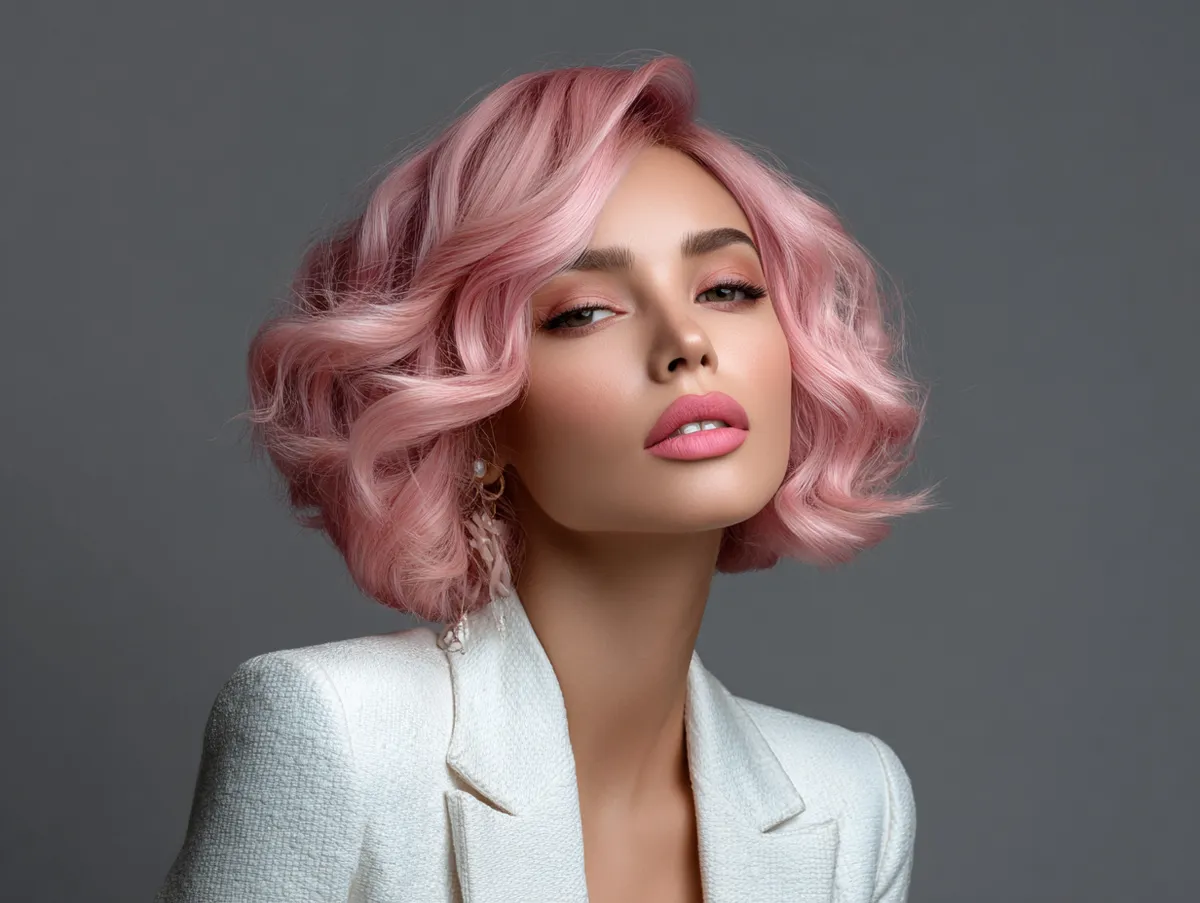
Pastel Pink Korean Haircut on a Heart-Shaped Face
Pastel pink lands differently on a heart-shaped face than on any other shape — and in the best way. Heart faces have a wider upper half (forehead and cheekbones) that narrows at the chin. Pastel pink’s soft, diffusing quality reduces visual sharpness across the whole face, which means the wide part reads as soft rather than broad. Oval faces carry this look equally well because they have the proportional balance to handle the attention that pink draws. This is the Korean haircut for your face shape if you want something that reads editorial in photos but genuinely flattering in person, not just brave.


Pravana Vivids Pastel Pink mixed with a white conditioning base at a 1:3 ratio gives the most accurate “milky pink” Korean shade — not neon, not barely-there, but something that photographs with depth. Bleaching to at least a level 9 before toning is mandatory; anything below that and the pink goes peachy or muddy. Full bleach and tone at a reputable colorist runs $180-250, and this is genuinely not the place to cut corners. I’ve seen DIY pink jobs that ended up strawberry blonde on the surface and yellow at the roots, which reads as a mistake, not a choice.

Soft curls are the styling move that separates this from a flat, washed-out pink. A 19mm or 25mm wand creates the kind of defined-but-soft texture that makes the pastel shade read as dimensional. Does straight styling work? Yes, but it reduces the color to a single plane that can look flat in person. Schwarzkopf Bonacure Color Freeze Shampoo ($16) used twice a week extends the pink by 10-14 days over standard sulfate-free options. Deep conditioning with Olaplex No. 5 ($30) is non-negotiable with bleached hair — the protein repairs the damage that makes the pastel patchy as it fades.
Touch-ups happen fast with pastel colors — expect 4-6 weeks before noticeable fading. The silver lining is that faded pastel pink goes through a pretty stage: it turns into a very light rose that still looks intentional for another week or two before it becomes a definitive “I need a refresh.” A pink toning conditioner like Overtone Pastel Pink ($28) used weekly can extend that window by another 2-3 weeks without a salon appointment. Pair the full look with light, neutral makeup — pink blush and a clear or peach gloss rather than anything brown, which reads muddy against warm hair.

Final Word
The right Korean haircut for your face shape costs the same as the wrong one
Square and heart-shaped faces account for the two GSC queries on this page — and both of those shapes have specific solutions above, not vague “it depends” advice.
The mistake most people make: choosing a haircut based on color alone, then being disappointed that it doesn’t look like the inspiration photo. The cut structure — where the layers fall relative to the jawline — matters more than the shade.
Save this post before your next salon appointment so you have the face shape breakdown and the product names ready.