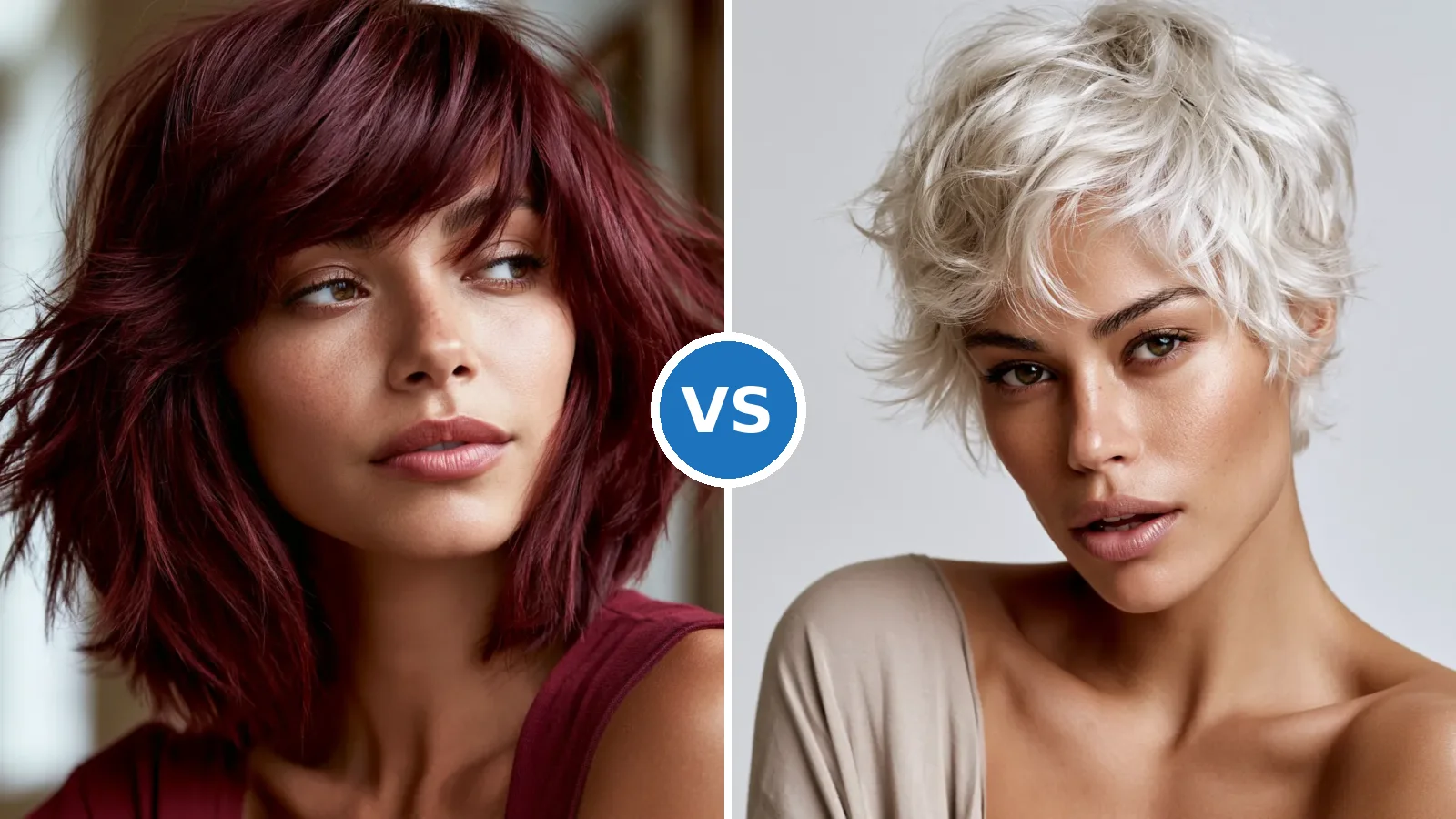
A layered bob for a square face works by redirecting attention — away from the jaw’s horizontal line and toward the eyes, cheekbones, and neckline. I’ve watched women walk out of salons with the wrong bob and the right intentions a dozen times. The issue is never the square face. It’s the cut that lands flat at the corner of the jaw, mirrors the angle exactly, and doubles down on exactly what you wanted to soften. A short layered bob, when built correctly, doesn’t hide the structure. It reframes it.
Square faces have a wide forehead, a strong jawline, and roughly equal width across forehead, cheeks, and jaw. That symmetry is an asset — the face holds haircuts with presence. You don’t need to fight the geometry. You need layers that introduce diagonal movement, colors that pull the eye upward, and lengths that clear the jaw corner entirely — above or below, never right at it.
These three variations on the short layered bob are each designed around the specific needs of a square face shape. Each one uses a different color strategy and texture approach. All three pass the same test: from the front, the jaw recedes and the face reads as longer, softer, more oval. At a mid-range salon, these cuts run $85–$160 for the cut alone, $150–$250 with color. Trims every six weeks keep the layers doing their job.
- A layered bob for a square face needs to clear the jaw corner — land an inch above the chin or an inch below the jaw, never right at it.
- Flipped ends, feathered layers, and textured bangs all create diagonal movement that breaks the jaw’s horizontal line.
- Warm colors (golden copper) draw attention to cheekbones; cool pastels (icy lilac) soften the whole silhouette.
- Blunt cuts at jaw level are the single most common mistake — they widen a square face instead of softening it.
- Low-maintenance styling: a round brush blowout or diffuser plus one hold product keeps these cuts looking intentional all day.






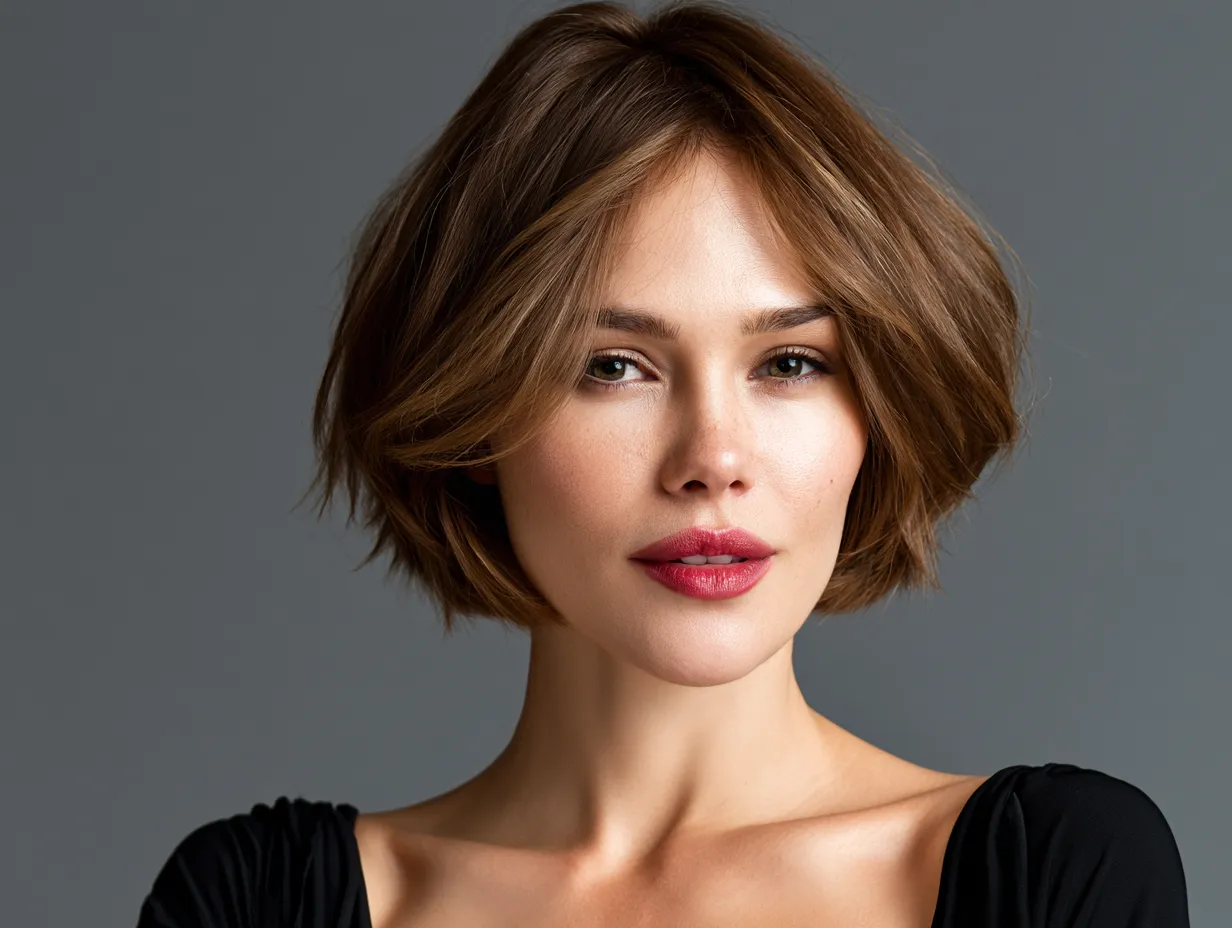
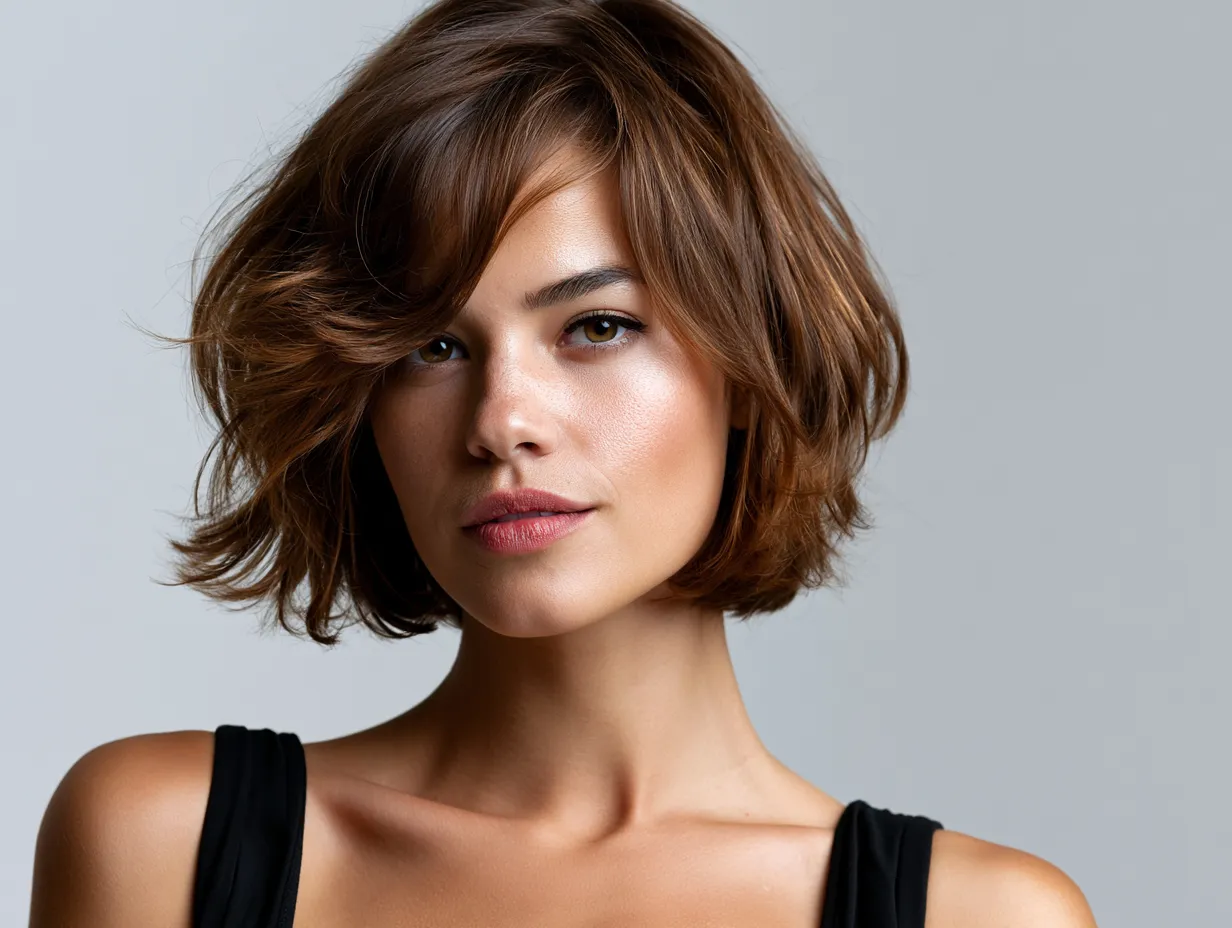

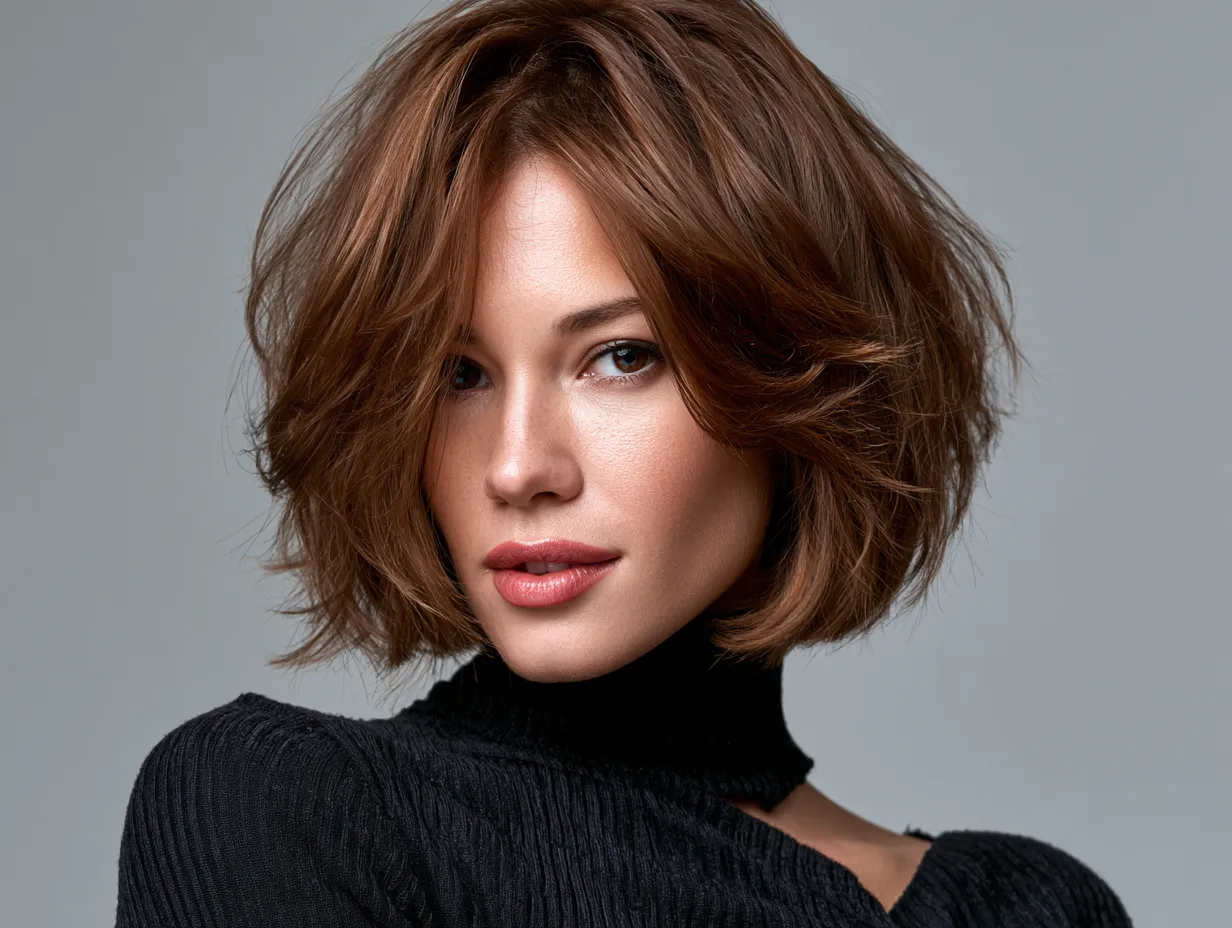
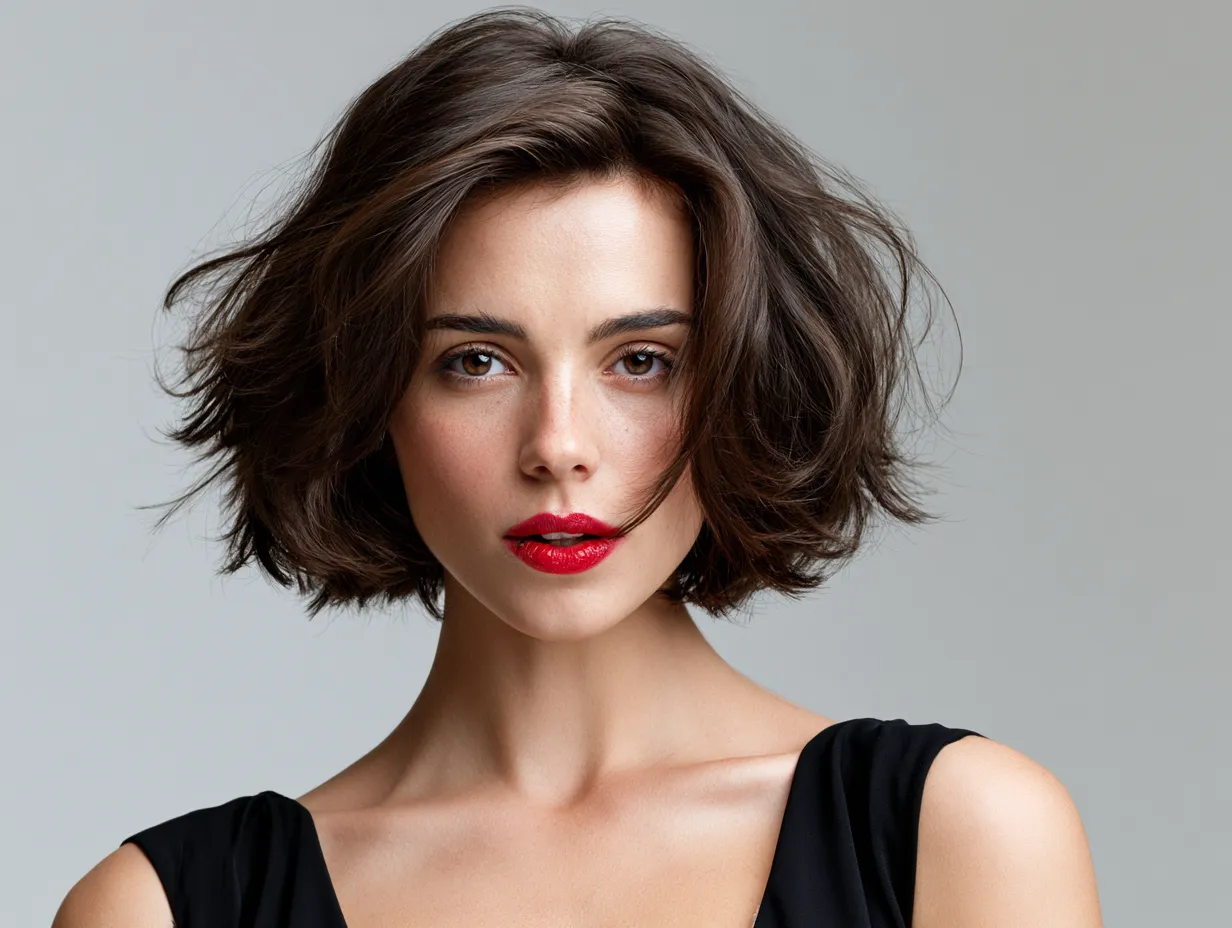

Golden Copper Layered Bob with Flipped Ends
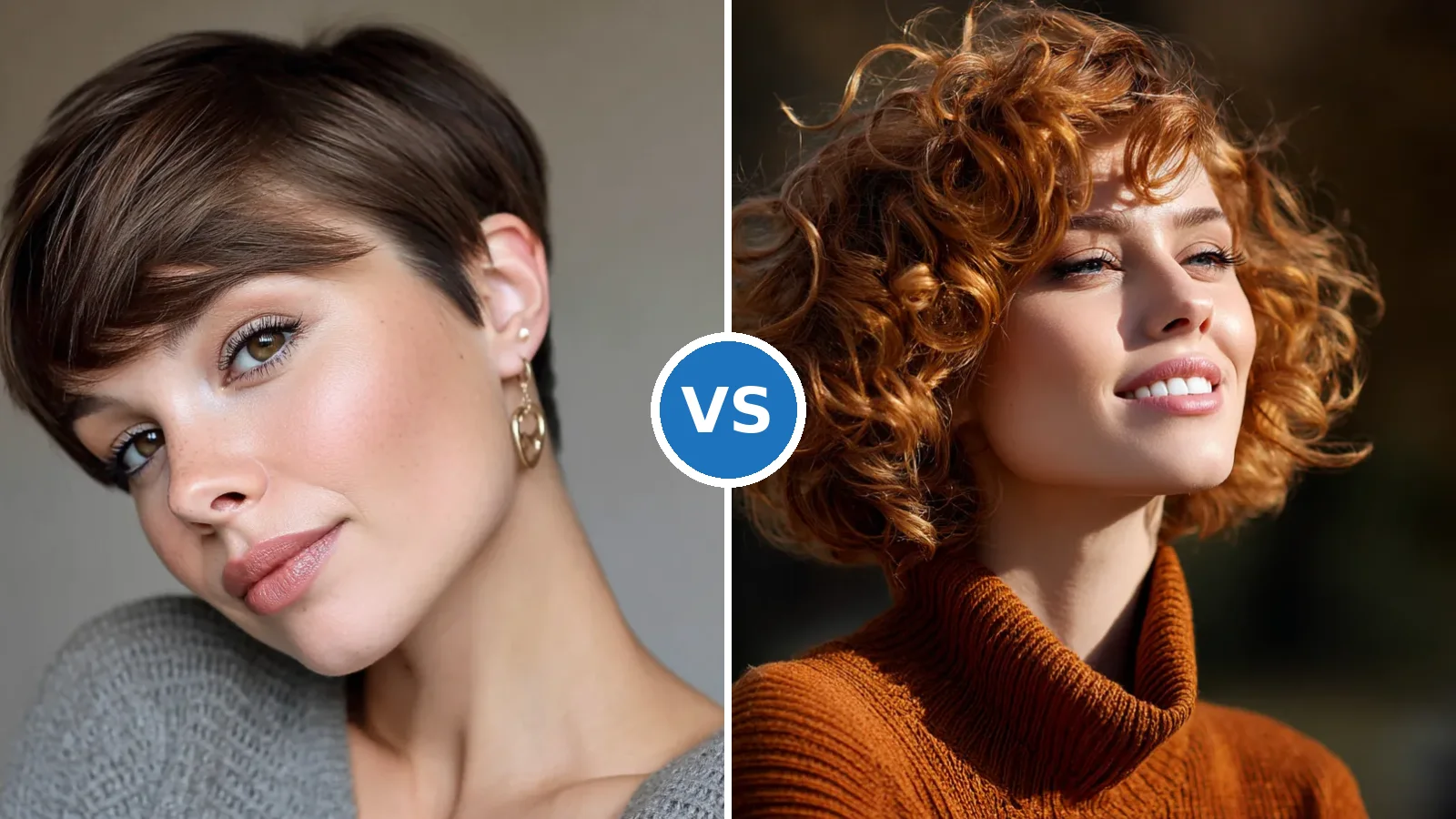
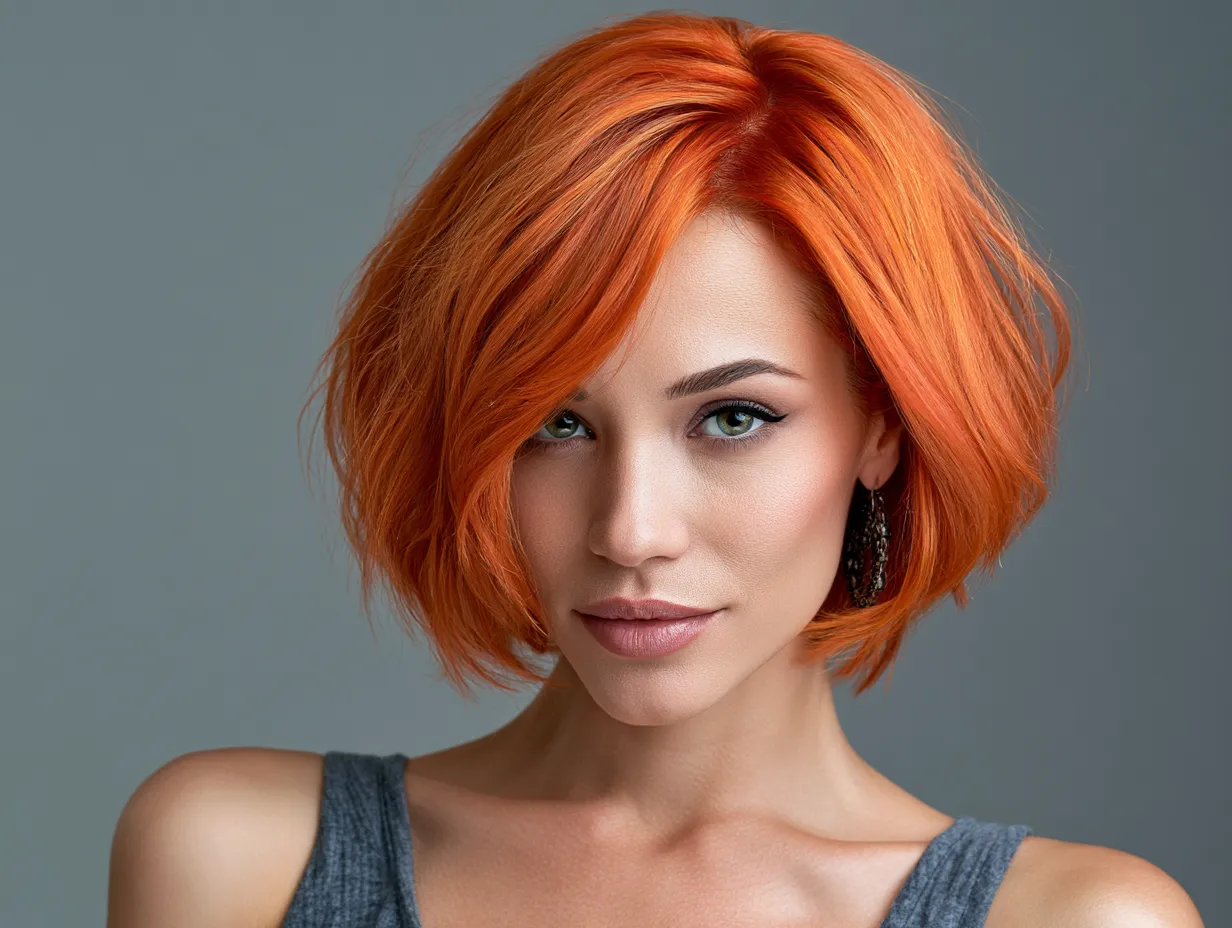
A layered bob for a square face in golden copper is one of the most flattering color-and-cut combinations I’ve seen work consistently across different skin tones. The warm tone catches light along the cheekbones and pulls the eye upward, while the flipped ends introduce a curved finish that directly counters the jaw’s straight horizontal edge. It’s the hair equivalent of rounding the corners on a sharp-edged frame.


The cut sits just below the jaw — that single inch past the jaw corner is not negotiable. Layers begin high enough in the crown to add bounce without bulk. The flipped ends pull outward at the perimeter, generating a curve where the jaw’s line would otherwise echo straight through. Ask your stylist specifically for interior layers starting at the cheekbone level, not the chin. Chin-level layers sharpen a square face rather than soften it.
Golden copper works especially well on medium to warm skin undertones. My go-to reference for this shade is the Redken Color Gels Lacquers line — specifically shades in the 7RR to 8RC range, which hit that warm copper zone without reading orange. A single-process color in this range runs about $65–$95 at a mid-tier salon. Olaplex No. 3 ($30 at Sephora) between appointments keeps the mid-lengths healthy when color is refreshed every eight weeks. Cool-tone skin? Shift toward a rose-copper rather than pure golden — you’ll notice the cheekbones pop differently.
Styling is straightforward. You need a round brush, a medium-hold blow-dry spray — I use R+Co Balloon Dry Volume Spray ($34) — and about ten minutes. Blow the crown forward and up for lift, then roll the ends outward on the brush as you finish each section. That’s the flip locked in. A light-hold spray over the perimeter seals it without stiffness. Skip heavy serums on the ends; they kill the flip and flatten the layers in under an hour.
For more examples of how layering technique changes based on face shape, this breakdown of square face haircuts for different hair types covers the geometry in detail — useful if you’re also working with fine strands.
Icy Lilac Bob Hairstyle for Square Faces with Textured Bangs
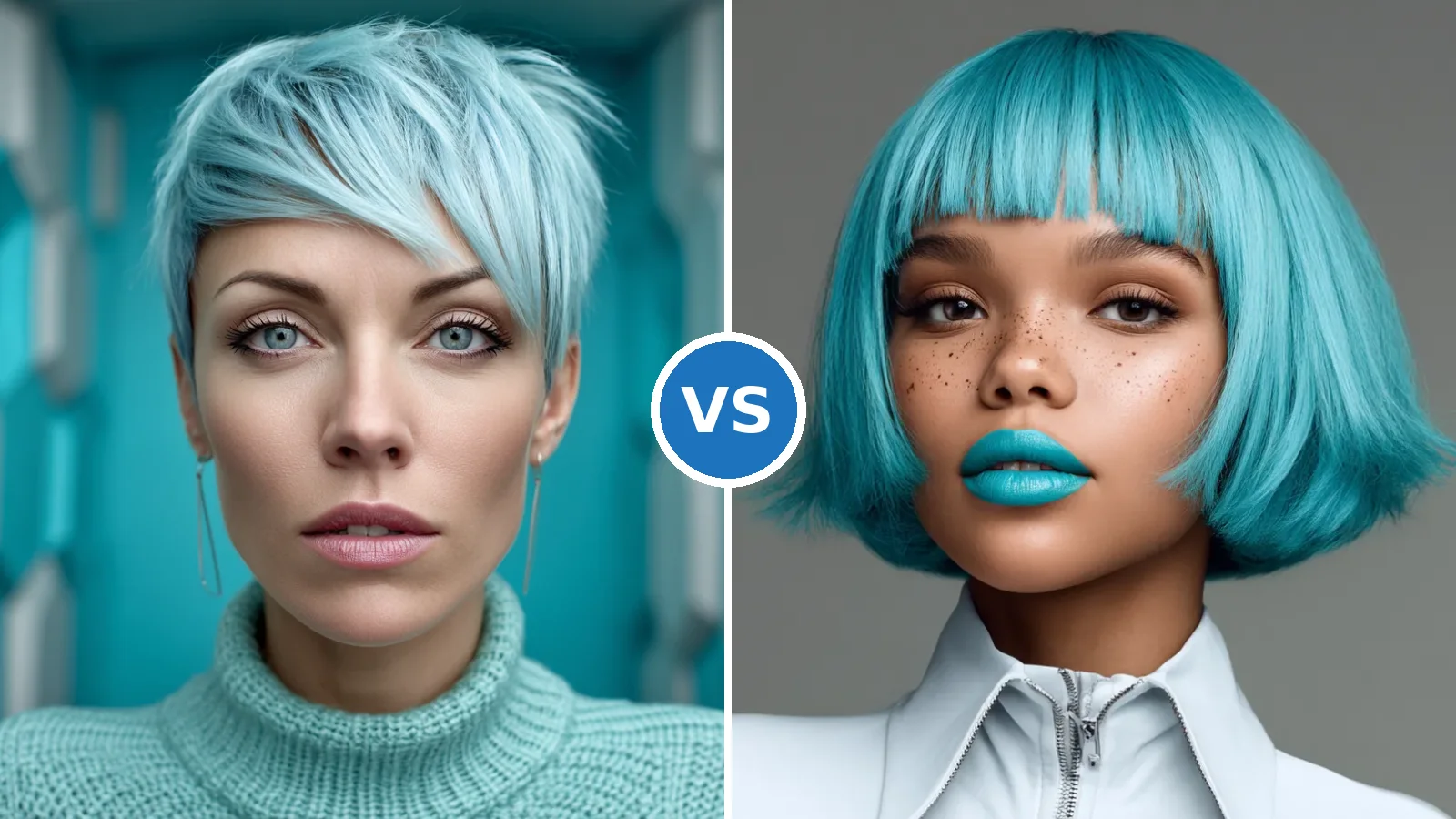
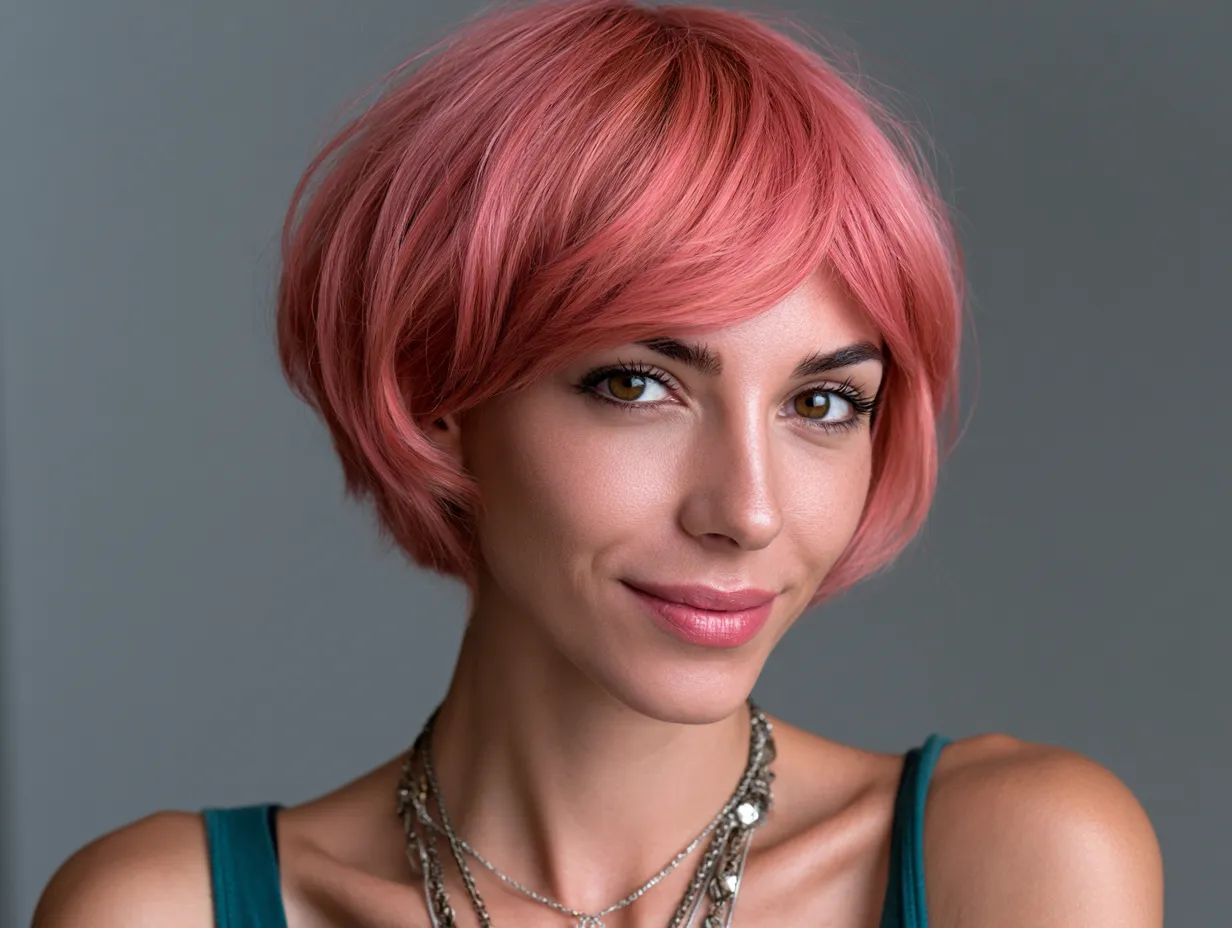
Square face bob hairstyles with pastel color take a different approach — instead of using warmth to redirect attention, they use coolness and contrast. Icy lilac on a short layered bob creates a visual softening effect across the entire silhouette. The shade pulls back from the face rather than projecting forward, which makes the overall impression of the cut more fluid and less angular. Add textured bangs and you’re also addressing the forehead — the other horizontal element that square faces carry.



The base cut is a chin-length bob with internal layering — not heavy graduation, but enough internal weight removal to let sections move independently. The bangs are the real technical feature here: they need to be cut longer than you think (just grazing the brows or slightly past them), left piecey rather than blunt, and swept with a slight diagonal to break the forehead’s horizontal width. You’ll notice a straight-across bang on a square face creates a boxed-in effect that no amount of product can fix. The diagonal is the difference.
Icy lilac requires pre-lightening to a level 9 or 10 — budget $200–$280 total for lift and tone at a salon that knows pastel work. I’ve seen this color go flat and grey-purple when toned incorrectly; ask for a violet-leaning lilac toner, not a blue-violet. Overtone Pastel Purple Coloring Conditioner ($29) works for home maintenance between appointments and keeps the shade from fading to silver. Expect to refresh the tone every four to five weeks if you want the color to stay in the lilac territory rather than drifting toward platinum.
Styling uses a diffuser and a wave-enhancing cream — my go-to is DevaCurl SuperCream ($28) applied to damp hair before diffusing. The goal is lived-in texture, not defined curls. The bangs need almost nothing: a fingertip amount of a light balm (Bumble and bumble Bb. Hairdresser’s Invisible Oil Balm, $28) pressed through when dry keeps them piecey without going greasy. What doesn’t work here is a flat iron on the body of the cut — it erases the layered texture and turns the whole thing stiff.
- Blunt bob at jaw level — mirrors the jaw’s horizontal line exactly. The cut length must land an inch above the chin or an inch below the jaw. Right at the jaw corner widens the face and creates a boxy silhouette.
- Heavy straight-across bangs — draws a second horizontal line across the forehead of an already horizontally-strong face. Keep bangs piecey, diagonal, and long enough to sweep.
- Center part with no layers — splits the wide forehead symmetrically and amplifies the squareness. Go slightly off-center or use a deep side part.
- Single-process blonde lifted above level 7 — on fine or medium hair, over-lightened blonde reads transparent at the ends and removes the dimensional look that makes layers visible and flattering.
Ash Green Bob with Feathered Layers — Low Maintenance Square Face Cut
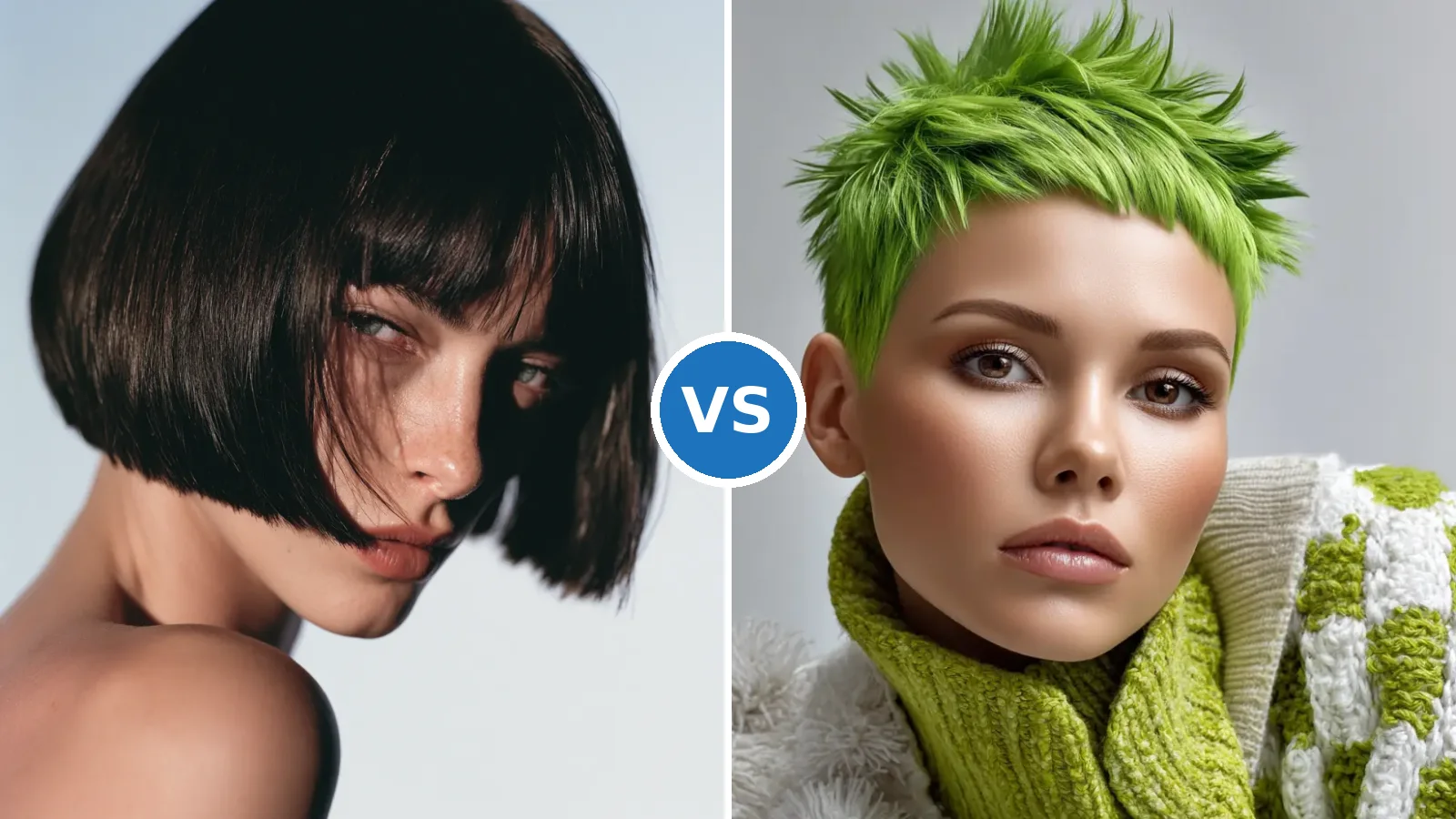
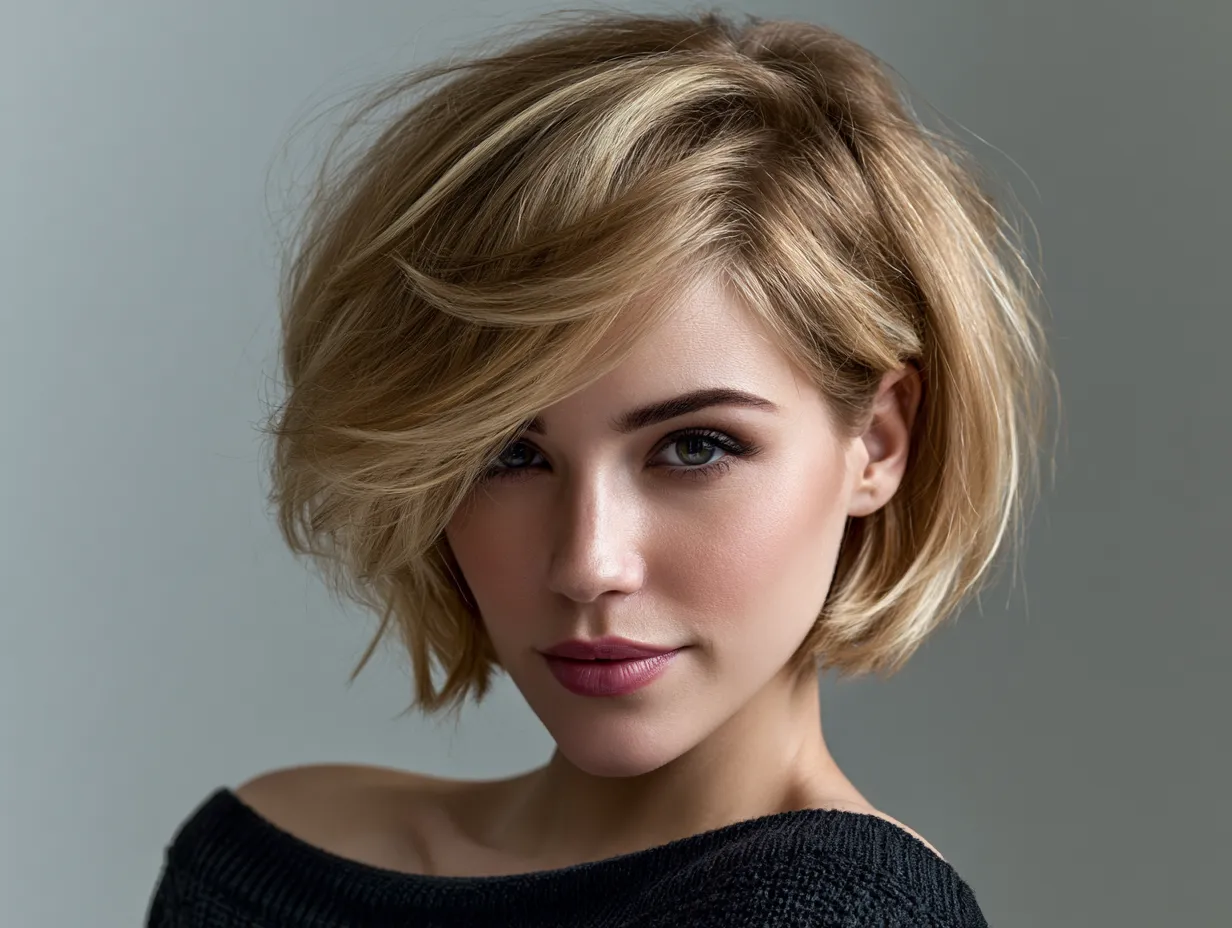
Low maintenance layered short hair for a square face doesn’t have to mean boring, and ash green with feathered razor-cut layers proves that. This version of the short bob is the most technically interesting of the three — the feathered layers create a weightless silhouette that floats slightly away from the face rather than falling parallel to the jaw. On a square face, that floating quality is exactly what you want: the hair frame feels soft, the jaw feels recessed, and the overall impression shifts from strong to defined.


The cut is razor-sliced rather than scissor-cut. Ask your stylist specifically for razor work on the ends — scissors leave a blunt perimeter that shows every layer’s termination point as a visible line. A razor creates tapered, wispy ends where each layer dissolves rather than stops. Crown volume is built by point-cutting the top sections shorter, then the neckline tapers in clean to keep the silhouette from going boxy in the back. The whole effect is a bob that reads as wider at the crown than at the jaw — which is precisely the optical trick a square face needs.
Ash green requires pre-lightening to a level 8 minimum — a muted, cool-toned green applied over anything darker turns muddy. The specific shade I’d reference is a mix of Joico’s Color Intensity Sage ($17 per tube) with a clear diluting gel at roughly 60/40. Total salon cost for lift and tone: $180–$240. What doesn’t work is going too saturated — a deep forest green on a short bob adds visual weight and defeats the feathered-layer airiness. You want the color muted and slightly grey-green, not vivid.
Maintenance is genuinely low. The feathered cut holds its shape between trims better than a blunt bob because there’s no single perimeter line to grow out unevenly. Trims every seven to eight weeks instead of six. Styling takes under five minutes: a pea-sized amount of lightweight volumizer worked through damp roots, a quick blow-dry with fingers rather than a brush, and done. The razor-cut ends air-dry with natural movement. L’Oréal Paris has a detailed look at hairstyle choices for square face shapes if you want to see how this length compares to longer options on the same face structure.
If you want to see how choppy and feathered techniques look across different color palettes and bob lengths, this collection of choppy layered bobs covers several variations worth saving for your next salon appointment.
The Bottom Line
A layered bob for a square face works because it moves where your jaw doesn’t.
The three cuts above use different tools — warm copper with flipped ends, cool lilac with diagonal bangs, and feathered ash green — but all three follow the same rule: break the horizontal jaw line through movement, not volume.
Length matters more than most stylists tell you. Land one inch below the jaw or above the chin. The jaw corner is the one point you never hit.
Color works with the cut, not separately. Warm tones redirect attention to the cheekbones. Cool tones soften the face’s overall silhouette. Dimensional color fakes depth that flat color removes.
Save this post before your next salon appointment — show your stylist the specific images, not just the description.