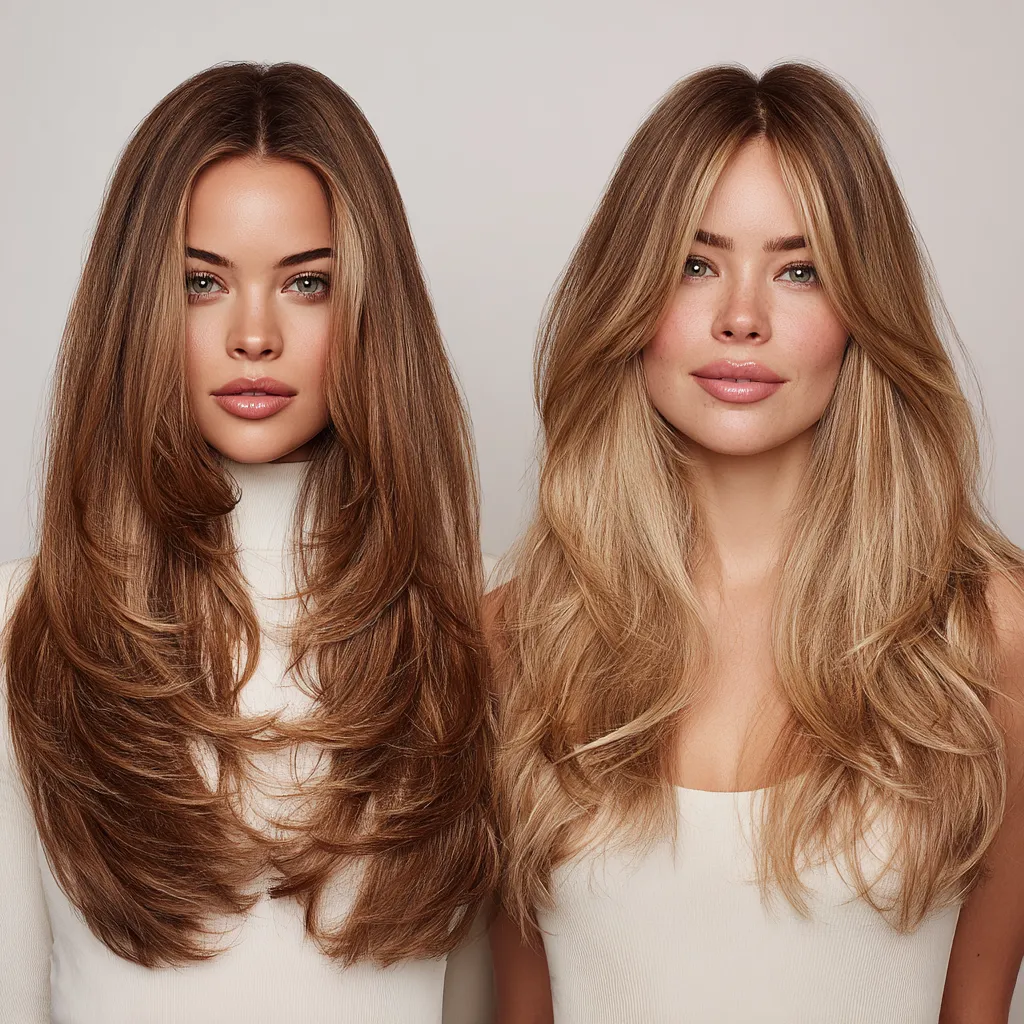
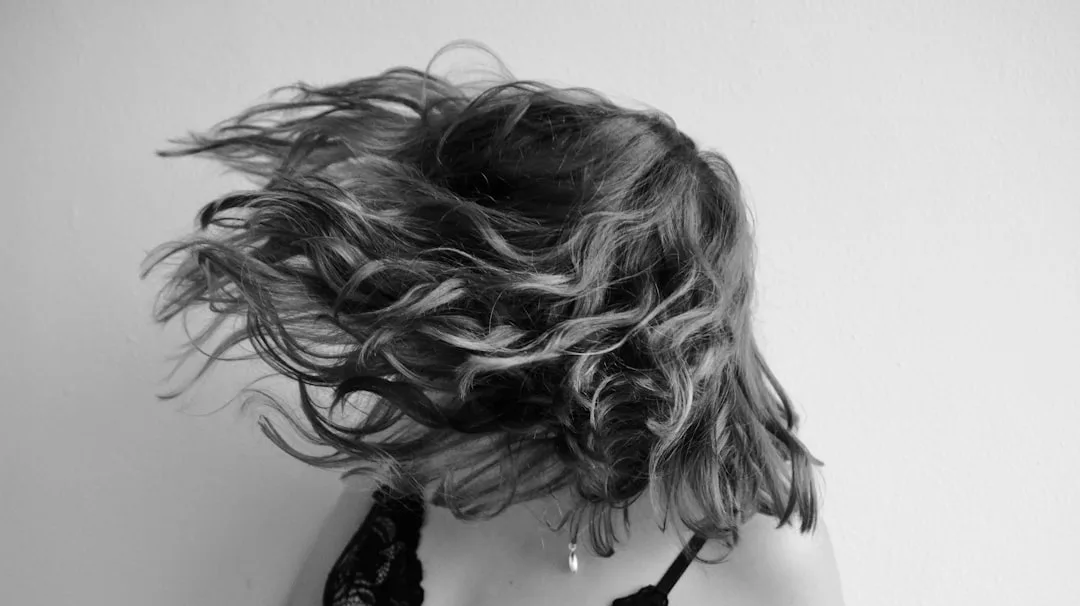
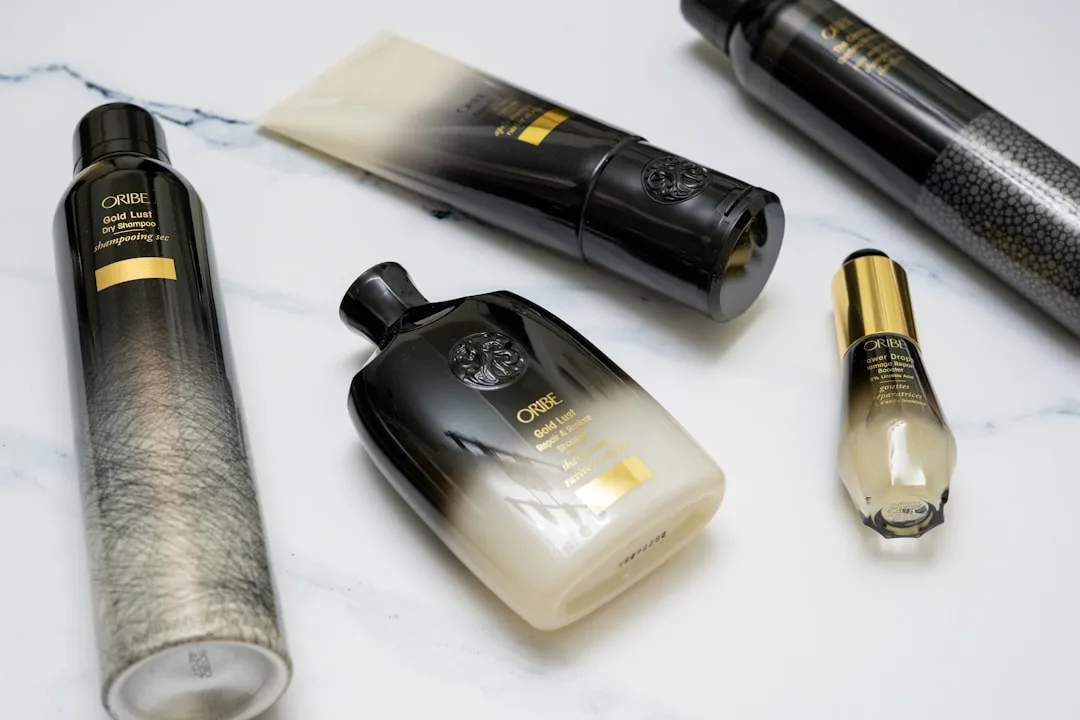
Haircuts for thin straight hair work best when the architecture of the cut does the heavy lifting. Inverted styles — shorter at the back, longer in the front — redistribute weight exactly where fine strands need it most: upward and outward, not pooling at the ends where gravity wins. The result is a silhouette that reads as deliberate, modern, and full even when the strands themselves are sparse.
Stylists recommend inverted cuts specifically for straight textures because the geometry is honest. There are no waves to create the illusion of volume, so the structure has to do it instead. A stacked back lifts. A clean angle frames. Hidden layers inside a sleek exterior add movement without disrupting the polish on the surface.
Color is the multiplier. Crimson, chestnut, and bright peach each interact with light differently, and that interaction creates the visual dimension that thin strands cannot produce on their own. Pick the right color alongside the right cut, and the gap between what your hair actually is and what it looks like closes considerably.
- Inverted cuts are shorter at the back, longer at the front — this is the shape that lifts thin hair without adding weight.
- Hidden internal layers add movement while the sleek exterior stays intact.
- Bold color (crimson, chestnut, peach) creates dimensional contrast that makes thin strands read as fuller.
- Maintenance runs every 6–8 weeks for standard shapes; extreme graduation may need trimming at 8 weeks maximum.
- Kenra Root Lifting Spray 13 ($18 at Walmart) is the product most stylists reach for first on fine, straight hair.
- Peach color fades fast — plan touch-ups every 3–4 weeks to keep the tone from going dull.
Crimson With Hidden Layers Gives Haircuts for Thin Straight Hair Their Sharpest Possible Angle
Haircuts for thin straight hair land differently in crimson — the warm red pigment bends light in a way that makes individual strands read as thicker than they are, even before the cut itself enters the equation. The inverted shape does the structural work: the back is cut high and clean, the front dips past the chin, and the inversion sculpts a silhouette that looks intentional rather than accidental. Hidden layers sit beneath the top coat of hair, adding movement and volume without disrupting the sleek outer line — think of it like a secret architecture, invisible from above but doing real work underneath.
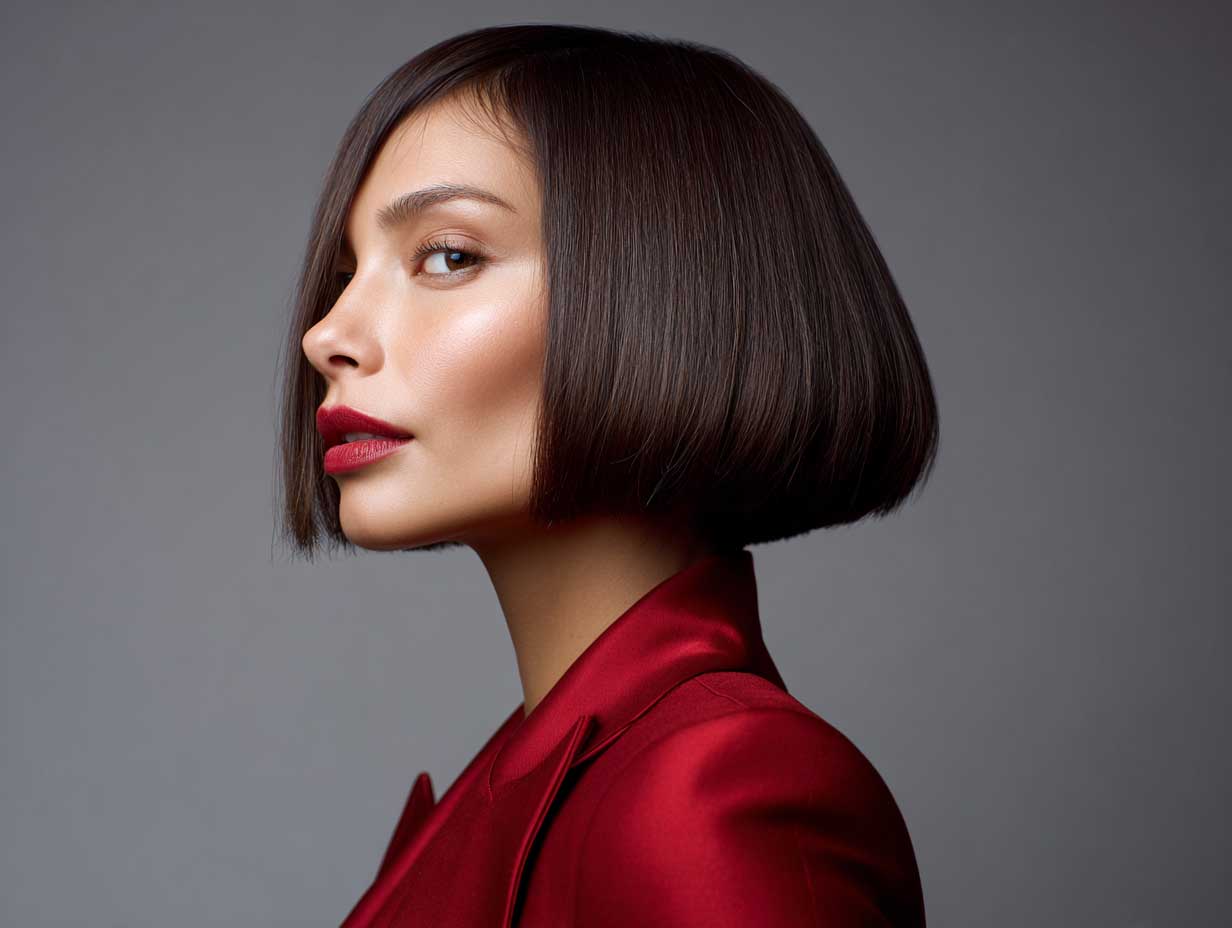
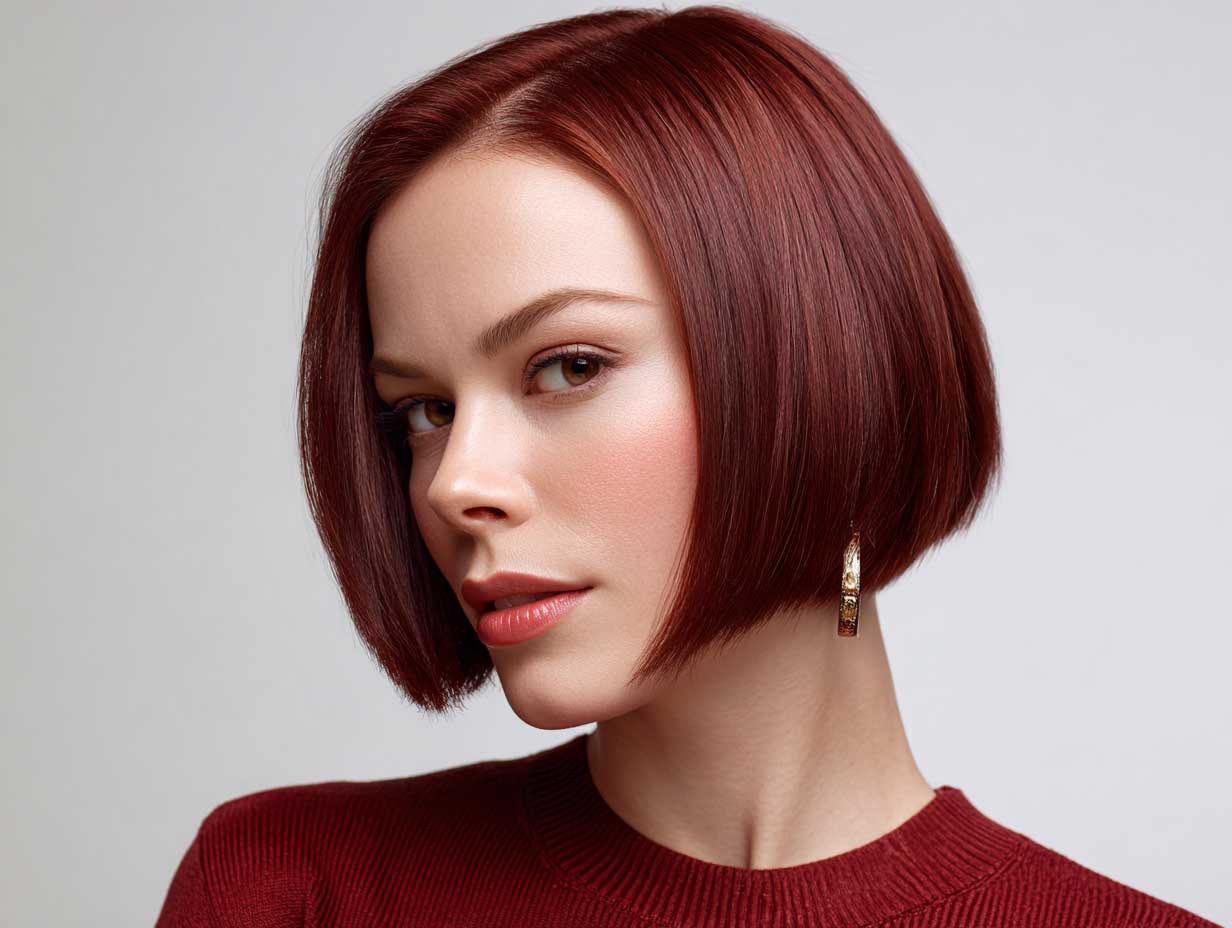
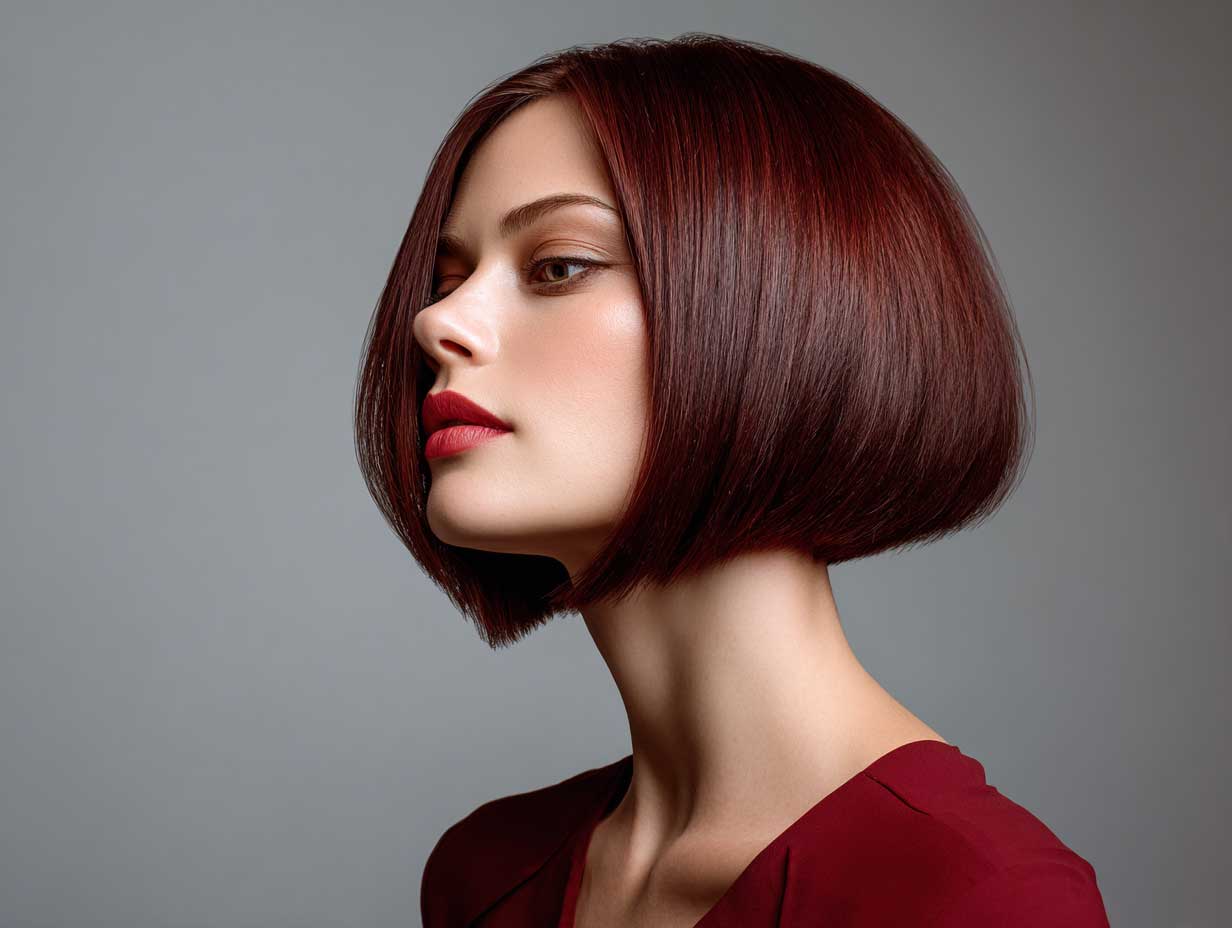
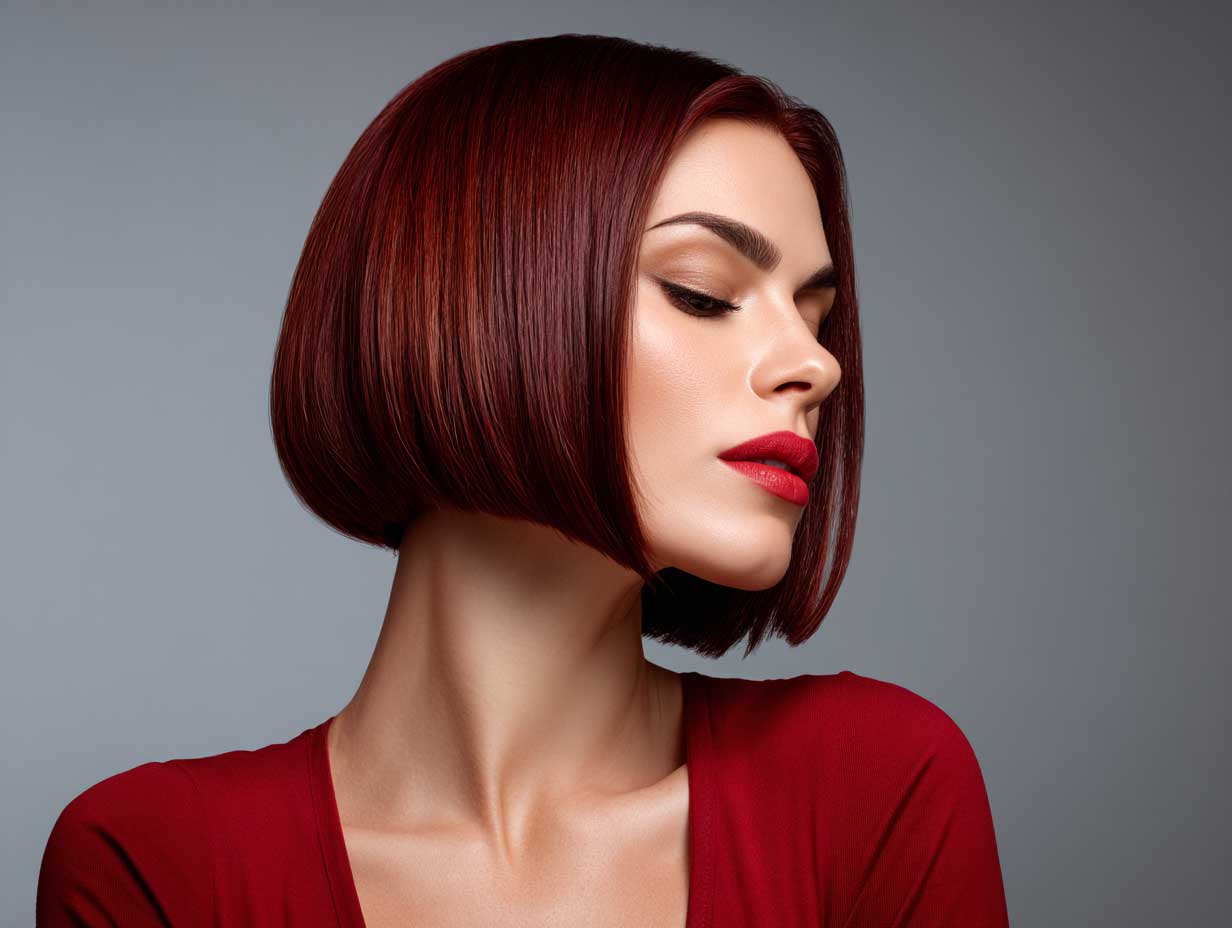
Does crimson actually add volume, or is it a visual trick? It’s a trick — but a reliable one. The warm undertones in red shift between copper and burgundy depending on the light source, and that shift reads as texture to the eye even when the hair is freshly blown smooth. Thin strands benefit from this because the color creates the dimensional contrast the hair itself cannot generate. A flat, single-process red without variation loses this effect quickly; ask your colorist for at least two tones within the crimson range, slightly lighter at the front and deeper at the nape, to make the inversion pop visually.
Styling this cut is a system, not a single product. Kenra Root Lifting Spray 13 — about $18 at Walmart for 8 oz — goes onto damp hair at the roots before blowdrying, creating the crown lift that keeps fine hair from collapsing by noon. Follow with a flat iron for the sleek exterior, and finish with 2–3 drops of Olaplex No.7 Bonding Oil ($32 at Ulta) on the mid-lengths and ends. That oil delivers clinically verified 125% more shine and protects against heat up to 450°F — both relevant when you are working with color-treated fine hair daily.
The anti-advice here: skip heavy serums applied root to tip. Any product that adds weight to the canopy of the hair cancels what the inverted shape is doing structurally. A smoothing product belongs on the lengths only, never at the roots. Stylists also advise scheduling trims every 6–8 weeks — the inverted shape loses its definition faster than a blunt cut does as hair grows, and a grown-out inversion starts to look more like an accidental mullet than an architectural choice.
Natural Chestnut Builds Crown Volume on Haircuts for Thin Straight Hair Without Visible Structure
Chestnut works differently from bolder shades because it operates quietly — the warm, earthy tone creates depth through its variation between light and dark rather than through contrast with a base. For thin straight hair, this matters because the color does volume work that reads as natural rather than styled. The swooped front section is the structural trick here: when the longer front panel is directed to one side and shaped with a light wax or styling cream, it frames the cheekbones and draws the eye upward, adding the illusion of height that flat hair cannot manufacture on its own.
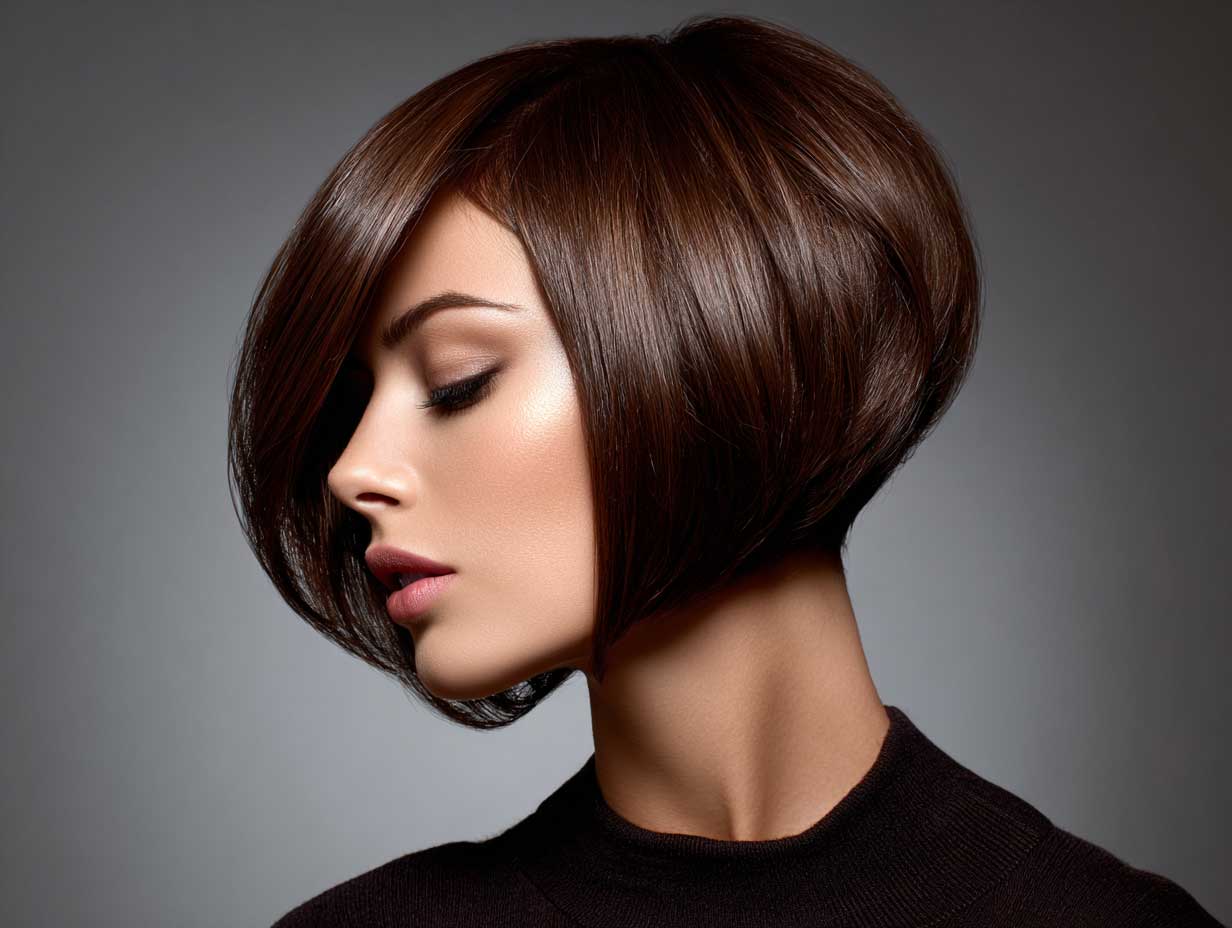
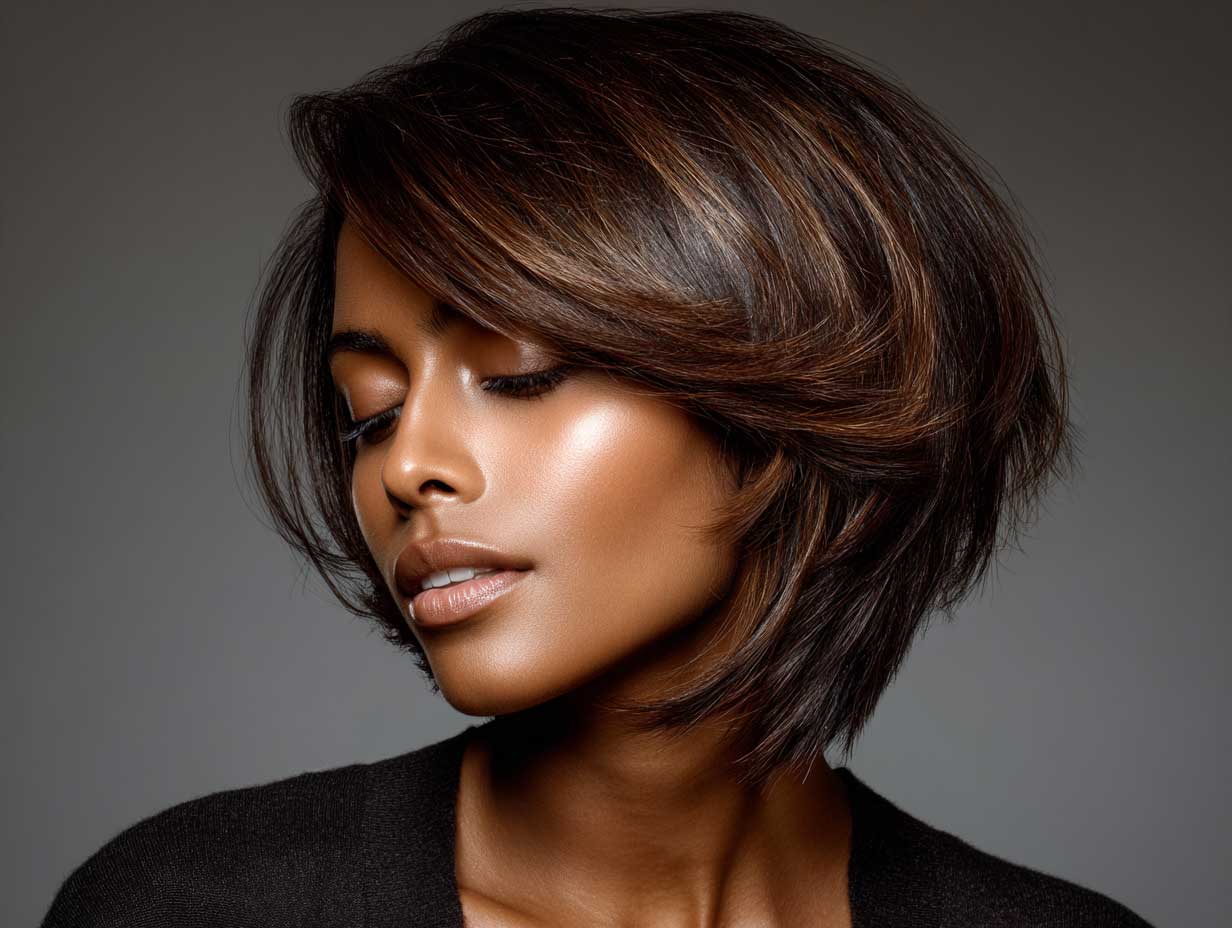
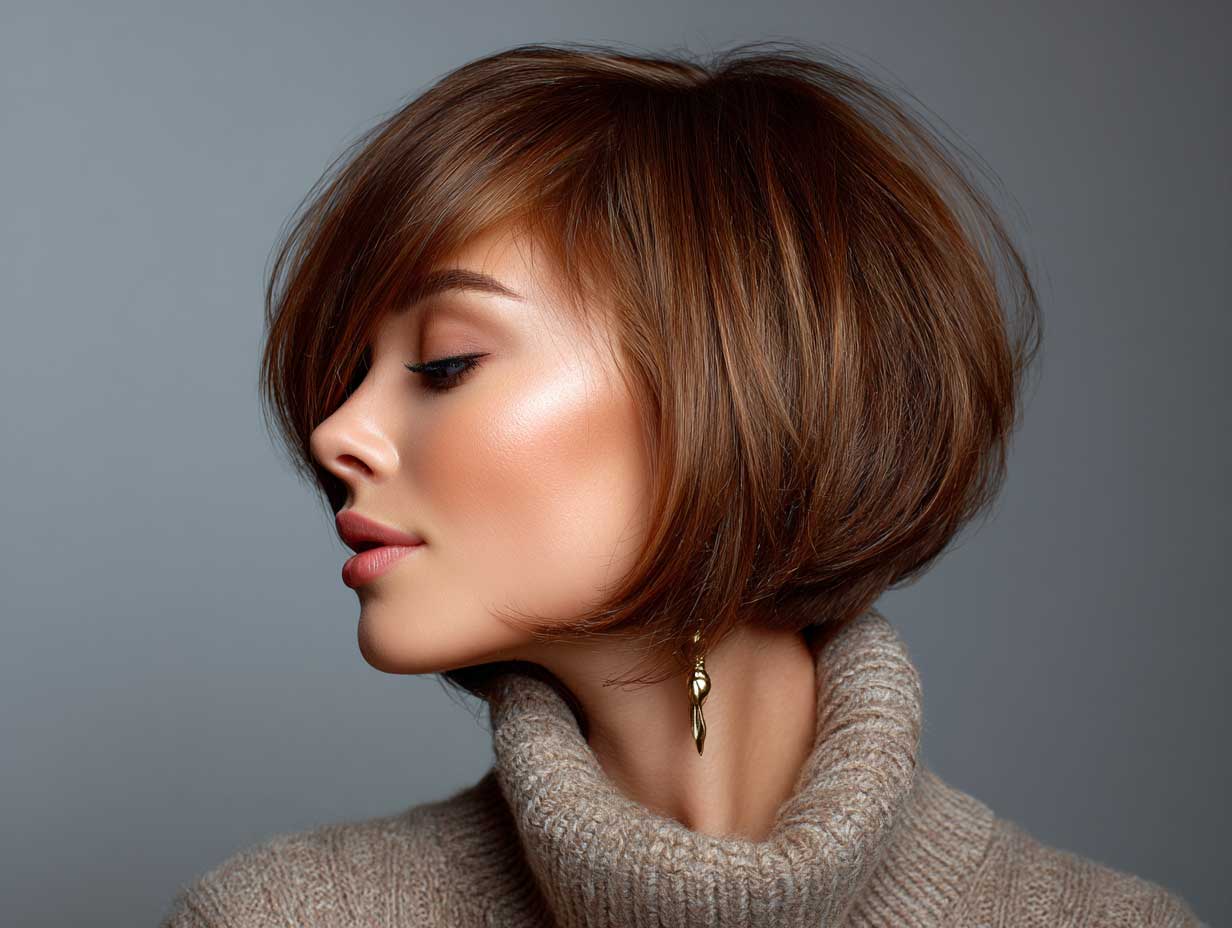
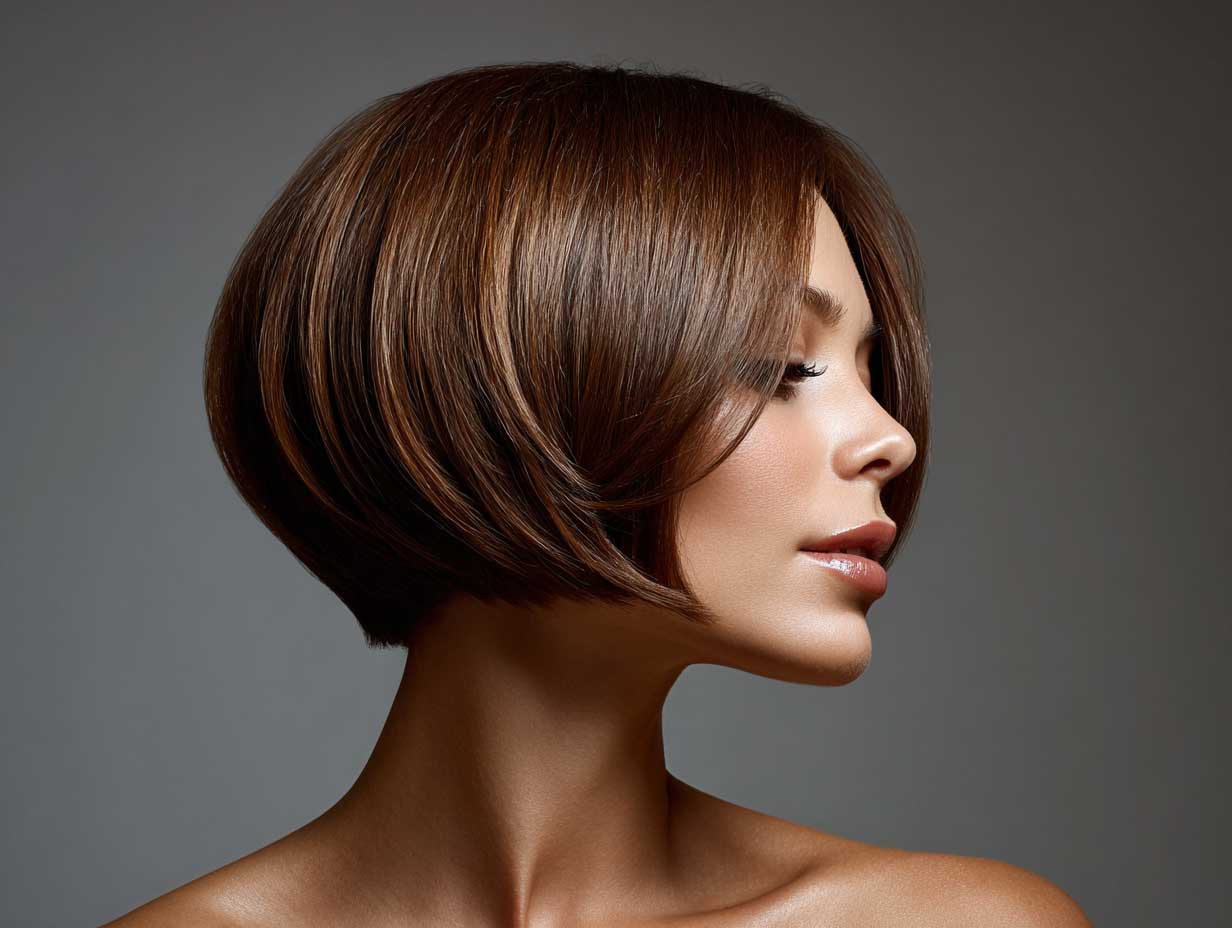
The base of this style is a softly inverted cut — gentler than the crimson version, with a less dramatic angle from back to front. That gentler pitch means less crown height comes from the cut itself, so styling has to pick up the slack. A round brush during blowdrying is the right tool: direct the airflow downward from the roots while rolling the brush upward, which physically lifts the root zone and creates lasting volume. Dry shampoo or a powder applied at the crown after styling maintains that lift for the rest of the day — fine hair loses crown volume to humidity and body heat within hours without a texture product to anchor it. For layering technique that works on thin hair to look thicker, the round-brush method is consistently among the most effective options.
What does chestnut offer that darker or more vivid shades do not? Versatility across lighting conditions. A crimson reads dramatically under overhead light; a chestnut shifts from warm brown to near-amber in direct sun, which keeps the hair looking dimensional in any setting without looking like an intentional statement. That makes this option a practical choice for professional environments where bold color would read as too much.
One common mistake with this cut: over-teasing the crown to achieve volume. Backcombing fine straight hair at the root creates volume that lasts about twenty minutes before the strands collapse back flat, and the process causes breakage over repeated sessions. A properly executed round-brush blowdry on damp hair, combined with the Kenra Root Lifting Spray applied before heat, gives far more durable lift than any amount of teasing ever will.
- Don’t skip root product and go straight to heat. Without a root-lifting fixative on damp hair first, blowdrying fine strands just dries them flat. The Kenra Root Lifting Spray applied before the round brush is the step most people skip — and the reason their volume disappears by noon.
- Don’t apply smoothing serum from root to tip. Product at the roots adds weight that counteracts the lift the inverted shape creates. Keep any serum or oil on mid-lengths and ends only.
- Don’t push trims past 8 weeks on a dramatic inversion. The grown-out back of a steeply angled cut stops looking architectural and starts looking unintentional. Schedule shorter intervals — 6–7 weeks — for extreme angles.
- Don’t use glossing spray on a sleek inverted bob. It reads beautifully in photos, but it lies completely flat against the scalp in real ambient light and kills the dimensional effect entirely.
Bright Peach Color Pushes the Graduated Back of These Thin Straight Hair Haircuts Into View
Graduated backs are a structural solution for thin straight hair — each layer at the back stacks slightly higher than the one below it, creating a rounded silhouette that supports lift without requiring the hair to hold weight it cannot manage. The peach tone amplifies this visually because bright, saturated color makes every angle and layer read more distinctly from a distance. What looks like a subtle graduation in a neutral shade becomes a visible, intentional shape in peach, which is the difference between a haircut that exists and one that makes a statement.
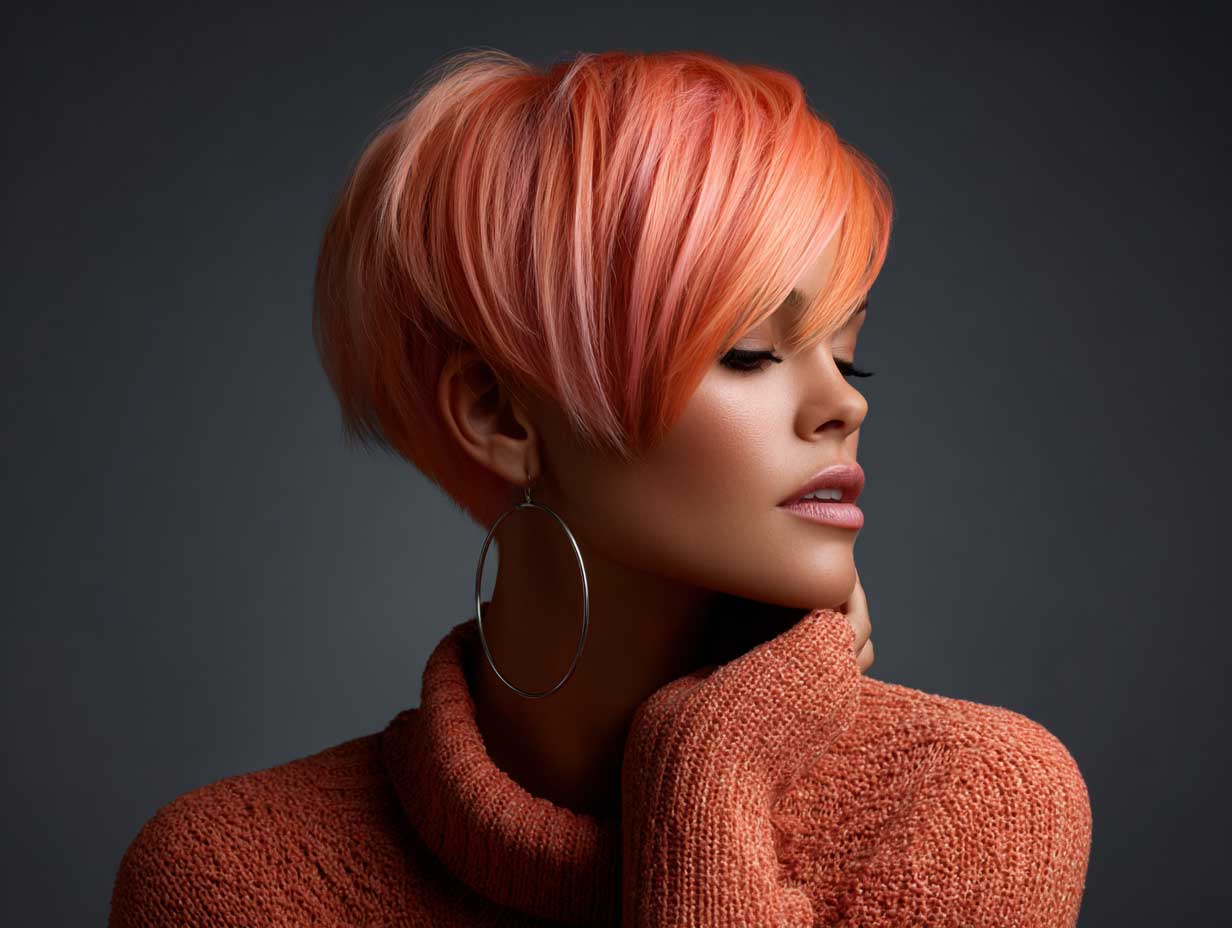

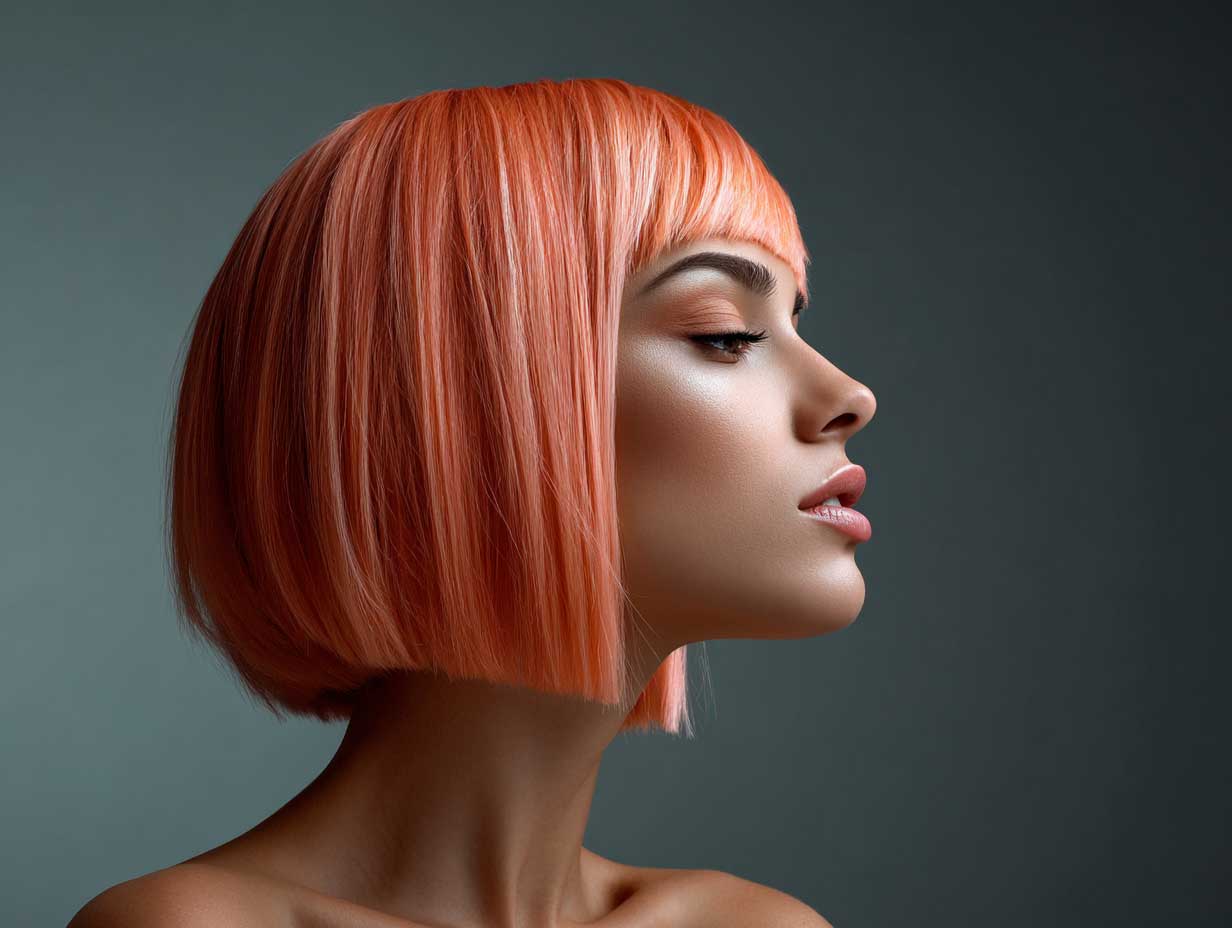
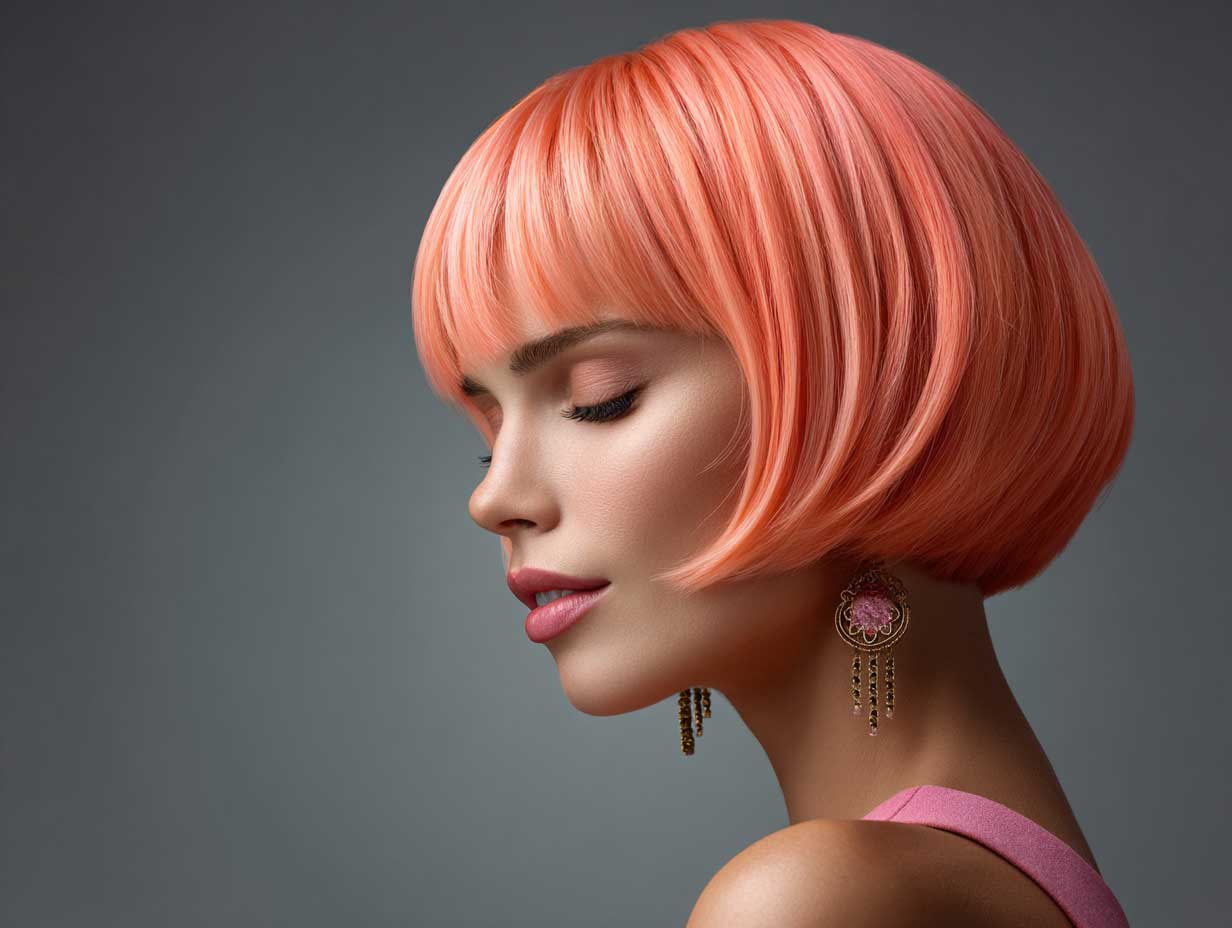
The front remains sleek and elongated, grazing the collarbone, which creates the length contrast that makes the stacked back look even higher by comparison. Stylists recommend blowdrying the back section with a round brush directed from underneath: rolling the brush upward while directing heat from below generates lift that the stacked layers then hold in place. A light-hold hairspray finishes the shape without flattening it — avoid anything labeled “firm” or “extra hold” on thin straight hair, as it tends to create crunchy texture that makes fine strands clump together rather than separate.
Peach is high-maintenance by its nature. Lime Crime’s colorists note that the pigment needs refreshing every 3–4 weeks to prevent the tone from fading to a washed-out yellow. The color also requires pre-lightening on any shade darker than medium blonde, which adds bleach damage to the equation. For hair that is already fine and straight, that damage can make strands feel more fragile and harder to style — the mitigation is a bond-building treatment used between color appointments, not just at the salon. Olaplex No.7 used on wet hair before heat styling helps maintain the structural integrity of color-treated fine hair between sessions.
Where does this cut work best, and where does it fall flat? Graduated stacked backs perform well on fine hair that lies flat at the nape naturally — the stacking adds the dimension the hair texture cannot. On hair that already has some natural body or slight wave at the nape, the graduation can look overly round or push outward in an unintended direction. If that is the case, a less aggressive graduation with a longer back section is the smarter call. You can find more approaches to picking the right bob haircut for thin hair to look thicker based on specific color and length combinations.
| Variant | Volume Mechanism | Color Maintenance | Key Product |
|---|---|---|---|
| Crimson Hidden Layers | Internal layers + light-refracting red pigment | Gloss refresh every 6–8 weeks | Kenra Root Lifting Spray 13 ($18) |
| Natural Chestnut Swoop | Crown swoop + round-brush root lift | Color-safe shampoo, low upkeep | Dry shampoo or volumizing powder at crown |
| Bright Peach Graduation | Stacked back layers + saturated color contrast | Touch-up every 3–4 weeks; bleach required | Olaplex No.7 Bonding Oil ($32) |
Inverted shapes on thin straight hair work precisely because they move weight away from where fine hair struggles most — the ends — and redirect it upward where the silhouette needs it. For a broader look at how this same structural logic applies across other cuts, Latest Hairstyles covers the full range of inverted bob variations by hair type and maintenance level, including options that work with even very fine or medium-density textures.
Final Take
The Inversion Is the Volume — Not the Product
Thin straight hair does not need more product; it needs a cut shape that redistributes weight before anything else enters the picture. An inverted shape with stacked or hidden layers provides that redistribution structurally, and bold color choice — crimson, chestnut, or peach — amplifies the visual result without requiring extra density from the hair itself.
Trims every 6–8 weeks keep the inverted angle sharp enough to do its job. A root-lifting spray before blowdrying is the one non-negotiable styling step. Everything else — the serum, the oil, the dry shampoo — is maintenance, not architecture.
Save this post before your next salon appointment.
Related Topics
FAQ
What haircuts work best for thin straight hair to add volume?
How do you make thin straight hair look thicker with a haircut?
How often do inverted haircuts for thin straight hair need trimming?
Does peach hair color work on thin straight hair?
What is the difference between a graduated back and hidden layers for thin straight hair?
Can you get an inverted haircut for thin straight hair without bold color?
Complete guide
Straight Hairstyles That Actually Work for Your Hair Type
Cuts by length, face shape, texture and color — all in one place