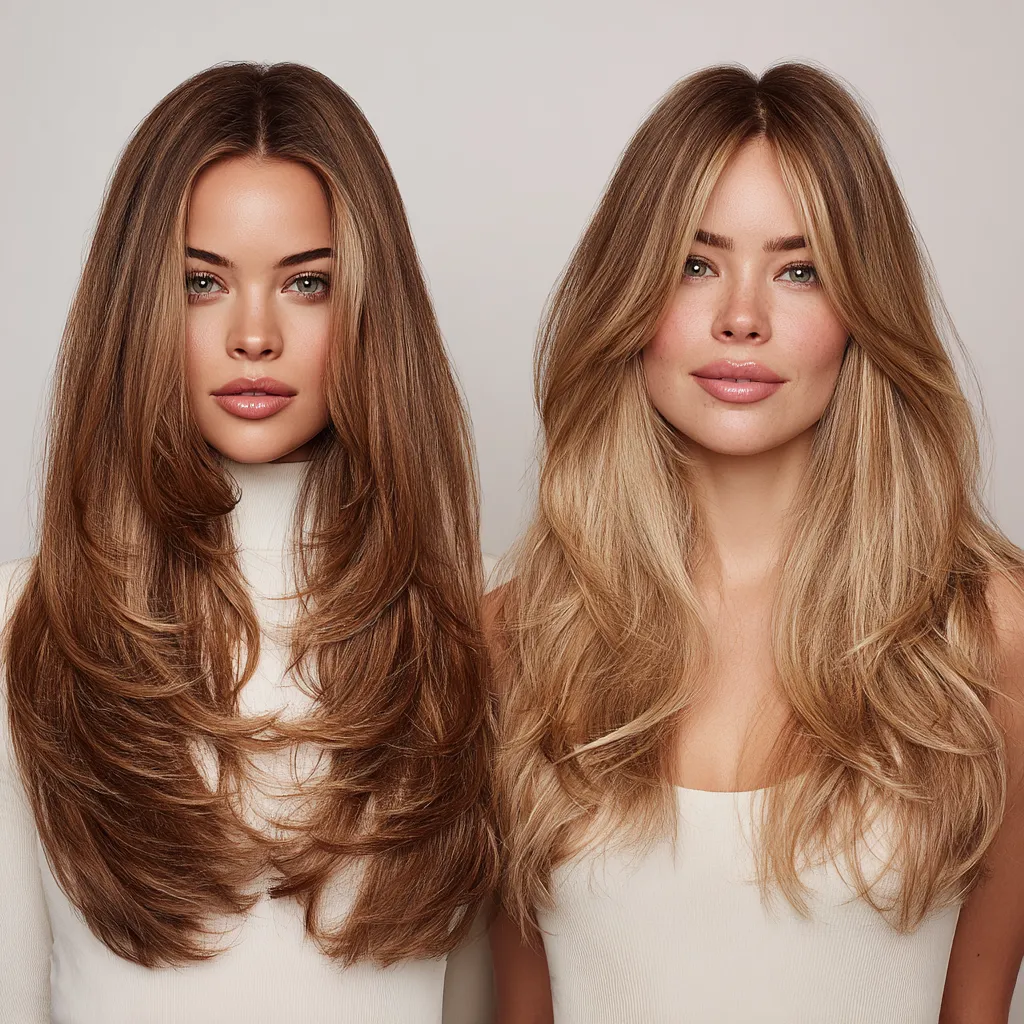
A shag haircut for thin straight hair is the structural answer to flat, lifeless strands—it builds volume through deliberate layering instead of chemical shortcuts or daily blow-outs. My own fine hair sat pancake-flat against my scalp for years until a stylist convinced me to go choppy, and the difference after one appointment was humbling. I’ve owned a shag in three different lengths since then and every single version has photographed better than anything I tried before it.
Thin straight hair needs geometry to create the illusion of density. The shag delivers that through stacked layers, face-framing pieces, and deliberately uneven ends that catch light from multiple angles. You’ll notice the hair starts to behave like thicker strands because each layer lifts slightly off the one below it—that air gap is doing the heavy lifting.
Color plays a supporting role here too. Saturated, bold shades—orange, green, gold—make every separation between layers visible, which doubles the perceived texture. Neutral and natural tones on thin straight hair can collapse visually. A shag with bold color never will.
– The shag haircut works on thin straight hair because choppy layers trap air and break up the flat visual line.
– Bold colors like orange, green, and gold amplify layer separation and make fine hair look twice as dense.
– Face-framing pieces at mid-length focus texture up front where it matters most for face shape.
– Long shags stay manageable on thin hair only when wispy bangs and tapered ends balance the length.
– Sea salt spray or lightweight mousse (not heavy serums) are the only products this cut needs to perform.








Bright Orange Shag Haircut with Choppy Layers Rewires Flat Texture
A shag haircut for thin straight hair lives or dies by its choppy layer structure—and this orange version nails every requirement. I stole this approach from a Kenra stylist session I watched on YouTube: stack the shorter pieces around the crown, let the mid-lengths fall uneven, and never blend the ends smooth. The result is a cut that looks intentionally messy rather than accidentally flat. Choppy layers create separation between individual strands, which mimics density where thin hair simply doesn’t have it.


The uneven edges are not a styling accident—they’re the mechanism. Each choppy endpoint catches light differently, which creates a visual texture that straight, smooth ends never produce. What actually doesn’t work: asking for a “soft shag” on thin straight hair. Softening the edges just smooths the layers into each other and you lose every volume benefit the cut promised. Ask your stylist specifically for point-cutting and razored tips. Be direct about it.
Bright orange is genuinely functional here, not just aesthetic. The saturation creates a color-contrast between each layer that makes the structure visible even from across a room. My go-to product on this cut is Bumble and bumble Surf Spray ($32)—two pumps on damp hair, diffuse briefly, and the layers hold their lift without stiffness. Skip the smoothing serums entirely; they flatten everything you just paid your stylist to build.
Heavy conditioning masks the day before your cut. Your stylist needs to feel the actual weight of your hair to calibrate the layer depth correctly. A hair mask adds false density and you’ll end up with too few layers for your real texture.
Silicone-based smoothing serums post-cut. Products like old-formula Frizz Ease weigh down the very layers doing the volume work. Use them and your shag is just a vaguely uneven flat cut.
Waiting more than 10 weeks between trims. Shag layers grow out faster than most people expect. At 12 weeks the crown layers start losing their shape and the whole illusion of fullness collapses. Budget for trims every 8 weeks—at most 10.
Bright Green Mid-Length Shag with Face-Framing Pieces Solves Fine Hair Flatness
Mid-length shag haircuts for thin straight hair are the most forgiving version of the cut, and face-framing pieces are the reason why. You need face-framing layers for one specific reason: they redirect visual attention to the front of the head where you can see the texture working. Without them, a mid-length shag on fine hair can read as just wavy ends with no real structure. Frame the face first, then let the rest fall.



The green color in this version is doing a structural favor for the haircut. Saturated tones like this one make each layer separation high-contrast and immediately visible—think of it like an architectural model where the floors are painted different colors so you can count them instantly. On naturally thin hair, color is not vanity, it’s load-bearing. Mid-length shags on fine hair should sit between the chin and collarbone; anything longer without significant layering just falls back into limp territory. Modern volumizing haircuts for thin hair follow this same principle across different cut styles.
Styling this requires almost nothing. R+Co Badlands Dry Shampoo Paste ($34) pressed into the roots before any styling gives grip and height that even the best cut can’t manufacture on its own. Tousle with your fingers, never a paddle brush—brushing collapses everything. A mid-length shag with face-framing layers is the closest thing to a wash-and-go cut that thin straight hair actually has access to.
Golden Yellow Long Shag for Thin Straight Hair Proves Length Doesn’t Mean Flatness
Long shag haircuts for thin straight hair are controversial in the salon world—a lot of stylists will talk you out of them because they’ve seen too many attempts collapse into limp, layerless ropes past the shoulder. The ones that fail all have the same problem: not enough internal layering and bangs that are too blunt and heavy. Get the layering right and length becomes an asset rather than a liability. Wispy bangs are non-negotiable at this length on fine hair; they float over the forehead instead of hanging in a flat curtain.


The layers in a long shag for thin straight hair need to start high—around the temples and crown—then taper continuously to the ends. This top-heavy layering creates swing at the roots rather than just movement at the tips, which is how you get a long haircut that doesn’t hang flat. I had my stylist use a razor for the final pass on my last long shag, and you’ll notice immediately that the ends diffuse light instead of reflecting it as a single flat sheet. Golden yellow is ideal for this length because the warm tone brings out any natural dimension the layering creates.
Volumizing spray matters enormously here. Living Proof Full Dry Volume & Texture Spray ($30) applied section by section at the roots before diffusing gives this cut its structure. Avoid anything labeled “glossing” or “smoothing”—those products are actively working against what the shag is trying to do. Air-drying with a quick scrunch every 15 minutes is a legitimate alternative to heat for anyone trying to preserve fine hair’s natural condition. Low-maintenance long shag haircut inspiration shows how this length can work across different hair colors and densities without heavy daily effort.
Curious whether a long shag is actually worth the upkeep? On thin straight hair, the honest answer is yes—but only if you commit to trims every 8 weeks and use the right lightweight products. Skip the trims and the top layers grow past the length where they create lift, and you’re left with longer hair that now looks thinner than before you cut it. The cut earns its reputation only when maintained properly.
For more on how layering structure affects long fine hair across different cut styles, Long Hair with Layers Haircuts for Thin Straight Hair That Don’t Fall Flat covers the full range of options for anyone who wants length without the droop.
The Takeaway
Thin Straight Hair Has One Real Fix — and the Shag Is It
Choppy layers stacked from crown to ends are the only cut structure that creates genuine volume on flat fine strands without adding product weight.
Bold color isn’t optional decoration—saturated shades like orange, green, and gold make the layer separation visible and double the perceived texture.
Length works at any level (short, mid, long) as long as the layering starts high, the ends stay wispy, and trims happen every 8 weeks without exception. Save this post.