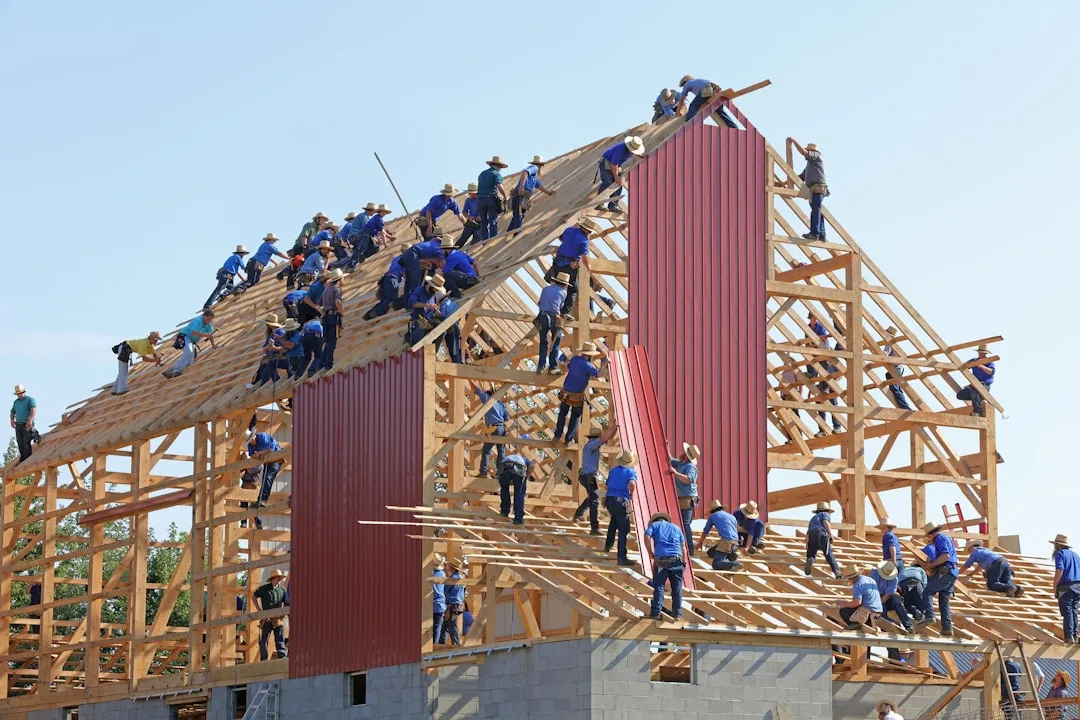
The construction sites dotting Seattle, Portland, and Minneapolis look dramatically different in April 2026 than they did two years ago. Where steel beams and concrete trucks once dominated, you’ll now find panels of cross-laminated timber (CLT) stacked like oversized plywood—and being assembled at three times the speed of traditional methods.
Mass timber construction has crossed from architectural novelty to mainstream building practice. According to data released by the American Wood Council on March 12, 2026, mass timber now accounts for 18% of all mid-rise (4-12 story) building permits in major North American cities, up from just 4% in 2024. This isn’t a gradual shift—it’s a construction revolution.
What Makes Mass Timber Different From Regular Wood Construction
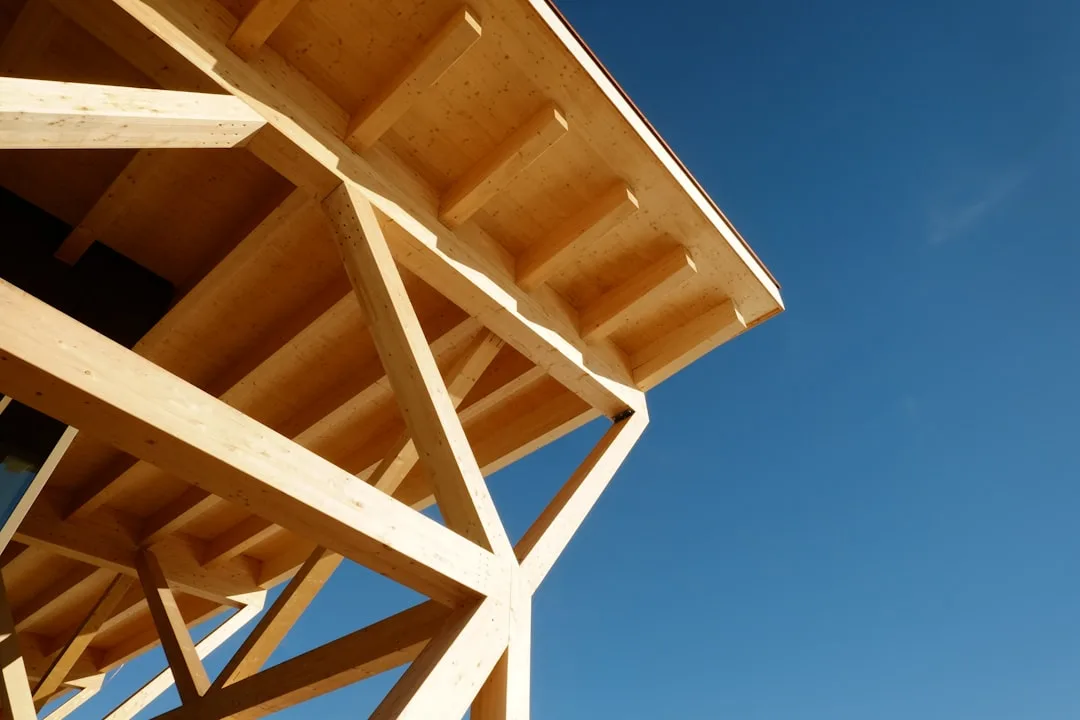
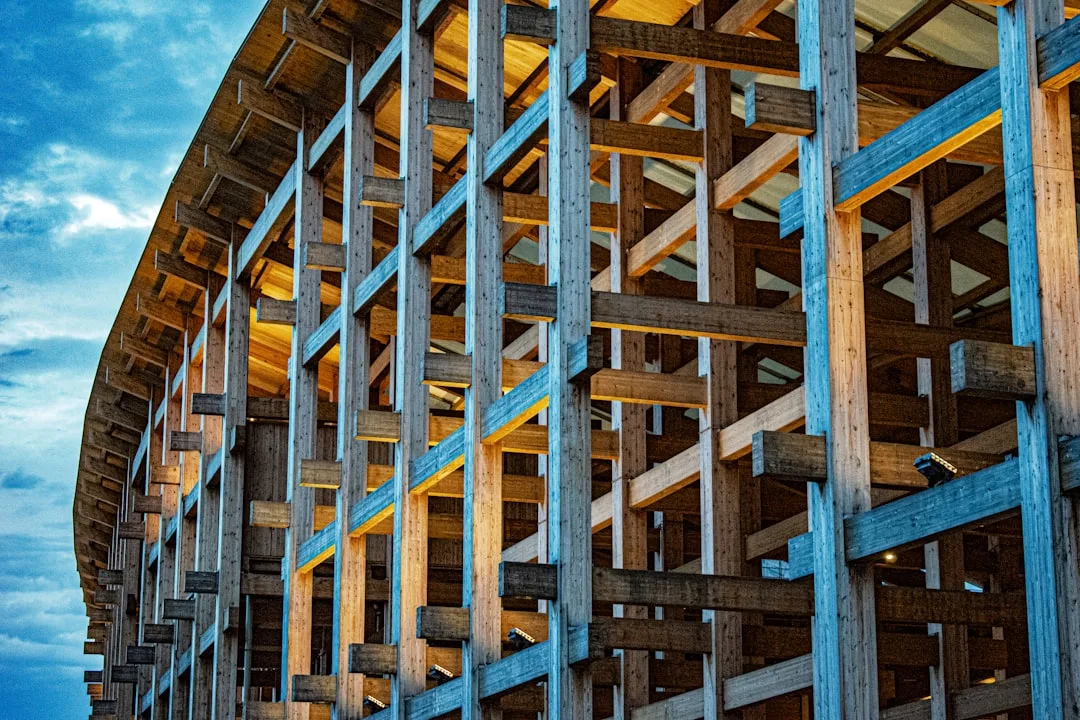
Mass timber refers to engineered wood products built by laminating dimensional lumber into large, structural panels and beams. The two dominant products are cross-laminated timber (CLT)—where layers of wood are stacked perpendicular to each other and glued under pressure—and glue-laminated timber (glulam), which bonds parallel wood pieces into massive beams.
These aren’t the 2x4s you find at Home Depot. A typical CLT panel measures 10 feet wide, 40 feet long, and 12 inches thick, with fire resistance ratings that match or exceed concrete. Structurally, they can support loads comparable to steel while weighing 80% less—a critical advantage when building on existing urban infrastructure.
The technology isn’t new. Austrian and Swiss builders have used CLT since the 1990s. What changed is North American building codes. Between 2021 and 2024, the International Building Code expanded allowable mass timber construction from 6 to 18 stories, and manufacturers like Katerra (before its 2021 collapse) and current leaders DR Johnson and Nordic Structures invested in North American production facilities. We now have domestic supply chains that can compete with concrete on price.
The Speed and Cost Equation That’s Converting Developers
Lendlease’s Timber Office Tower in Brisbane, completed in January 2026, was framed in 28 weeks—a schedule that would have required 44 weeks with reinforced concrete. Skanska’s 8-story residential project in Boston’s Seaport District, which broke ground in February 2026, projects a 35% reduction in on-site construction time.
The economics are compelling. CLT panels arrive pre-cut to specification, eliminating formwork, reducing wet trades, and requiring smaller crews. Labor savings offset the 5-15% material premium over concrete. More importantly, faster construction means earlier occupancy and revenue—the metric that actually moves developer decisions.
Michael Green Architecture, the Vancouver firm that’s designed more than 40 mass timber buildings since 2012, reported in their April 2026 project review that 70% of their current commissions specify mass timber from the initial brief. That’s a fundamental shift in client expectations, not architect advocacy. As highlighted in profiles of Great World & Most Famous Architects, the visionaries driving this change understand that material innovation defines architectural eras.
The Aesthetic Bonus That Architects Actually Care About
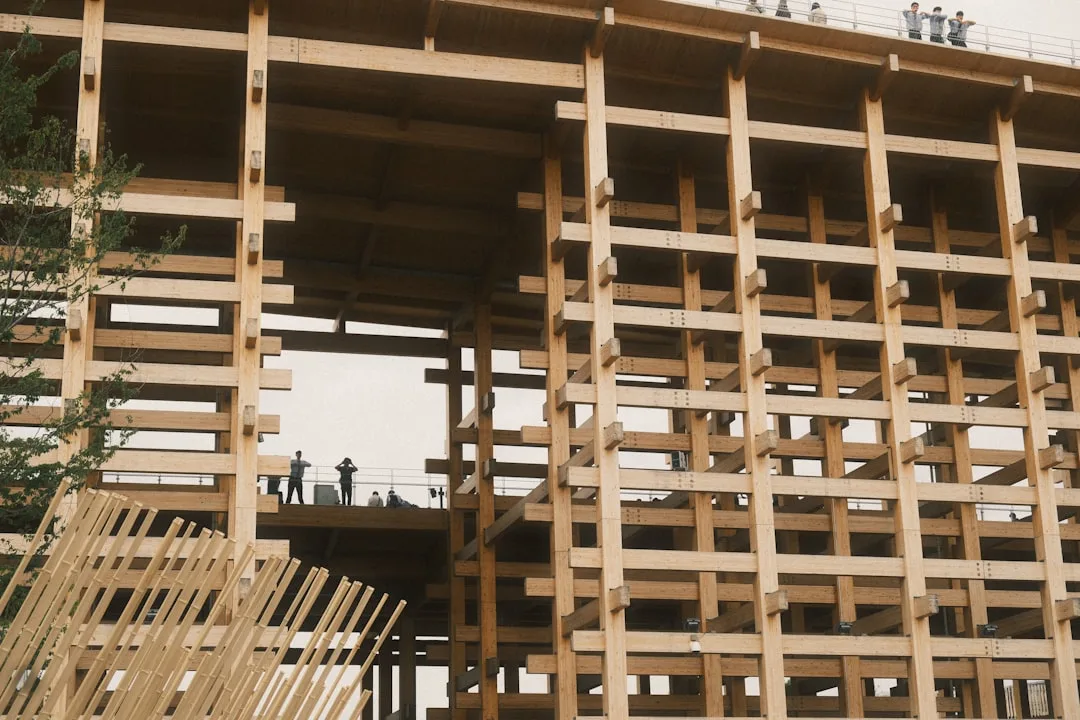
Strip away the sustainability credentials and construction timelines, and you’re left with what’s actually appearing in architectural publications: exposed wood ceilings and columns that don’t need finishing. The 2060 MLK mixed-use building in Portland, completed by Lever Architecture in October 2025, leaves its CLT structure completely exposed in residential units—a finish treatment that would cost $40-60 per square foot to replicate with applied materials.
This matters because it changes interior design language. Instead of hiding structure behind drywall, mass timber buildings celebrate it. Tenants are paying premiums for units with exposed timber ceilings—the Wood Innovation Design Centre in Prince George, BC reports that their timber-exposed office spaces lease for 12% above market rate comparable spaces.
The aesthetic extends beyond interiors. Elevate Your Home Renovation with Metal Roofing and Copper Lighting examines how material authenticity drives contemporary renovation choices—the same principle applies at building scale.
Where Carbon Accounting Meets Building Codes
The climate case is straightforward: a cubic meter of CLT stores approximately 0.8 tons of CO2, while producing an equivalent concrete element releases 0.4 tons. Net difference: 1.2 tons of CO2 per cubic meter. For an average 6-story mass timber building, that’s roughly 1,000 tons of avoided emissions compared to concrete construction.
What makes this relevant in April 2026 is policy, not principles. Washington State’s Buy Clean Act, which took effect January 1, 2026, requires embodied carbon disclosure for public construction projects and establishes declining carbon limits through 2030. California’s AB 2446, implemented March 2026, offers expedited permitting for buildings that achieve 30% embodied carbon reductions below code baseline. Mass timber is currently the only construction system that meets these thresholds economically for mid-rise buildings.
These aren’t incentives—they’re competitive advantages with hard dollar values. Denver-based Riverside Development Group stated in their March 2026 investor presentation that policy-driven timeline advantages made mass timber their default specification for projects between 4-10 stories.
The Supply Chain Reality Check
Demand is outpacing production. North American CLT manufacturing capacity reached 850,000 cubic meters annually by January 2026, according to WoodWorks. Current project pipelines require 1.2 million cubic meters. Lead times for CLT panels have extended from 8-10 weeks in 2024 to 16-20 weeks in 2026.
This constraint is temporary but real. Vaagen Timbers opened a new facility in Colville, Washington in February 2026 with 180,000 cubic meter capacity. Sterling Lumber announced a $120 million plant in Alabama scheduled for 2027 completion. The bottleneck is easing, but spec schedules need to account for extended procurement windows.
What This Means For Your Next Project
If you’re planning construction or renovation on a 3-8 story building in an urban market, mass timber deserves specification evaluation—not as a sustainable alternative, but as a competitive construction method. The questions to ask: Can your site access accommodate pre-fabricated panels? Does your jurisdiction’s fire code allow mass timber at your height? Can your schedule absorb current CLT lead times?
For existing building renovations, the calculus differs. Mass timber excels in new construction; retrofitting existing structures rarely justifies costs unless you’re doing full gut renovations with structural modifications.
The trend isn’t coming—it’s here. When mainstream developers in secondary markets are specifying mass timber for market-rate housing without sustainability marketing angles, you’re watching a construction standard change in real-time. The concrete mixer trucks aren’t disappearing from construction sites, but they’re sharing space with timber panels in ways that would have seemed improbable 36 months ago.