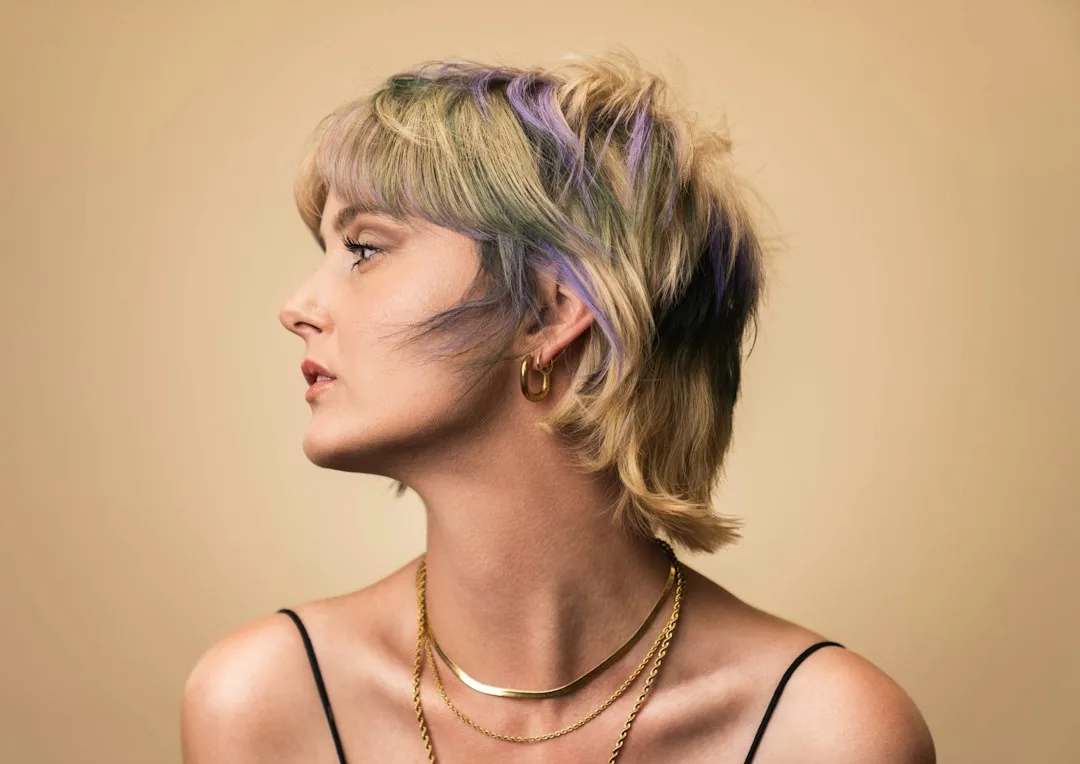
Medium layered haircuts for women are having a quiet revolution — and it’s not about the cut itself. It’s about which kind of layering your hair texture actually needs. I’ve sat in enough salon chairs to know that “layers” means completely different things depending on whether your hair is fine, thick, wavy, or colour-treated. The wrong layer placement adds bulk where you don’t want it. The right one makes medium-length hair feel like it has three times the volume with half the effort.
This lookbook covers five distinct colour-and-cut combinations — from chocolate brown waves to golden caramel balayage — each showing how the layering is doing different work. You’ll notice medium layered haircuts look different depending on the base colour: darker tones show layer separation with sharp clarity, while lighter ones glow with dimension. Stick around to the section on face-framing placement. That’s where most people get shortchanged at the salon.
Quick Scan
- Chocolate Brown Waves — soft face-framing layers, wide-barrel wave, oval and heart-shaped faces
- Ash Blonde Feathered Layers — floating, light-catching sections, cool-toned, any texture
- Fiery Red Highlights — bold colour contrast amplifies layer movement, all face shapes
- Deep Black Gloss — precision layers, sleek finish, collarbone-length graduation
- Golden Caramel Balayage — hand-painted grow-out, full volume illusion, low maintenance
Layer placement tip: Ask your stylist to start layers no higher than the cheekbone on the first visit — too-short face-framing layers grow out awkwardly and take nearly a year to blend back in.
Chocolate Brown Waves Prove Face-Framing Layers Are Doing the Heavy Lifting
Medium layered haircuts in chocolate brown are the most requested colour-cut combo at mid-range salons — and the reason is texture arithmetic. Warm brown shows layer separation more clearly than any blonde, because the depth between each strand creates visible shadow. I asked my colorist at a Bumble and bumble salon why this combination photographs so well, and she pointed to that contrast: darker tones map the architecture of the cut in a way lighter shades simply blur. The result is a hairstyle that looks intentional even on day three.
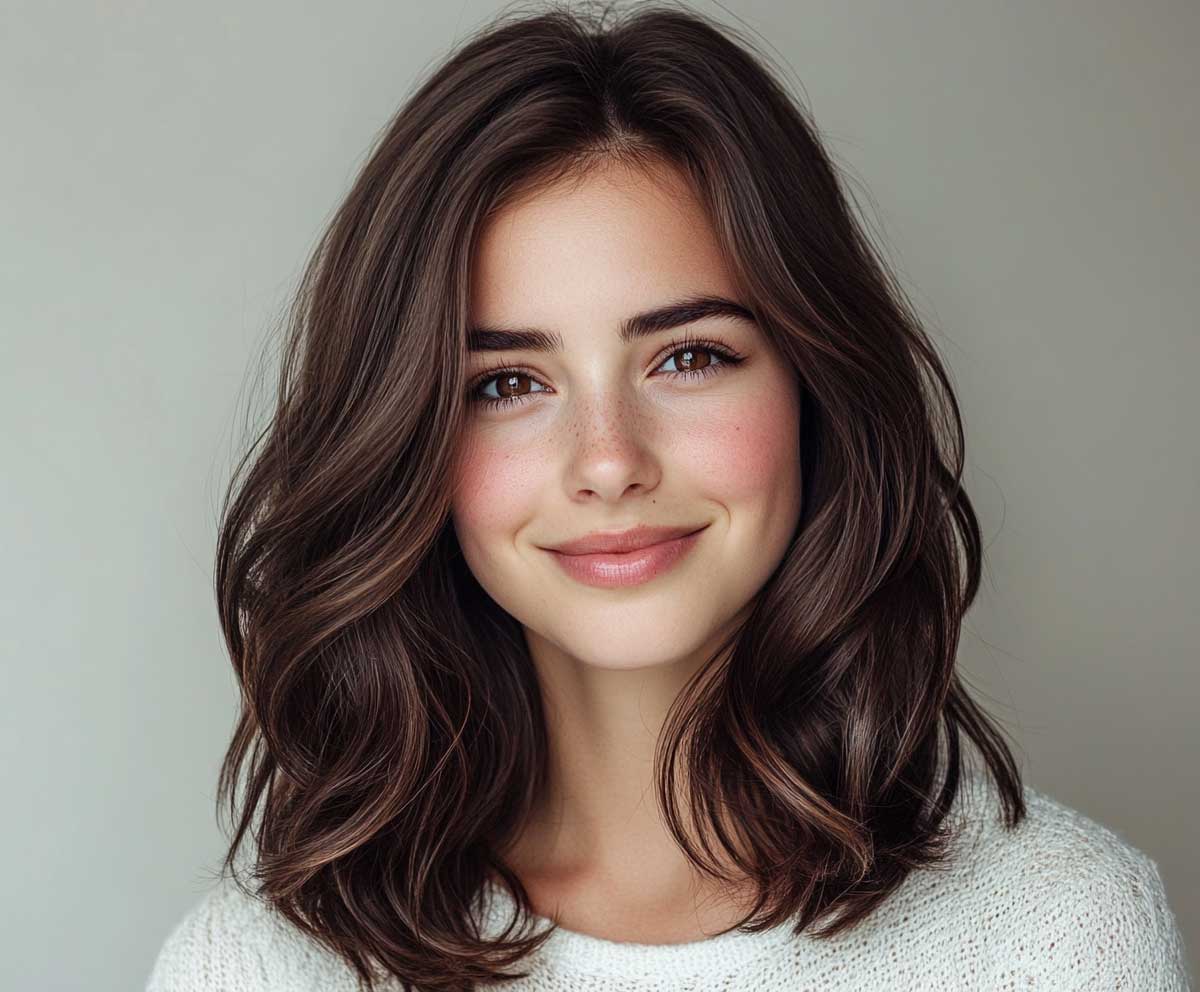
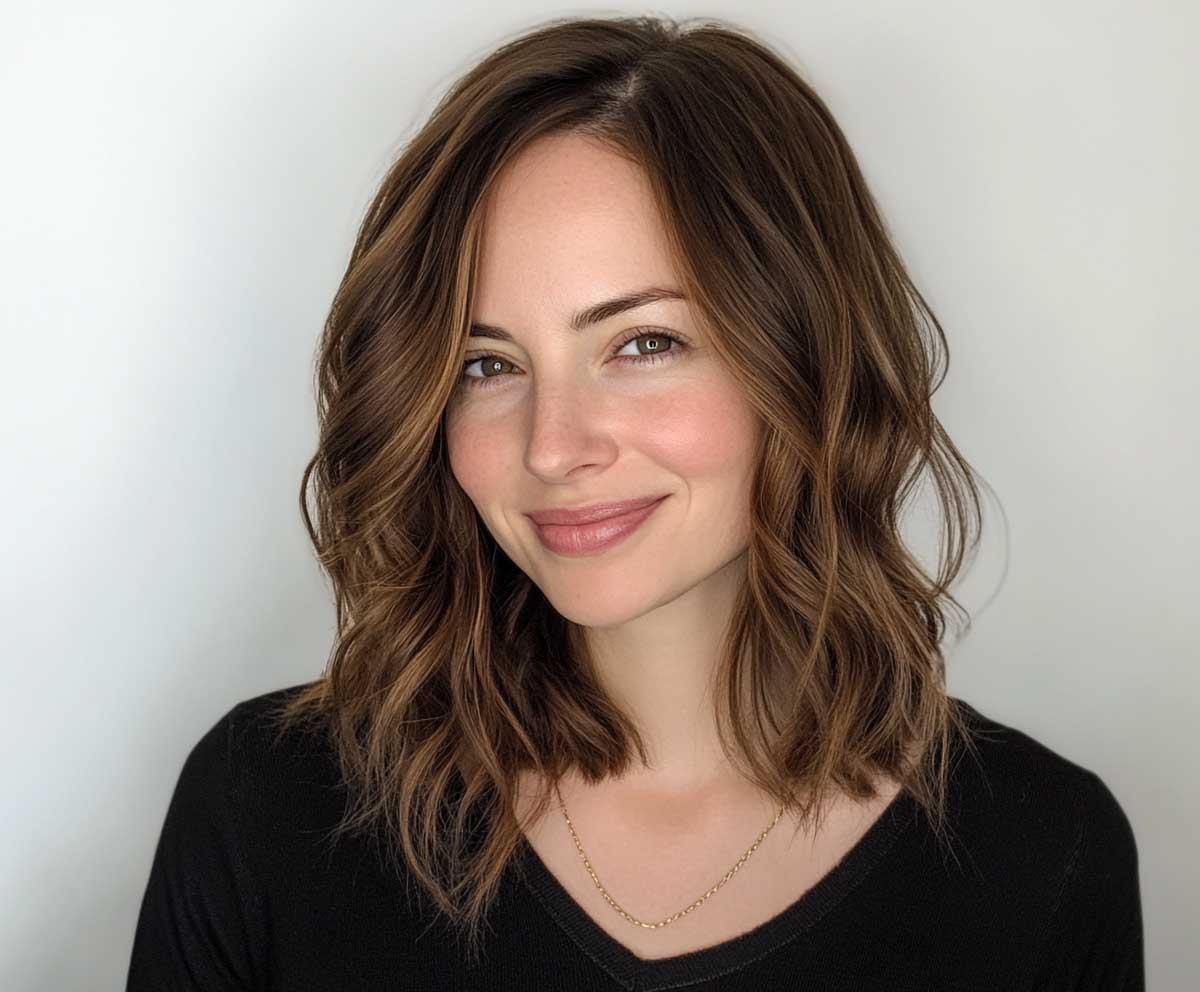
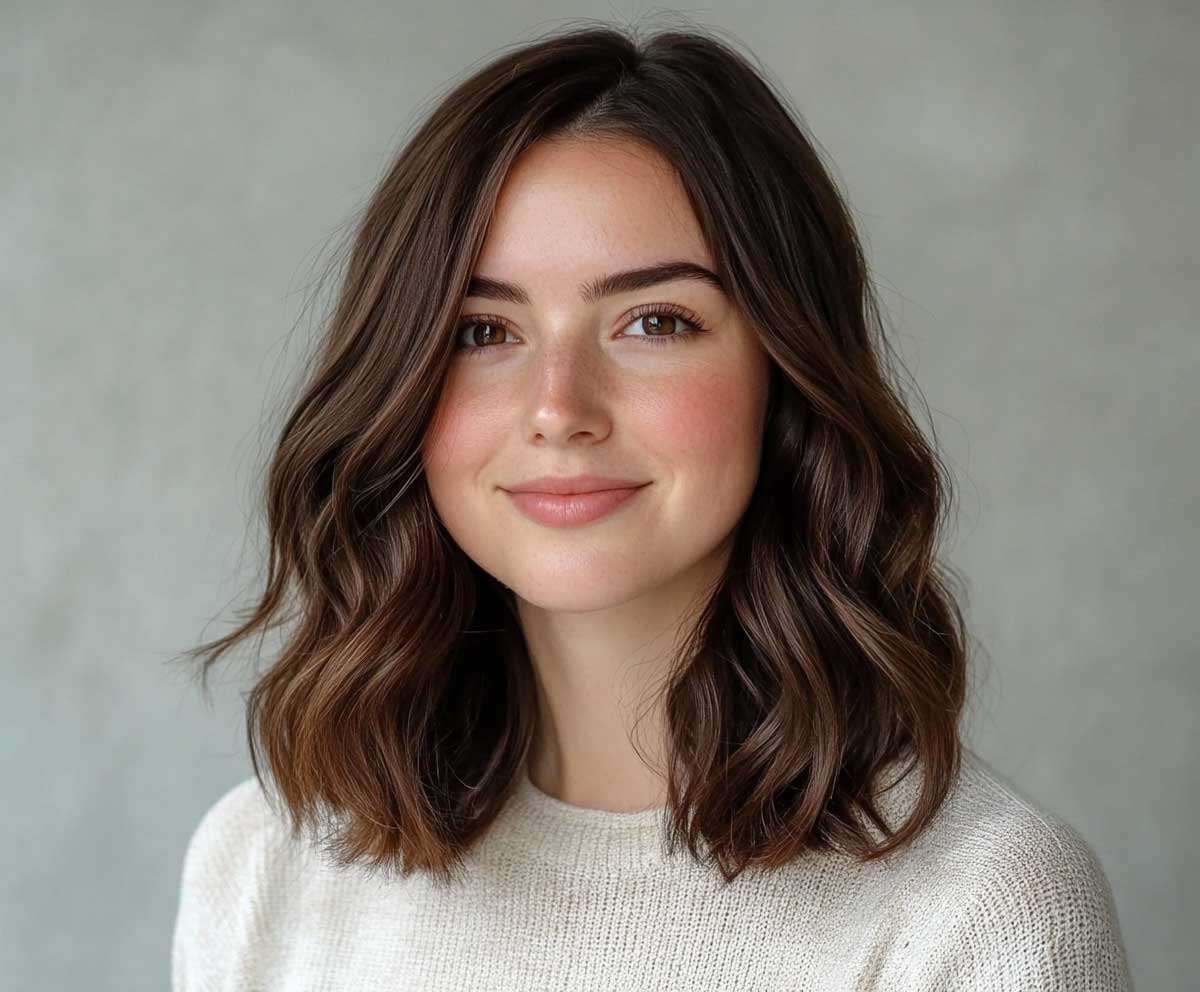
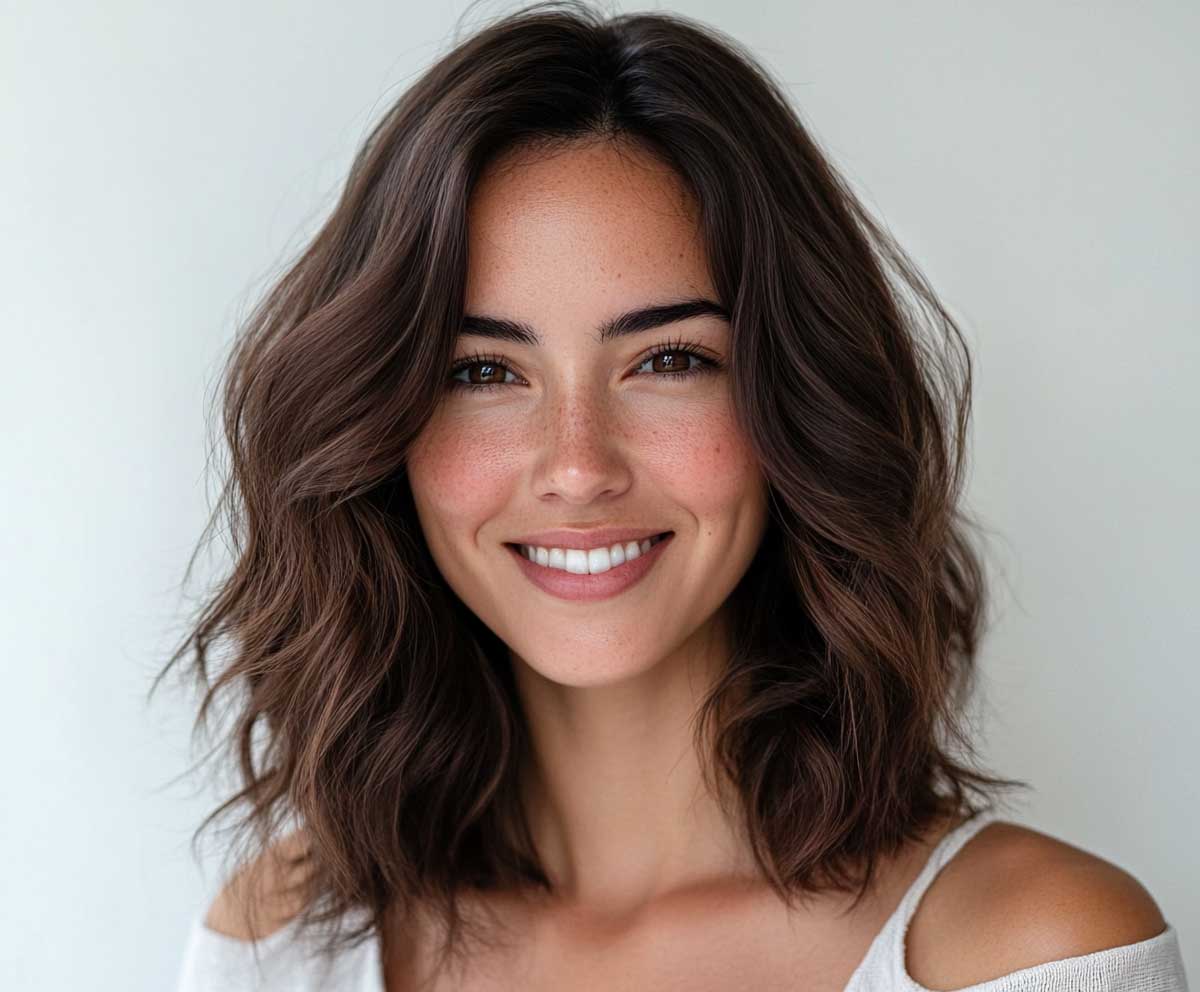
The styling here is a 1.5-inch barrel — I own a T3 Whirl Trio and the medium barrel is the one that never sits in the drawer. You run it through slightly product-dampened sections, twist away from the face, and release without pinning. That’s it. Flat-iron waves look too uniform and kill the natural shadow play that makes chocolate brown layers worth having. Skip the fine-tooth comb after curling, too — finger-separation only, or you lose the whole effect.
Round-faced women have the most to gain from this cut. The weight distribution — lighter at the face, heavier at the ends — pulls the silhouette slightly longer without going near a chin-length bob. Heart-shaped faces benefit for the opposite reason: the mid-length weight balances a wider forehead. Oval faces can wear it at any variation. Square jaws, though, should ask for layers that sweep forward rather than straight down — straight vertical layers on a square jaw read as columns, not softness.
Maintenance is cheaper than you’d expect. A gloss treatment — L’Oréal Professionnel Dialight, around $25–$40 in-salon — every six weeks keeps the chocolate tone from going muddy. Air-dry or diffuse. Don’t blow-dry on full heat without a product barrier or the outer cuticle starts looking rough, which blows the whole polished-wave effect you spent twenty minutes on.
What doesn’t work here: mousse layered on top of a leave-in conditioner. You get flaky buildup by midday and the layers flatten rather than lift. Pick one. A wave spray like Ouai Wave Spray ($30) alone on damp hair gives enough hold without residue.
Ash Blonde Feathered Layers Float Because the Cut Lets Them
Ash blonde and medium layered haircuts are a specific pairing — not interchangeable with golden blonde or platinum. The cool silver undertones in ash blonde eliminate the warm orange cast that lightened hair drifts toward, and that clarity is what makes feathered layers read as light rather than frizzy. My go-to reference for this colour: anything from a Redken-trained colorist using Shades EQ 09T or 10T as a toner. It costs about $80–$120 for a full toning session and the difference from drugstore silver shampoo is immediate and visible.
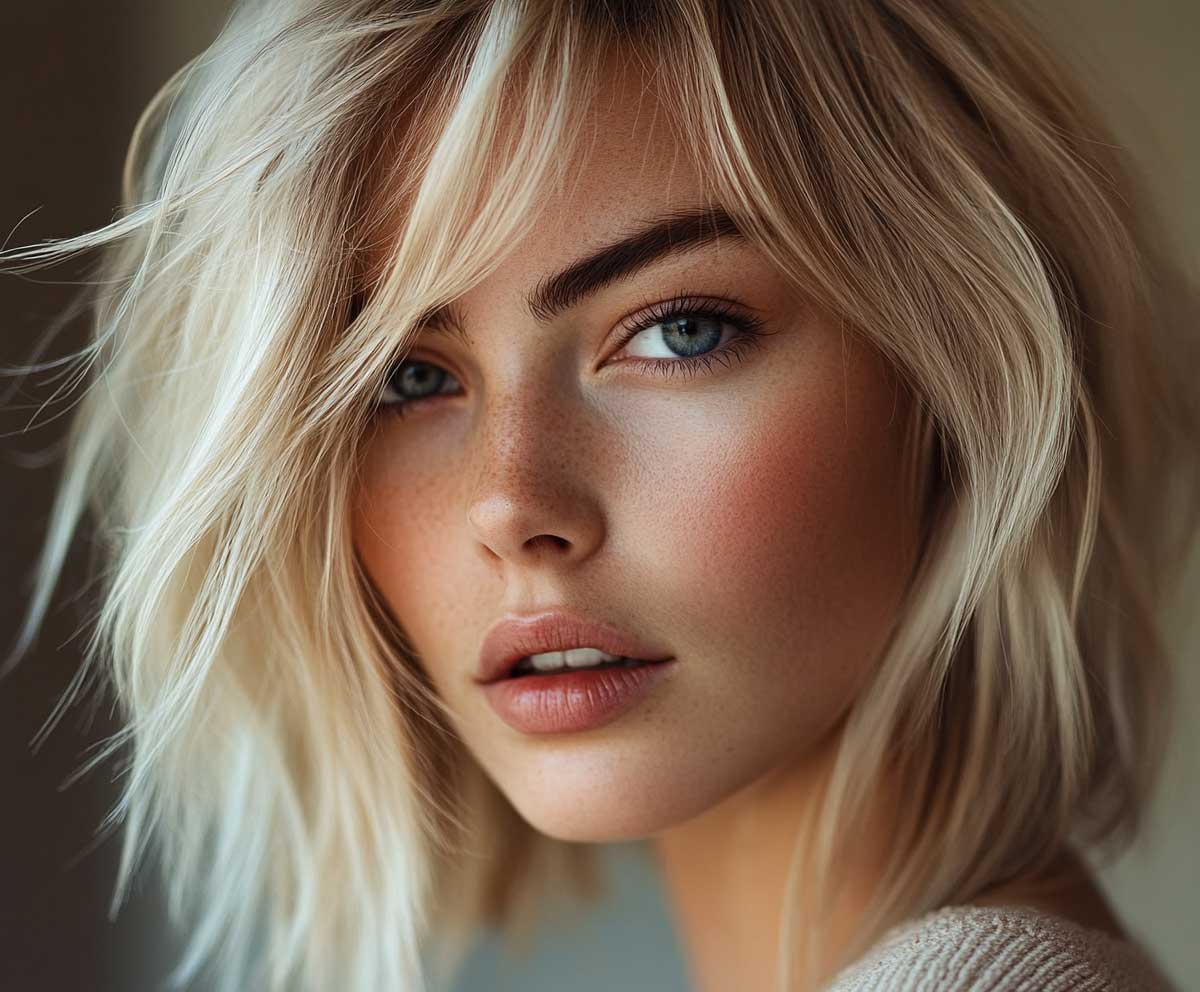
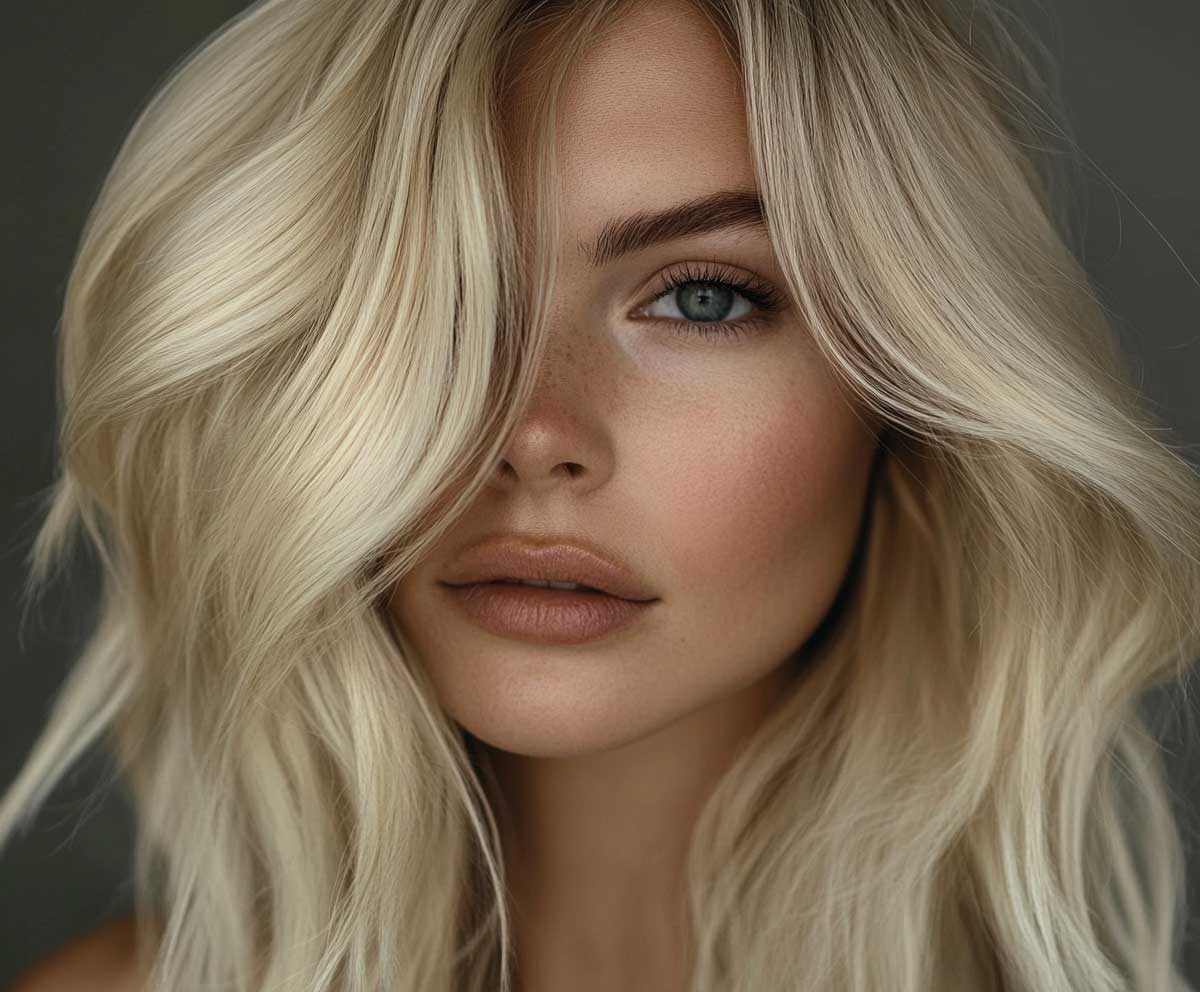
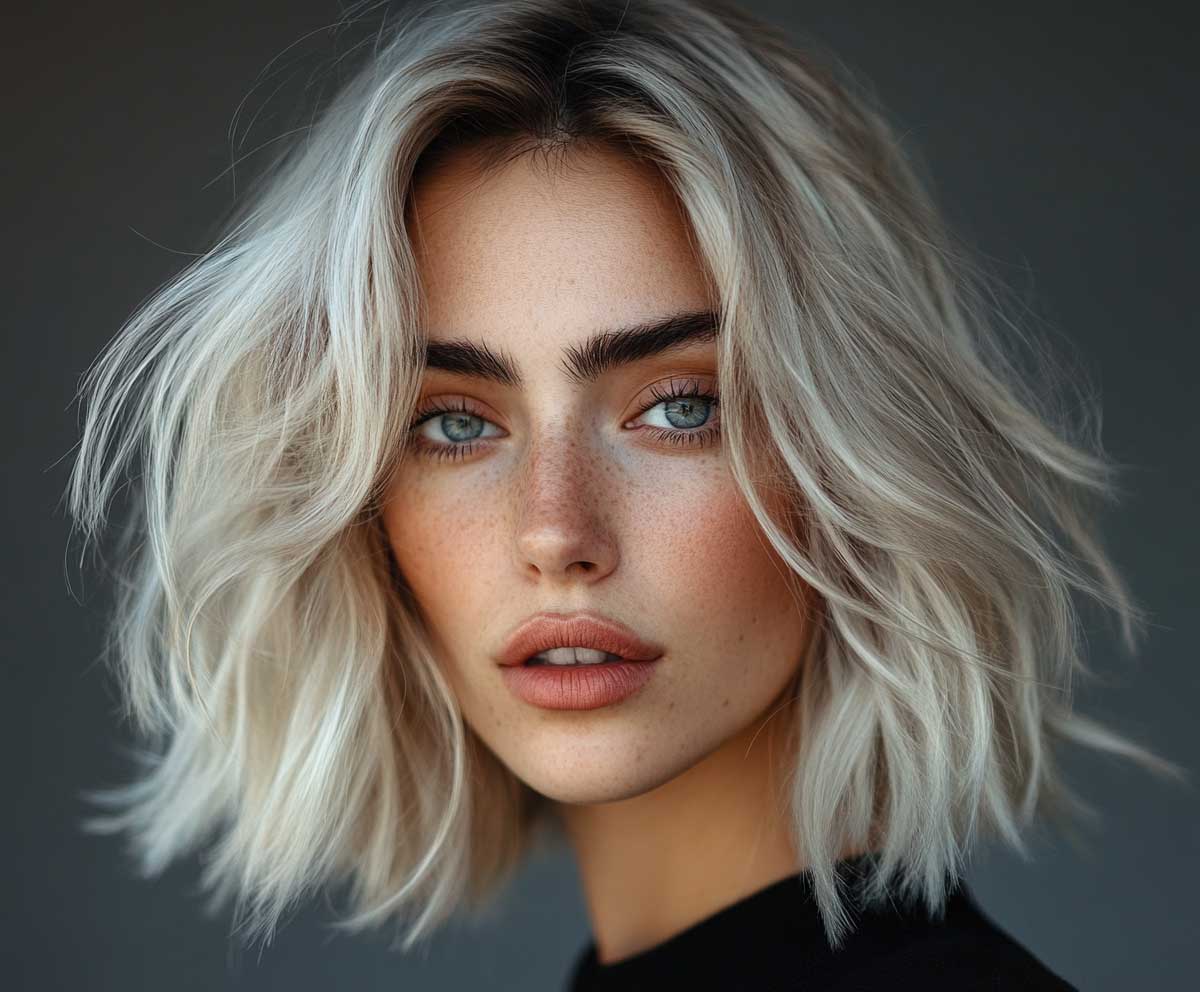

The feathering technique itself is what separates this from a standard blunt-layered cut. Your stylist cuts into each layer at an angle — point-cutting along the edge of the section rather than across it — and the result is that each layer ends in a soft graduated edge rather than a horizontal line. Hold a section up to the light and you’ll see it almost disappears at the tip. That’s what “floating” looks like before any product is applied.
Styling is actually faster than you’d think. A round brush blowout — Dyson Airwrap or a standard Kent paddle, either works — takes ten minutes on medium-length hair. You’ll notice the feathered ends fan outward slightly on their own as they dry, which is intentional. Resist the urge to blast the ends with high heat; feathered layers are thinner than the rest of the section and they overheat and puff fast. Medium heat, slow passes.
Avoid anti-frizz serums on feathered ash blonde — most silicone-based ones read as dark spots on cool-toned pale hair, especially in flash photography. I’ve seen otherwise perfect headshots ruined by a product stripe across the mid-section. Use a cream-formula instead: Living Proof No Frizz Cream ($30) applies invisibly on lighter hair. Purple shampoo twice a week (Shimmer Lights, $16) keeps the tone from shifting brass. Skip the daily purple or you’ll go lilac.
For more ways to style mid-length layered hair, including beachy wave techniques that work specifically on feathered cuts, the styling guide goes deeper on product-to-texture matching.
Red Highlights on a Layered Medium Cut Read as Copper or Crimson Depending on One Thing
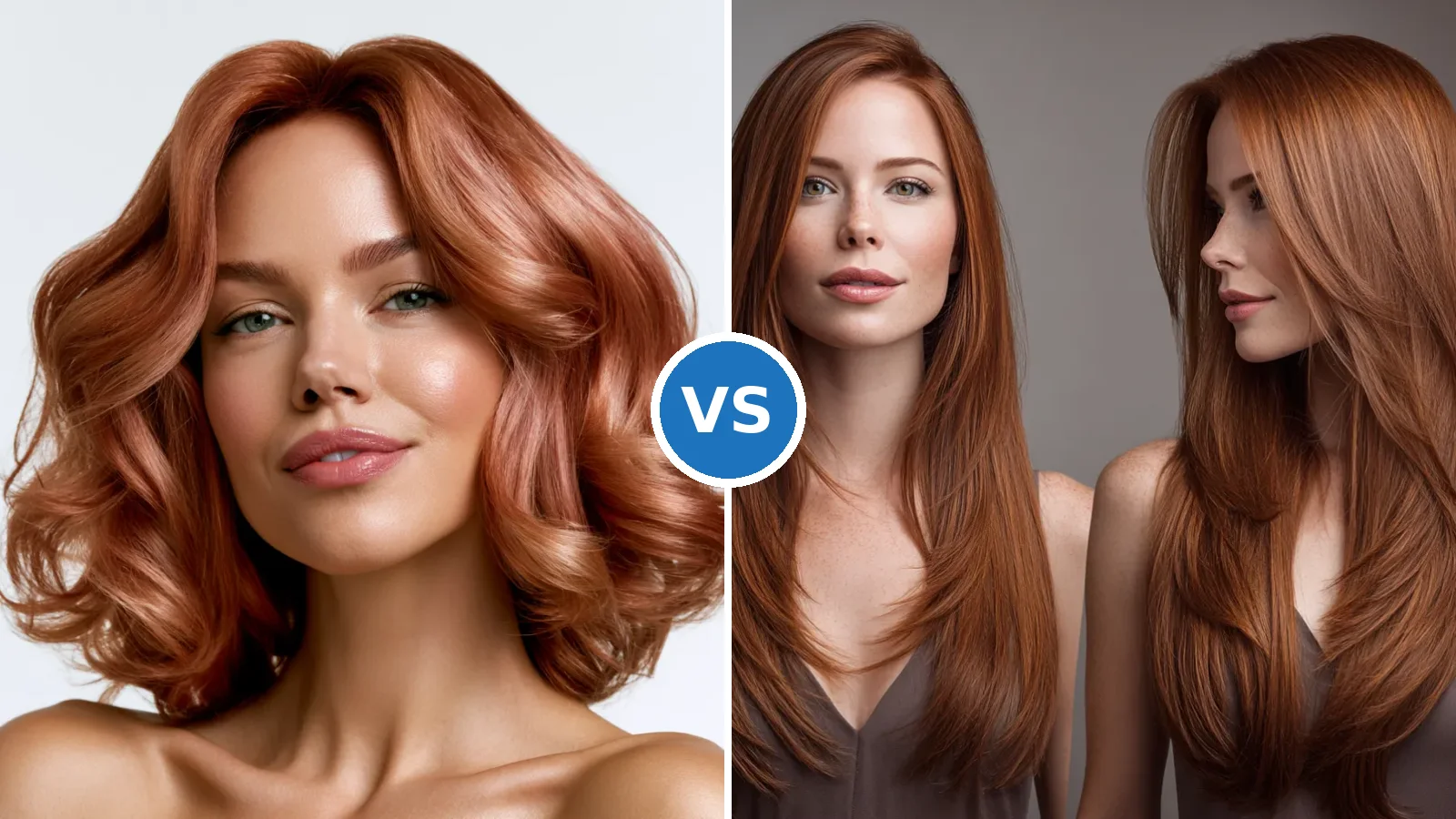
Medium layered haircuts with fiery red highlights land differently depending on your base colour, and most people pick wrong. Copper-red on dark brown is warm and earthy — you’ll see it shift from amber to brick in different light. Crimson or magenta-leaning red on a lighter base is more editorial, less wearable in conservative workplaces. Before you commit to vivid highlights at $150–$250 per session at a colour-specialist salon, ask your stylist to show you a colour swatch on your actual ends rather than a wheel chart. Swatches lie. Your hair won’t.
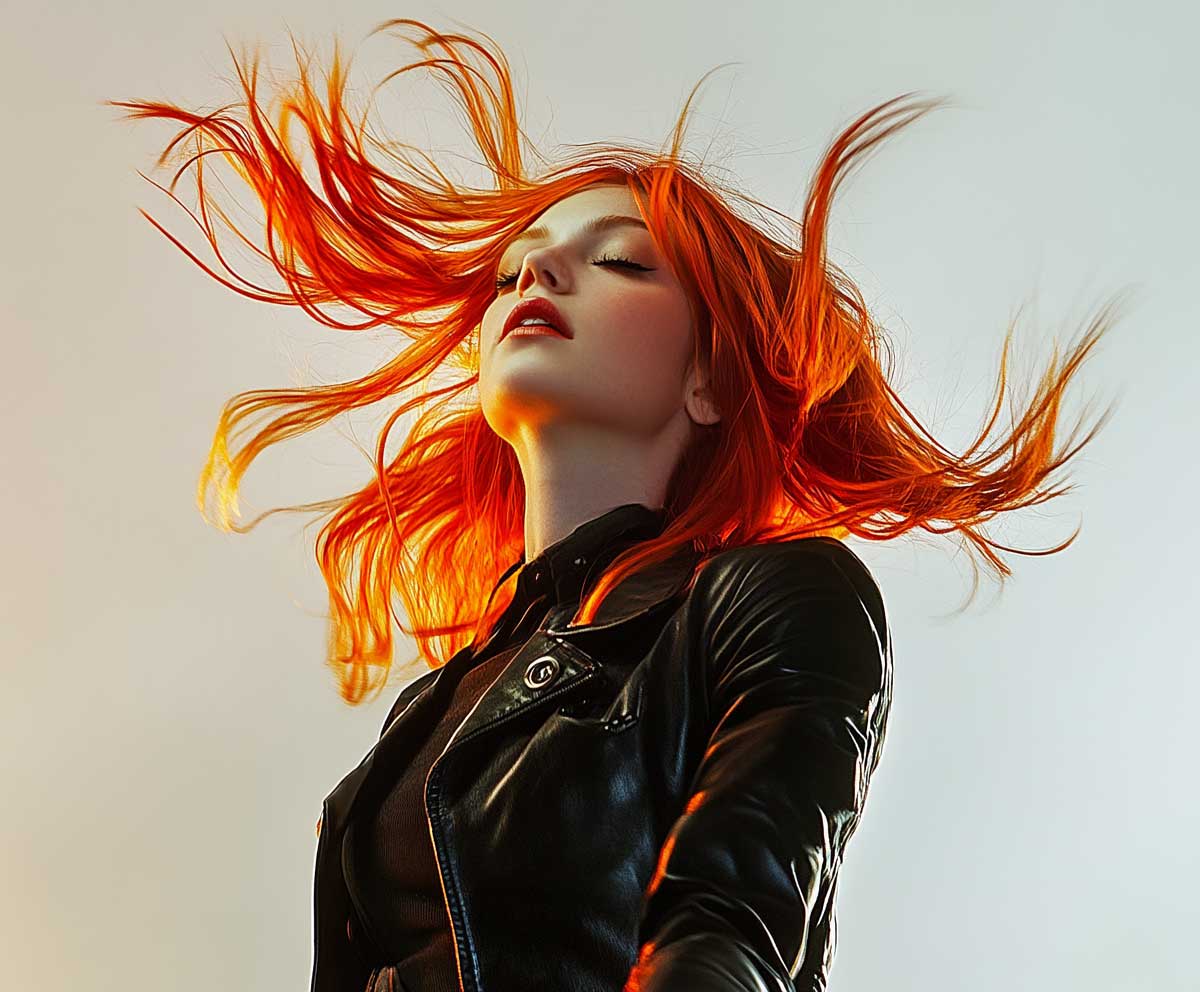
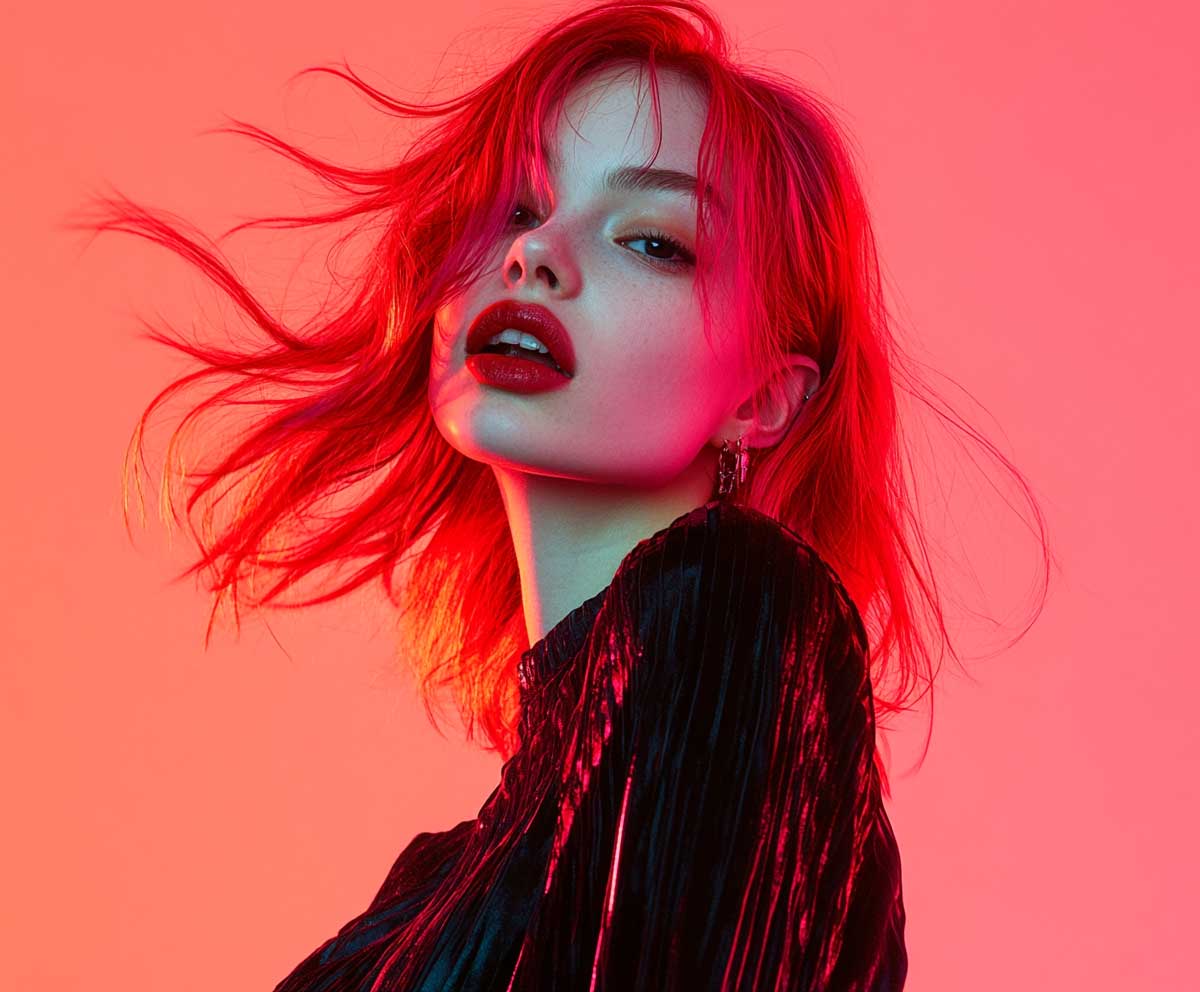
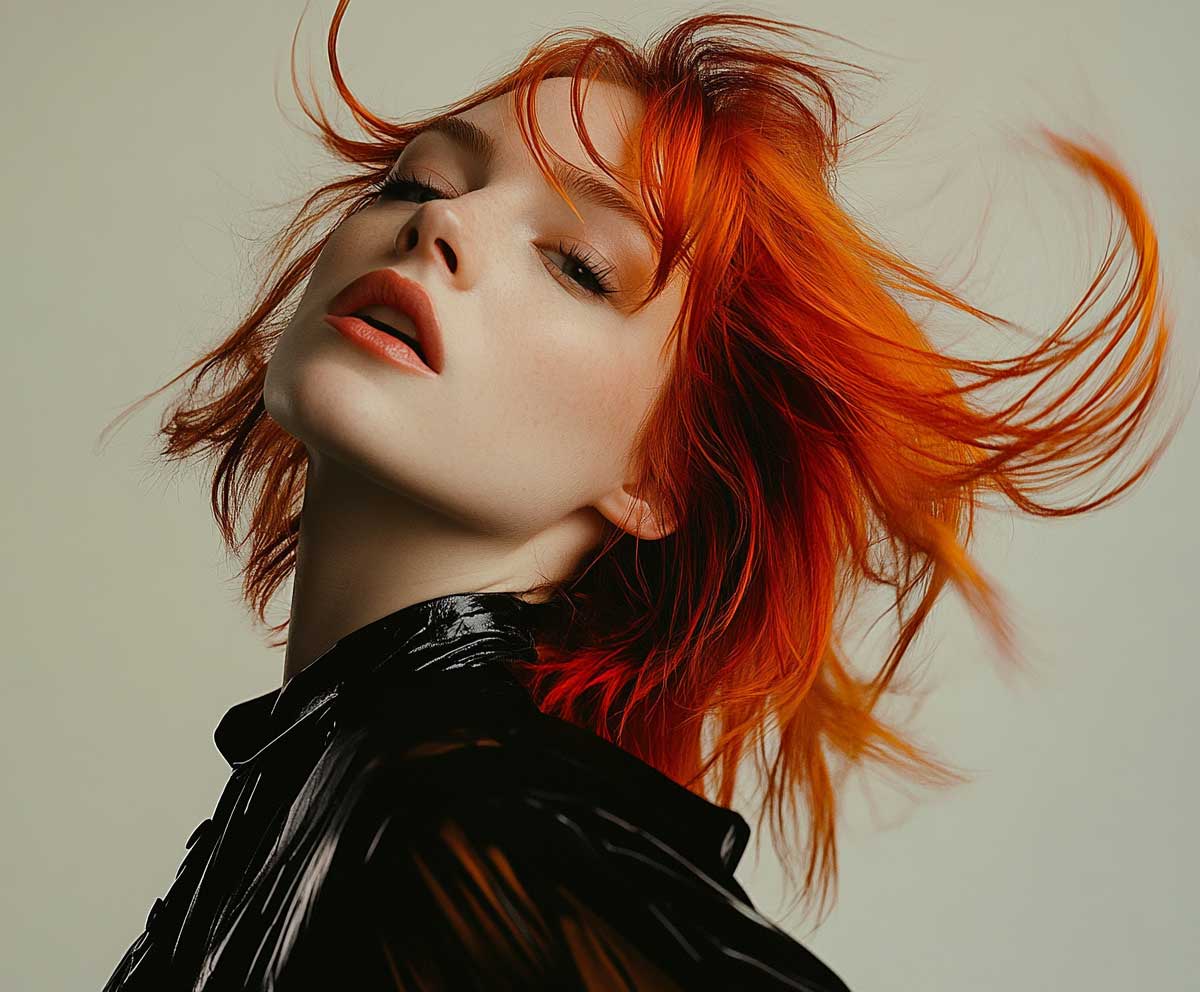
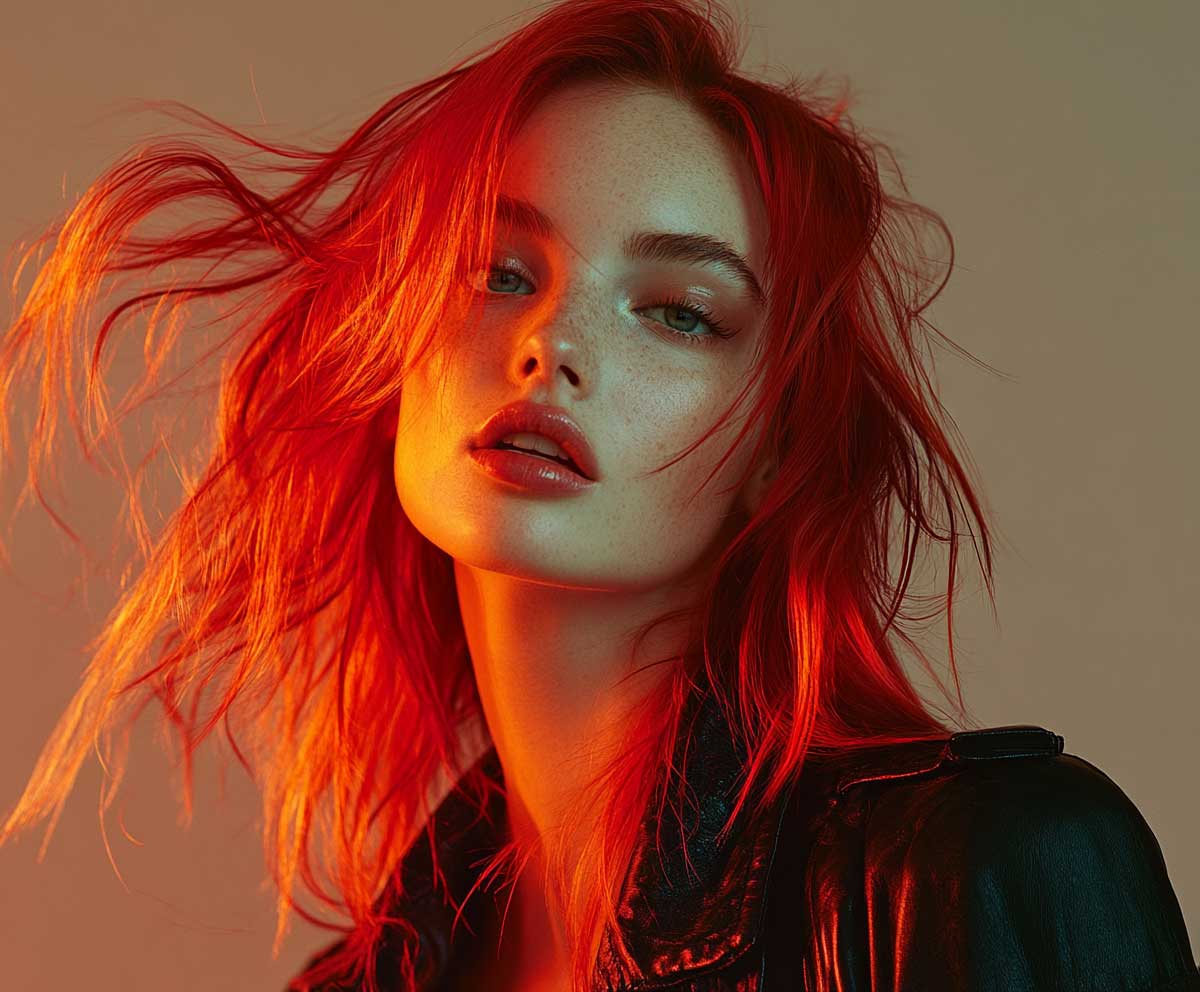
Layers are doing structural work here that isn’t obvious in still photos. When the hair moves — walking, turning, catching wind — the red sections flash in and out of view. That’s the whole point of placing vivid highlights in a layered medium cut rather than a blunt one: the movement reveals and conceals them like a slow strobe. Static photos undersell this effect badly; if you’re using Pinterest as reference, look for video clips instead.
Styling for this look is about showing off the colour transition rather than the texture. Loose curls — a 1.25-inch iron, wrapping each section away from the face — let the red flicker between the darker strands as the curl unwinds. Straight and sleek is also strong here and makes the highlights look more intentional, almost graphic. Skip the messy textured look. Piecey texture obscures the colour boundary and the highlight loses its definition against the base.
Colour maintenance is more intensive than most people budget for. Vivid reds fade fastest of any shade — four to six weeks between toning sessions is realistic if you want the saturation to hold. Pravana Vivids Red and Olaplex Bond Maintenance Shampoo ($28) together slow the fade significantly. Hot tools need Kenra Platinum Silkening Mist ($22) or something with similar heat protection; red pigment is the first casualty of an unprotected flat iron pass.
Don’t Do This With Red-Highlight Layers
- Don’t bleach just the highlight sections on virgin dark hair in one session. The lift is uneven, the red turns orange on under-lifted pieces, and you’re back in the chair two weeks later paying correction fees.
- Don’t use a clarifying shampoo more than once a month. It strips red pigment faster than anything except sun exposure. If you swim in chlorinated water, rinse with cold tap water immediately after.
- Don’t place highlights only at the top layer. Red shows best when placed through mid-sections where the layer movement is visible — top-only looks like grown-out foils, not intentional dimension.
Deep Black Gloss Layers Work Because Shine Is the Only Dimension You Need
Deep black and medium layered haircuts are an underrated pairing. Most stylists push colour when clients with dark hair come in for a cut, but I’d argue virgin or gloss-treated black is doing more visual work than a balayage on the same cut length. The reason is reflectivity: glossy black hair bounces light like wet paint, and every individual layer shows its edge as a bright line against the darker mass behind it. You’ll notice the layers clearly from across a room. No colour needed to read the structure.
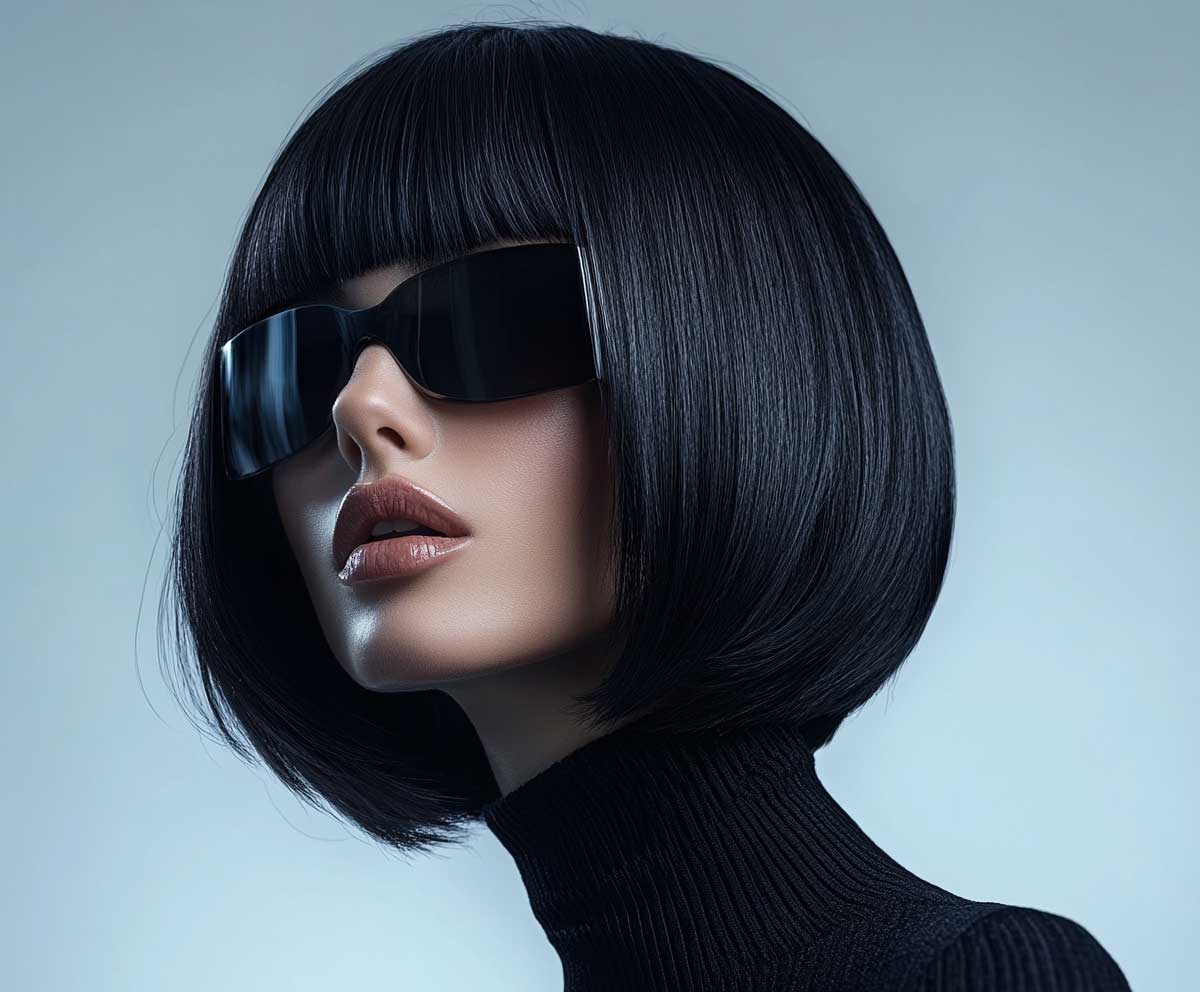
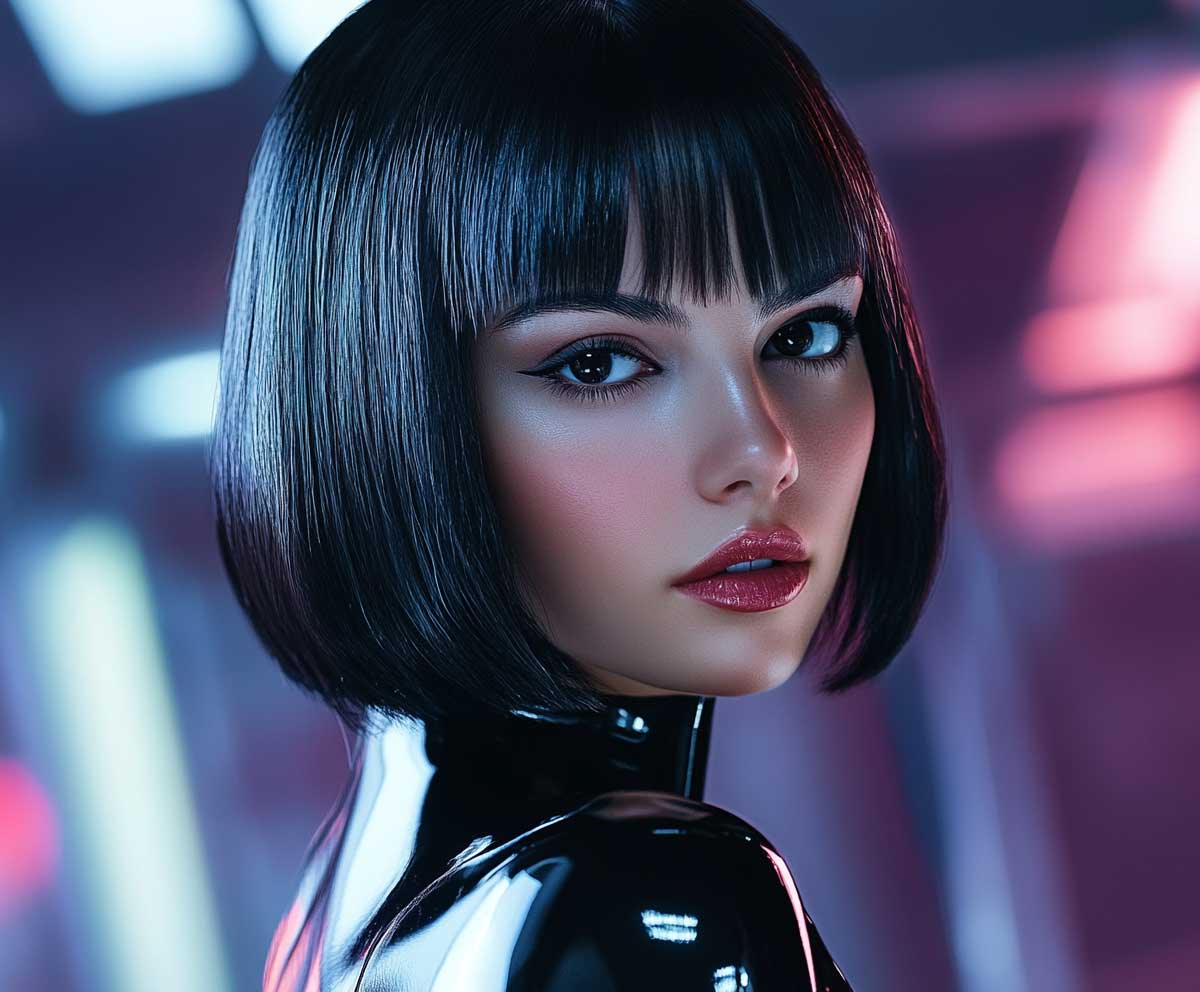

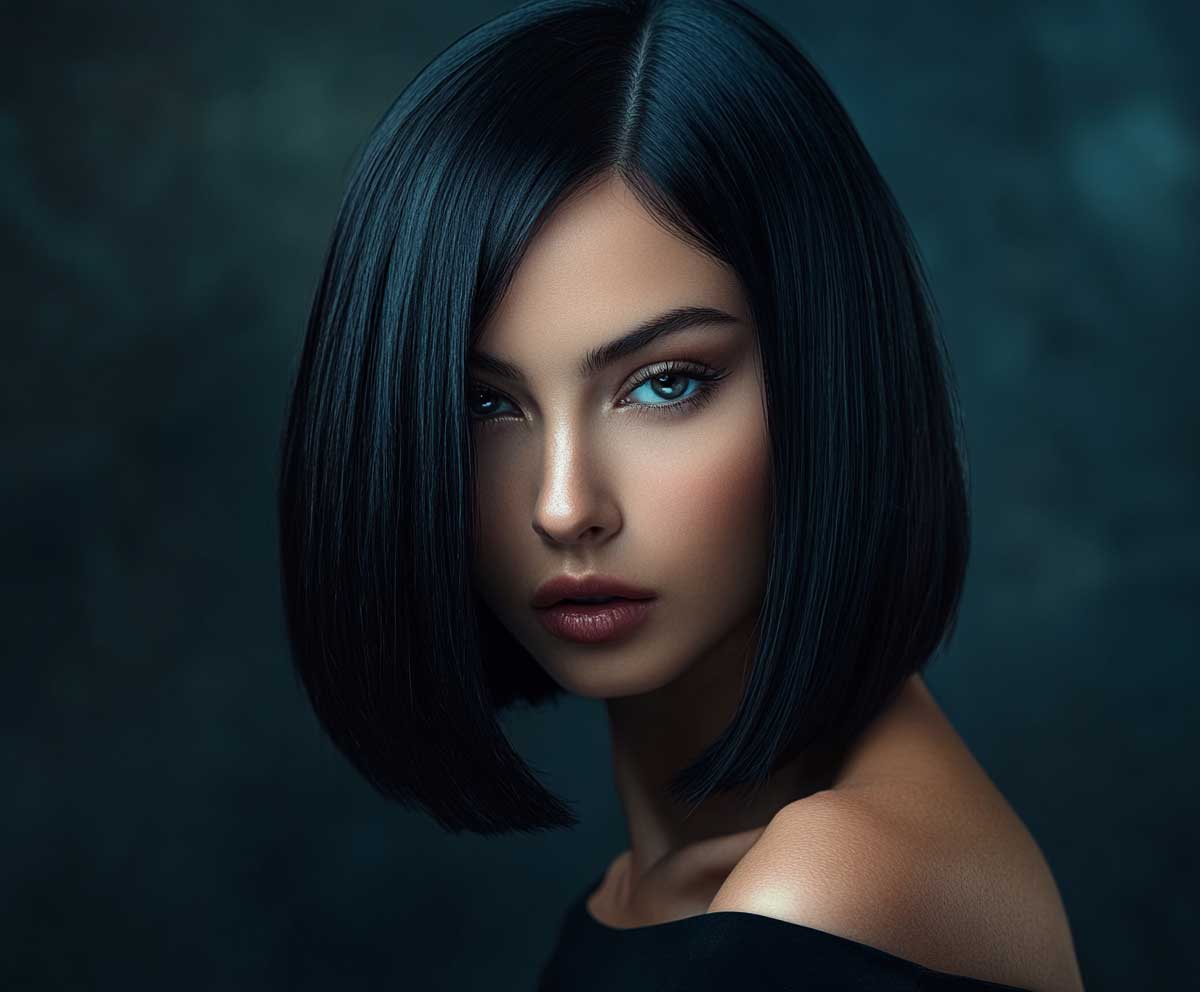
The cut itself is a collarbone-start graduation — layers begin where the collarbone hits the hair, not higher. Ask your stylist to avoid stacking at the nape; stacking on dark hair creates a horseshoe of density that balloons outward when the ends curl under even slightly. The graduation keeps everything moving in one direction: downward, controlled, fluid. Think of it like architectural drainage — every layer directs weight toward the same point.
Shine is the maintenance priority. Kerastase Elixir Ultime Original Oil ($58) on towel-dried hair before blow-drying, then a flat iron pass on medium heat — 380°F maximum on healthy strands — seals the cuticle. You’ll feel the difference in texture before you see it in the mirror. A cold-shot at the end of blow-drying locks the cuticle flat and is the single fastest ROI move in hair care. Takes three seconds. Most people skip it. Don’t.
Avoid matte-finish products entirely on this cut. Clay, paste, or dry texturizing sprays kill the gloss immediately and make layers look dull and separated rather than clean and flowing. This is a silicone-and-oil world. Anything that promises “texture” or “grit” belongs in a different style entirely. Save the matte paste for your boyfriend’s shag and keep it away from your glass-finish layers.
For dark hair specifically, you’ll want to read the fuller breakdown on medium layered haircuts with warm highlight options — the caramel highlight entry explains how to introduce dimension to dark bases without full bleaching.
Golden Caramel Balayage on Layers Grows Out Looking Intentional for 14 Weeks
Golden caramel balayage on medium layered haircuts is the cut-and-colour combination I recommend to every woman who asks me what to do with their hair when they can’t commit to a maintenance schedule. The hand-painted technique means roots growing in just add depth — the colour is designed to get better as it grows, not worse. At $180–$280 for a full balayage at a reputable salon like Drybar Colour or an independent Wella-certified colourist, it’s not cheap upfront. But you’re looking at 12–16 weeks between appointments. Do the math against a regular highlight schedule.

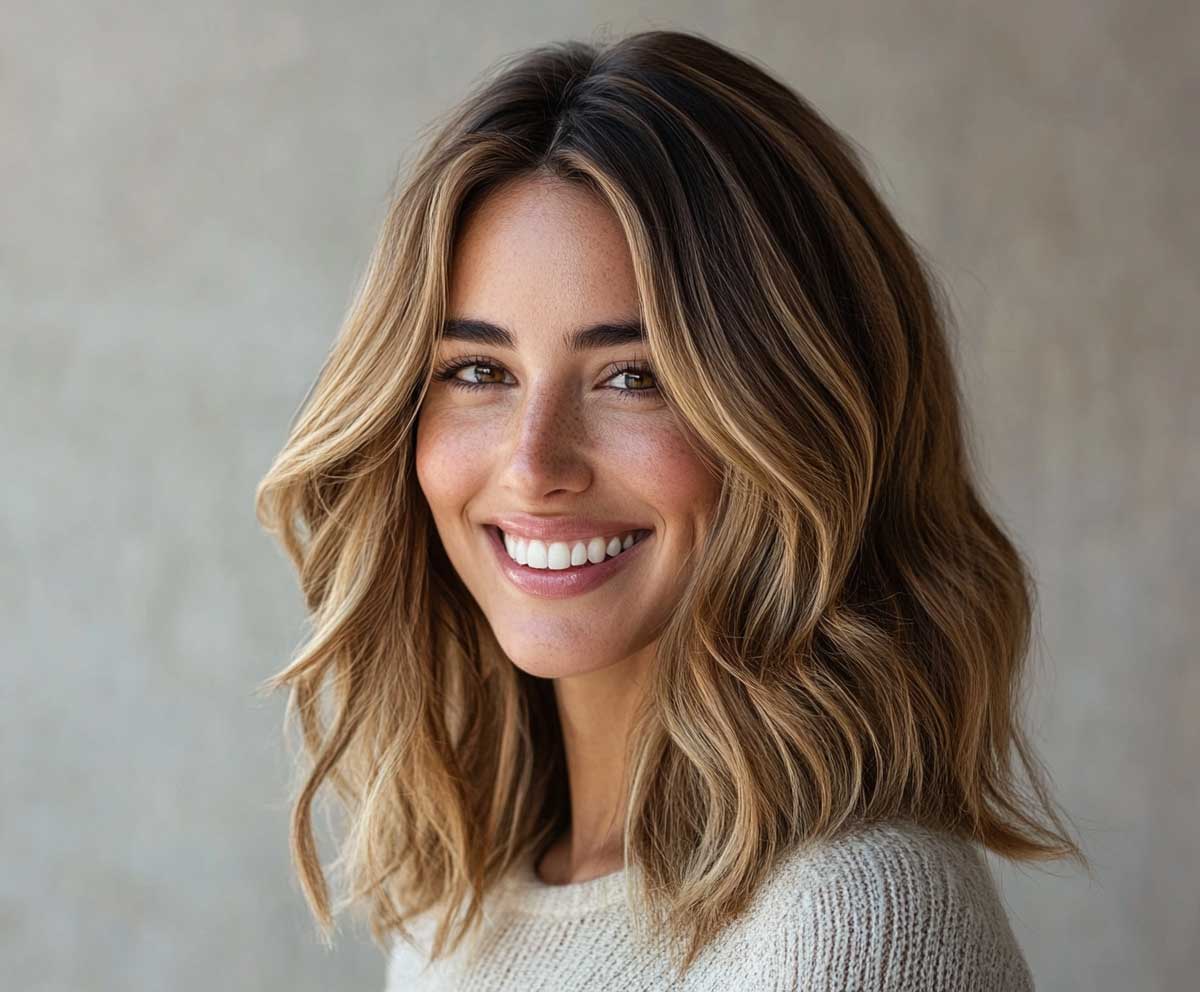


What balayage does specifically on a layered cut is reveal colour in motion. Each layer sits at a different depth from the scalp, and because the paint was applied by hand rather than foil, the tone shifts naturally as each layer is exposed when the hair moves. You’re not seeing a single flat highlight — you’re seeing a gradient that recomposes with every step the wearer takes. It’s the hair equivalent of shot silk. That’s why it photographs better in motion than in still images.
Loose waves on this cut are the most requested styling choice and also the lowest-effort. Scrunch a dime-sized amount of Moroccan Oil Treatment Light ($38) into dry ends, wrap 2-inch sections around a 1.5-inch wand for four seconds each, and release. Don’t touch it for twenty minutes. The caramel ends will separate slightly as the wave sets, and that natural separation is what shows the colour transition at its clearest. Straightening also works — it shows the balayage as a clean gradient stripe from root to tip — but loses some of the three-dimensional effect that makes this combination so distinctive.
Two things that flatten balayage on medium layers: box dye over the top (it erases the tonal variation in one application and costs $300+ in correction) and too-short layers that chop the gradient before it completes its transition. Ask your stylist to keep the shortest layer no shorter than chin-length so the colour has room to develop across the mid-section and ends.
I stole this tip from a Redken educator at a trade show: use a bond-building conditioner like Olaplex No.5 ($30) rather than a regular deep treatment. Standard conditioning masks add slip but don’t reinforce the internal bonds that keep bleached ends from breaking. Balayage sections are structurally thinner than uncoloured strands. Treat them like what they are.
FINAL WORD
Medium Layered Haircuts Work Because of Where the Layers Land, Not How Many There Are
Start at the collarbone on your first appointment. Ask for face-framing layers that begin at the cheekbone, not higher. Choose your colour based on your maintenance tolerance — red and vivid colours require six-week upkeep, balayage and brown tones can stretch to sixteen.
The cut you’ll actually wear is always simpler than the one you pinned. Pick the colour story first, then let the layer placement follow the texture of your actual hair.
Save this post so you have the product names and price references on hand before your next salon appointment.