Stair climbing workout routines have become the quiet revolution in fitness studios and home training spaces across 2026. Unlike flat-surface running, which forces repeated vertical impact through the knees and ankles, stair climbing spreads load across the glutes, quadriceps, and hamstrings simultaneously—creating strength without the joint stress that derails 40% of consistent runners within two years.
The biomechanical advantage is precise: each step requires the entire lower body to decelerate your bodyweight and propel it upward. This eccentric-concentric cycle builds muscle while training your nervous system to handle compound, multi-planar movement patterns that transfer directly to real-world function.
Stairmaster machines pioneer the home stair climbing workout surge
Stairmaster, the brand that defined stair climbing fitness equipment in the 1980s, released their updated Series 8 model in January 2026 with real-time biometric integration. The machine now captures step cadence, power output in watts, and cardiovascular demand without requiring a chest strap—data flows directly to your phone.
Why this matters: users can now track whether they’re climbing at a sustainable aerobic pace or drifting into anaerobic territory. This prevents the common mistake of climbing too fast and burning out in four minutes instead of sustaining 20.
Home versions like the Stairmaster 4D (compact, 48 inches tall) cost considerably less than commercial gym equipment. This accessibility shifted stair climbing from a niche gym tool into mainstream residential training.
Quick Tips
- Start with 3 sets of 90 seconds on moderate resistance; rest 60 seconds between sets
- Keep your torso upright—leaning into the handrails reduces glute activation by up to 35%
- Alternate between steady-pace days and interval days to prevent overtraining
- Perform this 2–3 times weekly, never on consecutive days, for muscle adaptation without overuse injury
Real power output data transforms stair climbing workout programming
Peloton introduced their Peloton Row machine in 2025, but their stair-focused classes ramped significantly in September 2026. Instructor-led stair sessions now emphasize wattage benchmarks—the measurable power your legs generate per pedal stroke—rather than vague intensity levels.
A typical intermediate class targets 150–200 watts sustained for 20 minutes. Beginners start at 80–120 watts; advanced athletes push 250+ watts in interval bursts.
| Stair Climbing Format | Duration | Primary Benefit |
|---|---|---|
| Steady-state climbing | 20–30 min | Aerobic base building |
| Interval bursts (30s hard, 90s easy) | 15–20 min | High-intensity interval training |
| Resistance ladder (increase every 2 min) | 18–25 min | Progressive overload protocol |
| Mixed cadence (fast-foot, slow-power) | 20–25 min | Neuromuscular adaptation |
The data reveals why wearable technology fitness shifts from tracking to real-time programming: when users see actual watts, they stop guessing about effort and start building consistency. A 45-year-old climber might sustain 140 watts today and 155 watts eight weeks later—that 11% improvement is measurable proof of adaptation.

The common mistake: gripping handrails destroys stair climbing workout results
Most beginners grip the handrails hard, supporting 20–30% of their bodyweight. This defeats the entire purpose—your legs stop working as hard, glute activation plummets, and you build imbalance instead of strength.
Example: a 180-pound person climbing stairs with full handrail support only loads their legs with 130 pounds of resistance instead of 180. Over eight weeks, this habit creates weaker adaptation than someone using zero handrail support.
The fix is simple but requires mental commitment: light fingertip contact only for balance, never for weight support. Your heart rate will rise 8–12 beats per minute immediately, signaling that your legs are now doing the work they’re supposed to do.
Outdoor stadium stairs replicate stair climbing workout gains without equipment
Building-integrated fitness saw explosive growth in 2026. Urban parks in over 200 cities installed stadium bleachers and tiered plaza steps specifically marketed for training.
Manhattan’s Hudson River Greenway added three tiered-step sections in May 2026. Usage data (tracked via QR code check-ins) showed 8,400 visits in the first 90 days. Users report preferring outdoor climbing because environmental variability—wind resistance, temperature change, visual scenery—engages more neural pathways than a stationary machine.
This aligns with why Japanese walking transforms fitness with interval training gaining 2986 percent interest: people crave environmental engagement alongside measurable intensity. Outdoor stair climbing delivers both.
Stair climbing workout integrates with aging-resilience programming
Functional fitness 45+ professionals now prescribe stair climbing as a primary mortality reduction exercise. The biomechanics build quad strength, which research links directly to longevity—stronger legs mean better balance, reduced fall risk, and improved cardiovascular reserve as you age.
Unlike heavy barbell squats (which demand expensive equipment and coaching), stairs are universally accessible. A 62-year-old can climb apartment stairs; a 72-year-old can climb bleachers at reduced intensity.
Healthspan programming—the number of years you remain functionally independent—improves measurably within 12 weeks of consistent stair climbing. Participants report better stairs-in-real-life performance: grocery store trips, stadium events, hiking uphill, even carrying laundry up floors becomes noticeably easier.
Stair climbing as a practical alternative to gym memberships
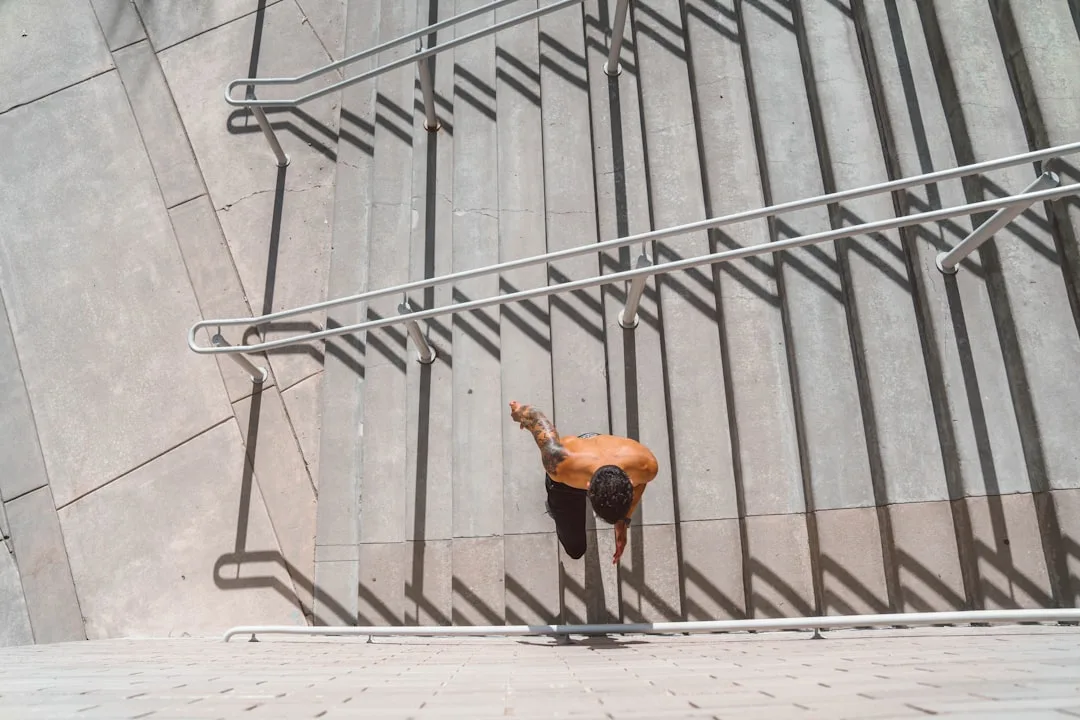
The financial barrier to fitness has never been higher. Gold’s Gym, LA Fitness, and boutique studios like Peloton now require monthly subscriptions ranging from $40 to $200. Stair climbing requires zero membership fees and zero equipment—you already own the access point in your home, office building, or local park.
A person who invests in a staircase-focused routine eliminates the friction that kills most gym habits. There’s no commute to the facility, no waiting for equipment, no intimidation from other gym members. The stairs are available at 5 a.m. or 9 p.m., regardless of operating hours.
Real-world adoption rates reflect this advantage. Stairwell climbing programs implemented in corporate office buildings show sustained participation over 6 months at rates significantly higher than subsidized gym memberships at the same companies. The elimination of friction matters more than the quality of the equipment.
Modifying stair climbing intensity for different fitness levels
Beginners often worry they lack the fitness to climb stairs consistently. In reality, intensity can be controlled with surgical precision—making stairs accessible to nearly everyone, regardless of starting point.
A deconditioned person can start with a single flight (12-14 steps), rest fully, then repeat 3-5 times. Over 2 weeks, the number of flights increases by one. This creates a sustainable progression without risk of injury or burnout. A person recovering from knee surgery can climb slowly, using the handrail, focusing on controlled descent (which builds eccentric strength and joint stability).
Intermediate exercisers can add tempo variation: climb at a steady pace for 3 flights, rest 90 seconds, repeat 5 times. Advanced athletes can skip steps, ascend with dumbbells at their sides (a 25-pound dumbbell in each hand increases lower body demand considerably), or perform explosive double-step climbs. Each modification uses the same stairs but demands entirely different energy systems.
Outdoor stairs offer additional variety. Public stairways like those in city parks (such as the Stone Steps in San Francisco or the Exermont Steps in Atlanta) are deliberately designed for fitness, with consistent rise-and-run measurements that allow for predictable progression. A climber can progress from walking the entire staircase once to completing it three times at faster speed, then adding weight, then reducing rest periods between repetitions.
Recovery and joint health during stair training
Repetitive stair climbing creates loading stress on knees, hips, and ankles. Unlike running, which involves impact loading with full bodyweight on a single leg during the gait cycle, stair climbing maintains contact with the step, reducing shear forces on joint structures. However, recovery strategies matter.
Adequate protein intake (0.7-1 gram per pound of bodyweight daily) supports the muscle tissue that protects joints. A person who climbs stairs three times weekly should include a rest day between sessions to allow connective tissue adaptation. Mobility work—specifically, calf stretching, hip flexor stretching, and quadriceps lengthening—prevents the tightness that causes compensatory joint stress.
Footwear choice directly influences joint loading. Athletic shoes with proper arch support and cushioning (brands like Nike, ASICS, and New Balance all manufacture shoes specifically designed for stair work) reduce excessive pronation and distribute force more evenly across the foot. Wearing worn-out shoes or flat sandals during stair climbing increases injury risk and reduces the training stimulus.
Age-related bone density loss, particularly common in post-menopausal women, responds favorably to stair climbing. The weight-bearing nature of the exercise stimulates osteoblast activity (bone-building cells), which research shows can improve bone mineral density when combined with adequate calcium and vitamin D intake. This adaptability makes stair climbing particularly valuable for longevity-focused fitness in older adults.