Low-impact strength training has become the dominant trend in fitness for adults over 40, with interest in joint-safe resistance methods climbing 340 percent since early 2025. Unlike traditional weight training that relies on heavy barbells and impact-based movements, low-impact approaches use suspension trainers, resistance bands, stability tools, and bodyweight patterns to build muscle while protecting knees, shoulders, and hips. The reason is simple: muscle loss accelerates after 40, but joint cartilage doesn’t regenerate the way it did in your twenties.
Why compound movements replace isolation exercises
TRX suspension training and similar tools have made compound movement patterns the foundation of low-impact strength work. A compound movement—like a suspended row, assisted squat, or plank-based push variation—recruits multiple muscle groups at once, building functional strength that translates to real life. One session combining a suspended squat hold, a chest-supported row, and a core anti-rotation pattern delivers more metabolic and muscular benefit than ten isolation exercises.
The shift matters because functional fitness 45+ isn’t about looking a certain way—it’s about maintaining independence, posture, and the ability to carry groceries, play with grandchildren, or walk stairs without pain. A person who can control their body weight through a range of motion has built the strength that actually matters.
Quick Tips
- Start with bodyweight resistance training before adding bands or suspension tools; master the movement pattern first.
- Focus on eccentric control—lower slowly for 3–4 seconds—to build muscle without heavy loads.
- Perform compound movements 2–3 times per week with at least 48 hours between sessions for recovery.
- Add mobility drills on off days to prevent injury and maintain range of motion around joints.

Resistance bands and suspension trainers replace dumbbells
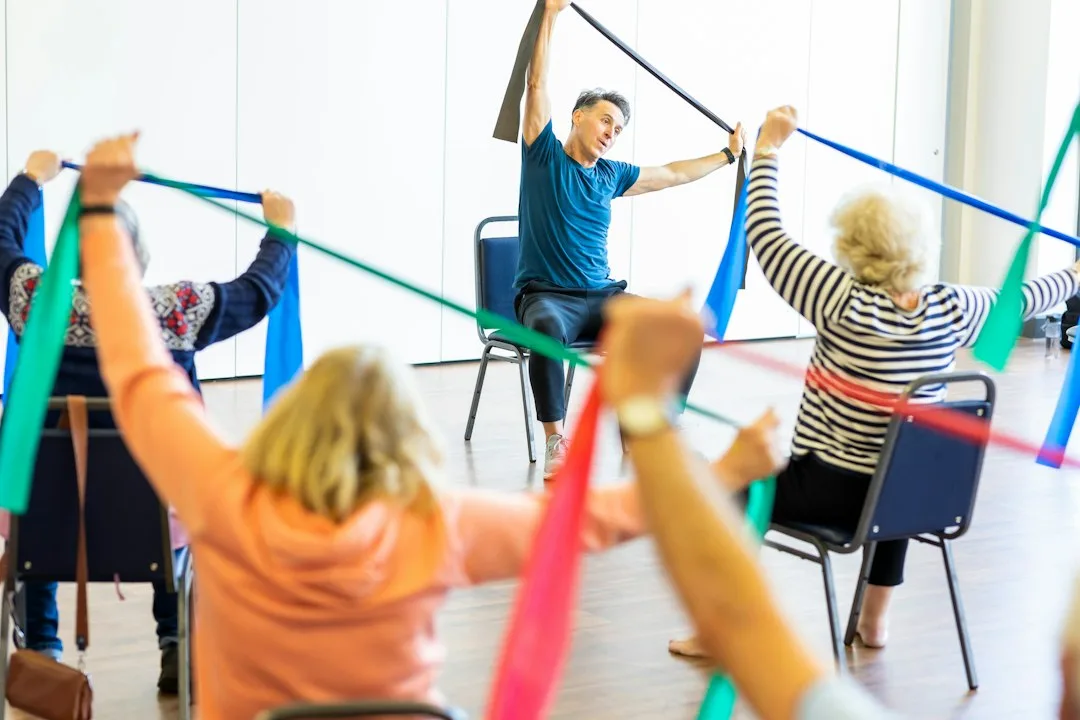
Resistance band sets and TRX-style suspension systems have become the core tools in low-impact strength training because they allow variable resistance—tension increases as you move through the hardest part of the lift. A set of loop bands costs a fraction of a dumbbell rack and takes up a closet corner instead of a bedroom. Suspension trainers anchor to a door frame or pull-up bar, making them portable enough for hotel rooms or travel.
The biomechanical advantage is measurable. Bands force you to stabilize throughout the entire range of motion, recruiting stabilizer muscles that fixed weights skip. When you perform a banded chest press, your core and shoulder stabilizers work harder than they would with a dumbbell because the band creates instability that your nervous system must manage.
| Tool | Joint Impact | Stabilizer Activation |
|---|---|---|
| Heavy dumbbells | High (compressive) | Moderate |
| Resistance bands | Very low | High (variable tension) |
| Suspension trainers | Very low | Very high (instability) |
| Stability balls | Very low | Very high (core demand) |
The biggest mistake: skipping eccentric strength training phases
The number one error people make with low-impact training is moving too fast through the lowering phase. A person does a banded chest press—explosive up, then drops the band in one second. They’ve built almost zero strength that way. The eccentric phase (the lowering) is where actual muscle damage and adaptation happen, which is why low-impact athletes emphasize the 3–4 second descent in every movement.
Real example: a 48-year-old client switched from light dumbbell work to resistance bands but kept the same tempo—1 second up, 1 second down. After 8 weeks, no visible muscle gain. Once we added 4-second eccentric control to the same band exercises, she added visible arm definition and shoulder stability within 4 weeks. Same tool, completely different result based on tempo.
Stability and injury prevention drive program design
Low-impact strength training is inseparable from injury prevention movement strategies. Before adding resistance, athletes perform mobility drills targeting the hips, thoracic spine, and shoulders—the three areas that fail first in people over 40. A five-minute warm-up of cat-cow stretches, glute bridges, and shoulder circles doesn’t look impressive, but it prevents the shoulder impingement or lower back strain that would derail training for months.
Bodyweight resistance training forms the next layer. Push-ups against a wall or with knees on a stability ball teach your nervous system how to control your body. Once that’s solid, adding a resistance band to the movement increases load without changing the movement pattern. This progression prevents the common mistake of jumping to heavy loads before your stabilizer muscles are ready.
Programs like those available through wearable technology platforms now offer real-time form coaching, showing you whether you’re controlling the eccentric phase or rushing through it. Tools like wearable technology fitness shifts from tracking to real-time programming, allowing athletes to see form feedback instantly instead of guessing whether they’re doing the movement correctly.
Recovery and adaptation require patience
Low-impact strength training builds muscle more slowly than heavy lifting—this is by design, not a limitation. Because you’re using less load, your nervous system doesn’t fatigue as quickly, which means you can perform higher volume (more reps and sets) without overtraining. A person doing 4 sets of 12 reps with a resistance band, three times per week, accumulates 144 reps per week with nearly zero joint stress.
The payoff appears in weeks 6–12. Muscle definition increases, endurance improves, and joint pain often resolves entirely. Many people report feeling stronger in functional tasks—getting out of a chair, climbing stairs, carrying luggage—even before seeing aesthetic changes. This feedback loop keeps people consistent because they feel the benefit before the mirror shows it.
The trend toward low-impact strength training reflects a cultural shift from short-term aesthetic goals to long-term healthspan—the years you live in good health. Japanese walking transforms fitness with interval training gaining 2986 percent interest, showing that interval-based movement patterns are reshaping how people approach sustainable fitness. Low-impact approaches fit this philosophy perfectly: they’re sustainable, joint-safe, and they work for people who want to build strength at any age without paying the price in cartilage damage later.