Peach color paired with cinnamon brown gives a room the warmth of late-afternoon sun on terracotta, and the combination works in living rooms, bedrooms and kitchens alike. The trick is splitting the roles: peach covers the walls, while cinnamon goes on wood, textiles and cabinetry. Light peach paints such as Sherwin-Williams Naive Peach sit at an LRV of about 69, while deep cinnamon shades drop to LRV 9–19, so the contrast reads clearly without hard edges. Start with the wall color, then choose cinnamon pieces one step darker than feels safe.
Does the pair still look current? Pantone named PANTONE 13-1023 Peach Fuzz its Color of the Year in 2024, and the soft pink-orange family has stayed on paint decks ever since. One gallon of interior paint covers roughly 350–400 sq ft per coat, so an average bedroom needs about two gallons for two coats. Warm 2700K bulbs keep both colors glowing after dark, which matters more than the exact shade name.
The sections below cover peach shades from pale durazno to deep coral, the colors that sit best beside cinnamon, three finished rooms and a paint table with real LRV values. Typical figures come from manufacturer color data and average coverage rates. Use them to brief a painter or narrow a sample order down to three pots.
Quick Scan
- Pale peach paints sit at LRV 58–69; deep cinnamon shades drop to LRV 9–19.
- Split each room 60-30-10: peach on walls, cinnamon on wood and textiles, one small accent.
- One gallon covers 350–400 sq ft per coat, so most bedrooms need about 2 gallons for two coats.
- 2700K bulbs keep peach glowing in living rooms and bedrooms; 3000K suits kitchens.
- Cream, sage and teal flatter cinnamon; grey-beige flattens it.
- Semi-gloss covers 250–300 sq ft per gallon vs up to 400 for flat, so kitchens need more paint.
Picking the Right Peach Color From Pale to Deep
Picking the right peach color starts with light reflectance value, the 0–100 scale that shows how much light a paint bounces back. Sherwin-Williams Naive Peach (SW 6631) sits at LRV 69 and reads like a warm off-white, while Sumptuous Peach (SW 6345) drops to LRV 54 and looks clearly orange-beige. That 15-point gap behaves like the difference between a linen shirt and a camel coat: same family, very different weight. Choose the paler end for rooms that get little direct sun.
Is a dark peach colour a mistake on all four walls? Not in a bright south-facing room, but deep peach and coral peach tones can close in a small space by evening. Pantone describes its PANTONE 13-1023 Peach Fuzz shade as a soft hue sitting between pink and orange, which is the safest zone for bedrooms. Peach orange color sits further toward apricot and works better as an accent than as a backdrop. Don’t pick a peach from a phone screen; paint two 2×2 ft samples and check them at noon and after dark.
- Pale peach, LRV 65–69: north-facing rooms, small bedrooms, hallways.
- Mid peach, LRV 54–60: living rooms with steady daylight.
- Deep or coral peach, below LRV 50: one accent wall, doors or a kitchen niche.
Spanish paint decks often list the softest shade as durazno suave, and Indonesian catalogs simply call it warna peach. The name changes from brand to brand, the number does not, so compare LRV values instead of labels. Certain Peach (SW 6625), at LRV 58 and hex #F2BDA2, is a reliable middle point when you can’t decide. Order it alongside one lighter and one deeper sample.
Cinnamon Tones and the Colors That Flatter Them
Cinnamon color is a red-leaning brown, and the depth you choose decides which partners work beside it. Benjamin Moore Burnt Cinnamon (2094-10) sits at LRV 9 and reads almost like dark leather, while Benjamin Moore Cinnamon ’n Spice (1215) reaches LRV 51 and behaves like a soft cinnamon color close to clay. Think of the range as a spice jar: the ground powder is light and dusty, the whole stick deep and glossy. Match the cinnamon’s depth to how much of the room it will cover.
What colors go with cinnamon besides peach? Cream, sage green, navy and teal all work, because cool blue-green sits opposite orange-brown on the color wheel and sharpens it. Coffee brown is the quieter option: a peach and coffee colour combination feels muted, while cinnamon adds a reddish glow. Don’t pair cinnamon with grey-beige upholstery, which drains warmth from both colors. Keep cinnamon near 30% of the room and peach near 60%, the same split used in these pink living room ideas built on the 60-30-10 rule.
- Cream or ivory: softens cinnamon in small rooms.
- Sage green: adds freshness next to cinnamon wood.
- Navy or teal: high contrast for a single accent piece.
- Coffee brown: tone-on-tone depth with lower contrast.
Spanish-language decks call this family color canela, and every brand mixes it a little differently. Behr Cinnamon Crunch (S210-6) lands near LRV 19, while Dunn-Edwards Cinnamon Stick (DE5151) climbs to LRV 29 with a coral lean that bridges straight into peach. Shades in between form the brown peach color zone, where a cinnamon peach color can cover a whole wall without feeling heavy. Use the coral-leaning versions on walls and the deeper browns on wood finishes.
Cozy Living Room With Peach Walls and Cinnamon Seating
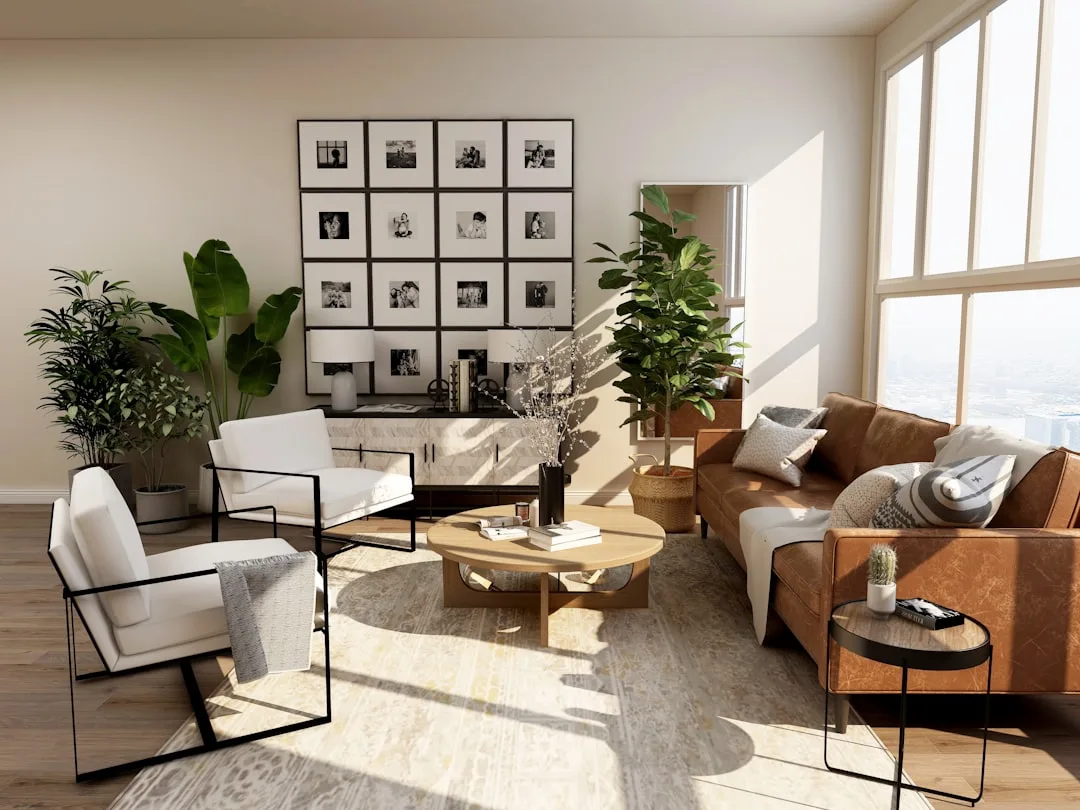
A peach walls color scheme in the living room works when the walls stay light and the seating carries the depth. Soft peach paint around LRV 60–69 spreads daylight across the room, while a cinnamon leather or velvet sofa anchors it the way a heavy book holds down a stack of loose paper. A larger living room with about 800 sq ft of wall area usually takes five to six gallons for two coats. Measure first so every can comes from the same batch.


Should the rug be peach or cinnamon? A large rug mixing both tones ties the floor to the walls and the sofa, while a solid cinnamon rug makes the room feel lower and heavier. Throw pillows split between peach and cinnamon carry the palette across the seating without adding new hues. Don’t add a third saturated color; keep extra pieces in cream or natural wood.
Warm 2700K bulbs suit living rooms because they mimic incandescent light and keep peach walls from looking flat. Lighting makers place 3000K a step brighter, still warm white but noticeably cleaner. Mixing the two in one room makes one wall look peachy and the next almost beige. Run floor lamps, table lamps and ceiling fixtures at the same temperature.


Wood is the bridge between both colors. Oak and walnut tables pick up the cinnamon undertone, while brass or bronze lamp bases add a metallic note that peach handles well. Frames and vases kept within the same two-color family make the room read as one palette instead of a collection. Place the darkest cinnamon piece opposite the window so daylight hits it directly.
Bedroom Calm From Soft Peach Linen and Cinnamon Wood
A peach and cinnamon bedroom feels calm when the softest shade goes on the walls and bedding, with cinnamon held back for wood and a few accents. Peach Blossom (SW 6624), at LRV about 67.5 and RGB 243/208/189, reads like warm skin in morning light, while Certain Peach at LRV 58 looks noticeably more apricot. In a bedroom the paler choice usually wins, since the walls are seen mostly in low light. Hold both samples beside your bed linen before buying.


Peach bedding with cinnamon accent pillows works like a well-made cappuccino: light foam on top, a darker layer underneath. Cinnamon curtains add privacy and warmth, and a blackout lining stops them from glowing orange when the sun hits. Is a cinnamon headboard too heavy? Not if the bedding stays light and the nightstands repeat its wood tone.
Lighting makers rate 2700K soft white as the best fit for bedrooms, because warm light signals wind-down time. Bedside lamps with cinnamon or linen shades soften that glow even more. Cool 4000K or 5000K daylight bulbs beside the bed turn peach walls grey-pink and make cinnamon look muddy, so leave them for the garage. Fit dimmers so evening light drops without changing color.


Dark wood dressers and nightstands give the bedroom its weight, and they sit best against pale peach rather than a deep shade. A typical 12×12 ft room has around 384 sq ft of wall once a door and window are deducted, so two coats need slightly more than two gallons. Small touches finish the look: fresh flowers in a peach vase, a wooden tray, one print that repeats both colors. Leave at least one surface clear so the room still feels restful.
Modern Kitchen That Wears Peach Color and Cinnamon Cabinets
A modern kitchen wears peach color best on the walls or backsplash, with cinnamon on the cabinets where it hides daily wear. Cinnamon cabinet paints between LRV 14 and 19, such as Behr Cinnamon Brandy or Cinnamon Crunch, mask fingerprints far better than a pale peach door would. Lighting makers often suggest 3000K for kitchens, a little crisper than the 2700K used in living rooms. Pick the cabinet shade first, then match the wall peach to its undertone.


Sheen matters more in a kitchen than anywhere else in the house. Semi-gloss covers about 250–300 sq ft per gallon, while flat paint stretches up to 400, so a wipeable kitchen finish needs more paint per wall. Satin or semi-gloss on cabinets with eggshell on the walls is the usual split. Don’t use flat paint behind the hob, where grease soaks straight in.
Stainless steel appliances and chrome fixtures cool the palette just enough, the way a squeeze of lemon lifts a rich sauce. A soft pink-peach tile backsplash also works here, and these pink kitchen splashback ideas with tile costs and layouts show how blush tiles behave next to warm cabinetry. Open cinnamon shelving keeps the darker tone in the upper half of the room. Limit shelves to two or three rows so the peach wall still shows.


Under-cabinet LED strips should match the ceiling temperature, or the backsplash will look like a different peach from the walls. Pendant lights over the island add a second warm layer for eating, and bar stools with peach cushions carry the palette onto the counter. Does the room need a third color? Rarely, since a bowl of herbs or green apples adds enough contrast. Bring green in through plants rather than paint.
Don’t Do This
- Don’t paint all four walls a deep peach below LRV 50 in a room with weak daylight.
- Don’t mix 2700K and 4000K bulbs in one room; peach shifts between rosy and grey.
- Don’t plan on one coat: a gallon covers 350–400 sq ft per coat, and most walls need two.
- Don’t use flat paint on kitchen walls; semi-gloss costs more per sq ft but wipes clean.
- Don’t pair cinnamon with grey-beige; keep its partners cream, sage or teal.
Peach and Cinnamon Paint Picks Side by Side
Peach interior paint and cinnamon paint come in dozens of named shades, and LRV plus hex values are the only fair way to compare them across brands. The table lines up the most useful picks from LRV 69 down to LRV 9. Treat it like a spice rack: the pale rows are the base, the dark rows the seasoning. Order samples from at least one row in each half.
| Shade | Brand and code | Hex | LRV | Role | Best room |
|---|---|---|---|---|---|
| Naive Peach | Sherwin-Williams SW 6631 | #F3D3BF | 69 | Main wall | North-facing bedroom |
| Peach Blossom | Sherwin-Williams SW 6624 | #F3D0BD | 67.5 | Main wall | Bedroom, hallway |
| Certain Peach | Sherwin-Williams SW 6625 | #F2BDA2 | 58 | Wall or accent | Living room |
| Sumptuous Peach | Sherwin-Williams SW 6345 | #E5B99B | 54 | Accent wall | Sunny living room |
| Cinnamon ’n Spice | Benjamin Moore 1215 | #DEB59D | 51 | Soft cinnamon wall | Dining or living room |
| Cinnamon Stick | Dunn-Edwards DE5151 | #D2806C | 29 | Coral-cinnamon accent | Kitchen wall, doors |
| Cinnamon Crunch | Behr S210-6 | #9B6E57 | About 19 | Cabinets, trim | Kitchen |
| Burnt Cinnamon | Benjamin Moore 2094-10 | #7B4532 | 9 | Furniture, front door | Any room, small doses |
The Warm Verdict
Peach and cinnamon work because they sit far apart on the light scale, with pale peach at LRV 58–69 against cinnamon at LRV 9–29. That gap gives every room contrast without a single cold color. Keep peach on the big surfaces and cinnamon on wood, fabric and cabinets.
In living rooms, plan five to six gallons for about 800 sq ft of wall and light everything at 2700K. A rug that mixes both tones ties the floor to the sofa. Oak and brass finish the look.
In bedrooms, choose the palest peach, around LRV 67–69, and keep cinnamon on the headboard and nightstands. Dimmable 2700K bedside lamps keep the walls warm at night. Leave one surface clear.
In kitchens, put cinnamon at LRV 14–19 on the cabinets and finish them in semi-gloss, which covers 250–300 sq ft per gallon. Switch to 3000K for task light. Add green through plants, not paint.