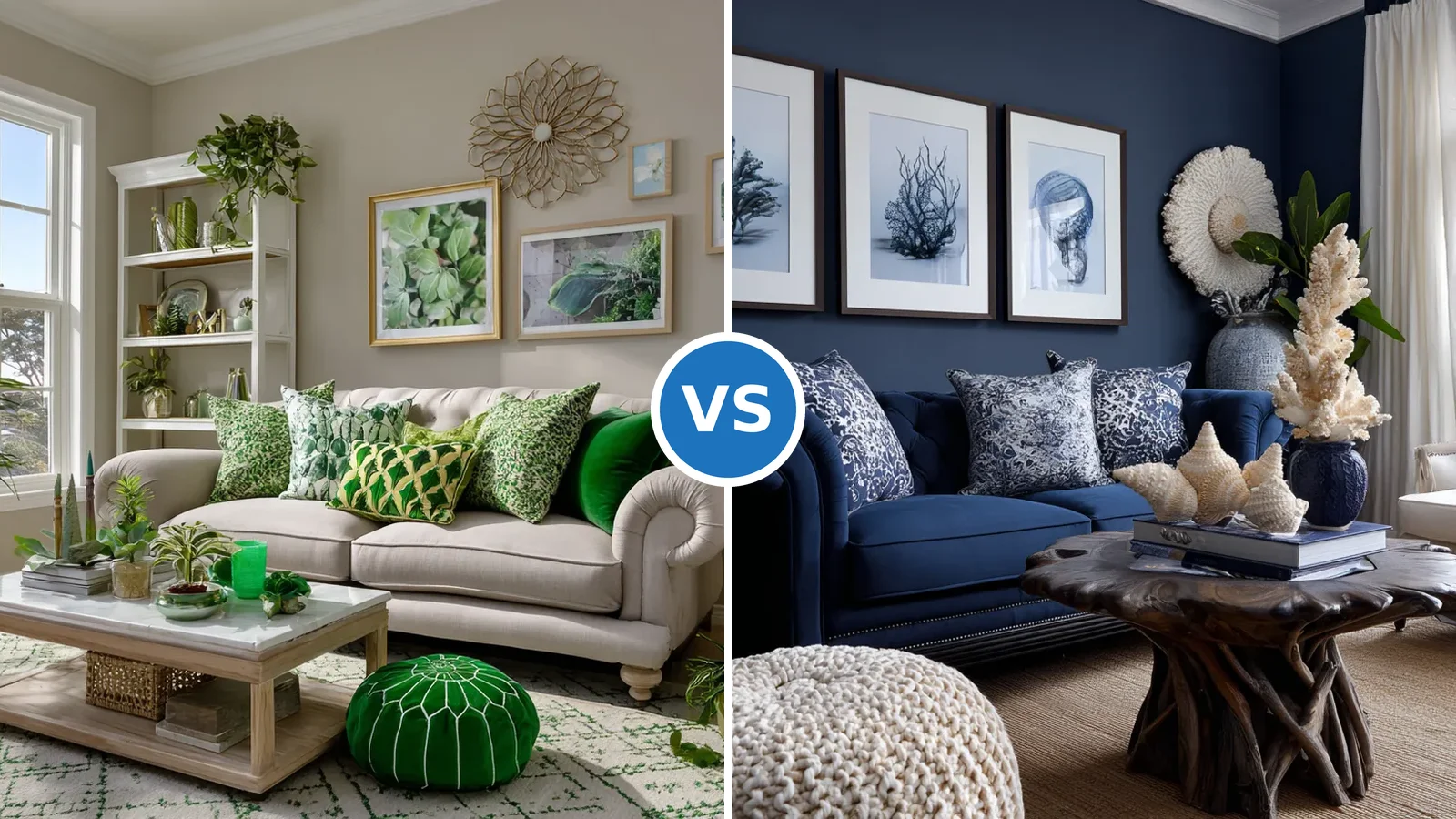
The navy vs green living room decision is about the atmosphere you want and the daylight you have. Choose green, especially sage or mint, for a soft and airy room linked to nature; choose navy for crisp contrast, tailored depth and a cozy evening feel.
Both can cover a wall, upholster a sofa or stay in small accents. The wider point in our look at calming green living room ideas is that green changes mood with its depth, so compare a particular shade with a particular navy instead of two color names.

Two color families with different personalities
Quick Verdict
- Choose a green living room if you want a soothing, nature-led mood, with pale sage or mint when you hope to keep the room airy.
- Choose a navy living room if you want sharp contrast with white, warm glamour with gold or a deep setting for evenings.
- Choose either as a sofa or accent if you are unsure about dark or colored walls.
Green is the broader family in mood. Sage and mint feel light and calm, while olive and forest green bring richness and warmth. It sits comfortably beside brown, beige, white and indoor plants.
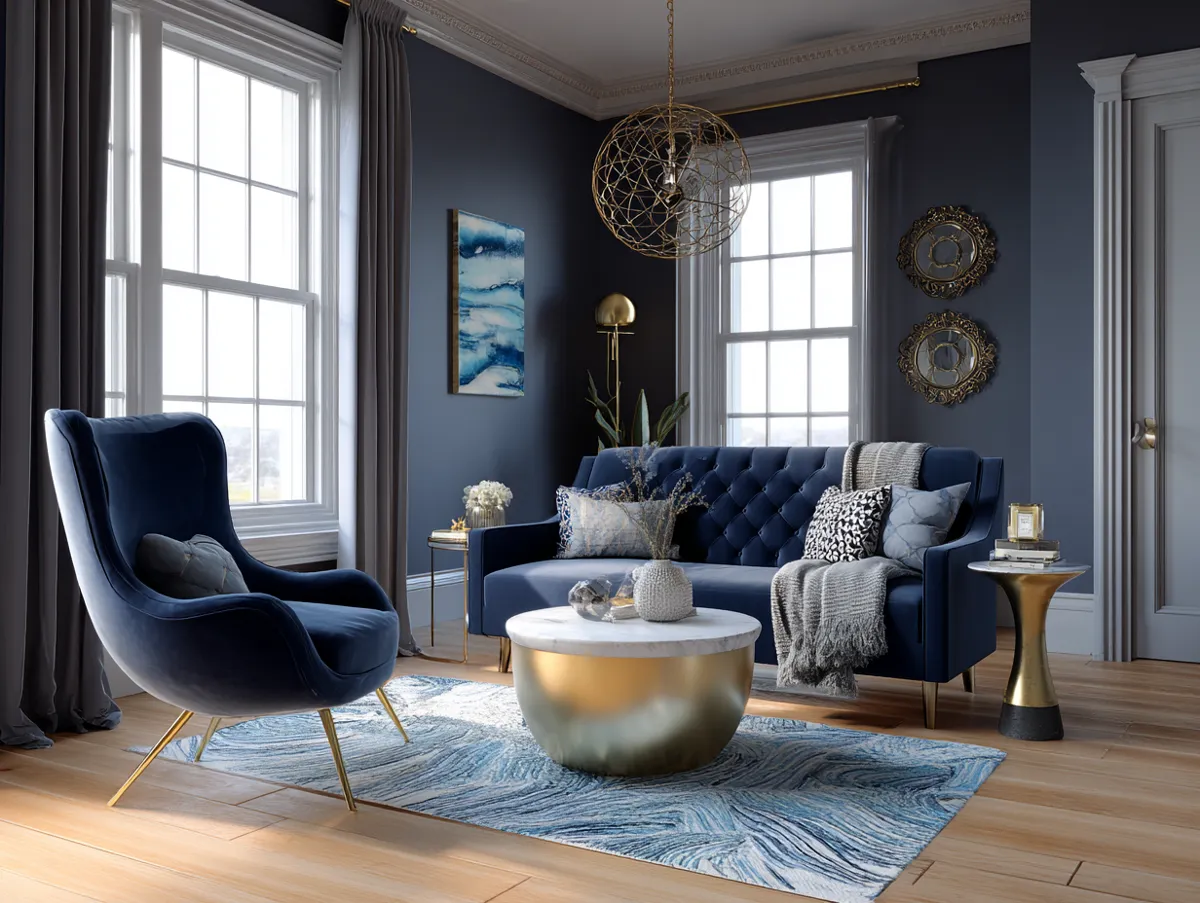
Navy works much like a dark neutral. Our navy living room ideas show it in modern, coastal, glam and vintage rooms, usually balanced by pale surfaces, wood or metal. Its character stays deep, though some versions lean grey and others carry a hint of green.
How a navy vs green living room compares side by side
| Criteria | Green living room | Navy living room |
|---|---|---|
| Overall mood | Soothing and connected to nature | Tailored and cozy |
| Airy walls | Easier with sage or mint | Needs plenty of pale contrast |
| Crisp contrast | Gentler in pale shades | Strong beside bright white |
| Natural partners | Plants, browns, beiges and white | White, grey, wood and gold |
| Range of depth | Pale mint through forest green | Deep blues, including greyer versions |
| Evening character | Warm and relaxed in deeper tones | Crisp or cocooning with dimmed lamps |
The table describes tendencies. A forest green can feel heavier than a softer navy, so a sample of the exact paint matters more than the family it belongs to.


Daylight and room size set the limits
Where sunlight is limited and you want color on every wall, light green has the advantage. Sage or mint can help the room stay bright and open. Deep olive and forest greens are better suited to large, well-lit rooms, where they are less likely to feel overpowering.
Navy absorbs much of the light that reaches it. Paint makers describe this with light reflectance value (LRV), where a lower number means less light bounced back. Sherwin-Williams Naval has an LRV of 4, while greyer Benjamin Moore Hale Navy is listed at 8.36 and is the gentler of the two for a dim room.
A small room does not rule navy out. Keep it to one wall, the sofa or cushions, and give pale trim and furnishings room to reflect light. North-facing spaces usually favor a greyer navy over an inky one.
Test both colors on large boards or wall patches. Look at them at midday and after dark, with the lamps you will use, and move them between a bright wall and a shaded one.

Sofas, walls and color partners
A sofa is large enough to set the scheme without repainting. A velvet emerald piece feels luxurious, while muted olive upholstery gives a more relaxed result. Whites, beiges and browns break up the green, and side tables, ottomans, pillows or a rug can repeat it more quietly.
A navy sofa gives pale walls a firm anchor. White makes the pairing fresh, grey calms it and gold or brass adds a richer glow. Oak or walnut warms the cooler combinations. If you prefer navy on the wall, a light grey or ivory sofa keeps it reading as a backdrop.
Plants favor the green route because their leaves add further shades without introducing a new color. Navy has the clearer advantage when you want a graphic coastal palette, with white trim, striped cushions and natural jute underfoot.

Where green and navy each win
Green wins for an easy, soothing daytime mood. It also wins for light-colored walls in a room with less sun, provided you pick a pale shade. Layering is flexible too, since pale green walls can sit with a darker green accent wall.
Navy wins when definition matters most. White trim looks especially crisp against it, and a navy and gold scheme has a polished evening character. It can also suit a media room, where dark walls and charcoal textiles create a moody setting, as long as the lamps are strong enough for everyday use.
For nighttime comfort, warm white bulbs in the 2700 to 3000K range help navy avoid a grey, clinical look. Dimmers let the same wall shift from sharp to enveloping. Check green samples under those bulbs as well, because a shade chosen in daylight may read differently at night.
Paint coverage and upkeep depend more on the product and finish than on whether you pick green or blue. Deep shades of navy often need two or even three coats for an even color, so read the label and test coverage before buying for the whole room.


The mistake of choosing from a color name
The common mistake is deciding that green is light and calm or navy is dark and formal, then buying paint from a screen. Picture a dim sitting room painted entirely forest green because green sounded soothing. The result may feel much heavier than the pale sage room the owner had in mind.
Mixing every idea at once causes a similar problem. A navy wall, green sofa, gold decor and busy rug can compete for attention. Give one color the leading role, then repeat a small number of partners.

Who should choose which color
Pick green if the living room is a daytime retreat, you enjoy plants and natural materials, or you want pale walls with a visible hint of color. Sage and mint are the safer starting points for limited light, while olive and forest suit people who want richness and have good daylight.
Pick navy if you like clear contrast, enjoy a room that feels wrapped in color after dark or already own white, grey, wood or brass pieces you want to feature. Start with a sofa or a single wall when daylight is a concern. If both samples look right, let your largest fixed piece, such as a sofa or rug you plan to keep, settle the choice.