Acrylic bed design works when you want a bed, nightstand or wardrobe that almost disappears: clear acrylic passes up to 92% of visible light, while typical glass passes roughly 80–90%. The furniture keeps its shape but stops blocking sightlines, so a small bedroom no longer reads as crowded. It suits rentals, compact rooms and minimalist schemes far better than a dark wood suite. Start with one clear piece and judge the effect before buying more.
Does it hold up to daily use? Yes, with one trade-off. Acrylic weighs about half as much as glass and resists impact many times better, yet it scratches more easily than glass. Prices span a wide range: a clear nightstand starts near $90, retail beds with acrylic details run about $670–$2,700, and collectible Lucite four-posters climb past $7,750. Put clear acrylic on legs, headboards and side tables first, and keep high-friction surfaces in wood or fabric.
Quick Scan
- Clear acrylic transmits up to 92% of light, versus 80–90% for typical glass.
- Acrylic weighs roughly half as much as glass of the same size (specific gravity 1.19 vs 2.45).
- Impact resistance runs about 10–17 times higher than standard glass, and it does not break into sharp shards.
- Glass still wins on scratch resistance, so acrylic needs microfibre and mild soap, never ammonia glass cleaner.
- Clear nightstands cost about $90–$130; beds with acrylic details sell for about $670–$2,700.
- One or two clear pieces beside wood look lighter than a full transparent bedroom set.
Floating Frames and Modern Acrylic Bed Design
Modern acrylic bed design relies on one trick: the frame carries the mattress while your eye passes straight through it to the floor. A transparent base or headboard lets up to 92% of light reach the space beneath, so the bed reads like a mattress hovering in the room rather than a solid block. Think of a shop-window display stand, which holds the product and then vanishes. Pick a clear headboard over a fully clear platform if you want the effect at a lower price.
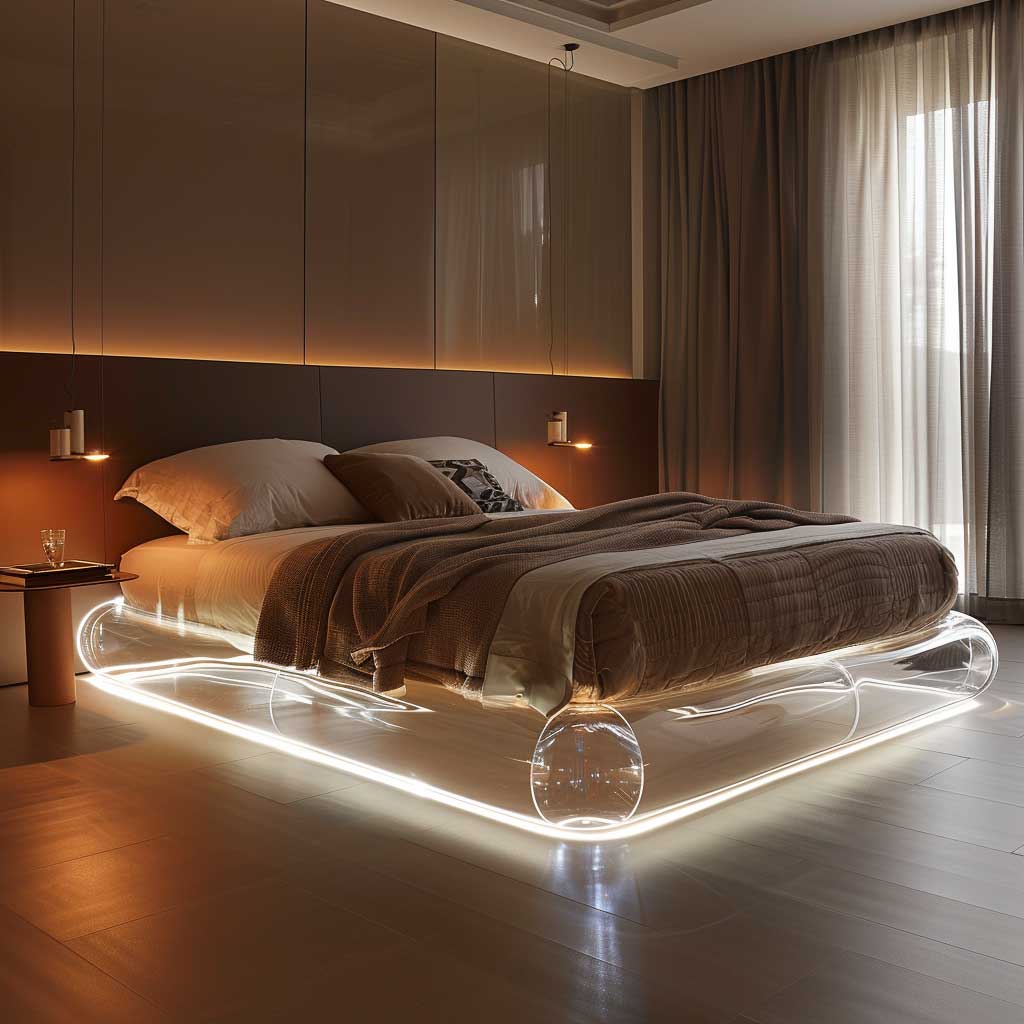
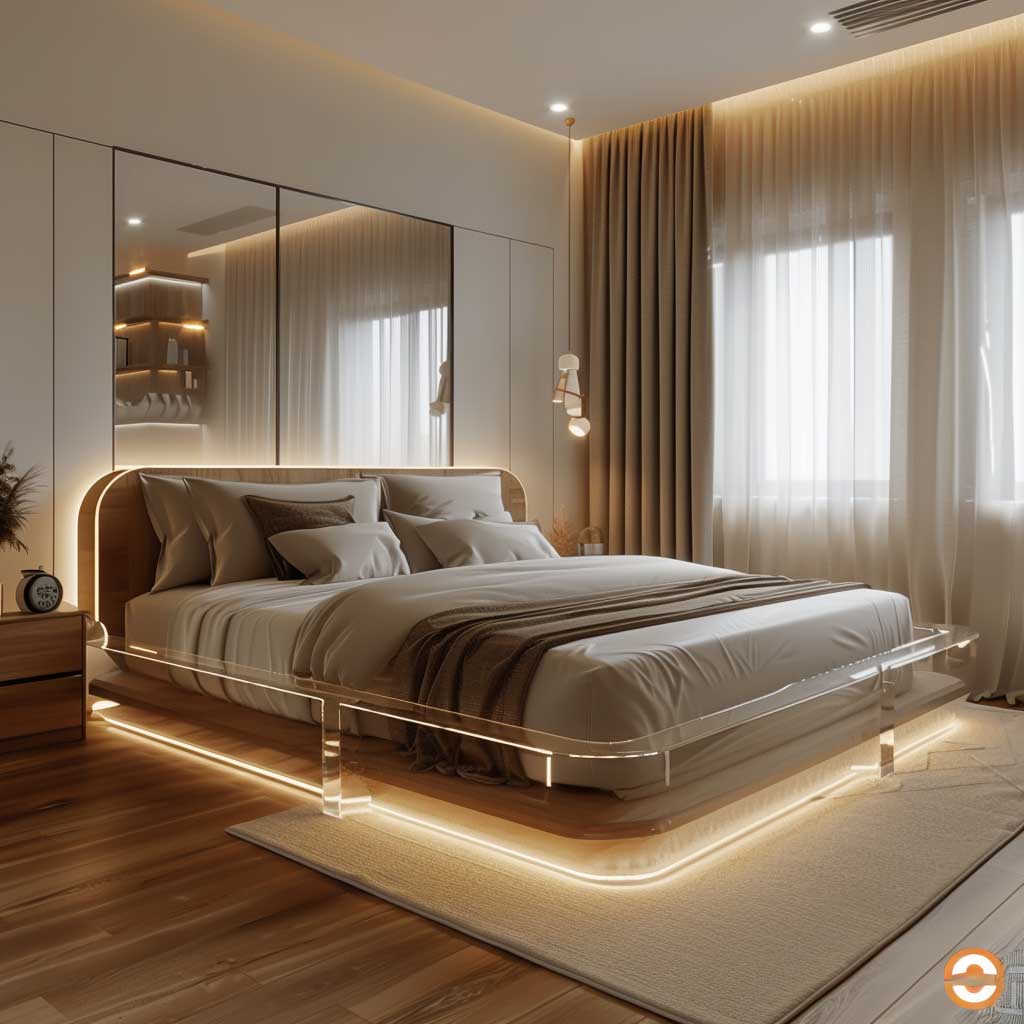
Is a fully transparent frame worth the money? For most rooms, no. Retail beds that mix upholstery with acrylic legs or accents typically sell for about $670–$1,700, while fully clear Lucite four-posters from designer studios list at $7,750 and reach $28,000 for collectible pieces. The hybrid version captures most of the floating look, because the eye registers the open gap under the bed before it notices the headboard. Spend on the base, not the posts.
Acrylic weighs roughly half as much as glass of the same size, with a specific gravity near 1.19 against 2.45, so a clear frame is easy to shift when you rearrange the room. Impact resistance runs about 10 to 17 times higher than standard glass, and a hard knock leaves a mark instead of sharp shards. Don’t treat it like a plastic stool, though, because thin edges flex under weight. If you plan to pair a clear frame with older wood pieces, the balance rules in this guide to eclectic bedroom decor that mixes eras keep the contrast deliberate.
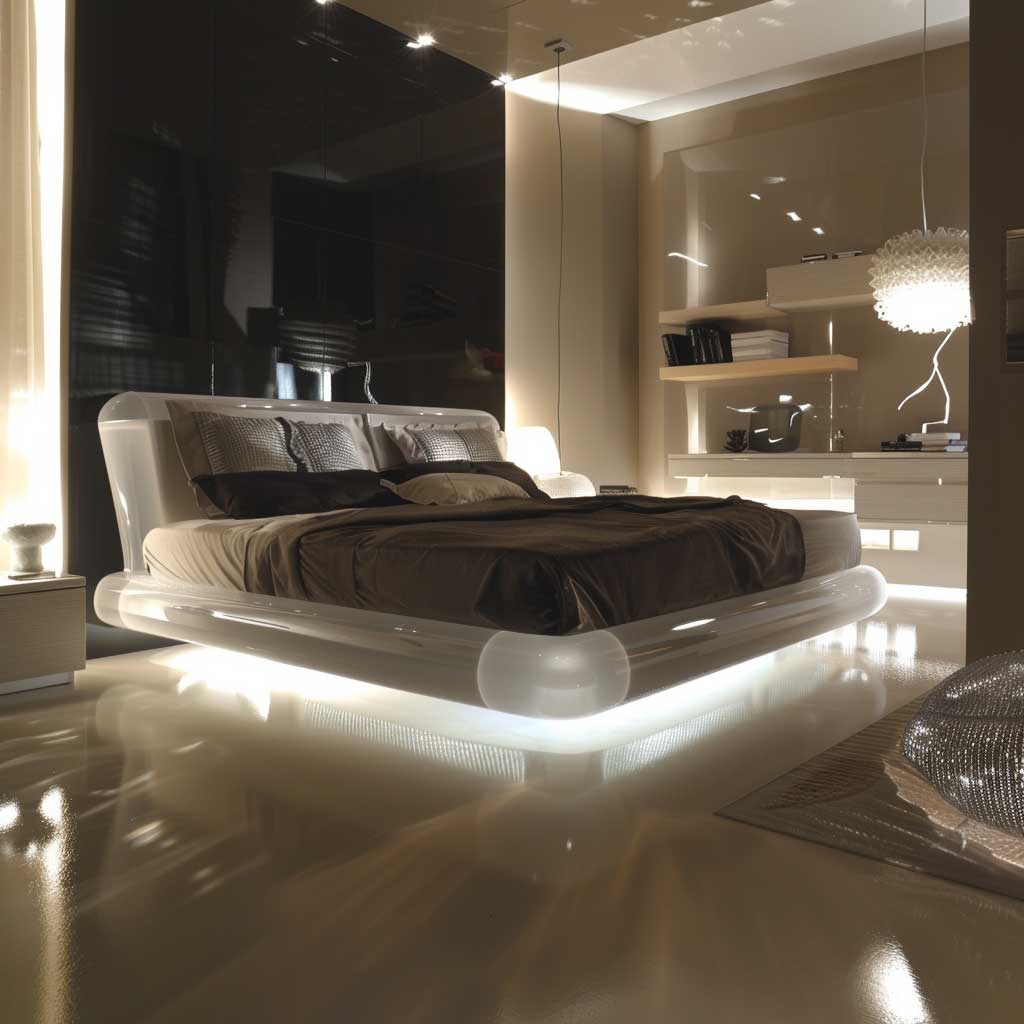
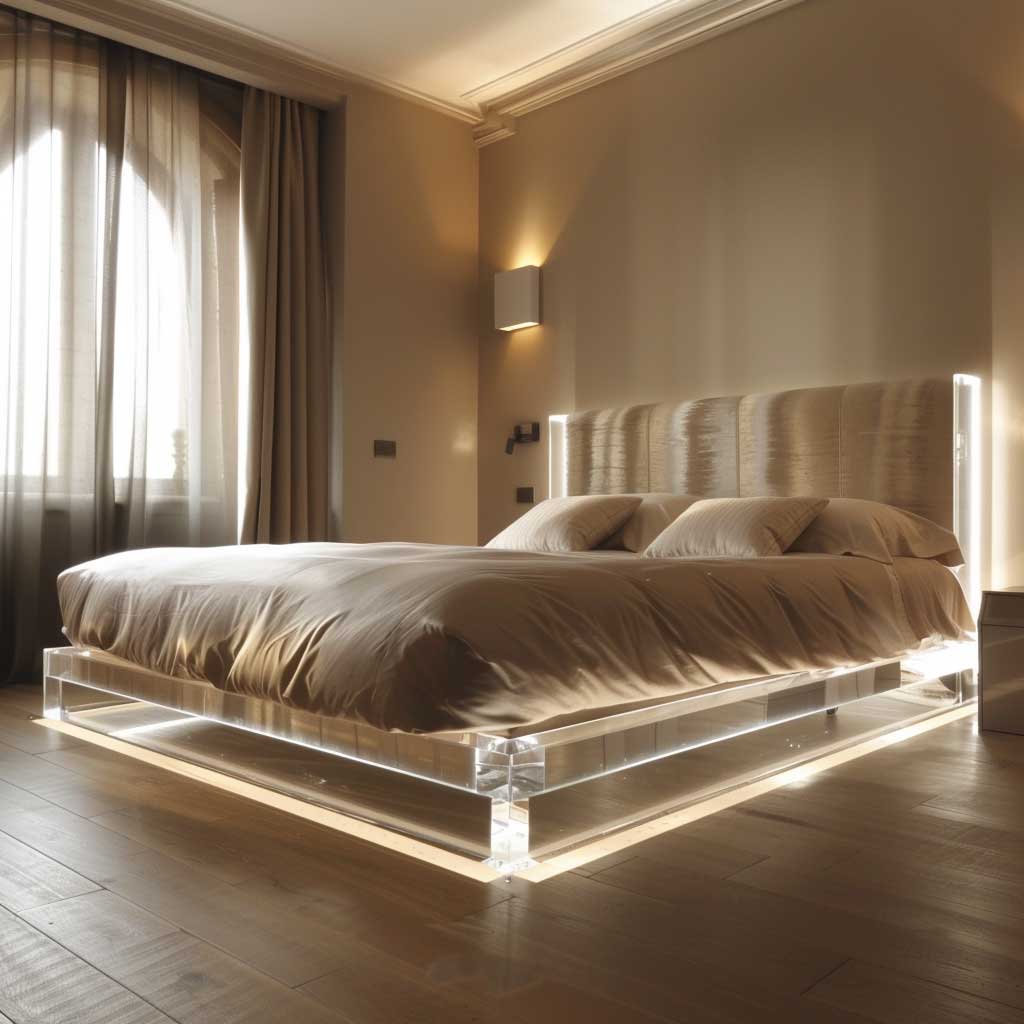
Lighting under a clear frame changes the whole bed. An LED strip beneath the base turns the acrylic edges into soft lines of light and doubles as a night-light, while the same strip under a wooden bed only lights the floor. Warm-white light flatters acrylic far more than cold blue tones, which make the panels look clinical. Keep bedding neutral and plain so the glow, not the duvet pattern, carries the room.
Bedside Pieces That Extend an Acrylic Bed Design
Acrylic furniture in the bedroom usually starts at the bedside, because a clear nightstand is the cheapest way to test the look. Mass-market waterfall-edge tables cost roughly $90–$130, and 10 mm thick two-tier models are among the steadiest budget options. Compared with a $440 lacquered nightstand on lucite legs, the all-clear version gives up drawers but takes up almost no visual space. Choose clear when the wall beside the bed is narrow, and the drawer version when you need hidden storage.
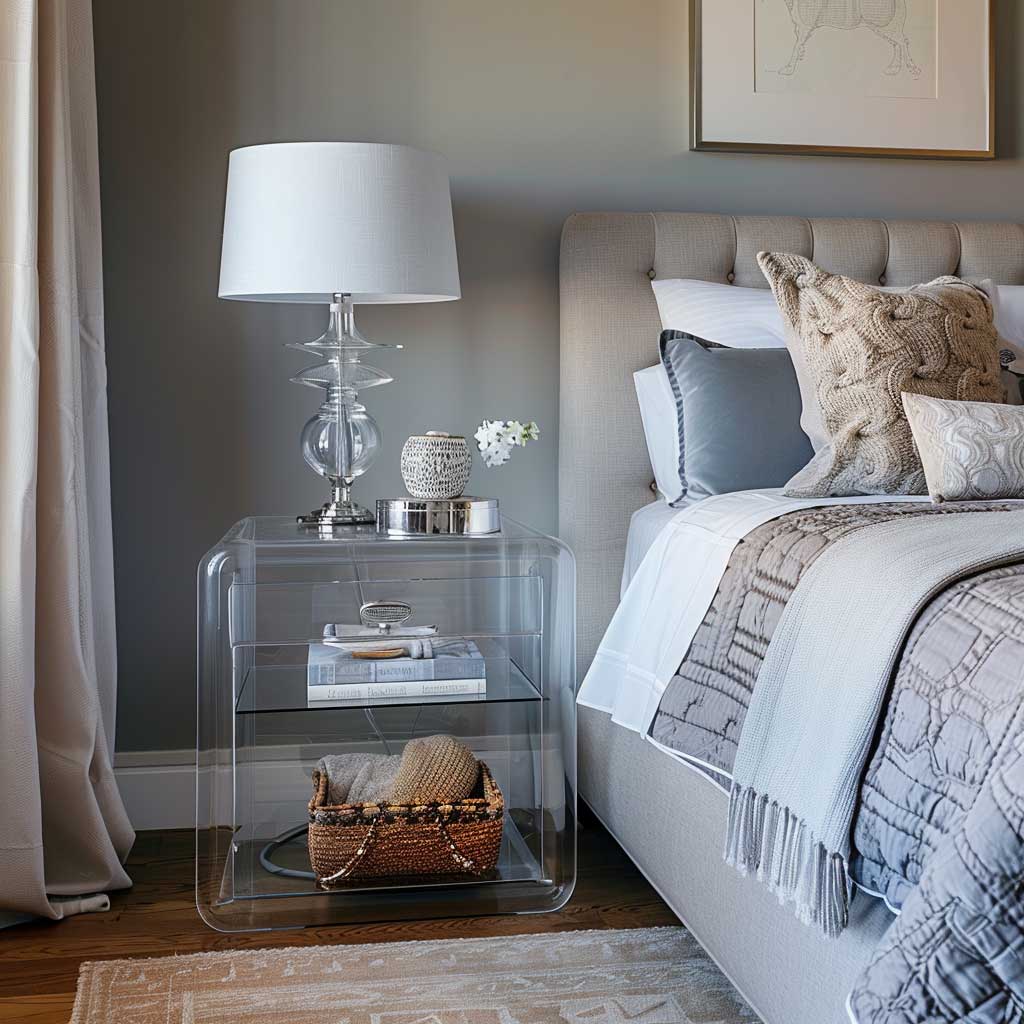
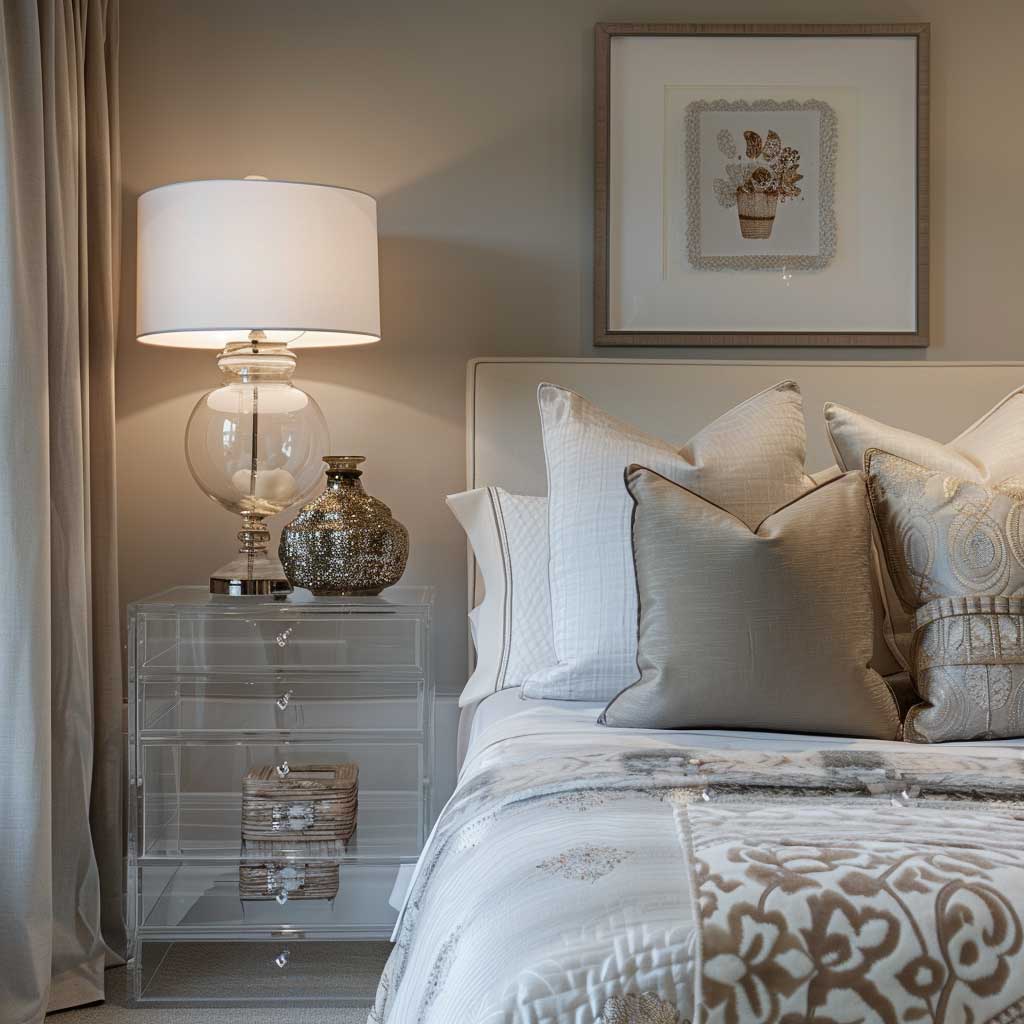
What height works? Measure the top of your mattress and aim for a nightstand surface level with it or slightly above. Many clear side tables stand about 18–19 inches high, which suits low platform beds, while lucite-leg nightstands at 24 inches match standard frames with a thick mattress. It works like a side table next to a sofa: the wrong height makes every reach awkward. Check this before ordering, since an acrylic piece cannot be raised later.
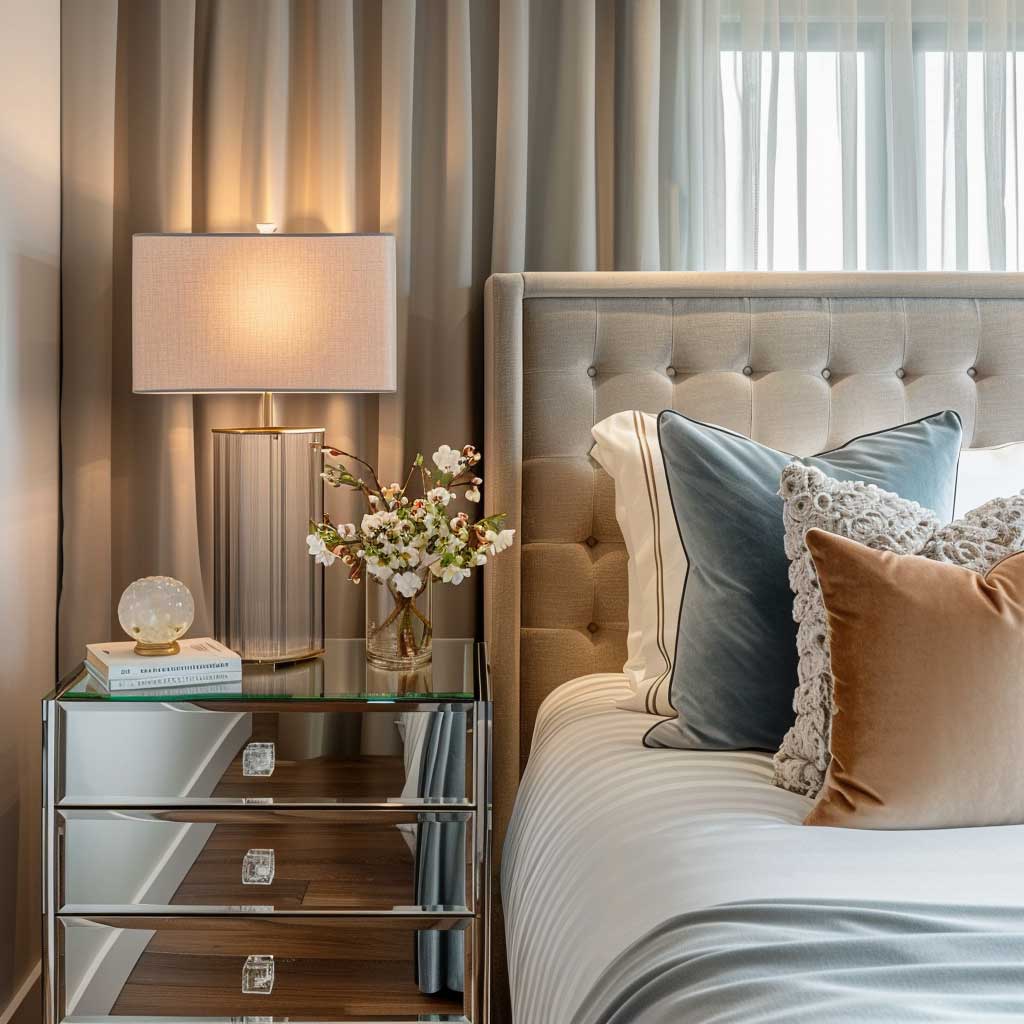
Clear nightstands punish clutter. Every cable, receipt and charger stays visible from every angle, which turns a transparent table into a display case of mess. Don’t load the top with more than three things: a lamp, a book and one object you like. A small wood or ceramic tray groups the rest and protects the surface from keys and rings.
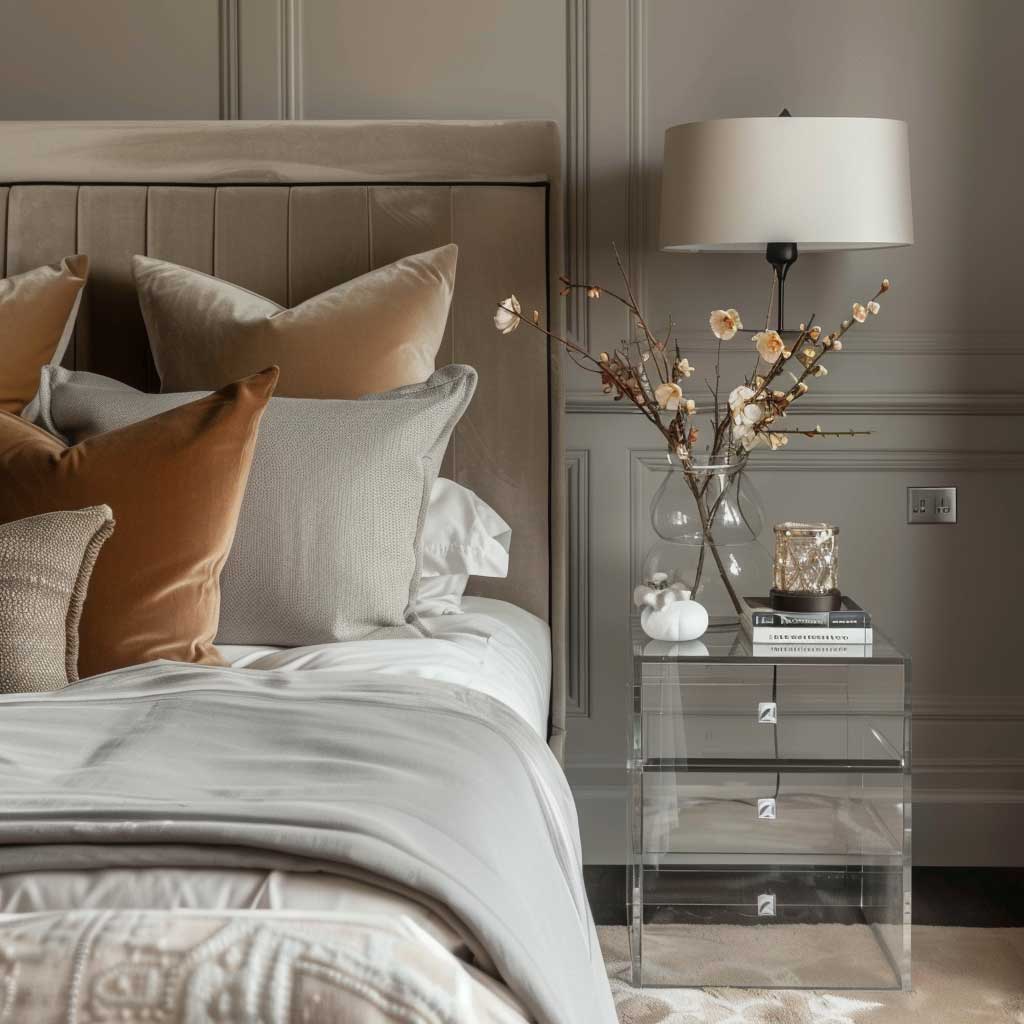
Care is where acrylic and glass part ways. Glass resists scratches better, and harsh glass cleaners are not suitable for acrylic surfaces. Wipe with a microfibre cloth, lukewarm water and a drop of mild soap rather than paper towels, which act like fine sandpaper. Add felt pads under lamp bases on day one, because ring-shaped scuffs are the first wear that shows.
Clear Wardrobe Doors for Acrylic Bedroom Furniture With Storage
Acrylic bedroom furniture turns most practical in the wardrobe, where clear or high-gloss acrylic doors bounce light back into the room. Full transparency is rare here, and most acrylic wardrobes use frosted, tinted or high-gloss fronts over an MDF core. Board-mounted high-gloss acrylic has been quoted at roughly $14.50 per square foot, while solid acrylic doors run closer to $65 per square foot. That gap explains why most budget wardrobes sold as acrylic carry a finish, not a solid sheet.
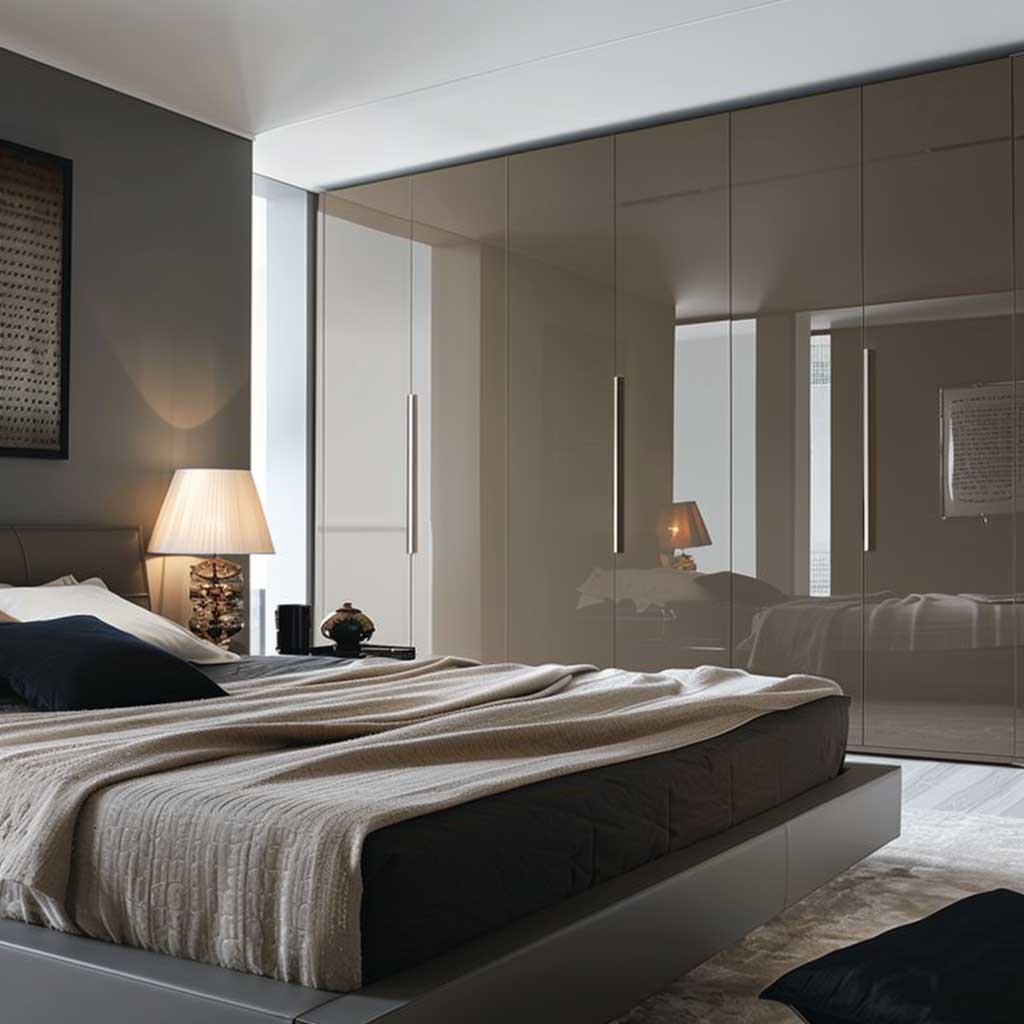
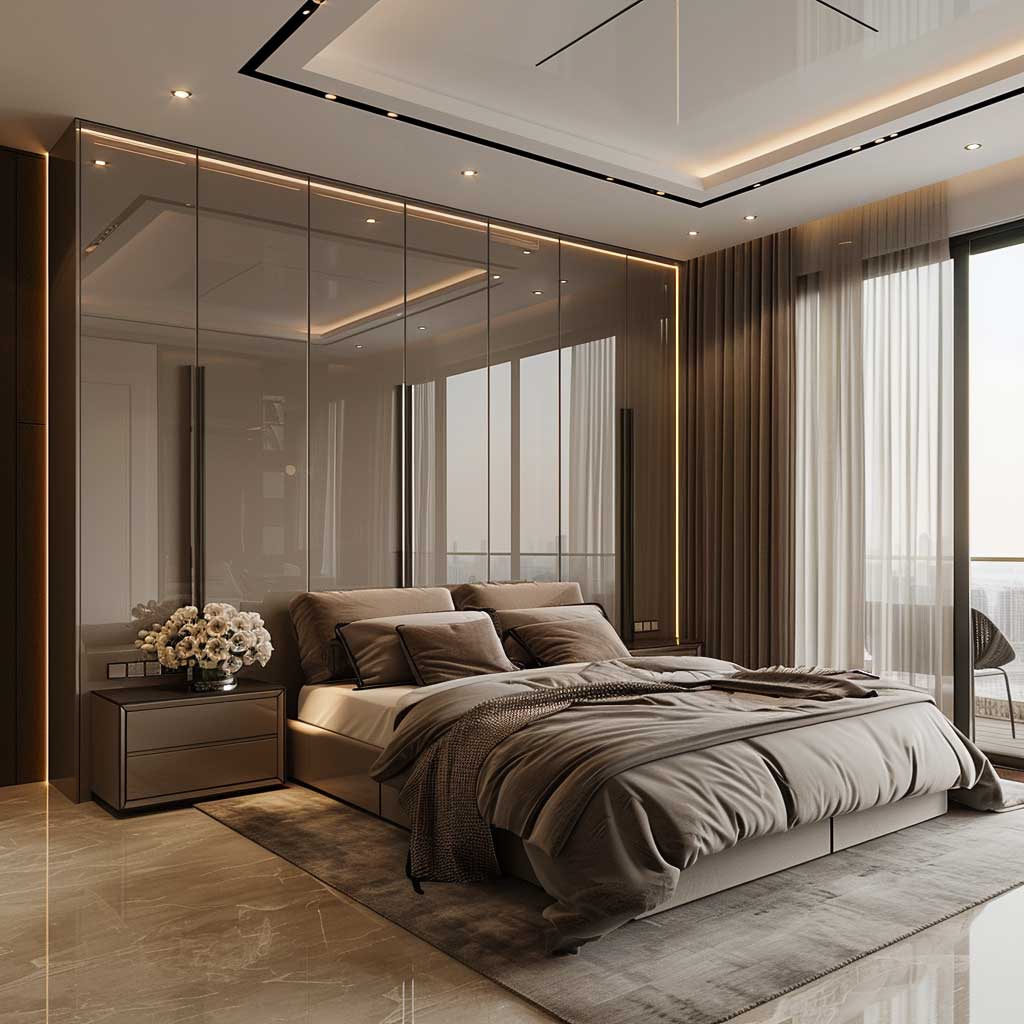
Clear doors behave like a boutique window: beautiful when shelves are folded by colour, harsh when the rail is overstuffed. Frosted acrylic hides the outline of clothes but still looks brighter than a matte painted door. Should you choose fully clear fronts? Only if you will edit the interior every week. For a shared or busy bedroom, frosted or high-gloss fronts are the safer bet.
Two technical details matter for a wardrobe near a window. Specific acrylic grades block up to 99% of UV light, which slows fading of the clothes behind the doors. Acrylic also expands and contracts with temperature and humidity more than glass, so large doors need gaps and hinges set by the maker, not a tight DIY fit. If the wardrobe stands beside the window, a blackout or sheer panel from these minimalist window treatment ideas for modern interiors keeps sun off both clothes and gloss.

Custom panels are worth pricing before you buy ready-made. A full 2050 × 1525 mm sheet of 5 mm clear acrylic retails at around £100 before VAT, and a 10 mm sheet at around £200, according to typical supplier prices. The material data in this breakdown of acrylic versus glass lists light transmission, weight and scratch behaviour side by side. Compare the sheet cost with the finished wardrobe quote to see how much you pay for fabrication.

Don’t Do This
- Don’t clean acrylic with harsh glass sprays or paper towels; microfibre and mild soap keep the 92% clarity intact.
- Don’t buy a full acrylic bedroom set; one or two clear pieces beside wood read lighter than four or five that look like a showroom.
- Don’t let a candle or hot bulb sit directly on a clear top; acrylic is a thermoplastic and burns more readily than glass.
- Don’t fit wardrobe doors with zero gap; acrylic moves more than glass as temperature and humidity change.
Price and Performance Across Clear Bedroom Pieces
Comparing acrylic bed design options side by side shows where the money actually goes. The spread between a $90 nightstand and a $28,000 Lucite bed is huge, yet the visual gain per dollar is highest at the cheap end. Glass looks similar but weighs about twice as much and shatters on impact. Use the tables below to match each piece to your budget and care habits.
| Piece | Typical price | Key spec | Main trade-off | Care level |
|---|---|---|---|---|
| Bed with acrylic legs or accents | $670–$2,700 | Upholstered frame, clear details | Floating look at mid price vs partial transparency | Low |
| Designer Lucite four-poster | $7,750–$28,000 | Fully clear frame | Maximum transparency vs collector pricing | High |
| Clear waterfall nightstand | $90–$130 | About 18–19 in tall, up to 10 mm sheet | Light look vs no drawers | Medium |
| Lacquer nightstand on lucite legs | About $440 | 24 in tall, 2 drawers | Storage vs less transparency | Low |
| High-gloss acrylic wardrobe fronts | $14.50/sq ft (finish) vs $65/sq ft (solid) | MDF core vs solid sheet | Budget vs premium depth | Medium |
| Material | Light transmission | Specific gravity | Impact resistance | Scratch resistance |
|---|---|---|---|---|
| Clear acrylic | Up to 92% | 1.19 | About 10–17× standard glass | Lower, needs gentle care |
| Standard glass | 80–90% | 2.45 | Baseline, shatters into shards | Higher |
Clear Furniture Wins With One Rule
Acrylic bedroom furniture pays off when it replaces bulk, not everything: a pair of $90–$130 clear nightstands brightens a room more than a full transparent set costing thousands.
Test the look with nightstands first, then decide on the bed. Hybrid beds at $670–$2,700 deliver most of the floating effect, while full Lucite frames from $7,750 belong to collectors.
For wardrobes, pick high-gloss or frosted fronts unless you keep shelves edited weekly. Price the finish at around $14.50 per square foot against solid acrylic at $65 before you commit.
Protect every surface from day one with microfibre, mild soap and felt pads. Acrylic beats glass on weight and impact but loses on scratches, and that is the only real upkeep it asks for.