The best hair color for a square face isn’t about hiding the jawline — it’s about redirecting where the eye travels. A defined jaw and broad forehead are structural advantages. The goal of color is to work with that geometry, not fight it: draw the gaze upward, elongate the silhouette, soften corners through light and shadow rather than through length alone.
Three looks below show what that looks like in practice. Mint green halo on caramel curls, ruby red panels on a black angled bob, and sky blue ombré on long espresso layers — each uses a different placement strategy to interact with square proportions. None of them require drastic structural cuts to land well. Color does the framing.
Colorists typically charge between $60 and $150 for highlight work, according to national pricing data — which makes understanding placement logic before the salon appointment worth the effort. The three sections below walk through how each color and technique targets the specific geometry of a square face shape.
– Mint green placed in a halo around the crown draws the eye upward, balancing a strong jawline
– Ruby red panel highlights work best when kept behind the front layers — flash-through movement, not flat saturation
– Sky blue ombré on long espresso hair puts all the color weight below the jaw, creating vertical pull
– Touch-up intervals differ significantly: mint pastel fades in 4–6 weeks; bold red panels hold longer but need gloss maintenance
– Placement direction matters more than the shade — the same color placed wrong does the opposite of what you want
Mint Green Halo Pulls the Eye Away from a Square Jaw
Halo placement — mint green concentrated at the crown and threading softly through the temples — is one of the more precise tools available for square face shapes. The color forms a literal ring of light at the top of the head, which is where a square face needs visual weight most. Colorists recommend reserving this placement specifically for faces where the jaw width and forehead width compete for attention: the halo tips the balance toward height.


Caramel as the base color isn’t incidental. Warm browns absorb and scatter light through curly hair structure, which means the mint reads as a fresh, crisp contrast rather than an icy interruption. For neutral to warm skin undertones, this palette carries warmth at the root and coolness at the crown — a combination that makes the face look lit from above. Placing the mint too low, toward the mid-lengths, reverses the effect: it widens instead of lifts.
Pastel greens like mint need refreshing every 4 to 6 weeks, according to hair color maintenance data from salon professionals. Color-depositing conditioners in a green or cool-tinted formula help extend the interval between full reapplications. What accelerates fade faster than anything else? Washing in hot water. A cool rinse after conditioning locks the cuticle and holds pigment in significantly longer than standard shower temperature.
Does the curl pattern matter for this look? Yes — and it’s the thing most tutorials skip. Loose, voluminous curls scatter the mint across a wide surface area so the color reads as a diffused glow, not a stripe. Tight ringlets concentrate it too heavily. A light curl-defining cream on damp hair, followed by diffuser drying on low heat, keeps the separation between caramel and mint visible and intentional. Flat ironing this look removes the dimension entirely — the color merge happens in the curl, not the strand.
For those exploring hair color placement ideas for oval face shapes, the halo technique functions differently — oval proportions don’t need the upward correction, so the placement spreads wider rather than concentrating at the crown.
Ruby Red Panels on Black Prove Contrast Works Harder Than Blending
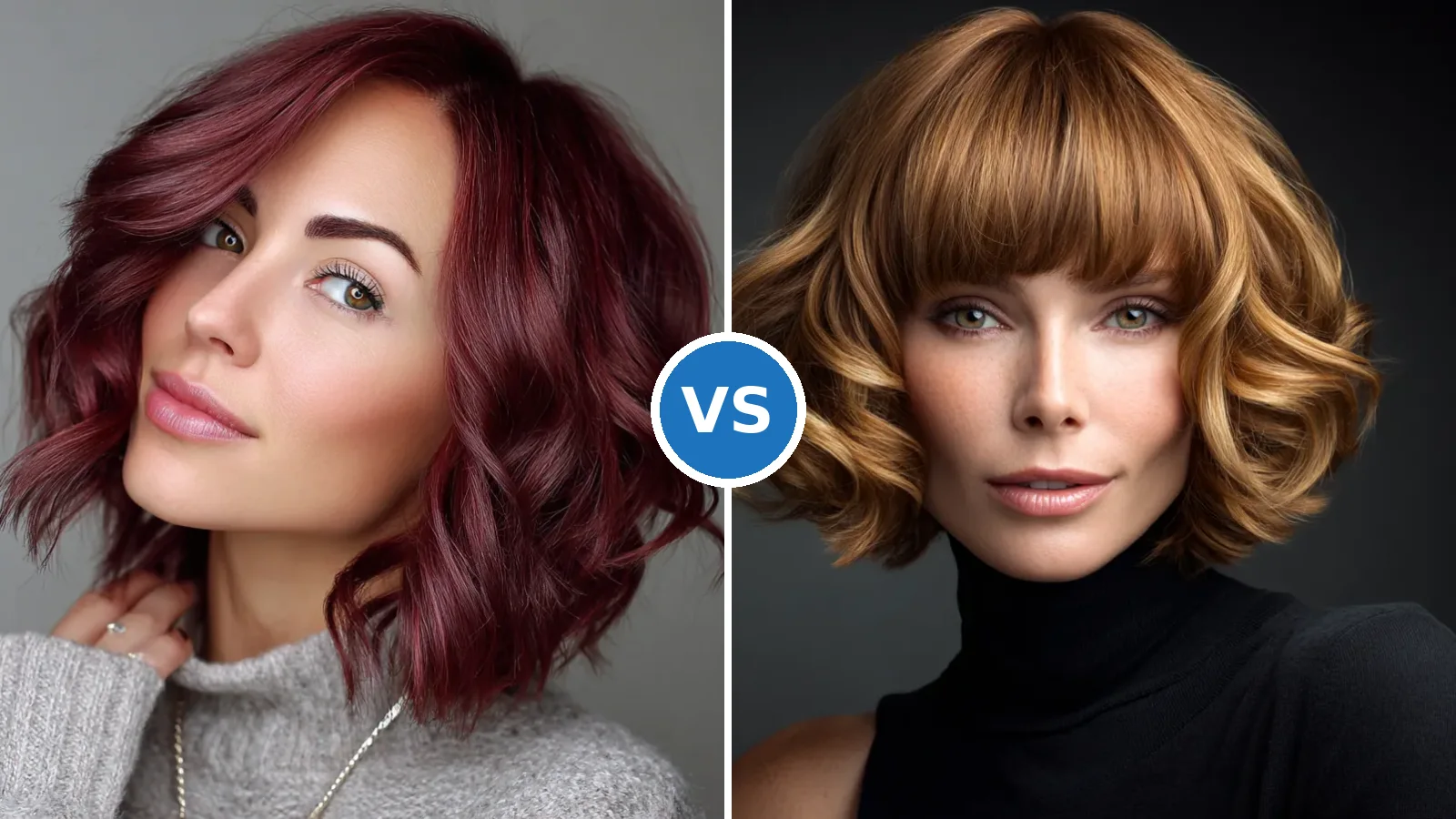
Ruby red panel highlights on a jet black angled bob are the clearest example of how the best hair color for a square face can operate through geometry rather than softness. Color blocking — placing wide sections of ruby behind the front layers and through the lower tips — creates flash-through movement as the head turns. The eye follows the diagonal of the angled bob, not the horizontal line of the jaw.


Jet black as the base creates depth that serves two purposes: it makes the ruby panels read as genuinely vibrant rather than faded, and it absorbs light at the sides of the face where a square jaw needs less emphasis. The ruby sections are positioned to flash through movement — not to sit on top of the silhouette. Stylists in the $60–$150 national highlight range recommend this technique specifically for shorter cuts where panel placement can be controlled precisely with foils rather than freehand.
Why does this work on medium to deep skin tones particularly well? Ruby red carries warmth that mirrors golden and olive undertones instead of clashing with them. On very fair cool-toned skin, the combination can read as stark; a burgundy-leaning red softens that contrast without sacrificing the drama. The question worth asking before booking is whether the colorist can show previous panel work on dark bases — this is not a technique that translates from standard foil highlight experience without adjustment.
Placing ruby red panels at the front of the hair — framing the face directly — defeats the purpose on a square face. Front-placed panels widen the visual frame and draw attention to jaw width rather than creating diagonal movement away from it. The panels should sit behind the face-framing layer and flash through when the hair moves, not rest permanently visible at the perimeter. A common mistake is also asking for “soft blending” between the black and ruby — this look depends on sharp delineation. Feathering the edge kills the architectural effect entirely.
Maintaining the ruby without it turning to orange-brown requires a gloss-enhancing spray and a weekly color-depositing treatment. Flat ironing the bob brings out the sharpness of both the cut and the panel boundaries — the sleeker the surface, the crisper the color reads. Heat protectant applied before any ironing step matters doubly here because the ruby sections are almost certainly pre-lightened, making them more heat-sensitive than the untouched black base.
Sky Blue Ombré on Espresso Hair Reframes Square Proportions Through Vertical Length
Sky blue ombré on long espresso layers targets the best hair color placement for square faces through one specific mechanism: vertical weight. The deep brown at the roots grounds the face, while the sky blue expands toward the ends — pulling the eye downward along the full length of the hair rather than across the widest parts of the face. Long layered cuts amplify this by creating multiple planes that guide visual flow from crown to collarbone.


The gradient starts at the mid-shaft and intensifies toward the lower layers — this keeps the top half of the head clean and dark, which narrows the visual width of the forehead, while the blue section sits entirely below the jawline. That positioning is what makes it function differently from a halo or a panel technique. Rather than redirecting the eye upward or diagonally, the ombré creates a downward continuation — the face becomes a departure point, not the focal zone.
Blue fantasy colors require touch-ups every 6 to 8 weeks to maintain vibrancy, according to professional colorist guidance. The common failure is allowing the blue to drift toward gray-green as it fades — a cool-toned, sulfate-free conditioner used after every wash significantly slows that shift. Washing the hair no more than two to three times per week, always with cool or lukewarm water, extends the color lifespan beyond what heat and daily washing allow.
What doesn’t work on this particular look? Applying the blue too high — anything above mid-shaft — starts competing with the face rather than framing below it. The ombré’s entire logic depends on the upper portion staying fully clean. A colorist attempting this should pre-lighten only the sections that will carry the blue; bleaching the root area for “blending” is an unnecessary risk that results in uneven lift and a muddier color melt. For shorter lengths where a sky or pastel blue works on a different scale, short wavy hairstyles with pastel blue hues show how the same tone family adapts when there’s less vertical length to work with.
Loose wave styling enhances the gradient transitions: as the wave rises and falls, different sections of the ombré catch the light at different angles, making the color shift feel organic rather than applied. According to Iles Formula’s highlight placement guide for face shapes, lighter tones at the top of the head combined with shading around the sides is the standard technical approach for square faces — this ombré inverts that logic by keeping all the lightness below, which works specifically because of the long length giving the eye somewhere to travel.
| Color Technique | Placement Zone | Touch-Up Interval | Key Risk |
|---|---|---|---|
| Mint Green Halo | Crown and temples only | Every 4–6 weeks | Dropping placement to mid-lengths widens instead of lifting |
| Ruby Red Panels | Behind front layers, lower tips | Every 6–8 weeks with gloss | Front placement or soft blending kills the architectural effect |
| Sky Blue Ombré | Mid-shaft to ends only | Every 6–8 weeks | Blue placed above mid-shaft competes with the face instead of framing below |
Iles Formula publishes a detailed highlight placement guide organized by face shape — including square faces — covering how to combine lightness at the crown with shading at the sides to soften angular structure. Read it at ilesformula.com’s guide to hair highlight placement by face shape.
Hair Color for Square Faces
Placement Does the Work — Shade Is Secondary
Mint green at the crown lifts attention upward. Ruby red panels behind the front layers create diagonal movement across the jaw. Sky blue ombré below mid-shaft pulls the eye down and lengthens the whole silhouette. Each technique targets a different aspect of square face proportions.
Touch-up timelines range from 4–6 weeks for pastel mint to 6–8 weeks for both the ruby panels and the blue ombré — budget accordingly. Color-safe washing at cool temperature is the single maintenance habit that extends all three looks the most.
Save this post before your next color consultation.