
Short blue hair delivers instant cool factor when the color sits on soft waves. Pastel versions of this shade keep the look wearable while still catching light and drawing attention. The combination works on most face shapes and grows out cleaner than solid vivid dyes.
Pastel blue lasts longest on pre-lightened hair and usually holds for 2–6 weeks with proper care. Semi-permanent formulas cost between $5 and $15 for at-home kits, while salon applications that include bleaching typically range from $150 to $350 for short lengths. Soft waves amplify the color shift without needing heavy product.
Choose the intensity that matches your daily routine. Subtle tints suit offices and low-maintenance schedules. Bolder placements or ombre tips suit creative work and weekends. All three approaches keep the cut looking intentional rather than experimental.
- Pastel blue short hair needs a light base for true color payoff
- Semi-permanent dyes fade in 2–6 weeks or 3–10 washes
- At-home kits start around $5–15; salon work runs $150–350
- Loose waves show color movement better than tight curls
- Cool skin tones pair best with icy blues; warmer tones favor teal-leaning pastels
- Skip daily shampoo to stretch vibrancy between applications
Icy Pastel Tints on Soft Short Waves
Icy pastel blue tints give short wavy hair a quiet glow without demanding constant attention. The shade sits lightly on the surface, so natural texture still reads clearly. This version of short blue hair suits anyone who wants color that feels polished rather than loud.



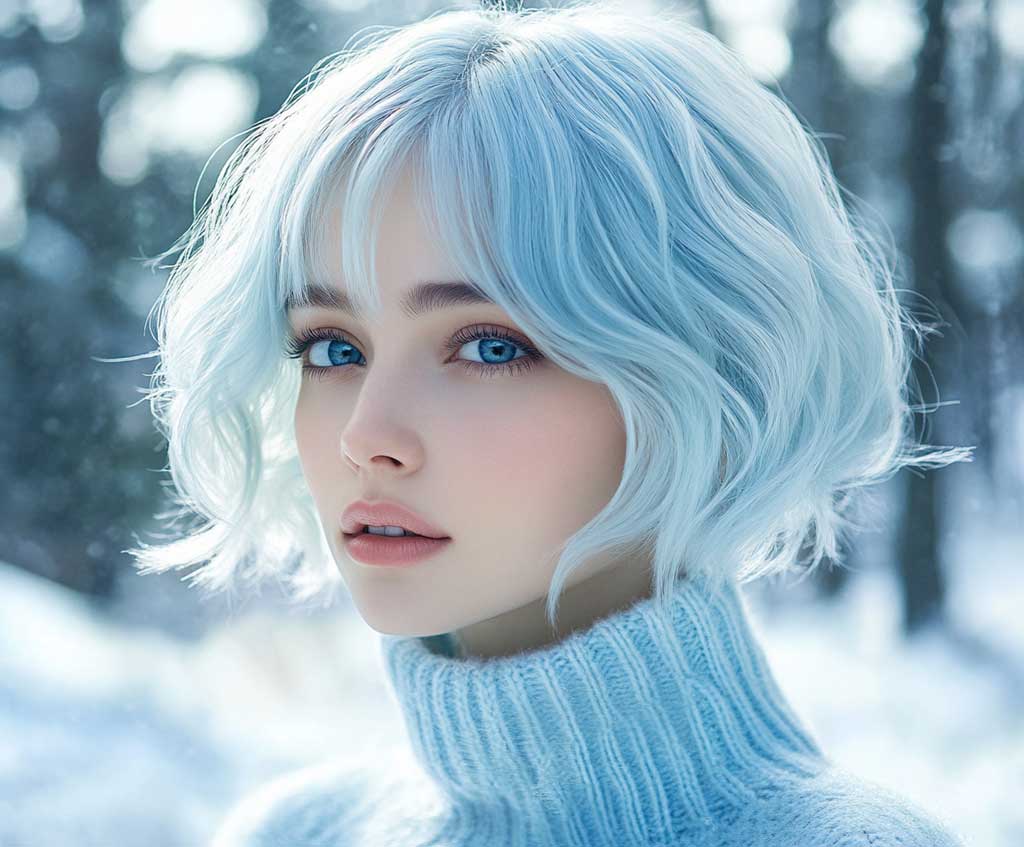
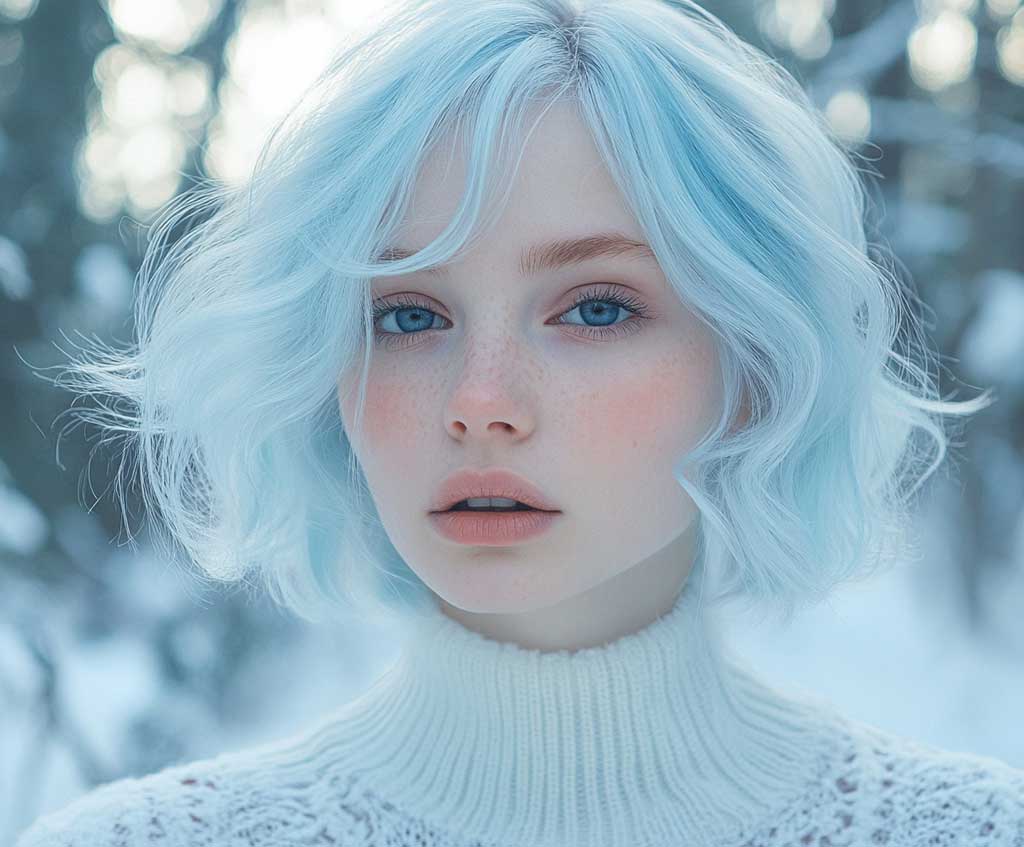
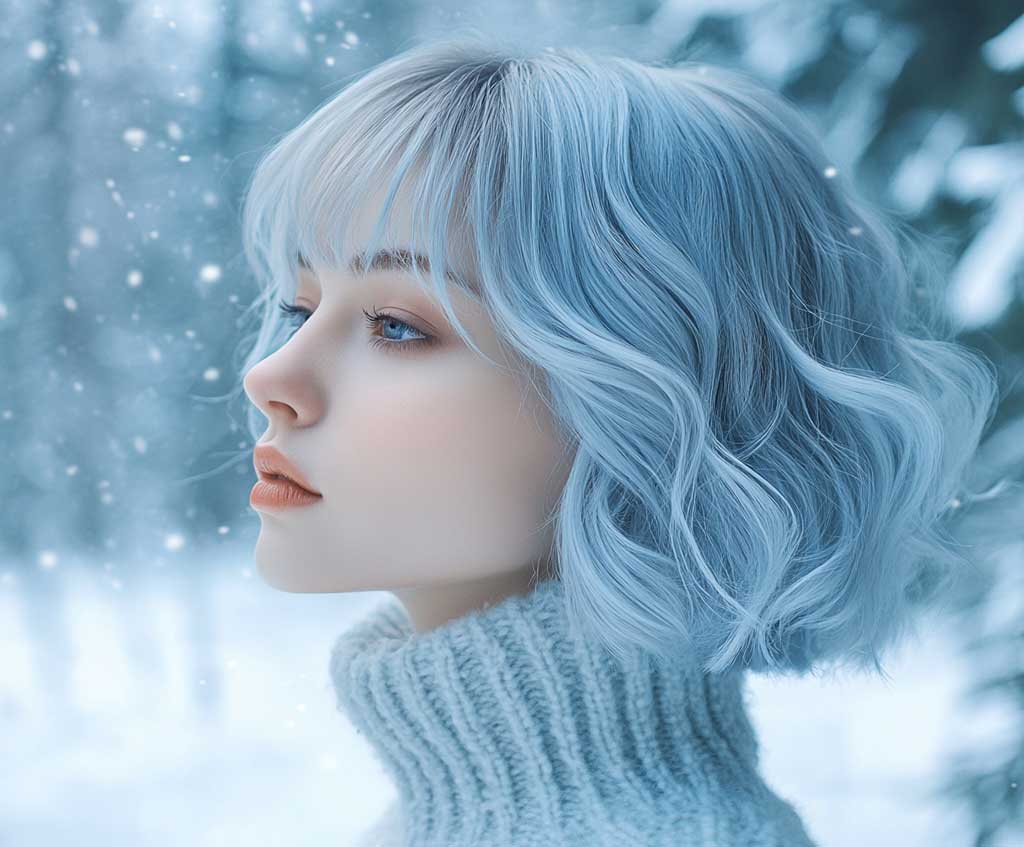
Create the waves with a large-barrel wand or flat iron, leaving the ends freer so the color shifts as you move. Focus the tint on the top layers only. Full saturation can look heavier than intended. A leave-in conditioner applied before coloring helps the pigment sit evenly and keeps the hair soft. Avoid hot water washes; cool rinses slow fading and protect the wave pattern.
What happens if the tint looks too pale after the first wash? Refresh with a blue-depositing conditioner once a week instead of reapplying full dye. The result stays light yet intentional. This approach pairs well with short wavy blonde hair with highlights if you ever decide to shift toward warmer tones later.
Bold Pastel Blue Highlights Against Dark Waves
Bold pastel blue highlights turn short wavy hair into a high-contrast statement. The bright pieces sit against a darker base so every wave shows depth. This version of short blue hair works best when the cut already has layers that move freely.


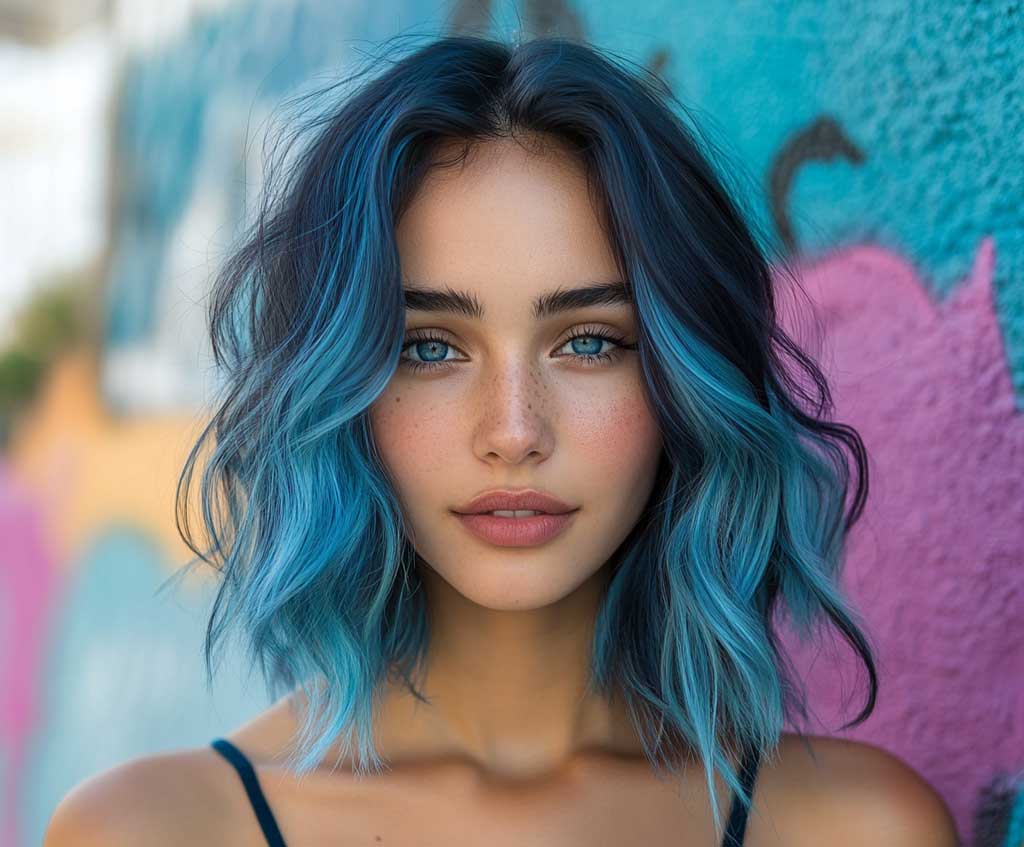
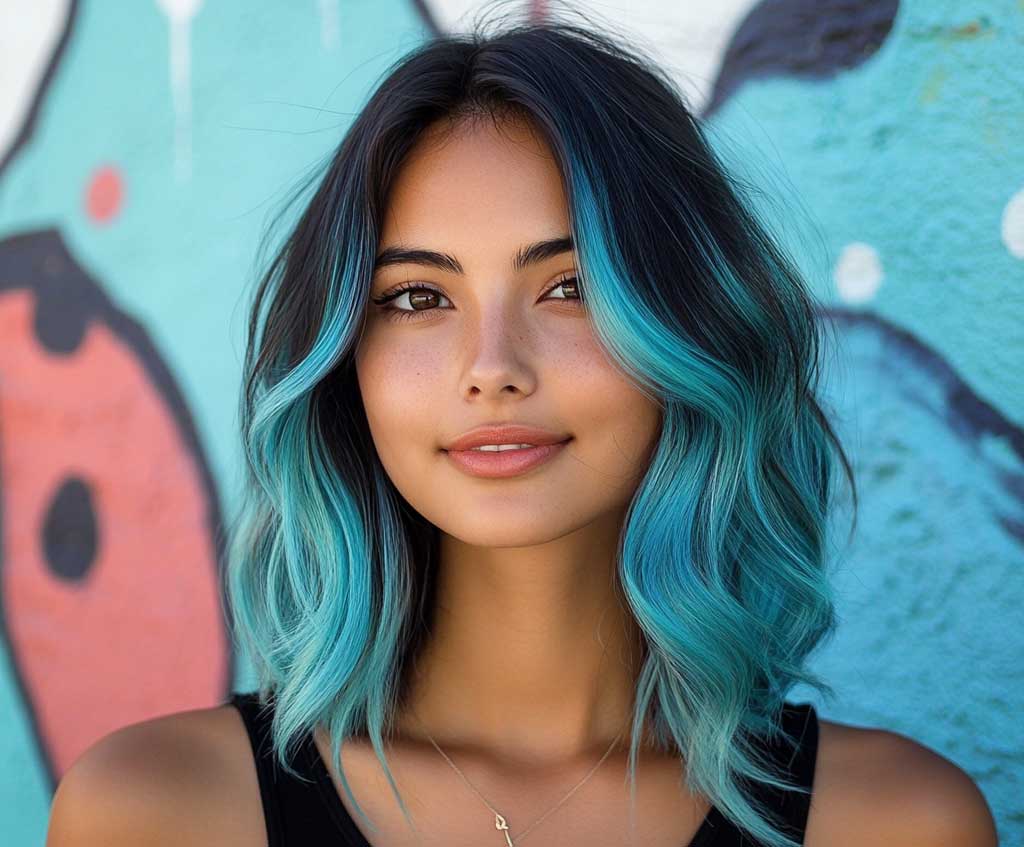

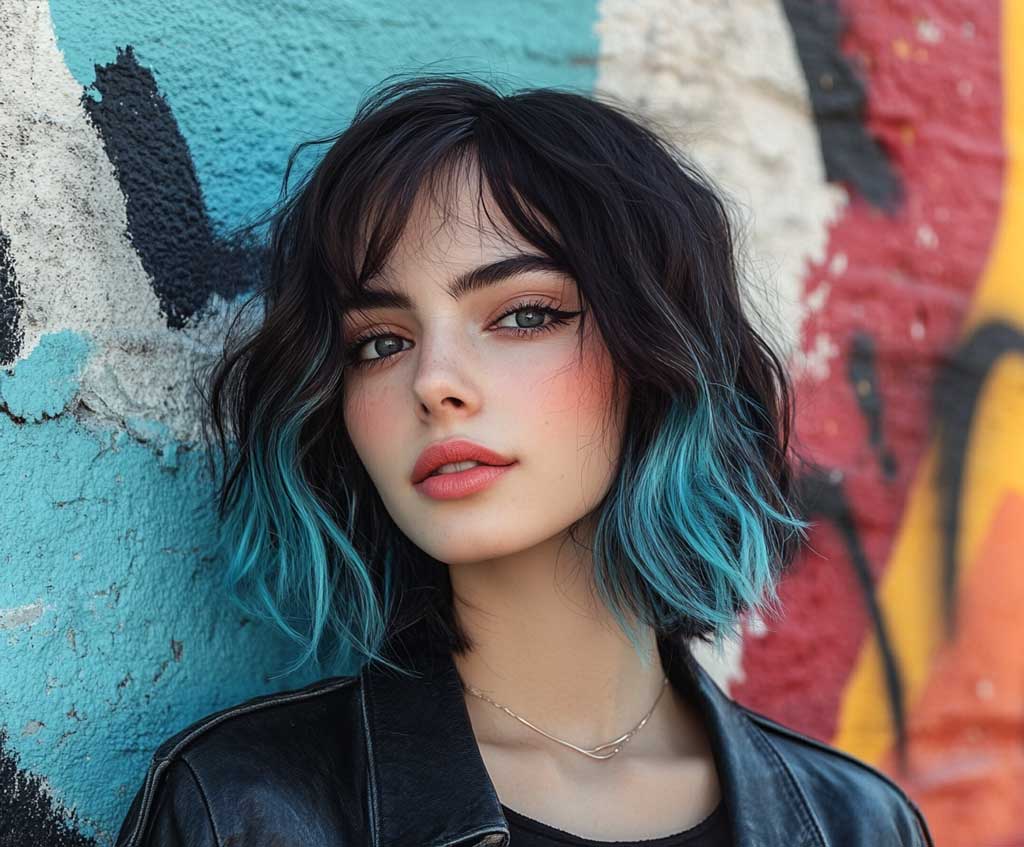
Place the brightest pieces around the face and through the crown so the color moves with every turn of the head. A texturizing spray after styling keeps the waves separated and prevents the highlights from blending into a single block. Semi-permanent options average $9–$14 per bottle and last 4–8 weeks when washed less often.
Skip bleaching the entire head if the base is already medium brown or lighter. Spot-lightening only the highlight sections reduces damage and keeps the overall look cleaner. Think of the blue pieces as light catching on water — they should flash, not dominate. For similar color play in softer shades, explore playful short pink hair color ideas.
Pastel Blue Ombre on Relaxed Short Waves
Pastel blue ombre on short wavy hair creates a soft gradient that feels beach-ready and low-pressure. Darker roots transition into sky-blue ends, so regrowth stays discreet. This approach to short blue hair keeps maintenance lighter than full-color saturation.


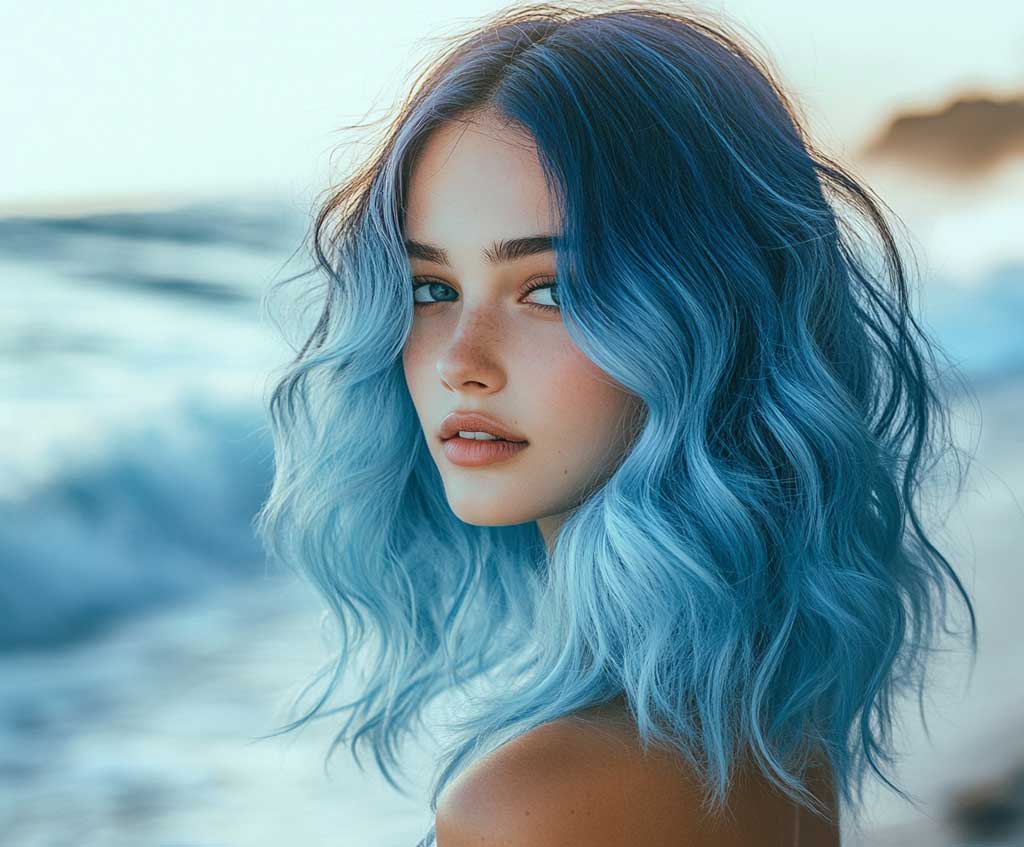
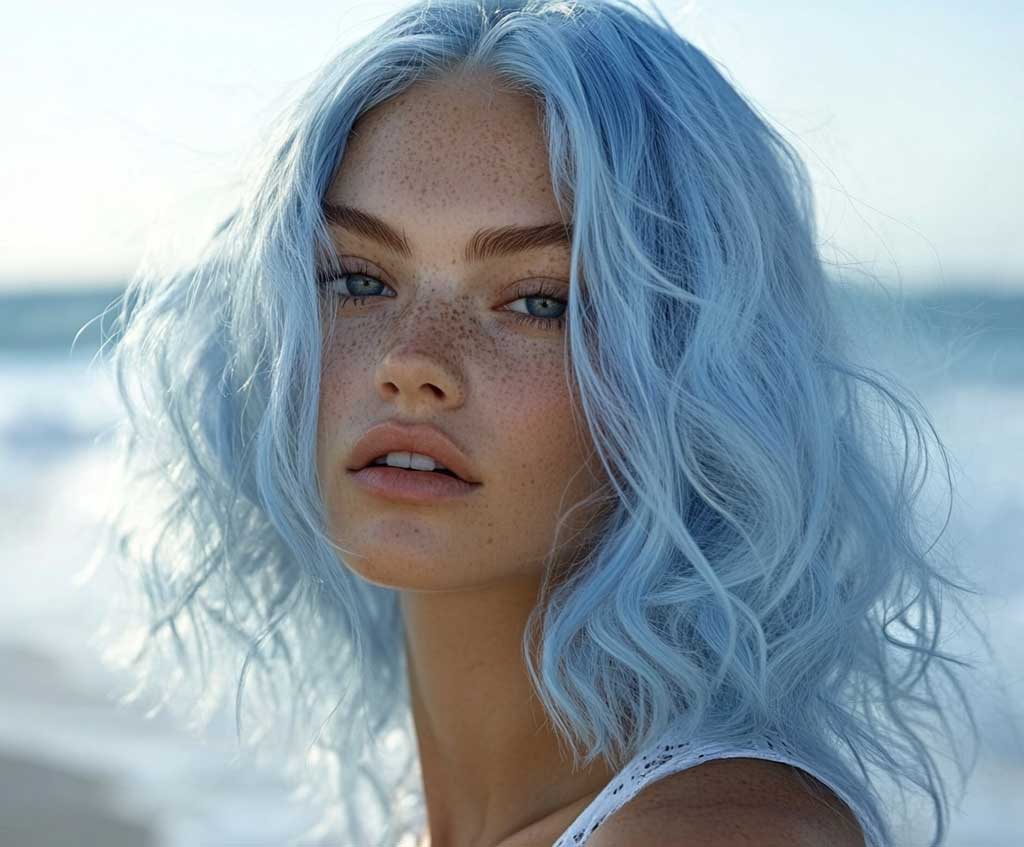
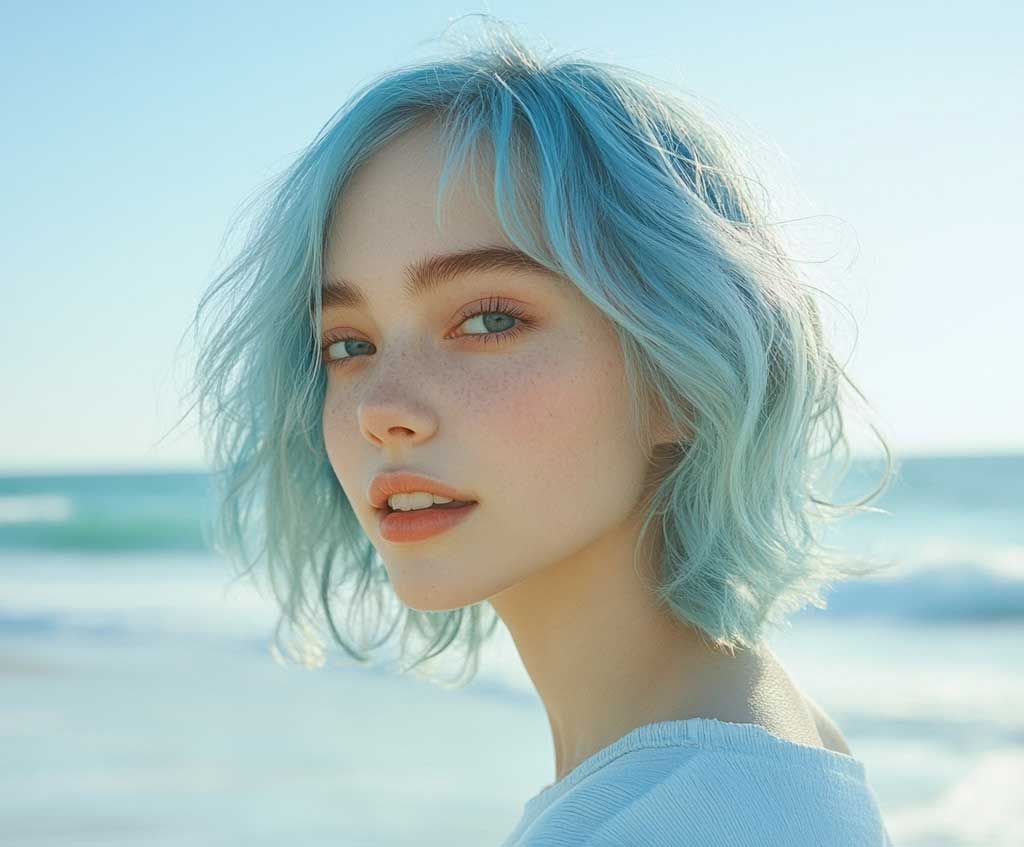

Blend the color starting mid-shaft so the transition looks organic rather than striped. Sea-salt spray after curling enhances the wave and gives the ends a lived-in finish. The ombre effect typically needs refresh every 4–6 weeks depending on wash frequency. Cooler water and sulfate-free products extend the blue tip life.
Does the gradient look muddy after a few washes? A quick glaze with a diluted pastel blue mix restores clarity without full reapplication. This style pairs especially well with casual outfits and outdoor light. For more soft color options on short lengths, see soft pastel hair colors for short hair.
Choosing Between Tint Highlight and Ombre
Three main routes exist for short blue hair on waves: all-over icy tint, bold face-framing highlights, or soft ombre tips. Each demands different upkeep and suits different lifestyles. Matching the method to how often you style and wash prevents disappointment.
| Approach | Best Base | Typical Longevity | Maintenance Level | Cost Range (Short Hair) |
|---|---|---|---|---|
| Icy Tint | Light blonde | 2–6 weeks | Low | $5–15 home / $150–250 salon |
| Bold Highlights | Medium to dark | 4–8 weeks | Medium | $9–14 home / $180–300 salon |
| Soft Ombre | Any with light ends | 4–6 weeks | Low–Medium | $8–15 home / $160–280 salon |
Pick the icy tint when you want color that disappears into the background on quiet days. Choose bold highlights when you want movement that photographs well. Go ombre when you prefer roots that stay natural longer. All three respond better to cooler water and less frequent washing.
One common mistake is applying full-strength pastel blue on unbleached dark hair. The result usually looks muddy or barely visible. Lighten first or accept a muted wash of color. External resources such as detailed dye longevity guides confirm that pastel blue performs best on level 9–10 bases.
Keep the Color and Waves Looking Fresh
Maintenance decides whether short blue hair stays vibrant or turns dull within days. Sulfate-free shampoo, cool rinses, and weekly blue-depositing conditioners form the core routine. Heat protectant is non-negotiable before any wand or iron work.
How often should the waves be restyled? Most short cuts need only a light refresh every two to three days if the cut has good internal layers. Over-washing accelerates fade; dry shampoo extends the time between full washes. A silk pillowcase reduces friction that roughens both color and texture.
Think of the color like a soft watercolor wash — it thrives when left alone between gentle cleanings. Avoid clarifying shampoos unless the hair feels coated. When the blue starts to look dusty, a single diluted application restores the original softness without rebuilding from scratch.
Final Notes on Short Blue Hair Waves
Short blue hair on soft waves offers a modern balance of color and movement that works across seasons and settings. The pastel versions stay approachable while still delivering clear personality.
Match the placement method to your lifestyle and base color. Icy tints keep things quiet. Bold highlights add flash. Ombre tips grow out with the least drama.
Budget for semi-permanent products between $5 and $15 at home or $150–$350 in the salon when bleaching is required. Expect 2–6 weeks of good color with careful washing.
Prioritize cool water, sulfate-free care, and minimal heat. These three habits keep both the shade and the wave pattern looking intentional longer than any single product can.
Start with the softest version that still feels exciting. You can always increase intensity later. Soft waves and pastel blue already do most of the visual work.
You Might Also Like

Related Topics