Trending exterior colors for houses shift every few years, and 2026 is no exception — warm whites, sage greens, deep navies, and charcoal neutrals are setting the tone for every neighborhood worth photographing. Picking the right exterior color is less about following a trend and more about understanding why certain palettes hold up through ten years of sun, rain, and passing fads. This article walks through three of the most-requested color directions right now, with specific paint picks, real-world trade-offs, and the mistakes that cost homeowners a second repaint.
Most exterior paint jobs need to last 7–10 years in moderate climates, according to painting professionals — so a color that photographs well but fades by year three is a budget disaster. A gallon of quality exterior paint from Sherwin-Williams runs $62–$88 at list price (less during the chain’s frequent 30–40% off sales), and a full repaint on a 2,000 sq ft home typically uses 18 or more gallons. The math makes color choice matter well beyond aesthetics.
The three combinations below — navy and white, cool gray and white, and sage green and beige — each occupy a different emotional register and suit different architectural types. One of them will make sense for your house. Two probably won’t. The goal is to figure out which one before the paint truck shows up.
- Navy + white — classic, high-contrast, suits colonial and Cape Cod styles; darkens on south-facing walls in full sun
- Cool gray + white — neutral, modern-minimal, works on most architectural styles; risks looking cold in low light
- Sage green + beige — the fastest-growing exterior color category in 2026; earthy, nature-connected, hides dirt better than whites
- Budget roughly $62–$88/gallon for Sherwin-Williams exterior lines; Benjamin Moore Aura runs $90–$100 with a lifetime warranty
- Most homes need repainting every 7–10 years; wood siding at the shorter end, fiber cement at 10–15 years
- Test swatches on actual exterior walls for 48 hours before buying full gallons — indoor swatches under LED light are unreliable
Navy Blue and White — Where Popular House Exterior Colors Begin
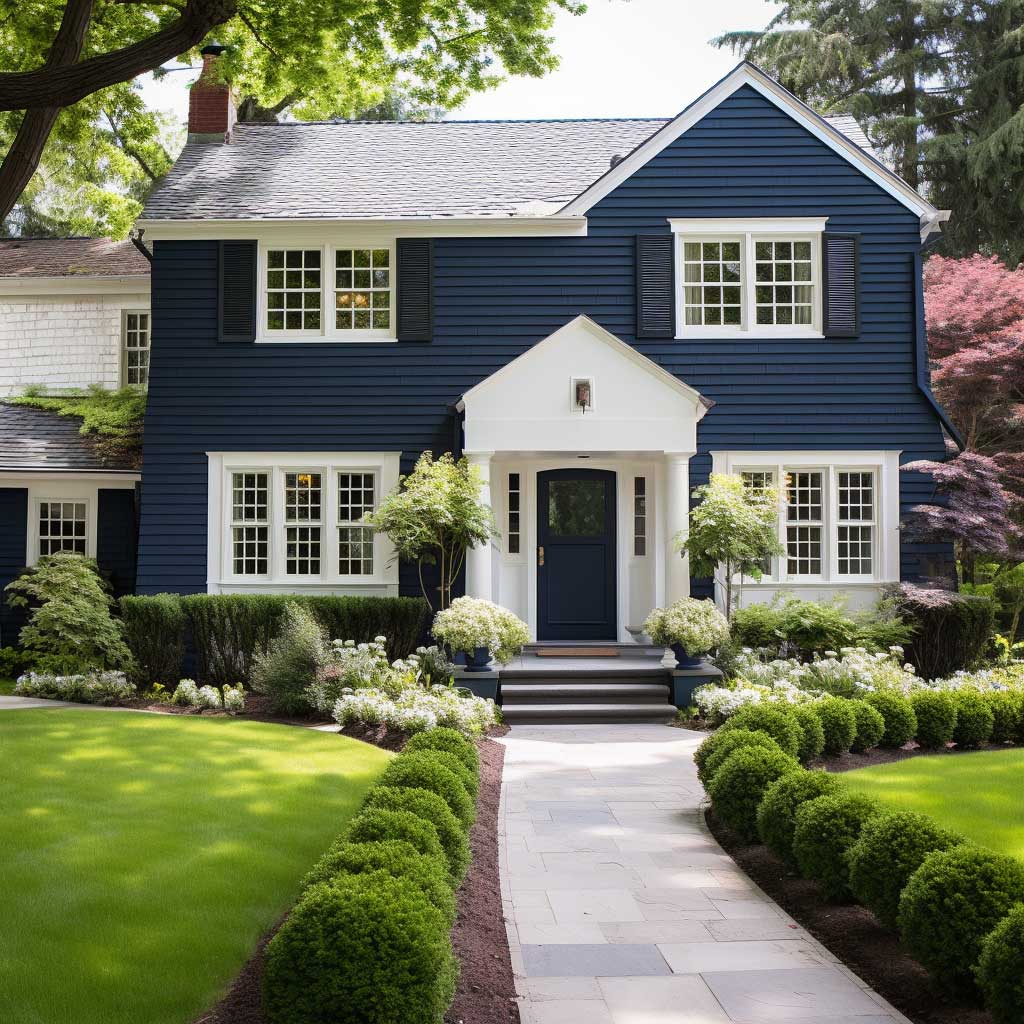
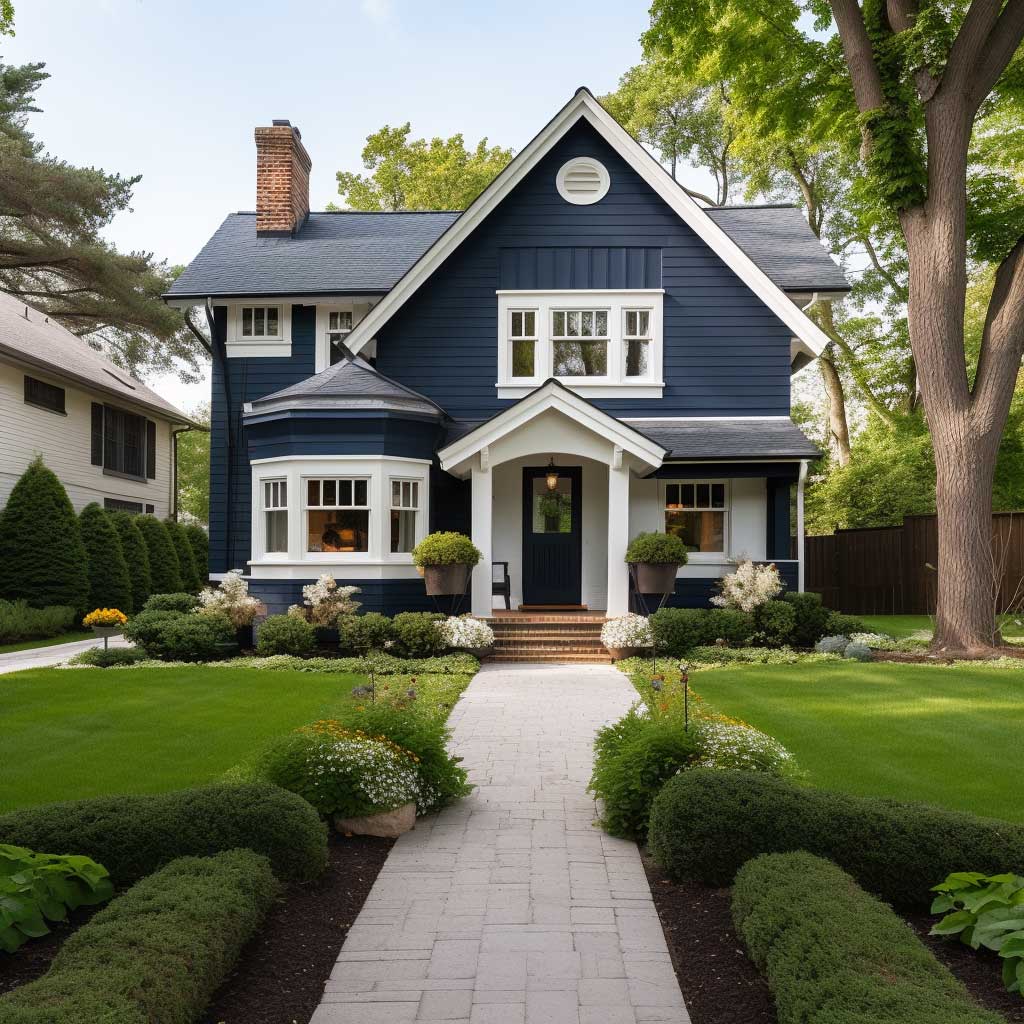
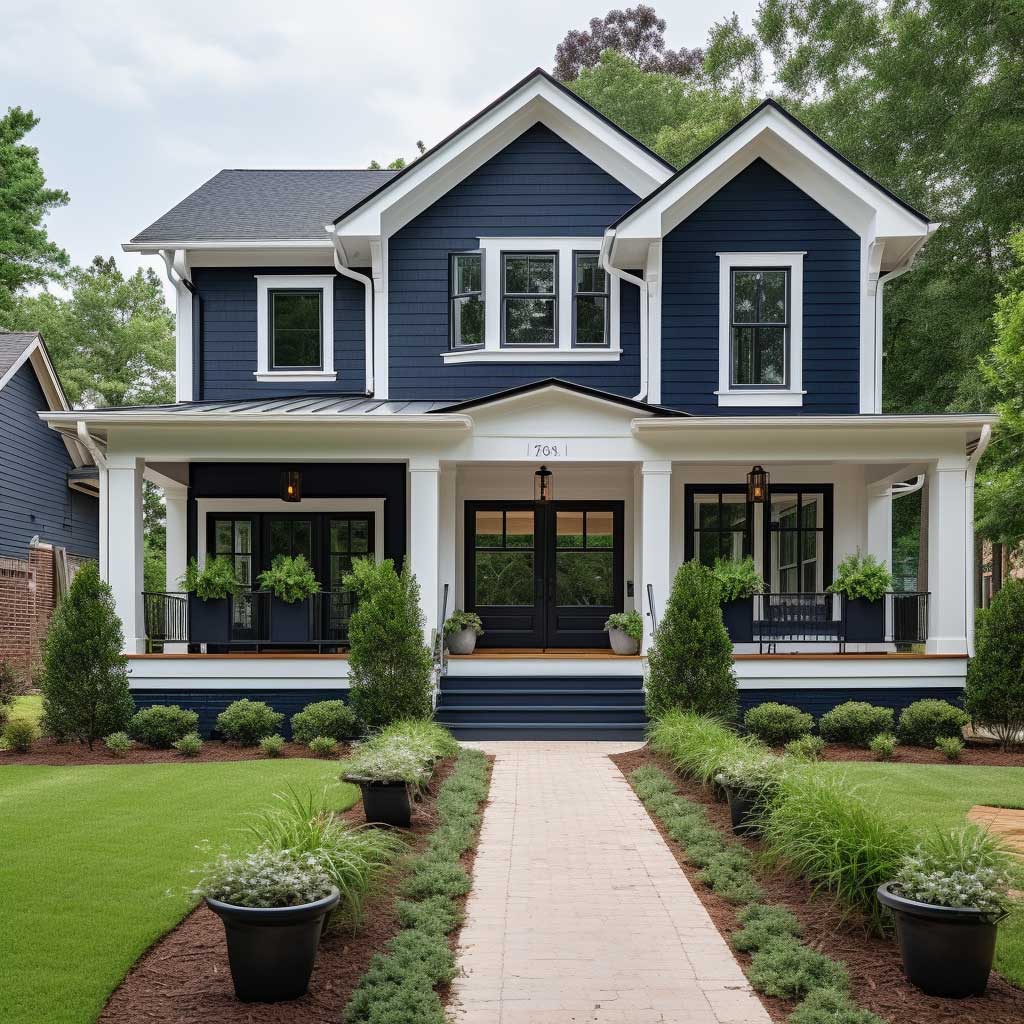
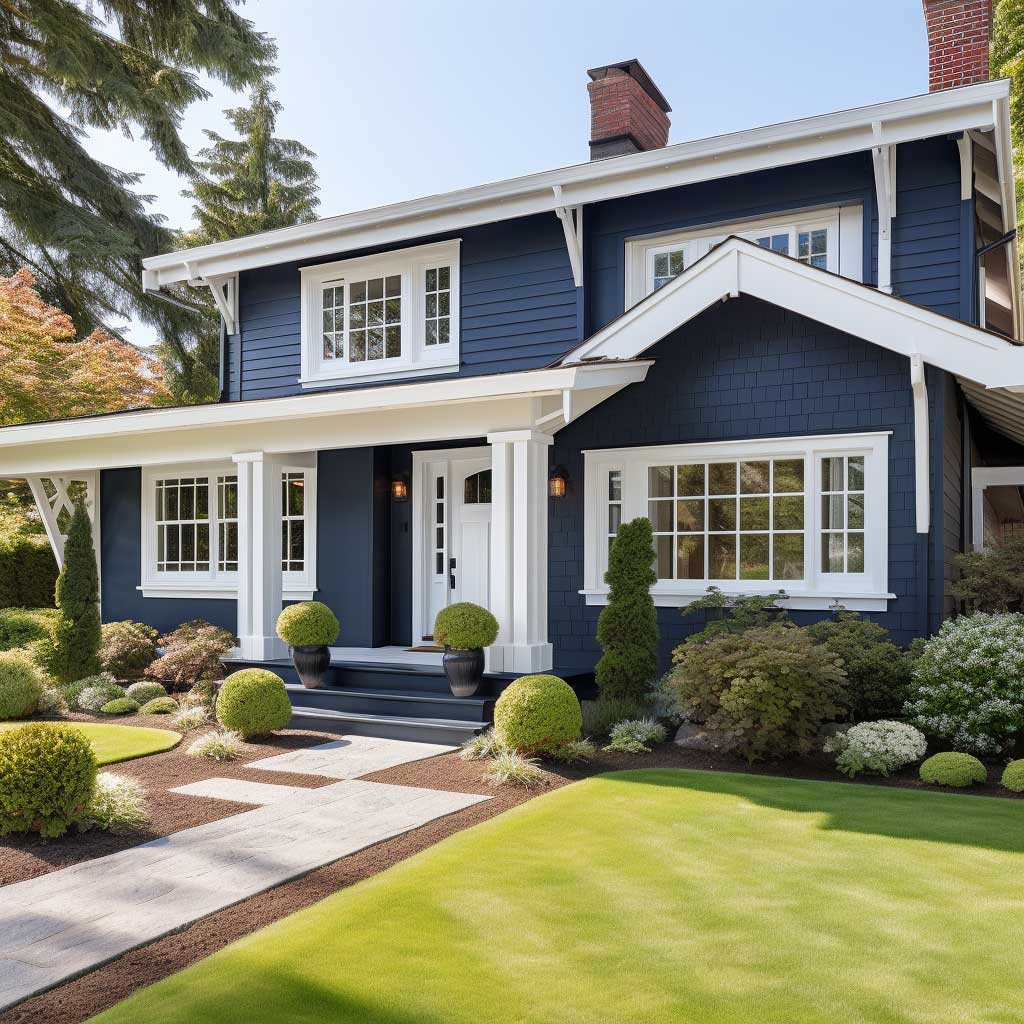
Navy blue with crisp white trim lands on more “popular house exterior colors” lists than almost any other combination — and it keeps landing there because it works across architectural styles in a way that few others do. On a Cape Cod or colonial home, the contrast reads as heritage without looking like a history museum. Benjamin Moore Hale Navy (HC-154) is the specific shade that comes up most often among painters who work on coastal and traditional homes; at the Aura Exterior tier, expect $90–$100 per gallon with a lifetime limited warranty on most substrates. What makes navy particularly worth the cost? Color retention on darker shades is one of the strongest in the residential category — important when you’re committing to a repaint that should last a decade.
The white side of the equation matters more than most homeowners expect. Pure bright white next to deep navy creates a joint that reads almost surgical — clean in a way that feels clinical rather than elegant. Off-whites with warm undertones soften that line without sacrificing the contrast. Think of navy-and-white like a formal suit: the cut can be impeccable, but fabric texture determines whether it looks expensive or just expensive-adjacent. Apply the same logic to undertones.
Ask yourself this: does your house get direct afternoon sun on its primary facade? Navy darkens noticeably on south-facing walls by early afternoon — on some shades it reads as near-black by 2 PM. If your house faces south, stylists recommend going one value lighter than your initial choice. The trim, meanwhile, should be in satin or semi-gloss minimum; flat white on trim next to a dark body color doesn’t just look dull, it absorbs moisture and degrades faster in humid climates. One practical rule: one gallon of quality exterior paint covers 300–400 sq ft per coat on smooth siding, meaning a two-coat job on a 1,500 sq ft exterior needs roughly 8–10 gallons for the body alone — plan accordingly before you fall in love with a $100/gallon navy.
Cool Gray Delivers the Exterior Color Trend That Architects Kept Quiet
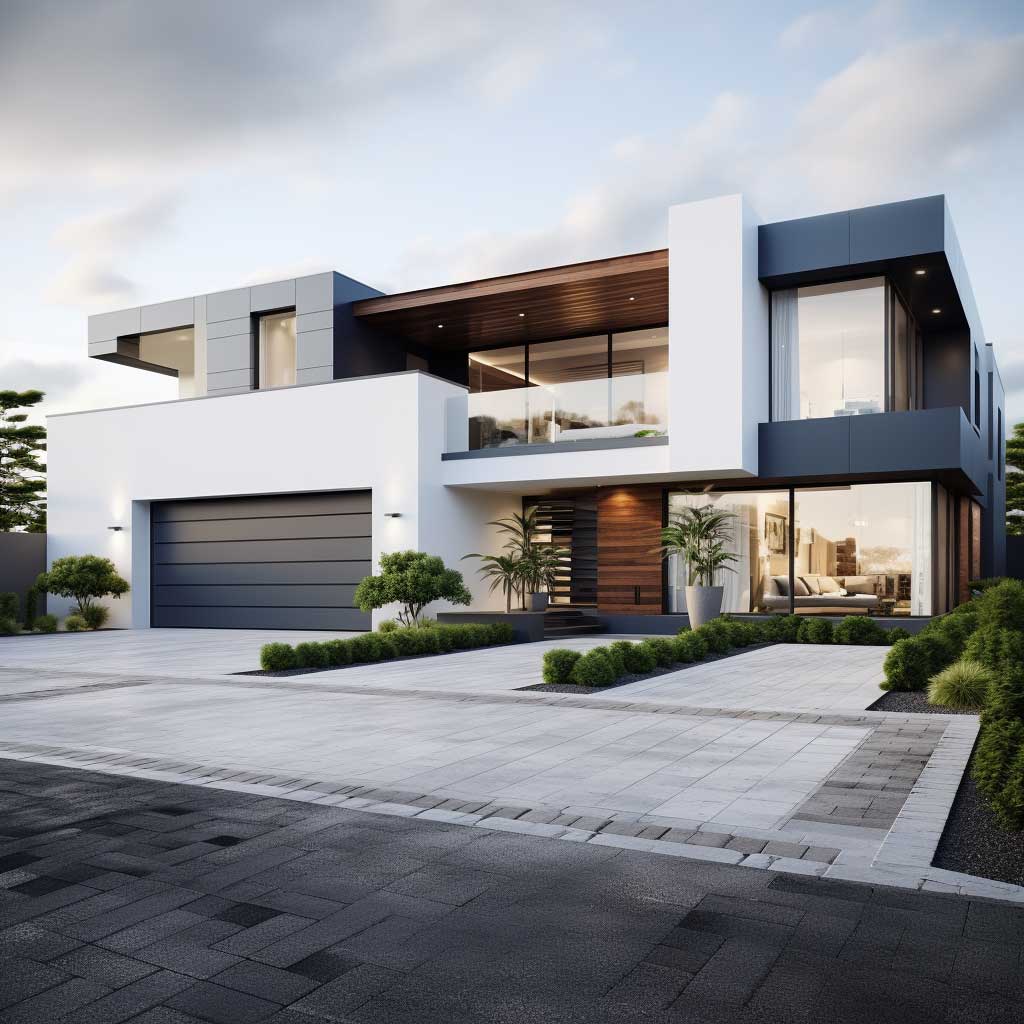
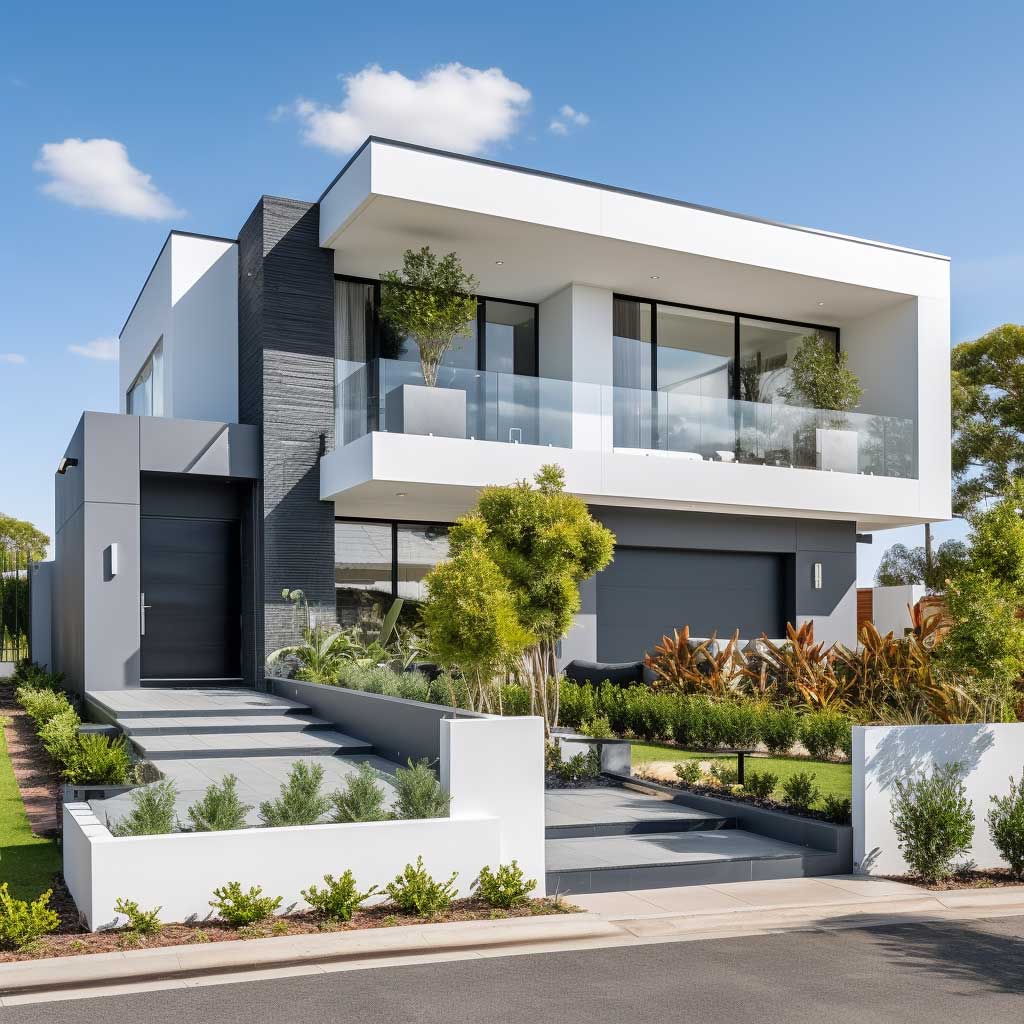


Cool gray became the defining exterior color of the 2010s, and by 2026 the conversation has split: warmer neutrals are eating into its territory, but a well-chosen cool gray still dominates the “modern and safe” bracket for homeowners who want to stand out without making a statement. The trick architects figured out years ago — but rarely say out loud — is that gray’s power comes from its neutrality as a background, not from the gray itself. It lets the trim, the landscaping, the door color, and the roofline do the visual work while the body stays composed. Think of it as the architectural equivalent of a perfectly pressed white shirt: not the interesting thing in the room, but what makes everything else look right.
Glidden’s Gosling Gray (PPG0993-3) in flat exterior runs around $48/5-gallon at Home Depot — a realistic entry-level option for a gray body with 400 sq ft coverage per gallon. For premium performance on larger surfaces, Sherwin-Williams SuperPaint in a gray tone runs roughly $62/gallon at list (closer to $40 during 30–40% off sales). A 2,000 sq ft home exterior at two coats needs approximately 18 gallons of body paint — that’s a $720 material cost at SuperPaint sale price before primer, trim, and labor. Does a cooler gray need a cooler white? Usually yes. Pairing a blue-toned gray body with a warm cream trim pulls the house in two directions at once. Match the undertone temperature: cool gray wants a bright, clean white, not an ivory.
Where does this combination fail? North-facing facades with limited direct sun turn cool gray genuinely cold — it can look like a parking structure by November. The fix isn’t a warmer gray (you lose the clean modern look) but a warmer trim and door accent that add enough thermal contrast to make the facade feel lived-in. A charcoal or deep navy door works better here than another neutral. Avoid matching trim to body with the same gray family at similar values; the house will flatten into a single tone at street distance, which defeats the architectural logic of using trim in the first place.
Don’t pick your exterior gray from a phone screen or inside a paint store. Cool grays shift dramatically between in-store LED lighting and natural daylight — many shades look like warm greige indoors and reveal strong blue or purple casts outside by mid-afternoon. Order sample pots ($8–$12 each), brush 2×2-foot test squares directly on your siding, and check at 8 AM and 4 PM for two full days. Grays viewed only on screens or indoor swatches are responsible for more regretted exterior paint jobs than any other color family. Also: don’t use the same gray for both body and trim at the same sheen. You need at least three values of contrast between body and trim for either to read at curb distance.
Sage Green Exterior House Colors Are Outpacing Every Other Category in 2026
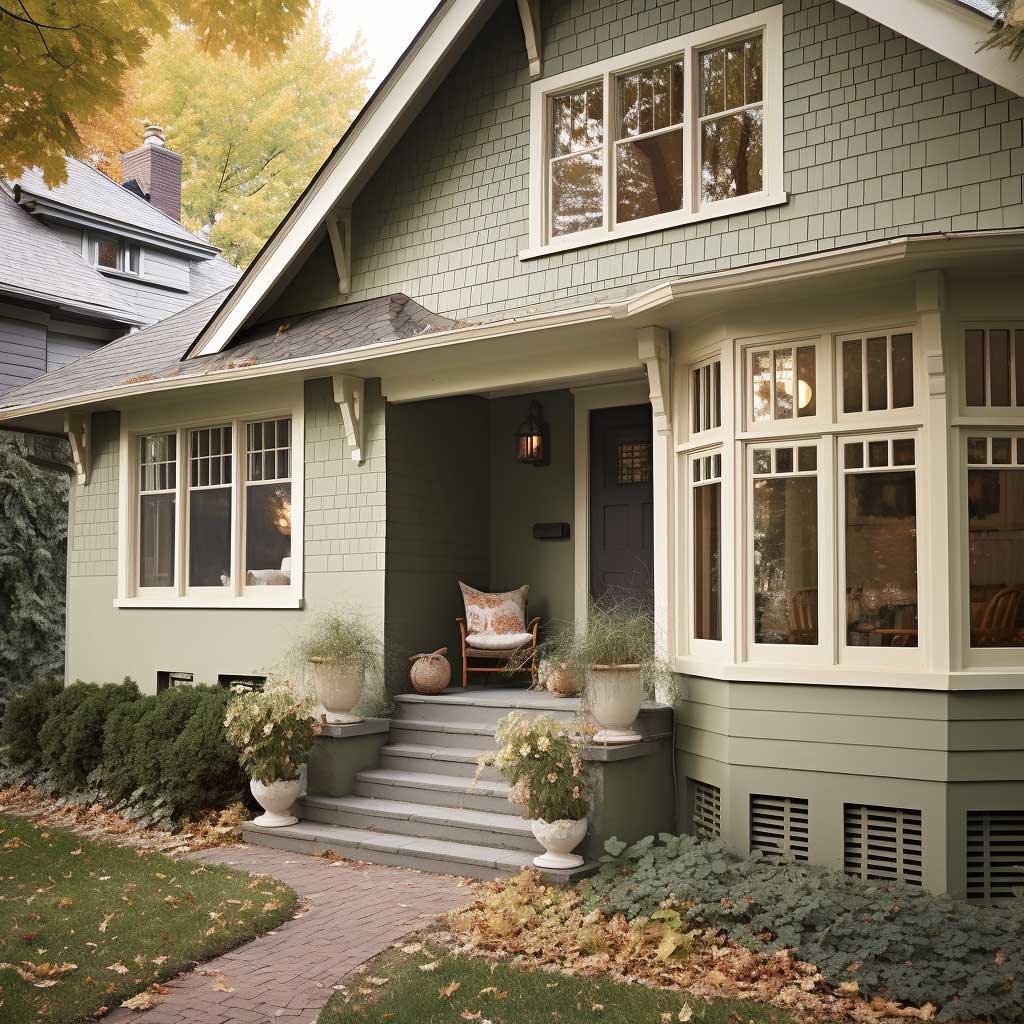
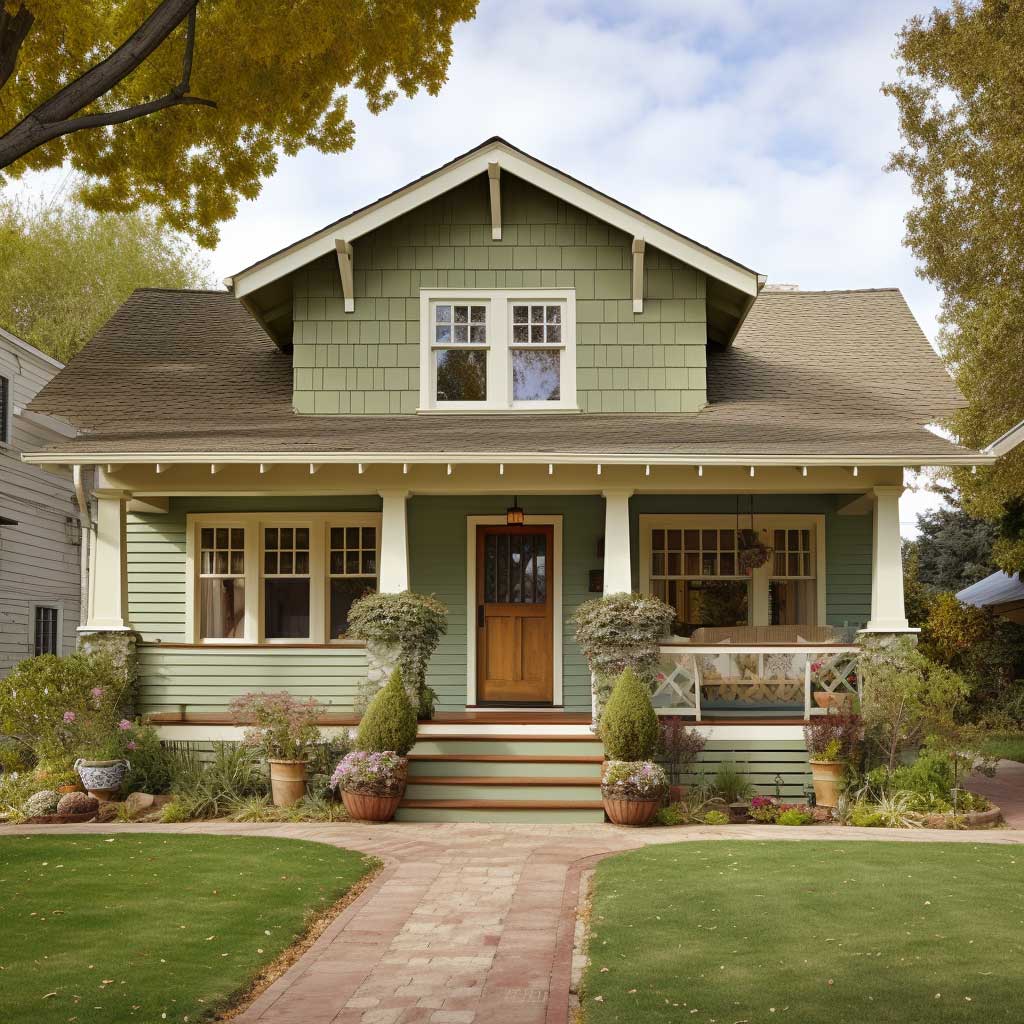
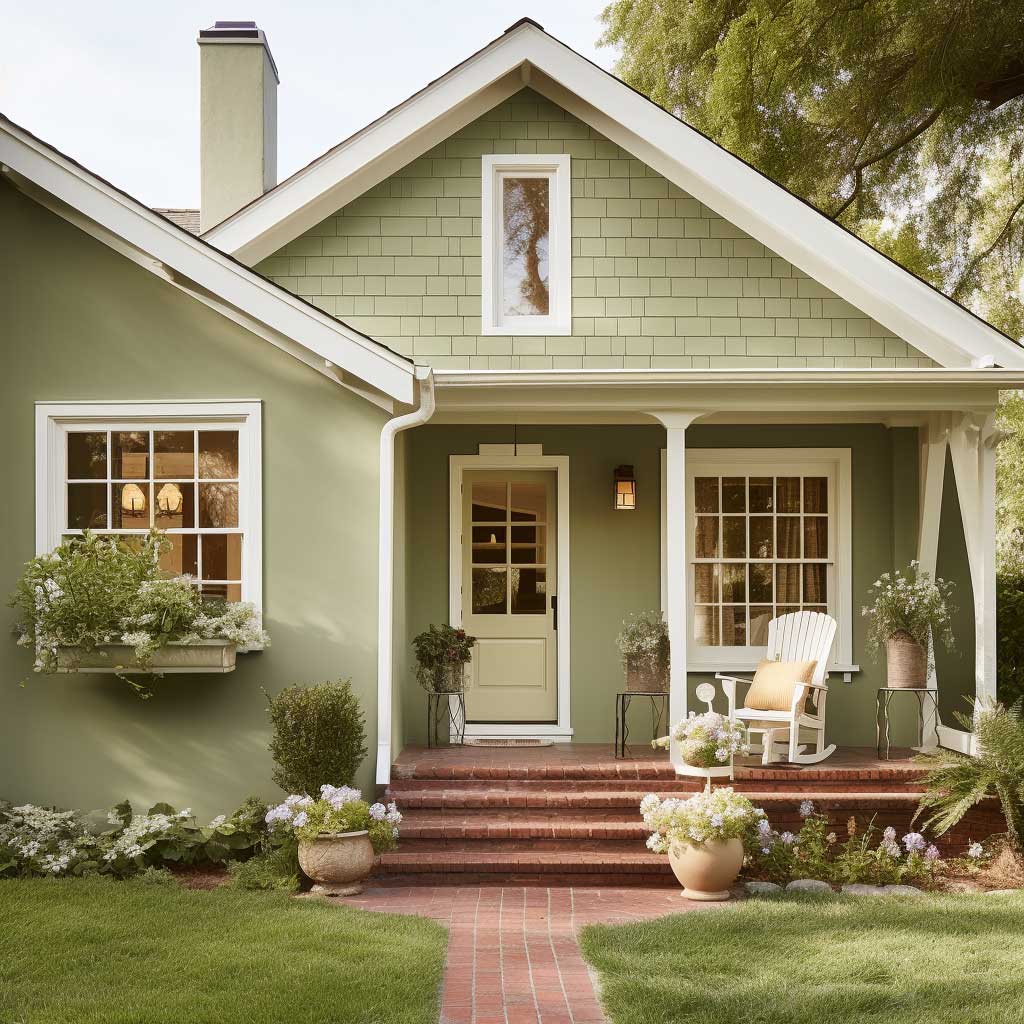
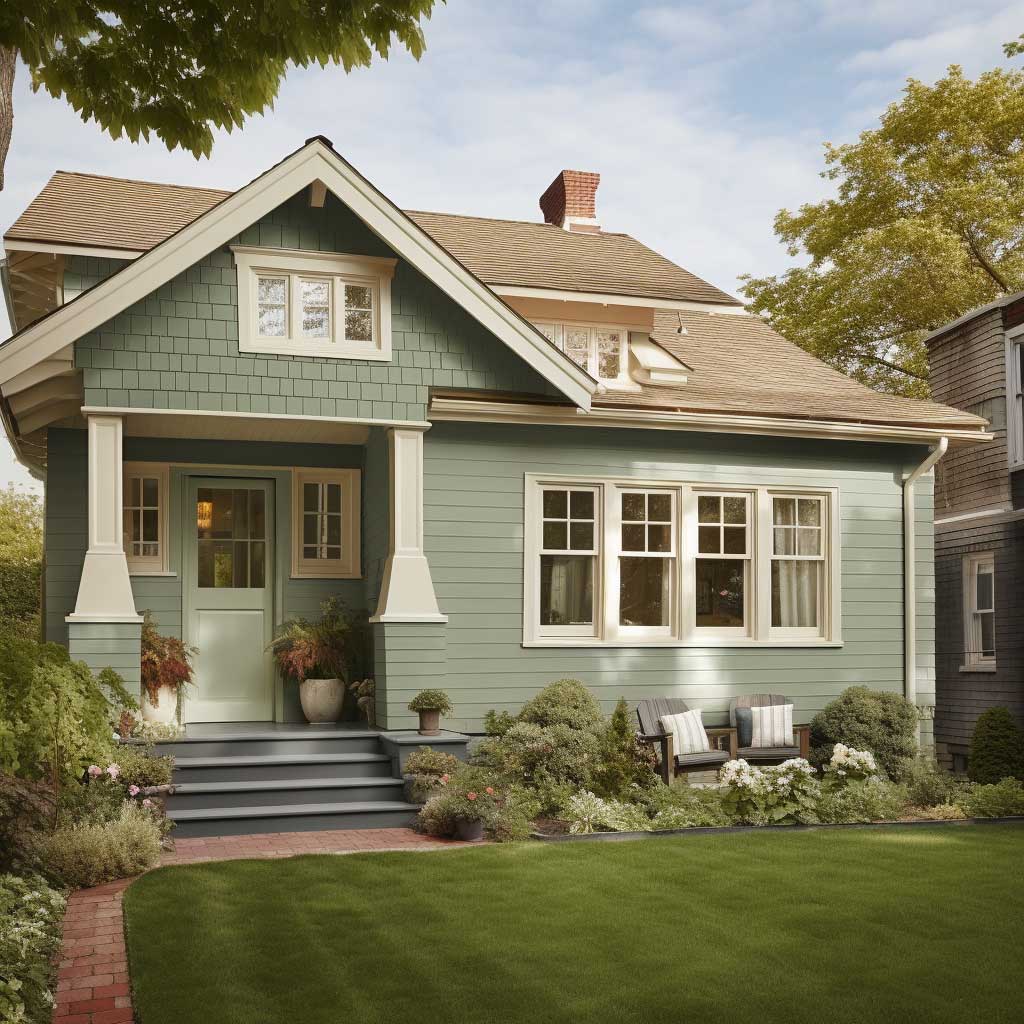
Sage green exterior house colors are having the kind of moment that rarely happens in residential paint: sustained, cross-demographic, and accelerating rather than plateauing. According to a 2026 Houzz Home Design Trends report, green-family exterior paints saw a 34% increase in project saves compared to 2024, outpacing every other color family including warm neutrals. Sherwin-Williams named Evergreen Fog (SW 9130) its 2022 Color of the Year — and four years later, the shade is still appearing on regional top-seller lists. Why? Sage green is what designers call a “colored neutral”: it reads as green without overwhelming, works with natural stone, wood, and brick, and hides dirt better than whites or light grays.
Paired with warm beige trim, sage green produces something that a bare gray-and-white scheme can’t quite manage — a sense that the house belongs to its lot rather than sitting on top of it. The combination works like a landscape painting where the main structure doesn’t fight the trees and garden but frames them. Beige on window trim and fascia keeps the palette grounded without going stark. What shade of beige? Avoid cool-toned creams with blue undertones — those pull against the warm gray in sage and create a muddy, uncertain color story at the joint between body and trim. Warm ivory or sand-toned beiges are the better match.
Is sage green right for your house, or just your Pinterest board? That’s a real question worth answering before you buy. Homes painted in warm greige tones (a close relative of the sage-and-beige palette) have sold for an average of 3–5% above asking in Zillow’s 2025–2026 paint color analysis — a meaningful number on a $400,000 house. Sage green on a Craftsman or cottage tends to look period-correct and intentional; on a 1980s ranch with aluminum siding, it can look like an awkward trend-chase. You can read more about timeless exterior paint colors for houses to check whether green is the right long-term call for your architectural style. Also note: Evergreen Fog’s LRV is 30, which means it absorbs more light than it reflects — on a north-facing wall with no afternoon sun, it will look noticeably darker and more charcoal-toned than the swatch suggests. Test it in the actual light conditions of your facade.
| Color Palette | Best Architectural Fit | Maintenance Interval | Key Risk |
|---|---|---|---|
| Navy + White | Colonial, Cape Cod, Coastal | 7–10 years | Looks near-black on south-facing walls in full sun |
| Cool Gray + White | Modern, Contemporary, Minimalist | 7–10 years | Feels cold on north-facing facades with limited light |
| Sage Green + Beige | Craftsman, Cottage, Ranch | 7–10 years | Reads muddy if paired with cool-toned cream trim |
For a broader look at how these palettes work side by side with other tested combinations, the house exterior paint colour combinations guide covers blue-and-white, brown-and-green, pastel-and-bold-accent, and gray-and-red across different home styles — with specific brand names, price ranges, and the pairing mistakes to avoid. Sherwin-Williams exterior lines run $45–$110 per gallon depending on the product tier, with Emerald Exterior at the top end and SuperPaint as the mid-range workhorse. For a project that will live on your facade for the next decade, the material cost is rarely the place to cut corners.
The Sherwin-Williams color page for Evergreen Fog SW 9130 lets you visualize the shade on different home styles and request a physical sample — worth doing before committing to a full exterior repaint.
Color Verdict
Exterior color trends move slowly — but the wrong choice ages fast
Navy-and-white is the safest bet if your house has architectural detail worth highlighting. Cool gray earns its place on modern and minimal facades where the structure itself is the design. Sage green is the color to watch if you’re repainting for the next decade — it has momentum, a proven track record since 2022, and resale data on its side.
Budget for quality paint: a gallon of Sherwin-Williams Emerald Exterior covers 350–400 sq ft and extends the repaint cycle by 5–8 years versus a mid-range line — on an 18-gallon project, that’s roughly $540 more upfront that pays back in avoided repaints.
Save this post before your next trip to the paint store — the swatches look completely different under store lighting.